Overview
Feedback inhibition is one of the most elegant and efficient regulatory mechanisms in cellular metabolism, representing a cornerstone concept in Biochemistry that appears frequently on the MCAT. This regulatory strategy allows cells to maintain metabolic homeostasis by using the end product of a biosynthetic pathway to inhibit the first committed step of that same pathway. When the final product accumulates to sufficient levels, it binds to the initial enzyme in the pathway—typically at an allosteric site—and reduces or halts further production. This self-regulating mechanism prevents wasteful overproduction of metabolites, conserves cellular energy and resources, and exemplifies the sophisticated control systems that govern living organisms.
Understanding feedback inhibition is essential for MCAT success because it integrates multiple high-yield concepts: enzyme kinetics, allosteric regulation, metabolic pathway control, and cellular economy. The MCAT frequently tests this topic through passage-based questions that require students to analyze experimental data, predict the effects of mutations on regulatory enzymes, or explain how cells respond to changing metabolic demands. Questions may present scenarios involving bacterial operons, amino acid biosynthesis, nucleotide synthesis, or cholesterol metabolism—all systems that rely heavily on feedback inhibition for proper function.
This topic serves as a critical bridge between enzyme mechanics and systems-level metabolism. Mastery of feedback inhibition Biochemistry enables students to understand not just isolated enzymatic reactions, but how entire metabolic networks coordinate their activities. It connects directly to concepts such as allosteric regulation, competitive versus non-competitive inhibition, metabolic pathway flux, gene regulation, and cellular signaling. The principle of feedback inhibition also extends beyond biochemistry into physiology and pharmacology, making it a truly integrative MCAT topic that can appear across multiple sections of the exam.
Learning Objectives
- [ ] Define feedback inhibition using accurate Biochemistry terminology
- [ ] Explain why feedback inhibition matters for the MCAT
- [ ] Apply feedback inhibition to exam-style questions
- [ ] Identify common mistakes related to feedback inhibition
- [ ] Connect feedback inhibition to related Biochemistry concepts
- [ ] Distinguish between feedback inhibition and other forms of enzyme regulation (feedforward activation, competitive inhibition)
- [ ] Predict the metabolic consequences when feedback inhibition is disrupted by mutation or pharmacological intervention
- [ ] Analyze experimental data to identify the presence and mechanism of feedback inhibition in a novel pathway
Prerequisites
- Basic enzyme structure and function: Understanding active sites, substrate binding, and catalytic mechanisms is essential because feedback inhibition modifies enzyme activity without affecting the active site directly
- Allosteric regulation fundamentals: Feedback inhibition operates through allosteric mechanisms, requiring knowledge of conformational changes and regulatory sites distinct from active sites
- Metabolic pathway organization: Recognizing that biochemical reactions occur in sequences allows comprehension of how end products can regulate initial steps
- Michaelis-Menten kinetics: Distinguishing between changes in Vmax and Km helps identify the type of inhibition occurring
- Protein structure and conformational changes: Feedback inhibition depends on proteins adopting different structural states in response to ligand binding
Why This Topic Matters
Clinical and Real-World Significance
Feedback inhibition represents a fundamental principle governing human metabolism and serves as a target for numerous therapeutic interventions. In amino acid biosynthesis, feedback inhibition prevents toxic accumulation of metabolites—when this regulation fails due to genetic mutations, serious metabolic disorders result. The cholesterol biosynthesis pathway exemplifies clinical relevance: statin drugs work by inhibiting HMG-CoA reductase, which normally experiences feedback inhibition by cholesterol itself. Understanding this mechanism explains why statins are effective and how cells respond to reduced cholesterol synthesis by upregulating the pathway. Bacterial feedback inhibition pathways differ from human ones, making them excellent antibiotic targets—sulfonamides exploit bacterial folate synthesis, which uses feedback inhibition absent in humans.
MCAT Examination Statistics
Feedback inhibition appears in approximately 15-20% of MCAT Biochemistry passages and is considered a high-yield topic for both the Chemical and Physical Foundations of Biological Systems and Biological and Biochemical Foundations of Living Systems sections. Questions typically fall into three categories: (1) interpretation of experimental data showing enzyme activity changes with product concentration, (2) prediction of metabolic outcomes when feedback inhibition is disrupted, and (3) comparison of different regulatory mechanisms. The MCAT particularly favors questions that require integration—for example, connecting feedback inhibition to gene expression, cellular energy status, or evolutionary advantages.
Common Exam Presentations
MCAT passages frequently present feedback inhibition through: (1) graphs showing enzyme activity decreasing as end product concentration increases, (2) bacterial growth experiments where amino acid supplementation affects pathway enzyme levels, (3) kinetic studies comparing enzyme behavior with and without end product present, (4) genetic experiments where mutations eliminate feedback sensitivity, and (5) comparative biochemistry scenarios examining pathway regulation across different organisms. Discrete questions often test the conceptual understanding of why feedback inhibition targets the first committed step rather than other pathway enzymes, or why allosteric inhibition is preferable to competitive inhibition for this regulatory strategy.
Core Concepts
Definition and Fundamental Mechanism
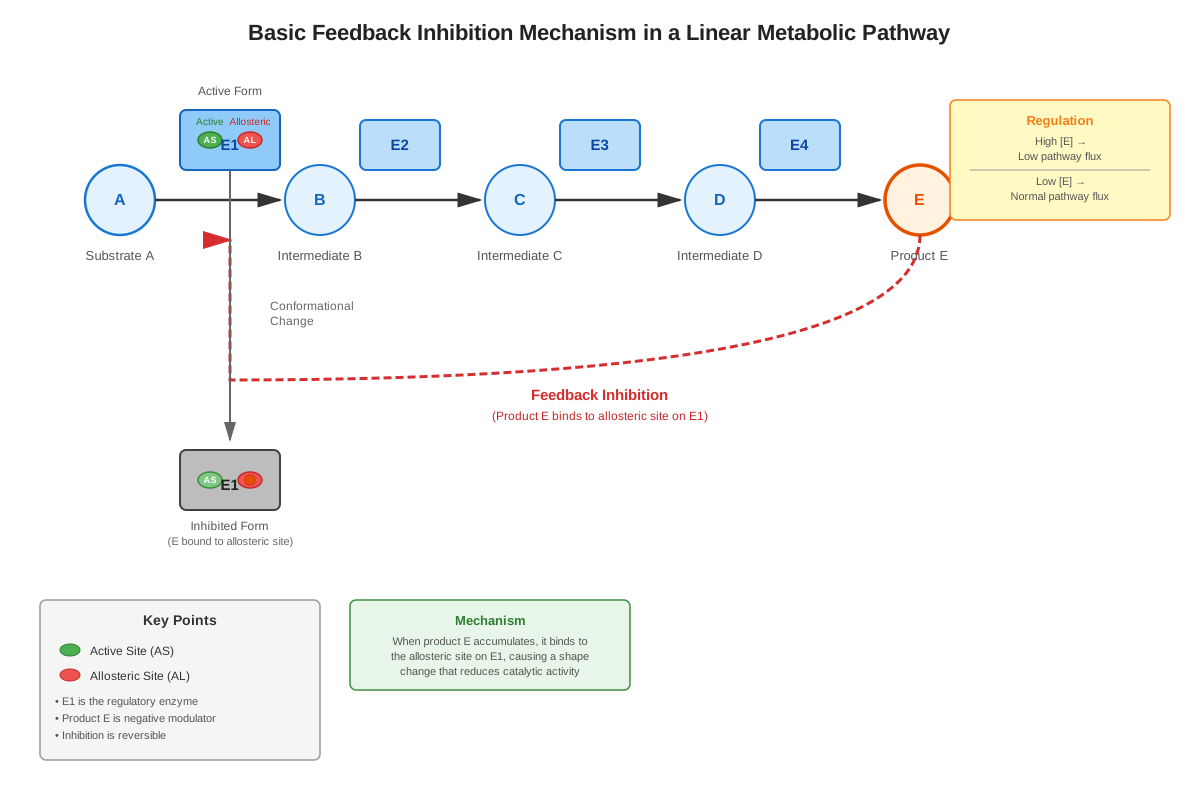
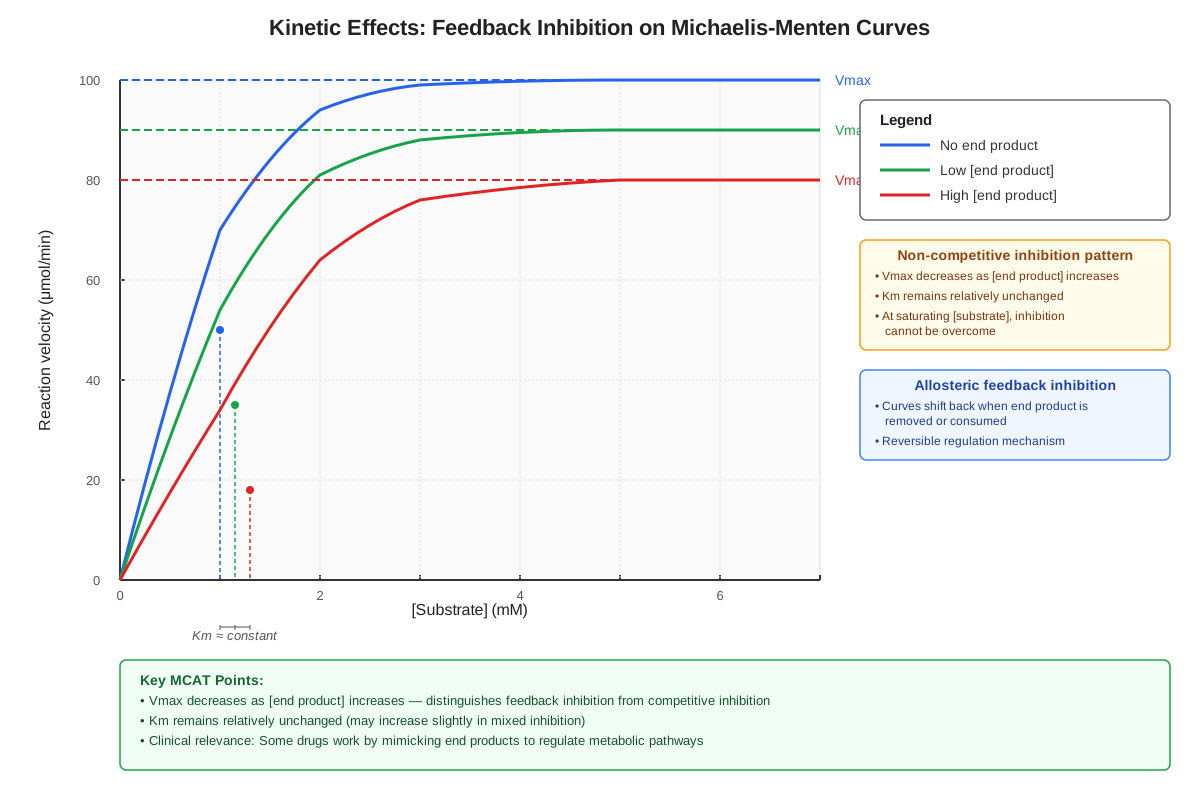
Feedback inhibition (also called end-product inhibition or negative feedback) is a regulatory mechanism in which the final product of a metabolic pathway inhibits the activity of an enzyme catalyzing an early step—typically the first committed step—of that same pathway. This creates a self-regulating loop: as product accumulates, pathway flux decreases; as product is consumed, inhibition is relieved and synthesis resumes. The mechanism is almost always allosteric: the end product binds to a regulatory site on the enzyme that is spatially distinct from the active site, inducing a conformational change that reduces catalytic efficiency. This non-competitive inhibition decreases Vmax without affecting Km, distinguishing it from competitive inhibition where substrate and inhibitor compete for the same site.
The elegance of feedback inhibition lies in its efficiency and specificity. By targeting the first committed step (the first irreversible reaction unique to a particular pathway), cells prevent accumulation of all downstream intermediates, not just the final product. This conserves both the substrates that would enter the pathway and the ATP typically required for biosynthetic reactions. The allosteric nature allows rapid, reversible regulation that responds immediately to changing metabolic conditions without requiring protein synthesis or degradation.
The First Committed Step Principle
Feedback inhibition specifically targets the first committed step of a pathway—the first irreversible reaction after a branch point that commits substrates to producing a specific end product. This strategic positioning maximizes regulatory efficiency. Consider a hypothetical pathway: A → B → C → D → E, where E is the final product. If the pathway branches at B (with one branch leading to E and another to a different product F), then the first committed step toward E would be the C → D reaction. Feedback inhibition of the B → C enzyme by product E prevents wasteful accumulation of intermediates C and D while allowing substrate B to be diverted toward F production if needed.
This principle explains why cells don't simply inhibit the last enzyme in a pathway: inhibiting only the final step would cause toxic buildup of the penultimate intermediate. It also explains why the very first enzyme in a linear pathway (before any branch points) might not be the target if that enzyme feeds multiple pathways—inhibiting it would inappropriately shut down all downstream products. The MCAT frequently tests understanding of this concept by presenting pathway diagrams and asking which enzyme would most likely be subject to feedback inhibition.
Allosteric Mechanism and Cooperativity
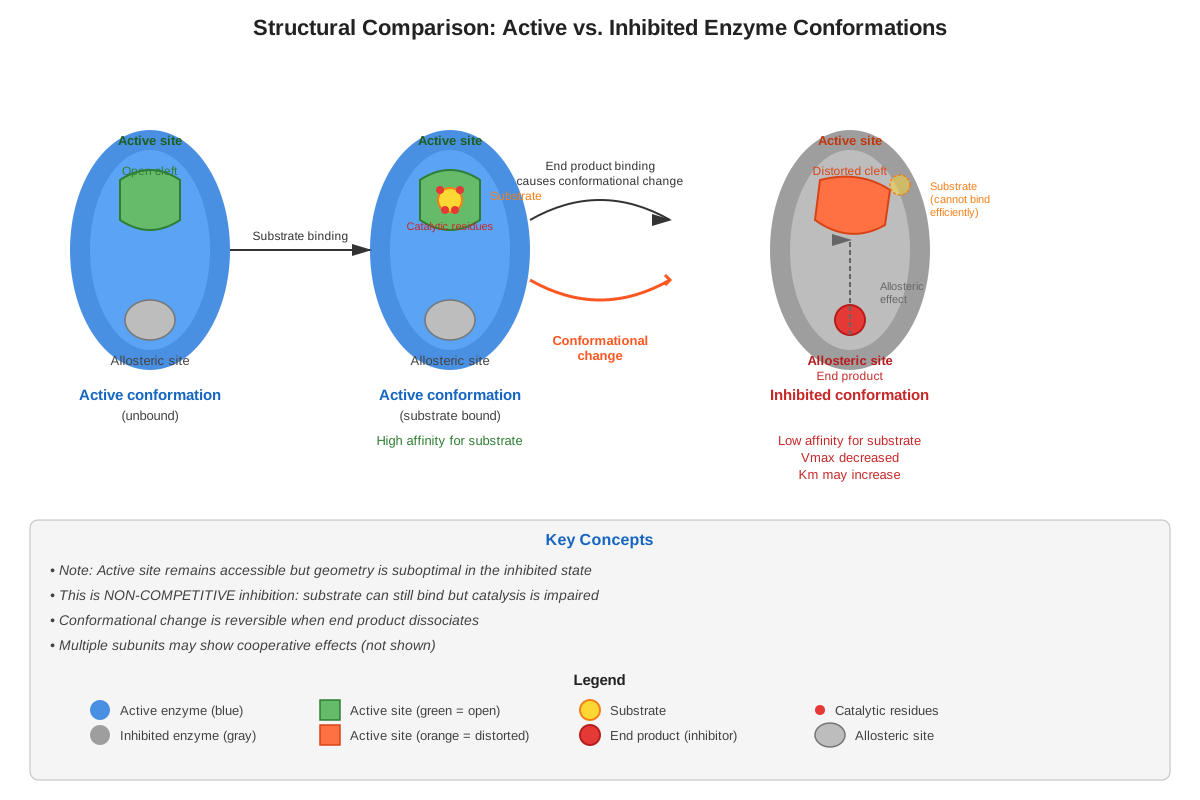
The molecular mechanism of feedback inhibition relies on allosteric regulation, where the end product (the allosteric effector or modulator) binds to a regulatory site distinct from the active site. This binding induces a conformational change that propagates through the protein structure, altering the active site geometry and reducing substrate affinity or catalytic turnover. Many feedback-inhibited enzymes are oligomeric proteins (composed of multiple subunits) that exhibit cooperativity—binding of the inhibitor to one subunit affects the conformation and activity of other subunits.
The allosteric nature produces characteristic kinetic signatures. Unlike competitive inhibition (which increases apparent Km but leaves Vmax unchanged), feedback inhibition typically decreases Vmax while Km may remain constant or change depending on the specific mechanism. Some feedback-inhibited enzymes show sigmoidal (S-shaped) kinetics rather than hyperbolic Michaelis-Menten curves, indicating cooperative binding. The MCAT may present Lineweaver-Burk plots or velocity-versus-substrate curves and ask students to identify the type of inhibition based on how lines intersect or curve shapes change.
Classic Examples in Metabolism
| Pathway | End Product | Inhibited Enzyme | Significance |
|---|---|---|---|
| Isoleucine biosynthesis | Isoleucine | Threonine deaminase | Classic textbook example; first committed step |
| Pyrimidine synthesis | CTP | Aspartate transcarbamoylase (ATCase) | Well-studied allosteric enzyme; also activated by ATP |
| Purine synthesis | AMP/GMP | PRPP amidotransferase | Multiple end products provide complex regulation |
| Cholesterol synthesis | Cholesterol | HMG-CoA reductase | Clinical target for statins; also regulated transcriptionally |
| Heme synthesis | Heme | ALA synthase | Prevents porphyrin accumulation; defects cause porphyrias |
Isoleucine biosynthesis in bacteria represents the paradigmatic example. The pathway converts threonine to isoleucine through five enzymatic steps. Threonine deaminase, which catalyzes the first committed step (threonine → α-ketobutyrate), is allosterically inhibited by isoleucine. When bacterial cells have sufficient isoleucine, the amino acid binds to threonine deaminase, reducing its activity and preventing unnecessary synthesis. When isoleucine is consumed in protein synthesis, inhibition is relieved and the pathway reactivates.
Aspartate transcarbamoylase (ATCase) in pyrimidine synthesis exemplifies sophisticated regulation. This enzyme catalyzes the committed step in CTP synthesis and is inhibited by CTP (the end product) but activated by ATP. This dual regulation balances purine and pyrimidine nucleotide pools—when ATP is abundant but CTP is scarce, ATCase is activated to increase pyrimidine synthesis; when CTP accumulates, it inhibits its own production. The MCAT frequently tests this example because it illustrates how feedback inhibition integrates with broader metabolic coordination.
Multivalent Feedback Inhibition
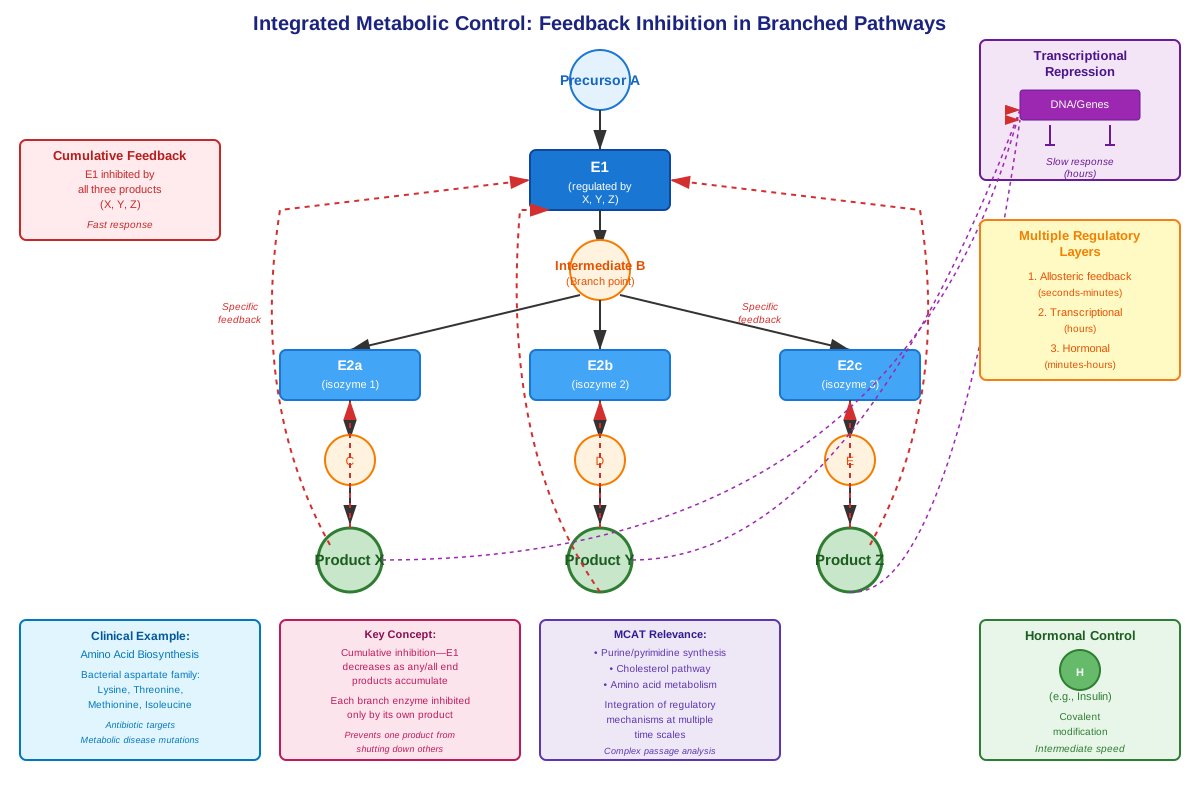
Many pathways produce multiple end products from a common precursor, creating a regulatory challenge: if each product independently inhibited the first enzyme completely, the first product to accumulate would shut down synthesis of all others. Cells solve this through multivalent feedback inhibition strategies:
- Concerted (cumulative) feedback inhibition: Each end product partially inhibits the first enzyme; complete inhibition requires multiple products to accumulate simultaneously. This ensures that all products must reach sufficient levels before the pathway shuts down.
- Sequential feedback inhibition: The pathway branches, and each branch has its own regulated enzyme. Each end product inhibits only the first enzyme of its specific branch, not the common trunk enzyme.
- Cooperative feedback inhibition: End products work synergistically—the inhibitory effect of two products together exceeds the sum of their individual effects.
- Enzyme multiplicity: The organism produces multiple isozymes catalyzing the first step, each sensitive to a different end product. All isozymes must be inhibited to completely shut down the pathway.
These sophisticated mechanisms appear in amino acid biosynthesis pathways where a single precursor (like aspartate) leads to multiple amino acids (lysine, methionine, threonine, isoleucine). The MCAT may present experimental data showing partial inhibition by individual products and ask students to identify the regulatory strategy.
Feedback Inhibition Versus Other Regulatory Mechanisms
Understanding what feedback inhibition is NOT helps clarify the concept:
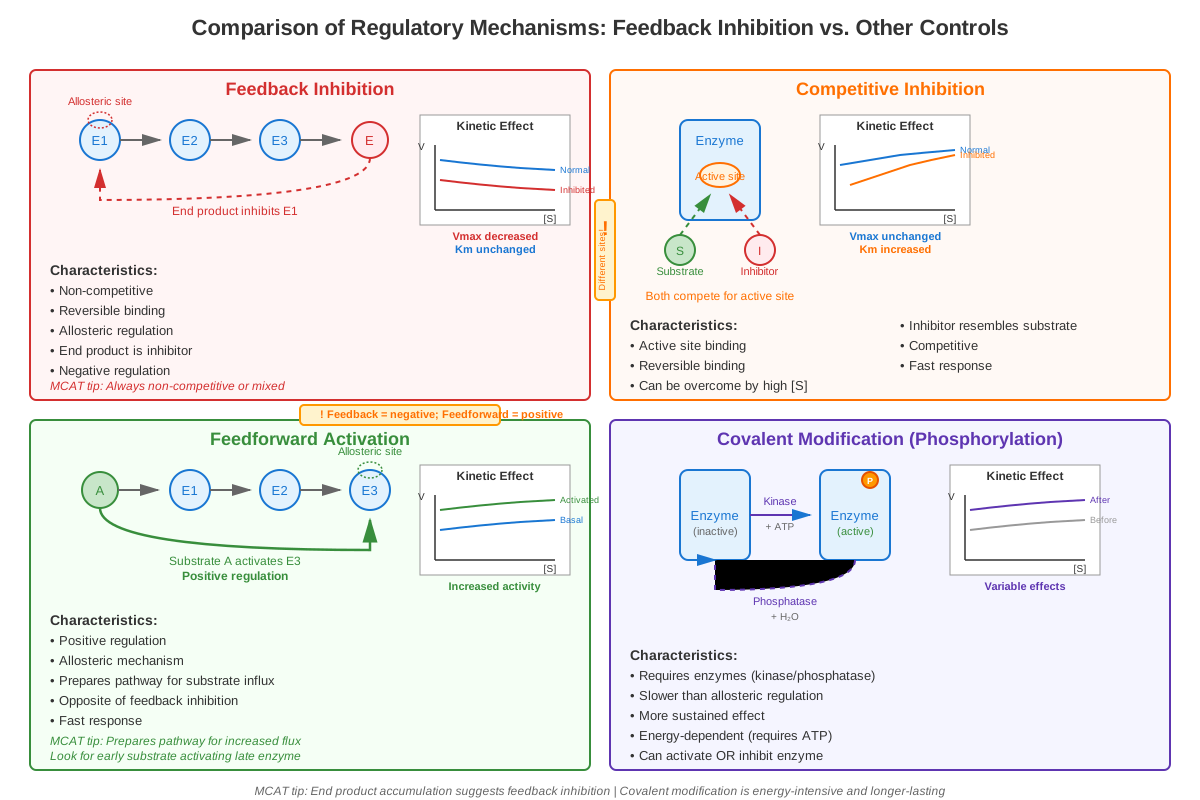
- Competitive inhibition: The inhibitor competes with substrate for the active site; feedback inhibition uses allosteric sites
- Feedforward activation: A substrate or early intermediate activates a downstream enzyme to prepare for increased flux; this is opposite to feedback inhibition
- Transcriptional regulation: Changes in enzyme amount through altered gene expression; feedback inhibition changes enzyme activity without changing enzyme levels (though some systems use both)
- Covalent modification: Phosphorylation or other modifications alter activity; feedback inhibition is non-covalent and rapidly reversible
- Compartmentalization: Separating enzymes and substrates spatially; feedback inhibition operates through direct molecular interaction
The MCAT frequently asks students to distinguish these mechanisms or identify when multiple regulatory strategies work together. For example, cholesterol regulates HMG-CoA reductase through both feedback inhibition (immediate) and transcriptional repression (longer-term), providing both rapid and sustained control.
Evolutionary and Energetic Advantages
Feedback inhibition provides multiple selective advantages that explain its ubiquity across all domains of life. Metabolic efficiency is paramount: biosynthetic pathways consume ATP and reducing equivalents (NADH, NADPH); preventing overproduction conserves these precious resources. Homeostasis is maintained automatically without requiring external sensors or complex regulatory circuits. Rapid response occurs because allosteric regulation is essentially instantaneous, unlike transcriptional changes requiring minutes to hours. Substrate conservation prevents depletion of precursors needed for other pathways. Prevention of toxicity stops accumulation of intermediates that might be harmful at high concentrations.
From an evolutionary perspective, feedback inhibition represents an elegant solution to the problem of metabolic control. The regulatory site and end-product binding capability likely evolved through mutations that created new binding pockets on existing enzymes. Once established, this mechanism provides such strong selective advantage that it has been maintained across billions of years of evolution, appearing in bacteria, archaea, and eukaryotes with remarkably similar logic despite different molecular details.
Concept Relationships
Feedback inhibition sits at the intersection of multiple biochemical concepts, serving as an integrative principle that connects enzyme mechanics to systems-level metabolism. The relationship map flows as follows:
Enzyme structure and function → enables → Allosteric regulation → implements → Feedback inhibition → controls → Metabolic pathway flux → maintains → Cellular homeostasis
More specifically, understanding protein conformational changes is prerequisite to grasping how allosteric effectors work. Allosteric regulation provides the molecular mechanism through which feedback inhibition operates. Metabolic pathways provide the context—feedback inhibition only makes sense when considering multi-step reaction sequences. Thermodynamics explains why targeting irreversible (committed) steps is crucial. Cellular energy status connects to feedback inhibition because many biosynthetic pathways are regulated based on ATP/ADP ratios alongside end-product levels.
Feedback inhibition also connects forward to more complex topics: Metabolic integration examines how multiple feedback-inhibited pathways coordinate. Signal transduction sometimes modulates feedback inhibition sensitivity. Pharmacology exploits feedback inhibition mechanisms (statins, sulfonamides). Genetic regulation often works in parallel with feedback inhibition—genes encoding biosynthetic enzymes are frequently repressed when end products accumulate (like the trp operon), providing both immediate (allosteric) and long-term (transcriptional) control.
The relationship between feedback inhibition and enzyme kinetics deserves special attention. Feedback inhibition produces non-competitive inhibition kinetics (decreased Vmax, unchanged or slightly altered Km), distinguishing it from competitive inhibition. Understanding Lineweaver-Burk plots and how different inhibition types affect them is essential for MCAT success, as passages frequently present kinetic data requiring interpretation.
High-Yield Facts
⭐ Feedback inhibition targets the first committed step of a metabolic pathway, not the final step, to prevent accumulation of all intermediates and maximize efficiency.
⭐ Feedback inhibition operates through allosteric (non-competitive) mechanisms, decreasing Vmax without significantly affecting Km, distinguishing it from competitive inhibition.
⭐ The end product binds to a regulatory site distinct from the active site, inducing conformational changes that reduce catalytic activity.
⭐ Isoleucine inhibits threonine deaminase in bacterial amino acid biosynthesis—the classic textbook example of feedback inhibition.
⭐ Aspartate transcarbamoylase (ATCase) is inhibited by CTP (feedback inhibition) and activated by ATP (feedforward activation), balancing nucleotide pools.
- Feedback inhibition is rapidly reversible, allowing immediate response to changing metabolic demands without requiring protein synthesis or degradation.
- Multivalent feedback inhibition strategies (concerted, sequential, cooperative, enzyme multiplicity) prevent premature pathway shutdown when multiple products derive from a common precursor.
- HMG-CoA reductase, the rate-limiting enzyme in cholesterol synthesis, is feedback-inhibited by cholesterol and is the target of statin drugs.
- Feedback inhibition provides evolutionary advantages including energy conservation, substrate preservation, toxicity prevention, and automatic homeostasis.
- Many feedback-inhibited enzymes are oligomeric proteins exhibiting cooperative binding, producing sigmoidal rather than hyperbolic kinetic curves.
- Feedback inhibition differs from transcriptional regulation in speed (seconds versus minutes-hours) and mechanism (activity change versus amount change).
- Bacterial feedback inhibition pathways often differ from human ones, making them excellent antibiotic targets (e.g., sulfonamides targeting folate synthesis).
- The first committed step is the first irreversible reaction after a branch point that uniquely commits substrates to a specific end product.
- Feedback inhibition can be overcome by substrate saturation in some cases, but this typically requires non-physiological substrate concentrations.
- Mutations eliminating feedback sensitivity often cause metabolic disorders characterized by overproduction of pathway end products and depletion of precursors.
Quick check — test yourself on Feedback inhibition so far.
Try Flashcards →Common Misconceptions
Misconception: Feedback inhibition always targets the very first enzyme in a pathway.
Correction: Feedback inhibition targets the first committed step—the first irreversible reaction after any branch point that commits substrates specifically to producing that end product. If the first enzyme in a sequence feeds multiple pathways, it typically is not the feedback inhibition target because inhibiting it would inappropriately shut down all downstream products.
Misconception: Feedback inhibition is the same as competitive inhibition because both involve an inhibitor reducing enzyme activity.
Correction: Feedback inhibition operates through allosteric (non-competitive) mechanisms where the end product binds to a regulatory site distinct from the active site. This decreases Vmax while leaving Km relatively unchanged. Competitive inhibition involves the inhibitor competing with substrate for the active site, increasing apparent Km while leaving Vmax unchanged. These produce different kinetic signatures on Lineweaver-Burk plots.
Misconception: When feedback inhibition occurs, the enzyme is permanently inactivated.
Correction: Feedback inhibition is rapidly and completely reversible. When end product concentrations decrease (due to consumption in other processes), the product dissociates from the regulatory site, the enzyme returns to its active conformation, and pathway flux resumes. This reversibility is essential for the dynamic regulation of metabolism.
Misconception: Feedback inhibition completely stops a pathway when any end product accumulates.
Correction: In pathways producing multiple end products from a common precursor, cells use multivalent feedback inhibition strategies (concerted, sequential, cooperative, or enzyme multiplicity) to prevent one product from completely shutting down synthesis of others. Complete inhibition typically requires multiple products to accumulate simultaneously, or each branch has independent regulation.
Misconception: Feedback inhibition and negative feedback in endocrine systems are identical mechanisms.
Correction: While both involve end products reducing their own production, the mechanisms differ fundamentally. Biochemical feedback inhibition involves direct allosteric binding of a small molecule to an enzyme. Endocrine negative feedback involves hormones affecting gene transcription in distant tissues through receptor-mediated signaling cascades. The principles are analogous but the molecular mechanisms are distinct.
Misconception: Feedback inhibition always involves a single end product inhibiting a single enzyme.
Correction: Many sophisticated variations exist: multiple end products may inhibit one enzyme (multivalent inhibition), one product may inhibit multiple enzymes in a pathway (sequential inhibition), or products may work synergistically (cooperative inhibition). Additionally, some enzymes experience both feedback inhibition by one molecule and feedforward activation by another (like ATCase).
Misconception: Increasing substrate concentration can always overcome feedback inhibition.
Correction: Because feedback inhibition is non-competitive (allosteric), increasing substrate concentration does not effectively overcome it the way it overcomes competitive inhibition. The inhibitor and substrate bind to different sites, so they don't compete. While extremely high substrate concentrations might partially overcome inhibition in some cases, this typically requires non-physiological levels.
Worked Examples
Example 1: Interpreting Experimental Data
Scenario: Researchers studying bacterial threonine metabolism measure threonine deaminase activity under different conditions. They obtain the following data:
- Condition A (no additions): Vmax = 100 μmol/min, Km = 5 mM
- Condition B (+ 10 mM isoleucine): Vmax = 40 μmol/min, Km = 5 mM
- Condition C (+ 10 mM valine): Vmax = 100 μmol/min, Km = 5 mM
Question: What type of regulation does isoleucine exert on threonine deaminase, and what is the biological significance?
Solution:
Step 1: Analyze the kinetic parameters. When isoleucine is added, Vmax decreases from 100 to 40 μmol/min (60% reduction), but Km remains unchanged at 5 mM. This kinetic signature indicates non-competitive inhibition, characteristic of allosteric regulation.
Step 2: Consider the biological context. Isoleucine is synthesized from threonine through a multi-step pathway, with threonine deaminase catalyzing the first committed step. The fact that isoleucine (the end product) inhibits threonine deaminase (the first enzyme) identifies this as feedback inhibition.
Step 3: Evaluate specificity. Valine, a structurally similar amino acid not produced from threonine, has no effect on enzyme activity. This demonstrates that the inhibition is specific to the pathway end product, not a general effect of amino acids.
Step 4: Explain biological significance. This feedback inhibition prevents overproduction of isoleucine. When bacterial cells have sufficient isoleucine (from synthesis or environmental uptake), the amino acid allosterically inhibits threonine deaminase, shutting down its own synthesis. This conserves threonine (which can be used for protein synthesis or other pathways) and saves the ATP and reducing equivalents required for the biosynthetic pathway. When isoleucine is consumed in protein synthesis, inhibition is relieved and synthesis resumes automatically.
MCAT Connection: This example integrates enzyme kinetics interpretation (distinguishing inhibition types by their effects on Vmax and Km), metabolic logic (why feedback inhibition targets the first committed step), and biological efficiency (resource conservation). MCAT passages frequently present similar kinetic data requiring students to identify the regulatory mechanism and explain its significance.
Example 2: Predicting Metabolic Consequences of Mutations
Scenario: A bacterial strain carries a mutation in the gene encoding aspartate transcarbamoylase (ATCase), the enzyme catalyzing the first committed step in pyrimidine synthesis. The mutant enzyme retains full catalytic activity but no longer binds CTP (the end product). Researchers grow wild-type and mutant bacteria in media with varying CTP concentrations and measure:
- Intracellular CTP levels
- Intracellular carbamoyl aspartate levels (the product of the ATCase reaction)
- Bacterial growth rates
Question: Predict the experimental outcomes for the mutant strain compared to wild-type, and explain the underlying biochemical principles.
Solution:
Step 1: Identify the regulatory defect. The mutation eliminates CTP binding to ATCase, abolishing feedback inhibition while preserving catalytic function. The mutant enzyme will be constitutively active regardless of CTP levels.
Step 2: Predict intracellular CTP levels. In wild-type bacteria, when CTP accumulates, it inhibits ATCase, reducing further synthesis until CTP is consumed. In the mutant, ATCase remains active even when CTP is abundant, causing CTP overproduction. The mutant strain will have elevated intracellular CTP levels compared to wild-type, especially when grown in CTP-rich media where wild-type cells would shut down synthesis.
Step 3: Predict carbamoyl aspartate levels. Since mutant ATCase is not inhibited by CTP, it will continuously produce carbamoyl aspartate. The mutant will show elevated carbamoyl aspartate levels compared to wild-type, particularly when CTP is abundant (conditions where wild-type ATCase would be inhibited).
Step 4: Predict growth rates. Overproduction of pyrimidines wastes cellular resources—ATP, amino acids (aspartate), and reducing equivalents. The mutant strain will likely show reduced growth rates compared to wild-type because it diverts resources into unnecessary CTP synthesis. This growth defect will be most pronounced in nutrient-limited conditions where resource conservation is critical. In CTP-supplemented media, the growth defect might be even more severe because the cells are synthesizing CTP unnecessarily while also importing it.
Step 5: Consider broader metabolic effects. Excessive CTP synthesis depletes the aspartate pool, potentially limiting synthesis of other aspartate-derived products (lysine, methionine, threonine, isoleucine). The mutant might show amino acid auxotrophy (inability to grow without supplementation) if aspartate becomes limiting.
MCAT Connection: This example requires students to: (1) understand that feedback inhibition is distinct from catalytic activity, (2) predict metabolic consequences when regulation is disrupted, (3) recognize that unregulated biosynthesis wastes resources and impairs fitness, and (4) consider how one pathway's dysregulation affects others through shared precursors. MCAT passages frequently present genetic or pharmacological perturbations and ask students to predict outcomes, testing conceptual understanding rather than memorization.
Example 3: Distinguishing Regulatory Mechanisms
Scenario: An MCAT passage describes three enzymes (X, Y, and Z) in different metabolic pathways. Kinetic studies with and without potential regulatory molecules yield:
- Enzyme X + Molecule A: Vmax unchanged, Km increased 5-fold
- Enzyme Y + Molecule B: Vmax decreased 70%, Km unchanged
- Enzyme Z + Molecule C: Vmax unchanged, Km unchanged, but enzyme amount decreased 80%
Question: Identify the regulatory mechanism affecting each enzyme and explain which represents feedback inhibition.
Solution:
Enzyme X: The unchanged Vmax but increased Km indicates competitive inhibition. Molecule A competes with substrate for the active site, requiring higher substrate concentrations to reach half-maximal velocity. This is NOT feedback inhibition because it doesn't involve allosteric regulation and affects Km rather than Vmax.
Enzyme Y: The decreased Vmax with unchanged Km indicates non-competitive (allosteric) inhibition. Molecule B binds to a site distinct from the active site, reducing catalytic efficiency without affecting substrate binding affinity. This kinetic signature is consistent with feedback inhibition, though we would need additional information (Is Molecule B the pathway end product? Is Enzyme Y at the first committed step?) to confirm it definitively. The mechanism is correct for feedback inhibition.
Enzyme Z: The unchanged kinetic parameters but decreased enzyme amount indicates transcriptional or translational regulation. Molecule C affects how much enzyme is produced, not the activity of existing enzyme molecules. This represents genetic regulation, not feedback inhibition. (Note: Some pathways use both mechanisms—feedback inhibition for rapid response and transcriptional repression for sustained control.)
MCAT Strategy: When distinguishing regulatory mechanisms, focus on what changes:
- Km changes → competitive inhibition (active site competition)
- Vmax changes, Km stable → non-competitive/allosteric inhibition (potential feedback inhibition)
- Enzyme amount changes → genetic regulation
- Multiple parameters change → mixed or uncompetitive inhibition
Feedback inhibition specifically refers to allosteric inhibition by a pathway end product, so it will show the Vmax-decreased, Km-unchanged pattern, but not all inhibition with this pattern is feedback inhibition—the inhibitor must be the end product of the pathway containing the inhibited enzyme.
Exam Strategy
Approaching MCAT Questions on Feedback Inhibition
When encountering feedback inhibition questions, follow this systematic approach:
- Identify the pathway structure: Locate the first committed step (first irreversible reaction after any branch point). This is the most likely target for feedback inhibition.
- Recognize kinetic signatures: Feedback inhibition produces non-competitive inhibition patterns (decreased Vmax, unchanged Km). On Lineweaver-Burk plots, lines intersect on the x-axis (same -1/Km) but have different y-intercepts (different 1/Vmax).
- Trace the regulatory logic: The end product should inhibit an early enzyme, not a late one. If a passage describes a product inhibiting the last enzyme in its own synthesis, that's likely incorrect or a distractor.
- Consider the biological context: Feedback inhibition makes metabolic sense—it prevents overproduction, conserves resources, and maintains homeostasis. If an answer choice describes regulation that would waste resources or create instability, it's probably wrong.
- Distinguish from other mechanisms: Watch for questions that mix feedback inhibition with competitive inhibition, feedforward activation, or transcriptional regulation. Each has distinct characteristics.
Trigger Words and Phrases
Watch for these high-yield phrases that signal feedback inhibition:
- "End product inhibits..." → likely feedback inhibition
- "First committed step" → target enzyme for feedback inhibition
- "Allosteric inhibition by..." → mechanism of feedback inhibition
- "Vmax decreased, Km unchanged" → kinetic signature
- "Prevents overproduction" → function of feedback inhibition
- "Rapidly reversible regulation" → characteristic of feedback inhibition
- "Non-competitive inhibition" → mechanism type
- "Regulatory site distinct from active site" → allosteric mechanism
Phrases that suggest NOT feedback inhibition:
- "Competes with substrate" → competitive inhibition
- "Increases Km" → competitive inhibition
- "Changes enzyme amount" → transcriptional regulation
- "Activates downstream enzyme" → feedforward activation
- "Phosphorylation" → covalent modification
Process of Elimination Tips
When multiple answer choices seem plausible:
- Eliminate answers describing competitive inhibition if the question asks about feedback inhibition—they're mechanistically distinct.
- Eliminate answers placing inhibition at the wrong step—feedback inhibition targets the first committed step, not the last step or random middle steps.
- Eliminate answers with incorrect kinetic predictions—if an answer says feedback inhibition increases Km or doesn't affect Vmax, it's wrong.
- Eliminate answers that violate metabolic logic—regulation should make biological sense (conserve resources, prevent toxicity, maintain homeostasis).
- For "EXCEPT" questions, remember that feedback inhibition is: allosteric, reversible, targets first committed step, decreases Vmax, and involves end products. Any answer choice describing a different characteristic is the exception.
Time Allocation Advice
Feedback inhibition questions typically fall into two categories:
Conceptual questions (30-45 seconds): These test definitions, mechanisms, or general principles. They're usually straightforward if you know the material. Don't overthink—your first instinct is usually correct.
Data interpretation questions (60-90 seconds): These present kinetic data, graphs, or experimental results requiring analysis. Allocate time to:
- Read the data carefully (20-30 seconds)
- Identify the pattern (Vmax vs. Km changes) (15-20 seconds)
- Connect to feedback inhibition principles (15-20 seconds)
- Eliminate wrong answers and select the best option (10-20 seconds)
If a passage contains multiple feedback inhibition questions, answer the straightforward conceptual ones first to build confidence, then tackle the data interpretation questions. If you're stuck on a complex question, flag it and return after completing easier questions—sometimes later questions provide hints about earlier ones.
Memory Techniques
Mnemonics
"FIFE" - Feedback Inhibition Features Explained:
- First committed step (target)
- Inhibitor is end product
- Fast and reversible
- Effector site (allosteric, not active site)
"VANK" - Kinetic signature:
- Vmax decreased
- Allosteric mechanism
- Non-competitive
- Km unchanged
"PACE" - Why feedback inhibition evolved:
- Prevents overproduction
- Automatic homeostasis
- Conserves energy/resources
- Efficient regulation
Visualization Strategies
The Assembly Line Analogy: Visualize a metabolic pathway as a factory assembly line producing cars (end product). Feedback inhibition is like the warehouse manager (end product) telling the first station (first committed step) to slow down when the warehouse is full. The manager doesn't tell the last station to stop (that would leave partially built cars on the line). The manager doesn't work on the line themselves (allosteric site, not active site). When cars are sold and the warehouse empties, the manager tells the first station to resume production (reversible).
The Thermostat Model: Think of feedback inhibition like a thermostat. The room temperature (end product concentration) is sensed by the thermostat (allosteric site on the enzyme). When temperature reaches the set point (sufficient product), the thermostat turns off the furnace (enzyme activity decreases). When temperature drops (product consumed), the furnace turns back on (enzyme reactivates). This captures the automatic, reversible, self-regulating nature of feedback inhibition.
The Traffic Light System: Imagine the first committed step enzyme as a traffic light controlling entry into a pathway. Green light = high enzyme activity (low product levels). Yellow light = moderate activity (rising product). Red light = low activity (high product levels). The end product acts as the traffic sensor that changes the light color. This visualization helps remember that regulation occurs at the entry point (first committed step) and responds to downstream conditions (product levels).
Acronyms
ATCase - Remember this key example:
- Aspartate Transcarbamoylase
- Activated by ATP
- Turned off by CTP
CRISP - Characteristics distinguishing feedback inhibition from competitive inhibition:
- Conformational change (allosteric)
- Regulatory site (not active site)
- Inhibitor is end product
- Separate from substrate binding
- Preserves Km (Vmax decreases)
Summary
Feedback inhibition represents one of the most efficient and elegant regulatory mechanisms in biochemistry, allowing cells to automatically maintain metabolic homeostasis by using pathway end products to inhibit the first committed step of their own synthesis. This allosteric, non-competitive regulation decreases enzyme Vmax without affecting Km, distinguishing it from competitive inhibition and producing characteristic kinetic signatures testable on the MCAT. By targeting the first committed step—the first irreversible reaction after a branch point that uniquely commits substrates to a specific product—feedback inhibition prevents accumulation of all downstream intermediates, conserves cellular resources (ATP, reducing equivalents, and precursor molecules), and responds rapidly and reversibly to changing metabolic demands. Classic examples including isoleucine inhibition of threonine deaminase, CTP inhibition of aspartate transcarbamoylase, and cholesterol inhibition of HMG-CoA reductase illustrate both the fundamental principle and its clinical relevance. Understanding feedback inhibition requires integrating enzyme kinetics, protein structure, metabolic pathway organization, and cellular economy—making it a truly integrative MCAT topic that bridges molecular mechanisms and systems-level physiology. Mastery of this concept enables students to analyze experimental data, predict metabolic consequences of regulatory disruptions, and distinguish feedback inhibition from other regulatory strategies, all high-yield skills for MCAT success.
Key Takeaways
- Feedback inhibition is allosteric regulation where a pathway's end product inhibits the enzyme catalyzing the first committed step, creating automatic, reversible metabolic control
- The mechanism decreases Vmax while leaving Km unchanged (non-competitive inhibition), distinguishing it from competitive inhibition which increases Km
- Targeting the first committed step (not the last step) prevents accumulation of all intermediates and maximizes efficiency by stopping substrate entry into the pathway
- Classic MCAT examples include isoleucine→threonine deaminase, CTP→ATCase (also activated by ATP), and cholesterol→HMG-CoA reductase (statin target)
- Multivalent feedback inhibition strategies (concerted, sequential, cooperative, enzyme multiplicity) prevent premature shutdown when multiple products derive from a common precursor
- Feedback inhibition provides evolutionary advantages: energy conservation, rapid response, automatic homeostasis, substrate preservation, and toxicity prevention
- On the MCAT, recognize feedback inhibition through kinetic signatures, pathway logic (end product inhibiting early enzyme), and allosteric mechanisms distinct from competitive inhibition or transcriptional regulation
Related Topics
Allosteric Regulation and Cooperativity: Feedback inhibition operates through allosteric mechanisms; deeper study of hemoglobin cooperativity, allosteric models (MWC vs. KNF), and sigmoidal kinetics builds on feedback inhibition principles and explains how proteins integrate multiple signals.
Metabolic Pathway Integration: Understanding how multiple feedback-inhibited pathways coordinate (e.g., purine and pyrimidine synthesis balancing, amino acid biosynthesis networks) extends single-pathway feedback inhibition to systems-level metabolism.
Enzyme Kinetics and Inhibition: Comprehensive study of Michaelis-Menten kinetics, Lineweaver-Burk plots, competitive vs. non-competitive vs. uncompetitive inhibition provides the quantitative foundation for analyzing feedback inhibition data.
Gene Regulation and Operons: Many pathways use both feedback inhibition (immediate) and transcriptional repression (sustained) for coordinated control; the trp operon exemplifies this dual regulation, with tryptophan both inhibiting enzymes and repressing their synthesis.
Pharmacology and Drug Mechanisms: Many drugs exploit feedback inhibition pathways—statins mimicking feedback inhibition of cholesterol synthesis, sulfonamides targeting bacterial folate synthesis, and methotrexate affecting nucleotide metabolism all build on feedback inhibition principles.
Cellular Signaling and Second Messengers: Feedback inhibition principles extend beyond metabolism to signaling cascades where products inhibit upstream activators, creating self-limiting responses essential for proper signal transduction.
Practice CTA
Now that you've mastered the core concepts of feedback inhibition, it's time to cement your understanding through active practice. Work through the practice questions and flashcards associated with this topic, focusing on distinguishing feedback inhibition from other regulatory mechanisms, interpreting kinetic data, and predicting metabolic consequences of regulatory disruptions. Pay special attention to passage-based questions that integrate feedback inhibition with experimental design and data analysis—these mirror the MCAT's emphasis on scientific reasoning. Remember that feedback inhibition appears frequently on the MCAT precisely because it integrates so many high-yield concepts: enzyme kinetics, metabolic logic, protein structure, and cellular economy. Each practice question you complete strengthens not just your knowledge of feedback inhibition but your overall biochemistry mastery. You've got this—now prove it through practice!
Sign up free to keep reading
Create a free AnvayaPrep account to finish this MCAT guide on Feedback inhibition — plus flashcards and practice questions.