Overview
Km, or the Michaelis constant, stands as one of the most fundamental parameters in enzyme kinetics and represents a cornerstone concept for MCAT Biochemistry. This constant quantifies the substrate concentration at which an enzyme operates at half its maximum velocity, providing critical insight into enzyme-substrate affinity and catalytic efficiency. Understanding Km enables students to predict enzyme behavior under varying physiological conditions, interpret experimental data from passage-based questions, and analyze how drugs and inhibitors modulate enzymatic activity—all high-yield skills for the MCAT.
The significance of Km MCAT questions extends beyond simple memorization. This parameter bridges multiple biochemical concepts including enzyme kinetics, metabolic regulation, and pharmacology. On the MCAT, Km frequently appears in data interpretation passages where students must analyze Lineweaver-Burk plots, compare enzyme variants, or predict the effects of competitive inhibitors. The ability to rapidly interpret Km values and understand their physiological implications distinguishes high-scoring students from those who struggle with enzyme-related questions.
Mastering Km requires understanding its derivation from the Michaelis-Menten equation, its relationship to enzyme-substrate affinity, and its practical applications in both research and clinical contexts. This topic integrates mathematical reasoning with biological intuition, making it an ideal testing ground for the MCAT's emphasis on critical thinking and data analysis. Students who develop a robust conceptual framework for Km will find themselves better equipped to tackle complex passages involving enzyme regulation, metabolic pathways, and drug mechanisms—all frequent themes in the Biochemistry and Biological Sciences sections.
Learning Objectives
- [ ] Define Km using accurate Biochemistry terminology
- [ ] Explain why Km matters for the MCAT
- [ ] Apply Km to exam-style questions
- [ ] Identify common mistakes related to Km
- [ ] Connect Km to related Biochemistry concepts
- [ ] Calculate Km from experimental data and graphical representations
- [ ] Predict how different types of enzyme inhibitors affect Km values
- [ ] Compare enzyme efficiency using both Km and kcat/Km ratios
- [ ] Interpret Lineweaver-Burk plots to determine Km changes
Prerequisites
- Basic enzyme structure and function: Understanding active sites, substrate binding, and catalytic mechanisms provides the foundation for comprehending how Km reflects enzyme-substrate interactions
- Chemical equilibrium and kinetics: Familiarity with rate constants, equilibrium expressions, and reaction rates enables interpretation of the mathematical relationships underlying Km
- Graph interpretation skills: Ability to read and analyze plots (especially hyperbolic and linear graphs) is essential for extracting Km values from experimental data
- Concentration units and calculations: Proficiency with molarity and unit conversions allows accurate interpretation of Km values typically expressed in mM or μM
Why This Topic Matters
Km Biochemistry concepts appear with remarkable frequency on the MCAT, featuring in approximately 15-20% of enzyme-related questions across both the Chemical and Physical Foundations of Biological Systems and Biological and Biochemical Foundations of Living Systems sections. The MCAT consistently tests Km through passage-based questions that present experimental data, requiring students to interpret graphs, compare enzyme variants, or predict the effects of mutations or inhibitors on enzyme kinetics.
In clinical and research contexts, Km values guide drug development and therapeutic decision-making. Pharmaceutical companies design competitive inhibitors with Km values lower than natural substrates to ensure effective enzyme blockade at physiological concentrations. Clinicians use Km understanding when interpreting enzyme assays, predicting drug-drug interactions, and understanding genetic diseases caused by enzyme mutations that alter substrate affinity. For example, certain hemoglobin variants exhibit altered oxygen-binding characteristics that can be understood through Km-analogous parameters.
Common MCAT passage formats include: (1) experimental passages presenting enzyme kinetics data with Michaelis-Menten or Lineweaver-Burk plots requiring Km determination; (2) research studies comparing wild-type and mutant enzymes with different Km values; (3) pharmacology passages describing competitive inhibitors and their effects on apparent Km; and (4) metabolic regulation passages where Km values determine which enzyme dominates at specific substrate concentrations. Recognizing these patterns enables efficient passage navigation and accurate question answering.
Core Concepts
The Michaelis-Menten Equation and Km Definition
The Michaelis-Menten equation forms the mathematical foundation for understanding enzyme kinetics:
v = (Vmax[S]) / (Km + [S])Where:
- v = initial reaction velocity
- Vmax = maximum reaction velocity
- [S] = substrate concentration
- Km = Michaelis constant
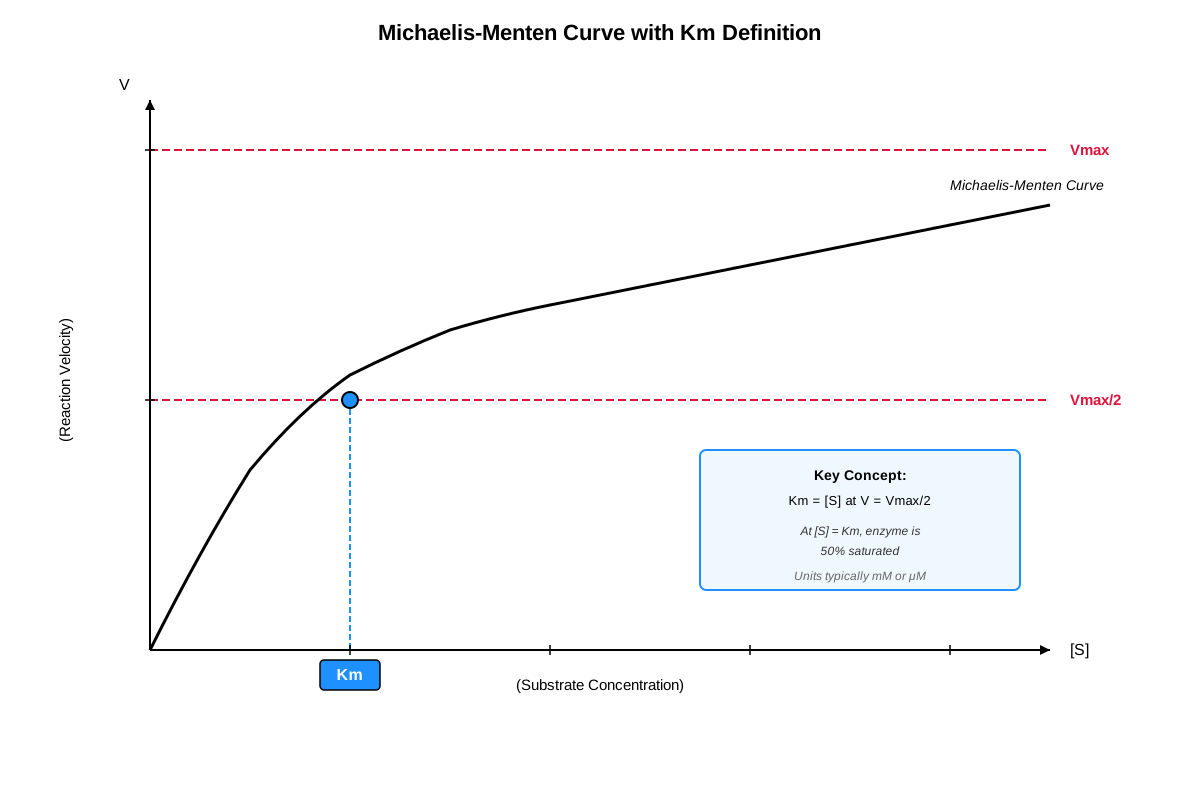
Km is formally defined as the substrate concentration at which the reaction velocity equals one-half of Vmax (v = Vmax/2). This definition emerges directly from the Michaelis-Menten equation: when [S] = Km, the equation simplifies to v = Vmax/2. The units of Km match those of substrate concentration, typically expressed as millimolar (mM) or micromolar (μM) for the MCAT.
The derivation of Km originates from the enzyme-substrate complex formation model:
E + S ⇌ ES → E + PUnder steady-state assumptions, Km equals (k₋₁ + k₂)/k₁, where k₁ represents the rate constant for ES complex formation, k₋₁ represents the dissociation rate constant, and k₂ represents the catalytic rate constant. This mathematical relationship reveals that Km reflects both the stability of the ES complex and the catalytic efficiency of the enzyme.
Km as an Inverse Measure of Enzyme-Substrate Affinity
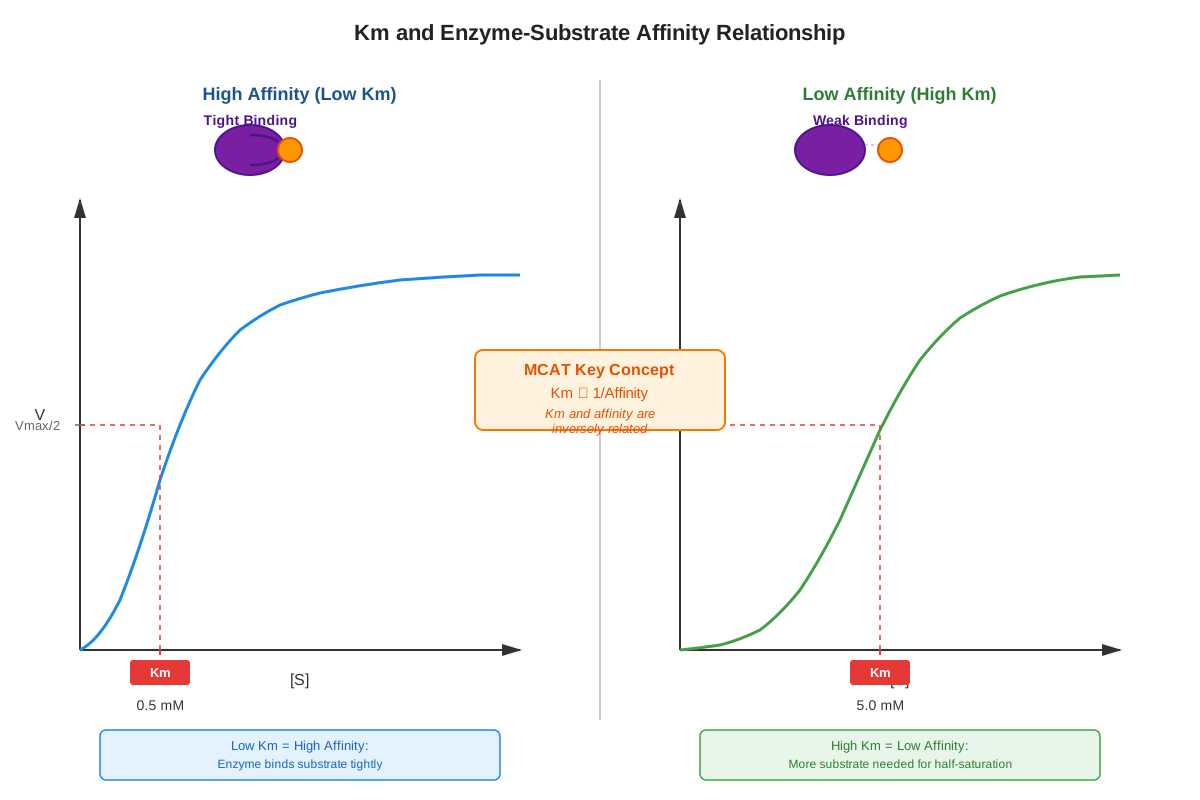
A critical conceptual understanding for the MCAT involves recognizing that Km inversely correlates with enzyme-substrate affinity. A low Km value (typically < 10 μM) indicates high affinity—the enzyme binds substrate tightly and reaches half-maximal velocity at low substrate concentrations. Conversely, a high Km value (> 1 mM) indicates low affinity—substantial substrate concentrations are required to achieve half-maximal velocity.
This inverse relationship often confuses students but makes intuitive sense: if an enzyme has high affinity for its substrate, it doesn't need much substrate present to become saturated and work efficiently. The enzyme "grabs onto" substrate molecules readily, achieving half-maximal velocity at low concentrations. An enzyme with low affinity requires abundant substrate to compensate for weak binding interactions.
| Km Value | Enzyme-Substrate Affinity | Substrate Needed for Half-Maximal Activity | Physiological Implication |
|---|---|---|---|
| Low (< 10 μM) | High | Small amount | Enzyme active even at low [S] |
| Moderate (10 μM - 1 mM) | Moderate | Moderate amount | Typical for many metabolic enzymes |
| High (> 1 mM) | Low | Large amount | Enzyme responsive to [S] changes |
Interpreting Km in Physiological Context
The relationship between Km and physiological substrate concentration determines enzyme behavior in living systems. When cellular substrate concentration significantly exceeds Km ([S] >> Km), the enzyme operates near Vmax and exhibits zero-order kinetics—the reaction rate becomes independent of substrate concentration. When substrate concentration falls well below Km ([S] << Km), the enzyme exhibits first-order kinetics—reaction velocity directly proportional to substrate concentration.
Enzymes with Km values near physiological substrate concentrations function as sensitive metabolic sensors, responding dynamically to substrate availability. For example, hexokinase (Km ≈ 0.1 mM for glucose) operates below saturation at normal blood glucose (5 mM), allowing it to respond to glucose fluctuations. In contrast, glucokinase (Km ≈ 10 mM for glucose) serves as a glucose sensor in pancreatic β-cells, increasing activity as blood glucose rises after meals.
Graphical Determination of Km
The MCAT frequently presents enzyme kinetics data requiring Km extraction from graphs. The Michaelis-Menten plot displays velocity versus substrate concentration, producing a rectangular hyperbola. Km can be read directly as the substrate concentration corresponding to half of Vmax on this plot. However, accurately determining Vmax from a hyperbolic curve proves challenging, as the curve asymptotically approaches but never quite reaches Vmax.
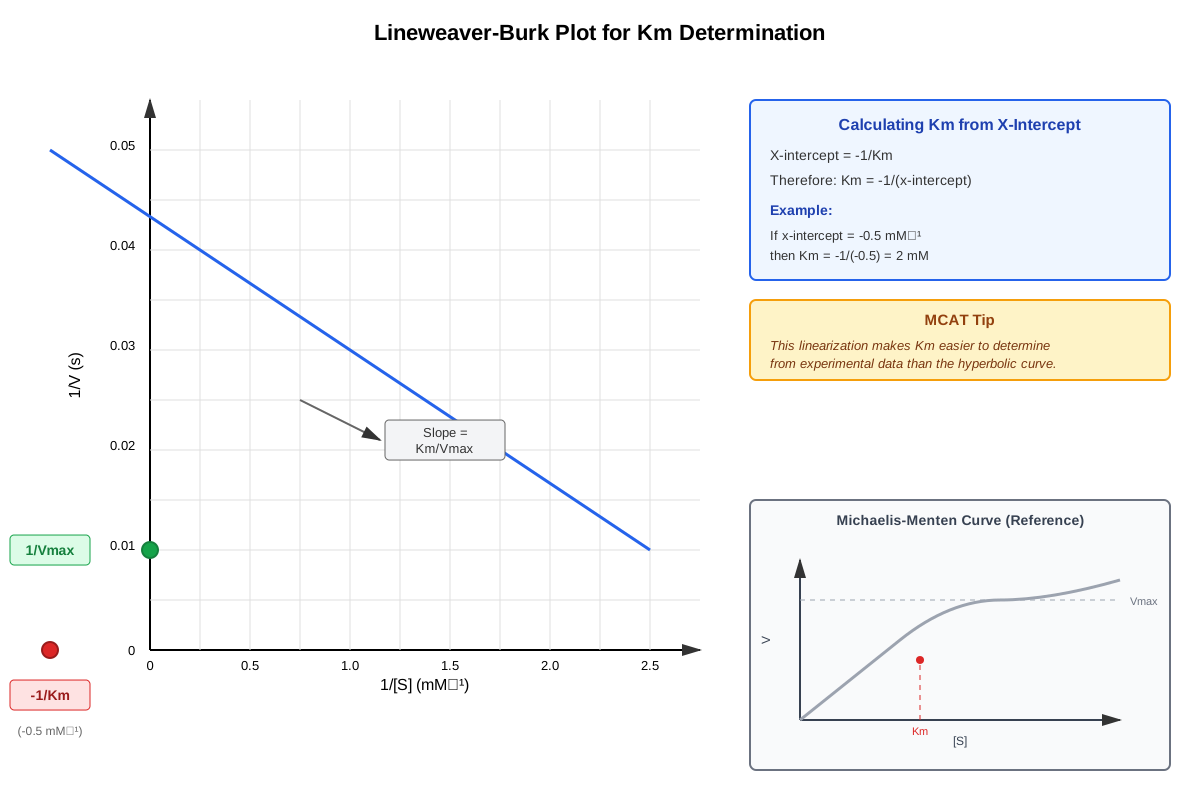
The Lineweaver-Burk plot (double reciprocal plot) transforms the hyperbolic Michaelis-Menten relationship into a linear form:
1/v = (Km/Vmax)(1/[S]) + 1/VmaxThis linear transformation plots 1/v versus 1/[S], yielding:
- y-intercept = 1/Vmax
- x-intercept = -1/Km
- slope = Km/Vmax
The Lineweaver-Burk plot enables more precise Km determination and clearly illustrates how different inhibitor types affect kinetic parameters—a high-yield MCAT topic.
Effects of Enzyme Inhibitors on Km
Understanding how inhibitors modify Km represents essential MCAT knowledge:
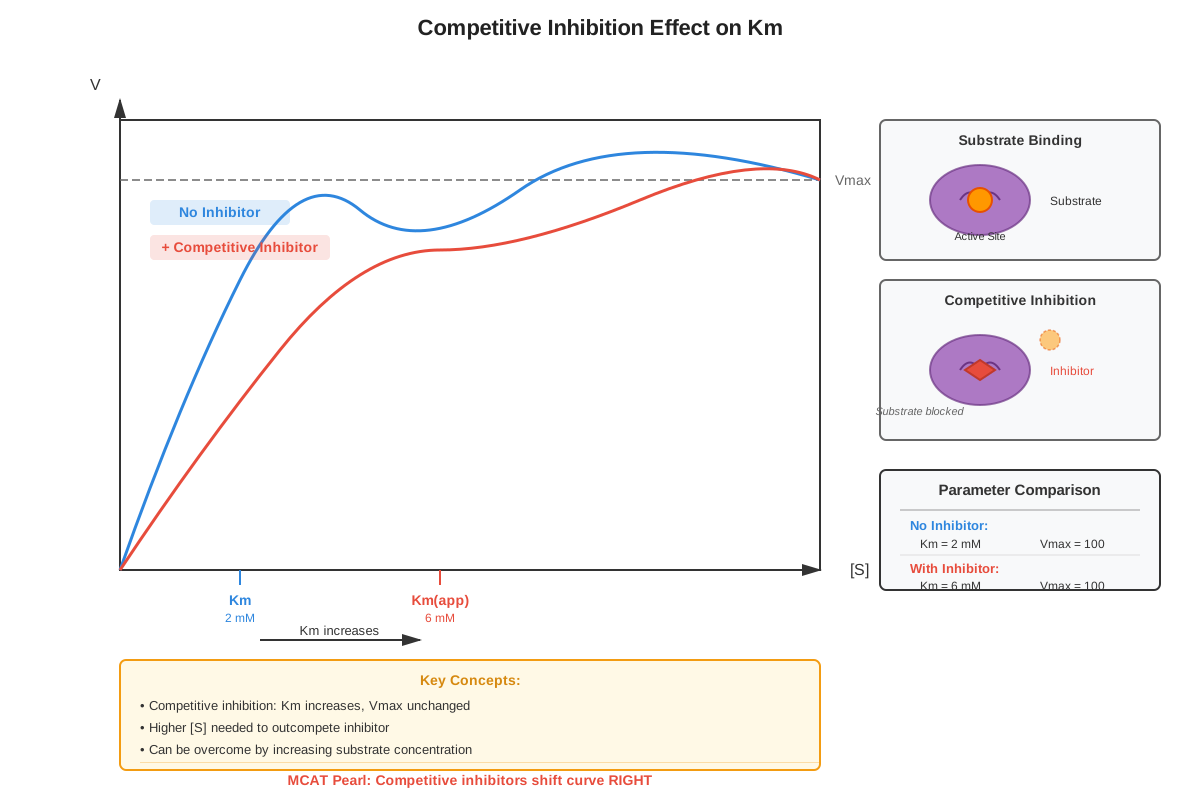
Competitive inhibitors bind the enzyme active site, competing with substrate for binding. These inhibitors increase apparent Km (Km,app) without affecting Vmax. The increased Km,app reflects decreased apparent affinity—more substrate is required to outcompete the inhibitor and achieve half-maximal velocity. On a Lineweaver-Burk plot, competitive inhibition changes the x-intercept (shifts toward zero, indicating increased Km) while maintaining the same y-intercept.
Noncompetitive inhibitors bind enzyme at sites distinct from the active site, reducing catalytic efficiency without affecting substrate binding. These inhibitors decrease Vmax while leaving Km unchanged. The unchanged Km indicates that substrate affinity remains constant—the inhibitor doesn't interfere with substrate binding, only with catalysis. On a Lineweaver-Burk plot, noncompetitive inhibition changes the y-intercept (shifts away from zero, indicating decreased Vmax) while maintaining the same x-intercept.
Uncompetitive inhibitors bind only the ES complex, decreasing both Vmax and Km proportionally. The decreased Km might seem counterintuitive but reflects the inhibitor's stabilization of the ES complex, effectively increasing apparent substrate affinity. On a Lineweaver-Burk plot, uncompetitive inhibition produces parallel lines (same slope, different intercepts).
Catalytic Efficiency and the kcat/Km Ratio
While Km alone provides valuable information about enzyme-substrate affinity, the catalytic efficiency parameter kcat/Km offers a more complete picture of enzyme performance. The turnover number kcat represents the number of substrate molecules converted to product per enzyme molecule per unit time when the enzyme is fully saturated. The ratio kcat/Km indicates how efficiently an enzyme converts substrate to product at low substrate concentrations, approaching the theoretical diffusion limit for highly evolved enzymes.
Enzymes with high kcat/Km ratios (approaching 10⁸ to 10⁹ M⁻¹s⁻¹) are termed "catalytically perfect" because they convert substrate to product at nearly every encounter, limited only by diffusion rates. Comparing kcat/Km values between enzyme variants or different substrates reveals which substrate an enzyme preferentially processes—critical for understanding metabolic pathway regulation and enzyme specificity.
Concept Relationships
The Michaelis constant Km serves as a central hub connecting multiple biochemical concepts. Km emerges from the Michaelis-Menten equation, which itself derives from fundamental principles of chemical kinetics and equilibrium. Understanding rate constants and equilibrium expressions (prerequisites) enables comprehension of why Km equals (k₋₁ + k₂)/k₁ and how this mathematical relationship reflects both binding affinity and catalytic efficiency.
Km directly influences enzyme behavior across different substrate concentration regimes. At [S] << Km, enzymes exhibit first-order kinetics → reaction velocity proportional to substrate concentration → enzymes function as metabolic sensors. At [S] >> Km, enzymes exhibit zero-order kinetics → reaction velocity independent of substrate concentration → enzymes operate at maximum capacity. This relationship connects Km to metabolic regulation and homeostasis.
Enzyme inhibitors modulate Km values, creating a critical link between enzyme kinetics and pharmacology. Competitive inhibitors → increase apparent Km → require higher substrate concentrations to achieve half-maximal velocity → can be overcome by increasing substrate concentration. Noncompetitive inhibitors → maintain Km unchanged → cannot be overcome by substrate → require different therapeutic strategies. These relationships enable prediction of drug effects and interpretation of pharmacological data.
Km values inform catalytic efficiency when combined with kcat. The ratio kcat/Km → indicates substrate preference → guides understanding of enzyme specificity → explains why enzymes process certain substrates preferentially → connects to metabolic pathway flux and regulation. This relationship bridges enzyme kinetics with systems-level metabolism.
Graphical representations of Km (Michaelis-Menten plots and Lineweaver-Burk plots) → enable experimental determination of kinetic parameters → facilitate comparison of enzyme variants → reveal inhibitor mechanisms → appear frequently in MCAT passages requiring data interpretation. Mastering these graphical relationships enhances passage-based question performance.
Quick check — test yourself on Km so far.
Try Flashcards →High-Yield Facts
⭐ Km is defined as the substrate concentration at which reaction velocity equals one-half of Vmax
⭐ Low Km indicates high enzyme-substrate affinity; high Km indicates low affinity (inverse relationship)
⭐ Competitive inhibitors increase apparent Km without changing Vmax
⭐ Noncompetitive inhibitors decrease Vmax without changing Km
⭐ On a Lineweaver-Burk plot, the x-intercept equals -1/Km
- Km units match substrate concentration units (typically mM or μM for MCAT purposes)
- Uncompetitive inhibitors decrease both Km and Vmax proportionally, producing parallel lines on Lineweaver-Burk plots
- When [S] = Km, the enzyme operates at exactly 50% of its maximum velocity
- Enzymes with Km values near physiological substrate concentrations function as effective metabolic sensors
- The catalytic efficiency kcat/Km provides a more complete measure of enzyme performance than Km alone
- Km reflects both the stability of the ES complex and the rate of product formation
- Allosteric regulators can alter Km values, providing a mechanism for metabolic control
- Enzyme mutations that affect substrate binding typically alter Km values
- The Michaelis-Menten equation reduces to v ≈ Vmax when [S] >> Km (zero-order kinetics)
- The Michaelis-Menten equation reduces to v ≈ (Vmax/Km)[S] when [S] << Km (first-order kinetics)
Common Misconceptions
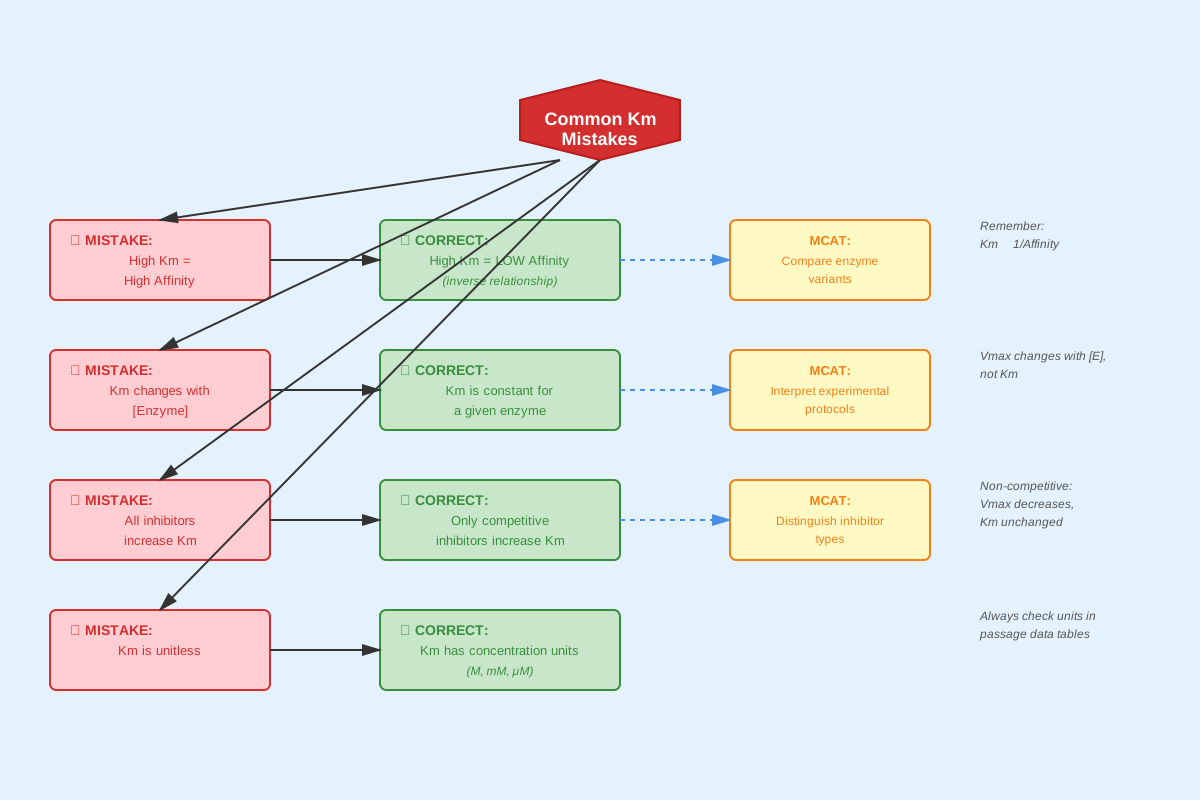
Misconception: Km represents the equilibrium dissociation constant (Kd) for the enzyme-substrate complex.
Correction: While Km approximates Kd under certain conditions (when k₂ << k₋₁), Km actually equals (k₋₁ + k₂)/k₁, incorporating both binding affinity and catalytic rate. Km reflects the overall kinetic behavior of the enzyme, not just binding equilibrium.
Misconception: A high Km value means the enzyme is "better" or more efficient.
Correction: Km indicates substrate affinity, not catalytic efficiency. A high Km means low affinity (more substrate needed for half-maximal activity). Catalytic efficiency is better assessed by kcat/Km. High Km enzymes may be advantageous when metabolic sensing is required, but this doesn't make them inherently "better."
Misconception: Competitive inhibitors decrease Vmax.
Correction: Competitive inhibitors increase apparent Km while leaving Vmax unchanged. At sufficiently high substrate concentrations, the substrate outcompetes the inhibitor, allowing the enzyme to reach the same maximum velocity. This distinguishes competitive from noncompetitive inhibition.
Misconception: On a Lineweaver-Burk plot, the y-intercept represents Km.
Correction: The y-intercept equals 1/Vmax, not Km. The x-intercept equals -1/Km. This distinction is critical for correctly interpreting double reciprocal plots on the MCAT.
Misconception: Km values are constant for a given enzyme regardless of conditions.
Correction: While Km is characteristic of a specific enzyme-substrate pair under defined conditions, factors such as pH, temperature, ionic strength, and the presence of inhibitors or allosteric regulators can alter Km values. The MCAT may test understanding of how environmental factors affect enzyme kinetics.
Misconception: When substrate concentration equals Km, the enzyme is saturated.
Correction: At [S] = Km, the enzyme operates at only 50% of Vmax, meaning it is half-saturated. True saturation occurs when [S] >> Km (typically 10-100 times Km), where the enzyme approaches Vmax and nearly all enzyme molecules exist as ES complexes.
Misconception: Lower Km always means a more physiologically important enzyme.
Correction: While low Km enables enzyme activity at low substrate concentrations, physiological importance depends on multiple factors including enzyme expression levels, regulatory mechanisms, and metabolic context. Some high-Km enzymes (like glucokinase) serve critical regulatory roles precisely because their activity responds to substrate concentration changes.
Worked Examples
Example 1: Determining Km from Experimental Data
Question: An enzyme is assayed at various substrate concentrations, yielding the following data:
| [S] (mM) | Velocity (μmol/min) |
|---|---|
| 0.5 | 1.0 |
| 1.0 | 1.5 |
| 2.0 | 2.0 |
| 5.0 | 2.5 |
| 10.0 | 2.7 |
| 20.0 | 2.9 |
Estimate the Km and Vmax for this enzyme.
Solution:
Step 1: Identify Vmax by examining the data. As substrate concentration increases, velocity approaches an asymptote. The highest velocities (2.7-2.9 μmol/min) suggest Vmax ≈ 3.0 μmol/min.
Step 2: Calculate half of Vmax: 3.0 / 2 = 1.5 μmol/min
Step 3: Find the substrate concentration corresponding to v = 1.5 μmol/min. From the table, when [S] = 1.0 mM, v = 1.5 μmol/min.
Step 4: Therefore, Km ≈ 1.0 mM
Interpretation: This enzyme has moderate substrate affinity (Km = 1.0 mM). At physiological substrate concentrations below 1 mM, the enzyme would operate below half-maximal velocity and respond sensitively to substrate concentration changes. At concentrations above 5-10 mM, the enzyme approaches saturation.
MCAT Connection: This type of data table frequently appears in passage-based questions. Rapidly identifying Vmax (highest velocities) and finding the substrate concentration at half-Vmax enables quick Km determination without complex calculations.
Example 2: Comparing Enzyme Variants and Inhibitor Effects
Question: Wild-type enzyme A has Km = 0.5 mM and Vmax = 100 μmol/min. A mutant form of enzyme A has Km = 2.0 mM and Vmax = 100 μmol/min. When a competitive inhibitor is added to the wild-type enzyme, the apparent Km increases to 2.0 mM while Vmax remains 100 μmol/min.
(a) Compare the substrate affinity of wild-type and mutant enzymes.
(b) At a substrate concentration of 0.5 mM, which enzyme (wild-type, mutant, or inhibited wild-type) operates at the highest percentage of Vmax?
(c) What does the mutation likely affect at the molecular level?
Solution:
(a) Substrate Affinity Comparison:
Wild-type Km = 0.5 mM → high substrate affinity (low Km)
Mutant Km = 2.0 mM → lower substrate affinity (high Km)
The mutant enzyme has 4-fold lower affinity for substrate compared to wild-type. The mutant requires 4 times more substrate to achieve half-maximal velocity.
(b) Calculating Percentage of Vmax at [S] = 0.5 mM:
Using the Michaelis-Menten equation: v = (Vmax[S]) / (Km + [S])
Wild-type: v = (100 × 0.5) / (0.5 + 0.5) = 50 / 1.0 = 50 μmol/min = 50% of Vmax
Mutant: v = (100 × 0.5) / (2.0 + 0.5) = 50 / 2.5 = 20 μmol/min = 20% of Vmax
Inhibited wild-type: v = (100 × 0.5) / (2.0 + 0.5) = 50 / 2.5 = 20 μmol/min = 20% of Vmax
The wild-type enzyme operates at the highest percentage of Vmax (50%) at this substrate concentration.
(c) Molecular Interpretation:
The mutation increases Km without affecting Vmax, indicating altered substrate binding without impaired catalytic capability. The mutation likely affects amino acid residues in or near the active site that participate in substrate recognition and binding but not in catalysis itself. Possible changes include:
- Altered hydrogen bonding networks that stabilize substrate binding
- Modified hydrophobic interactions with substrate
- Changed active site geometry affecting substrate complementarity
MCAT Connection: This example integrates multiple high-yield concepts: interpreting Km changes, applying the Michaelis-Menten equation, comparing enzyme variants, and connecting kinetic parameters to molecular structure. The recognition that the mutant and inhibited wild-type show identical kinetics (same Km and Vmax) demonstrates that competitive inhibition mimics mutations that reduce substrate affinity.
Exam Strategy
When approaching Km MCAT questions, employ a systematic strategy that maximizes accuracy while minimizing time expenditure:
Trigger Word Recognition: Watch for phrases like "substrate concentration at half-maximal velocity," "enzyme-substrate affinity," "competitive inhibitor," or "Lineweaver-Burk plot." These signal that Km concepts are being tested. Questions asking about "apparent Km" specifically indicate inhibitor effects.
Graph Analysis Protocol: When presented with enzyme kinetics graphs, immediately identify the plot type. For Michaelis-Menten plots, locate Vmax (asymptotic value) and find the substrate concentration at half-Vmax. For Lineweaver-Burk plots, remember that x-intercept = -1/Km and y-intercept = 1/Vmax. Competitive inhibition rotates the line around the y-intercept; noncompetitive inhibition rotates around the x-intercept.
Inhibitor Classification Strategy: When questions describe inhibitor effects, create a mental checklist:
- Does Km change? If yes → competitive or uncompetitive
- Does Vmax change? If yes → noncompetitive or uncompetitive
- Can high substrate overcome inhibition? If yes → competitive
This decision tree rapidly narrows answer choices.
Quantitative vs. Qualitative Questions: Distinguish between questions requiring calculations and those testing conceptual understanding. For calculations, write down the Michaelis-Menten equation and substitute values carefully. For conceptual questions, focus on relationships (inverse correlation between Km and affinity, effects of inhibitors) rather than numbers.
Process of Elimination Tips:
- Eliminate answers confusing Km with Kd or other equilibrium constants
- Reject options stating competitive inhibitors change Vmax
- Discard choices claiming high Km indicates high affinity
- Remove answers that misidentify Lineweaver-Burk plot intercepts
Time Management: Allocate 60-90 seconds for straightforward Km definition or interpretation questions. Reserve 2-3 minutes for complex passage-based questions requiring graph analysis or multi-step calculations. If a calculation appears time-consuming, estimate the answer using limiting cases ([S] >> Km or [S] << Km) and eliminate unreasonable options.
Passage Navigation: In enzyme kinetics passages, immediately scan for data tables and graphs. Identify which kinetic parameters are provided and which must be determined. Note any comparisons between enzyme variants or conditions—these often form the basis for questions.
Memory Techniques
Km Definition Mnemonic: "Keep Moving to Half" — Km is the substrate concentration needed to keep the enzyme moving at half its maximum velocity.
Affinity Relationship: "Low Km = Loves substrate" — Both start with L, helping remember that low Km means high affinity (the enzyme "loves" its substrate).
Competitive Inhibitor Effects: "Competitors Keep Vmax" — Competitive inhibitors change Km but keep Vmax the same. The alliteration helps cement this relationship.
Lineweaver-Burk Intercepts: Visualize the plot as an "X marks the spot" treasure map. The X-intercept (where the line crosses the x-axis) contains the "treasure" of Km information: x-intercept = -1/Km. The Y-intercept reaches "up" to Vmax: y-intercept = 1/Vmax.
Inhibitor Type Memory Aid: Create a table in your mind:
C-K-V (Competitive: Km changes, Vmax constant)
N-V-K (Noncompetitive: Vmax changes, Km constant)
U-B-P (Uncompetitive: Both change, Parallel lines)
Substrate Concentration Regimes: Use the "10X Rule":
- When [S] = 0.1 × Km → enzyme at ~10% Vmax (first-order kinetics)
- When [S] = 1 × Km → enzyme at 50% Vmax (transition)
- When [S] = 10 × Km → enzyme at ~90% Vmax (zero-order kinetics)
Visualization Strategy: Picture an enzyme as a parking lot and substrate molecules as cars. Km represents how many cars need to be present before the parking lot is half-full. A low Km parking lot fills quickly (high affinity—cars "want" to park there). A high Km parking lot needs many cars before it's half-full (low affinity—cars are less attracted).
Summary
The Michaelis constant (Km) represents the substrate concentration at which an enzyme achieves half its maximum velocity, serving as an inverse measure of enzyme-substrate affinity. Low Km values indicate high affinity and efficient enzyme function at low substrate concentrations, while high Km values indicate low affinity requiring abundant substrate for significant activity. The MCAT extensively tests Km through passage-based questions involving graph interpretation, inhibitor effects, and enzyme comparisons. Competitive inhibitors increase apparent Km without affecting Vmax, while noncompetitive inhibitors decrease Vmax without changing Km. Understanding Km enables prediction of enzyme behavior across different substrate concentration regimes, interpretation of Lineweaver-Burk plots, and analysis of how mutations or drugs affect enzyme function. Mastery of Km concepts requires integrating mathematical relationships with biological intuition, connecting enzyme kinetics to metabolic regulation, and rapidly applying these principles to diverse question formats.
Key Takeaways
- Km equals the substrate concentration at which v = Vmax/2, providing a quantitative measure of enzyme-substrate affinity
- Low Km = high affinity; high Km = low affinity—this inverse relationship is fundamental to interpreting enzyme behavior
- Competitive inhibitors increase Km (decrease apparent affinity) while maintaining Vmax; noncompetitive inhibitors decrease Vmax while maintaining Km
- Lineweaver-Burk plots linearize enzyme kinetics data: x-intercept = -1/Km, y-intercept = 1/Vmax
- Km values near physiological substrate concentrations enable enzymes to function as metabolic sensors responsive to substrate availability
- Catalytic efficiency (kcat/Km) provides a more complete assessment of enzyme performance than Km alone
- Graph interpretation skills are essential for extracting Km from experimental data presented in MCAT passages
Related Topics
Vmax and Enzyme Saturation: Understanding maximum velocity complements Km knowledge, enabling complete characterization of enzyme kinetics and interpretation of how enzyme concentration affects reaction rates.
Enzyme Inhibition Mechanisms: Expanding beyond Km effects to explore irreversible inhibition, allosteric regulation, and mixed inhibition patterns provides comprehensive understanding of enzyme regulation.
Lineweaver-Burk and Eadie-Hofstee Plots: Mastering alternative graphical representations of enzyme kinetics enhances data interpretation skills and provides multiple approaches to determining kinetic parameters.
Allosteric Regulation and Cooperativity: Exploring how allosteric enzymes deviate from Michaelis-Menten kinetics connects Km concepts to metabolic pathway regulation and sigmoidal kinetics.
Metabolic Pathway Regulation: Applying Km understanding to analyze how enzymes with different Km values control metabolic flux and respond to cellular conditions integrates enzyme kinetics with systems-level metabolism.
Pharmacokinetics and Drug Design: Extending Km principles to drug-receptor interactions and therapeutic index calculations bridges biochemistry with pharmacology and clinical applications.
Practice CTA
Now that you've mastered the fundamental concepts of Km and its applications to enzyme kinetics, challenge yourself with practice questions and flashcards to reinforce your understanding. Focus on interpreting graphs, comparing enzyme variants, and predicting inhibitor effects—these skills will serve you well on test day. The more you practice applying Km concepts to diverse scenarios, the more intuitive these relationships will become. Your investment in thoroughly understanding this high-yield topic will pay dividends across multiple MCAT passages. Keep pushing forward—you're building the biochemistry foundation that will help you achieve your target score!
Sign up free to keep reading
Create a free AnvayaPrep account to finish this MCAT guide on Km — plus flashcards and practice questions.