Overview
Vmax is one of the most fundamental parameters in enzyme kinetics and represents the maximum velocity of an enzyme-catalyzed reaction when all enzyme active sites are saturated with substrate. Understanding Vmax is essential for mastering Biochemistry on the MCAT, as it appears frequently in both discrete questions and passage-based scenarios involving enzyme function, regulation, and inhibition. The concept bridges quantitative reasoning with biological mechanism, requiring students to interpret graphs, manipulate equations, and apply kinetic principles to experimental data.
On the MCAT, Vmax questions test not only definitional knowledge but also the ability to analyze Michaelis-Menten plots, distinguish between competitive and noncompetitive inhibition patterns, and predict how changes in enzyme concentration or catalytic efficiency affect reaction rates. The topic integrates mathematical reasoning with biological understanding, making it a high-yield area that appears in approximately 15-20% of enzyme-related passages. Students must recognize that Vmax reflects the catalytic capacity of an enzyme system and is directly proportional to the total enzyme concentration present.
Beyond isolated enzyme kinetics, Vmax connects to broader biochemical themes including metabolic regulation, allosteric control, and pharmacological intervention. Understanding how Vmax changes—or remains constant—under different conditions provides insight into drug mechanisms, disease states, and cellular adaptation. This topic serves as a gateway to more advanced concepts like enzyme cooperativity, feedback inhibition, and the quantitative analysis of metabolic pathways that frequently appear in MCAT passages.
Learning Objectives
- [ ] Define Vmax using accurate Biochemistry terminology
- [ ] Explain why Vmax matters for the MCAT
- [ ] Apply Vmax to exam-style questions
- [ ] Identify common mistakes related to Vmax
- [ ] Connect Vmax to related Biochemistry concepts
- [ ] Calculate Vmax from experimental data and Michaelis-Menten plots
- [ ] Distinguish between changes in Vmax and changes in Km in various inhibition scenarios
- [ ] Predict the effect of enzyme concentration changes on Vmax values
- [ ] Interpret Lineweaver-Burk plots to determine Vmax alterations
Prerequisites
- Basic enzyme structure and function: Understanding active sites, substrate binding, and the enzyme-substrate complex is essential for comprehending why saturation occurs
- Chemical kinetics fundamentals: Familiarity with reaction rates, rate constants, and the concept of reaction velocity provides the mathematical foundation for enzyme kinetics
- Graph interpretation skills: The ability to read and analyze x-y plots, identify asymptotes, and extract quantitative information from curves is necessary for working with kinetic data
- Concentration and molarity: Comfort with units of concentration and their manipulation is required for calculations involving substrate and enzyme concentrations
Why This Topic Matters
Clinical and Real-World Significance
Vmax has profound clinical implications in pharmacology and disease diagnosis. Many drugs function as enzyme inhibitors, and understanding whether they alter Vmax helps predict their mechanism of action and therapeutic efficacy. For example, noncompetitive inhibitors reduce Vmax, making them particularly effective because their inhibition cannot be overcome simply by increasing substrate concentration. Clinical laboratories measure enzyme Vmax values to diagnose conditions like liver disease (elevated transaminases), myocardial infarction (creatine kinase), and genetic enzyme deficiencies. Pharmacokinetic modeling relies on Vmax to predict drug metabolism rates and dosing schedules.
MCAT Exam Statistics
Enzyme kinetics, with Vmax as a central concept, appears in approximately 3-5 passages per MCAT administration. Questions may be discrete (testing direct knowledge of definitions and relationships) or passage-based (requiring interpretation of experimental data, graphs, or novel enzyme systems). The MCAT frequently presents Lineweaver-Burk plots, Michaelis-Menten curves, or tables of kinetic data and asks students to identify changes in Vmax under various conditions. This topic integrates with the MCAT's emphasis on data interpretation, quantitative reasoning, and the application of foundational concepts to novel scenarios.
Common Exam Presentations
MCAT passages typically present Vmax in several contexts: (1) experimental determination of kinetic parameters from substrate concentration versus velocity data, (2) comparison of wild-type and mutant enzymes with altered catalytic properties, (3) drug or inhibitor studies showing effects on enzyme kinetics, (4) metabolic pathway analysis requiring prediction of flux changes, and (5) allosteric regulation scenarios where Vmax may change with effector binding. Questions often require students to distinguish between Vmax and Km changes, identify inhibition types from graphical data, or calculate relative enzyme concentrations based on Vmax values.
Core Concepts
Definition and Fundamental Meaning of Vmax
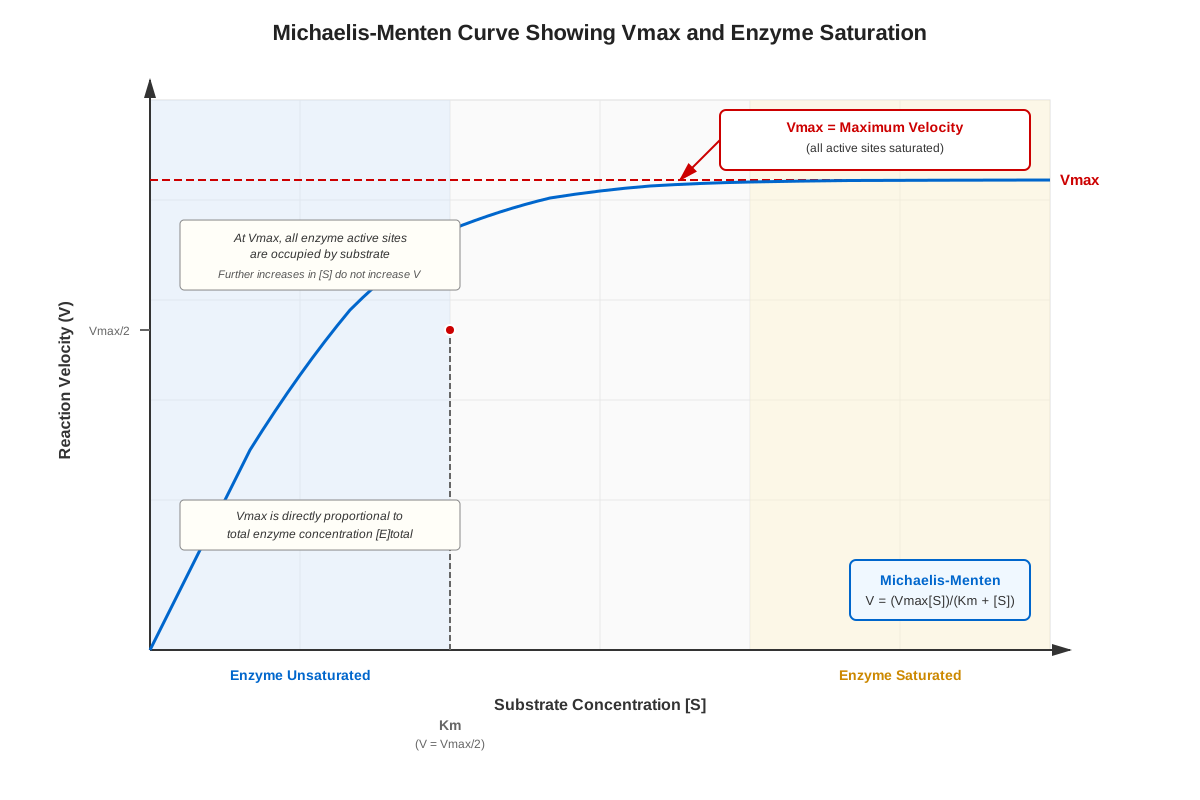
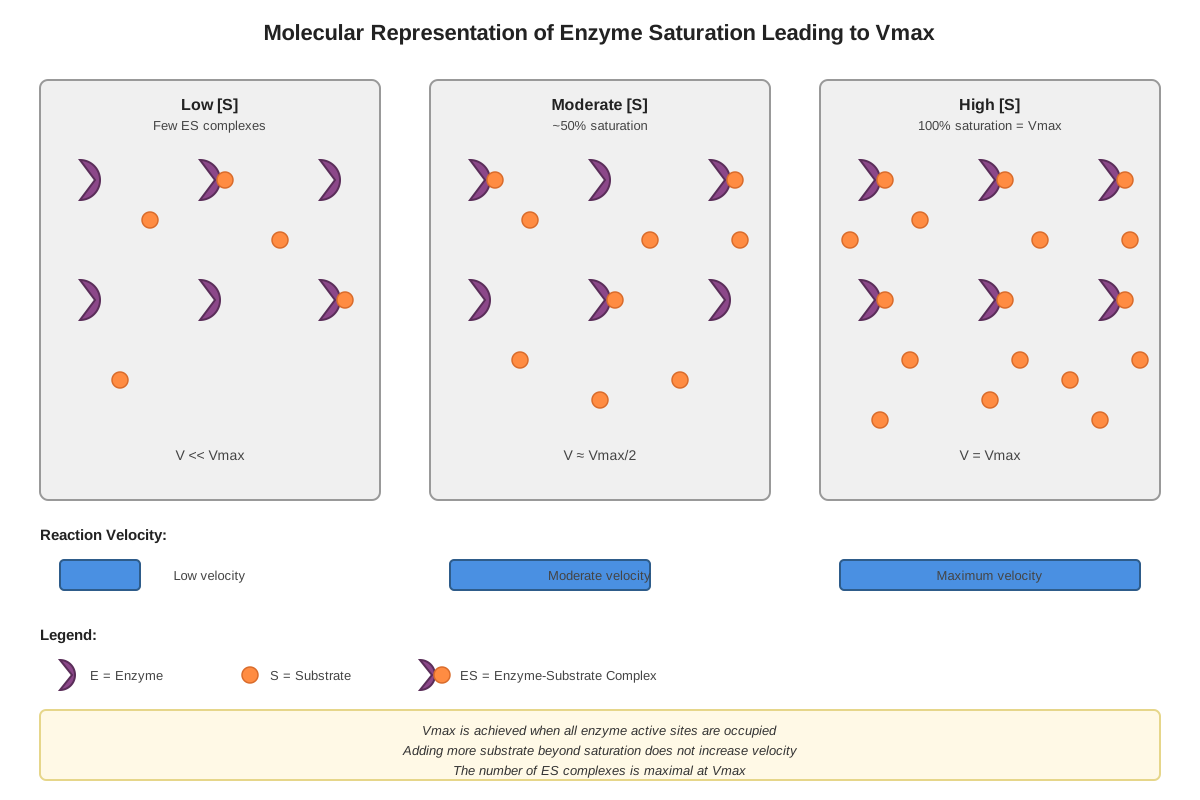
Vmax (maximum velocity) represents the theoretical maximum rate of an enzyme-catalyzed reaction achieved when the enzyme is completely saturated with substrate. At this point, every enzyme molecule is bound to substrate in the enzyme-substrate complex, and the reaction rate is limited only by the catalytic turnover of the enzyme itself, not by substrate availability. Mathematically, Vmax is expressed in units of concentration per time (typically μM/s, mM/min, or similar), reflecting the rate at which product is formed or substrate is consumed.
The Michaelis-Menten equation describes the relationship between reaction velocity (V) and substrate concentration ([S]):
V = (Vmax × [S]) / (Km + [S])As substrate concentration approaches infinity, the denominator becomes dominated by [S], and the equation simplifies to V ≈ Vmax. This asymptotic behavior means that Vmax is the horizontal asymptote of the Michaelis-Menten hyperbolic curve. In practical terms, Vmax is typically estimated as the velocity when the reaction rate no longer increases significantly with additional substrate—usually when V reaches approximately 95-99% of the theoretical maximum.
Relationship Between Vmax and Enzyme Concentration
A critical concept for the MCAT is that Vmax is directly proportional to the total enzyme concentration ([E]total). This relationship can be expressed as:
Vmax = kcat × [E]totalwhere kcat (the catalytic constant or turnover number) represents the number of substrate molecules converted to product per enzyme molecule per unit time when the enzyme is saturated. This proportionality has important implications:
- Doubling enzyme concentration doubles Vmax
- Reducing enzyme concentration by half reduces Vmax by half
- Vmax changes reflect changes in the amount of functional enzyme present
- Comparing Vmax values between samples can reveal relative enzyme concentrations
This relationship distinguishes Vmax from Km (the Michaelis constant), which is an intrinsic property of the enzyme-substrate interaction and does not change with enzyme concentration. Understanding this distinction is essential for analyzing experimental data and predicting outcomes of enzyme concentration manipulations.
Vmax in the Context of Enzyme Inhibition
Different types of enzyme inhibitors affect Vmax in characteristic ways, making this parameter crucial for identifying inhibition mechanisms:
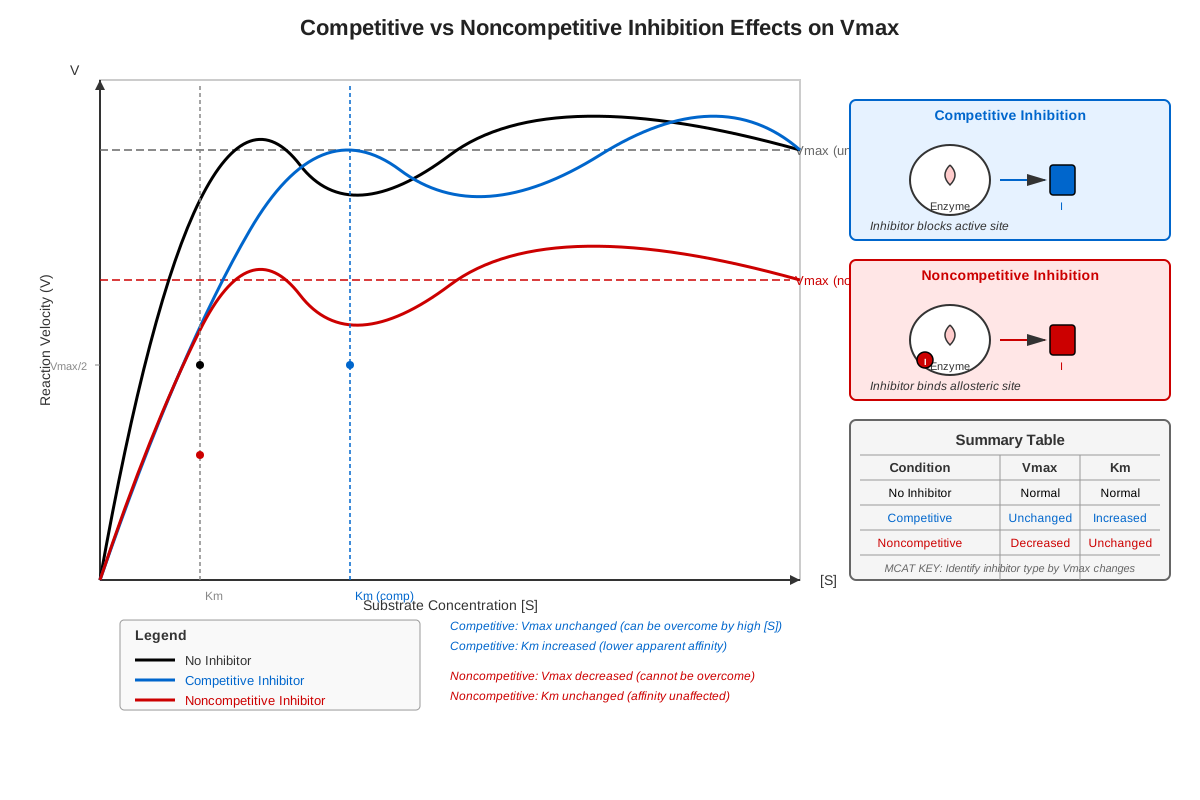
| Inhibition Type | Effect on Vmax | Effect on Km | Mechanism |
|---|---|---|---|
| Competitive | No change | Increases | Inhibitor competes with substrate for active site; can be overcome with excess substrate |
| Noncompetitive | Decreases | No change | Inhibitor binds to site other than active site; reduces functional enzyme concentration |
| Uncompetitive | Decreases | Decreases | Inhibitor binds only to ES complex; both parameters decrease proportionally |
| Mixed | Decreases | Increases or decreases | Inhibitor binds to both E and ES with different affinities |
Competitive inhibition leaves Vmax unchanged because with sufficient substrate concentration, all enzyme active sites can still be occupied by substrate rather than inhibitor. The system can still achieve maximum velocity; it just requires more substrate to get there. In contrast, noncompetitive inhibition reduces Vmax because the inhibitor effectively removes enzyme molecules from the available pool, reducing [E]total. No amount of substrate can restore full activity because some enzyme molecules are permanently (or semi-permanently) inactivated by inhibitor binding to an allosteric site.
Graphical Representation and Interpretation
The Michaelis-Menten plot displays reaction velocity (V) on the y-axis versus substrate concentration ([S]) on the x-axis, producing a rectangular hyperbola. Vmax is the y-value that the curve approaches but never quite reaches as [S] increases. Visually identifying Vmax from this plot requires recognizing where the curve plateaus—the horizontal asymptote represents Vmax.
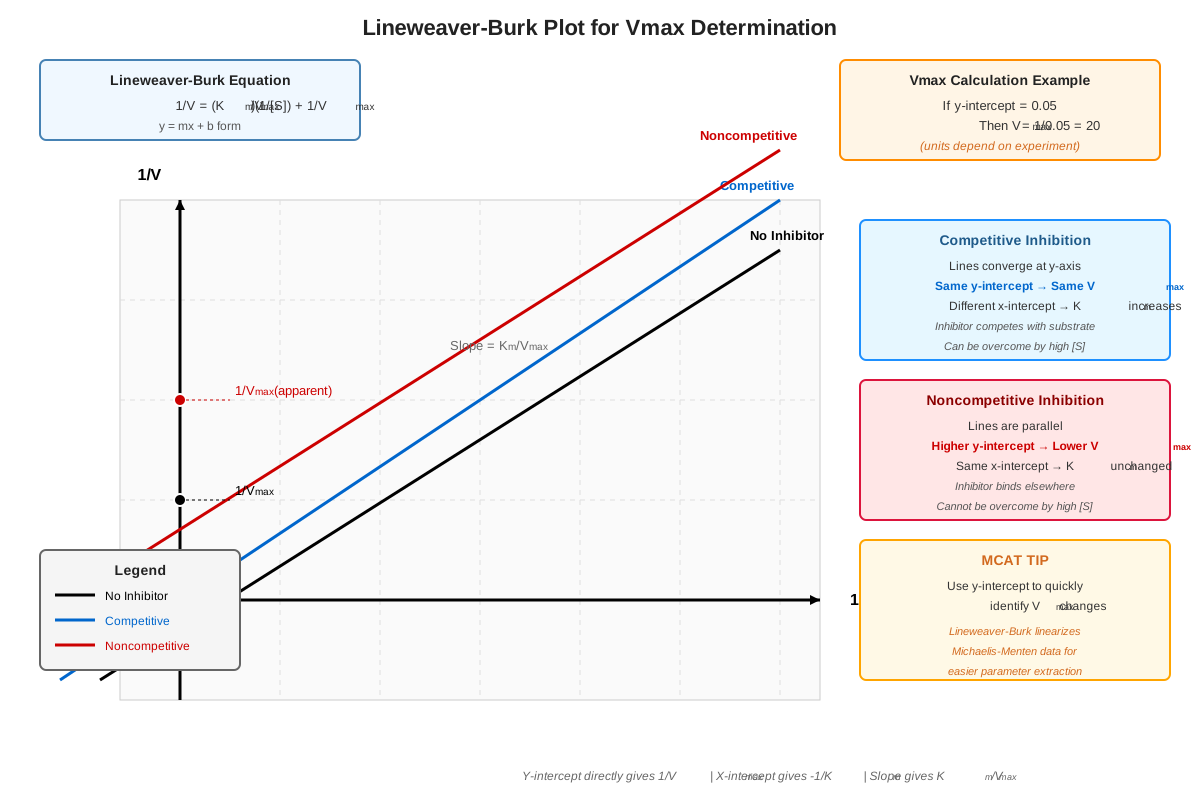
The Lineweaver-Burk plot (double reciprocal plot) transforms the hyperbolic Michaelis-Menten curve into a straight line by plotting 1/V versus 1/[S]:
1/V = (Km/Vmax) × (1/[S]) + 1/VmaxIn this linear form, the y-intercept equals 1/Vmax, making it easier to determine Vmax precisely from experimental data. The x-intercept equals -1/Km, and the slope equals Km/Vmax. This linearization is particularly useful for distinguishing inhibition types:
- Competitive inhibition: Lines intersect on the y-axis (same Vmax, different Km)
- Noncompetitive inhibition: Lines intersect on the x-axis (different Vmax, same Km)
- Uncompetitive inhibition: Lines are parallel (both Vmax and Km change proportionally)
Factors That Affect Vmax
Several factors can alter Vmax in biological and experimental systems:
- Enzyme concentration: As discussed, Vmax scales linearly with [E]total
- Enzyme activity: Mutations, post-translational modifications, or denaturation that reduce kcat will decrease Vmax
- Temperature: Within physiological ranges, increased temperature generally increases Vmax by enhancing catalytic rate; extreme temperatures denature enzymes and reduce Vmax
- pH: Deviations from optimal pH can alter enzyme conformation and active site chemistry, reducing kcat and thus Vmax
- Cofactors and coenzymes: Absence of required cofactors prevents enzyme function, effectively reducing functional enzyme concentration and Vmax
- Allosteric regulation: Allosteric inhibitors may reduce Vmax by stabilizing less active conformations; allosteric activators may increase Vmax
Understanding which factors affect Vmax versus Km is crucial for MCAT success. Generally, anything that changes the amount or intrinsic activity of functional enzyme affects Vmax, while factors that alter substrate binding affinity affect Km.
Vmax and Catalytic Efficiency
The parameter kcat/Km represents catalytic efficiency—how effectively an enzyme converts substrate to product at low substrate concentrations. While Vmax tells us the maximum capacity of an enzyme system, it doesn't reveal how efficiently the enzyme operates under physiological conditions where [S] is often well below Km. An enzyme with high Vmax but poor substrate binding (high Km) may be less physiologically effective than an enzyme with moderate Vmax but excellent substrate affinity (low Km).
The relationship between these parameters:
- Vmax reflects capacity (how much product can be made when enzyme is saturated)
- Km reflects affinity (how much substrate is needed to reach half-maximal velocity)
- kcat reflects turnover (how fast each enzyme molecule works)
- kcat/Km reflects overall efficiency (how well the enzyme performs its biological role)
Concept Relationships
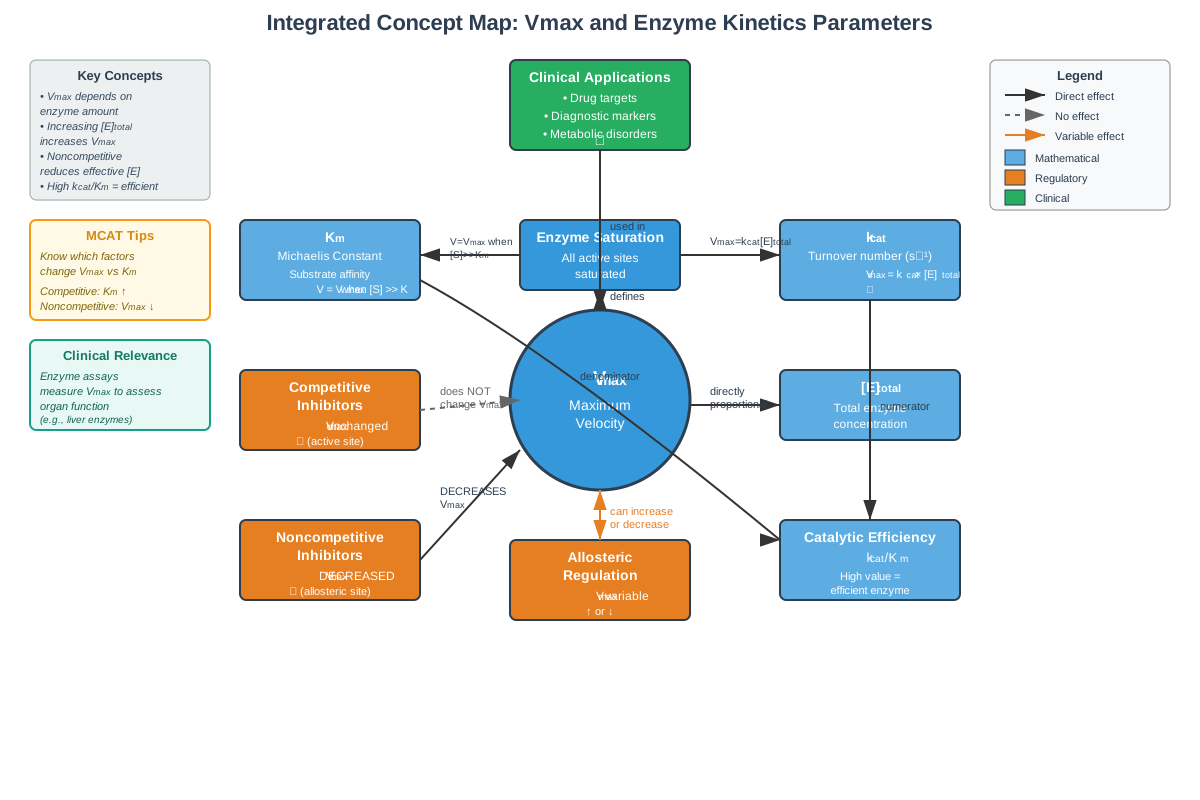
Vmax serves as a central hub connecting multiple enzyme kinetics concepts. The Michaelis-Menten equation mathematically defines Vmax as the asymptotic limit of reaction velocity, while Km (the substrate concentration at V = Vmax/2) provides a reference point for interpreting Vmax values. The relationship Vmax = kcat × [E]total links Vmax to both the catalytic constant (an intrinsic enzyme property) and enzyme concentration (an experimental variable).
In inhibition studies, Vmax changes distinguish noncompetitive and uncompetitive inhibitors (which reduce Vmax) from competitive inhibitors (which leave Vmax unchanged). This connects to Lineweaver-Burk plots, where the y-intercept (1/Vmax) shifts downward when Vmax decreases. The concept extends to allosteric regulation, where effector binding can alter enzyme conformation and change both Vmax and Km, affecting the cooperativity of substrate binding.
Relationship map:
Enzyme concentration → determines → Vmax ← calculated from → Michaelis-Menten plot
Vmax → combined with → Km → defines → Enzyme kinetic behavior
Inhibitor type → determines → Vmax change pattern → revealed by → Lineweaver-Burk analysis
Vmax → divided by → [E]total → yields → kcat → combined with → Km → gives → Catalytic efficiency
High-Yield Facts
⭐ Vmax is directly proportional to enzyme concentration: Doubling [E]total doubles Vmax, while Km remains constant
⭐ Competitive inhibitors do NOT change Vmax: They increase Km but leave Vmax unchanged because excess substrate can outcompete the inhibitor
⭐ Noncompetitive inhibitors DECREASE Vmax: They reduce the effective enzyme concentration without affecting Km
⭐ Vmax is the y-axis asymptote of the Michaelis-Menten curve: The reaction velocity approaches but never exceeds Vmax as substrate concentration increases
⭐ The y-intercept of a Lineweaver-Burk plot equals 1/Vmax: This makes it easier to determine Vmax from experimental data than using the Michaelis-Menten plot directly
- Vmax has units of concentration/time (e.g., μM/s, mM/min), representing the rate of product formation or substrate consumption
- At substrate concentrations much greater than Km ([S] >> Km), the reaction velocity approaches Vmax and follows zero-order kinetics
- Vmax = kcat × [E]total, where kcat is the turnover number (molecules of substrate converted per enzyme molecule per second)
- Uncompetitive inhibitors decrease both Vmax and Km proportionally, producing parallel lines on Lineweaver-Burk plots
- Temperature and pH changes that denature enzymes or alter active site chemistry will decrease Vmax by reducing functional enzyme concentration or kcat
- Allosteric activators can increase Vmax by stabilizing more active enzyme conformations or increasing the proportion of enzyme in the active state
- In metabolic pathways, the enzyme with the lowest Vmax often represents the rate-limiting step under saturating substrate conditions
Quick check — test yourself on Vmax so far.
Try Flashcards →Common Misconceptions
Misconception: Vmax is the actual velocity of the reaction in cells.
Correction: Vmax is a theoretical maximum achieved only under saturating substrate conditions. In vivo, substrate concentrations are typically near or below Km, so actual reaction velocities are usually well below Vmax. Vmax represents the enzyme's capacity, not its typical operating rate.
Misconception: Increasing substrate concentration will always increase velocity until Vmax is reached.
Correction: While generally true, extremely high substrate concentrations can sometimes cause substrate inhibition, where excess substrate binds to regulatory sites and actually decreases velocity. Additionally, the practical approach to Vmax is asymptotic—you get closer but never truly reach it.
Misconception: Competitive inhibitors decrease Vmax because they block the active site.
Correction: Competitive inhibitors increase Km (apparent) but do NOT change Vmax. With sufficient substrate concentration, the substrate can outcompete the inhibitor for active site binding, allowing the enzyme to still achieve its maximum velocity. Only inhibitors that reduce functional enzyme concentration (noncompetitive, uncompetitive) decrease Vmax.
Misconception: Vmax and kcat are the same thing.
Correction: Vmax = kcat × [E]total. The kcat (catalytic constant or turnover number) is an intrinsic property of the enzyme representing how many substrate molecules one enzyme molecule converts per unit time. Vmax depends on both kcat and the total enzyme concentration present in the system.
Misconception: If two enzymes have the same Vmax, they have the same catalytic efficiency.
Correction: Catalytic efficiency is measured by kcat/Km, not Vmax alone. Two enzymes could have identical Vmax values but very different Km values, making one much more efficient at low substrate concentrations. An enzyme with high Vmax but also high Km may be less efficient than one with moderate Vmax and low Km.
Misconception: The Vmax value is always the highest point on a Michaelis-Menten plot.
Correction: Vmax is the asymptotic limit—the value the curve approaches but typically doesn't reach in experimental data. The highest measured velocity in an experiment is usually slightly below the true Vmax. Accurate Vmax determination requires extrapolation or mathematical fitting, which is why Lineweaver-Burk plots are useful.
Worked Examples
Example 1: Determining Inhibition Type from Kinetic Data
Question: An enzyme has a Vmax of 100 μM/min and Km of 10 μM under normal conditions. When inhibitor X is added, the Vmax remains 100 μM/min but the Km increases to 30 μM. When inhibitor Y is added instead, the Vmax decreases to 50 μM/min while Km remains at 10 μM. Identify the inhibition type for each inhibitor and explain the mechanism.
Solution:
Inhibitor X Analysis:
- Vmax unchanged: 100 μM/min → 100 μM/min
- Km increased: 10 μM → 30 μM
- Conclusion: Competitive inhibition
Reasoning: Competitive inhibitors bind to the enzyme's active site, competing with substrate for binding. This competition increases the apparent Km (more substrate is needed to achieve half-maximal velocity) because substrate must outcompete the inhibitor. However, at very high substrate concentrations, the substrate can fully occupy all active sites, displacing the inhibitor and allowing the enzyme to reach its normal Vmax. The unchanged Vmax is the diagnostic feature of competitive inhibition.
Inhibitor Y Analysis:
- Vmax decreased: 100 μM/min → 50 μM/min
- Km unchanged: 10 μM → 10 μM
- Conclusion: Noncompetitive inhibition
Reasoning: Noncompetitive inhibitors bind to a site distinct from the active site (an allosteric site), forming an enzyme-inhibitor complex that cannot effectively catalyze the reaction. This effectively reduces the concentration of functional enzyme in the system. Since the inhibitor doesn't compete with substrate for the active site, the substrate binding affinity (reflected in Km) remains unchanged. However, because some enzyme molecules are inactivated by inhibitor binding, the maximum velocity is reduced proportionally to the fraction of enzyme that is inhibited. The 50% reduction in Vmax suggests that approximately half the enzyme molecules are bound to inhibitor.
MCAT Connection: This question type is extremely common on the MCAT. The key is to remember: competitive inhibition affects Km only, noncompetitive inhibition affects Vmax only, and uncompetitive inhibition affects both proportionally.
Example 2: Calculating Enzyme Concentration from Vmax
Question: An enzyme has a kcat of 500 s⁻¹. In an experiment, the measured Vmax is 25 μM/s. What is the enzyme concentration in the reaction mixture?
Solution:
Using the relationship: Vmax = kcat × [E]total
Rearranging to solve for enzyme concentration:
[E]total = Vmax / kcat
Substituting values:
[E]total = 25 μM/s ÷ 500 s⁻¹
[E]total = 25 μM/s ÷ 500/s
[E]total = 25 μM × (s/s) ÷ 500
[E]total = 25 μM ÷ 500
[E]total = 0.05 μM
[E]total = 50 nM
Answer: The enzyme concentration is 0.05 μM or 50 nM.
Reasoning: The kcat value tells us that each enzyme molecule converts 500 substrate molecules to product per second when saturated. The Vmax tells us the total system is converting 25 μM of substrate per second at saturation. Dividing the total conversion rate by the per-enzyme conversion rate gives us the number of enzyme molecules (expressed as concentration). This calculation reinforces the direct proportionality between Vmax and enzyme concentration.
MCAT Connection: The MCAT may present this type of calculation directly or embed it within a passage about enzyme purification, where comparing Vmax values before and after purification reveals the fold-purification achieved. Understanding that Vmax = kcat × [E]total allows you to solve for any one variable if you know the other two.
Exam Strategy
Approaching MCAT Questions on Vmax
When encountering Vmax questions on the MCAT, follow this systematic approach:
- Identify what's being manipulated: Is the question changing enzyme concentration, adding an inhibitor, altering conditions (pH, temperature), or comparing different enzymes?
- Determine if Vmax should change: Ask yourself, "Does this manipulation affect the amount or intrinsic activity of functional enzyme?" If yes, Vmax changes. If it only affects substrate binding, Vmax stays constant.
- Look for graphical clues: On Michaelis-Menten plots, check if the plateau height changes. On Lineweaver-Burk plots, check if the y-intercept shifts.
- Distinguish Vmax from Km effects: Many wrong answer choices confuse these parameters. Remember: Vmax relates to enzyme amount/activity; Km relates to substrate binding affinity.
Trigger Words and Phrases
Watch for these key phrases that signal Vmax-related questions:
- "Maximum velocity" or "maximal rate" → directly asking about Vmax
- "Saturating substrate concentration" → conditions where V ≈ Vmax
- "Enzyme concentration was doubled" → Vmax will double
- "Noncompetitive inhibitor" → Vmax decreases
- "Competitive inhibitor" → Vmax unchanged
- "Y-intercept of the Lineweaver-Burk plot" → equals 1/Vmax
- "Plateau of the curve" → indicates Vmax region
- "Turnover number" or "kcat" → relates to Vmax via Vmax = kcat × [E]total
Process of Elimination Tips
When evaluating answer choices:
- Eliminate answers that confuse Vmax and Km: If the question asks about Vmax but an answer discusses substrate affinity or binding, it's likely wrong
- Eliminate answers that claim competitive inhibitors change Vmax: This is never true for pure competitive inhibition
- Eliminate answers with incorrect units: Vmax must have units of concentration/time, not just concentration or time alone
- Eliminate answers that violate the Vmax-enzyme concentration relationship: If enzyme concentration doubles, Vmax must double (assuming no other changes)
Time Allocation Advice
For discrete Vmax questions, spend 30-45 seconds identifying the key relationship being tested, then 15-30 seconds selecting the answer. For passage-based questions involving data interpretation:
- Spend 60-90 seconds analyzing any graphs or tables showing kinetic data
- Identify Vmax values from the data before reading the questions (30 seconds)
- For each question, refer back to the data (20-30 seconds) then select your answer (15-20 seconds)
- If a calculation is required, set up the equation first, then solve (60-90 seconds total)
Don't get bogged down in complex calculations—the MCAT rarely requires extensive math. If a calculation seems too complicated, look for a conceptual shortcut or proportional reasoning approach.
Memory Techniques
Mnemonic for Inhibition Effects
"CoVer the Km" - Competitive inhibitors affect Km (increase it), not Vmax
"NoVmax" - Noncompetitive inhibitors reduce Vmax, not Km
"UnBoth" - Uncompetitive inhibitors affect both Vmax and Km (both decrease)
Visualization Strategy for Vmax
Picture a highway (enzyme) with cars (substrate molecules) traveling to a destination (product). Vmax represents the maximum traffic flow when every lane is full of cars moving at top speed. Adding more lanes (increasing enzyme concentration) increases Vmax. A competitive inhibitor is like slow-moving trucks that occasionally block lanes—with enough cars (substrate), you can still fill all lanes and reach maximum flow. A noncompetitive inhibitor is like closing some lanes permanently—no matter how many cars you have, you can't achieve the same maximum flow.
Acronym for Vmax Determinants
ECATT - The factors that determine Vmax:
- Enzyme concentration
- Cofactors (presence/absence)
- Activity (intrinsic catalytic rate)
- Temperature (within functional range)
- Type of inhibition (noncompetitive/uncompetitive reduce it)
Lineweaver-Burk Plot Memory Aid
"Y-intercept = 1/Vmax, X-intercept = -1/Km"
Remember: "Y is for Velocity max" (y-intercept gives you information about Vmax)
For inhibition patterns: "Competitive lines meet at Y" (same y-intercept = same Vmax), "Noncompetitive lines meet at X" (same x-intercept = same Km), "Uncompetitive lines are Parallel" (both parameters change proportionally)
Summary
Vmax represents the maximum velocity of an enzyme-catalyzed reaction achieved under saturating substrate conditions when all enzyme active sites are occupied. This fundamental parameter in enzyme kinetics is directly proportional to enzyme concentration (Vmax = kcat × [E]total) and serves as the asymptotic limit of the Michaelis-Menten hyperbola. Understanding Vmax is essential for MCAT success because it enables interpretation of enzyme kinetics data, identification of inhibition mechanisms, and prediction of how various factors affect enzyme function. Competitive inhibitors leave Vmax unchanged while increasing Km, whereas noncompetitive inhibitors decrease Vmax without affecting Km—a distinction that appears frequently in MCAT questions. Graphically, Vmax is the plateau value on Michaelis-Menten plots and determines the y-intercept (1/Vmax) on Lineweaver-Burk plots. Mastery of Vmax requires integrating mathematical relationships, graphical interpretation, and mechanistic understanding of enzyme function, making it a high-yield topic that bridges quantitative reasoning with biochemical principles.
Key Takeaways
- Vmax is the maximum reaction velocity achieved when enzyme is saturated with substrate, representing the enzyme system's catalytic capacity
- Vmax is directly proportional to enzyme concentration (Vmax = kcat × [E]total), so doubling enzyme concentration doubles Vmax
- Competitive inhibitors do NOT change Vmax because excess substrate can outcompete the inhibitor; they only increase Km
- Noncompetitive inhibitors DECREASE Vmax by reducing functional enzyme concentration; they do not affect Km
- On Lineweaver-Burk plots, the y-intercept equals 1/Vmax, making it easier to determine Vmax and identify inhibition patterns than Michaelis-Menten plots
- Vmax has units of concentration/time and represents the rate of product formation or substrate consumption at saturation
- Distinguishing between Vmax and Km changes is critical for identifying enzyme inhibition mechanisms and understanding enzyme regulation on the MCAT
Related Topics
Km (Michaelis Constant): The substrate concentration at which reaction velocity equals Vmax/2, representing the enzyme's substrate affinity. Mastering Vmax enables deeper understanding of how Km and Vmax together define enzyme kinetic behavior and efficiency.
Lineweaver-Burk Plots: The double reciprocal transformation of Michaelis-Menten kinetics that linearizes enzyme kinetic data. Understanding Vmax is essential for interpreting these plots, as the y-intercept directly reveals 1/Vmax.
Enzyme Inhibition Mechanisms: Competitive, noncompetitive, uncompetitive, and mixed inhibition patterns are distinguished primarily by their effects on Vmax and Km. Mastery of Vmax enables accurate identification of inhibition types from experimental data.
Catalytic Efficiency (kcat/Km): This parameter combines information about Vmax (through kcat) and substrate binding to assess overall enzyme performance. Understanding Vmax provides the foundation for evaluating catalytic efficiency.
Allosteric Regulation: Allosteric effectors can alter both Vmax and Km by changing enzyme conformation. Understanding how Vmax changes with allosteric regulation builds on the foundational Vmax concepts covered here.
Metabolic Control and Rate-Limiting Steps: In metabolic pathways, the enzyme with the lowest Vmax under physiological conditions often represents the rate-limiting step. Understanding Vmax enables analysis of metabolic flux and regulation.
Practice CTA
Now that you've mastered the core concepts of Vmax, it's time to reinforce your understanding through active practice. Attempt the practice questions and flashcards associated with this topic to test your ability to apply these concepts to MCAT-style scenarios. Focus particularly on distinguishing between Vmax and Km changes in inhibition questions, interpreting Lineweaver-Burk plots, and performing calculations involving the relationship between Vmax, kcat, and enzyme concentration. Remember that enzyme kinetics questions reward systematic thinking and careful attention to what's being manipulated in each scenario. Your investment in mastering Vmax will pay dividends across multiple MCAT passages, as this concept appears frequently and serves as a gateway to understanding more complex biochemical regulation. You've got this—now prove it with practice!
Sign up free to keep reading
Create a free AnvayaPrep account to finish this MCAT guide on Vmax — plus flashcards and practice questions.