Overview
Substrate specificity is a fundamental principle in Biochemistry that describes the selective nature of enzyme-substrate interactions. This concept explains why each enzyme catalyzes reactions with only certain molecules—its substrates—while ignoring countless other molecules present in the cellular environment. Understanding substrate specificity is essential for comprehending how cells maintain precise metabolic control and how enzymatic reactions proceed with remarkable accuracy despite the chemical complexity of biological systems.
For the MCAT, substrate specificity represents a high-yield topic that appears frequently across multiple question formats. Test-makers use this concept to assess understanding of enzyme function, protein structure-function relationships, and metabolic regulation. Questions may present experimental scenarios where enzyme activity changes with different substrates, clinical vignettes involving enzyme deficiencies, or passage-based items requiring interpretation of kinetic data. Mastery of substrate specificity enables students to predict enzyme behavior, interpret experimental results, and understand the molecular basis of metabolic diseases.
Substrate specificity connects intimately with broader Biochemistry concepts including enzyme kinetics, protein structure, and metabolic pathway regulation. The three-dimensional architecture of an enzyme's active site determines which substrates can bind and undergo catalysis, linking protein structure directly to biological function. This specificity also underlies metabolic pathway organization, where sequential enzymes each recognize specific substrates to channel intermediates toward final products. Furthermore, understanding substrate specificity provides the foundation for comprehending competitive inhibition, allosteric regulation, and the pharmacological basis of drug design—all testable topics on the MCAT.
Learning Objectives
- [ ] Define substrate specificity using accurate Biochemistry terminology
- [ ] Explain why substrate specificity matters for the MCAT
- [ ] Apply substrate specificity to exam-style questions
- [ ] Identify common mistakes related to substrate specificity
- [ ] Connect substrate specificity to related Biochemistry concepts
- [ ] Distinguish between absolute, group, linkage, and stereochemical specificity with examples
- [ ] Predict how changes in active site structure affect substrate recognition
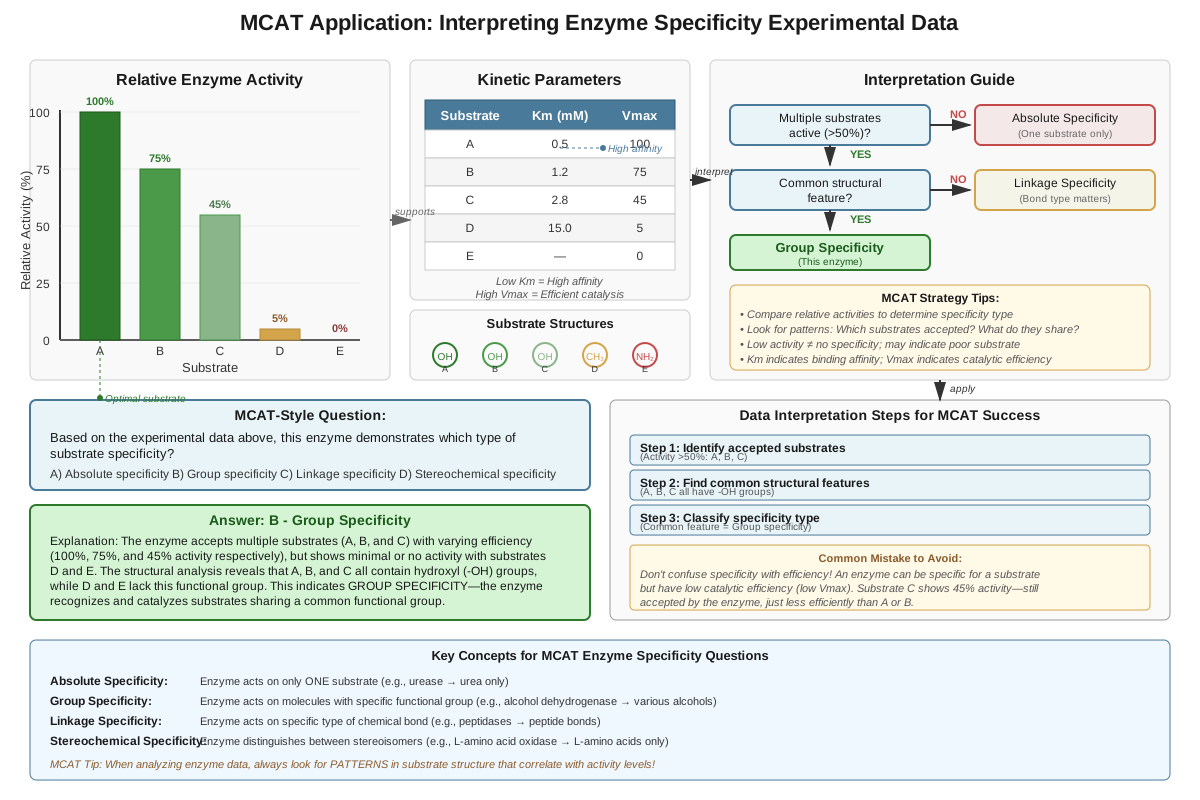
- [ ] Analyze experimental data to determine the degree of enzyme specificity
- [ ] Explain the molecular basis of specificity using induced fit and lock-and-key models
Prerequisites
- Basic enzyme structure: Understanding of primary, secondary, tertiary, and quaternary protein structure is essential because the three-dimensional shape of the active site determines substrate specificity
- Chemical bonding: Knowledge of hydrogen bonds, ionic interactions, van der Waals forces, and hydrophobic effects explains how enzymes recognize and bind specific substrates
- Functional groups: Familiarity with common organic functional groups (hydroxyl, carboxyl, amino, phosphate) enables prediction of enzyme-substrate interactions
- Basic thermodynamics: Understanding of free energy, activation energy, and transition states provides context for how substrate binding affects catalysis
- Protein-ligand interactions: General principles of molecular recognition underlie the specific case of enzyme-substrate binding
Why This Topic Matters
Clinical and Real-World Significance
Substrate specificity has profound clinical implications. Enzyme deficiencies often manifest as metabolic diseases because the missing enzyme cannot process its specific substrate, leading to toxic accumulation or deficiency of downstream products. Phenylketonuria (PKU) results from deficiency of phenylalanine hydroxylase, which specifically converts phenylalanine to tyrosine. Lactose intolerance occurs when lactase, which specifically cleaves lactose into glucose and galactose, is deficient. Drug design exploits substrate specificity—pharmaceutical agents are engineered to fit enzyme active sites as competitive inhibitors, blocking pathological processes while minimizing off-target effects.
MCAT Exam Statistics
Substrate specificity appears in approximately 15-20% of Biochemistry passages and discrete questions on the MCAT. This topic most commonly appears in:
- Passage-based questions presenting experimental enzyme kinetics data requiring interpretation of substrate preferences
- Discrete questions testing understanding of enzyme classification and specificity types
- Research study passages describing novel enzymes or mutant variants with altered specificity
- Clinical vignettes connecting enzyme deficiencies to metabolic consequences
Common Exam Presentations
The MCAT tests substrate specificity through several recurring formats: comparison of reaction rates with different substrates, interpretation of Michaelis-Menten curves for multiple substrates, analysis of competitive inhibition scenarios, prediction of metabolic consequences from enzyme mutations affecting the active site, and evaluation of experimental designs testing enzyme selectivity. Recognizing these patterns enables efficient question analysis and accurate answer selection.
Core Concepts
Definition and Fundamental Principles
Substrate specificity refers to the ability of an enzyme to discriminate among different molecules, selectively binding and catalyzing reactions with certain substrates while excluding others. This selectivity arises from the complementary three-dimensional structure between the enzyme's active site and its substrate(s). The active site is a specialized region of the enzyme, typically a cleft or pocket formed by amino acid residues from different parts of the polypeptide chain, where substrate binding and catalysis occur.
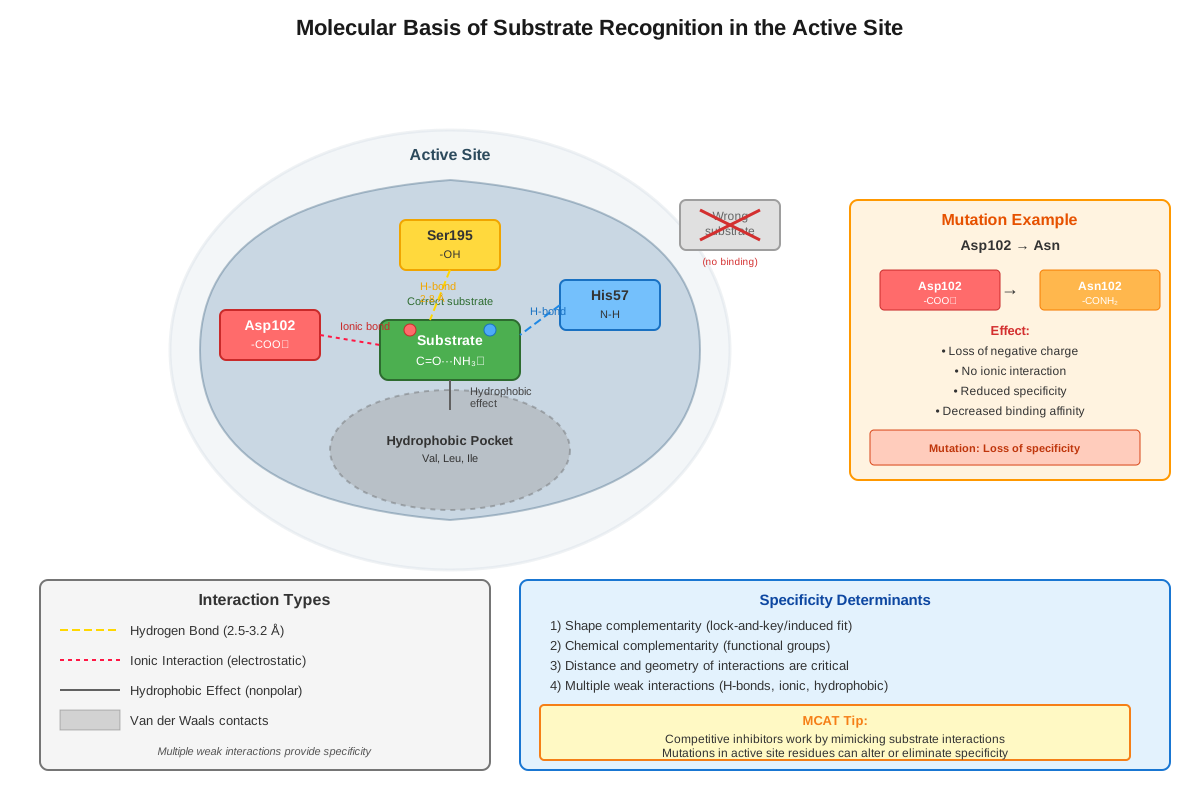
The molecular basis of substrate specificity involves multiple weak interactions—hydrogen bonds, ionic interactions, van der Waals forces, and hydrophobic effects—that collectively provide both binding energy and selectivity. For an enzyme to bind a substrate with high affinity, the substrate must possess the correct size, shape, charge distribution, and functional group positioning to complement the active site architecture. Even minor structural differences between molecules can dramatically affect binding affinity and catalytic efficiency.
Types of Substrate Specificity
Enzymes exhibit varying degrees of specificity, ranging from absolute selectivity for a single substrate to broader recognition of multiple related molecules:
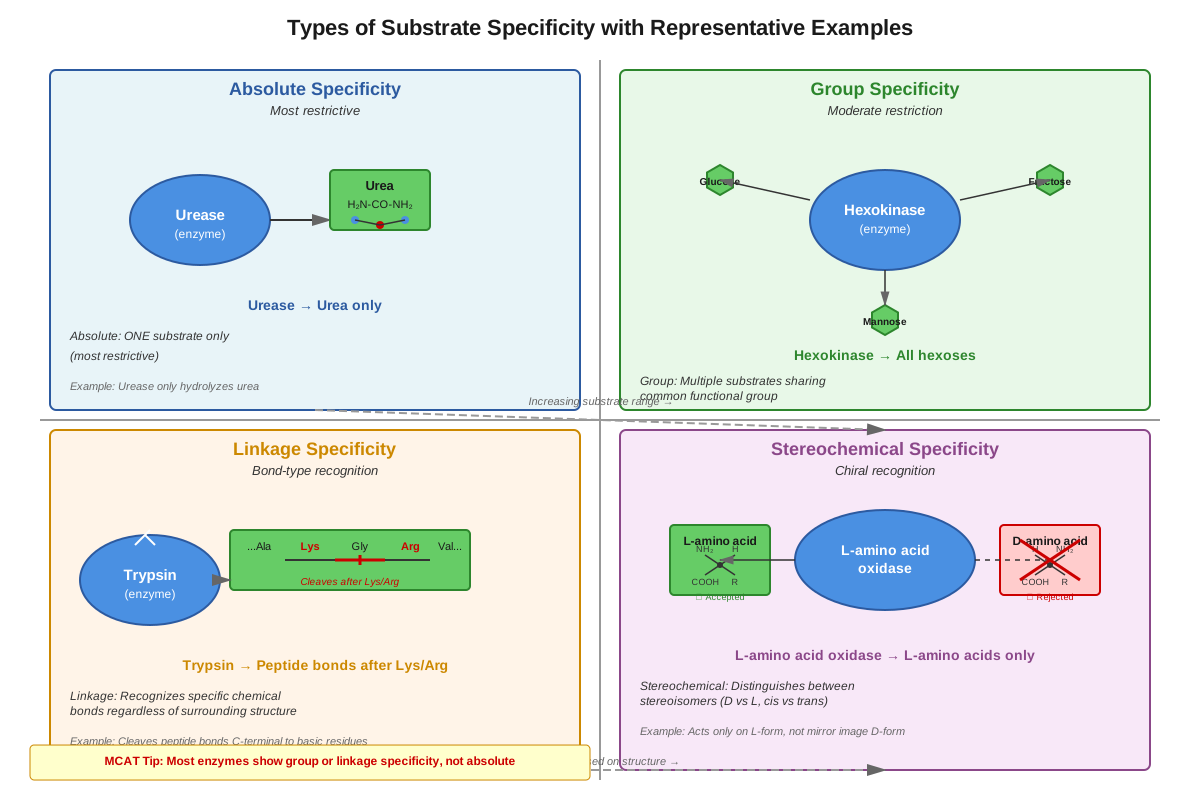
| Specificity Type | Description | Example Enzyme | Substrate(s) |
|---|---|---|---|
| Absolute specificity | Catalyzes reaction with only one substrate | Urease | Urea only |
| Group specificity | Acts on molecules with specific functional groups | Alcohol dehydrogenase | Various alcohols with -OH groups |
| Linkage specificity | Cleaves specific types of chemical bonds | Peptidases | Peptide bonds between amino acids |
| Stereochemical specificity | Distinguishes between stereoisomers | L-amino acid oxidase | L-amino acids (not D-amino acids) |
Absolute specificity represents the most restrictive form, where an enzyme catalyzes reactions with only a single substrate molecule. Urease exemplifies this category, catalyzing only the hydrolysis of urea to ammonia and carbon dioxide, showing no activity toward structurally similar molecules like thiourea or methylurea.
Group specificity describes enzymes that recognize a particular functional group or structural motif but tolerate variation in other parts of the molecule. Hexokinase demonstrates group specificity by phosphorylating various six-carbon sugars (glucose, fructose, mannose) because all possess the critical hydroxyl groups required for recognition, though it shows preference for glucose.
Linkage specificity characterizes enzymes that cleave or form specific types of chemical bonds regardless of the molecules containing those bonds. Proteases exhibit linkage specificity for peptide bonds, lipases for ester bonds in lipids, and phosphatases for phosphoester bonds. Within this category, some enzymes show additional selectivity—trypsin preferentially cleaves peptide bonds after basic amino acids (lysine, arginine).
Stereochemical specificity reflects the ability of enzymes to distinguish between stereoisomers—molecules with identical molecular formulas and connectivity but different three-dimensional arrangements. L-amino acid oxidase acts only on L-amino acids, while D-amino acid oxidase specifically recognizes D-amino acids. This exquisite selectivity arises because the active site architecture complements only one stereoisomeric form.
Molecular Basis: Lock-and-Key vs. Induced Fit
Two models explain the molecular mechanism of substrate specificity:
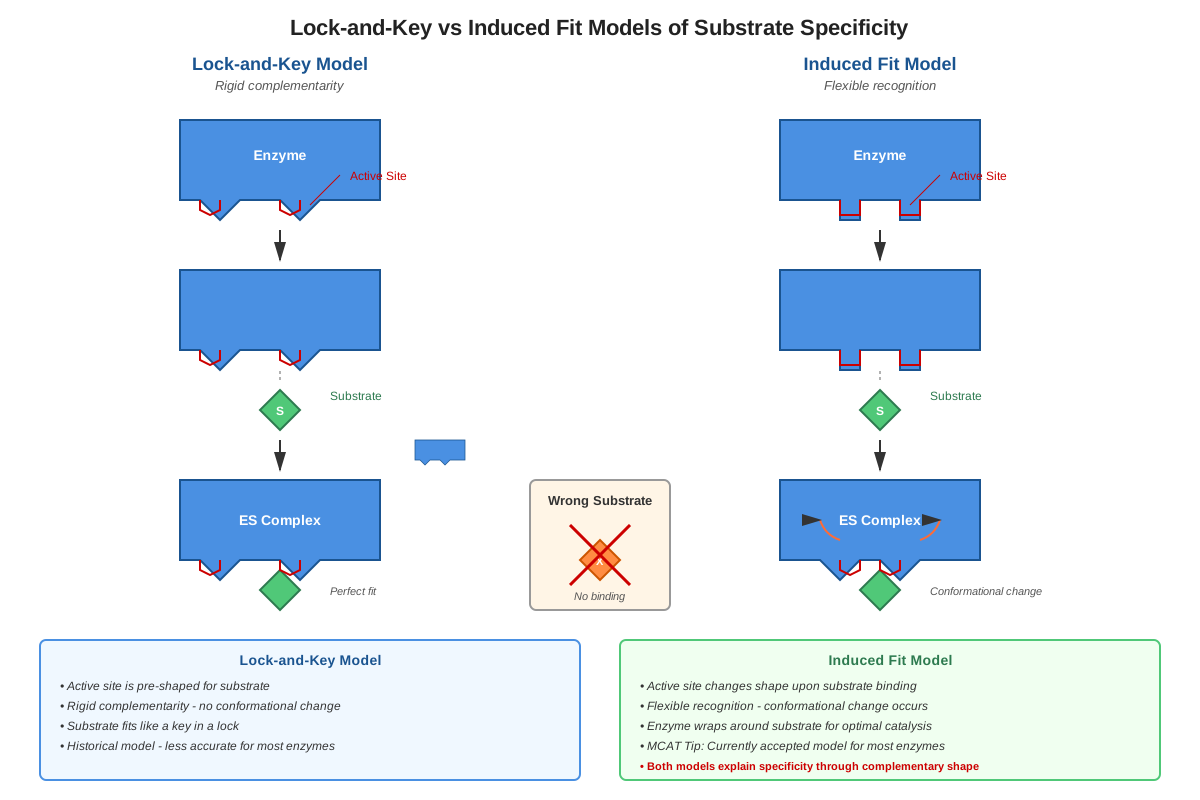
The lock-and-key model, proposed by Emil Fischer in 1894, suggests that the enzyme active site has a rigid, pre-formed shape that exactly complements the substrate structure, like a lock accepting only a specific key. This model explains absolute specificity well—the substrate must possess the precise three-dimensional structure to fit the active site.
The induced fit model, developed by Daniel Koshland in 1958, provides a more accurate description of most enzyme-substrate interactions. This model proposes that substrate binding induces conformational changes in the enzyme, optimizing the active site geometry for catalysis. The initial enzyme-substrate interaction involves relatively weak binding, but substrate binding triggers structural rearrangements that strengthen binding and properly position catalytic residues. This dynamic process explains how enzymes achieve both specificity and catalytic efficiency.
The induced fit model better accounts for several observations: enzymes can show some flexibility in substrate recognition, conformational changes upon substrate binding are observed experimentally, and the transition state is stabilized more effectively than the substrate itself. For the MCAT, understanding that most enzymes follow induced fit rather than rigid lock-and-key is important for interpreting experimental data and predicting enzyme behavior.
Structural Determinants of Specificity
The amino acid residues lining the active site determine substrate specificity through several mechanisms:
- Steric complementarity: The size and shape of the active site pocket must accommodate the substrate. Bulky substrates cannot fit into small active sites, while small substrates may not make sufficient contacts in large active sites.
- Electrostatic interactions: Charged or polar residues in the active site form ionic bonds or hydrogen bonds with complementary groups on the substrate. Aspartate or glutamate residues (negatively charged) attract positively charged substrate regions, while lysine or arginine (positively charged) interact with negative substrate regions.
- Hydrophobic interactions: Nonpolar residues (alanine, valine, leucine, isoleucine, phenylalanine) create hydrophobic pockets that preferentially bind nonpolar substrate regions, excluding water and polar molecules.
- Hydrogen bonding networks: Serine, threonine, tyrosine, asparagine, and glutamine can serve as hydrogen bond donors or acceptors, creating specific recognition patterns for substrates with complementary hydrogen bonding capabilities.
Quantifying Specificity: Kinetic Parameters
Substrate specificity can be quantified using enzyme kinetics parameters. The Michaelis constant (Km) reflects the substrate concentration at which the enzyme operates at half-maximal velocity. A lower Km indicates higher affinity between enzyme and substrate, suggesting better complementarity and greater specificity. The catalytic efficiency (kcat/Km) provides the most comprehensive measure of enzyme performance with a particular substrate, combining both binding affinity and catalytic rate.
When comparing how an enzyme acts on different substrates, examining the kcat/Km ratio reveals substrate preference. An enzyme may bind multiple substrates (similar Km values) but catalyze reactions at different rates (different kcat values), or it may show different binding affinities (different Km values) with similar catalytic rates. The substrate with the highest kcat/Km represents the enzyme's preferred or "natural" substrate.
Specificity and Metabolic Regulation
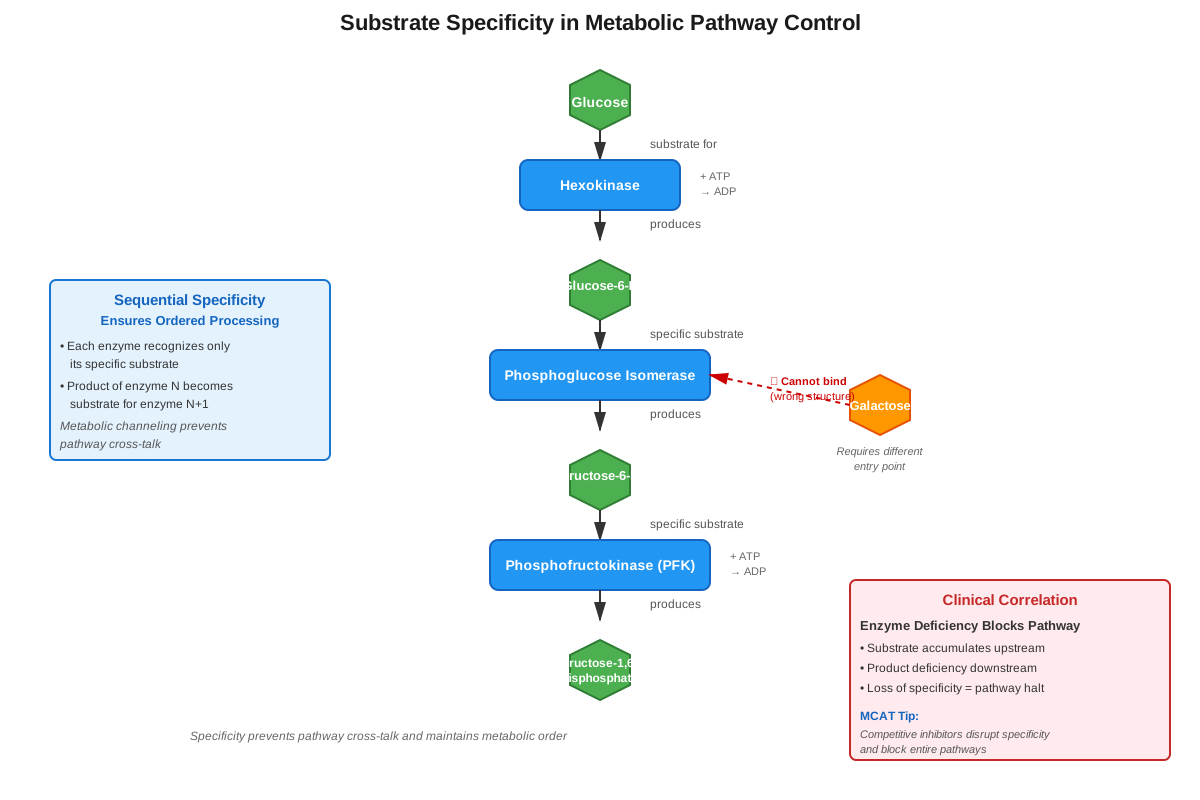
Substrate specificity enables precise metabolic control. In metabolic pathways, each enzyme recognizes specific substrates and produces specific products, ensuring that intermediates flow through defined routes rather than participating in unwanted side reactions. This organization prevents metabolic chaos in the complex cellular environment containing thousands of different molecules.
Specificity also underlies regulatory mechanisms. Competitive inhibitors exploit substrate specificity by resembling the natural substrate closely enough to bind the active site but lacking the chemical features necessary for catalysis. This competition reduces enzyme activity in a substrate-concentration-dependent manner. Understanding this relationship is crucial for MCAT questions involving enzyme inhibition and drug mechanisms.
Concept Relationships
Substrate specificity connects to multiple Biochemistry concepts in an integrated network. The foundation begins with protein structure, where the primary amino acid sequence determines the three-dimensional active site architecture that enables substrate recognition. This structure-function relationship demonstrates how genetic information (DNA → RNA → protein sequence) ultimately determines enzymatic specificity and metabolic capabilities.
Enzyme kinetics provides the quantitative framework for measuring and comparing substrate specificity. The Michaelis-Menten equation describes how reaction velocity depends on substrate concentration, with Km and Vmax values revealing substrate affinity and catalytic efficiency. These parameters enable objective comparison of how an enzyme performs with different substrates.
The relationship flows as: Protein structure → Active site geometry → Substrate specificity → Enzyme kinetics → Metabolic function
Substrate specificity directly influences competitive inhibition, where inhibitor molecules compete with substrate for active site binding. The degree of competition depends on the relative affinities (Km values) of substrate and inhibitor, explaining why structurally similar molecules often serve as competitive inhibitors.
Allosteric regulation represents another connected concept—allosteric effectors bind sites distinct from the active site, inducing conformational changes that alter substrate specificity or catalytic efficiency. This mechanism allows metabolic regulation without directly blocking the active site.
Metabolic pathways depend fundamentally on substrate specificity. Sequential enzymes each recognize specific substrates, creating ordered reaction sequences. Product specificity (the flip side of substrate specificity) ensures that each enzyme produces the correct substrate for the next enzyme in the pathway.
Finally, substrate specificity connects to evolution and adaptation. Enzymes evolve to recognize substrates relevant to an organism's environment and metabolic needs. Mutations that alter active site residues can change substrate specificity, potentially creating new metabolic capabilities or causing disease when specificity for essential substrates is lost.
Quick check — test yourself on Substrate specificity so far.
Try Flashcards →High-Yield Facts
⭐ Substrate specificity arises from complementary three-dimensional structure between the enzyme active site and substrate, involving multiple weak interactions (hydrogen bonds, ionic interactions, van der Waals forces, hydrophobic effects).
⭐ The induced fit model, not the rigid lock-and-key model, accurately describes most enzyme-substrate interactions, with substrate binding inducing conformational changes that optimize catalysis.
⭐ Absolute specificity (one substrate only) is rare; most enzymes show group, linkage, or stereochemical specificity, recognizing multiple related substrates.
⭐ Lower Km values indicate higher substrate affinity and greater specificity; kcat/Km (catalytic efficiency) provides the best overall measure of enzyme performance with a particular substrate.
⭐ Stereochemical specificity enables enzymes to distinguish between stereoisomers (L vs. D amino acids, different sugar anomers), reflecting the three-dimensional nature of molecular recognition.
- Competitive inhibitors exploit substrate specificity by resembling the natural substrate closely enough to bind the active site but cannot undergo catalysis.
- Hexokinase demonstrates group specificity by phosphorylating various hexose sugars, though it shows preference (higher kcat/Km) for glucose.
- Trypsin exhibits both linkage specificity (cleaves peptide bonds) and additional selectivity (prefers bonds after basic amino acids lysine and arginine).
- Mutations affecting active site residues can alter substrate specificity, potentially causing metabolic diseases when specificity for essential substrates is reduced.
- Enzyme specificity prevents unwanted cross-reactions in metabolism, where thousands of different molecules coexist in the cellular environment.
- Urease demonstrates absolute specificity, catalyzing only urea hydrolysis with no activity toward structurally similar molecules.
- The active site typically comprises only a small fraction of the total enzyme structure, with residues from distant parts of the primary sequence brought together by protein folding.
- Substrate specificity underlies rational drug design, where pharmaceutical agents are engineered to fit specific enzyme active sites as competitive inhibitors.
Common Misconceptions
Misconception: All enzymes show absolute specificity for a single substrate.
Correction: Absolute specificity is actually rare. Most enzymes exhibit group, linkage, or stereochemical specificity, recognizing multiple related substrates. For example, alcohol dehydrogenase acts on various alcohols, and proteases cleave many different peptide bonds. Only specialized enzymes like urease demonstrate true absolute specificity.
Misconception: The lock-and-key model accurately describes all enzyme-substrate interactions.
Correction: The induced fit model provides a more accurate description for most enzymes. While the lock-and-key model suggests rigid complementarity, experimental evidence shows that substrate binding typically induces conformational changes in the enzyme that optimize the active site for catalysis. The MCAT expects understanding of induced fit as the predominant mechanism.
Misconception: A lower Km always means the enzyme works better with that substrate.
Correction: Km reflects only binding affinity (substrate concentration for half-maximal velocity), not overall catalytic performance. An enzyme might bind a substrate tightly (low Km) but catalyze the reaction slowly (low kcat). The kcat/Km ratio (catalytic efficiency) provides the complete picture of enzyme performance, combining both binding and catalytic rate.
Misconception: Substrate specificity and product specificity are unrelated concepts.
Correction: These concepts are intimately connected—an enzyme's substrate specificity determines which molecules it can bind and convert, while product specificity describes what the enzyme produces. Together, they define the enzyme's role in metabolism. An enzyme with broad substrate specificity might still show strict product specificity, always catalyzing the same type of chemical transformation.
Misconception: Competitive inhibitors must be structurally identical to the substrate.
Correction: Competitive inhibitors need only sufficient structural similarity to bind the active site—they don't need to be identical to the substrate. They must possess key features that enable active site recognition but lack the chemical groups necessary for catalysis. This principle underlies drug design, where inhibitors are engineered to bind tightly while being chemically distinct from natural substrates.
Misconception: Changing any amino acid in an enzyme will alter substrate specificity.
Correction: Only mutations affecting active site residues or residues that influence active site structure significantly impact substrate specificity. Mutations in distant regions of the enzyme that don't affect active site geometry typically have minimal effect on specificity. However, some distant mutations can alter specificity through allosteric effects or by affecting protein folding.
Worked Examples
Example 1: Interpreting Enzyme Specificity Data
Question: Researchers measure the kinetic parameters of hexokinase with three different substrates:
- Glucose: Km = 0.1 mM, kcat = 1000 s⁻¹
- Fructose: Km = 1.5 mM, kcat = 900 s⁻¹
- Galactose: Km = 5.0 mM, kcat = 200 s⁻¹
Which substrate does hexokinase prefer, and what type of specificity does this enzyme demonstrate?
Solution:
Step 1: Calculate catalytic efficiency (kcat/Km) for each substrate, as this parameter best reflects overall enzyme performance:
- Glucose: kcat/Km = 1000 s⁻¹ / 0.1 mM = 10,000 mM⁻¹s⁻¹
- Fructose: kcat/Km = 900 s⁻¹ / 1.5 mM = 600 mM⁻¹s⁻¹
- Galactose: kcat/Km = 200 s⁻¹ / 5.0 mM = 40 mM⁻¹s⁻¹
Step 2: Compare catalytic efficiencies. Glucose shows the highest kcat/Km value (10,000 mM⁻¹s⁻¹), indicating it is the preferred substrate. The enzyme binds glucose most tightly (lowest Km) and catalyzes its phosphorylation most rapidly (highest kcat).
Step 3: Determine specificity type. Hexokinase acts on multiple six-carbon sugars (glucose, fructose, galactose), all of which share the common feature of being hexoses with multiple hydroxyl groups. This demonstrates group specificity—the enzyme recognizes a structural class (hexose sugars) rather than a single substrate.
Step 4: Note the preference within the group. Although hexokinase shows group specificity, it exhibits clear preference for glucose over other hexoses, with catalytic efficiency for glucose being approximately 17-fold higher than for fructose and 250-fold higher than for galactose.
Answer: Hexokinase prefers glucose (highest kcat/Km) and demonstrates group specificity by acting on multiple hexose sugars while showing substrate preference within that group.
MCAT Connection: This example illustrates how to interpret kinetic data to determine substrate preference and classify specificity type—both common MCAT question formats. Remember that kcat/Km, not Km alone, determines substrate preference.
Example 2: Predicting Effects of Active Site Mutations
Question: Wild-type enzyme X specifically binds substrate S through three key interactions: (1) a hydrogen bond between Ser195 and the substrate's hydroxyl group, (2) an ionic interaction between Asp102 and the substrate's amino group, and (3) hydrophobic contacts between Phe41 and the substrate's nonpolar region. A mutation changes Asp102 to Asn102. Predict how this mutation affects substrate specificity and binding affinity.
Solution:
Step 1: Analyze the original interaction. Aspartate (Asp) is a negatively charged amino acid at physiological pH, capable of forming ionic bonds with positively charged groups. The wild-type enzyme uses Asp102 to form an ionic interaction with the substrate's amino group (positively charged at physiological pH).
Step 2: Analyze the mutant residue. Asparagine (Asn) is polar but uncharged, containing an amide side chain. It can form hydrogen bonds but cannot form ionic interactions.
Step 3: Predict the effect on binding. The mutation eliminates the ionic interaction between enzyme and substrate. Ionic bonds are typically stronger than hydrogen bonds (approximately 20 kJ/mol vs. 4-20 kJ/mol), so losing this interaction will decrease binding affinity. The Km for substrate S will increase (higher substrate concentration needed to achieve half-maximal velocity).
Step 4: Predict the effect on specificity. The mutant enzyme may now show altered specificity. Substrates lacking the amino group (which couldn't bind wild-type enzyme) might now bind the mutant enzyme because the requirement for a positively charged group is eliminated. Conversely, the enzyme's preference for substrate S over other molecules is reduced because one discriminating feature is lost.
Step 5: Consider compensatory interactions. The mutant Asn102 might form a hydrogen bond with the substrate's amino group (though weaker than the original ionic bond), partially preserving some selectivity for substrates with this feature.
Answer: The Asp102Asn mutation will decrease binding affinity for substrate S (increased Km) by eliminating a strong ionic interaction. Substrate specificity will be altered—the enzyme may show reduced selectivity, potentially accepting substrates lacking the amino group that was required for wild-type enzyme binding. The mutation demonstrates how active site residues determine both binding affinity and substrate specificity.
MCAT Connection: This example requires integrating knowledge of amino acid properties, types of molecular interactions, and their relative strengths—all testable concepts. MCAT questions often present mutations and ask students to predict functional consequences, testing understanding of structure-function relationships.
Exam Strategy
Approaching MCAT Questions on Substrate Specificity
When encountering substrate specificity questions, follow this systematic approach:
- Identify the question type: Is it asking about specificity classification, kinetic parameter interpretation, structural basis of specificity, or prediction of mutation effects?
- Extract key information: Note substrate structures, kinetic parameters (Km, Vmax, kcat), active site residues mentioned, or experimental conditions described.
- Apply the appropriate model: Use induced fit (not lock-and-key) unless the question specifically describes a rigid active site. Remember that substrate binding typically induces conformational changes.
- Calculate when necessary: If kinetic data are provided, calculate kcat/Km to determine substrate preference. Don't rely on Km alone.
Trigger Words and Phrases
Recognize these high-yield terms that signal substrate specificity concepts:
- "Selective," "discriminate," "recognize": Indicate questions about specificity mechanisms
- "Preferred substrate," "natural substrate": Look for highest kcat/Km value
- "Competitive inhibitor," "structural analog": Exploit substrate specificity by resembling the substrate
- "Stereoisomer," "enantiomer," "D- vs. L-": Test stereochemical specificity
- "Active site mutation," "residue substitution": Predict effects on specificity and binding
- "Broad specificity," "promiscuous enzyme": Describes group or linkage specificity
- "Exquisite specificity," "highly selective": Suggests absolute or near-absolute specificity
Process of Elimination Tips
When evaluating answer choices:
- Eliminate options confusing Km with catalytic efficiency: Remember that low Km indicates high affinity but doesn't alone determine substrate preference
- Reject answers invoking lock-and-key for dynamic processes: If the question describes conformational changes, induced fit is correct
- Eliminate choices that ignore stereochemistry: Enzymes almost always distinguish between stereoisomers
- Reject options suggesting all amino acid mutations affect specificity: Only active site or structurally important residues significantly impact specificity
- Eliminate answers claiming absolute specificity for enzymes acting on multiple substrates: Absolute specificity means one substrate only
Time Allocation
For discrete questions on substrate specificity: 60-90 seconds. These typically test definitions, classifications, or simple applications.
For passage-based questions: 90-120 seconds per question. These often require data interpretation, calculation of kinetic parameters, or integration of multiple concepts.
If a question requires calculating multiple kcat/Km values, perform calculations efficiently: estimate when possible, and remember that you're usually comparing relative values rather than needing exact numbers.
Memory Techniques
Mnemonics for Specificity Types
"All Groups Link Stereos" - Remember the four types of substrate specificity:
- Absolute
- Group
- Linkage
- Stereochemical
Visualizing Induced Fit
Picture a baseball glove catching a ball: the glove (enzyme) has a general shape that can accommodate the ball (substrate), but the glove closes around the ball upon contact, optimizing the grip. This dynamic adjustment represents induced fit, contrasting with a rigid box (lock-and-key) that either fits or doesn't.
Remembering Km Interpretation
"Low Km = Loves Me" - Lower Km values indicate higher affinity (the enzyme "loves" that substrate more). The substrate concentration needed to achieve half-maximal velocity is lower because binding is tighter.
Catalytic Efficiency Acronym
"KCAT over KM = Killer Combo" - Remember that kcat/Km (catalytic efficiency) is the "killer combo" that best indicates substrate preference, combining both binding (Km) and catalytic rate (kcat).
Stereochemical Specificity
"Enzymes are 3D Snobs" - Enzymes distinguish between stereoisomers because they recognize three-dimensional structure. The active site is a 3D environment that complements only one stereoisomeric form, making enzymes "snobby" about stereochemistry.
Summary
Substrate specificity describes the selective recognition of certain molecules by enzymes, arising from complementary three-dimensional structure between the active site and substrate. This fundamental Biochemistry principle explains how enzymes maintain metabolic precision despite cellular chemical complexity. Specificity ranges from absolute (one substrate only) to group, linkage, or stereochemical specificity (recognizing classes of related molecules). The induced fit model accurately describes most enzyme-substrate interactions, with substrate binding inducing conformational changes that optimize catalysis. Quantitatively, catalytic efficiency (kcat/Km) best measures substrate preference, combining binding affinity and catalytic rate. For the MCAT, understanding substrate specificity enables interpretation of kinetic data, prediction of mutation effects, analysis of competitive inhibition, and connection to metabolic regulation. This high-yield topic appears frequently in both discrete questions and passage-based items, requiring integration of protein structure, enzyme kinetics, and metabolic concepts.
Key Takeaways
- Substrate specificity arises from complementary 3D structure between enzyme active site and substrate, involving multiple weak interactions that collectively provide selectivity
- Induced fit, not lock-and-key, describes most enzyme-substrate interactions, with substrate binding triggering conformational changes that optimize catalysis
- Four specificity types exist: absolute (one substrate), group (functional group recognition), linkage (bond type), and stereochemical (distinguishing stereoisomers)
- Catalytic efficiency (kcat/Km) provides the best measure of substrate preference, combining both binding affinity (Km) and catalytic rate (kcat)
- Active site amino acid residues determine specificity through steric complementarity, electrostatic interactions, hydrogen bonding, and hydrophobic effects
- Substrate specificity enables metabolic organization, prevents unwanted cross-reactions, and underlies competitive inhibition and drug design
- For MCAT success, focus on interpreting kinetic data, predicting mutation effects, classifying specificity types, and connecting specificity to metabolic regulation
Related Topics
Enzyme Kinetics (Michaelis-Menten): Understanding Km, Vmax, and kcat provides the quantitative framework for measuring substrate specificity. Mastering substrate specificity enables deeper comprehension of how kinetic parameters reflect enzyme-substrate relationships.
Competitive Inhibition: Competitive inhibitors exploit substrate specificity by resembling natural substrates. Understanding specificity explains why structurally similar molecules compete for active site binding and how inhibition depends on relative substrate and inhibitor concentrations.
Allosteric Regulation: Allosteric effectors modulate enzyme activity by inducing conformational changes that alter substrate specificity or catalytic efficiency. This regulatory mechanism builds on understanding how protein structure affects substrate recognition.
Protein Structure and Function: The three-dimensional architecture of the active site determines substrate specificity, illustrating the fundamental structure-function relationship in proteins. Mastering specificity reinforces understanding of how primary sequence determines tertiary structure and biological activity.
Metabolic Pathways: Sequential enzymes in pathways each exhibit substrate specificity, ensuring ordered reaction sequences. Understanding specificity explains how metabolic intermediates flow through defined routes and how pathway regulation occurs through controlling key enzymes.
Enzyme Inhibitors and Drug Design: Pharmaceutical development exploits substrate specificity by designing molecules that selectively bind target enzyme active sites. This applied topic demonstrates clinical relevance of understanding molecular recognition principles.
Practice CTA
Now that you've mastered the core concepts of substrate specificity, reinforce your understanding by attempting practice questions and reviewing flashcards on this topic. Focus on questions requiring kinetic data interpretation, specificity type classification, and prediction of how structural changes affect enzyme function. Challenge yourself with passage-based items that integrate substrate specificity with metabolic regulation and enzyme inhibition. Remember: substrate specificity is a high-yield MCAT topic that connects protein structure, enzyme kinetics, and metabolic function—mastering it will strengthen your performance across multiple Biochemistry domains. Your investment in understanding these principles will pay dividends on test day when you confidently analyze enzyme behavior and predict experimental outcomes!
Sign up free to keep reading
Create a free AnvayaPrep account to finish this MCAT guide on Substrate specificity — plus flashcards and practice questions.