Overview
Competitive inhibition is a fundamental mechanism of enzyme regulation that appears frequently on the MCAT, particularly in Biochemistry and Biological Sciences passages. This reversible form of enzyme inhibition occurs when an inhibitor molecule structurally resembles the natural substrate and competes for binding at the enzyme's active site. Understanding competitive inhibition requires mastery of enzyme kinetics, particularly Michaelis-Menten kinetics and Lineweaver-Burk plots, as these mathematical frameworks allow precise characterization of how competitive inhibitors alter enzyme behavior. The MCAT tests not only the conceptual understanding of competitive inhibition but also the ability to interpret kinetic data, predict experimental outcomes, and apply these principles to pharmacological and physiological scenarios.
The significance of competitive inhibition in Biochemistry extends far beyond academic interest—it represents one of the most important mechanisms in drug design and metabolic regulation. Many therapeutic drugs function as competitive inhibitors, including statins (which inhibit HMG-CoA reductase), methotrexate (which inhibits dihydrofolate reductase), and numerous antibiotics. The MCAT frequently presents passages describing novel enzyme systems or drug mechanisms, expecting students to recognize competitive inhibition patterns from kinetic data, predict the effects of varying substrate or inhibitor concentrations, and distinguish competitive inhibition from other inhibition types. This topic integrates mathematical reasoning, graphical interpretation, and biological application—a combination that makes it both challenging and high-yield for exam preparation.
Mastering competitive inhibition provides the foundation for understanding broader concepts in Enzymes and metabolic control. It connects directly to allosteric regulation, feedback inhibition, and the pharmacodynamics of competitive antagonists at receptors. The mathematical relationships governing competitive inhibition—particularly how Km changes while Vmax remains constant—serve as a reference point for understanding all other inhibition mechanisms. For MCAT success, students must develop fluency in recognizing competitive inhibition from multiple representations: verbal descriptions, kinetic plots, mathematical equations, and experimental scenarios.
Learning Objectives
- [ ] Define competitive inhibition using accurate Biochemistry terminology
- [ ] Explain why competitive inhibition matters for the MCAT
- [ ] Apply competitive inhibition to exam-style questions
- [ ] Identify common mistakes related to competitive inhibition
- [ ] Connect competitive inhibition to related Biochemistry concepts
- [ ] Interpret Lineweaver-Burk plots to distinguish competitive inhibition from other inhibition types
- [ ] Calculate apparent Km values in the presence of competitive inhibitors
- [ ] Predict the effect of substrate concentration changes on competitive inhibition
- [ ] Analyze experimental data to determine whether an inhibitor is competitive
Prerequisites
- Enzyme structure and function: Understanding active sites, substrate binding, and the induced-fit model is essential for comprehending how competitive inhibitors physically occupy the active site
- Michaelis-Menten kinetics: The fundamental equation v = (Vmax[S])/(Km + [S]) and the meaning of Km and Vmax parameters form the mathematical foundation for analyzing competitive inhibition
- Lineweaver-Burk plots: Familiarity with double-reciprocal plots (1/v vs. 1/[S]) enables visual identification of competitive inhibition patterns
- Chemical equilibrium and binding: Understanding reversible binding equilibria explains why competitive inhibition can be overcome by increasing substrate concentration
- Basic pharmacology concepts: Knowledge of drug-receptor interactions provides context for therapeutic applications of competitive inhibitors
Why This Topic Matters
Clinical and Real-World Significance
Competitive inhibition represents one of the most exploited mechanisms in modern pharmacology. Statins, among the most prescribed medications worldwide, function as competitive inhibitors of HMG-CoA reductase, the rate-limiting enzyme in cholesterol biosynthesis. Methotrexate, a cornerstone chemotherapy agent, competitively inhibits dihydrofolate reductase, preventing nucleotide synthesis in rapidly dividing cancer cells. Aspirin irreversibly acetylates cyclooxygenase, but many other NSAIDs function as reversible competitive inhibitors of this enzyme. Understanding competitive inhibition allows clinicians to predict drug interactions, optimize dosing strategies, and anticipate how changes in substrate availability affect therapeutic efficacy. The principle that increasing substrate concentration can overcome competitive inhibition has direct clinical applications, such as using high-dose folate to rescue normal cells from methotrexate toxicity.
MCAT Exam Statistics and Question Types
Competitive inhibition appears in approximately 15-20% of enzyme kinetics questions on the MCAT, making it one of the highest-yield topics within enzyme regulation. The exam tests this concept through multiple question formats: discrete questions asking students to identify inhibition type from kinetic parameters, passage-based questions requiring interpretation of experimental data, and pseudo-discrete questions embedded within biochemistry or physiology passages. Common question stems include: "Which of the following changes would be observed in the presence of a competitive inhibitor?" or "The data in Figure 1 are most consistent with which type of inhibition?" The MCAT particularly favors questions that require students to integrate multiple representations—translating between verbal descriptions, Lineweaver-Burk plots, and Michaelis-Menten curves.
Common Exam Passage Contexts
Competitive inhibition MCAT passages typically appear in several recurring contexts. Drug development passages describe novel enzyme inhibitors and present kinetic data for students to analyze. Metabolic pathway passages may describe feedback inhibition mechanisms or discuss how pathway intermediates competitively inhibit regulatory enzymes. Toxicology passages often feature competitive inhibition, such as ethanol competing with methanol for alcohol dehydrogenase, or fomepizole (a therapeutic competitive inhibitor) used to treat ethylene glycol poisoning. Research-based passages may present novel enzymes with unknown inhibitors, requiring students to determine inhibition mechanisms from experimental results. The MCAT also integrates competitive inhibition into pharmacology passages discussing drug efficacy, therapeutic windows, and mechanisms of drug resistance.
Core Concepts
Definition and Molecular Mechanism
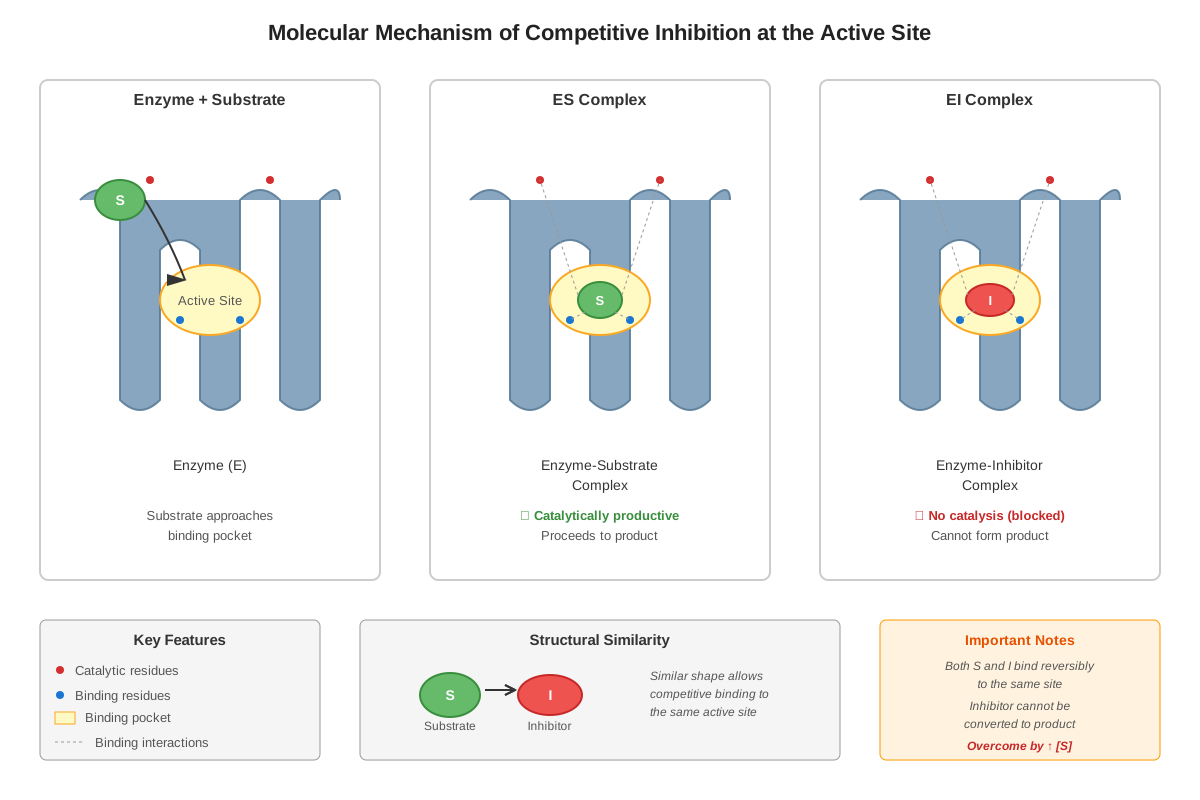
Competitive inhibition is a reversible form of enzyme inhibition in which an inhibitor molecule (I) competes with the substrate (S) for binding to the enzyme's active site. The competitive inhibitor typically possesses structural similarity to the natural substrate, allowing it to fit into the active site but preventing catalysis. Because the inhibitor and substrate compete for the same binding site, they cannot simultaneously occupy the active site—this mutual exclusivity is the defining characteristic of competitive inhibition. The binding is reversible, governed by an equilibrium constant (Ki) that describes the inhibitor's affinity for the enzyme.
At the molecular level, competitive inhibitors exploit the enzyme's substrate recognition mechanisms. The active site contains specific amino acid residues positioned to recognize and bind the substrate through hydrogen bonds, electrostatic interactions, hydrophobic effects, and van der Waals forces. A competitive inhibitor mimics enough of the substrate's structural features to achieve binding but lacks the chemical groups necessary for catalysis or possesses modifications that prevent the catalytic mechanism from proceeding. For example, succinate dehydrogenase, which catalyzes the oxidation of succinate to fumarate in the citric acid cycle, is competitively inhibited by malonate—a molecule that differs from succinate by only one methylene group.
Kinetic Characteristics
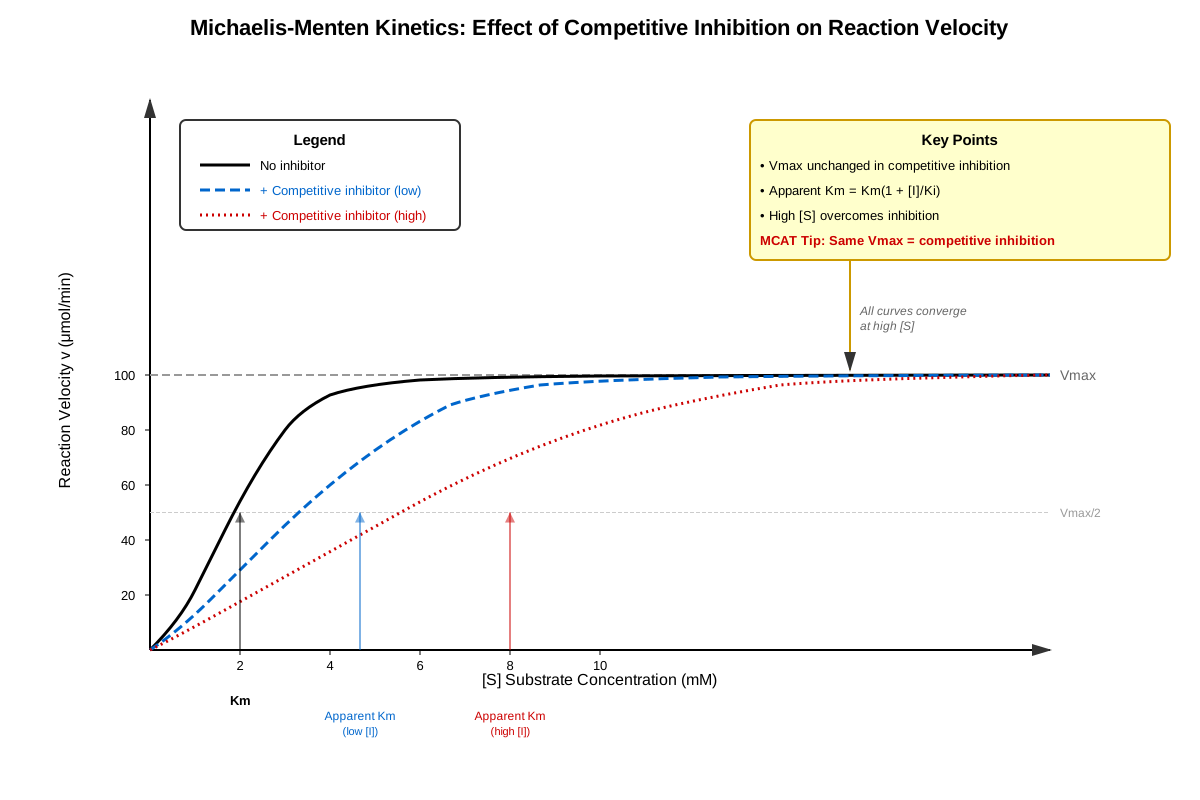
The hallmark kinetic signature of competitive inhibition involves changes to the apparent Km while Vmax remains unchanged. This pattern arises from the fundamental mechanism: at sufficiently high substrate concentrations, the substrate can outcompete the inhibitor for active site binding, eventually saturating all enzyme molecules and achieving the same maximum velocity as in the absence of inhibitor. However, reaching this maximum velocity requires higher substrate concentrations, reflected in an increased apparent Km (often denoted Km,app or α·Km, where α = 1 + [I]/Ki).
The Michaelis-Menten equation in the presence of a competitive inhibitor becomes:
v = (Vmax[S]) / (Km(1 + [I]/Ki) + [S])Where:
- v = reaction velocity
- Vmax = maximum velocity (unchanged)
- [S] = substrate concentration
- Km = Michaelis constant in the absence of inhibitor
- [I] = inhibitor concentration
- Ki = inhibitor dissociation constant
The term (1 + [I]/Ki) represents the factor by which Km is increased. A lower Ki indicates higher inhibitor affinity (tighter binding), resulting in more potent inhibition at a given inhibitor concentration.
Lineweaver-Burk Plot Analysis
The Lineweaver-Burk plot (double-reciprocal plot) provides the most diagnostically useful graphical representation for identifying competitive inhibition. This plot transforms the Michaelis-Menten equation by taking reciprocals:
1/v = (Km/Vmax)(1/[S]) + 1/VmaxIn the presence of a competitive inhibitor:
1/v = (Km(1 + [I]/Ki)/Vmax)(1/[S]) + 1/VmaxThis equation has the form y = mx + b, where:
- y-intercept = 1/Vmax (unchanged in competitive inhibition)
- slope = Km/Vmax (increases with competitive inhibitor)
- x-intercept = -1/Km (becomes less negative, moving toward zero)
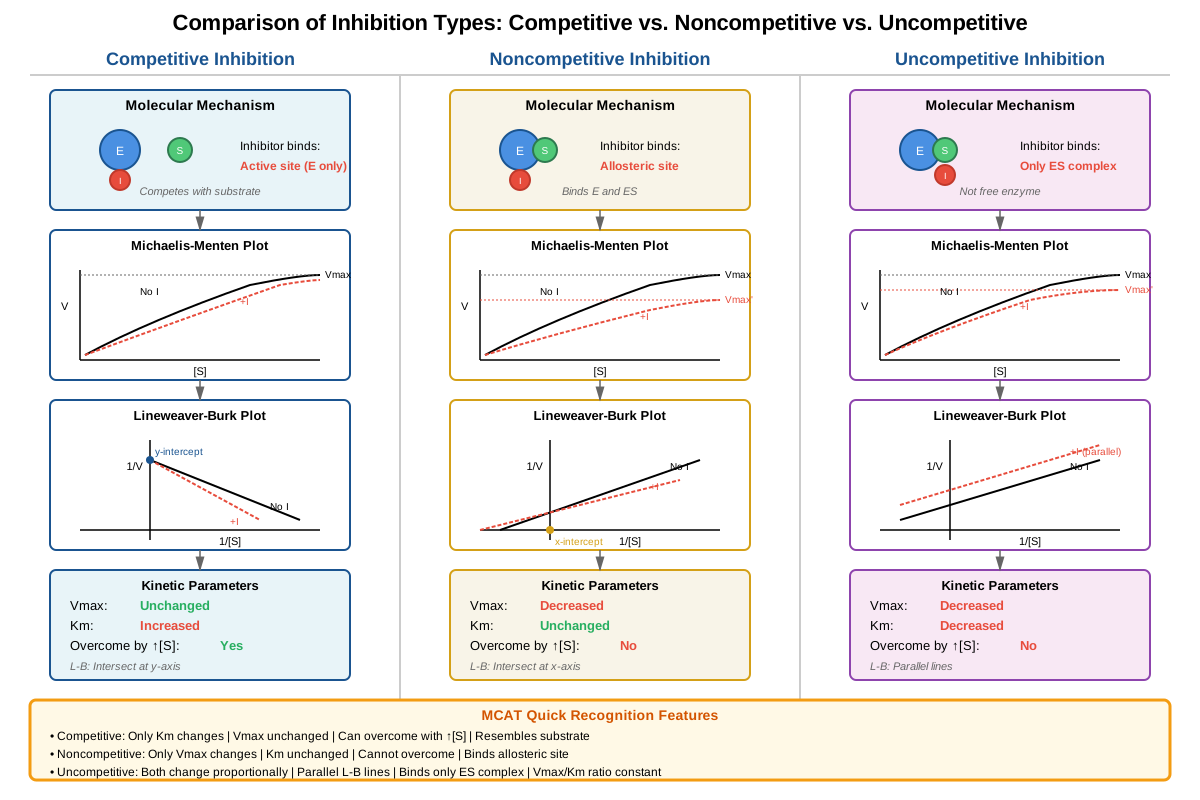
The diagnostic pattern for competitive inhibition on a Lineweaver-Burk plot shows a family of lines that intersect at the y-axis (same y-intercept = same Vmax) but have different slopes (increasing with inhibitor concentration). This convergence at the y-axis distinguishes competitive inhibition from noncompetitive inhibition (which converges at the x-axis) and uncompetitive inhibition (which produces parallel lines).
Comparison with Other Inhibition Types
Understanding competitive inhibition requires distinguishing it from other inhibition mechanisms:
| Inhibition Type | Binding Site | Effect on Vmax | Effect on Km | Lineweaver-Burk Pattern | Overcome by [S]? |
|---|---|---|---|---|---|
| Competitive | Active site | No change | Increases | Intersect at y-axis | Yes |
| Noncompetitive | Allosteric site | Decreases | No change | Intersect at x-axis | No |
| Uncompetitive | ES complex only | Decreases | Decreases | Parallel lines | No |
| Mixed | Multiple sites | Decreases | Increases or decreases | Intersect above/below x-axis | Partially |
The key distinguishing feature of competitive inhibition is that it can be completely overcome by sufficiently high substrate concentrations. This property stems from the competitive nature of binding—as [S] increases, the probability of substrate binding versus inhibitor binding increases proportionally. Eventually, at saturating substrate concentrations, virtually all enzyme molecules bind substrate rather than inhibitor, achieving normal Vmax.
Thermodynamic and Equilibrium Considerations
Competitive inhibition involves three equilibrium processes:
- Enzyme-substrate binding: E + S ⇌ ES (characterized by Km)
- Enzyme-inhibitor binding: E + I ⇌ EI (characterized by Ki)
- Catalysis: ES → E + P (characterized by kcat)
The competitive inhibitor affects only the first equilibrium, making it more difficult for substrate to bind (apparent increase in Km) but not affecting the catalytic step once substrate is bound. The inhibitor dissociation constant (Ki) quantifies inhibitor potency:
Ki = [E][I]/[EI]A lower Ki indicates tighter binding and more effective inhibition. The relationship between apparent Km and Ki is:
Km,app = Km(1 + [I]/Ki)This equation reveals that inhibitor effectiveness depends on both its concentration and its affinity for the enzyme. Doubling the inhibitor concentration doubles the apparent Km, making the enzyme appear to have lower substrate affinity.
Substrate Concentration Effects
The defining characteristic of competitive inhibition—its reversibility by substrate—has profound practical implications. At low substrate concentrations ([S] << Km), the inhibitor significantly reduces reaction velocity because substrate and inhibitor compete on relatively equal terms. At intermediate substrate concentrations ([S] ≈ Km), the inhibitor still exerts substantial effects, but increasing substrate can partially overcome inhibition. At high substrate concentrations ([S] >> Km), the substrate overwhelmingly outcompetes the inhibitor, and reaction velocity approaches Vmax regardless of inhibitor presence.
This concentration-dependence explains several biological and pharmacological phenomena. In metabolic pathways, competitive inhibition by pathway products (feedback inhibition) becomes less effective when substrate accumulates, providing automatic relief from inhibition when substrate availability increases. In pharmacology, competitive antagonists at receptors can be overcome by increasing agonist concentration—a principle exploited therapeutically (e.g., using naloxone to reverse opioid overdose) and a concern in drug resistance (where increased neurotransmitter release can overcome receptor antagonists).
Quantitative Analysis and Problem-Solving
MCAT questions frequently require quantitative reasoning about competitive inhibition. Key relationships include:
Calculating apparent Km: Given Km = 10 μM, [I] = 5 μM, and Ki = 2 μM:
Km,app = 10 μM × (1 + 5/2) = 10 μM × 3.5 = 35 μMDetermining fold-change in Km: The factor (1 + [I]/Ki) directly gives the fold-increase in Km. If this factor equals 3, then Km has tripled.
Predicting velocity changes: At a given substrate concentration, the velocity in the presence of inhibitor can be calculated by substituting Km,app into the Michaelis-Menten equation.
Estimating required substrate increase: To achieve the same velocity as without inhibitor, substrate concentration must increase by the same factor as Km increased.
Concept Relationships
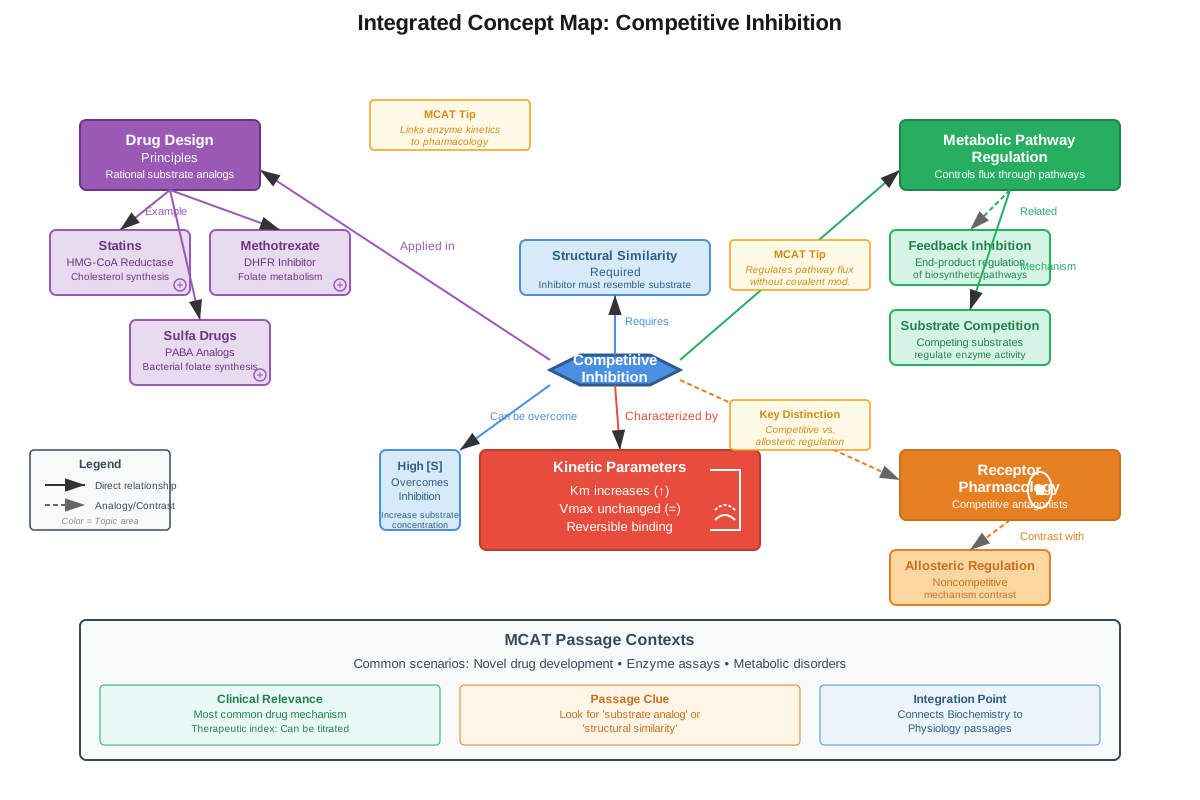
Competitive inhibition connects to enzyme kinetics through the fundamental Michaelis-Menten framework. The Michaelis-Menten equation describes enzyme behavior in the absence of inhibitors, establishing baseline values for Km and Vmax. Competitive inhibition modifies this baseline by increasing apparent Km while preserving Vmax, creating a predictable mathematical relationship that can be analyzed quantitatively.
The relationship flows as follows: Enzyme-substrate binding → Michaelis-Menten kinetics → Competitive inhibition → Modified kinetic parameters → Lineweaver-Burk analysis → Inhibition type identification. Each step builds on the previous, with competitive inhibition representing a specific perturbation to normal enzyme kinetics.
Competitive inhibition also connects to broader regulatory mechanisms. Feedback inhibition often employs competitive inhibition, where pathway end-products structurally resemble early substrates and competitively inhibit rate-limiting enzymes. This creates a self-regulating system where product accumulation automatically slows its own synthesis. The connection extends to allosteric regulation, which provides an alternative regulatory mechanism—while competitive inhibitors bind the active site, allosteric regulators bind distinct sites, representing complementary control strategies.
In pharmacology, competitive inhibition links to drug-receptor interactions and pharmacodynamics. Competitive antagonists at receptors function analogously to competitive enzyme inhibitors—they compete with natural ligands for binding sites and can be overcome by increasing ligand concentration. This parallel allows students to transfer understanding between enzyme kinetics and receptor pharmacology, recognizing that both systems follow similar mathematical relationships and exhibit similar concentration-dependent behaviors.
The concept also connects to metabolic pathway regulation and toxicology. Many toxins function as competitive inhibitors of essential enzymes, and therapeutic interventions often involve administering competitive inhibitors to block toxin metabolism. The classic example—ethanol treatment for methanol poisoning—illustrates how understanding competitive inhibition enables rational therapeutic design.
Quick check — test yourself on Competitive inhibition so far.
Try Flashcards →High-Yield Facts
⭐ Competitive inhibition increases apparent Km but does not change Vmax—this is the single most important distinguishing characteristic and appears in approximately 60% of competitive inhibition questions.
⭐ On Lineweaver-Burk plots, competitive inhibition produces lines that intersect at the y-axis (1/Vmax), with increasing slopes as inhibitor concentration increases.
⭐ Competitive inhibition can be completely overcome by sufficiently high substrate concentrations—this distinguishes it from noncompetitive and uncompetitive inhibition.
⭐ The inhibitor dissociation constant (Ki) quantifies inhibitor potency—lower Ki values indicate tighter binding and more effective inhibition.
⭐ Competitive inhibitors structurally resemble the natural substrate and bind reversibly to the enzyme's active site, preventing substrate binding.
- The apparent Km in the presence of competitive inhibitor equals Km(1 + [I]/Ki), where [I] is inhibitor concentration and Ki is the inhibitor dissociation constant.
- Competitive inhibitors do not affect kcat (the catalytic rate constant) because they don't alter the catalytic mechanism—they only affect substrate binding.
- Many therapeutic drugs function as competitive inhibitors, including statins (HMG-CoA reductase), methotrexate (dihydrofolate reductase), and many NSAIDs (cyclooxygenase).
- Succinate dehydrogenase inhibition by malonate is the classic textbook example of competitive inhibition, frequently appearing in MCAT passages.
- In feedback inhibition, pathway end-products often competitively inhibit early pathway enzymes, providing metabolic regulation.
- The slope of a Lineweaver-Burk plot equals Km/Vmax; competitive inhibitors increase this slope by increasing apparent Km.
- At substrate concentrations much greater than Km ([S] >> Km), competitive inhibitors have minimal effect on reaction velocity.
- Competitive inhibition follows simple binding equilibria and can be analyzed using equilibrium constants and mass action principles.
Common Misconceptions
Misconception: Competitive inhibitors permanently inactivate enzymes by binding irreversibly to the active site.
Correction: Competitive inhibition is reversible. The inhibitor binds and dissociates according to equilibrium dynamics (characterized by Ki). Irreversible inhibitors, such as aspirin's acetylation of cyclooxygenase, represent a different mechanism entirely. The reversibility of competitive inhibition is why increasing substrate concentration can overcome the inhibition—substrate can displace the inhibitor from the active site.
Misconception: Competitive inhibition decreases Vmax because fewer enzyme molecules are available for catalysis.
Correction: Vmax remains unchanged in competitive inhibition. While the inhibitor does occupy some enzyme molecules at any given moment, sufficiently high substrate concentrations will eventually saturate all enzyme molecules with substrate, achieving the same maximum velocity as without inhibitor. The key insight is that competitive inhibition affects the apparent affinity (Km) but not the catalytic capacity (Vmax) of the enzyme population.
Misconception: On a Lineweaver-Burk plot, competitive inhibition produces parallel lines with different y-intercepts.
Correction: Parallel lines characterize uncompetitive inhibition, not competitive inhibition. Competitive inhibition produces lines that intersect at the y-axis (same y-intercept = same 1/Vmax) but have different slopes. The x-intercept changes (becomes less negative) because apparent Km increases, but the y-intercept remains constant because Vmax is unchanged.
Misconception: A competitive inhibitor must be chemically identical to the substrate except for one functional group.
Correction: While competitive inhibitors often closely resemble substrates (like malonate vs. succinate), they need only sufficient structural similarity to bind the active site—they don't need to be nearly identical. Some competitive inhibitors are quite different structurally but possess key recognition features that allow active site binding. The critical requirement is that they bind the active site and prevent substrate binding, not that they be structural analogs.
Misconception: Doubling the substrate concentration will always overcome competitive inhibition and restore normal enzyme activity.
Correction: The substrate concentration required to overcome competitive inhibition depends on the inhibitor concentration and Ki. If apparent Km has increased 10-fold due to inhibitor, substrate concentration must increase proportionally to achieve the same fractional enzyme saturation. Simply doubling substrate concentration when Km has increased 10-fold will not restore normal activity—the substrate increase must match the Km increase.
Misconception: Competitive inhibitors slow down the catalytic rate (kcat) of the enzyme.
Correction: Competitive inhibitors do not affect kcat—they only affect substrate binding (Km). Once substrate successfully binds to form the ES complex, catalysis proceeds at the normal rate. The overall reaction velocity decreases at subsaturating substrate concentrations because less ES complex forms (due to competition for the active site), not because the ES complex converts to product more slowly.
Worked Examples
Example 1: Interpreting Kinetic Data
Question: An enzyme has a Km of 5 mM and Vmax of 100 μmol/min in the absence of inhibitors. When 10 mM of compound X is added, the Km increases to 15 mM while Vmax remains 100 μmol/min. What is the Ki of compound X, and what type of inhibition does it exhibit?
Solution:
Step 1: Identify the inhibition type from the kinetic changes.
- Vmax unchanged: 100 μmol/min → 100 μmol/min
- Km increased: 5 mM → 15 mM
- Pattern: Km increases, Vmax unchanged = competitive inhibition
Step 2: Use the relationship for competitive inhibition to calculate Ki.
The apparent Km in competitive inhibition is:
Km,app = Km(1 + [I]/Ki)Substituting known values:
15 mM = 5 mM(1 + 10 mM/Ki)Step 3: Solve for Ki.
15/5 = 1 + 10/Ki
3 = 1 + 10/Ki
2 = 10/Ki
Ki = 10/2 = 5 mMAnswer: Compound X exhibits competitive inhibition with a Ki of 5 mM.
Key Insight: The 3-fold increase in Km (from 5 to 15 mM) directly relates to the term (1 + [I]/Ki). When this term equals 3, and [I] = 10 mM, Ki must equal 5 mM. This problem illustrates how MCAT questions test the ability to recognize inhibition patterns from kinetic parameters and apply mathematical relationships to calculate inhibitor constants.
Example 2: Predicting Experimental Outcomes
Question: A researcher studies an enzyme with Km = 20 μM and Vmax = 50 nmol/s. She adds a competitive inhibitor with Ki = 10 μM at a concentration of 30 μM.
(A) What is the new apparent Km?
(B) What substrate concentration would be required to achieve 50% of Vmax in the presence of this inhibitor?
(C) If she increases the substrate concentration 10-fold, will this completely overcome the inhibition?
Solution:
(A) Calculate apparent Km:
Using the competitive inhibition equation:
Km,app = Km(1 + [I]/Ki)
Km,app = 20 μM(1 + 30 μM/10 μM)
Km,app = 20 μM(1 + 3)
Km,app = 20 μM × 4 = 80 μM
(B) Determine substrate concentration for 50% Vmax:
From Michaelis-Menten kinetics, velocity equals 50% of Vmax when [S] = Km. In the presence of competitive inhibitor, this relationship still holds, but using Km,app:
[S] required = Km,app = 80 μM
This makes intuitive sense: the apparent Km represents the substrate concentration at which half-maximal velocity is achieved, regardless of inhibitor presence.
(C) Evaluate whether 10-fold substrate increase overcomes inhibition:
The apparent Km increased 4-fold (from 20 to 80 μM). To completely overcome competitive inhibition and restore the same fractional enzyme activity at a given substrate concentration, substrate must increase by the same factor that Km increased.
A 10-fold substrate increase exceeds the 4-fold Km increase, so yes, this will more than overcome the inhibition. In fact, the enzyme will achieve higher fractional activity than before because substrate increased more than necessary.
Quantitative verification:
- Original condition: [S]/Km determines fractional activity
- With inhibitor: [S]/(Km,app) determines fractional activity
- If [S] increases 10-fold and Km increases 4-fold: (10×[S])/(4×Km) = 2.5×([S]/Km)
- The ratio has increased 2.5-fold, indicating higher fractional enzyme saturation
Key Insight: This problem demonstrates that competitive inhibition is surmountable by substrate, but the required substrate increase depends on how much Km has increased. The MCAT frequently tests whether students understand that "overcoming" inhibition requires substrate increases proportional to Km changes, not arbitrary increases.
Exam Strategy
Approaching MCAT Questions on Competitive Inhibition
When encountering enzyme inhibition questions, follow this systematic approach:
Step 1: Identify what information is provided—kinetic parameters (Km, Vmax), graphical data (Lineweaver-Burk or Michaelis-Menten plots), or experimental descriptions.
Step 2: Determine what changed and what remained constant. Create a mental or written table:
- Did Vmax change? (No → competitive or mixed; Yes → noncompetitive or uncompetitive)
- Did Km change? (Yes, increased → competitive or mixed; Yes, decreased → uncompetitive; No → noncompetitive)
Step 3: For graphical questions, identify the diagnostic pattern:
- Lineweaver-Burk lines intersecting at y-axis → competitive
- Lines intersecting at x-axis → noncompetitive
- Parallel lines → uncompetitive
Step 4: Apply the specific characteristics of competitive inhibition:
- Can be overcome by increasing [S]
- Inhibitor binds active site
- Inhibitor structurally resembles substrate
Trigger Words and Phrases
Watch for these high-yield phrases that signal competitive inhibition:
- "Structurally similar to the substrate" or "substrate analog"
- "Binds to the active site" or "competes for the active site"
- "Can be overcome by increasing substrate concentration" or "surmountable by substrate"
- "Apparent Km increases" or "requires higher substrate concentration to achieve half-maximal velocity"
- "Vmax remains unchanged" or "maximum velocity is unaffected"
- "Reversible inhibition" combined with active site binding
Conversely, phrases that rule out competitive inhibition:
- "Binds to a site other than the active site" → noncompetitive or mixed
- "Cannot be overcome by substrate" → noncompetitive or uncompetitive
- "Vmax decreases" → not competitive (unless mixed)
- "Binds only to the ES complex" → uncompetitive
Process-of-Elimination Tips
When multiple inhibition types appear in answer choices:
- Eliminate based on Vmax: If the question states or implies Vmax changes, eliminate competitive inhibition immediately.
- Eliminate based on substrate effects: If increasing substrate concentration does NOT overcome inhibition, eliminate competitive inhibition.
- Use Lineweaver-Burk patterns: If lines are parallel, eliminate competitive; if they intersect at x-axis, eliminate competitive.
- Consider binding site information: If the inhibitor binds anywhere other than the active site, eliminate competitive inhibition.
- Check for structural similarity: While not definitive, competitive inhibitors typically resemble substrates. If the question emphasizes that the inhibitor is structurally unrelated to substrate, competitive inhibition is less likely (though not impossible).
Time Allocation Advice
For discrete questions on competitive inhibition (1-2 minutes):
- Spend 20-30 seconds identifying the inhibition type from given information
- Spend 30-60 seconds on any required calculations
- Spend 20-30 seconds verifying your answer makes sense
For passage-based questions (1.5-2 minutes per question):
- Quickly scan for kinetic data tables or graphs in the passage
- Identify the inhibition pattern before reading answer choices
- Use process of elimination aggressively—often 2-3 choices can be eliminated immediately
- Don't get bogged down in complex calculations unless absolutely necessary; the MCAT often allows conceptual answers
Exam Tip: If a question provides a Lineweaver-Burk plot, analyze it first before reading the question stem in detail. Identifying the inhibition type from the graph takes 10-15 seconds and immediately focuses your approach to the question.
Memory Techniques
Mnemonic for Competitive Inhibition Characteristics
"CARS" for Competitive inhibition:
- Competes for active site
- Apparent Km increases
- Reversible binding
- Substrate can overcome it
Visualization Strategy for Lineweaver-Burk Plots
Imagine the y-axis as a "victory post" where all competitive inhibition lines meet. They're all "competing" to reach the same victory point (same Vmax), but they take different paths (different slopes) to get there. The more inhibitor present, the steeper the climb (higher slope), but they all reach the same height (same y-intercept).
For contrast:
- Noncompetitive lines meet at the x-axis (think "non" = "not at y")
- Uncompetitive lines are parallel (think "un" = "unified direction")
Acronym for Distinguishing Inhibition Types
"VICK" helps remember what changes:
| Type | Vmax | Km |
|---|---|---|
| Competitive | same | Increases |
| Noncompetitive | decreases | same |
| Uncompetitive | decreases | decreases |
The letters spell "VICK" when you take: Vmax (first column), I (from Competitive's Km change), Competitive, Km (second column).
Memory Aid for Ki Relationship
Remember: "Ki Low, Inhibition Go"
A low Ki means the inhibitor binds tightly (high affinity), so inhibition is strong. A high Ki means weak binding, so inhibition is weak. This helps when comparing inhibitor potency or predicting which inhibitor will be more effective.
Conceptual Anchor: The Parking Lot Analogy
Think of the enzyme active site as a parking space, substrate as your car, and competitive inhibitor as someone else's car:
- Only one car can occupy the space at a time (mutual exclusivity)
- If many cars (high substrate) are trying to park, your car is more likely to get the space (substrate overcomes inhibition)
- The parking space itself hasn't changed (Vmax unchanged)
- But it's harder to find it empty (apparent Km increased)
- Eventually, if enough cars keep trying, yours will get in (high [S] overcomes inhibition)
Summary
Competitive inhibition represents a reversible enzyme inhibition mechanism where an inhibitor structurally resembling the substrate competes for binding at the enzyme's active site. The defining kinetic signature—increased apparent Km with unchanged Vmax—arises because sufficiently high substrate concentrations can outcompete the inhibitor, eventually saturating all enzyme molecules and achieving normal maximum velocity. On Lineweaver-Burk plots, competitive inhibition produces a family of lines intersecting at the y-axis, with slopes increasing proportionally to inhibitor concentration. The mathematical relationship Km,app = Km(1 + [I]/Ki) quantifies how inhibitor concentration and affinity (Ki) determine the magnitude of Km increase. This mechanism underlies numerous therapeutic drugs, including statins, methotrexate, and many NSAIDs, and plays crucial roles in metabolic regulation through feedback inhibition. For MCAT success, students must recognize competitive inhibition from multiple representations—verbal descriptions, kinetic parameters, and graphical data—and apply quantitative reasoning to predict experimental outcomes and calculate inhibitor constants.
Key Takeaways
- Competitive inhibition increases apparent Km while leaving Vmax unchanged—this is the diagnostic kinetic signature that distinguishes it from all other inhibition types
- Competitive inhibitors bind reversibly to the enzyme's active site, preventing substrate binding through direct competition, and typically possess structural similarity to the natural substrate
- On Lineweaver-Burk plots, competitive inhibition produces lines that intersect at the y-axis (constant 1/Vmax), with increasing slopes as inhibitor concentration increases
- Competitive inhibition can be completely overcome by sufficiently high substrate concentrations, making it fundamentally different from noncompetitive and uncompetitive inhibition
- The inhibitor dissociation constant (Ki) quantifies inhibitor potency, with lower Ki values indicating tighter binding and more effective inhibition; the relationship Km,app = Km(1 + [I]/Ki) allows calculation of apparent Km
- Many clinically important drugs function as competitive inhibitors, including statins (cholesterol synthesis), methotrexate (folate metabolism), and numerous enzyme-targeted therapeutics
- MCAT questions test competitive inhibition through kinetic data interpretation, graphical analysis, and application to pharmacological scenarios, requiring integration of mathematical, conceptual, and practical knowledge
Related Topics
Noncompetitive Inhibition: Understanding how inhibitors that bind to allosteric sites (not the active site) affect enzyme kinetics differently than competitive inhibitors, with decreased Vmax but unchanged Km. Mastering competitive inhibition provides the reference point for understanding this alternative mechanism.
Uncompetitive Inhibition: Exploring the unique inhibition type where inhibitors bind only to the ES complex, decreasing both Vmax and Km proportionally. This mechanism produces parallel lines on Lineweaver-Burk plots and cannot be overcome by increasing substrate concentration.
Allosteric Regulation: Studying how enzymes are regulated by molecules binding to sites distinct from the active site, causing conformational changes that affect catalytic activity. This represents a complementary regulatory strategy to competitive inhibition.
Enzyme Regulation in Metabolic Pathways: Examining how competitive inhibition, particularly feedback inhibition by pathway products, integrates into broader metabolic control mechanisms including allosteric regulation and covalent modification.
Pharmacodynamics and Drug-Receptor Interactions: Applying competitive inhibition principles to receptor pharmacology, where competitive antagonists compete with agonists for receptor binding, following similar mathematical relationships and concentration-dependent behaviors.
Practice CTA
Now that you've mastered the core concepts of competitive inhibition, it's time to solidify your understanding through active practice. Attempt the practice questions and flashcards associated with this topic—they're specifically designed to mirror MCAT-style questions and test your ability to apply these concepts under exam conditions. Focus particularly on interpreting Lineweaver-Burk plots, calculating apparent Km values, and distinguishing competitive inhibition from other mechanisms. Remember: understanding the concept is the first step, but MCAT success requires the ability to rapidly recognize patterns and apply knowledge to novel scenarios. Each practice question you work through builds the pattern recognition and problem-solving speed essential for test day performance. You've built a strong foundation—now strengthen it through deliberate practice!
Sign up free to keep reading
Create a free AnvayaPrep account to finish this MCAT guide on Competitive inhibition — plus flashcards and practice questions.