Overview
FADH2 (flavin adenine dinucleotide, reduced form) stands as one of the central electron carriers in cellular metabolism, playing an indispensable role in energy production pathways tested extensively on the MCAT. This coenzyme, derived from riboflavin (vitamin B2), functions as a critical link between catabolic pathways and the electron transport chain, ultimately enabling ATP synthesis through oxidative phosphorylation. Understanding FADH2's structure, function, and metabolic context is essential for mastering Biochemistry questions that appear consistently across MCAT sections, particularly in passages involving cellular respiration, metabolic disorders, and bioenergetics.
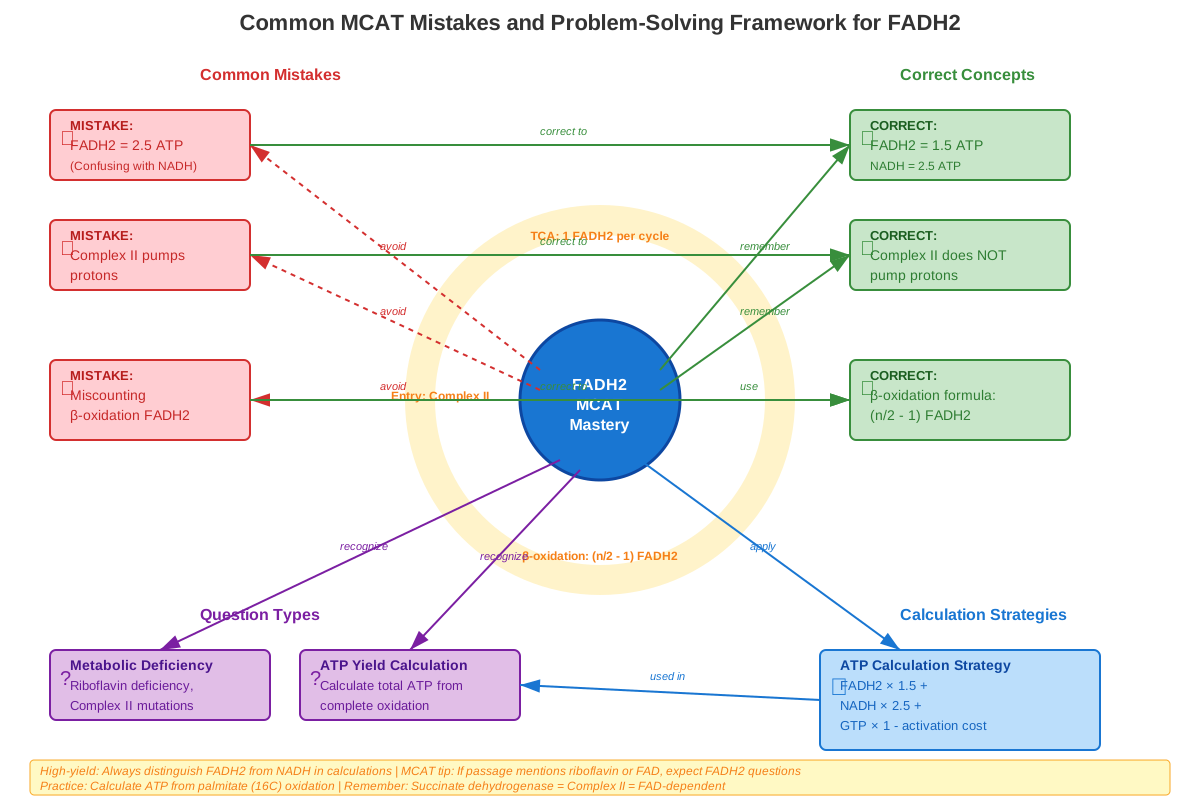
FADH2 Biochemistry encompasses not only the molecule's redox chemistry but also its strategic positioning within metabolic networks. Unlike its more famous counterpart NADH, FADH2 enters the electron transport chain at Complex II (succinate dehydrogenase), yielding approximately 1.5 ATP molecules per oxidation compared to NADH's 2.5 ATP. This distinction frequently appears in MCAT questions requiring quantitative analysis of ATP yield from various fuel molecules. The molecule's prosthetic group attachment to certain enzymes (as FAD) versus its free-floating role in others creates nuanced testing opportunities that distinguish high-scoring students from average performers.
The FADH2 MCAT relevance extends beyond simple memorization of ATP yields. Test-makers frequently embed FADH2 concepts within complex passages about mitochondrial function, metabolic diseases, enzyme kinetics, and comparative biochemistry. Questions may require students to trace electrons through multiple pathways, calculate net ATP production under various conditions, or predict metabolic consequences when FAD-dependent enzymes malfunction. Mastery of FADH2 therefore requires integration across multiple biochemical systems—from the citric acid cycle and fatty acid oxidation to the electron transport chain and oxidative phosphorylation—making it a high-yield topic that rewards comprehensive understanding over isolated fact memorization.
Learning Objectives
- [ ] Define FADH2 using accurate Biochemistry terminology
- [ ] Explain why FADH2 matters for the MCAT
- [ ] Apply FADH2 to exam-style questions
- [ ] Identify common mistakes related to FADH2
- [ ] Connect FADH2 to related Biochemistry concepts
- [ ] Calculate ATP yields from FADH2 oxidation under various metabolic conditions
- [ ] Compare and contrast FADH2 with NADH in terms of structure, function, and energetics
- [ ] Predict the metabolic consequences of impaired FAD-dependent enzyme function
- [ ] Trace the flow of electrons from FADH2 through the electron transport chain to oxygen
Prerequisites
- Basic redox chemistry: Understanding oxidation-reduction reactions is essential because FADH2 functions as an electron donor, and recognizing electron flow determines metabolic outcomes
- Mitochondrial structure: Knowledge of inner membrane organization, cristae, and matrix compartments contextualizes where FADH2 oxidation occurs and why membrane impermeability matters
- ATP synthesis fundamentals: Familiarity with chemiosmotic coupling and ATP synthase function explains how FADH2 oxidation ultimately produces cellular energy
- Citric acid cycle overview: Recognizing the cycle's role in generating reduced coenzymes provides context for where FADH2 is produced
- Enzyme cofactor concepts: Understanding that vitamins serve as cofactor precursors explains FAD's origin from riboflavin and its essential dietary requirement
Why This Topic Matters
Clinical and Real-World Significance: FADH2 and its oxidized form FAD participate in numerous metabolic pathways whose dysfunction causes human disease. Riboflavin deficiency, though rare in developed nations, impairs FAD-dependent enzymes throughout metabolism, causing symptoms ranging from angular cheilitis to normocytic anemia. More commonly, inherited defects in FAD-dependent enzymes like acyl-CoA dehydrogenases cause fatty acid oxidation disorders, presenting as hypoglycemia, cardiomyopathy, or sudden infant death. Mitochondrial diseases affecting Complex II directly impact FADH2 oxidation, demonstrating the molecule's centrality to cellular energetics. Understanding FADH2 biochemistry also illuminates why certain toxins (like malonate, a succinate dehydrogenase inhibitor) prove lethal by blocking this critical electron entry point.
MCAT Exam Statistics: FADH2 appears in approximately 15-20% of biochemistry passages on the MCAT, with particular concentration in metabolism-heavy exams. Questions typically fall into three categories: (1) quantitative ATP yield calculations requiring students to track FADH2 production and oxidation (30% of FADH2 questions), (2) mechanistic questions about electron flow through the respiratory chain (40%), and (3) experimental passages analyzing metabolic flux or enzyme kinetics involving FAD-dependent reactions (30%). The topic bridges multiple testable concepts, making it a favorite for passage-based questions that assess integrated understanding rather than isolated facts.
Common Exam Appearances: MCAT passages frequently present FADH2 in several contexts: (1) comparative metabolism passages contrasting aerobic versus anaerobic conditions, where students must recognize that FADH2 oxidation requires oxygen as the terminal electron acceptor; (2) enzyme kinetics experiments involving succinate dehydrogenase or acyl-CoA dehydrogenases, testing understanding of FAD as a prosthetic group; (3) metabolic disease vignettes requiring students to predict consequences of impaired FADH2 production or oxidation; (4) bioenergetics calculations demanding precise ATP accounting from complete substrate oxidation; and (5) comparative biochemistry passages exploring evolutionary variations in electron transport systems. Discrete questions often test the structural difference between FADH2 and NADH or ask students to identify which metabolic reactions produce FADH2.
Core Concepts
Structure and Chemical Properties of FADH2
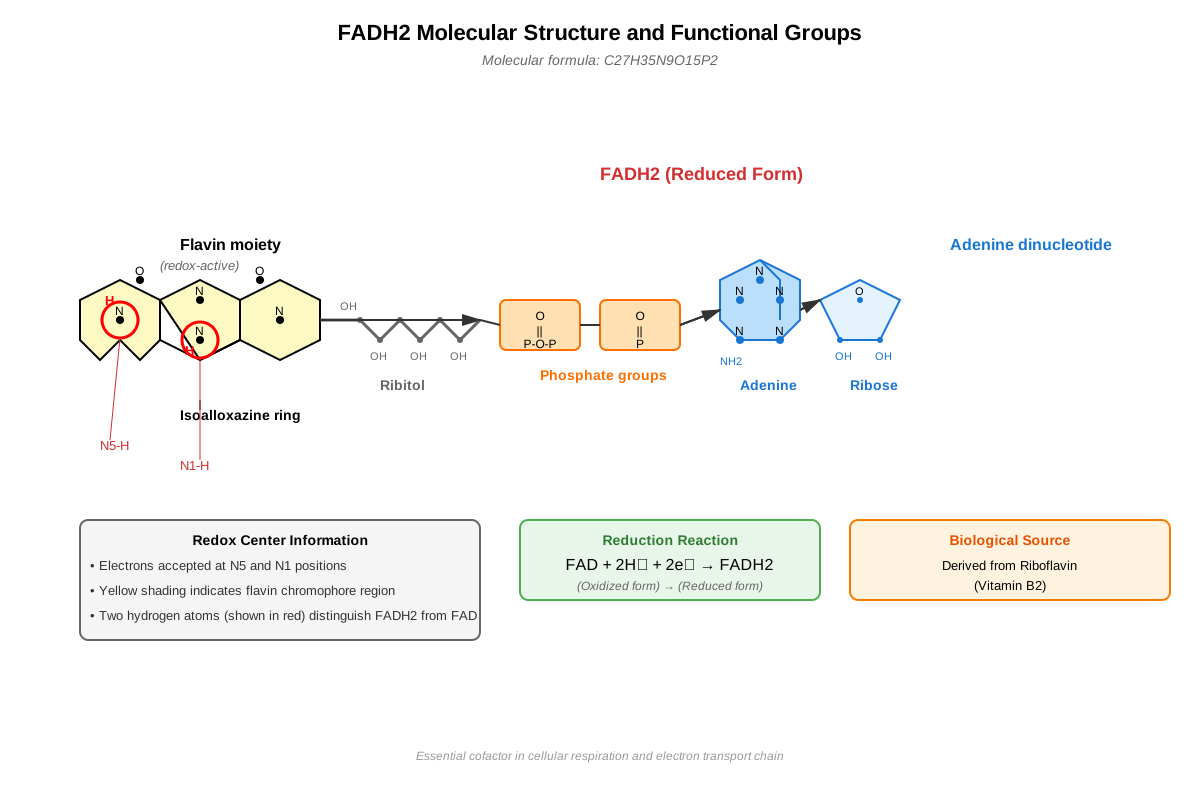
Flavin adenine dinucleotide (FAD) consists of three major structural components: a flavin mononucleotide (FMN) derived from riboflavin (vitamin B2), an adenosine monophosphate (AMP), and two phosphate groups linking these moieties. The isoalloxazine ring system within the flavin portion serves as the redox-active center, capable of accepting two electrons and two protons to form FADH2. This reduction occurs at the N-1 and N-5 positions of the isoalloxazine ring, converting the yellow-colored oxidized form (FAD) to the colorless reduced form (FADH2).
The molecule's ability to accept electrons in either one-electron or two-electron steps distinguishes it from NAD+/NADH, which exclusively undergoes two-electron transfers. This chemical versatility allows FAD to participate in reactions involving radical intermediates, though the fully reduced FADH2 form predominates in cellular metabolism. The standard reduction potential of the FAD/FADH2 couple (E°' ≈ -0.22 V) positions it between NAD+/NADH (E°' ≈ -0.32 V) and the electron transport chain components, making FADH2 a thermodynamically favorable electron donor to Complex II.
FADH2 Production in Metabolic Pathways
FADH2 generation occurs at specific points in catabolic metabolism, each representing a two-electron oxidation of a substrate:
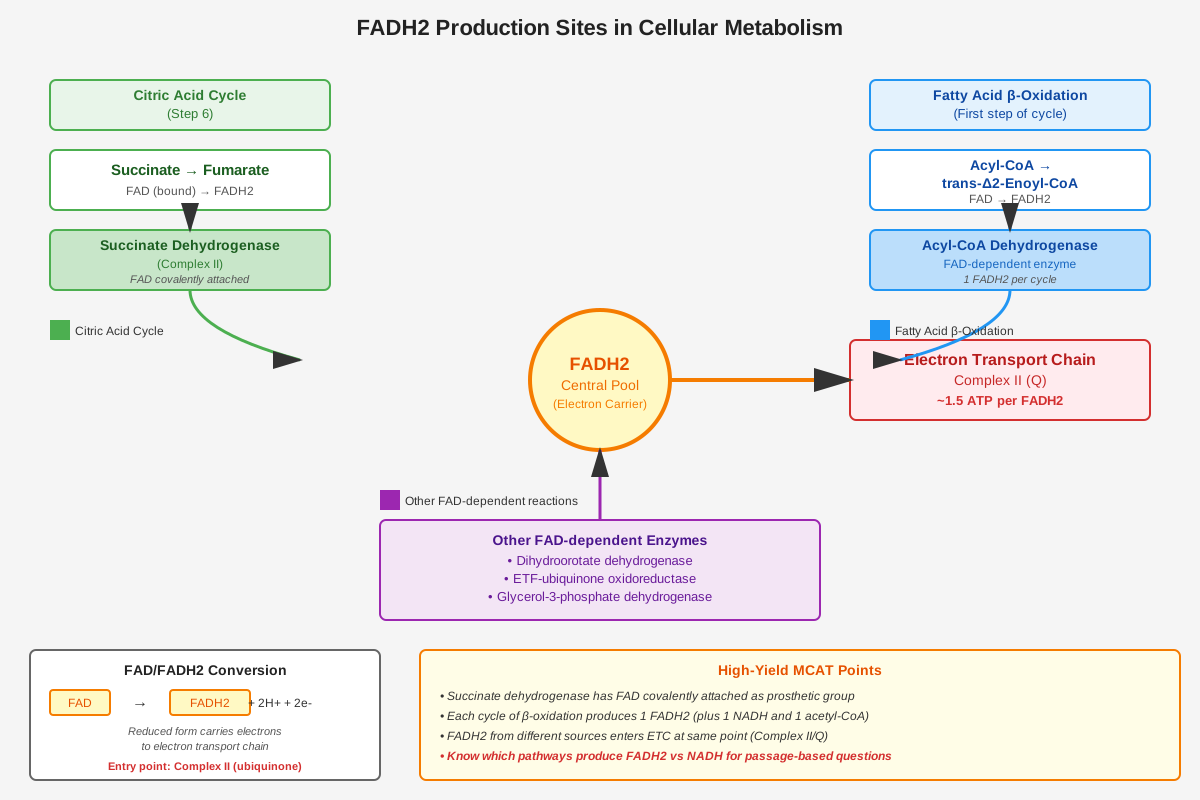
- Citric Acid Cycle: The succinate → fumarate conversion, catalyzed by succinate dehydrogenase (Complex II), produces one FADH2 per cycle turn. This enzyme uniquely contains FAD as a covalently bound prosthetic group rather than a freely dissociating coenzyme.
- Fatty Acid β-Oxidation: Each cycle of β-oxidation generates one FADH2 during the acyl-CoA → enoyl-CoA step, catalyzed by acyl-CoA dehydrogenase. For palmitate (16:0), seven cycles produce seven FADH2 molecules.
- Branched-Chain Amino Acid Catabolism: Degradation of valine, leucine, and isoleucine involves FAD-dependent dehydrogenases that produce FADH2 during carbon skeleton oxidation.
- Choline Oxidation: Conversion of choline to betaine in the liver involves FAD-dependent choline dehydrogenase, linking one-carbon metabolism to FADH2 production.
The spatial organization of FADH2 production matters significantly: succinate dehydrogenase embeds directly in the inner mitochondrial membrane, while other FAD-dependent enzymes reside in the mitochondrial matrix. This distinction affects how electrons enter the electron transport chain.
FADH2 Oxidation and the Electron Transport Chain
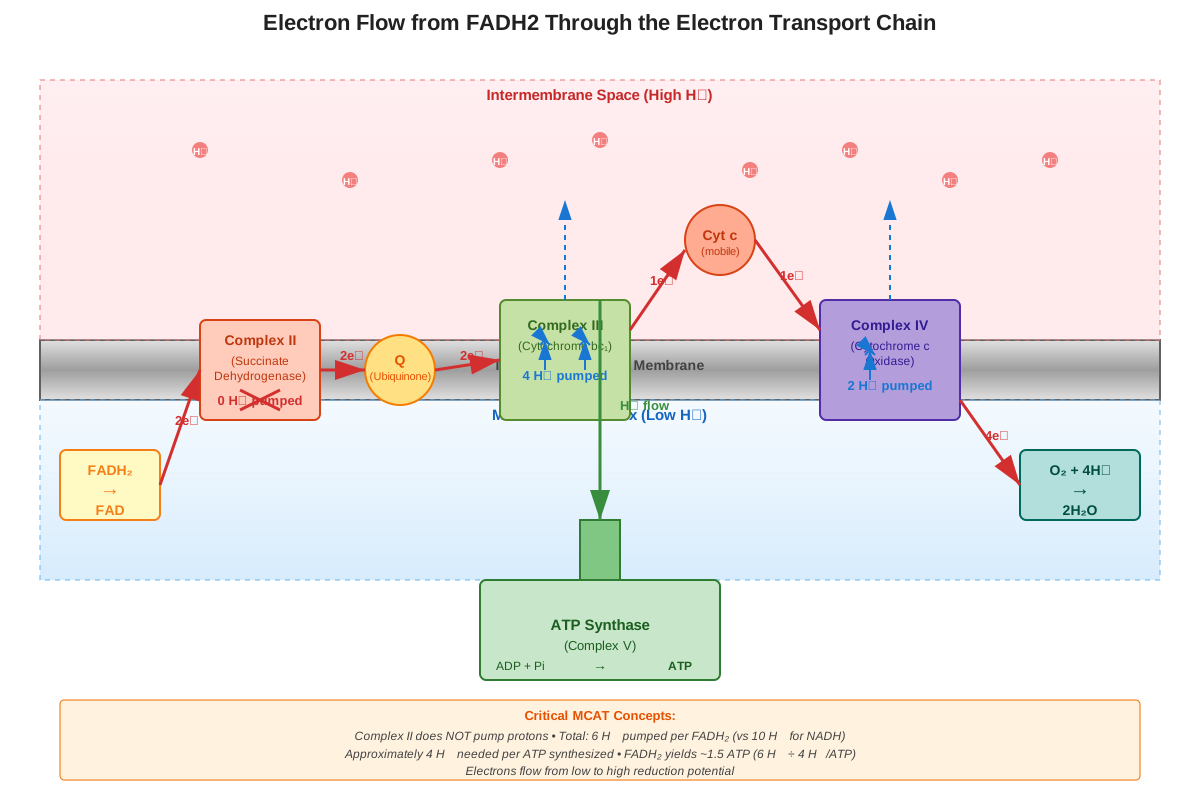
FADH2 oxidation occurs exclusively at Complex II (succinate dehydrogenase-coenzyme Q reductase), bypassing Complex I entirely. This entry point has profound energetic consequences. When FADH2 transfers its electrons to coenzyme Q (ubiquinone), the process does not pump protons across the inner mitochondrial membrane. In contrast, NADH oxidation at Complex I pumps four protons, creating a larger proton-motive force.
The electron flow pathway proceeds: FADH2 → FAD (in Complex II) → iron-sulfur clusters → coenzyme Q → Complex III → cytochrome c → Complex IV → O2. Complexes III and IV pump six protons total (four at Complex III, two at Complex IV), generating the electrochemical gradient that drives ATP synthesis. The P/O ratio (ATP molecules produced per oxygen atom reduced) for FADH2 approximates 1.5, compared to 2.5 for NADH, reflecting the bypassed proton-pumping site.
Comparison: FADH2 versus NADH
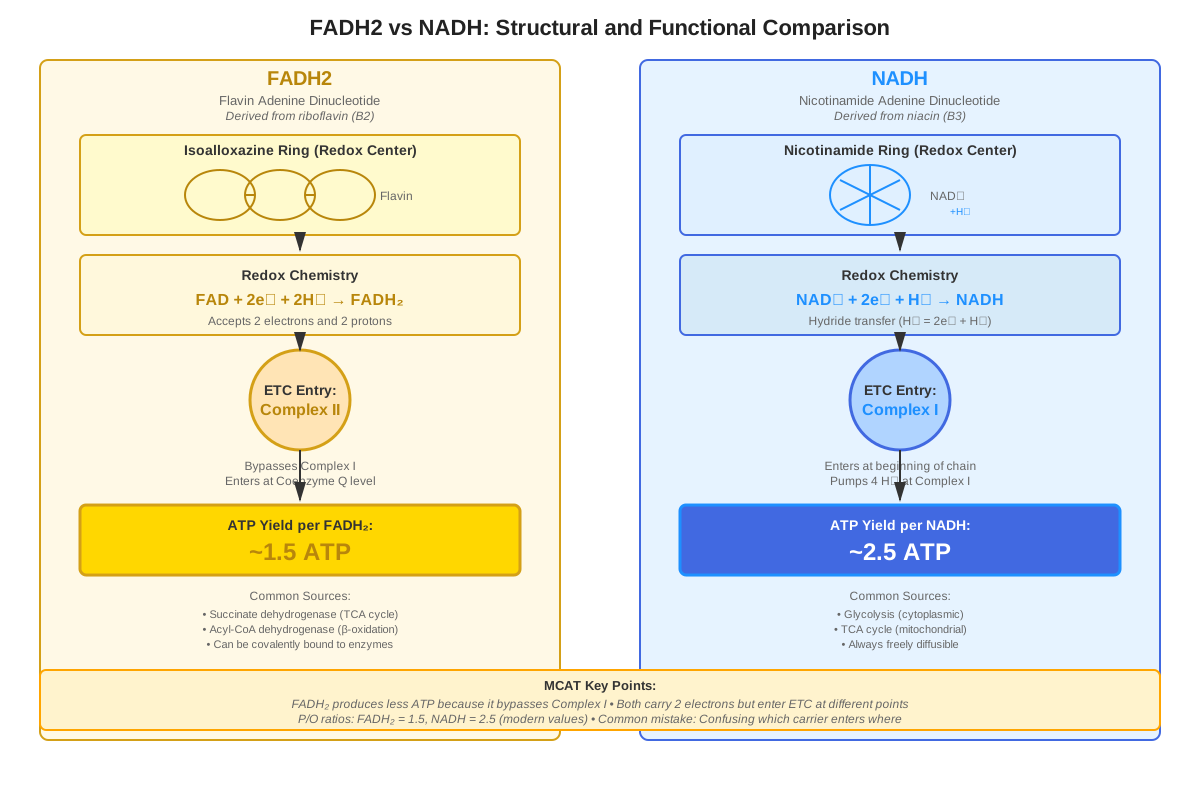
| Feature | FADH2 | NADH |
|---|---|---|
| Redox-active group | Isoalloxazine ring | Nicotinamide ring |
| Vitamin precursor | Riboflavin (B2) | Niacin (B3) |
| Binding to enzymes | Often covalently bound (prosthetic group) | Freely dissociating coenzyme |
| ETC entry point | Complex II | Complex I |
| Proton pumping sites | 2 (Complexes III, IV) | 3 (Complexes I, III, IV) |
| ATP yield per oxidation | ~1.5 ATP | ~2.5 ATP |
| Standard reduction potential | -0.22 V | -0.32 V |
| Electron transfer mechanism | Can accept 1 or 2 electrons | Accepts 2 electrons only |
This comparison frequently appears in MCAT questions requiring students to explain why complete glucose oxidation yields more ATP from NADH than from FADH2, or why certain metabolic pathways produce different ATP yields despite similar carbon inputs.
Energetics and ATP Yield Calculations
Calculating ATP yield from FADH2 requires understanding the chemiosmotic theory and proton stoichiometry. The modern consensus estimates that approximately 10 protons must be pumped into the intermembrane space to synthesize 3 ATP molecules (accounting for ATP synthase stoichiometry and the phosphate transporter). Since FADH2 oxidation pumps approximately 6 protons (4 at Complex III, 2 at Complex IV), the theoretical yield is (6/10) × 3 ≈ 1.8 ATP. However, the commonly used value of 1.5 ATP accounts for proton leak and other inefficiencies.
For exam purposes, students should use these standard values unless the passage specifies otherwise:
- NADH → 2.5 ATP (or 3 ATP in older literature)
- FADH2 → 1.5 ATP (or 2 ATP in older literature)
When calculating total ATP from complete substrate oxidation, students must:
- Count FADH2 molecules produced in all relevant pathways
- Multiply by 1.5 ATP per FADH2
- Add ATP from NADH oxidation, substrate-level phosphorylation, and any other sources
- Subtract ATP invested in activation steps (e.g., 2 ATP for glucose activation in glycolysis)
FAD as a Prosthetic Group versus Coenzyme
The distinction between FAD functioning as a prosthetic group (tightly or covalently bound to enzymes) versus a coenzyme (freely dissociating) has mechanistic and regulatory implications. Succinate dehydrogenase contains FAD covalently attached via a histidine residue, ensuring the enzyme always possesses its redox-active center. This tight binding means the enzyme cycles between FAD and FADH2 states without releasing the reduced form into solution.
In contrast, some FAD-dependent enzymes bind FAD non-covalently but tightly, while others allow FAD/FADH2 exchange. The acyl-CoA dehydrogenases in β-oxidation contain tightly bound FAD that transfers electrons to electron-transferring flavoprotein (ETF), which then reduces ETF-ubiquinone oxidoreductase, ultimately feeding electrons to coenzyme Q. This multi-step electron transfer chain demonstrates how FADH2 equivalents reach the electron transport chain even when the reduced flavin never freely diffuses.
Regulation and Metabolic Control
FADH2 levels influence metabolic flux through product inhibition and allosteric regulation. High FADH2/FAD ratios signal cellular energy sufficiency, slowing catabolic pathways. Succinate dehydrogenase activity depends on the availability of oxidized FAD; when the electron transport chain slows (due to low oxygen, inhibitors, or high ATP/ADP ratios), FAD remains reduced, inhibiting the citric acid cycle at this step.
The respiratory control phenomenon links FADH2 oxidation to ATP demand. When ATP consumption increases, ADP levels rise, stimulating ATP synthase, which depletes the proton gradient. This accelerates electron transport, oxidizing FADH2 back to FAD, which then accepts more electrons from metabolic substrates. This elegant coupling ensures that fuel oxidation matches cellular energy needs.
Concept Relationships
The biochemistry of FADH2 interconnects multiple metabolic systems in a hierarchical network. At the foundational level, riboflavin (vitamin B2) undergoes phosphorylation and adenylation to form FAD, establishing the dietary requirement for this electron carrier. This FAD then participates in numerous oxidation reactions across metabolism, accepting electrons and protons to form FADH2.
The primary relationship flows: Catabolic pathways (citric acid cycle, β-oxidation, amino acid catabolism) → FADH2 production → Electron transport chain (Complex II entry) → Proton pumping → ATP synthesis. Each arrow represents both a physical transfer of electrons and an energetic coupling that conserves free energy from fuel oxidation.
FADH2 production parallels NADH production in most catabolic sequences, creating a coordinated electron harvest. Both reduced coenzymes converge at the electron transport chain, though at different entry points, ultimately reducing the same terminal electron acceptor (oxygen) to water. This convergence explains why oxygen deprivation halts both NADH and FADH2 oxidation, backing up all upstream metabolic pathways.
The relationship between FAD-dependent enzymes and metabolic regulation operates through feedback mechanisms. High FADH2/FAD ratios slow substrate oxidation, while rapid FADH2 oxidation (driven by ATP demand) accelerates catabolism. This creates a metabolic control circuit: ATP demand → increased ATP synthase activity → proton gradient depletion → accelerated electron transport → FADH2 oxidation → FAD regeneration → increased substrate oxidation → more FADH2 production.
The connection to mitochondrial structure proves essential: the inner membrane's impermeability to protons enables chemiosmotic coupling, while the cristae's large surface area accommodates the electron transport complexes that oxidize FADH2. Disruption of membrane integrity (by uncouplers or damage) dissipates the proton gradient, preventing ATP synthesis despite continued FADH2 oxidation—a relationship frequently tested in experimental passages.
Quick check — test yourself on FADH2 so far.
Try Flashcards →High-Yield Facts
⭐ FADH2 yields approximately 1.5 ATP per molecule when oxidized through the electron transport chain, compared to 2.5 ATP for NADH
⭐ FADH2 enters the electron transport chain at Complex II (succinate dehydrogenase), bypassing Complex I and its associated proton pumping
⭐ The citric acid cycle produces one FADH2 per turn during the succinate → fumarate conversion
⭐ Each cycle of fatty acid β-oxidation generates one FADH2 during the acyl-CoA → enoyl-CoA step
⭐ FAD is derived from riboflavin (vitamin B2), making this vitamin essential for electron transport chain function
- FADH2 oxidation requires oxygen as the ultimate electron acceptor; under anaerobic conditions, FADH2 accumulates and inhibits upstream pathways
- Succinate dehydrogenase is unique as the only citric acid cycle enzyme embedded in the inner mitochondrial membrane and the only enzyme that participates in both the citric acid cycle and electron transport chain
- The standard reduction potential of FAD/FADH2 (-0.22 V) is less negative than NAD+/NADH (-0.32 V), making FADH2 a weaker reducing agent
- Malonate competitively inhibits succinate dehydrogenase, blocking both FADH2 production in the citric acid cycle and FADH2 oxidation in the electron transport chain
- Complete oxidation of one palmitate (16:0) molecule produces 7 FADH2 molecules from β-oxidation plus 8 FADH2 from the citric acid cycle (one per acetyl-CoA), totaling 15 FADH2
- The electron-transferring flavoprotein (ETF) system channels electrons from matrix-localized FAD-dependent dehydrogenases to coenzyme Q, representing an alternative route for FADH2 equivalents to enter the electron transport chain
Common Misconceptions
Misconception: FADH2 and NADH produce the same amount of ATP when oxidized.
Correction: FADH2 yields approximately 1.5 ATP while NADH yields approximately 2.5 ATP because FADH2 enters the electron transport chain at Complex II, bypassing the proton-pumping Complex I. This single bypassed site accounts for the ~1 ATP difference.
Misconception: FADH2 is produced in the cytoplasm and must be transported into mitochondria.
Correction: FADH2 production occurs exclusively within mitochondria (in the matrix or embedded in the inner membrane). Unlike NADH, which is produced in both cytoplasm and mitochondria, all FAD-dependent reactions generating FADH2 occur in mitochondrial compartments. The inner mitochondrial membrane is impermeable to both FADH2 and NADH.
Misconception: FAD and FADH2 freely diffuse between enzymes like NAD+ and NADH do.
Correction: FAD often binds tightly or covalently to enzymes as a prosthetic group, particularly in succinate dehydrogenase. While some FAD-dependent enzymes allow coenzyme exchange, many keep FAD bound throughout catalytic cycles, transferring electrons to other carriers rather than releasing FADH2 into solution.
Misconception: The succinate → fumarate reaction is the only source of FADH2 in metabolism.
Correction: While succinate dehydrogenase is the most commonly cited FADH2-producing enzyme, fatty acid β-oxidation generates multiple FADH2 molecules per fatty acid (one per β-oxidation cycle), often contributing more total FADH2 than the citric acid cycle. Amino acid catabolism and other oxidative pathways also produce FADH2.
Misconception: FADH2 can be oxidized even when oxygen is absent, as long as the electron transport chain components are functional.
Correction: FADH2 oxidation absolutely requires oxygen as the terminal electron acceptor. Without oxygen to accept electrons at Complex IV, the entire electron transport chain backs up, leaving FADH2 unable to transfer its electrons to Complex II. This is why anaerobic conditions halt both NADH and FADH2 oxidation.
Misconception: The lower ATP yield from FADH2 means it is less important than NADH in cellular metabolism.
Correction: FADH2 plays equally critical roles in metabolism despite lower ATP yield. Certain reactions (like succinate → fumarate) can only use FAD due to thermodynamic constraints—the free energy change is insufficient to reduce NAD+. Additionally, the total ATP contribution from FADH2 in fatty acid oxidation is substantial, making it quantitatively significant in energy metabolism.
Worked Examples
Example 1: ATP Yield Calculation from Fatty Acid Oxidation
Question: Calculate the total ATP yield from complete oxidation of one molecule of lauric acid (12:0, a saturated 12-carbon fatty acid). Show all FADH2 contributions.
Solution:
Step 1: Determine the number of β-oxidation cycles.
- Lauric acid (12 carbons) requires (12/2) - 1 = 5 cycles of β-oxidation
- Each cycle removes 2 carbons as acetyl-CoA
Step 2: Calculate FADH2 from β-oxidation.
- Each β-oxidation cycle produces 1 FADH2
- 5 cycles × 1 FADH2/cycle = 5 FADH2
Step 3: Calculate acetyl-CoA produced.
- 12 carbons ÷ 2 carbons/acetyl-CoA = 6 acetyl-CoA molecules
Step 4: Calculate FADH2 from citric acid cycle.
- Each acetyl-CoA produces 1 FADH2 in the citric acid cycle (succinate → fumarate)
- 6 acetyl-CoA × 1 FADH2/acetyl-CoA = 6 FADH2
Step 5: Calculate total FADH2 and ATP from FADH2.
- Total FADH2 = 5 (from β-oxidation) + 6 (from citric acid cycle) = 11 FADH2
- ATP from FADH2 = 11 FADH2 × 1.5 ATP/FADH2 = 16.5 ATP
Step 6: Complete the calculation (for context).
- NADH from β-oxidation: 5 cycles × 1 NADH/cycle = 5 NADH → 12.5 ATP
- NADH from citric acid cycle: 6 acetyl-CoA × 3 NADH/acetyl-CoA = 18 NADH → 45 ATP
- GTP from citric acid cycle: 6 acetyl-CoA × 1 GTP/acetyl-CoA = 6 GTP → 6 ATP
- Activation cost: -2 ATP (for acyl-CoA formation)
- Total ATP = 16.5 + 12.5 + 45 + 6 - 2 = 78 ATP
Key Insight: FADH2 contributes approximately 21% of the total ATP yield from lauric acid oxidation, demonstrating its quantitative significance despite lower per-molecule ATP yield.
Example 2: Experimental Analysis of Electron Transport Inhibition
Question: Researchers add malonate (a competitive inhibitor of succinate dehydrogenase) to isolated mitochondria oxidizing succinate as the sole substrate. They measure oxygen consumption, ATP production, and the oxidation state of electron carriers. Predict the experimental outcomes and explain the biochemical basis.
Solution:
Step 1: Identify the target enzyme and its dual role.
- Malonate inhibits succinate dehydrogenase (Complex II)
- This enzyme functions in both the citric acid cycle (succinate → fumarate) and the electron transport chain (FADH2 oxidation)
Step 2: Predict effects on FADH2 production.
- Succinate cannot be converted to fumarate
- No FADH2 is produced from this reaction
- Prediction: FADH2 levels will be very low or absent
Step 3: Predict effects on electron transport.
- Even if FADH2 were present from other sources, Complex II is blocked
- Electrons from FADH2 cannot enter the electron transport chain
- Prediction: Coenzyme Q remains oxidized (cannot accept electrons from Complex II)
Step 4: Predict effects on oxygen consumption.
- Without electron flow through Complex II, oxygen consumption decreases
- If succinate is the sole substrate, oxygen consumption should drop to near zero
- Prediction: Oxygen consumption dramatically decreases
Step 5: Predict effects on ATP production.
- No electron transport means no proton pumping
- No proton gradient means no ATP synthesis via oxidative phosphorylation
- Prediction: ATP production drops to near zero (no substrate-level phosphorylation occurs in this system)
Step 6: Predict effects on other electron carriers.
- Complex I is not directly affected, but without substrate flow through the citric acid cycle, NADH production also ceases
- Cytochromes in Complexes III and IV become oxidized (no electron input)
- Prediction: All downstream electron carriers (cytochromes b, c1, c, a, a3) shift toward oxidized states
Experimental Outcome Summary:
- Oxygen consumption: ↓↓↓ (near zero)
- ATP production: ↓↓↓ (near zero)
- FADH2 levels: ↓↓↓ (minimal)
- Coenzyme Q: Oxidized
- Cytochromes: Oxidized
- Proton gradient: Dissipates
Key Insight: This experiment demonstrates that Complex II serves as the obligate entry point for electrons from succinate oxidation. The dual role of succinate dehydrogenase makes malonate inhibition particularly devastating when succinate is the sole fuel, blocking both FADH2 production and oxidation simultaneously.
Exam Strategy
Approaching FADH2 Questions: When encountering MCAT questions involving FADH2, first identify the question type: (1) ATP yield calculations, (2) mechanistic electron flow, or (3) experimental interpretation. For ATP calculations, immediately note whether the question uses modern values (1.5 ATP per FADH2) or older values (2 ATP per FADH2)—the passage will typically specify or use values consistently. Create a quick accounting table tracking FADH2 production from each pathway mentioned.
Trigger Words and Phrases: Watch for these high-yield terms that signal FADH2 involvement:
- "Succinate dehydrogenase" or "Complex II" → FADH2 oxidation site
- "Fatty acid oxidation" or "β-oxidation" → major FADH2 production pathway
- "Acyl-CoA dehydrogenase" → FAD-dependent enzyme in β-oxidation
- "Flavoprotein" → indicates FAD/FADH2 involvement
- "Riboflavin deficiency" → impairs FAD-dependent reactions
- "Malonate" → competitive inhibitor of succinate dehydrogenase
- "Complete oxidation" → requires accounting for all FADH2 sources
- "Anaerobic conditions" → FADH2 cannot be oxidized
Process-of-Elimination Tips: When answers involve ATP yields, eliminate options that:
- Give FADH2 and NADH equal ATP values (they differ by ~1 ATP)
- Suggest FADH2 produces more ATP than NADH (incorrect—FADH2 yields less)
- Ignore the activation cost in fatty acid oxidation (2 ATP invested)
- Use non-integer values when the question uses older literature values (2 ATP per FADH2, not 1.5)
For mechanistic questions, eliminate answers that:
- Place FADH2 oxidation at Complex I (it's Complex II)
- Suggest FADH2 can be oxidized without oxygen (requires O2 as terminal acceptor)
- Claim FAD and NAD+ are interchangeable in reactions (thermodynamically distinct)
- Indicate FADH2 freely crosses membranes (it cannot)
Time Allocation: For straightforward ATP calculations involving FADH2, allocate 60-90 seconds. For complex passage-based questions requiring integration of FADH2 with experimental data, allocate 90-120 seconds. If a calculation becomes complex, consider whether the answer choices differ enough that estimation would work—often MCAT answers are spaced to allow strategic approximation (e.g., 1.5 ATP per FADH2 can be rounded to 2 for quick elimination of outlier answers).
Exam Tip: If a passage discusses mitochondrial function and mentions both NADH and FADH2, the question likely tests understanding of their different electron transport chain entry points and ATP yields. Prepare a mental comparison table before reading the questions.
Memory Techniques
FADH2 ATP Yield Mnemonic: "Fewer ATPs Delivered" → FADH2 delivers fewer ATPs (1.5) than NADH (2.5) because it enters at Complex II, skipping Complex I's proton pumping.
FADH2 Production Sites: "Succinate Forms FADH2, Fatty acids Form FADH2" → The two highest-yield FADH2 sources both start with 'F': Fumarate formation (from succinate) and Fatty acid β-oxidation.
Complex II Memory Device: "Two is where FADH2 goes" → FADH2 enters at Complex II (the number 2 and the letter F both have horizontal lines, creating a visual association).
Vitamin B2 Connection: "B2 makes FAD for 2 electrons" → Riboflavin (vitamin B2) forms FAD, which accepts 2 electrons to become FADH2.
Succinate Dehydrogenase Uniqueness: "Succinate Dehydrogenase is Special—Dual role, Directly in membrane" → This enzyme uniquely participates in both citric acid cycle and electron transport chain, and is the only cycle enzyme in the membrane.
Visualization Strategy: Picture the electron transport chain as a staircase with four steps (Complexes I-IV). NADH enters at the top step (I), walking down all four steps and pumping protons at three sites. FADH2 enters at the second step (II), walking down only three steps and pumping protons at only two sites (III and IV). This visual explains why FADH2 generates less ATP—it skips the first proton-pumping step.
β-Oxidation Cycle Acronym: "Oxidation Hydration Oxidation Thiolysis" (OHOT) → The four steps of β-oxidation, with FADH2 produced in the first Oxidation step and NADH in the second Oxidation step.
Summary
FADH2 represents a critical reduced electron carrier in cellular metabolism, functioning as an essential link between catabolic pathways and ATP synthesis. Derived from riboflavin (vitamin B2), FAD accepts two electrons and two protons during specific oxidation reactions—most notably the succinate → fumarate conversion in the citric acid cycle and the acyl-CoA → enoyl-CoA step in fatty acid β-oxidation. Unlike NADH, which enters the electron transport chain at Complex I, FADH2 delivers electrons to Complex II (succinate dehydrogenase), bypassing one proton-pumping site and consequently yielding approximately 1.5 ATP per molecule oxidized compared to NADH's 2.5 ATP. This distinction proves crucial for accurate ATP yield calculations, a frequent MCAT question type. FADH2 oxidation requires oxygen as the terminal electron acceptor, linking its function to aerobic metabolism. The molecule's role extends beyond simple electron carriage—it participates in metabolic regulation through product inhibition and respiratory control, coordinates with NADH to harvest electrons from fuel molecules, and serves as a marker of cellular energy status. Understanding FADH2 requires integrating knowledge across multiple biochemical systems, from vitamin metabolism and enzyme cofactors to mitochondrial structure and bioenergetics, making it a high-yield topic that rewards comprehensive study.
Key Takeaways
- FADH2 yields approximately 1.5 ATP per oxidation through the electron transport chain, less than NADH's 2.5 ATP due to Complex I bypass
- FADH2 enters the electron transport chain exclusively at Complex II, avoiding the first proton-pumping site that NADH utilizes
- Major FADH2 production occurs in the citric acid cycle (succinate → fumarate) and fatty acid β-oxidation (acyl-CoA → enoyl-CoA)
- FAD derives from riboflavin (vitamin B2), establishing an essential dietary requirement for electron transport function
- FADH2 oxidation absolutely requires oxygen as the terminal electron acceptor; anaerobic conditions prevent FADH2 oxidation and cause metabolic backup
- Succinate dehydrogenase uniquely functions in both the citric acid cycle and electron transport chain, making it the only cycle enzyme embedded in the inner mitochondrial membrane
- Accurate ATP yield calculations require tracking FADH2 production separately from NADH and applying the correct conversion factor for each carrier
Related Topics
Electron Transport Chain and Oxidative Phosphorylation: Mastering FADH2 provides the foundation for understanding how electrons flow through Complexes II-IV, how the proton-motive force develops, and how chemiosmotic coupling drives ATP synthesis. This topic expands on the energetic consequences of FADH2 oxidation.
NADH and NAD+ Biochemistry: Comparing FADH2 with NADH deepens understanding of why cells use different electron carriers, how their distinct reduction potentials suit different reactions, and why their ATP yields differ. This parallel study reinforces redox biochemistry principles.
Citric Acid Cycle Regulation: Understanding FADH2 production at the succinate dehydrogenase step connects to broader cycle regulation, including how product inhibition by FADH2 coordinates with NADH and ATP levels to control metabolic flux.
Fatty Acid Metabolism: FADH2 production during β-oxidation represents a major quantitative source of this electron carrier. Mastering FADH2 enables accurate calculation of ATP yields from various fatty acids and understanding of how fat metabolism contributes to cellular energy.
Mitochondrial Structure and Function: The spatial organization of FADH2 production and oxidation within mitochondrial compartments connects to understanding cristae structure, membrane impermeability, and the physical basis of chemiosmotic coupling.
Metabolic Disease and Enzyme Deficiencies: Clinical applications of FADH2 biochemistry include riboflavin deficiency, fatty acid oxidation disorders affecting acyl-CoA dehydrogenases, and mitochondrial diseases impacting Complex II function.
Practice CTA
Now that you've mastered the biochemistry of FADH2, reinforce your understanding by attempting practice questions that challenge you to apply these concepts in exam-style scenarios. Focus on ATP yield calculations, electron flow mechanisms, and experimental interpretations involving FAD-dependent enzymes. Use flashcards to drill the key distinctions between FADH2 and NADH, memorize the major FADH2-producing reactions, and practice drawing the electron flow pathway from FADH2 to oxygen. Remember: understanding FADH2 isn't just about memorizing ATP yields—it's about integrating this molecule into the broader metabolic network. Your ability to think systematically about electron carriers will distinguish you on test day. Keep pushing forward—metabolic biochemistry rewards those who see the connections!
Sign up free to keep reading
Create a free AnvayaPrep account to finish this MCAT guide on FADH2 — plus flashcards and practice questions.