Overview
The citric acid cycle (also known as the Krebs cycle or tricarboxylic acid cycle) stands as one of the most critical metabolic pathways tested on the MCAT. This eight-step cyclic pathway occurs in the mitochondrial matrix and serves as the central hub of cellular metabolism, connecting carbohydrate, fat, and protein catabolism while generating high-energy electron carriers that fuel ATP production through oxidative phosphorylation. Understanding the citric acid cycle is essential not only for answering direct biochemistry questions but also for interpreting experimental passages involving cellular respiration, metabolic disorders, and energy homeostasis.
For the MCAT, the citric acid cycle represents a high-yield topic that appears frequently across multiple question formats. Test-makers favor this pathway because it integrates numerous biochemical principles: enzyme kinetics, cofactor requirements, redox reactions, regulation mechanisms, and thermodynamic favorability. Questions may present clinical vignettes involving metabolic diseases, ask students to trace carbon atoms through the cycle, or require identification of rate-limiting steps and regulatory points. The cycle's central position in metabolism means that understanding it provides the foundation for comprehending gluconeogenesis, fatty acid synthesis, amino acid metabolism, and the electron transport chain.
The citric acid cycle Biochemistry connects intimately with glycolysis (which produces the acetyl-CoA substrate), the electron transport chain (which reoxidizes NADH and FADH₂), and various biosynthetic pathways that draw intermediates from the cycle. This interconnectedness makes the citric acid cycle a favorite topic for MCAT passages that test systems-level thinking and the ability to predict metabolic consequences of enzyme deficiencies or regulatory changes. Mastering this topic requires not just memorizing the eight reactions but understanding the logic behind each transformation, the energetics driving the cycle forward, and the multiple levels of regulation that respond to cellular energy status.
Learning Objectives
- [ ] Define citric acid cycle using accurate Biochemistry terminology
- [ ] Explain why citric acid cycle matters for the MCAT
- [ ] Apply citric acid cycle to exam-style questions
- [ ] Identify common mistakes related to citric acid cycle
- [ ] Connect citric acid cycle to related Biochemistry concepts
- [ ] Trace the carbon atoms through each step of the cycle and identify where CO₂ is released
- [ ] Predict the metabolic consequences of inhibiting specific enzymes in the citric acid cycle
- [ ] Calculate the net energy yield (NADH, FADH₂, GTP) from one complete turn of the cycle
- [ ] Explain the regulatory mechanisms controlling the three irreversible reactions in the cycle
Prerequisites
- Glycolysis: The citric acid cycle processes acetyl-CoA produced from pyruvate, the end product of glycolysis
- Basic enzyme kinetics: Understanding allosteric regulation and feedback inhibition is essential for comprehending cycle regulation
- Redox reactions: The cycle involves multiple oxidation-reduction reactions that generate electron carriers
- Coenzyme function: NAD⁺, FAD, and CoA serve critical roles as electron acceptors and acyl group carriers
- Mitochondrial structure: The cycle occurs in the mitochondrial matrix, requiring knowledge of compartmentalization
- Thermodynamics basics: Understanding ΔG and reaction favorability helps explain why certain steps are irreversible
Why This Topic Matters
The citric acid cycle represents one of the most clinically relevant metabolic pathways in human physiology. Deficiencies in cycle enzymes, though rare, cause severe neurological and muscular disorders due to impaired ATP production. More commonly, the cycle's activity influences conditions ranging from diabetes (where acetyl-CoA accumulation leads to ketone body formation) to cancer (where altered cycle metabolism supports rapid cell proliferation). Understanding this pathway enables medical professionals to interpret metabolic acidosis, diagnose mitochondrial diseases, and comprehend how tissues respond to starvation, exercise, and hormonal signals.
From an MCAT perspective, the citric acid cycle appears in approximately 15-20% of biochemistry passages and discrete questions. The exam tests this topic through multiple question types: direct recall of intermediates and products, passage-based analysis of experimental manipulations, calculation of energy yields, and interpretation of metabolic consequences when cycle activity changes. Questions frequently integrate the cycle with other pathways, asking students to predict what happens when acetyl-CoA accumulates, when NADH/NAD⁺ ratios shift, or when specific intermediates are withdrawn for biosynthesis.
Common MCAT passage contexts include: experiments measuring oxygen consumption in isolated mitochondria, clinical cases of metabolic disorders affecting cycle enzymes, studies of cancer cell metabolism showing altered citric acid cycle activity, and investigations of how different fuel sources (glucose, fatty acids, amino acids) feed into the cycle. The exam particularly favors questions about regulation, asking students to predict how changes in ATP, ADP, NADH, or calcium concentrations affect cycle flux. Understanding the citric acid cycle MCAT content thoroughly provides a significant competitive advantage, as this topic integrates with nearly every other aspect of cellular metabolism.
Core Concepts
Definition and Overview of the Citric Acid Cycle
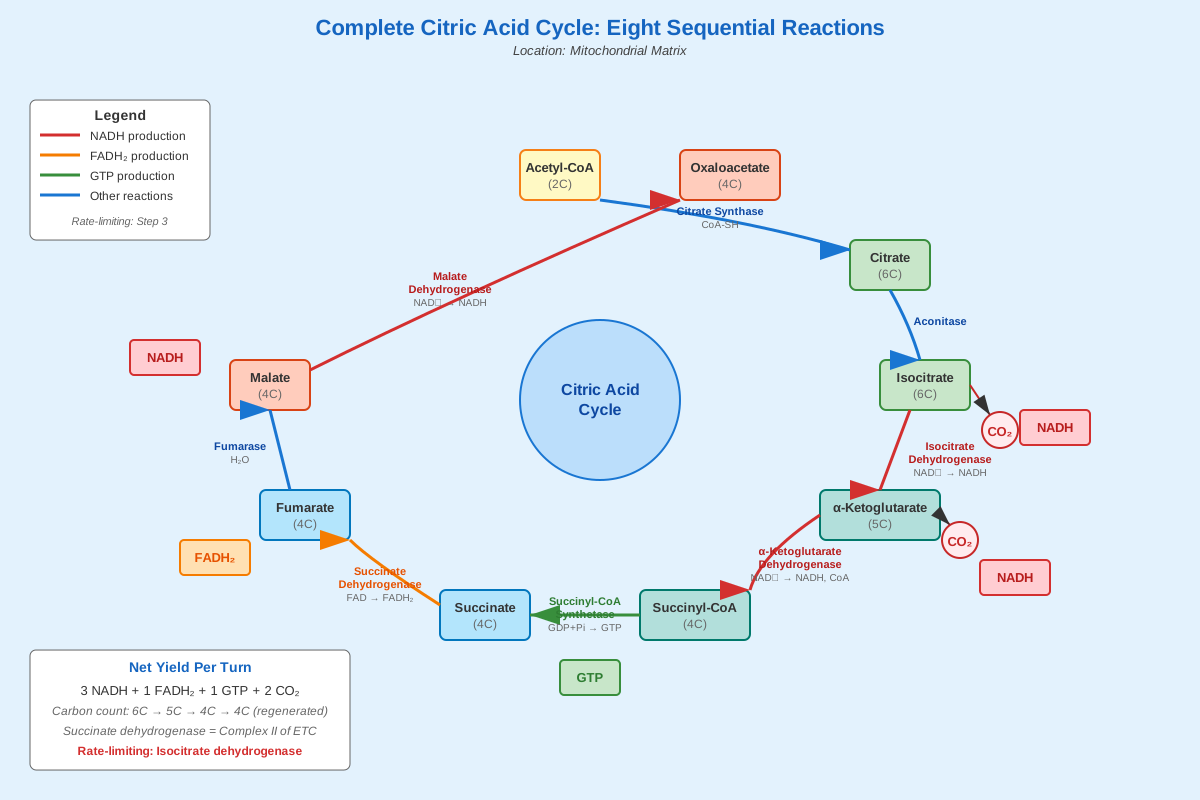
The citric acid cycle is an eight-step cyclic metabolic pathway that completely oxidizes acetyl-CoA (a two-carbon unit) to two molecules of CO₂ while generating three NADH, one FADH₂, and one GTP (or ATP) per turn. The cycle operates exclusively under aerobic conditions because it requires NAD⁺ and FAD, which are regenerated by the electron transport chain using oxygen as the final electron acceptor. The pathway is amphibolic, meaning it functions both catabolically (breaking down acetyl units for energy) and anabolically (providing intermediates for biosynthetic pathways).
The cycle begins when acetyl-CoA (derived from pyruvate, fatty acids, or certain amino acids) condenses with oxaloacetate (a four-carbon molecule) to form citrate (a six-carbon molecule). Through a series of reactions, citrate is progressively oxidized and decarboxylated, regenerating oxaloacetate to continue the cycle. The term "cycle" is crucial: oxaloacetate is both a substrate and a product, allowing continuous operation as long as acetyl-CoA and oxidized cofactors are available.
The Eight Reactions of the Citric Acid Cycle
Step 1: Citrate Formation (Citrate Synthase)
Acetyl-CoA condenses with oxaloacetate to form citrate and CoA-SH. This reaction is catalyzed by citrate synthase and is highly exergonic (ΔG = -31.4 kJ/mol), making it essentially irreversible under physiological conditions. The reaction involves a Claisen condensation mechanism where the methyl carbon of acetyl-CoA attacks the carbonyl carbon of oxaloacetate. This is the committed step of the cycle and a major regulatory point. The enzyme is inhibited by ATP, NADH, succinyl-CoA, and citrate itself (product inhibition), while it is activated by ADP and calcium.
Step 2: Isomerization to Isocitrate (Aconitase)
Citrate is isomerized to isocitrate through a dehydration-rehydration sequence catalyzed by aconitase. The enzyme first removes water to form cis-aconitate (an intermediate that remains enzyme-bound), then adds water back in a different orientation to produce isocitrate. This reaction repositions the hydroxyl group to prepare for the subsequent oxidative decarboxylation. Aconitase contains an iron-sulfur cluster that is sensitive to oxidative damage, making this enzyme vulnerable to reactive oxygen species.
Step 3: First Oxidative Decarboxylation (Isocitrate Dehydrogenase)
Isocitrate undergoes oxidative decarboxylation to form α-ketoglutarate, producing the first NADH and releasing the first CO₂. Isocitrate dehydrogenase catalyzes this reaction, which is irreversible and serves as a major rate-limiting step. The NAD⁺-dependent form of this enzyme (found in the mitochondrial matrix) is allosterically activated by ADP and calcium while being inhibited by ATP and NADH. This regulatory pattern makes sense: when energy is abundant (high ATP/ADP and NADH/NAD⁺ ratios), the cycle slows down; when energy is needed, the cycle accelerates.
Step 4: Second Oxidative Decarboxylation (α-Ketoglutarate Dehydrogenase Complex)
α-Ketoglutarate undergoes oxidative decarboxylation to form succinyl-CoA, generating the second NADH and releasing the second CO₂. The α-ketoglutarate dehydrogenase complex catalyzes this reaction and structurally resembles the pyruvate dehydrogenase complex, requiring the same five cofactors: thiamine pyrophosphate (TPP), lipoic acid, CoA-SH, FAD, and NAD⁺. This reaction is irreversible and represents the third major regulatory point. The enzyme is inhibited by its products (succinyl-CoA and NADH) and by ATP, while calcium activates it.
Step 5: Substrate-Level Phosphorylation (Succinyl-CoA Synthetase)
Succinyl-CoA is cleaved to succinate and CoA-SH, with the energy released captured in the formation of GTP (or ATP, depending on the tissue-specific isozyme). Succinyl-CoA synthetase (also called succinate thiokinase) catalyzes this substrate-level phosphorylation, the only step in the cycle that directly produces a high-energy phosphate bond. The reaction proceeds through a phosphorylated enzyme intermediate. This is the only reversible step among the energy-generating reactions of the cycle.
Step 6: Oxidation to Fumarate (Succinate Dehydrogenase)
Succinate is oxidized to fumarate, generating FADH₂. Succinate dehydrogenase catalyzes this reaction and is unique among citric acid cycle enzymes because it is embedded in the inner mitochondrial membrane as Complex II of the electron transport chain. The enzyme contains FAD covalently bound to a histidine residue and iron-sulfur clusters. The reaction removes two hydrogens from adjacent carbons, creating a trans double bond. Competitive inhibition of this enzyme by malonate is a classic biochemistry experiment demonstrating enzyme inhibition.
Step 7: Hydration to Malate (Fumarase)
Fumarate is hydrated to form L-malate in a stereospecific reaction catalyzed by fumarase. Water is added across the double bond, positioning a hydroxyl group for the final oxidation step. This reaction is freely reversible and has a near-zero ΔG under standard conditions, though it proceeds forward under physiological conditions due to product removal.
Step 8: Regeneration of Oxaloacetate (Malate Dehydrogenase)
L-malate is oxidized to oxaloacetate, generating the third NADH. Malate dehydrogenase catalyzes this reaction, which has a positive ΔG under standard conditions (unfavorable). However, the reaction proceeds forward in cells because citrate synthase rapidly removes oxaloacetate in the next turn of the cycle, pulling the equilibrium forward. This demonstrates an important principle: thermodynamically unfavorable reactions can proceed when coupled to highly favorable downstream reactions.
Energy Yield and Stoichiometry
One complete turn of the citric acid cycle produces:
- 3 NADH (steps 3, 4, and 8)
- 1 FADH₂ (step 6)
- 1 GTP or ATP (step 5)
- 2 CO₂ (steps 3 and 4)
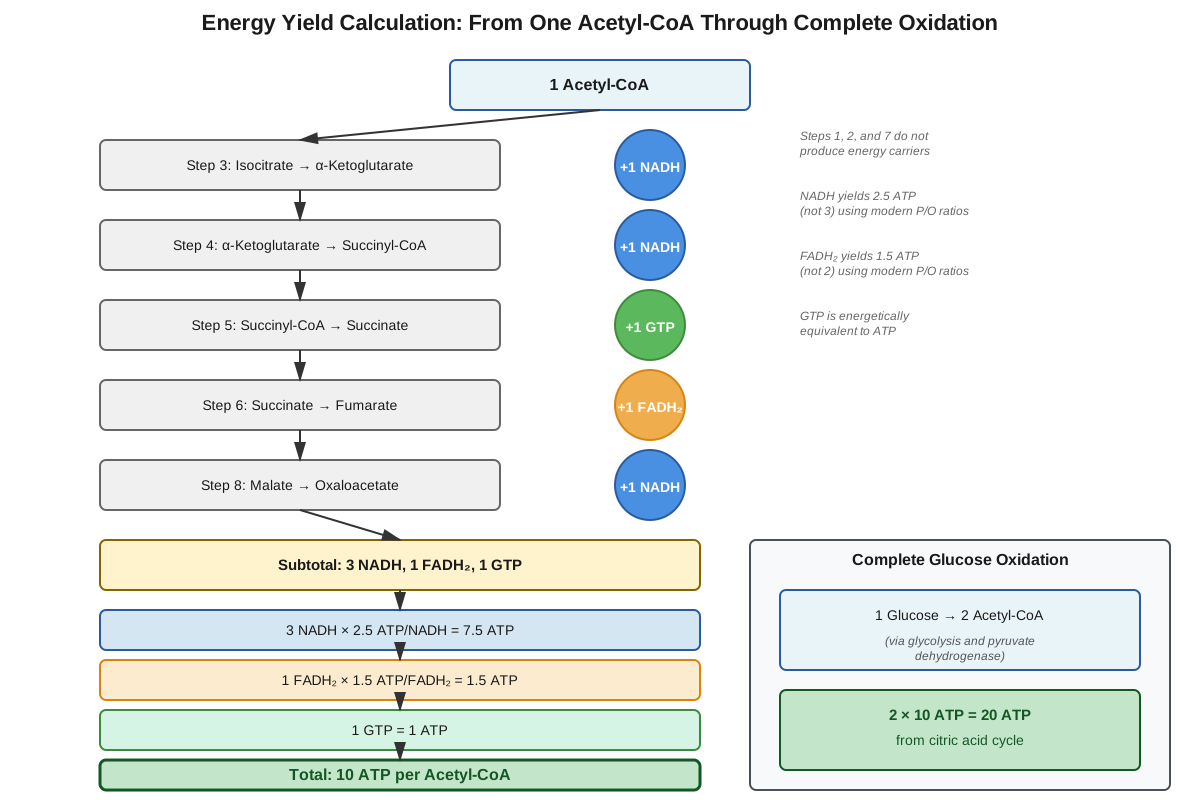
When these electron carriers are oxidized through the electron transport chain, they generate approximately:
- 3 NADH × 2.5 ATP/NADH = 7.5 ATP
- 1 FADH₂ × 1.5 ATP/FADH₂ = 1.5 ATP
- 1 GTP = 1 ATP
- Total: ~10 ATP per acetyl-CoA
For MCAT purposes, students should be comfortable with both the traditional values (3 ATP per NADH, 2 ATP per FADH₂, giving 12 total ATP) and the more accurate modern values (2.5 and 1.5, giving 10 ATP). The exam typically accepts either set of values as long as internal consistency is maintained.
Regulation of the Citric Acid Cycle
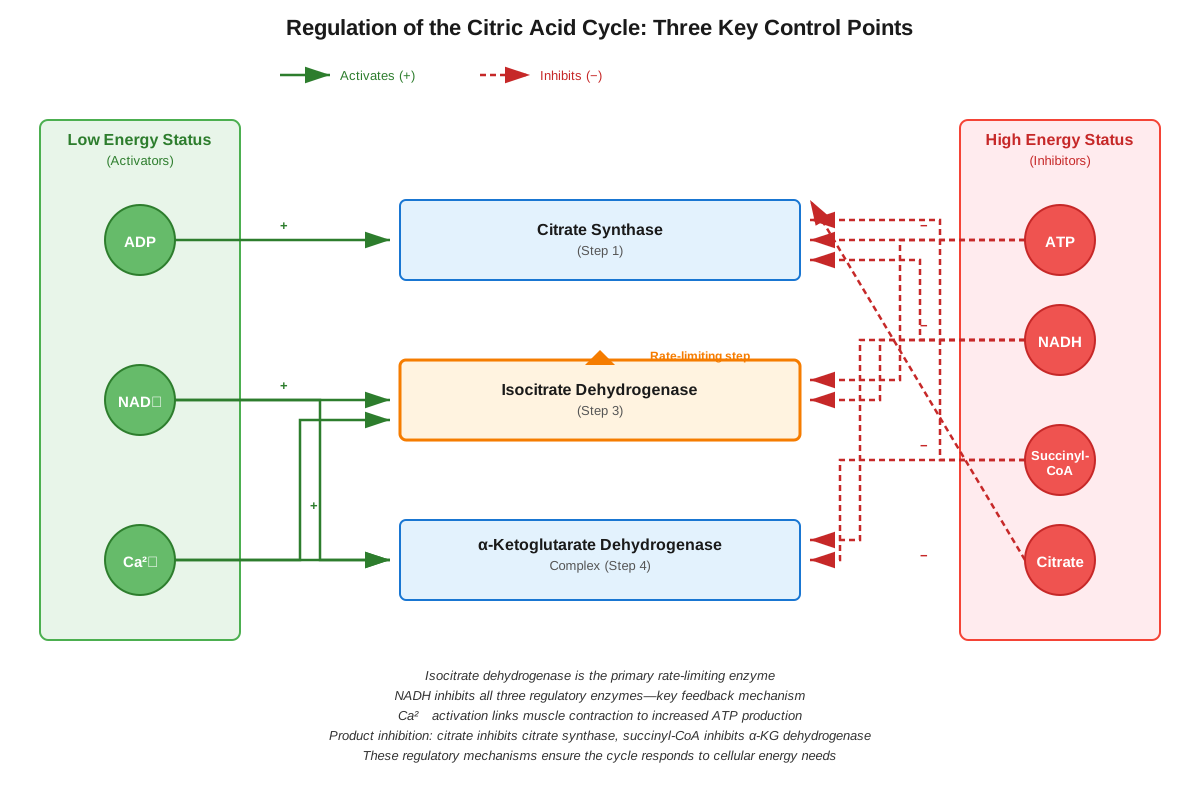
The citric acid cycle is regulated primarily at three irreversible steps, each catalyzed by an enzyme sensitive to the cell's energy status:
| Enzyme | Activators | Inhibitors | Regulatory Logic |
|---|---|---|---|
| Citrate synthase | ADP, Ca²⁺ | ATP, NADH, succinyl-CoA, citrate | Entry point control; slows when energy is abundant |
| Isocitrate dehydrogenase | ADP, Ca²⁺ | ATP, NADH | Rate-limiting step; responds to energy charge |
| α-Ketoglutarate dehydrogenase | Ca²⁺ | ATP, NADH, succinyl-CoA | Prevents overproduction of reducing equivalents |
The pattern is clear: high ATP/ADP and NADH/NAD⁺ ratios signal energy abundance and inhibit the cycle, while low ratios signal energy demand and activate it. Calcium activation is particularly important in muscle cells, where calcium release during contraction simultaneously triggers muscle contraction and increases ATP production to fuel that contraction.
Anaplerotic Reactions
Because citric acid cycle intermediates are withdrawn for biosynthesis (cataplerosis), cells must replenish them through anaplerotic reactions (filling-up reactions). The most important anaplerotic reaction is catalyzed by pyruvate carboxylase, which converts pyruvate to oxaloacetate:
Pyruvate + CO₂ + ATP → Oxaloacetate + ADP + Pi
This reaction requires biotin as a cofactor and is activated by acetyl-CoA. The activation makes metabolic sense: when acetyl-CoA accumulates (indicating abundant fuel), the cell produces more oxaloacetate to condense with it and keep the cycle running. Other anaplerotic reactions include the conversion of certain amino acids (aspartate, glutamate) directly into cycle intermediates.
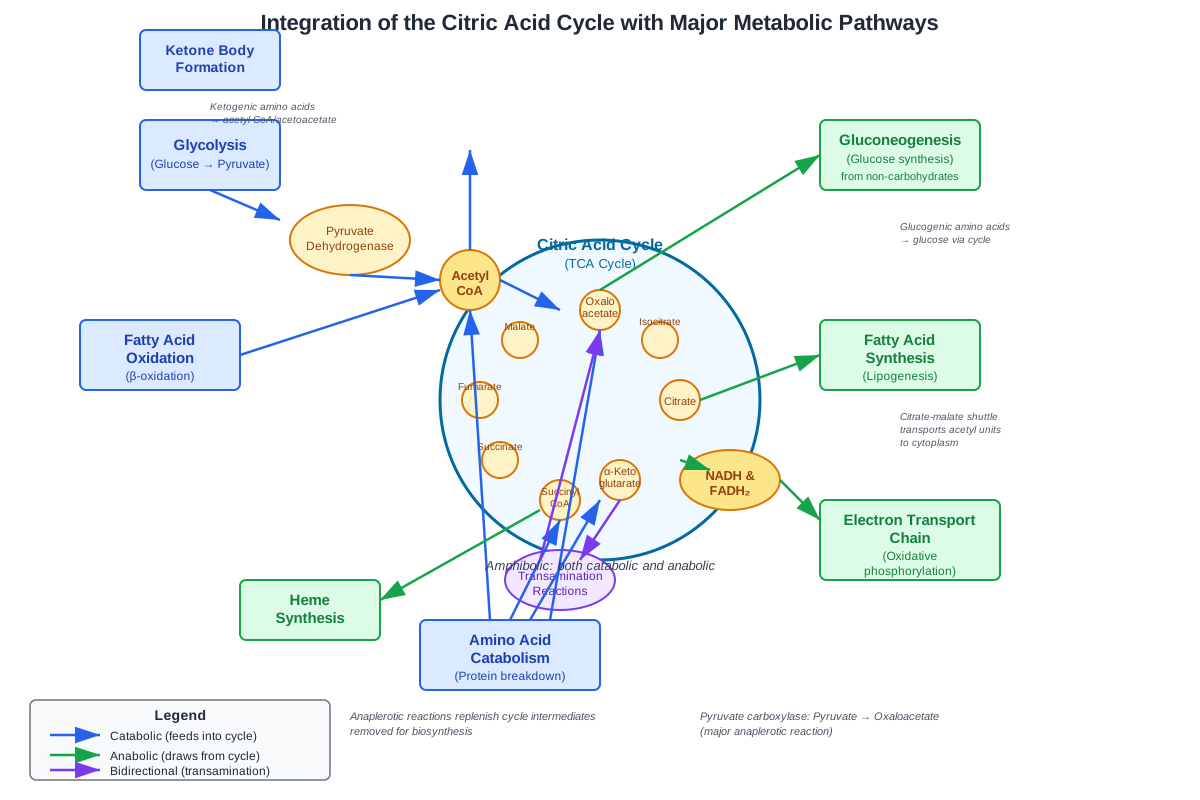
Integration with Other Metabolic Pathways
The citric acid cycle serves as a metabolic hub connecting multiple pathways:
- Glycolysis: Provides pyruvate, which is converted to acetyl-CoA by pyruvate dehydrogenase
- Fatty acid oxidation: Produces acetyl-CoA directly through β-oxidation
- Amino acid catabolism: Various amino acids enter as acetyl-CoA, α-ketoglutarate, succinyl-CoA, fumarate, or oxaloacetate
- Gluconeogenesis: Oxaloacetate can be converted to phosphoenolpyruvate to synthesize glucose
- Fatty acid synthesis: Citrate is exported from mitochondria and cleaved to provide acetyl-CoA for fatty acid synthesis
- Heme synthesis: Succinyl-CoA combines with glycine to initiate heme biosynthesis
- Amino acid synthesis: α-ketoglutarate serves as a precursor for glutamate, glutamine, proline, and arginine
Concept Relationships
The citric acid cycle functions as the central metabolic hub, receiving inputs from multiple catabolic pathways and providing outputs for both energy production and biosynthesis. The relationship begins with glycolysis → pyruvate → acetyl-CoA → citric acid cycle, representing the complete oxidation of glucose. Simultaneously, fatty acid β-oxidation → acetyl-CoA → citric acid cycle shows how fat catabolism feeds into the same pathway. The convergence of these pathways at acetyl-CoA explains why the cycle is called the "final common pathway" of fuel oxidation.
Within the cycle itself, the eight reactions form a logical sequence: condensation (step 1) → isomerization (step 2) → oxidative decarboxylations (steps 3-4) → substrate-level phosphorylation (step 5) → oxidation (step 6) → hydration (step 7) → oxidation (step 8) → back to condensation. The two oxidative decarboxylation steps (3 and 4) are strategically positioned after the six-carbon citrate is formed, progressively removing carbons as CO₂ while capturing energy as NADH.
The cycle's relationship with the electron transport chain is critical: citric acid cycle → NADH and FADH₂ → electron transport chain → ATP synthesis. This connection explains why the cycle requires aerobic conditions—without oxygen to accept electrons at the end of the electron transport chain, NAD⁺ and FAD cannot be regenerated, and the cycle stops. The relationship also works in reverse: when the electron transport chain is inhibited, NADH accumulates and inhibits the cycle through product inhibition.
Regulatory relationships create feedback loops: high ATP → inhibits citrate synthase, isocitrate dehydrogenase, and α-ketoglutarate dehydrogenase → cycle slows → less NADH produced → less ATP generated → ATP decreases → inhibition released → cycle accelerates. This negative feedback maintains energy homeostasis. The calcium activation of cycle enzymes creates a feed-forward relationship in muscle: muscle contraction signal → calcium release → activates cycle enzymes → increases ATP production → fuels continued contraction.
Quick check — test yourself on Citric acid cycle so far.
Try Flashcards →High-Yield Facts
⭐ The citric acid cycle produces 3 NADH, 1 FADH₂, and 1 GTP per turn, yielding approximately 10 ATP when electron carriers are oxidized
⭐ The three irreversible, regulated steps are catalyzed by citrate synthase, isocitrate dehydrogenase, and α-ketoglutarate dehydrogenase
⭐ Both CO₂ molecules are released during the oxidative decarboxylation steps (steps 3 and 4), NOT from the carbons of the incoming acetyl-CoA in that same turn
⭐ Succinate dehydrogenase is the only cycle enzyme embedded in the inner mitochondrial membrane and also functions as Complex II of the electron transport chain
⭐ The cycle is inhibited by high ATP/ADP and NADH/NAD⁺ ratios and activated by high ADP and calcium concentrations
- Pyruvate carboxylase is the major anaplerotic enzyme, converting pyruvate to oxaloacetate and requiring biotin as a cofactor
- The α-ketoglutarate dehydrogenase complex requires five cofactors: TPP, lipoic acid, CoA-SH, FAD, and NAD⁺ (same as pyruvate dehydrogenase)
- Fluoroacetate is converted to fluorocitrate, which inhibits aconitase and is highly toxic
- Malonate is a competitive inhibitor of succinate dehydrogenase because it structurally resembles succinate
- Citrate can be exported from mitochondria to provide acetyl-CoA for fatty acid synthesis in the cytoplasm
- The cycle operates only under aerobic conditions because NAD⁺ and FAD must be regenerated by the electron transport chain
- Oxaloacetate concentration is very low in cells, making citrate synthase highly sensitive to oxaloacetate availability
Common Misconceptions
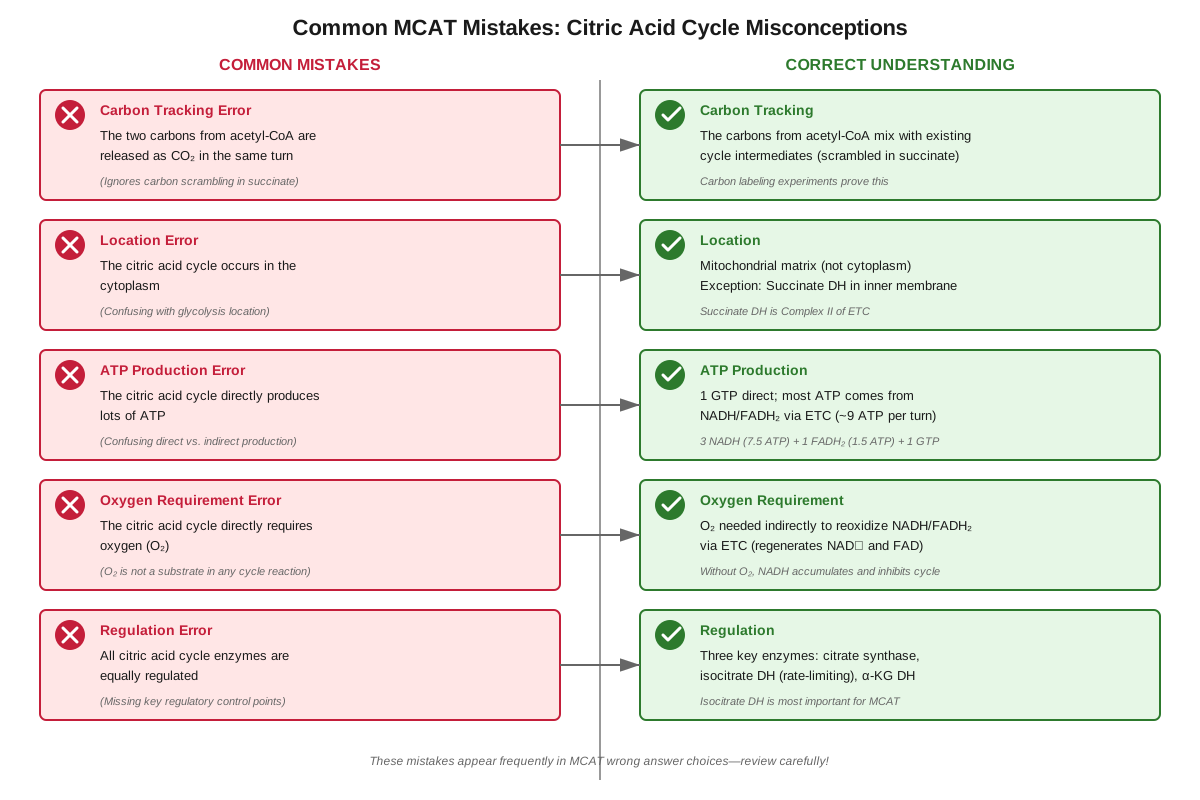
Misconception: The carbons from acetyl-CoA that enter in one turn are the same carbons released as CO₂ in that turn.
Correction: The carbons released as CO₂ in steps 3 and 4 come from the oxaloacetate backbone, not from the acetyl-CoA that just entered. Due to the symmetry of succinate, the acetyl carbons become scrambled and are released in subsequent turns of the cycle.
Misconception: The citric acid cycle directly produces large amounts of ATP.
Correction: The cycle directly produces only 1 GTP (equivalent to ATP) per turn through substrate-level phosphorylation. The majority of ATP comes from oxidizing the NADH and FADH₂ through the electron transport chain. The cycle's primary function is generating reduced electron carriers, not ATP itself.
Misconception: The citric acid cycle can operate anaerobically.
Correction: The cycle absolutely requires aerobic conditions because it depends on NAD⁺ and FAD, which are regenerated by the electron transport chain using oxygen as the final electron acceptor. Without oxygen, NADH and FADH₂ accumulate, NAD⁺ and FAD are depleted, and the cycle stops.
Misconception: All eight reactions of the citric acid cycle are irreversible.
Correction: Only three reactions are physiologically irreversible (steps 1, 3, and 4). The other five reactions have ΔG values near zero and are reversible. However, the three irreversible steps drive the cycle forward and serve as regulatory points.
Misconception: Inhibiting one enzyme in the cycle will cause intermediates before that step to accumulate indefinitely.
Correction: While intermediates before the block will initially accumulate, the cycle will eventually stop completely because oxaloacetate cannot be regenerated. Without oxaloacetate, acetyl-CoA cannot enter the cycle, and the entire pathway shuts down. Additionally, accumulated intermediates may be diverted to other pathways.
Misconception: The citric acid cycle only functions catabolically to break down fuel molecules.
Correction: The cycle is amphibolic, meaning it serves both catabolic and anabolic functions. While it oxidizes acetyl-CoA for energy, it also provides intermediates for biosynthesis: α-ketoglutarate for amino acids, succinyl-CoA for heme, and oxaloacetate for gluconeogenesis. This dual function requires anaplerotic reactions to replenish withdrawn intermediates.
Worked Examples
Example 1: Tracing Carbon Atoms Through the Cycle
Question: Acetyl-CoA labeled with ¹⁴C on both carbon atoms enters the citric acid cycle. In which molecules will the radioactive label appear after one complete turn of the cycle? Will any ¹⁴CO₂ be released in the first turn?
Solution:
Step 1: Analyze the entry point. The labeled acetyl-CoA (²CH₃-¹⁴CO-SCoA) condenses with unlabeled oxaloacetate to form citrate. The two labeled carbons become part of the six-carbon citrate molecule.
Step 2: Follow through isomerization. Citrate is converted to isocitrate by aconitase. The labeled carbons remain in the molecule.
Step 3: First decarboxylation. Isocitrate dehydrogenase removes one CO₂ to form α-ketoglutarate. However, due to the symmetry of citrate and the stereospecific action of aconitase, the CO₂ released comes from the original oxaloacetate carbons, not from the newly added acetyl-CoA. The labeled carbons remain in α-ketoglutarate.
Step 4: Second decarboxylation. α-Ketoglutarate dehydrogenase removes another CO₂ to form succinyl-CoA. Again, this CO₂ comes from the original oxaloacetate backbone. The labeled carbons are still present in succinyl-CoA.
Step 5: Symmetry problem. Succinyl-CoA is converted to succinate, which is a symmetrical molecule. When succinate enters the next reactions, the enzyme cannot distinguish between the two ends. This means the labeled carbons become scrambled.
Step 6: Completion of the cycle. The labeled carbons proceed through fumarate, malate, and oxaloacetate. After one complete turn, approximately 50% of the label will be in oxaloacetate (due to succinate symmetry), and 50% will have been distributed to other positions.
Answer: No ¹⁴CO₂ is released in the first turn. The labeled carbons appear in α-ketoglutarate, succinyl-CoA, succinate, fumarate, malate, and oxaloacetate. Due to succinate's symmetry, the label becomes scrambled and will be released as ¹⁴CO₂ in subsequent turns of the cycle.
Key Concept: This question tests understanding of carbon flow through the cycle and the critical concept that CO₂ released in one turn comes from the oxaloacetate backbone, not from the acetyl-CoA that just entered.
Example 2: Metabolic Consequences of Enzyme Inhibition
Question: A researcher adds malonate to isolated mitochondria that are actively running the citric acid cycle. Predict the metabolic consequences, including which intermediates will accumulate, which will be depleted, and what will happen to oxygen consumption and ATP production.
Solution:
Step 1: Identify the target. Malonate is a competitive inhibitor of succinate dehydrogenase (step 6), which converts succinate to fumarate. This enzyme is also Complex II of the electron transport chain.
Step 2: Predict immediate effects. Succinate will accumulate because it cannot be converted to fumarate. Intermediates upstream of the block (citrate, isocitrate, α-ketoglutarate, succinyl-CoA) will also accumulate initially as the cycle continues to feed succinate into the blocked step.
Step 3: Predict downstream effects. Intermediates downstream of the block (fumarate, malate, oxaloacetate) will be depleted because they cannot be regenerated from succinate.
Step 4: Consider cycle shutdown. As oxaloacetate becomes depleted, citrate synthase cannot function (no oxaloacetate to condense with acetyl-CoA). The entire cycle will eventually stop, even though only one enzyme is inhibited.
Step 5: Analyze electron carrier effects. NADH production from the cycle will decrease as the cycle slows. However, FADH₂ production at the blocked step will stop immediately. The accumulated NADH from earlier steps will inhibit isocitrate dehydrogenase and α-ketoglutarate dehydrogenase through product inhibition.
Step 6: Predict effects on oxygen consumption and ATP. Oxygen consumption will decrease because fewer electron carriers are being produced and oxidized. ATP production will decrease proportionally. The cell will need to rely more heavily on glycolysis for ATP, leading to lactate accumulation if oxygen is limited.
Answer: Succinate accumulates; fumarate, malate, and oxaloacetate are depleted; the cycle eventually stops completely; oxygen consumption decreases; ATP production decreases; the cell shifts toward glycolytic ATP production.
Key Concept: This question tests understanding of how the cyclic nature of the pathway means that blocking any step eventually shuts down the entire cycle, and how this connects to oxygen consumption and ATP production through the electron transport chain.
Exam Strategy
When approaching MCAT questions on the citric acid cycle, first identify the question type: Is it asking about regulation, energy yield, carbon flow, enzyme mechanisms, or metabolic integration? Each type requires a different approach.
For regulation questions, immediately think about the three irreversible steps and their regulatory enzymes. Look for trigger words like "ATP levels increase," "NADH accumulates," "calcium concentration rises," or "ADP/ATP ratio changes." Remember the pattern: high energy status (high ATP, high NADH) inhibits; low energy status (high ADP, high NAD⁺) activates. If the question mentions muscle contraction or neural activity, think about calcium activation.
For energy yield questions, write out the products: 3 NADH, 1 FADH₂, 1 GTP. Be prepared to convert these to ATP equivalents, and know both the traditional values (3 and 2) and modern values (2.5 and 1.5). Watch for questions that ask about "per glucose" versus "per acetyl-CoA"—remember that one glucose produces two acetyl-CoA molecules, so double the cycle yield.
For carbon tracing questions, remember that CO₂ is released in steps 3 and 4, but these carbons come from the oxaloacetate backbone in the first turn, not from the incoming acetyl-CoA. Draw out the structures if time permits, or at least track the carbon count: 4C (oxaloacetate) + 2C (acetyl-CoA) = 6C (citrate) → 5C (α-ketoglutarate) → 4C (succinyl-CoA) → 4C (succinate) → 4C (oxaloacetate).
For enzyme inhibition questions, identify which step is blocked, then predict accumulation of substrates before the block and depletion of products after the block. Always consider that the cycle will eventually stop completely because oxaloacetate cannot be regenerated. Think about downstream effects on the electron transport chain and ATP production.
Process of elimination tips: If an answer choice suggests the cycle can operate anaerobically, eliminate it. If a choice claims that all cycle enzymes are in the inner mitochondrial membrane, eliminate it (only succinate dehydrogenase is membrane-bound). If a choice states that the cycle directly produces large amounts of ATP, eliminate it (only 1 GTP per turn). If a choice suggests that inhibiting the cycle increases ATP production, eliminate it.
Time allocation: Most citric acid cycle questions can be answered in 60-90 seconds if you know the core concepts. Don't spend time drawing out all eight structures unless absolutely necessary. Instead, focus on the logic of the pathway: condensation, isomerization, two oxidative decarboxylations, substrate-level phosphorylation, oxidation, hydration, oxidation.
Watch for these trigger phrases: "rate-limiting step" (isocitrate dehydrogenase), "substrate-level phosphorylation" (step 5, succinyl-CoA synthetase), "membrane-bound enzyme" (succinate dehydrogenase), "anaplerotic reaction" (pyruvate carboxylase), "amphibolic pathway" (both catabolic and anabolic functions), "requires biotin" (pyruvate carboxylase), "requires five cofactors" (α-ketoglutarate dehydrogenase complex).
Memory Techniques
Mnemonic for the eight intermediates in order:
"Can I Keep Selling Seashells For Money, Officer?"
- Citrate
- Isocitrate
- Ketoglutarate (α-ketoglutarate)
- Succinyl-CoA
- Succinate
- Fumarate
- Malate
- Oxaloacetate
Mnemonic for products per turn:
"3 blind mice, 1 fat cat, 1 good dog, 2 crazy owls"
- 3 NADH
- 1 FADH₂
- 1 GTP
- 2 CO₂
Mnemonic for the three regulated enzymes:
"CIA controls the cycle"
- Citrate synthase
- Isocitrate dehydrogenase
- Alpha-ketoglutarate dehydrogenase (α-KG dehydrogenase)
Visualization strategy: Picture the cycle as a clock face with oxaloacetate at 12 o'clock. Acetyl-CoA enters at 12, forming citrate at 1 o'clock. The two CO₂ molecules are released at 3 and 5 o'clock (steps 3 and 4). The three NADH are produced at 3, 5, and 11 o'clock. FADH₂ is produced at 7 o'clock. GTP is produced at 6 o'clock. This spatial arrangement helps remember when products are generated.
Regulation memory aid: Think "ANNA" for regulation:
- ATP inhibits
- NADH inhibits
- No energy (ADP) activates
- Activation by calcium
Cofactor memory aid for α-ketoglutarate dehydrogenase complex: "Tender Loving Care For Nancy"
- Thiamine pyrophosphate (TPP)
- Lipoic acid
- Coenzyme A
- FAD
- NAD⁺
Summary
The citric acid cycle is an eight-step cyclic pathway in the mitochondrial matrix that completely oxidizes acetyl-CoA to CO₂ while generating high-energy electron carriers (3 NADH, 1 FADH₂) and one GTP per turn. The cycle serves as the central hub of cellular metabolism, receiving inputs from carbohydrate, fat, and protein catabolism while providing intermediates for biosynthetic pathways. Three irreversible reactions catalyzed by citrate synthase, isocitrate dehydrogenase, and α-ketoglutarate dehydrogenase serve as regulatory points, responding to cellular energy status through inhibition by ATP and NADH and activation by ADP and calcium. The cycle requires aerobic conditions because NAD⁺ and FAD must be continuously regenerated by the electron transport chain. Understanding the citric acid cycle is essential for MCAT success because it integrates with virtually every other metabolic pathway and appears frequently in both discrete questions and passage-based problems testing regulation, energy yield, carbon flow, and metabolic consequences of enzyme deficiencies.
Key Takeaways
- The citric acid cycle produces 3 NADH, 1 FADH₂, and 1 GTP per turn, yielding approximately 10 ATP when electron carriers are oxidized through the electron transport chain
- Three irreversible, regulated steps (citrate synthase, isocitrate dehydrogenase, α-ketoglutarate dehydrogenase) control cycle flux in response to ATP/ADP and NADH/NAD⁺ ratios
- CO₂ is released during oxidative decarboxylation steps 3 and 4, but these carbons come from the oxaloacetate backbone, not from the acetyl-CoA that entered in that same turn
- The cycle is amphibolic, functioning both catabolically (energy production) and anabolically (providing biosynthetic precursors), requiring anaplerotic reactions to replenish withdrawn intermediates
- Succinate dehydrogenase is unique as both a cycle enzyme and Complex II of the electron transport chain, embedded in the inner mitochondrial membrane
- The cycle requires aerobic conditions because NAD⁺ and FAD must be regenerated by oxygen-dependent electron transport
- Understanding cycle regulation, energy yield, and integration with other pathways is essential for MCAT success on this high-yield topic
Related Topics
Pyruvate Dehydrogenase Complex: This multi-enzyme complex converts pyruvate to acetyl-CoA, directly feeding the citric acid cycle. Understanding its regulation and cofactor requirements (same five as α-ketoglutarate dehydrogenase) is essential for connecting glycolysis to the cycle.
Electron Transport Chain and Oxidative Phosphorylation: The NADH and FADH₂ produced by the citric acid cycle are oxidized here to generate the majority of cellular ATP. Mastering this topic explains why the cycle requires aerobic conditions and how energy is ultimately captured.
Gluconeogenesis: Oxaloacetate from the citric acid cycle can be converted to phosphoenolpyruvate to synthesize glucose. Understanding this connection explains how the cycle integrates with glucose homeostasis and why cycle intermediates must be replenished.
Fatty Acid Metabolism: β-oxidation produces acetyl-CoA that enters the cycle, while citrate can be exported to provide acetyl-CoA for fatty acid synthesis. This reciprocal relationship is crucial for understanding whole-body fuel metabolism.
Amino Acid Metabolism: Various amino acids enter the cycle as different intermediates (glucogenic amino acids) or as acetyl-CoA (ketogenic amino acids). This connection explains how protein catabolism contributes to energy production.
Practice CTA
Now that you've mastered the core concepts of the citric acid cycle, it's time to reinforce your understanding through active practice. Work through the practice questions to test your ability to apply these concepts to MCAT-style scenarios, and use the flashcards to solidify your recall of high-yield facts, intermediates, and regulatory mechanisms. Remember, the citric acid cycle appears frequently on the MCAT, and confident mastery of this topic will give you a significant advantage on test day. Focus especially on regulation, energy yield calculations, and integration with other metabolic pathways—these are the most commonly tested aspects. You've got this!
Sign up free to keep reading
Create a free AnvayaPrep account to finish this MCAT guide on Citric acid cycle — plus flashcards and practice questions.