Overview
DNA stability refers to the structural integrity and resistance of the DNA double helix to denaturation, degradation, and unwinding under various physical and chemical conditions. This fundamental property of Nucleic Acids and Biotechnology determines how DNA maintains its information-storing capacity and functional architecture in living systems. Understanding DNA stability requires mastery of the molecular forces that hold the double helix together—including hydrogen bonding between complementary base pairs, base stacking interactions, and the hydrophobic effect—as well as the environmental factors that can disrupt these stabilizing forces.
For the MCAT, DNA stability Biochemistry represents a high-yield topic that bridges multiple disciplines. Questions frequently test the relationship between DNA sequence composition (particularly GC content), temperature effects on DNA structure, and the molecular basis of techniques like PCR and Southern blotting. The exam expects students to predict how changes in pH, temperature, salt concentration, and chemical denaturants affect the DNA double helix, and to apply these principles to experimental scenarios and biotechnology applications.
DNA stability MCAT questions often appear in passage-based formats where students must analyze experimental data about melting temperatures, interpret denaturation curves, or troubleshoot molecular biology protocols. This topic connects intimately with protein structure stability (both involve hydrogen bonding and hydrophobic interactions), thermodynamics (entropy and enthalpy changes during denaturation), and molecular biology techniques that exploit controlled DNA denaturation and renaturation. Mastering DNA stability provides the foundation for understanding gene expression regulation, DNA replication fidelity, and the molecular basis of genetic diseases caused by structural DNA instability.
Learning Objectives
- [ ] Define DNA stability using accurate Biochemistry terminology
- [ ] Explain why DNA stability matters for the MCAT
- [ ] Apply DNA stability to exam-style questions
- [ ] Identify common mistakes related to DNA stability
- [ ] Connect DNA stability to related Biochemistry concepts
- [ ] Quantitatively predict relative melting temperatures based on DNA sequence composition
- [ ] Analyze denaturation and renaturation curves to extract structural information about DNA samples
- [ ] Evaluate how environmental conditions (temperature, pH, ionic strength) affect DNA stability through specific molecular mechanisms
Prerequisites
- Base pairing rules (A-T, G-C): Essential for understanding why GC-rich regions are more stable than AT-rich regions due to differential hydrogen bonding
- Hydrogen bonding: The primary intermolecular force stabilizing complementary base pairs; understanding bond strength and directionality is critical
- Hydrophobic effect: Explains base stacking interactions that contribute significantly to DNA stability beyond hydrogen bonding alone
- Thermodynamics basics (ΔG, ΔH, ΔS): Required to understand the energetics of DNA denaturation and the temperature dependence of stability
- DNA structure (double helix, antiparallel strands, major/minor grooves): The architectural context in which stability factors operate
- Molecular forces (van der Waals, electrostatic interactions): Secondary stabilizing forces that contribute to overall DNA integrity
Why This Topic Matters
Clinical and Real-World Significance
DNA stability has profound implications for human health and disease. Regions of genomic instability—often characterized by unusual DNA structures or sequences prone to denaturation—are hotspots for mutations that can lead to cancer, neurodegenerative diseases, and inherited genetic disorders. Trinucleotide repeat expansions in diseases like Huntington's disease and Fragile X syndrome occur in regions where DNA stability is compromised. Additionally, understanding DNA stability is crucial for developing therapeutic strategies: antisense oligonucleotides and gene therapies must account for the stability of synthetic DNA constructs in physiological conditions.
MCAT Exam Statistics
DNA stability appears in approximately 15-20% of Biochemistry passages on the MCAT, particularly in the Nucleic Acids and Biotechnology unit. Questions typically fall into three categories: (1) interpretation of melting temperature (Tm) data and denaturation curves (40% of questions), (2) application to molecular biology techniques like PCR, hybridization, and sequencing (35% of questions), and (3) prediction of relative stability based on sequence or environmental changes (25% of questions). This topic frequently appears in research-based passages where students must analyze experimental manipulations of DNA stability.
Common Exam Presentation Formats
The MCAT presents DNA stability through several recurring scenarios: experimental passages describing DNA melting experiments with absorbance vs. temperature graphs; PCR optimization passages requiring understanding of annealing temperature selection; Southern blot or DNA microarray passages involving hybridization stringency; and passages about DNA damage, repair, or structural variants. Discrete questions often test the relationship between GC content and Tm, or ask students to rank DNA sequences by stability. The exam particularly favors questions that integrate DNA stability with enzyme function (DNA polymerases, helicases) or with thermodynamic principles.
Core Concepts
Molecular Forces Stabilizing DNA
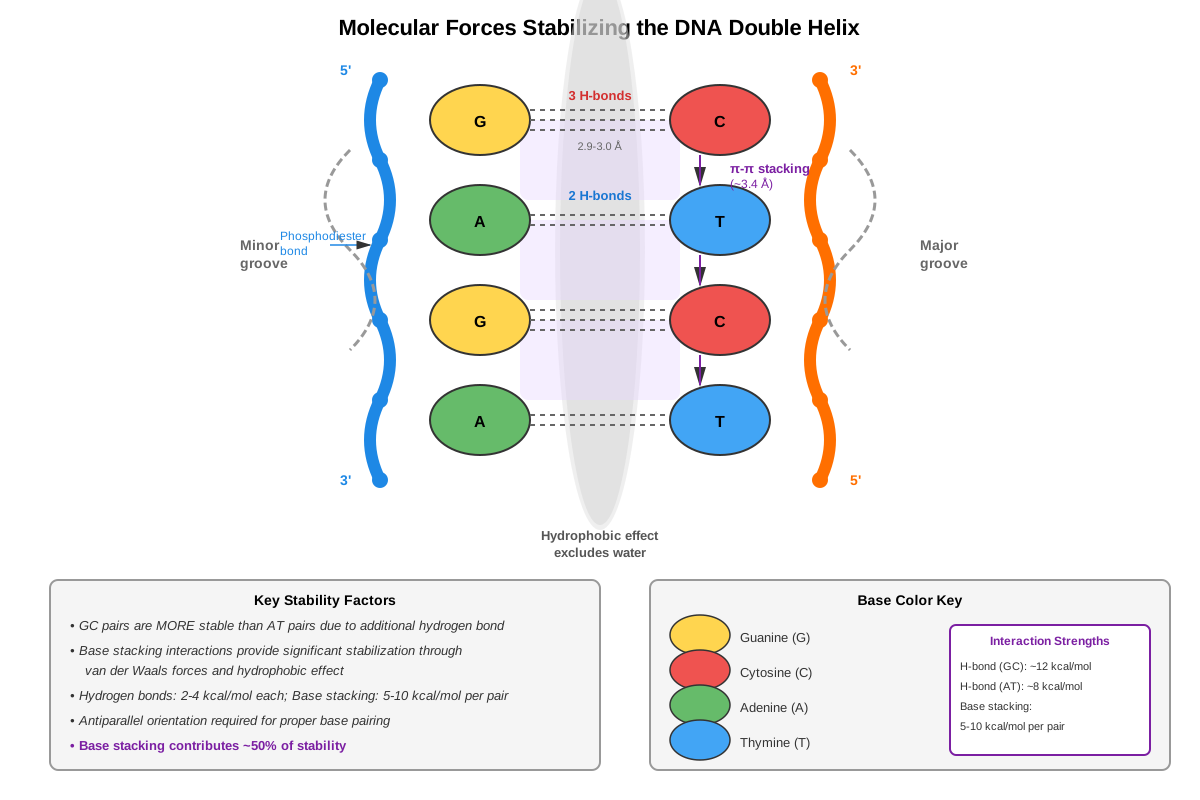
DNA stability arises from multiple molecular forces acting cooperatively to maintain the double helix structure. The most commonly cited stabilizing force is hydrogen bonding between complementary base pairs: adenine pairs with thymine through two hydrogen bonds, while guanine pairs with cytosine through three hydrogen bonds. This difference in hydrogen bond number directly impacts stability—GC base pairs are more stable than AT base pairs, requiring more energy to disrupt.
However, hydrogen bonding accounts for only approximately 30-40% of DNA stability. Base stacking interactions—the van der Waals forces and hydrophobic interactions between adjacent bases along the same strand—contribute 60-70% of the stabilizing energy. These π-π stacking interactions between aromatic base rings create a favorable hydrophobic environment in the DNA core, shielded from the aqueous surroundings by the sugar-phosphate backbone. The planar geometry of bases maximizes these stacking interactions, and purines (larger, more aromatic surface area) generally stack more favorably than pyrimidines.
Electrostatic interactions also influence DNA stability. The negatively charged phosphate groups on the backbone create repulsive forces that destabilize the double helix. Cations (particularly Mg²⁺ and Na⁺) in physiological solutions shield these negative charges, reducing electrostatic repulsion and stabilizing the structure. This explains why DNA stability increases with ionic strength up to a point—higher salt concentrations provide better charge shielding.
Melting Temperature (Tm) and Denaturation
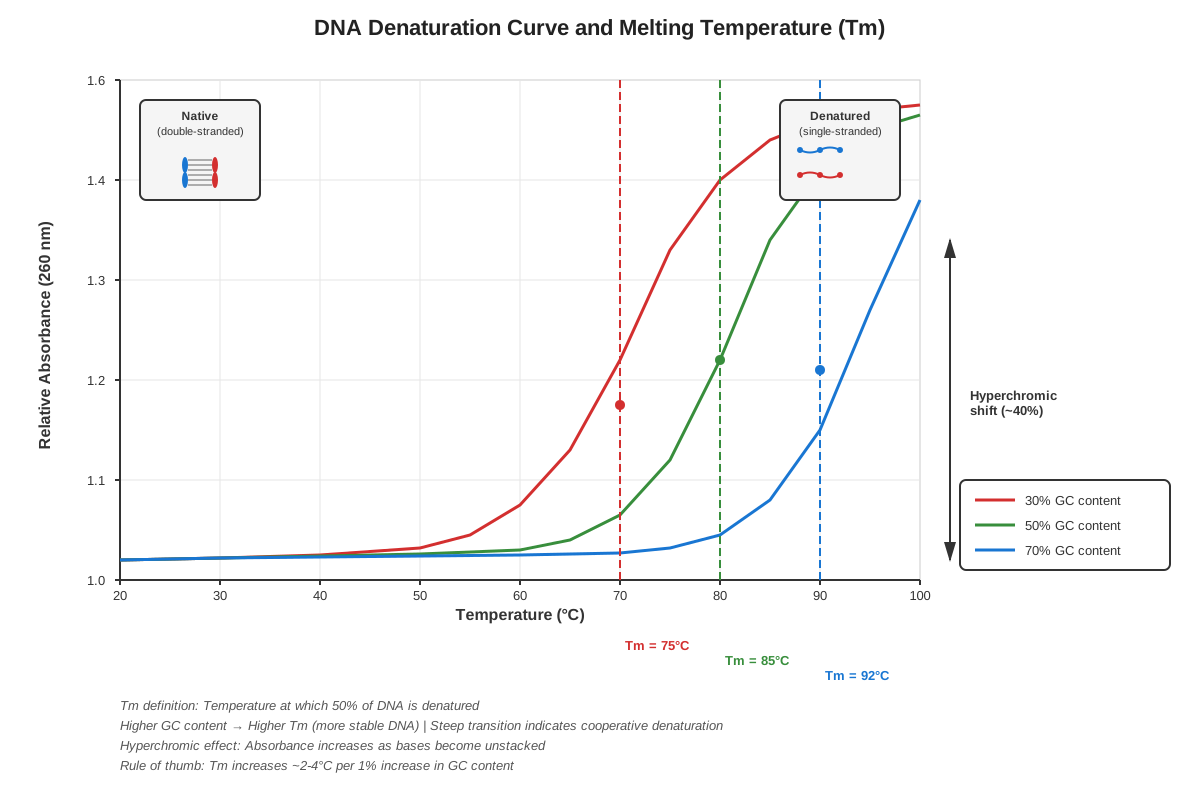
The melting temperature (Tm) is the temperature at which 50% of DNA molecules in a solution are denatured (separated into single strands). Tm serves as a quantitative measure of DNA stability—higher Tm indicates greater stability. During denaturation (also called melting), the double helix unwinds and the two complementary strands separate as hydrogen bonds break and base stacking interactions are disrupted.
DNA denaturation can be monitored spectrophotometrically because single-stranded DNA absorbs more UV light at 260 nm than double-stranded DNA—a phenomenon called hyperchromicity. As temperature increases and DNA denatures, absorbance at 260 nm increases proportionally. A plot of absorbance versus temperature yields a denaturation curve or melting curve, with a characteristic sigmoidal shape. The midpoint of this curve corresponds to the Tm.
Several factors influence Tm:
| Factor | Effect on Tm | Mechanism |
|---|---|---|
| GC content | Higher GC → Higher Tm | Three H-bonds per GC pair vs. two per AT pair |
| DNA length | Longer DNA → Higher Tm | More cumulative stabilizing interactions |
| Salt concentration | Higher salt → Higher Tm | Better shielding of phosphate repulsion |
| pH extremes | Extreme pH → Lower Tm | Disrupts hydrogen bonding by protonating/deprotonating bases |
| Denaturants (urea, formamide) | Presence → Lower Tm | Compete for hydrogen bonds with water |
| Mismatches | More mismatches → Lower Tm | Disrupts regular base pairing and stacking |
A useful approximation for short oligonucleotides is: Tm ≈ 4(G+C) + 2(A+T) in degrees Celsius. For longer DNA molecules, more complex formulas account for salt concentration and DNA length.
Sequence-Dependent Stability
Not all DNA sequences exhibit equal stability even when GC content is identical. Sequence context matters because base stacking interactions depend on the identity of neighboring bases. Purine-purine stacks (especially G-G and A-G) are more stable than purine-pyrimidine or pyrimidine-pyrimidine stacks. Therefore, a sequence like 5'-GGCC-3' is more stable than 5'-GCGC-3' despite identical GC content, because the former has stronger stacking interactions.
Palindromic sequences and regions capable of forming secondary structures (hairpins, cruciforms) can exhibit unusual stability properties. Hairpin loops, where a single strand folds back on itself to form intramolecular base pairs, can be remarkably stable because they maximize base pairing while minimizing the entropic cost of bringing two separate molecules together.
Certain sequences are inherently unstable and prone to structural transitions. Trinucleotide repeats (like CAG repeats in Huntington's disease) can form unusual structures including hairpins and slipped-strand structures during replication, leading to expansion mutations. AT-rich regions are not only less stable thermally but also more susceptible to localized denaturation, making them preferential sites for DNA replication initiation and transcription factor binding.
Environmental Factors Affecting Stability
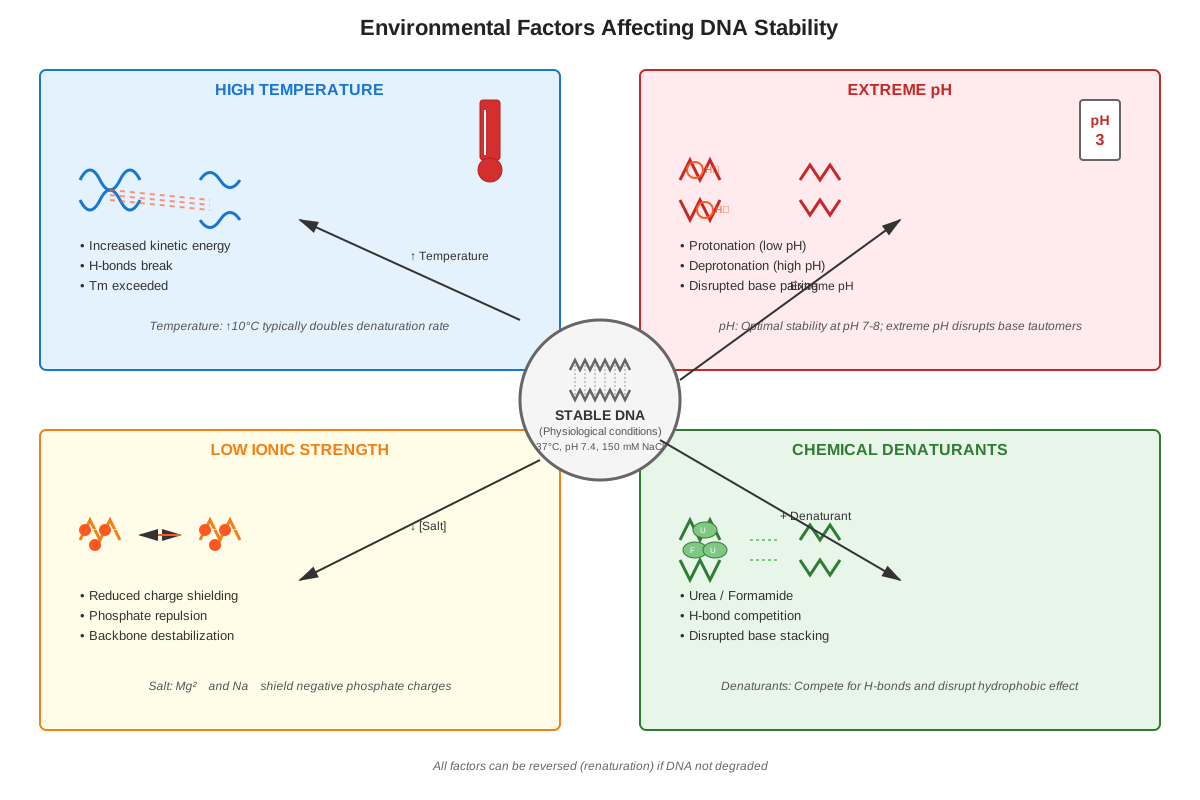
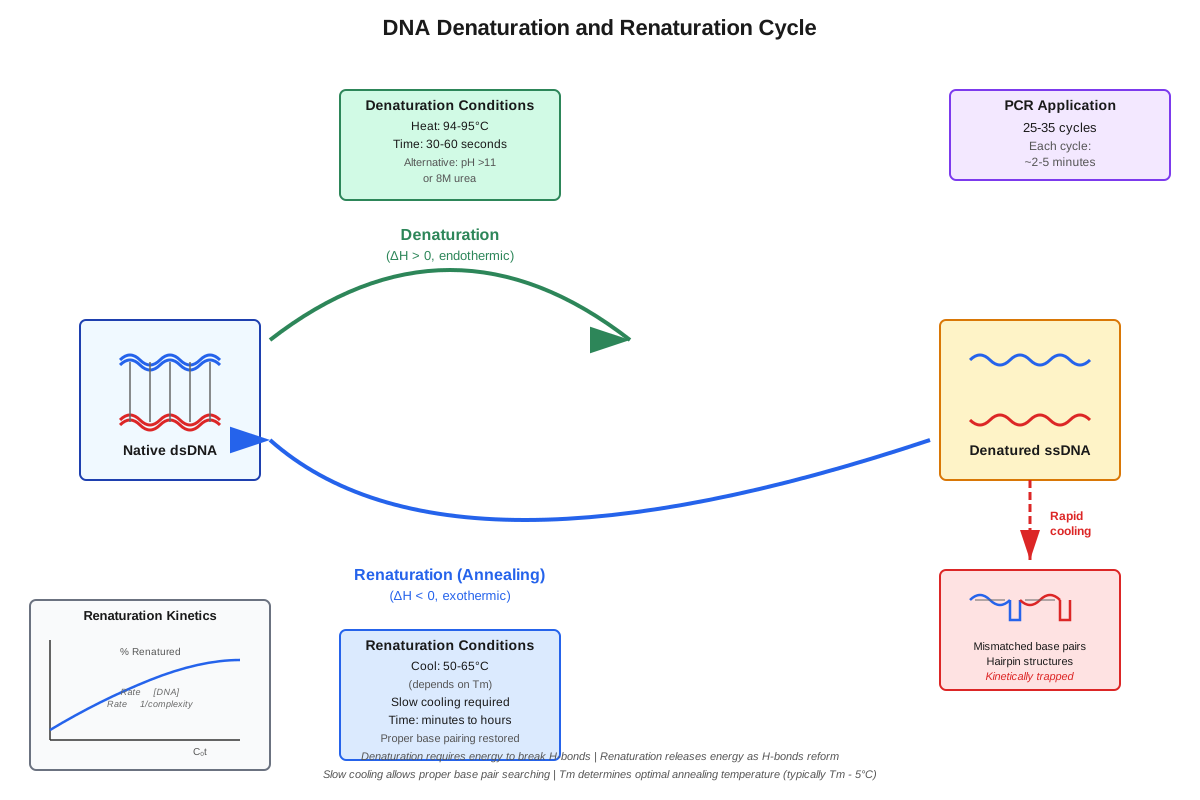
Temperature is the most obvious environmental variable affecting DNA stability. As temperature increases, molecular kinetic energy overcomes the stabilizing forces, leading to denaturation. This process is largely reversible—upon slow cooling, complementary strands can reanneal or renature to reform the double helix. However, rapid cooling can trap DNA in single-stranded form, a principle exploited in molecular biology techniques.
pH changes dramatically affect DNA stability. At extreme pH values (below 3 or above 11), bases become protonated or deprotonated, disrupting their hydrogen bonding capacity. Acidic conditions protonate the ring nitrogens of bases, while alkaline conditions deprotonate amino and imino groups. Both extremes lead to denaturation, though alkaline denaturation is more commonly used in laboratory protocols because it's less damaging to the sugar-phosphate backbone than acid treatment.
Ionic strength modulates DNA stability through electrostatic screening. Physiological salt concentrations (approximately 150 mM NaCl) provide optimal stability. Very low salt concentrations increase electrostatic repulsion between phosphate groups, destabilizing the helix. Divalent cations like Mg²⁺ are particularly effective at stabilizing DNA because they can bridge between phosphate groups more efficiently than monovalent cations.
Chemical denaturants like urea and formamide reduce DNA stability by competing for hydrogen bonds. These compounds can form hydrogen bonds with DNA bases, effectively competing with complementary base pairing. Formamide is particularly useful in molecular biology because it lowers Tm in a concentration-dependent manner, allowing hybridization reactions to occur at lower temperatures where enzyme activity might be better preserved.
DNA Stability in Biological Context
In living cells, DNA stability must be carefully balanced. DNA must be stable enough to preserve genetic information but accessible enough for replication, transcription, and repair. Cells employ various mechanisms to manage DNA stability:
Topoisomerases regulate DNA supercoiling, which affects local stability. Negative supercoiling (underwinding) facilitates local denaturation necessary for replication and transcription initiation. Positive supercoiling (overwinding) increases stability and compacts DNA.
DNA-binding proteins modulate local stability. Histones stabilize DNA by neutralizing phosphate charges and constraining the double helix. Conversely, single-strand binding proteins (SSBs) stabilize transiently denatured regions during replication and repair, preventing premature reannealing.
Helicases are enzymes that actively destabilize and unwind DNA using ATP hydrolysis. These molecular motors are essential for replication and transcription, breaking hydrogen bonds and disrupting base stacking to separate strands.
The replication origin in prokaryotes (oriC) is characteristically AT-rich, making it easier to denature and initiate replication. This represents an evolutionary optimization—placing the replication start site in a region requiring less energy to unwind.
Concept Relationships
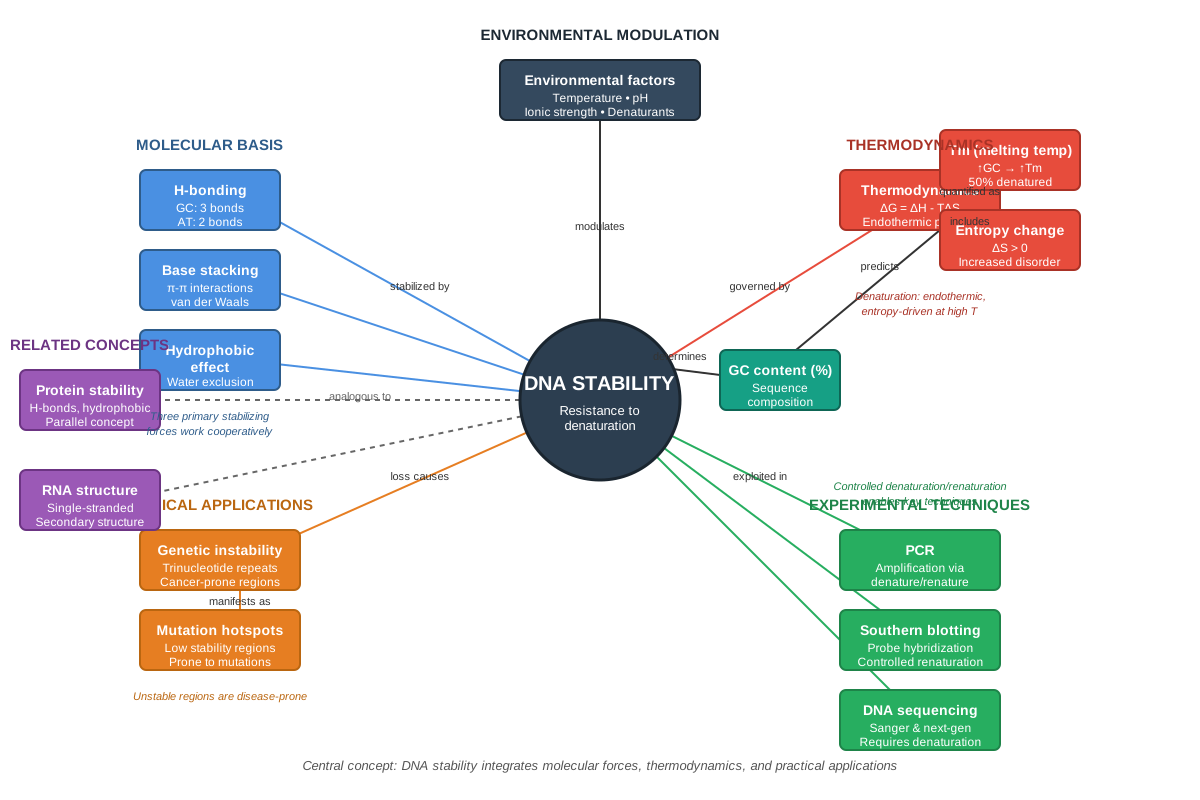
DNA stability concepts form an interconnected network where molecular forces determine macroscopic properties that enable biological functions and biotechnology applications. The relationship map flows as follows:
Hydrogen bonding + Base stacking + Electrostatic interactions → Overall DNA stability → Melting temperature (Tm)
This fundamental relationship means that any factor affecting the molecular forces (GC content, salt concentration, pH) will predictably alter Tm. The connection extends further:
Tm and stability principles → PCR primer design → Successful DNA amplification
Understanding Tm allows prediction of optimal annealing temperatures in PCR, where primers must bind specifically to template DNA. Similarly:
DNA stability principles → Hybridization stringency → Specificity of Southern blots, Northern blots, and microarrays
Higher stringency conditions (higher temperature, lower salt) require better sequence complementarity for stable hybridization, increasing specificity but potentially reducing sensitivity.
The relationship to prerequisite knowledge is equally important. Thermodynamics provides the framework for understanding why denaturation is endothermic (ΔH > 0, breaking bonds requires energy) and entropy-driven (ΔS > 0, two separate strands have more conformational freedom than one double helix). At low temperatures, the favorable enthalpy dominates and DNA remains double-stranded; at high temperatures, the favorable entropy dominates and DNA denatures.
Protein stability concepts directly parallel DNA stability—both involve hydrogen bonding, hydrophobic interactions, and electrostatic forces. The denaturation of proteins and DNA both show sigmoidal melting curves and can be reversible under appropriate conditions. This parallel allows students to transfer understanding between these topics.
DNA stability also connects forward to gene regulation: regions of lower stability (AT-rich promoters) are preferential binding sites for transcription factors and sites of transcription initiation. The connection to DNA replication is equally strong—helicase activity, replication origin selection, and primer-template stability all depend on DNA stability principles.
High-Yield Facts
⭐ GC base pairs contain three hydrogen bonds while AT base pairs contain two, making GC-rich regions more stable and exhibiting higher melting temperatures.
⭐ Melting temperature (Tm) is defined as the temperature at which 50% of DNA molecules are denatured, and it increases with GC content, DNA length, and salt concentration.
⭐ Base stacking interactions contribute 60-70% of DNA stability, more than hydrogen bonding (30-40%), making sequence context important beyond just base composition.
⭐ Hyperchromicity—the increase in UV absorbance at 260 nm upon denaturation—allows spectrophotometric monitoring of DNA melting.
⭐ Denaturation is reversible: slow cooling allows complementary strands to reanneal, while rapid cooling can trap DNA in single-stranded form.
- Higher ionic strength stabilizes DNA by shielding negative charges on the phosphate backbone, reducing electrostatic repulsion between strands.
- Extreme pH (below 3 or above 11) denatures DNA by disrupting hydrogen bonding through protonation or deprotonation of bases.
- Chemical denaturants like formamide and urea lower Tm by competing for hydrogen bonds with DNA bases.
- AT-rich regions denature more easily and are commonly found at replication origins and transcription start sites where DNA must be unwound.
- Palindromic sequences can form hairpin structures with unusual stability properties due to intramolecular base pairing.
- DNA length affects stability—longer molecules have higher Tm due to cumulative stabilizing interactions, but this effect plateaus above approximately 500 base pairs.
- Mismatched base pairs significantly reduce local stability, a principle exploited in mismatch detection techniques.
- Single-strand binding proteins (SSBs) stabilize transiently denatured DNA during replication, preventing premature reannealing.
Quick check — test yourself on DNA stability so far.
Try Flashcards →Common Misconceptions
Misconception: Hydrogen bonding is the primary force stabilizing DNA, accounting for most of the stability difference between GC and AT pairs.
Correction: While hydrogen bonding is important and does explain part of the GC vs. AT stability difference, base stacking interactions actually contribute 60-70% of overall DNA stability. The stability advantage of GC pairs comes from both the extra hydrogen bond AND more favorable stacking interactions with neighboring bases.
Misconception: DNA denaturation is always irreversible, like protein denaturation.
Correction: DNA denaturation is typically reversible under appropriate conditions. Slow cooling allows complementary strands to find each other and reanneal through base pairing. This reversibility is fundamental to PCR, hybridization techniques, and DNA replication itself. Proteins often cannot refold properly because their structure depends on complex tertiary interactions, while DNA structure is primarily determined by simple base-pairing rules.
Misconception: Higher temperature always means lower DNA stability.
Correction: This confuses the effect of temperature with the definition of stability. DNA stability is an intrinsic property of a particular sequence under specific conditions—it's measured by Tm. A DNA molecule doesn't become "less stable" when heated; rather, at higher temperatures, the thermal energy overcomes the stabilizing forces. The stability (Tm) is a fixed characteristic; temperature is a variable that determines whether that stability is sufficient to maintain the double helix.
Misconception: All DNA sequences with the same GC content have identical melting temperatures.
Correction: Sequence context matters significantly. Base stacking interactions depend on neighboring base identity, so 5'-GGCC-3' is more stable than 5'-GCGC-3' despite identical GC content. Additionally, the distribution of GC content matters—clustered GC-rich regions create locally stable domains, while evenly distributed GC content provides more uniform stability.
Misconception: Adding salt always increases DNA stability indefinitely.
Correction: While increasing ionic strength does stabilize DNA by shielding phosphate repulsion, this effect plateaus and can even reverse at extremely high salt concentrations. Very high salt concentrations can disrupt the hydration shell around DNA and interfere with base stacking. Physiological salt concentrations (around 150 mM) provide near-optimal stability for most DNA sequences.
Misconception: The two strands of DNA separate simultaneously along the entire length during denaturation.
Correction: DNA denaturation typically initiates at AT-rich regions (which are less stable) and propagates along the molecule. Denaturation is a cooperative process—once a region denatures, adjacent regions become easier to denature because the structural constraint of the double helix is partially relieved. This creates a "breathing" phenomenon where localized, transient denaturation occurs even below Tm.
Worked Examples
Example 1: Predicting Relative Melting Temperatures
Question: Rank the following DNA sequences from lowest to highest melting temperature. All sequences are 20 base pairs long and in the same buffer conditions.
- Sequence A: 40% GC content, evenly distributed
- Sequence B: 60% GC content, evenly distributed
- Sequence C: 40% GC content, with GC pairs clustered at the ends
- Sequence D: 60% GC content, with a 4-base pair mismatch in the center
Solution:
Step 1: Identify the primary factor affecting Tm—GC content. Higher GC content generally means higher Tm because GC pairs have three hydrogen bonds versus two for AT pairs.
Step 2: Consider secondary factors—sequence distribution and mismatches.
Step 3: Analyze each sequence:
- Sequence A: 40% GC, baseline for comparison
- Sequence B: 60% GC, should have highest Tm if no other factors interfere
- Sequence C: 40% GC like A, but clustering might create locally stable regions. However, overall Tm reflects the average stability, so this should be similar to A
- Sequence D: 60% GC like B, but the mismatch significantly destabilizes the molecule. Four mismatched base pairs eliminate 8-12 hydrogen bonds and disrupt base stacking
Step 4: Rank the sequences:
Lowest Tm: Sequence D (despite high GC content, the mismatch severely compromises stability)
Next: Sequences A and C (both 40% GC; distribution has minimal effect on overall Tm for molecules this short)
Highest Tm: Sequence B (60% GC with no mismatches)
Final ranking: D < A ≈ C < B
Key principle: This example demonstrates that while GC content is the primary determinant of Tm, structural defects like mismatches can override the stabilizing effect of high GC content. This connects to the learning objective of quantitatively predicting Tm based on sequence features.
Example 2: Analyzing a Denaturation Curve
Question: A researcher performs a DNA melting experiment and obtains the following data:
- At 70°C: Absorbance at 260 nm = 1.0
- At 85°C: Absorbance at 260 nm = 1.5
- At 95°C: Absorbance at 260 nm = 2.0
The absorbance plateaus above 95°C. The researcher then slowly cools the sample back to 70°C and measures absorbance at 260 nm = 1.1.
(a) What is the approximate Tm of this DNA sample?
(b) What does the absorbance value after cooling tell you about the denaturation process?
(c) If the researcher adds formamide to a fresh sample and repeats the experiment, how would the curve change?
Solution:
(a) Finding Tm:
Step 1: Identify the fully double-stranded absorbance (at low temperature) = 1.0
Step 2: Identify the fully denatured absorbance (at plateau) = 2.0
Step 3: Calculate 50% denaturation absorbance: 1.0 + (2.0 - 1.0)/2 = 1.5
Step 4: The temperature at which absorbance = 1.5 is 85°C
Answer: Tm ≈ 85°C
(b) Interpreting the cooling data:
Step 1: After cooling, absorbance = 1.1, which is close to but slightly higher than the original 1.0
Step 2: This indicates that most DNA has reannealed (reformed double helix), but not completely
Step 3: The slight increase suggests approximately 10% of the DNA remains single-stranded or has formed imperfect duplexes
Answer: The denaturation is largely reversible, demonstrating that DNA can renature when cooled slowly. The incomplete return to baseline suggests some DNA molecules failed to find their complementary partners or formed alternative structures.
(c) Effect of formamide:
Step 1: Formamide is a chemical denaturant that competes for hydrogen bonds
Step 2: This reduces DNA stability, lowering the Tm
Step 3: The denaturation curve would shift to the left (lower temperatures)
Step 4: The same degree of denaturation would occur at lower temperatures
Answer: The curve would shift leftward, with a lower Tm (perhaps 70-75°C instead of 85°C). The shape would remain sigmoidal, but the midpoint would occur at a lower temperature. The maximum absorbance would remain the same because fully denatured DNA has the same hyperchromicity regardless of how denaturation was achieved.
Key principles: This example integrates multiple concepts—Tm definition, hyperchromicity, reversibility of denaturation, and the effect of chemical denaturants. It demonstrates how to extract quantitative information from experimental data, a common MCAT skill.
Exam Strategy
Approaching DNA Stability Questions
When encountering DNA stability questions on the MCAT, follow this systematic approach:
- Identify the question type: Is it asking about Tm prediction, interpretation of experimental data, or application to a technique?
- Scan for GC content information: This is the single most important factor in most questions. If GC content is mentioned or can be inferred, it's likely central to the answer.
- Look for environmental conditions: Note any mentions of temperature, pH, salt concentration, or chemical additives—these modify stability.
- Check for structural features: Mismatches, length differences, or unusual sequences (repeats, palindromes) often indicate the question is testing sequence-dependent stability.
Trigger Words and Phrases
Certain words and phrases signal that DNA stability is being tested:
- "Melting temperature," "Tm," "denaturation temperature": Direct stability questions
- "Hyperchromicity," "absorbance at 260 nm," "UV absorbance": Monitoring denaturation
- "Annealing," "hybridization," "stringency": Application to techniques
- "GC-rich," "AT-rich," "base composition": Sequence-dependent stability
- "Renaturation," "reannealing," "cooling": Reversibility of denaturation
- "Formamide," "urea," "denaturant": Chemical effects on stability
- "Salt concentration," "ionic strength," "buffer conditions": Environmental effects
Process of Elimination Tips
When using process of elimination on DNA stability questions:
- Eliminate answers that reverse the GC-AT stability relationship: GC is always more stable than AT under the same conditions
- Eliminate answers suggesting irreversible DNA denaturation: Unless extreme conditions (strong acid, nucleases) are mentioned, denaturation is reversible
- Eliminate answers that ignore the cooperative nature of denaturation: DNA doesn't melt uniformly; AT-rich regions denature first
- Watch for answers that confuse cause and effect: Higher Tm doesn't cause higher stability; higher stability results in higher Tm
Time Allocation
For discrete DNA stability questions, allocate 60-90 seconds. These typically require straightforward application of GC content rules or Tm definitions.
For passage-based questions involving denaturation curves or experimental manipulations, allocate 90-120 seconds. These require data interpretation and integration of multiple concepts.
If a question requires detailed calculation (like using the Tm formula for oligonucleotides), allocate up to 2 minutes, but recognize that the MCAT rarely requires complex calculations—estimation is usually sufficient.
Exam Tip: If a passage presents a denaturation curve, immediately identify the Tm (midpoint of the curve) and note the maximum absorbance change. These two values contain most of the information needed to answer associated questions.
Memory Techniques
Mnemonics
"GC Grips Tighter": Remember that GC base pairs are more stable (three hydrogen bonds vs. two for AT). The alliteration helps cement this fundamental relationship.
"SALT Shields": Salt Addition Lowers Tension—higher salt concentration shields phosphate repulsion, stabilizing DNA. The acronym reminds you that salt stabilizes.
"Heat Breaks Bonds, Cold Connects": Simple phrase to remember that heating denatures (breaks hydrogen bonds) while cooling allows renaturation (reconnects complementary strands).
"FAST pH Fails": Far from neutral, Acid or Strong base Trashes DNA—extreme pH Fails to maintain stability. Reminds you that pH extremes denature DNA.
Visualization Strategy
The Zipper Model: Visualize DNA as a zipper where GC pairs are metal teeth (strong) and AT pairs are plastic teeth (weaker). Heat is like pulling the zipper—it starts at the weakest point (AT-rich regions) and propagates. Salt is like lubricant that makes the zipper harder to pull apart. This concrete visualization helps predict denaturation behavior.
The Stacking Coins Model: Imagine base pairs as stacked coins. The hydrogen bonds are like magnets holding opposite faces together (vertical attraction), while base stacking is like the friction between coins in the stack (horizontal stability). This helps remember that stacking contributes more to overall stability than hydrogen bonding alone.
Acronym for Factors Affecting Tm
"GC SLEDS" - The major factors affecting melting temperature:
- GC content (higher = higher Tm)
- Chemical denaturants (presence = lower Tm)
- Salt concentration (higher = higher Tm)
- Length (longer = higher Tm, up to a point)
- Extreme pH (presence = lower Tm)
- Defects/mismatches (more = lower Tm)
- Sequence context (purine stacking = higher Tm)
Summary
DNA stability represents the structural integrity of the double helix under various conditions, determined primarily by hydrogen bonding between complementary base pairs and base stacking interactions between adjacent bases. The melting temperature (Tm)—the temperature at which 50% of DNA is denatured—serves as the quantitative measure of stability and increases with GC content, DNA length, and salt concentration while decreasing with pH extremes, chemical denaturants, and structural defects like mismatches. Base stacking contributes more to overall stability (60-70%) than hydrogen bonding (30-40%), making sequence context important beyond simple base composition. DNA denaturation is typically reversible, allowing complementary strands to reanneal upon slow cooling, a principle fundamental to PCR, hybridization techniques, and DNA replication. Environmental factors including temperature, pH, ionic strength, and chemical denaturants modulate stability by affecting the molecular forces maintaining the double helix. Understanding DNA stability enables prediction of DNA behavior in biological systems and biotechnology applications, making it essential for interpreting experimental data and troubleshooting molecular biology protocols on the MCAT.
Key Takeaways
- DNA stability is quantified by melting temperature (Tm), defined as the temperature at which 50% of DNA molecules are denatured into single strands
- GC base pairs are more stable than AT base pairs due to three hydrogen bonds versus two, making GC content the primary predictor of relative stability
- Base stacking interactions contribute 60-70% of DNA stability, more than hydrogen bonding, making sequence context important beyond base composition alone
- DNA denaturation is reversible under appropriate conditions, allowing complementary strands to reanneal when cooled slowly—a principle exploited in PCR and hybridization
- Environmental factors systematically affect stability: higher salt and longer length increase Tm, while extreme pH, chemical denaturants, and mismatches decrease Tm
- Hyperchromicity—increased UV absorbance at 260 nm upon denaturation—allows spectrophotometric monitoring of DNA melting and provides experimental evidence of structural changes
- DNA stability principles directly apply to biotechnology techniques including PCR primer design, Southern blotting, and DNA sequencing, making this a high-yield topic for passage-based MCAT questions
Related Topics
PCR (Polymerase Chain Reaction): Understanding DNA stability is essential for PCR primer design, where annealing temperature must be optimized based on primer Tm to ensure specific binding without non-specific amplification. Mastering DNA stability enables prediction of optimal cycling conditions.
DNA Replication: The process of DNA replication requires controlled denaturation at replication origins (typically AT-rich for easier unwinding) and involves helicases that destabilize the double helix. DNA stability principles explain why replication origins have specific sequence characteristics.
Hybridization Techniques (Southern Blot, Northern Blot, Microarrays): These techniques exploit controlled DNA denaturation and renaturation under specific stringency conditions. Understanding how temperature and salt concentration affect stability allows optimization of hybridization specificity.
Protein Structure and Stability: The forces stabilizing proteins (hydrogen bonding, hydrophobic effect, electrostatic interactions) parallel those stabilizing DNA. Concepts learned here transfer directly to understanding protein denaturation and folding.
Thermodynamics in Biological Systems: DNA denaturation provides a concrete example of enthalpy-entropy compensation, where bond breaking (unfavorable enthalpy) is offset by increased conformational freedom (favorable entropy) at high temperatures.
Gene Expression Regulation: Transcription factors often bind to AT-rich promoter regions where DNA is more easily denatured, and DNA stability affects the accessibility of regulatory sequences. Understanding stability connects to mechanisms of transcriptional control.
Practice CTA
Now that you've mastered the core concepts of DNA stability, it's time to reinforce your understanding through active practice. Attempt the practice questions associated with this topic to test your ability to apply these principles to MCAT-style scenarios. Work through the flashcards to cement high-yield facts and relationships in your memory. Remember, understanding DNA stability opens doors to mastering related topics in molecular biology and biotechnology—concepts that appear frequently on the MCAT. The time invested in practice now will pay dividends on test day when you confidently analyze denaturation curves, predict melting temperatures, and troubleshoot molecular biology experiments. You've built a strong foundation; now strengthen it through deliberate practice!
Sign up free to keep reading
Create a free AnvayaPrep account to finish this MCAT guide on DNA stability — plus flashcards and practice questions.