Overview
Cell theory represents one of the most fundamental principles in Biology and serves as the conceptual foundation for understanding all living organisms. This unifying theory establishes that cells are the basic structural and functional units of life, that all living organisms are composed of one or more cells, and that cells arise only from pre-existing cells through division. For MCAT preparation, cell theory is not merely a historical footnote—it underpins virtually every biological concept tested on the exam, from molecular biology and genetics to physiology and evolution.
Understanding cell theory is essential for the MCAT because it provides the framework for interpreting experimental passages, analyzing cellular processes, and connecting microscopic events to organism-level phenomena. Questions may directly test knowledge of cell theory's tenets or, more commonly, require students to apply these principles when evaluating research designs, interpreting data about cellular processes, or reasoning through physiological mechanisms. The MCAT frequently presents passages describing cellular experiments, disease mechanisms at the cellular level, or evolutionary adaptations—all of which require fluency with cell theory fundamentals.
Within the broader context of Cell Biology, cell theory connects to virtually every other topic students will encounter. It provides the logical basis for understanding membrane structure and transport, cellular respiration and photosynthesis, cell division and the cell cycle, signal transduction, and the relationship between prokaryotic and eukaryotic organisms. Mastering cell theory early in MCAT preparation creates a solid foundation that makes subsequent topics more intuitive and interconnected, ultimately improving both comprehension and retention across the entire Biology section.
Learning Objectives
- [ ] Define Cell theory using accurate Biology terminology
- [ ] Explain why Cell theory matters for the MCAT
- [ ] Apply Cell theory to exam-style questions
- [ ] Identify common mistakes related to Cell theory
- [ ] Connect Cell theory to related Biology concepts
- [ ] Distinguish between the three main tenets of cell theory and their historical development
- [ ] Evaluate experimental evidence that supports or challenges aspects of cell theory
- [ ] Analyze exceptions and modifications to classical cell theory in light of modern discoveries
Prerequisites
- Basic chemistry concepts: Understanding chemical bonds, molecules, and macromolecules is necessary because cells are composed of chemical structures and perform chemical reactions
- Scientific method fundamentals: Familiarity with hypothesis testing, experimental design, and evidence evaluation helps in understanding how cell theory was developed and validated
- Basic microscopy concepts: Knowledge of how microscopes work provides context for how cells were discovered and studied, though detailed microscopy techniques are not required
Why This Topic Matters
Clinical and Real-World Significance
Cell theory has profound implications for medicine and healthcare. Understanding that all diseases ultimately involve cellular dysfunction allows physicians to develop targeted treatments at the cellular level. Cancer, for example, represents a violation of normal cellular growth control—cells dividing without proper regulation. Infectious diseases involve pathogenic cells (bacteria) or entities that hijack cellular machinery (viruses). Genetic disorders result from mutations affecting cellular proteins. Regenerative medicine and stem cell therapy are predicated on the principle that cells arise from other cells. Even public health interventions like antibiotics work by targeting bacterial cells while minimizing damage to human cells, exploiting differences in cellular structure.
MCAT Exam Statistics and Question Types
Cell theory appears on the MCAT with medium frequency, but its importance extends beyond direct questions. Approximately 2-5% of Biology questions explicitly test cell theory knowledge, but an estimated 40-60% of all Biology questions implicitly require understanding cell theory principles. The MCAT tests this topic through:
- Discrete questions asking about the tenets of cell theory or exceptions to it
- Passage-based questions requiring students to evaluate experimental evidence about cellular processes
- Data interpretation questions involving microscopy studies, cell culture experiments, or cellular assays
- Reasoning questions that ask students to predict outcomes based on cellular principles
Common Exam Passage Contexts
Cell theory frequently appears in MCAT passages describing:
- Historical experiments (Pasteur's swan-neck flask experiments, microscopy discoveries)
- Cell culture and tissue engineering research
- Viral replication and the debate over whether viruses are "alive"
- Stem cell differentiation and development
- Bacterial growth and antibiotic mechanisms
- Cancer cell behavior compared to normal cells
- Organelle function and cellular compartmentalization
Core Concepts
The Three Classical Tenets of Cell Theory
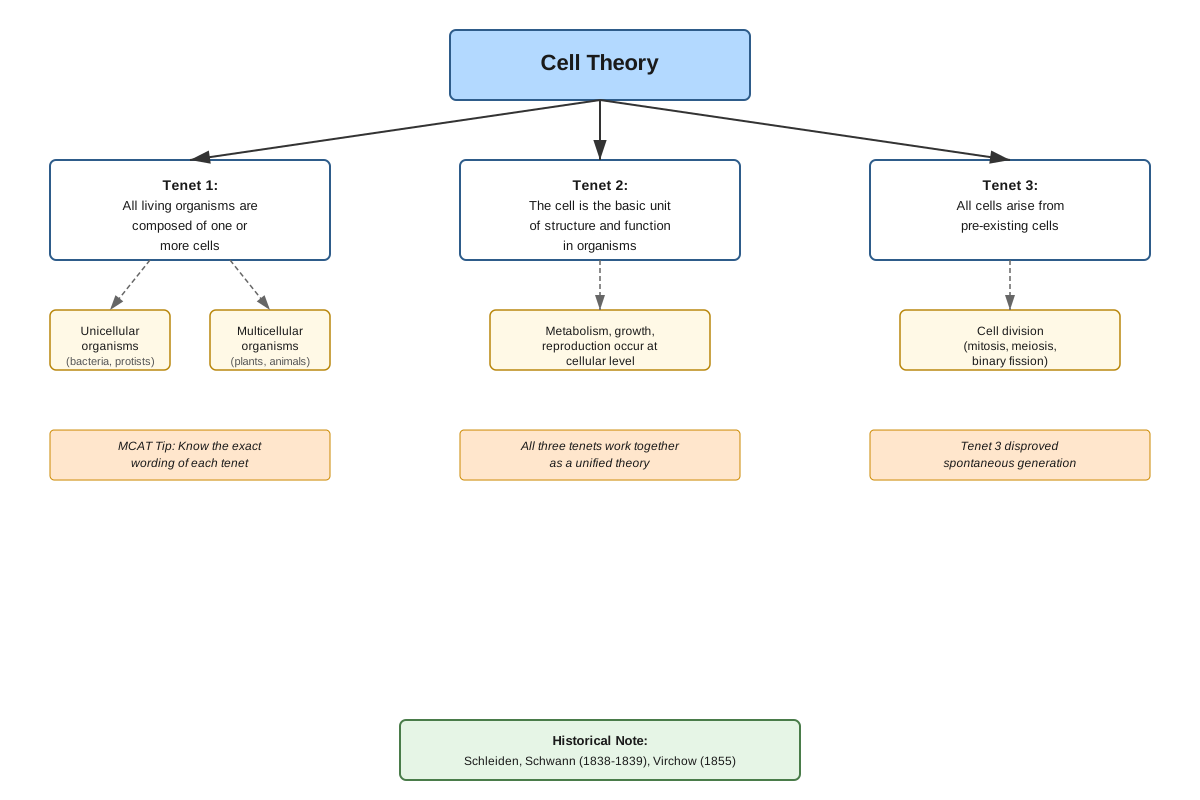
Cell theory comprises three fundamental principles that collectively define our understanding of cellular life. These tenets were developed over approximately 200 years through the work of multiple scientists and represent one of the most important unifying theories in Biology.
Tenet 1: All living organisms are composed of one or more cells
This principle establishes that the cell is the fundamental unit of life. Whether examining a single-celled bacterium or a complex multicellular organism like a human (containing approximately 37 trillion cells), all life is cellular in nature. This tenet distinguishes living organisms from non-living matter and provides a clear criterion for life. Unicellular organisms like bacteria, archaea, and many protists consist of a single cell that performs all life functions. Multicellular organisms contain specialized cells organized into tissues, organs, and organ systems, but each cell retains the basic characteristics of life.
Tenet 2: The cell is the basic unit of structure and function in living organisms
This principle means that cells are the smallest units that can carry out all life processes independently. While cells contain smaller structures (organelles, molecules), these components cannot function independently as living entities. A cell represents the minimum level of organization capable of performing all life functions: metabolism, growth, response to stimuli, reproduction, and homeostasis. This tenet explains why cellular damage leads to tissue and organ dysfunction—if the fundamental units are compromised, higher levels of organization cannot function properly.
Tenet 3: All cells arise from pre-existing cells through cell division
This principle, often summarized by the Latin phrase omnis cellula e cellula (all cells from cells), establishes that cells do not spontaneously generate from non-living matter. New cells are produced only through the division of existing cells via processes like binary fission (in prokaryotes) or mitosis and meiosis (in eukaryotes). This tenet has profound implications for understanding reproduction, development, heredity, and evolution. It also explains why maintaining cell cultures requires starting with living cells and why sterilization is necessary to prevent unwanted cellular growth.
Historical Development and Key Scientists
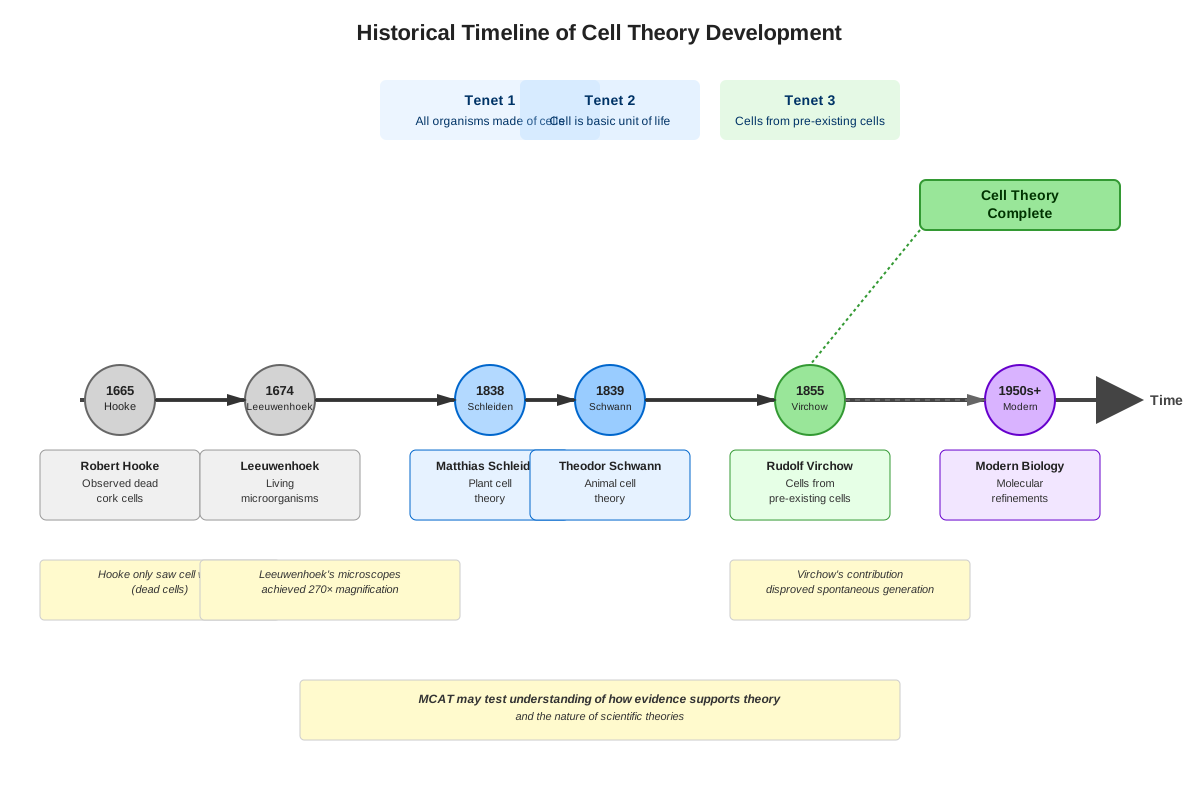
Understanding the historical context of cell theory helps students appreciate how scientific knowledge develops through accumulated evidence and technological advancement.
| Scientist | Contribution | Year | Significance |
|---|---|---|---|
| Robert Hooke | Observed and named "cells" in cork | 1665 | First use of the term "cell"; observed dead plant cell walls |
| Anton van Leeuwenhoek | Observed living single-celled organisms | 1670s | First observation of living cells and microorganisms |
| Matthias Schleiden | Proposed all plants are made of cells | 1838 | Established cellular basis of plant life |
| Theodor Schwann | Proposed all animals are made of cells | 1839 | Extended cell theory to animals; unified plant and animal biology |
| Rudolf Virchow | Stated all cells come from pre-existing cells | 1855 | Refuted spontaneous generation; completed classical cell theory |
| Louis Pasteur | Disproved spontaneous generation experimentally | 1861 | Provided experimental evidence supporting Virchow's principle |
Modern Modifications and Exceptions
While the classical tenets of cell theory remain fundamentally valid, modern Biology has revealed important nuances and apparent exceptions that MCAT students must understand.
Viruses and Cell Theory
Viruses present a challenge to cell theory because they are not composed of cells, yet they exhibit some characteristics of life. Viruses consist of genetic material (DNA or RNA) surrounded by a protein coat, and they can only reproduce by hijacking the cellular machinery of host cells. This has led to ongoing debate about whether viruses should be considered "living." For MCAT purposes, understand that viruses are obligate intracellular parasites that depend entirely on cells for reproduction, thus supporting rather than contradicting the principle that cells are the fundamental units of life.
Multinucleated Cells and Syncytia
Some cells contain multiple nuclei within a single continuous cytoplasm, appearing to violate the concept of the cell as a discrete unit. Examples include:
- Skeletal muscle fibers: Formed by fusion of multiple cells during development
- Osteoclasts: Bone-resorbing cells formed by fusion of multiple precursor cells
- Plasmodial slime molds: Contain thousands of nuclei in a single cell mass
These structures still arise from pre-existing cells through division and fusion, so they represent variations in cellular organization rather than true exceptions to cell theory.
The First Cell Problem
Cell theory states that all cells come from pre-existing cells, which creates a logical paradox: where did the first cell come from? This apparent contradiction is resolved by understanding that cell theory describes biological processes in the current era, while abiogenesis (the origin of life from non-living matter) occurred under unique conditions billions of years ago. The first cells likely arose through chemical evolution, but once cellular life existed, all subsequent cells have arisen from pre-existing cells.
Prokaryotic vs. Eukaryotic Cells
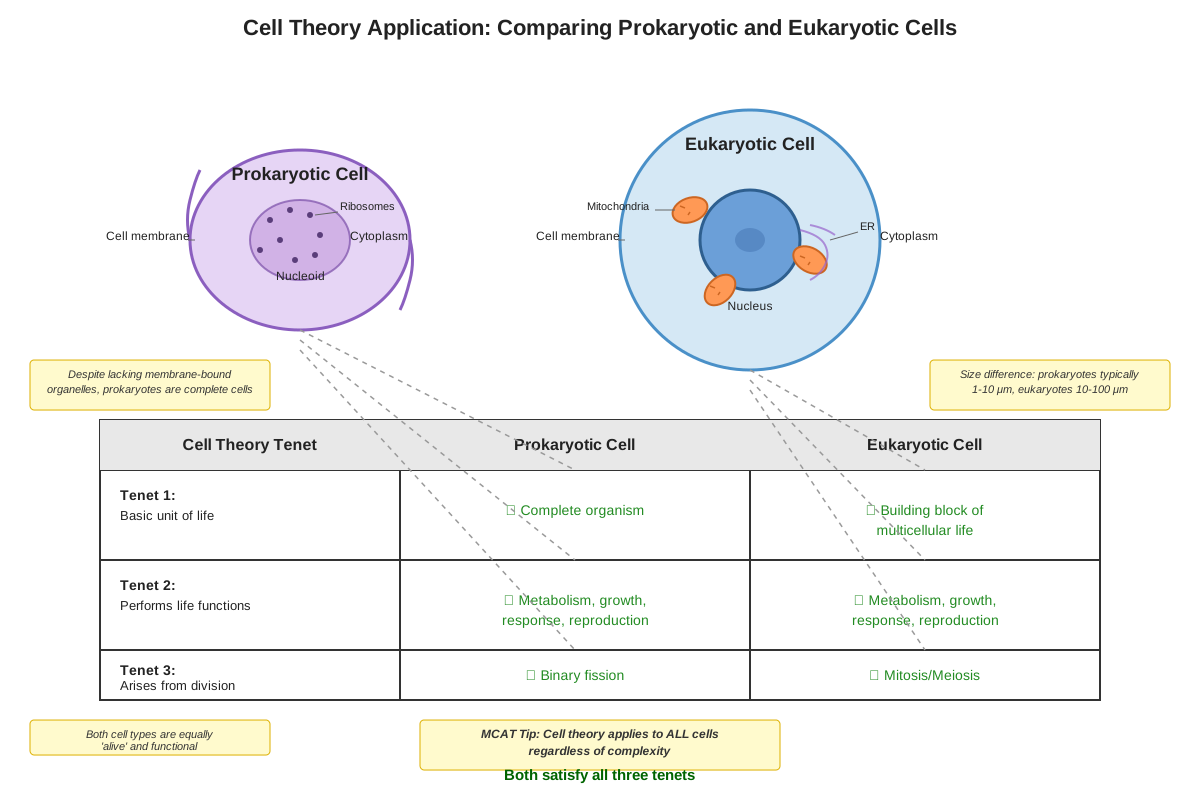
Cell theory applies to both prokaryotic and eukaryotic cells, but understanding their differences is crucial for MCAT success.
Prokaryotic cells (bacteria and archaea):
- Lack a membrane-bound nucleus; genetic material in nucleoid region
- Lack membrane-bound organelles
- Smaller size (typically 0.5-5 μm)
- Reproduce through binary fission
- Have cell walls (peptidoglycan in bacteria)
- Single circular chromosome
Eukaryotic cells (animals, plants, fungi, protists):
- Possess a membrane-bound nucleus containing genetic material
- Contain membrane-bound organelles (mitochondria, endoplasmic reticulum, Golgi apparatus, etc.)
- Larger size (typically 10-100 μm)
- Reproduce through mitosis or meiosis
- May or may not have cell walls (plants and fungi do; animals do not)
- Multiple linear chromosomes
Both cell types satisfy all tenets of cell theory: they are the fundamental units of their respective organisms, they perform all life functions, and they arise only from pre-existing cells of the same type.
Concept Relationships
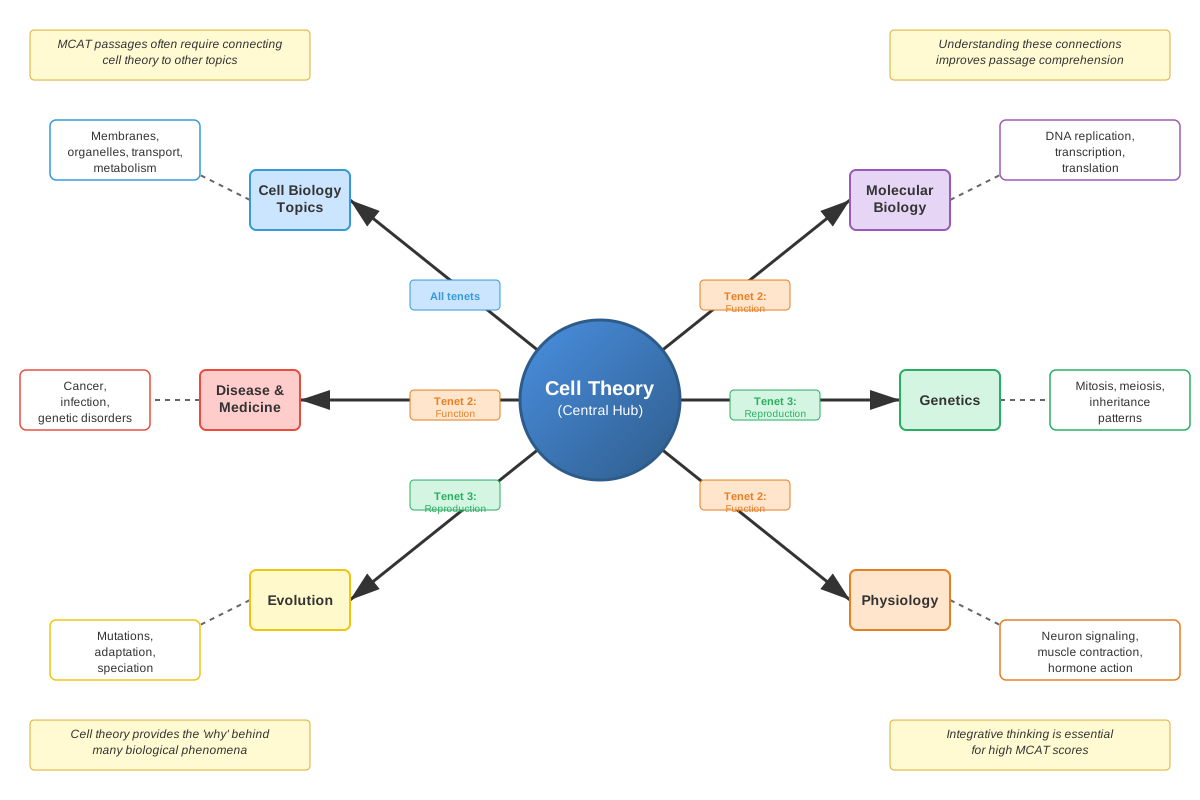
Cell theory serves as the conceptual hub connecting numerous biological principles. The theory's first tenet (all organisms are composed of cells) → leads to → the study of cell structure and organelles, which explains how cells perform their functions. This connection → extends to → membrane structure and transport, as the cell membrane defines the boundary of the cell and controls what enters and exits.
The second tenet (cells are the basic units of structure and function) → connects to → metabolism and bioenergetics, since cells are where all metabolic reactions occur. This principle → also relates to → homeostasis, as cells must maintain stable internal conditions to function properly. Understanding cellular function → is prerequisite for → physiology, which examines how cells work together in tissues and organs.
The third tenet (cells arise from pre-existing cells) → directly connects to → cell division (mitosis and meiosis), genetics and heredity, and reproduction. This principle → also links to → evolution, as cellular reproduction with variation provides the mechanism for natural selection. The concept that cells come only from other cells → relates to → microbiology and disease, explaining why sterilization prevents infection and why antibiotics target bacterial cells.
Within cell theory itself, the three tenets are interdependent: recognizing cells as fundamental units (Tenet 2) requires first establishing that organisms are made of cells (Tenet 1), and understanding cellular reproduction (Tenet 3) explains how multicellular organisms develop from single cells and how unicellular organisms propagate.
High-Yield Facts
⭐ Cell theory consists of three main tenets: all living organisms are composed of cells, cells are the basic units of structure and function, and all cells arise from pre-existing cells
⭐ Viruses are NOT considered cells and are not living by most definitions because they cannot reproduce independently and lack cellular structure
⭐ Both prokaryotic and eukaryotic cells satisfy all tenets of cell theory despite their structural differences
⭐ Rudolf Virchow is credited with the principle that all cells come from pre-existing cells (omnis cellula e cellula), completing classical cell theory in 1855
⭐ The cell is the smallest unit capable of independent life; subcellular components like organelles cannot survive or reproduce independently
- Robert Hooke first observed and named cells in 1665 while examining cork under a microscope, though he only saw dead cell walls
- Louis Pasteur's swan-neck flask experiments (1861) definitively disproved spontaneous generation and supported the principle that cells arise only from other cells
- Matthias Schleiden (plants, 1838) and Theodor Schwann (animals, 1839) established that all organisms are composed of cells
- Multinucleated cells like skeletal muscle fibers and osteoclasts do not violate cell theory because they form through fusion of cells that arose from pre-existing cells
- The development of microscopy was essential for establishing cell theory, as cells are generally too small to see with the naked eye (most cells are 10-100 μm for eukaryotes, 0.5-5 μm for prokaryotes)
- Cell theory provides the foundation for understanding disease at the molecular level, as all pathology ultimately involves cellular dysfunction
- Stem cells demonstrate cell theory principles by dividing to produce both identical stem cells (self-renewal) and differentiated cell types
Quick check — test yourself on Cell theory so far.
Try Flashcards →Common Misconceptions
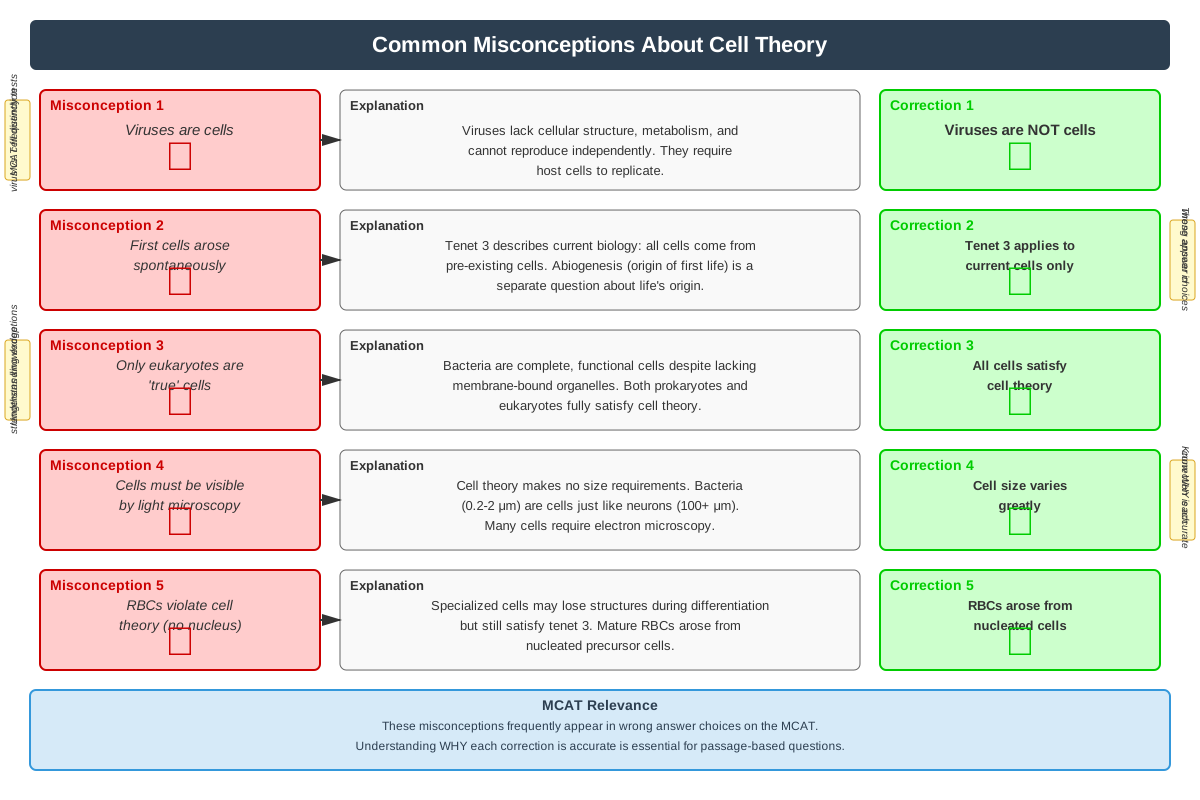
Misconception: Viruses are cells or living organisms that violate cell theory
Correction: Viruses are not cells and are generally not considered living. They consist of genetic material in a protein coat and can only reproduce by hijacking cellular machinery. Rather than contradicting cell theory, viruses actually support it by demonstrating that cellular machinery is necessary for reproduction and life processes.
Misconception: Cell theory states that cells are the smallest units of matter or the smallest biological structures
Correction: Cell theory states that cells are the smallest units capable of independent life and performing all life functions. Cells contain smaller structures (organelles, molecules, atoms), but these components cannot carry out all life processes independently. The distinction is between "smallest unit of life" and "smallest unit of matter."
Misconception: All cells in multicellular organisms are identical
Correction: While all cells in an organism share the same DNA, they differentiate into specialized cell types with different structures and functions (neurons, muscle cells, epithelial cells, etc.). Cell theory states that organisms are composed of cells, not that all cells are identical. Cellular differentiation allows for the division of labor necessary in complex organisms.
Misconception: Cell theory was developed by a single scientist through one discovery
Correction: Cell theory developed over approximately 200 years through contributions from multiple scientists including Hooke, Leeuwenhoek, Schleiden, Schwann, Virchow, and Pasteur. Scientific theories typically emerge from accumulated evidence rather than single discoveries, and cell theory exemplifies this process.
Misconception: Spontaneous generation was disproven before cell theory was established
Correction: The debate over spontaneous generation continued well into the development of cell theory. While Virchow proposed that all cells come from pre-existing cells in 1855, Pasteur's definitive experimental disproof of spontaneous generation didn't occur until 1861. The timeline shows how scientific understanding evolves through both theoretical proposals and experimental validation.
Misconception: The first cell violated cell theory by arising from non-living matter
Correction: Cell theory describes biological processes in the current era, not the origin of life billions of years ago. Abiogenesis (life from non-life) occurred under unique primordial conditions and is not contradictory to cell theory, which applies to how cells reproduce once cellular life exists. The principle "all cells from cells" has held true for billions of years since the first cells arose.
Worked Examples
Example 1: Evaluating Experimental Evidence
Question: A researcher observes that when nutrient broth is boiled and then sealed in a flask with a curved neck that prevents airborne particles from entering, no microbial growth occurs even after weeks. However, when the neck is broken off, allowing air to enter, microbial growth appears within days. Which tenet of cell theory does this experiment support, and what is the reasoning?
Solution:
Step 1: Identify what the experiment demonstrates
The experiment shows that microorganisms do not appear spontaneously in sterile broth but only appear when the broth is exposed to air (which contains microorganisms).
Step 2: Connect to cell theory tenets
This directly supports the third tenet: all cells arise from pre-existing cells. The experiment demonstrates that cells (microorganisms) do not spontaneously generate from non-living matter (nutrient broth).
Step 3: Explain the mechanism
Boiling kills any existing microorganisms in the broth. The curved neck prevents airborne microorganisms from entering while still allowing air exchange (ruling out the possibility that lack of air prevents growth). When the neck is broken, airborne microorganisms can enter and reproduce in the nutrient-rich environment.
Step 4: Historical context
This describes Pasteur's famous swan-neck flask experiment (1861), which definitively disproved spontaneous generation and provided experimental support for Virchow's principle that all cells come from pre-existing cells.
Answer: This experiment supports the third tenet of cell theory (all cells arise from pre-existing cells) by demonstrating that microorganisms do not spontaneously generate in sterile broth but only appear when pre-existing microorganisms from the air are allowed to enter.
Example 2: Applying Cell Theory to Clinical Scenarios
Question: A patient is diagnosed with a bacterial infection and prescribed antibiotics. The antibiotic works by inhibiting bacterial cell wall synthesis, causing bacterial cells to lyse (burst) when they attempt to divide. The patient's own cells are unaffected. Explain how this scenario relates to cell theory and why the treatment is selective for bacterial cells.
Solution:
Step 1: Identify relevant cell theory principles
The scenario involves bacterial cells (prokaryotic) attempting to divide (third tenet: cells arise from pre-existing cells through division) and the structural differences between bacterial and human cells (both satisfy cell theory but have different structures).
Step 2: Explain the cellular basis of infection
The bacterial infection consists of bacterial cells reproducing in the patient's body. According to cell theory, these bacterial cells arose from pre-existing bacterial cells (likely from environmental exposure or person-to-person transmission) and are reproducing through binary fission.
Step 3: Explain antibiotic selectivity
Bacterial cells (prokaryotic) have cell walls made of peptidoglycan, while human cells (eukaryotic) lack cell walls entirely. The antibiotic selectively targets bacterial cell wall synthesis, a process that doesn't occur in human cells. This selectivity is possible because, although both cell types satisfy cell theory, they have different structural features.
Step 4: Connect to cell theory's second tenet
The second tenet states that cells are the basic units of structure and function. By targeting the structural component (cell wall) essential for bacterial cell function and division, the antibiotic prevents bacterial cells from successfully dividing, thereby treating the infection while preserving human cells.
Answer: This scenario demonstrates cell theory in action: the bacterial infection consists of cells that arose from pre-existing cells and are attempting to reproduce (third tenet). The antibiotic exploits structural differences between prokaryotic bacterial cells and eukaryotic human cells (both satisfy cell theory but differ in structure) to selectively eliminate the infection. The treatment works at the cellular level because cells are the fundamental units of structure and function (second tenet), so disrupting bacterial cell structure eliminates the infection.
Exam Strategy
Approaching MCAT Questions on Cell Theory
When encountering questions related to cell theory on the MCAT, follow this systematic approach:
- Identify which tenet is being tested: Determine whether the question addresses cellular composition of organisms (Tenet 1), cells as functional units (Tenet 2), or cellular reproduction (Tenet 3)
- Watch for exception scenarios: The MCAT often tests understanding of apparent exceptions (viruses, multinucleated cells, the first cell) to assess deeper comprehension
- Connect to experimental evidence: Many questions present historical or modern experiments and ask students to interpret results in light of cell theory
- Consider both prokaryotic and eukaryotic contexts: Questions may test whether students understand that cell theory applies to all cellular life despite structural differences
Trigger Words and Phrases
Watch for these key terms that signal cell theory concepts:
- "Fundamental unit" or "basic unit" → Points to the second tenet about cells as structural and functional units
- "Spontaneous generation" or "arise from" → Relates to the third tenet about cellular reproduction
- "Obligate intracellular parasite" → Indicates viruses, which are not cells but depend on cells
- "All living organisms" → Suggests the first tenet about cellular composition
- "Cell division", "binary fission", "mitosis" → Connects to the third tenet
- "Virchow", "Pasteur", "Schwann", "Schleiden" → Historical context questions
- "Smallest unit capable of life" → Refers to cells as the minimum level of independent life
Process of Elimination Tips
When using process of elimination on cell theory questions:
- Eliminate answers that confuse cells with molecules or organelles: Cells are not the smallest units of matter, just the smallest units of life
- Eliminate answers suggesting viruses are cells: Viruses lack cellular structure and cannot reproduce independently
- Eliminate answers that suggest spontaneous generation occurs: In modern biology, all cells come from pre-existing cells
- Eliminate answers that claim cell theory applies only to eukaryotes or only to prokaryotes: Cell theory is universal to all cellular life
- Be cautious with "always" and "never": While cell theory is broadly applicable, questions about exceptions (multinucleated cells, viruses) may require nuanced answers
Time Allocation Advice
Cell theory questions are typically straightforward and should not consume excessive time:
- Discrete questions: Allocate 30-45 seconds for direct cell theory questions, as they usually test recall or simple application
- Passage-based questions: Spend 60-90 seconds, as these require integrating passage information with cell theory principles
- If stuck: Move on and return later, as cell theory questions rarely require complex calculations or lengthy reasoning
Exam Tip: Cell theory questions often appear early in practice sets because they test foundational knowledge. Use them to build confidence, but don't underestimate their importance—they may be testing deeper understanding through seemingly simple questions.
Memory Techniques
Mnemonic for the Three Tenets
"All Cells Come" (ACC)
- All organisms are made of cells
- Cells are the basic units of structure and function
- Cells come from pre-existing cells
Mnemonic for Key Historical Scientists
"Helpful Lizards Swim Slowly Viewing Plankton"
- Hooke: Named cells (1665)
- Leeuwenhoek: Observed living cells (1670s)
- Schleiden: Plants are made of cells (1838)
- Schwann: Animals are made of cells (1839)
- Virchow: Cells from pre-existing cells (1855)
- Pasteur: Disproved spontaneous generation (1861)
Visualization Strategy for Cell Theory Application
Create a mental image of a three-legged stool labeled "Cell Theory":
- Leg 1: Picture various organisms (bacteria, plants, animals) all composed of cell-shaped building blocks
- Leg 2: Visualize a single cell performing all life functions (eating, growing, responding)
- Leg 3: Imagine cells dividing like a chain reaction, each new cell arising from an existing one
This visualization reinforces that all three tenets support the unified theory, and removing any one "leg" would cause the theory to collapse.
Acronym for Remembering What Cells Do
"MRGREN" helps remember the characteristics of life that cells (as basic units) must perform:
- Movement
- Respiration
- Growth
- Reproduction
- Excretion
- Nutrition
This connects to the second tenet: cells must be capable of all these functions to be considered the basic units of life.
Memory Aid for Exceptions
"VMS" for the three main apparent exceptions to remember:
- Viruses: Not cells, not truly living
- Multinucleated cells: Still arose from pre-existing cells
- Spontaneous generation of first cell: Occurred under unique primordial conditions; cell theory applies after life began
Summary
Cell theory stands as one of the most fundamental unifying principles in Biology, establishing that all living organisms are composed of cells, that cells serve as the basic structural and functional units of life, and that all cells arise from pre-existing cells through division. Developed over two centuries through the contributions of scientists including Hooke, Leeuwenhoek, Schleiden, Schwann, Virchow, and Pasteur, this theory provides the conceptual framework for understanding all biological processes from molecular mechanisms to organism-level physiology. For the MCAT, cell theory is essential not only as a directly tested topic but as the foundation for interpreting experimental passages, analyzing cellular processes, and connecting microscopic events to clinical phenomena. While modern biology has revealed apparent exceptions such as viruses (which are not cells) and multinucleated cells (which still arise from pre-existing cells), these nuances reinforce rather than contradict the core principles. Students must understand both the classical tenets and their modern modifications, recognize how cell theory applies to both prokaryotic and eukaryotic organisms, and be able to apply these principles to experimental scenarios and clinical contexts. Mastery of cell theory enables deeper comprehension of virtually every other topic in Cell Biology and provides the logical foundation for success on MCAT Biology questions.
Key Takeaways
- Cell theory comprises three tenets: all organisms are made of cells, cells are the basic units of structure and function, and all cells arise from pre-existing cells—these principles apply universally to all cellular life
- Cells represent the smallest units capable of independent life; while they contain smaller structures, only cells can perform all life functions autonomously
- Viruses are not cells and are not considered living by most definitions because they lack cellular structure and cannot reproduce without hijacking cellular machinery
- Cell theory developed through accumulated evidence from multiple scientists over 200 years, exemplifying how scientific theories emerge from collaborative investigation rather than single discoveries
- Both prokaryotic and eukaryotic cells satisfy all tenets of cell theory despite significant structural differences, demonstrating the theory's universal applicability
- Understanding cell theory is essential for MCAT success because it provides the conceptual foundation for interpreting passages about cellular processes, disease mechanisms, and experimental designs
- Apparent exceptions to cell theory (multinucleated cells, the first cell, viruses) actually reinforce the theory when properly understood and frequently appear in MCAT questions testing deeper comprehension
Related Topics
- Cell Structure and Organelles: Understanding the internal components of cells and their functions builds directly on cell theory's second tenet that cells are functional units
- Membrane Structure and Transport: The cell membrane defines the boundary of the cell and controls molecular traffic, essential for maintaining cells as discrete functional units
- Cell Division (Mitosis and Meiosis): These processes directly demonstrate the third tenet of cell theory—that cells arise only from pre-existing cells
- Prokaryotic vs. Eukaryotic Cells: Detailed comparison of these cell types shows how cell theory applies universally despite structural differences
- Metabolism and Bioenergetics: All metabolic reactions occur within cells, connecting to the principle that cells are the basic functional units of life
- Microbiology and Infectious Disease: Understanding bacterial and viral infections requires applying cell theory principles to pathogen behavior and treatment strategies
- Stem Cells and Development: These topics demonstrate cell theory in action, showing how all cells in an organism arise from pre-existing cells through division and differentiation
Practice CTA
Now that you've mastered the foundational principles of cell theory, it's time to solidify your understanding through active practice. Challenge yourself with the practice questions and flashcards designed specifically for this topic—they'll help you identify any remaining gaps in your knowledge and build the confidence you need for test day. Remember, cell theory isn't just about memorizing three tenets; it's about understanding how these principles connect to every other concept in biology. The more you practice applying cell theory to diverse scenarios, the more naturally you'll recognize these patterns on the MCAT. You've built a strong foundation—now strengthen it through deliberate practice!
Sign up free to keep reading
Create a free AnvayaPrep account to finish this MCAT guide on Cell theory — plus flashcards and practice questions.