Overview
Cilia and flagella are specialized, hair-like organelles that extend from the surface of eukaryotic cells and enable movement—either of the cell itself through its environment or of fluids and particles across the cell surface. These structures represent remarkable examples of cellular architecture and mechanical engineering at the molecular level. Both organelles share a nearly identical internal structure based on microtubules arranged in a characteristic "9+2" pattern, yet they differ in length, number per cell, and beating pattern. Understanding cilia and flagella is essential for Cell Biology mastery because these structures illustrate fundamental principles of cytoskeletal organization, motor protein function, and cellular motility.
For the MCAT, cilia and flagella appear regularly in both passage-based and discrete questions within the Biology section. Test-makers favor this topic because it integrates multiple high-yield concepts: microtubule structure and function, dynein motor proteins, ATP-dependent movement, and the relationship between structure and function. Questions often present clinical scenarios involving ciliary dysfunction (such as primary ciliary dyskinesia or Kartagener syndrome) or ask students to predict the consequences of specific structural defects. The topic also connects to broader themes in cell biology, including the cytoskeleton, organelle structure, and cellular communication with the external environment.
Beyond isolated questions, cilia and flagella MCAT content frequently appears in experimental passages describing cell motility assays, genetic mutations affecting ciliary function, or comparative studies of different cell types. A solid understanding of these organelles enables students to quickly interpret data about cellular movement, recognize the role of ATP in powering dynein motors, and connect structural abnormalities to functional consequences—all critical skills for achieving a competitive MCAT score.
Learning Objectives
- [ ] Define cilia and flagella using accurate Biology terminology
- [ ] Explain why cilia and flagella matters for the MCAT
- [ ] Apply cilia and flagella to exam-style questions
- [ ] Identify common mistakes related to cilia and flagella
- [ ] Connect cilia and flagella to related Biology concepts
- [ ] Compare and contrast the structure, function, and distribution of cilia versus flagella
- [ ] Describe the molecular mechanism of ciliary and flagellar beating, including the role of dynein motor proteins
- [ ] Predict the functional consequences of specific structural defects in cilia or flagella
- [ ] Analyze experimental data related to ciliary dysfunction and connect findings to clinical phenotypes
Prerequisites
- Microtubule structure and function: Cilia and flagella are built from microtubules, so understanding tubulin dimers, polarity, and dynamic instability is essential
- Motor proteins (kinesins and dyneins): Dynein powers ciliary and flagellar movement through ATP-dependent conformational changes
- ATP as cellular energy currency: Movement of cilia and flagella requires continuous ATP hydrolysis
- Basic cell membrane structure: Cilia and flagella are membrane-bound extensions of the cell
- Protein synthesis and trafficking: Ciliary proteins must be synthesized in the cytoplasm and transported to the cilium
- Cytoskeletal organization: Cilia and flagella represent specialized cytoskeletal structures anchored by basal bodies
Why This Topic Matters
Clinical Significance
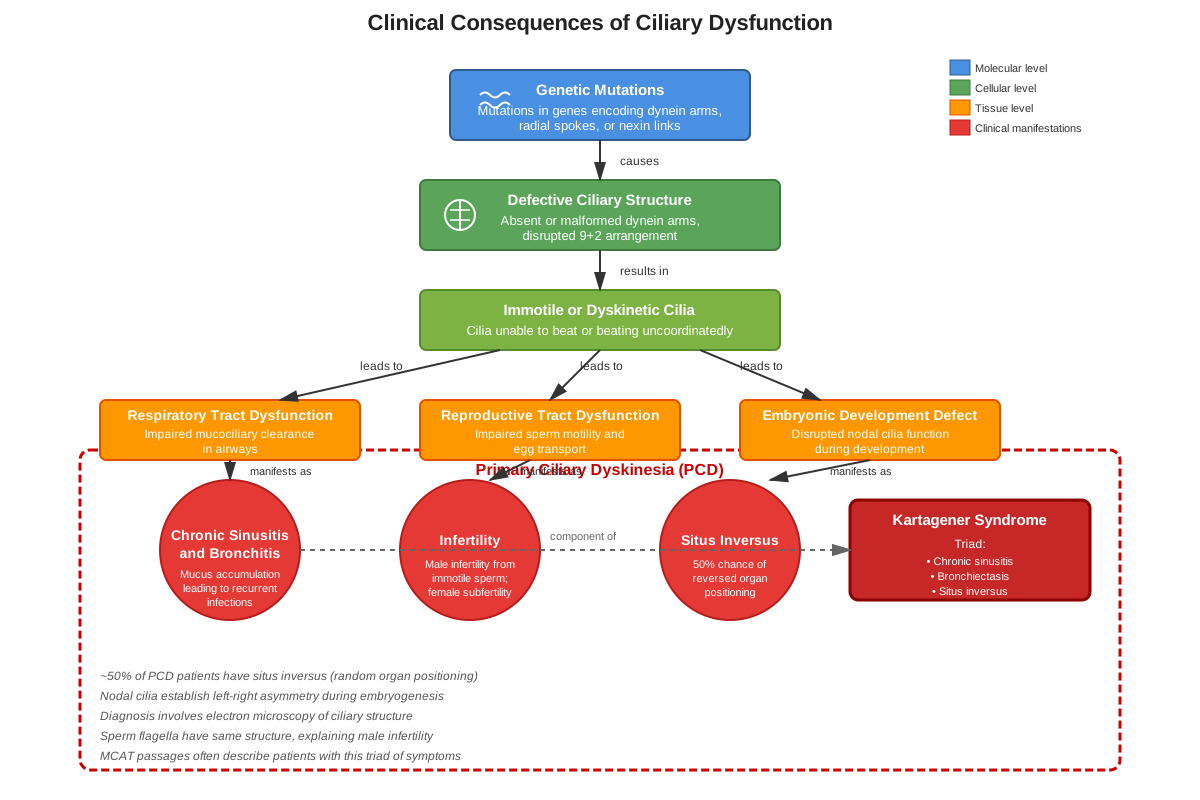
Ciliary dysfunction causes several clinically important conditions that appear in MCAT passages. Primary ciliary dyskinesia (PCD) results from genetic defects in ciliary structure or function, leading to chronic respiratory infections, infertility, and in approximately 50% of cases, situs inversus (reversed organ positioning)—a combination known as Kartagener syndrome. The respiratory epithelium relies on coordinated ciliary beating to clear mucus and trapped pathogens; when cilia fail, patients experience recurrent sinusitis, bronchitis, and pneumonia. Male infertility in PCD occurs because sperm flagella share the same structural organization as respiratory cilia, so mutations affecting one typically affect both. These clinical connections make cilia and flagella excellent material for integrated MCAT questions that test both biological knowledge and clinical reasoning.
Exam Statistics and Question Types
Analysis of released MCAT materials reveals that cilia and flagella appear in approximately 3-5% of Biology questions, with higher frequency in passage-based questions than discrete items. The topic most commonly appears in:
- Experimental passages describing mutations affecting ciliary proteins or studies of cellular motility
- Clinical vignettes presenting patients with recurrent respiratory infections or infertility
- Comparative biology passages contrasting prokaryotic flagella with eukaryotic versions
- Cell biology passages exploring intracellular transport or organelle structure
Questions typically test structure-function relationships, the role of ATP in powering movement, consequences of specific protein defects, or the ability to interpret experimental data about ciliary beating frequency or coordination.
Common Passage Contexts
MCAT passages featuring cilia and flagella often present:
- Genetic studies identifying mutations in dynein arm proteins
- Microscopy data showing abnormal ciliary structure
- Measurements of ciliary beating frequency under various conditions
- Comparisons between motile and non-motile (primary) cilia
- Studies of sperm motility or respiratory epithelial function
- Evolutionary comparisons between different organisms' motility structures
Core Concepts
Structure of Cilia and Flagella
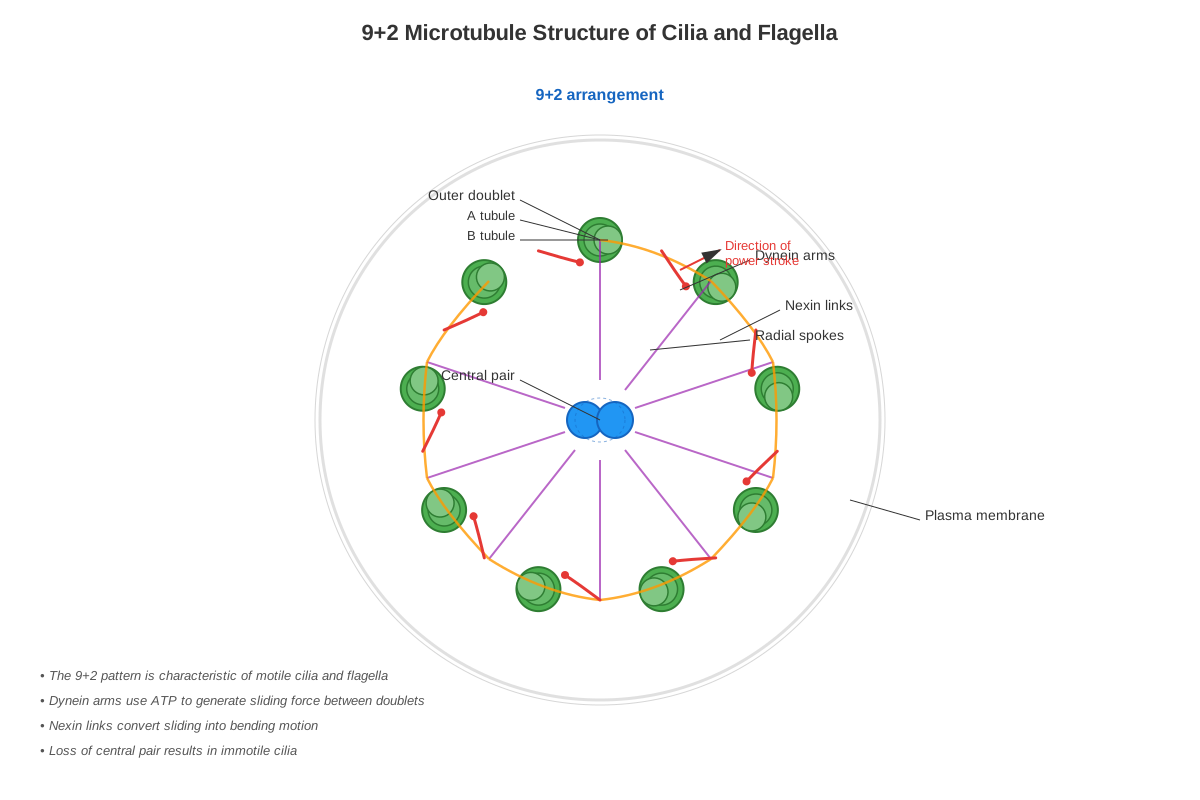
Cilia and flagella are evolutionarily conserved organelles that share a common structural blueprint despite their functional differences. Both consist of a microtubule-based axoneme surrounded by an extension of the plasma membrane. The defining structural feature is the "9+2" arrangement: nine outer doublet microtubules arranged in a circle around two central singlet microtubules. This organization is remarkably consistent across eukaryotic species, from protists to humans, reflecting its evolutionary optimization for generating force and movement.
Each of the nine outer doublets consists of an A-tubule (a complete microtubule with 13 protofilaments) and a B-tubule (an incomplete microtubule with 10-11 protofilaments fused to the A-tubule). The A-tubule bears two dynein arms—an outer arm and an inner arm—that extend toward the B-tubule of the adjacent doublet. These dynein motor proteins are the molecular engines that power ciliary and flagellar beating. Nexin links connect adjacent doublets, providing structural integrity and converting dynein-generated sliding into bending. Radial spokes extend from each outer doublet toward the central pair, coordinating the activity of dynein arms around the circumference of the axoneme.
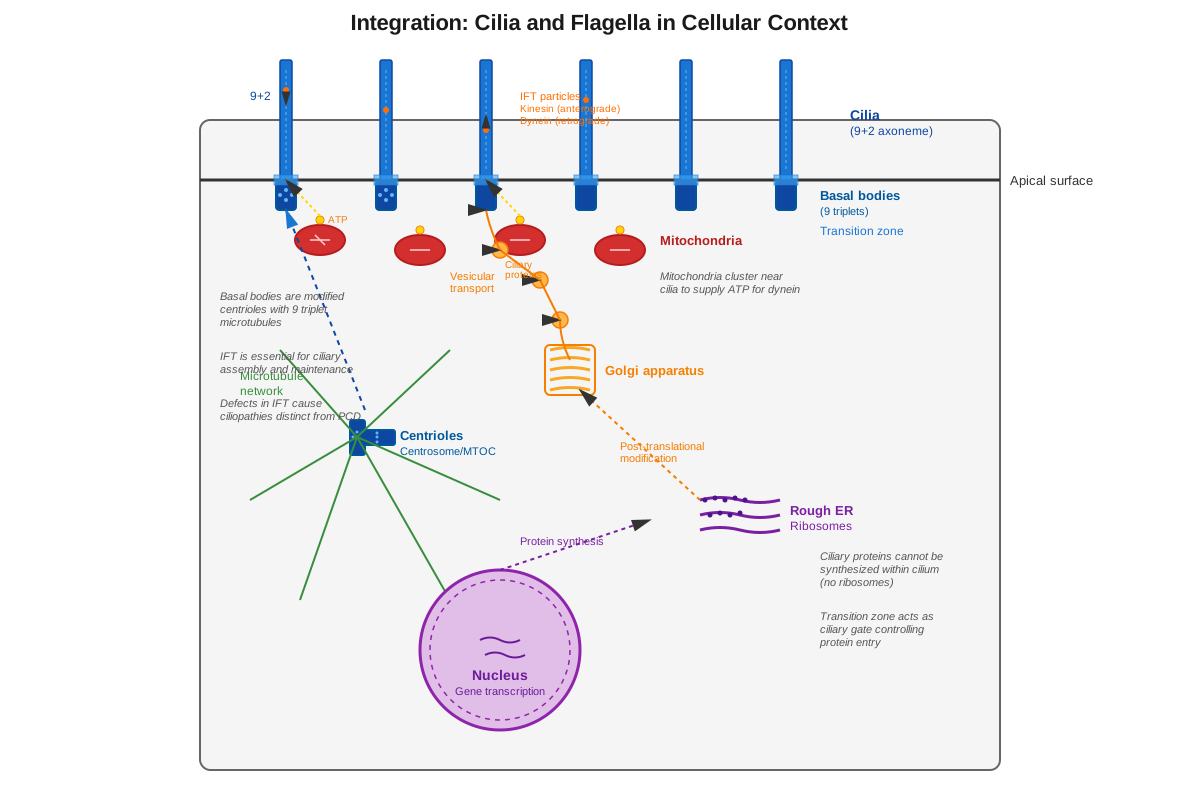
The axoneme anchors to a basal body (also called a kinetosome), which is structurally identical to a centriole and consists of nine triplet microtubules arranged in a circle. The basal body serves as both an anchor point and a template for axoneme assembly. During ciliogenesis, the basal body migrates to the cell surface and nucleates the growth of the axoneme, with microtubules extending from the basal body into the growing cilium or flagellum.
Differences Between Cilia and Flagella
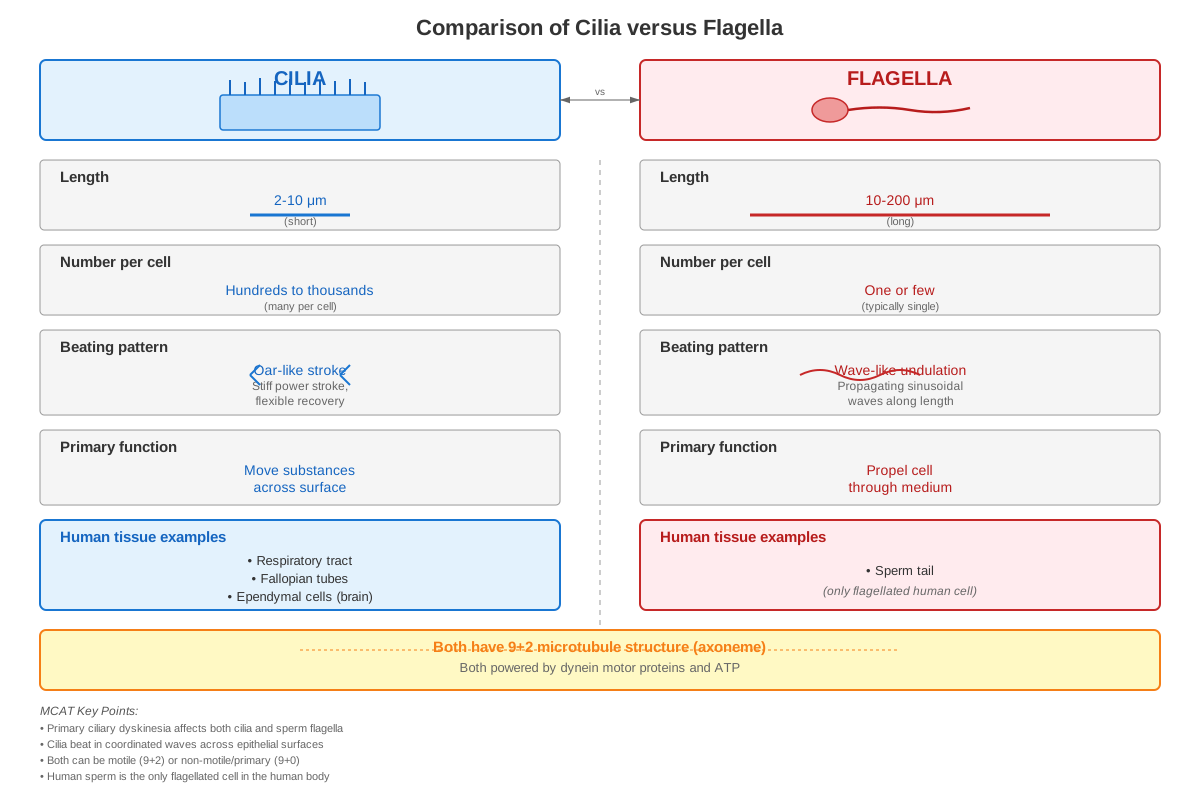
While cilia and flagella share the same basic structure, they differ in several important characteristics:
| Feature | Cilia | Flagella |
|---|---|---|
| Length | Short (2-10 μm) | Long (up to 200 μm) |
| Number per cell | Many (hundreds to thousands) | Few (typically 1-2) |
| Beating pattern | Coordinated, wave-like motion with power and recovery strokes | Undulating, whip-like motion |
| Function | Move fluid/particles across cell surface | Propel entire cell through fluid |
| Examples | Respiratory epithelium, fallopian tubes | Sperm cells, some protists |
| Coordination | Metachronal waves (coordinated beating) | Independent beating |
Despite these differences, the molecular mechanism of movement is identical: ATP-dependent dynein arm activity causes microtubule sliding that converts to bending.
Molecular Mechanism of Movement
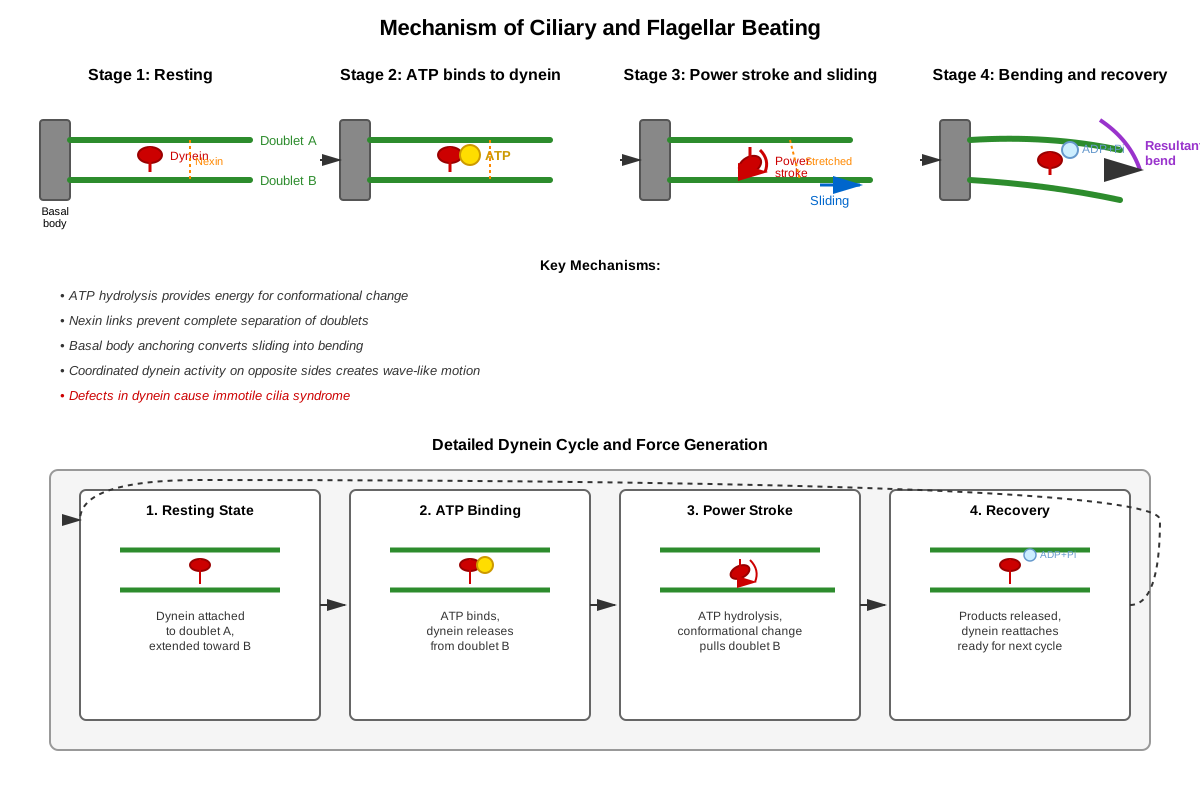
The beating of cilia and flagella results from the coordinated sliding of outer doublet microtubules relative to one another, powered by dynein motor proteins. Dynein is a minus-end-directed motor protein, meaning it walks toward the minus end of microtubules (located at the basal body). Each dynein arm is anchored to the A-tubule of one doublet and extends toward the B-tubule of the adjacent doublet.
The mechanism proceeds through these steps:
- ATP binding: Dynein binds ATP, causing a conformational change that allows it to attach to the B-tubule of the adjacent doublet
- Power stroke: ATP hydrolysis drives a conformational change in dynein, causing it to pull the adjacent doublet toward the base of the cilium
- Detachment: ADP and phosphate release, allowing dynein to detach from the B-tubule
- Recovery: Dynein returns to its original conformation, ready to bind another ATP molecule
If doublets could slide freely, the axoneme would telescope and shorten. However, nexin links between adjacent doublets resist this sliding, converting the linear sliding force into bending. When dyneins on one side of the axoneme are active, they pull adjacent doublets past each other, but the nexin links constrain this motion, causing the entire structure to bend. Alternating activation of dyneins on opposite sides of the axoneme produces the characteristic back-and-forth beating pattern.
The central pair of microtubules and radial spokes coordinate this activity. The central pair rotates during beating, and this rotation, transmitted through radial spokes, regulates which dynein arms are active at any given moment. This coordination ensures that the cilium or flagellum bends in a controlled, productive manner rather than in random directions.
Primary (Non-Motile) Cilia
Not all cilia are motile. Primary cilia are solitary, non-motile cilia present on nearly every cell type in the human body. These structures lack the central pair of microtubules, having a "9+0" arrangement instead of the "9+2" pattern of motile cilia. Primary cilia also typically lack dynein arms, explaining their immotility.
Primary cilia function as cellular antennae, detecting chemical and mechanical signals from the environment. They contain numerous receptors and ion channels that respond to extracellular signals, making them critical for:
- Mechanosensation: Detecting fluid flow (e.g., in kidney tubules)
- Chemosensation: Detecting signaling molecules
- Signal transduction: Concentrating receptors for pathways like Hedgehog signaling
- Development: Coordinating tissue patterning and organ development
Defects in primary cilia cause ciliopathies, a group of genetic disorders including polycystic kidney disease, retinal degeneration, and developmental abnormalities. The MCAT may present passages distinguishing between motile and primary cilia or describing ciliopathies.
Prokaryotic Flagella: A Critical Distinction
A common source of confusion is the relationship between eukaryotic and prokaryotic flagella. Despite sharing the same name, prokaryotic flagella are completely different structures with no evolutionary relationship to eukaryotic flagella. This distinction is testable on the MCAT.
| Feature | Eukaryotic Flagella | Prokaryotic Flagella |
|---|---|---|
| Structure | 9+2 microtubule arrangement | Helical protein filament (flagellin) |
| Location | Extends from cell, membrane-bound | Extends from cell wall |
| Movement mechanism | Dynein-powered bending | Rotary motor at base |
| Energy source | ATP hydrolysis | Proton-motive force |
| Diameter | ~200 nm | ~20 nm |
| Complexity | Hundreds of proteins | ~40 proteins |
Prokaryotic flagella rotate like propellers, driven by proton flow through a molecular motor embedded in the cell membrane. This fundamental difference reflects the independent evolution of motility in prokaryotes and eukaryotes.
Ciliary Assembly and Intraflagellar Transport
Cilia and flagella assemble through a process called ciliogenesis, which requires specialized transport mechanisms because ribosomes cannot enter the cilium. Intraflagellar transport (IFT) is the bidirectional movement of protein complexes along the axoneme, delivering building materials to the growing tip and returning turnover products to the cell body.
IFT involves two types of motor proteins:
- Kinesin-2: Moves cargo from base to tip (anterograde transport)
- Cytoplasmic dynein: Returns cargo from tip to base (retrograde transport)
IFT particles are protein complexes that serve as adapters between motors and cargo. Defects in IFT cause ciliopathies because cilia cannot assemble or maintain their structure without proper protein delivery. MCAT passages may describe experiments manipulating IFT components or mutations affecting ciliary assembly.
Concept Relationships
The concepts within cilia and flagella form an integrated network of structure-function relationships. The 9+2 microtubule arrangement provides the structural foundation → dynein motor proteins attach to this framework → ATP hydrolysis powers dynein conformational changes → microtubule sliding occurs → nexin links convert sliding to bending → coordinated beating results. This sequence illustrates how molecular-level events (ATP hydrolysis) produce cellular-level functions (motility).
Cilia and flagella connect to prerequisite topics through multiple pathways. The microtubule foundation links to broader cytoskeletal concepts, including mitotic spindle formation and intracellular transport. Dynein motor proteins connect to the general principle of motor proteins (including kinesins and myosins) that convert chemical energy into mechanical work. The ATP requirement links to cellular energetics and metabolism. The basal body connects to centriole structure and cell division.
Cilia and flagella also connect forward to related topics. Understanding ciliary structure enables comprehension of ciliopathies and genetic disease mechanisms. The coordination of ciliary beating relates to cell signaling and intercellular communication. The distinction between motile and primary cilia connects to developmental biology and tissue patterning. The comparison with prokaryotic flagella reinforces concepts in evolutionary biology and the diversity of solutions to common biological challenges.
Quick check — test yourself on Cilia and flagella so far.
Try Flashcards →High-Yield Facts
⭐ Cilia and flagella share a 9+2 microtubule arrangement: nine outer doublets surrounding two central singlets, with dynein arms, nexin links, and radial spokes
⭐ Dynein motor proteins power ciliary and flagellar beating through ATP-dependent conformational changes that cause microtubule sliding
⭐ Primary cilia have a 9+0 arrangement (no central pair), lack dynein arms, and function in sensory reception rather than motility
⭐ Kartagener syndrome results from ciliary dynein defects, causing chronic respiratory infections, male infertility, and situs inversus in ~50% of cases
⭐ Prokaryotic and eukaryotic flagella are completely different structures: prokaryotic flagella are rotating protein filaments powered by proton-motive force, not ATP-driven microtubule-based structures
- Basal bodies are structurally identical to centrioles (nine triplet microtubules) and serve as templates for axoneme assembly
- Nexin links between adjacent doublets convert microtubule sliding into bending by resisting the sliding force
- Intraflagellar transport (IFT) uses kinesin-2 (anterograde) and dynein (retrograde) to deliver proteins along the axoneme
- The central pair of microtubules rotates during beating and coordinates dynein arm activity through radial spokes
- Respiratory epithelial cilia beat in coordinated metachronal waves to move mucus toward the pharynx at ~1 cm/minute
- Sperm flagella can propel cells at speeds up to 200 μm/second through undulating motion
- Ciliopathies (diseases of ciliary dysfunction) affect multiple organ systems because primary cilia are present on most cell types
Common Misconceptions
Misconception: Cilia and flagella are different types of structures with different internal organizations.
Correction: Both cilia and flagella share the same 9+2 microtubule arrangement and dynein-based mechanism. They differ only in length, number per cell, and beating pattern, not fundamental structure.
Misconception: Prokaryotic and eukaryotic flagella are variations of the same basic structure.
Correction: These are completely unrelated structures that evolved independently. Prokaryotic flagella are rotating protein filaments powered by proton-motive force, while eukaryotic flagella are bending microtubule-based structures powered by ATP-dependent dynein motors.
Misconception: Dynein causes microtubules to bend directly.
Correction: Dynein causes adjacent microtubule doublets to slide past each other. Nexin links resist this sliding, converting the linear sliding motion into bending of the entire axoneme.
Misconception: All cilia are motile and function to move fluid or cells.
Correction: Primary cilia are non-motile (9+0 arrangement without dynein arms) and function as sensory organelles, detecting chemical and mechanical signals. They are present on nearly every cell type.
Misconception: The central pair of microtubules in the 9+2 arrangement provides structural support.
Correction: The central pair primarily coordinates dynein arm activity through radial spokes. Structural integrity comes from the outer doublets, nexin links, and the surrounding membrane.
Misconception: Cilia and flagella can synthesize their own proteins like mitochondria.
Correction: Cilia and flagella lack ribosomes and cannot synthesize proteins. All ciliary proteins must be synthesized in the cytoplasm and transported into the cilium via intraflagellar transport (IFT).
Misconception: Kartagener syndrome only affects the respiratory system.
Correction: Kartagener syndrome (primary ciliary dyskinesia with situs inversus) affects multiple systems: respiratory (chronic infections), reproductive (infertility due to immotile sperm), and developmental (organ positioning defects due to abnormal nodal cilia during embryogenesis).
Worked Examples
Example 1: Predicting Consequences of Dynein Mutations
Question: A researcher identifies a mutation in the gene encoding the outer dynein arm protein in respiratory epithelial cells. Predict the consequences of this mutation on ciliary function and patient health. Explain your reasoning at the molecular, cellular, and organismal levels.
Solution:
Molecular level: The outer dynein arm mutation would prevent proper assembly of functional dynein motors on the A-tubule of microtubule doublets. Without functional dynein, ATP hydrolysis cannot be coupled to conformational changes that generate force. The dynein heads would be unable to bind to adjacent B-tubules or execute power strokes.
Cellular level: Without functional outer dynein arms, microtubule doublets cannot slide past each other. Even though inner dynein arms might remain functional, the loss of outer arms significantly reduces the force generated and the frequency of ciliary beating. Cilia would either be completely immotile or beat with severely reduced frequency and coordination. The metachronal wave pattern that normally coordinates ciliary beating across the epithelial surface would be disrupted.
Organismal level: In the respiratory system, immotile or poorly functioning cilia cannot clear mucus and trapped pathogens from the airways. This leads to:
- Chronic respiratory infections (sinusitis, bronchitis, pneumonia)
- Accumulation of mucus in airways
- Chronic cough and difficulty breathing
- Potential development of bronchiectasis (permanent airway damage)
Additionally, if the same dynein mutation affects sperm flagella (which share the same structure), the patient would experience male infertility due to immotile sperm. If the mutation affected nodal cilia during embryonic development, there might be a 50% chance of situs inversus (reversed organ positioning). This constellation of findings is consistent with primary ciliary dyskinesia, potentially including Kartagener syndrome if situs inversus is present.
Key reasoning: This example demonstrates the structure-function relationship from molecular defect → cellular dysfunction → organismal disease, a common MCAT question pattern.
Example 2: Interpreting Experimental Data
Question: Researchers measure ciliary beating frequency in respiratory epithelial cells under different conditions:
- Normal cells in standard medium: 15 Hz
- Normal cells with ATP synthesis inhibitor: 2 Hz
- Cells with nexin link mutation in standard medium: Cilia elongate but don't bend
- Cells with central pair deletion in standard medium: 8 Hz, uncoordinated beating
Explain each result in terms of ciliary structure and function.
Solution:
Normal cells (15 Hz): This baseline establishes normal ciliary beating frequency when all structural components are intact and ATP is available. The 15 Hz frequency represents coordinated dynein arm activity cycling through ATP binding, hydrolysis, and product release.
ATP synthesis inhibitor (2 Hz): Ciliary beating requires continuous ATP hydrolysis to power dynein conformational changes. Inhibiting ATP synthesis depletes cellular ATP, dramatically reducing the frequency of dynein cycling. The residual 2 Hz likely represents beating powered by remaining ATP stores. This result confirms that ciliary beating is an active, energy-dependent process, not passive movement.
Nexin link mutation (elongation without bending): Nexin links normally connect adjacent microtubule doublets and resist their sliding, converting linear sliding into bending. Without functional nexin links, dynein motors can pull doublets past each other without resistance. Instead of bending, the axoneme telescopes and elongates as doublets slide freely. This result demonstrates that nexin links are essential for converting dynein-generated sliding into productive bending motion.
Central pair deletion (8 Hz, uncoordinated): The central pair and radial spokes coordinate dynein arm activity around the circumference of the axoneme. Without the central pair, dyneins can still function (explaining the 8 Hz beating), but their activity is uncoordinated. Different regions of the axoneme may bend in different directions simultaneously, reducing the efficiency of beating. This result shows that the central pair is not required for dynein function per se, but is essential for coordinating dynein activity to produce efficient, directional beating.
Key reasoning: This example demonstrates how to interpret experimental manipulations by connecting specific structural components to their functions, a critical skill for passage-based MCAT questions.
Exam Strategy
Approaching Cilia and Flagella Questions
When encountering MCAT questions about cilia and flagella, follow this systematic approach:
- Identify the structural level being tested: molecular (dynein, ATP), cellular (axoneme organization), or organismal (disease phenotypes)
- Determine whether the question involves motile cilia, primary cilia, or flagella, as these have different structures and functions
- Look for structure-function relationships: MCAT questions often ask you to predict functional consequences of structural defects
- Consider energy requirements: Questions about ATP depletion or motor protein function are common
- Watch for clinical connections: Passages may describe ciliopathies without naming them explicitly
Trigger Words and Phrases
Recognize these high-yield terms that signal cilia/flagella content:
- "9+2 arrangement" or "axoneme": Indicates motile cilia or flagella structure
- "Dynein arms" or "motor proteins": Focus on ATP-dependent movement mechanism
- "Chronic respiratory infections" or "recurrent sinusitis": Suggests ciliary dysfunction
- "Male infertility" with respiratory symptoms: Think Kartagener syndrome
- "Situs inversus": Indicates nodal cilia defects during development
- "Primary cilium" or "9+0": Signals non-motile, sensory cilia
- "Basal body": Focus on ciliary assembly and anchoring
- "Intraflagellar transport": Indicates questions about ciliary protein delivery
Process of Elimination Tips
When evaluating answer choices:
- Eliminate options confusing prokaryotic and eukaryotic flagella: If an answer describes rotation or proton-motive force for eukaryotic flagella, it's wrong
- Reject answers suggesting cilia/flagella synthesize their own proteins: They lack ribosomes
- Eliminate options claiming primary cilia are motile: The 9+0 arrangement lacks dynein arms
- Reject answers attributing bending directly to dynein without mentioning sliding: Dynein causes sliding; nexin links convert sliding to bending
- Eliminate options suggesting cilia/flagella function without ATP: Movement requires continuous ATP hydrolysis
Time Allocation
For discrete questions about cilia and flagella, allocate 60-90 seconds. These questions typically test straightforward structural knowledge or simple predictions. For passage-based questions, spend 2-3 minutes analyzing the passage, then 60-90 seconds per question. Passages often present experimental data about ciliary mutations or function, requiring careful interpretation of results in light of structural knowledge.
Exam Tip: If a passage describes a patient with chronic respiratory infections and infertility, immediately think "ciliary dysfunction" and recall the 9+2 structure, dynein function, and Kartagener syndrome. This pattern recognition saves valuable time.
Memory Techniques
Mnemonics
"9+2 DARN" - Remember the key components of motile cilia/flagella:
- 9+2: The microtubule arrangement
- Dynein arms
- Axoneme
- Radial spokes
- Nexin links
"Primary cilia are 9+0 = NO motion" - Primary cilia have 9+0 arrangement and NO dynein arms, so NO motility
"Kartagener's Three" - The triad of Kartagener syndrome:
- Chronic respiratory infections
- Infertility
- Situs inversus (in ~50%)
"Dynein Does Sliding, Nexin Does Bending" - Remember that dynein causes microtubule sliding, while nexin links convert that sliding into bending
Visualization Strategies
The Sliding-to-Bending Conversion: Visualize two parallel rulers connected by rubber bands (nexin links). If you try to slide one ruler past the other while the rubber bands resist, the entire structure bends. This mental model helps remember how nexin links convert dynein-generated sliding into ciliary bending.
The Coordinated Wave: Picture a stadium wave at a sports event. Just as people stand and sit in sequence to create a traveling wave, respiratory cilia beat in coordinated metachronal waves. This visualization helps remember that ciliary coordination requires communication between adjacent cilia.
The Molecular Motor Cycle: Visualize dynein as a hand (motor domain) attached to one microtubule (A-tubule) reaching out to grab the adjacent microtubule (B-tubule), pulling it downward (power stroke), then releasing and reaching up again. This hand-over-hand motion powered by ATP helps remember the cyclical nature of dynein activity.
Acronyms
IFT = "In-Flagella Transport" - A simple way to remember that intraflagellar transport moves materials into (and within) flagella and cilia
ATP = "Axoneme Transport Power" - Reminds you that ATP powers both dynein-mediated beating and kinesin/dynein-mediated intraflagellar transport
Summary
Cilia and flagella are microtubule-based organelles that enable cellular motility and sensory reception. Motile cilia and flagella share a conserved 9+2 arrangement of microtubules, with nine outer doublets surrounding two central singlets, interconnected by dynein arms, nexin links, and radial spokes. Dynein motor proteins power beating through ATP-dependent conformational changes that cause adjacent doublets to slide past each other; nexin links resist this sliding, converting it into bending. Primary cilia have a 9+0 arrangement, lack dynein arms, and function as sensory organelles rather than motile structures. Ciliary dysfunction causes clinically important conditions including primary ciliary dyskinesia and Kartagener syndrome, characterized by chronic respiratory infections, infertility, and sometimes situs inversus. Understanding the structure-function relationships in cilia and flagella enables prediction of consequences from specific molecular defects and interpretation of experimental data—critical skills for MCAT success. The distinction between eukaryotic flagella (microtubule-based, ATP-powered) and prokaryotic flagella (protein filament, proton-motive force-powered) is essential, as these represent convergent evolution of motility through completely different mechanisms.
Key Takeaways
- Motile cilia and flagella share a 9+2 microtubule arrangement with dynein arms, nexin links, and radial spokes; primary cilia have a 9+0 arrangement and function in sensory reception
- Dynein motor proteins power ciliary beating by using ATP hydrolysis to generate force that slides adjacent microtubule doublets past each other
- Nexin links convert microtubule sliding into bending by resisting the sliding force, enabling productive ciliary and flagellar beating
- Kartagener syndrome results from ciliary dynein defects, causing chronic respiratory infections, male infertility, and situs inversus in approximately 50% of cases
- Prokaryotic and eukaryotic flagella are completely different structures with no evolutionary relationship—a critical distinction for MCAT questions
- Primary cilia function as cellular antennae, detecting chemical and mechanical signals, and are present on nearly every cell type in the human body
- Intraflagellar transport is essential for ciliary assembly and maintenance, using kinesin-2 and dynein to move proteins along the axoneme
Related Topics
Cytoskeleton and Microtubules: Mastering cilia and flagella provides a foundation for understanding broader cytoskeletal organization, including the mitotic spindle, microtubule organizing centers, and intracellular transport. The principles of microtubule polarity and motor protein function apply across all these contexts.
Motor Proteins: Understanding dynein in cilia and flagella enables comprehension of other motor proteins (kinesins and myosins) that convert chemical energy into mechanical work. These proteins share common principles of ATP-dependent conformational changes and directional movement along cytoskeletal tracks.
Cell Signaling: Primary cilia concentrate receptors for multiple signaling pathways, including Hedgehog, Wnt, and PDGF signaling. Understanding ciliary structure provides context for studying how cells detect and respond to extracellular signals.
Developmental Biology: Nodal cilia establish left-right asymmetry during embryonic development through coordinated beating that creates directional fluid flow. This connects ciliary function to body plan establishment and organogenesis.
Genetic Disease Mechanisms: Ciliopathies illustrate how single-gene defects can cause pleiotropic effects across multiple organ systems, providing excellent examples of structure-function relationships in human disease.
Practice CTA
Now that you've mastered the structure and function of cilia and flagella, test your knowledge with practice questions and flashcards. Focus on questions that require you to predict functional consequences of structural defects, interpret experimental data, and connect molecular mechanisms to clinical phenotypes. The more you practice applying these concepts to MCAT-style questions, the more automatic your recognition of ciliary dysfunction patterns will become. Remember: understanding the "why" behind ciliary structure and function is more valuable than memorizing isolated facts. You've built a strong foundation—now reinforce it through active practice and application!
Sign up free to keep reading
Create a free AnvayaPrep account to finish this MCAT guide on Cilia and flagella — plus flashcards and practice questions.