Overview
The nuclear envelope is a double-membrane structure that serves as the defining boundary of the eukaryotic nucleus, separating the genetic material from the cytoplasm and establishing distinct nuclear and cytoplasmic compartments. This sophisticated barrier is not merely a passive wall but rather a dynamic, selective gateway that regulates the bidirectional transport of molecules between the nucleus and cytoplasm. Understanding the nuclear envelope is fundamental to Cell Biology and represents a critical concept for MCAT success, as it integrates structural biology, molecular transport mechanisms, and cellular regulation.
For the MCAT, the nuclear envelope appears frequently in passages and discrete questions that test understanding of cellular compartmentalization, protein trafficking, gene expression regulation, and cell cycle dynamics. Questions may present experimental scenarios involving nuclear transport, ask students to predict the effects of mutations in nuclear envelope components, or require analysis of how drugs or toxins affect nuclear-cytoplasmic communication. The topic bridges multiple high-yield areas including membrane structure, signal sequences, energy-dependent transport, and cell division.
The nuclear envelope connects to broader Biology concepts including membrane biology, protein sorting and targeting, gene expression regulation, and cell cycle control. It exemplifies how cells use physical barriers combined with selective transport machinery to create specialized environments optimized for specific biochemical processes. Mastery of this topic enables deeper understanding of how eukaryotic cells coordinate DNA replication, transcription, RNA processing, and ribosome assembly while maintaining the integrity of genetic information.
Learning Objectives
- [ ] Define nuclear envelope using accurate Biology terminology
- [ ] Explain why nuclear envelope matters for the MCAT
- [ ] Apply nuclear envelope to exam-style questions
- [ ] Identify common mistakes related to nuclear envelope
- [ ] Connect nuclear envelope to related Biology concepts
- [ ] Describe the structural components of the nuclear envelope and their specific functions
- [ ] Explain the mechanism of nuclear transport through nuclear pore complexes
- [ ] Analyze how nuclear envelope breakdown and reformation occur during mitosis
- [ ] Predict the cellular consequences of defects in nuclear envelope components
Prerequisites
- Membrane structure and function: Understanding phospholipid bilayers, membrane proteins, and membrane fluidity is essential because the nuclear envelope consists of two lipid bilayer membranes with specialized protein complexes
- Protein structure and function: Knowledge of protein domains, post-translational modifications, and protein-protein interactions is necessary to understand nuclear pore complex architecture and transport receptor function
- Basic cell structure: Familiarity with organelles, particularly the endoplasmic reticulum, is required since the outer nuclear membrane is continuous with the ER
- Energy metabolism (ATP/GTP): Understanding nucleotide triphosphates as energy sources is critical because nuclear transport is an active, energy-dependent process
- Gene expression basics: Knowledge of transcription and translation provides context for why nuclear-cytoplasmic compartmentalization matters functionally
Why This Topic Matters
The nuclear envelope has significant clinical and research relevance. Mutations in nuclear envelope proteins cause a group of diseases collectively called laminopathies, including Hutchinson-Gilford progeria syndrome (premature aging), Emery-Dreifuss muscular dystrophy, and certain cardiomyopathies. These conditions demonstrate that nuclear envelope integrity is essential for normal cellular function, particularly in mechanically stressed tissues like muscle and cardiovascular tissue. Additionally, many viruses must overcome the nuclear envelope barrier to replicate, making nuclear transport machinery a target for antiviral therapies.
On the MCAT, nuclear envelope questions appear with moderate frequency across both the Biological and Biochemical Foundations of Living Systems section. Approximately 2-4% of Cell Biology questions directly test nuclear envelope knowledge, while many additional questions indirectly require understanding of nuclear-cytoplasmic compartmentalization. Questions typically appear in three formats: (1) discrete questions testing structural knowledge and transport mechanisms, (2) passage-based questions presenting experimental data about nuclear transport or envelope proteins, and (3) questions requiring integration with cell cycle, gene expression, or signal transduction concepts.
Common exam scenarios include passages describing fluorescence microscopy experiments tracking protein localization, research on nuclear import/export signals, studies of cell cycle regulation, or clinical vignettes about laminopathies. Students must be prepared to interpret data showing time-dependent accumulation of proteins in the nucleus, analyze mutations affecting nuclear localization signals, or predict how disrupting nuclear transport would affect cellular processes like transcription or cell division.
Core Concepts
Structure of the Nuclear Envelope
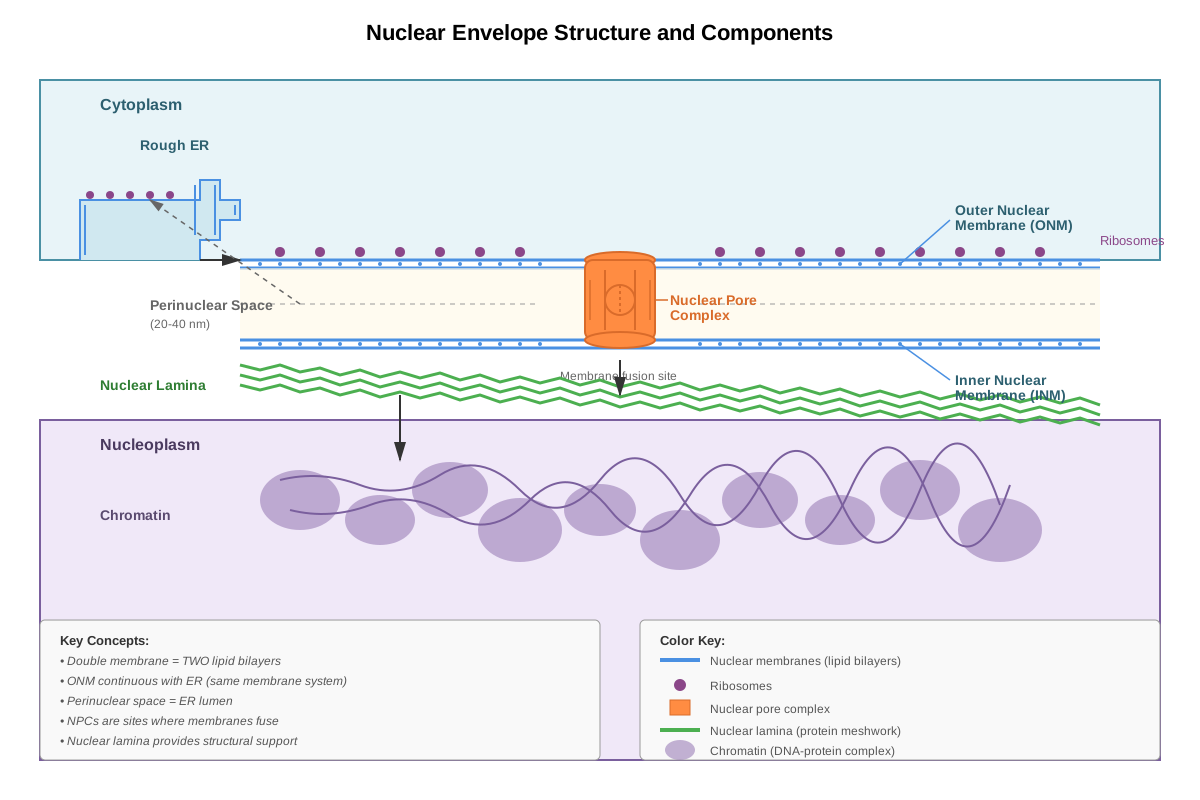
The nuclear envelope consists of two parallel phospholipid bilayer membranes separated by a 20-40 nanometer space called the perinuclear space (or intermembrane space). The outer nuclear membrane is continuous with the rough endoplasmic reticulum and may have ribosomes attached to its cytoplasmic surface. The inner nuclear membrane contains unique integral membrane proteins that interact with the nuclear lamina and chromatin. These two membranes are joined at numerous sites where nuclear pore complexes (NPCs) perforate the envelope, creating channels for molecular exchange.
The nuclear lamina is a protein meshwork composed primarily of intermediate filament proteins called lamins (types A, B, and C in mammals). This fibrous network lies just beneath the inner nuclear membrane and provides mechanical support, maintains nuclear shape, and serves as an organizing platform for chromatin. Lamins interact with inner nuclear membrane proteins including emerin, lamin B receptor (LBR), and MAN1, creating a structural framework that connects the nuclear envelope to chromatin organization.
Nuclear Pore Complexes
Nuclear pore complexes are massive protein assemblies (approximately 125 megadaltons in vertebrates) composed of multiple copies of approximately 30 different proteins called nucleoporins (Nups). Each NPC exhibits octagonal symmetry and consists of several structural components:
| NPC Component | Location | Function |
|---|---|---|
| Cytoplasmic filaments | Cytoplasmic face | Binding site for export complexes |
| Nuclear basket | Nuclear face | Binding site for import complexes; mRNA processing |
| Central channel | Transmembrane | Selective barrier; transport pathway |
| Scaffold nucleoporins | Structural core | Provide architectural framework |
| FG-nucleoporins | Channel interior | Create selective permeability barrier |
The central channel contains FG-nucleoporins (phenylalanine-glycine repeat nucleoporins) that create a selective permeability barrier. These proteins contain multiple FG-repeat domains that form a gel-like meshwork, allowing small molecules to diffuse freely while restricting passage of larger molecules unless they are bound to appropriate transport receptors.
Selective Nuclear Transport
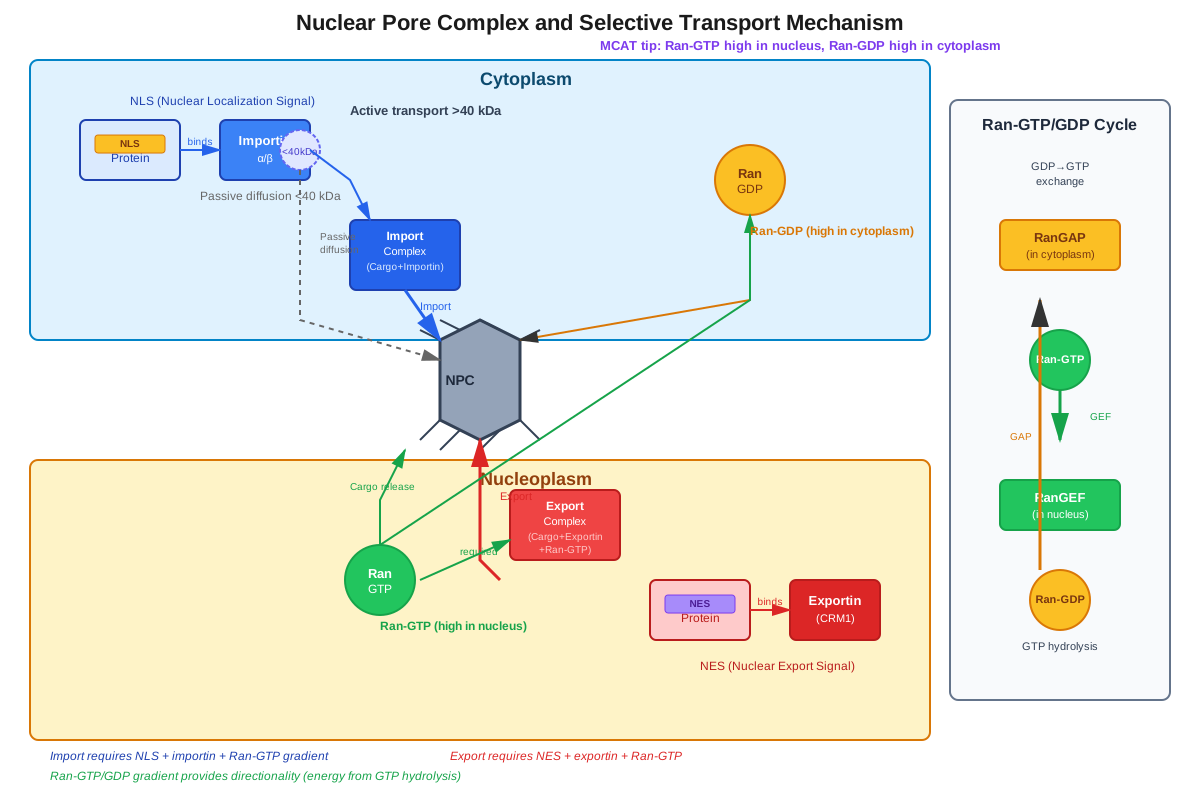
The nuclear envelope maintains distinct nuclear and cytoplasmic compositions through selective bidirectional transport. Small molecules (less than approximately 40-60 kilodaltons) can diffuse passively through nuclear pores, but larger molecules require active transport mediated by nuclear transport receptors.
Nuclear import involves several key steps:
- Recognition: Cargo proteins containing nuclear localization signals (NLS) are recognized by importin proteins (a class of nuclear transport receptors)
- Docking: The importin-cargo complex binds to FG-nucleoporins at the cytoplasmic face of the NPC
- Translocation: The complex moves through the central channel via transient interactions with FG-nucleoporins
- Release: Inside the nucleus, Ran-GTP binds to importin, causing cargo release
- Recycling: Importin-Ran-GTP complexes are exported back to the cytoplasm
Nuclear export follows a parallel mechanism:
- Exportin proteins (another class of nuclear transport receptors) bind cargo proteins containing nuclear export signals (NES) in the presence of Ran-GTP
- The exportin-cargo-Ran-GTP complex translocates through the NPC
- In the cytoplasm, GTP hydrolysis (Ran-GTP → Ran-GDP) causes cargo release
- Exportin and Ran-GDP return to the nucleus separately
The Ran-GTP Gradient
The directionality of nuclear transport depends on a steep Ran-GTP gradient across the nuclear envelope. Ran-GTP is concentrated in the nucleus (high concentration), while Ran-GDP predominates in the cytoplasm (low concentration). This gradient is maintained by two key enzymes:
- RCC1 (Ran guanine nucleotide exchange factor): Located in the nucleus, converts Ran-GDP to Ran-GTP
- RanGAP (Ran GTPase-activating protein): Located in the cytoplasm, stimulates GTP hydrolysis, converting Ran-GTP to Ran-GDP
This gradient provides the energy and directionality for nuclear transport. Importins bind cargo in the cytoplasm (low Ran-GTP) and release it in the nucleus (high Ran-GTP). Conversely, exportins bind cargo in the nucleus (high Ran-GTP) and release it in the cytoplasm after GTP hydrolysis.
Nuclear Localization and Export Signals
Nuclear localization signals (NLS) are short amino acid sequences that target proteins to the nucleus. The classical NLS consists of one or two clusters of basic amino acids (lysine and arginine). Examples include:
- Monopartite NLS: Single cluster of basic residues (e.g., SV40 large T-antigen: PKKKRKV)
- Bipartite NLS: Two clusters of basic residues separated by approximately 10 amino acids (e.g., nucleoplasmin)
Nuclear export signals (NES) typically consist of leucine-rich sequences, often with the consensus pattern: L-X(2-3)-L-X(2-3)-L-X-L (where L is leucine and X is any amino acid).
These signals are recognized by specific transport receptors: importin-α/β heterodimers recognize classical NLS sequences, while CRM1 (chromosome region maintenance 1, also called exportin-1) recognizes leucine-rich NES sequences.
Nuclear Envelope Dynamics During Cell Division
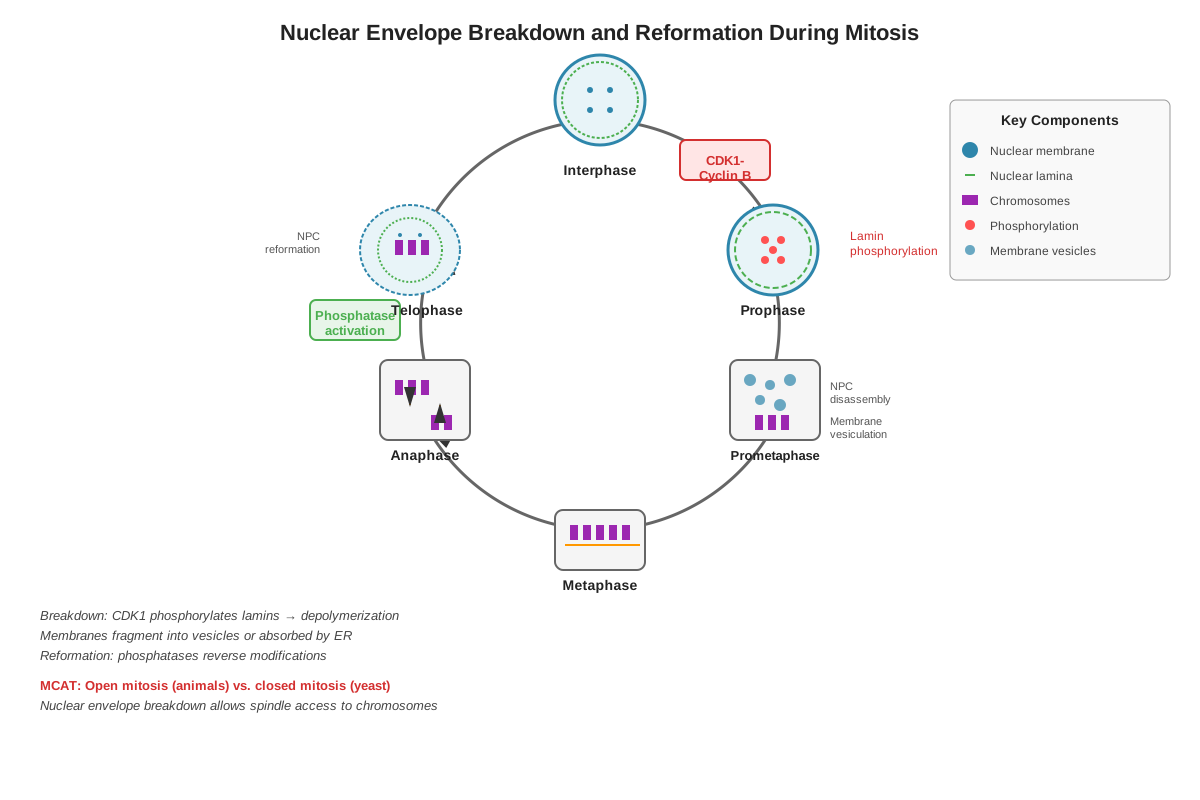
During mitosis in most animal cells, the nuclear envelope undergoes breakdown (also called nuclear envelope disassembly) at the onset of mitosis and reformation at the end:
Nuclear envelope breakdown (prophase/prometaphase):
- Phosphorylation of lamins by cyclin-dependent kinases (CDKs) causes lamin depolymerization
- Nuclear membrane proteins are phosphorylated, disrupting their interactions
- The nuclear membranes fragment and are absorbed into the ER
- Nuclear pore complexes disassemble into subcomplexes
- This allows mitotic spindle microtubules to access chromosomes
Nuclear envelope reformation (telophase):
- Dephosphorylation of nuclear envelope proteins occurs as CDK activity decreases
- Membrane vesicles bind to chromatin surfaces
- Vesicles fuse to form a continuous double membrane around each set of chromosomes
- Nuclear pore complexes reassemble
- Lamins repolymerize to form the nuclear lamina
- Nuclear import resumes, establishing nuclear-cytoplasmic compartmentalization
Some organisms (including many fungi) undergo closed mitosis, where the nuclear envelope remains intact and the mitotic spindle forms within the nucleus.
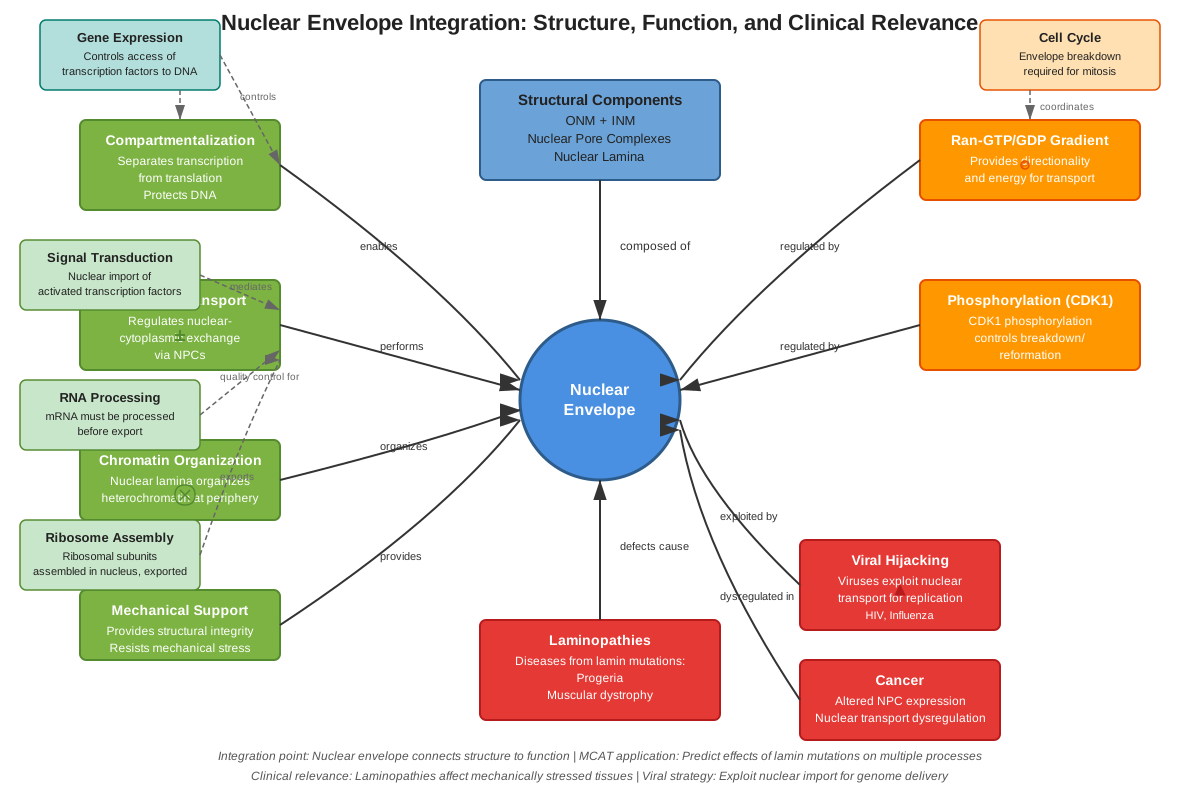
Concept Relationships
The nuclear envelope concepts form an integrated system where structure determines function. The double membrane structure → creates the perinuclear space → which is continuous with the ER lumen, establishing the nuclear envelope as part of the endomembrane system. The nuclear lamina → provides mechanical support → and serves as an anchor for chromatin organization → thereby linking nuclear structure to gene expression regulation.
Nuclear pore complexes → contain FG-nucleoporins → which create a selective permeability barrier → that requires transport receptors for passage of large molecules. The Ran-GTP gradient → provides directionality to nuclear transport → by regulating cargo binding and release by importins and exportins. Nuclear localization signals → are recognized by importins → which facilitate nuclear import → enabling nuclear proteins to reach their functional destination.
During the cell cycle, CDK phosphorylation → triggers nuclear envelope breakdown → allowing spindle-chromosome interaction → which is essential for chromosome segregation. Subsequently, CDK inactivation → permits dephosphorylation → leading to nuclear envelope reformation → which reestablishes nuclear-cytoplasmic compartmentalization.
These concepts connect to prerequisite knowledge: membrane structure underlies the nuclear envelope's double bilayer; protein structure determines how transport receptors recognize cargo signals; ATP/GTP hydrolysis powers the Ran cycle; and gene expression depends on nuclear-cytoplasmic compartmentalization. The nuclear envelope also connects forward to topics including cell cycle regulation, signal transduction (many signaling proteins must enter the nucleus), gene expression control, and apoptosis (which involves nuclear envelope changes).
High-Yield Facts
⭐ The nuclear envelope consists of two phospholipid bilayer membranes (inner and outer) separated by the perinuclear space, with the outer membrane continuous with the rough ER.
⭐ Nuclear pore complexes are large protein assemblies composed of nucleoporins that allow selective bidirectional transport between nucleus and cytoplasm.
⭐ Small molecules (< 40-60 kDa) can diffuse passively through nuclear pores, while larger molecules require active transport via nuclear transport receptors.
⭐ The Ran-GTP gradient (high in nucleus, low in cytoplasm) provides directionality for nuclear transport, with RCC1 in the nucleus and RanGAP in the cytoplasm maintaining this gradient.
⭐ Nuclear localization signals (NLS) are typically basic amino acid-rich sequences that target proteins to the nucleus via importins, while nuclear export signals (NES) are leucine-rich sequences recognized by exportins like CRM1.
- The nuclear lamina is a meshwork of intermediate filament proteins (lamins) that provides structural support and organizes chromatin.
- Importins bind cargo in the cytoplasm and release it in the nucleus when Ran-GTP binds; exportins bind cargo in the nucleus with Ran-GTP and release it after GTP hydrolysis in the cytoplasm.
- Nuclear envelope breakdown during mitosis is triggered by CDK-mediated phosphorylation of lamins and nuclear membrane proteins.
- FG-nucleoporins contain phenylalanine-glycine repeats that create a selective permeability barrier in the central channel of nuclear pores.
- Mutations in lamin genes cause laminopathies including progeria and muscular dystrophies, demonstrating the clinical importance of nuclear envelope integrity.
- Nuclear envelope reformation during telophase involves dephosphorylation of nuclear proteins, membrane vesicle fusion around chromatin, and reassembly of nuclear pore complexes.
- The nuclear basket (nuclear face of NPC) and cytoplasmic filaments (cytoplasmic face) serve as binding platforms for import and export complexes.
Quick check — test yourself on Nuclear envelope so far.
Try Flashcards →Common Misconceptions
Misconception: The nuclear envelope is a single membrane structure like other organelles.
Correction: The nuclear envelope is unique among cellular membranes in consisting of two parallel phospholipid bilayers (inner and outer nuclear membranes) separated by the perinuclear space. This double-membrane structure is fundamentally different from single-membrane organelles like lysosomes or peroxisomes.
Misconception: Nuclear pores are simply holes in the nuclear envelope that allow free passage of all molecules.
Correction: Nuclear pore complexes are sophisticated protein assemblies that create a selective permeability barrier. While small molecules can diffuse passively, the FG-nucleoporin meshwork restricts passage of larger molecules unless they are bound to appropriate transport receptors. This selectivity is essential for maintaining distinct nuclear and cytoplasmic compositions.
Misconception: Nuclear transport is passive and does not require energy.
Correction: While small molecule diffusion through nuclear pores is passive, the transport of large molecules via importins and exportins requires energy. The Ran-GTP/GDP cycle consumes GTP, and maintaining the Ran gradient requires ongoing GTP hydrolysis. This energy expenditure enables selective, regulated transport against concentration gradients.
Misconception: The Ran-GTP gradient is maintained by active transport of Ran across the nuclear envelope.
Correction: The Ran-GTP gradient is maintained by the differential localization of Ran regulatory enzymes, not by transporting Ran itself. RCC1 (the guanine nucleotide exchange factor) is located in the nucleus and generates Ran-GTP, while RanGAP (the GTPase-activating protein) is located in the cytoplasm and converts Ran-GTP to Ran-GDP. Ran cycles between nucleus and cytoplasm, but the gradient results from spatially separated enzymatic activities.
Misconception: All cells undergo nuclear envelope breakdown during mitosis.
Correction: While most animal cells undergo open mitosis with complete nuclear envelope breakdown, many organisms (including most fungi and some protists) undergo closed mitosis where the nuclear envelope remains intact throughout cell division. The mitotic spindle forms within the nucleus in these organisms, demonstrating that nuclear envelope breakdown is not universally required for mitosis.
Misconception: Nuclear localization signals must be located at the N-terminus or C-terminus of proteins.
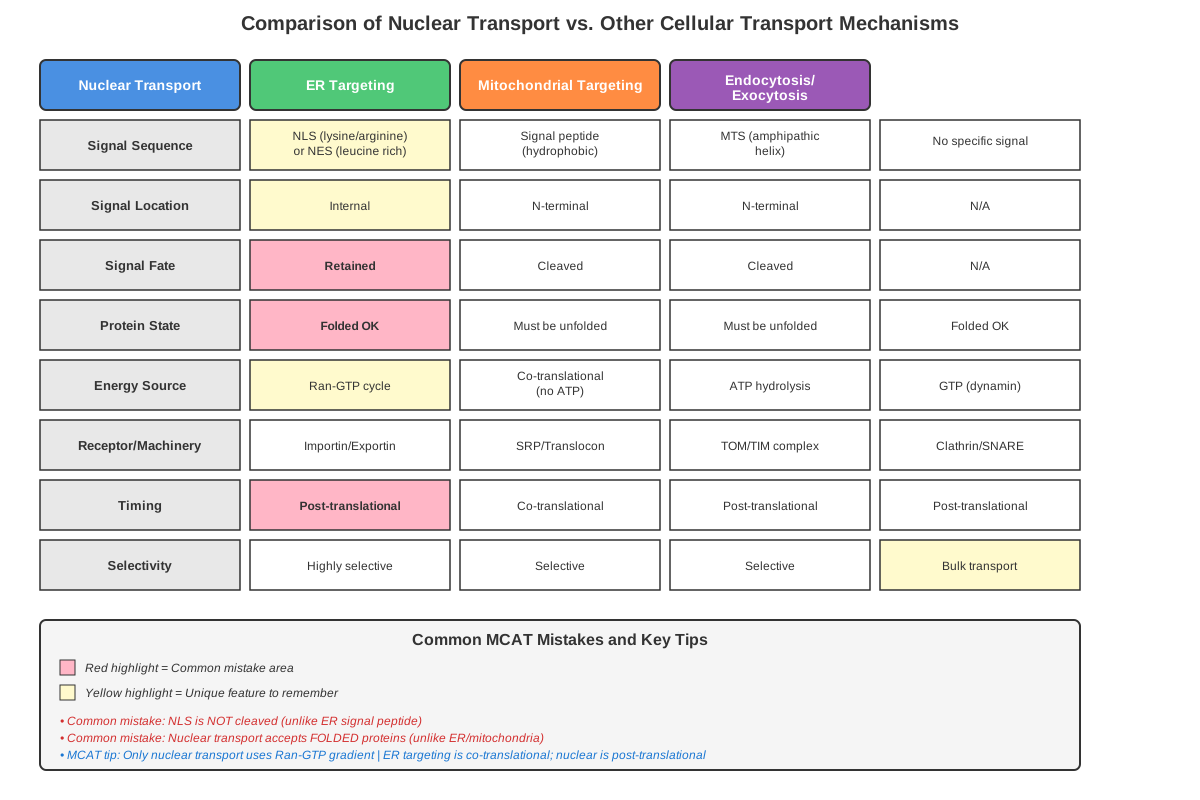
Correction: Unlike some other targeting signals (such as ER signal sequences that are typically N-terminal), nuclear localization signals can be located anywhere within a protein's primary sequence. They function as long as they are accessible on the protein surface and can be recognized by importins. Some proteins even have multiple NLS sequences at different locations.
Misconception: The nuclear envelope completely disappears during mitosis and must be synthesized de novo during reformation.
Correction: During nuclear envelope breakdown, the membranes fragment into vesicles that are absorbed into the ER but are not degraded. During reformation, these membrane components are recycled—vesicles derived from the ER bind to chromatin and fuse to reform the nuclear envelope. The nuclear envelope is reorganized rather than destroyed and rebuilt from scratch.
Worked Examples
Example 1: Analyzing a Nuclear Import Experiment
Question: Researchers create a fusion protein consisting of a cytoplasmic protein (normally excluded from the nucleus) fused to a nuclear localization signal (NLS). They microinject this fusion protein into cells along with fluorescent markers and observe its localization over time. In control cells at 37°C, the fusion protein accumulates in the nucleus within 30 minutes. However, when cells are cooled to 4°C or treated with a non-hydrolyzable GTP analog (GTPγS), the fusion protein remains in the cytoplasm. Explain these results.
Solution:
Step 1: Identify what the NLS should accomplish
The NLS should target the fusion protein to the nucleus by being recognized by importins, which mediate nuclear import through nuclear pore complexes.
Step 2: Explain the control result (37°C, normal conditions)
At physiological temperature with normal cellular energy metabolism, the fusion protein accumulates in the nucleus because:
- The NLS is recognized by importin-α/β
- The importin-cargo complex translocates through nuclear pores
- Ran-GTP in the nucleus causes cargo release
- The protein accumulates in the nucleus because it cannot exit without an export signal
Step 3: Explain the temperature effect (4°C)
Cooling to 4°C inhibits nuclear import because:
- Low temperature reduces enzyme activity, including GTPases and nucleotide exchange factors
- The Ran-GTP gradient cannot be maintained without active RCC1 and RanGAP function
- Energy-dependent processes including GTP hydrolysis are severely impaired
- Nuclear transport requires the Ran cycle and is therefore temperature-dependent
Step 4: Explain the GTPγS effect
GTPγS is a non-hydrolyzable GTP analog that blocks nuclear import because:
- GTPγS can bind to Ran but cannot be hydrolyzed
- This "freezes" Ran in the GTP-bound state throughout the cell
- The Ran-GTP gradient is disrupted (no longer high in nucleus, low in cytoplasm)
- Without a proper Ran gradient, importins cannot complete the import cycle
- Cargo binding and release are regulated by Ran-GTP, so disrupting the Ran cycle prevents import
Conclusion: These results demonstrate that nuclear import is an active, energy-dependent process that requires a functional Ran-GTP gradient. The temperature and GTPγS sensitivity confirm that nuclear transport is not simple diffusion but rather a regulated process dependent on GTP hydrolysis and the Ran cycle.
Example 2: Predicting Effects of a Lamin Mutation
Question: A patient presents with symptoms of muscular dystrophy and cardiomyopathy. Genetic testing reveals a mutation in the LMNA gene encoding lamin A/C. The mutation causes abnormal nuclear morphology with irregular nuclear shape and fragile nuclear envelopes. Predict how this mutation would affect: (a) nuclear envelope integrity during mechanical stress, (b) chromatin organization, and (c) nuclear envelope reformation after mitosis.
Solution:
(a) Nuclear envelope integrity during mechanical stress:
Step 1: Recall lamin function
Lamins form the nuclear lamina, a protein meshwork that provides mechanical support to the nuclear envelope and maintains nuclear shape.
Step 2: Predict effects of defective lamins
- The nuclear lamina would be structurally compromised
- The nucleus would be more susceptible to deformation under mechanical stress
- This explains why laminopathies particularly affect mechanically stressed tissues (muscle, heart)
- The irregular nuclear shape observed in the patient results from inadequate structural support
Step 3: Connect to symptoms
Muscle and cardiac cells experience repeated mechanical stress during contraction. Without proper lamin function, their nuclei are damaged by normal mechanical forces, leading to cell death and tissue degeneration (muscular dystrophy and cardiomyopathy).
(b) Chromatin organization:
Step 1: Recall lamin-chromatin interactions
Lamins interact with inner nuclear membrane proteins and directly with chromatin, helping to organize chromosomes within the nucleus.
Step 2: Predict organizational defects
- Defective lamins would disrupt chromatin anchoring to the nuclear periphery
- Heterochromatin organization would be abnormal
- Gene expression patterns might be altered due to abnormal chromatin positioning
- This could contribute to the disease phenotype beyond purely mechanical effects
(c) Nuclear envelope reformation after mitosis:
Step 1: Recall the role of lamins in nuclear envelope reformation
During telophase, lamin repolymerization is essential for nuclear envelope reformation. Lamins must dephosphorylate and reassemble to form the nuclear lamina, which helps organize membrane vesicle fusion and nuclear pore complex assembly.
Step 2: Predict effects of mutant lamins
- Nuclear envelope reformation would be delayed or incomplete
- The reformed nuclear envelope might be structurally abnormal from the start
- Nuclear pore complex assembly might be affected if the lamina cannot provide proper scaffolding
- Cells might experience mitotic defects or increased cell death during division
- This could contribute to tissue degeneration by reducing the regenerative capacity of affected tissues
Conclusion: This laminopathy demonstrates how a single structural protein defect can have multiple consequences: mechanical fragility (explaining tissue-specific symptoms), chromatin organizational defects (potentially affecting gene expression), and cell division abnormalities (reducing tissue regeneration). The multi-functional nature of lamins explains why LMNA mutations cause such diverse and severe phenotypes.
Exam Strategy
When approaching nuclear envelope questions on the MCAT, first identify the question type: structural (asking about components and organization), functional (asking about transport mechanisms), or integrative (connecting to cell cycle, gene expression, or disease). Structural questions typically require knowledge of the double membrane, nuclear pores, and lamina. Functional questions focus on transport mechanisms, the Ran gradient, and NLS/NES sequences. Integrative questions require connecting nuclear envelope concepts to broader cellular processes.
Trigger words and phrases to watch for include:
- "Nuclear localization signal" or "NLS" → think importin-mediated import
- "Nuclear export signal" or "NES" → think exportin (CRM1)-mediated export
- "Ran-GTP" or "Ran gradient" → think directionality of transport
- "Nuclear pore complex" or "nucleoporin" → think selective permeability
- "Lamin" or "nuclear lamina" → think structural support and mitosis
- "Mitosis" or "cell division" → think nuclear envelope breakdown and reformation
- "Temperature-dependent" or "energy-dependent" → think active transport requiring GTP hydrolysis
For process-of-elimination strategies, remember these key principles:
- Eliminate answers suggesting the nuclear envelope is a single membrane (it's always double)
- Eliminate answers suggesting all molecules can freely diffuse through nuclear pores (only small molecules can)
- Eliminate answers suggesting nuclear transport doesn't require energy (large molecule transport is active)
- Eliminate answers confusing import and export mechanisms (importins release cargo when Ran-GTP binds; exportins release cargo after GTP hydrolysis)
- Eliminate answers suggesting the Ran gradient is maintained by pumping Ran across the envelope (it's maintained by spatially separated enzymes)
Time allocation: For discrete questions, spend 30-45 seconds identifying the specific concept being tested, then apply your knowledge directly. For passage-based questions, spend 1-2 minutes understanding the experimental setup or clinical scenario, then 45-60 seconds per question. If a question requires detailed analysis of transport mechanisms or cell cycle events, allocate up to 90 seconds but move on if you're uncertain—these questions often have multiple defensible approaches, and your first instinct is usually correct.
When passages present experimental data (fluorescence microscopy, time-course experiments, mutation analyses), focus on: (1) what is being transported and in which direction, (2) what conditions affect the transport (temperature, energy, mutations), and (3) how the results support or refute specific transport mechanisms. The MCAT frequently tests whether students can distinguish between passive diffusion and active transport based on experimental observations.
Memory Techniques
Mnemonic for Nuclear Envelope Structure: "Double Pores Lead Inside"
- Double = Double membrane (inner and outer)
- Pores = Nuclear pore complexes
- Lead = Lamina (nuclear lamina)
- Inside = Inner membrane proteins and perinuclear space
Mnemonic for Ran Cycle: "RCC1 Charges, GAP Drains"
- RCC1 (in nucleus) Charges Ran by converting GDP to GTP
- GAP (RanGAP, in cytoplasm) Drains energy by stimulating GTP hydrolysis
- This creates high Ran-GTP in nucleus, low in cytoplasm
Visualization for Import vs. Export:
Picture importins as "taxis bringing passengers INTO the city" (nucleus):
- Pick up passengers (cargo with NLS) in the suburbs (cytoplasm)
- Drive through the gate (NPC)
- Passengers get out when they see the city lights (Ran-GTP)
- Taxi returns empty
Picture exportins as "buses taking passengers OUT of the city":
- Passengers board with a ticket (Ran-GTP) inside the city (nucleus)
- Bus drives through the gate (NPC)
- Tickets are collected (GTP hydrolyzed) in the suburbs (cytoplasm)
- Passengers get off
Acronym for Nuclear Envelope Breakdown: "PLAID"
- Phosphorylation of lamins by CDKs
- Lamin depolymerization
- Absorption of membranes into ER
- Inactivation of nuclear-cytoplasmic barrier
- Disassembly of nuclear pore complexes
Memory aid for NLS vs. NES:
- NLS = "Nuclear Localization Signal" = "Basic Boys" (Basic amino acids: lysine, arginine)
- NES = "Nuclear Export Signal" = "Leave Lots" (Leucine-rich sequences)
Summary
The nuclear envelope is a sophisticated double-membrane barrier that defines the eukaryotic nucleus and regulates nuclear-cytoplasmic communication. Its structure includes inner and outer nuclear membranes separated by the perinuclear space, nuclear pore complexes that mediate selective transport, and the nuclear lamina that provides structural support. Nuclear transport of large molecules requires active, energy-dependent mechanisms involving nuclear localization signals (NLS) or nuclear export signals (NES) recognized by transport receptors (importins and exportins). The Ran-GTP gradient, maintained by nuclear RCC1 and cytoplasmic RanGAP, provides directionality to transport by regulating cargo binding and release. During mitosis, CDK-mediated phosphorylation triggers nuclear envelope breakdown, allowing spindle-chromosome interaction, while subsequent dephosphorylation enables nuclear envelope reformation. Understanding these mechanisms is essential for MCAT success, as questions frequently test transport mechanisms, structural components, cell cycle dynamics, and the ability to analyze experimental scenarios involving nuclear-cytoplasmic compartmentalization.
Key Takeaways
- The nuclear envelope consists of two phospholipid bilayer membranes (inner and outer) perforated by nuclear pore complexes, with the nuclear lamina providing structural support beneath the inner membrane
- Nuclear pore complexes contain FG-nucleoporins that create a selective permeability barrier, allowing passive diffusion of small molecules but requiring active transport for large molecules
- Nuclear import and export are mediated by transport receptors (importins and exportins) that recognize signal sequences (NLS and NES) on cargo proteins
- The Ran-GTP gradient (high in nucleus, low in cytoplasm) provides directionality for nuclear transport through differential regulation of cargo binding and release
- Nuclear envelope breakdown during mitosis is triggered by CDK phosphorylation of lamins and nuclear membrane proteins, while reformation involves dephosphorylation and reassembly
- Mutations in nuclear envelope components, particularly lamins, cause laminopathies that demonstrate the clinical importance of nuclear envelope integrity
- MCAT questions on this topic frequently test transport mechanisms, the Ran cycle, structural components, and integration with cell cycle and gene expression concepts
Related Topics
Cell Cycle Regulation: Understanding nuclear envelope breakdown and reformation is essential for comprehending mitotic progression. CDK activity regulates both nuclear envelope dynamics and other mitotic events, creating coordinated cell cycle transitions.
Protein Targeting and Sorting: Nuclear transport exemplifies signal sequence-mediated protein targeting. Comparing nuclear import to ER targeting, mitochondrial import, and other sorting mechanisms reveals common principles and unique features of different targeting systems.
Signal Transduction: Many signaling pathways culminate in nuclear translocation of transcription factors. Understanding how signals regulate nuclear import/export (often through phosphorylation affecting NLS/NES recognition) connects nuclear envelope function to cellular communication.
Gene Expression Regulation: Nuclear-cytoplasmic compartmentalization enables temporal and spatial separation of transcription and translation. The nuclear envelope's role in mRNA export and ribosomal subunit export is fundamental to gene expression control.
Membrane Biology and Endomembrane System: The nuclear envelope's continuity with the ER and its dynamics during mitosis illustrate principles of membrane organization, vesicle fusion, and organelle biogenesis applicable throughout the endomembrane system.
Practice CTA
Now that you've mastered the nuclear envelope, test your understanding with practice questions and flashcards. Focus on questions that require you to analyze experimental scenarios, predict effects of mutations, and integrate nuclear envelope concepts with cell cycle and gene expression. Challenge yourself with passage-based questions that present novel research findings—these best simulate MCAT conditions and develop your ability to apply core concepts to unfamiliar situations. Remember, understanding the nuclear envelope provides a foundation for numerous related topics, so solidifying this knowledge will pay dividends throughout your MCAT preparation. You've got this!
Sign up free to keep reading
Create a free AnvayaPrep account to finish this MCAT guide on Nuclear envelope — plus flashcards and practice questions.