Overview
Passive transport is a fundamental mechanism by which cells move substances across their plasma membranes without expending metabolic energy in the form of ATP. This spontaneous process relies entirely on the inherent kinetic energy of molecules and the concentration gradients that exist across biological membranes. Understanding passive transport is essential for comprehending how cells maintain homeostasis, respond to their environment, and perform basic physiological functions. The concept encompasses several distinct mechanisms including simple diffusion, facilitated diffusion, and osmosis—each governed by the same thermodynamic principles but differing in their molecular requirements and selectivity.
For the MCAT, passive transport Biology represents a medium-yield topic that appears regularly in both discrete questions and passage-based contexts. The exam frequently tests students' ability to predict the direction of molecular movement, calculate osmotic pressure, interpret experimental data involving membrane permeability, and connect transport mechanisms to broader physiological processes. Questions often integrate passive transport with topics such as membrane structure, cellular energetics, kidney physiology, and neuronal signaling. A solid grasp of passive transport principles enables students to tackle complex scenarios involving multiple solutes, changing conditions, and pathological states.
Within the broader landscape of Cell Biology, passive transport serves as a foundational concept that connects membrane structure to cellular function. It directly relates to the fluid mosaic model of membrane organization, the amphipathic nature of phospholipids, and the role of membrane proteins as selective channels and carriers. Mastery of passive transport also provides the conceptual framework necessary for understanding active transport mechanisms, which work against concentration gradients by coupling to energy sources. Together, these transport mechanisms explain how cells create and maintain the electrochemical gradients essential for nerve impulses, muscle contraction, nutrient absorption, and countless other physiological processes tested on the MCAT.
Learning Objectives
- [ ] Define passive transport using accurate Biology terminology
- [ ] Explain why passive transport matters for the MCAT
- [ ] Apply passive transport to exam-style questions
- [ ] Identify common mistakes related to passive transport
- [ ] Connect passive transport to related Biology concepts
- [ ] Distinguish between simple diffusion, facilitated diffusion, and osmosis based on molecular properties and membrane requirements
- [ ] Calculate and predict osmotic pressure changes using the van't Hoff equation
- [ ] Analyze experimental data to determine membrane permeability and transport kinetics
- [ ] Predict the physiological consequences of altered passive transport in disease states
Prerequisites
- Membrane structure and the fluid mosaic model: Understanding phospholipid bilayers, membrane proteins, and selective permeability is essential for comprehending how different molecules cross membranes
- Thermodynamics and free energy: Knowledge of spontaneous processes, entropy, and Gibbs free energy explains why passive transport occurs without ATP
- Concentration gradients and electrochemical gradients: Familiarity with chemical potential differences drives understanding of the direction and magnitude of passive transport
- Basic chemistry of polar and nonpolar molecules: Molecular properties determine which substances can cross lipid bilayers directly versus requiring protein assistance
- Osmolarity and tonicity concepts: These foundational terms are necessary for understanding water movement and cell volume changes
Why This Topic Matters
Passive transport MCAT questions appear with moderate frequency across multiple sections of the exam, particularly in Biological and Biochemical Foundations of Living Systems. The topic typically appears in 2-4 questions per exam, either as discrete items or embedded within passages about kidney function, neurophysiology, drug delivery, or experimental membrane studies. Understanding passive transport is clinically relevant to numerous pathological conditions including cystic fibrosis (defective chloride channels), diabetes insipidus (aquaporin dysfunction), and sickle cell disease (altered red blood cell osmotic fragility).
In real-world medical contexts, passive transport principles underlie drug design and delivery strategies. Pharmaceutical companies must consider whether medications can passively diffuse across cell membranes or require active transport mechanisms. The blood-brain barrier's selective permeability, determined largely by passive transport properties, dictates which drugs can treat central nervous system disorders. Dialysis, a life-saving treatment for kidney failure, operates entirely on passive transport principles to remove metabolic wastes from blood.
On the MCAT, passive transport commonly appears in passages describing experimental setups with artificial membranes, studies of channel protein mutations, investigations of cell volume regulation, or clinical scenarios involving fluid and electrolyte imbalances. Questions may present graphs showing concentration changes over time, ask students to predict outcomes of changing solution tonicity, or require calculations of osmotic pressure. The topic frequently integrates with enzyme kinetics (comparing facilitated diffusion to Michaelis-Menten kinetics), neurophysiology (ion channels and resting membrane potential), and renal physiology (countercurrent multiplication and water reabsorption).
Core Concepts
Definition and Fundamental Principles
Passive transport is the movement of molecules across a biological membrane down their concentration gradient (from high to low concentration) without the direct expenditure of cellular energy in the form of ATP. This process is thermodynamically favorable because it increases the entropy of the system, resulting in a negative change in Gibbs free energy (ΔG < 0). The driving force for passive transport comes from the inherent kinetic energy of molecules and the concentration difference across the membrane, not from metabolic processes.
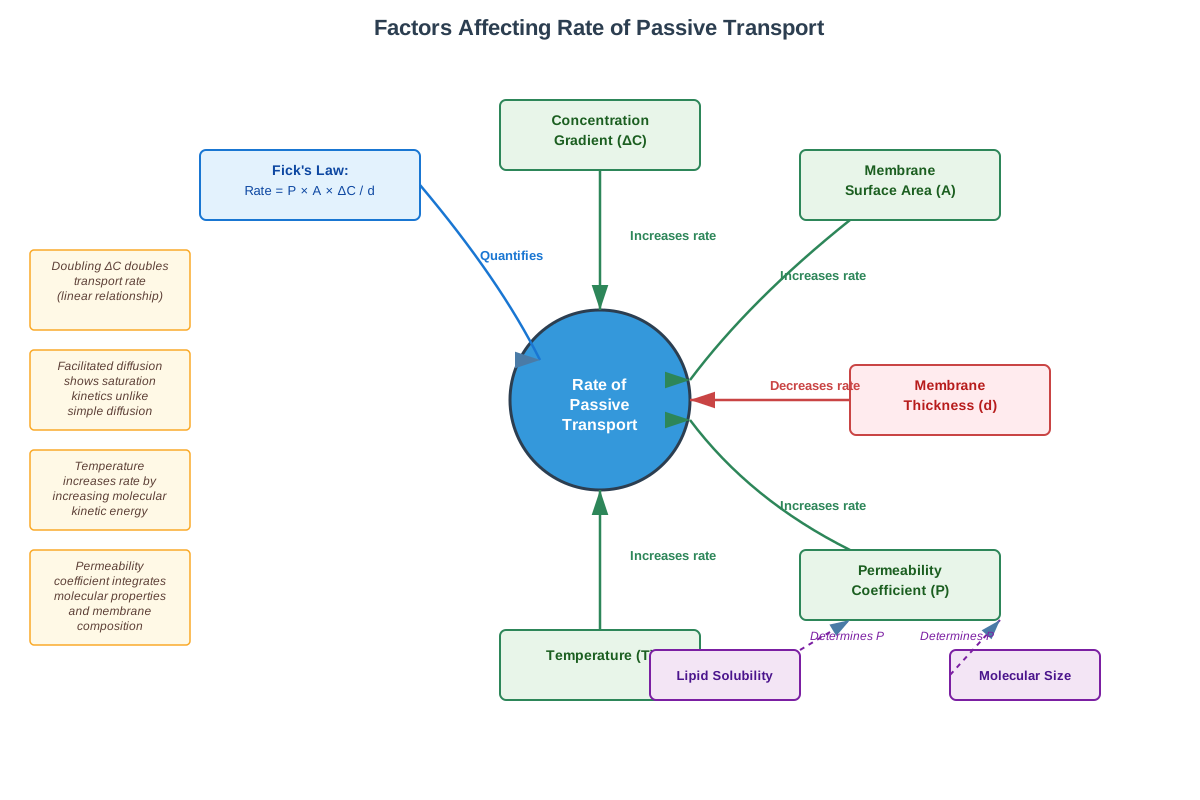
The rate of passive transport depends on several factors: the magnitude of the concentration gradient (larger gradients drive faster transport), temperature (higher temperatures increase molecular kinetic energy), membrane surface area (more area allows more simultaneous crossings), membrane permeability to the specific molecule, and the distance molecules must travel. These relationships are captured mathematically by Fick's first law of diffusion, which states that the flux (J) of molecules is proportional to the concentration gradient.
Simple Diffusion
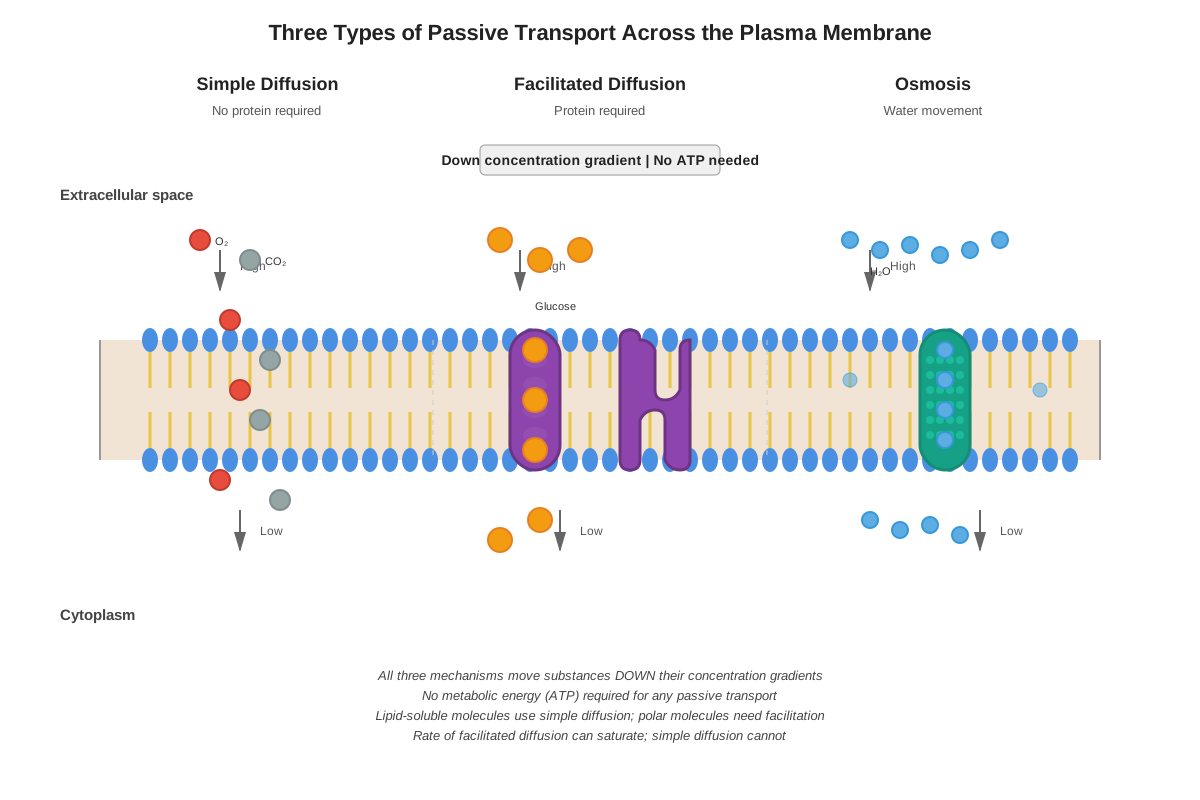
Simple diffusion is the direct passage of molecules through the lipid bilayer without the assistance of membrane proteins. This mechanism is available only to molecules that are sufficiently lipophilic (fat-soluble) to dissolve in the hydrophobic core of the membrane. Small, nonpolar molecules such as O₂, CO₂, and N₂ readily undergo simple diffusion, as do small uncharged polar molecules like ethanol and urea. Even water, despite being polar, can slowly cross lipid bilayers through simple diffusion, though specialized channels greatly accelerate this process.
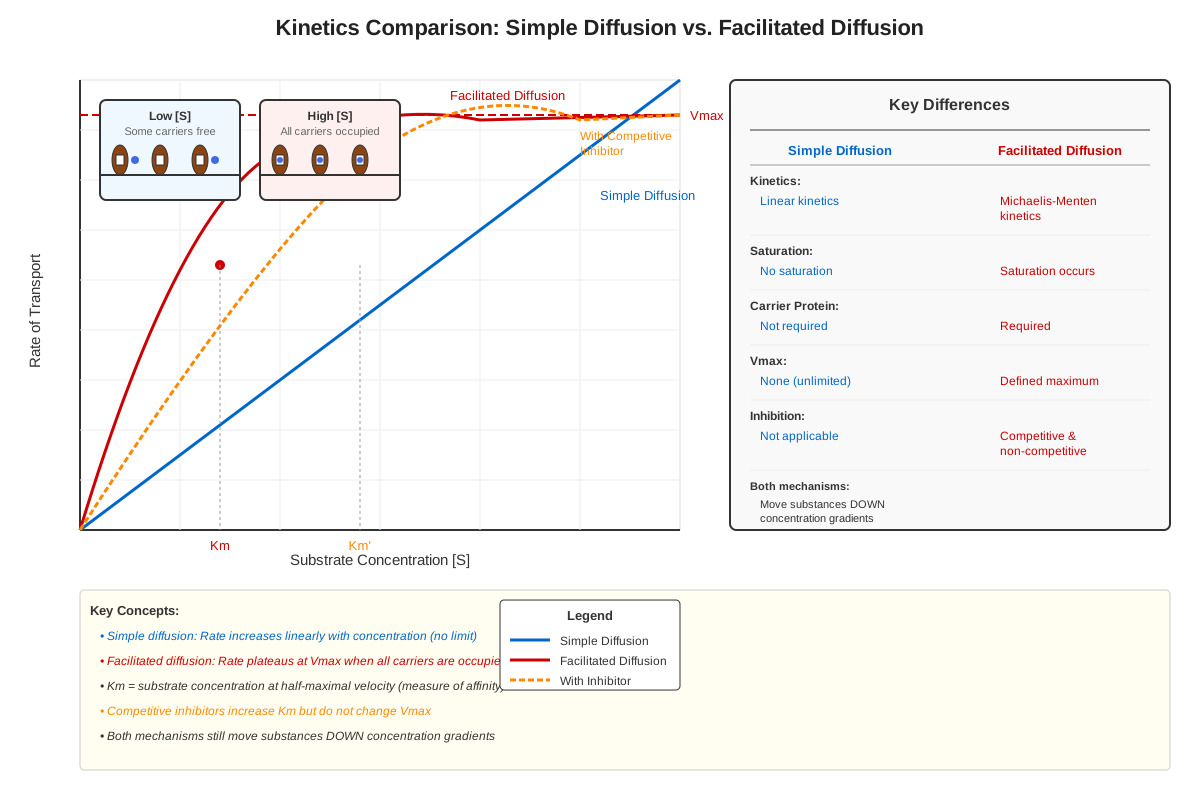
The rate of simple diffusion is directly proportional to the concentration gradient and shows no saturation kinetics—doubling the concentration gradient doubles the rate of transport. This linear relationship distinguishes simple diffusion from carrier-mediated processes. Additionally, simple diffusion exhibits no competitive inhibition because molecules do not compete for binding sites on transport proteins. The permeability coefficient for a given molecule depends on its lipid solubility (partition coefficient) and size, with smaller, more lipophilic molecules crossing most rapidly.
Facilitated Diffusion
Facilitated diffusion is passive transport that requires the assistance of membrane proteins—either channel proteins or carrier proteins—to move molecules down their concentration gradients. This mechanism is necessary for molecules that cannot readily cross the lipid bilayer due to size, charge, or polarity. Glucose, amino acids, and ions such as Na⁺, K⁺, Cl⁻, and Ca²⁺ all rely on facilitated diffusion for passive membrane crossing.
Channel proteins form aqueous pores through the membrane, allowing specific molecules to flow through when the channel is open. Ion channels are typically highly selective, permitting only certain ions to pass based on size and charge. Many channels are gated, meaning they open or close in response to specific stimuli such as voltage changes (voltage-gated channels), ligand binding (ligand-gated channels), or mechanical stress (mechanically-gated channels). When open, channels allow extremely rapid transport—up to 10⁸ ions per second—because molecules simply flow through the pore without binding.
Carrier proteins (also called permeases or transporters) bind specifically to their substrate molecules, undergo a conformational change, and release the substrate on the opposite side of the membrane. This process is slower than channel-mediated transport (10²-10⁴ molecules per second) because of the time required for binding and conformational changes. Carrier-mediated facilitated diffusion exhibits saturation kinetics—at high substrate concentrations, all carriers become occupied, and the transport rate reaches a maximum velocity (Vmax). This behavior resembles enzyme kinetics and can be described by similar mathematical models.
Facilitated diffusion also demonstrates specificity (carriers bind only certain molecules) and competition (structurally similar molecules compete for the same carrier). For example, glucose and galactose compete for the same glucose transporter (GLUT), and this competition can be exploited experimentally to study transport mechanisms.
Osmosis and Water Movement
Osmosis is the passive diffusion of water across a selectively permeable membrane from a region of lower solute concentration (higher water concentration) to a region of higher solute concentration (lower water concentration). While water can slowly cross lipid bilayers through simple diffusion, most cells express aquaporins—specialized channel proteins that dramatically increase membrane permeability to water while remaining impermeable to ions and other solutes.
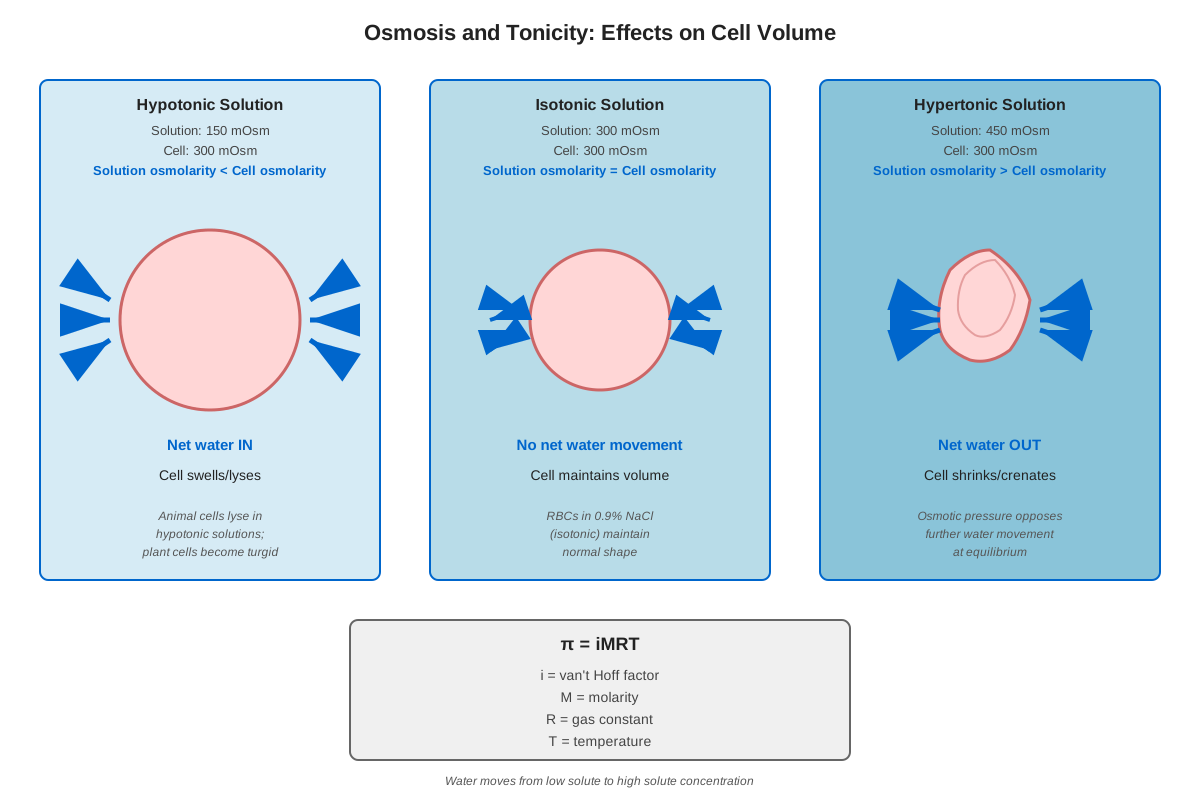
The driving force for osmosis is the difference in water potential between two solutions, which depends on solute concentration. Osmotic pressure (π) is the pressure required to prevent water movement and can be calculated using the van't Hoff equation:
π = iMRTwhere i is the van't Hoff factor (number of particles per molecule in solution), M is the molarity of the solution, R is the gas constant (0.0821 L·atm/mol·K), and T is the absolute temperature in Kelvin.
Tonicity describes how a solution affects cell volume and depends on the concentration of non-penetrating solutes—those that cannot cross the cell membrane. A hypertonic solution has a higher concentration of non-penetrating solutes than the cell's cytoplasm, causing water to leave the cell and the cell to shrink (crenation in red blood cells). An isotonic solution has equal concentrations of non-penetrating solutes, resulting in no net water movement and stable cell volume. A hypotonic solution has a lower concentration of non-penetrating solutes, causing water to enter the cell and the cell to swell (potentially leading to lysis).
Importantly, tonicity differs from osmolarity. Osmolarity is the total concentration of all solute particles, while tonicity considers only non-penetrating solutes. A solution can be isosmotic (same total osmolarity as cytoplasm) but hypotonic if it contains penetrating solutes that will eventually equilibrate across the membrane, leaving an effective osmotic imbalance.
Comparison of Passive Transport Mechanisms
| Feature | Simple Diffusion | Facilitated Diffusion (Channel) | Facilitated Diffusion (Carrier) | Osmosis |
|---|---|---|---|---|
| Requires protein | No | Yes | Yes | No (faster with aquaporins) |
| Saturation | No | No | Yes | No |
| Specificity | Low | High | High | Water only |
| Rate | Moderate | Very fast (10⁸/sec) | Moderate (10²-10⁴/sec) | Variable |
| Competition | No | No | Yes | No |
| Examples | O₂, CO₂, steroid hormones | Na⁺, K⁺, Cl⁻ through ion channels | Glucose via GLUT, amino acids | Water movement |
| Energy source | Concentration gradient | Concentration gradient | Concentration gradient | Osmotic gradient |
Concept Relationships
The three main types of passive transport—simple diffusion, facilitated diffusion, and osmosis—are unified by their reliance on concentration gradients and thermodynamic favorability, but they differ in their molecular requirements and kinetics. Simple diffusion serves as the baseline mechanism available to lipophilic molecules, while facilitated diffusion evolved to enable transport of molecules that cannot cross lipid bilayers. Osmosis represents a special case of diffusion focused specifically on water movement in response to solute concentration differences.
The relationship flows as follows: Membrane structure (phospholipid bilayer with embedded proteins) → determines → Membrane permeability (selective for different molecules) → necessitates → Different transport mechanisms (simple vs. facilitated) → which together maintain → Cellular homeostasis (proper solute concentrations and cell volume).
Passive transport connects directly to active transport as its thermodynamic opposite—while passive transport moves molecules down gradients spontaneously, active transport moves molecules against gradients using ATP or other energy sources. The concentration gradients established by active transport often drive passive transport in the opposite direction, creating a dynamic equilibrium. For example, the sodium-potassium pump (active transport) maintains Na⁺ and K⁺ gradients that drive passive ion movement through leak channels, establishing the resting membrane potential crucial for neuronal function.
The concept also links to cell signaling: many ligand-gated ion channels open in response to neurotransmitter binding, allowing passive ion flux that changes membrane potential and propagates signals. Understanding passive transport is essential for comprehending action potentials, where voltage-gated sodium and potassium channels open sequentially, allowing passive ion movement that generates the electrical signal.
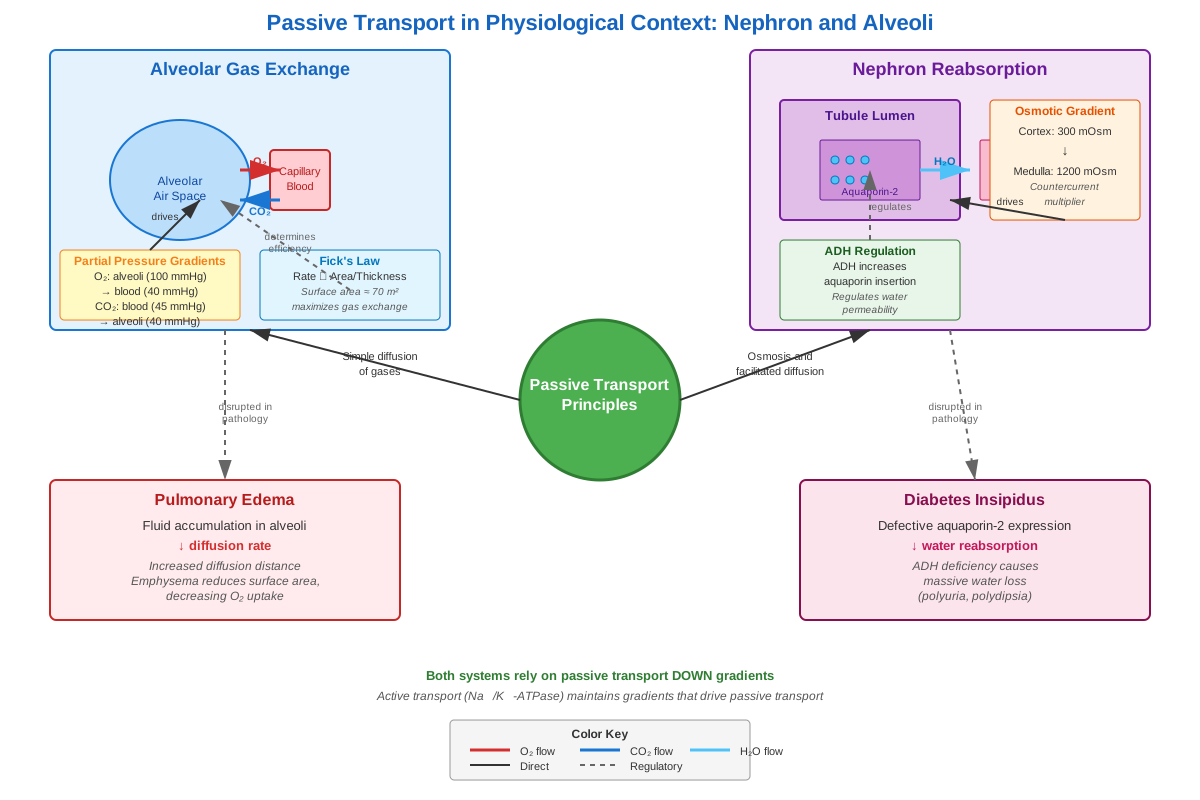
In renal physiology, passive transport explains water reabsorption in the collecting duct (osmosis through aquaporins regulated by ADH), urea recycling in the medullary interstitium, and the countercurrent multiplier system. In respiratory physiology, simple diffusion of O₂ and CO₂ across alveolar and capillary membranes follows partial pressure gradients, with rates determined by Fick's law.
Quick check — test yourself on Passive transport so far.
Try Flashcards →High-Yield Facts
⭐ Passive transport always moves molecules down their concentration gradient and requires no ATP expenditure
⭐ Simple diffusion rate is directly proportional to concentration gradient with no saturation, while carrier-mediated facilitated diffusion exhibits saturation kinetics
⭐ Osmotic pressure can be calculated using π = iMRT, where i is the van't Hoff factor
⭐ Tonicity depends only on non-penetrating solutes, not total osmolarity
⭐ Channel proteins allow faster transport (10⁸ molecules/sec) than carrier proteins (10²-10⁴ molecules/sec)
- Small nonpolar molecules (O₂, CO₂, N₂) and small uncharged polar molecules (ethanol, urea) cross membranes via simple diffusion
- Aquaporins increase water permeability 10-100 fold but remain impermeable to ions and charged molecules
- Facilitated diffusion exhibits specificity and competitive inhibition, unlike simple diffusion
- Red blood cells placed in hypotonic solutions swell and may undergo hemolysis; in hypertonic solutions they undergo crenation
- The rate of diffusion is proportional to temperature, membrane surface area, and concentration gradient, but inversely proportional to molecular size and membrane thickness
- Glucose transporters (GLUTs) are carrier proteins that exhibit tissue-specific expression patterns (GLUT4 in muscle and adipose tissue is insulin-responsive)
- Ion channels can be voltage-gated (respond to membrane potential changes), ligand-gated (respond to chemical binding), or mechanically-gated (respond to physical stress)
Common Misconceptions
Misconception: Passive transport requires some ATP, just less than active transport.
Correction: Passive transport requires absolutely no ATP or other direct energy input. The energy driving transport comes entirely from the concentration gradient itself, which represents stored potential energy. Any process requiring ATP is by definition active transport.
Misconception: All molecules that cross membranes passively do so through simple diffusion.
Correction: Many molecules require facilitated diffusion through protein channels or carriers to cross membranes passively. Ions, glucose, and amino acids cannot cross lipid bilayers at physiologically relevant rates without protein assistance, yet their transport down concentration gradients is still passive.
Misconception: Osmosis requires energy because water moves against its concentration gradient.
Correction: Water always moves down its concentration gradient during osmosis—from areas of high water concentration (low solute concentration) to areas of low water concentration (high solute concentration). This is thermodynamically favorable and requires no energy input.
Misconception: A solution with the same osmolarity as cytoplasm will always maintain cell volume.
Correction: Tonicity, not osmolarity, determines cell volume changes. An isosmotic solution containing penetrating solutes can still be hypotonic because those solutes will equilibrate across the membrane, leaving an effective osmotic imbalance that causes cell swelling.
Misconception: Facilitated diffusion can move molecules against their concentration gradient if enough carrier proteins are present.
Correction: Facilitated diffusion, like all passive transport, can only move molecules down their concentration gradient. Moving molecules against their gradient requires active transport coupled to an energy source. Increasing carrier protein number increases transport rate but cannot reverse transport direction.
Misconception: Larger concentration gradients always result in faster transport regardless of mechanism.
Correction: While this is true for simple diffusion, carrier-mediated facilitated diffusion exhibits saturation. Once all carriers are occupied, increasing the concentration gradient further does not increase transport rate—the system has reached Vmax.
Misconception: Channel proteins and carrier proteins function identically in facilitated diffusion.
Correction: Channels form open pores allowing continuous flow when open (very fast, no saturation), while carriers bind substrates and undergo conformational changes (slower, exhibits saturation). Channels are typically for ions; carriers are typically for larger molecules like glucose.
Worked Examples
Example 1: Predicting Osmotic Effects
Question: A patient receives an intravenous infusion of 0.9% NaCl (normal saline). Red blood cells in the patient's bloodstream are exposed to this solution. Separately, red blood cells are placed in three test tubes containing: (A) 0.45% NaCl, (B) 0.9% NaCl, and (C) 1.8% NaCl. Predict the osmotic effects on red blood cells in each scenario and calculate the osmotic pressure of solution C at 37°C.
Solution:
First, recognize that NaCl dissociates into two particles (Na⁺ and Cl⁻), so the van't Hoff factor i = 2.
Normal saline (0.9% NaCl) is isotonic to human blood plasma and red blood cells. This means:
- Solution B (0.9% NaCl): Isotonic—no net water movement, cells maintain normal shape
- Solution A (0.45% NaCl): Hypotonic—lower solute concentration than cytoplasm, water enters cells by osmosis, cells swell and may undergo hemolysis (lysis)
- Solution C (1.8% NaCl): Hypertonic—higher solute concentration than cytoplasm, water leaves cells by osmosis, cells shrink and undergo crenation
To calculate osmotic pressure of solution C:
First, convert 1.8% NaCl to molarity:
- 1.8% = 1.8 g NaCl per 100 mL solution
- Molecular weight of NaCl = 58.5 g/mol
- Molarity = (1.8 g / 58.5 g/mol) / 0.1 L = 0.308 M
Apply van't Hoff equation:
π = iMRT
π = (2)(0.308 mol/L)(0.0821 L·atm/mol·K)(310 K)
π = 15.7 atm
Key reasoning: This problem tests understanding of tonicity versus osmolarity, the van't Hoff factor for ionic compounds, and the ability to predict physiological consequences of osmotic imbalances. The MCAT frequently presents scenarios requiring students to predict cell behavior in different solutions and perform osmotic pressure calculations.
Example 2: Distinguishing Transport Mechanisms
Question: Researchers study glucose transport across artificial membranes under various conditions. They measure transport rate versus glucose concentration and obtain the following data:
- At low glucose concentrations: transport rate increases linearly with concentration
- At high glucose concentrations: transport rate plateaus at a maximum value
- Adding galactose (a glucose analog) decreases glucose transport rate
- Removing all membrane proteins eliminates glucose transport
Based on this data, identify the transport mechanism and explain each observation.
Solution:
The transport mechanism is facilitated diffusion via carrier proteins (specifically, glucose transporters like GLUT).
Observation 1 (linear increase at low concentrations): At low substrate concentrations, carrier proteins are not saturated, so transport rate is proportional to concentration gradient—similar to simple diffusion but mediated by carriers.
Observation 2 (plateau at high concentrations): This demonstrates saturation kinetics, a hallmark of carrier-mediated transport. When all carrier binding sites are occupied, transport reaches maximum velocity (Vmax) and cannot increase further regardless of concentration. This distinguishes facilitated diffusion from simple diffusion, which never saturates.
Observation 3 (galactose competition): This demonstrates competitive inhibition—galactose and glucose compete for the same carrier binding site. This specificity and competition are characteristic of carrier proteins but not channels or simple diffusion.
Observation 4 (protein requirement): Glucose is a large, polar molecule that cannot cross lipid bilayers at significant rates through simple diffusion. The complete dependence on membrane proteins confirms this is facilitated, not simple, diffusion.
Key reasoning: This experimental scenario tests the ability to distinguish transport mechanisms based on kinetic properties. The MCAT commonly presents data tables or graphs requiring interpretation of saturation curves, competitive inhibition, and protein dependence. Recognizing that saturation kinetics indicate carrier-mediated transport is essential for correctly answering these questions.
Exam Strategy
When approaching passive transport MCAT questions, first identify what type of molecule is being transported and predict the most likely mechanism. Small nonpolar molecules suggest simple diffusion; ions suggest channel-mediated facilitated diffusion; large polar molecules like glucose suggest carrier-mediated facilitated diffusion; water movement scenarios involve osmosis.
Trigger words and phrases to watch for:
- "Down the concentration gradient" or "with the gradient" → passive transport
- "No ATP required" or "spontaneous process" → passive transport
- "Saturation" or "maximum velocity" → carrier-mediated facilitated diffusion
- "Channel protein" or "pore" → channel-mediated facilitated diffusion
- "Competitive inhibition" → carrier-mediated facilitated diffusion
- "Tonicity," "crenation," "hemolysis," "cell swelling" → osmosis
- "Selectively permeable membrane" → sets up osmosis scenario
- "Isosmotic but hypotonic" → tests understanding of penetrating vs. non-penetrating solutes
For process-of-elimination strategies:
- Eliminate any answer suggesting ATP use for passive transport
- Eliminate answers suggesting movement against concentration gradients without energy coupling
- For osmosis questions, eliminate answers that confuse osmolarity with tonicity
- For kinetics questions, eliminate simple diffusion if saturation is mentioned
- Eliminate channel-mediated transport if the molecule is large and polar (channels are typically for ions)
Time allocation: Most passive transport questions can be answered in 60-90 seconds. Calculation questions involving osmotic pressure may require 90-120 seconds. If a question requires extensive calculations, ensure the math is necessary—sometimes qualitative reasoning about relative concentrations is sufficient.
When passages describe experimental setups with artificial membranes or cell cultures, quickly identify: (1) what molecules are being studied, (2) what concentration gradients exist, (3) whether proteins are present, and (4) what measurements are being taken. This framework allows rapid prediction of transport mechanisms and outcomes.
Memory Techniques
Mnemonic for molecules undergoing simple diffusion: "COOL Gases and Small Alcohols"
- CO₂
- O₂
- Other small nonpolar molecules
- Lipid-soluble substances
- Small alcohols (ethanol)
Mnemonic for tonicity effects: "HYPER-Shrink, HYPO-Swell"
- HYPERtonic solutions cause cells to shrink (crenation)
- HYPOtonic solutions cause cells to swell (potential lysis)
- ISOtonic solutions maintain ISO-same volume
Visualization for osmosis: Picture water molecules as crowds of people moving from a spacious area (low solute = high water concentration) toward a crowded area (high solute = low water concentration) to "even out the crowding." The membrane blocks the "obstacles" (solutes) but lets people (water) through.
Acronym for van't Hoff equation components: "i M Really Tired"
- i = van't Hoff factor
- M = Molarity
- R = gas constant
- T = Temperature
Memory aid for channel vs. carrier speed: "Channels are Chutes" (fast, direct passage like a water slide) while "Carriers are Careful" (slower, requiring binding and conformational change like an elevator).
Conceptual framework: Remember that passive transport is "lazy transport"—it goes with the flow (down gradients), requires no effort (no ATP), and takes the easy route (thermodynamically favorable). Active transport is "ambitious transport"—it goes uphill (against gradients), requires effort (ATP), and does work (thermodynamically unfavorable).
Summary
Passive transport encompasses all mechanisms by which molecules cross biological membranes down their concentration gradients without ATP expenditure, driven solely by thermodynamic favorability and molecular kinetic energy. The three main types—simple diffusion (direct crossing of lipophilic molecules through the bilayer), facilitated diffusion (protein-assisted crossing via channels or carriers), and osmosis (water movement in response to solute concentration differences)—differ in their molecular requirements, kinetics, and selectivity but share the fundamental principle of spontaneous movement toward equilibrium. Understanding the distinction between channel-mediated and carrier-mediated facilitated diffusion is crucial: channels provide open pores for rapid, non-saturable transport primarily of ions, while carriers bind substrates and undergo conformational changes, exhibiting saturation kinetics, specificity, and competitive inhibition. Osmosis and tonicity concepts are essential for predicting cell volume changes, with tonicity depending specifically on non-penetrating solutes rather than total osmolarity. Mastery of passive transport requires the ability to predict transport direction and rate, distinguish mechanisms based on kinetic properties, calculate osmotic pressure, and connect these principles to physiological processes tested on the MCAT.
Key Takeaways
- Passive transport moves molecules down concentration gradients without ATP, driven by thermodynamic favorability (ΔG < 0)
- Simple diffusion is limited to small, lipophilic molecules and exhibits linear kinetics with no saturation
- Facilitated diffusion requires membrane proteins: channels allow rapid ion flow, while carriers exhibit saturation kinetics and competitive inhibition
- Osmosis is water movement driven by solute concentration differences; osmotic pressure is calculated using π = iMRT
- Tonicity (based on non-penetrating solutes) determines cell volume changes: hypertonic solutions cause shrinkage, hypotonic solutions cause swelling
- Saturation kinetics, specificity, and competitive inhibition distinguish carrier-mediated facilitated diffusion from simple diffusion and channel-mediated transport
- Passive transport principles underlie critical physiological processes including gas exchange, neuronal signaling, kidney function, and cell volume regulation
Related Topics
Active Transport: Understanding passive transport provides the foundation for learning about primary active transport (ATP-driven pumps like Na⁺/K⁺-ATPase) and secondary active transport (cotransporters and antiporters driven by ion gradients). Mastering the thermodynamic differences between passive and active transport is essential.
Membrane Potential and Action Potentials: Passive ion movement through leak channels and voltage-gated channels generates and propagates electrical signals in neurons and muscle cells. The concentration gradients established by active transport enable passive transport during action potentials.
Kidney Physiology: The nephron uses passive transport extensively for water reabsorption (osmosis through aquaporins), urea recycling, and the countercurrent multiplier system. Understanding tonicity and osmotic gradients is crucial for comprehending renal function.
Cell Signaling: Ligand-gated ion channels open in response to neurotransmitters, allowing passive ion flux that changes membrane potential and propagates signals. This connects passive transport to synaptic transmission and signal transduction.
Respiratory Physiology: Gas exchange in alveoli occurs via simple diffusion following partial pressure gradients, with rates determined by Fick's law. This application demonstrates passive transport in a critical physiological context.
Practice CTA
Now that you've mastered the core concepts of passive transport, it's time to solidify your understanding through active practice. Challenge yourself with MCAT-style practice questions that test your ability to distinguish transport mechanisms, predict osmotic effects, interpret experimental data, and apply these principles to physiological scenarios. Use flashcards to reinforce high-yield facts, especially the distinctions between simple and facilitated diffusion, the van't Hoff equation, and tonicity definitions. Remember: passive transport questions reward students who can quickly identify molecular properties, predict thermodynamically favorable directions, and recognize kinetic patterns. Your investment in mastering this foundational topic will pay dividends across multiple MCAT content areas. You've got this!
Sign up free to keep reading
Create a free AnvayaPrep account to finish this MCAT guide on Passive transport — plus flashcards and practice questions.