Overview
Active transport is a fundamental cellular process that enables cells to move substances across their plasma membranes against concentration gradients, requiring the direct or indirect expenditure of cellular energy. Unlike passive transport mechanisms that rely on diffusion and concentration gradients, active transport allows cells to maintain internal environments that differ dramatically from their surroundings—a capability essential for life itself. This energy-dependent process is responsible for maintaining ion gradients, accumulating nutrients, expelling waste products, and establishing the electrochemical gradients that power nerve impulses and muscle contractions.
For the MCAT, active transport represents a medium-yield topic that appears consistently across multiple contexts within Biology and biochemistry passages. Understanding active transport is crucial not only for answering direct questions about membrane transport mechanisms but also for comprehending more complex physiological processes such as neural signaling, kidney function, intestinal absorption, and cellular homeostasis. The MCAT frequently tests active transport through experimental passages that require students to distinguish between different transport mechanisms, predict the effects of ATP depletion on cellular function, or analyze the consequences of transporter dysfunction.
Within the broader landscape of Cell Biology, active transport connects intimately with membrane structure, cellular energetics, signal transduction, and organ system physiology. Mastery of this topic requires understanding how cells harness energy from ATP hydrolysis or electrochemical gradients to perform thermodynamically unfavorable work. This concept bridges molecular biology with physiology, making it an integrative topic that the MCAT uses to assess higher-order thinking and the ability to apply fundamental principles to complex biological scenarios.
Learning Objectives
- [ ] Define Active transport using accurate Biology terminology
- [ ] Explain why Active transport matters for the MCAT
- [ ] Apply Active transport to exam-style questions
- [ ] Identify common mistakes related to Active transport
- [ ] Connect Active transport to related Biology concepts
- [ ] Distinguish between primary and secondary active transport mechanisms with specific examples
- [ ] Predict the physiological consequences of active transport dysfunction in various organ systems
- [ ] Analyze experimental data to determine whether a transport process is active or passive
Prerequisites
- Cell membrane structure and function: Understanding phospholipid bilayers, membrane proteins, and selective permeability is essential because active transport occurs through membrane-spanning proteins
- ATP structure and hydrolysis: Active transport directly or indirectly requires ATP, so knowledge of how ATP stores and releases energy is fundamental
- Concentration gradients and electrochemical gradients: Recognizing that active transport works against these gradients requires understanding what gradients are and how they represent potential energy
- Passive transport mechanisms: Distinguishing active from passive transport requires familiarity with simple diffusion, facilitated diffusion, and osmosis
- Basic thermodynamics: Understanding that moving substances against gradients requires energy input (is thermodynamically unfavorable) underlies the entire concept
Why This Topic Matters
Active transport Biology is clinically significant in numerous disease states and therapeutic interventions. Cystic fibrosis results from defective chloride transport, cardiac glycosides like digoxin treat heart failure by inhibiting the sodium-potassium pump, and many antibiotics work by disrupting bacterial active transport systems. The kidneys rely extensively on active transport to reabsorb essential nutrients while excreting waste, and the entire nervous system depends on the sodium-potassium pump to maintain the resting membrane potential that enables neural communication.
On the MCAT, active transport appears in approximately 3-5% of Biology/Biochemistry questions, either as the primary focus or as a component of more complex physiological scenarios. Questions typically appear in several formats: discrete questions testing mechanism knowledge, passage-based questions requiring interpretation of experimental data on transport proteins, and integrated questions connecting transport to organ system function. The MCAT particularly favors questions that require distinguishing between transport types, predicting effects of inhibitors or energy depletion, and understanding the relationship between transport and cellular homeostasis.
Common passage contexts include: experimental studies of novel transport proteins, clinical vignettes involving transport-related diseases, research on drug mechanisms affecting transporters, and physiological scenarios in the kidney, intestine, or nervous system. The exam frequently presents data showing transport rates under various conditions (with/without ATP, with/without specific ions, at different substrate concentrations) and asks students to interpret what type of transport is occurring.
Core Concepts
Definition and Fundamental Characteristics
Active transport is the movement of molecules or ions across a biological membrane against their concentration gradient (from lower to higher concentration) or electrochemical gradient, requiring the input of cellular energy. This process is "active" because it performs thermodynamically unfavorable work—concentrating substances where they are already more concentrated—which cannot occur spontaneously and demands energy coupling.
The defining characteristics of active transport include:
- Movement against concentration or electrochemical gradients
- Requirement for metabolic energy (directly or indirectly from ATP)
- Mediation by specific membrane transport proteins
- Saturation kinetics (like enzymes, transporters can become saturated)
- Specificity for particular substrates
- Susceptibility to inhibition by metabolic poisons or specific inhibitors
Primary Active Transport
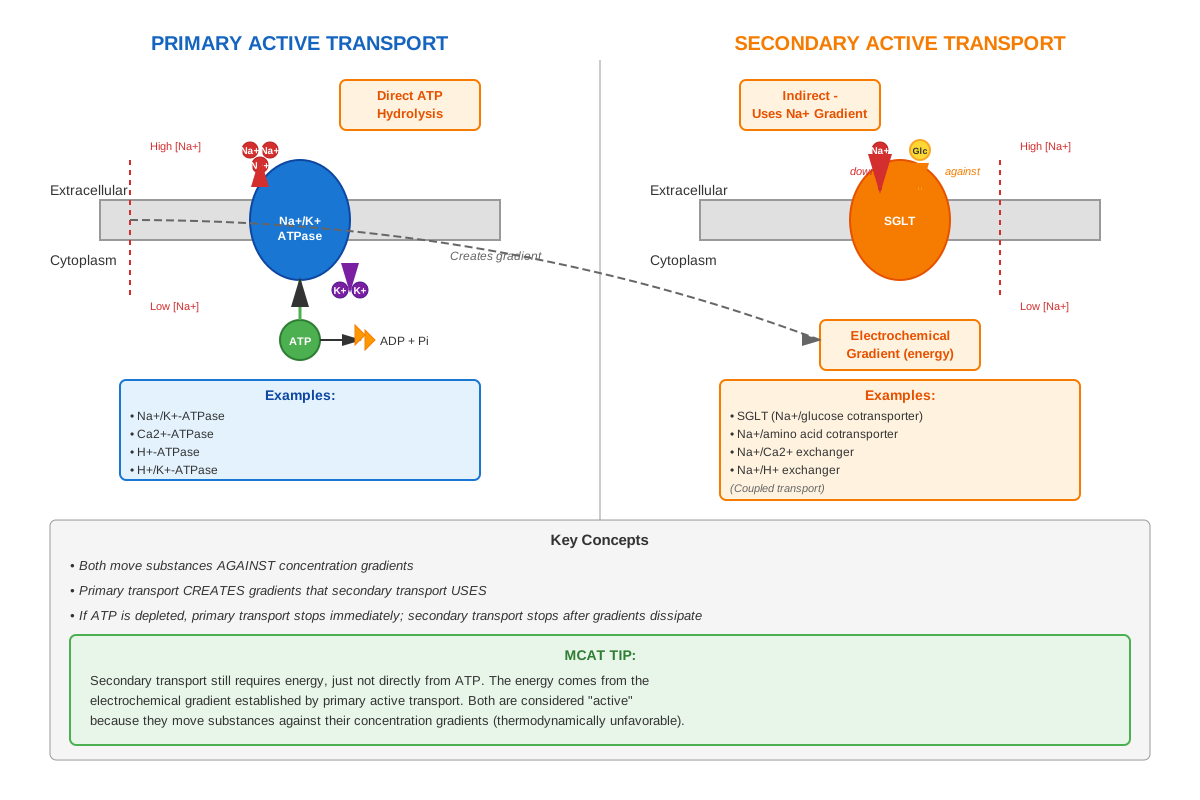
Primary active transport directly couples ATP hydrolysis to the movement of substances across membranes. The transport protein itself possesses ATPase activity, meaning it can bind and hydrolyze ATP, using the released energy to undergo conformational changes that move substrates against their gradients.
The Sodium-Potassium Pump (Na⁺/K⁺-ATPase)
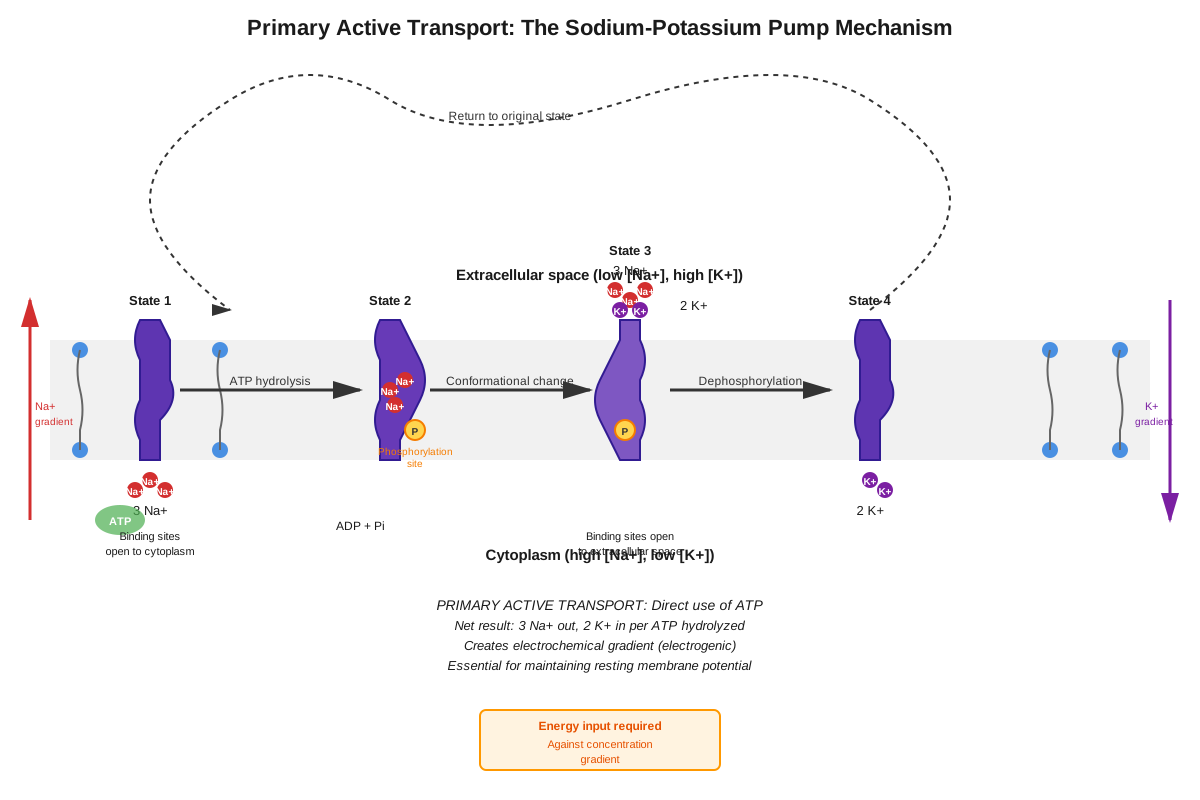
The most clinically and physiologically important primary active transporter is the sodium-potassium pump, which maintains the characteristic ion distribution of animal cells: high intracellular K⁺ and low intracellular Na⁺. This pump is an antiporter (exchanger) that moves three sodium ions out of the cell and two potassium ions into the cell per ATP molecule hydrolyzed.
The mechanism proceeds through these steps:
- Three Na⁺ ions from the cytoplasm bind to the pump
- ATP binds and is hydrolyzed, phosphorylating the pump
- Phosphorylation causes a conformational change, exposing Na⁺ to the extracellular space
- Na⁺ ions are released outside the cell
- Two K⁺ ions from outside bind to the pump
- The phosphate group is released, causing another conformational change
- K⁺ ions are released into the cytoplasm
- The cycle repeats
This pump is electrogenic (creates a net charge separation) because it moves three positive charges out for every two positive charges in, contributing to the negative resting membrane potential. The pump consumes approximately 30% of a typical cell's ATP and up to 70% in neurons, highlighting its physiological importance.
Other Primary Active Transporters
Calcium pumps (Ca²⁺-ATPases) maintain low cytoplasmic calcium concentrations by pumping Ca²⁺ into the endoplasmic reticulum or out of the cell. Proton pumps (H⁺-ATPases) acidify stomach contents and lysosomes. ABC transporters (ATP-Binding Cassette transporters) use ATP to export various substances, including the multidrug resistance pump that can confer cancer chemotherapy resistance.
Secondary Active Transport
Secondary active transport (also called cotransport) uses the electrochemical gradient of one substance (usually Na⁺) to drive the transport of another substance against its gradient. No ATP is directly hydrolyzed during the transport event itself; instead, the process depends on gradients established by primary active transport. The sodium-potassium pump creates the Na⁺ gradient that powers most secondary active transport in animal cells.
Symporters (Cotransporters)
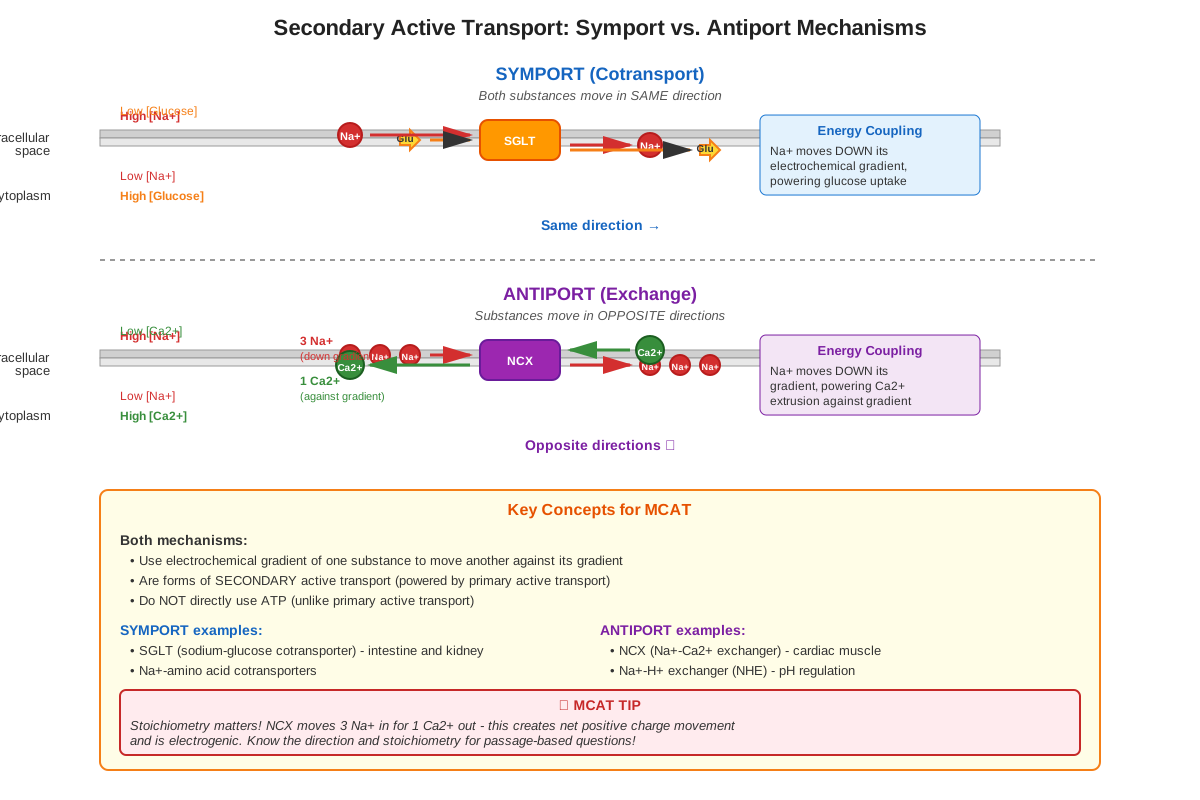
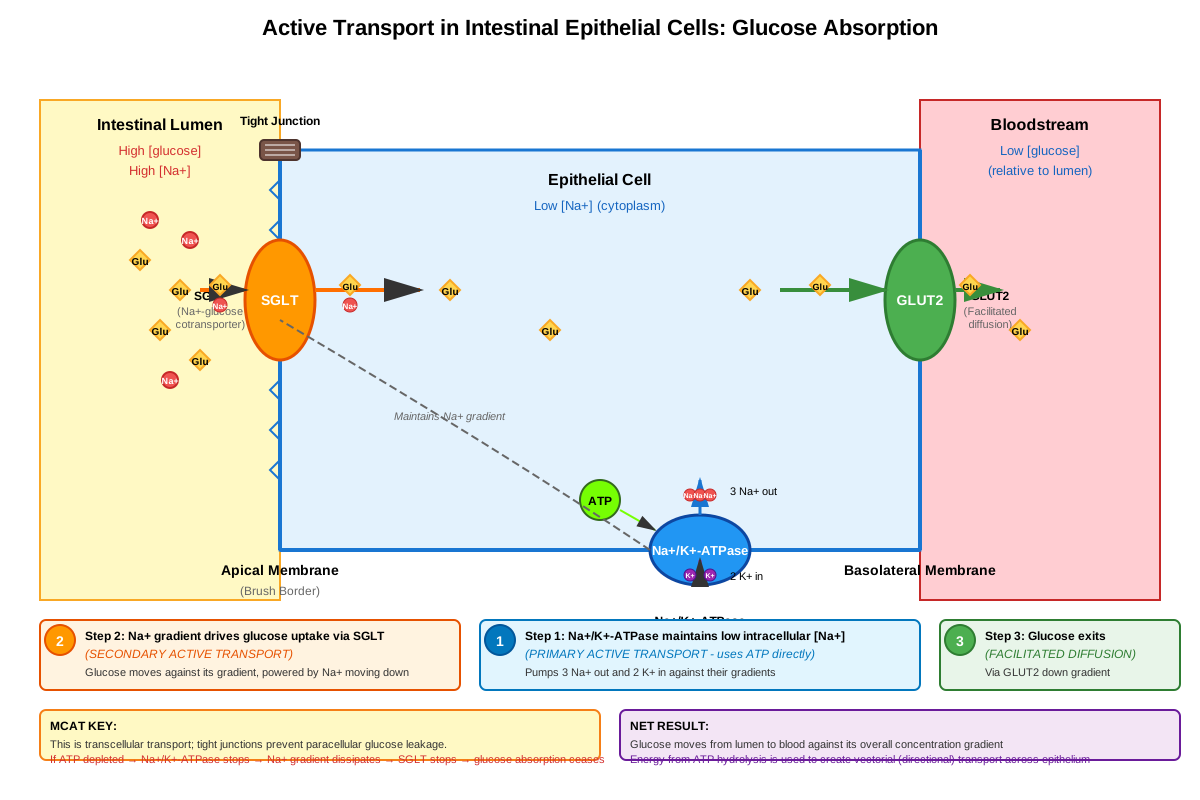
Symporters move two substances in the same direction across the membrane. The sodium-glucose cotransporter (SGLT) in intestinal and kidney epithelial cells uses the inward movement of Na⁺ down its electrochemical gradient to drive glucose uptake against its concentration gradient. This mechanism allows cells to accumulate glucose even when intracellular glucose concentration exceeds extracellular concentration. Similarly, sodium-amino acid cotransporters enable intestinal absorption and kidney reabsorption of amino acids.
Antiporters (Exchangers)
Antiporters move two substances in opposite directions. The sodium-calcium exchanger (NCX) uses the Na⁺ gradient to export Ca²⁺ from cells, particularly important in cardiac muscle. The sodium-hydrogen exchanger (NHE) exports H⁺ while importing Na⁺, helping regulate intracellular pH. In the stomach, a potassium-hydrogen exchanger secretes acid into the stomach lumen.
Energy Coupling and Thermodynamics
Active transport violates the second law of thermodynamics locally (decreasing entropy by concentrating substances) but obeys it globally because the energy source (ATP hydrolysis or gradient dissipation) represents a larger entropy increase elsewhere. The free energy change (ΔG) for moving a substance against its gradient is positive (thermodynamically unfavorable), but coupling this to ATP hydrolysis (ΔG = -7.3 kcal/mol under standard conditions) or gradient dissipation makes the overall process thermodynamically favorable.
Comparison of Transport Mechanisms
| Feature | Simple Diffusion | Facilitated Diffusion | Primary Active Transport | Secondary Active Transport |
|---|---|---|---|---|
| Energy requirement | None | None | Direct ATP hydrolysis | Indirect (uses ion gradient) |
| Direction | Down gradient | Down gradient | Against gradient | Against gradient (for one substance) |
| Protein required | No | Yes | Yes | Yes |
| Saturation | No | Yes | Yes | Yes |
| Specificity | Low | High | High | High |
| Example | O₂ diffusion | GLUT transporters | Na⁺/K⁺-ATPase | Na⁺-glucose cotransporter |
Concept Relationships
Active transport fundamentally depends on cellular energetics: ATP synthesis (via cellular respiration or photosynthesis) → provides energy for → primary active transport (Na⁺/K⁺-ATPase) → establishes ion gradients → powers → secondary active transport (cotransporters and exchangers) → enables → nutrient accumulation and waste removal → maintains → cellular homeostasis.
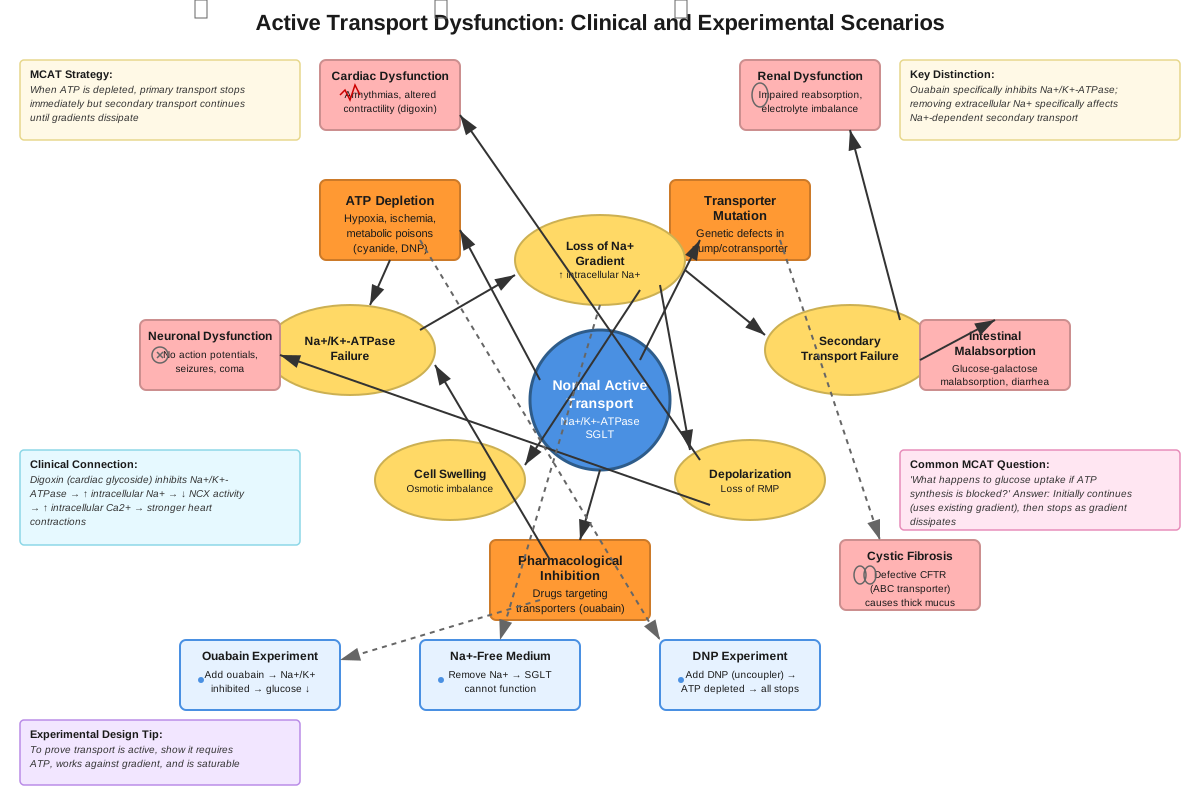
The relationship between primary and secondary active transport is hierarchical: primary active transport is the "master" process that establishes gradients, while secondary active transport is "dependent" on those gradients. If ATP production ceases (due to metabolic poisons, hypoxia, or mitochondrial dysfunction), primary active transport stops immediately, gradients dissipate within minutes, and secondary active transport fails shortly thereafter.
Active transport connects to membrane potential because electrogenic pumps contribute directly to the voltage across membranes, and all ion movements affect membrane potential. This links to neural signaling, where the Na⁺/K⁺-ATPase maintains the resting potential that enables action potentials. Active transport also relates to osmotic balance because ion pumps control intracellular ion concentrations, which determine water movement and cell volume.
At the organ system level, active transport in epithelial tissues enables vectorial transport—the directed movement of substances across tissue layers. Epithelial cells use different transporters on apical versus basolateral membranes to achieve net transport across the epithelium, crucial for intestinal absorption, kidney reabsorption, and glandular secretion.
High-Yield Facts
⭐ The sodium-potassium pump moves 3 Na⁺ out and 2 K⁺ in per ATP hydrolyzed, making it electrogenic and contributing to the negative resting membrane potential.
⭐ Primary active transport directly uses ATP; secondary active transport uses ion gradients established by primary active transport.
⭐ Secondary active transport can move substances against their concentration gradients without directly hydrolyzing ATP.
⭐ Cardiac glycosides (digoxin, ouabain) inhibit the Na⁺/K⁺-ATPase, increasing intracellular Na⁺, which reduces Ca²⁺ export via the Na⁺-Ca²⁺ exchanger, increasing cardiac contractility.
⭐ Metabolic poisons (cyanide, DNP) or hypoxia that reduce ATP production will stop primary active transport first, then secondary active transport as gradients dissipate.
- Active transport exhibits saturation kinetics because transport proteins have limited capacity, unlike simple diffusion which is never saturated.
- The sodium-glucose cotransporter (SGLT) in the kidney is the target of SGLT2 inhibitors, a class of diabetes medications that increase glucose excretion.
- ABC transporters can pump hydrophobic drugs out of cells, contributing to multidrug resistance in cancer and bacteria.
- Proton pumps in the stomach parietal cells can maintain a million-fold H⁺ concentration gradient (pH 7.4 inside the cell, pH 1 in the stomach lumen).
- The Na⁺/K⁺-ATPase exists in different isoforms with tissue-specific expression and different sensitivities to inhibitors.
Quick check — test yourself on Active transport so far.
Try Flashcards →Common Misconceptions
Misconception: Active transport always requires ATP directly.
Correction: Only primary active transport directly hydrolyzes ATP. Secondary active transport uses electrochemical gradients established by primary active transport, so it requires ATP indirectly but not during the actual transport event.
Misconception: The sodium-potassium pump moves equal numbers of Na⁺ and K⁺.
Correction: The pump is asymmetric, moving 3 Na⁺ out for every 2 K⁺ in, making it electrogenic and contributing to membrane potential. This 3:2 ratio is crucial for its physiological function.
Misconception: All membrane transport proteins perform active transport.
Correction: Many membrane transport proteins (like GLUT glucose transporters or aquaporins) facilitate passive transport down concentration gradients without requiring energy. Only transporters that move substances against gradients perform active transport.
Misconception: Secondary active transport moves both substances against their gradients.
Correction: In secondary active transport, one substance (usually Na⁺) moves down its electrochemical gradient, releasing energy that drives the other substance against its gradient. Only one of the two substances moves "uphill."
Misconception: Active transport can continue indefinitely without ATP.
Correction: Even secondary active transport ultimately depends on ATP because the ion gradients it uses are maintained by primary active transport. Without ATP, gradients dissipate and all active transport ceases.
Misconception: The sodium-potassium pump creates the entire resting membrane potential.
Correction: While the Na⁺/K⁺-ATPase contributes to resting potential (typically 5-10 mV), most of the resting potential comes from K⁺ leak channels that allow K⁺ to diffuse out down its concentration gradient (established by the pump). The pump's main role is maintaining the gradients, not directly creating most of the voltage.
Misconception: Active transport is always faster than passive transport.
Correction: Rate depends on many factors. Simple diffusion of small, lipophilic molecules can be very rapid, while active transport is limited by the rate of ATP hydrolysis or conformational changes in transport proteins. Active transport's advantage is accumulation against gradients, not necessarily speed.
Worked Examples
Example 1: Distinguishing Transport Mechanisms
Question: A researcher studies glucose uptake in intestinal epithelial cells under various conditions and obtains the following results:
- Condition A (normal): Glucose uptake rate = 100 units
- Condition B (no ATP): Glucose uptake rate = 15 units
- Condition C (no Na⁺ in extracellular fluid): Glucose uptake rate = 15 units
- Condition D (metabolic poison that blocks ATP synthesis): Glucose uptake rate = 20 units
What type of transport mechanism is primarily responsible for glucose uptake in these cells?
Solution:
Step 1: Analyze what each condition tests.
- Condition A is the baseline
- Condition B tests direct ATP dependence
- Condition C tests Na⁺ dependence
- Condition D tests indirect ATP dependence (via ATP synthesis)
Step 2: Interpret the results.
- Glucose uptake drops dramatically (85% reduction) when either ATP synthesis is blocked OR Na⁺ is absent
- Some uptake (15-20 units) persists even without ATP or Na⁺, suggesting a passive component
Step 3: Determine the mechanism.
The dramatic reduction with either ATP depletion or Na⁺ removal indicates secondary active transport via a sodium-glucose cotransporter (SGLT). The mechanism requires:
- The Na⁺/K⁺-ATPase (primary active transport) to maintain the Na⁺ gradient using ATP
- The SGLT to use the Na⁺ gradient to drive glucose uptake (secondary active transport)
When ATP is depleted, the Na⁺ gradient dissipates, eliminating the driving force for secondary active transport. When Na⁺ is removed, the cotransporter cannot function regardless of ATP availability.
The residual uptake (15-20 units) likely represents passive glucose transport through GLUT transporters, which facilitate diffusion down concentration gradients.
Key Concept: This question tests the ability to distinguish primary from secondary active transport and recognize that secondary active transport has both direct (ion gradient) and indirect (ATP) requirements.
Example 2: Predicting Physiological Consequences
Question: A patient is treated with digoxin, a cardiac glycoside that inhibits the Na⁺/K⁺-ATPase. Predict the sequence of cellular changes in cardiac myocytes and explain why this drug increases cardiac contractility.
Solution:
Step 1: Identify the immediate effect.
Digoxin inhibits the Na⁺/K⁺-ATPase, reducing its activity. This pump normally exports 3 Na⁺ and imports 2 K⁺ per ATP.
Step 2: Predict the direct consequences.
- Intracellular Na⁺ concentration increases (less export)
- Intracellular K⁺ concentration decreases (less import)
- The membrane potential becomes slightly less negative (fewer positive charges exported)
Step 3: Identify secondary effects.
The increased intracellular Na⁺ affects the Na⁺-Ca²⁺ exchanger (NCX), which normally uses the Na⁺ gradient to export Ca²⁺. The NCX exchanges 3 Na⁺ in for 1 Ca²⁺ out.
With elevated intracellular Na⁺:
- The Na⁺ gradient (driving force for NCX) is reduced
- Ca²⁺ export via NCX decreases
- Intracellular Ca²⁺ concentration increases
Step 4: Connect to contractility.
Increased intracellular Ca²⁺ enhances cardiac muscle contraction because Ca²⁺ binds to troponin, enabling actin-myosin interaction. More Ca²⁺ available during systole means stronger contractions.
Sequence: Na⁺/K⁺-ATPase inhibition → ↑ intracellular Na⁺ → ↓ Na⁺ gradient → ↓ NCX activity → ↑ intracellular Ca²⁺ → ↑ contractility
Key Concept: This example demonstrates how inhibiting one active transporter (primary active transport) affects another transporter (secondary active transport) and produces a clinically useful effect. It also shows the interconnectedness of transport systems.
Exam Strategy
When approaching Active transport MCAT questions, use this systematic approach:
Step 1: Identify the transport direction relative to gradients.
- If substances move down gradients → passive transport (diffusion or facilitated diffusion)
- If substances move against gradients → active transport (primary or secondary)
Step 2: Determine energy source.
- Direct ATP hydrolysis by the transporter → primary active transport
- Uses an ion gradient (especially Na⁺) → secondary active transport
- No energy required → passive transport
Step 3: Watch for trigger words and phrases:
- "Against the concentration gradient" → active transport
- "Requires ATP" or "ATP-dependent" → likely primary active transport
- "Sodium-dependent" or "coupled to sodium" → secondary active transport
- "Saturable" → any protein-mediated transport (active or facilitated diffusion)
- "Inhibited by metabolic poisons" → active transport
- "Electrogenic" → likely Na⁺/K⁺-ATPase or another pump with unequal charge movement
Step 4: For experimental passages, look for:
- Effects of ATP depletion (stops primary active transport immediately)
- Effects of removing specific ions (reveals secondary active transport dependencies)
- Saturation curves (indicates protein-mediated transport)
- Effects of specific inhibitors (ouabain/digoxin → Na⁺/K⁺-ATPase)
- Temperature effects (active transport is more temperature-sensitive than simple diffusion)
Process of elimination tips:
- If a question asks about transport that continues without ATP, eliminate primary active transport
- If transport stops when Na⁺ is removed but ATP is present, it's likely secondary active transport
- If transport is described as "downhill" or "passive," eliminate all active transport options
- If the question mentions accumulation or concentration of substances, favor active transport
Time allocation:
Discrete questions on active transport should take 45-60 seconds. Passage-based questions may require 90-120 seconds to analyze experimental data. Don't spend excessive time memorizing every transporter; focus on understanding principles and the major examples (Na⁺/K⁺-ATPase, SGLT, NCX).
Exam Tip: The MCAT loves questions that require distinguishing between primary and secondary active transport or predicting what happens when ATP is depleted. Always consider the cascade: ATP depletion → primary active transport stops → gradients dissipate → secondary active transport stops.
Memory Techniques
Mnemonic for Na⁺/K⁺-ATPase: "3 Sodium Salts OUT, 2 Potassium Kernels IN" (3 Na⁺ out, 2 K⁺ in)
Mnemonic for transport types: "PADS"
- Primary = ATP Directly used
- Secondary = uses Sodium gradient (or other ion gradient)
Visualization for secondary active transport: Picture a waterfall (Na⁺ flowing down its gradient) turning a water wheel (the cotransporter) that lifts a bucket (glucose or other substance) uphill. The waterfall was created by a pump (Na⁺/K⁺-ATPase) that requires energy.
Acronym for primary active transporters: "CHAP"
- Calcium pumps (Ca²⁺-ATPase)
- Hydrogen pumps (H⁺-ATPase)
- ABC transporters
- Potassium-sodium pump (Na⁺/K⁺-ATPase)
Memory aid for symporter vs. antiporter:
- SYMporter = SYnchronized Movement (same direction)
- ANTIporter = ANTI-parallel (opposite directions)
Conceptual anchor: Remember that cells are like fortresses maintaining specific internal conditions. Active transport is the "work" required to maintain these conditions against the natural tendency toward equilibrium. Just as a fortress needs constant energy to maintain defenses, cells need constant ATP to maintain their internal environment.
Summary
Active transport is the energy-dependent movement of substances across biological membranes against concentration or electrochemical gradients, essential for maintaining cellular homeostasis and enabling specialized physiological functions. Primary active transport directly couples ATP hydrolysis to substrate movement, with the sodium-potassium pump serving as the prototypical example that maintains characteristic ion distributions in animal cells. Secondary active transport harnesses ion gradients established by primary active transport to drive the accumulation of nutrients and other substances without directly hydrolyzing ATP during the transport event. The hierarchical relationship between these mechanisms—where primary active transport establishes gradients that power secondary active transport—creates an integrated system vulnerable to disruption at multiple points. For the MCAT, understanding active transport requires distinguishing it from passive transport mechanisms, recognizing the direct versus indirect ATP dependence of primary versus secondary active transport, predicting consequences of transporter inhibition or energy depletion, and connecting transport mechanisms to physiological processes in organ systems. Mastery involves not merely memorizing transporter names but understanding the thermodynamic principles, energy coupling mechanisms, and physiological significance that make active transport essential for life.
Key Takeaways
- Active transport moves substances against gradients using cellular energy, distinguishing it fundamentally from passive transport that moves substances down gradients
- Primary active transport directly hydrolyzes ATP (Na⁺/K⁺-ATPase, Ca²⁺-ATPase, H⁺-ATPase), while secondary active transport uses ion gradients established by primary active transport
- The sodium-potassium pump moves 3 Na⁺ out and 2 K⁺ in per ATP, making it electrogenic and consuming up to 30% of cellular ATP
- Secondary active transport includes symporters (same direction, like Na⁺-glucose cotransporter) and antiporters (opposite directions, like Na⁺-Ca²⁺ exchanger)
- ATP depletion stops primary active transport immediately, then secondary active transport fails as gradients dissipate—a common MCAT question scenario
- Active transport exhibits saturation kinetics, specificity, and susceptibility to specific inhibitors, properties shared with facilitated diffusion but not simple diffusion
- Clinical relevance includes cardiac glycosides (digoxin), cystic fibrosis (chloride transport), and diabetes medications (SGLT2 inhibitors), making this topic integrative across disciplines
Related Topics
Membrane Potential and Action Potentials: Active transport, particularly the Na⁺/K⁺-ATPase, establishes the ion gradients essential for resting membrane potential and enables the rapid ion movements during action potentials. Mastering active transport provides the foundation for understanding neural signaling.
Cellular Energetics and ATP Synthesis: Since active transport consumes substantial ATP, understanding cellular respiration, oxidative phosphorylation, and metabolic regulation connects directly to transport capacity and the consequences of metabolic dysfunction.
Epithelial Transport and Organ Physiology: The kidney, intestine, and other epithelial tissues use coordinated active transport on apical and basolateral membranes to achieve vectorial transport, essential for understanding renal physiology, digestion, and secretion.
Signal Transduction: Many signaling pathways regulate active transport, and some transporters (like the Na⁺/K⁺-ATPase) participate in signaling. Understanding transport mechanisms enhances comprehension of how cells respond to hormones and other signals.
Pharmacology and Drug Mechanisms: Numerous drugs target active transporters (cardiac glycosides, proton pump inhibitors, SGLT2 inhibitors), making transport mechanisms relevant for understanding drug actions and side effects.
Practice CTA
Now that you've mastered the core concepts of active transport, it's time to solidify your understanding through active recall and application. Challenge yourself with practice questions that require you to distinguish between transport mechanisms, predict experimental outcomes, and connect transport to physiological scenarios. Use flashcards to reinforce high-yield facts, particularly the characteristics of the sodium-potassium pump and the differences between primary and secondary active transport. Remember, the MCAT rewards not just knowledge but the ability to apply principles to novel situations—so seek out questions that push you to think critically about how transport mechanisms integrate with broader biological systems. Your investment in truly understanding active transport will pay dividends not only on test day but throughout your medical education, where these principles underlie everything from pharmacology to pathophysiology. You've got this!
Sign up free to keep reading
Create a free AnvayaPrep account to finish this MCAT guide on Active transport — plus flashcards and practice questions.