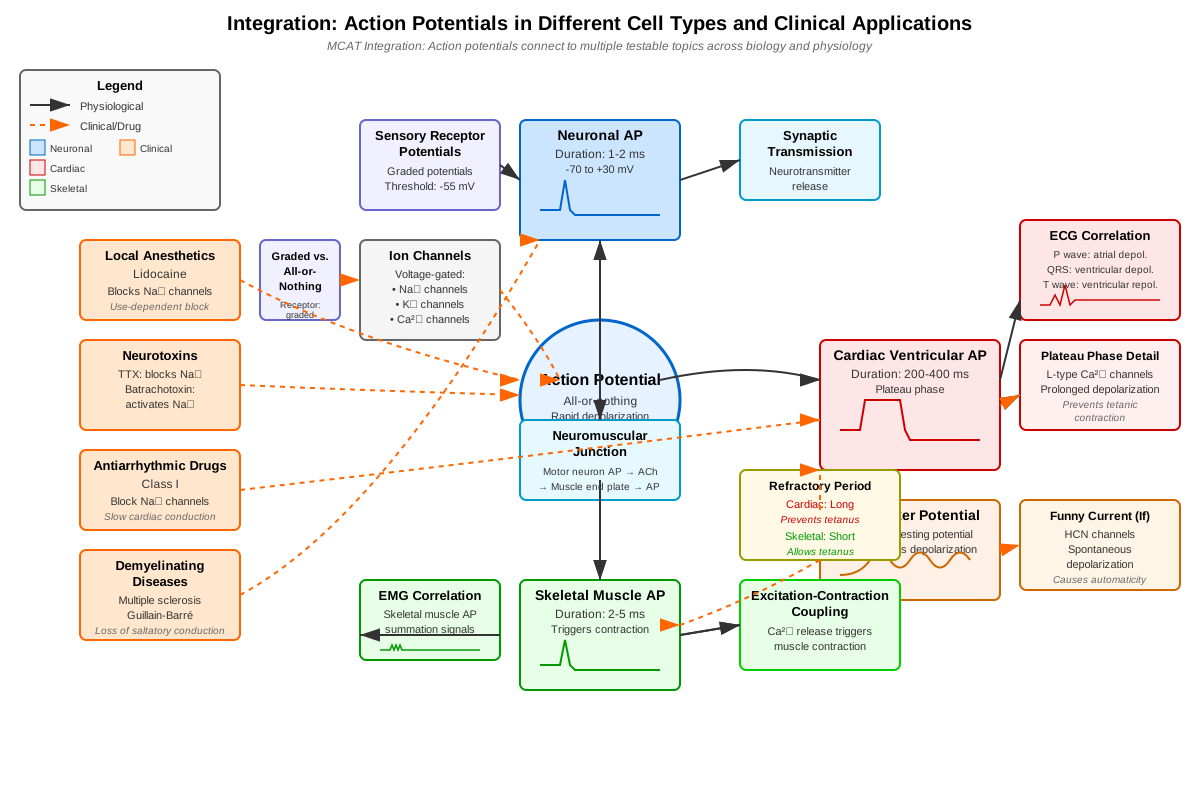
Overview
Action potentials represent one of the most fundamental mechanisms in Physiology and Organ Systems, serving as the primary electrical signaling system in neurons and muscle cells. An action potential is a rapid, transient change in membrane potential that propagates along excitable cell membranes, enabling communication across vast distances within the body. This all-or-nothing electrochemical event transforms the nervous system from a collection of individual cells into an integrated communication network capable of processing sensory information, coordinating motor responses, and maintaining homeostasis. Understanding action potentials requires integrating knowledge of membrane structure, ion gradients, protein channels, and electrical principles—making it a quintessential example of how molecular components create emergent physiological functions.
For the MCAT, action potentials appear frequently in both the Biological and Biochemical Foundations of Living Systems section and passages involving neurophysiology, muscle contraction, cardiac function, and sensory systems. The topic bridges multiple disciplines: it requires understanding of Biology concepts like cellular structure and signal transduction, chemistry principles involving electrochemical gradients, and physics concepts related to electrical potential and current flow. Questions may present experimental data showing voltage changes over time, ask students to predict the effects of ion channel mutations, or require interpretation of pharmacological interventions that modify action potential propagation.
The significance of action potentials extends beyond isolated neurons to encompass the entire nervous system architecture, muscle physiology, and even endocrine function. Mastering this topic provides the foundation for understanding synaptic transmission, neuromuscular junctions, cardiac pacemaker cells, sensory receptor potentials, and the effects of numerous drugs and toxins. The Action potentials Biology framework connects directly to topics like resting membrane potential, synaptic transmission, muscle contraction, and reflex arcs, making it an essential hub in the conceptual network of human physiology.
Learning Objectives
- [ ] Define action potentials using accurate Biology terminology
- [ ] Explain why action potentials matters for the MCAT
- [ ] Apply action potentials to exam-style questions
- [ ] Identify common mistakes related to action potentials
- [ ] Connect action potentials to related Biology concepts
- [ ] Describe the sequential phases of an action potential and the ion movements responsible for each phase
- [ ] Predict how changes in ion concentrations or channel function affect action potential characteristics
- [ ] Compare and contrast action potential propagation in myelinated versus unmyelinated axons
- [ ] Analyze experimental data showing voltage-clamp or current-clamp recordings
Prerequisites
- Membrane structure and function: Understanding phospholipid bilayers and membrane proteins is essential because action potentials depend on ion channels embedded in cell membranes
- Electrochemical gradients: Knowledge of concentration gradients and electrical potential differences enables comprehension of the driving forces behind ion movement
- Nernst equation and equilibrium potentials: Calculating equilibrium potentials for individual ions provides the foundation for understanding membrane potential changes
- Resting membrane potential: Action potentials represent deviations from the resting state, so understanding how resting potential is established (-70 mV in neurons) is critical
- Protein structure and function: Ion channels are proteins whose conformational changes gate ion flow, requiring basic understanding of protein dynamics
- Diffusion and osmosis: Passive ion movement through channels follows diffusion principles down electrochemical gradients
Why This Topic Matters
Action potentials form the mechanistic basis for all rapid communication in the nervous system and muscle tissue. Clinically, dysfunction in action potential generation or propagation underlies numerous neurological and cardiac conditions. Multiple sclerosis results from demyelination that disrupts action potential conduction. Epilepsy involves excessive neuronal firing. Local anesthetics work by blocking voltage-gated sodium channels, preventing action potential initiation. Cardiac arrhythmias often stem from abnormal action potential generation in pacemaker cells or conduction through cardiac tissue. Understanding action potentials enables comprehension of how these conditions develop and how therapeutic interventions work.
On the MCAT, action potentials appear in approximately 3-5% of questions in the Biological and Biochemical Foundations section, with additional appearances in passages involving experimental neuroscience, pharmacology, or physiology. Questions typically fall into several categories: (1) interpretation of voltage-time graphs showing action potential phases, (2) prediction of effects when ion channels are blocked or ion concentrations change, (3) comparison of conduction velocities under different conditions, (4) analysis of experimental manipulations using voltage clamps or pharmacological agents, and (5) application to clinical scenarios involving neurological or cardiac dysfunction.
Passages commonly present action potentials in contexts such as: research on novel ion channel subtypes, studies of neurotoxins or pharmaceutical compounds, investigations of disease mechanisms affecting excitable tissues, comparisons between different neuron types or species, and experiments measuring conduction velocity or refractory periods. The topic integrates well with passages on sensory systems (receptor potentials triggering action potentials), muscle physiology (action potentials initiating contraction), and synaptic transmission (action potentials triggering neurotransmitter release). Students must be prepared to interpret graphical data, apply conceptual understanding to novel situations, and integrate action potential knowledge with other physiological systems.
Core Concepts
Definition and Fundamental Characteristics
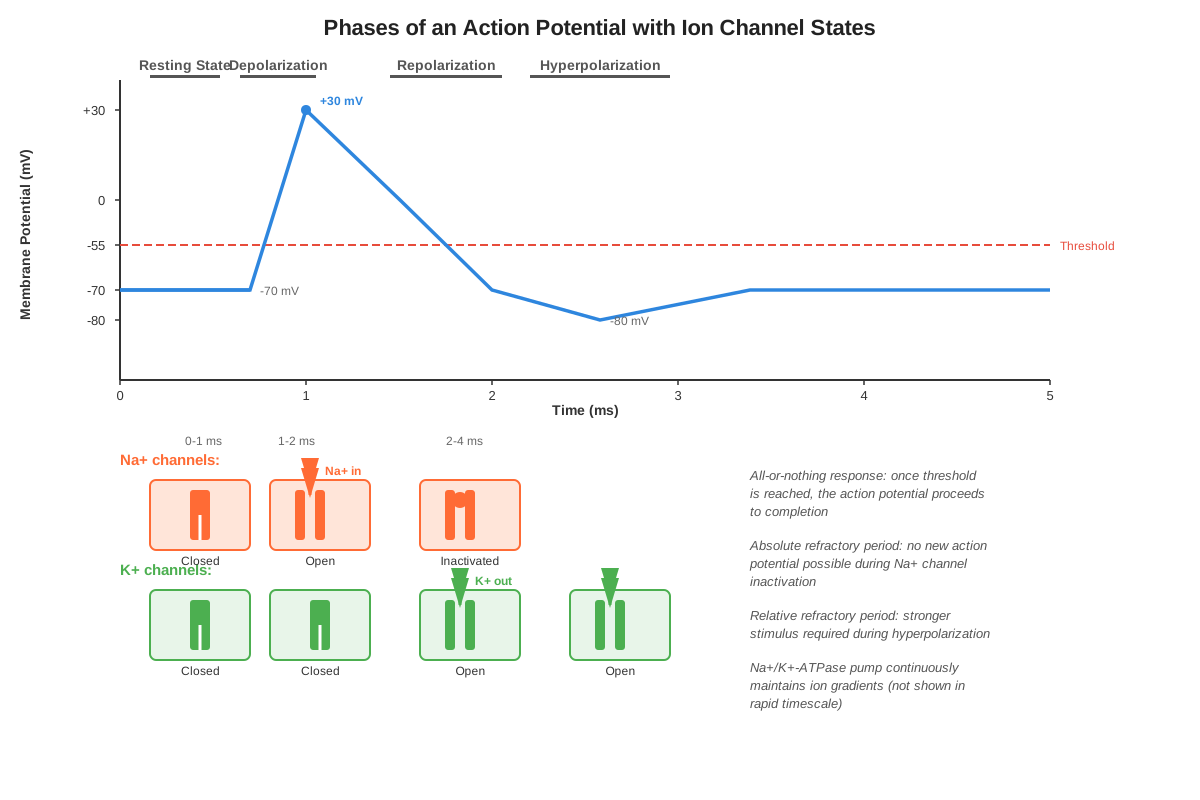
An action potential is a rapid, transient, all-or-nothing change in membrane potential that propagates along the membrane of excitable cells (neurons and muscle cells). The membrane potential typically rises from the resting value (approximately -70 mV in neurons) to a positive value (approximately +30 to +40 mV) before returning to rest. This depolarization-repolarization cycle occurs over 1-2 milliseconds in most neurons. The "all-or-nothing" principle means that once threshold is reached (typically around -55 mV), the action potential proceeds to completion with a stereotyped amplitude and time course, regardless of the strength of the initiating stimulus. Subthreshold stimuli produce only local, graded depolarizations that decay with distance and do not propagate.
The action potential serves as a digital signal—either present or absent—that can travel long distances without degradation. This contrasts with graded potentials, which decrease in amplitude as they spread passively along the membrane. The ability to propagate without decrement makes action potentials ideal for long-distance communication, such as transmitting sensory information from peripheral receptors to the central nervous system or sending motor commands from the brain to distant muscles.
Ion Channels and Molecular Mechanisms
Voltage-gated ion channels are the molecular machinery underlying action potentials. These transmembrane proteins contain voltage-sensing domains that respond to changes in membrane potential by undergoing conformational changes that open or close the channel pore. The two most critical channel types are voltage-gated sodium channels (Nav) and voltage-gated potassium channels (Kv).
Voltage-gated sodium channels exist in three functional states: closed (resting), open (activated), and inactivated. At resting membrane potential, these channels are closed but capable of opening. When the membrane depolarizes to threshold, the activation gate opens rapidly (within 0.1-0.2 milliseconds), allowing sodium ions to flow down their electrochemical gradient into the cell. Within approximately 1 millisecond, an inactivation gate closes, blocking further sodium entry even though the activation gate remains open. The channel cannot reopen until the membrane repolarizes and the inactivation gate resets—this creates the absolute refractory period.
Voltage-gated potassium channels also respond to depolarization but open more slowly than sodium channels (1-2 milliseconds delay). These channels allow potassium ions to flow out of the cell down their electrochemical gradient. Unlike sodium channels, most potassium channels lack an inactivation mechanism and remain open as long as the membrane is depolarized. The delayed opening and sustained activation of potassium channels are critical for repolarization.
Phases of the Action Potential
The action potential consists of distinct phases, each characterized by specific ion movements:
- Resting state: The membrane potential is at approximately -70 mV, maintained primarily by potassium leak channels and the Na+/K+-ATPase pump. Voltage-gated sodium and potassium channels are closed.
- Depolarization to threshold: A stimulus (such as neurotransmitter binding, sensory input, or current spread from an adjacent region) causes the membrane to depolarize. If depolarization reaches threshold (-55 mV), voltage-gated sodium channels begin to open.
- Rapid depolarization (rising phase): Sodium channels open en masse, creating a positive feedback loop—depolarization opens more channels, which allows more sodium entry, causing further depolarization. The membrane potential rapidly approaches the sodium equilibrium potential (approximately +60 mV) but typically peaks around +30 to +40 mV because potassium channels begin opening and sodium channels begin inactivating.
- Peak and early repolarization: At the peak, sodium channel inactivation is nearly complete, stopping sodium influx. Voltage-gated potassium channels are now open, allowing potassium efflux. The membrane potential begins to fall.
- Repolarization (falling phase): Continued potassium efflux drives the membrane potential back toward the resting value. Sodium channels transition from inactivated to closed (but not yet open), preparing for the next action potential.
- Hyperpolarization (undershoot): Potassium channels close slowly, so potassium efflux continues briefly after the membrane reaches resting potential, causing the membrane to become slightly more negative than rest (approximately -80 mV). This afterhyperpolarization or undershoot gradually resolves as potassium channels close and the membrane returns to resting potential.
Threshold and the All-or-Nothing Principle
Threshold represents the critical membrane potential at which the positive feedback cycle of sodium channel opening becomes self-sustaining. Below threshold, sodium influx is insufficient to overcome repolarizing influences (potassium efflux and leak currents), and the depolarization remains local and graded. At threshold, sodium influx exceeds repolarizing currents, triggering the explosive depolarization of the action potential.
The all-or-nothing principle reflects the fact that once threshold is reached, the action potential amplitude and time course are determined by the properties of the ion channels and ion gradients, not by the stimulus strength. A stronger stimulus does not produce a larger action potential; instead, it may trigger action potentials at higher frequency (rate coding) or recruit additional neurons (population coding). This digital nature of action potentials ensures reliable signal transmission over long distances.
Refractory Periods
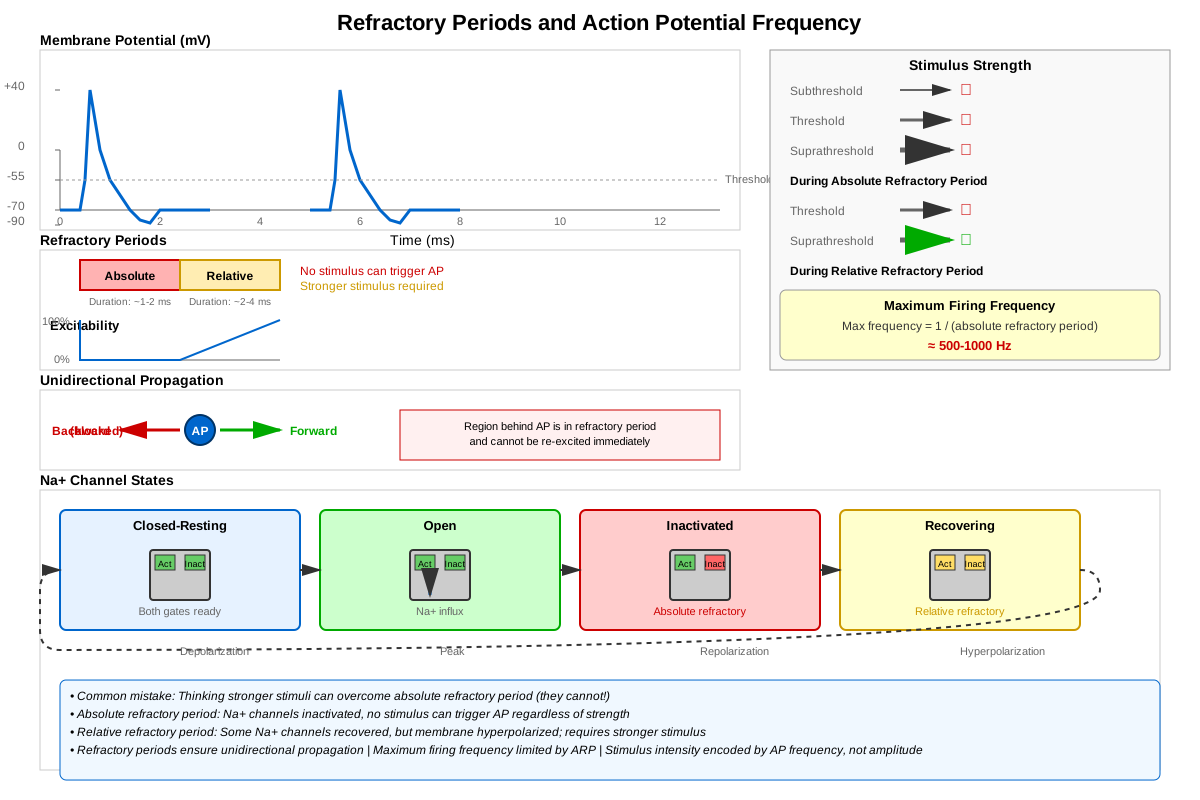
The absolute refractory period spans from the onset of the action potential until repolarization is well underway. During this time, sodium channels are either open or inactivated, and no stimulus, regardless of strength, can trigger a second action potential. This period typically lasts 1-2 milliseconds and serves two critical functions: (1) it ensures unidirectional propagation of action potentials by preventing backward spread, and (2) it limits the maximum firing frequency of neurons (typically 500-1000 Hz maximum).
The relative refractory period follows the absolute refractory period and extends through the afterhyperpolarization phase. During this time, sodium channels are recovering from inactivation, but the membrane is hyperpolarized, requiring a stronger-than-normal stimulus to reach threshold. A second action potential can be triggered but requires greater depolarization. The relative refractory period gradually ends as the membrane returns to resting potential and all channels return to their resting state.
Propagation of Action Potentials
Action potentials propagate along axons through local current flow. When one region of membrane undergoes an action potential, the local depolarization spreads passively to adjacent regions through the cytoplasm and extracellular fluid. This local current depolarizes the adjacent membrane to threshold, triggering voltage-gated sodium channels to open in that region, generating a new action potential. The process repeats sequentially along the axon.
Conduction velocity depends on two main factors: axon diameter and myelination. Larger diameter axons have lower internal resistance, allowing local currents to spread farther and faster, increasing conduction velocity. The relationship is approximately proportional to the square root of diameter for unmyelinated axons.
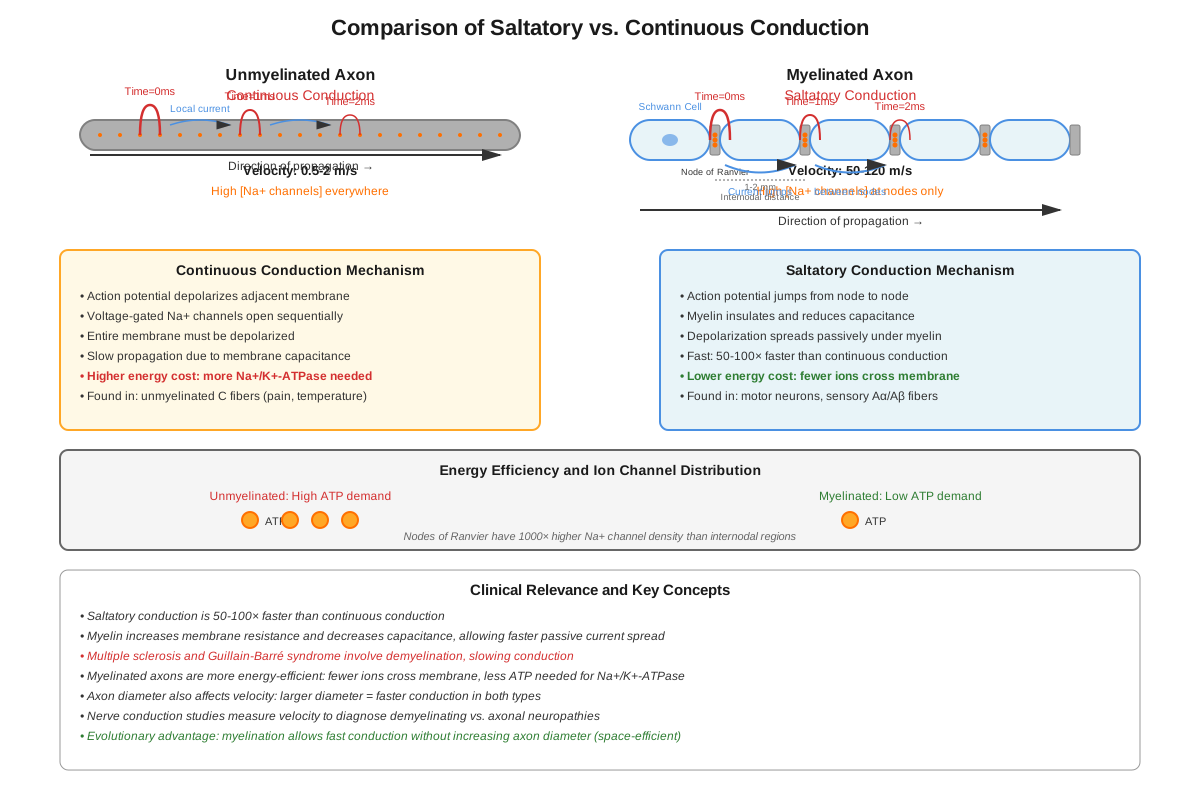
Myelination dramatically increases conduction velocity through saltatory conduction. Myelin, formed by oligodendrocytes in the CNS and Schwann cells in the PNS, is a lipid-rich insulating sheath that wraps around axons. Myelin has extremely high resistance and low capacitance, preventing ion flow across the membrane. Voltage-gated sodium channels are concentrated at nodes of Ranvier, the gaps between myelin segments. Action potentials are generated only at nodes; between nodes, the depolarization spreads passively through the low-resistance axoplasm beneath the insulating myelin. This "jumping" from node to node is much faster than continuous propagation and is more energy-efficient because only the nodal membrane needs to be depolarized and repolarized.
| Feature | Unmyelinated Axon | Myelinated Axon |
|---|---|---|
| Conduction mechanism | Continuous propagation | Saltatory conduction |
| Channel distribution | Uniform along membrane | Concentrated at nodes of Ranvier |
| Conduction velocity | 0.5-2 m/s (typical) | 3-120 m/s (typical) |
| Energy efficiency | Lower (entire membrane must be repolarized) | Higher (only nodes repolarized) |
| Diameter dependence | Velocity ∝ √diameter | Velocity ∝ diameter |
Energy Requirements and the Sodium-Potassium Pump
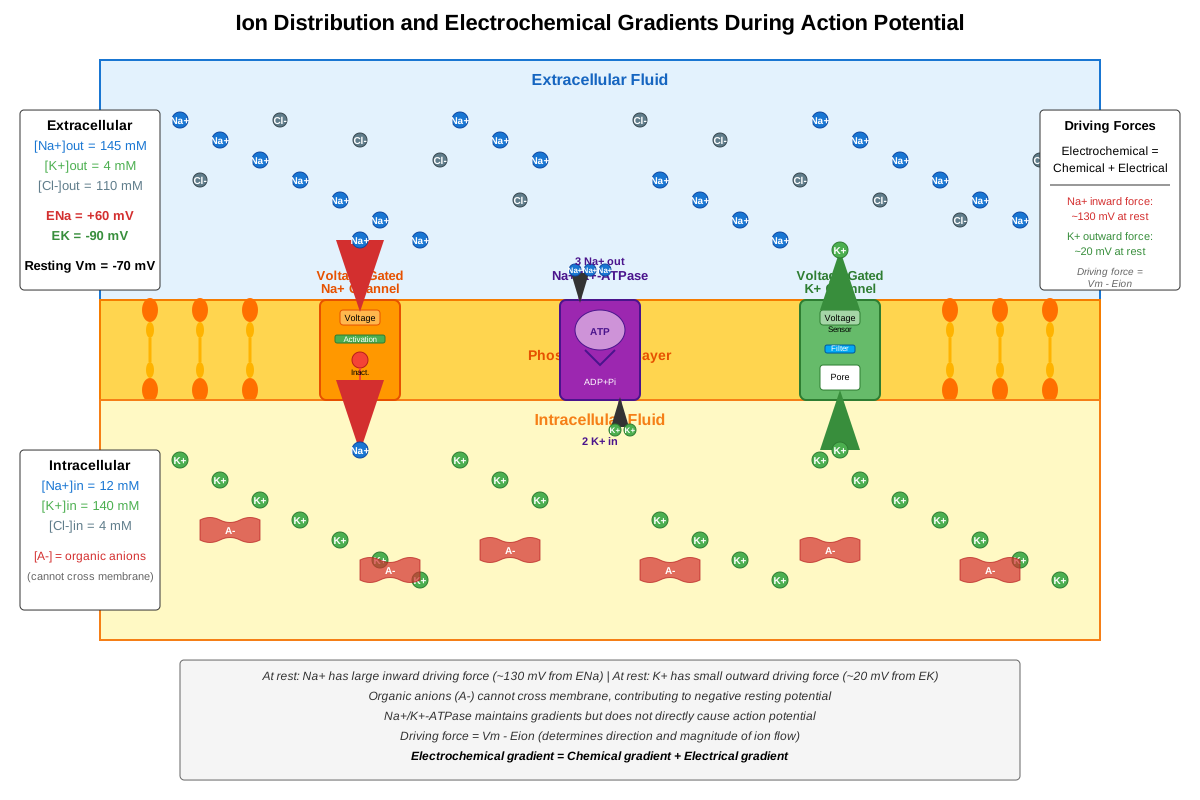
While individual action potentials involve passive ion flow down electrochemical gradients (requiring no direct ATP expenditure), the Na+/K+-ATPase pump is essential for maintaining the ion gradients that make action potentials possible. This pump actively transports three sodium ions out and two potassium ions in, consuming one ATP per cycle. After many action potentials, the sodium and potassium gradients would dissipate without active pumping. The pump continuously operates to maintain the concentration gradients: high sodium outside (~145 mM) and inside (~12 mM); high potassium inside (~140 mM) and outside (~4 mM).
Approximately 70% of neuronal ATP consumption supports the Na+/K+-ATPase, highlighting the energetic cost of maintaining excitability. Conditions that impair ATP production (hypoxia, ischemia, metabolic poisons) rapidly compromise action potential generation as ion gradients dissipate.
Concept Relationships
The core concepts of action potentials form an integrated mechanistic framework. Resting membrane potential establishes the baseline from which action potentials deviate, determined by ion gradients maintained by the Na+/K+-ATPase and the selective permeability of the membrane to potassium. Voltage-gated sodium channels respond to depolarization to threshold by opening, initiating the rapid depolarization phase through positive feedback. Sodium channel inactivation and voltage-gated potassium channel opening work together to produce repolarization. The slow closing of potassium channels creates afterhyperpolarization and contributes to the relative refractory period, while sodium channel inactivation creates the absolute refractory period.
These temporal dynamics enable unidirectional propagation: the refractory period behind the action potential prevents backward spread, while local current flow ahead depolarizes the next region to threshold. Myelination modifies this basic propagation mechanism by concentrating channels at nodes and insulating internodal regions, enabling saltatory conduction with increased velocity and efficiency.
Action potentials connect to numerous related topics: they trigger neurotransmitter release at synapses by opening voltage-gated calcium channels when the action potential reaches the axon terminal; they initiate muscle contraction by propagating along muscle fiber membranes and into T-tubules; they encode sensory information when receptor potentials reach threshold; and they coordinate cardiac contraction through specialized pacemaker cells and the cardiac conduction system. Understanding action potentials is prerequisite for comprehending these downstream processes.
The relationship map: Ion gradients (maintained by Na+/K+-ATPase) → enable → Resting membrane potential → can be depolarized to → Threshold → triggers → Voltage-gated Na+ channel opening → causes → Rapid depolarization → activates → Voltage-gated K+ channel opening and Na+ channel inactivation → produce → Repolarization → overshoots to → Afterhyperpolarization → gradually returns to → Resting membrane potential. Meanwhile, Refractory periods → ensure → Unidirectional propagation → enables → Long-distance signaling → which is enhanced by → Myelination → producing → Saltatory conduction.
Quick check — test yourself on Action potentials so far.
Try Flashcards →High-Yield Facts
⭐ The rising phase of the action potential is caused by voltage-gated sodium channel opening and sodium influx; the falling phase is caused by sodium channel inactivation and voltage-gated potassium channel opening with potassium efflux.
⭐ The absolute refractory period is caused by sodium channel inactivation and prevents a second action potential regardless of stimulus strength; it ensures unidirectional propagation and limits maximum firing frequency.
⭐ Threshold (approximately -55 mV) is the membrane potential at which sodium influx through voltage-gated channels becomes self-sustaining, triggering the all-or-nothing action potential.
⭐ Myelination increases conduction velocity through saltatory conduction, where action potentials are generated only at nodes of Ranvier and spread passively between nodes.
⭐ The Na+/K+-ATPase pump maintains the ion gradients essential for action potentials by actively transporting 3 Na+ out and 2 K+ in, consuming ATP.
- The action potential peak (approximately +30 to +40 mV) approaches but does not reach the sodium equilibrium potential (+60 mV) because potassium channels open and sodium channels inactivate before equilibrium is reached.
- The afterhyperpolarization (undershoot) occurs because voltage-gated potassium channels close slowly, allowing continued potassium efflux that drives the membrane potential below resting level.
- Local anesthetics like lidocaine block voltage-gated sodium channels, preventing action potential generation and eliminating pain sensation.
- Larger diameter axons conduct action potentials faster than smaller diameter axons due to lower internal resistance and greater spread of local currents.
- The relative refractory period corresponds to the time when sodium channels are recovering from inactivation and the membrane is hyperpolarized, requiring stronger stimuli to reach threshold.
- Tetrodotoxin (pufferfish toxin) specifically blocks voltage-gated sodium channels, preventing action potential generation and causing paralysis.
- Multiple sclerosis involves demyelination of CNS axons, slowing or blocking action potential conduction and causing neurological deficits.
- The all-or-nothing principle means action potential amplitude is independent of stimulus strength; stronger stimuli increase firing frequency, not amplitude.
- Voltage-gated sodium channels have both activation and inactivation gates; the activation gate opens rapidly in response to depolarization, while the inactivation gate closes more slowly, terminating sodium influx.
- Conduction velocity in myelinated axons is approximately proportional to axon diameter, while in unmyelinated axons it is proportional to the square root of diameter.
Common Misconceptions
Misconception: The Na+/K+-ATPase pump directly generates action potentials by pumping ions during the depolarization phase.
Correction: The pump maintains the ion gradients that make action potentials possible but does not directly participate in the rapid ion movements during an action potential. The rising phase results from passive sodium influx through voltage-gated channels down the electrochemical gradient established by the pump.
Misconception: Stronger stimuli produce larger action potentials.
Correction: Action potentials follow the all-or-nothing principle—once threshold is reached, the amplitude is stereotyped and determined by ion gradients and channel properties, not stimulus strength. Stronger stimuli increase firing frequency (rate coding) or recruit more neurons (population coding), but do not change individual action potential amplitude.
Misconception: The membrane potential reaches the sodium equilibrium potential (+60 mV) during the action potential peak.
Correction: The peak typically reaches only +30 to +40 mV because sodium channels begin inactivating and potassium channels open before the membrane can fully equilibrate with sodium. The peak represents a balance of sodium influx (driving toward +60 mV) and potassium efflux (driving toward -90 mV).
Misconception: Repolarization occurs because sodium channels close.
Correction: Sodium channels inactivate (not simply close) during repolarization. The primary driving force for repolarization is the opening of voltage-gated potassium channels, which allows potassium efflux. Sodium channel inactivation stops further sodium entry but does not actively remove positive charge; potassium efflux accomplishes that.
Misconception: Myelination works by increasing the number of voltage-gated channels along the axon.
Correction: Myelination actually concentrates channels at nodes of Ranvier while insulating the internodal membrane. The mechanism increases conduction velocity by allowing passive current spread beneath the myelin sheath, reducing the membrane area that must be actively depolarized and repolarized.
Misconception: The absolute refractory period is caused by the membrane being too hyperpolarized to reach threshold.
Correction: The absolute refractory period is caused by sodium channel inactivation—the channels are in an inactivated state and cannot open regardless of membrane potential. Hyperpolarization contributes to the relative refractory period, when channels are recovering from inactivation but the membrane is farther from threshold.
Misconception: Action potentials can propagate in both directions along an axon.
Correction: While action potentials can theoretically propagate bidirectionally if initiated in the middle of an axon, under physiological conditions they propagate unidirectionally from the axon hillock toward the terminals. The absolute refractory period behind the action potential prevents backward propagation, ensuring unidirectional signal flow.
Worked Examples
Example 1: Interpreting Voltage-Clamp Data
Question: Researchers use voltage-clamp techniques to study ion channels in a neuron. They hold the membrane potential at -70 mV, then rapidly step it to 0 mV and measure the resulting currents. They observe an initial rapid inward current that peaks within 1 millisecond and then declines, followed by a sustained outward current. When they repeat the experiment in the presence of tetrodotoxin (TTX), the early inward current is abolished but the outward current remains. What do these observations indicate about the ion channels involved?
Solution:
Step 1: Identify the current directions and timing. An inward current (positive charges entering the cell) that is rapid and transient suggests sodium influx through voltage-gated sodium channels. An outward current (positive charges leaving the cell) that is delayed and sustained suggests potassium efflux through voltage-gated potassium channels.
Step 2: Analyze the TTX effect. TTX specifically blocks voltage-gated sodium channels. The abolition of the early inward current by TTX confirms that this current is carried by sodium ions through voltage-gated sodium channels.
Step 3: Explain the time course. The rapid rise and decline of the sodium current reflects the fast activation and subsequent inactivation of voltage-gated sodium channels. The delayed onset of the potassium current reflects the slower activation kinetics of voltage-gated potassium channels. The sustained nature of the potassium current indicates that these channels lack rapid inactivation.
Step 4: Connect to action potential phases. During a normal action potential, the early sodium current would drive the rapid depolarization (rising phase), while the later potassium current would drive repolarization (falling phase). The inactivation of sodium channels and the opening of potassium channels work together to terminate depolarization and restore the resting potential.
Answer: The early inward current represents sodium influx through voltage-gated sodium channels (confirmed by TTX sensitivity), which activate rapidly but then inactivate. The sustained outward current represents potassium efflux through voltage-gated potassium channels, which activate more slowly and remain open. These currents correspond to the ionic basis of the action potential's rising and falling phases, respectively.
Example 2: Predicting Effects of Ion Concentration Changes
Question: A neuron is placed in an experimental solution where the extracellular potassium concentration is increased from 4 mM to 40 mM, while all other conditions remain normal. Predict the effects on: (A) resting membrane potential, (B) action potential threshold, (C) action potential amplitude, and (D) the ability to generate action potentials. Explain your reasoning.
Solution:
Step 1: Analyze the effect on resting membrane potential. The resting potential is primarily determined by potassium equilibrium potential (calculated using the Nernst equation). Increasing extracellular potassium from 4 mM to 40 mM decreases the potassium concentration gradient. Using the Nernst equation: E_K = (61 mV / 1) × log([K+]out/[K+]in) = 61 × log(40/140) ≈ -33 mV (compared to approximately -90 mV normally). The resting potential will depolarize from approximately -70 mV toward this new, less negative potassium equilibrium potential, perhaps to around -50 mV.
Step 2: Consider the effect on threshold. The threshold for voltage-gated sodium channel opening is an intrinsic property of the channels and does not change significantly with potassium concentration. Threshold remains around -55 mV.
Step 3: Analyze the effect on action potential amplitude. The action potential amplitude depends on the difference between the peak (determined largely by sodium equilibrium potential, which is unchanged) and the resting potential. Since the resting potential has depolarized to approximately -50 mV and the peak remains around +30 mV, the amplitude decreases from approximately 100 mV to approximately 80 mV.
Step 4: Evaluate the ability to generate action potentials. With the resting potential at -50 mV and threshold at -55 mV, the membrane is already very close to or possibly beyond threshold. This could cause several problems: (1) the neuron might fire spontaneously, (2) many sodium channels might be inactivated at rest because inactivation occurs at depolarized potentials, reducing the number of channels available to open during an action potential, and (3) the small difference between rest and threshold means less "safety factor" for reliable action potential generation. In extreme cases, the neuron might become inexcitable due to sodium channel inactivation.
Answer: (A) Resting membrane potential depolarizes from approximately -70 mV to approximately -50 mV due to decreased potassium gradient. (B) Threshold remains approximately -55 mV (intrinsic channel property). (C) Action potential amplitude decreases from approximately 100 mV to approximately 80 mV because the resting potential is more depolarized while the peak is unchanged. (D) The ability to generate action potentials is impaired because the membrane is near threshold (causing possible spontaneous firing) and many sodium channels may be inactivated at the depolarized resting potential, reducing excitability. This scenario mimics hyperkalemia, which can cause cardiac arrhythmias and muscle weakness.
Exam Strategy
When approaching MCAT questions on action potentials, first identify what phase or aspect of the action potential the question addresses. Look for trigger words: "rising phase" or "depolarization" indicates sodium channel opening; "falling phase" or "repolarization" indicates potassium channel opening and sodium channel inactivation; "refractory period" relates to channel states and excitability; "conduction velocity" involves axon properties and myelination.
For graph interpretation questions showing membrane potential versus time, systematically identify each phase: resting potential (flat baseline), threshold (point where rapid depolarization begins), rising phase (steep upward slope), peak (maximum positive value), falling phase (downward slope), afterhyperpolarization (dip below resting), and return to rest. Match each phase to the underlying ion movements and channel states.
When questions involve experimental manipulations (blocking channels, changing ion concentrations, adding drugs), use a systematic approach: (1) identify which ions or channels are affected, (2) determine how this affects the driving force or conductance for specific ions, (3) predict the effect on each phase of the action potential, and (4) consider secondary consequences (e.g., if sodium channels are partially blocked, threshold might not be reached, preventing the entire action potential).
For process-of-elimination, remember these key principles: sodium influx always causes depolarization (membrane becomes more positive); potassium efflux always causes repolarization or hyperpolarization (membrane becomes more negative); blocking sodium channels prevents or reduces the rising phase; blocking potassium channels prolongs the action potential; increasing extracellular potassium depolarizes the resting potential; decreasing extracellular sodium reduces action potential amplitude.
Time allocation: Most action potential questions can be answered in 60-90 seconds. If a question requires detailed calculation (e.g., using the Nernst equation), budget 90-120 seconds. For passage-based questions with experimental data, spend adequate time understanding the experimental setup and control conditions before attempting questions—this investment pays off across multiple questions.
Watch for questions that test common misconceptions: if an answer choice suggests the Na+/K+-ATPase directly generates the action potential, eliminate it; if a choice claims stronger stimuli produce larger action potentials, eliminate it; if a choice confuses the mechanisms of absolute versus relative refractory periods, eliminate it.
Memory Techniques
Mnemonic for action potential phases: "Really Dumb People Repeatedly Hurt Rabbits"
- Resting state
- Depolarization (rising phase)
- Peak
- Repolarization (falling phase)
- Hyperpolarization (undershoot)
- Return to rest
Mnemonic for ion movements: "Sodium In, Potassium Out" (SIPO)
- Sodium In during depolarization (rising phase)
- Potassium Out during repolarization (falling phase)
Visualization strategy: Picture a wave traveling along a beach. The wave crest represents the action potential moving along the axon. Behind the crest, the water (membrane) is temporarily disturbed and cannot immediately form another wave (absolute refractory period). The wave moves in one direction because the disturbed water behind it prevents backward movement. In myelinated axons, visualize the wave "jumping" between rocks (nodes of Ranvier) rather than traveling continuously.
Acronym for factors increasing conduction velocity: "My Large Dog" (MLD)
- Myelination
- Large diameter
- Decreased internal resistance (related to diameter)
Memory aid for refractory periods: "Absolutely Inactivated, Relatively Recovering"
- Absolute refractory period: sodium channels are Inactivated
- Relative refractory period: sodium channels are Recovering from inactivation
Conceptual anchor: Think of voltage-gated sodium channels as having two doors in series—an activation gate (front door) and an inactivation gate (back door). At rest, the front door is closed and the back door is open. At threshold, the front door opens rapidly (activation). Shortly after, the back door closes (inactivation), blocking the channel even though the front door is still open. During repolarization, the front door closes, and eventually the back door reopens, resetting the channel. This two-door model helps remember why channels cannot reopen during the absolute refractory period (back door is closed) and why repolarization is necessary for recovery (allows back door to reopen).
Summary
Action potentials are rapid, all-or-nothing electrical signals that propagate along excitable cell membranes, enabling long-distance communication in the nervous system and muscle tissue. The action potential results from sequential opening and closing of voltage-gated sodium and potassium channels in response to membrane depolarization. The rising phase is driven by sodium influx through rapidly activating voltage-gated sodium channels, while the falling phase results from sodium channel inactivation combined with potassium efflux through voltage-gated potassium channels. The absolute refractory period, caused by sodium channel inactivation, ensures unidirectional propagation and limits firing frequency. Myelination dramatically increases conduction velocity through saltatory conduction, where action potentials jump between nodes of Ranvier. The Na+/K+-ATPase maintains the ion gradients essential for action potential generation. Understanding action potentials requires integrating knowledge of membrane structure, ion gradients, channel kinetics, and electrical principles—making it a cornerstone topic for MCAT physiology that connects to neurotransmission, muscle contraction, sensory systems, and pharmacology.
Key Takeaways
- Action potentials are all-or-nothing electrical signals generated by sequential opening of voltage-gated sodium channels (rising phase) and voltage-gated potassium channels (falling phase), with sodium channel inactivation terminating depolarization
- Threshold represents the critical membrane potential where sodium influx becomes self-sustaining through positive feedback, triggering the complete action potential regardless of further stimulus strength
- The absolute refractory period results from sodium channel inactivation and prevents a second action potential, ensuring unidirectional propagation and limiting maximum firing frequency to approximately 500-1000 Hz
- Myelination increases conduction velocity through saltatory conduction, where action potentials are generated only at nodes of Ranvier and spread passively between nodes beneath the insulating myelin sheath
- The Na+/K+-ATPase pump maintains the sodium and potassium gradients essential for action potentials by actively transporting ions against their concentration gradients, consuming ATP
- Conduction velocity increases with axon diameter and myelination; myelinated axons conduct 10-100 times faster than unmyelinated axons of similar diameter
- Clinical and pharmacological interventions targeting action potentials include local anesthetics (block sodium channels), antiepileptic drugs (modulate channel function), and treatments for demyelinating diseases like multiple sclerosis
Related Topics
- Synaptic transmission: Action potentials arriving at axon terminals trigger neurotransmitter release by opening voltage-gated calcium channels; mastering action potentials is essential for understanding how electrical signals convert to chemical signals at synapses
- Resting membrane potential: The baseline electrical state from which action potentials deviate; understanding how the Na+/K+-ATPase and ion channels establish resting potential provides the foundation for action potential mechanisms
- Graded potentials and summation: Local, decremental changes in membrane potential that can summate to reach threshold; contrasting graded potentials with action potentials clarifies the distinction between analog and digital neural signals
- Muscle contraction: Action potentials propagating along muscle fiber membranes trigger calcium release and contraction; the excitation-contraction coupling mechanism depends on action potential propagation into T-tubules
- Cardiac electrophysiology: Cardiac action potentials differ from neuronal action potentials in duration and ionic mechanisms; understanding neuronal action potentials enables comparison with cardiac pacemaker cells and contractile myocytes
- Sensory transduction: Receptor potentials in sensory neurons must reach threshold to trigger action potentials that convey sensory information to the CNS; action potential frequency encodes stimulus intensity
- Neuropharmacology: Many drugs and toxins target ion channels involved in action potentials, including local anesthetics, antiepileptics, and neurotoxins; understanding action potential mechanisms enables prediction of drug effects
Practice CTA
Now that you have mastered the fundamental concepts of action potentials, reinforce your understanding by working through practice questions and flashcards. Focus on interpreting graphical data showing voltage changes over time, predicting the effects of experimental manipulations on action potential characteristics, and applying your knowledge to clinical scenarios. The ability to rapidly analyze action potential mechanisms and connect them to broader physiological contexts will serve you well not only on the MCAT but throughout your medical education. Challenge yourself with questions that require integration of multiple concepts—these higher-order questions mirror the MCAT's emphasis on critical thinking and application rather than simple recall. Your investment in deeply understanding action potentials will pay dividends across numerous topics in neuroscience, physiology, and pharmacology. Keep pushing forward!
Sign up free to keep reading
Create a free AnvayaPrep account to finish this MCAT guide on Action potentials — plus flashcards and practice questions.