Overview
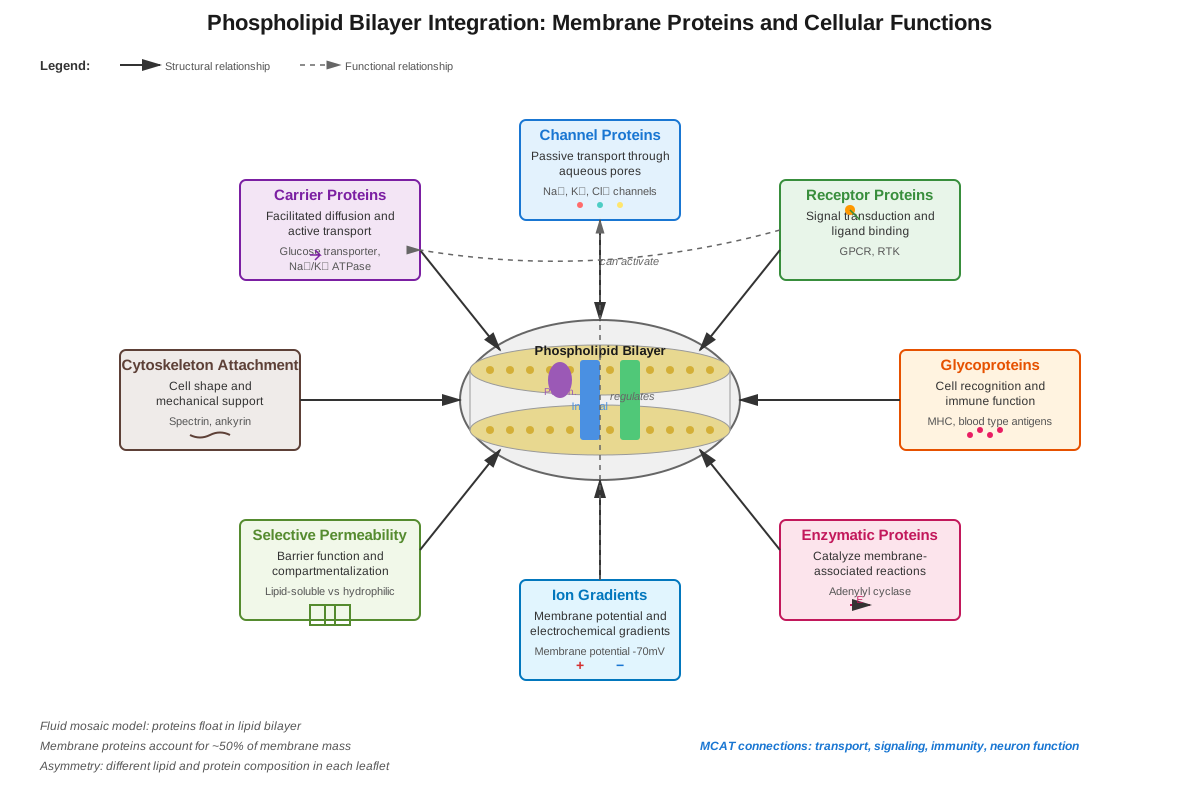
The phospholipid bilayer represents one of the most fundamental structures in Biology, serving as the architectural foundation of all cellular membranes. This amphipathic molecular arrangement creates a selectively permeable barrier that defines cellular boundaries, compartmentalizes intracellular organelles, and enables the sophisticated regulation of molecular traffic essential for life. Understanding the phospholipid bilayer is not merely an exercise in memorizing membrane composition—it is the gateway to comprehending how cells maintain homeostasis, respond to their environment, and execute the complex biochemical processes that sustain living systems.
For the MCAT, the phospholipid bilayer appears across multiple contexts within Cell Biology and biochemistry. Test-makers frequently embed questions about membrane structure within passages discussing drug permeability, signal transduction, membrane protein function, or cellular transport mechanisms. The topic bridges foundational chemistry concepts (polarity, intermolecular forces, hydrophobic effects) with advanced biological principles (membrane potential, receptor function, vesicular transport). Students who master the phospholipid bilayer gain a conceptual framework that supports understanding of approximately 15-20% of biological sciences questions, either directly or as prerequisite knowledge.
The phospholipid bilayer connects intimately with numerous high-yield MCAT topics including membrane proteins, cellular transport (passive and active), signal transduction, membrane potential, and cellular energetics. It also provides the structural context for understanding how cells interact with their environment through receptor-ligand interactions, how neurons transmit electrical signals, and how pharmaceutical agents cross biological barriers. This topic exemplifies the MCAT's emphasis on integrated, systems-level thinking rather than isolated fact recall.
Learning Objectives
- [ ] Define phospholipid bilayer using accurate Biology terminology
- [ ] Explain why phospholipid bilayer matters for the MCAT
- [ ] Apply phospholipid bilayer concepts to exam-style questions
- [ ] Identify common mistakes related to phospholipid bilayer
- [ ] Connect phospholipid bilayer to related Biology concepts
- [ ] Analyze how molecular structure of phospholipids determines bilayer properties
- [ ] Predict the permeability of different molecules across the phospholipid bilayer based on chemical properties
- [ ] Evaluate how temperature, cholesterol content, and fatty acid saturation affect membrane fluidity
Prerequisites
- Basic chemistry of lipids: Understanding of fatty acids, ester bonds, and amphipathic molecules is essential for comprehending phospholipid structure and behavior
- Polarity and intermolecular forces: Knowledge of hydrophobic and hydrophilic interactions explains why phospholipids spontaneously form bilayers in aqueous environments
- Cell theory: Recognition that all cells require boundaries helps contextualize the universal importance of membrane structures
- Thermodynamics basics: Understanding entropy and free energy changes clarifies why bilayer formation is thermodynamically favorable
Why This Topic Matters
Clinical and Real-World Significance
The phospholipid bilayer's selective permeability determines drug bioavailability and therapeutic efficacy. Pharmaceutical scientists must consider membrane permeability when designing medications—lipophilic drugs readily cross membranes while hydrophilic drugs require transport proteins or alternative delivery mechanisms. Diseases like cystic fibrosis, familial hypercholesterolemia, and various channelopathies result from defects in membrane-associated proteins that function within the phospholipid bilayer context. Understanding membrane structure also explains how general anesthetics work (by altering membrane fluidity) and why certain toxins are lethal (by disrupting membrane integrity).
MCAT Exam Statistics
Phospholipid bilayer concepts appear in approximately 8-12% of Biological and Biochemical Foundations questions. The topic most commonly appears in:
- Passage-based questions (60%): Integrated with experimental data about membrane permeability, protein function, or cellular transport
- Discrete questions (40%): Testing fundamental knowledge of membrane structure, composition, or properties
Questions typically assess understanding at the application and analysis levels rather than simple recall. Students must interpret experimental results, predict outcomes based on molecular properties, or explain phenomena using membrane principles.
Common Exam Contexts
The MCAT presents phospholipid bilayer content through several recurring frameworks:
- Drug permeability studies comparing molecular characteristics
- Experiments manipulating membrane composition (cholesterol, saturation)
- Signal transduction passages requiring membrane receptor knowledge
- Neurophysiology contexts involving membrane potential
- Cell biology passages about organelle structure and function
- Biochemistry passages discussing membrane-bound enzyme systems
Core Concepts
Structure of Phospholipids
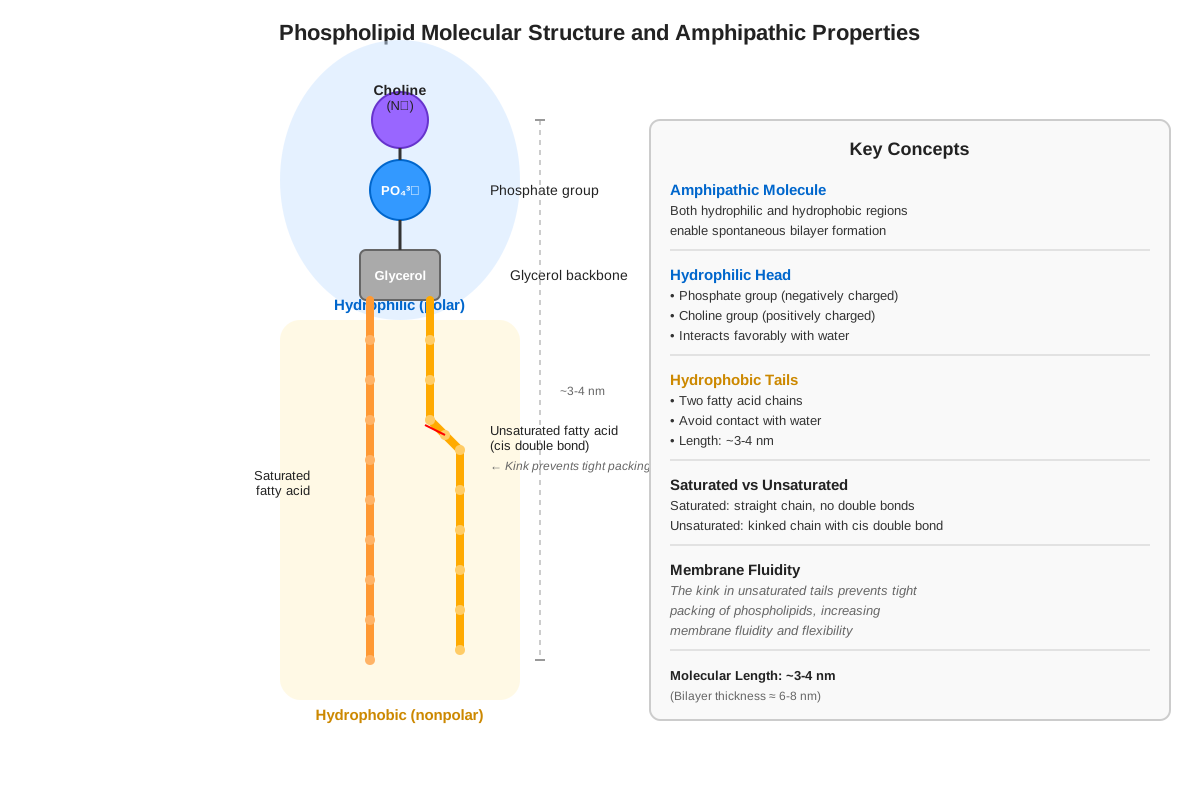
Phospholipids are amphipathic molecules containing both hydrophilic (water-loving) and hydrophobic (water-fearing) regions. The typical phospholipid consists of three main components:
- Glycerol or sphingosine backbone: A three-carbon alcohol (glycerol) or a more complex amino alcohol (sphingosine) serves as the structural foundation
- Fatty acid tails: Two long hydrocarbon chains (typically 14-24 carbons) that are nonpolar and hydrophobic
- Phosphate-containing head group: A phosphate group linked to various polar molecules (choline, serine, ethanolamine, or inositol) creating the hydrophilic region
The amphipathic nature of phospholipids—possessing both polar and nonpolar regions within the same molecule—is the fundamental property that drives bilayer formation. In aqueous environments, phospholipids spontaneously arrange to minimize unfavorable interactions between hydrophobic tails and water while maximizing favorable interactions between hydrophilic heads and water.
Bilayer Formation and Thermodynamics
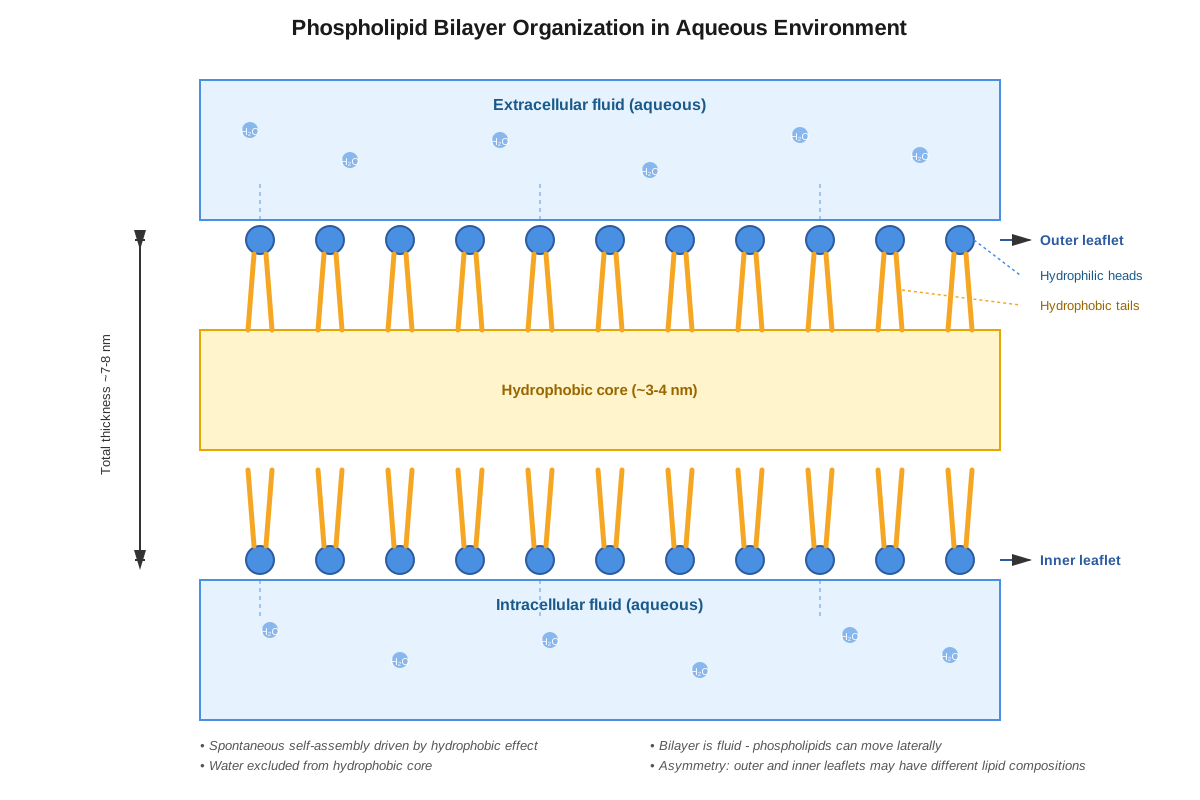
When phospholipids are placed in aqueous solution, they spontaneously self-assemble into a phospholipid bilayer—a two-layered sheet where hydrophobic fatty acid tails face inward, shielded from water, while hydrophilic phosphate heads face outward, interacting with the aqueous environment on both sides. This arrangement is thermodynamically favorable because it:
- Maximizes entropy of water molecules (which would otherwise form ordered cages around hydrophobic groups)
- Minimizes unfavorable enthalpy from hydrophobic-water interactions
- Results in a negative free energy change (ΔG < 0), making the process spontaneous
The bilayer structure is stabilized by multiple weak interactions:
- Hydrophobic effect: The primary driving force; entropy increase from releasing ordered water molecules
- Van der Waals forces: Weak attractions between adjacent hydrocarbon tails
- Electrostatic interactions: Between charged or polar head groups and water
- Hydrogen bonding: Between head groups and surrounding water molecules
Membrane Fluidity
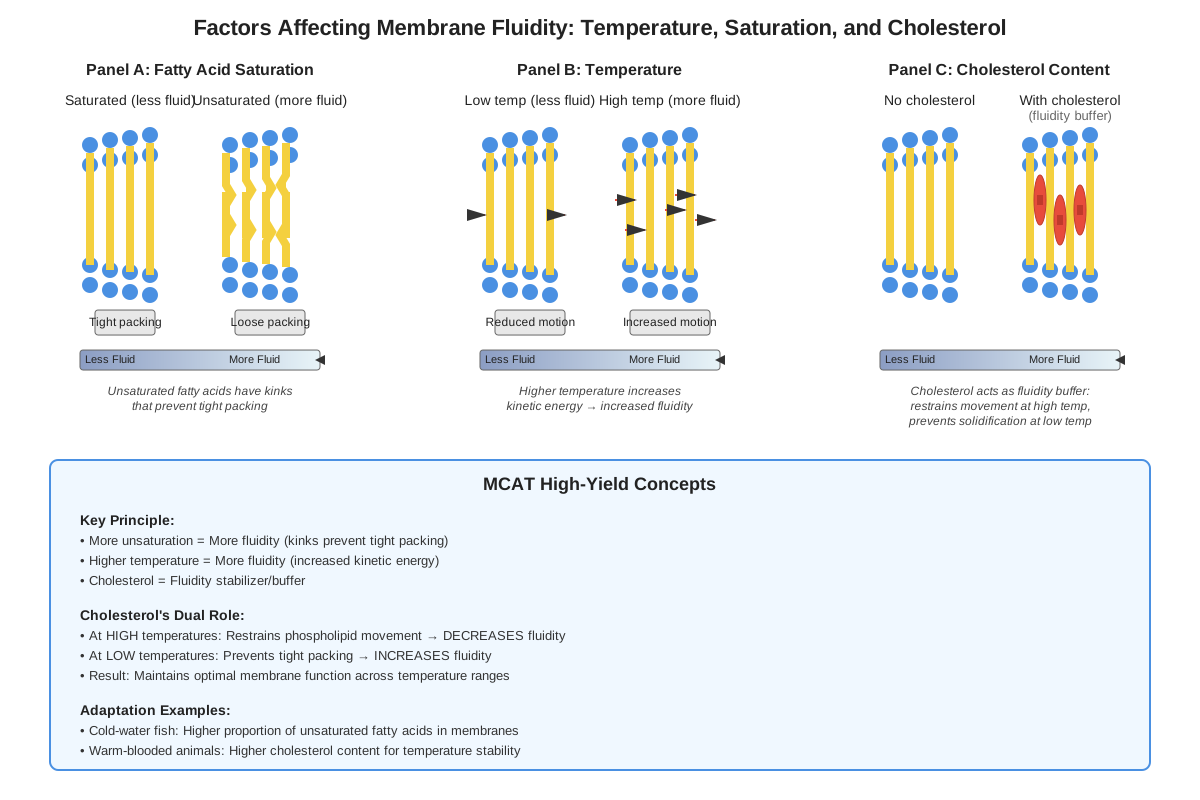
Membrane fluidity refers to the viscosity of the lipid bilayer and the ease with which lipid molecules move within the membrane plane. Fluidity is crucial for membrane function, affecting protein mobility, membrane fusion, and cellular processes. Several factors influence membrane fluidity:
| Factor | Effect on Fluidity | Mechanism |
|---|---|---|
| Temperature increase | Increases fluidity | Greater kinetic energy allows more molecular movement |
| Unsaturated fatty acids | Increases fluidity | Cis double bonds create kinks, preventing tight packing |
| Saturated fatty acids | Decreases fluidity | Straight chains pack tightly with strong van der Waals forces |
| Shorter fatty acid chains | Increases fluidity | Fewer van der Waals interactions between molecules |
| Cholesterol | Moderates fluidity | Decreases fluidity at high temperatures; increases at low temperatures |
Cholesterol deserves special attention as a fluidity buffer. This steroid molecule inserts between phospholipids with its hydroxyl group near the head groups and its rigid steroid rings interacting with fatty acid chains. At high temperatures, cholesterol restrains phospholipid movement, reducing fluidity. At low temperatures, it prevents tight packing and crystallization, maintaining fluidity. This bidirectional effect makes cholesterol a crucial regulator of membrane properties across varying conditions.
Selective Permeability
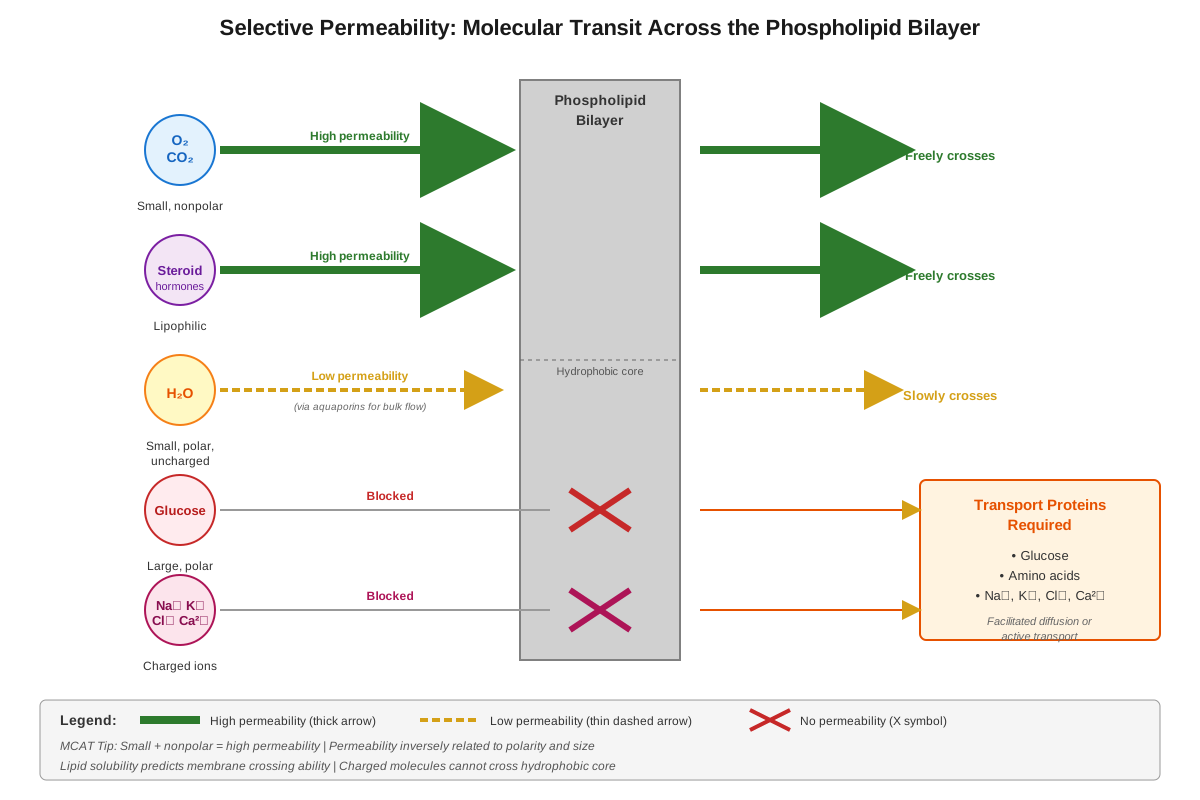
The phospholipid bilayer exhibits selective permeability—allowing some substances to cross freely while restricting others. This property is fundamental to cellular function, enabling cells to maintain distinct internal environments. Permeability depends on molecular characteristics:
Highly Permeable (cross readily without assistance):
- Small, nonpolar molecules (O₂, CO₂, N₂)
- Small, uncharged polar molecules (H₂O, glycerol, ethanol)
- Lipid-soluble molecules (steroid hormones, fat-soluble vitamins)
Low Permeability (require transport proteins):
- Large polar molecules (glucose, amino acids)
- Ions (Na⁺, K⁺, Ca²⁺, Cl⁻)
- Charged molecules of any size
The relationship between molecular properties and permeability follows predictable patterns:
- Size: Smaller molecules cross more easily
- Polarity: Nonpolar molecules cross more easily than polar molecules
- Charge: Charged molecules face significant energy barriers and cross very slowly
MCAT Exam Tip: When evaluating membrane permeability, apply this hierarchy: small + nonpolar > small + polar > large + polar > any charged molecule. This framework helps eliminate incorrect answer choices quickly.
Asymmetry of the Bilayer
Biological membranes exhibit lipid asymmetry—the composition of the inner and outer leaflets differs significantly. This asymmetry is functionally important:
- Outer leaflet: Enriched in phosphatidylcholine and sphingomyelin
- Inner leaflet: Enriched in phosphatidylserine and phosphatidylethanolamine
Phosphatidylserine (PS) normally resides exclusively on the inner leaflet. During apoptosis (programmed cell death), PS flips to the outer surface, serving as an "eat me" signal for phagocytes. This asymmetry must be actively maintained by enzymes called flippases and floppases that use ATP to move specific phospholipids between leaflets.
Fluid Mosaic Model
The fluid mosaic model, proposed by Singer and Nicolson (1972), describes biological membranes as two-dimensional fluids where lipids and proteins can move laterally within the plane of the membrane. Key features include:
- Lateral diffusion: Phospholipids and proteins move freely within their leaflet (rapid, ~10⁷ times per second)
- Transverse diffusion (flip-flop): Movement between leaflets is rare without enzymatic assistance (occurs once per hours to days)
- Protein mobility: Integral membrane proteins float within the lipid bilayer like "icebergs in a sea"
- Membrane domains: Specialized regions (lipid rafts) with distinct composition and function
This model emphasizes that membranes are dynamic structures, not static barriers, with components in constant motion while maintaining overall organization.
Concept Relationships
The phospholipid bilayer serves as the central organizing principle connecting multiple biological concepts. Phospholipid structure (amphipathic nature) → drives spontaneous bilayer formation → creates selective permeability → necessitates transport proteins for molecules that cannot cross independently. This sequence establishes the foundation for understanding all membrane transport mechanisms.
Membrane fluidity connects bidirectionally with cellular function: temperature and lipid composition determine fluidity, while fluidity affects protein function, signal transduction efficiency, and membrane fusion events. The relationship extends to homeostasis: organisms regulate membrane composition (adjusting saturation and cholesterol content) to maintain optimal fluidity across varying environmental conditions.
The bilayer concept bridges to cell signaling: membrane receptors embedded in the phospholipid bilayer detect extracellular signals, and the lipid environment affects receptor conformation and function. Similarly, membrane potential depends on the bilayer's impermeability to ions, which allows cells to maintain concentration gradients that store electrical energy.
Understanding phospholipid bilayers enables comprehension of organelle function: each membrane-bound organelle (mitochondria, endoplasmic reticulum, Golgi apparatus) uses phospholipid bilayers with specialized compositions to create distinct compartments with unique biochemical environments. The endomembrane system relies on vesicles—small phospholipid bilayer spheres—to transport materials between organelles.
Quick check — test yourself on Phospholipid bilayer so far.
Try Flashcards →High-Yield Facts
⭐ The phospholipid bilayer forms spontaneously in aqueous environments due to the hydrophobic effect, requiring no energy input
⭐ Small, nonpolar molecules (O₂, CO₂) cross membranes freely, while ions and large polar molecules require transport proteins
⭐ Unsaturated fatty acids increase membrane fluidity by introducing kinks that prevent tight packing
⭐ Cholesterol acts as a bidirectional fluidity buffer: decreasing fluidity at high temperatures and increasing it at low temperatures
⭐ Membrane asymmetry is functionally important; phosphatidylserine on the outer leaflet signals apoptosis
- Lateral diffusion of phospholipids within a leaflet is rapid (~10⁷ per second), while flip-flop between leaflets is extremely rare without enzymes
- The fluid mosaic model describes membranes as two-dimensional fluids with mobile lipids and proteins
- Membrane thickness is approximately 7-8 nm (phospholipid length determines this dimension)
- Glycerophospholipids (phosphoglycerides) are the most abundant membrane lipids, followed by sphingolipids and cholesterol
- Temperature below the transition temperature causes membranes to enter a gel phase with dramatically reduced fluidity
- Lipid rafts are specialized membrane microdomains enriched in cholesterol and sphingolipids that organize signaling proteins
- The permeability coefficient for water is surprisingly high despite water's polarity, though aquaporins further increase water transport in some cells
Common Misconceptions
Misconception: The phospholipid bilayer is a rigid, static structure that maintains a fixed arrangement.
Correction: The bilayer is highly dynamic with constant lateral movement of lipids and proteins. The fluid mosaic model emphasizes this fluidity—phospholipids diffuse laterally within their leaflet millions of times per second, and the membrane behaves as a two-dimensional fluid rather than a solid barrier.
Misconception: Water cannot cross the phospholipid bilayer because it is polar.
Correction: While water is polar, its small size allows significant permeability across the bilayer, though at a slower rate than nonpolar molecules. Many cells also express aquaporins (water channels) to dramatically increase water transport, but even pure phospholipid bilayers show measurable water permeability.
Misconception: Cholesterol always decreases membrane fluidity.
Correction: Cholesterol has a bidirectional effect on fluidity depending on temperature. At high temperatures, cholesterol restrains phospholipid movement and decreases fluidity. At low temperatures, cholesterol prevents tight packing and maintains fluidity. This makes cholesterol a fluidity buffer that moderates temperature-induced changes.
Misconception: All phospholipids are identical in biological membranes.
Correction: Biological membranes contain diverse phospholipids with different head groups (choline, serine, ethanolamine, inositol) and varying fatty acid compositions. This diversity creates functional specialization—different phospholipids have distinct roles in signaling, membrane curvature, and protein interactions.
Misconception: Flip-flop movement of phospholipids between leaflets occurs as readily as lateral diffusion.
Correction: Transverse movement (flip-flop) is extremely rare and energetically unfavorable because it requires the polar head group to pass through the hydrophobic core. Without enzymatic assistance (flippases, floppases, scramblases), flip-flop occurs once per hours to days, compared to lateral diffusion occurring millions of times per second.
Misconception: The hydrophobic effect is primarily driven by attractive forces between nonpolar molecules.
Correction: The hydrophobic effect is primarily entropy-driven. When nonpolar molecules aggregate (as in bilayer formation), ordered water molecules surrounding them are released, dramatically increasing entropy. This entropy increase, not attraction between hydrophobic groups, provides the primary thermodynamic driving force.
Worked Examples
Example 1: Predicting Membrane Permeability
Question: Rank the following molecules in order of decreasing permeability across a pure phospholipid bilayer (no transport proteins): glucose (C₆H₁₂O₆), oxygen (O₂), sodium ion (Na⁺), and testosterone (steroid hormone).
Solution:
Step 1: Identify relevant molecular properties
- Oxygen: Small, nonpolar molecule
- Testosterone: Large, nonpolar (lipid-soluble) molecule
- Glucose: Large, polar molecule with multiple hydroxyl groups
- Sodium ion: Small but charged
Step 2: Apply permeability principles
The hierarchy for membrane permeability is: small + nonpolar > large + nonpolar > small + polar > large + polar > charged molecules
Step 3: Rank the molecules
- Oxygen (highest permeability): Small and nonpolar—crosses freely with no barrier
- Testosterone: Large but highly nonpolar/lipophilic—dissolves in the lipid bilayer and crosses readily
- Glucose: Large and polar—faces significant energy barrier; very low permeability without transporters
- Sodium ion (lowest permeability): Charged molecules face enormous energy barriers crossing the hydrophobic core; essentially impermeable without channels
Answer: O₂ > testosterone > glucose > Na⁺
Key Concept Connection: This example demonstrates how molecular properties (size, polarity, charge) determine membrane permeability, a fundamental principle for understanding drug delivery, cellular transport, and membrane potential.
Example 2: Analyzing Membrane Fluidity Manipulation
Question: Researchers study two populations of bacteria: Population A grows at 37°C, while Population B grows at 15°C. Analysis reveals that Population B has a higher proportion of unsaturated fatty acids in membrane phospholipids. Explain this observation using principles of membrane fluidity.
Solution:
Step 1: Identify the biological challenge
Population B lives at lower temperature (15°C vs. 37°C). Lower temperatures decrease kinetic energy, causing phospholipids to move more slowly and pack more tightly, reducing membrane fluidity.
Step 2: Recall how unsaturated fatty acids affect fluidity
Unsaturated fatty acids contain cis double bonds that create kinks in the hydrocarbon chains. These kinks prevent tight packing of phospholipids, maintaining space between molecules and increasing fluidity.
Step 3: Connect adaptation to environmental challenge
Population B compensates for the fluidity-reducing effect of cold temperature by incorporating more unsaturated fatty acids. The kinks from double bonds counteract the tendency toward tight packing at low temperature, maintaining optimal membrane fluidity for proper function.
Step 4: Consider the broader principle
This demonstrates homeoviscous adaptation—organisms regulate membrane lipid composition to maintain relatively constant fluidity despite environmental temperature changes. Population A, living at higher temperature, doesn't need as many unsaturated fatty acids because thermal energy alone provides sufficient fluidity.
Answer: Population B increases unsaturated fatty acid content to maintain membrane fluidity at low temperatures. The kinks from cis double bonds prevent tight packing that would otherwise occur in cold conditions, compensating for reduced thermal energy and ensuring membranes remain functional.
Key Concept Connection: This example illustrates how organisms actively regulate membrane composition to maintain homeostasis, connecting membrane structure to adaptation and survival. It also demonstrates the MCAT's emphasis on applying concepts to experimental or physiological scenarios rather than simple recall.
Exam Strategy
Approaching MCAT Questions on Phospholipid Bilayers
When encountering phospholipid bilayer questions, follow this systematic approach:
- Identify the question type: Is it asking about structure, permeability, fluidity, or function?
- Extract relevant molecular properties: Note size, polarity, charge, and functional groups
- Apply the appropriate principle: Match the question to core concepts (permeability hierarchy, fluidity factors, etc.)
- Eliminate impossible answers: Use extreme reasoning—charged molecules never cross freely, for example
- Verify your answer: Check that it's consistent with thermodynamics and biological principles
Trigger Words and Phrases
Watch for these high-yield terms that signal specific concepts:
- "Amphipathic," "amphiphilic": Indicates focus on dual nature of phospholipids; expect questions about bilayer formation
- "Selective permeability," "differential permeability": Signals questions about which molecules cross membranes
- "Membrane fluidity," "viscosity": Expect questions about temperature, saturation, or cholesterol effects
- "Spontaneous," "thermodynamically favorable": Points to entropy-driven processes like bilayer formation
- "Lipid-soluble," "hydrophobic": Indicates molecules that cross membranes readily
- "Flip-flop," "transverse diffusion": Rare movement requiring energy or enzymes
- "Lateral diffusion": Common, rapid movement within a leaflet
Process of Elimination Tips
For permeability questions:
- Eliminate any answer suggesting charged molecules cross freely
- Eliminate answers claiming large polar molecules are highly permeable
- Keep answers involving small, nonpolar molecules as highly permeable
For fluidity questions:
- Eliminate answers suggesting saturated fats increase fluidity
- Eliminate answers claiming cholesterol has only one effect on fluidity
- Keep answers recognizing temperature's direct relationship with fluidity
For structure questions:
- Eliminate answers placing hydrophobic groups facing water
- Eliminate answers suggesting bilayers require energy to form
- Keep answers emphasizing entropy increase from hydrophobic effect
Time Allocation
- Discrete questions: 60-90 seconds—quickly identify the concept being tested and apply the relevant principle
- Passage-based questions: 90-120 seconds—extract relevant information from the passage, connect to core concepts, then solve
- Complex analysis questions: Up to 150 seconds—may require integrating multiple concepts or analyzing experimental data
Don't spend excessive time on phospholipid bilayer questions—they test fundamental concepts that should become automatic with practice.
Memory Techniques
Mnemonics
"FUSS" for factors increasing membrane fluidity:
- Fewer carbons (shorter chains)
- Unsaturated fatty acids
- Steroid (cholesterol) at low temperature
- Soaring temperature
"PONG" for permeability hierarchy (most to least permeable):
- Petite nonpolar (small, nonpolar)
- Oily large (large, nonpolar/lipophilic)
- Neutral polar (uncharged polar)
- Guarded charged (ions—need channels)
"HEAD out, TAIL in" for bilayer orientation:
- Hydrophilic HEADs face the aqueous environment outside and inside
- Hydrophobic TAILs hide in the interior, away from water
Visualization Strategies
The Sandwich Model: Visualize the phospholipid bilayer as a sandwich where:
- The bread slices = hydrophilic head groups (facing water on both sides)
- The filling = hydrophobic tails (hidden in the middle)
- This image reinforces that hydrophobic regions never contact water
The Kink Effect: Picture saturated fatty acids as straight rulers that stack neatly, while unsaturated fatty acids are bent rulers that can't pack tightly. This visual explains why unsaturation increases fluidity.
The Cholesterol Buffer: Imagine cholesterol as a "molecular spacer" at low temperature (keeping phospholipids apart) and a "molecular restraint" at high temperature (preventing excessive movement). This dual image captures its bidirectional effect.
Acronyms
CLAPS for major phospholipid head groups:
- Choline (phosphatidylcholine)
- Lipid (general category)
- Amino (phosphatidylethanolamine)
- Phosphatidylserine
- Sugar (phosphatidylinositol)
Summary
The phospholipid bilayer represents the fundamental architectural unit of all biological membranes, formed through spontaneous self-assembly of amphipathic phospholipid molecules in aqueous environments. This structure, driven by the entropy-increasing hydrophobic effect, creates a selectively permeable barrier with hydrophobic tails sequestered in the interior and hydrophilic heads facing aqueous compartments. Membrane fluidity—critical for proper function—depends on temperature, fatty acid saturation, chain length, and cholesterol content, with unsaturated fatty acids and higher temperatures increasing fluidity while saturated fatty acids decrease it. The bilayer exhibits selective permeability based on molecular size, polarity, and charge, allowing small nonpolar molecules to cross freely while restricting ions and large polar molecules. Understanding these principles enables prediction of drug permeability, explanation of membrane protein function, and comprehension of cellular transport mechanisms—all high-yield topics for MCAT success.
Key Takeaways
- The phospholipid bilayer forms spontaneously due to the hydrophobic effect, maximizing water entropy by sequestering nonpolar fatty acid tails in the membrane interior
- Selective permeability follows a predictable hierarchy: small nonpolar > large nonpolar > small polar > large polar > charged molecules
- Membrane fluidity increases with temperature, unsaturated fatty acids, and shorter chains; cholesterol acts as a bidirectional buffer
- The fluid mosaic model describes membranes as dynamic two-dimensional fluids with rapid lateral diffusion but rare flip-flop movement
- Amphipathic structure—containing both hydrophilic heads and hydrophobic tails—is the essential property enabling bilayer formation
- Membrane asymmetry between leaflets is functionally important and actively maintained by ATP-dependent enzymes
- Understanding phospholipid bilayer principles is foundational for comprehending transport, signaling, membrane potential, and drug permeability
Related Topics
Membrane Proteins: Integral and peripheral proteins embedded in or associated with the phospholipid bilayer perform diverse functions including transport, signaling, and enzymatic activity. Mastering bilayer structure provides the foundation for understanding how proteins interact with the lipid environment.
Cellular Transport Mechanisms: Passive diffusion, facilitated diffusion, and active transport all depend on the selective permeability established by the phospholipid bilayer. Understanding why certain molecules cannot cross independently explains the necessity for transport proteins.
Signal Transduction: Membrane receptors embedded in the phospholipid bilayer detect extracellular signals and initiate intracellular responses. The lipid environment affects receptor function and organization.
Membrane Potential: The impermeability of the phospholipid bilayer to ions enables cells to maintain concentration gradients that store electrical energy, essential for nerve and muscle function.
Lipid Metabolism: Understanding phospholipid synthesis, modification, and degradation connects membrane structure to metabolic pathways and cellular regulation.
Practice CTA
Now that you've mastered the core concepts of the phospholipid bilayer, reinforce your understanding by attempting practice questions and flashcards. Focus on application-level questions that require you to predict permeability, analyze experimental manipulations of membrane composition, or explain physiological phenomena using membrane principles. The phospholipid bilayer is a high-yield topic that appears across multiple MCAT contexts—investing time in practice will pay dividends on test day. Remember: understanding the "why" behind bilayer properties is more valuable than memorizing isolated facts. You've built a strong foundation—now apply it!
Sign up free to keep reading
Create a free AnvayaPrep account to finish this MCAT guide on Phospholipid bilayer — plus flashcards and practice questions.