Overview
The 5 prime cap (also written as 5' cap) is a modified guanosine nucleotide structure added to the 5' end of eukaryotic messenger RNA (mRNA) molecules during post-transcriptional processing. This modification occurs in the nucleus shortly after transcription initiation and represents one of the three major RNA processing events that distinguish eukaryotic gene expression from prokaryotic systems. The 5 prime cap consists of a 7-methylguanosine residue attached through an unusual 5'-5' triphosphate linkage to the first transcribed nucleotide of the pre-mRNA. This structure is critical for mRNA stability, translation initiation, and protection from cellular degradation machinery.
Understanding the 5 prime cap is essential for the MCAT because it integrates multiple high-yield concepts in Molecular Biology and Genetics, including transcription, translation, gene regulation, and the fundamental differences between prokaryotic and eukaryotic gene expression. Questions involving the 5' cap frequently appear in passage-based scenarios discussing experimental manipulations of gene expression, viral mechanisms that hijack host cell machinery, or comparative biology questions contrasting bacterial and eukaryotic systems. The cap structure also connects to broader themes of cellular compartmentalization and the complexity of eukaryotic gene regulation.
Within Biology, the 5 prime cap exemplifies how chemical modifications expand the functional repertoire of nucleic acids beyond their role as simple information carriers. This topic bridges structural biochemistry with functional molecular biology, requiring students to understand both the chemical nature of the modification and its multiple biological consequences. Mastery of this concept enables deeper comprehension of translation regulation, mRNA metabolism, and the sophisticated control mechanisms that eukaryotic cells employ to regulate protein synthesis at the post-transcriptional level.
Learning Objectives
- [ ] Define 5 prime cap using accurate Biology terminology
- [ ] Explain why 5 prime cap matters for the MCAT
- [ ] Apply 5 prime cap to exam-style questions
- [ ] Identify common mistakes related to 5 prime cap
- [ ] Connect 5 prime cap to related Biology concepts
- [ ] Describe the enzymatic mechanism of 5' cap formation and the specific enzymes involved
- [ ] Compare and contrast mRNA processing in prokaryotes versus eukaryotes with emphasis on capping
- [ ] Predict the cellular consequences of defective or absent 5' cap structures
- [ ] Analyze experimental scenarios involving cap-dependent versus cap-independent translation
Prerequisites
- Transcription fundamentals: Understanding RNA polymerase II function and the direction of RNA synthesis (5' to 3') is essential because capping occurs co-transcriptionally at the 5' end
- RNA structure: Knowledge of nucleotide structure, phosphodiester bonds, and the distinction between 5' and 3' ends provides the chemical foundation for understanding the unusual 5'-5' linkage
- Eukaryotic vs. prokaryotic cells: Recognition that prokaryotes lack nuclear compartmentalization and extensive RNA processing helps contextualize why capping is a eukaryotic-specific phenomenon
- Translation initiation: Familiarity with ribosome assembly and the role of initiation factors enables understanding of how the cap facilitates translation
- Basic enzyme mechanisms: General knowledge of how enzymes catalyze modifications helps in comprehending the multi-step capping process
Why This Topic Matters
The 5 prime cap has significant clinical and research relevance that extends beyond its role in normal cellular function. Many viruses, including influenza and coronaviruses, either synthesize their own cap structures or steal caps from host mRNAs through "cap-snatching" mechanisms, making this knowledge relevant to understanding viral pathogenesis and antiviral drug development. Certain genetic disorders affecting capping enzymes result in developmental abnormalities and neurological conditions, demonstrating the critical nature of proper mRNA processing. Additionally, the cap structure serves as a target for therapeutic interventions, with modified cap analogs being explored as antiviral agents and tools to enhance mRNA vaccine stability and translation efficiency.
On the MCAT, questions involving the 5' cap appear with moderate frequency, typically 1-3 times per exam administration. These questions most commonly appear in Biological and Biochemical Foundations of Living Systems passages that present experimental data about gene expression, protein synthesis rates, or comparative studies between different organisms. The topic frequently appears in the context of:
- Passage-based questions analyzing experimental manipulations of mRNA stability or translation efficiency
- Discrete questions testing knowledge of eukaryotic versus prokaryotic gene expression differences
- Questions involving viral mechanisms or biotechnology applications (such as mRNA vaccine design)
- Data interpretation questions showing graphs of protein synthesis rates under various conditions
- Questions requiring integration of transcription, RNA processing, and translation concepts
Exam passages often present scenarios where researchers modify or remove the cap structure and ask students to predict outcomes, or they describe novel organisms or viruses and ask students to identify which features would be present or absent. Understanding the multiple functions of the cap enables students to reason through these scenarios even when specific details weren't explicitly memorized.
Core Concepts
Structure of the 5 Prime Cap
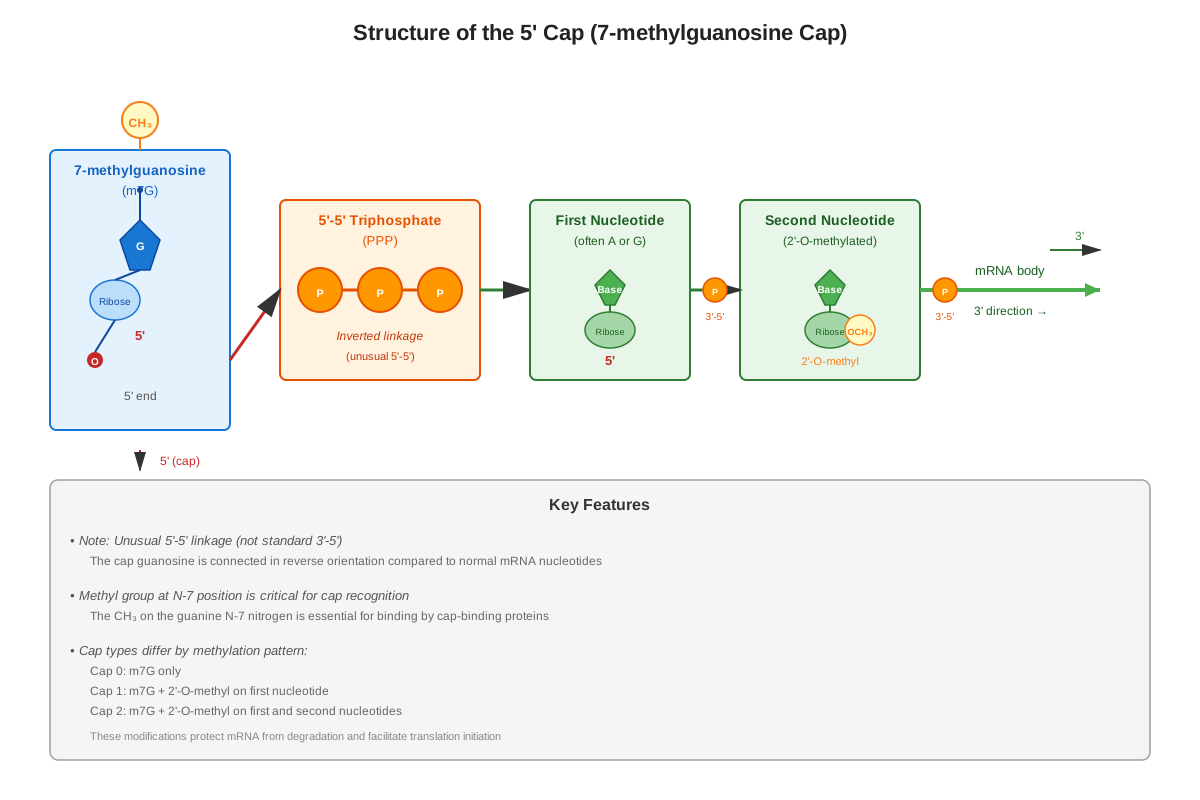
The 5 prime cap structure, formally called the 7-methylguanosine cap or m7G cap, consists of a guanosine nucleotide that has been methylated at the N-7 position of the guanine base. This modified guanosine is attached to the first transcribed nucleotide of the mRNA through an unusual 5'-5' triphosphate linkage, rather than the typical 3'-5' phosphodiester bond found throughout the rest of the RNA molecule. This inverted orientation creates a structure that is chemically distinct and recognizable by specific cap-binding proteins.
The complete cap structure actually exists in several forms, designated as Cap 0, Cap 1, and Cap 2, depending on the extent of additional methylation:
| Cap Type | Structure | Methylation Pattern |
|---|---|---|
| Cap 0 | m7G-ppp-N | Only the guanosine is methylated at N-7 position |
| Cap 1 | m7G-ppp-Nm | Guanosine methylated + first nucleotide has 2'-O-methylation on ribose |
| Cap 2 | m7G-ppp-Nm-Nm | Guanosine methylated + first two nucleotides have 2'-O-methylation |
Most mammalian mRNAs possess Cap 1 structures, while Cap 2 is less common. The specific cap type can influence translation efficiency and immune recognition, as the innate immune system can distinguish between properly capped cellular mRNAs and improperly capped or uncapped foreign RNAs.
Enzymatic Mechanism of Cap Formation
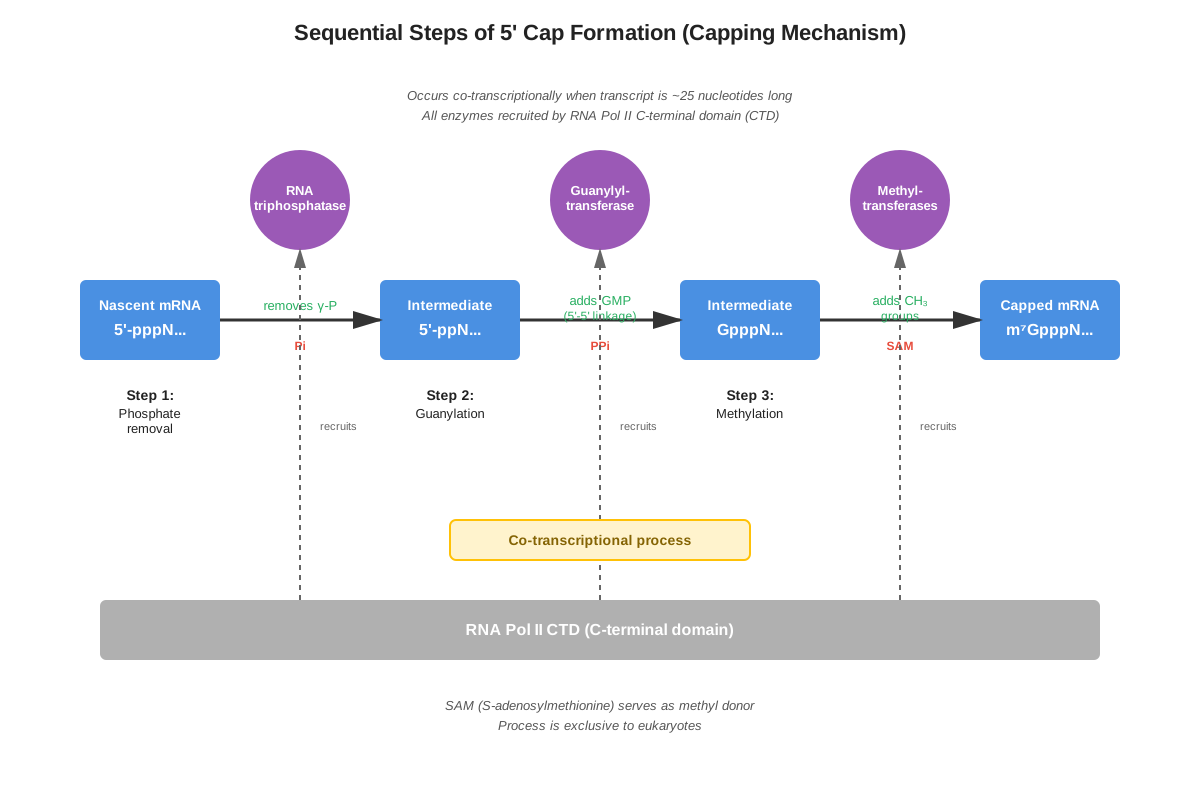
The capping process occurs co-transcriptionally, meaning it happens while RNA polymerase II is still synthesizing the pre-mRNA molecule. This process begins when the nascent RNA transcript reaches approximately 20-30 nucleotides in length. The capping reaction involves three sequential enzymatic steps:
- Phosphatase reaction: An RNA triphosphatase removes one phosphate group from the 5' triphosphate of the first transcribed nucleotide, converting it from a triphosphate to a diphosphate (pppN → ppN)
- Guanylyltransferase reaction: A guanylyltransferase (capping enzyme) adds a GMP molecule in reverse orientation, creating the distinctive 5'-5' triphosphate linkage (ppN + GTP → Gppp-N + PPi)
- Methyltransferase reactions: Two different methyltransferases sequentially add methyl groups using S-adenosylmethionine (SAM) as the methyl donor:
- First, the N-7 position of the terminal guanine is methylated (creating Cap 0)
- Then, the 2'-OH position of the ribose of the first transcribed nucleotide is methylated (creating Cap 1)
These capping enzymes are recruited to the site of transcription through interactions with the C-terminal domain (CTD) of RNA polymerase II, which becomes phosphorylated during transcription initiation. This coupling ensures that capping occurs rapidly and efficiently on nascent transcripts.
Functions of the 5 Prime Cap
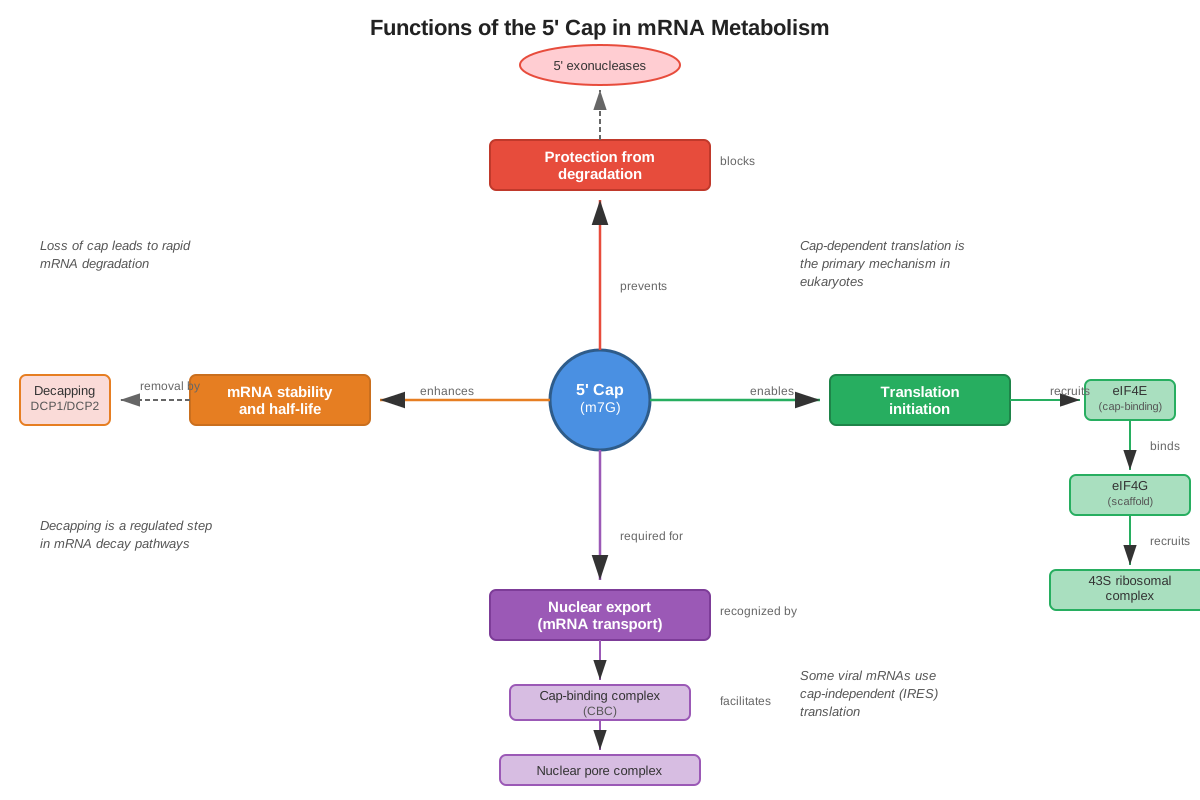
The 5' cap serves multiple critical functions in eukaryotic gene expression, making it one of the most important post-transcriptional modifications:
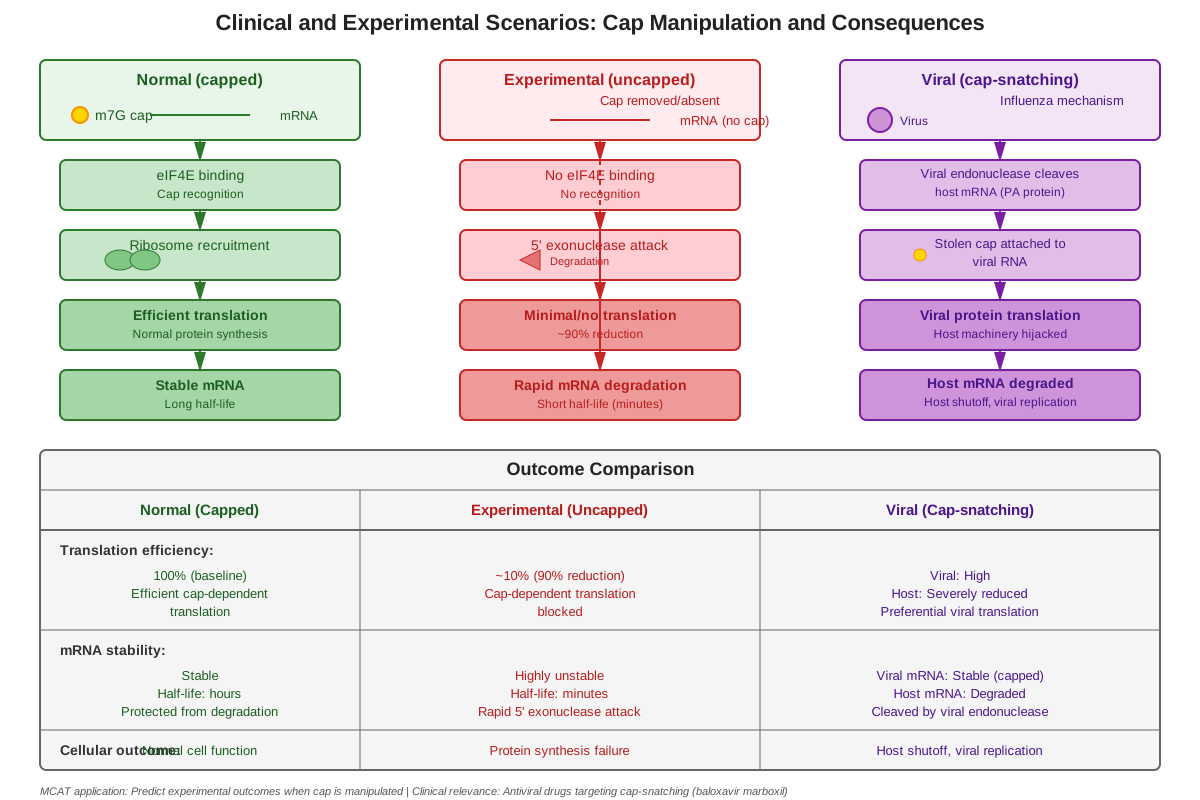
Protection from degradation: The cap structure protects mRNA from degradation by 5' exonucleases, which are enzymes that degrade RNA from the 5' end. The unusual 5'-5' linkage is not recognized by these exonucleases, significantly extending mRNA half-life. Removal of the cap (decapping) is often the rate-limiting step in mRNA decay pathways.
Translation initiation: The cap is recognized by the cap-binding complex (CBC) in the nucleus and later by eukaryotic initiation factor 4E (eIF4E) in the cytoplasm. The eIF4E protein binds the cap structure and recruits other initiation factors and the small ribosomal subunit, facilitating cap-dependent translation. This represents the primary mechanism of translation initiation for most eukaryotic mRNAs.
RNA export: The cap structure serves as a quality control checkpoint for mRNA export from the nucleus. The nuclear cap-binding complex (CBC) helps distinguish fully processed mRNAs from incompletely processed pre-mRNAs and facilitates transport through nuclear pores.
Regulation of gene expression: The availability and activity of cap-binding proteins can be regulated, providing a mechanism for controlling translation of specific mRNAs or groups of mRNAs. During cellular stress, cap-dependent translation may be globally reduced while cap-independent mechanisms become more important.
Immune evasion: Proper capping helps cellular mRNAs avoid detection by innate immune sensors such as RIG-I (retinoic acid-inducible gene I), which recognizes uncapped or improperly capped RNAs as foreign. This distinction between "self" and "non-self" RNA is crucial for antiviral immunity.
Prokaryotic vs. Eukaryotic Comparison
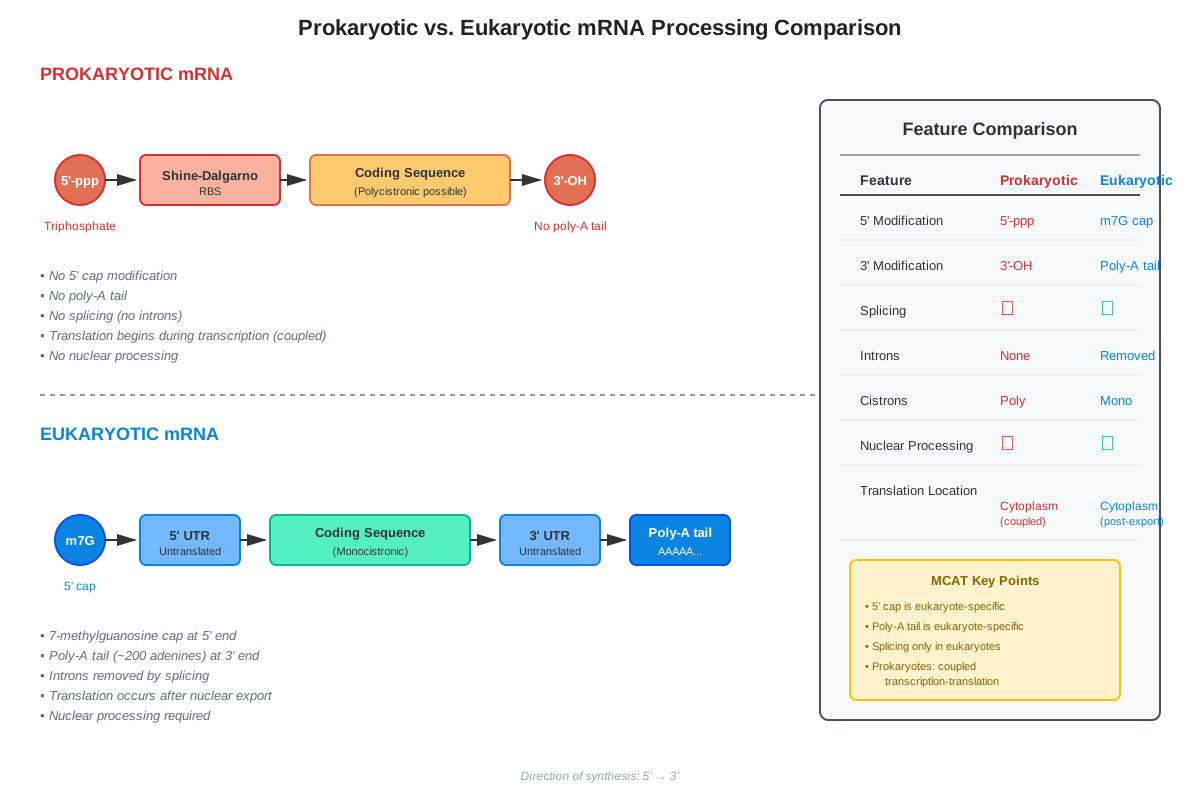
One of the most testable aspects of the 5 prime cap for the MCAT is understanding why this structure exists in eukaryotes but not prokaryotes:
Prokaryotic mRNAs:
- Lack 5' cap structures entirely
- Possess a 5' triphosphate group (the original triphosphate from transcription initiation)
- Are translated while still being transcribed (coupled transcription-translation)
- Have shorter half-lives (minutes rather than hours)
- Use Shine-Dalgarno sequences for ribosome binding rather than cap-dependent mechanisms
- Do not require nuclear export (no nucleus present)
Eukaryotic mRNAs:
- Possess 5' cap structures (m7G cap)
- Undergo extensive processing in the nucleus before translation
- Have longer half-lives due to cap protection
- Use cap-dependent translation initiation as the primary mechanism
- Require export from nucleus to cytoplasm, with the cap serving as an export signal
- Are subject to more complex regulation at multiple levels
This fundamental difference reflects the greater complexity of eukaryotic gene regulation and the compartmentalization of transcription and translation into separate cellular locations.
Cap-Dependent vs. Cap-Independent Translation
While most eukaryotic translation is cap-dependent, requiring eIF4E binding to the 5' cap, some mRNAs can be translated through cap-independent mechanisms. This occurs through Internal Ribosome Entry Sites (IRES), which are structured RNA elements typically located in the 5' untranslated region (5' UTR) that can directly recruit ribosomes without requiring a 5' cap.
Cap-independent translation becomes particularly important during:
- Cellular stress conditions when cap-dependent translation is inhibited
- Viral infection, as many viruses use IRES-mediated translation
- Translation of specific cellular mRNAs encoding stress response proteins
- Conditions where eIF4E availability is limited
Understanding both mechanisms is important for the MCAT because experimental passages may describe conditions that favor one mechanism over the other, or viruses that manipulate the host translation machinery.
Concept Relationships
The 5 prime cap sits at the intersection of multiple fundamental processes in Molecular Biology and Genetics. The capping process directly depends on transcription by RNA polymerase II, as the phosphorylated CTD of this polymerase recruits capping enzymes. This creates a direct mechanistic link: Transcription initiation → CTD phosphorylation → Capping enzyme recruitment → Cap formation.
The cap structure then influences downstream processes in a cascade: Cap formation → mRNA stability → Nuclear export → Translation initiation → Protein synthesis. Each of these steps can serve as a regulatory point, making the cap a central hub in gene expression control.
The cap also connects to RNA splicing and polyadenylation, the other two major RNA processing events. These three modifications (capping, splicing, and polyadenylation) are coordinated through the CTD of RNA polymerase II and through physical interactions between the processing machineries. The cap-binding complex can influence splice site selection, creating a relationship: Cap formation → CBC binding → Enhanced splicing efficiency.
Understanding the cap's role in distinguishing self from non-self RNA connects this topic to immunology: Proper capping → Immune evasion → Cellular RNA tolerance, while Absent/improper capping → RIG-I recognition → Interferon response → Antiviral state. This relationship is exploited by viruses and is relevant to mRNA vaccine design.
The cap also relates to mRNA decay pathways through the concept that Deadenylation → Decapping → 5' to 3' exonuclease degradation represents a major mRNA turnover pathway. The cap must be removed before the mRNA body can be degraded, making decapping a rate-limiting and regulated step.
High-Yield Facts
⭐ The 5' cap consists of 7-methylguanosine (m7G) attached via an unusual 5'-5' triphosphate linkage to the first transcribed nucleotide
⭐ Capping occurs co-transcriptionally in the nucleus when the nascent transcript reaches approximately 20-30 nucleotides in length
⭐ Prokaryotic mRNAs completely lack 5' cap structures, representing a fundamental difference from eukaryotic mRNAs
⭐ The cap protects mRNA from 5' exonuclease degradation and significantly extends mRNA half-life
⭐ Cap-dependent translation requires eIF4E binding to the cap structure to recruit the ribosome and initiation factors
- The capping process involves three enzymatic steps: phosphatase, guanylyltransferase, and methyltransferase reactions
- Capping enzymes are recruited through interactions with the phosphorylated C-terminal domain (CTD) of RNA polymerase II
- The cap-binding complex (CBC) in the nucleus facilitates mRNA export and quality control
- Removal of the cap (decapping) is often the rate-limiting step in mRNA degradation pathways
- Proper capping helps cellular mRNAs evade detection by innate immune sensors like RIG-I
- Some mRNAs can undergo cap-independent translation through Internal Ribosome Entry Sites (IRES)
- Many viruses either synthesize their own caps or steal caps from host mRNAs (cap-snatching)
- The cap exists in multiple forms (Cap 0, Cap 1, Cap 2) with varying degrees of methylation
- S-adenosylmethionine (SAM) serves as the methyl donor for cap methylation reactions
- Modified cap analogs are used in mRNA vaccine technology to enhance stability and translation efficiency
Quick check — test yourself on 5 prime cap so far.
Try Flashcards →Common Misconceptions
Misconception: The 5' cap is added after transcription is complete, similar to polyadenylation at the 3' end.
Correction: Capping occurs co-transcriptionally very early during transcription (after only 20-30 nucleotides), while the RNA polymerase is still actively synthesizing the transcript. This early timing is crucial for protecting the nascent RNA and coordinating with other processing events.
Misconception: The 5' cap is connected to the mRNA through a normal 3'-5' phosphodiester bond like other nucleotides in the RNA chain.
Correction: The cap is attached through an unusual 5'-5' triphosphate linkage, which is inverted compared to normal RNA backbone bonds. This unique structure is what makes the cap resistant to exonuclease degradation and recognizable by specific cap-binding proteins.
Misconception: All RNAs in eukaryotic cells have 5' caps, including tRNA, rRNA, and other non-coding RNAs.
Correction: Only mRNAs and some long non-coding RNAs transcribed by RNA polymerase II receive 5' caps. Transfer RNAs (tRNAs) and ribosomal RNAs (rRNAs) are transcribed by RNA polymerases I and III, which do not recruit capping machinery, so these RNAs lack caps.
Misconception: The primary function of the 5' cap is to mark the start codon for translation.
Correction: The cap does not mark the start codon; rather, it serves as a binding site for initiation factors that help recruit the ribosome. The ribosome then scans along the mRNA from the cap until it encounters the start codon (usually AUG) in the proper context. The cap is typically located in the 5' UTR, upstream of the start codon.
Misconception: Prokaryotic mRNAs have a different type of cap structure that serves the same function.
Correction: Prokaryotic mRNAs have no cap structure at all. They retain the original 5' triphosphate from transcription initiation and use completely different mechanisms for ribosome recruitment (Shine-Dalgarno sequences) and have much shorter half-lives than eukaryotic mRNAs.
Misconception: Once added, the 5' cap remains on the mRNA permanently until the entire mRNA is degraded.
Correction: The cap can be actively removed by decapping enzymes as part of regulated mRNA decay pathways. Decapping is often a rate-limiting step in mRNA turnover and is subject to regulation, allowing cells to control mRNA stability and gene expression dynamically.
Misconception: The cap structure is purely protective and has no role in gene regulation.
Correction: The cap is a major regulatory node in gene expression. The availability of cap-binding proteins (especially eIF4E) is regulated and can control translation rates. Additionally, cap-binding proteins can influence splicing, export, and localization of mRNAs, making the cap central to multiple regulatory mechanisms.
Worked Examples
Example 1: Experimental Analysis of Cap Function
Question: Researchers are studying mRNA stability in mammalian cells. They create three versions of the same mRNA encoding a fluorescent protein: (A) normal mRNA with a 5' cap and poly(A) tail, (B) mRNA lacking the 5' cap but with a poly(A) tail, and (C) mRNA with a 5' cap but no poly(A) tail. They inject equal amounts of each mRNA into cells and measure fluorescent protein levels over time. Which prediction is most accurate?
Analysis:
To answer this question, we need to consider the functions of both the 5' cap and the poly(A) tail:
The 5' cap protects mRNA from 5' exonuclease degradation and facilitates translation initiation through cap-dependent mechanisms. Without the cap (version B), the mRNA would be rapidly degraded from the 5' end by exonucleases, and translation initiation would be severely impaired because eIF4E cannot bind.
The poly(A) tail protects from 3' exonuclease degradation and enhances translation through interactions with poly(A) binding proteins that communicate with cap-binding proteins. Without the poly(A) tail (version C), the mRNA would be degraded from the 3' end, but the cap would still provide some protection and allow translation initiation.
Reasoning:
- Version A (cap + tail): Maximum stability and translation efficiency; highest protein levels sustained over time
- Version B (no cap + tail): Rapid degradation from 5' end and poor translation initiation; very low protein levels that decline rapidly
- Version C (cap + no tail): Moderate stability (protected at 5' but vulnerable at 3') and functional translation initiation; moderate protein levels that decline over time
Answer: Version A would produce the highest and most sustained protein levels, version C would produce moderate levels that decline over time, and version B would produce the lowest protein levels with the most rapid decline. The 5' cap is particularly critical because it affects both stability AND translation, while the poly(A) tail primarily affects stability.
Connection to Learning Objectives: This example demonstrates application of 5' cap knowledge to experimental scenarios (LO: Apply to exam-style questions) and illustrates the connection between cap structure and both mRNA stability and translation (LO: Connect to related concepts).
Example 2: Prokaryotic vs. Eukaryotic Gene Expression
Question: A molecular biology student is comparing gene expression in E. coli (prokaryote) and yeast (eukaryote). She notes that when she adds a transcription inhibitor to E. coli, protein synthesis stops almost immediately, but when she adds the same inhibitor to yeast, protein synthesis continues for several hours. She also observes that E. coli mRNAs have much shorter half-lives (2-5 minutes) compared to yeast mRNAs (30-60 minutes). Which structural feature of eukaryotic mRNAs best explains both observations?
Analysis:
This question requires understanding multiple differences between prokaryotic and eukaryotic gene expression, with the 5' cap being central to the explanation.
In prokaryotes (E. coli):
- Transcription and translation are coupled (occur simultaneously)
- mRNAs lack 5' caps and have 5' triphosphate groups
- mRNAs are rapidly degraded (short half-lives)
- When transcription stops, translation stops immediately because there are no stable mRNA reserves
In eukaryotes (yeast):
- Transcription (nucleus) and translation (cytoplasm) are separated
- mRNAs have 5' caps that protect from degradation
- mRNAs have longer half-lives due to cap and poly(A) tail protection
- When transcription stops, existing stable mRNAs in the cytoplasm continue to be translated
Reasoning:
The 5' cap (along with the poly(A) tail) provides stability that extends mRNA half-life in eukaryotes. This creates a pool of stable mRNAs in the cytoplasm that can continue to be translated even after new transcription ceases. The cap's protective function against 5' exonucleases is the key structural feature that explains the longer half-life.
The immediate cessation of protein synthesis in E. coli reflects both the coupling of transcription-translation and the instability of uncapped mRNAs. The continued protein synthesis in yeast reflects the presence of stable, capped mRNAs that persist in the cytoplasm.
Answer: The 5' cap (and poly(A) tail) of eukaryotic mRNAs provides protection from exonuclease degradation, resulting in longer mRNA half-lives. This creates a reservoir of stable mRNAs that can continue to be translated after transcription is inhibited. Prokaryotic mRNAs lack caps and are rapidly degraded, so they cannot sustain translation when transcription stops.
Connection to Learning Objectives: This example illustrates the fundamental differences between prokaryotic and eukaryotic systems (LO: Connect to related concepts), demonstrates why the cap matters for MCAT questions (LO: Explain why it matters), and shows application to comparative biology scenarios (LO: Apply to exam-style questions).
Exam Strategy
When approaching MCAT questions about the 5 prime cap, employ these strategic approaches:
Trigger words to recognize: Watch for passages or questions mentioning "mRNA stability," "translation initiation," "eIF4E," "cap-binding protein," "RNA processing," "eukaryotic vs. prokaryotic," "mRNA half-life," or "viral cap-snatching." These terms signal that 5' cap knowledge will be relevant to answering the question.
Process of elimination strategies:
- Eliminate any answer choice suggesting prokaryotes have 5' caps (they never do)
- Eliminate choices that confuse the 5' cap with the 3' poly(A) tail or with the start codon
- Eliminate answers suggesting the cap is added after transcription is complete (it's co-transcriptional)
- Be suspicious of answers that attribute only one function to the cap (it has multiple functions)
Question type recognition:
- Experimental manipulation questions: If a passage describes removing or modifying the cap, predict decreased stability and translation
- Comparative biology questions: Always consider whether organisms are prokaryotic or eukaryotic when caps are mentioned
- Mechanism questions: Focus on the 5'-5' linkage and the three-step enzymatic process
- Regulation questions: Consider how cap-binding protein availability affects translation
Time allocation: Questions about the 5' cap are typically straightforward if you know the core concepts. Allocate 60-90 seconds for discrete questions and 90-120 seconds for passage-based questions. Don't overthink—the MCAT tests fundamental understanding rather than obscure details about cap structure.
Integration approach: The most challenging questions will require integrating cap knowledge with other concepts. Practice connecting:
- Cap → translation initiation → protein synthesis rates
- Cap → mRNA stability → gene expression levels
- Cap presence/absence → prokaryotic vs. eukaryotic classification
- Cap → immune recognition → viral strategies
Exam Tip: If a question asks about differences between prokaryotic and eukaryotic gene expression and you're unsure, remember that the presence of the 5' cap (along with splicing and polyadenylation) is one of the most fundamental distinctions. This alone can help eliminate wrong answers.
Memory Techniques
Mnemonic for cap functions - "PETRI":
- Protection from degradation
- Export from nucleus (quality control)
- Translation initiation
- Regulation of gene expression
- Immune evasion (self vs. non-self recognition)
Mnemonic for capping steps - "PGM":
- Phosphatase removes one phosphate
- Guanylyltransferase adds GMP in reverse
- Methyltransferases add methyl groups
Visualization strategy: Picture the 5' cap as a "protective helmet" on the head (5' end) of the mRNA molecule. This helmet:
- Protects from attack (exonucleases)
- Has a special recognition badge (for cap-binding proteins)
- Allows entry through security checkpoints (nuclear export)
- Signals "friendly" status (immune evasion)
Acronym for cap structure - "7-MG-555":
- 7: methylation at position 7 of guanine
- MG: methylguanosine
- 555: 5'-5' linkage with 5 carbons on each ribose
Association technique: Link "cap" with "captain" - the cap is the "captain" that leads the mRNA through its journey from nucleus to ribosome, protecting it and directing it to the right destinations.
Contrast memory aid: Create a mental table:
- Prokaryotes: NO cap, NO nucleus, NO problem (they use different mechanisms)
- Eukaryotes: YES cap, YES nucleus, YES complex (they need protection and regulation)
Summary
The 5 prime cap is a modified 7-methylguanosine structure attached to the 5' end of eukaryotic mRNAs through an unusual 5'-5' triphosphate linkage. This modification occurs co-transcriptionally in the nucleus through a three-step enzymatic process involving phosphatase, guanylyltransferase, and methyltransferase activities, with capping enzymes recruited by the phosphorylated CTD of RNA polymerase II. The cap serves multiple critical functions: protecting mRNA from 5' exonuclease degradation, facilitating cap-dependent translation initiation through eIF4E binding, enabling nuclear export, and helping cellular mRNAs evade innate immune detection. Prokaryotic mRNAs completely lack 5' caps, representing a fundamental distinction in gene expression mechanisms between prokaryotes and eukaryotes. For the MCAT, students must understand the cap's structure, formation, multiple functions, and role in distinguishing eukaryotic from prokaryotic systems, as these concepts frequently appear in experimental passages and comparative biology questions.
Key Takeaways
- The 5' cap is a 7-methylguanosine (m7G) attached via a unique 5'-5' triphosphate linkage, distinguishing it from normal 3'-5' RNA bonds
- Capping occurs co-transcriptionally (not post-transcriptionally) when the nascent transcript reaches 20-30 nucleotides
- The cap serves multiple functions: protection from degradation, translation initiation, nuclear export, and immune evasion
- Prokaryotic mRNAs lack 5' caps entirely, making cap presence a defining feature of eukaryotic gene expression
- Cap-dependent translation requires eIF4E binding and represents the primary translation initiation mechanism in eukaryotes
- The cap is a major regulatory node where gene expression can be controlled at the post-transcriptional level
- Understanding cap structure and function is essential for analyzing experimental manipulations and comparative biology questions on the MCAT
Related Topics
3' Polyadenylation: The poly(A) tail at the 3' end of eukaryotic mRNAs works synergistically with the 5' cap to protect mRNA and enhance translation. Mastering the cap enables understanding of how these two modifications coordinate through protein-protein interactions between cap-binding and poly(A)-binding proteins.
Translation Initiation Mechanisms: Deep knowledge of how eIF4E and other initiation factors recognize the cap and recruit the ribosome builds directly on cap structure understanding. This includes cap-dependent scanning and cap-independent IRES-mediated mechanisms.
mRNA Decay Pathways: The cap is central to understanding how mRNAs are degraded through deadenylation-dependent decapping followed by 5' to 3' exonuclease digestion. This connects cap knowledge to gene expression regulation.
RNA Polymerase II and Transcription: Understanding how the CTD of RNA pol II coordinates capping with transcription deepens comprehension of how gene expression steps are coupled in eukaryotes.
Innate Immunity and Pattern Recognition: The cap's role in distinguishing self from non-self RNA connects to broader immunology topics, including how cells detect viral infections and how this is relevant to vaccine design.
Viral Molecular Biology: Many viruses manipulate cap structures through cap-snatching or synthesizing their own caps, making this knowledge foundational for understanding viral replication strategies.
Practice CTA
Now that you've mastered the core concepts of the 5' cap, it's time to reinforce your understanding through active practice. Challenge yourself with MCAT-style practice questions that test your ability to apply this knowledge in experimental scenarios, comparative biology contexts, and integrated passages. Use flashcards to drill the high-yield facts, especially the structural details, enzymatic steps, and functional roles. Remember that the MCAT rewards deep conceptual understanding over rote memorization—focus on being able to reason through novel scenarios using the principles you've learned here. The 5' cap appears frequently enough on the exam that mastering this topic will directly contribute to your score. You've built a strong foundation; now solidify it through deliberate practice!
Sign up free to keep reading
Create a free AnvayaPrep account to finish this MCAT guide on 5 prime cap — plus flashcards and practice questions.