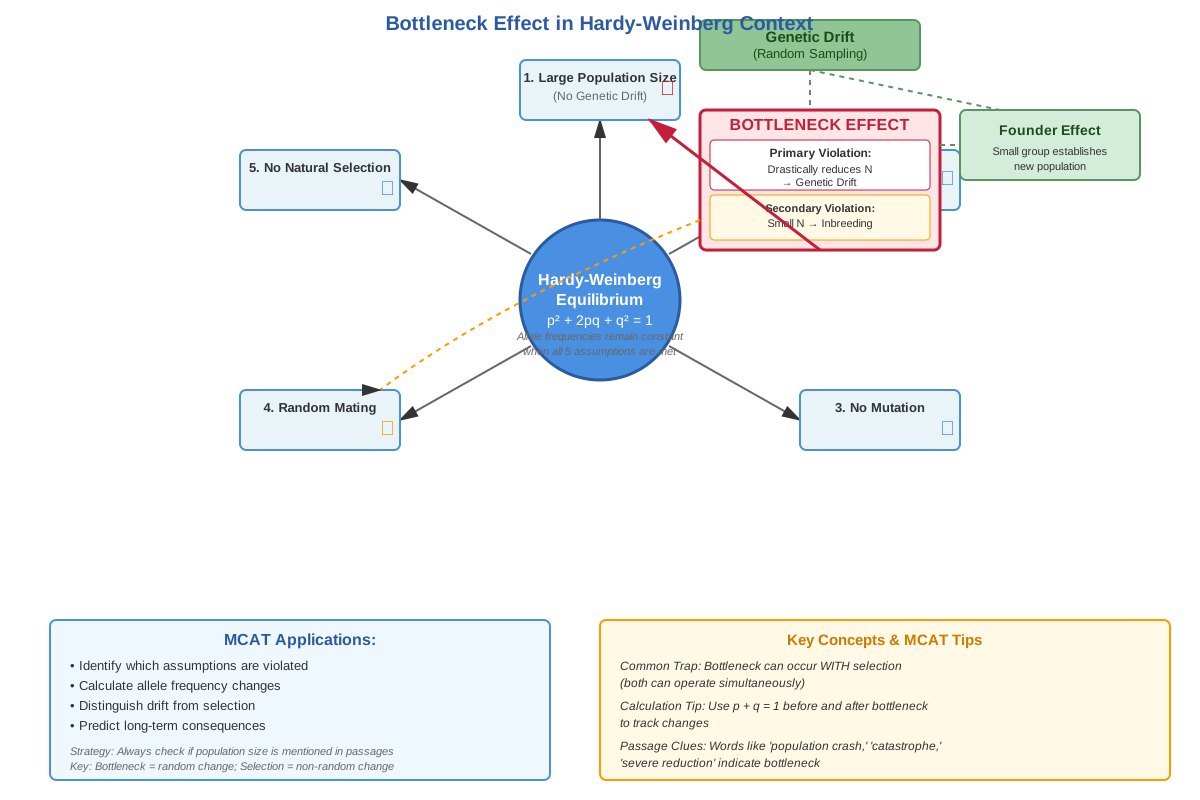
Overview
The bottleneck effect represents one of the most important mechanisms of genetic drift in evolutionary biology, a concept that appears regularly on the MCAT in both passage-based and discrete questions. This phenomenon occurs when a population undergoes a dramatic reduction in size due to environmental events (natural disasters, disease outbreaks, habitat loss) or human intervention, resulting in a severe loss of genetic diversity. The surviving individuals carry only a fraction of the genetic variation present in the original population, and this reduced genetic pool becomes the foundation for all future generations. Understanding the bottleneck effect is essential for comprehending how random events can dramatically alter allele frequencies independent of natural selection.
For MCAT preparation, the bottleneck effect Biology concept bridges multiple testable domains: it connects population genetics with evolutionary mechanisms, demonstrates the role of chance in biological systems, and illustrates how genetic diversity influences population viability. The MCAT frequently tests this concept through experimental passages describing population crashes, conservation biology scenarios, or historical examples like the northern elephant seal recovery. Questions may ask students to predict changes in allele frequencies, calculate heterozygosity, distinguish between different types of genetic drift, or analyze the long-term evolutionary consequences of population bottlenecks.
The bottleneck effect MCAT questions typically integrate this concept with Hardy-Weinberg equilibrium violations, founder effects, inbreeding depression, and natural selection. Students must recognize that bottlenecks represent a violation of the Hardy-Weinberg assumption of large population size and understand how this random sampling event differs from selective pressures. Mastery of this topic requires both conceptual understanding of the mechanism and quantitative skills to analyze allele frequency changes, making it a medium-difficulty but high-yield topic within Molecular Biology and Genetics.
Learning Objectives
- [ ] Define bottleneck effect using accurate Biology terminology
- [ ] Explain why bottleneck effect matters for the MCAT
- [ ] Apply bottleneck effect to exam-style questions
- [ ] Identify common mistakes related to bottleneck effect
- [ ] Connect bottleneck effect to related Biology concepts
- [ ] Calculate changes in allele frequencies following a bottleneck event
- [ ] Distinguish between bottleneck effect and founder effect in experimental scenarios
- [ ] Predict the long-term evolutionary consequences of severe population bottlenecks
- [ ] Analyze how bottleneck events interact with natural selection and genetic drift
Prerequisites
- Hardy-Weinberg Equilibrium: Understanding the five conditions required for allele frequency stability is essential because bottleneck events violate the large population size assumption
- Allele Frequencies and Genotype Calculations: Students must be comfortable calculating p and q values to quantify the genetic changes caused by bottlenecks
- Genetic Drift: Basic understanding of random sampling effects in populations provides the foundation for understanding bottlenecks as an extreme form of drift
- Natural Selection: Distinguishing between random (drift/bottleneck) and non-random (selection) changes in allele frequencies is critical for MCAT questions
- Heterozygosity and Genetic Diversity: Knowledge of how genetic variation is measured allows students to assess the impact of bottleneck events
Why This Topic Matters
The bottleneck effect has profound real-world significance in conservation biology, agriculture, and human health. Endangered species that have experienced severe population crashes—such as cheetahs, northern elephant seals, and Florida panthers—exhibit reduced genetic diversity that increases their vulnerability to disease and environmental changes. In human populations, historical bottlenecks have influenced disease susceptibility patterns; for example, the Ashkenazi Jewish population experienced bottlenecks that increased the frequency of certain genetic disorders like Tay-Sachs disease. Understanding bottleneck effects is crucial for conservation strategies, captive breeding programs, and predicting how populations respond to climate change.
On the MCAT, bottleneck effect questions appear in approximately 3-5% of Biology/Biochemistry section questions, typically within passages about population genetics, evolution, or conservation biology. The AAMC frequently presents experimental data showing population size changes over time and asks students to interpret genetic consequences. Questions may appear as:
- Passage-based questions analyzing genetic diversity before and after population crashes
- Discrete questions distinguishing bottleneck from founder effects or natural selection
- Data interpretation questions requiring calculation of allele frequency changes
- Experimental design questions about measuring genetic diversity in recovered populations
Common passage contexts include: endangered species recovery programs, antibiotic resistance in bacterial populations that undergo population crashes, island biogeography studies, and historical human population migrations. The MCAT particularly favors scenarios where students must distinguish random genetic drift (bottleneck) from adaptive evolution (natural selection), making this a critical concept for achieving competitive scores.
Core Concepts
Definition and Mechanism of the Bottleneck Effect
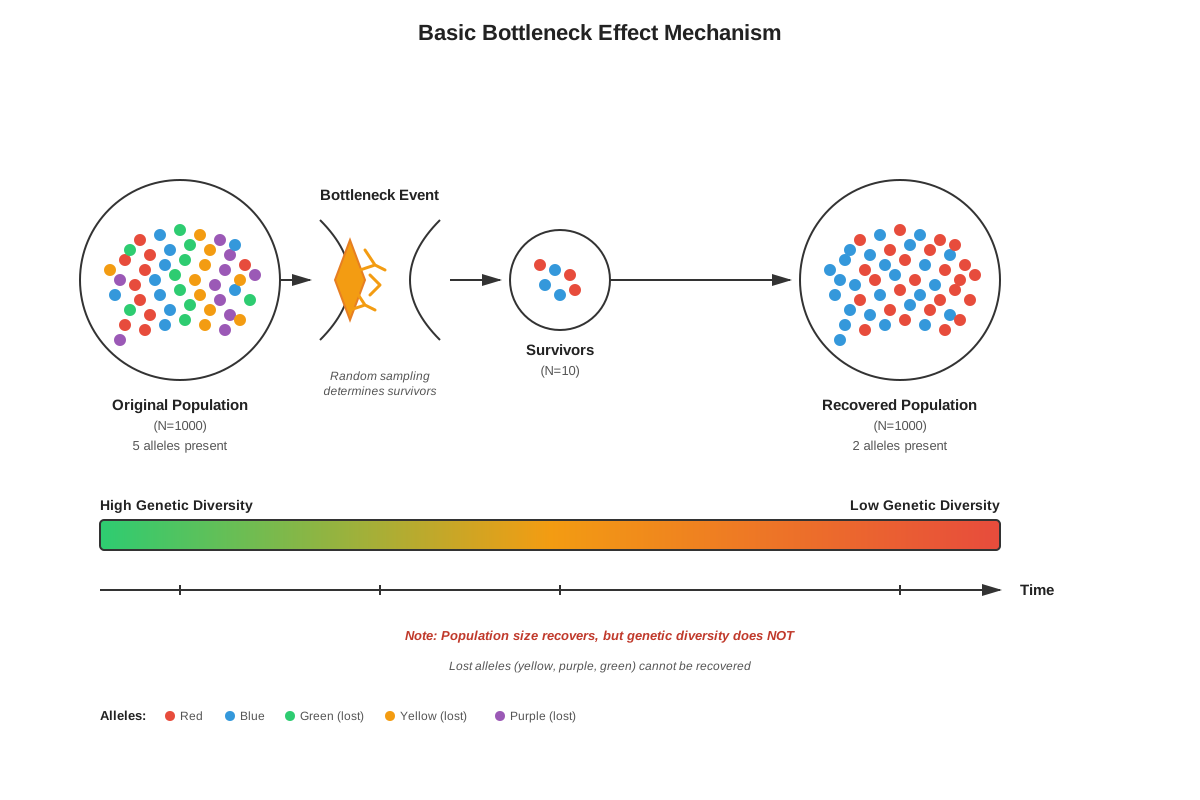
The bottleneck effect is a type of genetic drift that occurs when a population's size is dramatically reduced for at least one generation, causing a severe loss of genetic variation. This reduction creates a "bottleneck" through which only a small, random sample of the original population's genetic diversity passes. The key characteristic distinguishing bottlenecks from other evolutionary mechanisms is that the reduction in genetic diversity occurs through random sampling rather than selective pressure—survival during the bottleneck event is largely independent of genotype.
The mechanism operates through several stages:
- Pre-bottleneck population: A large population with substantial genetic diversity and multiple alleles at various loci
- Bottleneck event: A catastrophic occurrence (earthquake, disease, habitat destruction, hunting) rapidly reduces population size
- Genetic sampling: The surviving individuals represent a random genetic sample that may not reflect the original allele frequencies
- Post-bottleneck recovery: The population rebounds from the small number of survivors, but genetic diversity remains permanently reduced
The severity of genetic diversity loss depends on:
- The magnitude of population reduction (smaller surviving populations lose more diversity)
- The duration of the bottleneck (longer bottlenecks allow more genetic drift)
- Whether the bottleneck is repeated or singular
- The effective population size (Ne) rather than census population size
Genetic Consequences of Bottleneck Events
Bottleneck events produce several measurable genetic consequences that MCAT questions frequently test:
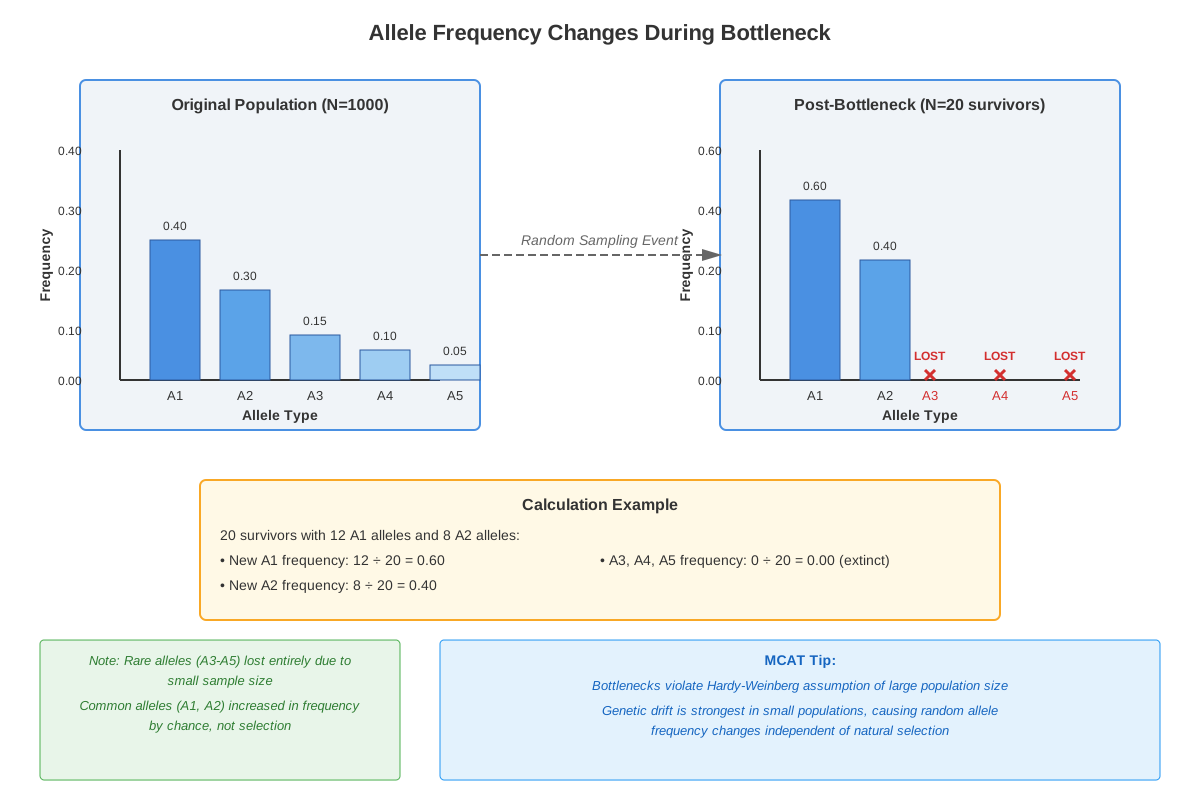
Loss of Allelic Diversity: Rare alleles are disproportionately lost during bottlenecks because random sampling is unlikely to include individuals carrying low-frequency alleles. If an allele exists at 1% frequency in a population of 10,000 individuals, a bottleneck reducing the population to 50 individuals has a high probability of eliminating that allele entirely. This loss is irreversible without mutation or gene flow—the allele cannot spontaneously reappear.
Reduced Heterozygosity: The proportion of heterozygous individuals typically decreases following bottlenecks, though less dramatically than allelic diversity. Heterozygosity (H) can be calculated as H = 2pq for a two-allele system. Even if both alleles survive the bottleneck, their frequencies may shift substantially, altering heterozygosity.
Random Allele Frequency Changes: The surviving population may have dramatically different allele frequencies compared to the original population purely by chance. An allele at 30% frequency might increase to 60% or decrease to 10% in survivors, independent of any fitness advantage.
Increased Genetic Drift: Small post-bottleneck populations experience stronger genetic drift in subsequent generations because random sampling effects are inversely proportional to population size. This amplifies the initial genetic changes caused by the bottleneck itself.
Bottleneck Effect vs. Founder Effect
The MCAT frequently tests the distinction between these two related but distinct phenomena:
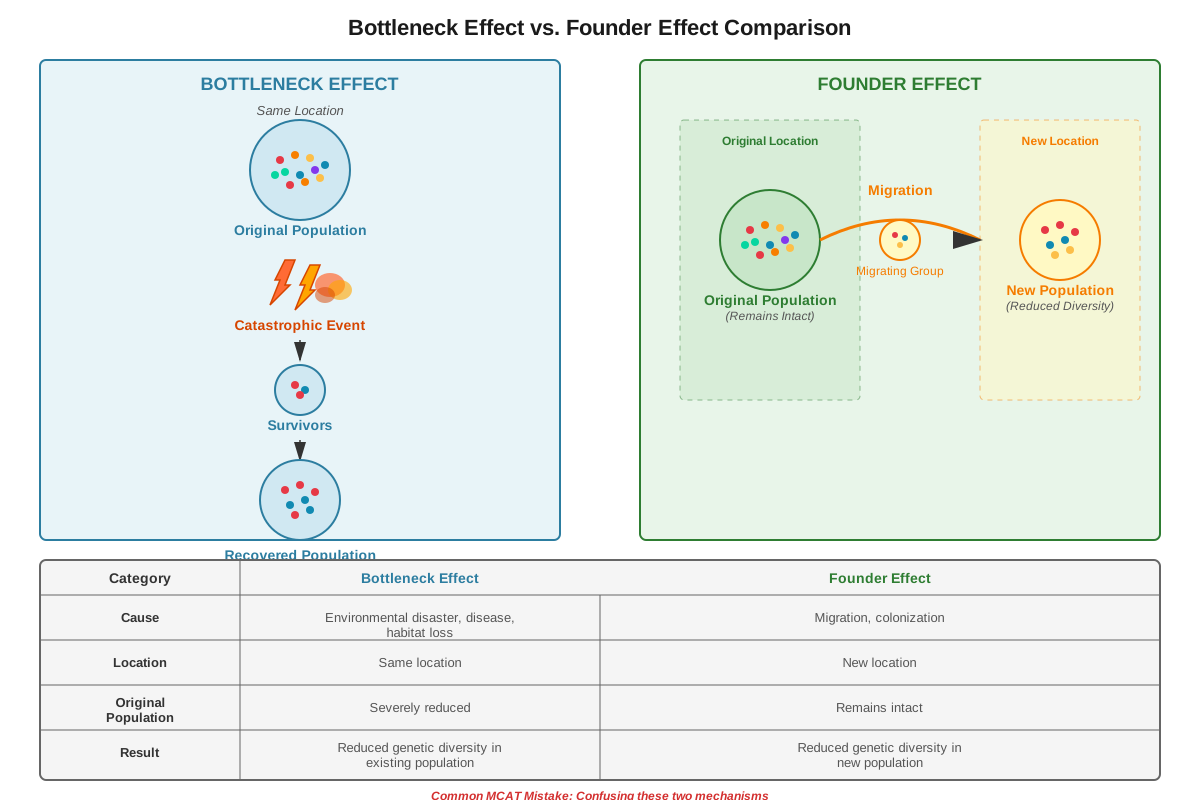
| Feature | Bottleneck Effect | Founder Effect |
|---|---|---|
| Population origin | Existing population reduced | New population established |
| Cause | Catastrophic event reducing size | Migration/colonization event |
| Genetic diversity | Severe loss from original | Limited by founding individuals |
| Geographic location | Same location | New location |
| Population history | Continuous at location | Discontinuous/new establishment |
| Recovery pattern | Rebound from crash | Growth from founding |
Both represent genetic drift and violate Hardy-Weinberg assumptions, but the founder effect involves a small number of individuals establishing a new population in a different geographic location, while the bottleneck effect involves a drastic reduction of an existing population in the same location.
Quantitative Analysis of Bottleneck Events
MCAT questions may require quantitative analysis of genetic changes during bottlenecks. Consider a population with two alleles (A and a) at frequencies p = 0.7 and q = 0.3 before a bottleneck. If the population crashes from 1,000 to 20 individuals, and by chance 15 survivors carry genotype AA, 4 carry Aa, and 1 carries aa:
Original allele frequencies: p = 0.7, q = 0.3
Surviving individuals: 15 AA, 4 Aa, 1 aa (total = 20)
Total alleles in survivors: 40 alleles
A alleles: (15 × 2) + (4 × 1) = 34
a alleles: (1 × 2) + (4 × 1) = 6
New p = 34/40 = 0.85
New q = 6/40 = 0.15
This demonstrates how random sampling can substantially shift allele frequencies. The change (Δp = +0.15) occurred without any selective advantage for the A allele.
Interaction with Natural Selection
A critical MCAT concept involves understanding how bottlenecks interact with natural selection. During the bottleneck event itself, survival is typically random with respect to most genetic variation—individuals don't survive because of superior alleles but because of chance (location, timing, etc.). However, bottlenecks can have important selective consequences:
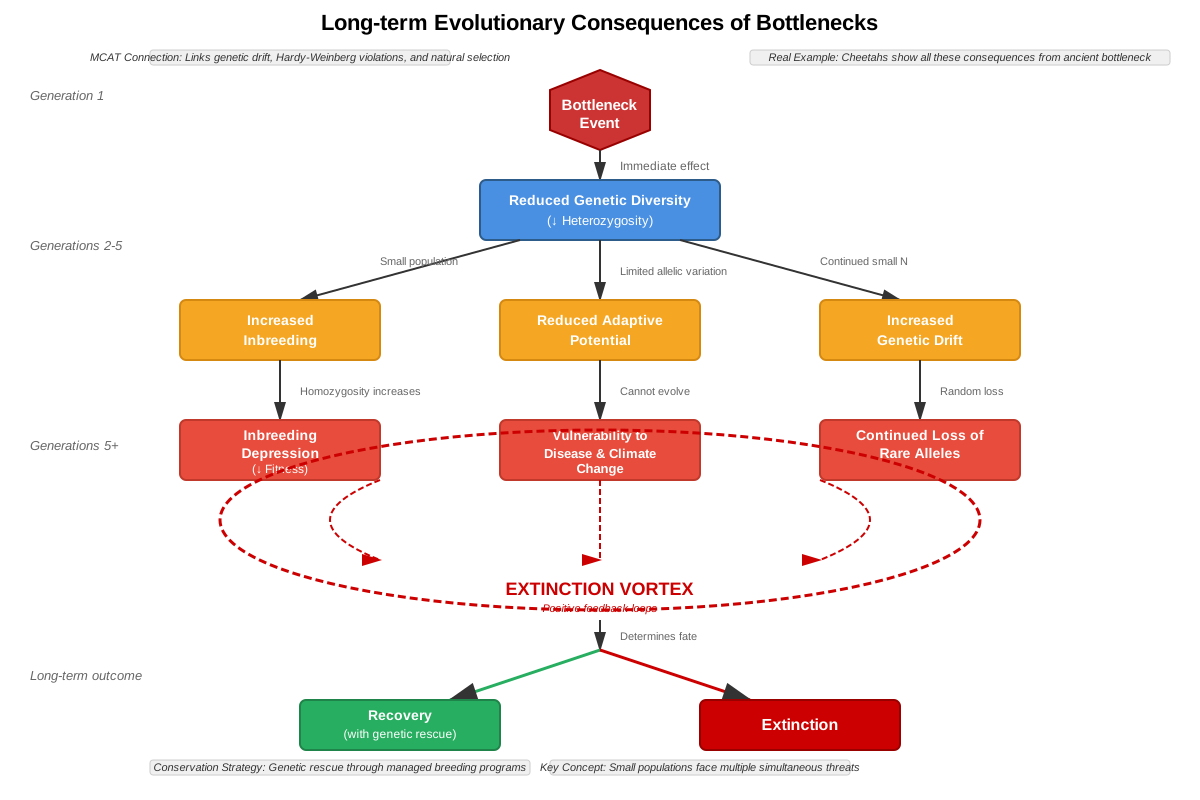
Exposure of Deleterious Recessives: Reduced genetic diversity and increased inbreeding in post-bottleneck populations increase homozygosity, exposing previously rare deleterious recessive alleles. This inbreeding depression reduces population fitness and can impede recovery.
Altered Selective Landscape: By randomly changing allele frequencies, bottlenecks can make previously rare beneficial alleles more common (or eliminate them), affecting the population's adaptive potential. A population that loses genetic diversity may lack the variation needed to adapt to future environmental challenges.
Genetic Load: Bottlenecks can increase the frequency of mildly deleterious alleles through random sampling, increasing the population's genetic load and reducing average fitness.
Examples in Natural Populations
Northern Elephant Seals: Hunted to approximately 20 individuals in the 1890s, this population has recovered to over 100,000 individuals but exhibits virtually no genetic variation at protein-coding loci examined. This classic example demonstrates that population size recovery does not restore genetic diversity.
Cheetahs: Experienced a severe bottleneck approximately 10,000 years ago, resulting in extremely low genetic diversity. Modern cheetahs show reduced reproductive success, increased juvenile mortality, and high susceptibility to disease—all consequences of the historical bottleneck.
Human Populations: The Ashkenazi Jewish population experienced bottlenecks that increased frequencies of alleles causing Tay-Sachs disease, Gaucher disease, and other genetic disorders. Similarly, the Finnish population shows elevated frequencies of certain rare genetic diseases due to historical bottlenecks.
Bacterial Populations: Antibiotic treatment creates bottlenecks in bacterial populations, with resistant individuals surviving. While this involves selection for resistance, the bottleneck also causes random loss of neutral genetic variation.
Concept Relationships
The bottleneck effect sits at the intersection of multiple evolutionary and genetic concepts, forming a conceptual network essential for MCAT mastery:
Genetic Drift → Bottleneck Effect: The bottleneck effect represents an extreme, rapid form of genetic drift. While genetic drift operates continuously in all finite populations, bottlenecks cause dramatic, sudden changes in allele frequencies through severe population reduction.
Bottleneck Effect → Reduced Genetic Diversity → Inbreeding Depression: The loss of genetic variation caused by bottlenecks leads to increased inbreeding in subsequent generations (because individuals are more closely related), which exposes deleterious recessive alleles and reduces population fitness.
Hardy-Weinberg Equilibrium ← Violates ← Bottleneck Effect: Bottlenecks violate the large population size assumption of Hardy-Weinberg equilibrium, causing allele frequencies to change between generations without selection, mutation, or migration.
Bottleneck Effect ↔ Founder Effect: Both are forms of genetic drift involving small populations, but founder effects involve geographic colonization while bottlenecks involve population crashes. Both can occur sequentially (a founding population might later experience a bottleneck).
Natural Selection vs. Bottleneck Effect: These represent non-random versus random changes in allele frequencies. MCAT questions frequently require distinguishing whether allele frequency changes result from selective advantage or random sampling during population reduction.
Bottleneck Effect → Evolutionary Potential: By reducing genetic diversity, bottlenecks limit the raw material for natural selection, potentially constraining future adaptive evolution and increasing extinction risk.
Effective Population Size (Ne) ← Determines Impact ← Bottleneck Effect: The genetic consequences of bottlenecks depend on effective population size rather than census size, connecting to concepts of breeding structure and population genetics.
High-Yield Facts
⭐ The bottleneck effect is a form of genetic drift caused by dramatic, rapid reduction in population size, resulting in random changes in allele frequencies independent of fitness.
⭐ Rare alleles are disproportionately lost during bottleneck events because random sampling is unlikely to include individuals carrying low-frequency alleles.
⭐ Bottleneck events violate the Hardy-Weinberg assumption of large population size, causing allele frequencies to change between generations.
⭐ The bottleneck effect differs from the founder effect in that bottlenecks involve population reduction in the same location, while founder effects involve establishment of new populations in different locations.
⭐ Genetic diversity loss from bottlenecks is permanent without mutation or gene flow—lost alleles cannot spontaneously reappear.
- Bottleneck severity depends on the magnitude of population reduction, duration of the bottleneck, and effective population size rather than census size.
- Post-bottleneck populations experience increased genetic drift in subsequent generations due to small population size, amplifying initial genetic changes.
- Bottlenecks increase inbreeding and homozygosity in subsequent generations, potentially exposing deleterious recessive alleles and causing inbreeding depression.
- Population size recovery does not restore genetic diversity—a population can rebound to large numbers while maintaining reduced genetic variation.
- Bottlenecks can occur repeatedly in populations, with each event causing additional genetic diversity loss (serial bottlenecks).
- The genetic consequences of bottlenecks are measurable through reduced heterozygosity, fewer alleles per locus, and altered allele frequency distributions.
- Bottlenecks affect neutral genetic variation more predictably than selected loci, where natural selection may maintain or eliminate specific alleles regardless of population size.
Quick check — test yourself on Bottleneck effect so far.
Try Flashcards →Common Misconceptions
Misconception: The bottleneck effect is a form of natural selection because only the "fittest" individuals survive the catastrophic event.
Correction: Bottlenecks represent random genetic drift, not natural selection. Survival during the bottleneck event is typically independent of genotype—individuals survive due to chance (being in the right location, random timing) rather than genetic superiority. While some bottleneck events may involve selection (e.g., disease resistance during an epidemic), the classic bottleneck effect refers to random survival with respect to most genetic variation.
Misconception: When a population recovers to its original size after a bottleneck, genetic diversity is automatically restored.
Correction: Population size recovery does not restore genetic diversity. Lost alleles cannot spontaneously reappear without new mutations or gene flow from other populations. The northern elephant seal population demonstrates this perfectly—over 100,000 individuals descended from ~20 survivors still show virtually no genetic variation at many loci.
Misconception: Bottleneck effects and founder effects are the same phenomenon with different names.
Correction: While both are forms of genetic drift involving small populations, they differ fundamentally. Founder effects involve a small number of individuals establishing a new population in a different geographic location (colonization), while bottleneck effects involve dramatic reduction of an existing population in the same location. The MCAT frequently tests this distinction.
Misconception: Bottlenecks always reduce the frequency of deleterious alleles because affected individuals die during the population crash.
Correction: Bottlenecks cause random changes in allele frequencies, which means deleterious alleles can increase, decrease, or remain unchanged purely by chance. In fact, bottlenecks often increase the frequency of deleterious alleles through random sampling and subsequently expose them through increased inbreeding, reducing population fitness.
Misconception: Only rare alleles are affected by bottleneck events; common alleles remain at similar frequencies.
Correction: While rare alleles are more likely to be lost entirely, common alleles can also experience substantial frequency changes through random sampling. An allele at 40% frequency could shift to 60% or 20% in survivors purely by chance, especially in severe bottlenecks with very few survivors.
Misconception: Bottleneck effects only matter for small populations; large populations are immune to genetic drift.
Correction: While large populations experience weaker genetic drift under normal conditions, any population can experience a bottleneck if a catastrophic event reduces its size dramatically. The key is the population size during the bottleneck, not the pre-bottleneck size. A population of millions can experience severe genetic consequences if reduced to dozens of individuals.
Misconception: Heterozygosity is always completely lost during bottleneck events.
Correction: Heterozygosity is reduced but not necessarily eliminated. Even severe bottlenecks typically retain some heterozygosity, though it decreases proportionally to the severity and duration of the bottleneck. Allelic diversity (number of different alleles) is lost more rapidly than heterozygosity during bottlenecks.
Worked Examples
Example 1: Calculating Allele Frequency Changes During a Bottleneck
Scenario: A population of 5,000 butterflies has two alleles for wing color: B (brown, dominant) and b (blue, recessive). The population is in Hardy-Weinberg equilibrium with 32% of butterflies displaying blue wings. A severe storm reduces the population to 25 individuals. By chance, the survivors include 16 brown butterflies (10 BB and 6 Bb) and 9 blue butterflies (bb). Calculate the allele frequencies before and after the bottleneck, and determine the change in the frequency of the b allele.
Solution:
Step 1: Calculate pre-bottleneck allele frequencies
Given that 32% have blue wings (bb genotype), we can find q²:
- q² = 0.32
- q = √0.32 = 0.566
- p = 1 - q = 1 - 0.566 = 0.434
Pre-bottleneck frequencies: p (B allele) = 0.434, q (b allele) = 0.566
Step 2: Count alleles in survivors
Total survivors: 25 individuals = 50 alleles total
- 10 BB individuals contribute: 10 × 2 = 20 B alleles
- 6 Bb individuals contribute: 6 B alleles and 6 b alleles
- 9 bb individuals contribute: 9 × 2 = 18 b alleles
Total B alleles: 20 + 6 = 26
Total b alleles: 6 + 18 = 24
Step 3: Calculate post-bottleneck allele frequencies
- p (new) = 26/50 = 0.52
- q (new) = 24/50 = 0.48
Step 4: Determine the change
- Δp = 0.52 - 0.434 = +0.086 (B allele increased)
- Δq = 0.48 - 0.566 = -0.086 (b allele decreased)
Interpretation: Despite the b allele being more common before the bottleneck (56.6% vs. 43.4%), random sampling during the severe population reduction caused it to decrease to 48%. This demonstrates how bottlenecks cause random allele frequency changes independent of fitness. The blue wing color conferred no disadvantage—the change occurred purely by chance. This population has also lost genetic diversity permanently; if any rare alleles existed at other loci, they were likely eliminated entirely.
Example 2: Distinguishing Bottleneck from Selection in an MCAT Passage
Passage Summary: Researchers studying a population of field mice on an island documented population size and coat color over 50 years. The population maintained approximately 10,000 individuals with 70% brown coats and 30% gray coats from 1950-1990. In 1991, a volcanic eruption reduced the population to approximately 200 individuals. By 1995, the population had recovered to 8,000 individuals, but now 85% had brown coats and only 15% had gray coats. Genetic analysis showed that coat color is determined by a single gene with two alleles (B for brown, dominant; g for gray, recessive). The researchers also noted that predation rates, food availability, and habitat characteristics remained constant throughout the study period.
Question: Which of the following best explains the change in coat color frequencies between 1990 and 1995?
A) Natural selection favored brown coats after the volcanic eruption
B) A bottleneck effect caused random changes in allele frequencies
C) Mutation rates increased following the volcanic eruption
D) Gene flow from mainland populations introduced brown coat alleles
Solution:
Step 1: Identify the key information
- Dramatic population reduction (10,000 → 200) = bottleneck event
- Allele frequencies changed (30% gray → 15% gray)
- Environmental conditions remained constant (no change in selection pressures)
- Population recovered but with different allele frequencies
Step 2: Evaluate each option
Option A (Natural selection): The passage explicitly states that predation rates, food availability, and habitat remained constant, indicating no change in selective pressures. If natural selection favored brown coats, we would expect environmental changes or differential survival based on coat color. Additionally, natural selection would have been operating before the eruption as well, so it doesn't explain the sudden change. Eliminate A.
Option B (Bottleneck effect): The volcanic eruption caused a severe population reduction, which is the definition of a bottleneck event. The 200 survivors represented a random sample of the original population's genetic diversity. By chance, these survivors had a higher frequency of the B allele than the original population. When the population recovered, it retained these altered frequencies. This explains both the mechanism (random sampling during population crash) and the observation (changed frequencies without environmental change). Strong candidate.
Option C (Increased mutation): Mutation rates are typically very low (10⁻⁵ to 10⁻⁹ per generation) and would not cause a 15% change in allele frequency over just 4 years (approximately 4-8 mouse generations). Volcanic eruptions don't typically increase mutation rates in surviving populations. Eliminate C.
Option D (Gene flow): The passage describes an island population, and there's no mention of mainland mice or migration. Gene flow would require immigration from another population with different allele frequencies, which isn't indicated. Eliminate D.
Answer: B
Key MCAT Strategy: This question tests the ability to distinguish random genetic drift (bottleneck) from natural selection. The critical clue is that environmental conditions remained constant—if selection were operating, there would need to be a change in selective pressures or differential fitness. The dramatic population reduction followed by altered allele frequencies without environmental change is the signature of a bottleneck effect. Watch for passages that describe population crashes and ask about mechanisms of allele frequency change.
Exam Strategy
Approaching Bottleneck Effect Questions:
- Identify the population size change: Look for keywords indicating dramatic population reduction: "crash," "catastrophic event," "severe reduction," "population declined from X to Y." If the population drops by 90% or more, strongly consider bottleneck effect.
- Assess randomness vs. selection: Determine whether survival is random or fitness-based. Bottlenecks involve random survival with respect to most genetic variation. If the passage describes differential survival based on specific traits, consider natural selection instead.
- Check for geographic movement: If individuals move to a new location and establish a population, it's a founder effect, not a bottleneck. Same location + population crash = bottleneck.
- Evaluate genetic diversity changes: Bottlenecks cause loss of allelic diversity (especially rare alleles) and reduced heterozygosity. Questions may present data showing fewer alleles per locus or reduced genetic variation.
Trigger Words and Phrases:
- "Population crash," "catastrophic reduction," "severe decline"
- "Random sampling," "by chance," "stochastic event"
- "Loss of genetic diversity," "reduced variation"
- "Recovered to original size but..." (indicating genetic diversity didn't recover)
- "Rare alleles were lost," "only X individuals survived"
- "Independent of fitness," "random with respect to genotype"
Process of Elimination Tips:
When distinguishing between evolutionary mechanisms:
- Eliminate natural selection if: environmental conditions unchanged, no differential fitness mentioned, survival described as random
- Eliminate founder effect if: no geographic colonization, population remains in same location
- Eliminate mutation if: time frame too short for mutation to cause observed changes (mutations are slow)
- Eliminate gene flow if: no mention of immigration/emigration, isolated population
Time Allocation:
- Discrete questions on bottleneck effect: 60-90 seconds (straightforward definition or distinction)
- Passage-based questions: 90-120 seconds (may require data interpretation or calculation)
- If calculation is required, quickly set up allele counting (2 alleles per individual) and solve systematically
Common Question Formats:
- Definition/Distinction: "Which of the following best describes the bottleneck effect?" or "How does bottleneck effect differ from founder effect?"
- Data Interpretation: Graphs showing population size over time with genetic diversity measurements
- Calculation: Given genotype frequencies before/after bottleneck, calculate allele frequency changes
- Prediction: "What would be the expected genetic consequence of this population reduction?"
- Experimental Design: "Which measurement would best assess whether a bottleneck occurred?"
Exam Tip: If a question describes a population crash followed by recovery, but genetic diversity remains low, the answer almost certainly involves bottleneck effect. Population size recovery ≠ genetic diversity recovery.
Memory Techniques
Mnemonic for Bottleneck vs. Founder Effect - "BLAST":
- Bottleneck = Big population becomes small (same place)
- Location stays the same (bottleneck) vs. Location changes (founder)
- Alleles lost randomly in both
- Small population in both cases
- Travel to new place = founder; Tragedy reduces population = bottleneck
Visualization Strategy - The Hourglass:
Picture an hourglass to remember bottleneck effect:
- Top bulb = large original population with diverse colored sand (genetic diversity)
- Narrow neck = bottleneck event where only some sand grains pass through
- Bottom bulb = recovered population with less color diversity (reduced genetic variation)
- The sand that passed through was random—not selected for color
- Even if the bottom bulb fills completely, it never regains the original color diversity
Acronym for Genetic Consequences - "LIAR":
- Loss of rare alleles (disproportionately affected)
- Inbreeding increases (population more related)
- Allele frequencies change randomly
- Reduced heterozygosity (less genetic variation)
Memory Aid for Hardy-Weinberg Violations:
"Big Mutations Never Randomly Select" for the five H-W assumptions:
- Big population (bottleneck violates this)
- Mutations absent
- Never any gene flow
- Random mating
- Selection absent
When you see a bottleneck question, immediately think: "Big population assumption violated!"
Conceptual Anchor - Northern Elephant Seals:
Memorize this classic example as your reference point:
- "20 seals survived → 100,000+ today → still no genetic diversity"
- This demonstrates that population recovery ≠ genetic recovery
- Use this as your mental model for any bottleneck question
Summary
The bottleneck effect represents a critical evolutionary mechanism where dramatic population reduction causes severe, permanent loss of genetic diversity through random sampling. Unlike natural selection, which changes allele frequencies based on fitness differences, bottlenecks cause random allele frequency changes independent of adaptive value. The severity of genetic consequences depends on the magnitude and duration of population reduction, with rare alleles disproportionately lost and heterozygosity reduced. Bottleneck events violate Hardy-Weinberg equilibrium assumptions by eliminating the large population size requirement, and they differ from founder effects in that bottlenecks involve population crashes in the same location rather than colonization of new areas. For MCAT success, students must recognize bottleneck scenarios in passages, distinguish them from other evolutionary mechanisms (particularly natural selection and founder effects), calculate allele frequency changes when given genotype data, and understand that population size recovery does not restore lost genetic diversity. The long-term consequences include increased inbreeding depression, reduced evolutionary potential, and elevated extinction risk—concepts frequently tested through conservation biology and population genetics passages.
Key Takeaways
- The bottleneck effect is genetic drift caused by severe population reduction, resulting in random loss of genetic diversity that is permanent without mutation or gene flow
- Rare alleles are disproportionately lost during bottlenecks because random sampling is unlikely to include individuals carrying low-frequency alleles
- Bottlenecks differ from founder effects: bottlenecks involve population crashes in the same location, while founder effects involve establishing new populations in different locations
- Population size recovery does not restore genetic diversity—a population can rebound to large numbers while maintaining reduced genetic variation
- Bottleneck events violate Hardy-Weinberg equilibrium by eliminating the large population size assumption, causing allele frequencies to change between generations
- MCAT questions frequently test the distinction between random changes (bottleneck/drift) and fitness-based changes (natural selection) by describing population crashes with constant environmental conditions
- Post-bottleneck populations experience increased inbreeding and genetic drift, potentially exposing deleterious recessive alleles and reducing population fitness
Related Topics
Founder Effect: The establishment of new populations by small numbers of individuals colonizing new geographic areas, causing genetic drift similar to bottlenecks but involving migration rather than population crashes. Mastering bottleneck effect provides the foundation for understanding founder effects.
Hardy-Weinberg Equilibrium: The mathematical framework describing conditions under which allele frequencies remain constant across generations. Understanding bottlenecks as violations of H-W assumptions is essential for population genetics questions.
Genetic Drift: The broader category of random allele frequency changes in finite populations, of which bottleneck effect is a specific, extreme example. Bottleneck mastery deepens understanding of drift mechanisms.
Inbreeding Depression: The reduction in fitness caused by mating between related individuals, which increases following bottlenecks due to reduced genetic diversity and increased homozygosity. This concept builds directly on bottleneck consequences.
Conservation Biology: The application of population genetics principles to preserving endangered species, where bottleneck effects are central to understanding extinction risk and designing recovery programs.
Effective Population Size (Ne): The number of individuals in an idealized population that would experience the same genetic drift as the actual population, which determines the severity of bottleneck effects and connects to advanced population genetics.
Practice CTA
Now that you've mastered the bottleneck effect, it's time to solidify your understanding through active practice. Challenge yourself with MCAT-style practice questions that test your ability to distinguish bottlenecks from other evolutionary mechanisms, calculate allele frequency changes, and interpret experimental data. Work through flashcards focusing on the key distinctions between bottleneck and founder effects, and practice identifying trigger words in passage-based questions. Remember: understanding the concept is just the first step—applying it under timed conditions is what translates knowledge into MCAT points. You've built a strong foundation in this medium-difficulty, high-yield topic that connects to multiple areas of evolutionary biology. Keep pushing forward, and watch for bottleneck scenarios in practice passages—they appear more frequently than you might expect!
Sign up free to keep reading
Create a free AnvayaPrep account to finish this MCAT guide on Bottleneck effect — plus flashcards and practice questions.