Overview
The founder effect is a fundamental concept in population genetics and evolutionary biology that describes how genetic diversity changes when a small group of individuals establishes a new population in isolation from the original larger population. This phenomenon represents a specific type of genetic drift where the founding members carry only a fraction of the genetic variation present in the source population, leading to a new population with different allele frequencies and potentially reduced genetic diversity. Understanding the founder effect is essential for comprehending how populations evolve, how genetic diseases become concentrated in certain groups, and how biodiversity patterns emerge across geographic regions.
For the MCAT, the founder effect appears regularly in both passage-based and discrete questions within the Molecular Biology and Genetics section, as well as in interdisciplinary passages that combine evolutionary concepts with ecology or human health. The MCAT frequently tests this concept through scenarios involving isolated populations, genetic disease prevalence in specific ethnic groups, or conservation biology contexts. Students must be able to distinguish the founder effect from other evolutionary mechanisms, predict its consequences on allele frequencies, and apply Hardy-Weinberg principles to analyze populations affected by this phenomenon.
The founder effect connects to broader themes in Biology including natural selection, genetic drift, population bottlenecks, speciation, and the molecular basis of genetic variation. It serves as a bridge between molecular genetics (understanding alleles and genotypes) and population-level evolutionary processes. Mastery of this topic requires integrating knowledge of Mendelian genetics, probability, and evolutionary mechanisms—making it a high-yield concept that frequently appears in complex, multi-step MCAT questions that test both conceptual understanding and quantitative reasoning.
Learning Objectives
- [ ] Define founder effect using accurate Biology terminology
- [ ] Explain why founder effect matters for the MCAT
- [ ] Apply founder effect to exam-style questions
- [ ] Identify common mistakes related to founder effect
- [ ] Connect founder effect to related Biology concepts
- [ ] Distinguish founder effect from other mechanisms of genetic drift and evolutionary forces
- [ ] Calculate and predict changes in allele frequencies resulting from founder effect events
- [ ] Analyze real-world examples of founder effect in human populations and conservation biology
- [ ] Evaluate the long-term genetic consequences of founder events on population fitness and diversity
Prerequisites
- Alleles and genotypes: Understanding that genes exist in different forms (alleles) and that individuals carry two copies of each gene is essential for tracking how genetic variation changes during founder events
- Hardy-Weinberg equilibrium: Knowledge of the five conditions required for genetic equilibrium provides the framework for understanding how founder effect violates the "no genetic drift" assumption
- Genetic drift: Familiarity with random changes in allele frequencies due to chance events establishes the broader category into which founder effect falls
- Population genetics basics: Understanding concepts like gene pool, allele frequency, and genetic diversity enables quantitative analysis of founder effect scenarios
- Mendelian inheritance: Knowledge of how traits are passed from parents to offspring is necessary for predicting genetic outcomes in small founding populations
Why This Topic Matters
The founder effect has profound real-world significance in medicine, public health, and conservation biology. Many genetic diseases show dramatically elevated frequencies in specific populations due to historical founder events. For example, Tay-Sachs disease occurs at much higher rates in Ashkenazi Jewish populations, Ellis-van Creveld syndrome is concentrated in the Amish community, and Huntington's disease shows unusual prevalence near Lake Maracaibo in Venezuela—all consequences of founder effects. Understanding this concept helps explain why genetic screening recommendations vary by ancestry and why certain populations face disproportionate disease burdens.
On the MCAT, founder effect appears in approximately 2-4 questions per exam administration, either as the primary focus or as part of broader evolutionary biology passages. Questions typically fall into three categories: (1) conceptual questions asking students to identify founder effect scenarios or distinguish them from other evolutionary mechanisms, (2) quantitative problems requiring calculation of allele frequency changes in founding populations, and (3) passage-based questions integrating founder effect with topics like genetic disease, conservation, or speciation. The MCAT particularly favors questions that require students to analyze data tables showing allele frequencies before and after population founding events.
Common exam passage contexts include: isolated island populations (both human and animal), religious or cultural communities that maintain reproductive isolation, endangered species conservation programs involving captive breeding, colonization of new habitats, and epidemiological studies of genetic diseases in specific ethnic groups. The MCAT often presents founder effect within interdisciplinary passages that combine genetics with sociology, ethics, or public health considerations, testing both scientific reasoning and critical analysis skills.
Core Concepts
Definition and Mechanism of Founder Effect
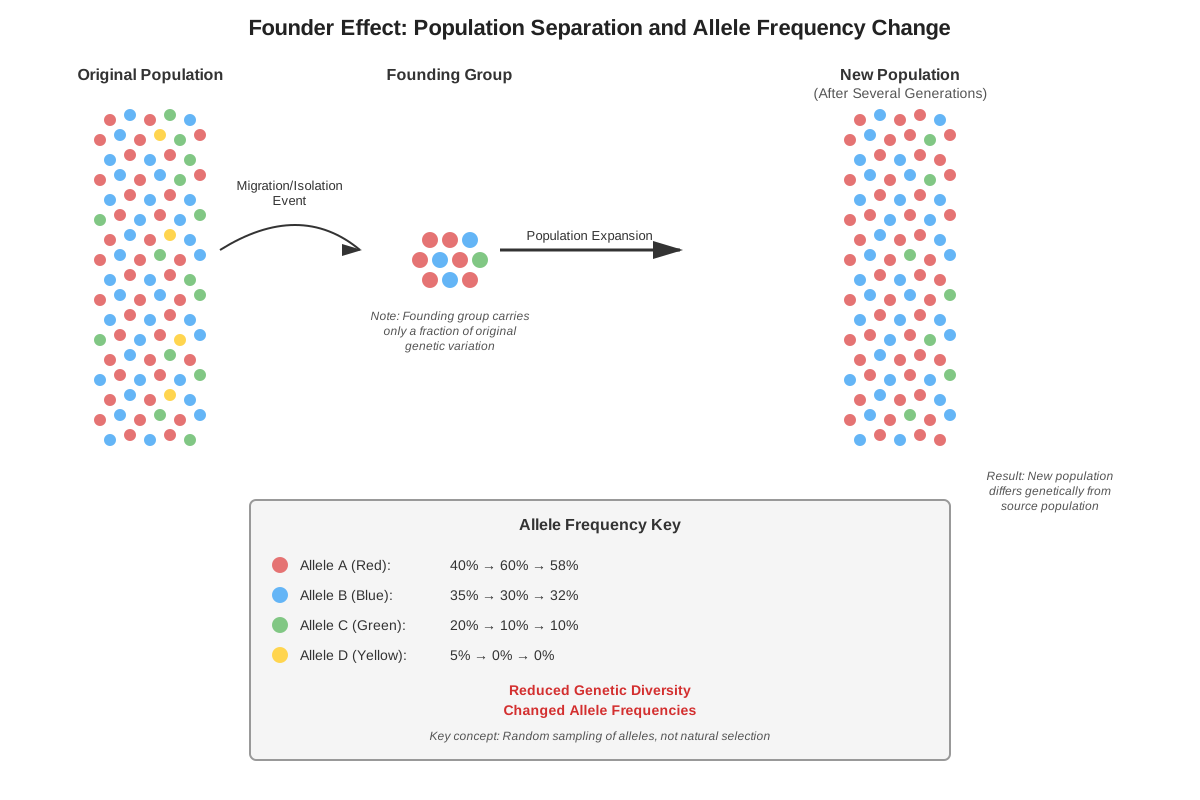
The founder effect occurs when a small number of individuals from a larger population establish a new, isolated population, and this founding group carries only a subset of the genetic diversity present in the original population. By chance alone, the allele frequencies in the founding group may differ substantially from those in the source population. As the new population grows from these founders, it retains the altered allele frequencies and reduced genetic diversity of the founding group, even if the population eventually becomes large.
The mechanism operates through random sampling. Imagine a source population where allele A has a frequency of 0.6 and allele a has a frequency of 0.4. If only 10 individuals found a new population, the actual allele frequencies in these founders might be 0.7 and 0.3, or even 0.8 and 0.2, simply due to chance. Unlike natural selection, which changes allele frequencies based on fitness advantages, the founder effect changes frequencies randomly—the founding individuals are not necessarily the "best" or most fit members of the original population.
Founder Effect as a Type of Genetic Drift
Genetic drift refers to random changes in allele frequencies from one generation to the next, with effects that are most pronounced in small populations. The founder effect represents a specific type of genetic drift that occurs at the moment of population founding. While ongoing genetic drift continues to affect the new population after establishment, the founder effect specifically describes the initial sampling event that creates the new population with altered allele frequencies.
The relationship between population size and genetic drift intensity is crucial: smaller founding populations experience more dramatic founder effects. A founding population of 5 individuals will show much greater deviation from source population allele frequencies than a founding population of 500 individuals. This mathematical relationship follows from sampling theory—larger samples more accurately represent the source population's characteristics.
Consequences of Founder Effect
The founder effect produces several predictable genetic consequences:
- Reduced genetic diversity: The founding population contains fewer alleles overall than the source population, permanently reducing the genetic variation available for future evolution
- Altered allele frequencies: Common alleles in the source population may be rare or absent in the new population, while rare alleles may become common
- Increased homozygosity: With fewer alleles present, individuals are more likely to inherit identical alleles from both parents, increasing homozygosity
- Elevated frequency of genetic diseases: Deleterious recessive alleles that were rare in the source population may reach high frequencies in the founded population, increasing the incidence of genetic disorders
- Reduced evolutionary potential: Less genetic variation means fewer raw materials for natural selection to act upon, potentially limiting the population's ability to adapt to environmental changes
Founder Effect vs. Population Bottleneck
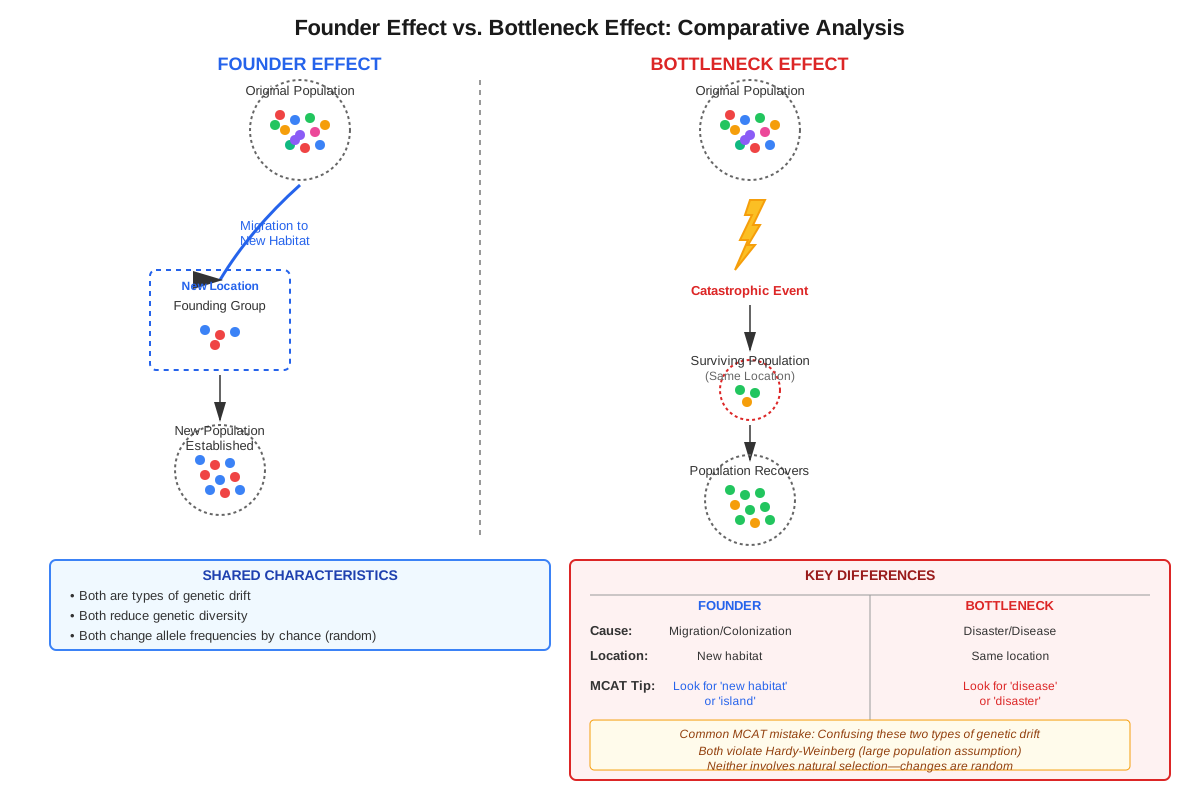
While both are types of genetic drift involving small population sizes, these concepts differ in their mechanisms:
| Feature | Founder Effect | Population Bottleneck |
|---|---|---|
| Timing | Occurs at population establishment | Occurs in existing population |
| Mechanism | Small group colonizes new area | Large population crashes to small size |
| Geographic context | Involves migration to new location | Occurs in same location |
| Example | Polynesians colonizing Hawaii | Cheetah population crash 10,000 years ago |
| Recovery pattern | Population grows from founders | Population recovers from survivors |
Both phenomena reduce genetic diversity and alter allele frequencies through random sampling, but the founder effect specifically involves the establishment of a new population in a new location, while bottlenecks represent dramatic population size reductions in existing populations.
Mathematical Representation
The founder effect can be quantified using allele frequency calculations. If a source population has allele frequencies p and q (where p + q = 1), the founding population's allele frequencies p' and q' will deviate from these values based on random sampling. The expected variance in allele frequency due to founder effect is:
Variance = pq / (2N)where N is the number of founding individuals. This equation demonstrates that variance (deviation from source frequencies) increases as founding population size decreases.
Real-World Examples in Human Populations
Several well-documented human populations illustrate the founder effect:
Ashkenazi Jewish populations descended from a small founding group in medieval Europe, leading to elevated frequencies of alleles causing Tay-Sachs disease, Gaucher disease, and several other genetic conditions. The Tay-Sachs carrier frequency is approximately 1 in 27 among Ashkenazi Jews compared to 1 in 250 in the general population.
Finnish populations show elevated frequencies of over 30 genetic diseases due to a founder effect approximately 2,000 years ago when a small group settled the region. The Finnish disease heritage includes conditions rare elsewhere, such as congenital nephrotic syndrome and progressive myoclonus epilepsy.
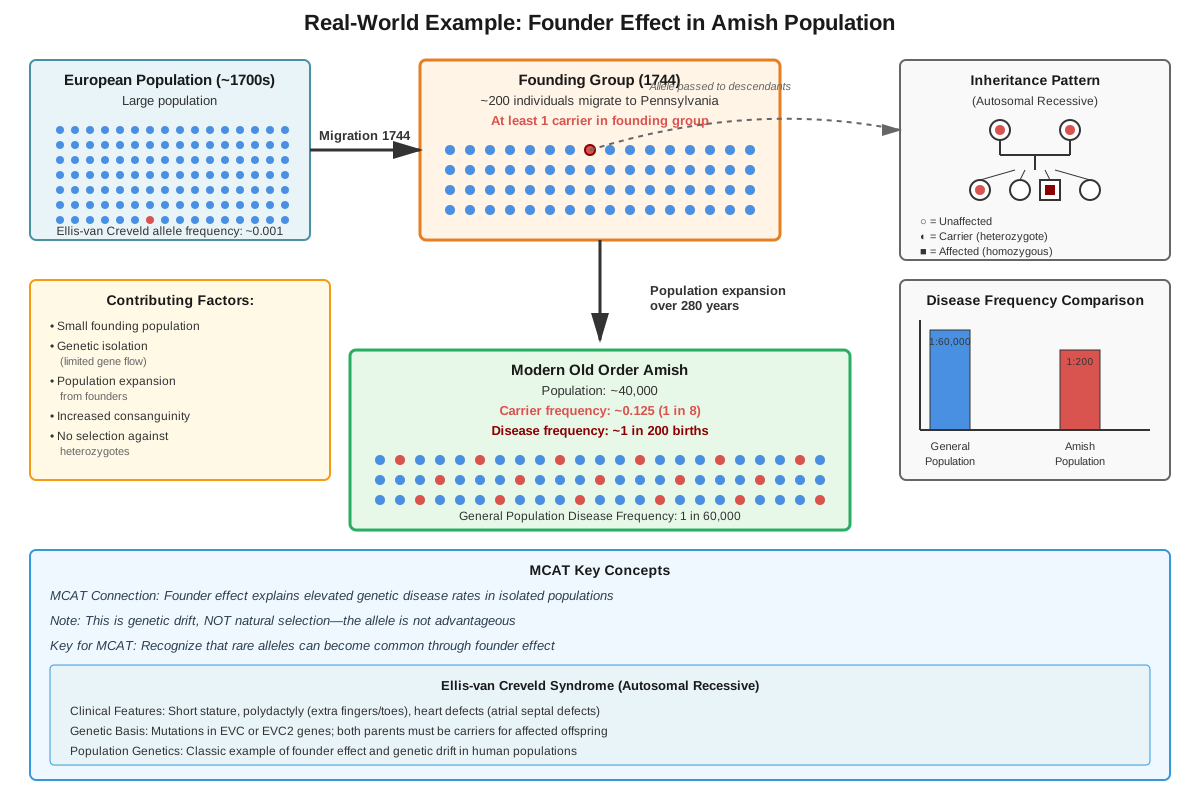
Amish communities in Pennsylvania descended from a small number of founders in the 1700s, resulting in high frequencies of Ellis-van Creveld syndrome (characterized by short stature and polydactyly) and other rare genetic conditions. In some Amish communities, the carrier frequency for certain recessive diseases exceeds 10%.
Founder Effect in Conservation Biology
The founder effect poses significant challenges for conservation programs. When endangered species are bred in captivity from a small number of individuals, the resulting population suffers from reduced genetic diversity, potentially compromising long-term survival. Conservation geneticists must carefully manage breeding programs to minimize founder effects by:
- Maximizing the number of founding individuals
- Ensuring founders represent diverse genetic lineages
- Implementing breeding strategies that maintain genetic diversity
- Occasionally introducing new genetic material from wild populations
The northern elephant seal provides a dramatic example: hunted nearly to extinction in the 1890s, the species recovered from approximately 20 individuals. Today's population of over 200,000 seals shows extremely low genetic diversity, making them potentially vulnerable to diseases and environmental changes.
Concept Relationships
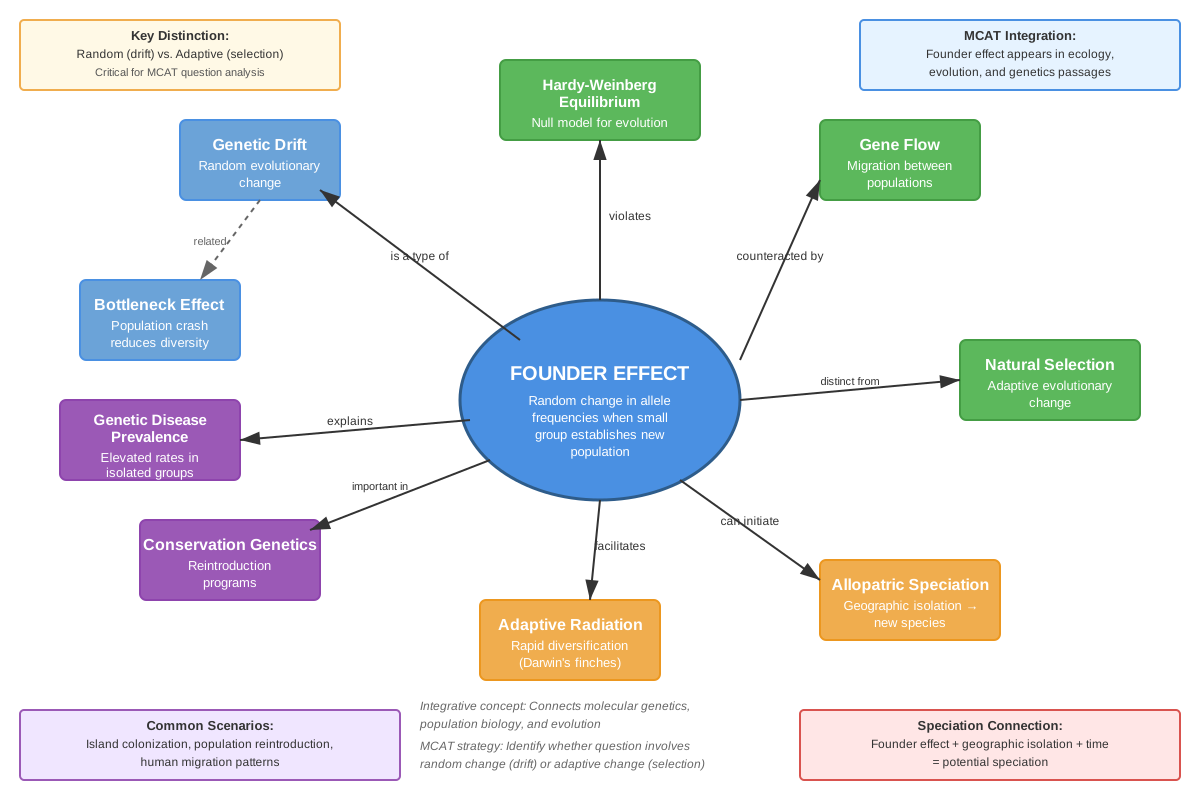
The founder effect sits at the intersection of multiple biological concepts, forming a conceptual network essential for MCAT mastery. At its foundation, the founder effect depends on understanding alleles and genetic variation—without multiple alleles at various loci, no founder effect could occur. The concept builds directly on genetic drift, representing a specific instance of random allele frequency change, distinguished by its occurrence during population establishment rather than ongoing generational changes.
The relationship flows as follows: Genetic variation in source population → Random sampling during founding event → Founder effect (altered allele frequencies and reduced diversity) → Consequences for new population (increased homozygosity, potential for genetic disease, reduced adaptive potential) → Long-term evolutionary implications (speciation, adaptation constraints).
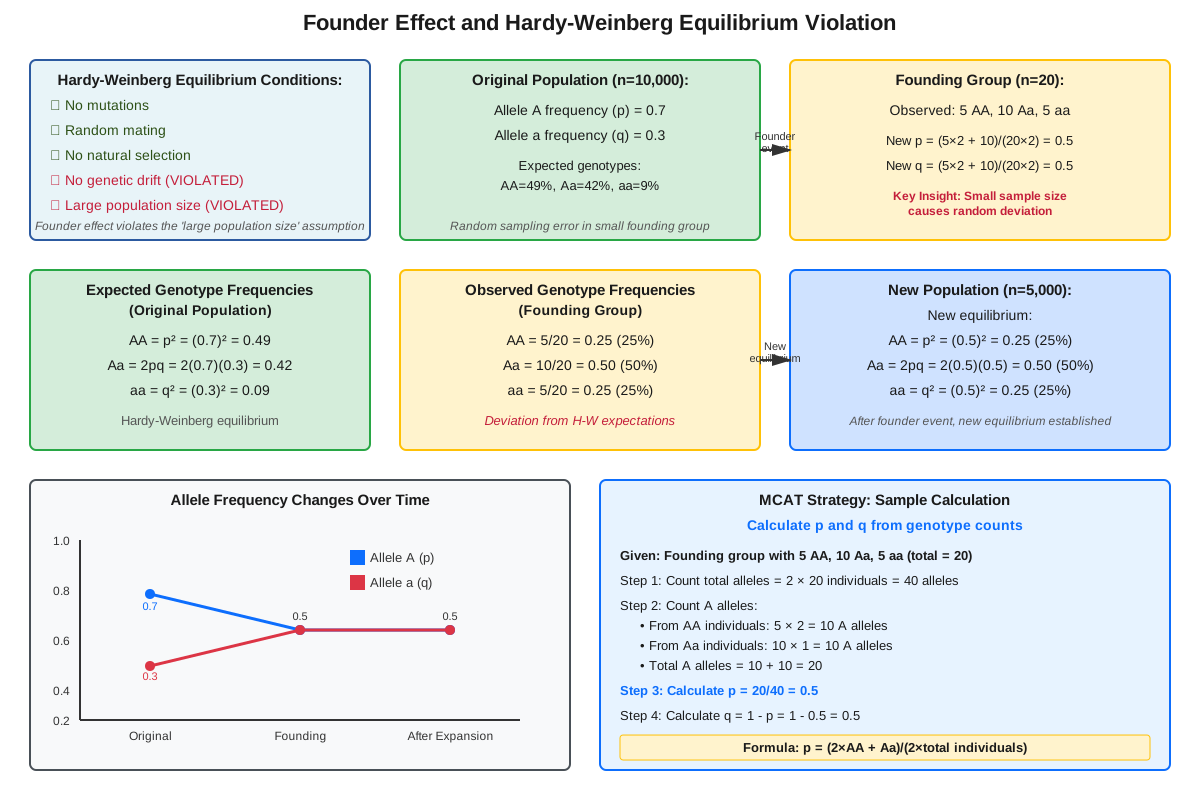
The founder effect connects to Hardy-Weinberg equilibrium by violating the "no genetic drift" assumption. When analyzing populations affected by founder effects, Hardy-Weinberg calculations reveal departures from expected genotype frequencies, though the population may return to Hardy-Weinberg proportions after one generation of random mating (albeit with the new allele frequencies established by the founding event).
Natural selection interacts with founder effect in complex ways. While founder effect changes allele frequencies randomly, natural selection subsequently acts on the genetic variation present in the founded population. If a deleterious allele reaches high frequency through founder effect, selection may reduce its frequency over time, though this process is slower in small populations where drift remains strong.
The founder effect enables speciation by creating genetically distinct populations. Geographic isolation combined with genetic differentiation from founder effects can initiate reproductive isolation, eventually leading to new species formation. This connection appears frequently in MCAT passages about island biogeography and adaptive radiation.
High-Yield Facts
⭐ The founder effect is a type of genetic drift that occurs when a small group establishes a new population, resulting in altered allele frequencies and reduced genetic diversity compared to the source population
⭐ Founder effect violates the Hardy-Weinberg assumption of no genetic drift, but populations can return to Hardy-Weinberg equilibrium proportions after one generation of random mating with the new allele frequencies
⭐ Smaller founding populations experience more dramatic founder effects due to greater sampling error—the relationship follows the equation: variance = pq/(2N)
⭐ Founder effect increases the frequency of homozygotes (both dominant and recessive) because reduced genetic diversity means individuals are more likely to inherit identical alleles
⭐ The founder effect differs from population bottlenecks in that founder effects involve migration to establish a new population, while bottlenecks represent population crashes in existing populations
- Founder effect can elevate the frequency of deleterious recessive alleles, explaining why certain genetic diseases are concentrated in specific ethnic or cultural groups
- The genetic consequences of founder effect are permanent unless new genetic variation is introduced through mutation or gene flow from other populations
- Founder effect reduces a population's evolutionary potential by limiting the genetic variation available for natural selection to act upon
- In conservation biology, founder effect poses a major challenge for captive breeding programs, as small founding populations create genetically depauperate populations vulnerable to extinction
- The founder effect can facilitate speciation by creating genetically distinct populations that may eventually become reproductively isolated
- Multiple sequential founder effects (serial founder effects) can occur when populations are established from previously founded populations, compounding genetic diversity loss
- Founder effect is random with respect to fitness—the founding individuals are not necessarily better adapted than the source population, distinguishing this process from natural selection
Quick check — test yourself on Founder effect so far.
Try Flashcards →Common Misconceptions
Misconception: Founder effect is the same as natural selection because only certain individuals found the new population → Correction: Founder effect is random sampling, not selection based on fitness. The founding individuals are not necessarily better adapted; they simply happen to be the ones that migrated. Natural selection changes allele frequencies based on differential survival and reproduction, while founder effect changes frequencies through random chance during population establishment.
Misconception: Founder effect only affects rare alleles → Correction: Founder effect can alter the frequencies of both common and rare alleles. A common allele in the source population might be absent in the founding group by chance, while a rare allele might become common. The effect is random and affects all loci, though the consequences are most noticeable for alleles that show large frequency changes.
Misconception: Populations affected by founder effect cannot be in Hardy-Weinberg equilibrium → Correction: While the founder effect violates the Hardy-Weinberg assumption of no genetic drift at the moment it occurs, the population can return to Hardy-Weinberg equilibrium proportions after just one generation of random mating. However, the equilibrium will reflect the new allele frequencies established by the founding event, not the original source population frequencies.
Misconception: Founder effect always reduces fitness and is harmful to populations → Correction: While founder effect often increases the frequency of deleterious alleles and reduces adaptive potential, it can occasionally increase fitness if beneficial alleles happen to reach high frequency in the founding group. Additionally, the genetic differentiation caused by founder effect can facilitate adaptation to new environments and contribute to speciation, which may be evolutionarily advantageous in the long term.
Misconception: Larger populations cannot experience founder effects → Correction: While founder effects are most dramatic in very small founding populations, even moderately sized founding groups (50-100 individuals) can show significant deviations from source population allele frequencies and reduced genetic diversity. The magnitude of the effect decreases with increasing founder population size, but the phenomenon can occur across a range of population sizes.
Misconception: Founder effect and population bottleneck are interchangeable terms → Correction: These are distinct phenomena. Founder effect specifically involves a small group migrating to establish a new population in a new location, while a bottleneck occurs when an existing population crashes to a small size in the same location. Both reduce genetic diversity through genetic drift, but the geographic and temporal contexts differ, and MCAT questions often require distinguishing between them.
Worked Examples
Example 1: Allele Frequency Changes in a Founding Population
Question: A large mainland population of butterflies has two alleles for wing color: B (blue, dominant) and b (white, recessive). In the mainland population, the frequency of the B allele is 0.7 and the b allele is 0.3. A hurricane carries 10 butterflies to a remote island where they establish a new population. By chance, 6 of these butterflies are BB, 3 are Bb, and 1 is bb. (a) Calculate the allele frequencies in the founding population. (b) If the island population undergoes random mating, what will be the genotype frequencies in the next generation? (c) Explain whether this represents a founder effect and identify the key genetic consequences.
Solution:
(a) To calculate allele frequencies in the founding population:
- Total number of individuals: 10
- Total number of alleles: 20 (each individual has 2 alleles)
- Count B alleles: (6 BB individuals × 2) + (3 Bb individuals × 1) = 12 + 3 = 15
- Count b alleles: (1 bb individual × 2) + (3 Bb individuals × 1) = 2 + 3 = 5
- Frequency of B: 15/20 = 0.75
- Frequency of b: 5/20 = 0.25
(b) Using Hardy-Weinberg equation with the new allele frequencies:
- p = 0.75 (frequency of B)
- q = 0.25 (frequency of b)
- Expected genotype frequencies after one generation of random mating:
- BB: p² = (0.75)² = 0.5625 or 56.25%
- Bb: 2pq = 2(0.75)(0.25) = 0.375 or 37.5%
- bb: q² = (0.25)² = 0.0625 or 6.25%
(c) This is a clear example of founder effect because:
- A small group (10 individuals) established a new population on the island
- The founding event involved geographic separation (hurricane transport)
- Allele frequencies changed from the source population (B: 0.7→0.75, b: 0.3→0.25) due to random sampling
- Genetic diversity was reduced (only 10 founding individuals vs. large mainland population)
Key consequences: The island population has slightly higher frequency of the B allele and lower frequency of the b allele compared to the mainland. The white-winged phenotype (bb) will be rarer on the island (6.25% vs. 9% on mainland where bb = 0.3² = 0.09). The island population has reduced genetic diversity and may have lost other alleles at different loci that were present in the mainland population.
Example 2: Founder Effect and Genetic Disease
Question: A genetic disease caused by a recessive allele (d) has a frequency of 1 in 10,000 individuals (0.0001) in a large population. A small religious community of 50 individuals splits from this population to establish an isolated settlement. By chance, 3 of the 50 founders are heterozygous carriers (Dd) and the rest are DD. (a) Calculate the frequency of the disease allele in the founding population. (b) Predict the frequency of affected individuals (dd) in the second generation if the community practices random mating. (c) Compare this to the original population and explain the medical implications.
Solution:
(a) Calculate allele frequency in founding population:
- Total individuals: 50
- Total alleles: 100
- Genotypes: 47 DD and 3 Dd (no dd individuals in founders)
- Count D alleles: (47 × 2) + (3 × 1) = 94 + 3 = 97
- Count d alleles: (3 × 1) = 3
- Frequency of d: 3/100 = 0.03
(b) Predict disease frequency in second generation:
- Using Hardy-Weinberg: frequency of dd = q² = (0.03)² = 0.0009
- This means approximately 1 in 1,111 individuals would be affected
(c) Comparison and implications:
- Original population disease frequency: 0.0001 (1 in 10,000)
- Founded population disease frequency: 0.0009 (1 in 1,111)
- The founder effect increased disease frequency by 9-fold
Medical implications: This founder effect dramatically increases the disease burden in the isolated community. The carrier frequency also increased from approximately 0.02 (2%) in the original population to 0.06 (6%) in the founded population. This scenario explains why certain genetic diseases are concentrated in specific ethnic or religious communities (like Tay-Sachs in Ashkenazi Jews or Ellis-van Creveld syndrome in Amish populations). Medical screening and genetic counseling become particularly important in such communities. The example also illustrates how a single founding event can have lasting health consequences for many generations.
Connection to learning objectives: This problem integrates founder effect definition, quantitative analysis, Hardy-Weinberg calculations, and real-world medical applications—all high-yield for MCAT questions.
Exam Strategy
When approaching founder effect questions on the MCAT, first identify whether the question involves population establishment versus population reduction. Look for trigger phrases like "colonized," "established a new population," "migrated to," "founding members," or "isolated group." These indicate founder effect rather than bottleneck or other evolutionary mechanisms.
For quantitative problems, immediately identify what you're given and what you need to calculate. Most founder effect calculations involve: (1) determining allele frequencies in the founding population by counting alleles, (2) applying Hardy-Weinberg equations to predict next-generation genotype frequencies, or (3) comparing allele frequencies between source and founded populations. Write out p + q = 1 and p² + 2pq + q² = 1 at the start of calculations to avoid errors.
Process-of-elimination strategies are particularly effective for founder effect questions. Eliminate answer choices that:
- Confuse founder effect with natural selection (founder effect is random, not based on fitness)
- Claim founder effect cannot occur in large populations (it can, just with smaller magnitude)
- State that genetic diversity increases (founder effect always reduces diversity)
- Suggest that Hardy-Weinberg equilibrium is permanently violated (populations return to HWE after one generation of random mating, just with new allele frequencies)
Exam Tip: When passages present data tables showing allele frequencies in different populations, immediately check for small population sizes and geographic separation—these are classic founder effect setups. The MCAT loves to test whether you can distinguish random frequency changes (drift/founder effect) from fitness-based changes (selection).
For passage-based questions, pay attention to the experimental design or observational study structure. If researchers are comparing genetic diversity between island and mainland populations, or examining disease frequencies in isolated communities versus general populations, founder effect is likely central to the passage. Underline or note population sizes, allele frequencies, and any mention of population history or migration events.
Time allocation: Discrete founder effect questions typically require 60-90 seconds—enough time for quick calculations or conceptual analysis. Passage-based questions may require 90-120 seconds each, as you'll need to integrate passage information with your background knowledge. Don't spend excessive time on complex calculations; the MCAT rarely requires calculations beyond basic Hardy-Weinberg applications.
Watch for questions that combine founder effect with other concepts like inbreeding, genetic load, or conservation biology. These interdisciplinary questions test deeper understanding and often appear in the most challenging passages. The key is recognizing that founder effect sets up the initial conditions (reduced diversity, altered frequencies), and then other processes act on the founded population.
Memory Techniques
FOUNDER mnemonic for key characteristics:
- Few individuals establish population
- Occurs during migration/colonization
- Unique allele frequencies (different from source)
- No fitness advantage (random process)
- Diversity decreases
- Evolutionary potential reduced
- Random sampling mechanism
Visual memory technique: Picture a jar of mixed colored marbles (source population) and imagine grabbing a small handful without looking (random sampling). The handful has different proportions of colors than the original jar—this is founder effect. Now imagine pouring that handful into a new jar and filling it with copies of just those marbles (population growth from founders). The new jar permanently has different color proportions than the original.
Distinction mnemonic - "FOUNDER vs. BOTTLE":
- FOUNDER = Fresh location, Original group migrates
- BOTTLE = Big crash, Original location, Temporary reduction, Then recovery, Large population becomes small, Existing population affected
Acronym for consequences - "RAHED":
- Reduced genetic diversity
- Altered allele frequencies
- Homozygosity increases
- Elevated disease frequency
- Diminished evolutionary potential
Memory hook for calculations: "Count the alleles, divide by total" - When calculating allele frequencies in founding populations, always count individual alleles (not individuals) and divide by 2N (twice the number of individuals).
Summary
The founder effect represents a critical evolutionary mechanism whereby small groups establishing new populations carry only a subset of the genetic variation present in source populations, resulting in altered allele frequencies and reduced genetic diversity through random sampling. As a specific type of genetic drift occurring during population establishment, the founder effect differs from population bottlenecks in its geographic context and timing, though both phenomena reduce genetic variation through small population size effects. The magnitude of founder effects increases as founding population size decreases, following predictable mathematical relationships that can be analyzed using Hardy-Weinberg principles. Real-world consequences include elevated frequencies of genetic diseases in isolated populations, reduced evolutionary potential, and challenges for conservation biology programs. For MCAT success, students must distinguish founder effect from natural selection (random vs. fitness-based), recognize founder effect scenarios in passages involving population establishment or migration, perform quantitative analyses of allele frequency changes, and understand the long-term genetic and medical implications of founding events on population health and evolution.
Key Takeaways
- Founder effect is random sampling during population establishment that alters allele frequencies and reduces genetic diversity compared to the source population—it is a specific type of genetic drift, not natural selection
- Smaller founding populations experience more dramatic founder effects due to greater sampling error, with the relationship quantified as variance = pq/(2N)
- Founder effect explains elevated genetic disease frequencies in isolated populations (Ashkenazi Jews, Amish, Finnish populations) and poses significant challenges for conservation biology
- Populations affected by founder effect can return to Hardy-Weinberg equilibrium after one generation of random mating, but with the new allele frequencies established by the founding event
- Distinguish founder effect (migration to new location, population establishment) from population bottleneck (existing population crashes) and natural selection (fitness-based, not random)
- Founder effect increases homozygosity, reduces evolutionary potential, and can facilitate speciation through genetic differentiation of isolated populations
- MCAT questions typically test founder effect through quantitative allele frequency calculations, scenario identification, and integration with Hardy-Weinberg equilibrium, genetic disease, or conservation biology contexts
Related Topics
Population Bottlenecks: Understanding how existing populations that crash to small sizes experience genetic drift similar to founder effect, but without the geographic migration component. Mastering founder effect provides the foundation for analyzing bottleneck scenarios and distinguishing between these related phenomena.
Gene Flow and Migration: Studying how movement of individuals between populations can counteract founder effect by introducing new genetic variation. This topic explores how genetic exchange prevents or reverses the genetic consequences of founding events.
Speciation Mechanisms: Examining how founder effect contributes to reproductive isolation and the formation of new species, particularly in the context of allopatric speciation and adaptive radiation on islands.
Hardy-Weinberg Equilibrium: Deepening understanding of how founder effect violates the "no genetic drift" assumption and how to use Hardy-Weinberg calculations to analyze populations affected by founding events.
Conservation Genetics: Applying founder effect principles to real-world conservation challenges, including captive breeding programs, genetic rescue strategies, and maintaining genetic diversity in endangered species.
Inbreeding and Genetic Load: Exploring how small founding populations experience increased inbreeding, which interacts with founder effect to further reduce genetic diversity and increase expression of deleterious recessive alleles.
Practice CTA
Now that you've mastered the founder effect, it's time to solidify your understanding through active practice. Challenge yourself with MCAT-style practice questions that test your ability to identify founder effect scenarios, calculate allele frequency changes, and distinguish this concept from related evolutionary mechanisms. Work through flashcards focusing on high-yield facts, real-world examples, and common misconceptions to ensure rapid recall during the exam. Remember: understanding founder effect opens doors to mastering broader population genetics concepts that appear throughout the MCAT Biology section. The time you invest in practice now will pay dividends when you encounter these questions under test conditions. You've got this!
Sign up free to keep reading
Create a free AnvayaPrep account to finish this MCAT guide on Founder effect — plus flashcards and practice questions.