Overview
Genetic drift is a fundamental mechanism of evolution that describes random changes in allele frequencies within a population over time. Unlike natural selection, which is a non-random process driven by differential survival and reproduction, genetic drift operates purely by chance and can cause allele frequencies to fluctuate unpredictably from one generation to the next. This stochastic process is particularly powerful in small populations, where random sampling effects can dramatically alter the genetic composition of a population, sometimes leading to the fixation of certain alleles and the loss of others, regardless of their adaptive value.
For the MCAT, understanding genetic drift is essential because it represents one of the five major forces of evolution (alongside natural selection, mutation, gene flow, and non-random mating) that students must be able to distinguish and apply to population genetics scenarios. The exam frequently tests students' ability to differentiate between random evolutionary processes like genetic drift and deterministic processes like natural selection, particularly in the context of Molecular Biology and Genetics passages. Questions may present population scenarios, ask students to predict genetic outcomes, or require interpretation of data showing allele frequency changes over time.
Genetic drift connects to broader Biology concepts including Hardy-Weinberg equilibrium (which assumes no genetic drift), speciation (where drift can contribute to reproductive isolation), conservation biology (where small population sizes make species vulnerable to drift), and molecular evolution (where neutral mutations are subject primarily to drift rather than selection). Understanding this topic provides the foundation for analyzing how populations evolve and why genetic diversity can be lost even in the absence of selective pressures—a concept with significant implications for both evolutionary theory and practical applications in medicine and conservation.
Learning Objectives
- [ ] Define Genetic drift using accurate Biology terminology
- [ ] Explain why Genetic drift matters for the MCAT
- [ ] Apply Genetic drift to exam-style questions
- [ ] Identify common mistakes related to Genetic drift
- [ ] Connect Genetic drift to related Biology concepts
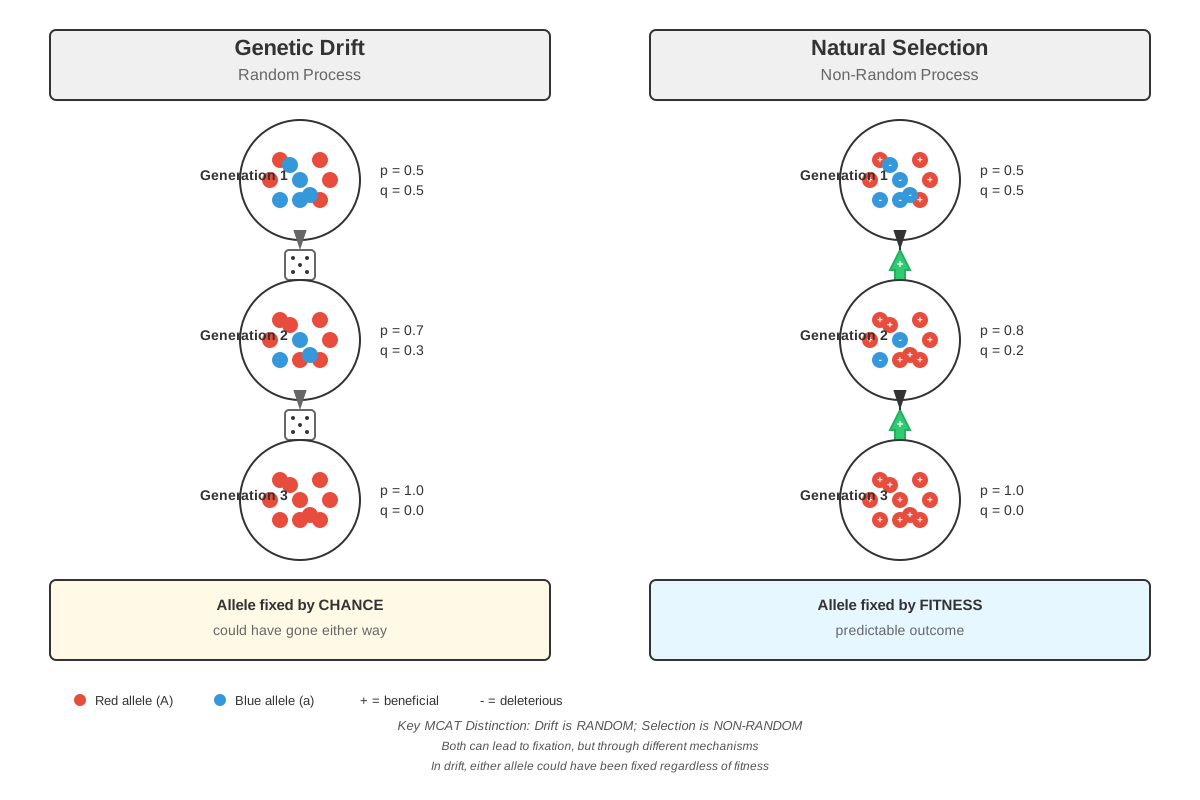
- [ ] Distinguish between genetic drift and natural selection in population genetics scenarios
- [ ] Calculate and predict the effects of population size on the magnitude of genetic drift
- [ ] Analyze the consequences of founder effects and population bottlenecks on genetic diversity
- [ ] Evaluate how genetic drift interacts with other evolutionary forces to shape population genetics
Prerequisites
- Hardy-Weinberg equilibrium: Understanding the conditions under which allele frequencies remain constant provides the baseline against which genetic drift operates as a violating force
- Allele frequency calculations: The ability to calculate p and q values is necessary to quantify how genetic drift changes population genetics over time
- Basic probability and statistics: Genetic drift is fundamentally a stochastic process requiring understanding of random sampling and probability distributions
- Population genetics terminology: Familiarity with terms like gene pool, allele, genotype frequency, and population is essential for discussing drift mechanisms
- Mendelian inheritance: Understanding how alleles are transmitted from parents to offspring underlies the random sampling that produces drift
Why This Topic Matters
Genetic drift has profound real-world significance in conservation biology, where small endangered populations face the threat of losing genetic diversity through random chance alone, potentially reducing their ability to adapt to environmental changes. In human populations, founder effects (a type of genetic drift) explain why certain genetic diseases occur at unusually high frequencies in isolated communities—for example, Ellis-van Creveld syndrome in the Amish population or Tay-Sachs disease in Ashkenazi Jewish populations. Understanding drift is also crucial for interpreting genetic variation in modern humans, as population bottlenecks during human evolutionary history have shaped our current genetic diversity.
On the MCAT, genetic drift appears with moderate frequency, typically in 2-4 questions per exam administration. Questions most commonly appear in Biology passages within the Biological and Biochemical Foundations of Living Systems section, often integrated with evolution, population genetics, or ecology content. The exam tests this concept through several question formats: discrete questions asking students to identify which scenario represents genetic drift versus selection; passage-based questions requiring interpretation of graphs showing allele frequency changes in populations of different sizes; and data analysis questions where students must explain unexpected genetic patterns in populations.
Common exam presentations include research passages describing island populations, conservation studies of endangered species, or experimental evolution studies with bacterial populations. The MCAT particularly favors questions that require students to distinguish random processes from adaptive ones, predict the relative impact of drift in populations of different sizes, or explain why genetic diversity might decrease even when no alleles are deleterious. Students should be prepared to analyze scenarios involving founder effects, bottlenecks, and the interaction between drift and other evolutionary forces.
Core Concepts
Definition and Mechanism of Genetic Drift
Genetic drift is the random change in allele frequencies in a population from one generation to the next due to sampling error in the transmission of alleles. This process occurs because, in any finite population, the alleles that make it into the next generation represent a random sample of the alleles present in the current generation. Just as flipping a coin 10 times might yield 7 heads and 3 tails rather than the expected 5:5 ratio, the random sampling of gametes during reproduction can cause allele frequencies to deviate from their expected values.
The mechanism operates through several steps:
- A population contains genetic variation with specific allele frequencies
- During reproduction, only a subset of individuals successfully reproduce
- Which specific individuals reproduce involves an element of chance
- The alleles passed to the next generation represent a random sample
- By chance alone, this sample may not perfectly represent the parental generation's allele frequencies
- Over successive generations, these random fluctuations accumulate
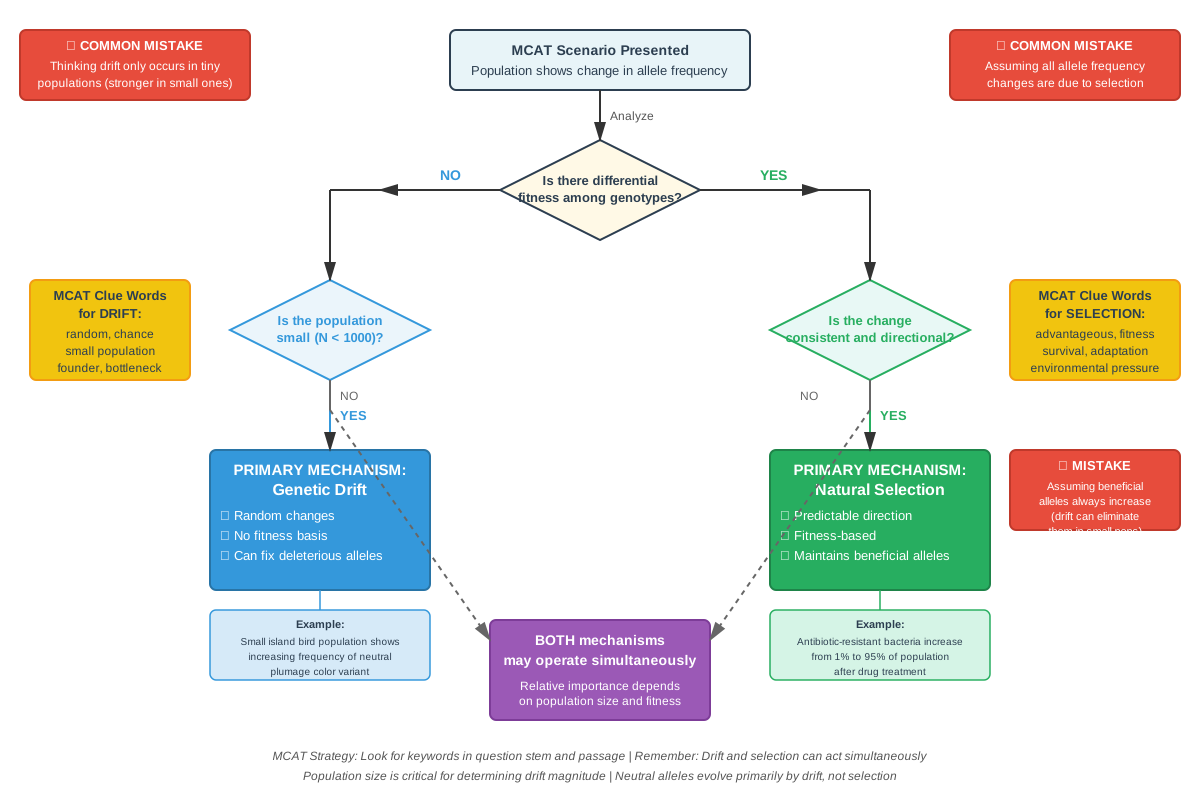
The key distinction between genetic drift and natural selection is that drift is non-directional and non-adaptive. While natural selection consistently favors alleles that increase fitness, drift can increase, decrease, or maintain any allele frequency regardless of its effect on survival or reproduction. An allele that is neutral or even slightly beneficial can be lost by drift, while a slightly deleterious allele can increase in frequency or even become fixed (reach 100% frequency) purely by chance.
Population Size and Drift Magnitude
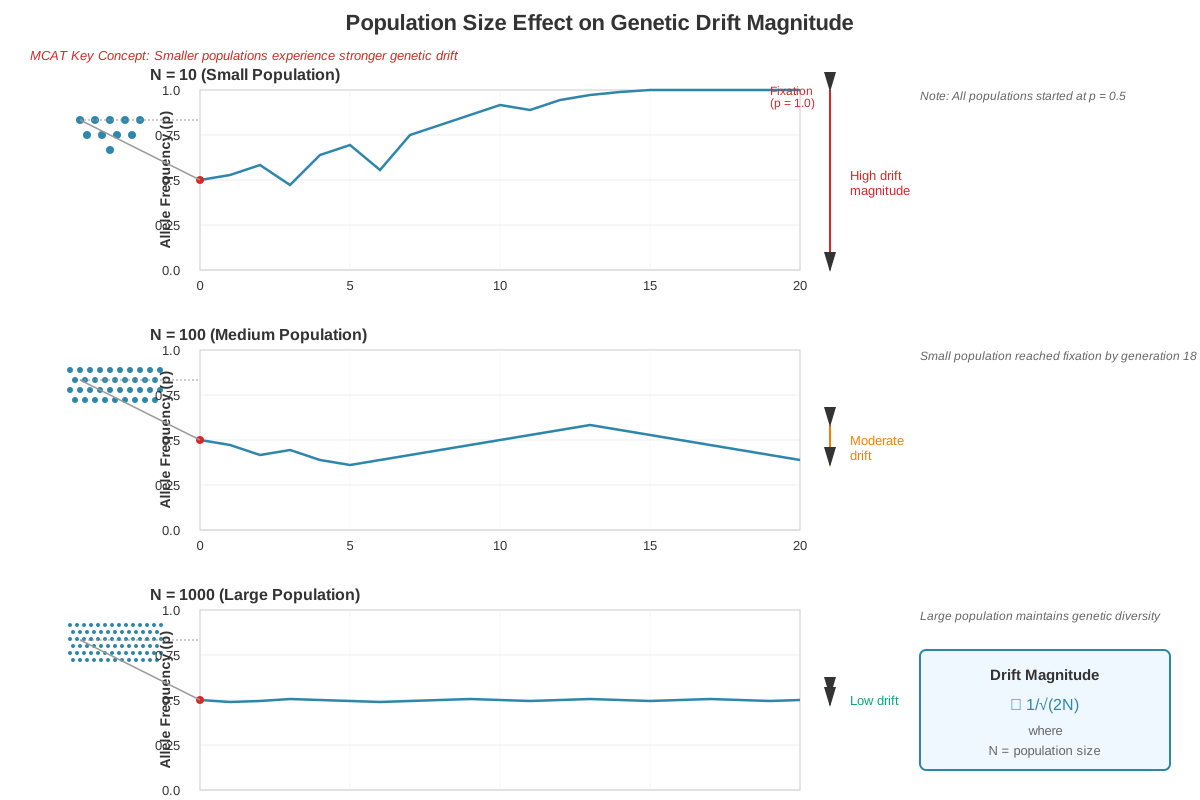
The magnitude of genetic drift is inversely proportional to population size—a relationship that is mathematically described and critically important for MCAT questions. In small populations, random sampling effects are much more pronounced, causing larger fluctuations in allele frequencies between generations. In large populations, random deviations tend to cancel out, making drift a weaker evolutionary force.
| Population Size | Drift Magnitude | Genetic Diversity Impact | Time to Fixation |
|---|---|---|---|
| Small (N < 100) | Very strong | Rapid loss | Fast (few generations) |
| Medium (N = 100-1000) | Moderate | Gradual loss | Intermediate |
| Large (N > 10,000) | Weak | Slow loss | Very slow (many generations) |
| Very Large (N > 100,000) | Negligible | Minimal loss | Extremely slow |
The effective population size (Ne) is the parameter that determines drift strength. This differs from the census population size because not all individuals reproduce equally. Factors reducing effective population size include unequal sex ratios, variation in reproductive success, and non-overlapping generations. For MCAT purposes, recognize that when a question mentions "small population," it's signaling that genetic drift will be a significant evolutionary force.
Founder Effect
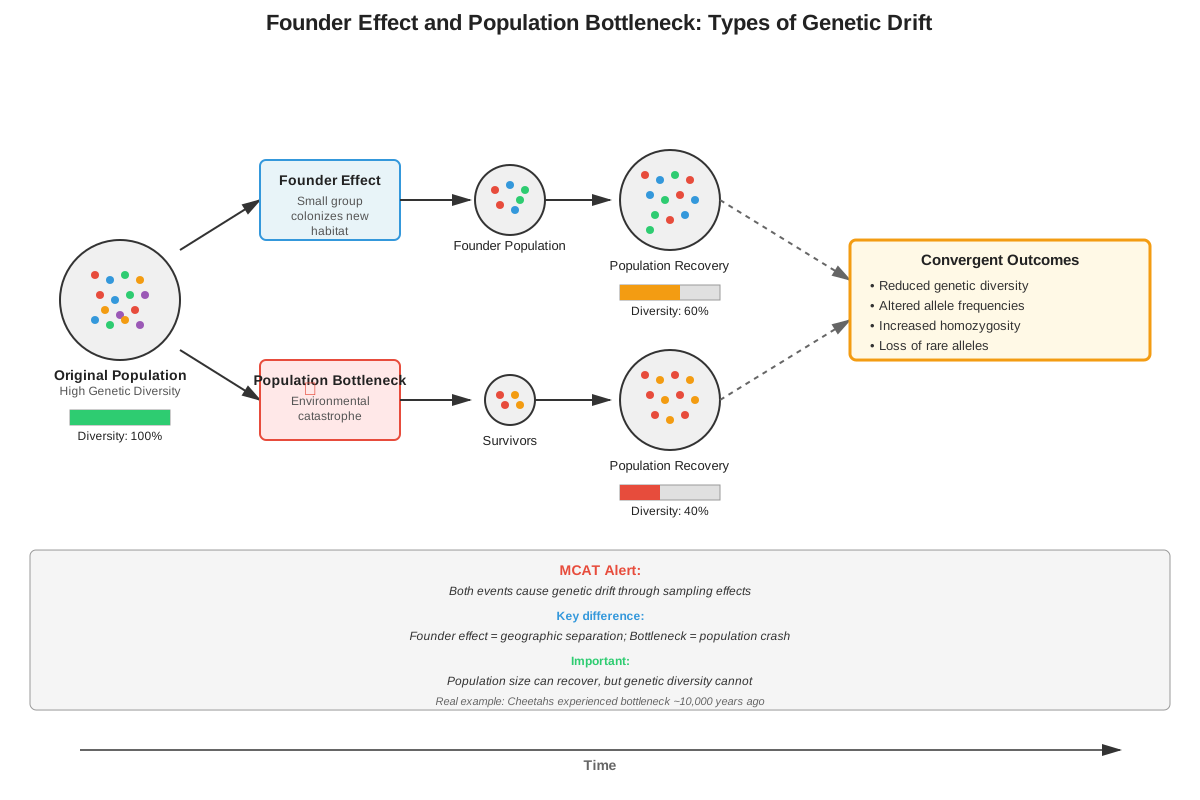
The founder effect is a specific type of genetic drift that occurs when a new population is established by a small number of individuals from a larger source population. These founders carry only a fraction of the genetic diversity present in the original population, and the allele frequencies in the new population may differ substantially from the source population purely by chance. This creates an immediate and often dramatic change in the genetic composition of the population.
Classic examples include:
- Island populations established by a few colonizing individuals
- Human populations founded by small groups of settlers
- Laboratory populations started from a few individuals
- Invasive species introduced to new habitats with limited initial numbers
The founder effect has several important consequences. First, rare alleles in the source population may be absent entirely in the founder population, permanently reducing genetic diversity. Second, alleles that happened to be carried by the founders may reach much higher frequencies than in the source population, even if they provide no selective advantage. Third, the reduced genetic diversity makes the new population more vulnerable to additional genetic drift and less able to adapt to environmental changes. For the MCAT, students should recognize founder effect scenarios and predict that new populations will have reduced genetic diversity and potentially different allele frequencies compared to source populations.
Population Bottleneck
A population bottleneck occurs when a population undergoes a drastic reduction in size due to environmental events (disease, habitat loss, climate change, etc.), followed by population recovery. During the bottleneck, the population experiences intense genetic drift because the small number of surviving individuals represents a random sample of the pre-bottleneck population's genetic diversity. Even if the population later recovers to large numbers, the genetic diversity lost during the bottleneck is not regained (except through new mutations or gene flow).
The bottleneck effect differs from the founder effect primarily in timing and context: bottlenecks affect existing populations that suddenly shrink, while founder effects occur when new populations are established. However, both produce similar genetic consequences—reduced genetic diversity and changed allele frequencies due to random sampling in small populations.
Important characteristics of bottlenecks include:
- Genetic diversity is reduced proportionally to bottleneck severity and duration
- Rare alleles are most likely to be lost
- Heterozygosity decreases
- The population becomes more genetically uniform
- Recovery of population size does not restore lost genetic diversity
- The population may be less able to adapt to future environmental changes
Historical examples relevant to Biology and evolution include the northern elephant seal (reduced to ~20 individuals in the 1890s, now showing very low genetic diversity despite population recovery to over 100,000), cheetahs (which show remarkably low genetic diversity suggesting a historical bottleneck), and human populations (genetic evidence suggests humans experienced bottlenecks during evolutionary history).
Genetic Drift vs. Natural Selection
Distinguishing between genetic drift and natural selection is a high-yield skill for the MCAT. While both change allele frequencies over time, they operate through fundamentally different mechanisms and produce different patterns.
Key Distinctions:
| Feature | Genetic Drift | Natural Selection |
|---|---|---|
| Mechanism | Random sampling error | Differential survival/reproduction |
| Direction | Random, unpredictable | Directional toward higher fitness |
| Relationship to fitness | Independent of fitness | Dependent on fitness differences |
| Population size effect | Stronger in small populations | Operates in all population sizes |
| Outcome | Can fix deleterious or neutral alleles | Increases frequency of beneficial alleles |
| Predictability | Stochastic, cannot predict specific outcome | Deterministic, predictable direction |
| Effect on adaptation | Non-adaptive, can reduce adaptation | Adaptive, increases adaptation |
For exam questions, key trigger words for genetic drift include "small population," "random," "chance," "isolated," "founder," and "bottleneck." Trigger words for natural selection include "advantageous," "fitness," "survival," "adaptation," "environmental pressure," and "competition." However, students must recognize that both forces can operate simultaneously—drift may dominate in small populations even when selection is present, and selection can be overwhelmed by drift for weakly selected alleles.
Fixation and Loss of Alleles
Through genetic drift, alleles can become fixed (reach 100% frequency) or lost (reach 0% frequency) in a population purely by chance. Once an allele is fixed, all individuals in the population are homozygous for that allele, and genetic variation at that locus is eliminated unless restored by mutation or gene flow. The probability that a particular allele will become fixed by drift equals its initial frequency in the population—an allele at 30% frequency has a 30% chance of eventual fixation and a 70% chance of loss.
The time to fixation or loss depends on population size. In small populations, drift acts quickly, and alleles reach fixation or loss in relatively few generations. In large populations, the process is much slower. For neutral alleles (those with no fitness effects), drift is the primary force determining their fate. This concept is central to the neutral theory of molecular evolution, which proposes that most genetic variation at the molecular level is selectively neutral and evolves primarily through drift.
For the MCAT, understand that:
- Drift reduces genetic diversity over time by fixing some alleles and losing others
- Smaller populations lose diversity faster
- Once lost, alleles cannot be recovered except through mutation or immigration
- Fixation is permanent in the absence of new mutations or gene flow
- The process is random—even beneficial alleles can be lost by drift in small populations
Concept Relationships
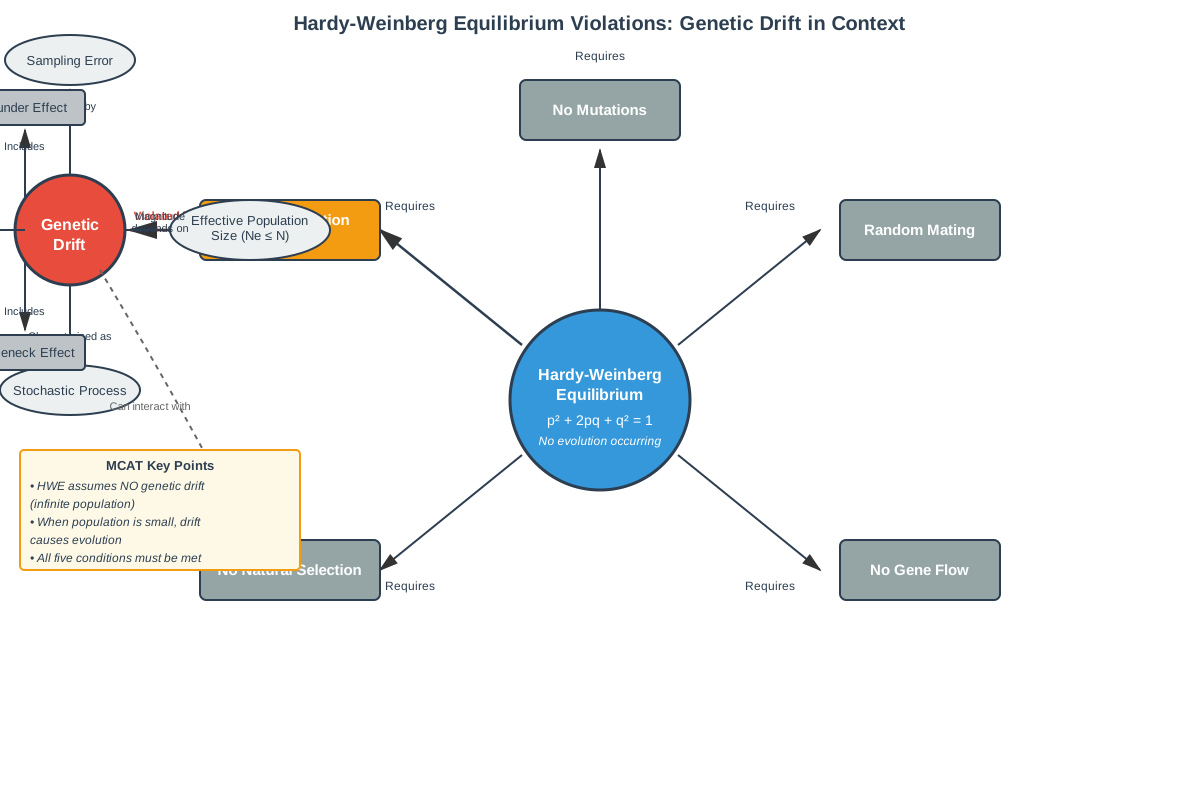
Genetic drift operates within the broader framework of population genetics and evolutionary biology, connecting to multiple related concepts. The relationship begins with Hardy-Weinberg equilibrium, which describes the null hypothesis of no evolution—allele frequencies remain constant when five conditions are met, one of which is infinitely large population size (no genetic drift). When populations are finite, drift violates this condition, causing allele frequencies to change randomly over time.
Genetic drift → reduces genetic diversity → affects heterozygosity → influences inbreeding depression in small populations. As drift reduces the number of alleles at various loci, populations become more genetically uniform, increasing the probability that individuals will mate with relatives and produce homozygous offspring. This can expose deleterious recessive alleles, reducing population fitness.
The relationship between drift and natural selection is complex and interactive. In large populations, selection dominates and drift is negligible for alleles with significant fitness effects. In small populations, drift can overpower weak selection, causing even slightly beneficial alleles to be lost or slightly deleterious alleles to increase in frequency. The relative strength of drift versus selection depends on the product of population size (N) and selection coefficient (s)—when Ns < 1, drift dominates; when Ns > 1, selection dominates.
Founder effects and bottlenecks → are specific manifestations of genetic drift → lead to reduced genetic diversity → can contribute to speciation. When populations become isolated and experience drift, they may diverge genetically from their source populations. Over time, this genetic divergence can contribute to reproductive isolation and the formation of new species, particularly in combination with natural selection and geographic isolation.
Genetic drift → affects molecular evolution → explains patterns of neutral variation. At the DNA sequence level, many mutations are selectively neutral (neither beneficial nor harmful). These neutral mutations accumulate and are lost primarily through drift, creating the molecular variation we observe within and between species. This connects to the molecular clock concept, where neutral mutations accumulate at relatively constant rates, allowing estimation of divergence times between species.
The concept also connects to gene flow (migration between populations), which introduces new alleles and counteracts the diversity-reducing effects of drift. The balance between drift (reducing diversity within populations, increasing differences between populations) and gene flow (homogenizing populations) determines the genetic structure of subdivided populations—a concept tested on the MCAT through questions about island populations, metapopulations, or conservation genetics.
High-Yield Facts
⭐ Genetic drift is random change in allele frequencies due to sampling error and is strongest in small populations
⭐ The magnitude of drift is inversely proportional to population size—smaller populations experience larger random fluctuations in allele frequencies
⭐ Founder effects occur when a new population is established by a small number of individuals, resulting in reduced genetic diversity and potentially different allele frequencies than the source population
⭐ Population bottlenecks cause dramatic loss of genetic diversity when populations crash to small sizes, and this diversity is not recovered even if population size later increases
⭐ Unlike natural selection, genetic drift is non-adaptive and can fix deleterious alleles or eliminate beneficial alleles purely by chance
- Genetic drift violates the Hardy-Weinberg assumption of infinite population size, causing evolution even in the absence of selection, mutation, or gene flow
- The probability that a neutral allele will become fixed by drift equals its initial frequency in the population
- Drift reduces heterozygosity over time, making populations more genetically uniform
- Effective population size (Ne) determines drift strength and is often much smaller than census population size
- In small populations, genetic drift can overpower weak natural selection, causing evolution to proceed in non-adaptive directions
- Island populations and endangered species are particularly vulnerable to genetic drift due to small population sizes
- Drift causes different isolated populations to diverge genetically over time, even in identical environments
Quick check — test yourself on Genetic drift so far.
Try Flashcards →Common Misconceptions
Misconception: Genetic drift only affects small populations and is irrelevant in large populations.
Correction: While drift is much stronger in small populations, it operates in all finite populations. In large populations, drift is weak but still present, causing very slow random changes in allele frequencies. The MCAT may test whether students recognize that drift never completely disappears unless population size is truly infinite.
Misconception: Genetic drift is a form of natural selection that occurs in small populations.
Correction: Genetic drift and natural selection are fundamentally different mechanisms. Selection is non-random and based on fitness differences, while drift is purely random and independent of fitness. Drift can actually work against selection, causing beneficial alleles to be lost or harmful alleles to increase in frequency by chance alone.
Misconception: Founder effects and bottlenecks are the same phenomenon.
Correction: While both involve small population sizes and produce similar genetic consequences, they differ in context. Founder effects occur when a new population is established by a few colonizers, while bottlenecks occur when an existing population crashes to small size then recovers. The timing and demographic history differ, though both result in reduced genetic diversity through drift.
Misconception: Once a population recovers from a bottleneck to large size, genetic diversity is restored.
Correction: Population size recovery does not restore lost genetic diversity. Alleles lost during the bottleneck remain absent unless reintroduced through mutation (very slow) or gene flow from other populations. This is why species that have recovered numerically from near-extinction (like northern elephant seals) still show very low genetic diversity.
Misconception: Genetic drift always reduces genetic diversity within a population.
Correction: While drift ultimately reduces diversity within individual populations by fixing some alleles and losing others, it increases genetic differences between isolated populations. Different populations experience different random changes, causing them to diverge genetically over time. The MCAT may test this by asking about genetic patterns across multiple isolated populations.
Misconception: Beneficial alleles cannot be lost from populations.
Correction: In small populations, even beneficial alleles can be lost by genetic drift, especially if their selective advantage is small. The random sampling of reproduction can, by chance, fail to pass on an advantageous allele to the next generation. This is particularly important in conservation biology, where small endangered populations may lose adaptive genetic variation.
Misconception: Genetic drift produces adaptation to the environment.
Correction: Genetic drift is non-adaptive and does not produce adaptations. It changes allele frequencies randomly, regardless of whether those changes improve or reduce fitness. Only natural selection consistently produces adaptive evolution. Drift can actually reduce a population's adaptation by fixing slightly deleterious alleles or losing beneficial ones.
Worked Examples
Example 1: Island Colonization Scenario
Question: A population of 10,000 birds lives on a mainland where 60% carry allele A and 40% carry allele a at a particular locus. A storm carries 5 birds to a remote island where they establish a new population. By chance, 4 of these birds carry allele A and 1 carries allele a (assuming diploid organisms and each bird is heterozygous). After several generations, the island population grows to 1,000 birds, and genetic analysis shows that allele A is now at 95% frequency. Which evolutionary mechanism best explains this pattern?
Analysis:
Let's work through this systematically by identifying the key features:
- Initial situation: Large mainland population with A at 60% frequency
- Colonization event: Only 5 birds establish the island population (very small number)
- Founder allele frequencies: With 4 birds carrying A and 1 carrying a, and assuming heterozygosity, we have approximately 80% A frequency in founders (different from mainland 60%)
- Population growth: Population increases to 1,000 birds
- Current frequency: A is now at 95% (even higher than founder frequency)
Step-by-step reasoning:
First, identify the founder effect: The establishment of the island population by only 5 birds represents a classic founder effect, a type of genetic drift. The small number of founders means they carry only a fraction of the mainland's genetic diversity, and their allele frequencies (80% A) differ from the source population (60% A) purely by chance.
Second, recognize continued drift: Even after the population grows to 1,000 birds, it remains relatively small (compared to the mainland's 10,000), so genetic drift continues to operate. The increase from 80% to 95% frequency of allele A over several generations represents continued random fluctuation.
Third, eliminate alternative explanations:
- Natural selection would require evidence that allele A provides a fitness advantage on the island, which is not mentioned
- Mutation cannot explain such rapid frequency changes
- Gene flow would require migration from the mainland, which is not indicated
- Non-random mating might affect genotype frequencies but wouldn't consistently increase one allele's frequency
Answer: The pattern is best explained by genetic drift, specifically beginning with a founder effect. The small number of colonizing birds carried a non-representative sample of mainland genetic diversity, and continued drift in the relatively small island population caused further random changes in allele frequency. This example illustrates how drift can cause populations to diverge genetically even in the absence of selective pressures.
MCAT Connection: This question type is common on the MCAT—presenting a scenario with population size changes and asking students to identify the evolutionary mechanism. Key triggers include "small number," "by chance," and "established new population," all pointing to founder effect and genetic drift.
Example 2: Conservation Genetics Problem
Question: A species of large cat once numbered over 100,000 individuals across a vast range. Due to habitat loss and hunting, the population crashed to only 50 individuals in the 1950s. Conservation efforts have been successful, and the population has now recovered to 5,000 individuals. However, genetic analysis reveals that current genetic diversity (measured as heterozygosity) is only 15% of what is observed in related species with similar current population sizes. Additionally, the population shows high rates of developmental abnormalities and low reproductive success. Explain these observations using principles of population genetics.
Analysis:
This scenario requires integrating multiple concepts related to genetic drift and its consequences.
Step 1 - Identify the bottleneck: The crash from 100,000 to 50 individuals represents a severe population bottleneck. During this bottleneck, the population experienced intense genetic drift because only 50 individuals (a tiny random sample of the original population) survived to reproduce.
Step 2 - Explain genetic diversity loss: During the bottleneck, many alleles present in the original large population were lost purely by chance. Rare alleles were especially likely to be absent in the 50 survivors. Even though the population has recovered numerically to 5,000 individuals, the genetic diversity lost during the bottleneck cannot be recovered except through new mutations (which occur very slowly) or gene flow from other populations (which may not exist for this species). This explains why heterozygosity is much lower than expected for a population of 5,000.
Step 3 - Connect to fitness consequences: The low genetic diversity has several harmful effects:
- Reduced heterozygosity means more individuals are homozygous at many loci
- Inbreeding depression occurs because the small, genetically uniform population means individuals are more likely to mate with relatives
- Expression of deleterious recessive alleles increases when homozygosity increases, explaining the developmental abnormalities
- Reduced adaptive potential means the population has less genetic variation for selection to act on, potentially reducing reproductive success and ability to respond to environmental changes
Step 4 - Explain why recovery didn't restore diversity: Population size recovery does not equal genetic diversity recovery. The 5,000 current individuals are all descendants of the 50 bottleneck survivors, so they can only possess alleles that were present in those 50 individuals. The population has recovered demographically but remains genetically impoverished.
Answer: The observations are explained by a severe population bottleneck that caused intense genetic drift, dramatically reducing genetic diversity. Although population size has recovered, genetic diversity remains low because alleles lost during the bottleneck cannot be regained. The low genetic diversity leads to increased homozygosity, inbreeding depression, and expression of deleterious recessive alleles, explaining the developmental abnormalities and low reproductive success. This illustrates why conservation efforts must prevent populations from reaching critically small sizes—the genetic consequences of bottlenecks persist long after population numbers recover.
MCAT Connection: This integrative question type requires students to connect genetic drift (bottleneck) to its consequences (loss of diversity, inbreeding depression, reduced fitness). The MCAT frequently tests whether students can trace causal chains from population size changes through genetic mechanisms to phenotypic outcomes. Key skills include recognizing that numerical recovery ≠ genetic recovery and connecting reduced heterozygosity to expression of recessive deleterious alleles.
Exam Strategy
When approaching MCAT questions on genetic drift, employ a systematic strategy to maximize accuracy and efficiency:
Step 1 - Identify population size cues: Immediately scan the question for information about population size. Words like "small," "isolated," "few individuals," "colonized," "crashed," or specific small numbers (< 100) are strong indicators that genetic drift will be relevant. Large population sizes (> 10,000) suggest drift will be weak or negligible.
Step 2 - Distinguish drift from selection: Look for evidence of fitness differences or environmental pressures. If the question mentions "advantageous," "better adapted," "survival," or "environmental change favoring," consider natural selection. If it emphasizes "random," "by chance," "regardless of fitness," or provides no fitness information, favor genetic drift. Remember that the absence of fitness information often signals drift.
Step 3 - Recognize specific drift scenarios: Train yourself to immediately identify founder effects (new population established by few individuals) and bottlenecks (existing population crashes then recovers). These are high-yield scenarios that appear frequently on the MCAT. Questions often provide demographic history—pay attention to population size changes over time.
Step 4 - Predict genetic consequences: Once you've identified drift as the mechanism, predict its effects:
- Reduced genetic diversity
- Changed allele frequencies (random direction)
- Increased genetic differences between isolated populations
- Potential fixation or loss of alleles
- Reduced heterozygosity
Step 5 - Use process of elimination effectively:
- Eliminate answers suggesting adaptation or consistent directional change (these indicate selection, not drift)
- Eliminate answers claiming genetic diversity increases (drift reduces diversity within populations)
- Eliminate answers suggesting predictable outcomes (drift is stochastic)
- Eliminate answers claiming large populations experience strong drift
Trigger words for genetic drift:
- Small population, isolated, island, founder, bottleneck, colonization
- Random, chance, stochastic, sampling error
- Regardless of fitness, neutral alleles
- Reduced diversity, loss of alleles, fixation
Trigger words for natural selection (to distinguish):
- Advantageous, beneficial, fitness, adaptation, survival
- Environmental pressure, competition, predation
- Better adapted, increased survival, reproductive success
Time allocation: Genetic drift questions typically require 60-90 seconds. Spend 20-30 seconds identifying the scenario and mechanism, 20-30 seconds predicting consequences, and 20-30 seconds evaluating answer choices. Don't overthink—if population size is small and no fitness differences are mentioned, drift is likely the answer.
Common question formats:
- Scenario identification: "Which mechanism best explains...?" → Identify drift vs. selection vs. other forces
- Prediction questions: "What would happen to genetic diversity if...?" → Apply drift principles
- Graph interpretation: Allele frequency changes over time in different population sizes → Recognize drift patterns
- Exception questions: "All of the following are true EXCEPT..." → Know precise drift characteristics
Exam Tip: If a question presents multiple isolated populations that diverge genetically despite identical environments, genetic drift is almost certainly the answer. Selection would cause convergence in identical environments, while drift causes random divergence.
Memory Techniques
Mnemonic for Genetic Drift Characteristics - "DRIFT":
- Decreases diversity (within populations)
- Random (non-directional, non-adaptive)
- Inverse relationship with population size (stronger in small populations)
- Fixation or loss of alleles (ultimate outcome)
- Time-dependent (effects accumulate over generations)
Mnemonic for Distinguishing Drift from Selection - "DRIFT is RANDOM, SELECTION is SMART":
- RANDOM: Genetic drift operates by chance, independent of fitness
- SMART: Selection is adaptive, consistently favoring higher fitness
Visualization for Population Size Effect:
Picture a jar of marbles representing alleles. In a large jar (large population), when you randomly grab a handful, you'll likely get proportions similar to the whole jar. In a small jar (small population), grabbing just a few marbles can easily give you unrepresentative proportions. This sampling error is genetic drift—stronger when the "jar" (population) is smaller.
Founder Effect Memory Aid - "Few Founders, Different Frequencies":
The alliteration helps remember that founder effects involve small numbers establishing populations with altered allele frequencies.
Bottleneck Memory Aid - "Squeeze Through, Lose Diversity":
Visualize a population being squeezed through a narrow bottleneck—only a few individuals make it through, and genetic diversity is lost in the process. Even when the population expands again after passing through, the lost diversity doesn't return.
Acronym for Drift Consequences - "HILDA":
- Heterozygosity decreases
- Inbreeding increases
- Loss of rare alleles
- Divergence between populations
- Adaptive potential reduced
Conceptual Anchor: Think of genetic drift as "genetic roulette"—the outcome is random, like a roulette wheel, and has nothing to do with what's "best" for the organism. This contrasts with natural selection, which is like a "genetic competition" where the best competitors consistently win.
Summary
Genetic drift represents a fundamental evolutionary force that changes allele frequencies through random sampling error, operating most powerfully in small populations where chance events can dramatically alter genetic composition. Unlike natural selection, which is adaptive and directional, drift is stochastic and non-adaptive, capable of fixing deleterious alleles or eliminating beneficial ones purely by chance. The two primary manifestations—founder effects and population bottlenecks—both create situations where small numbers of individuals determine the genetic future of populations, leading to reduced genetic diversity that persists even after population size recovers. For the MCAT, students must be able to distinguish drift from selection based on population size, randomness, and fitness considerations; predict the genetic consequences of drift including reduced heterozygosity and loss of alleles; and recognize that drift's strength is inversely proportional to population size. Understanding genetic drift is essential for interpreting population genetics scenarios, explaining patterns of genetic diversity in natural populations, and analyzing conservation genetics problems where small population sizes threaten species with genetic impoverishment beyond their numerical decline.
Key Takeaways
- Genetic drift is random change in allele frequencies due to sampling error, operating in all finite populations but strongest in small populations where random fluctuations have the greatest proportional impact
- The magnitude of drift is inversely proportional to population size—as population size decreases, drift becomes exponentially more powerful as an evolutionary force
- Founder effects and bottlenecks are specific scenarios where small population sizes cause dramatic genetic drift, reducing genetic diversity in ways that persist even after population recovery
- Unlike natural selection, genetic drift is non-adaptive and non-directional, changing allele frequencies randomly regardless of fitness effects, which means beneficial alleles can be lost and harmful alleles can be fixed
- Drift reduces genetic diversity within populations (through fixation and loss of alleles) while increasing genetic differences between isolated populations (through independent random changes)
- For MCAT questions, key indicators of genetic drift include small population sizes, random events, isolation, and absence of fitness information, while natural selection is indicated by fitness differences and environmental pressures
- The genetic consequences of drift—reduced heterozygosity, loss of rare alleles, and decreased adaptive potential—have important implications for conservation biology and understanding human genetic diseases in isolated populations
Related Topics
Hardy-Weinberg Equilibrium: Understanding the five conditions required for allele frequency stability (including infinite population size) provides the theoretical framework against which genetic drift operates as a violating force. Mastering genetic drift enables deeper analysis of why real populations deviate from Hardy-Weinberg predictions.
Natural Selection: While genetic drift is random, natural selection is the deterministic, adaptive evolutionary force. Understanding both mechanisms and their interactions is essential for comprehensive evolutionary analysis, particularly in determining which force dominates under different population sizes and selection strengths.
Gene Flow (Migration): Gene flow introduces new alleles into populations and can counteract the diversity-reducing effects of genetic drift. The balance between drift and gene flow determines genetic structure in subdivided populations, a concept important for understanding metapopulation dynamics.
Speciation: Genetic drift contributes to speciation by causing isolated populations to diverge genetically, potentially leading to reproductive incompatibility. Understanding drift is necessary for analyzing allopatric speciation scenarios, particularly on islands or in fragmented habitats.
Molecular Evolution and Neutral Theory: Most molecular variation is selectively neutral and evolves primarily through genetic drift rather than selection. This connects to the molecular clock concept and methods for estimating evolutionary divergence times.
Conservation Genetics: Small endangered populations face genetic threats from drift including loss of diversity and inbreeding depression. Understanding drift is essential for evaluating conservation strategies and predicting long-term population viability.
Practice CTA
Now that you've mastered the core concepts of genetic drift, it's time to reinforce your understanding through active practice. Attempt the practice questions to test your ability to distinguish drift from other evolutionary mechanisms, predict genetic outcomes in populations of different sizes, and analyze founder effects and bottlenecks in realistic scenarios. Use the flashcards to memorize high-yield facts and trigger words that will help you quickly identify drift questions on test day. Remember, genetic drift questions reward systematic thinking—identify population size, look for randomness cues, predict genetic consequences, and eliminate answers suggesting adaptation or predictable outcomes. You've built a strong foundation in this medium-yield but frequently tested topic; now apply it to achieve mastery and boost your MCAT Biology score!
Sign up free to keep reading
Create a free AnvayaPrep account to finish this MCAT guide on Genetic drift — plus flashcards and practice questions.