Overview
Codominance is a fundamental pattern of inheritance in Molecular Biology and Genetics that challenges the classical Mendelian model of complete dominance. In codominance, both alleles at a genetic locus are fully expressed in the heterozygous phenotype, resulting in offspring that simultaneously display both parental traits without blending. This contrasts sharply with incomplete dominance (where traits blend) and complete dominance (where one allele masks the other). Understanding codominance is essential for interpreting genetic crosses, predicting offspring ratios, and analyzing real-world genetic scenarios that appear frequently on the MCAT.
For Biology students preparing for the MCAT, codominance represents a medium-difficulty concept that bridges foundational genetics with clinical applications. The MCAT regularly tests codominance through passage-based questions involving blood typing, genetic counseling scenarios, and experimental crosses. Questions may require students to predict phenotypic ratios, interpret pedigrees, or distinguish between different inheritance patterns. Mastery of this topic enables students to quickly identify inheritance patterns and apply Punnett square analysis under time pressure.
Codominance Biology connects intimately with multiple high-yield MCAT topics including allelic variation, gene expression, protein structure, and population genetics. The concept illustrates how genotype directly translates to phenotype at the molecular level, reinforcing the central dogma of molecular biology. Additionally, codominance provides the foundation for understanding more complex inheritance patterns such as multiple alleles, polygenic traits, and epistasis—all of which appear on the MCAT with regularity.
Learning Objectives
- [ ] Define Codominance using accurate Biology terminology
- [ ] Explain why Codominance matters for the MCAT
- [ ] Apply Codominance to exam-style questions
- [ ] Identify common mistakes related to Codominance
- [ ] Connect Codominance to related Biology concepts
- [ ] Distinguish codominance from incomplete dominance and complete dominance using specific examples
- [ ] Predict phenotypic and genotypic ratios in codominant crosses using Punnett squares
- [ ] Analyze pedigrees to identify codominant inheritance patterns
Prerequisites
- Mendelian genetics: Understanding basic inheritance patterns provides the foundation for recognizing deviations like codominance
- Alleles and genotype/phenotype relationships: Knowing how different allele combinations produce observable traits is essential for codominance analysis
- Punnett squares: Facility with this tool enables prediction of offspring ratios in codominant crosses
- Protein structure and function: Recognizing that alleles code for proteins helps explain molecular mechanisms of codominance
- Basic probability: Calculating genetic ratios requires understanding independent assortment and probability rules
Why This Topic Matters
Clinical and Real-World Significance
Codominance has profound clinical implications, particularly in blood transfusion medicine and transplant immunology. The ABO blood group system—the most clinically significant example of codominance—determines compatibility for blood transfusions and organ transplants. Mismatched transfusions can trigger fatal hemolytic reactions, making understanding of codominant inheritance literally life-saving. Additionally, codominance appears in human leukocyte antigen (HLA) typing for bone marrow transplants, sickle cell trait expression, and certain metabolic disorders where heterozygotes express both enzyme variants.
MCAT Exam Statistics
Codominance appears in approximately 3-5% of MCAT Biology questions, typically within genetics passages or discrete questions. The AAMC frequently embeds codominance within experimental scenarios requiring students to interpret novel genetic crosses or analyze pedigrees. Questions may appear in both the Biological and Biochemical Foundations section and occasionally in the Psychological, Social, and Biological Foundations section when discussing population genetics or evolutionary biology. The topic is considered medium-yield but high-impact because it often serves as a discriminator between average and high-scoring students.
Common Exam Presentation Formats
The MCAT presents codominance through multiple question formats: (1) passage-based questions describing novel organisms with codominant traits requiring phenotypic ratio predictions, (2) discrete questions about human blood types and transfusion compatibility, (3) pedigree analysis questions where students must identify inheritance patterns, (4) experimental design questions asking students to distinguish between codominance and other inheritance patterns, and (5) data interpretation questions presenting offspring ratios that students must explain using genetic principles.
Core Concepts
Definition and Molecular Basis of Codominance
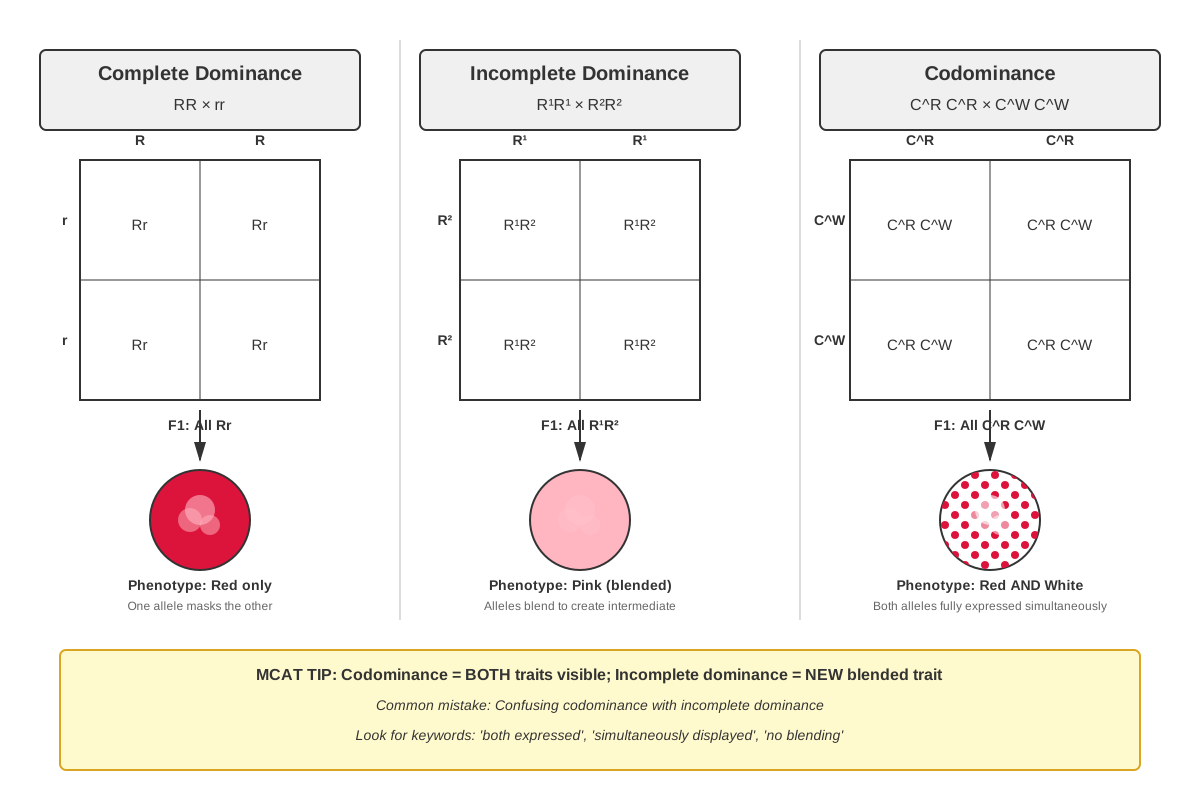
Codominance is a non-Mendelian inheritance pattern in which two different alleles at a genetic locus are both fully expressed in the heterozygous individual, resulting in a phenotype that displays both traits simultaneously without blending. At the molecular level, codominance occurs when both alleles produce functional but distinct protein products that are both detectable in the organism. Unlike complete dominance where one allele's product masks the other, or incomplete dominance where reduced expression creates an intermediate phenotype, codominance results in the simultaneous presence of both gene products.
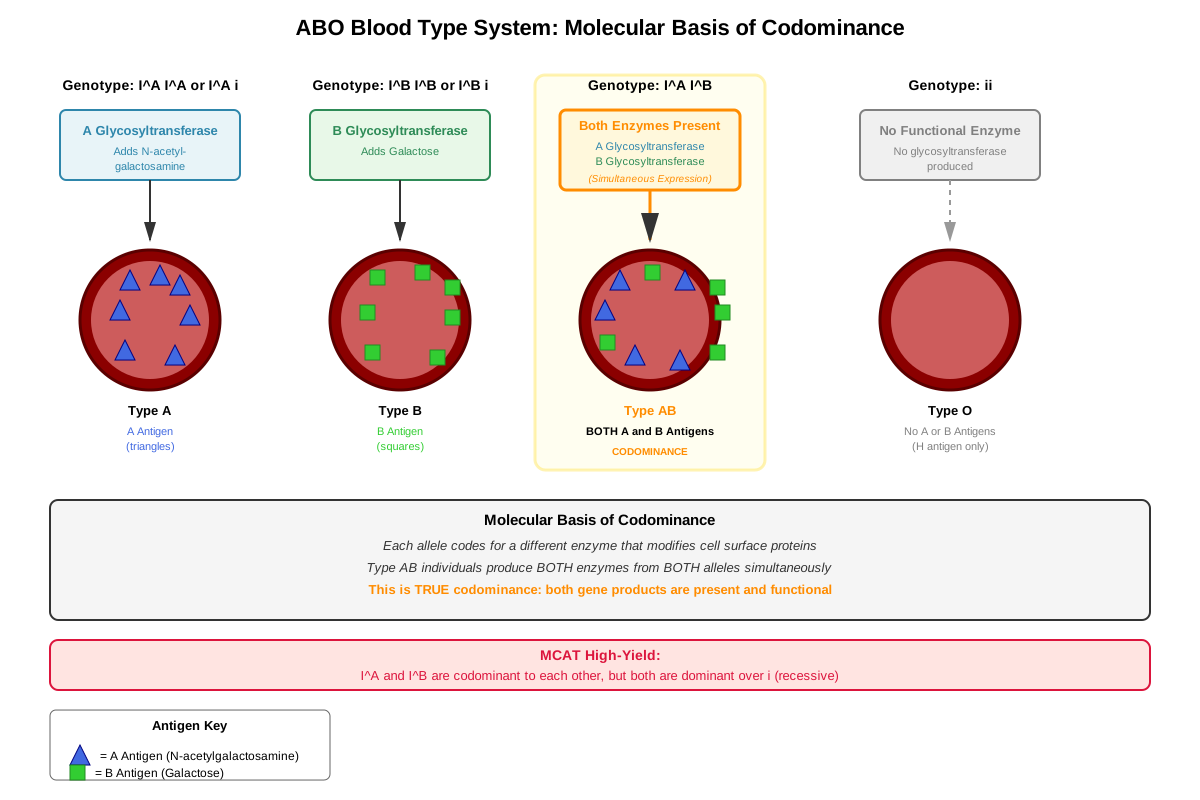
The molecular mechanism underlying codominance involves the independent expression and function of both alleles. Each allele is transcribed and translated into its respective protein product, and both proteins perform their functions without interfering with each other. This is particularly evident in cell surface markers and blood antigens, where both protein variants can be displayed simultaneously on cell membranes. The key distinction is that the phenotype shows both characteristics distinctly, not a blend or intermediate form.
Classic Example: ABO Blood Group System
The ABO blood group system represents the most clinically relevant and frequently tested example of codominance on the MCAT. This system involves three alleles: I^A, I^B, and i. The I^A and I^B alleles are codominant to each other, while both are completely dominant over the recessive i allele. Individuals with genotype I^A I^B express both A and B antigens on their red blood cell surfaces, resulting in type AB blood—a perfect demonstration of codominance.
The molecular basis involves glycosyltransferase enzymes. The I^A allele encodes an enzyme that adds N-acetylgalactosamine to the H antigen on red blood cells, creating the A antigen. The I^B allele encodes an enzyme that adds galactose to the H antigen, creating the B antigen. In I^A I^B heterozygotes, both enzymes are produced and function independently, resulting in red blood cells displaying both A and B antigens. The i allele produces a non-functional enzyme, so ii individuals have only the unmodified H antigen (type O blood).
Codominance vs. Incomplete Dominance vs. Complete Dominance
Understanding the distinctions between these three inheritance patterns is crucial for MCAT success:
| Inheritance Pattern | Heterozygote Phenotype | Molecular Basis | Classic Example |
|---|---|---|---|
| Complete Dominance | Identical to homozygous dominant | One allele's product masks the other | Mendel's pea plants (tall/short) |
| Incomplete Dominance | Intermediate blend of both traits | Reduced expression or partial function | Snapdragon flower color (red × white = pink) |
| Codominance | Both traits fully expressed simultaneously | Both alleles produce distinct, functional products | ABO blood type (I^A I^B = AB) |
In complete dominance, the heterozygote (Aa) appears phenotypically identical to the homozygous dominant (AA) because the dominant allele's product is sufficient for full trait expression. In incomplete dominance, the heterozygote shows an intermediate phenotype because neither allele is fully dominant—often due to gene dosage effects where one functional allele produces insufficient product. In codominance, the heterozygote displays both parental phenotypes simultaneously because both alleles produce fully functional but different products.
Genetic Crosses and Phenotypic Ratios
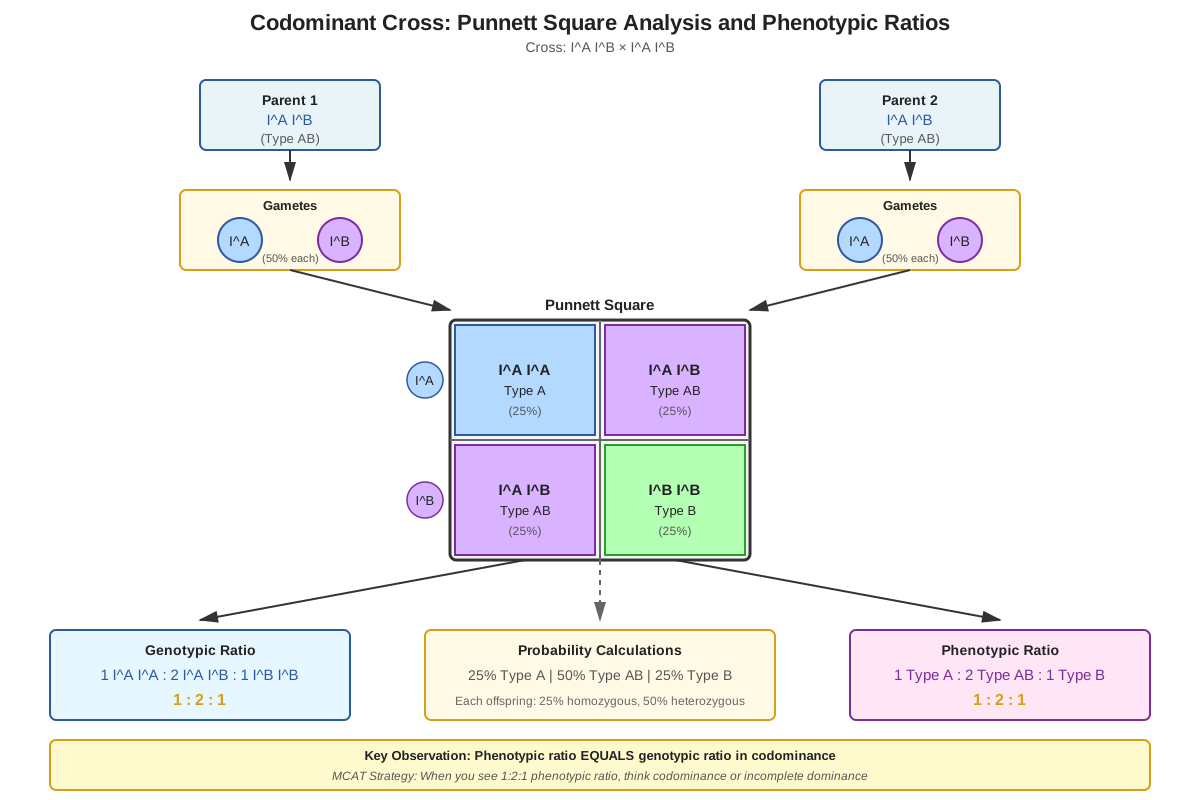
Predicting offspring ratios in codominant crosses requires careful attention to both genotype and phenotype. Consider a cross between two individuals with type AB blood (I^A I^B × I^A I^B):
Punnett Square Analysis:
        I^A    I^B
I^A   I^A I^A  I^A I^B
I^B   I^A I^B  I^B I^B
Genotypic ratio: 1 I^A I^A : 2 I^A I^B : 1 I^B I^B
Phenotypic ratio: 1 Type A : 2 Type AB : 1 Type B
Notice that in codominance, the phenotypic ratio often mirrors the genotypic ratio more closely than in complete dominance, because heterozygotes are phenotypically distinguishable from both homozygotes. This 1:2:1 ratio is characteristic of crosses between two heterozygotes in codominant systems.
Multiple Alleles and Codominance
Codominance frequently occurs in genetic systems with multiple alleles—situations where more than two alleles exist for a single gene in a population. While any individual can only possess two alleles (one from each parent), the population may harbor many variants. The ABO system exemplifies this with three alleles (I^A, I^B, i), creating six possible genotypes and four phenotypes. Understanding how codominance interacts with multiple allele systems is essential for solving complex MCAT genetics problems.
When analyzing multiple allele systems with codominance, students must carefully track which alleles are codominant to each other versus which show complete dominance. In the ABO system, I^A and I^B are codominant to each other, but both are completely dominant over i. This creates a hierarchy of dominance relationships that must be considered when predicting offspring phenotypes.
Molecular Detection of Codominance
At the biochemical level, codominance can be detected through various laboratory techniques that identify both gene products. For blood typing, antibody-based agglutination tests detect the presence of A and/or B antigens. In molecular biology research, techniques such as gel electrophoresis can separate different protein variants, Western blotting can detect both proteins using specific antibodies, and DNA sequencing can identify both alleles at the genetic level. Understanding these detection methods helps students interpret experimental passages on the MCAT.
Concept Relationships
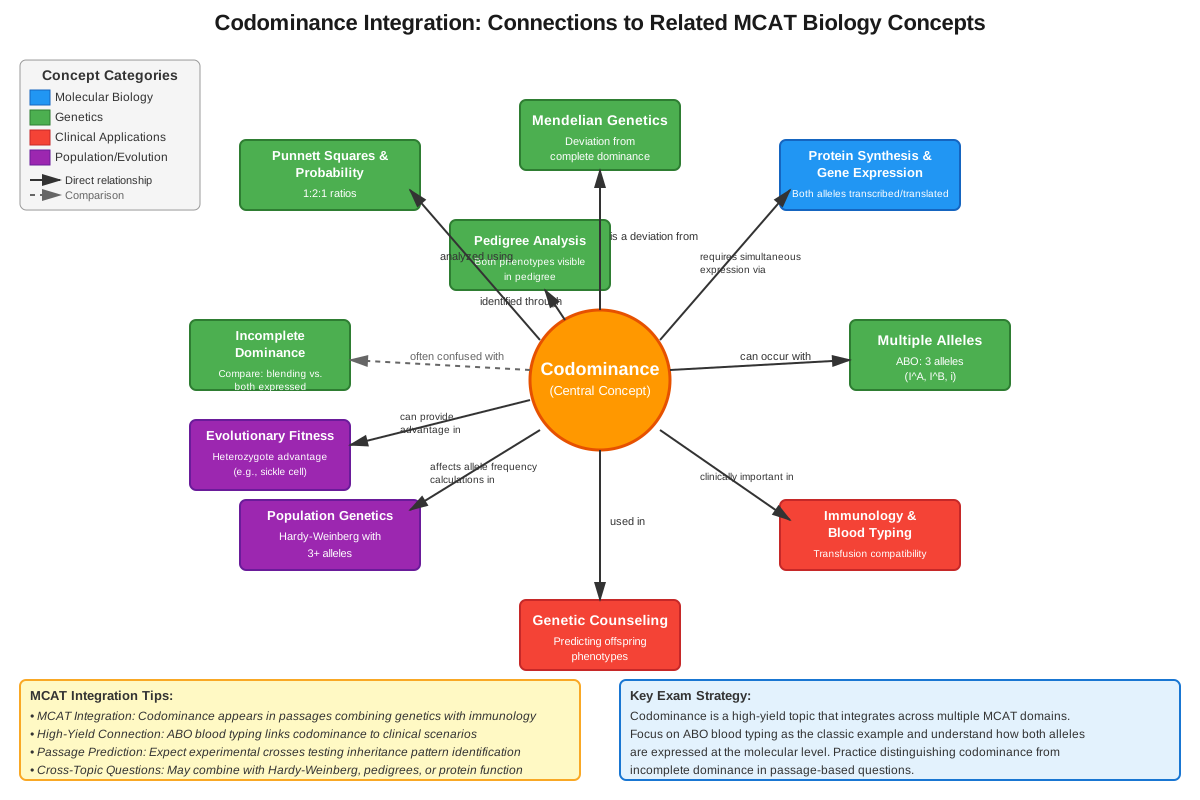
Codominance connects to foundational genetics concepts through a hierarchical relationship: Mendelian genetics → establishes basic inheritance principles → deviations from Mendelian patterns → includes codominance as a specific case → molecular basis of inheritance → explains why codominance occurs at the protein level.
Within the topic itself, concepts flow logically: Definition of codominance → establishes the phenomenon → molecular mechanism → explains how both alleles are expressed → ABO blood system → provides concrete example → genetic crosses → enables prediction of offspring → comparison with other patterns → clarifies distinctions.
Codominance links forward to more advanced topics: population genetics (Hardy-Weinberg calculations with multiple alleles), evolutionary biology (how codominant alleles are maintained in populations), immunology (MHC/HLA codominance in immune recognition), and biochemistry (enzyme variants and metabolic diversity). The concept also connects laterally to epistasis (where multiple genes interact) and pleiotropy (where one gene affects multiple traits).
The relationship between genotype and phenotype becomes more nuanced with codominance: rather than the simple dominant/recessive dichotomy, codominance demonstrates that genotype → directly determines → protein products → which both function → creating observable phenotype with both traits visible. This reinforces the central dogma and emphasizes that phenotype ultimately reflects the molecular products of gene expression.
Quick check — test yourself on Codominance so far.
Try Flashcards →High-Yield Facts
⭐ Codominance occurs when both alleles in a heterozygote are fully expressed, producing a phenotype that displays both traits simultaneously without blending.
⭐ In the ABO blood system, I^A and I^B alleles are codominant, so I^A I^B individuals have type AB blood with both A and B antigens on red blood cells.
⭐ Codominance differs from incomplete dominance: codominance shows both traits distinctly, while incomplete dominance shows an intermediate blend.
⭐ A cross between two heterozygotes in a codominant system (e.g., I^A I^B × I^A I^B) produces a 1:2:1 phenotypic ratio that matches the genotypic ratio.
⭐ Type AB blood (I^A I^B) is the universal plasma donor but can only receive blood from type AB or O donors.
- Codominance at the molecular level results from both alleles producing functional but distinct proteins that operate independently.
- The ABO system involves three alleles (I^A, I^B, i) creating six possible genotypes but only four phenotypes due to codominance and dominance relationships.
- HLA genes show codominance, with heterozygotes expressing both parental MHC molecules, increasing immune system diversity.
- In codominant systems, heterozygotes can often be distinguished from both homozygotes, unlike in complete dominance where heterozygotes resemble dominant homozygotes.
- Sickle cell trait (HbA/HbS heterozygotes) shows codominance at the molecular level, with both normal and sickle hemoglobin present in red blood cells.
- Codominance can be detected biochemically through techniques that identify both protein products, such as gel electrophoresis or immunological assays.
- Multiple allele systems with codominance create more complex phenotypic ratios than simple Mendelian traits, requiring careful Punnett square analysis.
Common Misconceptions
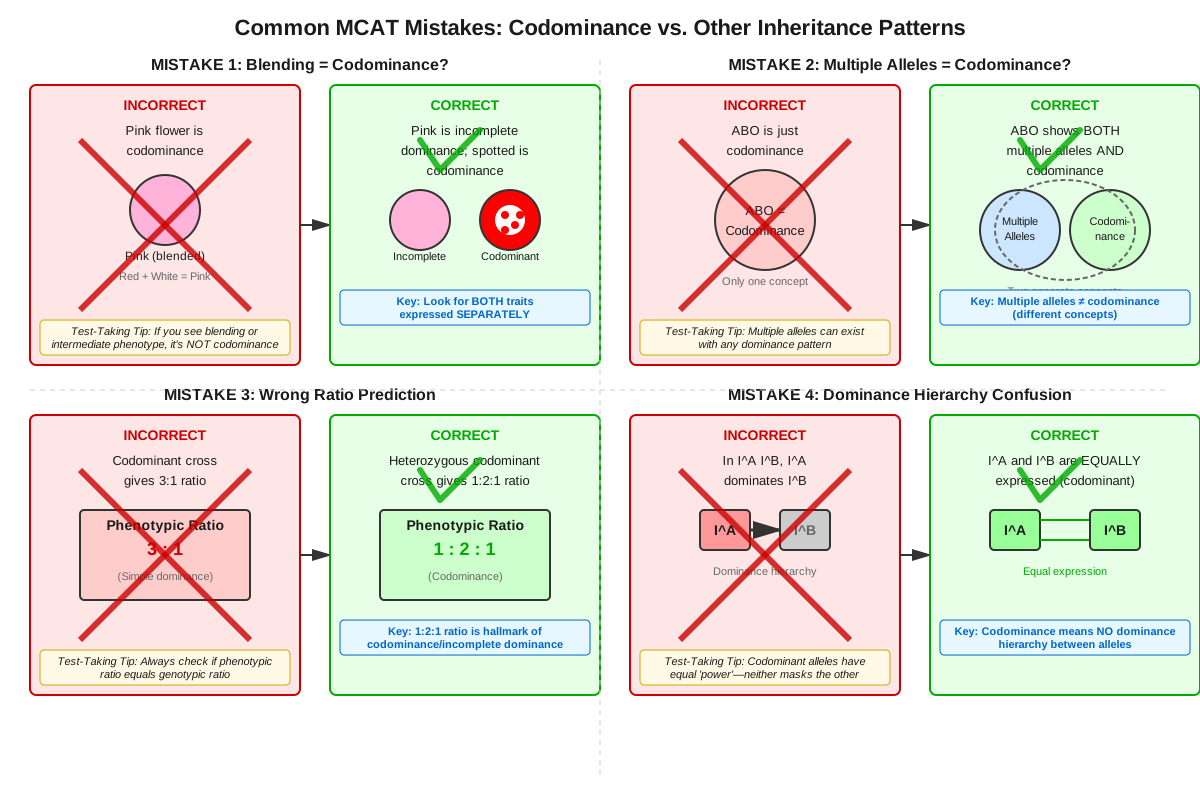
Misconception: Codominance and incomplete dominance are the same thing because both involve two alleles being expressed.
Correction: These are fundamentally different patterns. In codominance, both traits appear fully and distinctly (e.g., AB blood shows both A and B antigens). In incomplete dominance, the traits blend to create an intermediate phenotype (e.g., red × white flowers = pink flowers). The key distinction is "both traits visible separately" versus "blended intermediate trait."
Misconception: Type AB blood is a blend of type A and type B, similar to how pink flowers are a blend of red and white.
Correction: Type AB blood demonstrates codominance, not blending. AB red blood cells display both A antigens AND B antigens on their surface simultaneously—both proteins are present and functional. This is not an intermediate or blended form; it's the simultaneous expression of both distinct antigens.
Misconception: In codominance, the dominant allele is always expressed more strongly than the recessive allele.
Correction: Codominance specifically refers to situations where neither allele is dominant or recessive relative to the other—both are expressed equally and fully. The terms "dominant" and "recessive" don't apply to the relationship between codominant alleles. In the ABO system, I^A and I^B are codominant to each other (neither dominates), though both are dominant over i.
Misconception: All genes with multiple alleles show codominance.
Correction: Multiple alleles and codominance are independent concepts. A gene can have multiple alleles in a population without any being codominant. For example, many genes have multiple alleles that show complete dominance hierarchies. Conversely, codominance can occur in systems with just two alleles. The ABO system happens to have both multiple alleles AND codominance, but these aren't necessarily linked.
Misconception: Heterozygotes in codominant systems always have a selective advantage (heterozygote advantage).
Correction: Codominance is a pattern of allele expression, while heterozygote advantage is an evolutionary concept about fitness. They're unrelated. Some codominant heterozygotes have advantages (e.g., HLA diversity may improve immune function), some have disadvantages, and many are neutral. Don't confuse the mechanism of inheritance with evolutionary outcomes.
Misconception: If you can detect both alleles at the DNA level, the trait shows codominance.
Correction: Codominance refers to phenotypic expression, not genotypic detection. Modern molecular techniques can detect both alleles in any heterozygote, regardless of dominance pattern. Codominance specifically means both alleles produce observable phenotypic effects. A heterozygote for a completely dominant trait still has both alleles in their DNA, but only one affects the phenotype.
Worked Examples
Example 1: Blood Type Inheritance Problem
Question: A woman with type A blood (whose father had type O blood) marries a man with type AB blood. What are the possible blood types of their children, and what is the probability of each?
Step 1: Determine parental genotypes
- Woman has type A blood but her father had type O (ii genotype)
- Therefore, the woman must have inherited an i allele from her father
- Woman's genotype: I^A i (she must be heterozygous)
- Man has type AB blood
- Man's genotype: I^A I^B (only genotype for AB blood)
Step 2: Set up Punnett square
           I^A    I^B
I^A      I^A I^A  I^A I^B
i        I^A i    I^B i
Step 3: Determine genotypes and phenotypes
- I^A I^A = Type A blood (25%)
- I^A I^B = Type AB blood (25%)
- I^A i = Type A blood (25%)
- I^B i = Type B blood (25%)
Step 4: Calculate phenotypic probabilities
- Type A: 50% (I^A I^A + I^A i)
- Type AB: 25% (I^A I^B)
- Type B: 25% (I^B i)
- Type O: 0% (impossible with these parents)
Key Insight: This problem tests understanding that I^A and I^B are codominant to each other (producing AB phenotype when together) but both are dominant over i. The woman's father's blood type provides crucial information about her genotype—a common MCAT strategy of using extended pedigree information.
Example 2: Distinguishing Inheritance Patterns
Question: A researcher crosses two plants and observes the following F1 offspring: 25% red flowers, 50% red-and-white spotted flowers, and 25% white flowers. In a separate cross with different plants, F1 offspring show 25% red, 50% pink, and 25% white flowers. Explain the inheritance pattern in each cross.
Analysis of Cross 1 (spotted flowers):
Step 1: Examine the phenotypic ratio
- 1:2:1 ratio suggests a cross between two heterozygotes
- Three distinct phenotypes indicate the heterozygote is distinguishable
Step 2: Analyze the heterozygote phenotype
- Spotted flowers show BOTH red AND white coloration simultaneously
- This is not blending—both colors are visible as distinct spots
- This indicates codominance
Step 3: Assign genotypes
- Let R^R = red allele, R^W = white allele
- Red flowers: R^R R^R
- Spotted flowers: R^R R^W (both alleles expressed)
- White flowers: R^W R^W
- Cross: R^R R^W × R^R R^W produces 1:2:1 ratio
Analysis of Cross 2 (pink flowers):
Step 1: Examine the phenotypic ratio
- Also 1:2:1 ratio from heterozygote cross
Step 2: Analyze the heterozygote phenotype
- Pink is an intermediate color between red and white
- This represents blending, not simultaneous expression
- This indicates incomplete dominance
Step 3: Assign genotypes
- Let C^R = red allele, C^W = white allele
- Red flowers: C^R C^R
- Pink flowers: C^R C^W (intermediate expression)
- White flowers: C^W C^W
Key Insight: Both crosses produce identical 1:2:1 ratios, but the inheritance patterns differ based on the heterozygote phenotype. Codominance shows both traits distinctly (spotted), while incomplete dominance shows blending (pink). The MCAT frequently tests the ability to distinguish these patterns based on phenotypic descriptions.
Exam Strategy
Approaching MCAT Questions on Codominance
When encountering genetics questions, immediately identify the inheritance pattern before attempting calculations. Look for key descriptors: "both traits visible," "simultaneously expressed," or "neither dominant" suggest codominance, while "intermediate," "blended," or "in-between" suggest incomplete dominance. For blood typing questions, quickly recall that I^A and I^B are codominant but both dominate i.
Trigger Words and Phrases
Watch for these high-yield phrases that signal codominance:
- "Both antigens present"
- "Simultaneously expressed"
- "Neither allele is dominant"
- "Both proteins detected"
- "Type AB blood"
- "Spotted" or "speckled" (in flower/animal coat problems)
- "Both parental phenotypes visible"
Conversely, these phrases indicate OTHER patterns:
- "Intermediate phenotype" → incomplete dominance
- "Masked" or "hidden" → complete dominance
- "Blended" → incomplete dominance
- "3:1 ratio" → complete dominance
Process of Elimination Tips
When analyzing answer choices:
- Eliminate options confusing codominance with incomplete dominance (most common wrong answer)
- Eliminate ratios that don't match the cross type (e.g., 3:1 ratios don't appear in codominant heterozygote crosses)
- Eliminate genotypes that contradict given information (e.g., if parents are AB and O, eliminate AA offspring)
- Check for molecular mechanism consistency (correct answers should reflect both proteins being produced)
Time Allocation Advice
Codominance problems typically require 60-90 seconds for discrete questions and 90-120 seconds for passage-based questions. Spend 15-20 seconds identifying the inheritance pattern, 30-45 seconds setting up the Punnett square (mentally or on scratch paper), and 15-30 seconds calculating ratios and selecting the answer. If a question requires distinguishing between codominance and incomplete dominance, focus on the heterozygote phenotype description—this is the discriminating factor and should take only 10-15 seconds to identify.
Memory Techniques
Mnemonic for Codominance vs. Incomplete Dominance
"CO-EXIST vs. IN-BETWEEN"
- COdominance = both traits CO-exist simultaneously (both visible)
- INcomplete dominance = IN-between phenotype (blended)
Visualization Strategy for ABO Blood Types
Picture red blood cells as houses with flags:
- Type A: Houses flying A flags only
- Type B: Houses flying B flags only
- Type AB: Houses flying BOTH A and B flags simultaneously (codominance!)
- Type O: Houses with no flags (ii genotype)
This visual reinforces that AB cells display both antigens at once, not a blended "AB antigen."
Acronym for Distinguishing Inheritance Patterns
"DISH" helps remember what to check:
- Distinct traits visible? → Codominance
- Intermediate phenotype? → Incomplete dominance
- Same as dominant parent? → Complete dominance
- Heterozygote appearance is key!
Memory Aid for ABO Genotypes and Phenotypes
"AB Always Both" - Type AB blood (I^A I^B) always shows both antigens because of codominance
"O Only i-i" - Type O blood requires two i alleles (ii)
"A and B Boss over i" - Both I^A and I^B are dominant over i
Summary
Codominance represents a crucial non-Mendelian inheritance pattern where both alleles at a genetic locus are fully expressed in heterozygotes, producing a phenotype displaying both traits simultaneously without blending. This differs fundamentally from incomplete dominance (which produces intermediate phenotypes) and complete dominance (where one allele masks the other). The ABO blood group system exemplifies codominance, with I^A I^B individuals expressing both A and B antigens on red blood cells. At the molecular level, codominance occurs when both alleles produce functional but distinct proteins that operate independently. MCAT questions test codominance through blood typing problems, genetic crosses requiring phenotypic ratio predictions, and experimental scenarios requiring pattern identification. Success requires distinguishing codominance from other inheritance patterns based on heterozygote phenotype, accurately constructing Punnett squares for codominant crosses, and understanding the molecular basis of simultaneous allele expression. Mastery of codominance enables students to tackle complex genetics problems and connects to broader topics including multiple alleles, population genetics, and molecular biology.
Key Takeaways
- Codominance produces heterozygotes that simultaneously express both alleles fully, showing both traits distinctly rather than blending them
- The ABO blood system is the classic codominance example: I^A and I^B are codominant, producing type AB blood when together
- Distinguish patterns by heterozygote phenotype: codominance shows both traits, incomplete dominance shows intermediate, complete dominance shows dominant trait only
- Codominant heterozygote crosses (e.g., I^A I^B × I^A I^B) produce 1:2:1 phenotypic ratios matching genotypic ratios
- Molecular basis involves both alleles producing functional but different proteins that operate independently without interference
- MCAT questions often test ability to distinguish codominance from incomplete dominance using phenotype descriptions
- Blood typing problems require understanding that I^A and I^B are codominant to each other but both dominant over i
Related Topics
Incomplete Dominance: Understanding this related non-Mendelian pattern helps distinguish it from codominance and reinforces that heterozygote phenotype determines inheritance pattern classification.
Multiple Alleles: Many codominant systems involve multiple alleles in populations; mastering codominance enables analysis of complex genetic systems with numerous allelic variants.
Hardy-Weinberg Equilibrium: Population genetics calculations with codominant alleles require understanding how multiple phenotypes affect allele frequency calculations.
Epistasis: This gene interaction concept builds on codominance by examining how multiple genes interact, extending beyond single-locus inheritance patterns.
Blood Transfusion Immunology: Clinical applications of ABO codominance connect genetics to medicine, a common MCAT integration point.
Protein Structure and Function: Understanding how different alleles produce distinct functional proteins deepens comprehension of codominance molecular mechanisms.
Practice CTA
Now that you've mastered the core concepts of codominance, it's time to solidify your understanding through active practice. Attempt the practice questions and flashcards to test your ability to distinguish inheritance patterns, predict offspring ratios, and apply codominance principles to novel scenarios. Remember, the MCAT rewards not just knowledge but the ability to apply concepts under time pressure—practice is where you build that skill. Each question you work through strengthens your pattern recognition and problem-solving speed. You've built a strong foundation; now transform that knowledge into test-day performance!
Sign up free to keep reading
Create a free AnvayaPrep account to finish this MCAT guide on Codominance — plus flashcards and practice questions.