Overview
Incomplete dominance is a fundamental pattern of inheritance in Molecular Biology and Genetics that challenges the classical Mendelian view of dominant and recessive alleles. Unlike complete dominance, where one allele completely masks the expression of another, incomplete dominance produces a heterozygous phenotype that is intermediate between the two homozygous phenotypes. This blending effect occurs at the phenotypic level, not at the genetic level, and represents a critical concept for understanding the complexity of genetic expression beyond simple dominant-recessive relationships.
For the MCAT, incomplete dominance serves as an essential bridge between classical Mendelian genetics and more complex inheritance patterns. The exam frequently tests students' ability to distinguish between incomplete dominance, codominance, and complete dominance through pedigree analysis, Punnett square problems, and passage-based questions involving phenotypic ratios. Understanding this concept is crucial for the Biology section, particularly in questions that require predicting offspring phenotypes, interpreting genetic crosses, or analyzing experimental data involving non-Mendelian inheritance patterns.
The significance of incomplete dominance Biology extends beyond theoretical genetics into practical applications in medicine, agriculture, and evolutionary biology. This inheritance pattern helps explain phenotypic variation in human traits, disease expression with variable penetrance, and the genetic basis of quantitative traits. Mastery of incomplete dominance enables students to approach MCAT questions with a nuanced understanding of how genotype translates to phenotype, preparing them for both exam success and future medical education where genetic counseling and personalized medicine increasingly rely on sophisticated genetic models.
Learning Objectives
- [ ] Define incomplete dominance using accurate Biology terminology
- [ ] Explain why incomplete dominance matters for the MCAT
- [ ] Apply incomplete dominance to exam-style questions
- [ ] Identify common mistakes related to incomplete dominance
- [ ] Connect incomplete dominance to related Biology concepts
- [ ] Distinguish incomplete dominance from codominance and complete dominance using phenotypic and genotypic ratios
- [ ] Predict phenotypic outcomes of genetic crosses involving incomplete dominance across multiple generations
- [ ] Analyze pedigrees and experimental data to identify incomplete dominance inheritance patterns
Prerequisites
- Mendelian genetics and basic inheritance patterns: Understanding complete dominance provides the foundation for recognizing how incomplete dominance differs from classical inheritance
- Alleles, genotypes, and phenotypes: Essential vocabulary for describing genetic variation and its expression in observable traits
- Punnett squares and probability: Required tools for predicting offspring ratios and calculating genetic outcomes
- Gene expression and protein function: Understanding how alleles code for proteins helps explain the molecular basis of intermediate phenotypes
- Homozygous and heterozygous genotypes: Critical for distinguishing the three distinct phenotypes produced in incomplete dominance
Why This Topic Matters
Clinical and Real-World Significance
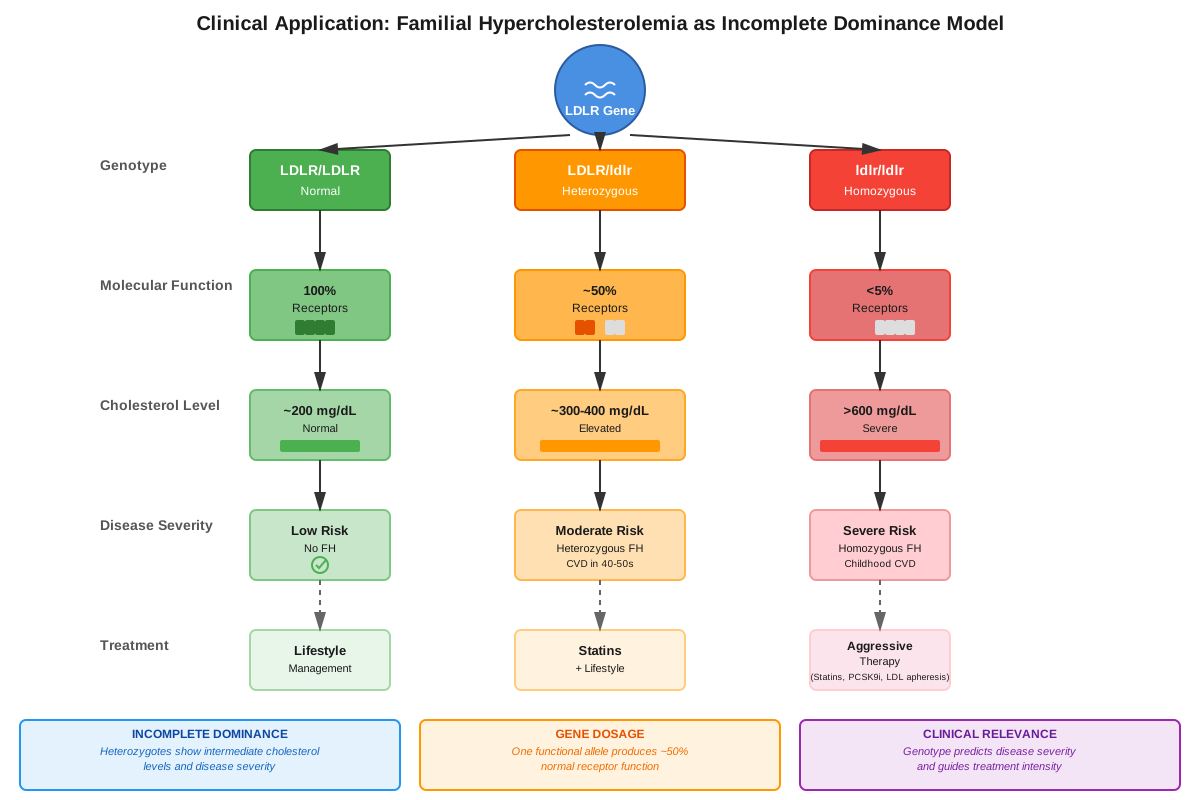
Incomplete dominance has profound implications in medical genetics and clinical practice. Familial hypercholesterolemia, a condition affecting cholesterol metabolism, demonstrates incomplete dominance where heterozygotes show intermediate cholesterol levels between normal and severely affected homozygotes. This pattern influences disease severity, treatment approaches, and genetic counseling strategies. Understanding incomplete dominance helps physicians predict disease expression, assess genetic risk, and develop personalized treatment plans based on genotype-phenotype correlations.
In agriculture and biotechnology, incomplete dominance explains important traits in crops and livestock. Flower color in snapdragons, fruit characteristics in plants, and coat colors in animals often follow incomplete dominance patterns. This knowledge enables selective breeding programs and genetic engineering applications that optimize desired traits.
MCAT Exam Statistics and Question Types
Incomplete dominance appears in approximately 2-4 questions per MCAT exam, typically integrated into larger genetics passages or as discrete questions in the Biology section. The topic most commonly appears in:
- Passage-based questions (60%): Experimental genetics passages describing crosses with unexpected phenotypic ratios
- Discrete questions (25%): Standalone problems requiring Punnett square analysis or pedigree interpretation
- Pseudo-discrete questions (15%): Questions embedded in biochemistry or cell biology passages that require genetics knowledge
Questions frequently combine incomplete dominance with probability calculations, chi-square analysis, or molecular mechanisms of gene expression. The MCAT particularly favors questions that require distinguishing incomplete dominance from codominance or identifying it within complex pedigrees.
Common Exam Presentation Formats
MCAT passages present incomplete dominance through experimental crosses showing 1:2:1 phenotypic ratios in F2 generations, molecular studies of protein function in heterozygotes, or clinical vignettes describing intermediate disease phenotypes. Questions often require students to predict offspring phenotypes, calculate probabilities for specific crosses, or explain molecular mechanisms underlying the intermediate phenotype.
Core Concepts
Definition and Fundamental Characteristics
Incomplete dominance (also called partial dominance or semi-dominance) is a pattern of inheritance where the heterozygous genotype produces a phenotype that is intermediate between the two homozygous phenotypes. Neither allele is completely dominant over the other, resulting in a blending of traits at the phenotypic level. Importantly, the alleles themselves do not blend—they remain distinct genetic entities that segregate independently during meiosis according to Mendel's laws.
In incomplete dominance, if we designate two alleles as C^R (red) and C^W (white), the three possible genotypes produce three distinct phenotypes:
- C^R C^R: Red phenotype (homozygous)
- C^R C^W: Pink phenotype (heterozygous, intermediate)
- C^W C^W: White phenotype (homozygous)
The notation for incomplete dominance typically uses superscripts rather than uppercase/lowercase letters to emphasize that neither allele is dominant. This contrasts with complete dominance notation (A/a) where uppercase indicates dominance.
Molecular Basis of Incomplete Dominance
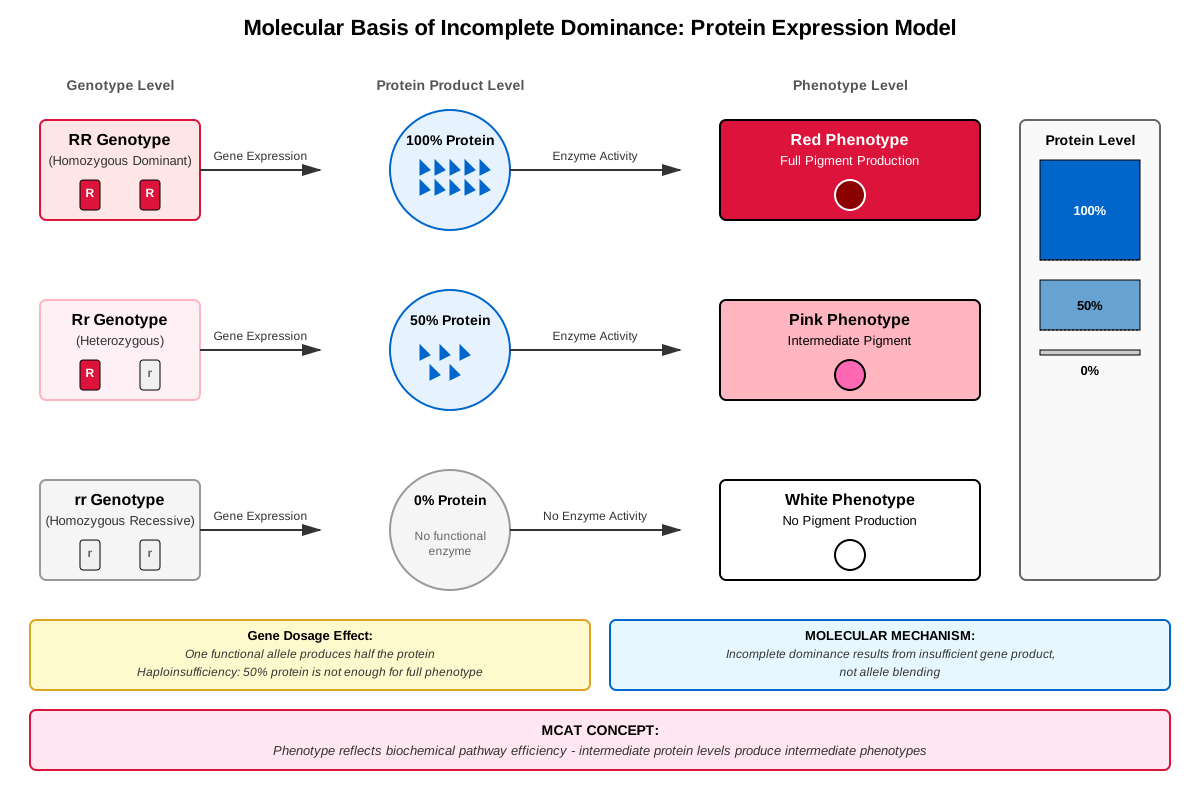
The molecular mechanism underlying incomplete dominance involves gene dosage effects and protein function. In heterozygotes, only one functional allele produces the gene product (typically a protein), resulting in approximately 50% of the normal amount of functional protein. When this intermediate protein level produces a phenotype distinguishable from both homozygotes, incomplete dominance occurs.
For example, in snapdragon flower color:
- C^R C^R genotype: Two alleles produce red pigment enzyme → high pigment concentration → red flowers
- C^R C^W genotype: One allele produces red pigment enzyme → intermediate pigment concentration → pink flowers
- C^W C^W genotype: No functional enzyme produced → no pigment → white flowers
The intermediate phenotype results from insufficient pigment production to achieve full red coloration but enough to prevent complete whiteness. This dosage-dependent effect distinguishes incomplete dominance from complete dominance, where 50% protein function suffices for the full dominant phenotype (haploinsufficiency does not occur).
Phenotypic and Genotypic Ratios
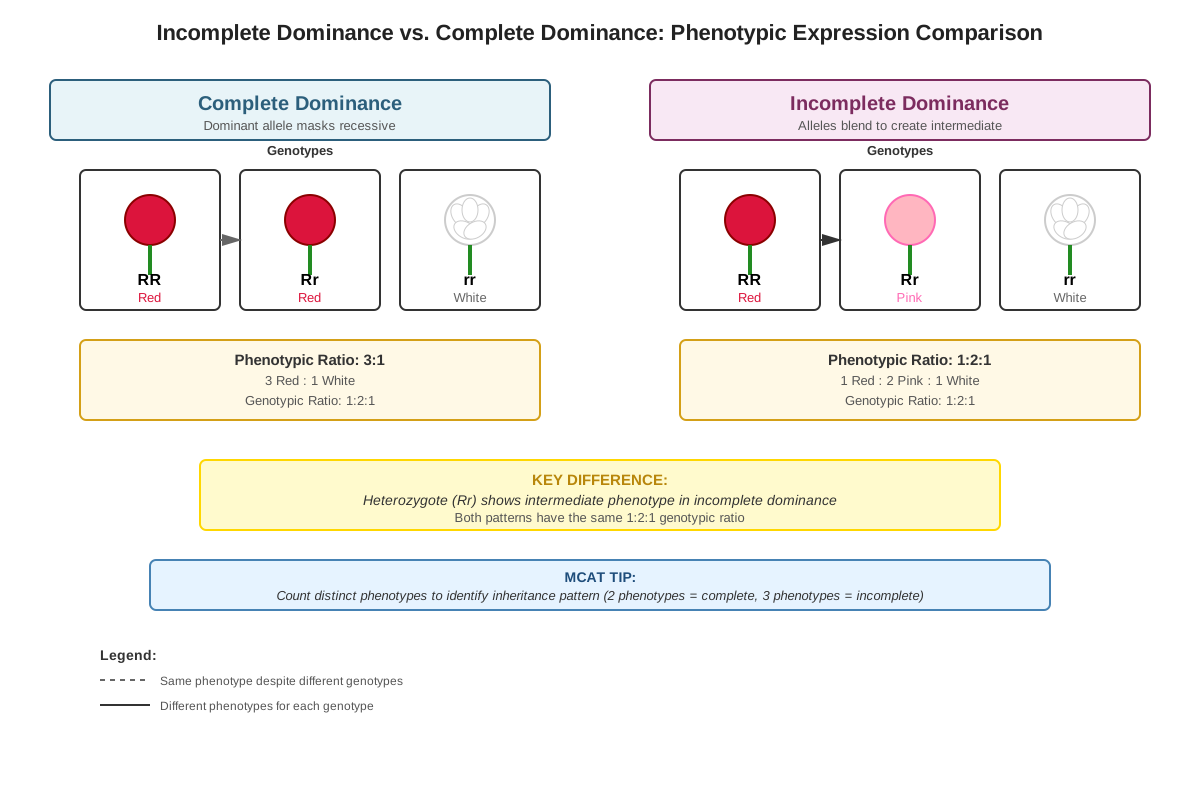
A hallmark of incomplete dominance is the 1:2:1 phenotypic ratio in F2 generations, which matches the genotypic ratio. This differs fundamentally from complete dominance, where the F2 phenotypic ratio is 3:1 despite a 1:2:1 genotypic ratio.
| Cross Type | Genotypic Ratio | Phenotypic Ratio (Complete Dominance) | Phenotypic Ratio (Incomplete Dominance) |
|---|---|---|---|
| F1 × F1 (Aa × Aa) | 1 AA : 2 Aa : 1 aa | 3 dominant : 1 recessive | 1 phenotype A : 2 intermediate : 1 phenotype a |
| Monohybrid cross | 1:2:1 | 3:1 | 1:2:1 |
This matching of phenotypic and genotypic ratios occurs because the heterozygote is phenotypically distinguishable from both homozygotes, creating three observable phenotypic classes instead of two.
Distinguishing Incomplete Dominance from Related Patterns
Incomplete dominance vs. Complete dominance:
- Complete dominance: Heterozygote phenotype = dominant homozygote phenotype
- Incomplete dominance: Heterozygote phenotype is intermediate and distinct
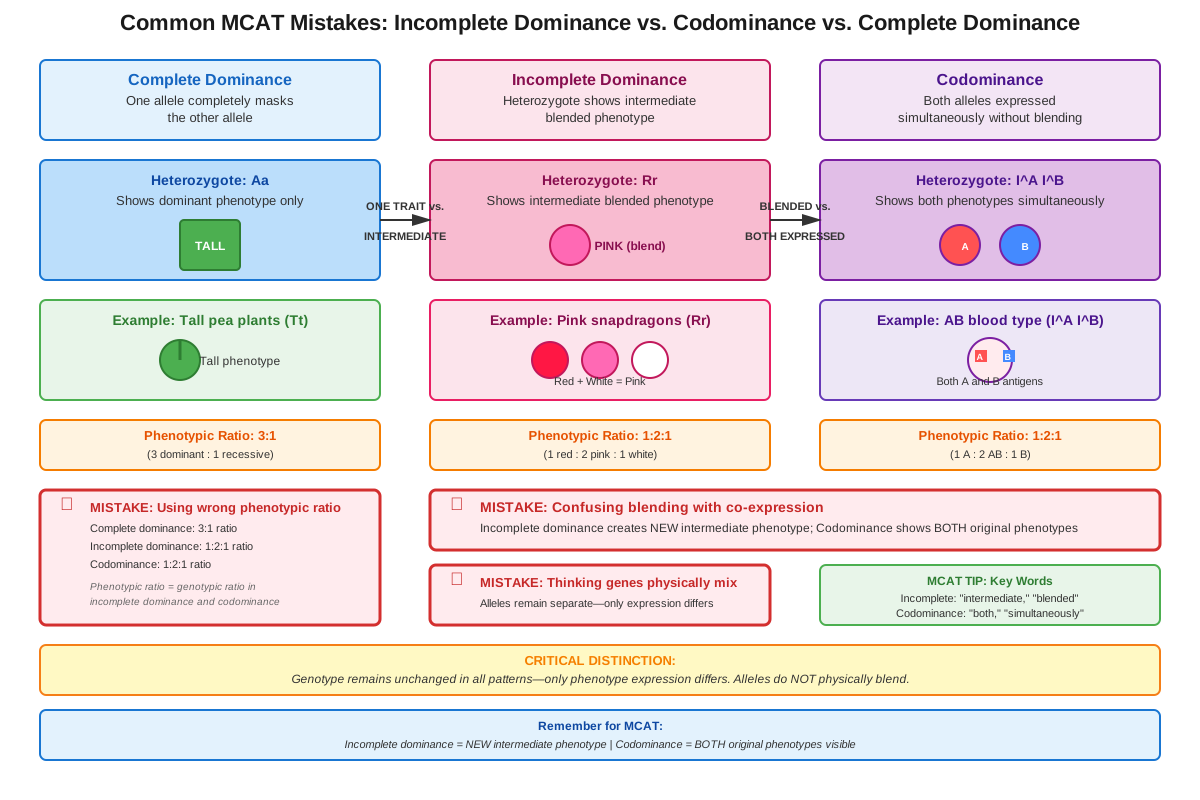
Incomplete dominance vs. Codominance:
- Codominance: Both alleles are fully expressed simultaneously (e.g., AB blood type shows both A and B antigens)
- Incomplete dominance: Neither allele is fully expressed; the phenotype is a blend
Incomplete dominance vs. Blending inheritance:
- Blending inheritance (historical, incorrect theory): Genetic material itself mixes permanently
- Incomplete dominance: Alleles remain distinct and segregate independently; only phenotype appears blended
Classic Examples in Biology
Snapdragon (Antirrhinum) flower color: The most frequently cited example where red (C^R C^R) and white (C^W C^W) parents produce pink (C^R C^W) offspring. F2 generation shows 1 red : 2 pink : 1 white ratio.
Four o'clock flowers (Mirabilis jalapa): Similar to snapdragons, demonstrating red, pink, and white flower colors following incomplete dominance patterns.
Andalusian chickens: Feather color shows incomplete dominance where black (B^B B^B) and white (B^W B^W) produce blue-gray (B^B B^W) offspring. The "blue" phenotype results from a mixture of black and white feathers at the microscopic level.
Familial hypercholesterolemia: A medically relevant example where heterozygotes (one normal, one mutant LDLR allele) show intermediate cholesterol levels and moderate cardiovascular risk compared to normal homozygotes (low risk) and affected homozygotes (severe, early-onset disease).
Tay-Sachs disease carriers: While the disease itself is recessive, heterozygotes show intermediate levels of hexosaminidase A enzyme activity (approximately 50% of normal), demonstrating incomplete dominance at the biochemical level though not at the disease phenotype level.
Concept Relationships
Incomplete dominance builds directly upon Mendelian genetics by maintaining the principles of segregation and independent assortment while expanding the phenotypic outcomes beyond simple dominant-recessive patterns. The concept connects to allele interactions as one of several non-Mendelian inheritance patterns, alongside codominance, multiple alleles, and epistasis.
The molecular basis of incomplete dominance links to gene expression and protein biochemistry. Understanding how gene dosage affects protein concentration and function explains why heterozygotes produce intermediate phenotypes. This connects to concepts of enzyme kinetics and threshold effects in biochemical pathways.
Relationship map:
Mendelian genetics → Allele pairs → Gene expression → Protein production → Dosage effects → Incomplete dominance phenotype → Observable intermediate trait → Predictable ratios (1:2:1) → Pedigree analysis and genetic counseling
Incomplete dominance also relates to quantitative genetics and polygenic inheritance, where multiple genes with incomplete dominance or additive effects produce continuous phenotypic variation. This connection extends to understanding complex traits in human genetics and evolutionary biology.
The concept interfaces with population genetics through allele frequency calculations and Hardy-Weinberg equilibrium, where incomplete dominance affects phenotype frequencies but not the underlying mathematical relationships governing allele frequencies.
High-Yield Facts
⭐ Incomplete dominance produces a 1:2:1 phenotypic ratio in F2 generations, matching the genotypic ratio
⭐ The heterozygous phenotype is intermediate between the two homozygous phenotypes, not a mixture of both traits
⭐ Alleles in incomplete dominance are typically written with superscripts (C^R, C^W) rather than uppercase/lowercase to indicate neither is dominant
⭐ Incomplete dominance results from gene dosage effects where 50% protein function produces an intermediate phenotype
⭐ Incomplete dominance differs from codominance: incomplete shows blending, codominance shows simultaneous expression of both traits
- Snapdragon flower color (red, pink, white) is the classic textbook example of incomplete dominance
- Familial hypercholesterolemia demonstrates incomplete dominance in human disease with heterozygotes showing intermediate cholesterol levels
- Test crosses involving incomplete dominance can distinguish all three genotypes by phenotype alone
- Incomplete dominance follows Mendel's law of segregation—alleles separate during gamete formation and do not permanently blend
- The molecular basis often involves haploinsufficiency where one functional allele cannot produce enough gene product for the full phenotype
Quick check — test yourself on Incomplete dominance so far.
Try Flashcards →Common Misconceptions
Misconception: Incomplete dominance means the alleles physically blend together in the DNA
Correction: The alleles remain completely separate and distinct at the genetic level. Only the phenotype appears blended. During meiosis, the alleles segregate independently, and offspring can be homozygous for either allele, proving the genetic material never mixed.
Misconception: Incomplete dominance and codominance are the same thing
Correction: These are distinct patterns. Incomplete dominance produces an intermediate phenotype (pink flowers from red and white alleles), while codominance produces simultaneous expression of both traits (AB blood type shows both A and B antigens separately). In codominance, both original phenotypes are detectable; in incomplete dominance, neither original phenotype appears in the heterozygote.
Misconception: The F2 generation of an incomplete dominance cross shows a 3:1 ratio like Mendelian traits
Correction: Incomplete dominance produces a 1:2:1 phenotypic ratio in F2 generations because the heterozygote is phenotypically distinct. The 3:1 ratio only appears in complete dominance where heterozygotes and dominant homozygotes are phenotypically identical.
Misconception: Incomplete dominance is rare and only occurs in plants
Correction: Incomplete dominance occurs across all organisms, including humans. Examples include familial hypercholesterolemia, some hair texture traits, and various biochemical enzyme levels. It's common but often unrecognized because many traits involve multiple genes or environmental factors that obscure simple inheritance patterns.
Misconception: In incomplete dominance, you can't determine the genotype from the phenotype
Correction: Incomplete dominance actually makes genotype determination easier than complete dominance because all three genotypes produce distinct phenotypes. You can identify homozygous dominant, heterozygous, and homozygous recessive individuals by observation alone, unlike complete dominance where dominant homozygotes and heterozygotes appear identical.
Misconception: The intermediate phenotype in incomplete dominance is always exactly halfway between the two extremes
Correction: While often described as "intermediate," the heterozygous phenotype may not be precisely midway between homozygous phenotypes. The degree of intermediacy depends on the specific molecular mechanisms, protein function curves, and biochemical pathways involved. Some incomplete dominance shows phenotypes closer to one homozygote than the other.
Worked Examples
Example 1: Snapdragon Flower Color Cross
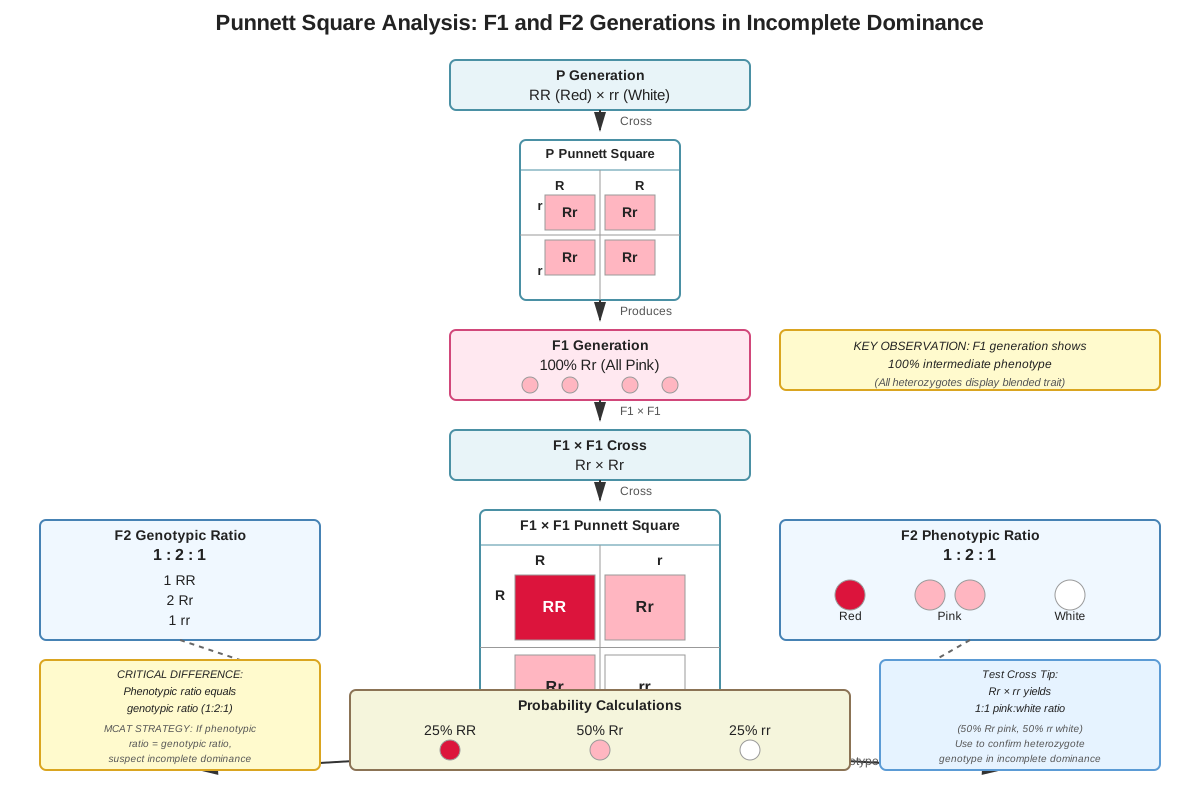
Problem: In snapdragons, flower color shows incomplete dominance. Red flowers (C^R C^R) crossed with white flowers (C^W C^W) produce pink flowers (C^R C^W). If two pink-flowered plants are crossed, what are the expected phenotypic and genotypic ratios in the offspring?
Solution:
Step 1: Identify the parental genotypes
- Both parents are pink-flowered: C^R C^W × C^R C^W
Step 2: Determine possible gametes
- Each parent can produce two types of gametes: C^R or C^W
- Each gamete type has a 50% probability
Step 3: Construct a Punnett square
           C^R        C^W
    C^R  | C^R C^R | C^R C^W |
    C^W  | C^R C^W | C^W C^W |
Step 4: Analyze offspring genotypes
- 1 C^R C^R (25%)
- 2 C^R C^W (50%)
- 1 C^W C^W (25%)
- Genotypic ratio: 1:2:1
Step 5: Determine phenotypes
- C^R C^R = Red flowers (25%)
- C^R C^W = Pink flowers (50%)
- C^W C^W = White flowers (25%)
- Phenotypic ratio: 1 red : 2 pink : 1 white (1:2:1)
Key insight: The phenotypic ratio matches the genotypic ratio because each genotype produces a distinct phenotype. This 1:2:1 ratio is the signature of incomplete dominance and distinguishes it from complete dominance (which would show 3:1).
Example 2: Familial Hypercholesterolemia Pedigree Analysis
Problem: A genetic counselor analyzes a family with familial hypercholesterolemia (FH), where the LDLR gene shows incomplete dominance. Normal individuals (L^N L^N) have cholesterol ~200 mg/dL, heterozygotes (L^N L^M) have ~300 mg/dL, and homozygous affected individuals (L^M L^M) have ~600 mg/dL with severe early-onset cardiovascular disease. A heterozygous woman (cholesterol 310 mg/dL) marries a normal man (cholesterol 195 mg/dL). What is the probability their first child will have cholesterol levels above 250 mg/dL?
Solution:
Step 1: Assign genotypes based on phenotypes
- Mother (cholesterol 310 mg/dL): L^N L^M (heterozygous)
- Father (cholesterol 195 mg/dL): L^N L^N (normal homozygous)
Step 2: Determine possible offspring genotypes
Cross: L^N L^M × L^N L^N
           L^N        L^N
    L^N  | L^N L^N | L^N L^N |
    L^M  | L^N L^M | L^N L^M |
Step 3: Calculate genotype probabilities
- L^N L^N: 2/4 = 50%
- L^N L^M: 2/4 = 50%
- L^M L^M: 0/4 = 0% (impossible with one normal parent)
Step 4: Determine phenotypes and cholesterol levels
- L^N L^N: Normal cholesterol (~200 mg/dL) - 50%
- L^N L^M: Intermediate cholesterol (~300 mg/dL) - 50%
Step 5: Answer the question
Children with cholesterol above 250 mg/dL will be heterozygotes (L^N L^M)
Probability = 50% or 1/2
Key insight: This example demonstrates incomplete dominance in human disease where heterozygotes show intermediate disease severity. This has important implications for genetic counseling, as heterozygotes face moderate cardiovascular risk and may benefit from early intervention. The problem also illustrates how incomplete dominance allows phenotype-based genotype determination, enabling risk assessment without genetic testing.
Exam Strategy
Approaching MCAT Questions on Incomplete Dominance
Step 1: Identify the inheritance pattern
Look for key phrases indicating incomplete dominance:
- "Intermediate phenotype"
- "Blended appearance"
- "Neither allele is dominant"
- "Heterozygotes show a distinct phenotype"
- Phenotypic ratios of 1:2:1 in crosses
Step 2: Distinguish from similar patterns
The MCAT frequently tests whether students can differentiate incomplete dominance from codominance and complete dominance. Create a quick mental checklist:
- Three distinct phenotypes visible? → Likely incomplete dominance or codominance
- Heterozygote shows both original traits separately? → Codominance
- Heterozygote shows blended/intermediate trait? → Incomplete dominance
- Only two phenotypes visible? → Complete dominance
Step 3: Set up the problem systematically
- Assign genotypes using appropriate notation (superscripts for incomplete dominance)
- Identify parental genotypes from phenotype descriptions
- Construct Punnett squares for crosses
- Calculate both genotypic and phenotypic ratios
- Verify that phenotypic ratio matches genotypic ratio (1:2:1 for monohybrid crosses)
Trigger Words and Phrases
Watch for these exam triggers that signal incomplete dominance:
- "Intermediate phenotype"
- "Partial expression"
- "Blending of traits"
- "Neither allele is completely dominant"
- "Heterozygotes are distinguishable from both homozygotes"
- "1:2:1 phenotypic ratio"
- "Gene dosage effect"
- "Haploinsufficiency"
Process of Elimination Tips
When answering multiple-choice questions:
- Eliminate answers suggesting permanent genetic blending: Incomplete dominance does not alter DNA; alleles remain distinct
- Eliminate 3:1 ratios for simple crosses: This ratio indicates complete dominance, not incomplete dominance
- Eliminate answers confusing codominance with incomplete dominance: If both original phenotypes appear simultaneously, it's codominance
- Look for answers mentioning intermediate phenotypes and 1:2:1 ratios: These are hallmarks of incomplete dominance
- Verify molecular mechanisms: Correct answers should reference gene dosage, protein levels, or haploinsufficiency
Time Allocation Advice
For discrete questions on incomplete dominance (1-2 minutes):
- Quickly identify the inheritance pattern (15 seconds)
- Set up Punnett square if needed (30 seconds)
- Calculate ratios (30 seconds)
- Select and verify answer (15 seconds)
For passage-based questions (6-8 minutes for passage + questions):
- Identify inheritance pattern from experimental data (1 minute)
- Analyze provided crosses and ratios (2 minutes)
- Answer questions systematically, referring back to passage data
- Double-check that your interpretation matches all provided information
Exam Tip: If a question provides phenotypic ratios that don't match expected Mendelian ratios, consider incomplete dominance, codominance, or epistasis. The 1:2:1 ratio is the strongest indicator of incomplete dominance.
Memory Techniques
Mnemonic for Distinguishing Inheritance Patterns
"I-C-C" (Incomplete-Codominance-Complete)
- Incomplete = Intermediate phenotype (one blended trait)
- Codominance = Combined expression (both traits visible)
- Complete = Conceals recessive (only dominant visible in heterozygote)
Visualization Strategy for Incomplete Dominance
Picture a paint mixing analogy:
- Red paint (C^R C^R) = pure red
- White paint (C^W C^W) = pure white
- Mix them (C^R C^W) = pink (intermediate)
- But the original red and white paint cans still exist separately (alleles don't blend)
This visualization helps remember that the phenotype blends but the genotype remains distinct.
Acronym for Key Characteristics
"THIRD" - The essential features of incomplete dominance:
- Three distinct phenotypes
- Heterozygote is intermediate
- Independent segregation of alleles
- Ratio is 1:2:1 (phenotypic = genotypic)
- Dosage effect causes intermediate phenotype
Ratio Recognition Trick
"1-2-1 = I-D": When you see a 1:2:1 phenotypic ratio, immediately think Incomplete Dominance. This simple association helps quickly identify the inheritance pattern in exam questions.
Superscript Notation Memory Aid
Remember that incomplete dominance uses superscripts (C^R, C^W) because neither allele is "super" (dominant) over the other. The equal positioning of superscripts symbolizes equal expression, unlike uppercase/lowercase which implies hierarchy.
Summary
Incomplete dominance represents a crucial non-Mendelian inheritance pattern where heterozygous individuals display a phenotype intermediate between the two homozygous phenotypes. This pattern arises from gene dosage effects where a single functional allele produces approximately 50% of the normal protein level, resulting in an observable intermediate trait. Unlike complete dominance, where heterozygotes are phenotypically indistinguishable from dominant homozygotes, incomplete dominance produces three distinct phenotypic classes that match the 1:2:1 genotypic ratio in F2 generations. The molecular basis involves haploinsufficiency, where reduced gene product levels create distinguishable phenotypes. Classic examples include snapdragon flower color and familial hypercholesterolemia in humans. For MCAT success, students must distinguish incomplete dominance from codominance (simultaneous expression of both alleles) and complete dominance (masking of recessive allele), recognize the characteristic 1:2:1 phenotypic ratio, and apply these principles to predict offspring phenotypes, interpret pedigrees, and analyze experimental genetic data. The alleles themselves never blend—they remain distinct genetic entities that segregate independently during meiosis, maintaining Mendelian principles while expanding phenotypic outcomes.
Key Takeaways
- Incomplete dominance produces three distinct phenotypes with a 1:2:1 ratio in F2 generations, where the heterozygote shows an intermediate phenotype between the two homozygotes
- The molecular mechanism involves gene dosage effects: heterozygotes produce ~50% of normal protein levels, creating an observable intermediate phenotype
- Alleles remain genetically distinct and segregate independently during meiosis—only the phenotype appears blended, not the genetic material
- Incomplete dominance differs from codominance (both traits expressed simultaneously) and complete dominance (one allele masks the other)
- Notation uses superscripts (C^R, C^W) rather than uppercase/lowercase to indicate neither allele is dominant
- Classic examples include snapdragon flower color, Andalusian chicken feathers, and familial hypercholesterolemia in humans
- For MCAT questions, the 1:2:1 phenotypic ratio and intermediate heterozygous phenotype are the key diagnostic features of incomplete dominance
Related Topics
Codominance: Closely related to incomplete dominance but produces simultaneous expression of both alleles rather than an intermediate phenotype. Understanding the distinction is crucial for MCAT success. Examples include ABO blood types and roan coat color in cattle.
Multiple Alleles: Extends beyond two-allele systems to genes with three or more allelic variants in a population. Often combines with incomplete dominance or codominance patterns. Essential for understanding ABO blood type genetics.
Epistasis: Gene interaction where one gene masks or modifies the expression of another gene. Represents a different level of genetic interaction than incomplete dominance, which involves alleles of the same gene.
Quantitative Genetics and Polygenic Inheritance: Multiple genes with additive or incomplete dominance effects produce continuous phenotypic variation. Builds on incomplete dominance concepts to explain complex traits like height, skin color, and intelligence.
Penetrance and Expressivity: Concepts describing variable gene expression that can interact with incomplete dominance patterns to produce phenotypic variation. Important for understanding disease genetics and genetic counseling.
Hardy-Weinberg Equilibrium: Population genetics principles that apply to incomplete dominance systems, allowing calculation of allele and genotype frequencies in populations. Mastering incomplete dominance enables deeper understanding of population-level genetic dynamics.
Practice CTA
Now that you've mastered the core concepts of incomplete dominance, it's time to solidify your understanding through active practice. Challenge yourself with MCAT-style practice questions that test your ability to distinguish inheritance patterns, calculate phenotypic ratios, and apply incomplete dominance principles to novel scenarios. Work through flashcards to reinforce key terminology, ratios, and molecular mechanisms. Remember, genetics questions on the MCAT reward systematic thinking and careful analysis—skills you develop through deliberate practice. The 1:2:1 ratio and intermediate phenotype concepts you've learned will appear repeatedly throughout your MCAT preparation, so invest the time now to achieve true mastery. Your ability to quickly recognize and analyze incomplete dominance patterns will give you a significant advantage on test day. Keep pushing forward—you're building the genetic reasoning skills that will serve you throughout medical school and your future career!
Sign up free to keep reading
Create a free AnvayaPrep account to finish this MCAT guide on Incomplete dominance — plus flashcards and practice questions.