Overview
Codons and anticodons represent the fundamental molecular language that enables the translation of genetic information from nucleic acids into functional proteins. This topic sits at the heart of Molecular Biology and Genetics, bridging the gap between the information stored in DNA and the structural and enzymatic machinery that sustains life. Understanding how codons (three-nucleotide sequences on mRNA) pair with anticodons (complementary sequences on tRNA) is essential for comprehending protein synthesis, gene expression regulation, and the molecular basis of genetic mutations.
For the MCAT, mastery of codons and anticodons is non-negotiable. This topic appears frequently in both passage-based and discrete questions within the Biology and Biochemistry sections. Questions may test your understanding of the genetic code's properties (degeneracy, universality, and non-overlapping nature), the wobble hypothesis, the directionality of translation, or how mutations affect protein structure. The MCAT often embeds this content within experimental passages involving recombinant DNA technology, site-directed mutagenesis, or disease-causing mutations, requiring students to apply their knowledge rather than simply recall facts.
The broader significance of codons and anticodons extends throughout molecular biology. This topic directly connects to transcription (where mRNA is synthesized), translation (where proteins are assembled), and post-translational modifications. It also relates to evolutionary biology (conservation of the genetic code across species), biotechnology (codon optimization for protein expression), and medical genetics (understanding how point mutations cause disease). A solid grasp of this material provides the foundation for understanding more complex topics like gene regulation, epigenetics, and personalized medicine.
Learning Objectives
- [ ] Define codons and anticodons using accurate Biology terminology
- [ ] Explain why codons and anticodons matter for the MCAT
- [ ] Apply codons and anticodons to exam-style questions
- [ ] Identify common mistakes related to codons and anticodons
- [ ] Connect codons and anticodons to related Biology concepts
- [ ] Interpret the genetic code table to predict amino acid sequences from mRNA sequences
- [ ] Analyze the effects of point mutations (silent, missense, nonsense) on protein synthesis
- [ ] Explain the wobble hypothesis and its implications for tRNA diversity
- [ ] Predict the consequences of mutations in tRNA anticodon sequences
Prerequisites
- DNA structure and base pairing rules: Understanding Watson-Crick base pairing (A-T, G-C) is essential because codon-anticodon interactions follow similar complementarity rules (with U replacing T in RNA).
- Transcription fundamentals: Knowledge of how DNA is transcribed into mRNA provides context for where codons originate and why they're read in the 5' to 3' direction.
- RNA structure and types: Familiarity with mRNA, tRNA, and rRNA is necessary because these molecules are the physical substrates where codons and anticodons interact.
- Basic protein structure: Understanding that proteins are polymers of amino acids helps contextualize why the codon-anticodon pairing system exists—to specify amino acid sequences.
- Central Dogma of Molecular Biology: The flow of genetic information (DNA → RNA → Protein) frames where codon-anticodon interactions fit in the broader scheme of gene expression.
Why This Topic Matters
Clinical and Real-World Significance
Mutations affecting codons have profound medical implications. Sickle cell disease results from a single nucleotide change that converts a glutamic acid codon (GAG) to a valine codon (GUG), demonstrating how a single codon alteration can cause life-threatening illness. Nonsense mutations that create premature stop codons cause diseases like Duchenne muscular dystrophy and certain forms of cystic fibrosis. Understanding codon-anticodon interactions is also critical in biotechnology—pharmaceutical companies optimize codon usage when engineering bacteria or yeast to produce human proteins like insulin or growth hormone, exploiting differences in tRNA abundance across species.
MCAT Exam Statistics
Codons and anticodons appear in approximately 3-5% of MCAT Biology/Biochemistry questions, making this a medium-yield topic that nonetheless appears on virtually every exam administration. Questions typically fall into three categories: (1) direct interpretation of genetic code tables (15% of questions on this topic), (2) analysis of mutation effects on protein sequence (60%), and (3) experimental passages involving translation mechanisms or genetic engineering (25%). The AAMC frequently tests this content alongside gene expression regulation, requiring integrated knowledge.
Common Exam Presentations
The MCAT presents codon-anticodon material in several characteristic ways. Passage-based questions might describe an experiment using site-directed mutagenesis to study protein function, requiring you to predict how specific codon changes affect the resulting protein. Discrete questions often provide a short mRNA sequence and ask you to determine the amino acid sequence or identify the anticodon sequence of the tRNA that would bind. Some questions test the wobble hypothesis by asking why fewer than 61 different tRNAs are needed to decode all sense codons. Expect questions that integrate this topic with molecular techniques like Northern blots, polymerase chain reaction (PCR), or CRISPR gene editing.
Core Concepts
The Genetic Code and Codon Structure
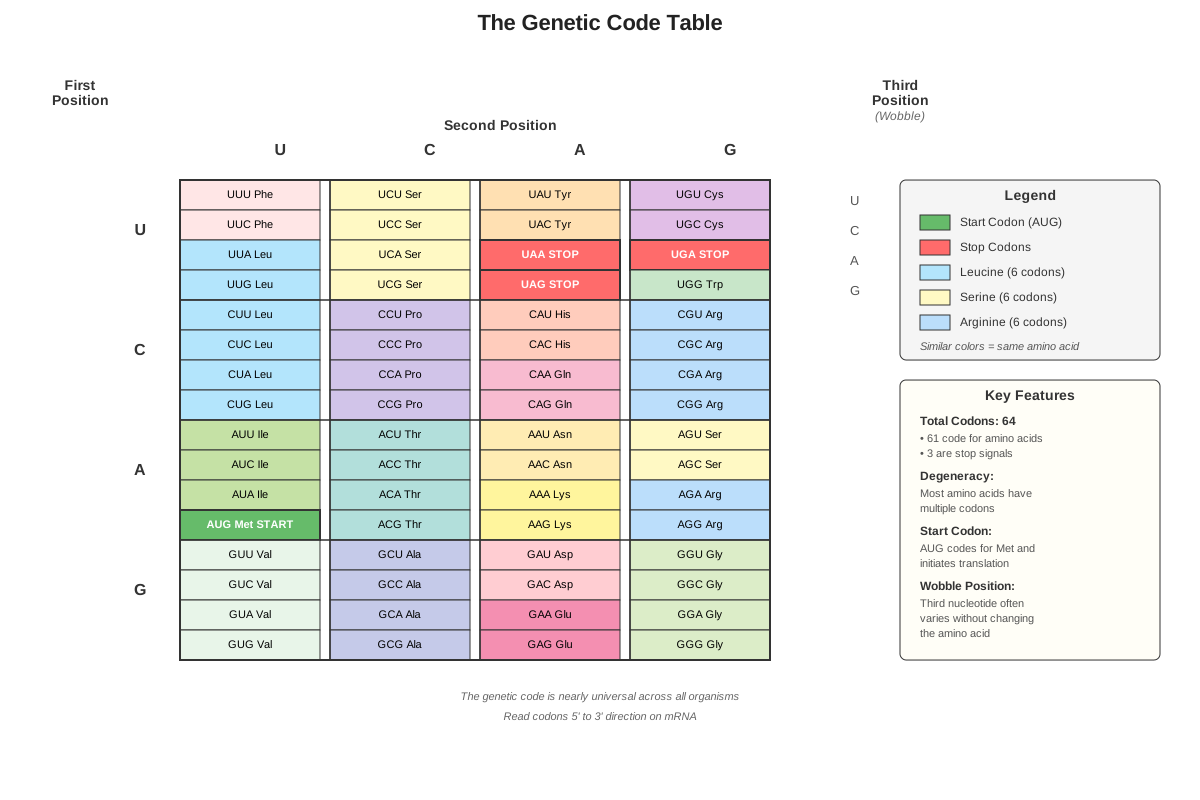
A codon is a sequence of three consecutive nucleotides on messenger RNA (mRNA) that specifies either a particular amino acid or a translation termination signal. The genetic code consists of 64 possible codons (4³ combinations of the four RNA nucleotides: adenine, uracil, guanine, and cytosine). Of these 64 codons, 61 encode the 20 standard amino acids, while three serve as stop codons (UAA, UAG, UGA) that signal translation termination. One codon, AUG, serves dual functions: it codes for methionine and acts as the start codon that initiates translation.
The genetic code exhibits several critical properties that appear frequently on the MCAT:
- Degeneracy (redundancy): Most amino acids are encoded by more than one codon. For example, leucine has six different codons (UUA, UUG, CUU, CUC, CUA, CUG). This redundancy provides a buffer against mutations—many single nucleotide changes don't alter the amino acid sequence.
- Universality: With minor exceptions (mitochondrial DNA and some microorganisms), the genetic code is identical across all living organisms, supporting the common evolutionary origin of life.
- Non-overlapping and comma-free: Codons are read sequentially without overlaps or gaps. The reading frame is established by the start codon, and shifting this frame by even one nucleotide (frameshift mutation) completely changes the downstream amino acid sequence.
- Unambiguous: Each codon specifies only one amino acid (though each amino acid may be specified by multiple codons).
Anticodon Structure and tRNA Function
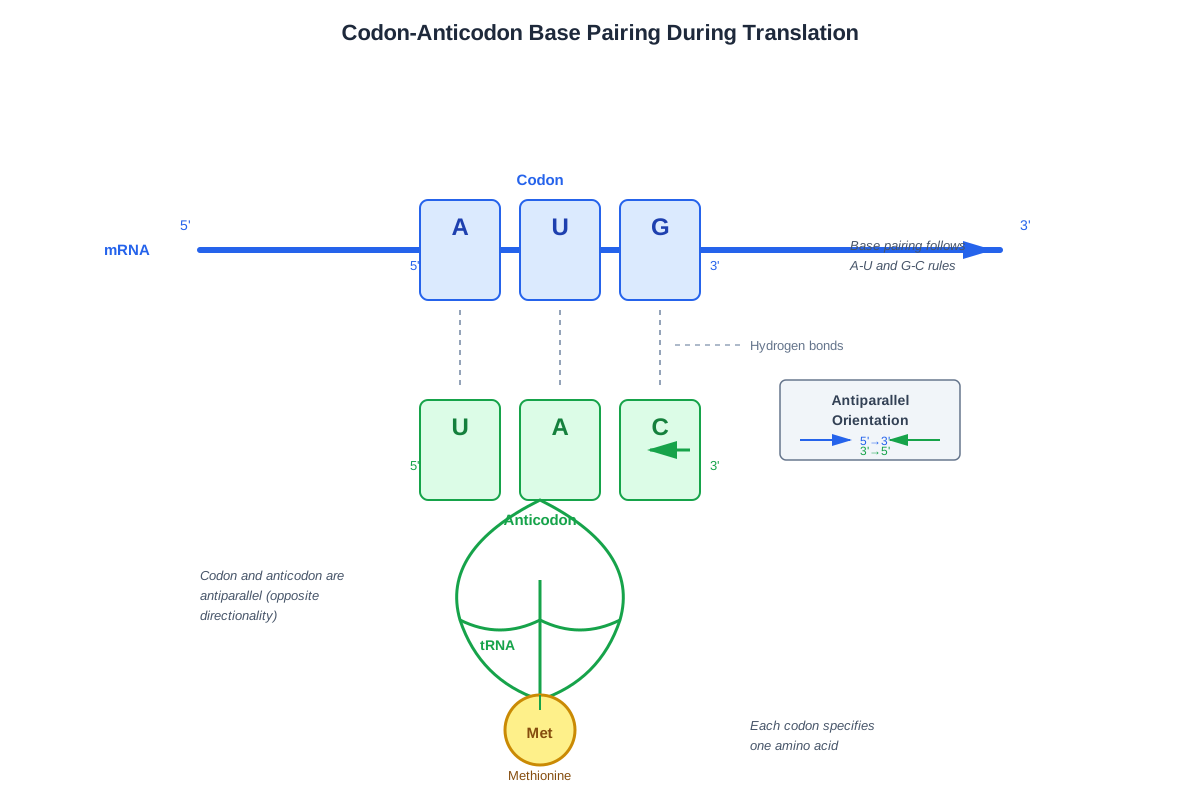
An anticodon is a three-nucleotide sequence located on transfer RNA (tRNA) that is complementary and antiparallel to a specific mRNA codon. Each tRNA molecule has two critical functional regions: the anticodon loop (which recognizes and binds to mRNA codons) and the 3' acceptor stem (where the corresponding amino acid attaches). The enzyme aminoacyl-tRNA synthetase catalyzes the attachment of the correct amino acid to its corresponding tRNA, a process called tRNA charging or aminoacylation.
The anticodon-codon interaction follows standard RNA base pairing rules with one crucial modification:
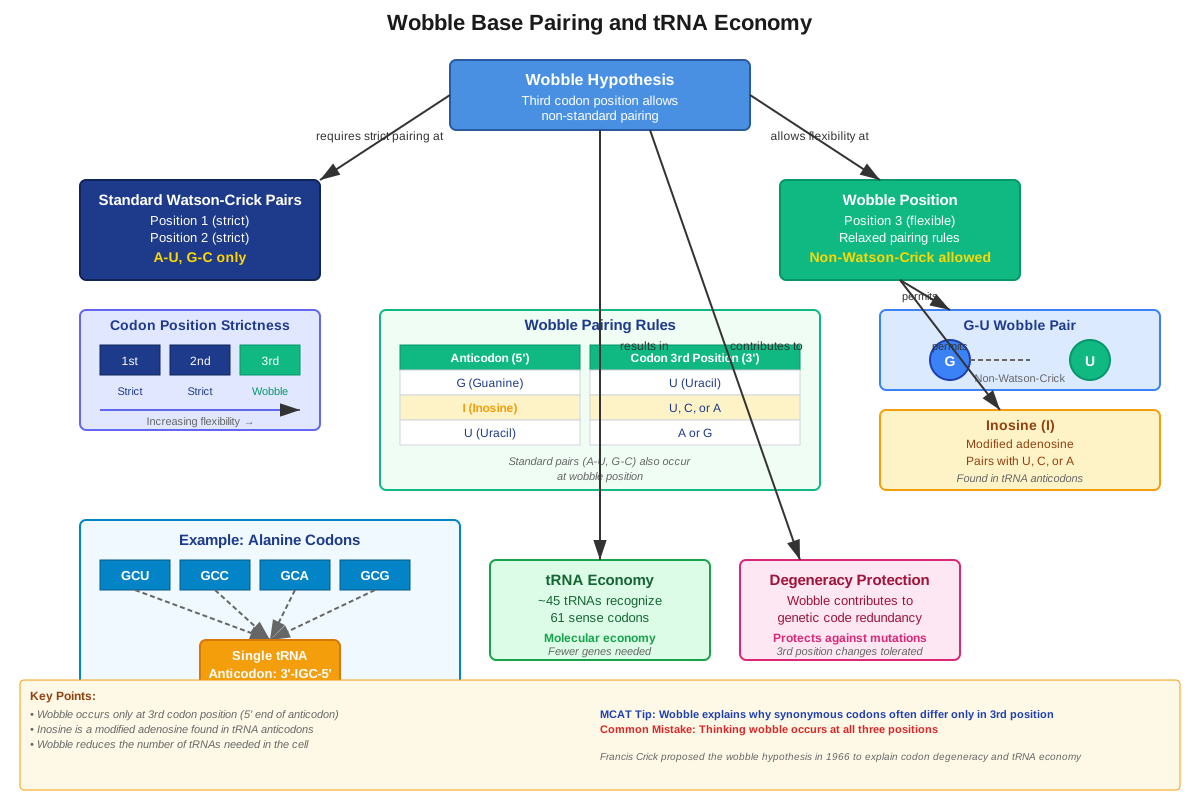
| Position in Codon | Base Pairing | Strictness |
|---|---|---|
| 1st position (5' end of codon) | Watson-Crick | Strict |
| 2nd position (middle) | Watson-Crick | Strict |
| 3rd position (3' end of codon) | Wobble pairing allowed | Flexible |
The wobble hypothesis, proposed by Francis Crick, explains why cells don't need 61 different tRNAs for 61 sense codons. The third position of the codon (5' position of the anticodon) can form non-Watson-Crick base pairs. Specifically, inosine (a modified nucleotide found in some tRNA anticodons) can pair with U, C, or A in the codon's third position. This flexibility means that a single tRNA can recognize multiple codons for the same amino acid.
The Translation Process and Codon-Anticodon Pairing
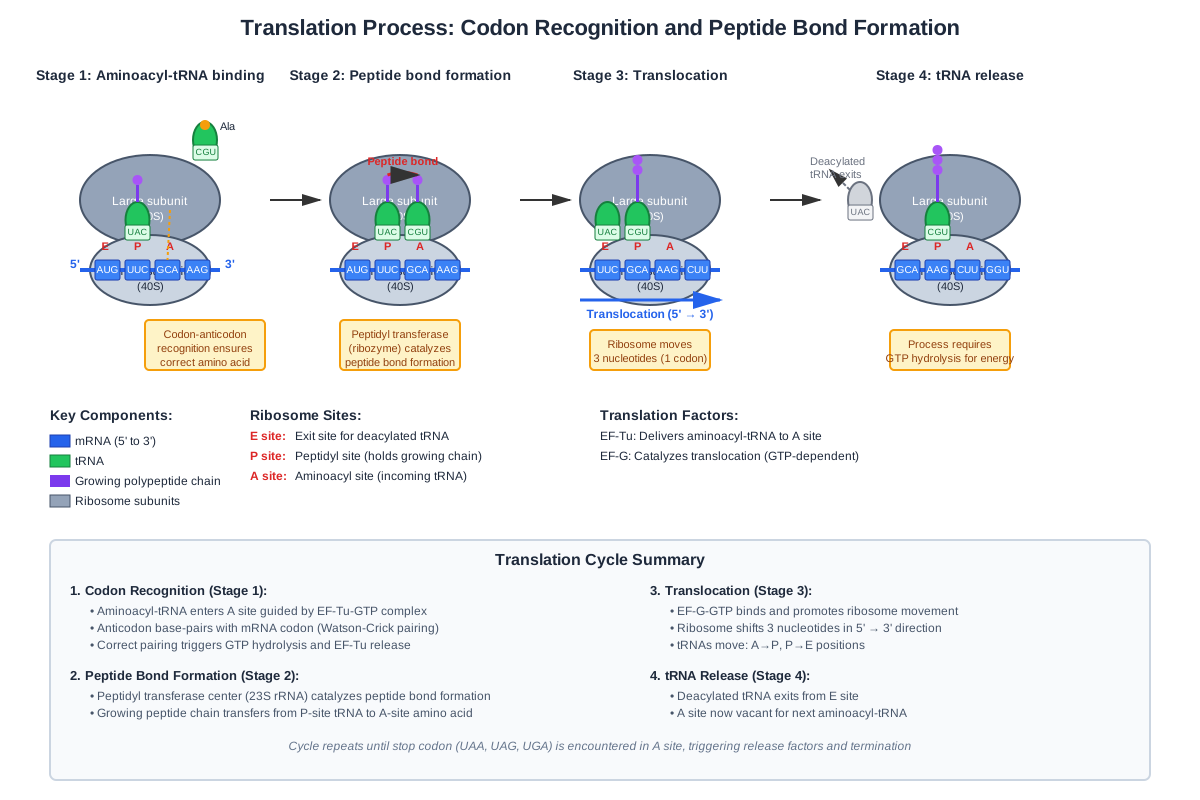
During translation, codon-anticodon pairing occurs within the ribosome, a complex molecular machine composed of ribosomal RNA (rRNA) and proteins. The ribosome has three tRNA binding sites:
- A site (aminoacyl site): Where incoming aminoacyl-tRNA binds by codon-anticodon recognition
- P site (peptidyl site): Holds the tRNA carrying the growing polypeptide chain
- E site (exit site): Where deacylated tRNA exits the ribosome
The translation cycle proceeds as follows:
- Initiation: The small ribosomal subunit binds to mRNA at the 5' cap and scans for the start codon (AUG). The initiator tRNA (carrying methionine in eukaryotes, N-formylmethionine in prokaryotes) binds to the start codon in the P site. The large ribosomal subunit then associates, forming the complete ribosome.
- Elongation: An aminoacyl-tRNA enters the A site, with its anticodon complementary to the mRNA codon. Elongation factor Tu (EF-Tu) facilitates this process in prokaryotes (eEF1A in eukaryotes). The ribosome catalyzes peptide bond formation between the amino acid in the P site and the one in the A site. The ribosome then translocates three nucleotides along the mRNA (facilitated by EF-G in prokaryotes), moving the tRNA from the A site to the P site and the deacylated tRNA from the P site to the E site.
- Termination: When a stop codon (UAA, UAG, or UGA) enters the A site, no tRNA has a complementary anticodon. Instead, release factors recognize the stop codon, triggering hydrolysis of the bond between the polypeptide and the tRNA in the P site, releasing the completed protein.
Reading Frames and Mutation Effects
The reading frame is the grouping of nucleotides into consecutive, non-overlapping triplets starting from the start codon. Because the genetic code is read in triplets without punctuation, the reading frame is critical. Consider the sequence:
5'-AUG|CAU|GGC|UAA-3'
    Met-His-Gly-STOP
A single nucleotide insertion or deletion causes a frameshift mutation, completely altering all downstream codons:
5'-AUG|UCA|UGG|CUA|A...-3' (after inserting U after AUG)
    Met-Ser-Trp-Leu-...
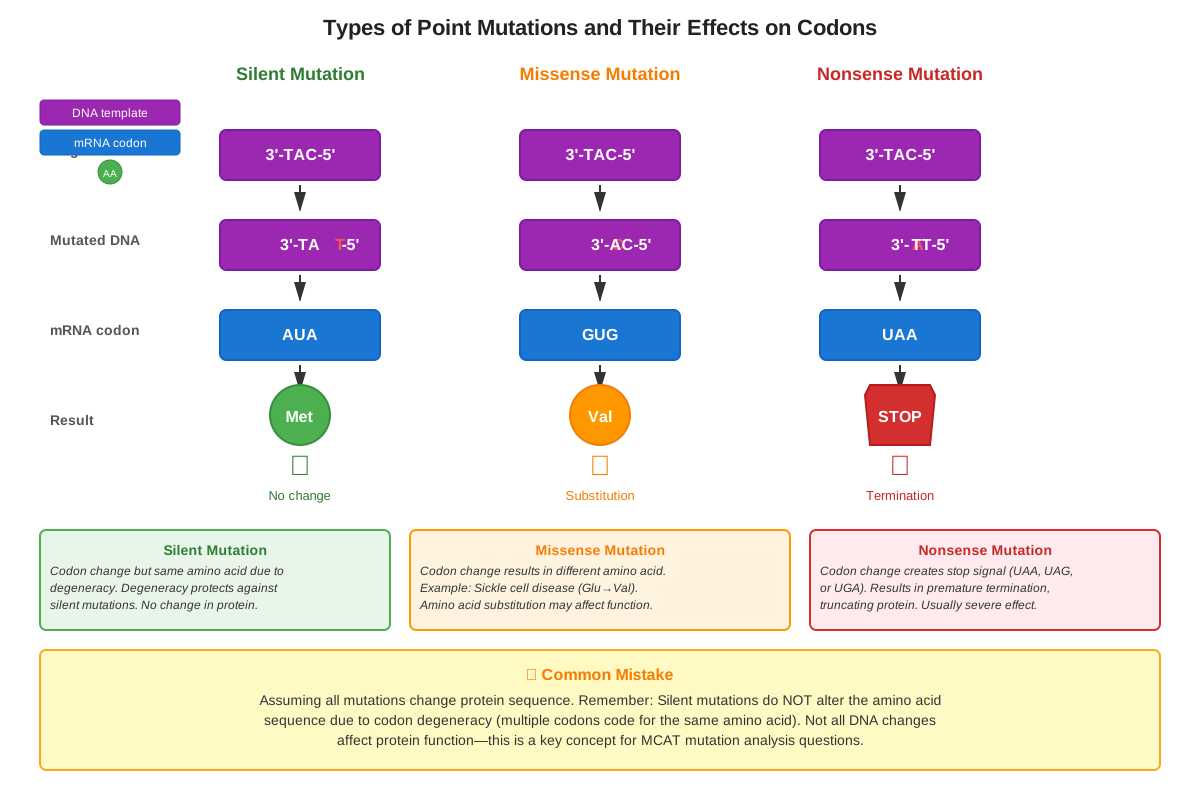
Point mutations (single nucleotide substitutions) have three possible outcomes:
- Silent (synonymous) mutations: The codon change still codes for the same amino acid due to degeneracy. Example: CAU → CAC (both code for histidine).
- Missense (nonsynonymous) mutations: The codon change results in a different amino acid. Example: GAA → GUA (glutamic acid → valine, causing sickle cell disease).
- Nonsense mutations: The codon change creates a premature stop codon. Example: UAC → UAA (tyrosine → stop), resulting in a truncated, usually nonfunctional protein.
Codon Usage Bias and Biological Implications
Not all synonymous codons are used with equal frequency. Codon usage bias refers to the preferential use of certain codons over others that code for the same amino acid. This bias correlates with tRNA abundance—highly expressed genes tend to use codons corresponding to abundant tRNAs, optimizing translation efficiency. This phenomenon has practical implications:
- Heterologous protein expression: When expressing human proteins in bacteria, scientists often "codon-optimize" the gene sequence to match bacterial codon preferences, improving protein yield.
- Translation speed regulation: Rare codons can slow translation, allowing proper protein folding at critical domains.
- Gene expression regulation: Codon usage can affect mRNA stability and translation efficiency, serving as a regulatory mechanism.
Concept Relationships
The relationship between codons and anticodons forms the molecular bridge connecting genetic information storage (DNA) to functional protein synthesis. This connection flows through several hierarchical levels:
DNA sequence → Transcription → mRNA codons → Codon-anticodon pairing → tRNA delivers amino acids → Peptide bond formation → Protein
Within this topic, several internal relationships are crucial. The genetic code defines which codons correspond to which amino acids, while tRNA molecules physically implement this code through their anticodons. The wobble hypothesis explains the relationship between the 61 sense codons and the smaller number of tRNA species (typically 30-40 in most organisms). Aminoacyl-tRNA synthetases ensure fidelity by linking the correct amino acid to tRNAs with specific anticodons, maintaining the accuracy of the genetic code's implementation.
Externally, this topic connects to numerous prerequisite and advanced concepts. Transcription produces the mRNA containing codons, while RNA processing (splicing, capping, polyadenylation) prepares the mRNA for translation. Ribosome structure provides the physical environment where codon-anticodon pairing occurs. Protein folding depends on the amino acid sequence determined by codon-anticodon interactions. Gene mutations often manifest through altered codons, connecting to medical genetics and evolutionary biology. Biotechnology applications like recombinant DNA technology, CRISPR gene editing, and synthetic biology all manipulate codons to achieve desired outcomes.
The relationship map can be visualized as:
Genetic Code (abstract information) → Codons (mRNA implementation) ↔ Anticodons (tRNA recognition) → Amino Acid Sequence (protein primary structure) → Protein Function (biological activity)
Quick check — test yourself on Codons and anticodons so far.
Try Flashcards →High-Yield Facts
⭐ The genetic code contains 64 codons: 61 sense codons (encoding amino acids) and 3 stop codons (UAA, UAG, UGA).
⭐ AUG serves as both the start codon and codes for methionine; it establishes the reading frame for translation.
⭐ Codon-anticodon pairing is antiparallel and complementary: a 5'-AUG-3' codon pairs with a 3'-UAC-5' anticodon.
⭐ The wobble position (third position of the codon) allows flexible base pairing, reducing the number of required tRNA species.
⭐ Aminoacyl-tRNA synthetases charge tRNAs with their correct amino acids, ensuring translation fidelity; there is one synthetase for each amino acid.
- The genetic code is nearly universal across all domains of life, with minor variations in mitochondria and some microorganisms.
- Degeneracy of the genetic code means most amino acids have multiple codons, providing protection against some mutations.
- Silent mutations occur most commonly at the third codon position due to wobble pairing and codon degeneracy.
- Nonsense mutations create premature stop codons, typically resulting in nonfunctional truncated proteins.
- Frameshift mutations (insertions or deletions not divisible by three) alter all downstream codons, usually producing completely nonfunctional proteins.
- Inosine in the wobble position of tRNA anticodons can pair with U, C, or A in the codon, explaining why fewer than 61 tRNAs are sufficient.
- The second position of a codon most strongly determines the chemical properties of the encoded amino acid (hydrophobic, polar, etc.).
- Codon usage bias reflects tRNA abundance and can affect translation speed and protein expression levels.
Common Misconceptions
Misconception: Codons are found on DNA.
Correction: While DNA contains the template information, codons specifically refer to the three-nucleotide sequences on mRNA. DNA contains triplet sequences called "sense" or "coding" sequences, but the term "codon" is reserved for mRNA. The DNA template strand is complementary and antiparallel to the mRNA, while the DNA coding strand has the same sequence as mRNA (with T instead of U).
Misconception: Each tRNA anticodon pairs with only one specific codon.
Correction: Due to the wobble hypothesis, a single tRNA can recognize multiple codons that differ at the third position. For example, a tRNA with the anticodon 3'-UAI-5' (where I = inosine) can pair with codons 5'-AUU-3', 5'-AUC-3', and 5'-AUA-3', all of which code for isoleucine. This flexibility reduces the number of different tRNA molecules needed.
Misconception: The start codon AUG always appears at the 5' end of mRNA.
Correction: The start codon AUG is typically located downstream from the 5' cap of eukaryotic mRNA, following the 5' untranslated region (5' UTR). In prokaryotes, the start codon is positioned downstream of the Shine-Dalgarno sequence (ribosome binding site). Additionally, AUG codons can appear within the coding sequence where they simply code for methionine rather than initiating translation.
Misconception: All mutations in codons change the amino acid sequence.
Correction: Silent mutations change the codon sequence but still code for the same amino acid due to the degeneracy of the genetic code. For example, both GCU and GCC code for alanine. These mutations are particularly common at the third codon position. While silent mutations don't change the amino acid sequence, they can still affect translation speed, mRNA stability, or protein folding kinetics.
Misconception: Anticodons and codons pair in a parallel orientation.
Correction: Codon-anticodon pairing is antiparallel, just like DNA base pairing. The mRNA codon is read 5' to 3', while the tRNA anticodon pairs in the 3' to 5' direction. For example, the mRNA codon 5'-AUG-3' pairs with the tRNA anticodon 3'-UAC-5'. This antiparallel orientation is essential for proper base pairing geometry.
Misconception: Stop codons have corresponding tRNAs with complementary anticodons.
Correction: Stop codons (UAA, UAG, UGA) do not have corresponding tRNAs. Instead, release factors (proteins) recognize stop codons and trigger translation termination by promoting hydrolysis of the peptidyl-tRNA bond. This is why stop codons are also called "nonsense codons"—they don't "make sense" in terms of specifying an amino acid.
Misconception: A frameshift mutation only affects the amino acids near the mutation site.
Correction: Frameshift mutations (insertions or deletions not divisible by three) alter the reading frame for all downstream codons, typically affecting the entire protein sequence from the mutation point onward. This usually results in a completely nonfunctional protein, especially if a premature stop codon is encountered in the new reading frame.
Worked Examples
Example 1: Predicting Amino Acid Sequence and Analyzing Mutations
Problem: Given the following DNA template strand sequence, determine: (a) the mRNA sequence, (b) the amino acid sequence of the resulting peptide, (c) the anticodon of the second tRNA that binds during translation, and (d) the effect of a point mutation that changes the 9th nucleotide of the DNA template from T to A.
DNA template strand: 3'-TAC GCA TGG AAT CTA-5'
Solution:
(a) mRNA sequence: Remember that mRNA is synthesized complementary and antiparallel to the DNA template strand, with U replacing T:
DNA template: 3'-TAC GCA TGG AAT CTA-5'
mRNA: 5'-AUG CGU ACC UUA GAU-3'
(b) Amino acid sequence: Using the genetic code table, read the mRNA codons 5' to 3':
- AUG → Methionine (Met)
- CGU → Arginine (Arg)
- ACC → Threonine (Thr)
- UUA → Leucine (Leu)
- GAU → Aspartic acid (Asp)
Peptide: Met-Arg-Thr-Leu-Asp
(c) Anticodon of the second tRNA: The second codon is CGU. The anticodon must be complementary and antiparallel:
mRNA codon: 5'-CGU-3'
tRNA anticodon: 3'-GCA-5'
(d) Effect of mutation: The 9th nucleotide of the DNA template changes from T to A:
Original DNA template: 3'-TAC GCA TGG AAT CTA-5'
Mutated DNA template: 3'-TAC GCA AGG AAT CTA-5'
New mRNA: 5'-AUG CGU UCC UUA GAU-3'
The third codon changes from ACC to UCC:
- ACC → Threonine (Thr)
- UCC → Serine (Ser)
This is a missense mutation that changes threonine to serine at the third position. The effect on protein function depends on the importance of this position—both are polar amino acids, so the change might be tolerated, but it could also disrupt protein structure or function.
Example 2: Analyzing Wobble Pairing and tRNA Requirements
Problem: A researcher is studying a simplified organism that uses only four amino acids: Met, Phe, Leu, and Tyr. The codons for these amino acids are:
- Met: AUG
- Phe: UUU, UUC
- Leu: UUA, UUG, CUU, CUC, CUA, CUG
- Tyr: UAU, UAC
Assuming wobble pairing follows standard rules (including inosine in the wobble position), what is the minimum number of different tRNA molecules (with different anticodons) needed to translate all these codons?
Solution:
Let's analyze each amino acid:
Methionine (Met): Only one codon (AUG), so requires one tRNA with anticodon 3'-UAC-5'.
Count: 1 tRNA
Phenylalanine (Phe): Two codons (UUU, UUC) differ only at the third position (wobble position). A single tRNA with anticodon 3'-AAG-5' can pair with both through wobble pairing (G in the anticodon wobble position can pair with both U and C in the codon).
Count: 1 tRNA
Leucine (Leu): Six codons fall into two groups:
- Group 1: UUA, UUG (differ only at third position)
- Group 2: CUU, CUC, CUA, CUG (differ only at third position)
For Group 1 (UUA, UUG): One tRNA with anticodon 3'-AAU-5' can pair with both through wobble.
For Group 2 (CUU, CUC, CUA, CUG): One tRNA with inosine at the wobble position (3'-GAI-5') can pair with all four codons (I can pair with U, C, or A).
Count: 2 tRNAs
Tyrosine (Tyr): Two codons (UAU, UAC) differ only at the third position. One tRNA with anticodon 3'-AUG-5' can pair with both through wobble.
Count: 1 tRNA
Total minimum tRNAs needed: 1 + 1 + 2 + 1 = 5 tRNAs
This example demonstrates how wobble pairing dramatically reduces the number of tRNA species required. Without wobble, this organism would need 11 different tRNAs (one for each codon), but with wobble, only 5 are necessary.
Exam Strategy
Approaching MCAT Questions on Codons and Anticodons
When encountering questions on this topic, follow this systematic approach:
- Identify the molecular level: Determine whether the question provides DNA, mRNA, or tRNA sequences. Remember the directionality (5' to 3') and complementarity rules.
- Watch for directionality: The MCAT frequently tests whether students remember that codon-anticodon pairing is antiparallel. Always write out the 5' and 3' ends to avoid errors.
- Use the genetic code table efficiently: On the actual MCAT, you won't have access to a complete genetic code table, but you should memorize key codons: start codon (AUG), stop codons (UAA, UAG, UGA), and recognize that the second position most strongly determines amino acid properties.
- Consider mutation effects systematically: When analyzing mutations, determine whether they're silent, missense, nonsense, or frameshift. Consider the location (wobble position vs. first/second position) and the chemical similarity of amino acids involved.
Trigger Words and Phrases
Watch for these key phrases that signal codon-anticodon questions:
- "Reading frame": Indicates potential frameshift mutation or translation initiation questions
- "Wobble position" or "third position": Points to questions about codon degeneracy or tRNA diversity
- "Nonsense mutation" or "premature termination": Signals stop codon creation
- "Synonymous substitution": Indicates silent mutation
- "Antiparallel": Reminds you to consider directionality in codon-anticodon pairing
- "Aminoacyl-tRNA synthetase": Relates to tRNA charging and translation fidelity
- "Codon optimization": Suggests biotechnology application involving codon usage bias
Process-of-Elimination Tips
- Eliminate answers with incorrect directionality: If an answer choice shows parallel pairing of codons and anticodons, eliminate it immediately.
- Check for base pairing violations: U pairs with A, C pairs with G (with wobble exceptions). Any answer violating these rules is incorrect.
- Consider the wobble position: If a question asks about tRNA requirements, answers suggesting 61 different tRNAs are likely incorrect due to wobble pairing.
- Evaluate mutation severity: Frameshift and nonsense mutations are typically more severe than missense mutations, which are more severe than silent mutations. Use this hierarchy to eliminate unreasonable answer choices.
Time Allocation Advice
For discrete questions on codons and anticodons, allocate 60-90 seconds. These questions typically require straightforward application of base pairing rules or genetic code interpretation. For passage-based questions, spend 2-3 minutes per question, as they often require integrating information from the passage with your knowledge of translation mechanisms. If a question requires extensive sequence translation (more than 5-6 codons), consider whether there's a shortcut—the MCAT rarely requires tedious calculations when a conceptual approach is available.
Memory Techniques
Mnemonics for Stop Codons
"U Are Annoying, U Are Gross, U Go Away"
- UAA (U Are Annoying)
- UAG (U Are Gross)
- UGA (U Go Away)
These three stop codons terminate translation, so they "go away" from the ribosome.
Remembering Codon-Anticodon Orientation
"Codon Climbs, Anticodon Descends"
The codon is read 5' to 3' (climbing up), while the anticodon pairs 3' to 5' (descending down). Visualize them as two people on opposite sides of a ladder.
Wobble Position Memory Aid
"Third Time's the Charm—Wobble Works"
The third position of the codon (wobble position) is where flexible pairing occurs. Remember that this position is most tolerant of mutations (often resulting in silent mutations).
Mutation Severity Hierarchy
"Frame Nonsense Makes Silence" (from most to least severe)
- Frameshift mutations (most severe—alter all downstream codons)
- Nonsense mutations (create stop codons—truncate proteins)
- Missense mutations (change one amino acid—variable effect)
- Silent mutations (no amino acid change—least severe)
Genetic Code Properties
"DUNU" for the four key properties:
- Degenerate (redundant)
- Universal (same across organisms)
- Non-overlapping (codons don't share nucleotides)
- Unambiguous (each codon specifies only one amino acid)
Summary
Codons and anticodons form the molecular translation system that converts genetic information into functional proteins. Codons are three-nucleotide sequences on mRNA that specify amino acids or termination signals, while anticodons are complementary sequences on tRNA that recognize and bind to codons through antiparallel base pairing. The genetic code consists of 64 codons—61 sense codons encoding 20 amino acids and 3 stop codons. Key properties include degeneracy (multiple codons per amino acid), universality (conserved across species), and the wobble hypothesis (flexible pairing at the third codon position). Translation occurs in ribosomes where aminoacyl-tRNAs deliver amino acids specified by codon-anticodon pairing. Mutations affecting codons can be silent (no amino acid change), missense (different amino acid), nonsense (premature stop), or frameshift (altered reading frame). Understanding these concepts is essential for MCAT success, as questions frequently test genetic code interpretation, mutation analysis, and translation mechanisms in both discrete and passage-based formats.
Key Takeaways
- Codons (mRNA triplets) and anticodons (tRNA triplets) pair antiparallel and complementary during translation to specify amino acid sequences
- The genetic code contains 64 codons: 61 sense codons, 3 stop codons (UAA, UAG, UGA), and 1 start codon (AUG coding for methionine)
- Wobble pairing at the third codon position allows one tRNA to recognize multiple codons, reducing the number of required tRNA species to ~30-40
- Mutation effects follow a severity hierarchy: frameshift > nonsense > missense > silent, with location and amino acid properties determining functional impact
- Aminoacyl-tRNA synthetases ensure translation fidelity by charging each tRNA with its correct amino acid, maintaining the genetic code's accuracy
- The genetic code is degenerate (redundant), universal (conserved across life), non-overlapping, and unambiguous
- MCAT questions emphasize mutation analysis, sequence translation, wobble hypothesis applications, and integration with molecular biology techniques
Related Topics
Translation Mechanism and Ribosome Function: Building on codon-anticodon pairing, this topic explores the detailed mechanics of initiation, elongation, and termination, including the roles of elongation factors, peptidyl transferase, and ribosomal RNA catalysis.
Gene Mutations and Genetic Disorders: Understanding how codon alterations cause disease connects molecular biology to medical genetics, covering topics like sickle cell anemia, thalassemias, and cancer-causing mutations.
Transcription and RNA Processing: Since codons exist on mRNA, mastering how mRNA is synthesized and processed (capping, splicing, polyadenylation) provides essential context for translation.
Protein Structure and Folding: The amino acid sequence determined by codon-anticodon pairing directly determines protein structure, connecting translation to biochemistry and protein function.
Biotechnology and Genetic Engineering: Applications like recombinant DNA technology, CRISPR gene editing, and codon optimization for heterologous protein expression rely heavily on manipulating codons and understanding the genetic code.
Molecular Evolution and Phylogenetics: The near-universality of the genetic code and patterns of codon usage provide evidence for common ancestry and tools for evolutionary analysis.
Practice CTA
Now that you've mastered the fundamentals of codons and anticodons, it's time to reinforce your understanding through active practice. Work through the practice questions and flashcards to test your ability to apply these concepts under exam conditions. Focus particularly on mutation analysis problems and sequence translation exercises, as these represent the highest-yield question types on the MCAT. Remember, understanding the "why" behind codon-anticodon interactions—not just memorizing facts—will enable you to tackle even the most challenging passage-based questions. Your investment in mastering this foundational topic will pay dividends throughout your study of molecular biology and genetics!
Sign up free to keep reading
Create a free AnvayaPrep account to finish this MCAT guide on Codons and anticodons — plus flashcards and practice questions.