Overview
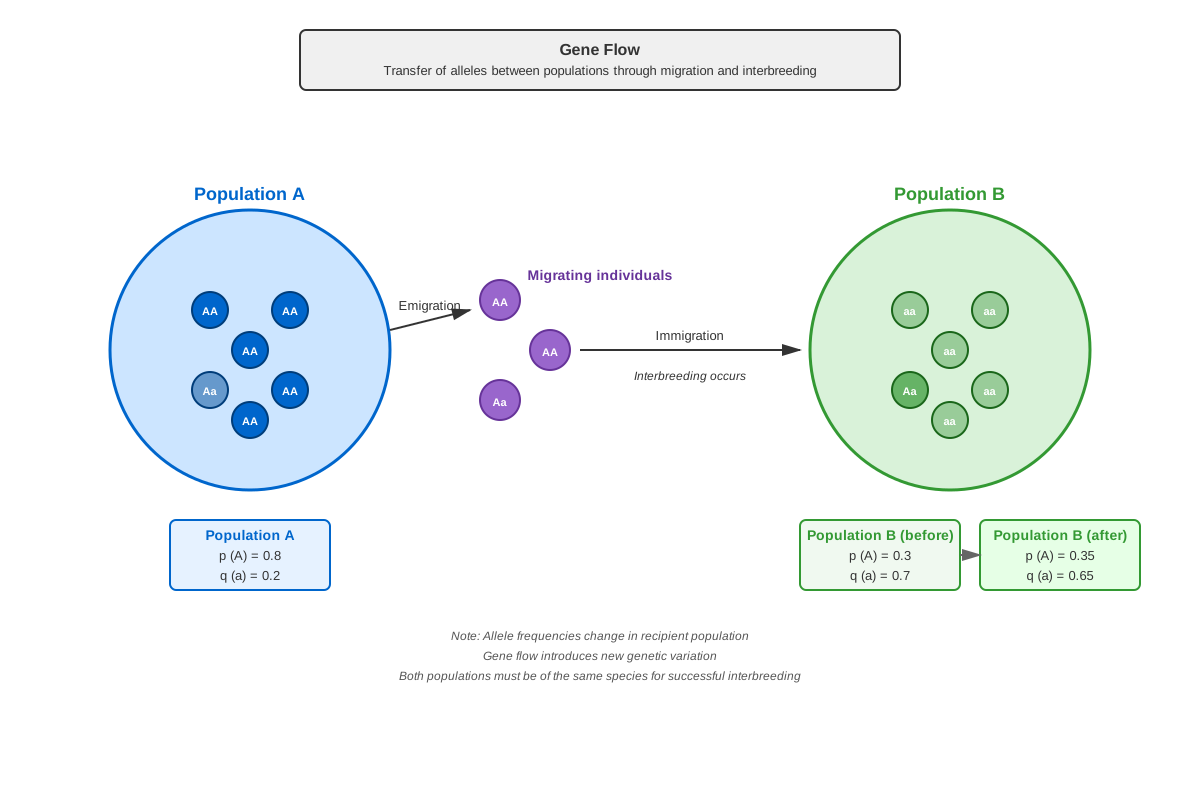
Gene flow, also known as gene migration, is a fundamental evolutionary mechanism that describes the transfer of genetic material between populations through migration and interbreeding. In Molecular Biology and Genetics, gene flow represents one of the five primary forces that can alter allele frequencies in populations, alongside mutation, natural selection, genetic drift, and non-random mating. When individuals migrate from one population to another and successfully reproduce, they introduce new alleles or change the frequencies of existing alleles in the recipient population, thereby affecting the genetic composition of both populations involved.
Understanding gene flow is essential for the MCAT because it bridges multiple biological disciplines tested on the exam. This concept appears in questions involving population genetics, evolutionary biology, speciation, and conservation biology. The MCAT frequently presents scenarios where students must analyze how migration patterns affect genetic diversity, predict changes in allele frequencies when populations exchange genetic material, or explain why isolated populations diverge genetically over time. Gene flow questions often appear in passage-based formats that describe field studies, conservation efforts, or experimental populations, requiring students to apply Hardy-Weinberg principles and understand deviations from equilibrium conditions.
The significance of gene flow extends beyond theoretical population genetics into practical applications that the MCAT emphasizes. Gene flow plays critical roles in maintaining genetic diversity within species, preventing inbreeding depression in small populations, spreading advantageous alleles across geographic ranges, and influencing the pace of speciation. For medical and biological sciences, understanding gene flow helps explain antibiotic resistance spread among bacterial populations, the maintenance of genetic variation in human populations, and conservation strategies for endangered species. This topic connects directly to Hardy-Weinberg equilibrium, speciation mechanisms, genetic drift, and natural selection—all high-yield concepts for Biology sections of the MCAT.
Learning Objectives
- [ ] Define Gene flow using accurate Biology terminology
- [ ] Explain why Gene flow matters for the MCAT
- [ ] Apply Gene flow to exam-style questions
- [ ] Identify common mistakes related to Gene flow
- [ ] Connect Gene flow to related Biology concepts
- [ ] Calculate the effect of gene flow on allele frequencies in recipient populations
- [ ] Distinguish between gene flow and other evolutionary forces in experimental scenarios
- [ ] Predict the long-term genetic consequences of restricted versus unrestricted gene flow
- [ ] Analyze how geographic barriers and migration patterns influence population genetic structure
Prerequisites
- Hardy-Weinberg Equilibrium: Gene flow is one of the five conditions that, when violated, causes populations to deviate from Hardy-Weinberg equilibrium; understanding equilibrium conditions is essential for recognizing gene flow effects
- Allele Frequencies: Gene flow calculations require understanding how to quantify and track changes in allele frequencies within and between populations
- Population Genetics Basics: Familiarity with concepts like genetic variation, population structure, and allele distribution provides the foundation for understanding how gene flow operates
- Mendelian Genetics: Understanding inheritance patterns and genotype frequencies is necessary for tracking how migrant alleles are transmitted through generations
- Natural Selection and Genetic Drift: Distinguishing gene flow from other evolutionary forces requires knowledge of how selection and drift independently affect populations
Why This Topic Matters
Gene flow has profound real-world significance in medicine, public health, and conservation biology—areas the MCAT emphasizes in its biological and biochemical foundations. In medical contexts, gene flow explains how antibiotic resistance genes spread rapidly among bacterial populations through horizontal gene transfer and migration, making resistance a global health challenge rather than a localized problem. Human population genetics relies heavily on gene flow patterns to understand genetic disease distribution, ancestry, and the maintenance of genetic diversity that buffers populations against emerging pathogens. Conservation biologists use gene flow principles to design wildlife corridors, manage captive breeding programs, and prevent genetic bottlenecks in endangered species.
On the MCAT, gene flow appears with moderate frequency across multiple question formats. Approximately 2-4 questions per exam directly or indirectly test gene flow concepts, typically within the Biological and Biochemical Foundations section. Questions may appear as discrete items testing definitions and basic calculations, but more commonly emerge in passage-based formats describing field studies, experimental evolution scenarios, or conservation case studies. The MCAT particularly favors questions that require students to integrate gene flow with Hardy-Weinberg calculations, distinguish gene flow effects from natural selection or drift, or predict evolutionary outcomes when migration patterns change.
Common exam presentations include passages describing island populations with varying degrees of isolation, bacterial populations exchanging plasmids, agricultural scenarios involving crop-wild hybridization, or conservation studies tracking genetic diversity in fragmented habitats. Questions often provide migration rates or numbers of migrants and ask students to calculate new allele frequencies, predict genetic divergence patterns, or explain why isolated populations show different genetic characteristics than connected populations. The MCAT also tests gene flow in the context of speciation, asking students to explain how gene flow prevents or promotes reproductive isolation and species formation.
Core Concepts
Definition and Mechanism of Gene Flow
Gene flow (also called gene migration) is the transfer of genetic material from one population to another through the movement of individuals or gametes, followed by successful reproduction in the recipient population. This evolutionary force operates when migrants carrying particular alleles enter a new population and breed with resident individuals, thereby introducing new genetic variants or altering existing allele frequencies. Gene flow requires three essential components: (1) physical migration of individuals between populations, (2) survival of migrants in the new population, and (3) successful reproduction that incorporates migrant alleles into the recipient gene pool.
The mechanism operates at multiple biological scales. In sexually reproducing organisms, gene flow occurs when individuals migrate and mate with members of another population, producing offspring that carry genetic contributions from both populations. In plants, gene flow can occur through pollen dispersal across long distances, even when adult plants remain stationary. In microorganisms, horizontal gene transfer through conjugation, transformation, or transduction represents a form of gene flow that can occur even between distantly related species. Regardless of mechanism, the fundamental outcome remains the same: genetic material moves between populations, affecting their evolutionary trajectories.
Mathematical Framework and Allele Frequency Changes
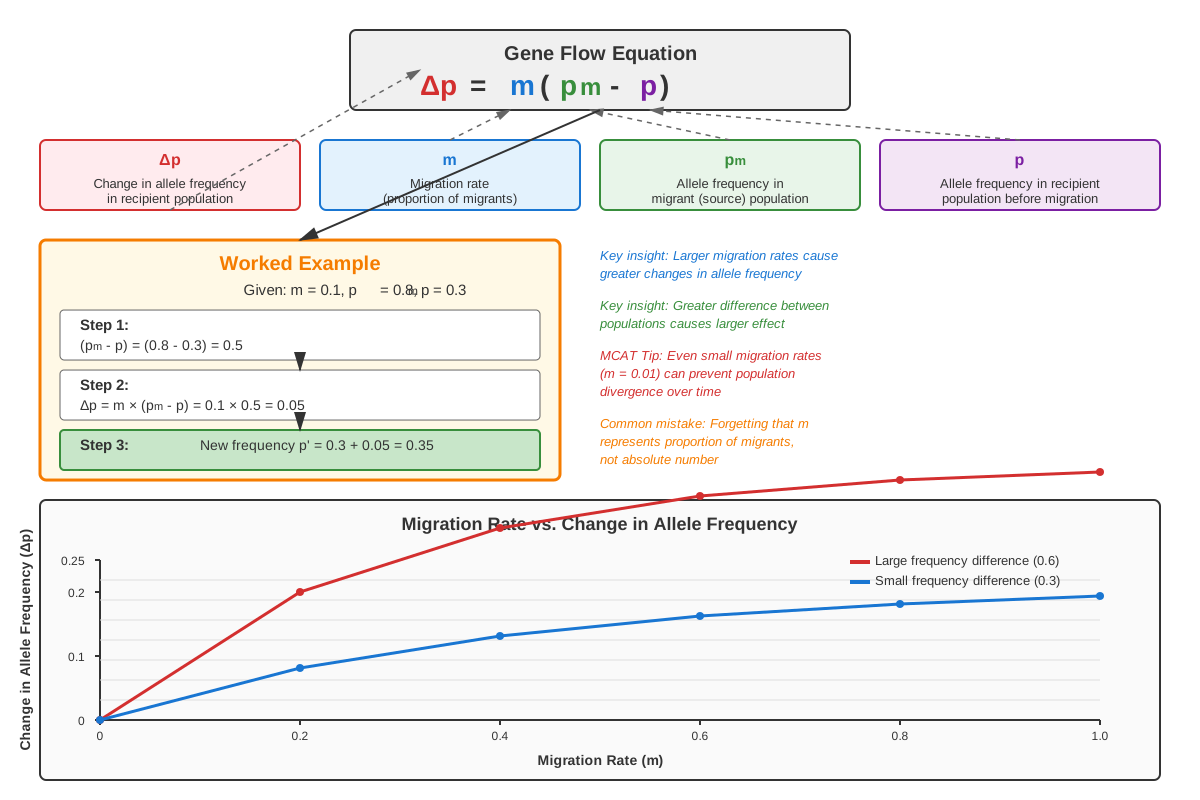
The quantitative impact of gene flow on allele frequencies can be calculated using a straightforward formula. When a proportion of individuals (m) migrate from a source population into a recipient population, the new allele frequency in the recipient population after one generation of gene flow is:
p'_recipient = (1 - m)(p_recipient) + m(p_source)Where:
- p'_recipient = new allele frequency in recipient population after migration
- m = proportion of the recipient population that consists of migrants (migration rate)
- p_recipient = original allele frequency in recipient population before migration
- p_source = allele frequency in source population
This equation demonstrates that gene flow creates a weighted average of allele frequencies, with the weight determined by the migration rate. Even small amounts of gene flow (m = 0.01 to 0.10) can significantly impact allele frequencies over multiple generations, particularly when the source and recipient populations have very different starting frequencies.
Gene Flow as a Homogenizing Force
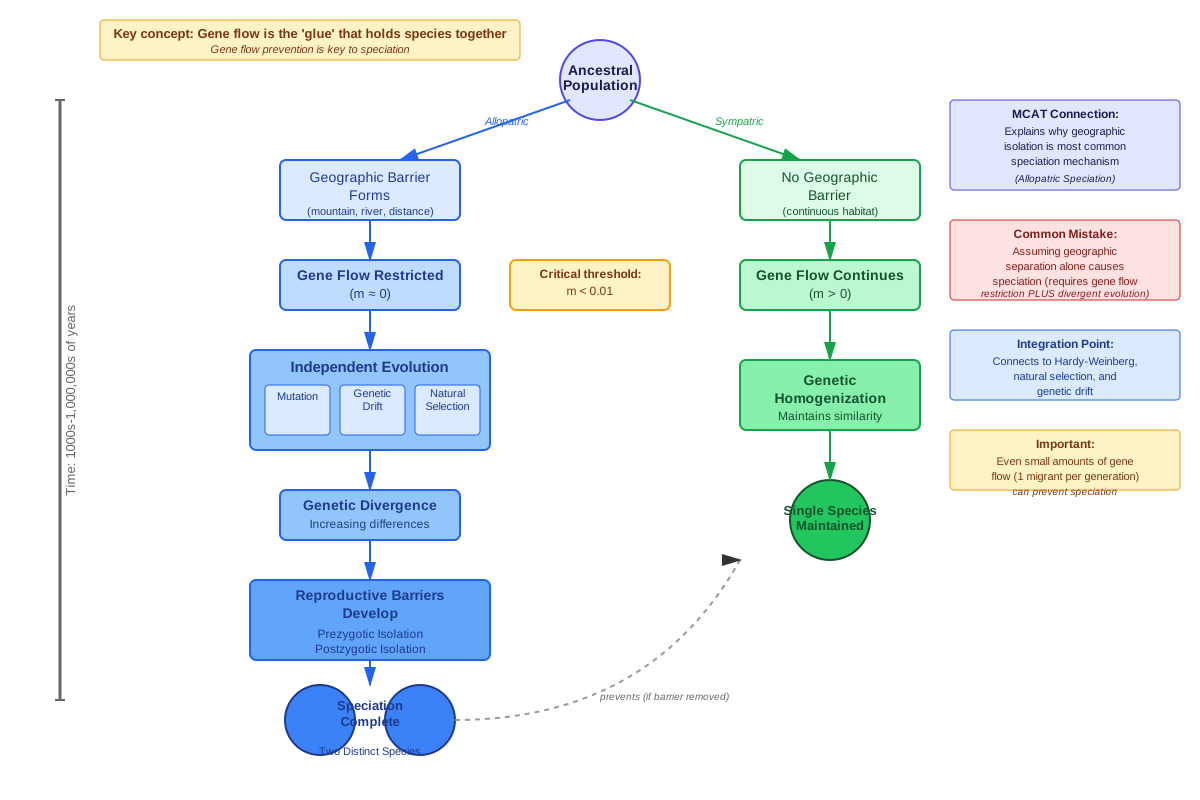
One of the most important properties of gene flow is its role as a homogenizing force that reduces genetic differences between populations. When populations exchange migrants regularly, their allele frequencies become more similar over time, counteracting the divergent effects of genetic drift, local adaptation, and mutation. This homogenization occurs because gene flow continuously introduces alleles from one population into another, preventing the independent evolution that would otherwise occur in isolated populations.
The strength of this homogenizing effect depends on the migration rate and the effective population size. Even relatively low levels of gene flow (one to ten migrants per generation) can be sufficient to prevent significant genetic divergence between populations. This principle has important implications for speciation: gene flow must be restricted or eliminated for populations to diverge sufficiently to become separate species. Geographic barriers, behavioral differences, or temporal isolation that reduce gene flow are therefore critical for speciation processes.
Gene Flow Versus Other Evolutionary Forces
Understanding how gene flow differs from and interacts with other evolutionary forces is crucial for Gene flow MCAT questions:
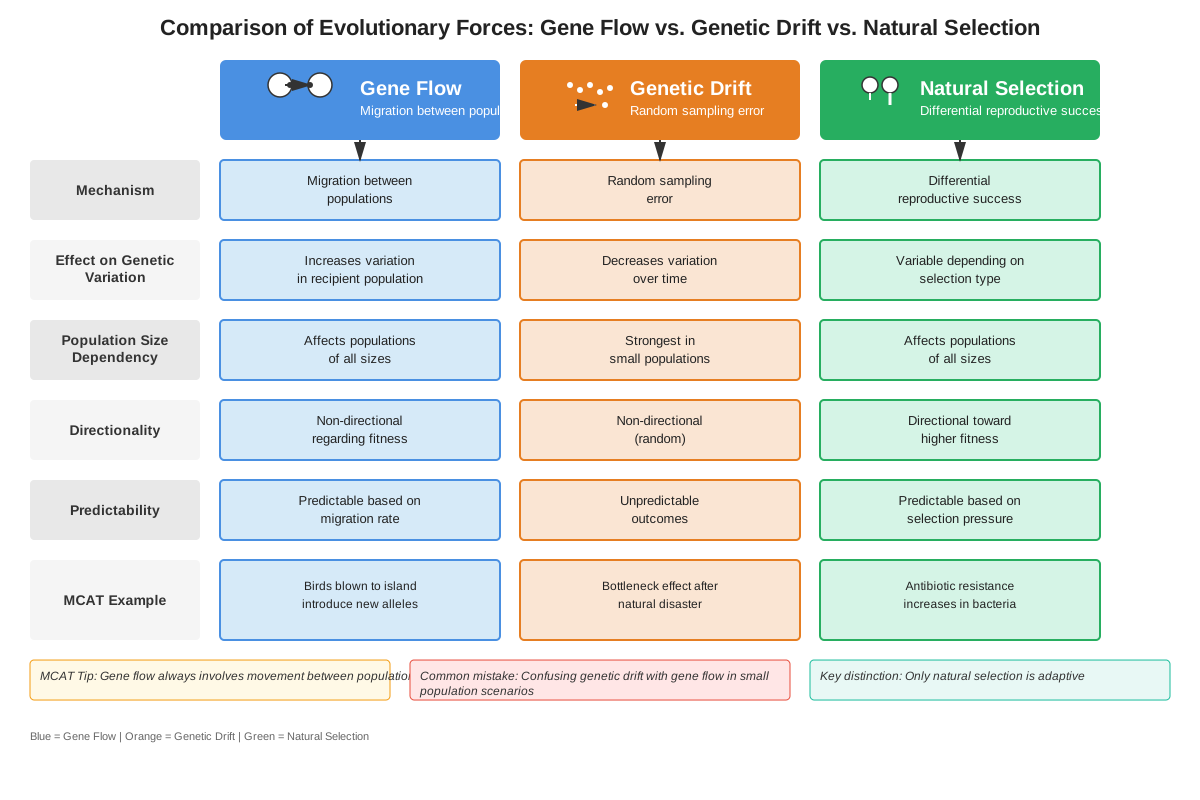
| Evolutionary Force | Effect on Genetic Variation | Effect on Allele Frequencies | Directionality |
|---|---|---|---|
| Gene Flow | Increases variation within populations; decreases variation between populations | Changes frequencies toward source population values | Depends on source population composition |
| Mutation | Increases variation | Changes frequencies slowly | Random; no specific direction |
| Natural Selection | Can increase or decrease variation | Changes frequencies toward adaptive alleles | Directional toward fitness-enhancing alleles |
| Genetic Drift | Decreases variation | Changes frequencies randomly | Random; no specific direction |
| Non-random Mating | Affects genotype frequencies but not allele frequencies | No direct effect on allele frequencies | Depends on mating pattern |
Gene flow uniquely operates between populations rather than within a single population, distinguishing it from other forces. While mutation also introduces new genetic variants, gene flow typically has much stronger effects because it introduces alleles at higher frequencies and can affect multiple loci simultaneously.
Barriers to Gene Flow and Population Structure
Barriers to gene flow are factors that prevent or reduce the movement of alleles between populations, leading to genetic differentiation. These barriers can be physical (geographic), biological (behavioral or physiological), or temporal (breeding at different times). Understanding barriers is essential because their presence or absence determines whether populations will remain genetically similar or diverge over time.
Geographic barriers include mountains, rivers, oceans, or habitat fragmentation that physically prevent organism movement. Island populations provide classic examples where water barriers restrict gene flow, allowing island populations to evolve independently from mainland populations. Behavioral barriers include differences in mating calls, courtship rituals, or habitat preferences that prevent interbreeding even when populations are geographically close. Temporal barriers occur when populations breed at different times of day or different seasons, preventing gamete exchange despite spatial overlap.
The concept of population structure describes the pattern of genetic variation within and among populations, which directly reflects historical and ongoing gene flow patterns. Populations with high gene flow show low genetic structure (similar allele frequencies across space), while populations with restricted gene flow develop high genetic structure (different allele frequencies in different locations). MCAT questions often present data on genetic structure and ask students to infer gene flow patterns or predict evolutionary outcomes.
Gene Flow in Conservation and Applied Biology
Gene flow principles have critical applications in conservation biology, agriculture, and medicine—contexts frequently tested on the MCAT. In conservation, genetic rescue involves deliberately increasing gene flow into small, inbred populations to restore genetic diversity and reduce inbreeding depression. Wildlife corridors are designed to facilitate gene flow between habitat fragments, preventing the genetic problems associated with isolated populations.
In agriculture, gene flow from genetically modified crops to wild relatives raises concerns about unintended spread of engineered traits. Understanding gene flow rates and patterns helps predict and manage these risks. In medicine, gene flow among pathogen populations affects disease evolution, including the spread of antibiotic resistance genes among bacterial populations and the geographic spread of virulent strains.
Concept Relationships
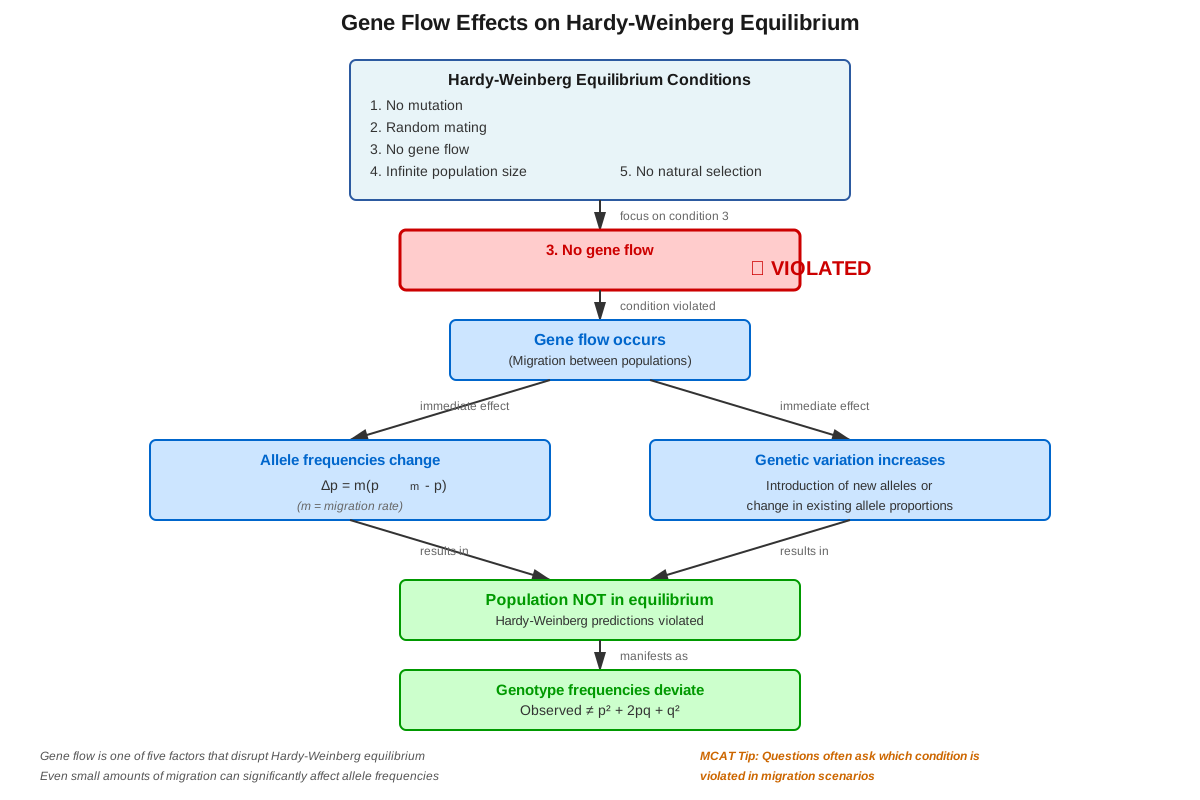
Gene flow connects intimately with Hardy-Weinberg equilibrium as one of the five conditions that must be absent for a population to remain in equilibrium. When gene flow occurs, it violates the "no migration" assumption, causing allele frequencies to change and the population to deviate from Hardy-Weinberg predictions. This relationship means that gene flow questions often require students to recognize Hardy-Weinberg violations and calculate new equilibrium frequencies after migration events.
The relationship between gene flow and genetic drift is particularly important for MCAT questions. These forces often work in opposition: genetic drift causes random changes in allele frequencies and increases genetic differentiation between populations, while gene flow homogenizes populations and reduces differentiation. In small populations, genetic drift is strong, but even modest gene flow can counteract drift's divergent effects. The balance between these forces determines whether populations will diverge or remain similar.
Gene flow interacts with natural selection in complex ways. When selection pressures differ between populations (local adaptation), gene flow can introduce maladaptive alleles from one environment into another, reducing local adaptation. Conversely, gene flow can spread beneficial alleles across populations, accelerating adaptation across a species' range. The MCAT tests understanding of these interactions through scenarios where students must predict whether selection or gene flow will dominate evolutionary outcomes.
The connection to speciation is fundamental: gene flow prevents speciation by maintaining genetic similarity between populations, while restricted gene flow allows populations to diverge and potentially become reproductively isolated. This creates a conceptual flow: Geographic barrier → Reduced gene flow → Genetic divergence → Reproductive isolation → Speciation. Understanding this sequence helps students answer questions about speciation mechanisms and the role of isolation in species formation.
Quick check — test yourself on Gene flow so far.
Try Flashcards →High-Yield Facts
⭐ Gene flow is the transfer of alleles between populations through migration and subsequent reproduction, serving as a homogenizing force that reduces genetic differences between populations
⭐ Even one migrant per generation can be sufficient to prevent significant genetic divergence between populations, making gene flow a powerful evolutionary force
⭐ Gene flow increases genetic variation within populations while decreasing genetic variation between populations—opposite to the effect of genetic drift
⭐ Gene flow is one of five factors that violate Hardy-Weinberg equilibrium (along with mutation, selection, genetic drift, and non-random mating)
⭐ The change in allele frequency due to gene flow depends on the migration rate and the difference in allele frequencies between source and recipient populations
- Gene flow can occur through physical migration of individuals, pollen dispersal in plants, or horizontal gene transfer in microorganisms
- Barriers to gene flow (geographic, behavioral, temporal) are essential for speciation because they allow populations to diverge genetically
- Gene flow can introduce maladaptive alleles into locally adapted populations, creating a tension between local selection and gene flow from other environments
- In conservation biology, gene flow can rescue small populations from inbreeding depression but may also introduce alleles that reduce local adaptation
- The rate of gene flow needed to prevent divergence is inversely related to population size—smaller populations require less gene flow to maintain genetic similarity
Common Misconceptions
Misconception: Gene flow only occurs when entire organisms migrate between populations → Correction: Gene flow can occur through gamete dispersal (like pollen in plants), horizontal gene transfer in bacteria, or any mechanism that moves genetic material between populations and results in reproduction. Physical migration of whole organisms is just one mechanism.
Misconception: Gene flow always increases fitness and is beneficial for populations → Correction: Gene flow can reduce fitness when it introduces maladaptive alleles from one environment into a population adapted to different conditions. Gene flow can also break up co-adapted gene complexes and reduce local adaptation, particularly when migration occurs between populations experiencing different selection pressures.
Misconception: Gene flow and genetic drift have similar effects on populations → Correction: These forces have opposite effects on population structure. Genetic drift increases genetic differences between populations (divergence) and decreases variation within populations, while gene flow decreases differences between populations (homogenization) and increases variation within populations.
Misconception: High levels of gene flow are always necessary to prevent population divergence → Correction: Even very low levels of gene flow (as few as one migrant per generation) can be sufficient to counteract genetic drift and prevent significant divergence, especially in small to moderate-sized populations. The critical factor is the ratio of gene flow to drift strength.
Misconception: Gene flow changes allele frequencies in both source and recipient populations equally → Correction: Gene flow typically has asymmetric effects. When a small number of individuals migrate from a large source population to a small recipient population, the recipient population's allele frequencies change substantially while the source population remains essentially unchanged. The proportional impact depends on relative population sizes and migration rates.
Misconception: Gene flow is the same as mutation because both introduce new alleles → Correction: While both can introduce genetic variation, mutation creates entirely new alleles through DNA changes, while gene flow moves existing alleles between populations. Gene flow typically has much stronger and faster effects on allele frequencies than mutation because it introduces alleles at higher frequencies and affects multiple loci simultaneously.
Worked Examples
Example 1: Calculating Allele Frequency Changes Due to Gene Flow
Scenario: Two populations of butterflies live on adjacent islands. Island A has an allele frequency for a wing color allele (p) of 0.8, while Island B has a frequency of 0.2 for the same allele. A storm causes 20% of Island B's population to be replaced by migrants from Island A. What is the new allele frequency in Island B after this migration event?
Solution:
Step 1: Identify the given information
- p_source (Island A) = 0.8
- p_recipient (Island B, original) = 0.2
- m (migration rate) = 0.20
Step 2: Apply the gene flow equation
p'_recipient = (1 - m)(p_recipient) + m(p_source)
p'_recipient = (1 - 0.20)(0.2) + (0.20)(0.8)
p'_recipient = (0.80)(0.2) + (0.20)(0.8)
p'_recipient = 0.16 + 0.16
p'_recipient = 0.32
Step 3: Interpret the result
The allele frequency in Island B increased from 0.2 to 0.32 after one generation of gene flow. This represents a 60% increase in the frequency of this allele, demonstrating how even a single migration event can substantially alter allele frequencies when the source and recipient populations differ significantly.
Step 4: Consider the biological implications
This change moves Island B's allele frequency closer to Island A's frequency, illustrating gene flow's homogenizing effect. If migration continues at this rate, the populations will eventually reach similar allele frequencies. This example demonstrates why gene flow is such a powerful force preventing genetic divergence between populations.
Example 2: Distinguishing Gene Flow from Natural Selection
Scenario: Researchers studying two populations of mice notice that Population X has a dark coat color allele at 70% frequency, while Population Y has this allele at 30% frequency. Over five years, the frequency in Population Y increases to 50%. The researchers propose two hypotheses: (1) natural selection favors dark coats in Population Y's environment, or (2) gene flow from Population X is increasing the allele frequency in Population Y. What evidence would distinguish between these hypotheses?
Solution:
Step 1: Identify the distinguishing features of each evolutionary force
Natural selection would:
- Increase the frequency of the dark allele only if it provides a fitness advantage in Population Y's specific environment
- Affect only the selected trait (coat color) while leaving neutral genetic markers unchanged
- Show correlation between environmental factors and allele frequency changes
- Potentially increase the allele frequency beyond the source population's frequency if selection is strong
Gene flow would:
- Increase the frequency of the dark allele regardless of whether it provides fitness advantages
- Affect multiple genetic markers simultaneously, not just the coat color gene
- Show correlation between migration patterns and allele frequency changes
- Never increase the allele frequency in the recipient population beyond the source population's frequency (without additional forces)
Step 2: Design discriminating tests
Evidence supporting natural selection:
- Dark mice in Population Y have higher survival or reproductive success than light mice
- The frequency increase correlates with environmental changes that would favor dark coloration
- Neutral genetic markers show no change in frequency
- Population Y's dark allele frequency could potentially exceed 70% (Population X's frequency)
Evidence supporting gene flow:
- Direct observation or tracking data showing mouse migration from Population X to Population Y
- Multiple unrelated genetic markers show frequency changes in the same direction (toward Population X's frequencies)
- The rate of frequency change matches predictions based on observed migration rates
- Population Y's allele frequency approaches but does not exceed Population X's frequency
Step 3: Apply to MCAT strategy
This example illustrates a common MCAT question type that requires distinguishing between evolutionary forces. The key insight is that gene flow affects multiple loci simultaneously and homogenizes populations, while selection typically affects specific traits and can drive allele frequencies in any direction that increases fitness. MCAT questions often provide genetic data beyond the trait of interest—pay attention to whether multiple markers change together (suggesting gene flow) or independently (suggesting selection or drift).
Exam Strategy
When approaching Gene flow MCAT questions, begin by identifying whether the question asks about gene flow's effects, calculations, or its distinction from other evolutionary forces. Questions explicitly mentioning migration, population mixing, or barriers between populations are clear gene flow triggers. More subtle indicators include phrases like "genetic exchange," "population connectivity," "isolated populations," or "gene transfer between groups."
For calculation questions, immediately identify the three key values: migration rate (m), source population allele frequency, and recipient population allele frequency. Write down the gene flow equation and substitute values carefully, watching for whether the question asks about the recipient population (most common) or wants you to consider bidirectional migration. Remember that migration rate is expressed as a proportion (0 to 1), not a percentage, in the equation.
When questions present scenarios with multiple evolutionary forces operating simultaneously, use process of elimination by identifying the unique signatures of each force. Gene flow specifically involves movement between populations and always homogenizes allele frequencies (makes them more similar). If populations are becoming more different, gene flow is not the dominant force—look for genetic drift or divergent selection. If a single trait is changing while others remain constant, selection is more likely than gene flow.
Time management for gene flow questions should allocate approximately 1-1.5 minutes for discrete questions and 2-3 minutes for passage-based questions. Calculation questions are typically straightforward once you identify the correct equation, so don't overthink them. Conceptual questions about gene flow's effects or its interaction with other forces may require more careful analysis of answer choices.
Exam Tip: When a question describes populations separated by a barrier that is then removed, expect gene flow to begin and allele frequencies to converge. Conversely, when a barrier is established, expect gene flow to cease and populations to begin diverging through drift or local selection.
Watch for questions that test the counterintuitive aspects of gene flow: that very small amounts can prevent divergence, that it increases variation within populations while decreasing variation between populations, and that it can reduce local adaptation even while increasing overall genetic diversity. These concepts frequently appear in MCAT questions designed to test deeper understanding rather than simple recall.
Memory Techniques
Mnemonic for Gene Flow Effects: "HIVE" - Homogenizes populations, Increases within-population variation, Violates Hardy-Weinberg, Exchanges alleles between populations
Visualization Strategy: Picture gene flow as a river flowing between two lakes (populations). The river carries water (alleles) from one lake to another, making the lakes more similar in composition over time. Barriers (dams) stop the flow and allow the lakes to become different. This mental image helps remember that gene flow homogenizes populations and that barriers are necessary for divergence.
Acronym for Gene Flow Requirements: "MRS" - Migration must occur, Reproduction must be successful, Survival in new population must happen. All three are necessary for gene flow to occur.
Contrast Memory Device: Remember that gene flow and genetic drift are "opposite forces":
- Gene flow: CONNECTS populations → INCREASES similarity between populations
- Genetic drift: ISOLATES populations → INCREASES differences between populations
Equation Memory: The gene flow equation is a weighted average: "New = Old × Stay + Source × Come" where "Stay" is (1-m) and "Come" is m. This verbal formula helps reconstruct the mathematical equation during the exam.
Barrier Types: "GBT" - Geographic, Behavioral, Temporal barriers all prevent gene flow and promote speciation
Summary
Gene flow represents the transfer of genetic material between populations through migration and reproduction, functioning as a powerful homogenizing force in evolution. This fundamental concept in Molecular Biology and Genetics explains how populations maintain genetic similarity despite geographic separation and why barriers to gene flow are essential for speciation. The mathematical framework for gene flow demonstrates that even small numbers of migrants can prevent genetic divergence, with new allele frequencies calculated as weighted averages of source and recipient populations. Gene flow increases genetic variation within populations while decreasing variation between populations, distinguishing it from genetic drift, which has opposite effects. As one of five factors that violate Hardy-Weinberg equilibrium, gene flow must be considered when analyzing population genetics problems on the MCAT. Understanding gene flow requires recognizing its interactions with other evolutionary forces, particularly how it can counteract genetic drift, spread beneficial alleles, or introduce maladaptive alleles into locally adapted populations. The concept extends to practical applications in conservation biology, agriculture, and medicine, making it relevant for both theoretical and applied questions on the exam.
Key Takeaways
- Gene flow is the transfer of alleles between populations through migration and reproduction, serving as a homogenizing force that reduces genetic differences between populations
- The gene flow equation p'_recipient = (1-m)(p_recipient) + m(p_source) calculates new allele frequencies as weighted averages based on migration rate
- Gene flow increases genetic variation within populations while decreasing variation between populations—the opposite effect of genetic drift
- Even one migrant per generation can prevent significant genetic divergence, making gene flow a powerful evolutionary force
- Barriers to gene flow (geographic, behavioral, temporal) are essential for speciation because they allow populations to diverge genetically
- Gene flow violates Hardy-Weinberg equilibrium and must be distinguished from other evolutionary forces (selection, drift, mutation) in MCAT questions
- Understanding gene flow requires recognizing its applications in conservation biology, disease evolution, and agricultural genetics—contexts frequently tested on the MCAT
Related Topics
Hardy-Weinberg Equilibrium: Mastering gene flow enables deeper understanding of Hardy-Weinberg violations and how to calculate allele frequencies when populations deviate from equilibrium conditions due to migration.
Genetic Drift: Understanding the opposing effects of gene flow and genetic drift is essential for predicting evolutionary outcomes in populations of different sizes and connectivity levels.
Speciation Mechanisms: Gene flow concepts directly connect to allopatric and sympatric speciation, explaining how reproductive isolation develops and how barriers promote species formation.
Population Genetics and Structure: Gene flow principles underlie more advanced topics in population structure, including F-statistics, isolation by distance, and metapopulation dynamics.
Conservation Genetics: Applications of gene flow in genetic rescue, corridor design, and management of endangered species build on fundamental gene flow concepts.
Molecular Evolution: Understanding gene flow at the population level provides foundation for studying molecular evolution, including horizontal gene transfer and the spread of genetic elements.
Practice CTA
Now that you've mastered the fundamental concepts of gene flow, reinforce your understanding by working through practice questions and flashcards. Focus on calculation problems to build confidence with the gene flow equation, and tackle passage-based questions that require distinguishing gene flow from other evolutionary forces. Pay special attention to scenarios involving barriers, migration rates, and population connectivity—these are high-yield question types on the MCAT. Remember that consistent practice with varied question formats is the key to achieving mastery and confidence on test day. You've built a strong conceptual foundation; now apply it to achieve your target score!
Sign up free to keep reading
Create a free AnvayaPrep account to finish this MCAT guide on Gene flow — plus flashcards and practice questions.