Overview
Histones are highly conserved, positively charged proteins that serve as the primary structural scaffolding for DNA packaging in eukaryotic cells. These proteins play a fundamental role in organizing the approximately two meters of DNA found in each human cell into a compact, manageable structure that fits within the nucleus while remaining accessible for essential cellular processes. Understanding histones is critical for mastering Molecular Biology and Genetics concepts tested on the MCAT, as they represent the intersection of protein biochemistry, gene regulation, and chromatin structure.
The MCAT frequently tests histone-related concepts within passages discussing gene expression, epigenetics, cell division, and DNA replication. Questions may require students to understand how histone modifications affect transcriptional activity, how nucleosome structure influences DNA accessibility, or how chromatin remodeling impacts cellular differentiation. The Histones Biology content appears across multiple MCAT sections, particularly in Biological and Biochemical Foundations of Living Systems, where it connects protein structure to functional outcomes in gene regulation.
Mastery of histones provides essential context for understanding broader topics in Biology including transcriptional regulation, chromosome structure, cell cycle control, and epigenetic inheritance. This topic bridges fundamental biochemistry (protein-DNA interactions, electrostatic forces) with advanced molecular biology (chromatin remodeling, gene silencing), making it a high-yield area for integrated MCAT questions that test multiple concepts simultaneously.
Learning Objectives
- [ ] Define Histones using accurate Biology terminology
- [ ] Explain why Histones matters for the MCAT
- [ ] Apply Histones to exam-style questions
- [ ] Identify common mistakes related to Histones
- [ ] Connect Histones to related Biology concepts
- [ ] Describe the structural organization of nucleosomes and chromatin hierarchy
- [ ] Explain how post-translational histone modifications regulate gene expression
- [ ] Analyze the relationship between histone acetylation/methylation and transcriptional activity
- [ ] Predict the functional consequences of chromatin remodeling in cellular processes
Prerequisites
- Protein structure and amino acid properties: Understanding basic and acidic amino acids is essential for comprehending histone-DNA electrostatic interactions
- DNA structure: Knowledge of the DNA double helix, major/minor grooves, and phosphate backbone is necessary to understand how histones bind DNA
- Gene expression fundamentals: Basic transcription and translation concepts provide context for how histones regulate gene accessibility
- Post-translational modifications: Familiarity with acetylation, methylation, and phosphorylation helps explain histone regulatory mechanisms
- Electrostatic interactions: Understanding charge-based attractions between molecules explains the histone-DNA binding mechanism
Why This Topic Matters
Histones represent a critical intersection of structural biology and gene regulation that appears frequently on the MCAT. Clinically, histone modifications are implicated in cancer development, with histone deacetylase (HDAC) inhibitors serving as therapeutic agents for certain malignancies. Aberrant histone modifications contribute to diseases ranging from developmental disorders to neurodegenerative conditions, making this topic relevant for understanding disease mechanisms tested in clinical vignettes.
On the MCAT, histone-related questions appear in approximately 3-5% of Biological and Biochemical Foundations passages, often integrated with gene regulation, cell cycle, or development topics. Questions typically present experimental scenarios involving chromatin immunoprecipitation (ChIP), histone modification analysis, or gene expression changes following chromatin remodeling. The MCAT favors questions that require students to predict functional outcomes from structural changes rather than simple recall of histone types.
Common exam presentations include passages describing epigenetic inheritance patterns, experiments manipulating histone-modifying enzymes, or clinical scenarios involving chromatin-related diseases. Students must recognize that histone questions often test understanding of cause-and-effect relationships: how structural changes (acetylation, methylation) lead to functional outcomes (increased/decreased transcription). This topic frequently appears alongside DNA methylation, transcription factors, and cell differentiation concepts, requiring integrated knowledge across multiple molecular biology domains.
Core Concepts
Histone Structure and Composition
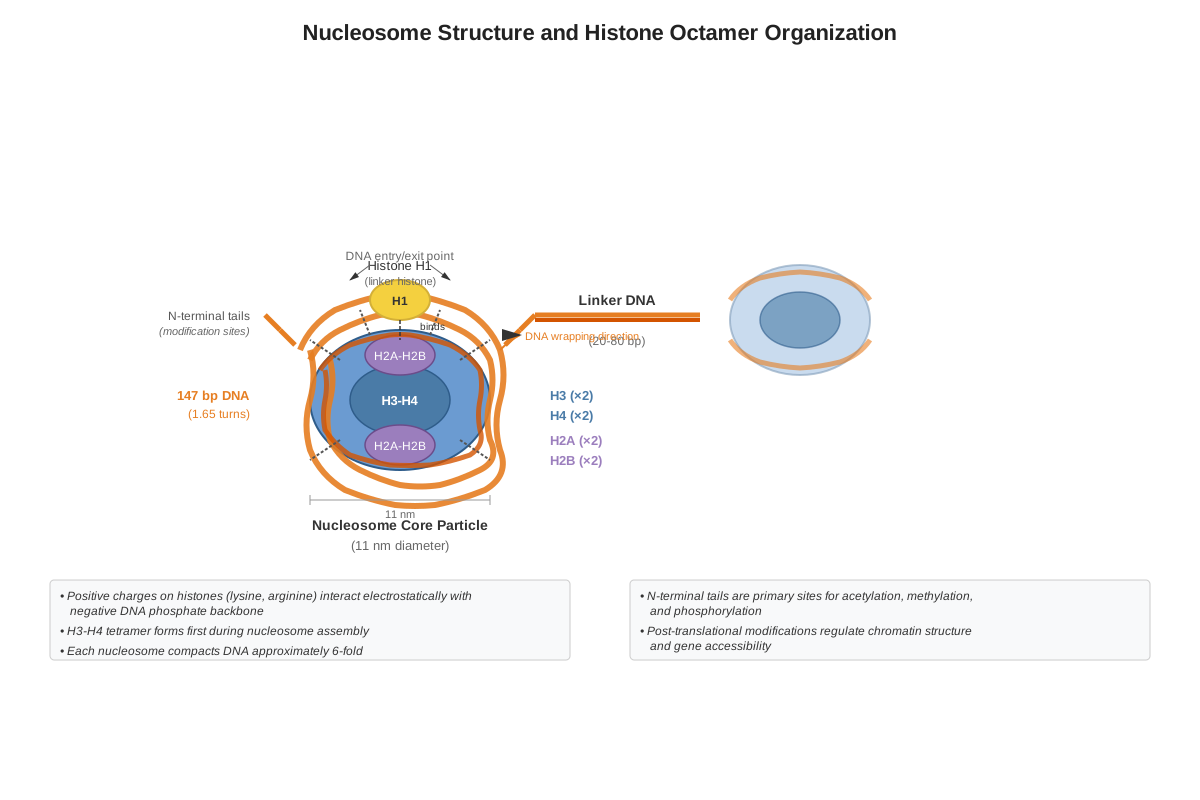
Histones are small, highly basic proteins rich in lysine and arginine residues, giving them a strong positive charge at physiological pH. This positive charge enables electrostatic attraction to the negatively charged DNA phosphate backbone, forming the foundation of chromatin structure. Five major histone types exist in eukaryotic cells: H1, H2A, H2B, H3, and H4. The core histones (H2A, H2B, H3, and H4) form the structural foundation of nucleosomes, while H1 serves as a linker histone that stabilizes higher-order chromatin structures.
Each core histone contains a characteristic "histone fold" domain consisting of three alpha helices connected by loops. This conserved structural motif enables histone-histone interactions essential for nucleosome assembly. The N-terminal "tails" of histones extend outward from the nucleosome core and serve as primary sites for post-translational modifications that regulate chromatin function. These tails are particularly rich in lysine residues, making them targets for acetylation and methylation.
Nucleosome Structure and Organization
The nucleosome represents the fundamental repeating unit of chromatin, consisting of approximately 147 base pairs of DNA wrapped 1.65 turns around an octameric histone core. This histone octamer contains two copies each of H2A, H2B, H3, and H4, arranged as a central (H3-H4)₂ tetramer flanked by two H2A-H2B dimers. The DNA makes numerous contacts with the histone octamer through electrostatic interactions between the positively charged histone proteins and the negatively charged DNA phosphate groups.
Nucleosomes are connected by "linker DNA" segments of variable length (20-80 base pairs), creating a "beads-on-a-string" structure visible under electron microscopy. The linker histone H1 binds to both the nucleosome core and linker DNA, stabilizing the structure and facilitating further compaction. This organization achieves approximately 6-fold compaction of DNA length, representing the first level of chromatin organization.
Chromatin Hierarchy and Compaction
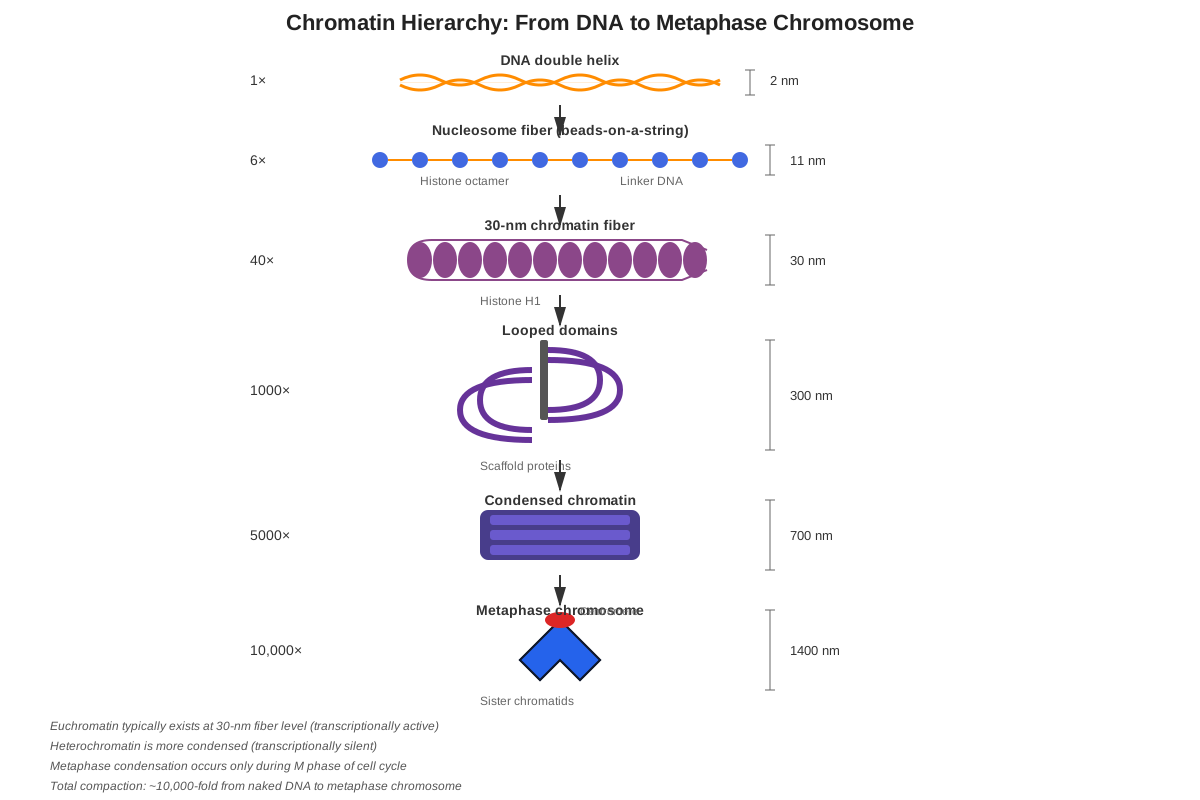
Chromatin exists in multiple levels of organization, achieving progressive compaction from the 2-nanometer DNA double helix to metaphase chromosomes visible under light microscopy:
- 10-nm fiber: The "beads-on-a-string" nucleosome array represents the least compacted chromatin form
- 30-nm fiber: Nucleosomes fold into a solenoid structure with approximately 6 nucleosomes per turn, achieving ~40-fold compaction
- Higher-order loops: The 30-nm fiber forms loops attached to a protein scaffold, further compacting DNA
- Condensed chromatin: During mitosis, chromatin condenses into visible chromosomes with ~10,000-fold total compaction
Two functionally distinct chromatin states exist: euchromatin (loosely packed, transcriptionally active) and heterochromatin (densely packed, transcriptionally silent). Euchromatin appears lighter under microscopy and contains actively transcribed genes with accessible DNA. Heterochromatin appears darker, contains silenced genes, and exists as constitutive heterochromatin (permanently silenced, such as centromeric regions) or facultative heterochromatin (conditionally silenced, such as the inactive X chromosome in female mammals).
Histone Post-Translational Modifications
Histone tails undergo numerous post-translational modifications that regulate chromatin structure and gene expression without altering DNA sequence—the basis of epigenetic regulation. The most significant modifications include:
| Modification | Effect on Chromatin | Transcriptional Impact | Key Enzymes |
|---|---|---|---|
| Acetylation | Loosens chromatin structure | Activates transcription | HATs (add), HDACs (remove) |
| Methylation | Context-dependent | Activates or represses | HMTs (add), HDMs (remove) |
| Phosphorylation | Loosens chromatin | Generally activating | Kinases (add), Phosphatases (remove) |
| Ubiquitination | Variable effects | Context-dependent | E3 ligases (add), DUBs (remove) |
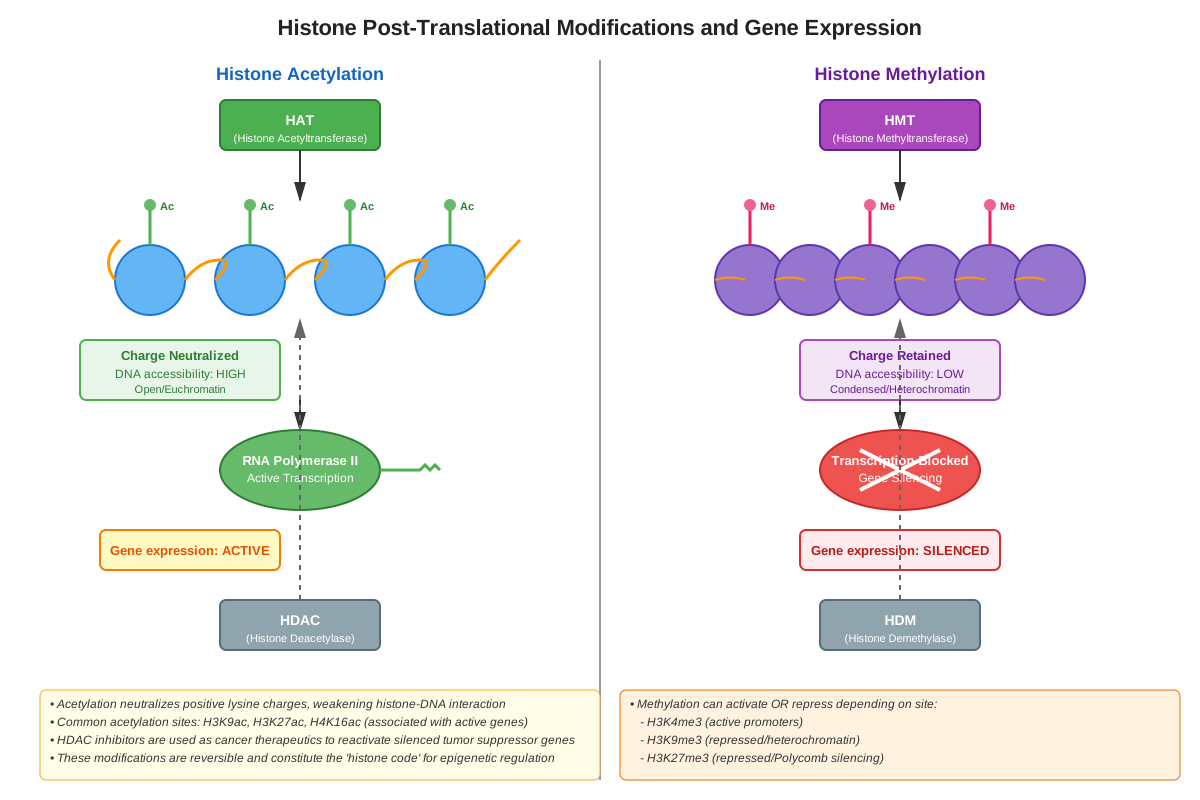
Histone acetylation, catalyzed by histone acetyltransferases (HATs), neutralizes positive charges on lysine residues, weakening histone-DNA interactions and promoting chromatin relaxation. This modification is strongly associated with transcriptional activation and is reversible through histone deacetylases (HDACs). Acetylated histones also serve as binding sites for bromodomain-containing proteins that recruit additional transcriptional machinery.
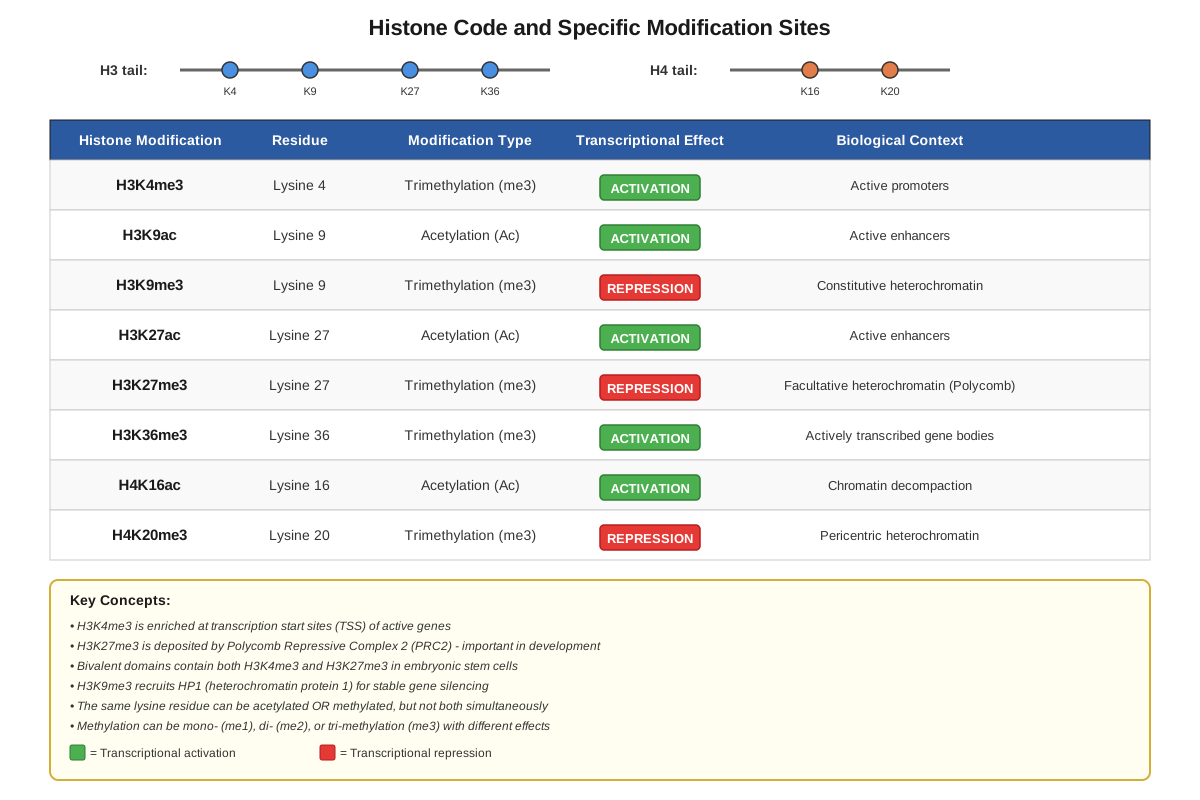
Histone methylation presents greater complexity, as lysine residues can be mono-, di-, or trimethylated, and different methylation sites produce opposite effects. For example, H3K4me3 (trimethylation of lysine 4 on histone H3) marks active promoters, while H3K9me3 and H3K27me3 mark repressed chromatin. Unlike acetylation, methylation does not alter histone charge but creates binding sites for chromodomain-containing proteins that mediate downstream effects.
The Histone Code Hypothesis
The histone code hypothesis proposes that specific combinations of histone modifications create a "code" that determines chromatin state and gene expression patterns. This code is "read" by effector proteins containing specialized domains (bromodomains for acetylated lysines, chromodomains for methylated lysines) that recruit additional chromatin-modifying complexes or transcriptional machinery. This creates a self-reinforcing system where histone modifications recruit enzymes that propagate similar modifications, maintaining stable chromatin states through cell divisions.
Chromatin Remodeling Complexes
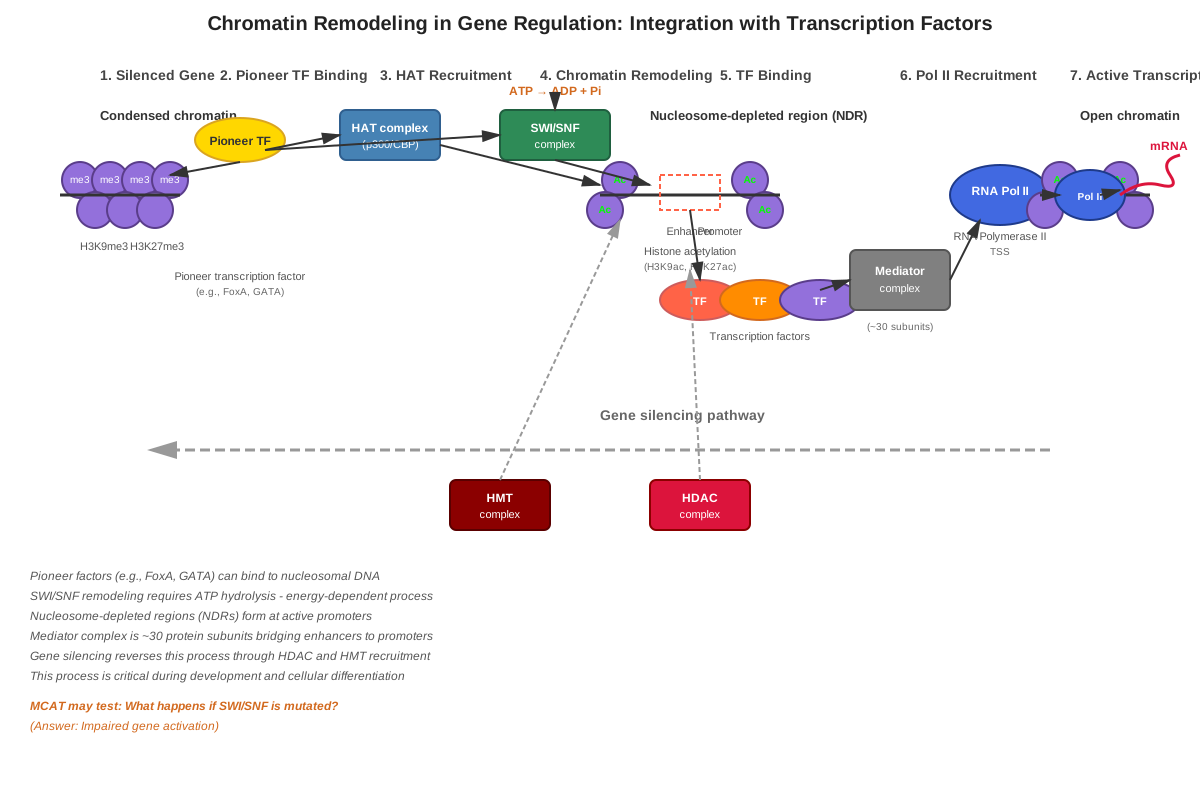
Chromatin remodeling complexes are ATP-dependent molecular machines that alter nucleosome positioning, composition, or structure without covalently modifying histones. These complexes use energy from ATP hydrolysis to:
- Slide nucleosomes along DNA, exposing or occluding regulatory sequences
- Eject nucleosomes entirely from specific DNA regions
- Replace canonical histones with histone variants (such as H2A.Z or H3.3)
- Restructure nucleosomes to alter DNA accessibility
Major remodeling complex families include SWI/SNF, ISWI, CHD, and INO80, each with distinct mechanisms and regulatory roles. These complexes work coordinately with histone-modifying enzymes to establish appropriate chromatin states for different cellular contexts.
Concept Relationships
Histone structure directly determines nucleosome formation, which establishes the foundation for all higher-order chromatin organization. The positive charge of histones (due to lysine and arginine content) → enables electrostatic binding to negatively charged DNA → forming nucleosomes → which organize into progressively compacted chromatin structures. This hierarchical organization creates the physical basis for gene regulation.
Post-translational histone modifications → alter chromatin structure and protein recruitment → affecting DNA accessibility → regulating transcription, replication, and repair. Specifically, histone acetylation → neutralizes positive charges → weakens DNA-histone interactions → promotes chromatin relaxation → increases transcriptional activity. Conversely, histone deacetylation → restores positive charges → strengthens DNA binding → promotes chromatin compaction → decreases transcriptional activity.
The relationship between histones and gene expression connects to broader molecular biology concepts: chromatin structure influences transcription factor access → affecting RNA polymerase recruitment → determining mRNA production → ultimately controlling protein expression. This links histone biology to cell differentiation, development, and disease processes. Additionally, histone modifications during DNA replication → ensure epigenetic information transmission → maintaining cell identity through divisions → connecting histones to inheritance patterns beyond DNA sequence.
Chromatin remodeling complexes and histone-modifying enzymes work coordinately: remodeling complexes → expose DNA regions → allowing transcription factor binding → recruiting histone acetyltransferases → creating permissive chromatin states → establishing stable gene expression patterns. This integrated system connects histones to signal transduction pathways, developmental programs, and cellular responses to environmental stimuli.
High-Yield Facts
⭐ Histones are positively charged proteins rich in lysine and arginine that bind negatively charged DNA through electrostatic interactions
⭐ The nucleosome core consists of an octamer containing two copies each of H2A, H2B, H3, and H4, with 147 base pairs of DNA wrapped around it
⭐ Histone acetylation neutralizes positive charges, loosens chromatin structure, and activates transcription
⭐ Histone methylation can either activate or repress transcription depending on which specific lysine residue is modified
⭐ Euchromatin is loosely packed and transcriptionally active, while heterochromatin is densely packed and transcriptionally silent
- Histone acetyltransferases (HATs) add acetyl groups while histone deacetylases (HDACs) remove them, creating reversible gene regulation
- H3K4me3 (trimethylation of histone H3 lysine 4) marks active gene promoters, while H3K9me3 and H3K27me3 mark repressed chromatin
- Linker histone H1 binds between nucleosomes and stabilizes higher-order chromatin structures
- Chromatin remodeling complexes use ATP hydrolysis to reposition nucleosomes without covalently modifying histones
- The histone code hypothesis proposes that combinations of modifications create binding sites for effector proteins that determine chromatin function
- Histone modifications are epigenetic marks that can be inherited through cell divisions without changing DNA sequence
- Bromodomain proteins recognize acetylated lysines while chromodomain proteins recognize methylated lysines
Quick check — test yourself on Histones so far.
Try Flashcards →Common Misconceptions
Misconception: All histone modifications have the same effect on gene expression.
Correction: Different histone modifications produce distinct and sometimes opposite effects. Acetylation generally activates transcription, but methylation can either activate (H3K4me3) or repress (H3K9me3, H3K27me3) depending on the specific residue modified. The functional outcome depends on which histone, which residue, and which modification type.
Misconception: Histones only serve structural roles in DNA packaging.
Correction: While histones do compact DNA, they also actively regulate gene expression, DNA replication, DNA repair, and chromosome segregation. Histone modifications create a dynamic regulatory system that responds to cellular signals and controls DNA accessibility for various nuclear processes.
Misconception: Histone acetylation and DNA methylation are the same process.
Correction: These are distinct modifications occurring on different molecules. Histone acetylation adds acetyl groups to lysine residues on histone proteins, generally activating transcription. DNA methylation adds methyl groups to cytosine bases in DNA (particularly CpG dinucleotides), generally repressing transcription. Both are epigenetic modifications but operate through different mechanisms.
Misconception: Heterochromatin is permanently inactive and never transcribed.
Correction: While constitutive heterochromatin (such as centromeric regions) remains permanently silenced, facultative heterochromatin can transition between active and inactive states depending on developmental stage and cellular context. The inactive X chromosome in female mammals exemplifies facultative heterochromatin that was once active.
Misconception: Histone modifications directly change DNA sequence.
Correction: Histone modifications are epigenetic changes that alter gene expression without changing the underlying DNA sequence. They affect how tightly DNA is packaged and which proteins can access specific DNA regions, but the nucleotide sequence remains unchanged. This distinction is crucial for understanding epigenetic inheritance.
Misconception: All nucleosomes are identical throughout the genome.
Correction: Nucleosomes vary in composition through incorporation of histone variants (such as H2A.Z, H3.3, or CENP-A) that confer specialized functions. Additionally, nucleosomes carry different modification patterns depending on their genomic location and functional context, creating diverse nucleosome "flavors" with distinct regulatory properties.
Worked Examples
Example 1: Predicting Transcriptional Effects of Histone Modifications
Question: Researchers treat cells with a histone deacetylase (HDAC) inhibitor and observe changes in gene expression. Which of the following best predicts the effect on a previously silent gene?
A) The gene will remain silent because DNA sequence is unchanged
B) The gene will become active because chromatin will become more relaxed
C) The gene will become more repressed because acetylation is prevented
D) The gene will be deleted because histones are removed from DNA
Solution:
Step 1: Identify what HDAC inhibitors do. HDACs normally remove acetyl groups from histones. An HDAC inhibitor prevents this removal, leading to increased histone acetylation.
Step 2: Determine the effect of increased acetylation. Acetylation neutralizes positive charges on lysine residues, weakening the electrostatic attraction between histones and negatively charged DNA. This loosens chromatin structure.
Step 3: Connect chromatin structure to transcription. Loosened chromatin (euchromatin) is more accessible to transcription factors and RNA polymerase, promoting transcriptional activation.
Step 4: Apply to a previously silent gene. If a gene was silent due to compact chromatin, increased acetylation would relax that chromatin, potentially allowing transcription.
Step 5: Evaluate answer choices:
- A is incorrect because epigenetic changes can alter expression without changing DNA sequence
- B is correct—increased acetylation relaxes chromatin and can activate previously silent genes
- C is incorrect because HDAC inhibitors increase (not prevent) acetylation
- D is incorrect because histones are modified, not removed, and DNA is not deleted
Answer: B
This question tests understanding of the relationship between histone modifications, chromatin structure, and gene expression—a high-yield MCAT concept.
Example 2: Analyzing Chromatin States During Development
Question: During embryonic development, a pluripotent stem cell differentiates into a neuron. Genes encoding muscle-specific proteins become permanently silenced through increased H3K9me3 modifications and DNA compaction. This chromatin state is best described as:
A) Euchromatin, because the genes were previously active
B) Facultative heterochromatin, because the silencing is reversible
C) Constitutive heterochromatin, because the silencing is permanent in that cell lineage
D) Nucleosome-free regions, because the genes are inactive
Solution:
Step 1: Identify the chromatin modification. H3K9me3 (trimethylation of histone H3 lysine 9) is a repressive mark associated with heterochromatin formation and gene silencing.
Step 2: Determine if the silencing is permanent or reversible. The question states genes become "permanently silenced" in the differentiated neuron. However, we must distinguish between permanent in that cell lineage versus permanent across all cells.
Step 3: Understand heterochromatin types:
- Constitutive heterochromatin: permanently silenced in all cells (centromeres, telomeres)
- Facultative heterochromatin: conditionally silenced, can be reactivated or differs between cell types
Step 4: Apply to the scenario. Muscle genes are silenced in neurons but remain active in muscle cells. This represents cell-type-specific silencing, not universal permanent silencing.
Step 5: Evaluate answer choices:
- A is incorrect because silenced, compacted chromatin is heterochromatin, not euchromatin
- B is incorrect because while facultative heterochromatin is cell-type-specific, the question emphasizes permanent silencing in that lineage
- C is correct—within the neuronal lineage, this silencing is permanent and stable through cell divisions, representing constitutive heterochromatin for that cell type
- D is incorrect because inactive genes still have nucleosomes; they're just in a compacted state
Answer: C
This question requires integrating chromatin biology with developmental concepts, testing whether students understand that "permanent" can be context-dependent and that heterochromatin classification depends on the cellular context being considered.
Exam Strategy
When approaching Histones MCAT questions, first identify whether the question focuses on structure (nucleosome composition, chromatin organization) or function (gene regulation, modifications). Structure questions typically ask about histone types, nucleosome components, or chromatin compaction levels. Function questions emphasize how modifications affect transcription or how chromatin states influence cellular processes.
Trigger words indicating histone content include: "chromatin," "nucleosome," "acetylation," "methylation," "euchromatin," "heterochromatin," "histone modification," "epigenetic," "chromatin remodeling," and "gene silencing." When you see these terms, immediately activate your histone knowledge framework and consider the relationship between chromatin structure and DNA accessibility.
For questions involving histone modifications, use this systematic approach:
- Identify the modification type (acetylation, methylation, phosphorylation)
- Determine the effect on charge (acetylation neutralizes positive charges)
- Predict the structural consequence (loosened or tightened chromatin)
- Connect to functional outcome (increased or decreased transcription)
Process-of-elimination strategies: Eliminate answers that confuse DNA modifications with histone modifications, that claim histone changes alter DNA sequence, or that reverse the relationship between chromatin structure and transcriptional activity. Be particularly cautious of answers suggesting all histone modifications have identical effects—this is almost always incorrect.
For passage-based questions, pay attention to experimental manipulations involving:
- HDAC inhibitors (increase acetylation → activate transcription)
- HAT inhibitors (decrease acetylation → repress transcription)
- Chromatin immunoprecipitation (ChIP) experiments identifying histone modifications at specific genes
- Comparisons between euchromatin and heterochromatin regions
Time allocation: Histone questions typically require 60-90 seconds. Spend 20-30 seconds identifying the core concept being tested, 30-40 seconds applying your knowledge framework, and 10-20 seconds eliminating wrong answers. If a question requires detailed passage analysis of experimental data, allocate up to 2 minutes but move on if you're uncertain—these questions often test the same concepts as simpler discrete questions.
Memory Techniques
Mnemonic for core histones: "Happy Histones Help Hold DNA" (H2A, H2B, H3, H4—the four core histones that form the octamer)
Mnemonic for histone octamer composition: "Two of Each" (2 copies each of H2A, H2B, H3, and H4)
Acetylation effect: "Acetylation = Activation" (both start with "Ac"). Visualize acetyl groups as tiny scissors cutting the electrostatic "ropes" binding DNA to histones, allowing DNA to unwind and become accessible.
Euchromatin vs. Heterochromatin: "Euchromatin = Euphoric genes (happy, active, expressed)" and "Heterochromatin = Heterogeneous/different/silent." Alternatively, remember "Eu = Easy to Unwind" and "Hetero = Hard, Tight."
Methylation complexity: "Methylation is More complicated" (can activate or repress depending on location). Visualize a traffic light: H3K4me3 = green light (go/active), H3K9me3 and H3K27me3 = red lights (stop/repressed).
Histone charge: Visualize histones as magnets with positive charges (blue) attracting the negative DNA (red). Acetylation paints over the blue positive charges with neutral gray, weakening the magnetic attraction.
Chromatin compaction levels: Use your hand as a memory device:
- Extended fingers = 10-nm fiber (beads-on-a-string)
- Loose fist = 30-nm fiber (solenoid)
- Tight fist = condensed chromatin
- Crossed arms = metaphase chromosome
Summary
Histones are positively charged proteins that package DNA into nucleosomes, the fundamental repeating units of chromatin consisting of 147 base pairs wrapped around an octamer of core histones (two copies each of H2A, H2B, H3, and H4). This organization achieves progressive DNA compaction through multiple hierarchical levels, from the 10-nm "beads-on-a-string" structure to condensed metaphase chromosomes. Beyond structural roles, histones actively regulate gene expression through post-translational modifications, particularly acetylation and methylation of N-terminal tail residues. Histone acetylation neutralizes positive charges, loosens chromatin structure, and activates transcription, while histone methylation produces context-dependent effects depending on which specific residue is modified. Euchromatin represents loosely packed, transcriptionally active chromatin, whereas heterochromatin represents densely packed, transcriptionally silent chromatin. The histone code hypothesis proposes that specific combinations of modifications create binding sites for effector proteins that determine chromatin function. For the MCAT, students must understand the mechanistic relationships between histone modifications, chromatin structure, and gene expression, as these concepts frequently appear in passages involving epigenetics, development, and gene regulation.
Key Takeaways
- Histones are positively charged proteins that bind negatively charged DNA through electrostatic interactions, forming nucleosomes that compact DNA and regulate gene expression
- The nucleosome core contains an octamer of two copies each of H2A, H2B, H3, and H4, with 147 base pairs of DNA wrapped around it
- Histone acetylation neutralizes positive charges, loosens chromatin, and activates transcription; histone methylation can either activate or repress transcription depending on the specific residue modified
- Euchromatin is loosely packed and transcriptionally active, while heterochromatin is densely packed and transcriptionally silent
- Histone modifications are epigenetic marks that regulate gene expression without changing DNA sequence and can be inherited through cell divisions
- The relationship between chromatin structure and DNA accessibility determines transcriptional activity: relaxed chromatin allows transcription factor access, while compact chromatin restricts it
- MCAT questions frequently test the mechanistic connection between histone modifications, chromatin structure changes, and functional outcomes in gene expression
Related Topics
DNA Methylation and Epigenetics: Histone modifications work coordinately with DNA methylation to establish stable gene expression patterns. Mastering histones provides the foundation for understanding broader epigenetic regulatory mechanisms.
Transcriptional Regulation: Chromatin structure directly influences transcription factor access and RNA polymerase recruitment. Understanding histones is essential for comprehending how gene expression is controlled at the chromatin level.
Cell Cycle and Chromosome Condensation: Histone modifications change dynamically during the cell cycle, with maximal chromatin condensation occurring during mitosis. This connects histone biology to cell division mechanisms.
Development and Differentiation: Cell-type-specific gene expression patterns are established and maintained through histone modifications and chromatin remodeling. Histone knowledge enables understanding of how pluripotent cells differentiate into specialized cell types.
Cancer Biology: Aberrant histone modifications contribute to oncogenesis, and HDAC inhibitors serve as cancer therapeutics. This clinical connection makes histones relevant for understanding disease mechanisms.
Practice CTA
Now that you've mastered the core concepts of histone structure, modifications, and function, test your understanding with practice questions and flashcards. Focus on questions that require you to predict functional outcomes from structural changes—this mirrors how the MCAT tests histone concepts. Remember, understanding the mechanistic relationships between histone modifications, chromatin structure, and gene expression will enable you to tackle any histone-related question confidently. You've built a strong foundation in this high-yield topic—now reinforce it through active practice!
Sign up free to keep reading
Create a free AnvayaPrep account to finish this MCAT guide on Histones — plus flashcards and practice questions.