Overview
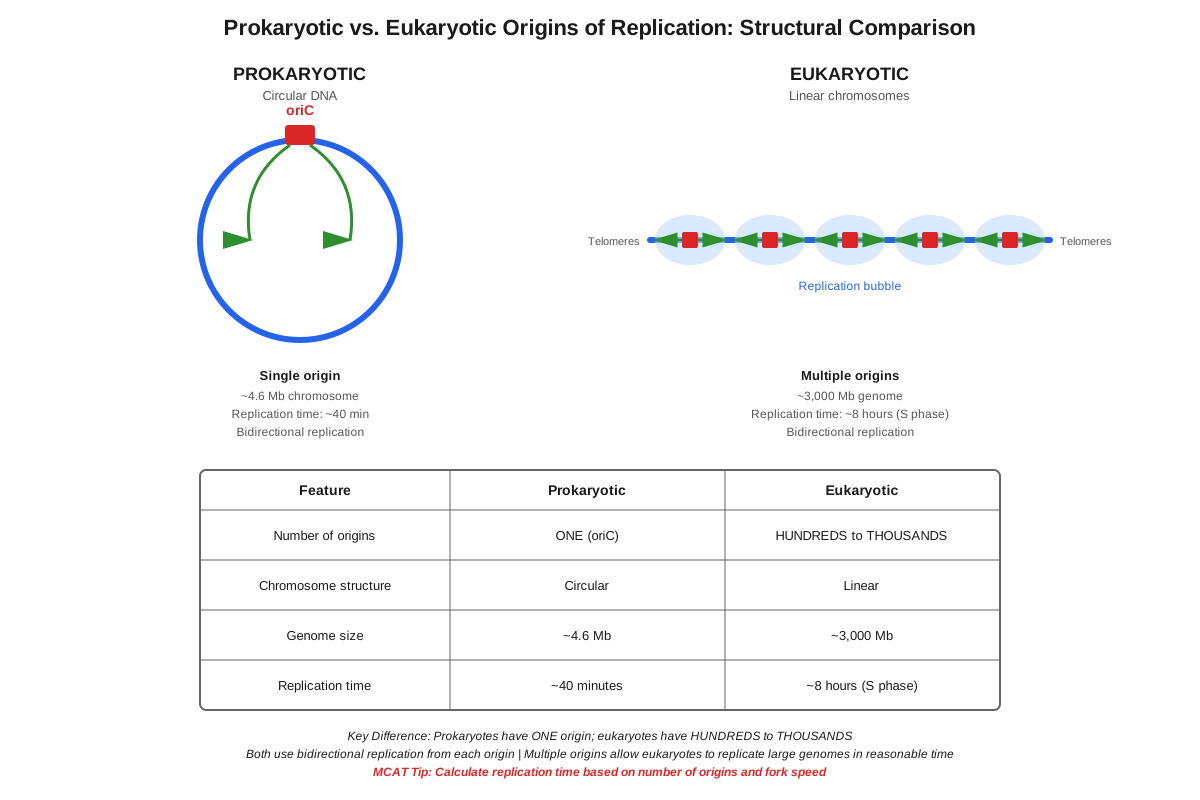
Origins of replication are specific DNA sequences where the process of DNA replication initiates. These sites serve as the molecular "starting points" where the cellular machinery assembles to duplicate the entire genome before cell division. In prokaryotes, a single origin of replication (oriC) suffices for the relatively small circular chromosome, while eukaryotes require multiple origins of replication distributed across their much larger, linear chromosomes. Understanding origins of replication is fundamental to grasping how cells maintain genetic continuity across generations and how replication is coordinated with the cell cycle.
For the MCAT, origins of replication represent a high-yield topic within Molecular Biology and Genetics that frequently appears in both passage-based and discrete questions. The exam tests not only the structural features of these sites but also the functional differences between prokaryotic and eukaryotic replication initiation, the proteins involved in recognizing and binding these sequences, and the regulatory mechanisms that ensure replication occurs only once per cell cycle. Questions often integrate this topic with cell cycle regulation, DNA structure, and enzyme function, making it a nexus for testing multiple concepts simultaneously.
The significance of origins of replication extends beyond basic replication mechanics to connect with broader Biology themes including gene regulation, cancer biology (where replication control is disrupted), and evolutionary adaptations. Mastery of this topic enables students to understand how organisms with vastly different genome sizes coordinate complete and accurate DNA duplication, why certain mutations lead to genomic instability, and how replication timing influences gene expression patterns. This foundational knowledge supports comprehension of more advanced topics in genetics, cell biology, and molecular medicine.
Learning Objectives
- [ ] Define Origins of replication using accurate Biology terminology
- [ ] Explain why Origins of replication matters for the MCAT
- [ ] Apply Origins of replication to exam-style questions
- [ ] Identify common mistakes related to Origins of replication
- [ ] Connect Origins of replication to related Biology concepts
- [ ] Compare and contrast prokaryotic and eukaryotic origins of replication in terms of number, structure, and regulation
- [ ] Describe the sequence of protein recruitment and assembly at origins of replication during replication initiation
- [ ] Analyze how defects in origin recognition or licensing contribute to disease states
Prerequisites
- DNA structure and organization: Understanding the double helix, antiparallel strands, and base pairing is essential for comprehending how replication machinery accesses and copies DNA
- Cell cycle phases: Knowledge of G1, S, G2, and M phases provides context for when and how replication is regulated
- Basic enzyme function: Familiarity with how enzymes catalyze reactions helps in understanding the roles of helicases, polymerases, and other replication proteins
- Prokaryotic vs. eukaryotic cell organization: Recognizing structural differences between these cell types explains why their replication strategies differ
- Semiconservative replication concept: The Meselson-Stahl experiment and the principle that each new DNA molecule contains one original and one new strand
Why This Topic Matters
Origins of replication have profound clinical and research significance. Cancer cells often exhibit dysregulated replication initiation, with some origins firing multiple times per cell cycle (re-replication) leading to gene amplification and genomic instability. Understanding origin licensing and firing helps explain how chemotherapeutic agents like gemcitabine target rapidly dividing cells. Additionally, certain genetic disorders such as Meier-Gorlin syndrome result from mutations in origin recognition complex (ORC) components, causing growth retardation and developmental abnormalities.
On the MCAT, this topic appears with moderate to high frequency, typically in 2-4 questions per exam. Questions commonly take three forms: (1) passage-based questions presenting experimental data about replication timing or origin mapping studies, (2) discrete questions testing knowledge of prokaryotic versus eukaryotic differences, and (3) integrated questions combining replication origins with cell cycle checkpoints or DNA repair mechanisms. The AAMC particularly favors questions that require students to interpret graphs showing replication fork progression or to predict outcomes when specific replication proteins are mutated or inhibited.
Exam passages frequently present scenarios involving replication in different organisms (bacteria vs. yeast vs. mammalian cells), replication stress conditions, or experimental manipulations of origin function. Students must recognize that questions about "replication initiation sites," "autonomously replicating sequences (ARS)," or "replication licensing" all refer to concepts directly related to origins of replication. The topic also appears in questions about DNA damage responses, as stalled replication forks at origins trigger checkpoint activation.
Core Concepts
Definition and Basic Structure
Origins of replication are specific DNA sequences recognized by initiator proteins that serve as assembly sites for the replication machinery. These sequences are characterized by AT-rich regions, which facilitate DNA unwinding due to the weaker hydrogen bonding between adenine and thymine (two bonds) compared to guanine and cytosine (three bonds). The AT-rich nature reduces the energy required for the initial strand separation that must occur before replication can proceed.
In prokaryotes, the origin of replication is called oriC (origin of chromosomal replication) and spans approximately 250 base pairs in E. coli. This single origin contains multiple copies of two types of recognition sequences: DnaA boxes (9 bp sequences that bind the initiator protein DnaA) and DUE (DNA Unwinding Element) regions rich in AT base pairs. In contrast, eukaryotic origins are more numerous and less well-conserved in sequence, though they share functional characteristics including AT-richness and the presence of binding sites for the Origin Recognition Complex (ORC).
Prokaryotic Origins of Replication
The prokaryotic replication system exemplifies elegant simplicity. The single oriC in bacteria like E. coli initiates bidirectional replication, with two replication forks proceeding in opposite directions around the circular chromosome until they meet at the terminus region approximately 180 degrees from the origin. This arrangement allows the entire 4.6 million base pair E. coli genome to be replicated in approximately 40 minutes under optimal conditions.
The initiation process at oriC follows a defined sequence:
- DnaA protein binding: Multiple DnaA proteins (in their ATP-bound active form) bind to the DnaA boxes at oriC
- DNA unwinding: The DnaA-ATP complex causes localized unwinding at the AT-rich DUE region
- DnaB helicase loading: DnaC protein helps load the DnaB helicase onto the unwound DNA
- Primase recruitment: DnaG primase associates with DnaB to form the primosome
- Replication fork establishment: DNA polymerase III holoenzyme is recruited, and bidirectional replication begins
The regulation of prokaryotic replication ensures it occurs only once per cell cycle through several mechanisms: DnaA-ATP is converted to inactive DnaA-ADP after initiation, newly replicated DNA is temporarily hemimethylated (methylated on only one strand) which prevents re-initiation, and the SeqA protein binds hemimethylated oriC to block premature re-binding of DnaA.
Eukaryotic Origins of Replication
Eukaryotic genomes require multiple origins of replication due to their substantially larger size—the human genome contains approximately 3 billion base pairs across 46 chromosomes. With DNA polymerase synthesizing at roughly 50 nucleotides per second (much slower than prokaryotic polymerases), a single origin would require weeks to replicate the entire genome. Instead, eukaryotes employ 30,000-50,000 origins that fire (initiate replication) at different times during S phase.
Eukaryotic origins were first characterized in the yeast Saccharomyces cerevisiae, where they are called Autonomously Replicating Sequences (ARS). These sequences contain an 11 bp AT-rich consensus sequence (ARS Consensus Sequence or ACS) and several auxiliary elements. In higher eukaryotes, origins are less defined by specific sequences and more by chromatin context, epigenetic marks, and DNA topology.
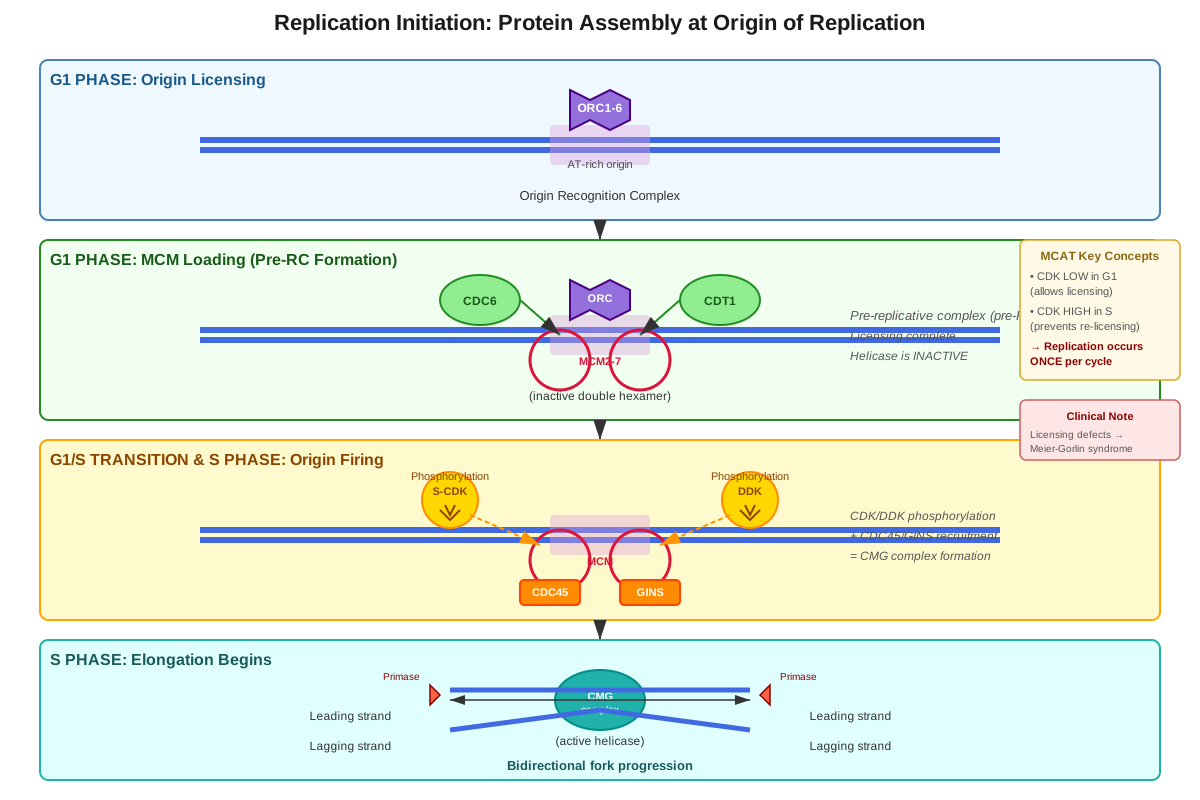
The eukaryotic initiation process involves a two-step mechanism that separates origin licensing (making origins competent for replication) from origin firing (actual initiation):
Licensing (G1 phase):
- ORC binding: The six-subunit Origin Recognition Complex binds to origin DNA throughout the cell cycle
- Cdc6 and Cdt1 recruitment: These licensing factors are loaded onto ORC-bound origins
- MCM2-7 loading: The MCM (Mini-Chromosome Maintenance) complex, a hexameric helicase, is loaded onto DNA in an inactive form, creating the pre-replicative complex (pre-RC)
Firing (S phase):
- CDK and DDK activation: Cyclin-dependent kinases (CDKs) and Dbf4-dependent kinase (DDK) phosphorylate pre-RC components
- Helicase activation: MCM2-7 associates with Cdc45 and GINS proteins to form the active CMG helicase complex
- Replisome assembly: DNA polymerases α, δ, and ε are recruited along with accessory factors
- Bidirectional replication: Two replication forks proceed away from the origin
Replication Licensing and the Once-Per-Cell-Cycle Rule
A critical feature of eukaryotic replication is ensuring each chromosomal region replicates exactly once per cell cycle—neither under-replication (which would cause chromosome breaks) nor over-replication (which would cause gene amplification and aneuploidy) is tolerated. This is achieved through replication licensing, a regulatory system that temporally separates origin licensing from origin firing.
The key regulatory principle is that licensing factors (Cdc6, Cdt1) are only present and active during G1 phase when CDK activity is low, while firing factors (high CDK activity) are only present during S phase. This creates mutually exclusive windows: origins can be licensed but not fired in G1, and can be fired but not re-licensed in S/G2/M phases. Multiple mechanisms enforce this separation:
- CDK-mediated phosphorylation: High CDK activity in S/G2/M phases phosphorylates Cdc6 (targeting it for degradation) and inhibits Cdt1
- Geminin protein: Accumulates during S/G2/M and directly binds and inhibits Cdt1
- Cdt1 degradation: CRL4-Cdt2 ubiquitin ligase targets Cdt1 for proteasomal degradation during S phase
- MCM export: After origin firing, MCM complexes travel with replication forks and are eventually exported from the nucleus
Origin Selection and Timing
Not all licensed origins fire during every S phase—in mammalian cells, approximately twice as many origins are licensed as actually fire. Origins are classified as early-firing or late-firing based on when during S phase they initiate replication. This temporal program is not random but correlates with chromatin structure and gene activity:
| Origin Type | Timing | Chromatin State | Gene Activity | Examples |
|---|---|---|---|---|
| Early-firing | Early S phase | Open, euchromatin | Transcriptionally active | Housekeeping genes |
| Late-firing | Late S phase | Condensed, heterochromatin | Transcriptionally silent | Centromeric regions, inactive X |
The mechanisms determining origin timing involve epigenetic modifications (histone acetylation promotes early firing), nuclear organization (early origins are near nuclear pores), and the availability of limiting initiation factors. Understanding origin timing is clinically relevant because replication stress—conditions that slow fork progression—particularly affects late-replicating regions, leading to chromosome fragility at common fragile sites associated with cancer.
Comparison Table: Prokaryotic vs. Eukaryotic Origins
| Feature | Prokaryotic | Eukaryotic |
|---|---|---|
| Number per genome | 1 (typically) | 30,000-50,000 (human) |
| Sequence specificity | Highly conserved (oriC) | Less conserved; context-dependent |
| Size | ~250 bp | Variable; 100-1000 bp |
| AT-richness | Yes (DUE region) | Yes (facilitates unwinding) |
| Initiator protein | DnaA | ORC (6 subunits) |
| Helicase | DnaB | MCM2-7 complex |
| Regulation | DnaA-ATP/ADP ratio, SeqA | Licensing/firing separation, CDK |
| Replication rate | ~1000 nt/sec | ~50 nt/sec |
| Bidirectional | Yes | Yes |
Concept Relationships
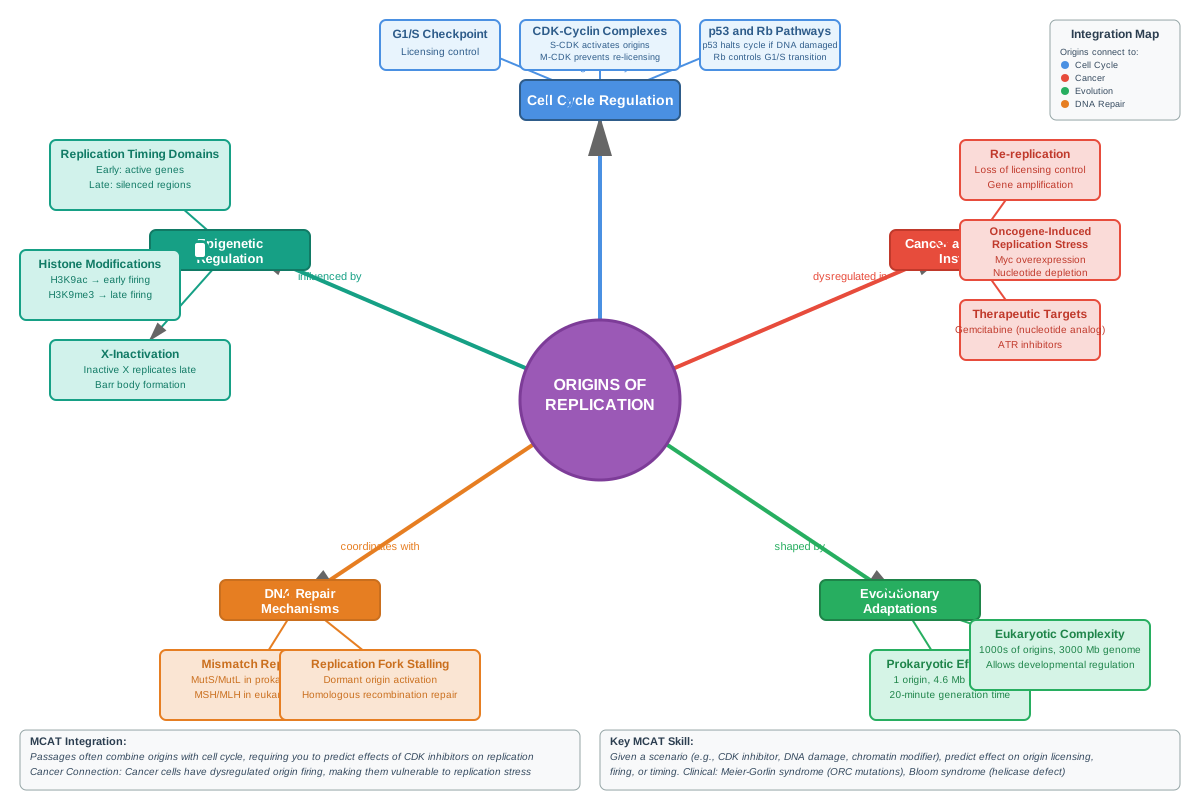
The concepts within origins of replication form an interconnected network centered on the initiation of DNA synthesis. At the foundation lies the DNA sequence of origins themselves, characterized by AT-richness, which determines where initiator proteins bind. This sequence recognition → leads to → protein complex assembly (DnaA in prokaryotes, ORC in eukaryotes), which → leads to → helicase loading (DnaB or MCM2-7), which → leads to → DNA unwinding and replication fork establishment.
In eukaryotes, an additional regulatory layer exists: origin licensing (pre-RC formation in G1) → must precede → origin firing (replication initiation in S phase), with this temporal separation → enforced by → cell cycle-dependent kinase activity (low CDK in G1, high CDK in S). The once-per-cell-cycle rule → depends on → this licensing/firing separation, which → prevents → re-replication and genomic instability.
Connections to prerequisite topics include: DNA structure → determines → the AT-rich sequences that facilitate unwinding; cell cycle phases → regulate → when licensing and firing can occur; enzyme function → explains → how helicases, polymerases, and kinases catalyze specific steps. Connections to related topics include: origins of replication → enable → semiconservative replication; defects in origin regulation → contribute to → cancer (through re-replication and gene amplification); origin firing → can be blocked by → DNA damage checkpoints; and replication from multiple origins → requires → Okazaki fragment synthesis on lagging strands between origins.
The relationship between prokaryotic and eukaryotic systems illustrates evolutionary adaptation: the single origin strategy → is sufficient for → small circular genomes, while multiple origins → are necessary for → large linear chromosomes, with this increased complexity → requiring → more sophisticated regulatory mechanisms (licensing system) to maintain replication fidelity.
Quick check — test yourself on Origins of replication so far.
Try Flashcards →High-Yield Facts
⭐ Prokaryotes typically have a single origin of replication (oriC), while eukaryotes have thousands to tens of thousands of origins distributed across their chromosomes.
⭐ Origins of replication are characterized by AT-rich sequences because A-T base pairs (with two hydrogen bonds) are easier to separate than G-C base pairs (with three hydrogen bonds).
⭐ The Origin Recognition Complex (ORC) binds to eukaryotic origins throughout the cell cycle and serves as the landing platform for licensing factors.
⭐ Replication licensing (pre-RC formation) occurs in G1 phase when CDK activity is low, while origin firing occurs in S phase when CDK activity is high, ensuring replication occurs only once per cell cycle.
⭐ The MCM2-7 complex is the eukaryotic replicative helicase that is loaded onto origins during licensing and activated during firing.
- DnaA protein is the prokaryotic initiator that binds to DnaA boxes at oriC in its ATP-bound active form.
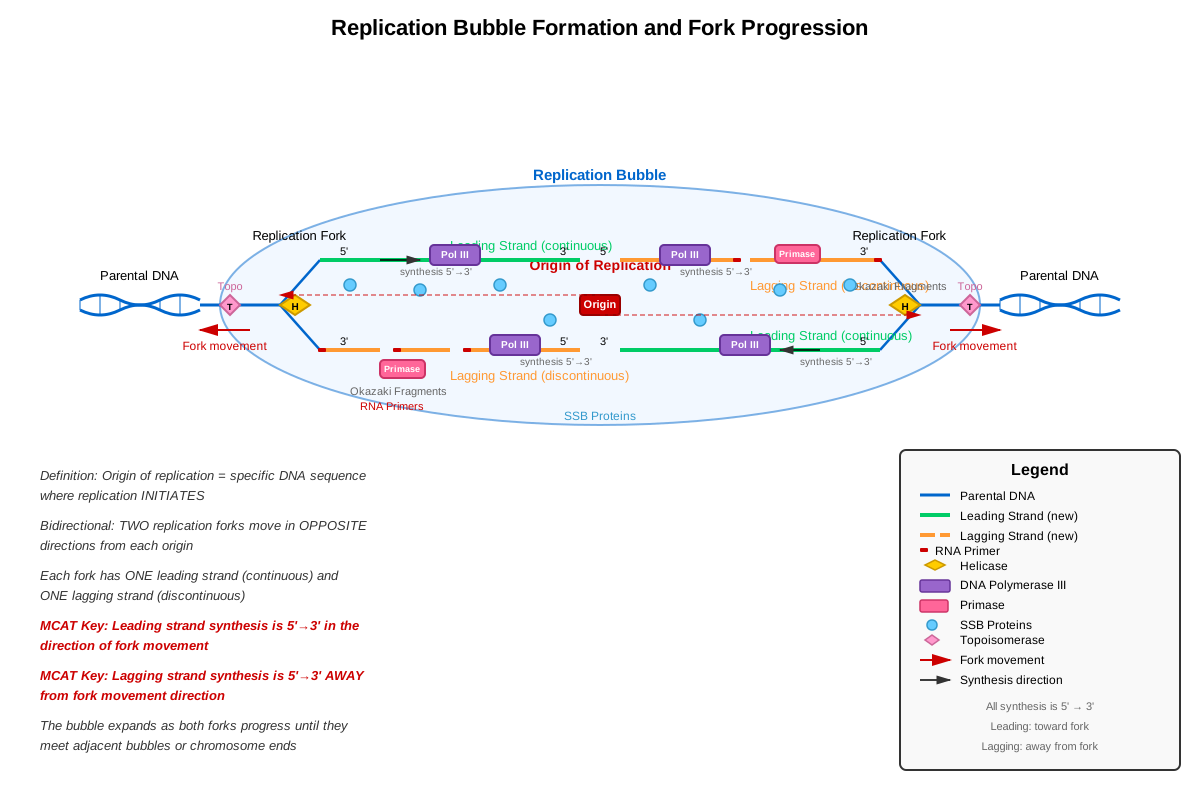
- Bidirectional replication means two replication forks proceed in opposite directions from each origin.
- Geminin protein inhibits Cdt1 during S/G2/M phases, preventing re-licensing of origins that have already fired.
- Early-firing origins are typically in euchromatin and associated with active genes, while late-firing origins are in heterochromatin.
- Autonomously Replicating Sequences (ARS) in yeast were the first eukaryotic origins to be characterized and can support plasmid replication.
- The pre-replicative complex (pre-RC) consists of ORC, Cdc6, Cdt1, and MCM2-7 loaded onto origin DNA.
- Replication stress (conditions that slow fork progression) can cause origin firing from normally dormant origins as a backup mechanism.
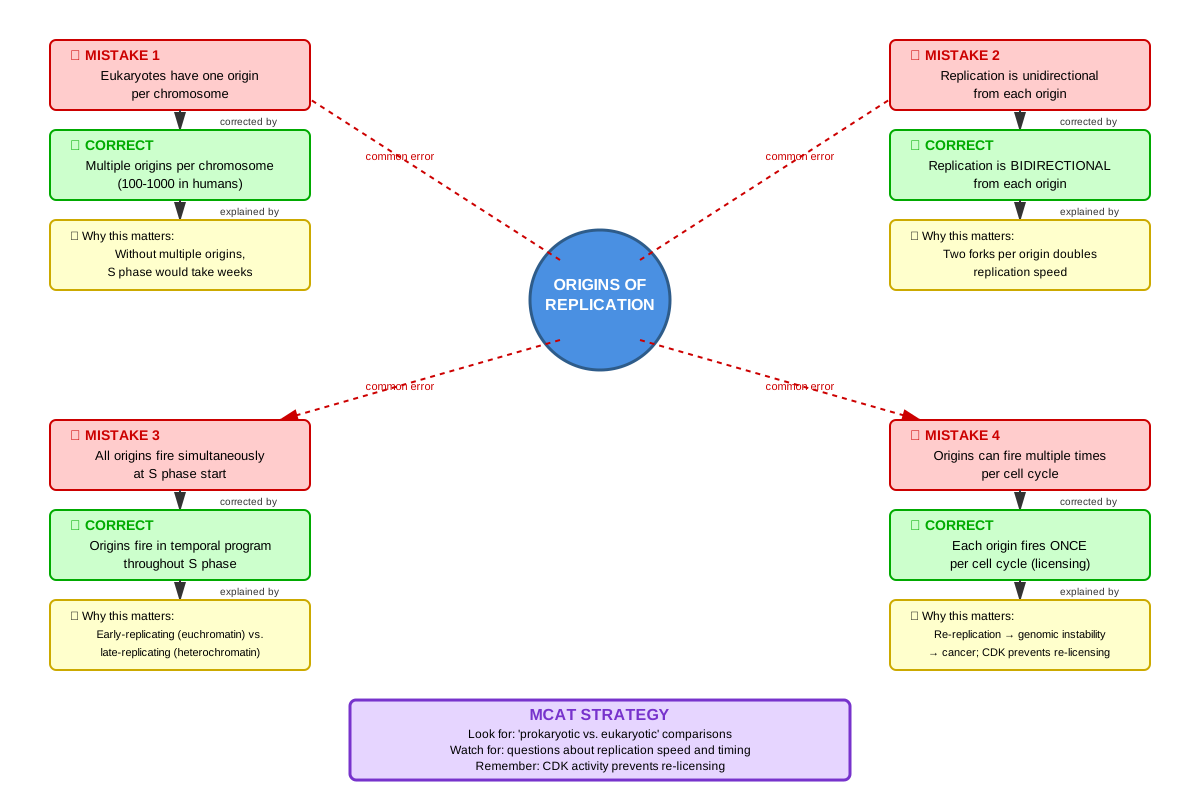
Common Misconceptions
Misconception: All licensed origins fire during every S phase.
Correction: In mammalian cells, approximately twice as many origins are licensed as actually fire. Many origins remain dormant unless replication stress activates them as backups. This provides flexibility and ensures complete genome replication even when some forks stall.
Misconception: Eukaryotic origins have highly conserved consensus sequences like prokaryotic oriC.
Correction: While yeast ARS elements have recognizable consensus sequences, origins in higher eukaryotes are much less defined by specific sequences. Instead, origin function depends more on chromatin context, epigenetic modifications, and DNA topology. The ORC recognizes structural features rather than strict sequence motifs.
Misconception: The MCM2-7 complex is only loaded onto DNA during S phase when replication occurs.
Correction: MCM2-7 loading occurs during G1 phase as part of origin licensing, creating the pre-RC. The complex remains inactive until S phase, when CDK and DDK phosphorylation converts it into the active CMG helicase. This temporal separation between loading and activation is crucial for preventing re-replication.
Misconception: Prokaryotic replication is faster than eukaryotic replication primarily because prokaryotes have smaller genomes.
Correction: While genome size affects total replication time, the rate difference is primarily due to polymerase speed—prokaryotic DNA polymerase III synthesizes at ~1000 nt/sec versus ~50 nt/sec for eukaryotic polymerases. Eukaryotes compensate for slower polymerases by using multiple origins. The smaller genome size in prokaryotes allows them to use a single origin, but the fundamental speed difference is enzymatic.
Misconception: Once an origin fires, it can fire again later in the same S phase if needed.
Correction: The once-per-cell-cycle rule strictly prevents re-firing of origins within the same cell cycle. After firing, licensing factors are degraded or inhibited, and MCM complexes travel with forks away from the origin. Re-licensing cannot occur until the cell passes through mitosis and enters the next G1 phase with low CDK activity.
Misconception: AT-rich regions are origins of replication.
Correction: While origins are AT-rich, not all AT-rich regions are origins. Origins require specific arrangements of AT-rich sequences along with binding sites for initiator proteins (DnaA boxes in prokaryotes, ORC binding sites in eukaryotes) and proper chromatin context in eukaryotes. AT-richness is necessary but not sufficient for origin function.
Worked Examples
Example 1: Experimental Analysis of Origin Function
Question: Researchers studying yeast replication create a mutant strain in which Cdc6 protein cannot be degraded and remains active throughout the cell cycle. They observe that some chromosomal regions show increased DNA content (more than 2 copies per cell). Which of the following best explains this observation?
A) Increased Cdc6 causes faster replication fork progression
B) Persistent Cdc6 allows re-licensing and re-replication of some origins
C) Cdc6 stabilization prevents origin firing in S phase
D) Continuous Cdc6 activity blocks the G2/M checkpoint
Reasoning Process:
First, recall Cdc6's normal function: it's a licensing factor that helps load MCM2-7 onto origins during G1 phase to form the pre-RC. Normally, Cdc6 is degraded or inactivated during S/G2/M phases to prevent re-licensing.
Second, consider what happens if Cdc6 remains active throughout the cell cycle: the temporal separation between licensing (G1) and firing (S) would be disrupted. Origins that have already fired could potentially be re-licensed while CDK activity is still high.
Third, analyze the observation: "increased DNA content" and "more than 2 copies per cell" indicates re-replication—some DNA regions have been copied more than once in a single cell cycle.
Evaluate each option:
- A is incorrect: Cdc6 is involved in licensing, not fork progression speed
- B is correct: persistent Cdc6 would allow re-licensing of fired origins, leading to re-replication
- C is incorrect: Cdc6 promotes rather than prevents replication
- D is incorrect: while there might be checkpoint effects, this doesn't directly explain the increased DNA content
Answer: B
Connection to learning objectives: This question requires applying knowledge of origin licensing regulation to predict experimental outcomes, demonstrating understanding of how the once-per-cell-cycle rule is enforced.
Example 2: Comparative Biology Question
Question: A bacterial cell with a 4 million base pair circular chromosome completes replication in 40 minutes, while a human cell with a 6 billion base pair genome completes replication in approximately 8 hours. If both organisms' DNA polymerases synthesized at the same rate, approximately how many origins of replication would the human cell need to match the bacterial replication time?
Reasoning Process:
Step 1: Calculate the bacterial replication rate
- 4 million bp / 40 minutes = 100,000 bp/minute from one origin
- Since replication is bidirectional, this is 50,000 bp/minute per fork
- Two forks from one origin = 100,000 bp/minute total
Step 2: Determine what's needed for human genome
- Human genome: 6 billion bp = 6,000 million bp
- To replicate in 40 minutes: 6,000 million bp / 40 minutes = 150 million bp/minute needed
Step 3: Calculate number of origins required
- Each origin provides 100,000 bp/minute (same as bacteria)
- Number of origins = 150 million bp/minute ÷ 100,000 bp/minute per origin
- Number of origins = 1,500 origins
Step 4: Reality check
- Humans actually use 30,000-50,000 origins and take 8 hours (480 minutes)
- This is because eukaryotic polymerases are actually ~20× slower than prokaryotic ones
- The question asks what would be needed if rates were equal
Answer: Approximately 1,500 origins would be needed if polymerase rates were equal.
Connection to learning objectives: This problem integrates understanding of prokaryotic vs. eukaryotic replication strategies, the relationship between genome size and origin number, and bidirectional replication from origins.
Exam Strategy
When approaching MCAT questions on origins of replication, first identify whether the question concerns prokaryotic or eukaryotic systems—this distinction is frequently tested and determines which regulatory mechanisms apply. Look for trigger words: "bacterial," "E. coli," or "circular chromosome" indicate prokaryotic; "yeast," "mammalian," "chromatin," or "cell cycle phases" indicate eukaryotic.
For passage-based questions, pay special attention to experimental manipulations of replication proteins. Common scenarios include:
- Mutations or deletions of initiator proteins (DnaA, ORC subunits)
- Overexpression or stabilization of licensing factors (Cdc6, Cdt1)
- Kinase inhibition (CDK or DDK inhibitors)
- Replication timing experiments showing when different genomic regions replicate
When you see graphs showing DNA content over time or replication fork progression, remember that abnormal patterns (DNA content >4N, or regions replicating multiple times) suggest licensing defects allowing re-replication.
Process-of-elimination strategies specific to this topic:
- Eliminate answers that confuse licensing with firing: if a question asks about G1 phase events, answers mentioning DNA polymerase activity are likely wrong
- Eliminate answers that violate the once-per-cell-cycle rule: unless the question specifically describes a licensing defect, origins should fire only once
- Eliminate answers that assign prokaryotic mechanisms to eukaryotes or vice versa: DnaA is prokaryotic only; ORC and MCM are eukaryotic only
For timing questions, remember: licensing (G1) → firing (S) → no re-licensing until next G1. If CDK activity is mentioned, recall: low CDK = licensing possible, high CDK = firing possible but licensing blocked.
Allocate approximately 60-90 seconds for discrete questions on this topic, as they typically test straightforward definitional knowledge or simple comparisons. Passage-based questions may require 90-120 seconds, especially if they include experimental data interpretation. Don't get bogged down in memorizing every protein name—focus on the functional categories (initiators, helicases, licensing factors, kinases) and their roles.
Memory Techniques
Mnemonic for eukaryotic licensing factors: "ORC Calls Cdt1 to Move MCM"
- ORC binds origin
- Cdc6 is recruited
- Cdt1 loads
- MCM2-7 complex
Mnemonic for why licensing and firing are separated: "License in Low, Fire in High"
- Licensing occurs when CDK is Low (G1)
- Firing occurs when CDK is High (S phase)
Visualization strategy for bidirectional replication: Picture a zipper opening from the middle—the origin is the starting point where the zipper pull begins, and two "pulls" (replication forks) move in opposite directions. This helps remember that each origin produces two forks moving away from each other.
Acronym for prokaryotic initiation sequence: "DUHP" (sounds like "dupe," as in duplicate)
- DnaA binds
- Unwinding occurs
- Helicase (DnaB) loads
- Primase recruited
Memory aid for AT-richness: "AT = Apart Easily" (A-T base pairs come apart more easily than G-C pairs because they have only 2 hydrogen bonds versus 3)
Conceptual anchor for multiple eukaryotic origins: Think of a long highway construction project—one crew starting at one end would take forever, so multiple crews start at different points along the highway. Similarly, multiple origins allow the large eukaryotic genome to be replicated in reasonable time.
Summary
Origins of replication are specialized DNA sequences that serve as initiation sites for DNA synthesis, representing a fundamental concept in molecular biology essential for MCAT success. Prokaryotes typically employ a single origin (oriC) characterized by AT-rich sequences and DnaA binding sites, where the initiator protein DnaA recruits helicase DnaB to establish bidirectional replication forks. Eukaryotes require thousands of origins distributed across their larger genomes, with initiation regulated through a sophisticated two-step process: licensing in G1 phase (when ORC, Cdc6, and Cdt1 load the MCM2-7 helicase onto origins) and firing in S phase (when CDK and DDK activate the helicase). The temporal separation between licensing and firing, enforced by cell cycle-dependent kinase activity and licensing factor degradation, ensures each chromosomal region replicates exactly once per cell cycle. Understanding the structural features of origins (AT-richness, initiator binding sites), the functional differences between prokaryotic and eukaryotic systems, and the regulatory mechanisms preventing re-replication enables students to tackle diverse MCAT questions ranging from basic definitions to complex experimental scenarios involving replication timing, licensing defects, and cancer-related dysregulation.
Key Takeaways
- Origins of replication are AT-rich DNA sequences where replication initiates; prokaryotes have one origin while eukaryotes have thousands
- The Origin Recognition Complex (ORC) in eukaryotes and DnaA in prokaryotes are initiator proteins that recognize and bind origins
- Eukaryotic replication licensing (pre-RC formation with MCM2-7 loading) occurs in G1 when CDK is low; firing occurs in S phase when CDK is high
- The once-per-cell-cycle rule prevents re-replication through temporal separation of licensing and firing, with multiple mechanisms (Geminin, Cdt1 degradation, CDK phosphorylation) enforcing this separation
- Bidirectional replication from each origin produces two replication forks moving in opposite directions
- Early-firing origins correlate with euchromatin and active genes; late-firing origins correlate with heterochromatin
- Defects in origin licensing or firing regulation contribute to genomic instability and cancer through re-replication and gene amplification
Related Topics
DNA Replication Enzymes: Understanding helicases, primase, DNA polymerases, and ligase builds directly on origin knowledge, as these enzymes are recruited to origins and carry out the synthesis initiated there. Mastering origins enables comprehension of how the replisome assembles.
Cell Cycle Regulation: The G1/S checkpoint and CDK/cyclin complexes directly control origin licensing and firing. Understanding origins provides context for why cell cycle control is critical for preventing uncontrolled proliferation.
DNA Damage Response and Checkpoints: Replication stress at origins activates checkpoints through ATR/Chk1 signaling. Knowledge of origins helps explain why certain genomic regions (late-replicating, fragile sites) are particularly vulnerable to damage.
Cancer Biology: Many oncogenes and tumor suppressors affect origin licensing (e.g., Myc increases origin firing, p53 prevents re-replication). Understanding normal origin regulation illuminates how cancer cells bypass replication controls.
Telomeres and Chromosome Ends: The end-replication problem at telomeres relates to the inability to place origins at chromosome ends, requiring telomerase. This topic extends origin concepts to specialized chromosomal regions.
Practice CTA
Now that you've mastered the core concepts of origins of replication, it's time to reinforce your understanding through active practice. Challenge yourself with MCAT-style practice questions that test your ability to apply these concepts in novel contexts, distinguish between prokaryotic and eukaryotic mechanisms, and interpret experimental data. Use flashcards to drill the high-yield facts, particularly the regulatory mechanisms and protein names that frequently appear on the exam. Remember: understanding origins of replication isn't just about memorizing facts—it's about grasping the elegant regulatory logic that ensures faithful genome duplication. Your investment in mastering this topic will pay dividends across multiple MCAT questions and provide a foundation for advanced topics in genetics and cell biology. You've got this!
Sign up free to keep reading
Create a free AnvayaPrep account to finish this MCAT guide on Origins of replication — plus flashcards and practice questions.