Overview
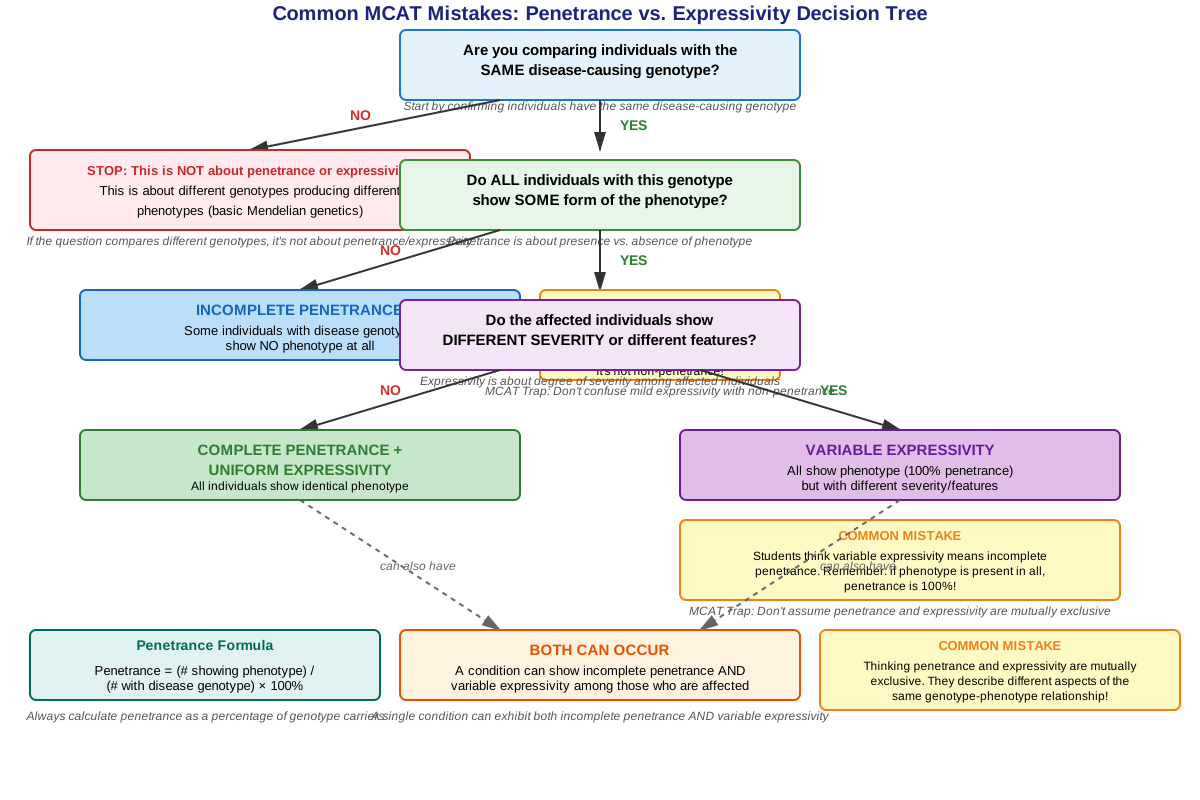
Penetrance and expressivity are two fundamental concepts in Molecular Biology and Genetics that describe the relationship between genotype and phenotype. While classical Mendelian genetics suggests a straightforward correlation between an individual's genetic makeup and observable traits, real-world inheritance patterns often demonstrate more complexity. Penetrance refers to the proportion of individuals carrying a particular disease-causing allele who actually express the associated phenotype, while expressivity describes the degree or severity to which a phenotype is expressed among individuals who do manifest it. These concepts explain why individuals with identical genotypes may display different phenotypic outcomes, a phenomenon critical for understanding human genetic diseases and inheritance patterns.
For the MCAT, penetrance and expressivity represent essential topics within Biology that bridge molecular genetics with clinical medicine. These concepts frequently appear in passage-based questions that present pedigree analysis, population genetics scenarios, or clinical vignettes involving genetic counseling. Understanding these principles allows test-takers to interpret complex inheritance patterns that deviate from simple Mendelian ratios and to predict disease risk in families with genetic conditions. The MCAT particularly emphasizes how environmental factors, genetic modifiers, and stochastic developmental events can influence phenotypic expression, making this topic a high-yield area for demonstrating integrated scientific reasoning.
The relationship between penetrance and expressivity extends to numerous other Biology concepts tested on the MCAT, including gene-environment interactions, epigenetics, polygenic inheritance, and population genetics. These concepts also connect to biochemical pathways, as the molecular mechanisms underlying variable expressivity often involve enzyme activity levels, protein stability, and metabolic compensation. Mastering penetrance and expressivity provides a framework for understanding why genetic testing results require careful interpretation and why family history alone cannot always predict disease manifestation.
Learning Objectives
- [ ] Define penetrance and expressivity using accurate Biology terminology
- [ ] Explain why penetrance and expressivity matters for the MCAT
- [ ] Apply penetrance and expressivity to exam-style questions
- [ ] Identify common mistakes related to penetrance and expressivity
- [ ] Connect penetrance and expressivity to related Biology concepts
- [ ] Calculate penetrance values from pedigree data and population statistics
- [ ] Distinguish between incomplete penetrance and variable expressivity in clinical scenarios
- [ ] Analyze how environmental and genetic modifiers influence phenotypic expression
- [ ] Predict inheritance patterns in families with conditions showing incomplete penetrance
Prerequisites
- Mendelian genetics and inheritance patterns: Understanding dominant, recessive, and codominant alleles provides the foundation for recognizing when inheritance deviates from expected patterns
- Genotype versus phenotype distinction: Recognizing that genetic information (genotype) does not always directly translate to observable characteristics (phenotype) is essential for grasping penetrance and expressivity
- Pedigree analysis basics: Ability to interpret family trees and identify inheritance patterns enables application of penetrance and expressivity concepts to real genetic scenarios
- Basic probability and statistics: Calculating penetrance percentages and interpreting population-level data requires fundamental mathematical skills
- Gene expression and regulation: Understanding how genes are transcribed and translated helps explain molecular mechanisms underlying variable phenotypic expression
Why This Topic Matters
Clinical and Real-World Significance
Penetrance and expressivity have profound implications for genetic counseling, disease risk assessment, and personalized medicine. Many important genetic conditions, including BRCA1/BRCA2-associated breast cancer, Huntington's disease, and various cancer predisposition syndromes, demonstrate incomplete penetrance. A woman carrying a BRCA1 mutation has approximately 70% lifetime risk of developing breast cancer—not 100%—illustrating incomplete penetrance. Similarly, conditions like neurofibromatosis type 1 show nearly complete penetrance but highly variable expressivity, with affected family members displaying dramatically different symptom severity despite carrying the same mutation. Understanding these concepts allows healthcare providers to communicate genetic risk accurately, avoiding both false reassurance and unnecessary alarm.
MCAT Exam Statistics and Question Types
Penetrance and expressivity appear in approximately 2-4 questions per MCAT administration, typically within passage-based questions in the Biological and Biochemical Foundations section. These questions often present pedigrees with unexpected inheritance patterns, population genetics data requiring interpretation, or clinical vignettes describing families with genetic conditions. The MCAT frequently tests the ability to distinguish between incomplete penetrance (some individuals with the genotype don't show the phenotype) and variable expressivity (individuals with the phenotype show different severity levels). Questions may also integrate these concepts with Hardy-Weinberg equilibrium, genetic counseling scenarios, or molecular mechanisms of disease.
Common Exam Passage Contexts
The MCAT presents penetrance and expressivity through several recurring formats: (1) pedigree analysis passages showing families where not all individuals with a disease-causing genotype are affected; (2) population genetics studies comparing observed versus expected disease frequencies; (3) twin studies or family studies examining concordance rates; (4) molecular biology passages describing modifier genes or environmental factors affecting phenotypic expression; and (5) clinical scenarios involving genetic testing interpretation and risk counseling. Recognizing these contexts helps students quickly identify when penetrance and expressivity concepts are being tested.
Core Concepts
Defining Penetrance
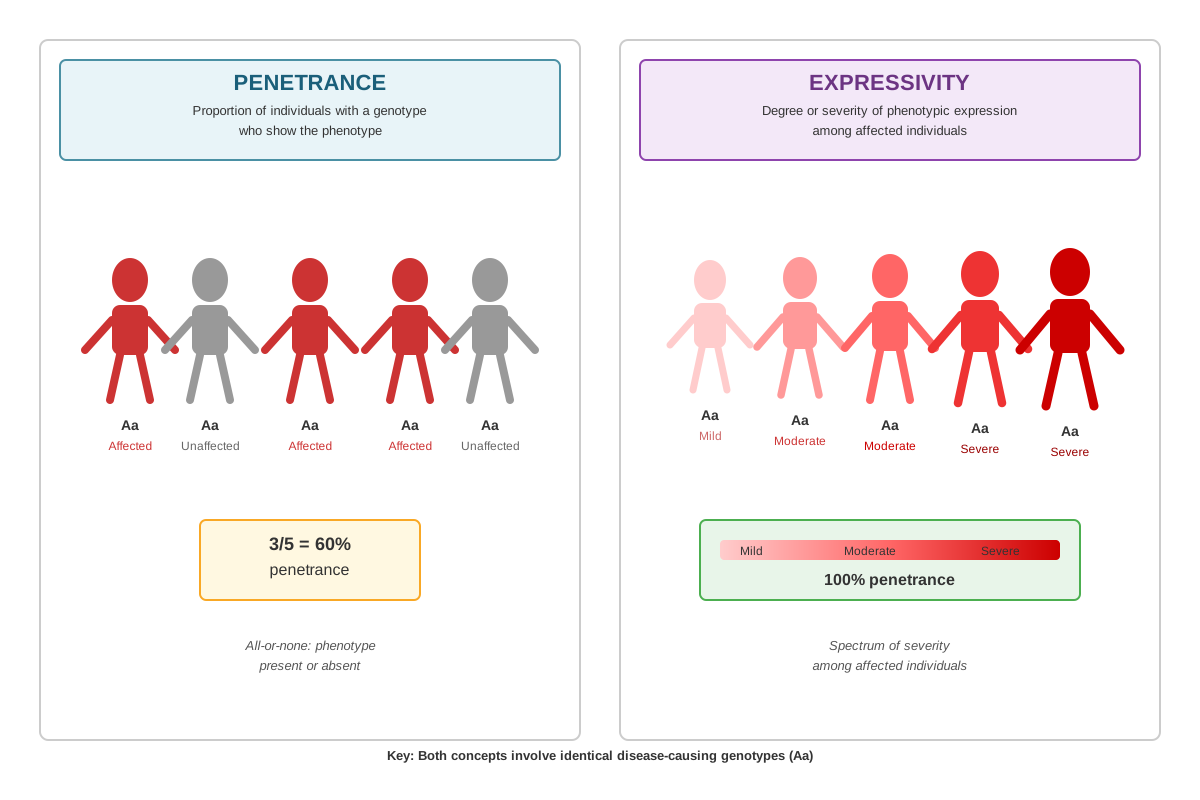
Penetrance is the probability that an individual carrying a particular disease-causing allele or genotype will express the associated phenotype. It is expressed as a percentage or proportion of individuals with a specific genotype who manifest the corresponding trait. Complete penetrance (100%) means that all individuals with the disease-causing genotype will develop the phenotype, while incomplete penetrance (less than 100%) indicates that some individuals with the genotype will not express the phenotype.
Penetrance is calculated using the formula:
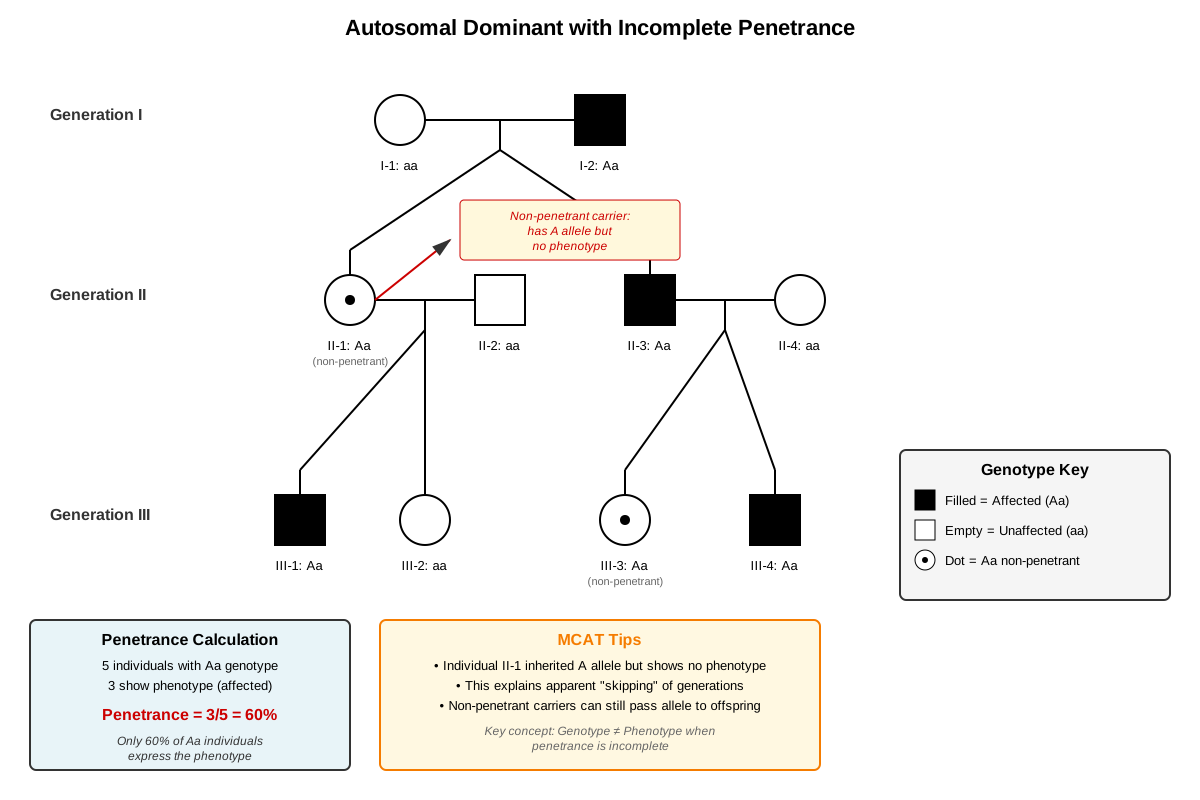
Penetrance = (Number of individuals with genotype who express phenotype) / (Total number of individuals with genotype) × 100%For example, if 70 out of 100 individuals carrying a dominant disease allele develop the disease, the penetrance is 70%. This concept is particularly important for autosomal dominant conditions where a single mutant allele is sufficient to cause disease in theory, yet not all carriers are affected in practice.
Age-dependent penetrance is a critical refinement of this concept, recognizing that penetrance can increase with age. Huntington's disease demonstrates nearly 100% penetrance by age 80, but much lower penetrance at younger ages. This temporal dimension is crucial for genetic counseling and risk assessment.
Defining Expressivity
Expressivity refers to the degree, severity, or range of phenotypic manifestation among individuals who do express a particular genotype. Unlike penetrance, which is an all-or-nothing phenomenon (either the phenotype is present or absent), expressivity describes variation in how the phenotype appears. Variable expressivity occurs when individuals with the same disease-causing genotype display different levels of symptom severity or different combinations of clinical features.
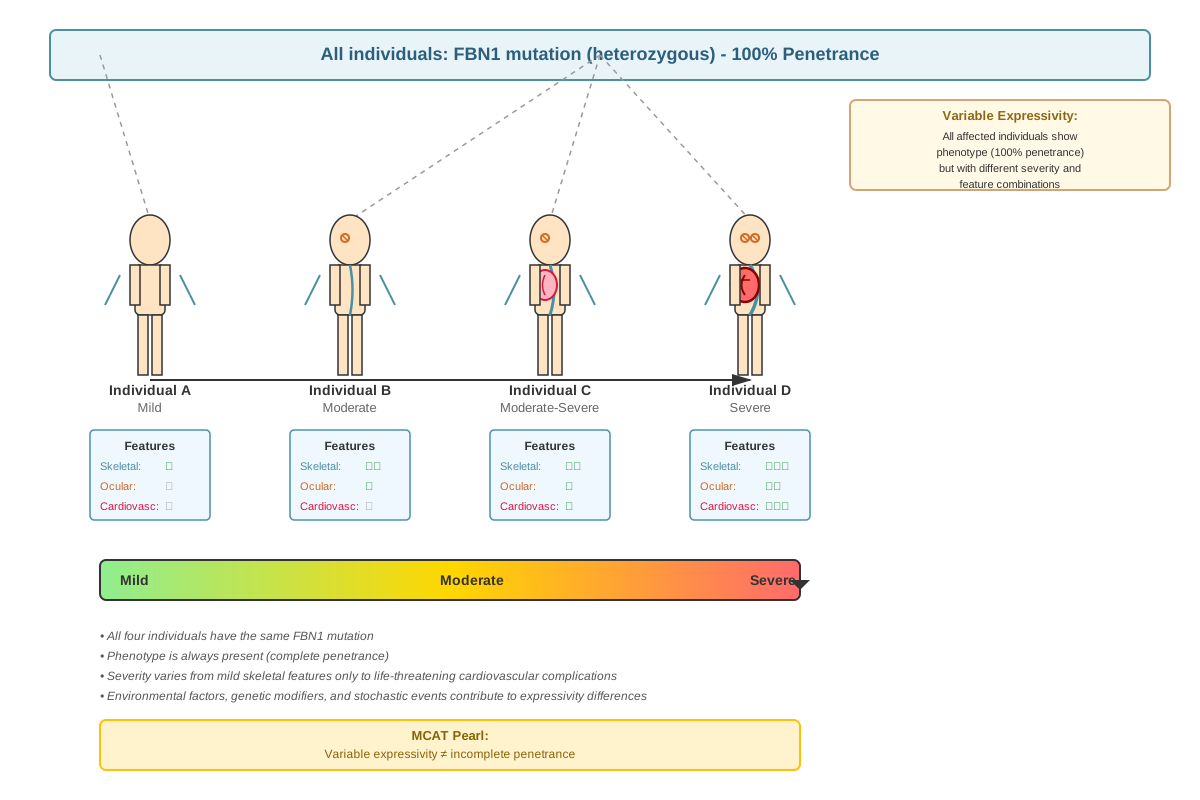
For instance, Marfan syndrome, caused by mutations in the FBN1 gene, shows variable expressivity. All affected individuals have the same genetic defect, but some may have severe cardiovascular complications, lens dislocation, and extreme height, while others may have only mild skeletal features and no life-threatening complications. This variation occurs even within the same family sharing identical mutations.
Expressivity is typically described qualitatively (mild, moderate, severe) rather than quantitatively, though specific clinical scoring systems may be used for particular conditions. The key distinction is that expressivity applies only to individuals who manifest the phenotype—it does not include those who carry the genotype but show no signs of the condition (which relates to penetrance).
Comparing Penetrance and Expressivity
| Feature | Penetrance | Expressivity |
|---|---|---|
| Definition | Proportion of genotype carriers who show any phenotype | Degree of phenotypic variation among those who manifest the trait |
| Measurement | Quantitative percentage (0-100%) | Qualitative or semi-quantitative (mild to severe) |
| Question asked | "Will the phenotype appear?" | "How severe will the phenotype be?" |
| Population vs. Individual | Population-level statistic | Individual-level description |
| Example | 80% of BRCA1 carriers develop cancer | Neurofibromatosis patients have 5 to 500+ café-au-lait spots |
| Clinical relevance | Risk assessment and probability | Prognosis and symptom management |
Molecular and Environmental Mechanisms
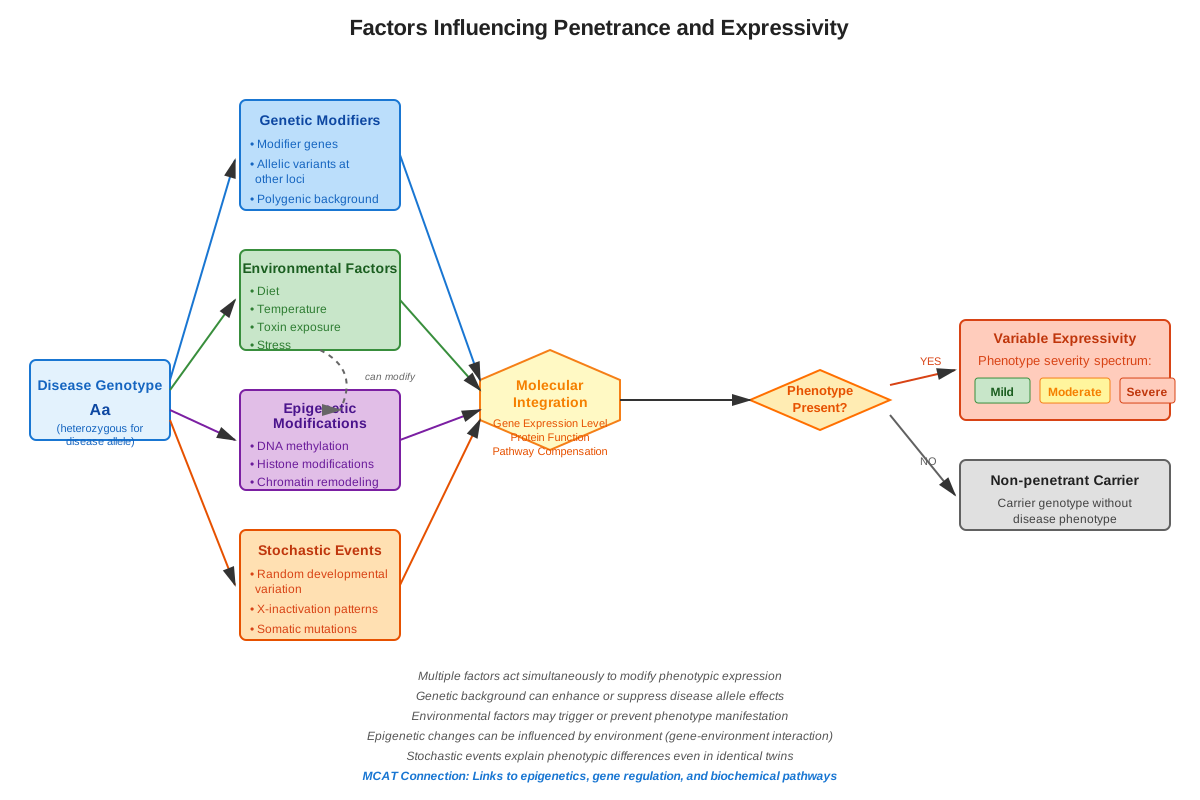
Multiple factors contribute to incomplete penetrance and variable expressivity, making these phenomena complex and multifactorial:
Genetic modifiers are other genes in the genome that influence the expression of the primary disease-causing gene. These modifier genes may encode proteins that interact with the disease gene product, participate in the same biochemical pathway, or affect compensatory mechanisms. For example, individuals with identical cystic fibrosis mutations may have different disease severity based on modifier genes affecting inflammation, mucus production, or immune response.
Environmental factors play crucial roles in determining whether and how a genetic predisposition manifests. Diet, exercise, toxin exposure, infections, and lifestyle choices can all influence phenotypic expression. The classic example is phenylketonuria (PKU), where individuals with identical mutations have dramatically different outcomes depending on dietary phenylalanine intake. Similarly, BRCA mutation carriers have different cancer risks based on reproductive history, hormone exposure, and other environmental factors.
Stochastic developmental events introduce randomness into gene expression and cellular differentiation. Random X-inactivation in females creates mosaicism that can affect disease expression in X-linked conditions. Random variations in transcription factor binding, chromatin remodeling, and cellular microenvironments during development can lead to different outcomes even in genetically identical individuals.
Epigenetic modifications, including DNA methylation and histone modifications, can silence or activate genes without changing the DNA sequence. These modifications can be influenced by environmental factors and may vary between individuals with the same genotype, contributing to both incomplete penetrance and variable expressivity.
Gene dosage effects and the presence of compensatory pathways can also influence phenotypic expression. Some individuals may have enhanced expression of related genes that partially compensate for a defective gene, reducing disease severity or preventing disease manifestation entirely.
Clinical Examples and Disease Contexts
BRCA1 and BRCA2 mutations provide classic examples of incomplete penetrance in cancer genetics. Women carrying pathogenic BRCA1 mutations have approximately 70% lifetime risk of breast cancer and 40% risk of ovarian cancer—not 100%. This incomplete penetrance reflects the multifactorial nature of cancer development, requiring multiple genetic hits and environmental factors beyond the initial BRCA mutation.
Huntington's disease demonstrates age-dependent penetrance approaching 100% by age 80 for individuals carrying expanded CAG repeats in the HTT gene. However, penetrance is much lower at younger ages, and the age of onset shows variable expressivity, with some individuals developing symptoms in their 30s and others not until their 60s or 70s.
Neurofibromatosis type 1 (NF1) exhibits nearly complete penetrance (>95%) but highly variable expressivity. All affected individuals develop café-au-lait spots, but the number, size, and distribution vary enormously. Some patients develop hundreds of neurofibromas and serious complications like optic gliomas, while others have minimal cutaneous manifestations and no significant health problems.
Polydactyly (extra digits) in some genetic forms shows incomplete penetrance, where individuals carrying the causative allele may have normal digit numbers, demonstrating that even developmental anomalies can show penetrance variation.
Concept Relationships
The relationship between penetrance and expressivity forms a hierarchical framework for understanding genotype-phenotype correlations. Penetrance acts as the first filter, determining whether a genotype will produce any observable phenotype. Among those individuals who pass through this filter and manifest the trait, expressivity then describes the spectrum of phenotypic variation. These concepts are complementary rather than competing—a condition can simultaneously show incomplete penetrance and variable expressivity.
Both penetrance and expressivity connect directly to gene-environment interactions, as environmental factors often determine whether a genetic predisposition manifests (affecting penetrance) and how severely it manifests (affecting expressivity). This relationship extends to epigenetics, where environmentally-influenced modifications to gene expression can explain why genetically identical individuals show different phenotypes.
The concepts link to population genetics through their effects on disease allele frequencies and Hardy-Weinberg calculations. Incomplete penetrance means that disease allele frequencies in populations may be higher than disease prevalence suggests, as many carriers remain unaffected. This has implications for genetic screening programs and public health planning.
Pedigree analysis relies heavily on understanding penetrance and expressivity to interpret inheritance patterns. When expected Mendelian ratios don't appear in family trees, incomplete penetrance often provides the explanation. Similarly, variable expressivity explains why affected family members may have dramatically different clinical presentations despite sharing the same mutation.
The molecular basis of these phenomena connects to gene regulation, protein structure and function, and biochemical pathways. Understanding how mutations affect protein activity, stability, and interactions helps explain why some individuals with mutations remain unaffected (incomplete penetrance) or show mild symptoms (variable expressivity).
Relationship Map:
Genotype → Penetrance (Will phenotype appear?) → Expressivity (How severe?) → Observable Phenotype
↑ ↑
Genetic Modifiers + Environmental Factors + Epigenetic Modifications + Stochastic Events
Quick check — test yourself on Penetrance and expressivity so far.
Try Flashcards →High-Yield Facts
⭐ Penetrance is a population-level statistic (percentage of genotype carriers showing phenotype), while expressivity is an individual-level description (severity in affected individuals)
⭐ Incomplete penetrance means some individuals with a disease-causing genotype never develop the phenotype, even at advanced age
⭐ Variable expressivity describes different degrees of phenotypic severity among individuals who do manifest the trait
⭐ Age-dependent penetrance is common in genetic diseases, with penetrance increasing over the lifespan (e.g., Huntington's disease)
⭐ Environmental factors, genetic modifiers, and epigenetic modifications all contribute to incomplete penetrance and variable expressivity
- BRCA1/BRCA2 mutations show approximately 70% penetrance for breast cancer, not 100%, illustrating incomplete penetrance in cancer genetics
- Neurofibromatosis type 1 demonstrates nearly complete penetrance but highly variable expressivity within families
- Penetrance can be calculated as: (affected individuals with genotype / total individuals with genotype) × 100%
- Conditions with incomplete penetrance may appear to "skip generations" in pedigrees, mimicking recessive inheritance patterns
- Variable expressivity explains why genetic testing cannot always predict disease severity, only disease risk
- Stochastic developmental events contribute to phenotypic variation even in genetically identical individuals (e.g., identical twins)
- X-inactivation in females creates mosaicism that affects expressivity of X-linked conditions
Common Misconceptions
Misconception: Penetrance and expressivity are the same concept, just different words for phenotypic variation.
Correction: Penetrance addresses whether a phenotype appears at all (binary: yes/no), while expressivity describes the degree of variation among those who do show the phenotype (spectrum: mild to severe). A condition can have complete penetrance but variable expressivity, meaning everyone with the genotype is affected, but to different degrees.
Misconception: Incomplete penetrance means the genetic mutation is weak or less important.
Correction: Incomplete penetrance does not reflect mutation severity but rather the multifactorial nature of phenotypic expression. Even highly pathogenic mutations can show incomplete penetrance due to protective genetic modifiers, environmental factors, or compensatory mechanisms. BRCA mutations are highly significant cancer risk factors despite showing incomplete penetrance.
Misconception: If a genetic test is positive for a disease-causing mutation, the individual will definitely develop the disease.
Correction: A positive genetic test indicates increased risk, but incomplete penetrance means not all carriers will develop the disease. Genetic counseling must communicate probability, not certainty. For example, a BRCA1-positive woman has elevated risk but not guaranteed cancer development.
Misconception: Variable expressivity only applies to dominant conditions.
Correction: Both dominant and recessive conditions can show variable expressivity. Cystic fibrosis (recessive) demonstrates significant expressivity variation, with some patients having severe lung disease and pancreatic insufficiency while others have milder respiratory symptoms and preserved pancreatic function.
Misconception: Penetrance is fixed for a given mutation and doesn't change.
Correction: Penetrance can be age-dependent, sex-dependent, and influenced by environmental factors. The same mutation may have different penetrance values in different populations or time periods due to varying environmental exposures, genetic backgrounds, and healthcare interventions.
Misconception: If two family members have the same genetic mutation, they will have the same disease severity.
Correction: Variable expressivity means that even family members sharing identical mutations can have dramatically different clinical presentations. Genetic background differences (modifier genes), environmental exposures, and stochastic developmental events all contribute to phenotypic variation within families.
Worked Examples
Example 1: Calculating Penetrance from Pedigree Data
Clinical Scenario: A genetic study examines a family with an autosomal dominant condition caused by a mutation in gene X. Genetic testing identifies 40 family members carrying the disease-causing allele. Clinical examination reveals that 28 of these 40 carriers show signs of the disease, while 12 carriers are completely asymptomatic despite being past the typical age of onset.
Question: What is the penetrance of this mutation in this family? What does this tell us about genetic counseling for newly identified carriers?
Solution:
Step 1: Identify the relevant values
- Total individuals with disease-causing genotype = 40
- Individuals with genotype who express phenotype = 28
Step 2: Apply the penetrance formula
Penetrance = (28 / 40) × 100% = 70%Step 3: Interpret the result
This mutation shows 70% penetrance, meaning it demonstrates incomplete penetrance. This is clinically significant because it means that 30% of individuals carrying this mutation will never develop the disease, even though they carry the pathogenic allele.
Step 4: Apply to genetic counseling
When counseling a newly identified carrier, the genetic counselor should explain that:
- The individual has a 70% chance of developing the disease, not 100%
- The individual can still pass the mutation to offspring regardless of whether they personally develop symptoms
- Unaffected carriers can have affected children
- Regular monitoring is still recommended even for asymptomatic carriers
- Environmental and genetic factors may influence whether the individual develops symptoms
Connection to Learning Objectives: This example demonstrates how to calculate penetrance from population data and apply this information to clinical decision-making and genetic counseling, addressing the objectives of defining penetrance and applying the concept to exam-style questions.
Example 2: Distinguishing Penetrance from Expressivity
Clinical Scenario: A research study examines 100 individuals with confirmed mutations in the FBN1 gene (associated with Marfan syndrome). The study finds:
- 95 individuals show at least one clinical feature of Marfan syndrome
- 5 individuals show no clinical features despite carrying the mutation
- Among the 95 affected individuals:
- 20 have severe cardiovascular complications requiring surgery
- 45 have moderate skeletal features and lens dislocation
- 30 have only mild skeletal features with no major complications
Question: Describe the penetrance and expressivity of FBN1 mutations in this population. How would you counsel a pregnant woman who just learned her fetus carries an FBN1 mutation?
Solution:
Step 1: Calculate penetrance
Penetrance = (95 affected / 100 total carriers) × 100% = 95%The mutation shows 95% penetrance, which is nearly complete but not absolute.
Step 2: Describe expressivity
Among the 95 individuals who manifest the phenotype, there is significant variation:
- Approximately 21% (20/95) have severe disease
- Approximately 47% (45/95) have moderate disease
- Approximately 32% (30/95) have mild disease
This demonstrates variable expressivity—the phenotype ranges from mild skeletal features to life-threatening cardiovascular complications.
Step 3: Distinguish the concepts
- Penetrance question: "Will my child be affected at all?" Answer: 95% probability of showing some features
- Expressivity question: "If my child is affected, how severe will it be?" Answer: Cannot predict precisely; ranges from mild to severe
Step 4: Genetic counseling approach
The counselor should explain:
- Very high probability (95%) that the child will have some manifestation of Marfan syndrome
- Small chance (5%) that the child will be completely unaffected despite carrying the mutation
- Among affected individuals, severity varies widely and cannot be predicted from genetic testing alone
- Regular cardiac monitoring and orthopedic care can manage complications
- Environmental factors and genetic background may influence severity
- Even mild cases require medical surveillance
Connection to Learning Objectives: This example illustrates the critical distinction between penetrance (whether the phenotype appears) and expressivity (how severe it is), addresses common misconceptions about genetic testing predictive value, and demonstrates application to clinical scenarios typical of MCAT passages.
Exam Strategy
Approaching MCAT Questions on Penetrance and Expressivity
When encountering questions on this topic, first determine whether the question is asking about penetrance (presence/absence of phenotype) or expressivity (degree of phenotypic variation). Look for quantitative data suggesting population-level statistics (penetrance) versus qualitative descriptions of symptom severity (expressivity).
Trigger Words and Phrases
For penetrance questions, watch for:
- "What percentage of carriers develop..."
- "Not all individuals with the genotype show..."
- "Skips generations"
- "Unaffected carriers"
- "Risk of developing"
- "Probability of manifestation"
For expressivity questions, watch for:
- "Severity varies"
- "Range of symptoms"
- "Mild to severe"
- "Different clinical presentations"
- "Within the same family"
- "Among affected individuals"
Process of Elimination Tips
When answer choices seem similar:
- Eliminate options that confuse penetrance with expressivity
- Reject answers suggesting 100% penetrance for conditions described as having unaffected carriers
- Eliminate choices that attribute variable expressivity solely to different mutations (same mutation can show variable expressivity)
- Remove options that ignore environmental or modifier gene contributions
- Reject answers suggesting genetic testing can predict exact disease severity (expressivity cannot be precisely predicted)
Time Allocation Advice
Penetrance and expressivity questions often appear within longer passages involving pedigrees or population genetics. Allocate:
- 1-2 minutes to read and understand the passage, identifying whether penetrance, expressivity, or both are relevant
- 30-45 seconds per discrete question
- 60-90 seconds for questions requiring calculations or complex pedigree interpretation
- Don't spend excessive time on penetrance calculations—they're typically straightforward division problems
Exam Tip: If a passage describes a genetic condition where "not all family members with the mutation are affected," immediately flag this as incomplete penetrance. If it describes "affected family members having different symptom severity," flag this as variable expressivity. Many MCAT questions test whether you can make these distinctions.
Memory Techniques
Mnemonic for Penetrance vs. Expressivity: "PRES"
- Penetrance = Presence (is the phenotype present or absent?)
- Expressivity = Extent (to what extent/severity is the phenotype expressed?)
Visualization Strategy: The Light Switch vs. Dimmer Analogy
- Penetrance = Light switch (ON or OFF) → Either you have the phenotype or you don't
- Expressivity = Dimmer switch (brightness varies) → Among those with the phenotype, intensity varies from dim to bright
Acronym for Factors Affecting Penetrance and Expressivity: "GEMS"
- Genetic modifiers
- Environmental factors
- Modifications (epigenetic)
- Stochastic events
Memory Hook for Incomplete Penetrance
"Incomplete penetrance = Incomplete manifestation"
Not everyone with the genotype gets the phenotype—the genotype incompletely penetrates into the population's phenotypes.
Numerical Memory Aid
Remember BRCA1: "70-70-70"
- Approximately 70% penetrance for breast cancer
- Approximately 70% of carriers develop cancer by age 70
- This helps recall that even highly significant mutations don't show 100% penetrance
Summary
Penetrance and expressivity are fundamental concepts in molecular biology and genetics that explain the complex relationship between genotype and phenotype. Penetrance, measured as a percentage, describes the proportion of individuals carrying a disease-causing genotype who actually manifest the associated phenotype, with incomplete penetrance indicating that some carriers remain unaffected. Expressivity describes the degree or severity of phenotypic manifestation among individuals who do express the trait, with variable expressivity explaining why affected individuals show different symptom severity despite sharing the same genetic mutation. These phenomena result from multiple factors including genetic modifiers, environmental influences, epigenetic modifications, and stochastic developmental events. For the MCAT, understanding these concepts is essential for interpreting pedigrees, analyzing population genetics data, and answering clinical vignettes involving genetic counseling. The key distinction is that penetrance addresses whether a phenotype appears (a binary, population-level statistic), while expressivity describes how severely it appears (a spectrum, individual-level description). Mastery of these concepts enables accurate interpretation of genetic testing results and understanding of why identical genotypes can produce different phenotypic outcomes.
Key Takeaways
- Penetrance is the percentage of individuals with a specific genotype who express the associated phenotype; incomplete penetrance means some carriers never develop the disease
- Expressivity describes the range of phenotypic severity among individuals who do manifest a trait; variable expressivity means affected individuals show different symptom levels
- Penetrance and expressivity are distinct concepts: penetrance asks "Will it appear?" while expressivity asks "How severe will it be?"
- Multiple factors influence both phenomena, including genetic modifiers, environmental factors, epigenetic modifications, and stochastic developmental events (remember "GEMS")
- Age-dependent penetrance is common in genetic diseases, with manifestation probability increasing over the lifespan
- Incomplete penetrance can cause genetic conditions to appear to "skip generations" in pedigrees, potentially mimicking recessive inheritance
- Genetic testing reveals disease risk (related to penetrance) but cannot precisely predict disease severity (related to expressivity)
Related Topics
Hardy-Weinberg Equilibrium and Population Genetics: Understanding penetrance is essential for accurate allele frequency calculations, as incomplete penetrance means disease allele frequencies may be higher than disease prevalence suggests. Mastering penetrance enables more sophisticated population genetics problem-solving.
Pedigree Analysis and Inheritance Patterns: Incomplete penetrance and variable expressivity explain deviations from expected Mendelian ratios in family trees. Advanced pedigree interpretation requires integrating these concepts with classical inheritance patterns.
Gene-Environment Interactions: The molecular mechanisms underlying penetrance and expressivity often involve environmental factors modulating gene expression. This topic extends to pharmacogenomics and personalized medicine.
Epigenetics and Gene Regulation: Understanding how DNA methylation, histone modifications, and chromatin remodeling affect gene expression provides molecular explanations for penetrance and expressivity variation.
Cancer Genetics and Tumor Suppressor Genes: Many cancer predisposition syndromes demonstrate incomplete penetrance, making this topic essential for understanding oncogenesis and the multi-hit hypothesis of cancer development.
Practice CTA
Now that you've mastered the core concepts of penetrance and expressivity, it's time to reinforce your understanding through active practice. Challenge yourself with the practice questions and flashcards designed specifically for this topic. These resources will help you identify any remaining knowledge gaps and build the pattern recognition skills essential for MCAT success. Remember, understanding these concepts isn't just about memorizing definitions—it's about developing the analytical skills to interpret complex genetic scenarios under exam conditions. You've built a strong foundation; now apply it to achieve mastery. Your ability to distinguish penetrance from expressivity and apply these concepts to clinical vignettes will set you apart on test day!
Sign up free to keep reading
Create a free AnvayaPrep account to finish this MCAT guide on Penetrance and expressivity — plus flashcards and practice questions.