Overview
The Trp operon (tryptophan operon) represents one of the most elegant examples of gene regulation in prokaryotes and serves as a fundamental model for understanding how cells respond to environmental changes at the molecular level. This regulatory system controls the production of enzymes necessary for tryptophan biosynthesis in bacteria such as Escherichia coli. Unlike the lac operon, which is induced in the presence of its substrate, the Trp operon functions as a repressible system—it is normally active but becomes repressed when tryptophan is abundant. This distinction between inducible and repressible operons is critical for MCAT success and reflects a broader principle in Biology: cells conserve energy by producing enzymes only when needed.
Understanding the Trp operon is essential for the MCAT because it tests multiple competencies simultaneously: knowledge of prokaryotic gene regulation, understanding of negative feedback mechanisms, and the ability to predict cellular responses to environmental changes. Questions involving the Trp operon frequently appear in passages that integrate Molecular Biology and Genetics with biochemistry, requiring students to analyze experimental data, interpret mutations, and predict phenotypic outcomes. The operon model also provides insight into how organisms maintain metabolic efficiency—a concept that extends beyond bacteria to inform our understanding of cellular economy in all life forms.
The Trp operon connects to broader themes in Biology including transcriptional regulation, protein-DNA interactions, allosteric regulation, and metabolic pathway control. Mastery of this topic strengthens understanding of gene expression control mechanisms, prepares students for comparative questions about different regulatory systems, and provides a foundation for understanding more complex eukaryotic gene regulation. The principles learned here—operator sequences, repressor proteins, corepressors, and attenuation—recur throughout molecular biology and represent high-yield content for standardized examinations.
Learning Objectives
- [ ] Define Trp operon using accurate Biology terminology
- [ ] Explain why Trp operon matters for the MCAT
- [ ] Apply Trp operon to exam-style questions
- [ ] Identify common mistakes related to Trp operon
- [ ] Connect Trp operon to related Biology concepts
- [ ] Compare and contrast the Trp operon with the lac operon mechanism
- [ ] Predict the effects of specific mutations on Trp operon function
- [ ] Explain the molecular mechanism of attenuation in the Trp operon
- [ ] Analyze experimental data to determine Trp operon activity under various conditions
Prerequisites
- Basic gene structure: Understanding of promoters, operators, and structural genes is necessary to comprehend how the operon components interact
- Transcription and translation fundamentals: Knowledge of RNA polymerase function and the process of mRNA synthesis is required to understand how the operon is regulated
- Protein structure and function: Familiarity with allosteric regulation helps explain how tryptophan binding changes repressor protein conformation
- Lac operon basics: Prior knowledge of inducible operons provides a comparative framework for understanding repressible systems
- Negative feedback mechanisms: Understanding feedback inhibition in metabolic pathways contextualizes why cells would repress tryptophan synthesis when the amino acid is abundant
Why This Topic Matters
The Trp operon holds significant real-world and clinical relevance beyond its role as a model system. Antibiotic resistance mechanisms often involve alterations in gene regulation similar to operon systems, making this knowledge applicable to understanding bacterial adaptation and survival. Additionally, the principle of feedback inhibition demonstrated by the Trp operon applies to human metabolic disorders where enzyme regulation fails, leading to accumulation of toxic intermediates or deficiency of essential products.
On the MCAT, the Trp operon appears with moderate frequency, typically in 1-2 questions per exam either as discrete questions or within biochemistry/molecular biology passages. Questions most commonly test the ability to predict operon activity under different tryptophan concentrations, interpret the effects of mutations in regulatory elements, and compare repressible versus inducible systems. The AAMC particularly favors questions that require students to analyze experimental scenarios, such as predicting enzyme levels in mutant bacterial strains or interpreting data from reporter gene assays.
Common passage formats include experiments measuring mRNA levels or enzyme activity under varying tryptophan concentrations, genetic complementation studies with different mutant strains, and comparative analyses of wild-type versus mutant phenotypes. The MCAT also tests this topic through questions about attenuation mechanisms, which require integration of transcription and translation concepts. Understanding the Trp operon prepares students for broader questions about gene regulation, metabolic control, and the relationship between genotype and phenotype—all high-yield areas for the Molecular Biology and Genetics section.
Core Concepts
Structure of the Trp Operon
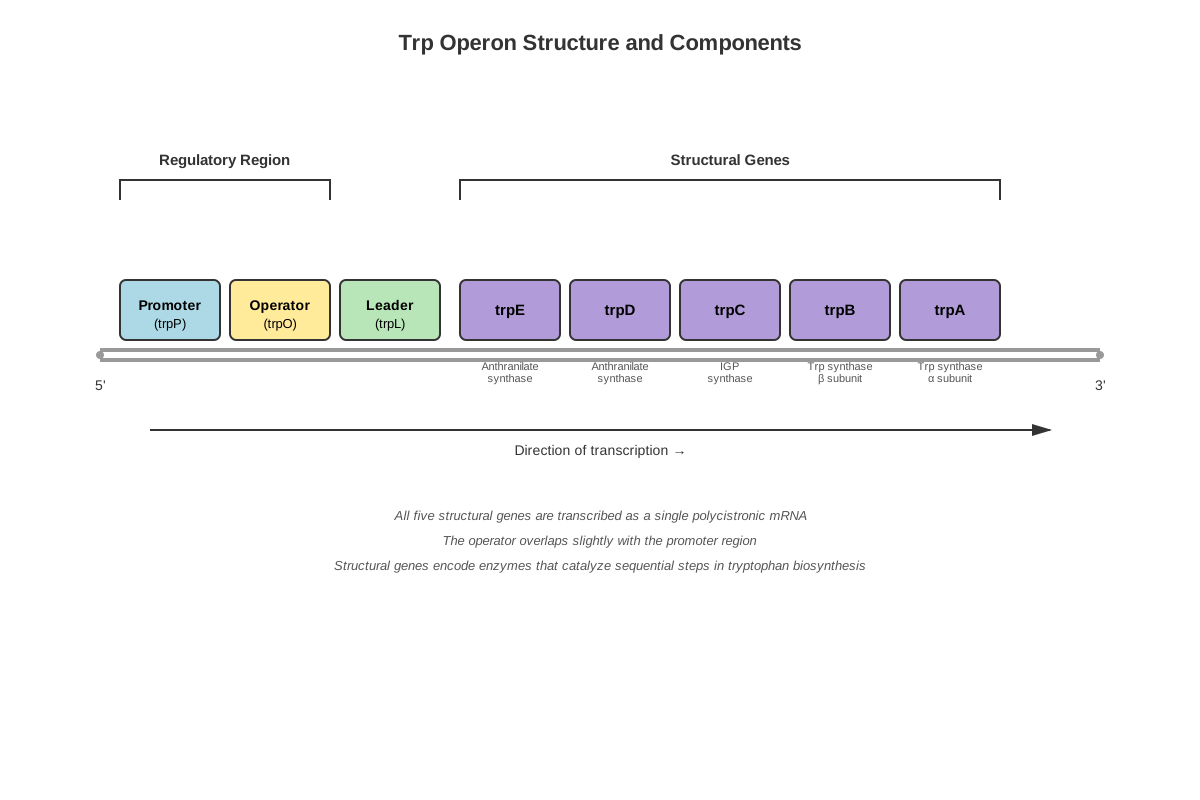
The Trp operon consists of several key components organized in a characteristic prokaryotic arrangement. The operon includes a promoter region where RNA polymerase binds to initiate transcription, an operator sequence where the repressor protein binds to block transcription, and five structural genes (trpE, trpD, trpC, trpB, and trpA) that encode enzymes catalyzing the five-step biosynthetic pathway converting chorismate to tryptophan. These structural genes are transcribed as a single polycistronic mRNA, meaning one continuous transcript encodes multiple proteins—a hallmark of prokaryotic gene organization.
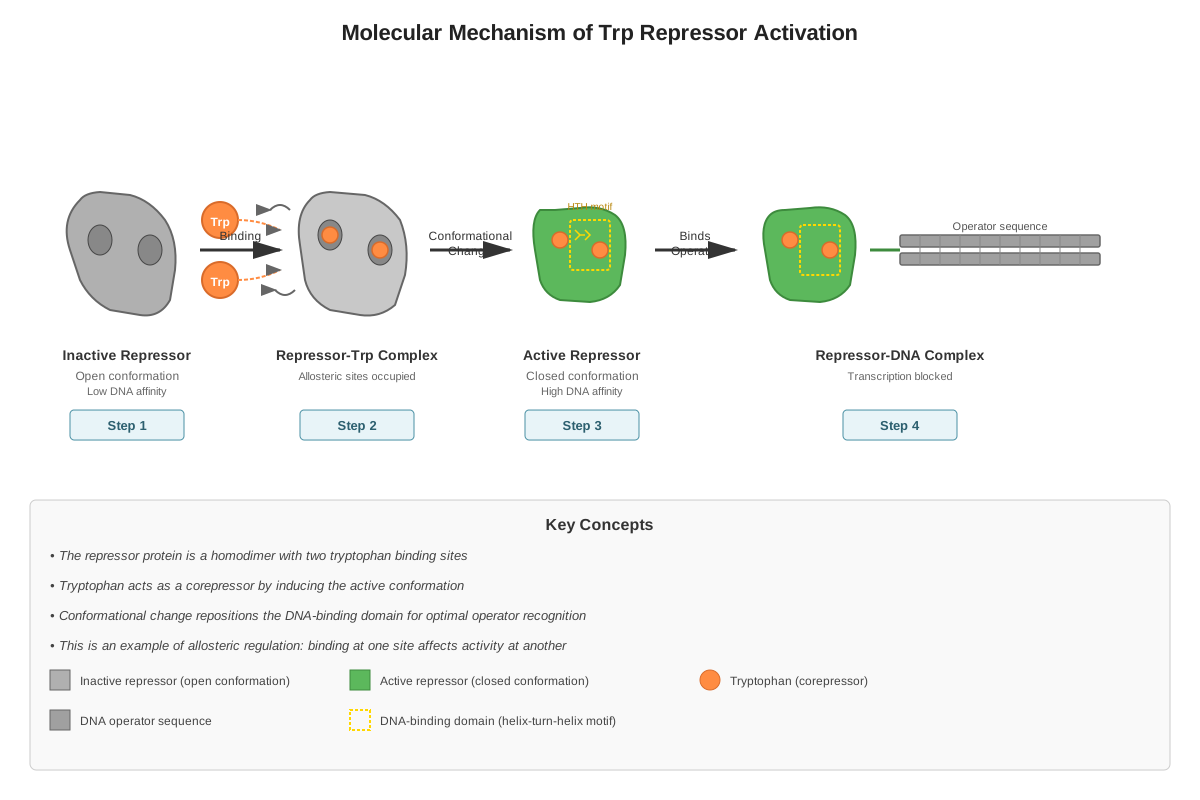
Upstream of the promoter lies the regulatory gene (trpR), which encodes the trp repressor protein. Unlike the structural genes, trpR has its own promoter and is transcribed independently at low, constitutive levels. The repressor protein exists in two conformational states: an inactive form that cannot bind DNA and an active form that binds tightly to the operator. This conformational change is triggered by tryptophan itself, making tryptophan a corepressor—a small molecule that activates a repressor protein.
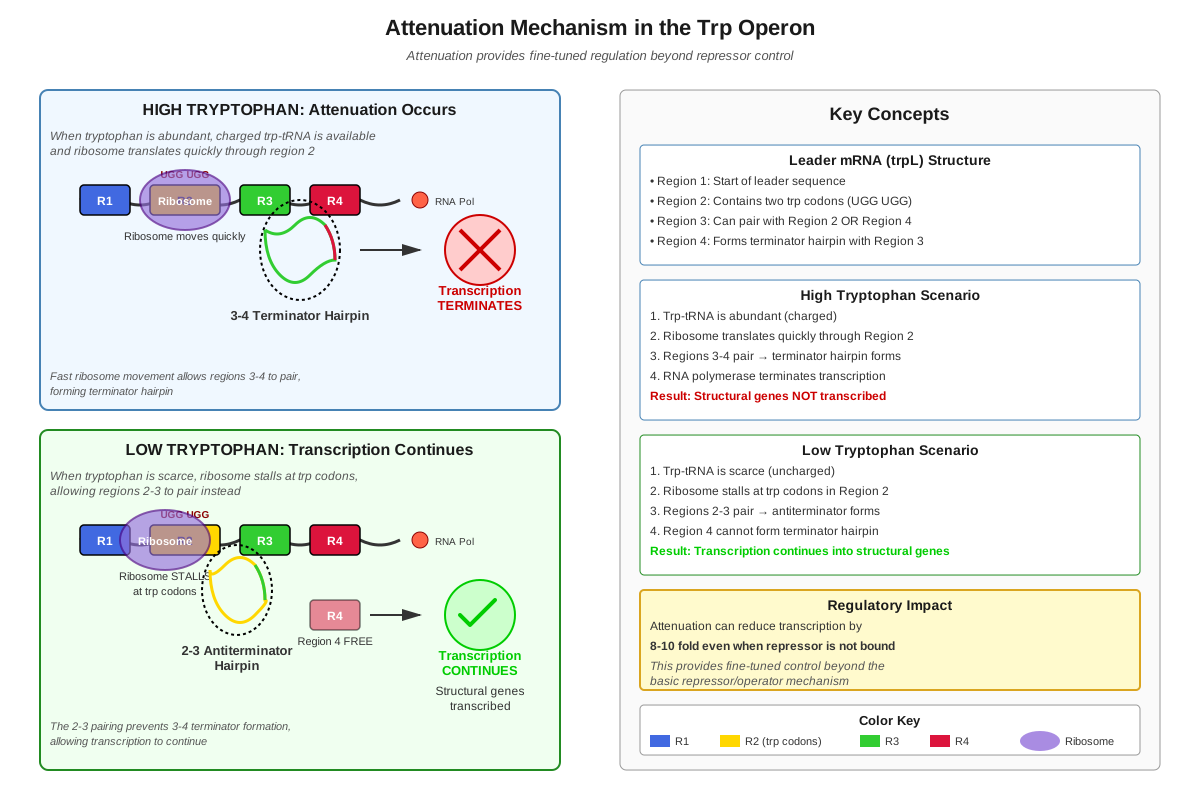
Between the promoter and the structural genes lies a leader sequence (trpL) containing an attenuator region. This 162-nucleotide sequence plays a crucial role in a secondary regulatory mechanism called attenuation, which fine-tunes operon expression based on tryptophan availability. The leader sequence contains four regions capable of forming alternative secondary structures through complementary base pairing, creating a sophisticated regulatory switch that responds to the cell's translational capacity.
Mechanism of Repression
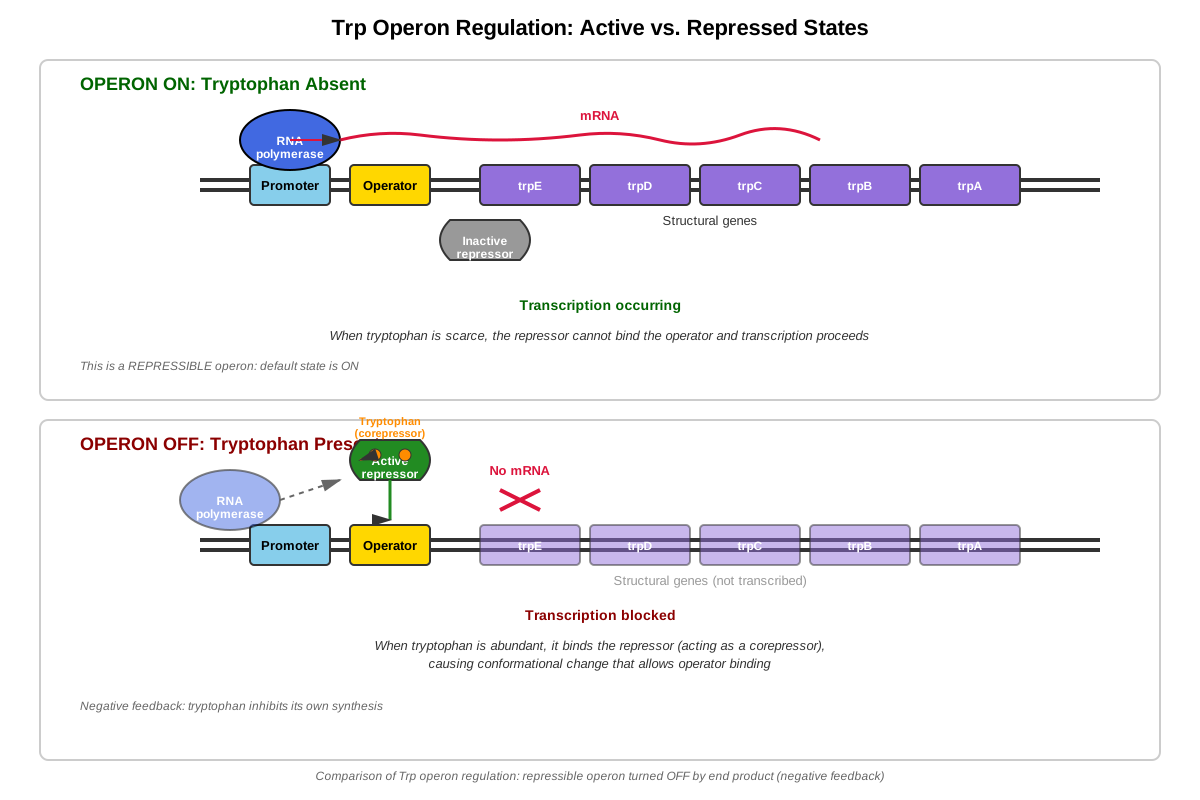
The Trp operon operates as a repressible system, meaning it is normally "on" (actively transcribed) but can be turned "off" when its product is abundant. When tryptophan levels are low, cells need to synthesize this essential amino acid. Under these conditions, the trp repressor protein exists in its inactive conformation and cannot bind to the operator sequence. RNA polymerase freely accesses the promoter, transcribes the structural genes, and the resulting enzymes produce tryptophan.
When tryptophan becomes abundant (either through biosynthesis or uptake from the environment), the amino acid binds to the inactive repressor protein through allosteric regulation. Tryptophan binding induces a conformational change that activates the repressor, enabling it to bind with high affinity to the operator sequence. This binding physically blocks RNA polymerase from transcribing the structural genes, effectively shutting down tryptophan biosynthesis. This represents an elegant example of negative feedback regulation—the end product of a pathway inhibits its own production.
The binding of the tryptophan-repressor complex to the operator is reversible. When tryptophan levels decline, the amino acid dissociates from the repressor protein, causing it to revert to its inactive conformation and release from the operator. This dynamic equilibrium allows the cell to respond rapidly to changing tryptophan availability, demonstrating the efficiency of prokaryotic gene regulation.
Attenuation Mechanism
Attenuation provides a second layer of regulation that fine-tunes Trp operon expression even when the repressor is not blocking transcription. This mechanism depends on the coupling of transcription and translation in prokaryotes—a phenomenon where ribosomes begin translating mRNA while it is still being synthesized. The leader sequence contains a short open reading frame encoding a 14-amino acid leader peptide that includes two consecutive tryptophan residues. The positioning of these tryptophan codons is critical to the attenuation mechanism.
The leader sequence can form four distinct regions (numbered 1-4) capable of base-pairing in different combinations. Region 1 can pair with region 2, region 2 with region 3, and region 3 with region 4. The 3:4 pairing forms a termination hairpin (rho-independent terminator) that causes RNA polymerase to dissociate, prematurely ending transcription before the structural genes are transcribed. Alternatively, the 2:3 pairing forms an antiterminator structure that prevents formation of the 3:4 hairpin, allowing transcription to continue through the structural genes.
When tryptophan is abundant, charged tRNA^Trp is plentiful, and ribosomes translate the leader peptide rapidly, covering regions 1 and 2. This prevents 2:3 pairing and allows the 3:4 terminator hairpin to form, causing transcription termination. When tryptophan is scarce, charged tRNA^Trp is limited, and ribosomes stall at the tryptophan codons in region 1. This stalling leaves region 2 free to pair with region 3, forming the antiterminator and allowing transcription to proceed. This mechanism allows the cell to sense tryptophan availability indirectly through the abundance of charged tRNA^Trp.
Comparison with the Lac Operon
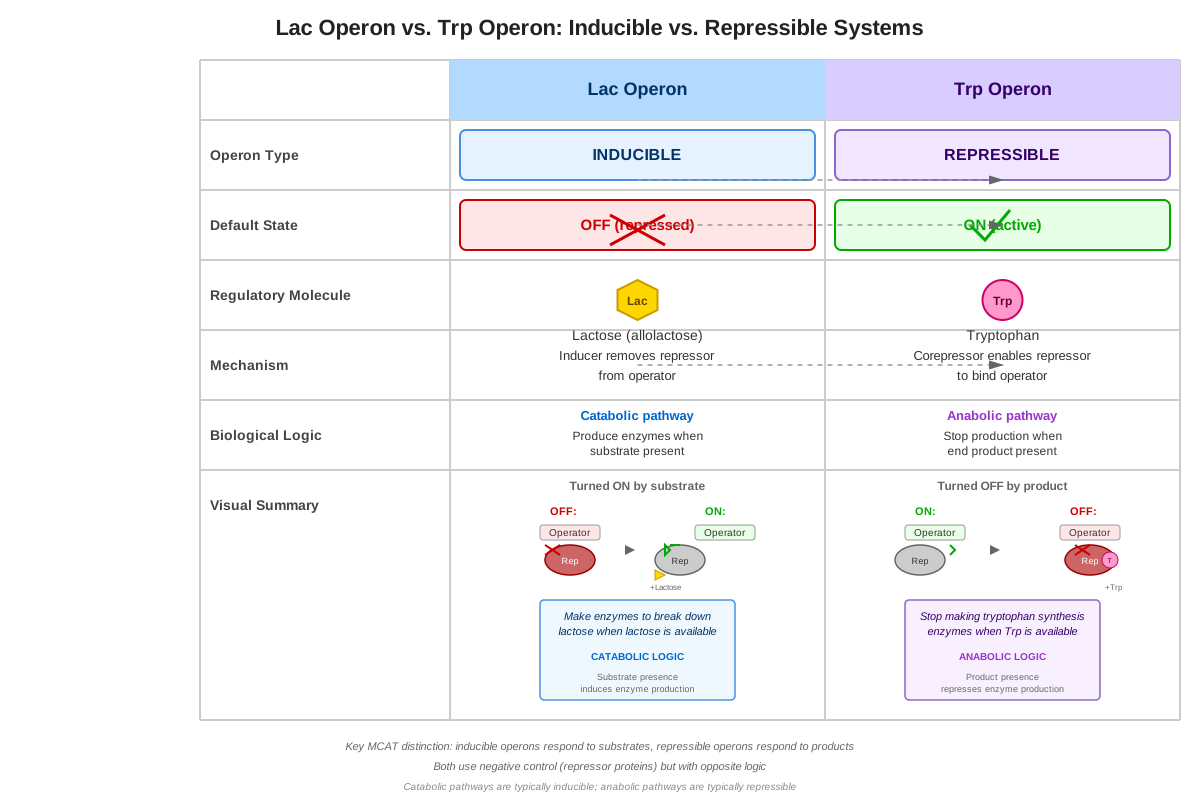
Understanding the differences between repressible and inducible operons is high-yield for the MCAT. The table below summarizes key distinctions:
| Feature | Trp Operon (Repressible) | Lac Operon (Inducible) |
|---|---|---|
| Default state | ON (actively transcribed) | OFF (repressed) |
| Regulatory molecule | Tryptophan (corepressor) | Lactose/allolactose (inducer) |
| Repressor alone | Inactive, cannot bind operator | Active, binds operator |
| Effect of regulatory molecule | Activates repressor → repression | Inactivates repressor → derepression |
| Biological logic | Stop making what you have | Start making what you need |
| Pathway type | Anabolic (biosynthetic) | Catabolic (degradative) |
| Additional regulation | Attenuation | CAP-cAMP positive control |
This comparison reveals a fundamental principle: anabolic operons (building molecules) are typically repressible because cells should stop synthesizing a product when it's already available, while catabolic operons (breaking down molecules) are typically inducible because cells should only produce degradative enzymes when substrate is present.
Mutations and Their Effects
Understanding how mutations affect Trp operon function is essential for MCAT problem-solving. Several mutation types produce distinct phenotypes:
- Operator mutations (O^c): Constitutive mutations in the operator prevent repressor binding even when tryptophan is present, resulting in continuous transcription regardless of tryptophan levels
- Repressor mutations (R^-): Loss-of-function mutations in trpR eliminate functional repressor protein, causing constitutive expression similar to operator mutations
- Repressor mutations (R^s): Super-repressor mutations create a repressor that binds the operator even without tryptophan, causing permanent repression
- Promoter mutations: Mutations affecting RNA polymerase binding reduce or eliminate transcription regardless of tryptophan levels
- Attenuator mutations: Mutations in the leader sequence affecting hairpin formation or tryptophan codons disrupt attenuation, altering the fine-tuning mechanism
Quick check — test yourself on Trp operon so far.
Try Flashcards →Concept Relationships
The concepts within the Trp operon form an integrated regulatory network. The structural organization (promoter → operator → structural genes) provides the physical framework upon which regulation occurs. The repressor protein mechanism represents the primary regulatory layer, responding directly to tryptophan concentration through allosteric regulation. Attenuation adds a secondary regulatory layer that responds to tryptophan availability indirectly through charged tRNA^Trp levels, creating a more sensitive and graded response than repression alone could provide.
These concepts connect to prerequisite knowledge in multiple ways: transcription fundamentals → explains how RNA polymerase initiates at the promoter and how termination hairpins cause dissociation; protein structure → explains how tryptophan binding induces conformational changes in the repressor; translation mechanisms → explains how ribosome positioning affects secondary structure formation during attenuation; lac operon → provides a contrasting model that highlights the logic of repressible versus inducible systems.
The relationship map flows as follows: Environmental tryptophan levels → determines corepressor availability → controls repressor protein conformation → regulates operator occupancy → determines transcription initiation. Simultaneously, tryptophan levels → affects charged tRNA^Trp abundance → influences ribosome position on leader sequence → determines mRNA secondary structure → controls transcription termination (attenuation). Both pathways converge to regulate enzyme production → controls tryptophan biosynthesis → creates negative feedback loop.
High-Yield Facts
⭐ The Trp operon is a repressible system that is normally ON and turned OFF when tryptophan is abundant
⭐ Tryptophan functions as a corepressor that activates the repressor protein through allosteric binding
⭐ The trp repressor cannot bind the operator unless tryptophan is bound to it
⭐ Attenuation provides secondary regulation through premature transcription termination based on ribosome position
⭐ The leader peptide contains two consecutive tryptophan codons critical for attenuation sensing
- The Trp operon encodes five enzymes (trpE, D, C, B, A) as a single polycistronic mRNA
- The 3:4 base pairing in the leader sequence forms a termination hairpin that stops transcription
- The 2:3 base pairing forms an antiterminator structure that allows transcription to continue
- Repressible operons typically control anabolic (biosynthetic) pathways, while inducible operons control catabolic pathways
- Operator constitutive mutations (O^c) cause continuous transcription regardless of tryptophan levels
- Attenuation can reduce transcription by approximately 90% even when the repressor is not active
- The coupling of transcription and translation in prokaryotes is essential for attenuation to function
Common Misconceptions
Misconception: Tryptophan directly blocks the operator sequence to prevent transcription → Correction: Tryptophan binds to the repressor protein, which then binds to the operator. Tryptophan itself never directly contacts DNA; it functions as an allosteric regulator of the repressor protein.
Misconception: The Trp operon works the same way as the lac operon, just with a different molecule → Correction: These operons have opposite logic. The Trp operon is repressible (default ON, turned OFF by product), while the lac operon is inducible (default OFF, turned ON by substrate). The regulatory molecules have opposite effects on their respective repressors.
Misconception: When tryptophan is absent, the repressor protein is also absent → Correction: The repressor protein is always present because trpR is constitutively expressed at low levels. What changes is the repressor's conformation and ability to bind DNA, not its presence or absence.
Misconception: Attenuation only occurs when the repressor is blocking transcription → Correction: Attenuation provides additional regulation when the repressor is NOT blocking transcription. It fine-tunes expression levels between "fully on" and "completely off," responding to more subtle changes in tryptophan availability than the repressor mechanism alone.
Misconception: The leader peptide is one of the enzymes that synthesizes tryptophan → Correction: The leader peptide has no enzymatic function. It exists solely as a regulatory element whose translation affects mRNA secondary structure formation. The actual biosynthetic enzymes are encoded by the five structural genes downstream.
Misconception: Mutations in the operator always increase transcription → Correction: While constitutive operator mutations (O^c) do increase transcription by preventing repressor binding, other operator mutations could decrease transcription by preventing RNA polymerase binding or altering promoter function.
Worked Examples
Example 1: Predicting Enzyme Levels in Mutant Strains
Question: A researcher creates three E. coli strains with the following genotypes and measures tryptophan biosynthetic enzyme levels under high and low tryptophan conditions. Predict the relative enzyme levels for each strain:
- Strain A: Wild-type
- Strain B: O^c (operator constitutive mutation)
- Strain C: R^- (repressor loss-of-function mutation)
Solution:
Strain A (Wild-type):
- Low tryptophan: HIGH enzyme levels (repressor inactive, cannot bind operator, transcription proceeds)
- High tryptophan: LOW enzyme levels (tryptophan binds repressor, active repressor binds operator, transcription blocked)
- This represents normal regulation
Strain B (O^c mutation):
- Low tryptophan: HIGH enzyme levels (transcription proceeds normally)
- High tryptophan: HIGH enzyme levels (even though repressor is active, it cannot bind the mutant operator)
- This strain shows constitutive expression—always ON regardless of tryptophan
- The mutation is cis-acting (affects only genes on the same DNA molecule)
Strain C (R^- mutation):
- Low tryptophan: HIGH enzyme levels (no functional repressor to block transcription)
- High tryptophan: HIGH enzyme levels (no functional repressor exists even when tryptophan is present)
- This strain also shows constitutive expression
- The mutation is trans-acting (would affect genes on other DNA molecules in a partial diploid)
Key reasoning: Both O^c and R^- mutations produce constitutive phenotypes, but through different mechanisms. O^c prevents repressor binding to the operator, while R^- eliminates the repressor protein entirely. This distinction becomes important in complementation analysis and partial diploid experiments.
Example 2: Analyzing Attenuation Mechanism
Question: A mutation in the leader sequence changes both tryptophan codons to alanine codons. Predict how this mutation affects Trp operon regulation under low and high tryptophan conditions.
Solution:
Normal attenuation mechanism review:
- Low tryptophan → limited charged tRNA^Trp → ribosome stalls at Trp codons → region 2 pairs with region 3 (antiterminator) → transcription continues
- High tryptophan → abundant charged tRNA^Trp → ribosome rapidly translates through Trp codons → region 3 pairs with region 4 (terminator) → transcription stops
Effect of mutation (Trp codons → Ala codons):
Under low tryptophan conditions:
- Charged tRNA^Ala is typically abundant regardless of tryptophan levels
- Ribosome will NOT stall at the mutated codons
- Ribosome covers regions 1 and 2
- Regions 3 and 4 pair, forming terminator hairpin
- Transcription terminates prematurely
- Result: REDUCED enzyme production even when tryptophan is scarce
Under high tryptophan conditions:
- Same outcome as low tryptophan (ribosome doesn't stall)
- Terminator hairpin forms
- Transcription terminates
- Result: Appropriately LOW enzyme production
Conclusion: This mutation disrupts the cell's ability to sense tryptophan scarcity through attenuation. The operon can still be regulated by the repressor mechanism (which remains intact), but the fine-tuning provided by attenuation is lost. The cell would produce less tryptophan biosynthetic enzymes than needed when tryptophan is scarce, potentially causing slower growth. This demonstrates that attenuation is not redundant with repression—it serves a distinct regulatory function that responds to different cellular signals (charged tRNA levels versus free amino acid levels).
Exam Strategy
When approaching Trp operon questions on the MCAT, begin by identifying whether the question asks about normal regulation or mutant phenotypes. For normal regulation questions, immediately determine the tryptophan concentration (high or low) and work through the regulatory cascade: tryptophan level → repressor state → operator occupancy → transcription status. For attenuation questions, focus on ribosome position and which secondary structures can form.
Trigger words to watch for include:
- "Repressible" or "negative control" → signals Trp operon-type regulation
- "Corepressor" → indicates the regulatory molecule activates rather than inactivates the repressor
- "Attenuation" or "premature termination" → signals the secondary regulatory mechanism
- "Constitutive" → suggests mutation in operator or repressor
- "Leader sequence" or "leader peptide" → relates to attenuation mechanism
For process-of-elimination strategies, remember these principles:
- Eliminate answers suggesting tryptophan directly binds DNA (it doesn't—it binds the repressor)
- Eliminate answers treating the Trp operon like an inducible system (opposite logic)
- Eliminate answers suggesting the repressor is absent when tryptophan is absent (the repressor is always present, just inactive)
- For mutation questions, eliminate answers that don't account for whether the mutation is cis-acting (operator) or trans-acting (repressor)
Time allocation: Discrete Trp operon questions should take 60-90 seconds. Passage-based questions involving experimental data may require 90-120 seconds. If a question involves both repression and attenuation, budget extra time to work through both mechanisms systematically. Don't rush—these questions reward careful, stepwise reasoning.
Exam Tip: When comparing Trp and lac operons, focus on the default state and the effect of the regulatory molecule. This distinction alone eliminates many wrong answers.
Memory Techniques
Mnemonic for Trp operon logic: "Too much Tryptophan? Turn it off!" (Repressible system—product inhibits its own synthesis)
Mnemonic for attenuation regions: "1-2 or 3-4, which will form? 2-3 means make more!" (2:3 pairing is the antiterminator that allows transcription to continue)
Visualization strategy: Picture a factory assembly line (the operon) with a gate (the operator). When tryptophan is scarce, the gate is open and workers (RNA polymerase) enter freely. When tryptophan is abundant, it acts like a key that activates a security guard (repressor), who then closes the gate. This visual reinforces that tryptophan enables repression rather than causing activation.
Acronym for structural genes: "Every Day Can Be Awesome" represents trpE, trpD, trpC, trpB, trpA in order along the operon.
Conceptual anchor: Remember "REpressible = REverse of inducible" to recall that these systems have opposite logic. If you remember lac operon well, you can derive Trp operon behavior by reversing the regulatory logic.
Attenuation memory aid: "Stalled ribosome = Saved transcription" (When the ribosome stalls at Trp codons due to low tryptophan, transcription is saved/continues because the antiterminator forms)
Summary
The Trp operon exemplifies repressible gene regulation in prokaryotes, functioning as a biosynthetic system that produces tryptophan when this amino acid is scarce and shuts down production when tryptophan is abundant. The primary regulatory mechanism involves a repressor protein that is inactive by default but becomes active when tryptophan binds as a corepressor, enabling the repressor to bind the operator and block transcription. This represents negative feedback regulation where the pathway's end product inhibits its own synthesis. A secondary mechanism called attenuation provides fine-tuned control through premature transcription termination, responding to charged tRNA^Trp levels by controlling mRNA secondary structure formation in the leader sequence. Understanding the Trp operon requires integrating knowledge of transcription, translation, protein-DNA interactions, and allosteric regulation. For the MCAT, students must distinguish repressible from inducible operons, predict the effects of mutations on regulatory components, and analyze experimental scenarios involving operon function. The Trp operon demonstrates fundamental principles of metabolic efficiency and gene regulation that extend throughout molecular biology.
Key Takeaways
- The Trp operon is a repressible system (default ON, turned OFF by product) controlling tryptophan biosynthesis
- Tryptophan functions as a corepressor that activates the repressor protein through allosteric binding, enabling it to block transcription
- Attenuation provides secondary regulation through ribosome-dependent control of transcription termination in the leader sequence
- Repressible operons (like Trp) typically control anabolic pathways, while inducible operons (like lac) control catabolic pathways
- Mutations in the operator (O^c) or repressor (R^-) cause constitutive expression, but through different mechanisms with different genetic properties
- The leader peptide contains consecutive tryptophan codons that serve as sensors for tryptophan availability through charged tRNA^Trp levels
- Understanding the Trp operon requires distinguishing between direct regulation (repressor mechanism) and indirect sensing (attenuation mechanism)
Related Topics
Lac operon: The classic inducible operon provides essential contrast to the repressible Trp operon, highlighting how regulatory logic differs between catabolic and anabolic pathways. Mastering both operons enables comparative analysis questions.
Eukaryotic gene regulation: Understanding prokaryotic operons provides foundation for learning more complex eukaryotic mechanisms including enhancers, transcription factors, and chromatin remodeling.
Allosteric regulation: The conformational change in the trp repressor upon tryptophan binding exemplifies allosteric regulation, a principle that extends to enzyme regulation and signal transduction.
Transcription termination mechanisms: The attenuation mechanism introduces rho-independent termination, which appears in other prokaryotic regulatory systems and helps explain transcriptional control.
Amino acid biosynthesis pathways: The Trp operon controls one specific biosynthetic pathway; understanding tryptophan synthesis connects to broader metabolism and biochemistry topics.
Practice CTA
Now that you've mastered the core concepts of the Trp operon, it's time to solidify your understanding through active practice. Work through the practice questions to test your ability to apply these concepts to MCAT-style scenarios, and use the flashcards to reinforce high-yield facts and distinctions. Remember, understanding gene regulation isn't just about memorizing facts—it's about developing the analytical skills to predict outcomes, interpret experimental data, and reason through novel scenarios. The Trp operon may seem complex at first, but with focused practice, you'll develop the confidence to tackle any operon question the MCAT presents. You've got this!
Sign up free to keep reading
Create a free AnvayaPrep account to finish this MCAT guide on Trp operon — plus flashcards and practice questions.