Overview
Embryogenesis is the process by which a single-celled zygote develops into a complex, multicellular organism through a series of highly coordinated cellular divisions, migrations, and differentiations. This fundamental process in developmental Biology encompasses the earliest stages of life, from fertilization through the formation of the three primary germ layers and the establishment of the basic body plan. For the MCAT, understanding embryogenesis requires mastery of the sequential stages—cleavage, blastulation, gastrulation, and neurulation—as well as the fate of each germ layer and the mechanisms that control cellular differentiation and tissue specification.
Embryogenesis matters significantly for the MCAT because it integrates multiple biological disciplines tested on the exam. Questions on Embryogenesis MCAT content frequently appear in the Biological and Biochemical Foundations of Living Systems section, often embedded within passages discussing developmental abnormalities, stem cell research, or evolutionary biology. The topic bridges cellular biology, genetics, and Physiology and Organ Systems, requiring students to understand how molecular signals guide cells to form tissues and organs. Approximately 2-4% of MCAT biology questions directly test embryological concepts, with additional questions incorporating embryogenesis as background knowledge for understanding organ system development.
The big-picture relationship of embryogenesis to other Biology concepts is profound. It connects directly to cell biology (mitosis, cell signaling, cell adhesion), molecular biology (gene expression, transcription factors), genetics (homeobox genes, pattern formation), and anatomy (organ system origins). Understanding embryogenesis provides the foundation for comprehending how a single genome can produce hundreds of specialized cell types, how developmental errors lead to congenital abnormalities, and how evolutionary changes in developmental timing produce morphological diversity. This topic serves as a conceptual bridge between microscopic cellular processes and macroscopic organismal structure.
Learning Objectives
- [ ] Define Embryogenesis using accurate Biology terminology
- [ ] Explain why Embryogenesis matters for the MCAT
- [ ] Apply Embryogenesis to exam-style questions
- [ ] Identify common mistakes related to Embryogenesis
- [ ] Connect Embryogenesis to related Biology concepts
- [ ] Trace the developmental sequence from zygote through neurulation
- [ ] Differentiate between the three germ layers and identify their derivative structures
- [ ] Explain the molecular mechanisms underlying cellular differentiation during development
- [ ] Analyze how disruptions in embryogenesis lead to developmental abnormalities
Prerequisites
- Cell division (mitosis): Embryogenesis begins with rapid mitotic divisions that increase cell number without growth
- Basic genetics and gene expression: Differential gene expression drives cellular specialization during development
- Cell membrane structure and cell signaling: Cell-to-cell communication through signaling molecules coordinates developmental processes
- Tissue types (epithelial, connective, muscle, nervous): Understanding mature tissues helps connect germ layers to their derivatives
- Basic anatomy: Familiarity with organ systems aids in learning which germ layer produces each structure
Why This Topic Matters
Clinical and Real-World Significance
Embryogenesis has profound clinical relevance in modern medicine. Congenital abnormalities, which affect approximately 3% of live births, often result from disruptions during critical embryonic periods. Understanding normal embryological development enables physicians to identify when teratogenic exposures (alcohol, certain medications, infections) pose the greatest risk—typically during weeks 3-8 of human development when organogenesis occurs. Folic acid supplementation prevents neural tube defects by supporting proper neurulation, demonstrating how embryological knowledge directly informs preventive medicine. Additionally, stem cell research and regenerative medicine rely heavily on understanding the signals that guide embryonic cells toward specific fates, making embryogenesis central to cutting-edge therapeutic approaches.
Exam Statistics and Question Types
On the MCAT, embryogenesis appears in multiple question formats. Discrete questions may test direct recall of germ layer derivatives or the sequence of developmental stages. Passage-based questions frequently present research scenarios involving developmental biology experiments, such as studies on morphogen gradients, gene knockout models affecting development, or comparative embryology across species. Approximately 2-4% of Biological and Biochemical Foundations questions directly address embryogenesis, but the topic appears indirectly in an additional 3-5% of questions about organ systems, cell differentiation, or evolutionary biology. Questions typically test at the application and analysis levels rather than simple recall.
Common Exam Contexts
Embryogenesis commonly appears in MCAT passages discussing: (1) teratogenic effects of substances on developing embryos, (2) stem cell differentiation and pluripotency, (3) evolutionary developmental biology (evo-devo) comparing embryonic development across species, (4) genetic mutations affecting developmental pathways, (5) experimental manipulations of embryonic tissues, and (6) the cellular basis of congenital abnormalities. Recognizing these contexts helps students activate relevant embryological knowledge when analyzing passages.
Core Concepts
Definition and Scope of Embryogenesis
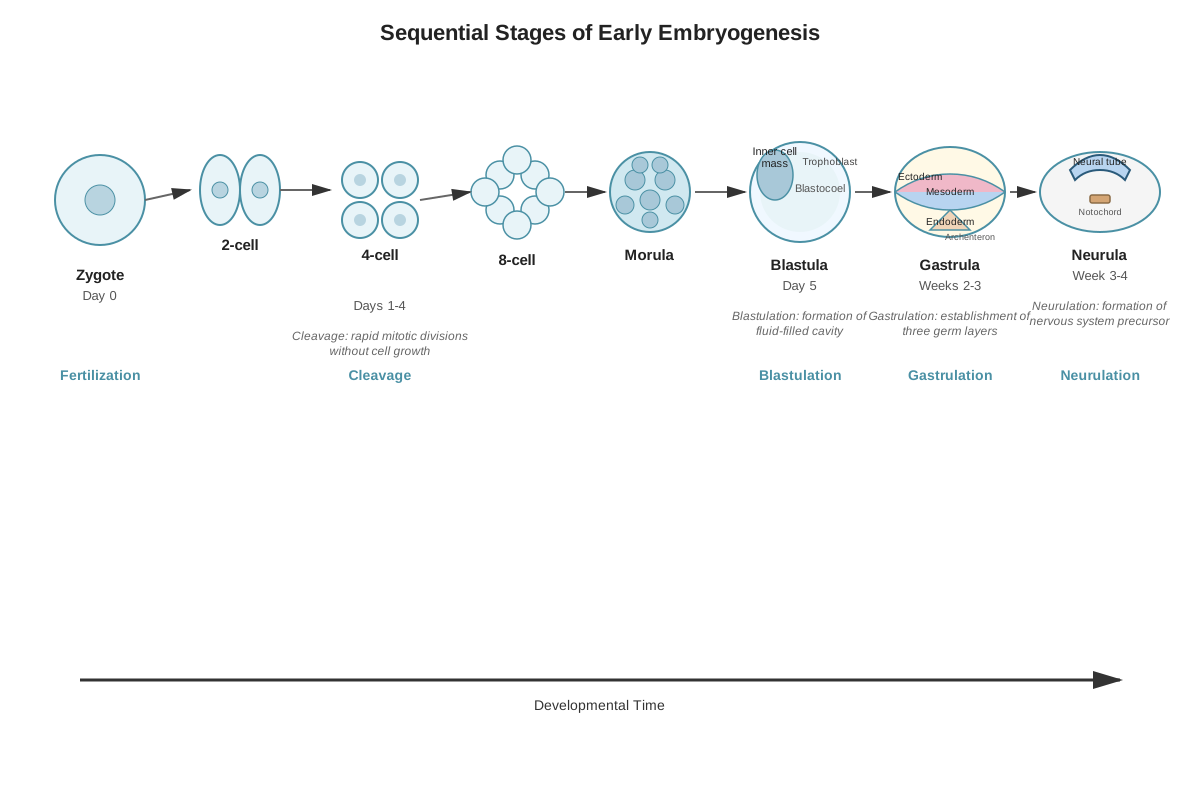
Embryogenesis is the process of embryonic development from fertilization through the formation of the basic body plan and organ primordia. In humans, embryogenesis spans approximately the first eight weeks post-fertilization, after which the developing organism is termed a fetus. The process transforms a totipotent zygote into a complex organism with differentiated tissues and developing organ systems through four major stages: cleavage, blastulation, gastrulation, and neurulation.
Cleavage: Rapid Cell Division Without Growth
Cleavage represents the first stage of embryogenesis, characterized by rapid mitotic divisions of the zygote without intervening cell growth. Unlike typical cell cycles, cleavage divisions lack G1 and G2 phases, consisting primarily of S phase (DNA replication) and M phase (mitosis). This produces progressively smaller cells called blastomeres while maintaining the overall size of the embryo.
Key features of cleavage include:
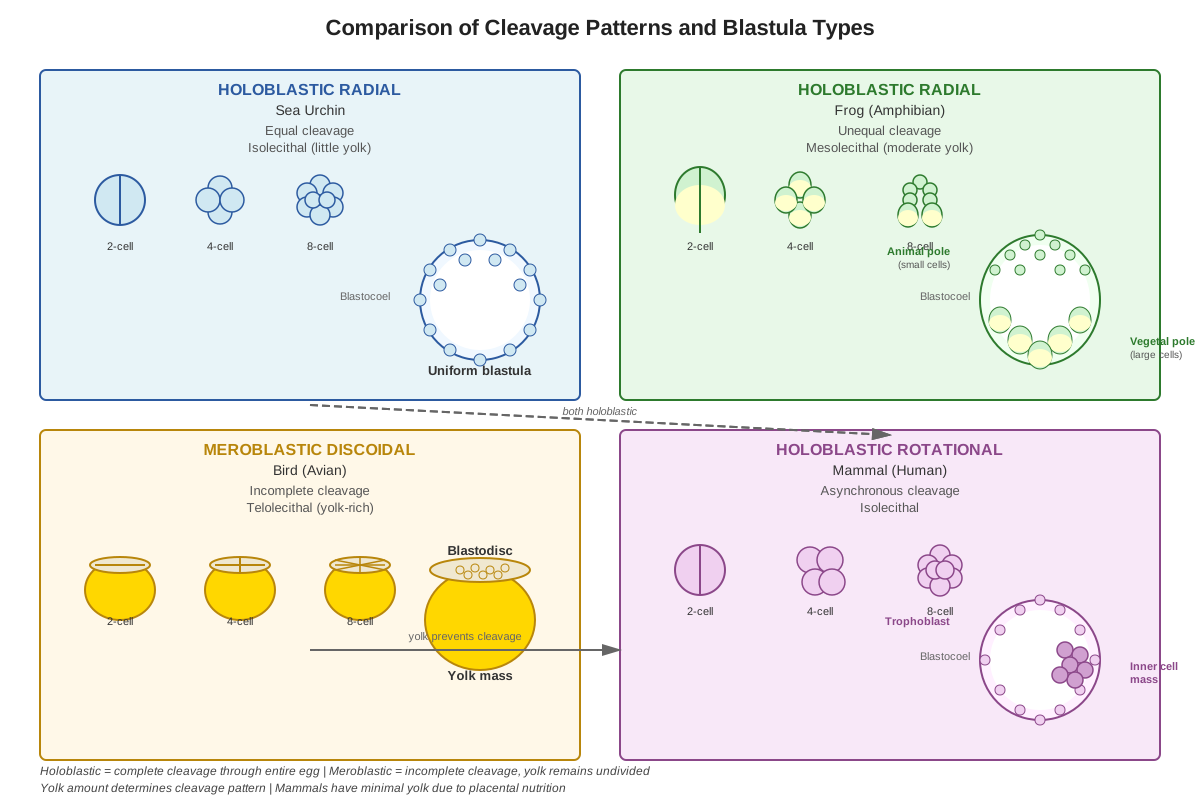
- Holoblastic cleavage: Complete division of the entire zygote (occurs in mammals and amphibians with little yolk)
- Meroblastic cleavage: Incomplete division due to large yolk content (occurs in birds and reptiles)
- Progressive increase in cell number without increase in total embryonic mass
- Activation of the embryonic genome (typically after several divisions)
- Formation of tight junctions between blastomeres
The cleavage pattern determines the spatial arrangement of cells and influences subsequent developmental events. In mammals, cleavage is indeterminate, meaning early blastomeres retain the ability to form complete organisms if separated (explaining identical twin formation). This contrasts with determinate cleavage in some invertebrates, where cell fates are fixed early.
Blastulation: Formation of the Blastula
Blastulation produces a hollow sphere of cells called the blastula (or blastocyst in mammals). This stage establishes the first morphological differentiation within the embryo. In mammals, the blastocyst consists of:
- Trophoblast: The outer cell layer that will form the placenta and extraembryonic membranes
- Inner cell mass (ICM): A cluster of cells at one pole that will form the embryo proper
- Blastocoel: The fluid-filled cavity within the blastocyst
The inner cell mass contains pluripotent stem cells capable of differentiating into any cell type of the body (but not extraembryonic tissues). This pluripotency makes embryonic stem cells valuable for research and potential therapeutic applications. The blastocyst stage is when the embryo implants into the uterine wall in mammals, typically 5-6 days post-fertilization in humans.
Gastrulation: Formation of Germ Layers
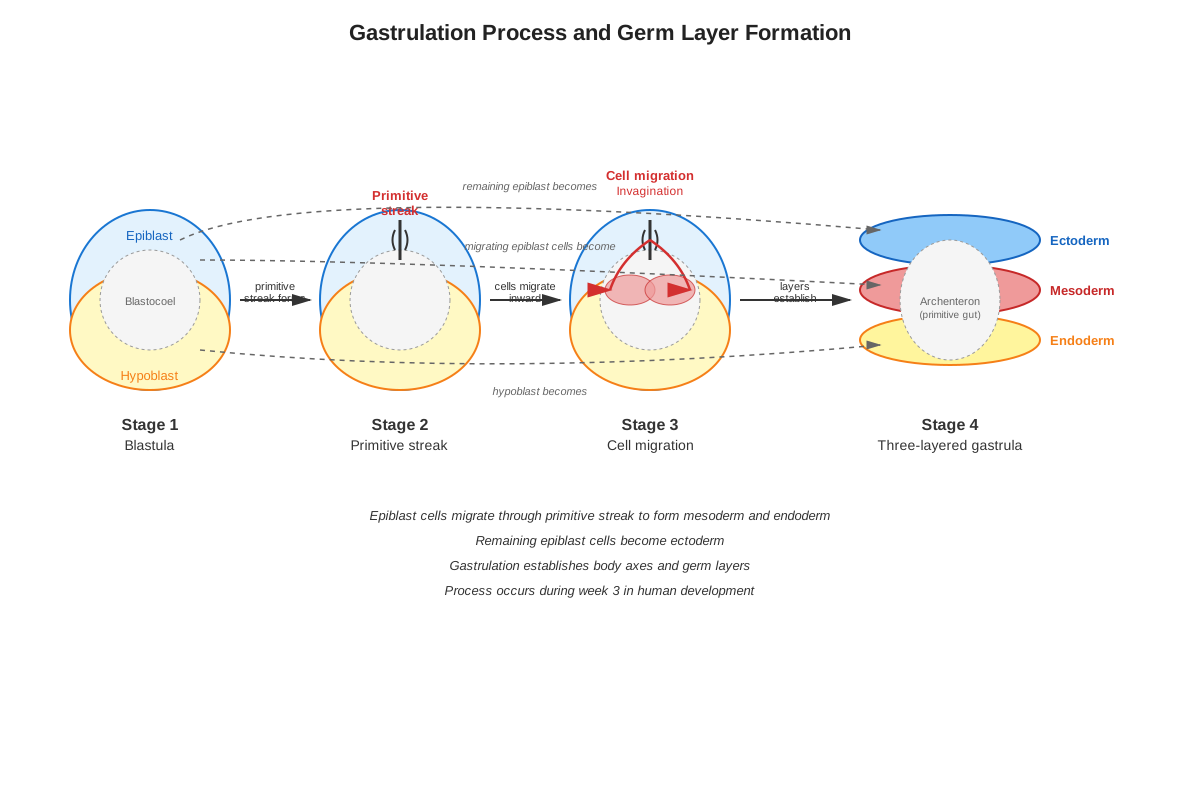
Gastrulation is arguably the most critical stage of embryogenesis, establishing the three primary germ layers from which all tissues and organs derive. This process involves coordinated cell movements including invagination, involution, ingression, delamination, and epiboly. The three germ layers formed are:
- Ectoderm (outer layer)
- Mesoderm (middle layer)
- Endoderm (inner layer)
The process begins at the primitive streak in mammals and birds, or the blastopore in amphibians. Cells migrate from the surface through this structure to form the interior layers. The opening of the blastopore determines whether an organism is a protostome (blastopore becomes mouth) or deuterostome (blastopore becomes anus)—humans are deuterostomes.
Ectoderm Derivatives
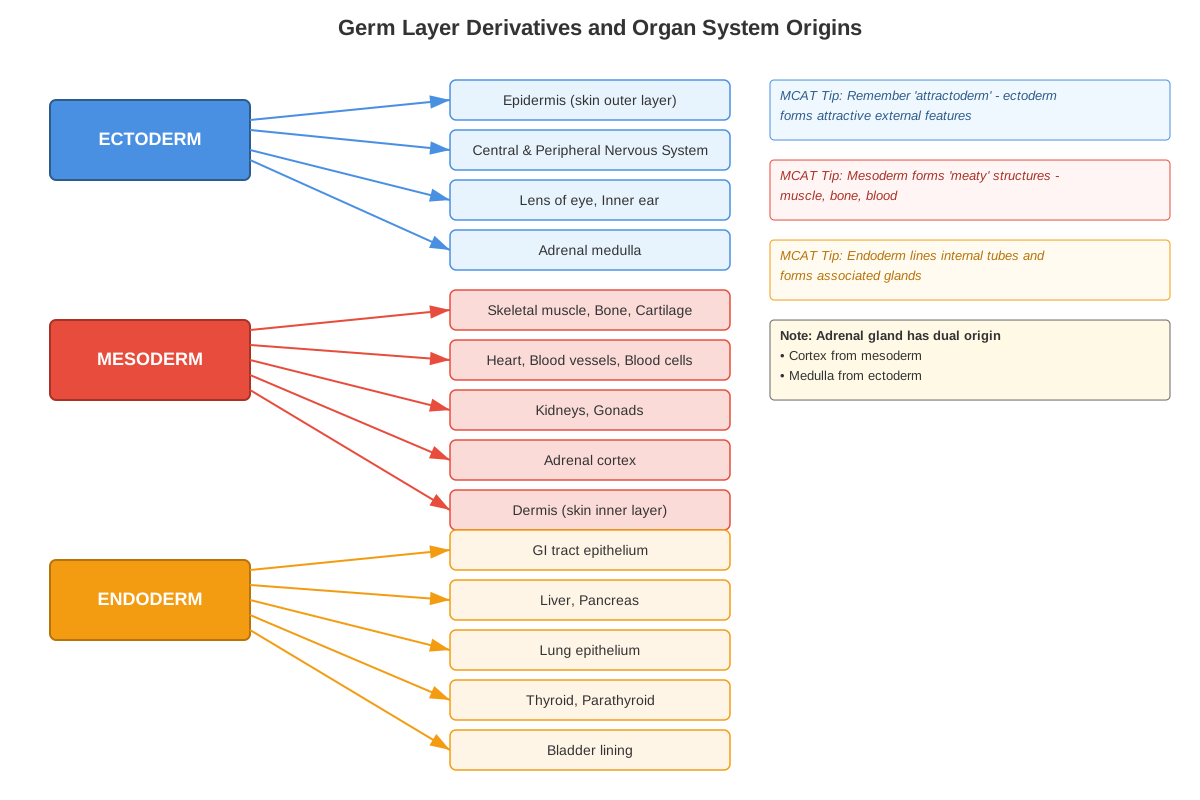
The ectoderm gives rise to structures that maintain contact with the external environment:
- Epidermis of skin and its derivatives (hair, nails, sweat glands, mammary glands)
- Nervous system (brain, spinal cord, peripheral nerves)
- Neural crest cells (peripheral nervous system, melanocytes, facial cartilage, adrenal medulla)
- Lens of the eye
- Inner ear
- Enamel of teeth
- Epithelium of mouth and nasal cavity
- Pituitary gland (anterior and posterior lobes)
- Adrenal medulla
The ectoderm undergoes neurulation (discussed below) to form the neural tube, which becomes the central nervous system.
Mesoderm Derivatives
The mesoderm forms most of the body's structural and support systems:
- Musculoskeletal system (skeletal muscle, smooth muscle, cardiac muscle, bones, cartilage)
- Circulatory system (heart, blood vessels, blood cells)
- Excretory system (kidneys, ureters)
- Reproductive system (gonads, reproductive ducts)
- Dermis of skin
- Adrenal cortex
- Connective tissues throughout the body
- Serous membranes (peritoneum, pleura, pericardium)
The mesoderm can be subdivided into axial mesoderm (notochord), paraxial mesoderm (somites forming vertebrae and skeletal muscle), intermediate mesoderm (urogenital system), and lateral plate mesoderm (body wall, limbs, circulatory system).
Endoderm Derivatives
The endoderm forms the epithelial lining of internal systems:
- Gastrointestinal tract lining (stomach, intestines)
- Liver and pancreas
- Respiratory system lining (lungs, trachea)
- Thyroid gland and parathyroid glands
- Thymus
- Urinary bladder lining
- Urethra lining
Note that while the endoderm forms the epithelial lining of these organs, the surrounding connective tissue, smooth muscle, and blood vessels derive from mesoderm.
Germ Layer Derivatives Table
| Germ Layer | Major Derivatives | Key Structures |
|---|---|---|
| Ectoderm | Nervous system, epidermis, sensory organs | Brain, spinal cord, skin, lens, inner ear, adrenal medulla |
| Mesoderm | Musculoskeletal, circulatory, excretory | Muscles, bones, heart, blood, kidneys, gonads, dermis, adrenal cortex |
| Endoderm | Digestive and respiratory linings, glands | GI tract lining, liver, pancreas, lung lining, thyroid |
Neurulation: Formation of the Neural Tube
Neurulation is the process by which the ectoderm forms the neural tube, the precursor to the central nervous system. This process occurs during the third and fourth weeks of human development and involves:
- Neural plate formation: A region of ectoderm thickens in response to signals from the underlying notochord (a mesodermal structure)
- Neural fold elevation: The lateral edges of the neural plate elevate, forming neural folds with a neural groove between them
- Neural tube closure: The neural folds fuse at the midline, forming a hollow neural tube that detaches from the surface ectoderm
- Neural crest formation: Cells at the junction between neural tube and surface ectoderm form the neural crest, which migrates throughout the embryo
The neural tube develops into:
- Anterior portion: Brain (forebrain, midbrain, hindbrain)
- Posterior portion: Spinal cord
Failure of proper neural tube closure results in serious congenital abnormalities:
- Spina bifida: Incomplete closure of the posterior neural tube
- Anencephaly: Failure of anterior neural tube closure, incompatible with life
Folic acid (vitamin B9) is essential for proper neural tube closure, which is why prenatal supplementation is recommended.
Induction and Cellular Differentiation
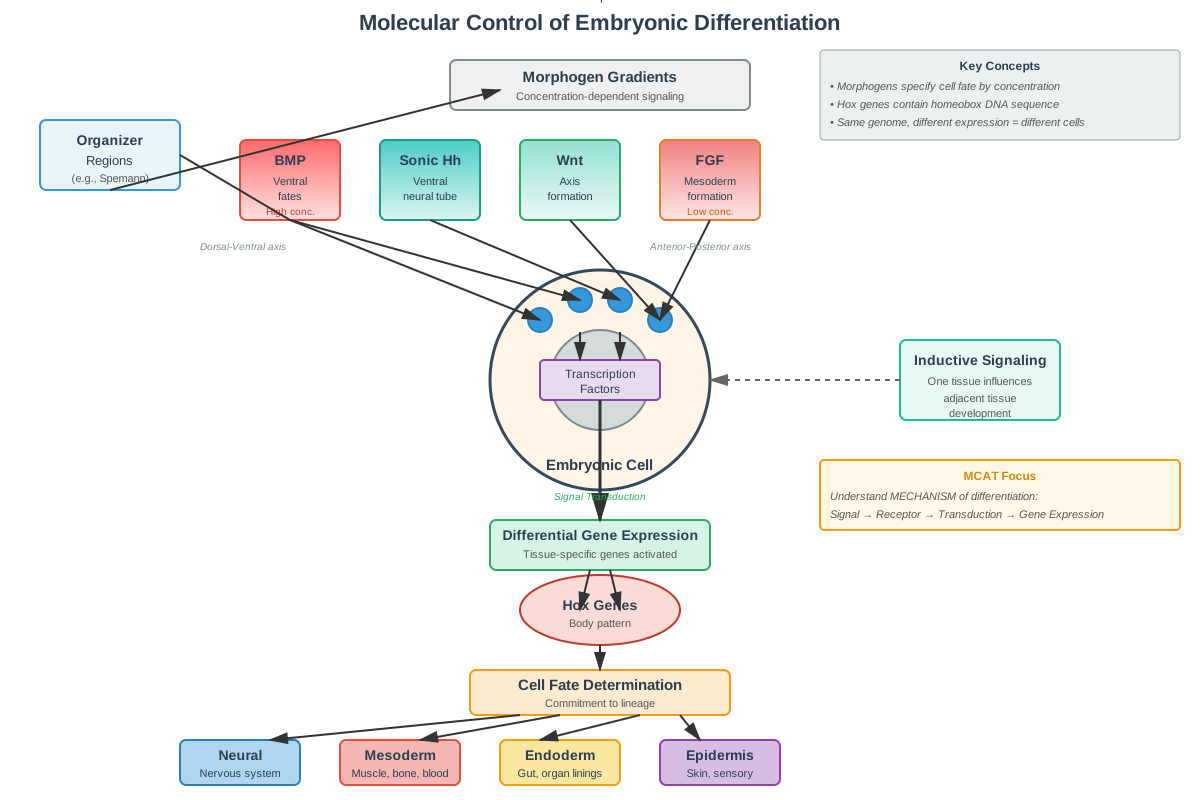
Induction is the process by which one group of cells influences the developmental fate of adjacent cells through chemical signals. This mechanism is fundamental to embryogenesis and explains how cells with identical genomes differentiate into diverse cell types. Key examples include:
- Primary induction: The notochord (mesoderm) induces overlying ectoderm to form neural tissue
- Secondary induction: The optic cup (neural tissue) induces overlying ectoderm to form the lens
Induction involves morphogens—signaling molecules that form concentration gradients and specify cell fate in a dose-dependent manner. Important morphogen families include:
- Sonic hedgehog (Shh): Patterns the neural tube and limbs
- Bone morphogenetic proteins (BMPs): Regulate dorsal-ventral patterning
- Fibroblast growth factors (FGFs): Control limb development and neural induction
- Wnt proteins: Regulate axis formation and cell fate
Homeobox (Hox) genes encode transcription factors that control body segmentation and anterior-posterior axis formation. These highly conserved genes contain a 180-base-pair DNA sequence called the homeobox, which encodes a DNA-binding domain. Mutations in Hox genes can cause dramatic developmental abnormalities, such as legs developing where antennae should be in fruit flies.
Organogenesis
Following gastrulation and neurulation, organogenesis begins—the formation of specific organs from the germ layers. This process involves:
- Continued cell differentiation
- Morphogenetic movements
- Programmed cell death (apoptosis) to sculpt structures
- Cell-cell interactions and inductive signaling
During organogenesis, cells become increasingly specialized and lose developmental potency. The sequence progresses from totipotent (zygote, can form all cell types including extraembryonic tissues) → pluripotent (inner cell mass, can form all embryonic cell types) → multipotent (can form multiple related cell types) → unipotent (can form only one cell type).
Concept Relationships
The concepts within embryogenesis form a hierarchical developmental sequence: Fertilization → Cleavage (rapid cell division) → Blastulation (formation of blastocyst with inner cell mass) → Gastrulation (formation of three germ layers: ectoderm, mesoderm, endoderm) → Neurulation (neural tube formation from ectoderm) → Organogenesis (organ formation from germ layers).
This sequence is driven by induction and morphogen gradients, which activate specific gene expression patterns (including Hox genes) that determine cell fate. The process demonstrates increasing specialization and decreasing developmental potency as cells progress from totipotent to pluripotent to multipotent states.
Embryogenesis connects to prerequisite topics through multiple pathways: Mitosis enables cleavage divisions; cell signaling mediates induction; gene expression controls differentiation; cell adhesion molecules facilitate morphogenetic movements. The topic extends forward to Physiology and Organ Systems by explaining the embryonic origins of each organ system, and to evolutionary biology through comparative embryology revealing evolutionary relationships.
The relationship can be mapped as: Genetic information → Differential gene expression → Morphogen gradients and induction → Cell differentiation → Tissue formation → Organ development → Integrated organ systems.
Quick check — test yourself on Embryogenesis so far.
Try Flashcards →High-Yield Facts
⭐ The three primary germ layers are ectoderm (outer), mesoderm (middle), and endoderm (inner), formed during gastrulation.
⭐ The nervous system and epidermis derive from ectoderm; the musculoskeletal and circulatory systems derive from mesoderm; the GI and respiratory tract linings derive from endoderm.
⭐ Neurulation forms the neural tube from ectoderm, which becomes the brain and spinal cord; failure of neural tube closure causes spina bifida or anencephaly.
⭐ The notochord (mesoderm) induces the overlying ectoderm to form neural tissue through primary induction.
⭐ Cleavage involves rapid mitotic divisions without cell growth, producing progressively smaller blastomeres while maintaining total embryo size.
- The blastocyst consists of the trophoblast (forms placenta), inner cell mass (forms embryo), and blastocoel (fluid-filled cavity).
- Gastrulation is initiated at the primitive streak in mammals and establishes the body's basic organization.
- Hox genes control anterior-posterior axis formation and body segmentation through their function as transcription factors.
- Morphogens are signaling molecules that specify cell fate in a concentration-dependent manner (examples: Sonic hedgehog, BMPs, FGFs, Wnts).
- Neural crest cells, derived from ectoderm, migrate throughout the embryo to form peripheral nervous system components, melanocytes, and facial cartilage.
- Humans are deuterostomes, meaning the blastopore becomes the anus rather than the mouth during development.
- Folic acid supplementation prevents neural tube defects by supporting proper DNA synthesis during rapid cell division.
- The inner cell mass contains pluripotent stem cells capable of forming any embryonic tissue but not extraembryonic tissues.
- Organogenesis involves progressive loss of developmental potency: totipotent → pluripotent → multipotent → unipotent.
- The adrenal gland has dual embryonic origins: the cortex derives from mesoderm, while the medulla derives from ectoderm (neural crest).
Common Misconceptions
Misconception: All organs derive from a single germ layer.
Correction: Most organs are composite structures with contributions from multiple germ layers. For example, the digestive tract has an endodermal epithelial lining, but its smooth muscle, connective tissue, and blood vessels derive from mesoderm. Only the epithelial lining is endodermal.
Misconception: Cleavage increases the size of the embryo.
Correction: Cleavage divisions increase cell number but do not increase total embryonic mass. The zygote is divided into progressively smaller cells (blastomeres) without intervening growth phases, so the embryo remains approximately the same size until after blastulation.
Misconception: The trophoblast forms the embryo proper.
Correction: The trophoblast forms extraembryonic structures (placenta and fetal membranes), not the embryo itself. The embryo proper develops from the inner cell mass of the blastocyst. This distinction is crucial for understanding stem cell biology.
Misconception: Gastrulation and neurulation are the same process.
Correction: Gastrulation forms the three germ layers (ectoderm, mesoderm, endoderm) and occurs before neurulation. Neurulation is a subsequent process specific to ectoderm, forming the neural tube. Gastrulation establishes the basic body organization, while neurulation specifically creates the central nervous system precursor.
Misconception: All ectoderm becomes nervous tissue.
Correction: Ectoderm has two major fates: neurectoderm (forms nervous system) and surface ectoderm (forms epidermis and associated structures). Only the neurectoderm, induced by the underlying notochord, forms neural tissue. The remaining ectoderm forms epidermis, sensory organs, and other surface structures.
Misconception: Embryonic development is entirely controlled by maternal factors.
Correction: Early development initially relies on maternal mRNA and proteins deposited in the egg, but the embryonic genome becomes activated during cleavage (at different stages in different species). After this "maternal-to-zygotic transition," embryonic gene expression increasingly controls development. Both maternal and embryonic factors are essential.
Misconception: Cell differentiation during embryogenesis is irreversible.
Correction: While differentiation generally restricts developmental potential, cells can be reprogrammed. Induced pluripotent stem cells (iPSCs) demonstrate that differentiated adult cells can be reverted to a pluripotent state through expression of specific transcription factors. However, under normal developmental conditions, differentiation is typically stable and progressive.
Worked Examples
Example 1: Tracing Tissue Origins
Question: A researcher is studying a congenital heart defect in which the muscular wall of the heart fails to develop properly, but the endocardial lining (inner epithelium) is normal. Based on embryological origins, which germ layer is most likely affected by the developmental abnormality?
Solution:
Step 1: Identify the tissue types involved.
- The heart wall consists primarily of cardiac muscle (myocardium) and connective tissue
- The endocardial lining is epithelial tissue
Step 2: Determine germ layer origins.
- Cardiac muscle derives from mesoderm (specifically, splanchnic mesoderm)
- The endocardial lining also derives from mesoderm (endothelial cells are mesodermal)
- However, the question states the lining is normal
Step 3: Analyze the specific defect.
- The muscular wall is defective, but the lining is normal
- Both derive from mesoderm, but from different mesodermal populations
- The myocardium (muscle) specifically comes from splanchnic mesoderm
Step 4: Conclude.
The developmental abnormality affects the mesoderm, specifically the population that forms cardiac muscle. This demonstrates that even within a single germ layer, different cell populations can be independently affected by developmental defects.
Key Learning Point: This example reinforces that organs are composite structures with contributions from specific germ layer populations. Understanding precise embryological origins helps predict which structures will be affected by developmental abnormalities.
Example 2: Analyzing an Experimental Manipulation
Question: In an amphibian embryo experiment, researchers remove the notochord immediately after gastrulation. What is the most likely developmental consequence?
A) The embryo will fail to form mesoderm
B) The embryo will lack a properly formed nervous system
C) The embryo will not undergo cleavage
D) The embryo will fail to implant
Solution:
Step 1: Identify the timing.
- The manipulation occurs "immediately after gastrulation"
- This means the three germ layers have already formed
- Cleavage and blastulation have already occurred
Step 2: Recall the function of the notochord.
- The notochord is a mesodermal structure that forms during gastrulation
- Its primary function is to induce the overlying ectoderm to form neural tissue (primary induction)
- It also provides structural support and secretes signaling molecules (especially Sonic hedgehog)
Step 3: Evaluate each answer choice.
- A) Incorrect - Mesoderm has already formed during gastrulation; the notochord is derived from mesoderm, not required for its formation
- B) Correct - Without the notochord's inductive signals, the ectoderm will not receive the signals necessary to form the neural plate and neural tube
- C) Incorrect - Cleavage occurs before gastrulation, so it has already happened
- D) Incorrect - Implantation is specific to mammals and occurs at the blastocyst stage, before gastrulation; amphibians don't implant
Step 4: Confirm the answer.
Answer: B - The embryo will lack a properly formed nervous system because the notochord provides the inductive signals necessary for neurulation.
Key Learning Point: This example demonstrates the importance of induction in embryogenesis and the temporal sequence of developmental events. Understanding what has already occurred and what remains to happen is crucial for predicting experimental outcomes.
Exam Strategy
Approaching Embryogenesis Questions
When encountering embryogenesis questions on the MCAT, follow this systematic approach:
- Identify the developmental stage: Determine whether the question involves cleavage, blastulation, gastrulation, neurulation, or organogenesis. This temporal context constrains possible answers.
- Map structures to germ layers: If the question asks about tissue or organ origins, immediately recall which germ layer produces that structure. Create a mental or written table if time permits.
- Consider inductive relationships: Many questions test understanding of how one tissue influences another's development. Look for cause-and-effect relationships between adjacent tissues.
- Apply the principle of progressive specialization: Remember that developmental potency decreases over time (totipotent → pluripotent → multipotent → unipotent). Questions about stem cells often test this concept.
Trigger Words and Phrases
Watch for these high-yield terms that signal embryogenesis content:
- "Germ layer" or "embryonic origin": Immediately think ectoderm/mesoderm/endoderm derivatives
- "Neural tube defect": Think neurulation, folic acid, spina bifida, anencephaly
- "Induction" or "signaling": Consider morphogens, notochord, and tissue interactions
- "Pluripotent" or "stem cells": Think inner cell mass, differentiation potential
- "Congenital abnormality" or "teratogen": Consider which developmental stage is most sensitive
- "Blastocyst": Think trophoblast, inner cell mass, implantation
- "Hox genes" or "homeobox": Think body segmentation, anterior-posterior axis
Process of Elimination Tips
For germ layer derivative questions:
- Eliminate options that mix up internal linings (usually endoderm) with structural support (usually mesoderm)
- Remember that nervous system = ectoderm; eliminate answers suggesting otherwise
- Recall that blood and blood vessels = mesoderm; this eliminates many incorrect options
For developmental sequence questions:
- Eliminate answers that place events out of temporal order
- Remember: cleavage → blastulation → gastrulation → neurulation → organogenesis
- Any answer suggesting neurulation before gastrulation is incorrect
For induction questions:
- The inducing tissue must be present before or simultaneous with the induced tissue
- Eliminate answers suggesting tissues can induce structures that develop earlier
Time Allocation
Embryogenesis questions typically require 60-90 seconds for discrete questions and 90-120 seconds for passage-based questions. If a question requires detailed recall of multiple germ layer derivatives, quickly sketch a three-column table (ectoderm/mesoderm/endoderm) to organize your thinking—this 10-second investment often saves time and prevents errors.
Memory Techniques
Germ Layer Derivatives Mnemonic
"EEE-MMM-III" for remembering major derivatives:
Ectoderm (EEE):
- Epidermis
- Eyes (lens)
- Encephalon (brain) and nervous system
Mesoderm (MMM):
- Muscle
- Mesenchyme (connective tissue)
- Medulla (adrenal medulla is the exception—it's actually ectodermal from neural crest!)
Endoderm (III):
- Intestines (GI tract lining)
- Insides (internal organ linings)
- Inner tubes (respiratory tract lining)
Neurulation Sequence Mnemonic
"Please Fold Carefully Now" for neurulation stages:
- Plate formation (neural plate)
- Fold elevation (neural folds rise)
- Closure (neural folds fuse)
- Neural crest migration
Developmental Potency Mnemonic
"To Play Music Uniquely" for decreasing potency:
- Totipotent (zygote)
- Pluripotent (inner cell mass)
- Multipotent (tissue-specific stem cells)
- Unipotent (committed progenitor cells)
Visualization Strategy
Create a mental "developmental timeline" with four distinct zones:
- Zone 1 (Cleavage): Visualize a ball being divided into smaller and smaller pieces without changing size
- Zone 2 (Blastulation): Visualize a hollow ball with a cluster of cells at one pole
- Zone 3 (Gastrulation): Visualize three colored layers (blue ectoderm, red mesoderm, yellow endoderm) forming through cell migration
- Zone 4 (Neurulation): Visualize the blue ectoderm layer folding into a tube along the back
Germ Layer Color Coding
Assign colors to germ layers for visual memory:
- Ectoderm = Blue (like the sky/outside)
- Mesoderm = Red (like blood and muscle)
- Endoderm = Yellow (like digestive enzymes)
When learning derivatives, visualize organs in these colors based on their epithelial lining or primary tissue type.
Summary
Embryogenesis encompasses the transformation of a single-celled zygote into a complex multicellular organism through cleavage, blastulation, gastrulation, and neurulation. The process establishes three primary germ layers—ectoderm, mesoderm, and endoderm—each giving rise to specific tissues and organs. Ectoderm forms the nervous system and epidermis; mesoderm forms musculoskeletal, circulatory, and excretory systems; endoderm forms the linings of digestive and respiratory tracts. Neurulation specifically creates the neural tube from ectoderm, which becomes the central nervous system. Developmental processes are coordinated through induction, morphogen gradients, and differential gene expression controlled by transcription factors including Hox genes. Understanding embryogenesis requires mastering the temporal sequence of events, the derivatives of each germ layer, and the mechanisms of cellular differentiation. For the MCAT, students must be able to trace any tissue or organ back to its embryonic origin, predict consequences of developmental disruptions, and apply embryological principles to experimental scenarios and clinical vignettes.
Key Takeaways
- Embryogenesis proceeds through four major stages: cleavage (rapid cell division), blastulation (hollow ball formation), gastrulation (germ layer formation), and neurulation (neural tube formation)
- The three germ layers and their major derivatives must be memorized: ectoderm → nervous system and epidermis; mesoderm → muscle, bone, blood, and kidneys; endoderm → GI and respiratory tract linings
- Neurulation forms the neural tube from ectoderm through induction by the underlying notochord; failure causes neural tube defects like spina bifida
- Induction is the key mechanism by which one tissue influences another's developmental fate through chemical signaling (morphogens)
- Developmental potency decreases progressively: totipotent (zygote) → pluripotent (inner cell mass) → multipotent (tissue stem cells) → unipotent (committed cells)
- Most organs are composite structures with contributions from multiple germ layers, though their epithelial lining typically determines their primary germ layer classification
- Hox genes control body segmentation and anterior-posterior axis formation, demonstrating how gene expression patterns determine spatial organization
Related Topics
Cell Differentiation and Gene Expression: Understanding how identical genomes produce diverse cell types through differential gene expression builds directly on embryogenesis concepts and explains the molecular basis of development.
Stem Cell Biology: Embryonic stem cells from the inner cell mass are pluripotent, and understanding their properties requires knowledge of embryogenesis stages and developmental potency.
Reproductive System and Fertilization: The events immediately preceding embryogenesis, including gamete formation, fertilization, and early zygotic development, provide essential context.
Nervous System Development: Detailed study of how the neural tube differentiates into brain regions and spinal cord extends the neurulation concepts introduced in embryogenesis.
Congenital Abnormalities and Teratology: Understanding normal embryogenesis is prerequisite to comprehending how developmental disruptions cause birth defects.
Evolutionary Developmental Biology (Evo-Devo): Comparative embryology reveals evolutionary relationships and demonstrates how changes in developmental timing produce morphological diversity.
Mastering embryogenesis provides the foundation for understanding how genetic information translates into organismal structure, making it essential for advanced topics in developmental biology, genetics, and medicine.
Practice CTA
Now that you've completed this comprehensive guide on embryogenesis, reinforce your understanding by attempting practice questions and reviewing flashcards on this topic. Focus especially on germ layer derivatives, as these are frequently tested and require solid memorization. Challenge yourself with passage-based questions that require applying embryological principles to experimental scenarios—this mirrors how the MCAT tests this content. Remember, embryogenesis integrates multiple biological disciplines, so mastering it strengthens your overall biology foundation. You've built a strong conceptual framework; now solidify it through active practice and retrieval. Your investment in understanding these developmental processes will pay dividends not only on test day but throughout your medical education!
Sign up free to keep reading
Create a free AnvayaPrep account to finish this MCAT guide on Embryogenesis — plus flashcards and practice questions.