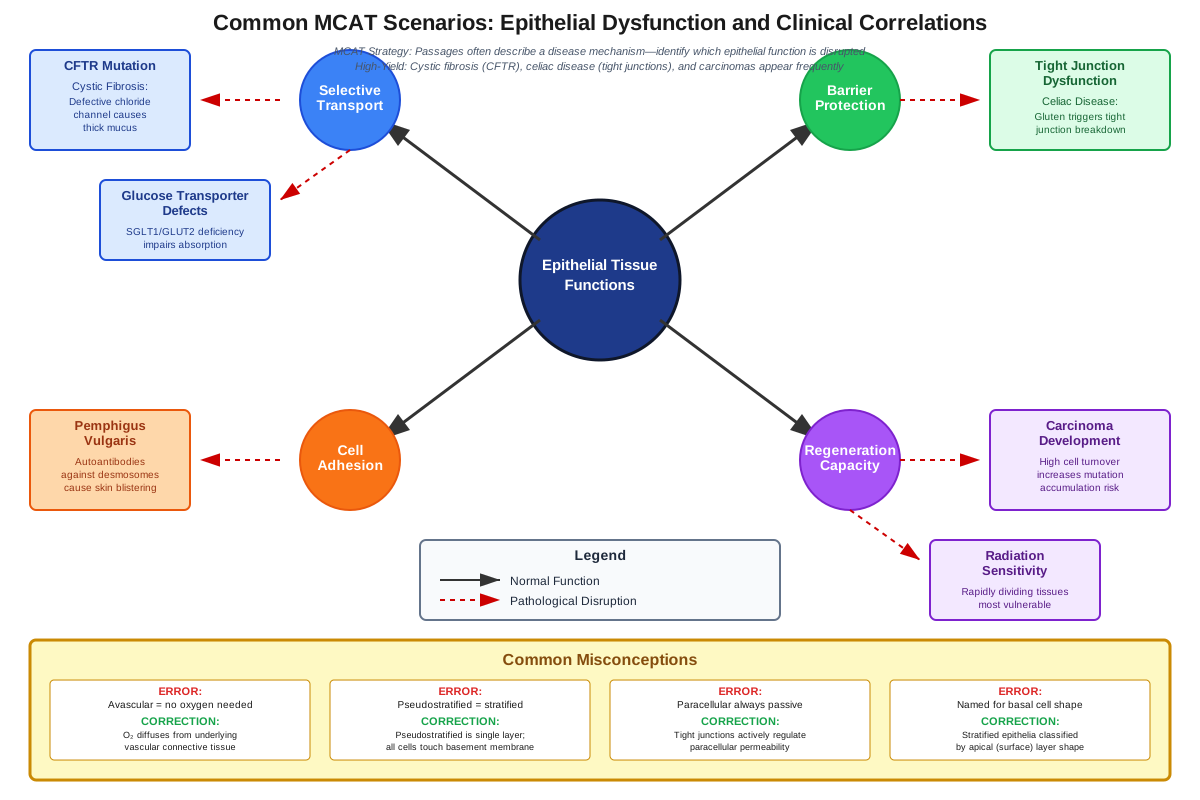
Overview
Epithelial tissue represents one of the four fundamental tissue types in the human body, alongside connective, muscle, and nervous tissue. This tissue forms continuous sheets of cells that cover body surfaces, line hollow organs and cavities, and constitute the majority of glands. Understanding epithelial tissue Biology is essential for MCAT success because it integrates concepts from cell biology, histology, and organ system physiology while appearing frequently in both passage-based and discrete questions.
The MCAT tests epithelial tissue within the broader context of Physiology and Organ Systems, requiring students to recognize how tissue structure directly relates to function—a core principle in Biology. Questions may present microscopic images, clinical scenarios involving barrier dysfunction, or experimental passages examining transport mechanisms across epithelial layers. Mastery of epithelial tissue classification, characteristics, and functional specializations enables students to tackle questions spanning multiple organ systems, from the integumentary and digestive systems to the respiratory and urinary systems.
Epithelial tissue MCAT content connects to numerous high-yield topics including cell junctions, membrane transport, tissue repair and regeneration, cancer biology (carcinomas originate from epithelial cells), and homeostatic regulation. The tissue's unique properties—including polarity, specialized cell-cell contacts, avascularity, and high regenerative capacity—make it a favorite subject for MCAT question writers who can test both structural knowledge and functional reasoning within realistic biological contexts.
Learning Objectives
- [ ] Define epithelial tissue using accurate Biology terminology
- [ ] Explain why epithelial tissue matters for the MCAT
- [ ] Apply epithelial tissue concepts to exam-style questions
- [ ] Identify common mistakes related to epithelial tissue classification and function
- [ ] Connect epithelial tissue to related Biology concepts across organ systems
- [ ] Classify epithelial tissues based on cell shape and layering patterns
- [ ] Analyze the relationship between epithelial tissue structure and physiological function
- [ ] Predict the consequences of epithelial barrier dysfunction in clinical scenarios
Prerequisites
- Cell membrane structure and function: Essential for understanding epithelial polarity, with distinct apical and basolateral membrane domains
- Cell junctions (tight junctions, desmosomes, gap junctions): Critical for comprehending how epithelial cells maintain barrier integrity and communicate
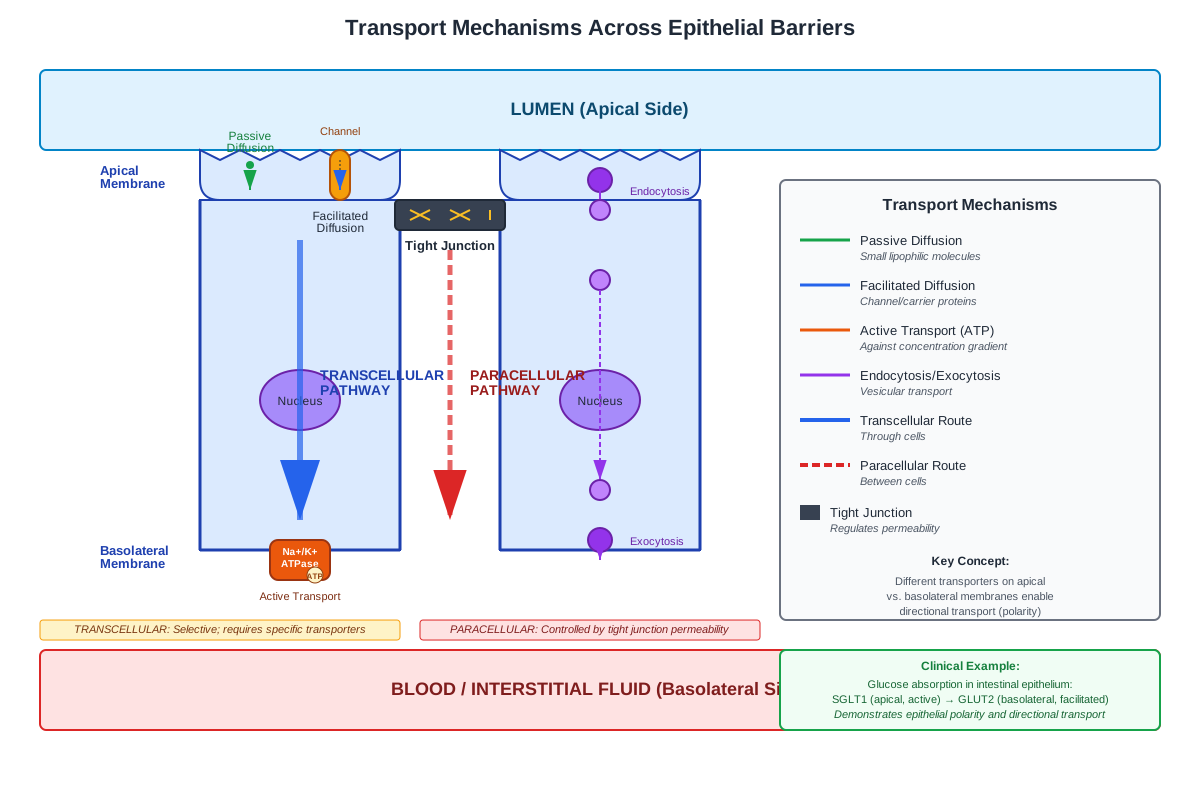
- Diffusion and active transport mechanisms: Necessary to understand transcellular and paracellular transport across epithelial layers
- Basic histology terminology: Required to interpret tissue classification schemes and microscopic descriptions
- Basement membrane composition: Important for understanding epithelial attachment and the epithelial-connective tissue interface
Why This Topic Matters
Epithelial tissue appears in approximately 5-8% of MCAT Biology questions, making it a medium-yield but essential topic. Questions typically appear in two formats: discrete questions testing classification and characteristics, and passage-based questions embedding epithelial function within organ system physiology or disease processes. The MCAT frequently presents clinical vignettes involving epithelial dysfunction—such as cystic fibrosis (defective chloride transport in respiratory epithelium), celiac disease (intestinal epithelial damage), or skin cancer (epithelial cell transformation).
Clinically, epithelial tissue serves as the body's primary interface with the external environment, making it crucial for protection, secretion, absorption, and sensation. Epithelial barriers prevent pathogen invasion, regulate fluid and electrolyte balance, and facilitate nutrient uptake. When epithelial integrity is compromised—through genetic mutations, inflammatory conditions, or physical trauma—serious pathologies emerge. Understanding epithelial biology enables medical professionals to comprehend disease mechanisms ranging from inflammatory bowel disease to acute respiratory distress syndrome.
The MCAT particularly favors questions that require students to connect epithelial structure to function. For example, passages may describe experimental manipulations of tight junction proteins and ask students to predict effects on paracellular permeability, or present microscopic images requiring tissue identification based on morphological features. Recognition of epithelial tissue types in different organ systems (simple squamous in alveoli, stratified squamous in esophagus, transitional in bladder) demonstrates integrated understanding of anatomy and physiology.
Core Concepts
Definition and General Characteristics
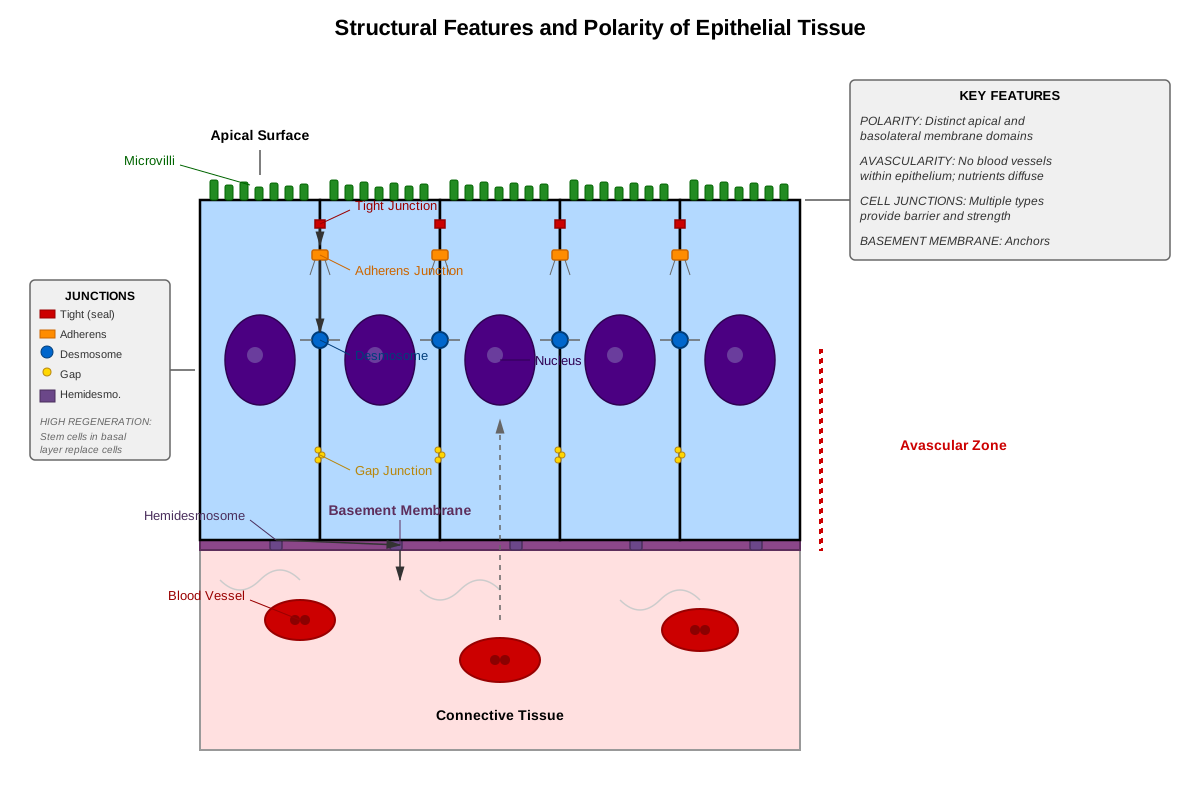
Epithelial tissue consists of closely packed cells arranged in continuous sheets with minimal extracellular matrix between cells. This tissue exhibits several defining characteristics that distinguish it from other tissue types. First, epithelial tissue displays polarity, meaning cells have structurally and functionally distinct apical (top) and basal (bottom) surfaces. The apical surface faces the external environment or lumen of an organ and often contains specialized structures like microvilli or cilia. The basal surface attaches to underlying connective tissue via a basement membrane (basal lamina), a specialized extracellular matrix layer composed primarily of collagen IV, laminin, and proteoglycans.
Epithelial tissue is avascular, meaning it lacks blood vessels. Nutrients and oxygen must diffuse from capillaries in the underlying connective tissue across the basement membrane to reach epithelial cells. This avascularity influences epithelial metabolism and healing processes. Despite lacking vasculature, epithelial tissue is often innervated, containing sensory nerve endings that detect stimuli.
A critical feature of epithelial tissue is its high regenerative capacity. Epithelial cells undergo continuous mitosis, with stem cells located in the basal layers producing new cells that migrate toward the apical surface, replacing damaged or aged cells. This regeneration rate varies by tissue type—intestinal epithelium renews every 3-5 days, while skin epidermis renews approximately every 28 days.
Classification by Cell Layers
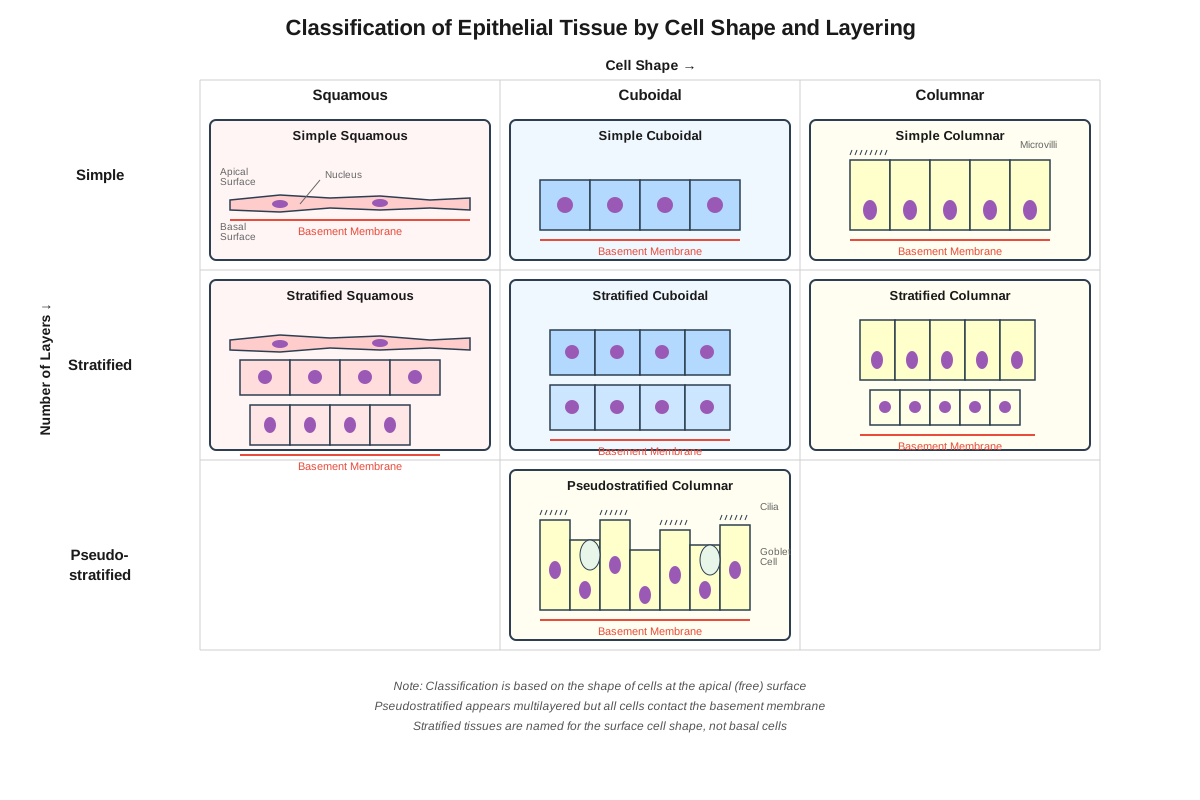
Epithelial tissues are classified based on two criteria: the number of cell layers and the shape of cells at the apical surface. Regarding layering, epithelium is categorized as:
Simple epithelium consists of a single layer of cells, with all cells contacting the basement membrane. This arrangement facilitates diffusion, filtration, secretion, and absorption, making simple epithelia ideal for interfaces requiring efficient molecular exchange. Simple epithelia appear in protected internal locations where mechanical stress is minimal.
Stratified epithelium contains multiple cell layers, with only the basal layer contacting the basement membrane. This multilayered arrangement provides protection against mechanical abrasion, chemical damage, and pathogen invasion. Stratified epithelia are classified based on the shape of cells at the apical surface, not the basal layer (where cells are typically cuboidal or columnar).
Pseudostratified epithelium appears stratified but is actually simple epithelium. All cells contact the basement membrane, but nuclei are positioned at different heights, creating a false impression of layering. This tissue type typically contains ciliated cells and is found in respiratory passages.
Classification by Cell Shape
The three primary cell shapes in epithelial classification are:
Squamous cells are flat, scale-like cells wider than they are tall. The nucleus appears flattened and disc-shaped. Squamous epithelia facilitate rapid diffusion and filtration due to minimal cytoplasmic thickness.
Cuboidal cells are roughly cube-shaped with equal height and width. The nucleus is typically round and centrally located. Cuboidal epithelia commonly function in secretion and absorption.
Columnar cells are taller than they are wide, appearing column-like or rectangular. The nucleus is typically oval and located near the basal surface. Columnar epithelia excel at secretion and absorption, often containing specialized apical modifications.
Major Epithelial Tissue Types
| Epithelial Type | Location Examples | Primary Functions | Key Features |
|---|---|---|---|
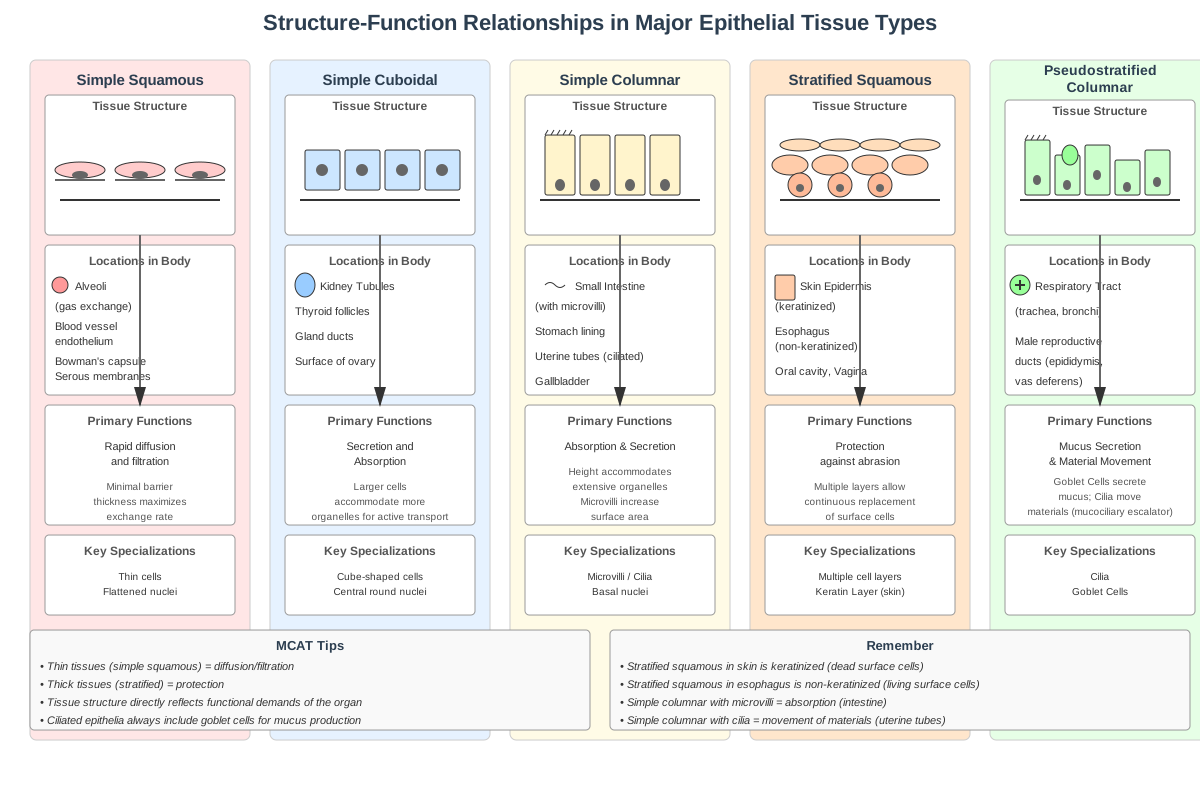
| Simple squamous | Alveoli, blood vessel lining (endothelium), serous membranes | Diffusion, filtration, secretion of serous fluid | Single layer of flat cells; minimal barrier thickness |
| Simple cuboidal | Kidney tubules, thyroid follicles, small gland ducts | Secretion, absorption | Single layer of cube-shaped cells; often surrounds lumens |
| Simple columnar | Stomach lining, small intestine, large intestine | Secretion, absorption | Single layer of tall cells; may contain goblet cells and microvilli |
| Stratified squamous (keratinized) | Skin epidermis | Protection against abrasion, water loss, UV radiation | Multiple layers; apical cells dead and filled with keratin |
| Stratified squamous (non-keratinized) | Oral cavity, esophagus, vagina | Protection against abrasion in moist environments | Multiple layers; apical cells alive and moist |
| Stratified cuboidal | Sweat gland ducts, mammary gland ducts | Protection, secretion | Two or more layers of cuboidal cells; relatively rare |
| Stratified columnar | Male urethra, large excretory ducts | Protection, secretion | Two or more layers; apical cells columnar; rare |
| Pseudostratified columnar (ciliated) | Respiratory tract (trachea, bronchi) | Secretion of mucus, movement of mucus via cilia | Appears layered; contains goblet cells and ciliated cells |
| Transitional | Urinary bladder, ureters, urethra | Stretch accommodation, protection | Multiple layers; apical cells change shape when stretched |
Specialized Epithelial Structures
Microvilli are microscopic finger-like projections of the apical plasma membrane that increase surface area for absorption. Each microvillus contains actin filaments providing structural support. Collectively, thousands of microvilli form a brush border, particularly prominent in small intestine absorptive cells and kidney proximal tubule cells, where they can increase surface area 20-fold.
Cilia are motile, hair-like projections containing microtubules arranged in a characteristic 9+2 pattern (nine peripheral doublets surrounding two central microtubules). Cilia beat in coordinated waves to move substances across the epithelial surface. Ciliated epithelium in respiratory passages propels mucus containing trapped particles toward the pharynx for elimination (mucociliary escalator).
Goblet cells are specialized columnar epithelial cells that secrete mucus. These unicellular glands are interspersed among other epithelial cells, particularly in respiratory and digestive tract linings. The apical portion of goblet cells is expanded with mucin-containing secretory vesicles, creating a goblet or wine-glass shape.
Glandular Epithelium
Glands are epithelial structures specialized for secretion. Exocrine glands secrete products onto body surfaces or into cavities via ducts. Examples include sweat glands, salivary glands, and pancreatic acinar cells. Endocrine glands lack ducts and secrete hormones directly into the bloodstream. Examples include the thyroid, adrenal glands, and pancreatic islets.
Exocrine glands are classified by structure and secretion method. Structurally, they may be simple (unbranched duct) or compound (branched duct), and the secretory portion may be tubular (tube-shaped), acinar/alveolar (flask-shaped), or tubuloacinar (both). By secretion mechanism, glands are classified as:
- Merocrine (eccrine): Secretory vesicles release contents via exocytosis; cell remains intact (most common; includes salivary glands, pancreas)
- Apocrine: Apical portion of cell pinches off with secretory product (mammary glands, some sweat glands)
- Holocrine: Entire cell disintegrates to release product; requires continuous cell replacement (sebaceous glands)
Cell Junctions in Epithelial Tissue
Epithelial cells are connected by specialized cell junctions that maintain tissue integrity and regulate paracellular transport:
Tight junctions (zonula occludens) form near the apical surface, creating a seal between adjacent cells that prevents molecules from passing between cells (paracellular pathway). Tight junction proteins (claudins, occludins) create selectively permeable barriers, with permeability varying by tissue type. Intestinal epithelium has "leakier" tight junctions than blood-brain barrier endothelium.
Adherens junctions (zonula adherens) provide mechanical stability by linking actin filaments of adjacent cells via cadherin proteins. These junctions form a continuous belt below tight junctions.
Desmosomes (macula adherens) are spot-like junctions that anchor intermediate filaments (keratin) between cells, providing mechanical strength. Desmosomes are particularly abundant in tissues experiencing mechanical stress, such as skin and cardiac muscle.
Gap junctions contain connexon channels that allow direct cytoplasmic communication between adjacent cells, permitting passage of ions and small molecules. This enables coordinated cellular responses.
Hemidesmosomes anchor epithelial cells to the basement membrane using integrin proteins, connecting intracellular intermediate filaments to extracellular matrix components.
Concept Relationships
Epithelial tissue classification integrates two independent variables—cell shape and layering—creating a matrix of tissue types. The relationship follows: Cell shape (squamous/cuboidal/columnar) × Layering (simple/stratified/pseudostratified) → Specific epithelial tissue type → Determines functional capacity and anatomical location.
Within epithelial tissue, structure-function relationships are paramount: Simple epithelium → Minimal barrier thickness → Facilitates diffusion/absorption, while Stratified epithelium → Multiple protective layers → Provides mechanical protection. This principle extends to cell shape: Squamous cells → Flat morphology → Rapid diffusion, whereas Columnar cells → Tall morphology with extensive cytoplasm → Enhanced secretion/absorption capacity.
Epithelial polarity connects to membrane transport mechanisms: Apical membrane specializations (microvilli, ion channels) + Basolateral membrane transporters → Vectorial transport across epithelium. This arrangement enables epithelia to move substances directionally, such as nutrient absorption in intestines or sodium reabsorption in kidneys.
Cell junctions create a hierarchical organization: Tight junctions (apical) → Regulate paracellular permeability → Adherens junctions (below) → Provide mechanical linkage → Desmosomes (scattered) → Reinforce mechanical strength → Gap junctions (scattered) → Enable cell-cell communication. This junction arrangement maintains both barrier function and tissue integrity.
Epithelial tissue connects to broader biological concepts: Basement membrane → Anchors epithelium to connective tissue → Provides structural support and regulates cell behavior. The epithelial-connective tissue interface is critical for tissue organization and represents a common site for cancer invasion when basement membrane integrity is compromised.
Glandular epithelium demonstrates developmental relationships: Surface epithelium → Invaginates during development → Forms glandular structures (exocrine if duct retained, endocrine if duct degenerates). This developmental origin explains why most cancers are carcinomas (epithelial origin), as epithelial cells retain high proliferative capacity throughout life.
Quick check — test yourself on Epithelial tissue so far.
Try Flashcards →High-Yield Facts
⭐ Epithelial tissue is avascular but innervated—nutrients diffuse from underlying connective tissue capillaries across the basement membrane.
⭐ All epithelial cells rest on a basement membrane composed primarily of collagen IV and laminin, which anchors epithelium to underlying connective tissue.
⭐ Simple squamous epithelium lines alveoli where minimal barrier thickness facilitates rapid gas exchange between air and blood.
⭐ Stratified squamous epithelium exists in two forms: keratinized (skin epidermis) for protection against desiccation, and non-keratinized (oral cavity, esophagus, vagina) for protection in moist environments.
⭐ Transitional epithelium is unique to the urinary system (bladder, ureters, urethra) and can stretch to accommodate volume changes without tearing.
- Pseudostratified columnar ciliated epithelium lines most of the respiratory tract, where cilia move mucus containing trapped particles toward the pharynx.
- Goblet cells are unicellular exocrine glands that secrete mucus and are found in respiratory and digestive tract epithelia.
- Microvilli increase absorptive surface area up to 20-fold and are most prominent in small intestine enterocytes and kidney proximal tubule cells.
- Tight junctions regulate paracellular permeability and their "tightness" varies by tissue—very tight in blood-brain barrier, relatively leaky in intestinal epithelium.
- Most human cancers are carcinomas (epithelial origin) because epithelial cells retain high proliferative capacity throughout life, increasing mutation accumulation risk.
- Epithelial tissue has high regenerative capacity with renewal rates varying from 3-5 days (intestinal epithelium) to 28 days (skin epidermis).
- Endothelium (simple squamous epithelium lining blood vessels) and mesothelium (lining body cavities) are specialized epithelial tissues with distinct developmental origins but similar structure.
Common Misconceptions
Misconception: All stratified epithelia are classified by the shape of basal cells.
Correction: Stratified epithelia are classified by the shape of cells at the apical surface, not the basal layer. Basal cells are typically cuboidal or columnar regardless of the stratified epithelium type, as these cells are actively dividing stem cells.
Misconception: Pseudostratified epithelium contains multiple cell layers.
Correction: Pseudostratified epithelium is actually simple epithelium where all cells contact the basement membrane. The appearance of stratification results from nuclei positioned at different heights within cells of varying lengths, not from true layering.
Misconception: Epithelial tissue contains blood vessels to support its high metabolic activity.
Correction: Epithelial tissue is avascular—it completely lacks blood vessels. Nutrients and oxygen reach epithelial cells by diffusion from capillaries in the underlying connective tissue across the basement membrane. This avascularity influences healing rates and metabolic capacity.
Misconception: Transitional epithelium transitions between different epithelial types.
Correction: The term "transitional" refers to the tissue's ability to change shape (stretch) to accommodate volume changes in urinary organs, not to transition between tissue types. When relaxed, transitional epithelium appears stratified cuboidal; when stretched, it appears stratified squamous.
Misconception: Tight junctions completely prevent all paracellular transport.
Correction: Tight junctions create selectively permeable barriers whose "tightness" varies by tissue type and physiological conditions. Some tight junctions (intestinal epithelium) are relatively "leaky" and permit selective paracellular ion and water movement, while others (blood-brain barrier) are extremely tight.
Misconception: Keratinized and non-keratinized stratified squamous epithelia have the same function.
Correction: While both provide protection, keratinized epithelium (skin) protects against desiccation, UV radiation, and abrasion in dry environments with dead, keratin-filled apical cells. Non-keratinized epithelium (oral cavity, esophagus) protects against abrasion in moist environments with living apical cells that remain metabolically active.
Misconception: Goblet cells are a type of connective tissue cell.
Correction: Goblet cells are specialized epithelial cells (modified columnar cells) that function as unicellular exocrine glands. They are interspersed among other epithelial cells and secrete mucus onto epithelial surfaces.
Worked Examples
Example 1: Tissue Identification from Clinical Scenario
Question: A biopsy from a patient's trachea shows tissue with cells of varying heights, all contacting the basement membrane. Many cells have cilia on their apical surface, and goblet cells are interspersed throughout. What type of epithelium is this, and why is this structure optimal for tracheal function?
Solution:
Step 1: Identify the layering pattern. The description states "cells of varying heights, all contacting the basement membrane." This indicates that despite appearing layered, all cells reach the basement membrane, which defines pseudostratified epithelium.
Step 2: Identify the cell shape. While the tissue appears to have cells of varying heights, the presence of columnar cells (tall cells) with cilia indicates columnar cell morphology.
Step 3: Note specialized features. The presence of cilia and goblet cells is characteristic of respiratory tract epithelium.
Step 4: Classify the tissue. This is pseudostratified columnar ciliated epithelium with goblet cells.
Step 5: Connect structure to function. This epithelial type is optimal for the trachea because:
- Cilia beat in coordinated waves to move mucus upward toward the pharynx (mucociliary escalator)
- Goblet cells secrete mucus that traps inhaled particles, pathogens, and debris
- Pseudostratified arrangement allows multiple cell types (ciliated cells, goblet cells, basal stem cells) to coexist while maintaining a relatively thin barrier
- The combination provides both protection (trapping particles) and clearance (moving mucus out of airways)
Answer: Pseudostratified columnar ciliated epithelium; this structure optimizes particle trapping and clearance through coordinated ciliary action while maintaining multiple specialized cell types.
Example 2: Predicting Functional Consequences
Question: Researchers develop a drug that selectively disrupts tight junction proteins in intestinal epithelium. Predict three physiological consequences of this disruption and explain the mechanism for each.
Solution:
Step 1: Recall tight junction function. Tight junctions in intestinal epithelium regulate paracellular permeability, preventing uncontrolled movement of molecules between cells while allowing selective passage of certain ions and water.
Step 2: Predict Consequence 1—Increased paracellular permeability.
Mechanism: Disrupted tight junctions create gaps between epithelial cells, allowing molecules that normally cannot pass through the paracellular pathway (large molecules, antigens, bacteria) to cross the epithelial barrier. This leads to increased intestinal permeability ("leaky gut"), potentially triggering immune responses to luminal contents.
Step 3: Predict Consequence 2—Impaired nutrient absorption.
Mechanism: Normal intestinal absorption relies on vectorial transport—nutrients enter through apical transporters and exit through basolateral transporters, creating a concentration gradient. Disrupted tight junctions allow nutrients to leak back into the lumen through the paracellular pathway, reducing net absorption efficiency and potentially causing malabsorption and diarrhea.
Step 4: Predict Consequence 3—Loss of epithelial polarity.
Mechanism: Tight junctions maintain the boundary between apical and basolateral membrane domains, preventing lateral diffusion of membrane proteins. Without functional tight junctions, apical proteins (like nutrient transporters) can diffuse into the basolateral membrane and vice versa, disrupting cell polarity and compromising specialized transport functions.
Step 5: Consider additional consequences. Disrupted tight junctions may also cause electrolyte imbalance (unregulated ion movement) and inflammation (immune response to bacterial antigens crossing the barrier).
Answer: Three consequences are: (1) Increased paracellular permeability allowing antigens and bacteria to cross the barrier, (2) Impaired nutrient absorption due to back-leakage through paracellular pathways, and (3) Loss of epithelial polarity from mixing of apical and basolateral membrane proteins. All result from loss of the selective barrier and membrane domain separation normally provided by tight junctions.
Exam Strategy
When approaching MCAT questions on epithelial tissue, employ a systematic classification strategy. First, determine whether the question asks about structure (identification/classification) or function (physiological role). For structural questions, use the two-variable system: identify layering (simple/stratified/pseudostratified) first, then cell shape (squamous/cuboidal/columnar). This methodical approach prevents confusion between similar-sounding tissue types.
Trigger words to watch for include:
- "Single layer" or "one cell thick" → simple epithelium
- "Multiple layers" or "stratified" → stratified epithelium (unless all cells touch basement membrane → pseudostratified)
- "Flat, scale-like cells" → squamous
- "Cube-shaped" or "equal dimensions" → cuboidal
- "Tall, column-like" → columnar
- "Stretches" or "bladder" → transitional
- "Cilia" or "respiratory tract" → pseudostratified columnar ciliated
- "Absorption" or "brush border" → simple columnar with microvilli
- "Diffusion" or "alveoli" → simple squamous
For passage-based questions, epithelial tissue often appears in contexts involving barrier function, transport mechanisms, or disease states. When passages describe experimental manipulations (knockout of junction proteins, altered ion channels, inflammatory conditions), predict consequences by connecting structure to function. Ask: "How does this change affect barrier integrity, polarity, or transport capacity?"
Process-of-elimination tips:
- Eliminate options suggesting blood vessels within epithelium (epithelium is avascular)
- Eliminate stratified epithelia for locations requiring rapid diffusion (stratified = thick barrier)
- Eliminate simple epithelia for high-abrasion locations (simple = fragile, single layer)
- If "protection" is the primary function, favor stratified over simple
- If "absorption" or "secretion" is emphasized, favor simple columnar over other types
Time allocation: Discrete epithelial questions typically require 60-90 seconds—enough time to systematically classify tissue type. Passage-based questions may require 90-120 seconds to integrate passage information with epithelial concepts. Don't spend excessive time memorizing every location of every epithelial type; instead, understand the structure-function principles that predict where each type should be found.
Memory Techniques
Mnemonic for epithelial tissue characteristics: "PINAR"
- Polarity (apical vs. basal surfaces)
- Innervated (contains nerve endings)
- No blood vessels (avascular)
- Attached to basement membrane
- Regenerative capacity (high mitotic rate)
Mnemonic for simple epithelial locations: "SKALD"
- Simple Squamous: Serous membranes, alveoli (air Sacs)
- Simple Cuboidal: Kidney tubules
- Simple Columnar: Alimentary canal (stomach, intestines)
- Pseudostratified: Lungs/airways (respiratory Lining)
- Transitional: Detrusor (bladder)
Mnemonic for stratified squamous locations: VENOM
- Vagina
- Esophagus
- Nasal cavity
- Oral cavity
- Mouth
(All non-keratinized; skin is keratinized)
Visualization strategy for classification: Picture a two-axis graph:
- X-axis: Cell shape (squamous → cuboidal → columnar)
- Y-axis: Layering (simple → stratified)
- Plot each tissue type on this graph, creating a mental "map" of epithelial tissues
Mnemonic for gland secretion types: "MAH"
- Merocrine: Most common, cell remains intact (think: Most cells survive)
- Apocrine: Apical portion pinches off (think: Apex lost)
- Holocrine: Hole cell disintegrates (think: Hole cell destroyed)
Memory aid for tight junction location: Tight junctions are at the TOP (apical surface), creating a Tight seal that Obstructs Paracellular passage.
Summary
Epithelial tissue represents one of four fundamental tissue types, characterized by closely packed cells forming continuous sheets that cover surfaces, line cavities, and constitute glands. This tissue exhibits defining features including polarity (distinct apical and basal surfaces), avascularity (lacks blood vessels), innervation, attachment to a basement membrane, and high regenerative capacity. Classification follows a two-variable system based on cell layering (simple, stratified, or pseudostratified) and cell shape (squamous, cuboidal, or columnar), creating distinct tissue types optimized for specific functions. Simple epithelia facilitate diffusion, filtration, secretion, and absorption, while stratified epithelia provide mechanical protection. Specialized structures including microvilli, cilia, and goblet cells enhance epithelial function, and cell junctions (particularly tight junctions) maintain barrier integrity and regulate paracellular transport. Understanding structure-function relationships in epithelial tissue enables prediction of tissue location, physiological roles, and consequences of dysfunction—essential skills for MCAT success.
Key Takeaways
- Epithelial tissue is classified by two independent variables: cell layering (simple/stratified/pseudostratified) and cell shape (squamous/cuboidal/columnar), creating a matrix of tissue types with distinct functions
- All epithelial tissue is avascular but innervated, resting on a basement membrane that anchors it to underlying connective tissue
- Structure directly predicts function: simple epithelia enable efficient transport/diffusion, stratified epithelia provide protection, and specialized structures (microvilli, cilia) enhance specific functions
- Tight junctions regulate paracellular permeability and maintain epithelial polarity by separating apical and basolateral membrane domains
- Transitional epithelium is unique to the urinary system, stretching to accommodate volume changes without compromising barrier function
- Most human cancers are carcinomas (epithelial origin) due to the high proliferative capacity of epithelial cells throughout life
- MCAT questions test both classification skills and structure-function reasoning, often embedding epithelial concepts within organ system physiology or disease scenarios
Related Topics
Connective Tissue: Understanding epithelial tissue provides foundation for studying connective tissue, which underlies and supports epithelium. The epithelial-connective tissue interface (basement membrane) is critical for tissue organization and represents a common site for pathological processes including cancer invasion.
Cell Junctions and Cell Adhesion: Mastery of epithelial tissue enables deeper exploration of cell junction types, their molecular composition, and their roles in tissue integrity, signaling, and disease. Genetic defects in junction proteins cause various pathologies.
Membrane Transport Mechanisms: Epithelial tissue concepts connect directly to transport physiology, including transcellular and paracellular pathways, vectorial transport, and the role of epithelial polarity in creating concentration gradients across tissue layers.
Organ System Histology: Understanding epithelial classification enables recognition of tissue types throughout organ systems—from respiratory tract pseudostratified epithelium to renal tubule simple cuboidal epithelium—integrating structure with system-specific functions.
Cancer Biology: Epithelial tissue knowledge provides foundation for understanding carcinoma development, including loss of cell polarity, disruption of basement membrane, epithelial-mesenchymal transition, and metastasis mechanisms.
Practice CTA
Now that you've mastered the core concepts of epithelial tissue, it's time to reinforce your understanding through active practice. Challenge yourself with MCAT-style practice questions that test tissue classification, structure-function relationships, and clinical applications. Use flashcards to drill high-yield facts, tissue locations, and classification criteria until recognition becomes automatic. Remember: epithelial tissue appears across multiple organ systems on the MCAT, so mastering this foundational topic will pay dividends throughout your Biology preparation. Your ability to quickly classify tissues and predict functional consequences will set you apart on test day—keep practicing!
Sign up free to keep reading
Create a free AnvayaPrep account to finish this MCAT guide on Epithelial tissue — plus flashcards and practice questions.