Overview
Hearing is a complex sensory process that enables organisms to detect and interpret sound waves from the environment. In the context of Biology and the MCAT, hearing represents a critical example of mechanotransduction—the conversion of mechanical stimuli into electrical signals that the nervous system can process. The auditory system demonstrates fundamental principles of sensory physiology, including signal transduction, neural encoding, and sensory processing that appear throughout the Physiology and Organ Systems section of the exam.
Understanding Hearing Biology requires integration of anatomical structures, physiological mechanisms, and neurological pathways. The ear functions as both a mechanical amplifier and a frequency analyzer, transforming pressure waves in air into neural impulses that the brain interprets as sound. This process involves three distinct anatomical regions—the outer ear, middle ear, and inner ear—each contributing specialized functions to the overall sensory experience. The cochlea, housed within the inner ear, contains the organ of Corti where mechanoreceptor hair cells convert mechanical vibrations into action potentials, exemplifying the broader biological principle of sensory transduction.
For Hearing MCAT preparation, this topic frequently appears in passages involving sensory systems, neurophysiology, and clinical scenarios related to hearing loss or balance disorders. The MCAT tests not only anatomical knowledge but also the ability to apply physiological principles to novel situations, trace signal pathways, and understand how disruptions at different levels affect overall function. Mastery of hearing connects to broader concepts including membrane potentials, action potential propagation, neurotransmitter release, and central nervous system processing—all high-yield topics across multiple MCAT sections.
Learning Objectives
- [ ] Define Hearing using accurate Biology terminology
- [ ] Explain why Hearing matters for the MCAT
- [ ] Apply Hearing to exam-style questions
- [ ] Identify common mistakes related to Hearing
- [ ] Connect Hearing to related Biology concepts
- [ ] Trace the complete pathway of sound from the external environment to cortical perception
- [ ] Explain the mechanism of mechanotransduction in cochlear hair cells at the molecular level
- [ ] Differentiate between conductive and sensorineural hearing loss based on anatomical disruption
- [ ] Analyze how the structure of the cochlea enables frequency discrimination
Prerequisites
- Basic cell membrane physiology: Understanding resting membrane potential and ion gradients is essential for comprehending hair cell depolarization
- Action potential generation and propagation: Hair cell signals must be converted to neural impulses in the auditory nerve
- Neuroanatomy fundamentals: Knowledge of cranial nerves (specifically CN VIII) and basic brain structure helps trace auditory pathways
- Wave physics basics: Sound is a mechanical wave, requiring understanding of frequency, amplitude, and wave propagation
- Receptor physiology: General principles of sensory transduction apply specifically to auditory mechanoreceptors
Why This Topic Matters
Clinical Significance: Hearing loss affects approximately 15% of American adults and represents one of the most common sensory deficits. Understanding the auditory system enables clinicians to localize pathology—whether a patient's hearing loss stems from wax impaction (outer ear), otosclerosis (middle ear), noise-induced damage (inner ear), or acoustic neuroma (neural pathway). The vestibular system, anatomically integrated with the auditory system, also governs balance, making inner ear pathology clinically significant for both hearing and equilibrium.
MCAT Exam Statistics: Hearing appears in approximately 3-5% of Biology/Biochemistry section passages, typically integrated with broader physiology topics. Questions may appear as discrete items testing anatomical knowledge or within passages exploring sensory transduction mechanisms, aging-related changes, or experimental manipulations of auditory function. The topic frequently appears alongside vision, creating opportunities for comparative questions about sensory systems.
Common Exam Contexts: MCAT passages featuring hearing often present experimental scenarios investigating hair cell function, studies of frequency discrimination, clinical vignettes describing hearing loss patterns, or research on auditory processing in the brain. The exam may provide novel information about auditory system components and ask students to apply fundamental principles to predict outcomes or explain mechanisms. Questions commonly test the ability to distinguish conductive from sensorineural hearing loss, understand the tonotopic organization of the cochlea, or explain how specific anatomical damage affects hearing function.
Core Concepts
Anatomy of the Auditory System
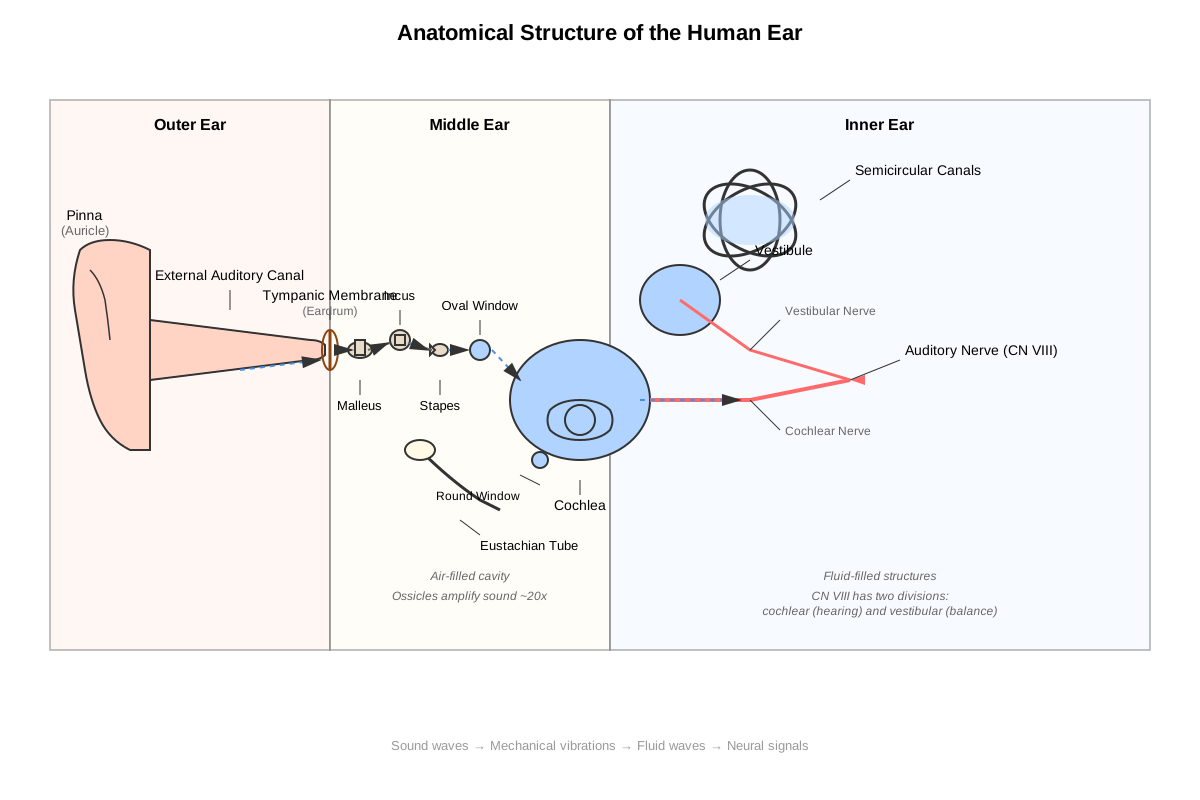
The auditory system divides into three anatomical regions, each with distinct functions. The outer ear consists of the pinna (auricle) and external auditory canal, which collect and funnel sound waves toward the tympanic membrane. The pinna's shape provides some directional information, while the canal's length (approximately 2.5 cm) provides resonance that amplifies frequencies important for speech perception.
The middle ear is an air-filled cavity containing three ossicles: the malleus, incus, and stapes. These bones form a mechanical lever system that transmits vibrations from the tympanic membrane (eardrum) to the oval window of the cochlea. This ossicular chain provides impedance matching—solving the problem of transmitting sound from air (low impedance) to the fluid-filled cochlea (high impedance). Without this amplification system, approximately 99.9% of sound energy would reflect off the cochlear fluid interface. The middle ear also connects to the nasopharynx via the Eustachian tube, which equalizes pressure across the tympanic membrane.
The inner ear contains the cochlea (for hearing) and vestibular apparatus (for balance). The cochlea is a spiral structure with approximately 2.5 turns, containing three fluid-filled chambers: the scala vestibuli, scala media (cochlear duct), and scala tympani. The scala vestibuli and tympani contain perilymph (high Na⁺, low K⁺—similar to extracellular fluid), while the scala media contains endolymph (high K⁺, low Na⁺—similar to intracellular fluid). This unique ionic composition is critical for hair cell function.
The Organ of Corti and Mechanotransduction
The organ of Corti sits on the basilar membrane within the scala media and contains the sensory receptors for hearing. Two types of hair cells serve different functions: inner hair cells (approximately 3,500 in humans) are the primary sensory receptors that transmit auditory information to the brain, while outer hair cells (approximately 12,000) amplify basilar membrane motion and sharpen frequency tuning through active mechanical feedback.
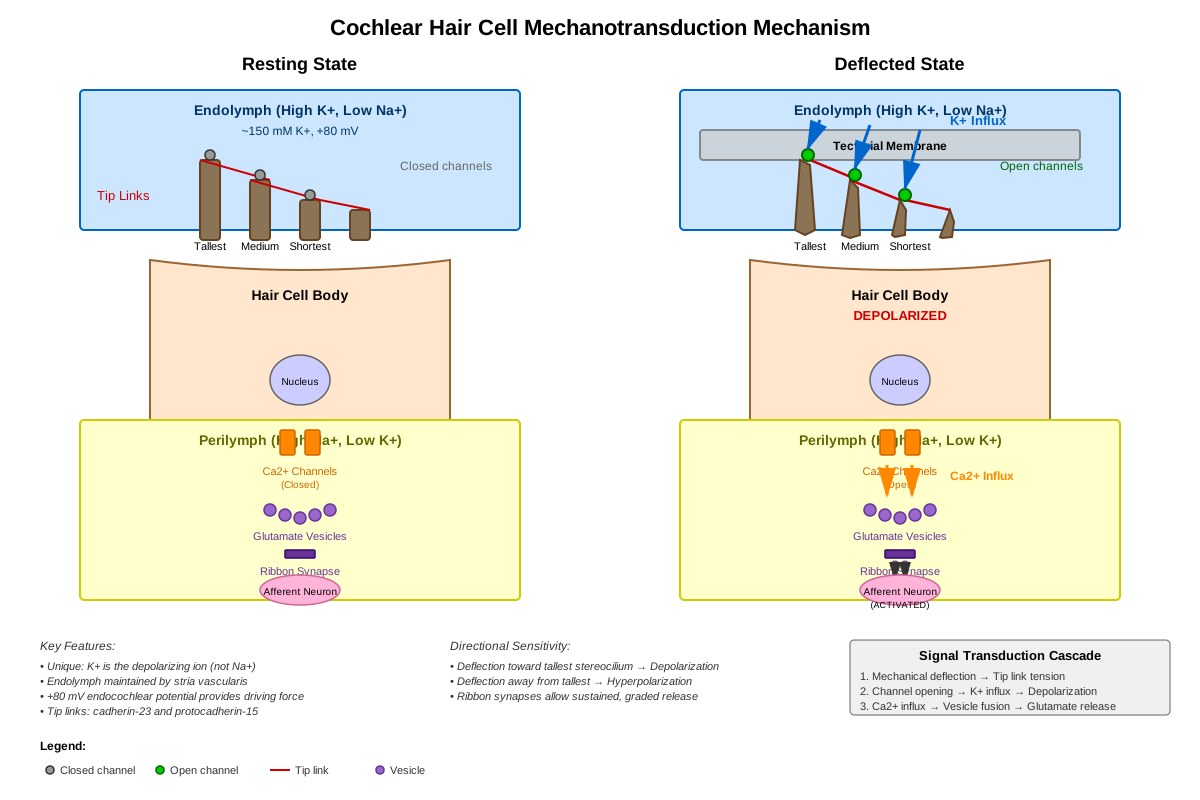
Each hair cell possesses stereocilia—specialized microvilli arranged in rows of increasing height. The tips of stereocilia connect via tip links (protein filaments containing cadherin-23 and protocadherin-15). When the basilar membrane vibrates in response to sound, the tectorial membrane (a gelatinous structure) causes stereocilia to bend. Deflection toward the tallest stereocilium increases tension on tip links, directly opening mechanically-gated ion channels.
Mechanotransduction mechanism:
- Sound vibrations cause basilar membrane displacement
- Stereocilia bend, creating tension on tip links
- Mechanically-gated channels open, allowing K⁺ and Ca²⁺ influx
- Despite K⁺ being the primary ion entering, the cell depolarizes (because the scala media has an electrical potential of +80 mV relative to perilymph, creating a driving force for K⁺ entry)
- Depolarization opens voltage-gated Ca²⁺ channels at the cell base
- Ca²⁺ influx triggers glutamate release onto auditory nerve fibers
- Glutamate generates action potentials in spiral ganglion neurons (CN VIII)
This process represents one of the fastest forms of sensory transduction, with latencies under 100 microseconds, enabling precise temporal coding of sound.
Frequency Coding and Tonotopic Organization
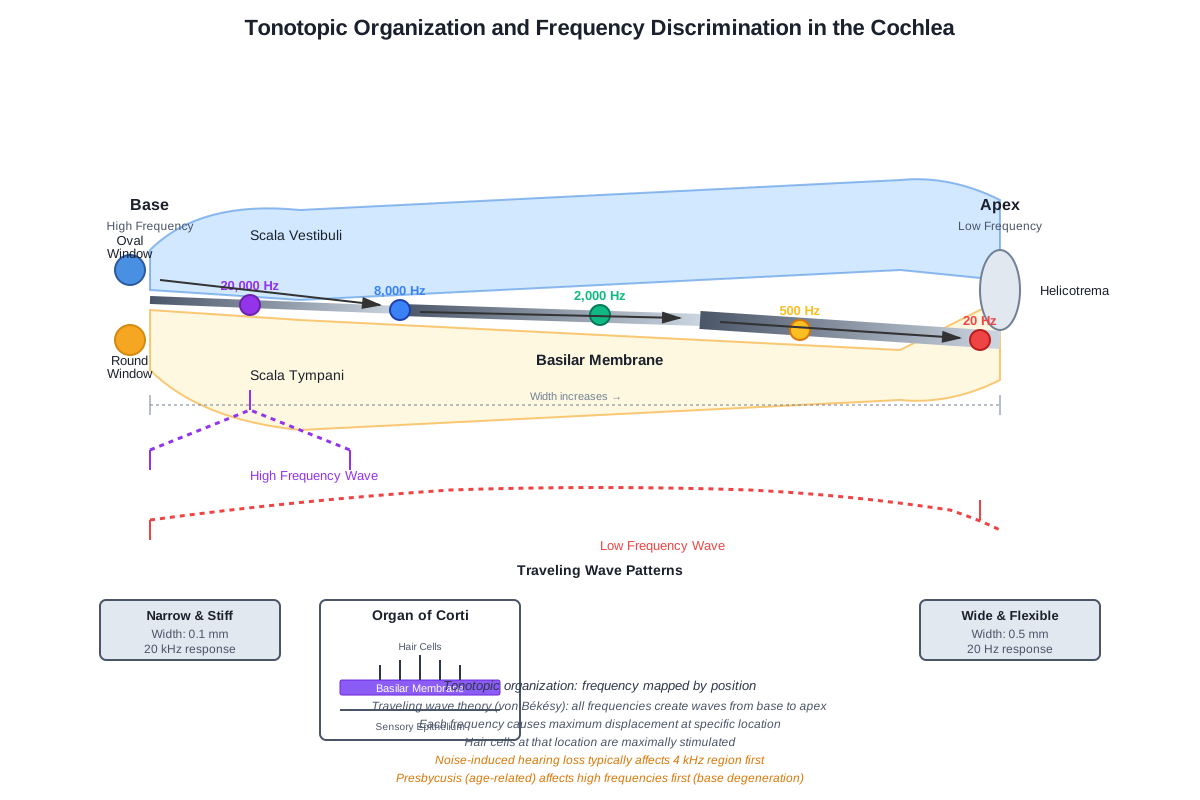
The cochlea functions as a frequency analyzer through place coding. The basilar membrane varies in width and stiffness along its length: narrow and stiff at the base (near the oval window), wide and flexible at the apex. This physical gradient creates a tonotopic map where different frequencies maximally stimulate different locations.
| Location | Basilar Membrane Properties | Frequency Response |
|---|---|---|
| Base (near oval window) | Narrow, stiff, high tension | High frequencies (20,000 Hz) |
| Middle | Intermediate properties | Middle frequencies (1,000-4,000 Hz) |
| Apex (helicotrema) | Wide, flexible, low tension | Low frequencies (20 Hz) |
High-frequency sounds cause maximal displacement near the cochlear base, while low-frequency sounds travel further along the basilar membrane before reaching maximum amplitude near the apex. This traveling wave pattern, described by Georg von Békésy, explains how the cochlea decomposes complex sounds into component frequencies.
Temporal coding supplements place coding, particularly for frequencies below 4,000 Hz. Auditory nerve fibers can phase-lock their action potentials to the sound wave, firing at a particular phase of the stimulus cycle. While individual neurons cannot fire faster than approximately 1,000 Hz due to refractory periods, populations of neurons can collectively encode higher frequencies through the volley principle, where different neurons fire on different cycles.
Auditory Pathway to the Brain
The auditory pathway involves multiple synaptic relays before reaching cortical processing centers:
- Spiral ganglion neurons (bipolar neurons with cell bodies in the modiolus) form the auditory division of CN VIII
- Cochlear nuclei in the medulla receive all auditory nerve input; neurons here begin processing temporal and spectral features
- Superior olivary complex (pons) is the first site of binaural integration, comparing inputs from both ears for sound localization
- Inferior colliculus (midbrain) integrates ascending auditory information and coordinates auditory reflexes
- Medial geniculate nucleus (thalamus) serves as the thalamic relay to cortex
- Primary auditory cortex (superior temporal gyrus, Brodmann areas 41 and 42) processes complex sound features and maintains tonotopic organization
Importantly, most auditory information crosses the midline at multiple levels, so each hemisphere receives input from both ears, though contralateral input predominates. This bilateral representation means unilateral cortical lesions rarely cause complete deafness but may impair sound localization and complex auditory processing.
Sound Localization
The brain uses two primary mechanisms for sound localization:
Interaural time differences (ITDs) exploit the fact that sound reaches the nearer ear slightly before the farther ear. For a sound source 90° to one side, the time difference is approximately 700 microseconds. The superior olivary complex contains specialized neurons that act as coincidence detectors, firing maximally when inputs from both ears arrive simultaneously. Different neurons are tuned to different delays, creating a map of sound location.
Interaural level differences (ILDs) arise because the head creates an acoustic shadow, making sounds louder at the nearer ear. This effect is most pronounced for high frequencies (short wavelengths) that cannot diffract around the head. The lateral superior olive compares sound intensity between ears to determine location.
ITDs are most effective for low-frequency sounds (below 1,500 Hz), while ILDs work best for high frequencies (above 3,000 Hz). Vertical localization and front-back discrimination rely on spectral cues created by the pinna's shape filtering sounds differently based on direction.
Concept Relationships
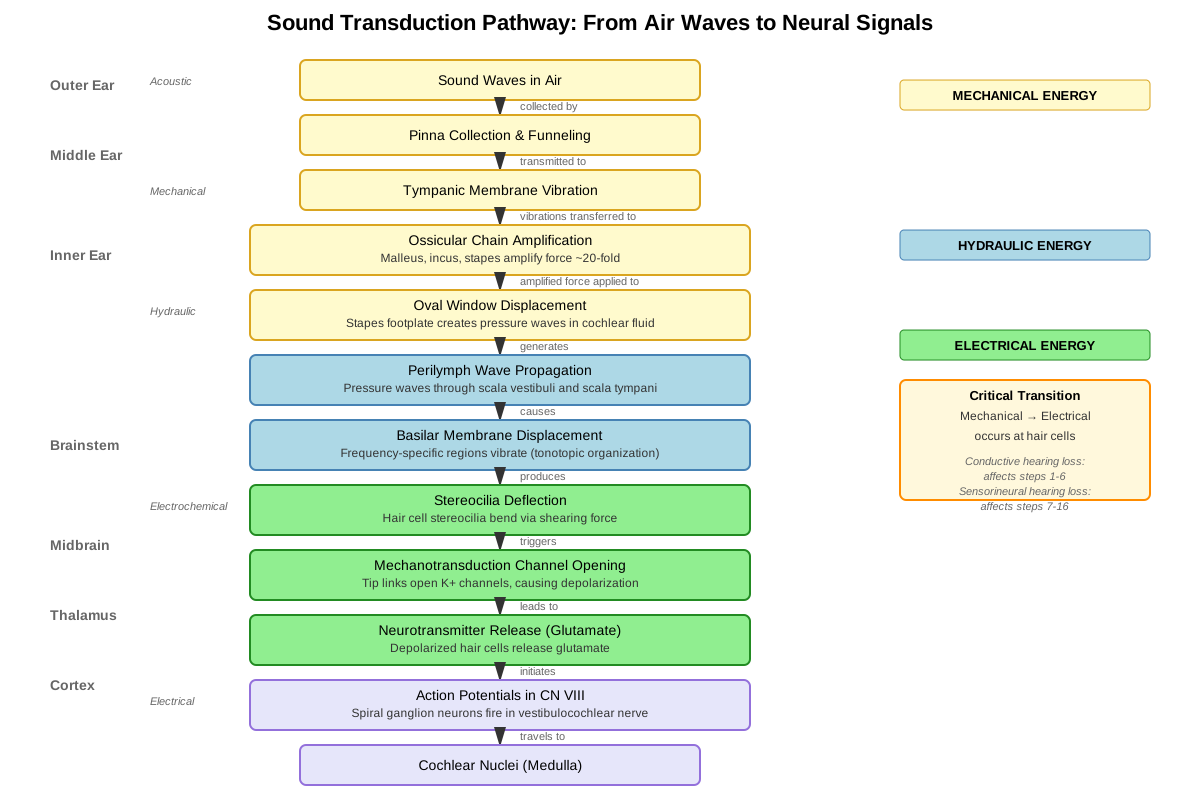
The auditory system exemplifies hierarchical sensory processing: mechanical sound waves → tympanic membrane vibration → ossicular chain amplification → oval window displacement → perilymph movement → basilar membrane traveling wave → stereocilia deflection → mechanotransduction → neurotransmitter release → action potential generation → central processing.
Hearing Biology connects intimately with membrane physiology: the unique endolymph composition (high K⁺) and endocochlear potential (+80 mV) create the electrochemical gradient driving mechanotransduction. This relates to concepts of ion pumps and membrane potential from cellular physiology.
The tonotopic organization of the cochlea demonstrates the principle of labeled line coding seen throughout sensory systems—the brain determines sound frequency partly by which neurons are active, similar to how visual system determines color by which cone types are activated.
Hearing MCAT questions often connect to the vestibular system (both use hair cells and share the inner ear space), cranial nerve function (CN VIII damage affects both hearing and balance), and comparative sensory physiology (comparing mechanotransduction in hearing to phototransduction in vision or chemotransduction in taste).
The auditory pathway's multiple decussations and bilateral representation relates to broader neuroanatomy principles about sensory pathway organization and explains clinical patterns of hearing loss following central nervous system damage.
High-Yield Facts
⭐ The middle ear ossicles provide approximately 20-fold amplification through impedance matching between air and cochlear fluid
⭐ Hair cell mechanotransduction occurs when K⁺ enters through mechanically-gated channels at stereocilia tips, depolarizing the cell despite K⁺ typically being hyperpolarizing
⭐ The cochlea is tonotopically organized: high frequencies are detected at the base, low frequencies at the apex
⭐ Inner hair cells (3,500) are the primary sensory receptors; outer hair cells (12,000) amplify and tune basilar membrane response
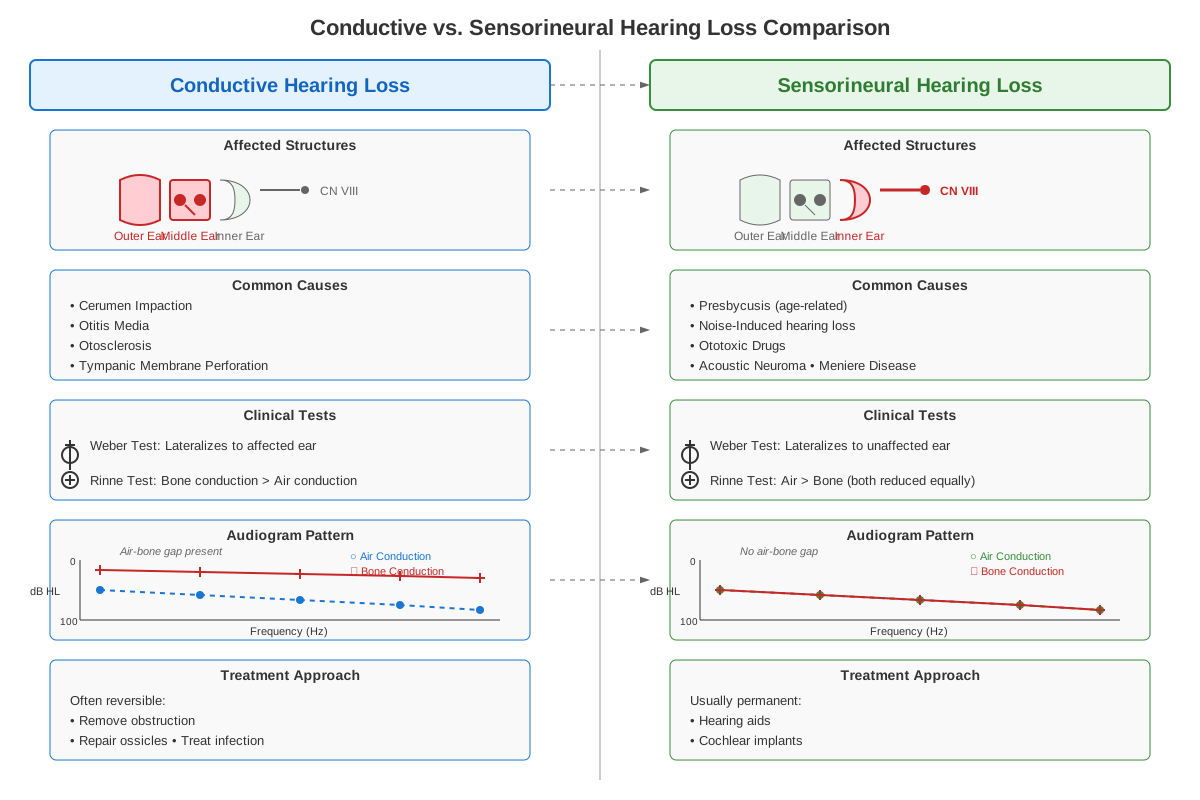
⭐ Conductive hearing loss involves outer or middle ear pathology; sensorineural hearing loss involves inner ear or neural pathway damage
- The scala media contains endolymph (high K⁺), while scala vestibuli and tympani contain perilymph (high Na⁺)
- The tectorial membrane overlies hair cell stereocilia and causes their deflection during basilar membrane movement
- Auditory nerve fibers can phase-lock to sound frequencies up to approximately 4,000 Hz
- The superior olivary complex is the first site of binaural integration and processes interaural time and level differences for sound localization
- The Eustachian tube connects the middle ear to the nasopharynx and equalizes pressure across the tympanic membrane
- Presbycusis (age-related hearing loss) typically affects high frequencies first due to cumulative damage at the cochlear base
- The auditory cortex maintains tonotopic organization, with different regions responding maximally to different frequencies
Quick check — test yourself on Hearing so far.
Try Flashcards →Common Misconceptions
Misconception: Hair cells are named for containing hair-like structures made of keratin.
Correction: Hair cells are named for their stereocilia, which are specialized microvilli (actin-based), not true hairs. The term "hair cell" is purely descriptive of appearance, not composition.
Misconception: The eardrum directly contacts the cochlea to transmit sound.
Correction: The tympanic membrane vibrates in response to sound but connects to the cochlea through the three-bone ossicular chain (malleus, incus, stapes). The stapes footplate contacts the oval window, which is the entrance to the cochlea. This indirect connection provides mechanical advantage.
Misconception: K⁺ entering a cell should always hyperpolarize it.
Correction: In hair cells, K⁺ entry is depolarizing because the scala media has an extremely positive electrical potential (+80 mV). The electrochemical gradient drives K⁺ into the cell, and since K⁺ is positively charged, this depolarizes the cell. This is a unique situation created by the stria vascularis maintaining the endocochlear potential.
Misconception: All frequencies of sound stimulate the entire length of the basilar membrane equally.
Correction: Each frequency creates a traveling wave that reaches maximum amplitude at a specific location along the basilar membrane (place coding). High frequencies peak near the base, low frequencies near the apex. This spatial separation is fundamental to frequency discrimination.
Misconception: Hearing loss from loud noise exposure is temporary and fully reversible.
Correction: While temporary threshold shifts can occur after noise exposure, repeated or intense exposure causes permanent damage to hair cells, which do not regenerate in mammals. Noise-induced hearing loss is cumulative and irreversible, typically affecting high frequencies first.
Misconception: The auditory pathway crosses completely to the opposite hemisphere like the visual pathway.
Correction: The auditory pathway has multiple partial decussations at several levels, resulting in bilateral representation. Each hemisphere receives input from both ears, though contralateral input is stronger. This is why unilateral cortical damage rarely causes complete deafness.
Worked Examples
Example 1: Analyzing Hearing Loss Type
Clinical Vignette: A 45-year-old patient reports progressive hearing loss in the right ear over several years. Physical examination reveals an intact tympanic membrane. Audiometry shows reduced hearing at all frequencies in the right ear. A Weber test (tuning fork placed on the forehead) reveals that the patient hears the sound louder in the left ear. A Rinne test shows air conduction is better than bone conduction in both ears.
Question: What type of hearing loss does this patient have, and what is the most likely anatomical location of the pathology?
Solution:
Step 1: Identify the type of hearing loss using test results.
- Weber test lateralizes to the better (left) ear → suggests sensorineural loss in the right ear
- Rinne test shows air conduction > bone conduction bilaterally → normal finding, rules out conductive loss
Step 2: Understand the principle behind these tests.
- In conductive hearing loss, bone conduction bypasses the problem (outer/middle ear), so bone conduction > air conduction (abnormal Rinne)
- In conductive hearing loss, Weber lateralizes to the affected ear (the blocked ear hears bone-conducted sound better because ambient noise is reduced)
- In sensorineural hearing loss, both air and bone conduction are reduced proportionally (normal Rinne ratio maintained)
- In sensorineural hearing loss, Weber lateralizes to the better ear
Step 3: Localize the pathology.
- Sensorineural hearing loss indicates inner ear (cochlea) or neural pathway (CN VIII or central) pathology
- Progressive unilateral loss in an adult suggests acoustic neuroma (vestibular schwannoma), Ménière's disease, or cochlear damage
- The intact tympanic membrane rules out middle ear pathology
Answer: This patient has sensorineural hearing loss in the right ear. The pathology is located in the inner ear (cochlea) or along the auditory nerve pathway (CN VIII). The most likely diagnoses include acoustic neuroma, cochlear damage, or Ménière's disease. Further imaging (MRI) would be needed to distinguish between these possibilities.
Connection to Learning Objectives: This example demonstrates applying hearing concepts to clinical scenarios, distinguishing between conductive and sensorineural hearing loss based on anatomical knowledge, and connecting hearing to diagnostic reasoning—all critical MCAT skills.
Example 2: Mechanotransduction Mechanism
Experimental Scenario: Researchers are studying hair cell function in vitro. They place isolated hair cells in a solution and use a fine probe to deflect stereocilia. They observe the following:
- Deflection toward the tallest stereocilium causes rapid depolarization
- Deflection away from the tallest stereocilium causes hyperpolarization
- When they replace the bath solution with one containing zero Ca²⁺, stereocilia deflection still causes initial depolarization, but neurotransmitter release is abolished
- When they add a drug that blocks mechanically-gated channels, stereocilia deflection produces no electrical response
Question: Explain the mechanism of hair cell transduction and interpret each experimental observation.
Solution:
Step 1: Describe the normal mechanotransduction mechanism.
- Stereocilia are connected by tip links
- Deflection toward the tallest stereocilium increases tension on tip links
- Increased tension opens mechanically-gated ion channels at stereocilia tips
- K⁺ (and some Ca²⁺) enters through these channels
- The positive charge influx depolarizes the cell
- Depolarization opens voltage-gated Ca²⁺ channels at the cell base
- Ca²⁺ influx triggers glutamate release onto auditory nerve fibers
Step 2: Interpret observation 1 (deflection toward tallest causes depolarization).
- This confirms the directional sensitivity of hair cells
- Deflection toward the tallest stereocilium increases tip link tension, opening channels
- Ion influx (primarily K⁺) depolarizes the cell
Step 3: Interpret observation 2 (deflection away causes hyperpolarization).
- Deflection away from the tallest stereocilium reduces tip link tension
- This closes mechanically-gated channels that have some baseline opening
- Reduced cation influx allows the cell to hyperpolarize toward its resting potential
- Some channels may be open at rest, so closing them produces hyperpolarization
Step 4: Interpret observation 3 (zero Ca²⁺ abolishes neurotransmitter release but not initial depolarization).
- Initial depolarization is primarily due to K⁺ entry through mechanically-gated channels (doesn't require Ca²⁺)
- Neurotransmitter release requires Ca²⁺ influx through voltage-gated channels at the cell base
- Without extracellular Ca²⁺, voltage-gated channels cannot provide Ca²⁺ for vesicle fusion
- This separates the transduction step (mechanical → electrical) from the transmission step (electrical → chemical)
Step 5: Interpret observation 4 (blocking mechanically-gated channels eliminates response).
- This confirms that mechanically-gated channels at stereocilia tips are essential for transduction
- Without these channels, mechanical deflection cannot be converted to electrical signal
- This is the primary transduction event in hearing
Answer: Hair cells transduce mechanical stimuli through mechanically-gated channels at stereocilia tips. The experimental observations confirm that: (1) transduction is directionally sensitive based on tip link tension, (2) some channels are open at rest, (3) the transduction current is primarily K⁺ but neurotransmitter release requires separate Ca²⁺ entry, and (4) mechanically-gated channels are necessary for any electrical response to mechanical stimulation.
Connection to Learning Objectives: This example requires understanding mechanotransduction at the molecular level, applying knowledge to interpret experimental data, and connecting cellular mechanisms to overall hearing function—all high-yield MCAT skills.
Exam Strategy
Approaching MCAT Hearing Questions:
- Identify the anatomical level: Determine whether the question involves outer ear (sound collection), middle ear (amplification), inner ear (transduction), or neural pathway (transmission/processing). This immediately narrows answer choices.
- Trace the signal pathway: For mechanism questions, systematically trace sound from air → tympanic membrane → ossicles → oval window → perilymph → basilar membrane → hair cells → neurotransmitter → auditory nerve → brain. Identify where the question focuses.
- Distinguish conductive vs. sensorineural: Many questions test this distinction. Remember: conductive = outer/middle ear (mechanical problem), sensorineural = inner ear/neural (transduction or transmission problem).
Trigger Words and Phrases:
- "Frequency discrimination" → think tonotopic organization, place coding, basilar membrane properties
- "Sound localization" → think interaural time differences (ITDs) and interaural level differences (ILDs), superior olivary complex
- "Amplification" → think middle ear ossicles, impedance matching, outer hair cells
- "Mechanotransduction" → think stereocilia, tip links, mechanically-gated channels, K⁺ influx
- "Bilateral hearing loss" → think symmetric causes (aging, noise exposure, genetic), not acoustic neuroma
- "Unilateral hearing loss" → think acoustic neuroma, Ménière's disease, asymmetric noise exposure
Process of Elimination Tips:
- Eliminate answers that confuse anatomical levels (e.g., attributing transduction to the middle ear)
- Eliminate answers that reverse the tonotopic map (high frequencies at apex is wrong)
- Eliminate answers that describe K⁺ entry as hyperpolarizing in hair cells (it's depolarizing due to endocochlear potential)
- Eliminate answers that suggest complete contralateral representation of hearing (it's bilateral)
Time Allocation:
- Discrete hearing questions: 60-90 seconds (straightforward anatomy or physiology)
- Passage-based questions: 90-120 seconds (require integrating passage information with background knowledge)
- If a question requires tracing the entire pathway, quickly sketch the pathway on scratch paper (15 seconds) to avoid missing steps
Memory Techniques
Mnemonic for Ossicles (lateral to medial): "My Iguana Stinks"
- My = Malleus (attached to tympanic membrane)
- Iguana = Incus (middle bone)
- Stinks = Stapes (attached to oval window)
Mnemonic for Cochlear Scalae (top to bottom): "Very Middle Tiny"
- Very = Scala Vestibuli (top chamber, perilymph)
- Middle = Scala Media (middle chamber, endolymph, contains organ of Corti)
- Tiny = Scala Tympani (bottom chamber, perilymph)
Visualization for Tonotopic Organization: Picture a piano keyboard wrapped in a spiral. High notes (right side of piano) = high frequencies = base of cochlea (near oval window). Low notes (left side of piano) = low frequencies = apex of cochlea. The cochlea is literally a frequency analyzer arranged spatially.
Acronym for Hair Cell Transduction Steps: "STOMP-DCV"
- Stereocilia bend
- Tip links stretch
- Open mechanically-gated channels
- Membrane depolarizes (K⁺ enters)
- Potential change opens voltage-gated Ca²⁺ channels
- Depolarization at base
- Ca²⁺ triggers release
- Vesicles release glutamate
Memory Aid for Conductive vs. Sensorineural:
- Conductive = "Can't Conduct sound to Cochlea" (outer/middle ear problem)
- Sensorineural = "Sensor or Nerve" problem (inner ear/neural problem)
Summary
Hearing is a complex sensory process involving mechanical amplification, frequency analysis, and mechanotransduction. Sound waves travel through the outer ear to vibrate the tympanic membrane, which connects via the ossicular chain to the cochlea. The middle ear ossicles provide impedance matching, amplifying sound approximately 20-fold to efficiently transmit vibrations from air to cochlear fluid. Within the cochlea, the basilar membrane exhibits tonotopic organization—high frequencies maximally stimulate the base, low frequencies the apex—enabling frequency discrimination through place coding. Hair cells in the organ of Corti perform mechanotransduction: stereocilia deflection opens mechanically-gated channels, allowing K⁺ influx that depolarizes the cell despite K⁺ typically being hyperpolarizing (due to the unique +80 mV endocochlear potential). Depolarization triggers glutamate release onto auditory nerve fibers, which transmit signals through multiple brainstem and midbrain relays before reaching the auditory cortex. The auditory system demonstrates bilateral representation, with each hemisphere receiving input from both ears. Understanding the distinction between conductive hearing loss (outer/middle ear pathology) and sensorineural hearing loss (inner ear/neural pathology) is clinically and academically essential. For the MCAT, mastery requires integrating anatomical knowledge, physiological mechanisms, and the ability to apply principles to novel scenarios and clinical vignettes.
Key Takeaways
- The auditory system converts mechanical sound waves into neural signals through three anatomical regions: outer ear (collection), middle ear (amplification via ossicles), and inner ear (transduction via hair cells)
- Hair cell mechanotransduction involves K⁺ influx through mechanically-gated channels at stereocilia tips, which depolarizes the cell due to the unique +80 mV endocochlear potential in the scala media
- The cochlea is tonotopically organized with high frequencies detected at the base and low frequencies at the apex, enabling frequency discrimination through place coding on the basilar membrane
- Inner hair cells (3,500) are the primary sensory receptors transmitting auditory information, while outer hair cells (12,000) amplify basilar membrane motion and sharpen frequency tuning
- Conductive hearing loss involves outer or middle ear pathology affecting sound transmission, while sensorineural hearing loss involves inner ear or neural pathway damage affecting transduction or signal transmission
- The auditory pathway includes multiple brainstem relays with bilateral representation, meaning each hemisphere receives input from both ears, explaining why unilateral cortical lesions rarely cause complete deafness
- Sound localization relies on interaural time differences (ITDs) for low frequencies and interaural level differences (ILDs) for high frequencies, processed in the superior olivary complex
Related Topics
Vision and Phototransduction: Comparing mechanotransduction in hearing to phototransduction in vision reveals common principles of sensory transduction while highlighting unique adaptations. Both systems use specialized receptors, graded potentials, and maintain topographic organization in the cortex.
Vestibular System: The vestibular apparatus shares the inner ear space with the cochlea and uses similar hair cells for detecting head position and movement. Understanding hearing facilitates learning about balance and spatial orientation.
Action Potential Propagation: Hair cell signals must be converted to action potentials in auditory nerve fibers. Mastering hearing reinforces understanding of neural signaling, refractory periods, and the volley principle.
Cranial Nerves: CN VIII (vestibulocochlear nerve) carries both auditory and vestibular information. Understanding its anatomy and function connects to broader cranial nerve organization and clinical testing.
Sensory System Integration: The auditory cortex integrates with other sensory areas and association cortex for complex perception. This relates to broader topics of multisensory integration and cortical processing.
Practice CTA
Now that you've mastered the core concepts of hearing, it's time to solidify your understanding through active practice. Challenge yourself with MCAT-style practice questions that test your ability to apply these principles to novel scenarios, clinical vignettes, and experimental data. Use flashcards to reinforce high-yield facts, anatomical relationships, and the mechanotransduction mechanism. Remember: understanding hearing demonstrates your mastery of fundamental principles—mechanotransduction, sensory coding, and neural pathways—that appear throughout the MCAT. Your ability to trace signals from stimulus to perception and distinguish between different types of pathology will serve you well across multiple exam topics. You've got this!
Sign up free to keep reading
Create a free AnvayaPrep account to finish this MCAT guide on Hearing — plus flashcards and practice questions.