Overview
The vestibular system is a specialized sensory system located within the inner ear that plays a critical role in maintaining balance, spatial orientation, and coordinating head and eye movements. This system works in concert with visual and proprioceptive inputs to provide the central nervous system with continuous information about the body's position and motion in three-dimensional space. Understanding the vestibular system Biology is essential for MCAT success, as it represents a key component of sensory Physiology and Organ Systems that frequently appears in both passage-based and discrete questions.
For the MCAT, the vestibular system serves as an excellent integration point between neuroanatomy, sensory physiology, and clinical medicine. Questions may test knowledge of the anatomical structures involved, the mechanisms of mechanotransduction, the neural pathways connecting the vestibular apparatus to the brain, or the clinical consequences of vestibular dysfunction. The vestibular system MCAT content typically emphasizes the relationship between structure and function, requiring students to understand not just what each component does, but how mechanical forces are converted into neural signals that the brain can interpret.
The vestibular system exemplifies fundamental principles in Biology including sensory transduction, signal processing, and homeostatic regulation. It connects to broader topics such as the special senses (particularly hearing, with which it shares anatomical structures), motor control, autonomic nervous system function, and even psychological phenomena like motion sickness. Mastery of this topic provides a foundation for understanding how the nervous system integrates multiple sensory modalities to create a coherent representation of the body's relationship to its environment.
Learning Objectives
- [ ] Define the vestibular system using accurate Biology terminology
- [ ] Explain why the vestibular system matters for the MCAT
- [ ] Apply vestibular system concepts to exam-style questions
- [ ] Identify common mistakes related to the vestibular system
- [ ] Connect the vestibular system to related Biology concepts
- [ ] Describe the anatomical components of the vestibular apparatus and their specific functions
- [ ] Explain the mechanism of mechanotransduction in vestibular hair cells
- [ ] Trace the neural pathway from vestibular receptors to the central nervous system
- [ ] Predict the physiological consequences of damage to specific vestibular structures
Prerequisites
- Basic ear anatomy: Understanding the division of the ear into outer, middle, and inner components is essential because the vestibular system resides within the inner ear alongside the cochlea
- Neuronal signaling: Knowledge of action potentials, neurotransmitter release, and synaptic transmission is necessary to understand how mechanical stimuli are converted to neural signals
- Sensory receptor physiology: Familiarity with mechanoreceptors and the general principles of sensory transduction provides the foundation for understanding vestibular hair cells
- Basic neuroanatomy: Understanding of cranial nerves, brainstem structures, and general CNS organization helps in tracing vestibular pathways
- Fluid dynamics: Basic understanding of how fluid movement can exert forces on structures is relevant to understanding how the vestibular system detects motion
Why This Topic Matters
The vestibular system holds significant clinical and real-world importance. Vestibular disorders affect millions of people and can cause debilitating symptoms including vertigo, imbalance, nausea, and difficulty with visual focus during head movement. Conditions such as benign paroxysmal positional vertigo (BPPV), Ménière's disease, and vestibular neuritis are common clinical presentations that physicians must recognize and manage. Understanding the vestibular system also explains why certain medications cause dizziness, why astronauts experience disorientation in space, and why some individuals are more susceptible to motion sickness.
From an MCAT perspective, vestibular system questions appear with moderate frequency, typically 1-3 questions per exam. These questions most commonly appear in Biology passages dealing with sensory systems, neurophysiology, or clinical vignettes describing patients with balance disorders. The AAMC tends to test this topic through passage-based questions that require students to apply their understanding of vestibular anatomy and physiology to novel scenarios, such as experimental manipulations of the vestibular apparatus or clinical case studies. Discrete questions may test basic anatomical knowledge or the relationship between vestibular function and other physiological systems.
Common question formats include: identifying which vestibular structure detects a specific type of motion, predicting the consequences of damage to vestibular pathways, explaining the mechanism of nystagmus (involuntary eye movements), or analyzing experimental data about vestibular function. The MCAT particularly favors questions that integrate vestibular function with visual processing, motor control, or autonomic responses, reflecting the interdisciplinary nature of modern medical education.
Core Concepts
Anatomical Organization of the Vestibular System
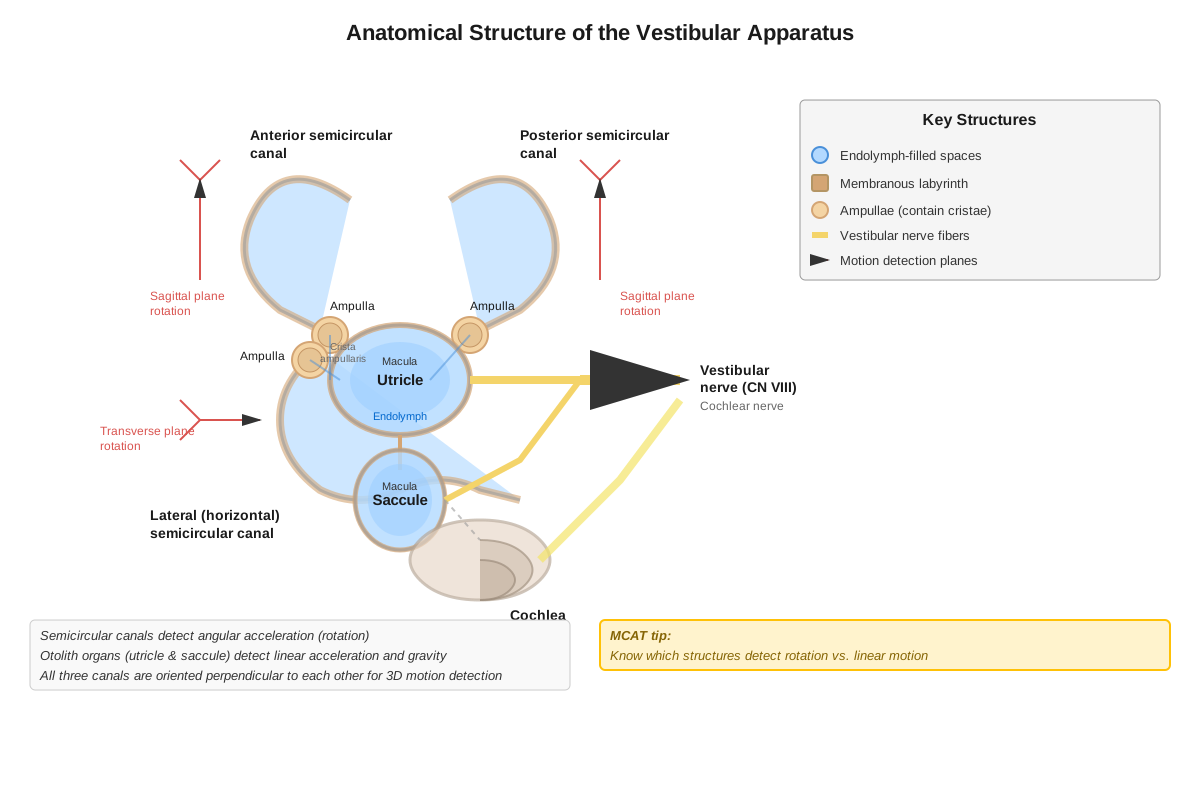
The vestibular system consists of five distinct sensory organs housed within the bony labyrinth of the inner ear. These structures are filled with endolymph, a potassium-rich fluid similar in composition to intracellular fluid, and are surrounded by perilymph, which resembles extracellular fluid. The five vestibular organs include three semicircular canals (anterior, posterior, and lateral) and two otolith organs (the utricle and saccule). Each structure is specialized to detect different types of head movement or orientation.
The semicircular canals are oriented approximately perpendicular to one another, forming a three-dimensional coordinate system that allows detection of rotational acceleration in any plane. Each canal contains a dilated region called the ampulla, which houses the sensory receptor structure known as the crista ampullaris. The crista contains specialized sensory cells called hair cells embedded in a gelatinous structure called the cupula that spans the width of the ampulla.
The otolith organs detect linear acceleration and head tilt relative to gravity. The utricle is oriented primarily in the horizontal plane and is most sensitive to horizontal linear accelerations and head tilts in the pitch and roll directions. The saccule is oriented vertically and primarily detects vertical linear accelerations. Both otolith organs contain a sensory epithelium called the macula, which consists of hair cells whose stereocilia are embedded in a gelatinous otolithic membrane containing calcium carbonate crystals called otoconia or otoliths.
Hair Cell Structure and Mechanotransduction
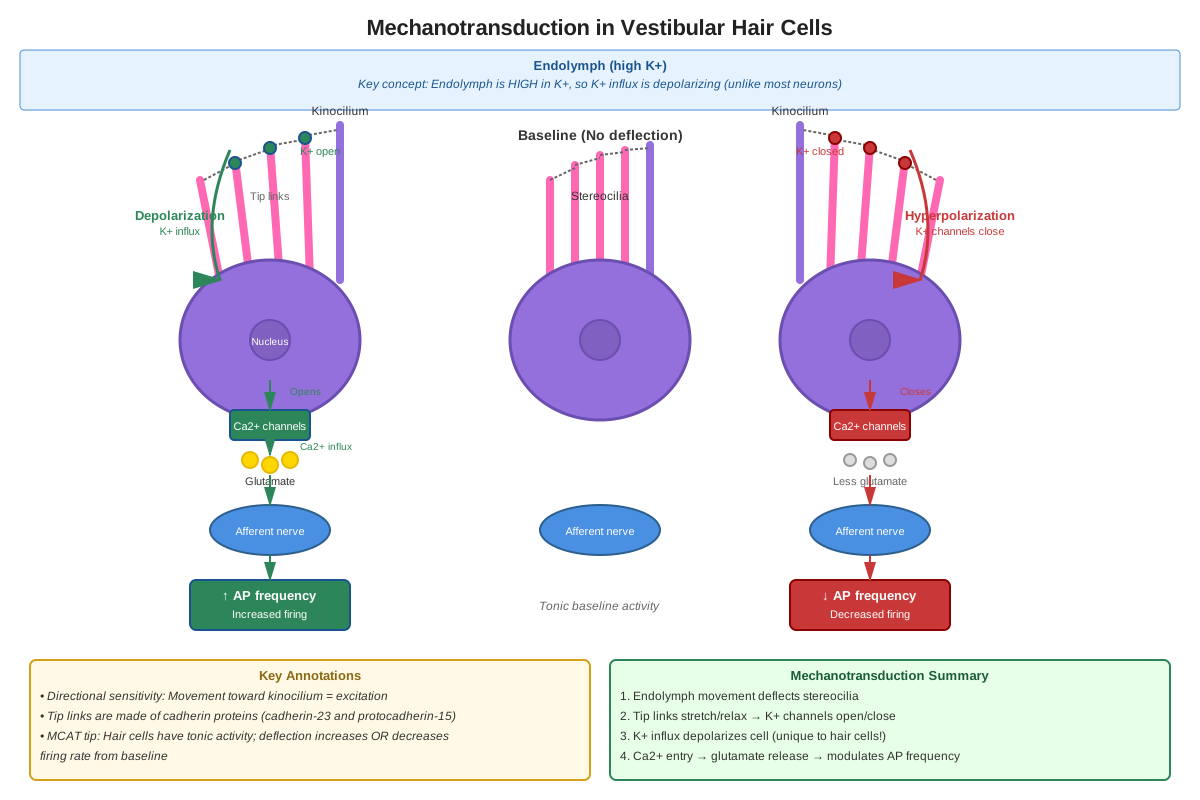
Vestibular hair cells are the fundamental sensory receptors of the vestibular system and represent a classic example of mechanoreceptors. Each hair cell possesses approximately 50-100 stereocilia arranged in order of increasing height, plus one true cilium called the kinocilium located at the tallest edge of the stereociliary bundle. The stereocilia are connected to one another by protein filaments called tip links that play a crucial role in mechanotransduction.
When the stereocilia bend toward the kinocilium, tension increases on the tip links, which mechanically opens mechanically-gated ion channels at the tips of the stereocilia. These channels are permeable to potassium and calcium ions. Because the endolymph surrounding the stereocilia has a high potassium concentration and is maintained at a positive electrical potential (approximately +80 mV) by the stria vascularis, opening these channels allows potassium to flow into the hair cell, causing depolarization. This depolarization opens voltage-gated calcium channels at the base of the hair cell, triggering neurotransmitter (primarily glutamate) release onto the vestibular nerve fibers.
Conversely, when stereocilia bend away from the kinocilium, the tip links relax, mechanically-gated channels close, and the hair cell hyperpolarizes. This bidirectional response allows hair cells to signal both increases and decreases in stimulation. Importantly, vestibular nerve fibers maintain a baseline firing rate even at rest (approximately 90 spikes per second), which allows the system to signal both excitation (increased firing) and inhibition (decreased firing) from the resting state.
Semicircular Canal Function
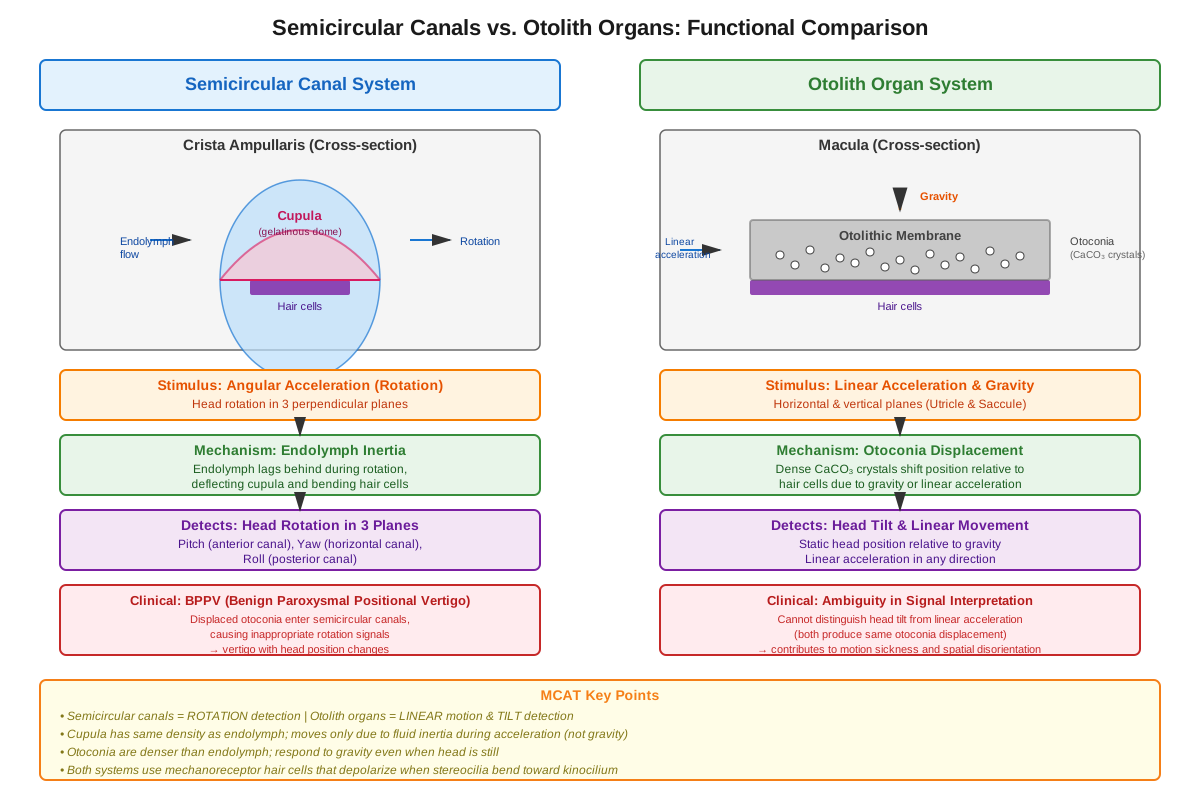
The three semicircular canals detect rotational acceleration (angular acceleration) of the head. When the head begins to rotate, the endolymph within the canals initially lags behind due to inertia, causing relative fluid movement in the opposite direction of head rotation. This fluid movement deflects the cupula, bending the stereocilia of the hair cells within the crista ampullaris.
The canals work in pairs: the horizontal canals on each side of the head form a functional pair, as do the anterior canal on one side with the posterior canal on the opposite side. This arrangement creates a push-pull system where rotation in one direction excites one canal while simultaneously inhibiting its paired partner. For example, turning the head to the right causes the cupula in the right horizontal canal to deflect in a manner that depolarizes its hair cells (increasing neural firing), while the left horizontal canal's hair cells hyperpolarize (decreasing neural firing). The brain interprets the difference in firing rates between paired canals to determine the direction and magnitude of head rotation.
The semicircular canals respond primarily to changes in rotational velocity (acceleration) rather than constant velocity. During sustained rotation at constant speed, the endolymph eventually catches up with the canal walls due to friction, and the cupula returns to its resting position. This explains why we stop sensing rotation during prolonged constant-speed spinning, and why we experience a false sensation of rotation in the opposite direction when we suddenly stop (the endolymph continues moving briefly due to momentum).
Otolith Organ Function
The otolith organs (utricle and saccule) detect linear acceleration and static head tilt relative to gravity. The otoconia embedded in the otolithic membrane have a higher density than the surrounding endolymph. When the head tilts or undergoes linear acceleration, gravitational or inertial forces cause the otolithic membrane to shift relative to the underlying macula, bending the stereocilia of the hair cells.
The utricle, oriented horizontally, is particularly sensitive to horizontal linear accelerations (such as forward/backward or side-to-side movement) and head tilts in the sagittal and coronal planes. The saccule, oriented vertically, primarily detects vertical linear accelerations (such as riding in an elevator) and head position relative to gravity when upright. Together, these organs provide information about the head's orientation in space and any translational movements.
A critical concept for the MCAT is that the otolith organs cannot distinguish between linear acceleration and gravitational tilt—both produce the same pattern of hair cell stimulation. This ambiguity is normally resolved by integrating otolith information with input from the semicircular canals and visual system. However, this ambiguity explains certain illusions: for example, during takeoff in an airplane, the forward linear acceleration can create a sensation of tilting backward even though the head remains level.
Neural Pathways and Central Processing
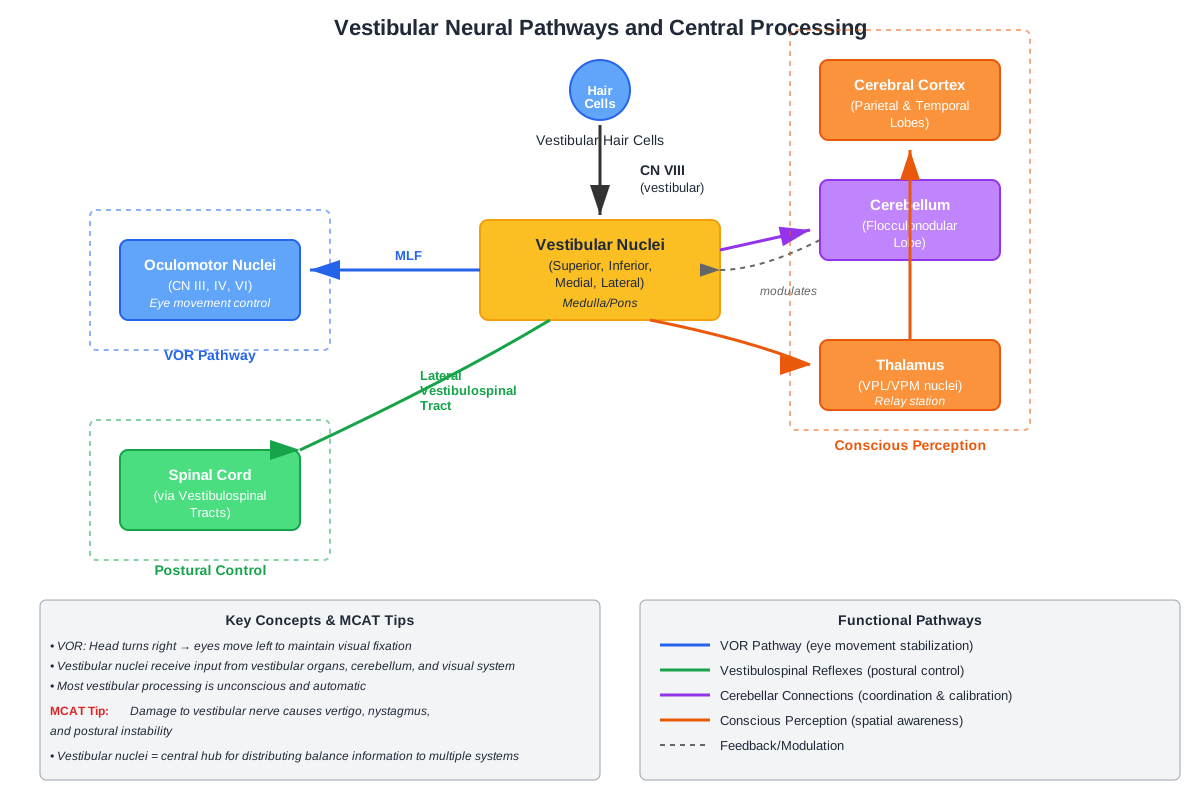
Vestibular hair cells synapse onto bipolar neurons whose cell bodies form the vestibular ganglion (also called Scarpa's ganglion). The central processes of these neurons form the vestibular nerve, which joins with the cochlear nerve to form cranial nerve VIII (the vestibulocochlear nerve). The vestibular nerve enters the brainstem at the pontomedullary junction and projects primarily to the vestibular nuclei in the medulla and pons.
The vestibular nuclei serve as a major integration center, receiving input not only from the vestibular organs but also from the cerebellum, visual system, and proprioceptors. From the vestibular nuclei, projections extend to multiple targets:
- Vestibulo-ocular pathways: Project to cranial nerve nuclei (III, IV, VI) controlling eye muscles, mediating the vestibulo-ocular reflex (VOR)
- Vestibulospinal pathways: Descend to the spinal cord to control postural muscles and maintain balance
- Vestibulo-cerebellar pathways: Connect to the cerebellum (particularly the flocculonodular lobe) for motor coordination and VOR calibration
- Vestibulo-thalamic pathways: Ascend to the thalamus and then to cortical areas, providing conscious perception of spatial orientation
- Vestibulo-autonomic pathways: Connect to autonomic centers, explaining why vestibular stimulation can cause nausea and vomiting
Vestibulo-Ocular Reflex
The vestibulo-ocular reflex (VOR) is one of the fastest reflexes in the human body and serves to stabilize vision during head movement. When the head rotates in one direction, the VOR causes the eyes to rotate in the opposite direction at an equal velocity, keeping the visual image stable on the retina. This three-neuron arc (vestibular nerve → vestibular nucleus → oculomotor nuclei) operates with a latency of only 5-10 milliseconds.
For example, when the head turns to the right, the right horizontal semicircular canal is excited while the left is inhibited. This signal is transmitted to the vestibular nuclei, which then send excitatory signals to the left lateral rectus muscle (via CN VI) and right medial rectus muscle (via CN III), causing the eyes to move left. Simultaneously, inhibitory signals are sent to the antagonist muscles. The result is that the eyes remain fixed on a target despite head movement.
The VOR gain (the ratio of eye movement velocity to head movement velocity) is normally close to 1.0, meaning eye movement precisely compensates for head movement. The cerebellum continuously calibrates VOR gain through motor learning, adjusting the reflex based on visual feedback. This explains why people can adapt to wearing prism glasses that shift the visual field—the cerebellum gradually adjusts the VOR to maintain stable vision under the new conditions.
Clinical Correlations and Vestibular Dysfunction
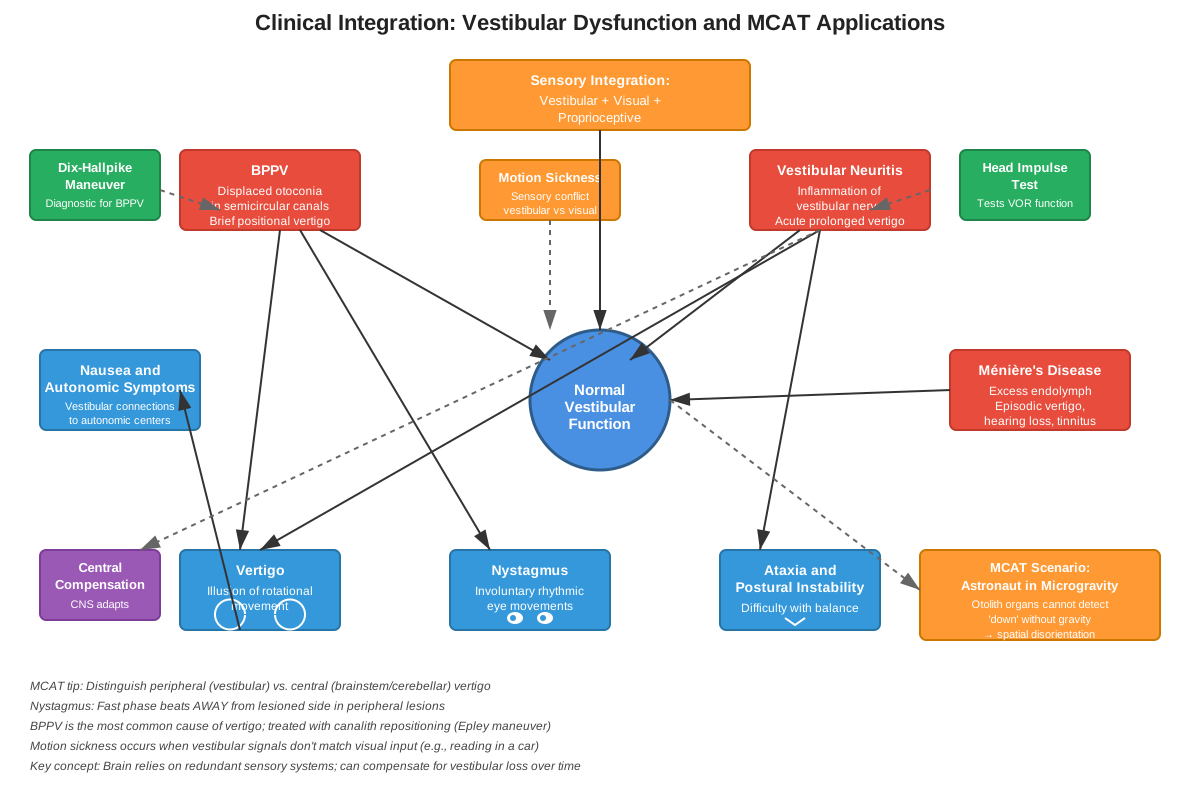
Understanding vestibular pathophysiology is high-yield for the MCAT. Vertigo (the illusion of movement, typically spinning) results from asymmetric input from the two vestibular systems. The brain interprets unequal signals from the left and right vestibular organs as indicating head rotation, even when the head is stationary.
Benign paroxysmal positional vertigo (BPPV) occurs when otoconia become dislodged from the otolithic membrane and enter the semicircular canals. These free-floating crystals cause inappropriate deflection of the cupula during head position changes, triggering brief episodes of vertigo. Ménière's disease involves excess endolymph accumulation (endolymphatic hydrops), causing episodic vertigo, hearing loss, and tinnitus. Vestibular neuritis involves inflammation of the vestibular nerve, causing acute, prolonged vertigo.
Nystagmus is an involuntary rhythmic oscillation of the eyes that often accompanies vestibular dysfunction. It consists of a slow drift phase (driven by the VOR attempting to stabilize gaze based on erroneous vestibular input) followed by a fast corrective saccade. The direction of nystagmus is defined by the fast phase. Understanding nystagmus patterns helps clinicians localize vestibular lesions.
Concept Relationships
The vestibular system demonstrates extensive interconnections both within itself and with other physiological systems. Within the vestibular apparatus, the semicircular canals and otolith organs provide complementary information: the canals detect rotational acceleration while the otoliths detect linear acceleration and gravity. These signals are integrated at the level of the vestibular nuclei to create a comprehensive representation of head position and movement in three-dimensional space.
The relationship between vestibular input and motor output follows this pathway: Mechanical stimulus → Hair cell mechanotransduction → Vestibular nerve signaling → Vestibular nuclei integration → Motor output (either vestibulo-ocular or vestibulospinal). This represents a classic sensory-motor integration loop where sensory information directly drives compensatory motor responses without requiring conscious processing.
The vestibular system connects to prerequisite knowledge of neuronal signaling through the mechanism of hair cell transduction, which exemplifies how mechanical forces can be converted to electrical signals. The concept of resting firing rate in vestibular neurons relates to general principles of neural coding, where information can be transmitted through both increases and decreases from baseline activity.
Connections to related topics include: the auditory system (shares anatomical structures and uses similar hair cell mechanisms), visual system (integrated with vestibular input for spatial orientation and VOR), motor systems (vestibulospinal reflexes for balance), cerebellar function (calibration and motor learning), and autonomic nervous system (vestibular-induced nausea). The vestibular system also relates to proprioception, as both systems provide information about body position, and to the reticular formation, which integrates multiple sensory inputs for arousal and attention.
Quick check — test yourself on Vestibular system so far.
Try Flashcards →High-Yield Facts
⭐ The vestibular system consists of five organs: three semicircular canals (detecting rotational acceleration) and two otolith organs (detecting linear acceleration and gravity)
⭐ Hair cells depolarize when stereocilia bend toward the kinocilium and hyperpolarize when bent away, creating bidirectional signaling
⭐ Semicircular canals work in push-pull pairs, with one canal excited and its partner inhibited during head rotation
⭐ The vestibulo-ocular reflex (VOR) stabilizes vision during head movement by moving the eyes in the direction opposite to head rotation
⭐ Vestibular nerve fibers maintain a baseline firing rate of approximately 90 spikes/second, allowing signaling of both increases and decreases in stimulation
- The endolymph has high potassium concentration and positive electrical potential (+80 mV), driving potassium influx during hair cell depolarization
- Otolith organs cannot distinguish between linear acceleration and gravitational tilt without additional sensory input
- The cupula in semicircular canals returns to resting position during constant-velocity rotation, explaining why we stop sensing continuous spinning
- Vestibular nuclei receive input from vestibular organs, cerebellum, visual system, and proprioceptors, serving as a major integration center
- Nystagmus consists of a slow drift phase (VOR-driven) and fast corrective saccade, with direction defined by the fast phase
- BPPV results from displaced otoconia entering semicircular canals, causing inappropriate cupula deflection during head position changes
- The vestibular system projects to cranial nerve nuclei (III, IV, VI), spinal cord, cerebellum, thalamus, and autonomic centers
Common Misconceptions
Misconception: The vestibular system detects all types of motion equally well.
Correction: The vestibular system specifically detects acceleration (changes in velocity), not constant velocity. The semicircular canals detect rotational acceleration, while otolith organs detect linear acceleration. During constant-velocity motion, the vestibular system returns to baseline signaling, which is why we don't feel motion when riding smoothly in a car at constant speed.
Misconception: Hair cells in the vestibular system are only active when the head is moving.
Correction: Vestibular nerve fibers maintain a high baseline firing rate (approximately 90 spikes/second) even at rest. This tonic activity allows the system to signal both increases (excitation) and decreases (inhibition) from baseline, providing bidirectional information about head movement.
Misconception: The kinocilium directly participates in mechanotransduction by opening ion channels.
Correction: The kinocilium serves as a structural landmark indicating the direction of sensitivity, but the actual mechanotransduction occurs in the stereocilia. Tip links between stereocilia mechanically gate ion channels when the bundle bends. The kinocilium may play a role in bundle organization during development but is not essential for transduction in mature hair cells.
Misconception: Each semicircular canal works independently to detect rotation.
Correction: Semicircular canals function in complementary pairs (left and right horizontal canals form a pair, as do the anterior canal on one side with the posterior canal on the opposite side). The brain compares the firing rates between paired canals to determine the direction and magnitude of rotation. This push-pull arrangement increases sensitivity and allows directional discrimination.
Misconception: The otolith organs can directly sense which way is "up" regardless of body position.
Correction: Otolith organs detect the direction of the gravitational vector relative to the head, but they cannot distinguish between gravitational tilt and linear acceleration (Einstein's equivalence principle). The brain must integrate otolith information with visual and proprioceptive cues to determine true vertical orientation. This ambiguity explains certain spatial illusions during acceleration.
Misconception: Vestibular information is primarily processed consciously in the cerebral cortex.
Correction: Most vestibular processing occurs at subcortical levels (vestibular nuclei, cerebellum, brainstem), generating reflexive motor responses without conscious awareness. While some vestibular information reaches cortical areas for conscious perception of spatial orientation, the primary function is automatic control of eye movements and posture. This is why the VOR operates so quickly (5-10 ms latency).
Worked Examples
Example 1: Analyzing Vestibular Function During Head Movement
Question: A researcher studies a subject who rapidly rotates their head to the right and then maintains that rotational velocity for 30 seconds before suddenly stopping. Describe the expected pattern of neural activity in the right horizontal semicircular canal throughout this sequence, and explain the sensory experiences at each phase.
Solution:
Phase 1 - Initial rightward rotation (acceleration phase):
When the head begins rotating to the right, the bony labyrinth and semicircular canal walls immediately move with the head. However, the endolymph inside the canal initially lags behind due to inertia. This creates relative fluid movement in the left direction (opposite to head rotation). In the right horizontal canal, this leftward fluid movement deflects the cupula in a manner that bends the stereocilia toward the kinocilium (the hair cells in the horizontal canals are oriented with kinocilia facing the utricle). This causes depolarization of the hair cells and increased firing rate in the right vestibular nerve (above the baseline ~90 spikes/second). The subject experiences a sensation of rightward rotation.
Phase 2 - Constant velocity rotation (30 seconds):
As rotation continues at constant velocity, friction between the endolymph and canal walls gradually causes the fluid to "catch up" and move at the same velocity as the canal. The cupula returns to its resting position, and the hair cells return to their baseline firing rate. Despite continuing to rotate at constant velocity, the subject no longer senses rotation—the vestibular system has adapted. This demonstrates that semicircular canals detect acceleration, not velocity.
Phase 3 - Sudden stop (deceleration phase):
When rotation suddenly stops, the canal walls immediately stop moving, but the endolymph continues moving to the right due to momentum. This creates relative fluid movement in the right direction, deflecting the cupula in the opposite direction from Phase 1. The stereocilia now bend away from the kinocilium, causing hyperpolarization and decreased firing rate in the right vestibular nerve (below baseline). The brain interprets this as leftward rotation, creating an illusory sensation of spinning to the left (post-rotatory vertigo). This false sensation gradually diminishes as friction stops the endolymph movement and the cupula returns to rest.
Key Concept: This example illustrates that semicircular canals respond to changes in rotational velocity (acceleration/deceleration), not constant velocity, and that the vestibular system uses changes from baseline firing rate to encode directional information.
Example 2: Clinical Vignette - Vestibular Dysfunction
Question: A 55-year-old patient presents with sudden onset of severe vertigo, nausea, and vomiting. Examination reveals horizontal nystagmus with the fast phase beating to the right. The patient has difficulty maintaining balance and tends to fall to the left. Hearing is normal bilaterally. Based on vestibular system physiology, which side is most likely affected, and what is the mechanism producing these symptoms?
Solution:
Step 1 - Analyze the nystagmus:
The nystagmus has a fast phase beating to the right. By convention, nystagmus direction is defined by the fast phase. However, the physiologically meaningful component is the slow phase, which represents the VOR attempting to stabilize gaze based on vestibular input. If the fast phase beats right, the slow phase drifts left. The VOR causes eyes to drift in the direction opposite to perceived head rotation, so a leftward slow phase indicates the brain perceives rightward head rotation.
Step 2 - Determine the vestibular asymmetry:
The brain perceives rightward rotation because there is asymmetric input from the two vestibular systems. Remember that vestibular nerve fibers maintain a baseline firing rate of ~90 spikes/second. The brain interprets differences between left and right firing rates as indicating rotation. For the brain to perceive rightward rotation, the right vestibular system must be firing at a higher rate than the left. Given the acute onset and normal hearing, this likely represents left vestibular hypofunction (decreased left-sided firing) rather than right-sided hyperfunction.
Step 3 - Explain the balance disturbance:
The vestibulospinal reflexes normally maintain balance by adjusting postural muscle tone based on vestibular input. With reduced left vestibular input, there is asymmetric activation of postural muscles. The vestibulospinal tract from the right side is relatively more active, causing increased extensor tone on the right side of the body. This asymmetry causes the patient to fall toward the side of the lesion (left side), as the right-sided postural reflexes are unopposed.
Step 4 - Explain the nausea:
Vestibular nuclei have connections to autonomic centers in the brainstem, particularly areas controlling nausea and vomiting. The brain interprets the vestibular asymmetry as indicating head rotation, but this conflicts with visual and proprioceptive information indicating the head is stationary. This sensory mismatch triggers autonomic symptoms including nausea and vomiting, similar to motion sickness.
Conclusion: The left vestibular system is most likely affected (left vestibular neuritis or labyrinthitis). The mechanism involves acute loss of tonic firing from the left vestibular nerve, creating asymmetric input that the brain misinterprets as rightward head rotation, producing rightward-beating nystagmus, leftward falls, and autonomic symptoms.
Key Concept: This example demonstrates how understanding baseline vestibular nerve activity, the push-pull organization of the vestibular system, and the multiple output pathways (vestibulo-ocular, vestibulospinal, vestibulo-autonomic) allows prediction of clinical symptoms from physiological principles.
Exam Strategy
When approaching MCAT questions on the vestibular system, first identify what type of motion or stimulus is being described: rotational acceleration (semicircular canals), linear acceleration (otolith organs), or static head tilt (otolith organs). This immediately narrows down which vestibular structures are relevant.
Trigger words to watch for:
- "Rotation," "turning," "spinning" → semicircular canals
- "Linear acceleration," "forward movement," "elevator" → otolith organs (utricle for horizontal, saccule for vertical)
- "Head tilt," "gravity," "orientation" → otolith organs
- "Eye movement," "gaze stabilization," "visual fixation" → vestibulo-ocular reflex
- "Balance," "posture," "falling" → vestibulospinal pathways
- "Nausea," "motion sickness" → vestibulo-autonomic connections
For questions involving hair cell function, remember the directional rule: bending toward the kinocilium causes depolarization (increased firing), bending away causes hyperpolarization (decreased firing). Many questions test whether students understand this bidirectional response and the concept of baseline firing rate.
Process-of-elimination strategies:
- Eliminate answers that confuse semicircular canals with otolith organs or vice versa
- Eliminate answers that suggest the vestibular system detects constant velocity (it detects acceleration)
- Eliminate answers that ignore the paired, push-pull organization of the canals
- For clinical vignettes, eliminate answers that place the lesion on the wrong side (remember: nystagmus fast phase beats away from the lesion in peripheral vestibular disorders)
Time allocation: Most vestibular system questions can be answered in 60-90 seconds if you have solid conceptual understanding. Don't get bogged down trying to visualize complex three-dimensional rotations—focus on the basic principle of which structure detects which type of motion. For passage-based questions, quickly identify the experimental manipulation or clinical scenario, then apply your knowledge of normal vestibular physiology to predict the outcome.
Common question formats:
- Identifying which vestibular structure is activated by a described motion
- Predicting the direction of eye movement (VOR) given a head movement
- Explaining symptoms (vertigo, nystagmus, imbalance) based on a lesion location
- Analyzing experimental data about vestibular function
- Comparing vestibular function to other sensory systems (especially auditory)
If a question seems to require detailed three-dimensional spatial reasoning, step back and look for a simpler principle being tested—the MCAT rarely requires complex mental rotations, but frequently tests whether you understand the basic structure-function relationships.
Memory Techniques
Mnemonic for vestibular organs: "3 Canals, 2 Organs" - Three semicircular canals (anterior, posterior, lateral) detect rotation; two otolith organs (utricle, saccule) detect linear acceleration and gravity.
Mnemonic for semicircular canal orientation: "APL" - Anterior, Posterior, Lateral canals are oriented in three perpendicular planes, like the three axes of a coordinate system.
Directional rule for hair cells: "Toward = Turn up" - When stereocilia bend toward the kinocilium, the firing rate turns up (increases/depolarizes). Away from kinocilium = decreased firing.
VOR direction: "Eyes go the opposite way" - The vestibulo-ocular reflex moves eyes in the direction opposite to head movement. If the head turns right, eyes move left.
Visualization for semicircular canals: Picture a gyroscope or the three axes of an airplane (pitch, roll, yaw). Each semicircular canal detects rotation around one of these axes. The three canals together can detect any rotational movement by combining their signals.
Visualization for otolith organs: Imagine the otoconia as tiny pebbles sitting on a bed of hair cells. When you tilt your head or accelerate, these "pebbles" shift due to gravity or inertia, bending the hair cells beneath them. The utricle is like a horizontal table (detects horizontal movements), while the saccule is like a vertical wall (detects vertical movements).
Mnemonic for vestibular outputs: "OSCE" - Ocular (VOR for eye movements), Spinal (vestibulospinal for posture), Cerebellar (for coordination), Emetic (autonomic for nausea). These represent the four major output pathways from vestibular nuclei.
Memory aid for endolymph composition: Endolymph is "endo" like "endoplasmic" - similar to intracellular fluid (high K+, positive potential). This unusual composition is key to understanding hair cell transduction.
Summary
The vestibular system is a specialized sensory system within the inner ear that detects head position and movement, enabling balance, spatial orientation, and gaze stabilization. It consists of five organs: three semicircular canals that detect rotational acceleration through fluid movement deflecting the cupula, and two otolith organs (utricle and saccule) that detect linear acceleration and gravity through displacement of calcium carbonate crystals. All five organs use hair cells as mechanoreceptors, which depolarize when stereocilia bend toward the kinocilium and hyperpolarize when bent away, creating bidirectional signaling around a baseline firing rate. Vestibular information travels via cranial nerve VIII to the vestibular nuclei, which integrate this input with visual, proprioceptive, and cerebellar information. Output pathways include the vestibulo-ocular reflex (stabilizing vision during head movement), vestibulospinal reflexes (maintaining balance and posture), and vestibulo-autonomic connections (explaining motion sickness). Understanding the structure-function relationships, the push-pull organization of paired canals, and the multiple output pathways allows prediction of both normal function and clinical symptoms of vestibular dysfunction.
Key Takeaways
- The vestibular system has five organs: three semicircular canals (rotational acceleration) and two otolith organs (linear acceleration and gravity)
- Hair cells use mechanically-gated ion channels in stereocilia to transduce mechanical stimuli into neural signals, with depolarization occurring when stereocilia bend toward the kinocilium
- Semicircular canals work in push-pull pairs, with one canal excited and its partner inhibited during rotation, and they detect acceleration rather than constant velocity
- The vestibulo-ocular reflex (VOR) is a three-neuron arc that stabilizes vision by moving eyes opposite to head movement with only 5-10 ms latency
- Vestibular nuclei serve as integration centers with outputs to eye muscles (VOR), spinal cord (posture), cerebellum (coordination), and autonomic centers (nausea)
- Clinical vestibular dysfunction produces vertigo, nystagmus, and imbalance due to asymmetric input from the two vestibular systems
- The vestibular system exemplifies sensory-motor integration and connects to auditory, visual, motor, cerebellar, and autonomic systems
Related Topics
Auditory System: The cochlea shares the inner ear space with the vestibular apparatus and uses similar hair cell mechanisms for mechanotransduction. Understanding vestibular hair cells provides direct preparation for learning about cochlear hair cells and sound transduction. Both systems are served by cranial nerve VIII and can be affected by similar pathological processes.
Cerebellum: The cerebellum receives extensive vestibular input and plays a critical role in calibrating the VOR, coordinating balance, and motor learning. The flocculonodular lobe specifically processes vestibular information. Mastering vestibular function provides context for understanding cerebellar contributions to motor control.
Oculomotor System: The vestibulo-ocular reflex directly connects to the cranial nerves controlling eye movements (III, IV, VI). Understanding the VOR provides a foundation for learning about other eye movement systems including saccades, smooth pursuit, and vergence.
Autonomic Nervous System: Vestibular-autonomic connections explain motion sickness, nausea, and cardiovascular responses to postural changes. This topic bridges sensory physiology with autonomic regulation.
Proprioception and Somatosensation: Like the vestibular system, proprioceptors provide information about body position. The brain integrates vestibular, visual, and proprioceptive inputs to create a unified sense of spatial orientation, making these topics highly interconnected.
Practice CTA
Now that you've mastered the core concepts of the vestibular system, it's time to reinforce your learning through active practice. Challenge yourself with MCAT-style practice questions that test your ability to apply these concepts to novel scenarios, clinical vignettes, and experimental data. Use flashcards to drill the high-yield facts, especially the directional rules for hair cell function and the organization of vestibular pathways. Remember, understanding the vestibular system not only prepares you for direct questions on this topic but also strengthens your grasp of sensory physiology, neural integration, and clinical reasoning—skills that will serve you throughout the MCAT and in medical school. You've built a strong foundation; now solidify it through deliberate practice!
Sign up free to keep reading
Create a free AnvayaPrep account to finish this MCAT guide on Vestibular system — plus flashcards and practice questions.