Overview
Vision is the sensory process by which organisms detect and interpret electromagnetic radiation in the visible spectrum, converting light energy into neural signals that the brain processes to create visual perception. In the context of Biology and specifically Physiology and Organ Systems, vision represents one of the most complex and clinically relevant sensory systems tested on the MCAT. The visual system integrates anatomical structures (the eye), cellular physiology (photoreceptor function), biochemistry (phototransduction cascades), and neural processing (visual pathway integration) into a unified sensory experience.
For the MCAT, understanding Vision Biology extends beyond simple memorization of eye anatomy. Test-makers frequently embed vision-related content within experimental passages examining signal transduction, sensory adaptation, neural processing, or clinical scenarios involving visual deficits. Questions may require students to analyze how structural abnormalities affect light refraction, predict the consequences of photoreceptor dysfunction, or interpret data from vision research studies. The interdisciplinary nature of vision makes it an ideal vehicle for testing multiple competencies simultaneously—anatomical knowledge, physiological mechanisms, and experimental reasoning.
The study of vision connects intimately with broader biological principles including membrane potential changes, G-protein coupled receptor signaling, sensory transduction, neural pathway organization, and evolutionary adaptations. Mastering vision provides a framework for understanding other sensory systems while reinforcing fundamental concepts in cell biology, biochemistry, and neuroscience that appear throughout the Physiology and Organ Systems unit and across the entire MCAT Biology section.
Learning Objectives
- [ ] Define Vision using accurate Biology terminology
- [ ] Explain why Vision matters for the MCAT
- [ ] Apply Vision to exam-style questions
- [ ] Identify common mistakes related to Vision
- [ ] Connect Vision to related Biology concepts
- [ ] Describe the complete phototransduction cascade in rods and cones
- [ ] Analyze how refractive errors result from anatomical variations
- [ ] Predict the functional consequences of lesions at different points in the visual pathway
- [ ] Compare and contrast the structural and functional properties of rods versus cones
Prerequisites
- Basic eye anatomy: Understanding the general structure of the eye provides the foundation for learning how light is focused and detected
- Cell membrane physiology: Knowledge of membrane potentials and ion channels is essential for understanding photoreceptor signaling
- G-protein coupled receptors (GPCRs): Phototransduction relies on GPCR signaling mechanisms
- Action potential generation and propagation: Visual information travels via action potentials along the optic nerve
- Basic neuroanatomy: Familiarity with brain regions helps in understanding visual pathway processing
- Electromagnetic spectrum: Recognizing that visible light represents a narrow band of electromagnetic radiation contextualizes photoreceptor sensitivity
Why This Topic Matters
Vision represents one of the most clinically significant sensory systems in human physiology. Approximately 2.2 billion people worldwide experience vision impairment, making visual disorders among the most prevalent health conditions. Clinical scenarios involving cataracts, glaucoma, macular degeneration, diabetic retinopathy, and refractive errors appear frequently in MCAT passages, requiring students to connect pathophysiology with normal visual function.
On the MCAT, vision-related content appears in approximately 3-5% of Biology/Biochemistry section questions, with additional appearances in Psychology/Sociology sections addressing perception and sensory processing. Questions typically take three forms: (1) discrete questions testing anatomical or physiological knowledge, (2) passage-based questions requiring interpretation of vision research data, and (3) clinical vignettes demanding application of visual system knowledge to diagnostic scenarios.
The MCAT particularly favors questions that integrate multiple knowledge domains. A single passage might present research on photoreceptor adaptation while requiring students to apply concepts from biochemistry (second messenger systems), cell biology (membrane proteins), and experimental design (interpreting light intensity curves). Vision also appears in interdisciplinary contexts—passages on evolutionary biology may discuss photoreceptor evolution, while psychology passages examine visual perception, attention, or sensory processing disorders. Understanding vision thoroughly prepares students for these multifaceted questions while reinforcing broader biological principles applicable across the exam.
Core Concepts
Anatomy of the Eye
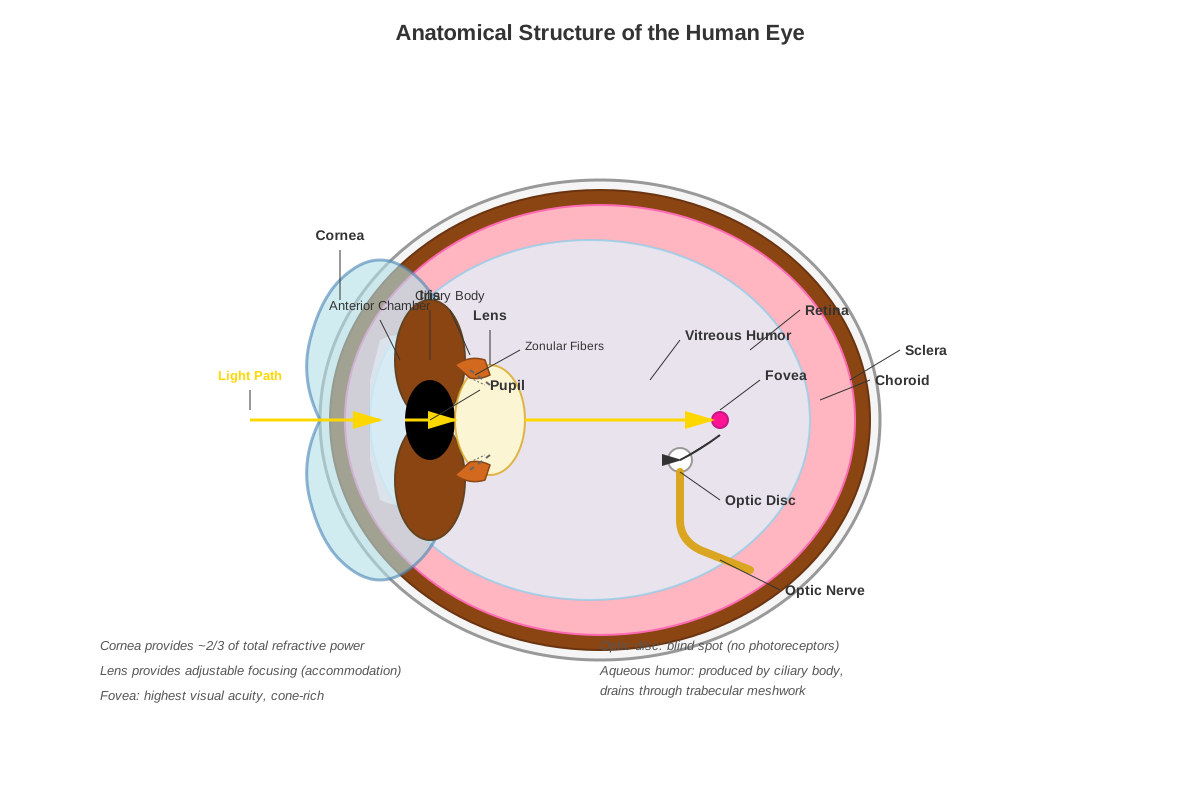
The human eye functions as a sophisticated optical instrument that focuses light onto photosensitive tissue. The cornea, the transparent anterior surface, provides approximately 70% of the eye's refractive power due to the large difference in refractive index between air and corneal tissue. Light then passes through the aqueous humor, a clear fluid that maintains intraocular pressure and nourishes the avascular cornea and lens.
The iris, a pigmented muscular structure, controls pupil diameter through two muscle groups: the sphincter pupillae (parasympathetic innervation, constricts pupil) and dilator pupillae (sympathetic innervation, dilates pupil). This pupillary reflex regulates light entry, optimizing vision across varying illumination conditions while protecting photoreceptors from excessive light exposure.
The lens, a biconvex transparent structure suspended by zonule fibers attached to the ciliary muscle, provides variable focusing power through accommodation. When viewing distant objects, the ciliary muscle relaxes, zonules tighten, and the lens flattens. For near objects, ciliary muscle contraction releases zonule tension, allowing the elastic lens to assume a more spherical shape with greater refractive power. This process diminishes with age as the lens loses elasticity, causing presbyopia.
Light focused by the cornea and lens traverses the vitreous humor, a gel-like substance maintaining eye shape, before reaching the retina. The retina consists of multiple layers, with photoreceptors (rods and cones) located in the outermost layer, paradoxically positioned away from incoming light. This inverted arrangement requires light to pass through several neural layers before reaching photoreceptors, though the fovea centralis—the region of highest visual acuity—has displaced inner retinal layers to minimize light scattering.
Photoreceptor Structure and Function
The retina contains two photoreceptor types: rods and cones, each specialized for different visual conditions. Rods are highly sensitive photoreceptors responsible for scotopic vision (low-light conditions). Approximately 120 million rods populate the human retina, distributed primarily in peripheral regions. Rods contain the photopigment rhodopsin, which consists of the protein opsin bound to 11-cis-retinal (a vitamin A derivative). Rods exhibit high convergence—multiple rods synapse onto single bipolar cells—enhancing sensitivity but reducing spatial resolution.
Cones mediate photopic vision (bright-light conditions) and color vision. The approximately 6 million cones concentrate in the fovea, with minimal convergence, providing high spatial resolution. Three cone types exist, each containing different opsin variants that confer peak sensitivity to different wavelengths: S-cones (short wavelength, ~420 nm, "blue"), M-cones (medium wavelength, ~530 nm, "green"), and L-cones (long wavelength, ~560 nm, "red"). Color perception results from comparing relative activation levels across cone types—a principle called trichromatic theory.
| Feature | Rods | Cones |
|---|---|---|
| Number | ~120 million | ~6 million |
| Location | Peripheral retina | Concentrated in fovea |
| Sensitivity | High (single photon detection) | Lower (bright light required) |
| Convergence | High (many:1 to bipolar cells) | Low (1:1 in fovea) |
| Acuity | Low | High |
| Photopigment | Rhodopsin (one type) | Three photopsins (S, M, L) |
| Function | Scotopic vision, motion detection | Photopic vision, color vision, detail |
Phototransduction Cascade
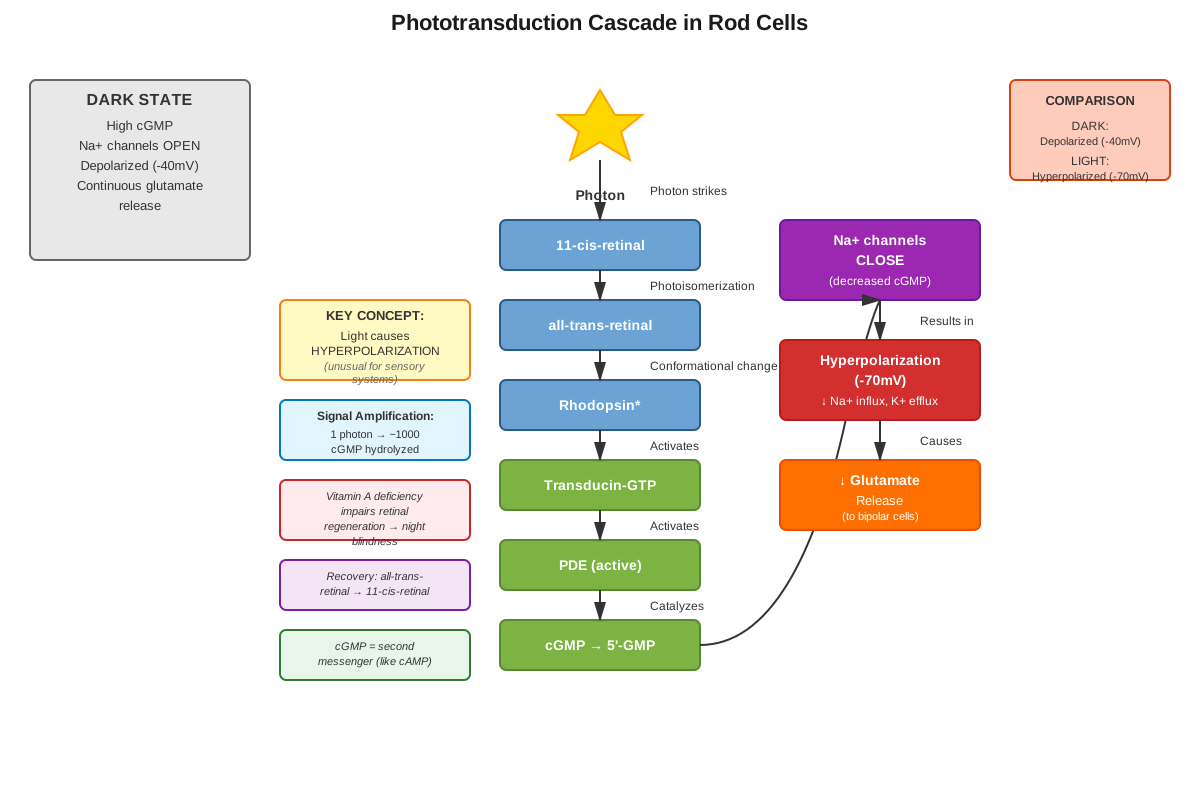
Phototransduction converts light energy into electrical signals through a biochemical cascade. In darkness, photoreceptors exist in a depolarized state (approximately -40 mV), continuously releasing the neurotransmitter glutamate. This unusual resting state results from dark current—a continuous influx of Na⁺ and Ca²⁺ through cyclic GMP (cGMP)-gated channels in the outer segment membrane.
The phototransduction cascade proceeds through these steps:
- Photon absorption: Light converts 11-cis-retinal to all-trans-retinal, inducing a conformational change in opsin
- Activation of transducin: Activated rhodopsin (metarhodopsin II) functions as a guanine nucleotide exchange factor, activating the G-protein transducin by promoting GDP-GTP exchange
- Phosphodiesterase activation: Transducin-GTP activates phosphodiesterase (PDE), which hydrolyzes cGMP to 5'-GMP
- Channel closure: Decreased cGMP concentration causes cGMP-gated channels to close, stopping dark current
- Hyperpolarization: Channel closure prevents Na⁺/Ca²⁺ influx while K⁺ continues to exit, hyperpolarizing the cell to approximately -70 mV
- Reduced neurotransmitter release: Hyperpolarization closes voltage-gated Ca²⁺ channels, reducing glutamate release
This cascade exhibits remarkable signal amplification: a single photon can activate hundreds of transducin molecules, each activating PDE to hydrolyze thousands of cGMP molecules, ultimately closing hundreds of channels. This amplification enables rods to detect single photons.
Recovery mechanisms restore the dark state: (1) rhodopsin kinase phosphorylates activated rhodopsin, (2) arrestin binds phosphorylated rhodopsin, preventing further transducin activation, (3) guanylate cyclase synthesizes new cGMP, and (4) all-trans-retinal converts back to 11-cis-retinal or dissociates for regeneration.
Visual Pathway and Processing
Visual information travels from photoreceptors through a precisely organized neural pathway. Photoreceptors synapse onto bipolar cells, which exist in two functional types. ON-bipolar cells depolarize in response to light (photoreceptor hyperpolarization reduces glutamate, removing inhibition from metabotropic glutamate receptors). OFF-bipolar cells hyperpolarize in response to light (reduced glutamate decreases activation of ionotropic glutamate receptors). This parallel processing begins encoding contrast information at the earliest retinal stage.
Bipolar cells synapse onto ganglion cells, whose axons form the optic nerve (cranial nerve II). Ganglion cells are the first neurons in the visual pathway to generate action potentials. Two major ganglion cell types include M cells (magnocellular pathway, large receptive fields, motion and depth sensitive) and P cells (parvocellular pathway, small receptive fields, color and detail sensitive).
Horizontal cells and amacrine cells provide lateral inhibition, enhancing contrast detection and edge perception. Horizontal cells modulate photoreceptor-to-bipolar cell transmission, while amacrine cells modulate bipolar-to-ganglion cell transmission.
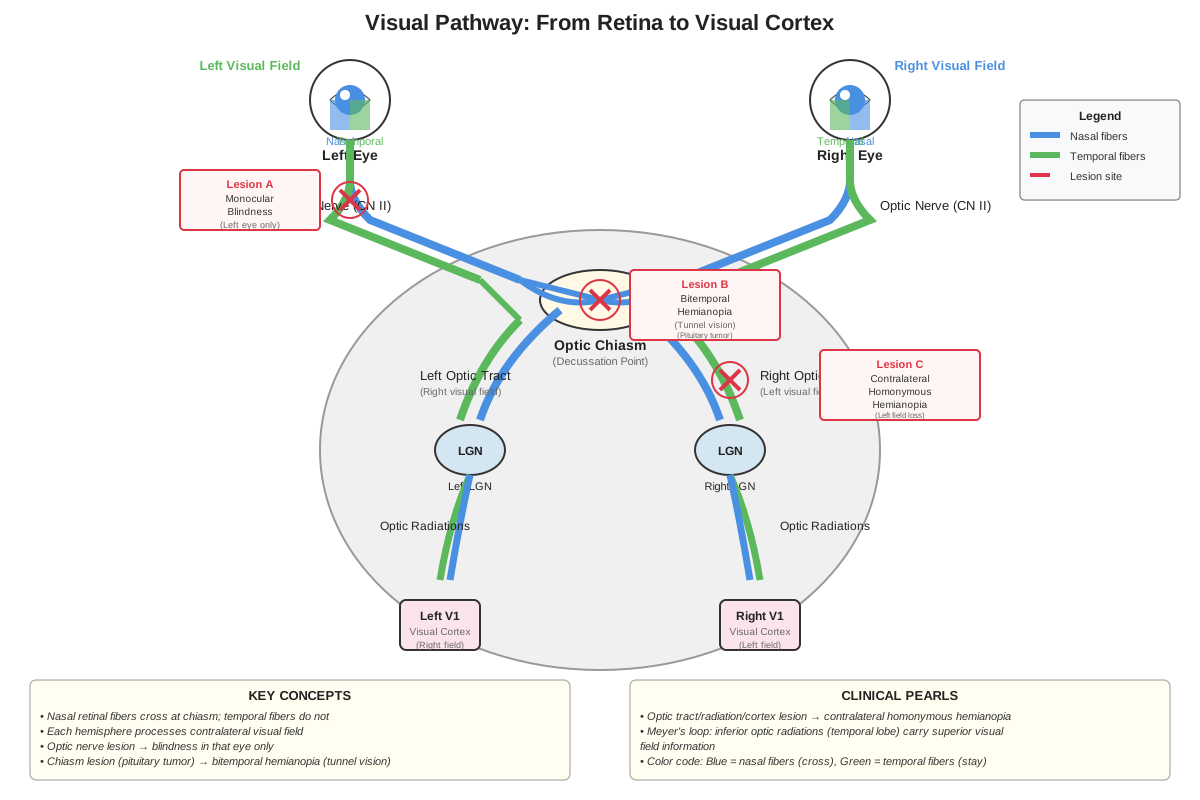
The optic nerves from both eyes meet at the optic chiasm, where fibers from the nasal hemiretina (temporal visual field) of each eye decussate (cross), while temporal hemiretina fibers (nasal visual field) remain ipsilateral. This partial decussation ensures that each hemisphere processes the contralateral visual field. Beyond the chiasm, fibers form the optic tracts.
Most optic tract fibers synapse in the lateral geniculate nucleus (LGN) of the thalamus, which maintains retinotopic organization and separates magnocellular and parvocellular pathways. From the LGN, optic radiations project to the primary visual cortex (V1) in the occipital lobe. V1 contains orientation-selective neurons organized into columns, beginning the process of feature extraction. Higher-order visual areas (V2-V5) process increasingly complex features—motion, color, form, and object recognition.
A secondary pathway projects from the optic tract to the superior colliculus, mediating reflexive eye movements and the pupillary light reflex. Another branch reaches the suprachiasmatic nucleus, regulating circadian rhythms.
Refractive Errors and Accommodation
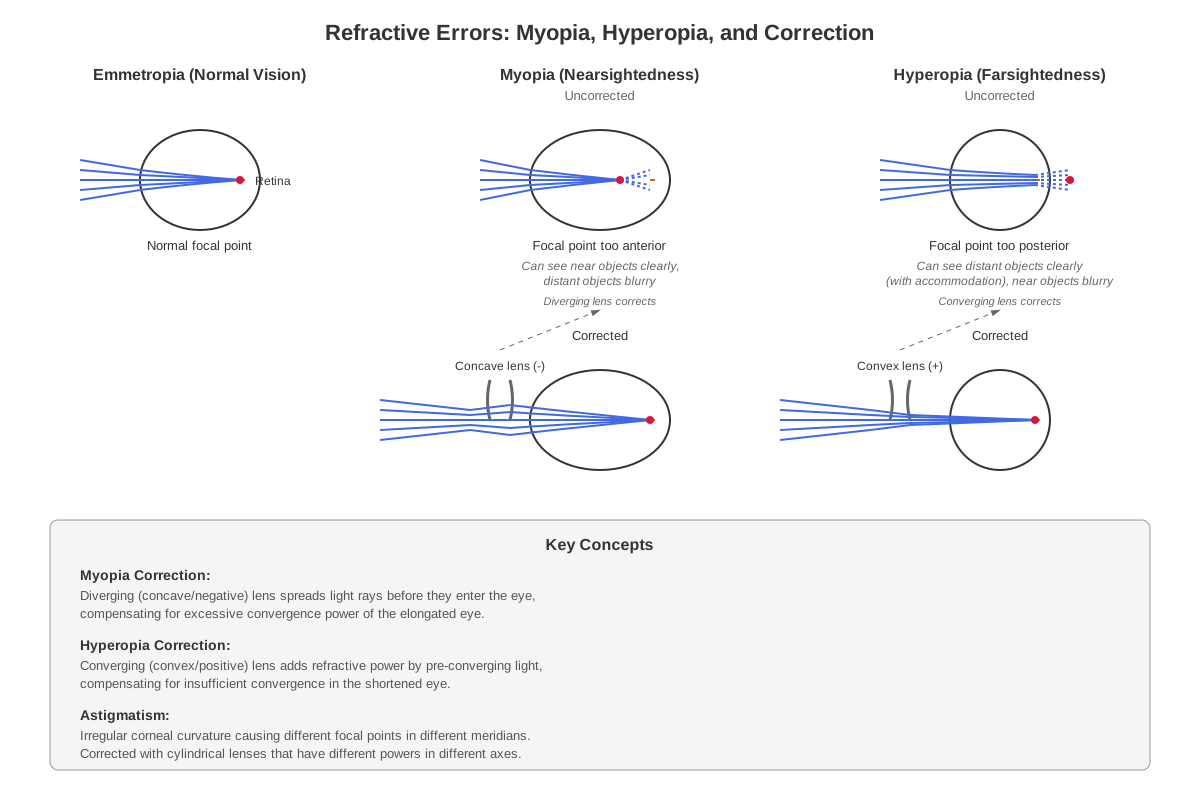
Emmetropia describes the normal condition where parallel light rays from distant objects focus precisely on the retina when accommodation is relaxed. Refractive errors occur when eye anatomy prevents proper focus.
Myopia (nearsightedness) results when the eyeball is too long or the refractive power is too strong, causing parallel rays to converge anterior to the retina. Distant objects appear blurred while near objects remain clear. Correction requires diverging (concave/negative) lenses.
Hyperopia (farsightedness) occurs when the eyeball is too short or refractive power is insufficient, causing parallel rays to converge posterior to the retina. Near objects appear blurred, though accommodation may compensate for distance vision. Correction requires converging (convex/positive) lenses.
Astigmatism results from irregular corneal or lens curvature, causing different meridians to have different refractive powers. Light fails to focus to a single point, blurring vision at all distances. Correction requires cylindrical lenses.
Presbyopia, the age-related loss of accommodation, results from decreased lens elasticity. Near vision becomes difficult as the lens cannot adequately increase its refractive power. Correction requires reading glasses (converging lenses) or bifocals.
Adaptation and Sensitivity
Light adaptation and dark adaptation allow vision across a billion-fold range of light intensities. Dark adaptation occurs when transitioning from bright to dim environments. Cone sensitivity increases within 5-10 minutes, but complete rod adaptation requires 20-30 minutes as rhodopsin regenerates. The Purkinje shift describes the change in relative brightness perception during dark adaptation—wavelengths around 500 nm (blue-green) appear brighter in scotopic conditions due to rhodopsin's peak sensitivity, while longer wavelengths (red) appear brighter in photopic conditions due to L-cone dominance.
Light adaptation occurs more rapidly (seconds to minutes) when transitioning from dark to bright environments. Mechanisms include: (1) photopigment bleaching reducing photoreceptor sensitivity, (2) pupillary constriction reducing light entry, (3) calcium-mediated feedback reducing photoreceptor gain, and (4) neural adaptation in retinal circuits.
Concept Relationships
The visual system demonstrates hierarchical organization where each level builds upon previous structures. Corneal and lens refraction → focuses light onto photoreceptors → which undergo phototransduction → generating signals transmitted through retinal neural circuits → traveling via the visual pathway → to cortical processing centers → producing conscious visual perception.
Anatomical precision determines functional outcomes: eye length and refractive power → determines focal point location → affecting image clarity (emmetropia vs. refractive errors). Similarly, photoreceptor type and distribution → determines visual capabilities (rods for sensitivity, cones for acuity and color).
The phototransduction cascade exemplifies GPCR signaling (prerequisite knowledge), demonstrating how receptor activation → triggers G-protein activation → activating effector enzymes → modulating second messengers → affecting ion channels → changing membrane potential → altering neurotransmitter release. This cascade connects to broader cell signaling principles tested throughout the MCAT.
Visual pathway organization reflects contralateral processing principles seen throughout the nervous system: nasal hemiretina decussation → ensures contralateral visual field representation → enabling binocular vision and depth perception. Lesions at different pathway points produce predictable deficits based on this organization.
Adaptation mechanisms demonstrate negative feedback regulation: increased light → photopigment bleaching and calcium changes → reduced photoreceptor sensitivity → preventing saturation, maintaining function across intensity ranges. This principle parallels homeostatic mechanisms throughout physiology.
Quick check — test yourself on Vision so far.
Try Flashcards →High-Yield Facts
⭐ Photoreceptors hyperpolarize in response to light (unlike most sensory neurons that depolarize), reducing glutamate release
⭐ The fovea contains only cones and provides the highest visual acuity; the optic disc (blind spot) contains no photoreceptors where the optic nerve exits
⭐ Rods are more sensitive than cones (can detect single photons) but provide no color information; three cone types enable trichromatic color vision
⭐ Vitamin A deficiency causes night blindness because retinal (derived from vitamin A) is essential for photopigment synthesis
⭐ Lesions at the optic chiasm produce bitemporal hemianopia (loss of temporal visual fields in both eyes) due to nasal hemiretina fiber decussation
- The phototransduction cascade involves rhodopsin → transducin → phosphodiesterase → decreased cGMP → channel closure → hyperpolarization
- Accommodation for near vision requires ciliary muscle contraction, zonule relaxation, and increased lens curvature
- Myopia (nearsightedness) is corrected with diverging lenses; hyperopia (farsightedness) with converging lenses
- The pupillary light reflex involves the optic nerve (afferent) and oculomotor nerve (efferent), with the superior colliculus and Edinger-Westphal nucleus as integration centers
- Complete dark adaptation takes 20-30 minutes as rhodopsin regenerates in rods
- Horizontal cells and amacrine cells provide lateral inhibition, enhancing contrast and edge detection
- The magnocellular pathway processes motion and depth; the parvocellular pathway processes color and fine detail
Common Misconceptions
Misconception: Photoreceptors depolarize when stimulated by light, like other sensory neurons.
Correction: Photoreceptors uniquely hyperpolarize in response to light. They maintain a depolarized state in darkness (due to dark current through cGMP-gated channels) and hyperpolarize when light triggers the phototransduction cascade that closes these channels.
Misconception: The lens provides most of the eye's refractive power.
Correction: The cornea provides approximately 70% of total refractive power due to the large refractive index difference between air and corneal tissue. The lens contributes about 30% and provides variable focusing through accommodation, but the cornea is the primary refractive element.
Misconception: Rods and cones are evenly distributed throughout the retina.
Correction: Photoreceptor distribution is highly specialized. The fovea contains exclusively cones (no rods), providing maximum acuity for central vision. Rods predominate in peripheral retina, providing motion detection and scotopic vision. The optic disc contains no photoreceptors, creating the blind spot.
Misconception: Color blindness means seeing only in black and white.
Correction: Most "color blindness" is actually color deficiency where one cone type is absent or dysfunctional (dichromacy) or has altered spectral sensitivity (anomalous trichromacy). Complete absence of color vision (monochromacy/achromatopsia) is extremely rare. The most common form, red-green color deficiency, results from L-cone or M-cone defects.
Misconception: A lesion of the left optic nerve causes blindness in the left visual field.
Correction: A lesion of the left optic nerve causes complete blindness in the left eye (affecting both visual fields as seen by that eye). Visual field deficits depend on lesion location: optic nerve lesions affect one eye, optic chiasm lesions affect temporal fields bilaterally, and post-chiasmal lesions affect contralateral visual fields in both eyes.
Misconception: Accommodation occurs by changing corneal curvature.
Correction: Accommodation involves changing lens shape, not corneal curvature. Ciliary muscle contraction releases tension on zonule fibers, allowing the elastic lens to become more spherical and increase refractive power for near vision. The cornea maintains constant curvature (except in conditions like keratoconus).
Worked Examples
Example 1: Phototransduction Cascade Analysis
Question: A researcher develops a drug that irreversibly inhibits phosphodiesterase in rod photoreceptors. Predict the effect on photoreceptor membrane potential and neurotransmitter release in both dark and light conditions.
Solution:
Step 1: Identify the normal function of phosphodiesterase
In the phototransduction cascade, phosphodiesterase (PDE) hydrolyzes cGMP to 5'-GMP. Light activates rhodopsin → transducin → PDE, decreasing cGMP levels.
Step 2: Determine the consequence of PDE inhibition
If PDE is inhibited, cGMP cannot be hydrolyzed, so cGMP levels remain high regardless of light conditions.
Step 3: Analyze the effect on ion channels
High cGMP keeps cGMP-gated Na⁺/Ca²⁺ channels open, maintaining dark current.
Step 4: Predict membrane potential changes
With channels continuously open, the photoreceptor remains depolarized (approximately -40 mV) in both dark and light conditions. The cell cannot hyperpolarize in response to light because the mechanism for reducing cGMP is blocked.
Step 5: Predict neurotransmitter release
Continuous depolarization keeps voltage-gated Ca²⁺ channels open, causing continuous glutamate release regardless of illumination.
Step 6: Determine functional consequence
The photoreceptor cannot respond to light—it remains in the "dark state" permanently. This would cause functional blindness despite intact photoreceptors, as no light-dependent signal changes occur.
Connection to learning objectives: This example applies understanding of the phototransduction cascade to predict consequences of pathway disruption, demonstrating how biochemical mechanisms determine physiological function.
Example 2: Visual Pathway Lesion Analysis
Question: A patient presents with loss of vision in the temporal visual field of the left eye and the temporal visual field of the right eye. Where is the lesion most likely located, and what anatomical principle explains this deficit pattern?
Solution:
Step 1: Clarify the deficit
The patient has lost both temporal visual fields—this is called bitemporal hemianopia.
Step 2: Recall visual field mapping
The temporal visual field of each eye is detected by the nasal hemiretina of that eye (light from temporal field crosses through the pupil to reach nasal retina).
Step 3: Trace the pathway of affected fibers
Fibers from the nasal hemiretina of each eye decussate (cross) at the optic chiasm. Temporal hemiretina fibers remain ipsilateral.
Step 4: Identify the lesion location
For both temporal fields to be affected, the lesion must damage crossing fibers from both nasal hemiretinas. This occurs at the optic chiasm.
Step 5: Explain the anatomical principle
The optic chiasm is where nasal retinal fibers from both eyes cross. A midline lesion at the optic chiasm (often from a pituitary tumor compressing the chiasm from below) selectively damages these crossing fibers while sparing uncrossed temporal retinal fibers.
Step 6: Verify the logic
- Left nasal retina (damaged) → detects left temporal field → LOST
- Left temporal retina (intact) → detects left nasal field → PRESERVED
- Right nasal retina (damaged) → detects right temporal field → LOST
- Right temporal retina (intact) → detects right nasal field → PRESERVED
Result: Bitemporal hemianopia ✓
Connection to learning objectives: This example demonstrates application of visual pathway anatomy to clinical scenarios, requiring integration of retinotopic mapping, decussation patterns, and lesion localization—all high-yield for MCAT passages.
Exam Strategy
When approaching MCAT questions on vision, first identify the question type: anatomical (structure-function relationships), physiological (mechanisms like phototransduction), or clinical (pathway lesions, refractive errors). This categorization guides your approach.
Trigger words signal specific concepts:
- "Hyperpolarization," "dark current," "cGMP" → phototransduction cascade
- "Accommodation," "ciliary muscle," "near vision" → lens focusing mechanisms
- "Visual field deficit," "hemianopia," "lesion" → visual pathway anatomy
- "Night blindness," "vitamin A," "rhodopsin" → photopigment biochemistry
- "Convergence," "acuity," "sensitivity" → rod vs. cone properties
For passage-based questions, quickly identify the experimental manipulation or clinical scenario, then predict expected outcomes based on normal physiology before reading answer choices. If a passage describes photoreceptor research, immediately recall: rods vs. cones, phototransduction steps, and adaptation mechanisms.
Process-of-elimination strategies:
- Eliminate answers confusing depolarization/hyperpolarization in photoreceptors (remember: light causes hyperpolarization)
- Eliminate answers placing lesions incorrectly based on visual field deficits (draw a quick diagram if needed)
- Eliminate answers confusing rod and cone properties (rods = sensitive, peripheral, no color; cones = acuity, foveal, color)
- Watch for answers reversing cause and effect in refractive errors (myopia = too long/too strong, not too short)
Time allocation: Discrete vision questions should take 60-90 seconds. For passage-based questions, spend 3-4 minutes understanding the passage setup, then 60-90 seconds per question. If a question requires drawing the visual pathway or tracing the phototransduction cascade, invest 30 seconds in a quick diagram—this prevents errors and often makes the answer obvious.
Common question formats:
- "Which of the following best explains..." → requires mechanistic understanding
- "A patient with [deficit] most likely has a lesion at..." → requires pathway anatomy
- "The data in Figure 1 suggest..." → requires interpreting experimental results about photoreceptor function
- "Compared to rods, cones..." → requires comparing photoreceptor properties
Always connect back to fundamental principles: signal transduction, neural pathways, structure-function relationships. The MCAT rarely tests pure memorization—questions require applying knowledge to novel scenarios.
Memory Techniques
Phototransduction Cascade: "Really Tall People Climb High"
- Rhodopsin activation (light converts 11-cis to all-trans-retinal)
- Transducin activation (G-protein)
- Phosphodiesterase activation (effector enzyme)
- CGMP hydrolysis (second messenger decrease)
- Hyperpolarization (channels close, cell hyperpolarizes)
Rod vs. Cone Properties: "Rods are SENSITIVE PERIPHERALS"
- Scotopic vision
- Extremely sensitive (single photon detection)
- No color vision
- Single photopigment type (rhodopsin)
- Increased convergence
- Twilight/night vision
- In peripheral retina
- Very numerous (~120 million)
- Enhanced sensitivity, reduced acuity
Visual Pathway: "Really Good Lawyers Often Vex"
- Retina (photoreceptors, bipolar cells, ganglion cells)
- Ganglion cell axons form optic nerve
- Lateral geniculate nucleus (thalamus)
- Optic radiations
- Visual cortex (V1, occipital lobe)
Refractive Errors: "MY eyes are too LONG; HYper eyes are too SHORT"
- MYopia = eyeball too LONG → image focuses in front of retina → needs diverging (concave) lens
- HYperopia = eyeball too SHORT → image focuses behind retina → needs converging (convex) lens
Chiasm Lesion Rule: "Chiasm Crosses Cut Both Temporals"
- Optic chiasm lesions affect crossing fibers (nasal hemiretina)
- Nasal hemiretina detects temporal visual fields
- Result: bitemporal hemianopia (both temporal fields lost)
Visualization Strategy for Pathway Questions:
Quickly sketch a top-down view: two eyes → optic nerves → X (chiasm) → optic tracts → LGN → V1. Mark which fibers cross (nasal hemiretina) and which don't (temporal hemiretina). This 10-second investment prevents errors on lesion localization questions.
Summary
Vision represents a complex integration of optical physics, cellular biochemistry, and neural processing that converts electromagnetic radiation into conscious perception. The eye's refractive elements—primarily the cornea, supplemented by the accommodating lens—focus light onto the retina, where specialized photoreceptors transduce light energy into electrical signals. Rods provide high-sensitivity scotopic vision and motion detection through peripheral distribution and high convergence, while cones enable photopic vision, high acuity, and trichromatic color perception through foveal concentration and minimal convergence. The phototransduction cascade exemplifies GPCR signaling, where light-activated rhodopsin triggers a biochemical amplification cascade that closes cGMP-gated channels, hyperpolarizing photoreceptors and reducing glutamate release. Visual information flows through retinal circuits (horizontal cells, bipolar cells, amacrine cells, ganglion cells) that begin processing contrast and features before transmission via the optic nerve. The visual pathway's partial decussation at the optic chiasm ensures contralateral visual field representation, with information relayed through the lateral geniculate nucleus to primary visual cortex for conscious perception. Understanding vision requires integrating anatomical precision, biochemical mechanisms, and neural organization—skills directly applicable to MCAT questions spanning discrete items, experimental passages, and clinical vignettes.
Key Takeaways
- Photoreceptors hyperpolarize (not depolarize) in response to light, reducing glutamate release through a cGMP-mediated cascade involving rhodopsin, transducin, and phosphodiesterase
- Rods provide sensitive scotopic vision without color discrimination; cones provide photopic vision with high acuity and trichromatic color perception based on three opsin variants with different spectral sensitivities
- The cornea provides ~70% of refractive power; the lens provides ~30% and enables accommodation through ciliary muscle-controlled shape changes
- Visual pathway organization features partial decussation at the optic chiasm, where nasal hemiretina fibers cross, ensuring each hemisphere processes the contralateral visual field
- Refractive errors result from mismatches between eye length and refractive power: myopia (too long/strong) requires diverging lenses; hyperopia (too short/weak) requires converging lenses
- The fovea contains exclusively cones for maximum acuity; the optic disc contains no photoreceptors, creating the blind spot
- Lesion location determines visual field deficit patterns: optic nerve (monocular blindness), optic chiasm (bitemporal hemianopia), optic tract/beyond (contralateral homonymous hemianopia)
Related Topics
Auditory System: Like vision, hearing involves specialized sensory transduction (mechanotransduction in hair cells vs. phototransduction in photoreceptors) and demonstrates similar principles of sensory coding, adaptation, and neural pathway organization. Mastering vision provides a framework for understanding other special senses.
Neural Signal Transduction: The phototransduction cascade exemplifies GPCR signaling mechanisms that appear throughout physiology. Understanding this cascade deeply reinforces broader principles of receptor activation, G-proteins, second messengers, and signal amplification tested across multiple MCAT topics.
Autonomic Nervous System: Pupillary control demonstrates autonomic function (sympathetic dilation, parasympathetic constriction) and provides clinical applications for testing autonomic pathways. Vision connects to broader autonomic principles including reflex arcs and dual innervation.
Sensory Processing and Perception: Psychology/Sociology sections test higher-order visual processing including attention, perception, Gestalt principles, and visual illusions. Understanding the biological basis of vision enables deeper comprehension of perceptual psychology.
Embryology and Development: Eye development involves complex tissue interactions and demonstrates principles of induction, differentiation, and organogenesis. Understanding mature eye anatomy facilitates learning developmental processes and congenital abnormalities.
Practice CTA
Now that you've mastered the core concepts of vision, it's time to solidify your understanding through active practice. Attempt the practice questions and flashcards associated with this topic, focusing on applying the phototransduction cascade, analyzing visual pathway lesions, and distinguishing rod versus cone properties. Challenge yourself with passage-based questions that require integrating multiple concepts—these mirror actual MCAT questions most closely. Remember: understanding vision thoroughly not only prepares you for direct vision questions but also reinforces fundamental principles in cell signaling, neural pathways, and sensory physiology that appear throughout the exam. Your investment in mastering this topic pays dividends across multiple MCAT sections. You've got this!
Sign up free to keep reading
Create a free AnvayaPrep account to finish this MCAT guide on Vision — plus flashcards and practice questions.