Overview
The Loop of Henle represents one of the most elegant and physiologically significant structures in the mammalian kidney, serving as the cornerstone of the kidney's ability to produce concentrated urine and maintain body fluid homeostasis. This U-shaped tubular segment of the nephron extends from the proximal convoluted tubule into the renal medulla and back up to the distal convoluted tubule, creating a countercurrent multiplication system that establishes the medullary osmotic gradient essential for water reabsorption. Understanding the Loop of Henle Biology requires integrating concepts of osmosis, active transport, membrane permeability, and concentration gradients—all fundamental principles that appear repeatedly throughout MCAT Physiology and Organ Systems questions.
For the MCAT, the Loop of Henle represents a medium-yield topic that frequently appears in passage-based questions testing integrated physiological reasoning rather than simple recall. Questions often present clinical scenarios involving dehydration, diuretic medications, or disorders of water balance, requiring students to trace the consequences of disrupted Loop of Henle function through multiple organ systems. The Loop of Henle MCAT questions typically assess understanding of countercurrent mechanisms, selective permeability, and the hormonal regulation of kidney function, making this topic a gateway to understanding broader renal physiology.
The Loop of Henle connects directly to critical Biology concepts including membrane transport, osmotic pressure, cellular energetics (ATP-dependent pumps), and homeostatic regulation. Mastery of this structure provides the foundation for understanding antidiuretic hormone (ADH) function, the renin-angiotensin-aldosterone system (RAAS), acid-base balance, and electrolyte disorders—all high-yield topics for the MCAT. The countercurrent multiplication principle demonstrated by the Loop of Henle also appears in other biological contexts, making it an excellent model for understanding how spatial organization of transport processes can amplify physiological effects.
Learning Objectives
- [ ] Define Loop of Henle using accurate Biology terminology
- [ ] Explain why Loop of Henle matters for the MCAT
- [ ] Apply Loop of Henle to exam-style questions
- [ ] Identify common mistakes related to Loop of Henle
- [ ] Connect Loop of Henle to related Biology concepts
- [ ] Differentiate between the structural and functional characteristics of the descending and ascending limbs
- [ ] Quantitatively predict changes in tubular fluid osmolarity at different points along the Loop of Henle
- [ ] Analyze the effects of pharmacological agents (loop diuretics) on Loop of Henle function and systemic physiology
Prerequisites
- Osmosis and tonicity: Understanding passive water movement across semipermeable membranes is essential for comprehending water reabsorption in the descending limb
- Active transport mechanisms: Knowledge of ATP-dependent ion pumps and secondary active transport underlies the function of the thick ascending limb
- Nephron anatomy: Familiarity with the basic structure of the nephron (glomerulus, proximal tubule, distal tubule, collecting duct) provides context for Loop of Henle positioning
- Concentration gradients: Understanding how concentration differences drive diffusion is critical for grasping countercurrent multiplication
- Membrane permeability: Knowledge that different membrane proteins confer selective permeability to water (aquaporins) or ions (channels and transporters) explains regional functional differences
Why This Topic Matters
The Loop of Henle holds significant clinical relevance as the target of loop diuretics (furosemide, bumetanide), among the most commonly prescribed medications for heart failure, hypertension, and edema. Disorders affecting Loop of Henle function, such as Bartter syndrome (genetic defects in thick ascending limb transporters), produce severe electrolyte imbalances and volume depletion. Understanding Loop of Henle physiology is essential for interpreting laboratory values in dehydration, syndrome of inappropriate antidiuretic hormone (SIADH), diabetes insipidus, and chronic kidney disease—all conditions that appear in MCAT clinical vignettes.
On the MCAT, Loop of Henle questions appear in approximately 3-5% of Biology passages, typically integrated with broader renal physiology or homeostasis topics. Questions most commonly test: (1) the countercurrent multiplication mechanism and how it establishes the medullary gradient, (2) differential permeability of descending versus ascending limbs, (3) the effects of ADH on collecting duct function (which depends on the medullary gradient created by the Loop), and (4) the mechanism and consequences of loop diuretic action. These questions frequently require multi-step reasoning, asking students to predict downstream effects of a primary disruption.
The Loop of Henle commonly appears in MCAT passages describing: experimental manipulations of kidney function, clinical cases of electrolyte disorders, comparative physiology (desert mammals with longer loops), pharmacology passages about diuretics, or research passages investigating novel water channels or ion transporters. The topic integrates well with questions about acid-base balance (the Loop reabsorbs bicarbonate), calcium homeostasis (the thick ascending limb reabsorbs calcium), and cardiovascular physiology (volume status affects blood pressure).
Core Concepts
Structure and Anatomical Organization
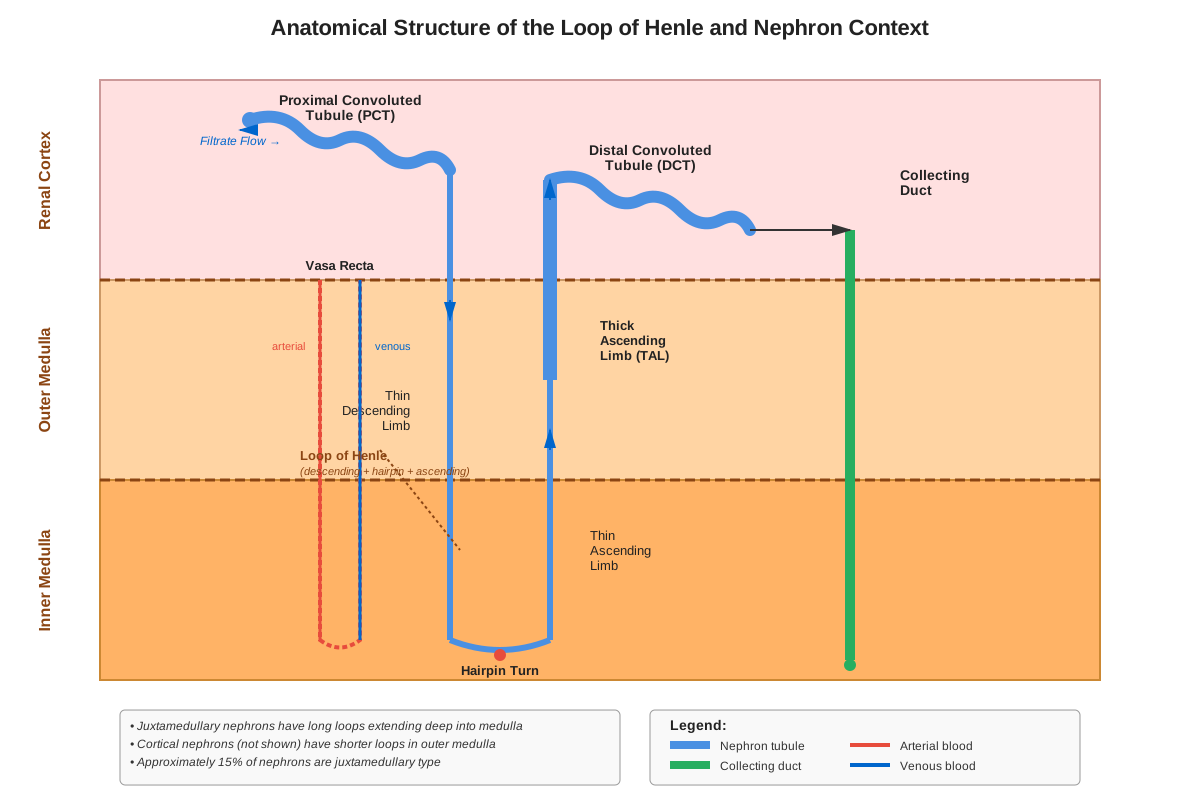
The Loop of Henle is a hairpin-shaped tubular structure consisting of three functionally distinct segments: the thin descending limb, the thin ascending limb, and the thick ascending limb. The loop extends from the cortex (where it connects to the proximal convoluted tubule) down into the medulla, reaching variable depths depending on nephron type. Juxtamedullary nephrons (approximately 15% of nephrons) have long loops that penetrate deep into the inner medulla, while cortical nephrons have shorter loops that only reach the outer medulla. This anatomical variation is functionally significant—juxtamedullary nephrons with longer loops can establish steeper osmotic gradients, enabling greater urine concentration when needed.
The descending limb travels from the cortex toward the medulla, running parallel and in close proximity to the ascending limb and the vasa recta (specialized capillaries). This parallel arrangement is essential for countercurrent exchange. The loop makes a sharp turn at the hairpin bend (also called the loop bend), then the ascending limb returns toward the cortex. The thick ascending limb terminates at the macula densa, a specialized cluster of cells that senses tubular fluid composition and participates in tubuloglomerular feedback.
Descending Limb: Water Permeability and Concentration
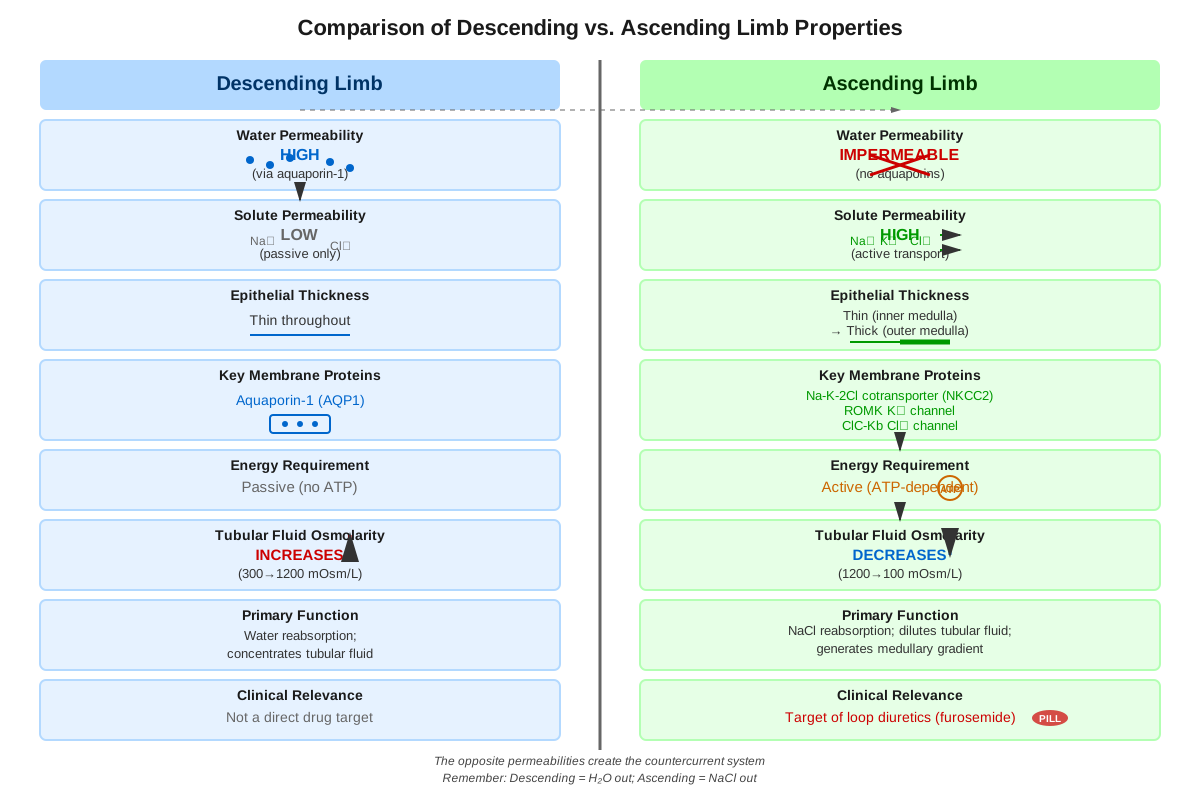
The thin descending limb is characterized by high water permeability due to abundant aquaporin-1 (AQP1) water channels in its epithelial cell membranes. Critically, this segment has low permeability to sodium and chloride ions, lacking the transporters present in other nephron segments. As tubular fluid descends into the progressively hypertonic medullary interstitium (which can reach 1200 mOsm/kg in the inner medulla compared to 300 mOsm/kg in the cortex), water moves out of the tubule by osmosis, following the concentration gradient.
This water reabsorption concentrates the tubular fluid, increasing its osmolarity from approximately 300 mOsm/kg at the beginning of the descending limb to 1200 mOsm/kg at the hairpin turn in juxtamedullary nephrons. The solutes remaining in the tubular fluid (primarily NaCl and urea) become progressively more concentrated as water is removed. This passive concentration process is essential for the subsequent active transport in the ascending limb.
Ascending Limb: Active Solute Reabsorption
The ascending limb consists of two segments with distinct properties. The thin ascending limb has moderate permeability to sodium and chloride but is impermeable to water (lacking aquaporins). Some passive NaCl reabsorption occurs here, driven by the high concentration of these ions in the tubular fluid entering from the descending limb.
The thick ascending limb is the metabolically active powerhouse of the Loop of Henle. Its epithelial cells contain the Na-K-2Cl cotransporter (NKCC2) on the apical (luminal) membrane, which uses the sodium gradient established by the basolateral Na-K-ATPase pump to drive secondary active transport of one sodium, one potassium, and two chloride ions from the tubular fluid into the cell. This transporter is the direct target of loop diuretics. The thick ascending limb is also impermeable to water, so solute reabsorption without water reabsorption dilutes the tubular fluid while simultaneously adding solutes to the medullary interstitium.
Additional transport processes in the thick ascending limb include: potassium recycling back into the lumen through apical K+ channels (creating a lumen-positive electrical potential), paracellular reabsorption of cations (Ca2+, Mg2+) driven by this positive luminal charge, and bicarbonate reabsorption. By the time tubular fluid exits the thick ascending limb, its osmolarity has decreased to approximately 100-150 mOsm/kg (hypotonic relative to plasma), earning this segment the designation "diluting segment."
Countercurrent Multiplication Mechanism
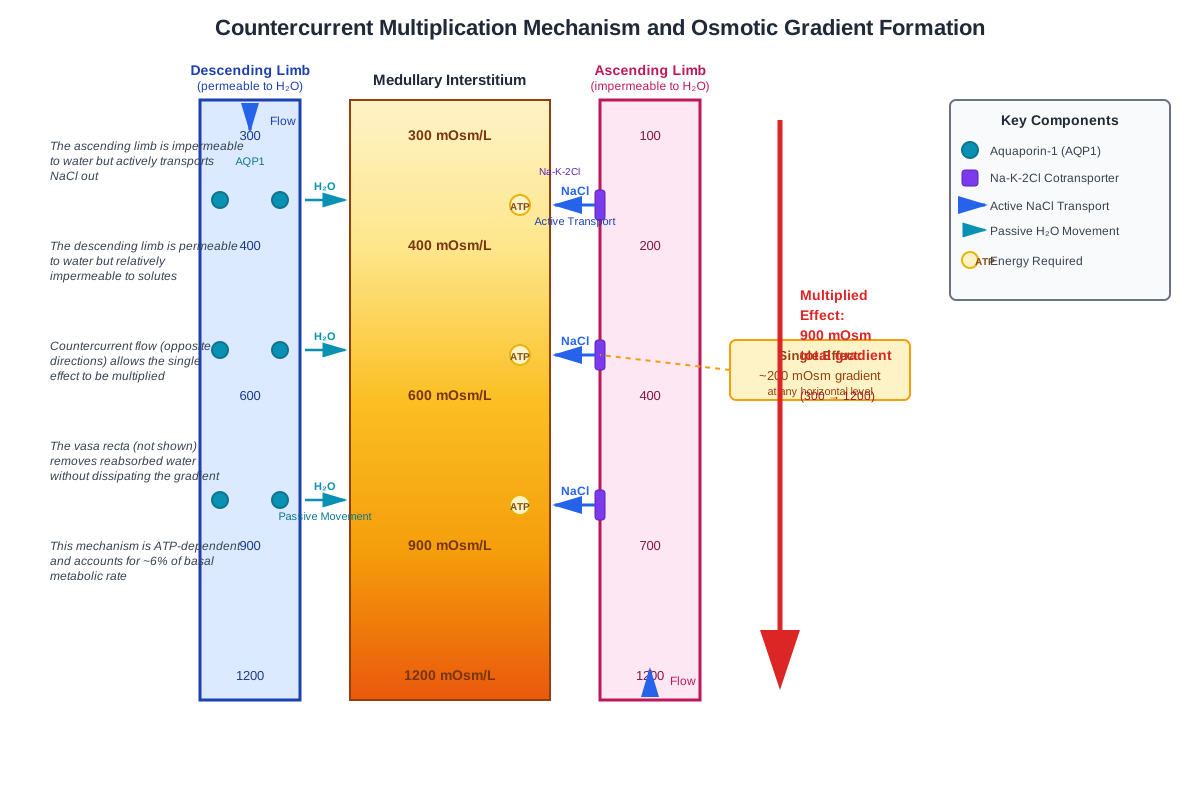
The countercurrent multiplication system is the ingenious mechanism by which the Loop of Henle establishes and maintains the medullary osmotic gradient. "Countercurrent" refers to the opposite flow directions in the descending and ascending limbs (fluid flows down in one limb while flowing up in the adjacent limb). "Multiplication" refers to the amplification of a small single-effect (the 200 mOsm/kg gradient created by active transport in the thick ascending limb) into a large cumulative effect (the 900 mOsm/kg gradient from cortex to inner medulla).
The mechanism operates as follows:
- The thick ascending limb actively transports NaCl out of the tubular fluid into the medullary interstitium, creating a 200 mOsm/kg gradient between tubular fluid and interstitium at any given horizontal level
- This increases interstitial osmolarity in the medulla
- The increased interstitial osmolarity draws water out of the adjacent descending limb (which is water-permeable), concentrating the descending limb fluid
- The concentrated fluid from the descending limb flows around the hairpin turn into the ascending limb
- The ascending limb pumps out more solute from this already-concentrated fluid, further increasing medullary interstitial osmolarity
- This creates a positive feedback loop where each "pass" through the system amplifies the gradient
The result is a vertical osmotic gradient in the medullary interstitium, ranging from isotonic (300 mOsm/kg) at the corticomedullary junction to maximally hypertonic (1200 mOsm/kg) at the papillary tip. This gradient is essential for the collecting duct's ability to concentrate urine in the presence of ADH.
Role of Urea in the Medullary Gradient
While NaCl reabsorption by the thick ascending limb contributes approximately 50% of the medullary osmotic gradient, urea contributes the other 50%, particularly in the inner medulla. Urea is freely filtered at the glomerulus and partially reabsorbed in the proximal tubule. The Loop of Henle itself is relatively impermeable to urea, so urea concentration in tubular fluid increases as water is reabsorbed in the descending limb.
In the presence of ADH, the inner medullary collecting duct becomes permeable to urea through UT-A1 and UT-A3 urea transporters. Urea diffuses from the collecting duct into the medullary interstitium, increasing interstitial osmolarity. Some of this urea enters the thin descending limb, creating a urea recycling loop that maintains high medullary urea concentrations. This urea accumulation is critical for achieving maximum urine concentration during dehydration.
Vasa Recta and Countercurrent Exchange
The vasa recta are specialized, hairpin-shaped capillaries that parallel the loops of Henle in juxtamedullary nephrons. These vessels perform countercurrent exchange, a passive process that preserves the medullary osmotic gradient while still allowing blood flow for nutrient delivery and waste removal. As blood descends into the medulla in the vasa recta, it equilibrates with the increasingly hypertonic interstitium—water leaves the blood and solutes enter. As blood ascends back toward the cortex, the opposite occurs—water enters and solutes leave.
This countercurrent arrangement prevents the vasa recta from "washing away" the medullary gradient. If blood flowed straight through the medulla without this countercurrent arrangement, it would dissipate the carefully established osmotic gradient. The vasa recta flow rate is relatively slow, allowing time for equilibration while minimizing gradient disruption.
Comparison Table: Descending vs. Ascending Limb
| Feature | Descending Limb | Thin Ascending Limb | Thick Ascending Limb |
|---|---|---|---|
| Water permeability | High (AQP1 present) | None (no aquaporins) | None (no aquaporins) |
| NaCl permeability | Low | Moderate (passive) | High (active via NKCC2) |
| Primary transport | Passive water reabsorption | Passive NaCl reabsorption | Active NaCl reabsorption |
| Energy requirement | None (passive) | None (passive) | High (ATP for Na-K-ATPase) |
| Effect on tubular fluid | Concentrates (removes water) | Slight dilution | Significant dilution |
| Osmolarity change | Increases to ~1200 mOsm/kg | Begins to decrease | Decreases to ~100-150 mOsm/kg |
| Diuretic target | None | None | Loop diuretics (NKCC2) |
Concept Relationships
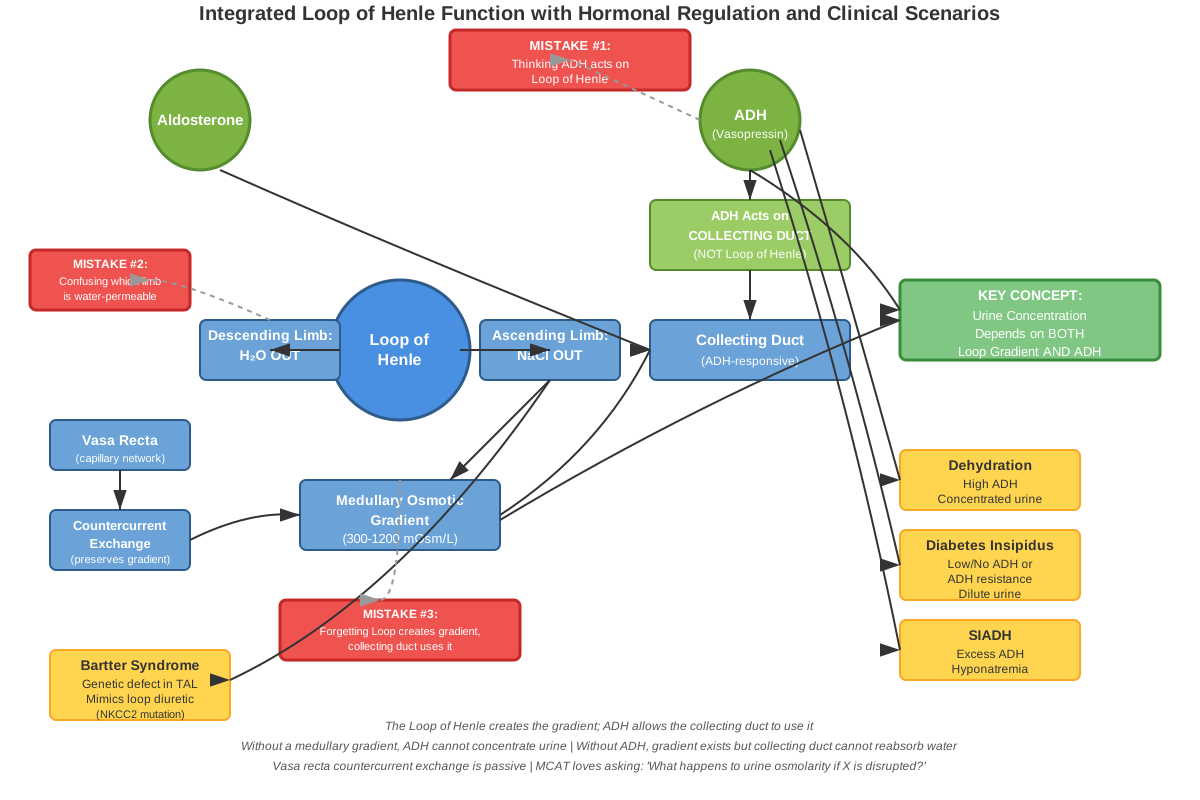
The Loop of Henle functions as the central component in an integrated system of renal concentration and dilution. The countercurrent multiplication mechanism in the Loop establishes the medullary osmotic gradient → this gradient enables the collecting duct (under ADH influence) to reabsorb water and concentrate urine → concentrated urine allows the body to conserve water during dehydration. Conversely, when the thick ascending limb dilutes tubular fluid without ADH present, the collecting duct remains water-impermeable → dilute urine is excreted → excess water is eliminated.
The Loop of Henle connects to prerequisite concepts through multiple pathways. Active transport mechanisms (Na-K-ATPase and NKCC2) in the thick ascending limb require ATP generated by cellular respiration → this links Loop function to metabolic energy availability. Osmosis drives water reabsorption in the descending limb → this depends on the medullary gradient created by the ascending limb's active transport. The membrane permeability differences between segments (aquaporins in descending limb, NKCC2 in ascending limb) determine functional specialization → this illustrates how protein expression patterns create physiological diversity.
The Loop of Henle enables downstream renal processes: the dilute fluid exiting the thick ascending limb → enters the distal convoluted tubule where aldosterone-sensitive Na+ reabsorption occurs → then flows to the collecting duct where ADH regulates final water reabsorption. The macula densa cells at the end of the thick ascending limb → sense tubular fluid NaCl concentration → regulate renin release and glomerular filtration rate through tubuloglomerular feedback → this connects Loop function to blood pressure regulation and the RAAS.
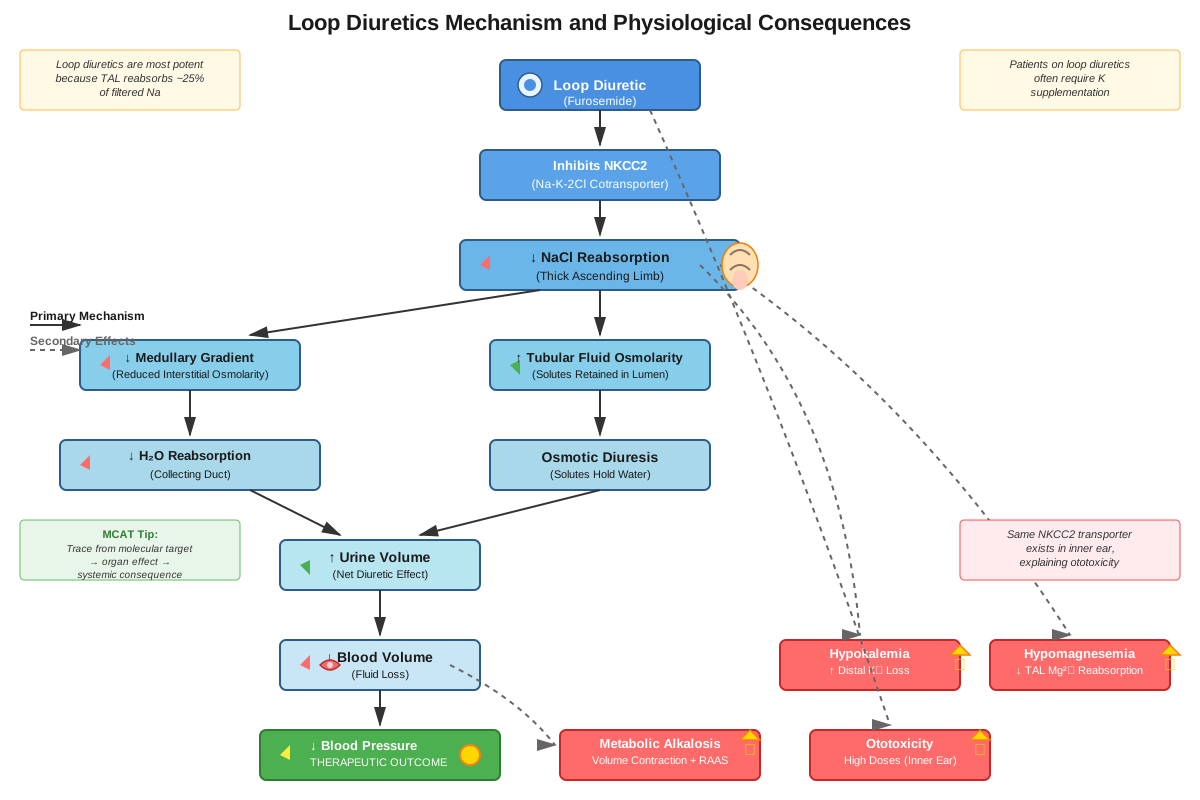
Clinically, Loop of Henle dysfunction → impairs urine concentration → causes polyuria and dehydration → triggers compensatory mechanisms including increased ADH release and thirst. Loop diuretics → block NKCC2 → prevent medullary gradient establishment → reduce water reabsorption in collecting duct → cause diuresis and natriuresis → decrease blood volume and blood pressure → therapeutic effect in heart failure and hypertension.
Quick check — test yourself on Loop of Henle so far.
Try Flashcards →High-Yield Facts
⭐ The thick ascending limb is impermeable to water but actively reabsorbs NaCl via the Na-K-2Cl cotransporter (NKCC2), creating dilute tubular fluid and a concentrated medullary interstitium
⭐ The descending limb is permeable to water (via aquaporin-1) but relatively impermeable to solutes, allowing passive water reabsorption and tubular fluid concentration
⭐ Countercurrent multiplication amplifies a 200 mOsm/kg single-effect into a 900 mOsm/kg vertical osmotic gradient from cortex to medullary tip
⭐ Loop diuretics (furosemide) block NKCC2 in the thick ascending limb, preventing medullary gradient formation and causing significant diuresis
⭐ Juxtamedullary nephrons with long loops extending deep into the medulla can establish steeper osmotic gradients than cortical nephrons with short loops
- The tubular fluid entering the Loop of Henle is isotonic (~300 mOsm/kg) and exits hypotonic (~100-150 mOsm/kg)
- The thick ascending limb is called the "diluting segment" because it reabsorbs solute without water
- Urea contributes approximately 50% of the medullary osmotic gradient, particularly in the inner medulla
- The vasa recta perform countercurrent exchange to preserve the medullary gradient while providing blood flow
- The lumen-positive potential in the thick ascending limb (from K+ recycling) drives paracellular reabsorption of Ca2+ and Mg2+
- Bartter syndrome results from genetic defects in thick ascending limb transporters, causing salt wasting and hypokalemia
- The Loop of Henle reabsorbs approximately 25% of filtered sodium and 20% of filtered water
Common Misconceptions
Misconception: The Loop of Henle actively transports water out of the descending limb to concentrate tubular fluid.
Correction: Water movement in the descending limb is entirely passive, driven by osmosis in response to the hypertonic medullary interstitium. The descending limb has no active transport mechanisms for water—it simply contains aquaporin-1 channels that allow water to follow the osmotic gradient established by active NaCl transport in the ascending limb.
Misconception: The entire Loop of Henle is impermeable to water.
Correction: Only the ascending limb (both thin and thick segments) is impermeable to water. The descending limb is highly water-permeable due to abundant aquaporin-1 channels. This differential permeability is essential for countercurrent multiplication—if both limbs were water-permeable or both water-impermeable, the system could not establish an osmotic gradient.
Misconception: The thick ascending limb creates the medullary osmotic gradient by pumping water into the interstitium.
Correction: The thick ascending limb creates the gradient by actively pumping solutes (Na+, K+, Cl-) into the interstitium, not water. Since this segment is water-impermeable, solute reabsorption without accompanying water reabsorption increases interstitial osmolarity while diluting tubular fluid. Water cannot be "pumped" directly—it only moves by osmosis.
Misconception: Loop diuretics work by blocking water reabsorption in the Loop of Henle.
Correction: Loop diuretics work by blocking the NKCC2 cotransporter in the thick ascending limb, preventing NaCl reabsorption. This prevents establishment of the medullary osmotic gradient. The diuretic effect occurs primarily because the collecting duct cannot reabsorb water effectively without the medullary gradient, even in the presence of ADH. The Loop of Henle itself doesn't reabsorb much water in the ascending limb anyway (it's water-impermeable).
Misconception: Tubular fluid becomes progressively more concentrated throughout the entire length of the Loop of Henle.
Correction: Tubular fluid concentration increases only in the descending limb (reaching maximum concentration at the hairpin turn). In the ascending limb, tubular fluid becomes progressively more dilute as solutes are reabsorbed without water. The fluid exiting the Loop is actually hypotonic (100-150 mOsm/kg) compared to the isotonic fluid that entered (300 mOsm/kg).
Misconception: The countercurrent multiplier and countercurrent exchanger are the same mechanism.
Correction: These are distinct processes. The countercurrent multiplier refers to the active process in the Loop of Henle that establishes the medullary gradient through opposing flow directions and active transport. The countercurrent exchanger refers to the passive process in the vasa recta that preserves the gradient through equilibration. The multiplier creates the gradient; the exchanger maintains it.
Worked Examples
Example 1: Predicting Effects of Loop Diuretic Administration
Clinical Vignette: A patient with acute heart failure receives intravenous furosemide (a loop diuretic). Predict the immediate effects on Loop of Henle function, medullary osmolarity, urine output, and electrolyte balance.
Step 1 - Identify the primary mechanism: Furosemide blocks the Na-K-2Cl cotransporter (NKCC2) in the thick ascending limb. This prevents the active reabsorption of sodium, potassium, and chloride from the tubular fluid into the medullary interstitium.
Step 2 - Predict effects on the medullary gradient: Without NKCC2 function, the thick ascending limb cannot add solutes to the medullary interstitium. This prevents establishment and maintenance of the medullary osmotic gradient. The medullary interstitium becomes less hypertonic (osmolarity decreases from ~1200 mOsm/kg toward ~300 mOsm/kg).
Step 3 - Predict effects on tubular fluid: More sodium, potassium, and chloride remain in the tubular fluid and are delivered to the distal nephron. The tubular fluid exiting the Loop remains more concentrated than normal because less solute was reabsorbed.
Step 4 - Predict effects on collecting duct function: Even if ADH is present, the collecting duct cannot effectively reabsorb water because the medullary osmotic gradient (which provides the driving force for water reabsorption) has been abolished. Water remains in the tubular fluid.
Step 5 - Predict systemic effects:
- Urine output: Dramatically increases (diuresis) due to both increased solute delivery and decreased water reabsorption
- Sodium balance: Increased urinary sodium excretion (natriuresis), potentially causing hyponatremia
- Potassium balance: Increased urinary potassium excretion, potentially causing hypokalemia (a common side effect requiring monitoring)
- Volume status: Decreased extracellular fluid volume, reducing cardiac preload (therapeutic goal in heart failure)
- Blood pressure: Decreased due to volume depletion
Connection to learning objectives: This example demonstrates application of Loop of Henle physiology to predict pharmacological effects, integrating knowledge of NKCC2 function, countercurrent multiplication, and the relationship between medullary gradient and collecting duct function.
Example 2: Analyzing Osmolarity Changes Along the Loop
Problem: A researcher measures tubular fluid osmolarity at five points along a juxtamedullary nephron: (A) beginning of descending limb, (B) hairpin turn, (C) mid-ascending limb, (D) end of thick ascending limb, and (E) medullary interstitium at the level of the hairpin turn. Rank these locations from lowest to highest osmolarity and explain the physiological basis.
Step 1 - Identify starting conditions: Point A (beginning of descending limb) receives fluid from the proximal tubule, which is isotonic at approximately 300 mOsm/kg despite reabsorbing 65% of filtered solute and water (iso-osmotic reabsorption maintains osmolarity).
Step 2 - Trace changes in the descending limb: As fluid descends toward point B (hairpin turn), it passes through progressively more hypertonic medullary interstitium. Since the descending limb is water-permeable via aquaporin-1, water exits by osmosis, concentrating the tubular fluid. At point B (the deepest point in a juxtamedullary nephron), tubular fluid osmolarity reaches its maximum at approximately 1200 mOsm/kg.
Step 3 - Trace changes in the ascending limb: As fluid ascends from point B through point C (mid-ascending limb), the thin ascending limb allows passive NaCl reabsorption, and the thick ascending limb actively reabsorbs NaCl via NKCC2. Critically, the entire ascending limb is water-impermeable, so solute reabsorption without water reabsorption dilutes the tubular fluid. Osmolarity progressively decreases.
Step 4 - Identify exit conditions: At point D (end of thick ascending limb), tubular fluid has been maximally diluted to approximately 100-150 mOsm/kg, making it hypotonic relative to plasma. This is why the thick ascending limb is called the "diluting segment."
Step 5 - Consider medullary interstitium: Point E (medullary interstitium at the hairpin level) has received solutes from the ascending limb and urea from the collecting duct. At the papillary tip, interstitial osmolarity reaches approximately 1200 mOsm/kg, matching the tubular fluid at point B (they are in osmotic equilibrium).
Ranking from lowest to highest osmolarity:
- Point D (end of thick ascending limb): ~100-150 mOsm/kg
- Point A (beginning of descending limb): ~300 mOsm/kg
- Point C (mid-ascending limb): ~400-600 mOsm/kg (intermediate value)
- Point B (hairpin turn) and Point E (medullary interstitium): ~1200 mOsm/kg (tied)
Key insight: The tubular fluid makes a complete osmotic "journey"—starting isotonic, becoming maximally hypertonic at the hairpin turn, then becoming maximally hypotonic at the exit. This demonstrates how the Loop of Henle both concentrates and dilutes fluid in different segments, enabling flexible regulation of final urine osmolarity by the collecting duct.
Exam Strategy
When approaching MCAT questions about the Loop of Henle, first identify whether the question asks about structure (anatomy, cell types, membrane proteins), function (transport mechanisms, osmolarity changes), or integration (hormonal regulation, clinical effects, experimental manipulations). Structure questions typically require matching segments to their permeability properties. Function questions require tracing solute and water movements. Integration questions require predicting consequences of disruptions.
Trigger words and phrases to recognize:
- "Countercurrent" → immediately think about the parallel arrangement of descending and ascending limbs with opposite flow directions
- "Diluting segment" → refers specifically to the thick ascending limb
- "Medullary gradient" or "medullary hypertonicity" → established by Loop of Henle, used by collecting duct
- "Loop diuretic," "furosemide," or "bumetanide" → blocks NKCC2 in thick ascending limb
- "Aquaporin" in the context of the Loop → refers to AQP1 in descending limb
- "Juxtamedullary" → long loops, steep gradients, maximum concentration ability
- "Impermeable to water" → ascending limb (both thin and thick)
- "Bartter syndrome" → genetic defect in thick ascending limb transporters
Process-of-elimination strategies:
- If an answer choice suggests the ascending limb reabsorbs water, eliminate it (ascending limb is water-impermeable)
- If an answer choice suggests the descending limb actively transports ions, eliminate it (descending limb function is passive)
- If an answer choice suggests loop diuretics work by blocking aquaporins, eliminate it (they block NKCC2)
- If an answer choice suggests tubular fluid becomes progressively more concentrated throughout the entire Loop, eliminate it (fluid dilutes in the ascending limb)
Time allocation advice: Loop of Henle questions often appear in passages with diagrams showing nephron segments or graphs displaying osmolarity changes. Spend 30-45 seconds carefully examining any figures, identifying which segments correspond to descending versus ascending limbs. For standalone questions, quickly sketch a simple U-shaped loop and label "water out" on the descending side and "salt out" on the ascending side—this visual reminder prevents confusion. Most Loop of Henle questions can be answered in 60-90 seconds once the basic mechanism is clear.
Common question formats:
- Mechanism questions: "Which process occurs in the thick ascending limb?" → Look for active NaCl transport or NKCC2 function
- Prediction questions: "What would happen if the descending limb became impermeable to water?" → Trace through the consequences systematically
- Comparison questions: "How does the osmolarity of fluid at point X compare to point Y?" → Use your knowledge of the osmotic journey
- Clinical application: "A patient taking furosemide would experience..." → Think about loss of medullary gradient and its consequences
Memory Techniques
Mnemonic for thick ascending limb transport - "NKCC2 Needs ATP":
- Na-K-2Cl Cotransporter (NKCC2)
- Needs ATP (indirectly, via Na-K-ATPase)
- This reminds you that the thick ascending limb actively transports one sodium, one potassium, and two chloride ions
Mnemonic for Loop segment permeability - "Down With Water, Up With Salt":
- Down (descending limb) = Water permeable
- Up (ascending limb) = Salt (solute) transport, water impermeable
- This captures the essential functional difference between the two limbs
Visualization strategy for countercurrent multiplication:
Picture a ladder lying on its side, with the left side (descending limb) going down into increasingly darker water (representing increasing osmolarity), and the right side (ascending limb) having pumps actively removing salt. As you pump salt out of the right side, it accumulates in the space between the two sides, making the water darker. This darker water pulls more water out of the left side, concentrating what's left. Each "rung" of the ladder represents a horizontal level, and the effect multiplies as you go deeper.
Acronym for Loop of Henle functions - "CMED":
- Concentrates tubular fluid (descending limb)
- Multiplies osmotic gradient (countercurrent mechanism)
- Establishes medullary hypertonicity (ascending limb adds solutes to interstitium)
- Dilutes tubular fluid (ascending limb)
Memory aid for clinical effects of loop diuretics - "SALT LOSS":
- Sodium wasting (natriuresis)
- Ascending limb blocked
- Loss of medullary gradient
- Thick segment affected
- Low potassium (hypokalemia)
- Osmotic gradient abolished
- Significant diuresis
- Systemic volume depletion
Summary
The Loop of Henle is a U-shaped nephron segment that establishes the medullary osmotic gradient essential for urine concentration through a countercurrent multiplication mechanism. The descending limb, permeable to water via aquaporin-1 but relatively impermeable to solutes, passively concentrates tubular fluid as it descends into the hypertonic medulla. The ascending limb, impermeable to water but actively transporting NaCl via the Na-K-2Cl cotransporter (NKCC2) in the thick segment, dilutes tubular fluid while adding solutes to the medullary interstitium. This creates a vertical osmotic gradient (300 to 1200 mOsm/kg from cortex to papilla) that enables the collecting duct to reabsorb water and concentrate urine in the presence of ADH. The vasa recta preserve this gradient through countercurrent exchange. Loop diuretics block NKCC2, preventing gradient formation and causing significant diuresis. Understanding the Loop of Henle requires integrating concepts of membrane permeability, active transport, osmosis, and spatial organization of physiological processes—all critical for MCAT success in renal physiology questions.
Key Takeaways
- The Loop of Henle establishes the medullary osmotic gradient through countercurrent multiplication, with the descending limb concentrating tubular fluid (water-permeable) and the ascending limb diluting it (water-impermeable, active NaCl transport)
- The thick ascending limb uses the Na-K-2Cl cotransporter (NKCC2) to actively reabsorb solutes without water, creating the "diluting segment" and adding solutes to the medullary interstitium
- Tubular fluid osmolarity follows a characteristic pattern: isotonic entering (300 mOsm/kg) → maximally concentrated at hairpin turn (1200 mOsm/kg) → hypotonic exiting (100-150 mOsm/kg)
- Loop diuretics (furosemide) block NKCC2, preventing medullary gradient formation and causing significant diuresis, natriuresis, and potential hypokalemia
- Juxtamedullary nephrons with long loops extending deep into the medulla can establish steeper osmotic gradients than cortical nephrons, enabling maximum urine concentration
- The medullary gradient created by the Loop of Henle is essential for ADH-mediated water reabsorption in the collecting duct—without this gradient, ADH cannot effectively concentrate urine
- The vasa recta perform countercurrent exchange to preserve the medullary gradient while providing blood flow, preventing the gradient from being "washed away"
Related Topics
- Collecting Duct Function and ADH: The collecting duct uses the medullary gradient established by the Loop of Henle to reabsorb water under ADH control; understanding Loop function is prerequisite to understanding how ADH enables urine concentration
- Proximal Tubule Reabsorption: The proximal tubule reabsorbs 65% of filtered water and solutes iso-osmotically before the Loop of Henle; this sets the stage for the Loop's concentration and dilution functions
- Renin-Angiotensin-Aldosterone System (RAAS): The macula densa at the end of the thick ascending limb senses tubular fluid composition and regulates renin release, connecting Loop function to blood pressure regulation
- Acid-Base Balance: The thick ascending limb reabsorbs bicarbonate and contributes to acid-base homeostasis; Loop diuretics can cause metabolic alkalosis through multiple mechanisms
- Diuretic Pharmacology: Understanding Loop of Henle physiology enables comprehension of loop diuretics, thiazide diuretics (acting on distal tubule), and potassium-sparing diuretics (acting on collecting duct)
- Disorders of Water Balance: Diabetes insipidus, SIADH, and dehydration all involve disruptions in the Loop of Henle-collecting duct axis for water homeostasis
Practice CTA
Now that you have mastered the Loop of Henle's structure, function, and clinical significance, test your understanding with practice questions that simulate MCAT-style passages and standalone items. Focus on questions requiring multi-step reasoning about osmolarity changes, countercurrent mechanisms, and diuretic effects. Use flashcards to reinforce the differential permeability of descending versus ascending limbs and the specific transporters in each segment. Remember: the Loop of Henle frequently appears in integrated passages testing your ability to connect renal physiology to homeostasis, pharmacology, and clinical scenarios. Your thorough understanding of this elegant system will serve as a foundation for mastering broader renal physiology concepts. Keep pushing forward—you're building the comprehensive knowledge base needed for MCAT success!
Sign up free to keep reading
Create a free AnvayaPrep account to finish this MCAT guide on Loop of Henle — plus flashcards and practice questions.