Overview
Reabsorption is a fundamental physiological process that occurs primarily in the kidneys, where essential substances are reclaimed from the filtrate and returned to the bloodstream. This process is critical for maintaining homeostasis by conserving water, electrolytes, glucose, amino acids, and other vital molecules while allowing waste products to be excreted in urine. Understanding reabsorption Biology requires integrating knowledge of membrane transport mechanisms, osmotic gradients, hormonal regulation, and the structural specializations of the nephron.
For the MCAT, reabsorption MCAT questions frequently appear in passages related to Physiology and Organ Systems, particularly within the renal system context. These questions test not only the anatomical locations where reabsorption occurs but also the molecular mechanisms underlying different transport processes, the hormonal regulation of reabsorption, and the clinical consequences when reabsorption is impaired. Students must be able to distinguish reabsorption from filtration and secretion, understand the energy requirements of various transport mechanisms, and predict how changes in one variable (such as blood glucose concentration or aldosterone levels) affect overall renal function.
The concept of reabsorption extends beyond the kidneys and connects to broader themes in Biology including cellular transport mechanisms, acid-base balance, fluid and electrolyte homeostasis, and endocrine system function. Mastery of reabsorption provides the foundation for understanding clinical conditions such as diabetes mellitus, dehydration, hypertension, and various electrolyte imbalances—all topics that may appear in MCAT passages integrating physiology with pathophysiology.
Learning Objectives
- [ ] Define Reabsorption using accurate Biology terminology
- [ ] Explain why Reabsorption matters for the MCAT
- [ ] Apply Reabsorption to exam-style questions
- [ ] Identify common mistakes related to Reabsorption
- [ ] Connect Reabsorption to related Biology concepts
- [ ] Differentiate between the mechanisms of reabsorption in different nephron segments
- [ ] Predict the effects of hormonal regulation on reabsorption rates
- [ ] Calculate reabsorption rates using clearance and excretion data
Prerequisites
- Basic cell membrane structure and function: Understanding lipid bilayers, membrane proteins, and selective permeability is essential for comprehending how substances cross epithelial barriers during reabsorption
- Passive and active transport mechanisms: Knowledge of diffusion, osmosis, facilitated diffusion, primary active transport, and secondary active transport provides the mechanistic foundation for reabsorption processes
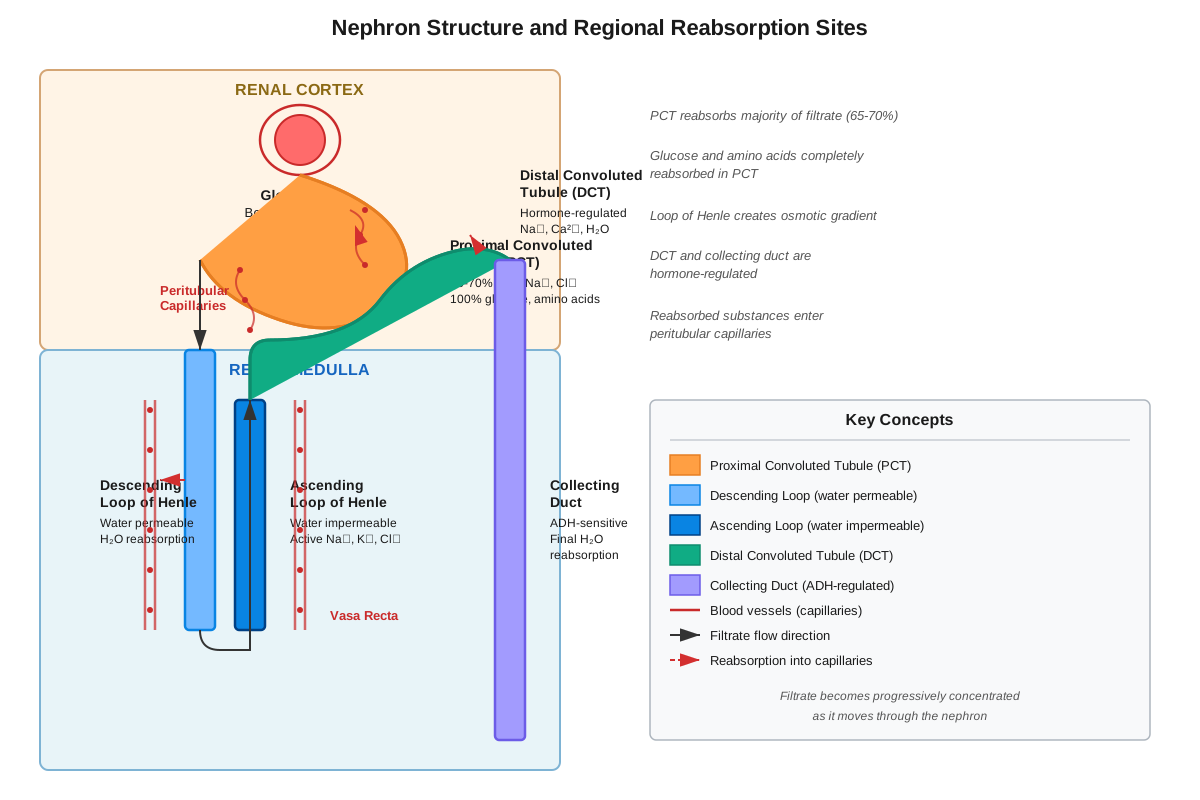
- Nephron anatomy: Familiarity with the structural components of the nephron (proximal tubule, loop of Henle, distal tubule, collecting duct) is necessary to understand where specific reabsorption processes occur
- Basic endocrine function: Understanding how hormones like ADH, aldosterone, and PTH function prepares students for learning about hormonal regulation of reabsorption
- Osmolarity and tonicity concepts: These principles are fundamental to understanding water reabsorption and the countercurrent multiplication system
Why This Topic Matters
Reabsorption represents one of the most clinically relevant physiological processes tested on the MCAT. The kidneys filter approximately 180 liters of fluid daily, yet only 1-2 liters are excreted as urine—meaning over 99% of the filtrate is reabsorbed. This massive reclamation process prevents catastrophic fluid and electrolyte loss and demonstrates the kidney's central role in homeostasis.
On the MCAT, reabsorption appears in approximately 3-5% of Biology questions, typically within passages about renal physiology, fluid balance, or endocrine regulation. Questions may present clinical scenarios involving diabetes (both mellitus and insipidus), diuretic medications, dehydration, or electrolyte imbalances, requiring students to apply their understanding of reabsorption mechanisms to predict physiological outcomes. The topic frequently appears in passages that integrate multiple organ systems, such as the relationship between the kidneys and cardiovascular system in blood pressure regulation.
Common MCAT question formats include: (1) mechanism-based questions asking students to identify the transport process responsible for reabsorbing a specific substance; (2) quantitative questions requiring calculations of reabsorption rates or clearance; (3) experimental passages describing research on transport proteins or hormonal effects; and (4) clinical vignettes requiring students to predict the consequences of impaired reabsorption. Understanding reabsorption also provides context for pharmacology questions about diuretics, which are medications that reduce reabsorption to increase urine output.
Core Concepts
Definition and Overview of Reabsorption
Reabsorption is the process by which substances are transported from the tubular fluid (filtrate) back into the peritubular capillaries and vasa recta, effectively returning them to the bloodstream. This process occurs across the epithelial cells lining the renal tubules through two possible routes: the transcellular pathway (through the cells via apical and basolateral membranes) or the paracellular pathway (between cells through tight junctions). Reabsorption is selective—essential substances like glucose, amino acids, and most ions are extensively reabsorbed, while waste products like urea and creatinine are minimally reabsorbed or not reabsorbed at all.
The driving force for reabsorption varies by substance and location. Some substances are reabsorbed passively down concentration or electrochemical gradients, while others require active transport mechanisms that consume ATP either directly (primary active transport) or indirectly (secondary active transport). The kidney's ability to regulate which substances and how much of each substance is reabsorbed allows for precise control of blood composition, volume, and pH.
Proximal Tubule Reabsorption
The proximal convoluted tubule (PCT) is the workhorse of reabsorption, reclaiming approximately 65-70% of filtered water and sodium, and nearly 100% of filtered glucose and amino acids. The PCT epithelial cells possess extensive microvilli forming a brush border that dramatically increases surface area for reabsorption. These cells are also packed with mitochondria to provide ATP for active transport processes.
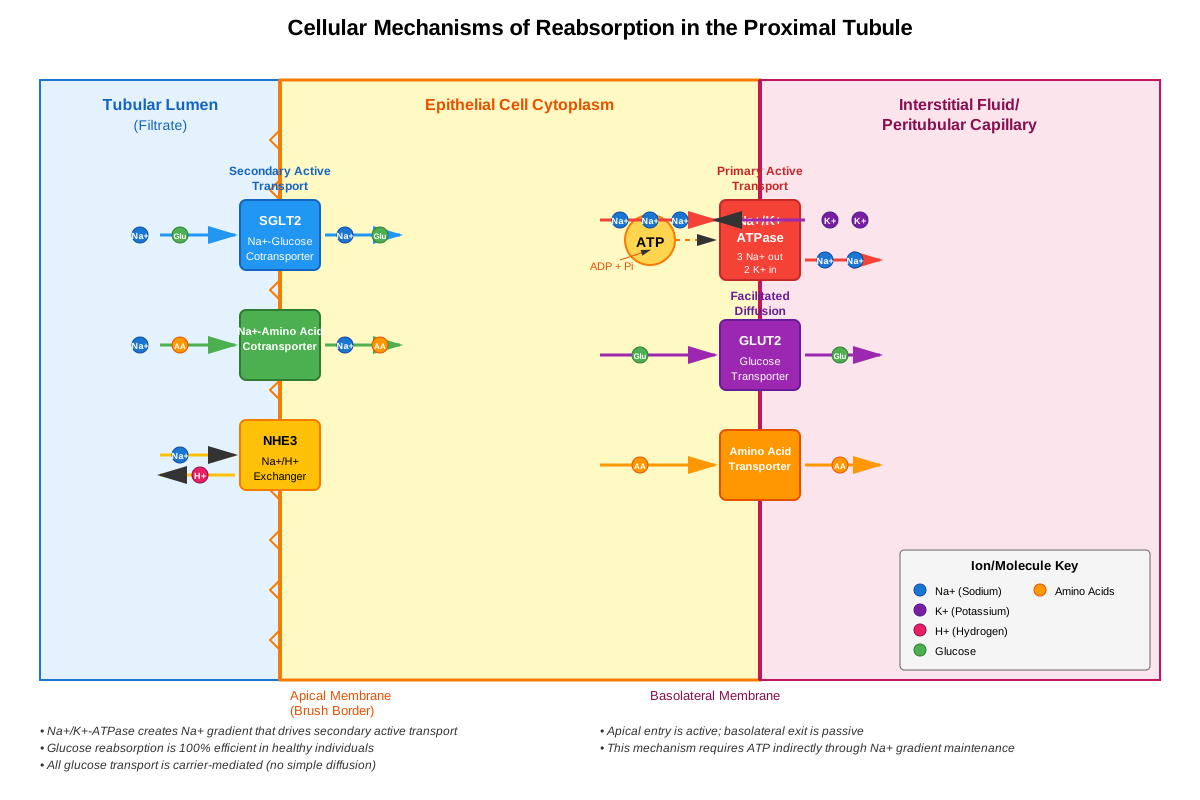
Sodium reabsorption in the PCT occurs through multiple mechanisms and drives the reabsorption of many other substances. At the apical membrane, sodium enters the cell through various cotransporters and exchangers. At the basolateral membrane, the Na⁺/K⁺-ATPase pump actively transports sodium out of the cell into the interstitial fluid, maintaining a low intracellular sodium concentration that drives continued sodium entry at the apical surface. This represents primary active transport.
Glucose reabsorption exemplifies secondary active transport. The sodium-glucose cotransporter (SGLT) in the apical membrane uses the sodium gradient (created by the Na⁺/K⁺-ATPase) to transport both sodium and glucose into the cell against glucose's concentration gradient. Glucose then exits the cell at the basolateral membrane through GLUT transporters via facilitated diffusion. Under normal circumstances, all filtered glucose is reabsorbed, resulting in zero glucose in urine. However, when blood glucose exceeds approximately 180-200 mg/dL (the renal threshold), the SGLT transporters become saturated, and glucose appears in urine (glucosuria).
Water reabsorption in the PCT occurs primarily through osmosis. As solutes are reabsorbed, the osmolarity of the interstitial fluid increases relative to the tubular fluid, creating an osmotic gradient that drives water reabsorption through both transcellular (via aquaporin-1 water channels) and paracellular pathways. This is termed obligatory water reabsorption because it follows solute reabsorption automatically.
Other substances reabsorbed in the PCT include amino acids (via sodium-amino acid cotransporters), bicarbonate (critical for acid-base balance), phosphate, and small proteins that were filtered. The PCT also secretes substances into the tubular fluid, including hydrogen ions, ammonia, and various organic acids and bases.
Loop of Henle Reabsorption
The loop of Henle consists of a descending limb and an ascending limb, each with distinct permeability characteristics that create and maintain the medullary osmotic gradient essential for concentrating urine.
The descending limb is highly permeable to water (via aquaporin-1) but relatively impermeable to solutes. As the filtrate descends deeper into the increasingly hypertonic medullary interstitium, water is reabsorbed by osmosis, concentrating the tubular fluid. By the bottom of the loop, the filtrate may reach an osmolarity of 1200 mOsm/L (compared to 300 mOsm/L in the cortex).
The thick ascending limb has opposite permeability characteristics—it is impermeable to water but actively reabsorbs solutes. The Na⁺-K⁺-2Cl⁻ cotransporter (NKCC2) in the apical membrane uses the sodium gradient to transport all three ions into the cell (secondary active transport). Sodium is then pumped out at the basolateral membrane by Na⁺/K⁺-ATPase, while potassium and chloride exit through channels. Some potassium actually leaks back into the tubular fluid, creating a positive charge in the lumen that drives paracellular reabsorption of cations like calcium and magnesium.
Because the ascending limb reabsorbs solutes without water, it is called the diluting segment—the tubular fluid becomes progressively more dilute (hypotonic) as it ascends. This segment reabsorbs approximately 25% of filtered sodium. The differential permeability of the descending and ascending limbs, combined with the countercurrent flow of fluid, creates the countercurrent multiplication system that establishes the medullary osmotic gradient.
Distal Tubule and Collecting Duct Reabsorption
The distal convoluted tubule (DCT) and collecting duct are the primary sites of regulated reabsorption, where hormones fine-tune the final composition of urine.
In the early DCT, the Na⁺-Cl⁻ cotransporter (NCC) reabsorbs sodium and chloride. This transporter is the target of thiazide diuretics, which block it to increase sodium and water excretion. The DCT is impermeable to water in the absence of hormonal stimulation.
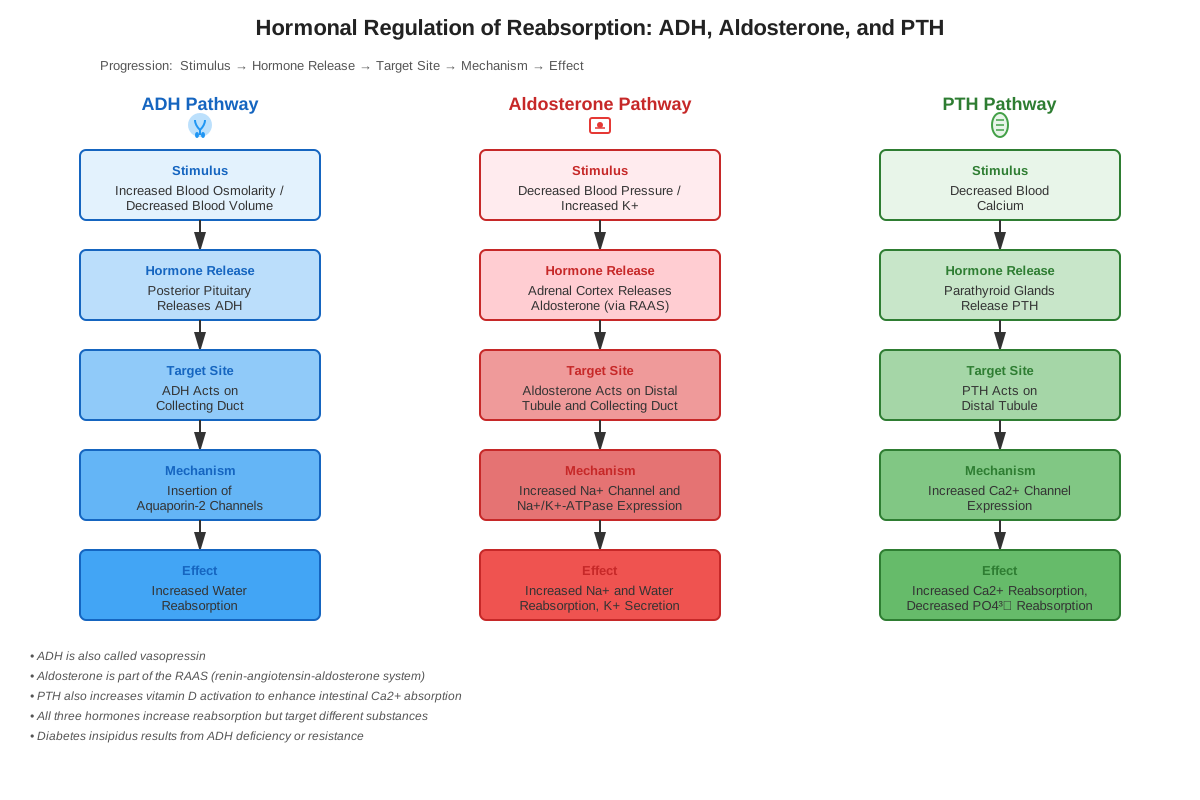
The late DCT and collecting duct contain two important cell types: principal cells and intercalated cells. Principal cells are responsible for sodium reabsorption and potassium secretion, both regulated by aldosterone. Aldosterone increases the number and activity of epithelial sodium channels (ENaC) in the apical membrane and Na⁺/K⁺-ATPase pumps in the basolateral membrane. As more sodium is reabsorbed, the lumen becomes more negative, driving potassium secretion through apical potassium channels. Aldosterone also increases the number of aquaporin-2 water channels, though its primary effect on water reabsorption is indirect through sodium reabsorption.
Antidiuretic hormone (ADH), also called vasopressin, is the primary regulator of water reabsorption in the collecting duct. ADH binds to V2 receptors on principal cells, triggering a signaling cascade that causes aquaporin-2 channels to be inserted into the apical membrane. This makes the collecting duct permeable to water, allowing water to be reabsorbed down the osmotic gradient created by the medullary interstitium. In the presence of high ADH levels, urine can be concentrated to 1200 mOsm/L; in the absence of ADH, the collecting duct remains impermeable to water, and dilute urine (as low as 50 mOsm/L) is produced.
Intercalated cells regulate acid-base balance by secreting hydrogen ions (Type A intercalated cells) or bicarbonate (Type B intercalated cells), but they also participate in potassium reabsorption under certain conditions.
Quantitative Aspects of Reabsorption
Understanding reabsorption quantitatively is essential for MCAT problem-solving. The reabsorption rate can be calculated as:
Reabsorption Rate = Filtration Rate - Excretion RateFor a substance that is freely filtered and neither secreted nor reabsorbed, the clearance equals the glomerular filtration rate (GFR). For substances that are reabsorbed, clearance is less than GFR. For glucose under normal conditions, clearance is zero because it is completely reabsorbed.
The fractional excretion of a substance indicates what percentage of the filtered load is excreted:
Fractional Excretion = (Amount Excreted / Amount Filtered) × 100%For sodium, fractional excretion is typically less than 1%, indicating that over 99% of filtered sodium is reabsorbed.
Hormonal Regulation Summary Table
| Hormone | Primary Site | Primary Effect | Mechanism |
|---|---|---|---|
| Aldosterone | Late DCT, Collecting Duct | ↑ Na⁺ reabsorption, ↑ K⁺ secretion | ↑ ENaC channels, ↑ Na⁺/K⁺-ATPase |
| ADH (Vasopressin) | Collecting Duct | ↑ Water reabsorption | ↑ Aquaporin-2 insertion |
| Parathyroid Hormone (PTH) | PCT, Thick Ascending Limb, DCT | ↑ Ca²⁺ reabsorption, ↓ PO₄³⁻ reabsorption | ↑ Ca²⁺ channels, ↓ phosphate transporters |
| Atrial Natriuretic Peptide (ANP) | Collecting Duct | ↓ Na⁺ reabsorption | Inhibits ENaC channels |
| Angiotensin II | PCT, entire nephron | ↑ Na⁺ reabsorption | ↑ Na⁺/H⁺ exchanger, stimulates aldosterone |
Concept Relationships
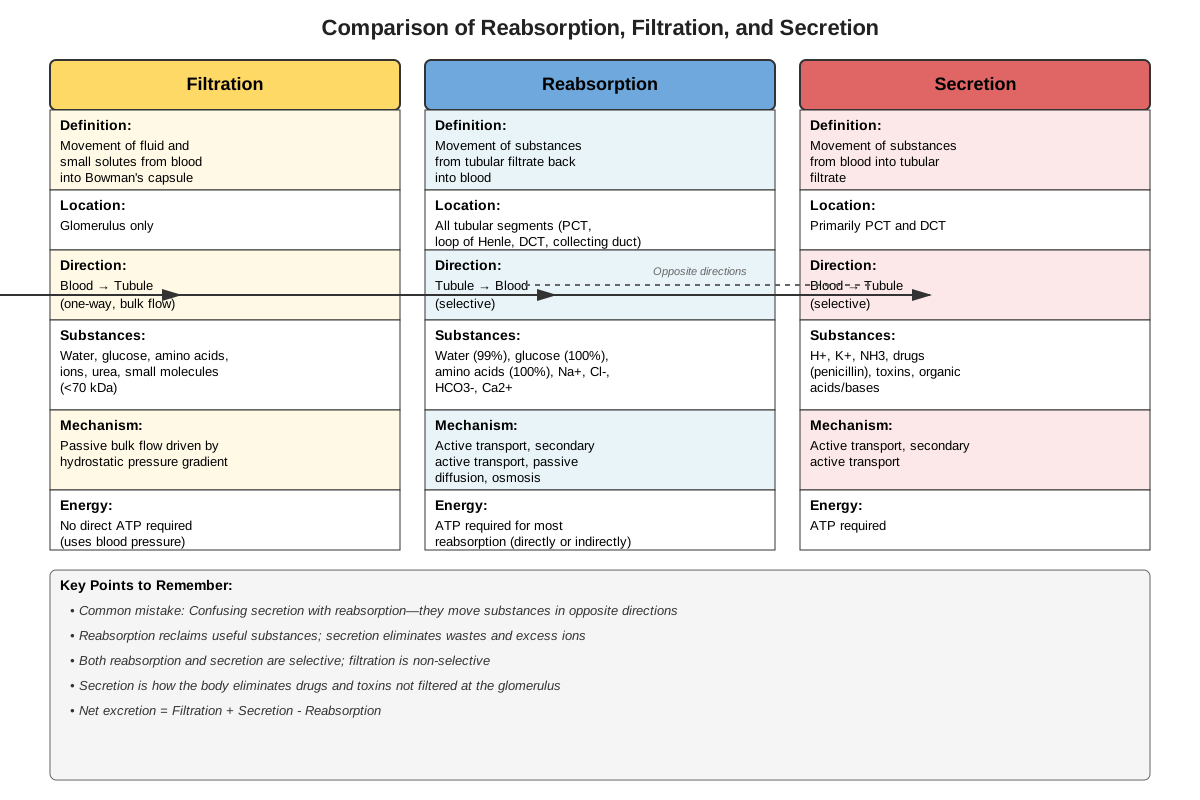
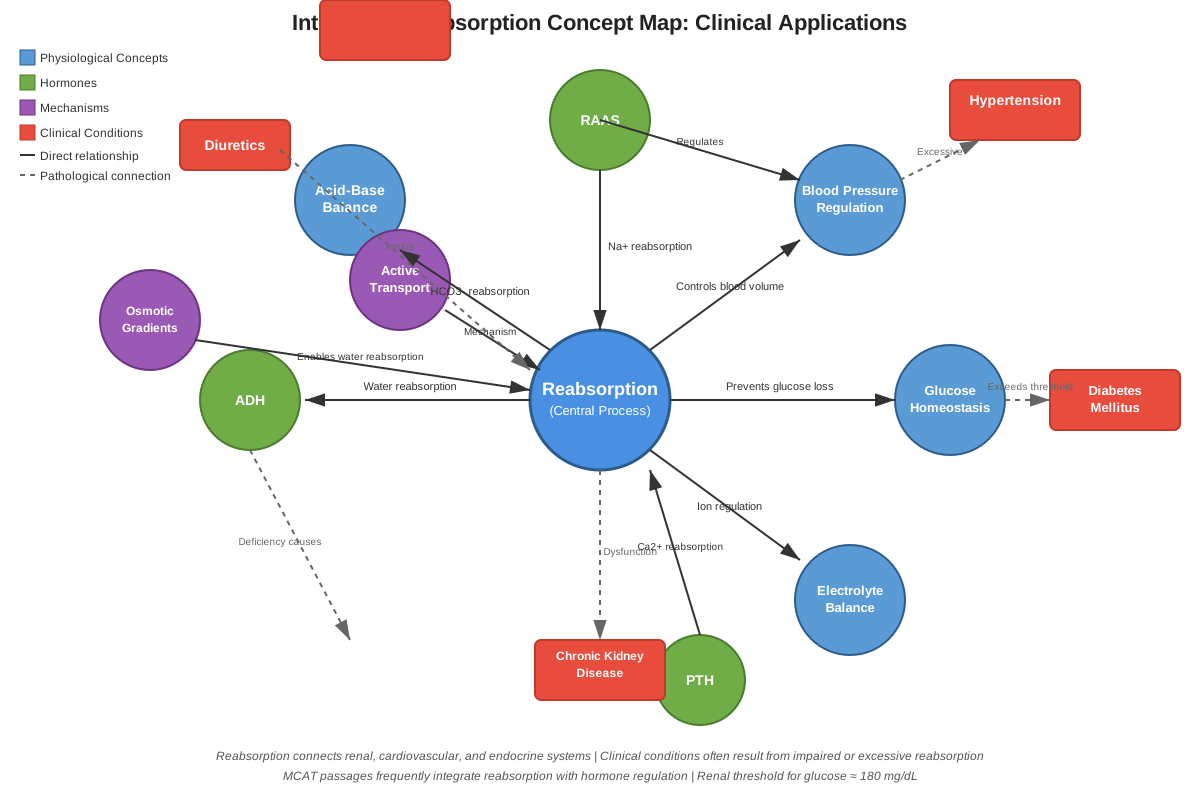
Reabsorption is intimately connected to the other two major renal processes: filtration and secretion. Filtration occurs first at the glomerulus, creating the filtrate that enters the tubule. Reabsorption then reclaims essential substances from this filtrate, while secretion adds additional waste products and excess ions. The final urine composition reflects all three processes: Excretion = Filtration - Reabsorption + Secretion.
Within reabsorption itself, the processes in different nephron segments are interdependent. The massive reabsorption in the proximal tubule reduces the volume of fluid that must be processed by downstream segments. The loop of Henle's creation of the medullary osmotic gradient enables the collecting duct to concentrate urine when ADH is present. The distal tubule's fine-tuning of electrolyte composition depends on the bulk reabsorption that occurred upstream.
Reabsorption connects to cellular transport mechanisms studied in cell biology. The Na⁺/K⁺-ATPase pump that drives most reabsorption is the same primary active transporter found in all cells. Secondary active transport in the kidney (SGLT, NKCC2, NCC) demonstrates how cells can use one gradient to drive transport against another gradient. The aquaporins that facilitate water reabsorption are examples of channel proteins that increase membrane permeability to specific molecules.
The hormonal regulation of reabsorption links renal physiology to the endocrine system. Aldosterone is part of the renin-angiotensin-aldosterone system (RAAS), which also regulates blood pressure and cardiovascular function. ADH is released from the posterior pituitary in response to osmoreceptors and baroreceptors, connecting renal function to neurological control. PTH connects renal function to calcium homeostasis and bone metabolism.
Reabsorption also connects to acid-base balance. Bicarbonate reabsorption in the proximal tubule and hydrogen ion secretion in the collecting duct are essential for maintaining blood pH. The kidney's ability to regulate these processes provides long-term compensation for respiratory acid-base disturbances.
The relationship map: Filtration → creates filtrate → Reabsorption reclaims essential substances → influenced by hormones (ADH, aldosterone, PTH) → depends on transport mechanisms (active and passive) → maintains homeostasis (fluid balance, electrolyte balance, acid-base balance) → connects to cardiovascular function and endocrine regulation.
Quick check — test yourself on Reabsorption so far.
Try Flashcards →High-Yield Facts
⭐ The proximal tubule reabsorbs approximately 65-70% of filtered water and sodium, and nearly 100% of filtered glucose and amino acids under normal conditions.
⭐ Glucose reabsorption occurs via secondary active transport using SGLT transporters; when blood glucose exceeds the renal threshold (~180-200 mg/dL), glucosuria occurs.
⭐ The thick ascending limb of the loop of Henle is impermeable to water but actively reabsorbs sodium via the Na⁺-K⁺-2Cl⁻ cotransporter (NKCC2), creating the diluting segment.
⭐ ADH (vasopressin) increases water reabsorption in the collecting duct by inserting aquaporin-2 channels into the apical membrane of principal cells.
⭐ Aldosterone increases sodium reabsorption and potassium secretion in the late distal tubule and collecting duct by increasing ENaC channels and Na⁺/K⁺-ATPase pumps.
- The descending limb of the loop of Henle is permeable to water but relatively impermeable to solutes, allowing water reabsorption by osmosis.
- The countercurrent multiplication system created by the loop of Henle establishes the medullary osmotic gradient essential for concentrating urine.
- Reabsorption can occur via transcellular pathways (through cells) or paracellular pathways (between cells through tight junctions).
- The Na⁺/K⁺-ATPase pump on the basolateral membrane of tubular epithelial cells is the primary active transporter that drives most reabsorption processes.
- Parathyroid hormone (PTH) increases calcium reabsorption in the distal tubule while decreasing phosphate reabsorption in the proximal tubule.
- Atrial natriuretic peptide (ANP) decreases sodium reabsorption, promoting sodium and water excretion to reduce blood volume and pressure.
- Approximately 99% of filtered water is reabsorbed, reducing the 180 liters of filtrate produced daily to 1-2 liters of urine.
Common Misconceptions
Misconception: Reabsorption and filtration are the same process. → Correction: Filtration is the passive movement of fluid and small solutes from the glomerular capillaries into Bowman's capsule, creating the initial filtrate. Reabsorption is the subsequent process of transporting substances from the tubular fluid back into the blood. They occur at different locations and involve different mechanisms.
Misconception: All reabsorption requires ATP and is therefore active transport. → Correction: While many reabsorption processes involve active transport (either primary or secondary), significant reabsorption also occurs passively. Water reabsorption occurs by osmosis (passive), and many solutes are reabsorbed by diffusion down concentration gradients. Even in secondary active transport, the substance being cotransported (like glucose) doesn't directly use ATP—it uses the gradient created by ATP-dependent sodium pumping.
Misconception: The loop of Henle reabsorbs water throughout its entire length. → Correction: Only the descending limb is permeable to water and reabsorbs it. The ascending limb (particularly the thick ascending limb) is impermeable to water and only reabsorbs solutes. This differential permeability is essential for creating the medullary osmotic gradient.
Misconception: ADH directly causes water reabsorption by actively transporting water molecules. → Correction: ADH does not transport water; it increases the water permeability of the collecting duct by inserting aquaporin-2 channels into the apical membrane. Water then moves passively by osmosis down the osmotic gradient created by the hypertonic medullary interstitium. ADH enables water reabsorption but doesn't actively move water.
Misconception: Glucose appears in urine when the kidneys are damaged or malfunctioning. → Correction: While kidney damage can cause glucosuria, glucose normally appears in urine when blood glucose concentration exceeds the renal threshold (~180-200 mg/dL), saturating the SGLT transporters. This occurs in uncontrolled diabetes mellitus even when the kidneys are functioning normally. The transporters have a maximum transport capacity (Tm), and once exceeded, the excess glucose cannot be reabsorbed.
Misconception: Aldosterone directly increases water reabsorption. → Correction: While aldosterone does affect water balance, its primary direct effect is increasing sodium reabsorption. Water reabsorption increases secondarily because water follows sodium osmotically. ADH, not aldosterone, is the primary hormone directly regulating water reabsorption by controlling aquaporin-2 expression.
Misconception: The same transport mechanisms are used throughout the entire nephron. → Correction: Different nephron segments have specialized transport mechanisms. The proximal tubule uses SGLT for glucose, the thick ascending limb uses NKCC2 for sodium, and the distal tubule uses NCC. These regional differences allow for specialized functions and are targets for different classes of diuretic medications.
Worked Examples
Example 1: Glucose Reabsorption and Diabetes
Clinical Vignette: A patient presents with blood glucose of 300 mg/dL. Laboratory analysis shows glucose in the urine. The glomerular filtration rate (GFR) is 120 mL/min. Assuming the renal threshold for glucose is 180 mg/dL and the transport maximum (Tm) for glucose is 375 mg/min, explain why glucose appears in the urine and calculate approximately how much glucose is being excreted per minute.
Solution:
Step 1: Calculate the filtered load of glucose.
- Blood glucose concentration = 300 mg/dL = 3 mg/mL
- Filtered load = GFR × plasma concentration
- Filtered load = 120 mL/min × 3 mg/mL = 360 mg/min
Step 2: Determine if the filtered load exceeds the transport maximum.
- Filtered load (360 mg/min) is less than Tm (375 mg/min)
- However, the blood glucose (300 mg/dL) exceeds the renal threshold (180 mg/dL)
Step 3: Understand why glucose appears in urine.
When blood glucose exceeds the renal threshold, the SGLT transporters in the proximal tubule begin to approach saturation. Although the filtered load (360 mg/min) is below the absolute Tm (375 mg/min), at this high concentration, not all SGLT transporters can work at maximum efficiency, and some glucose escapes reabsorption.
Step 4: Calculate approximate glucose excretion.
If we assume the transporters are working near capacity but not quite at Tm, approximately:
- Reabsorption rate ≈ 350 mg/min (slightly below Tm due to saturation kinetics)
- Excretion rate = Filtered load - Reabsorption rate
- Excretion rate ≈ 360 - 350 = 10 mg/min
Key Concepts Applied: This problem integrates understanding of filtration, reabsorption, transport maximum, renal threshold, and secondary active transport. It demonstrates why glucosuria occurs in diabetes mellitus and connects to the learning objective of applying reabsorption concepts to exam-style questions.
Example 2: ADH and Water Balance
Experimental Passage: A researcher studies water reabsorption in isolated collecting duct cells. In Experiment 1, cells are exposed to normal ADH levels, and water permeability is measured at 100 units. In Experiment 2, ADH is removed, and water permeability drops to 10 units. In Experiment 3, ADH is added back along with a drug that blocks aquaporin-2 channels, and water permeability remains at 10 units.
Question: Which of the following best explains the results?
A) ADH actively transports water across the collecting duct epithelium
B) ADH increases water permeability by inserting aquaporin-2 channels into the apical membrane
C) ADH increases the osmotic gradient driving water reabsorption
D) The drug in Experiment 3 blocks ADH receptors
Solution:
Step 1: Analyze Experiment 1 (baseline with ADH).
- Normal ADH → high water permeability (100 units)
- This establishes that ADH increases water permeability
Step 2: Analyze Experiment 2 (ADH removed).
- No ADH → low water permeability (10 units)
- This confirms ADH is necessary for high water permeability
- The 10 units represents baseline permeability through the lipid bilayer
Step 3: Analyze Experiment 3 (ADH + aquaporin-2 blocker).
- ADH present but aquaporin-2 blocked → low water permeability (10 units)
- Despite ADH being present, blocking aquaporin-2 prevents increased permeability
- This indicates ADH works through aquaporin-2 channels
Step 4: Evaluate answer choices.
- A is incorrect: ADH doesn't actively transport water; water moves by osmosis
- B is correct: The experiments show ADH increases permeability via aquaporin-2 channels
- C is incorrect: ADH doesn't change the osmotic gradient (created by the loop of Henle)
- D is incorrect: If the drug blocked ADH receptors, ADH couldn't signal at all; instead, the drug specifically blocks aquaporin-2 channels, suggesting ADH signaling occurred but the effector (aquaporin-2) was blocked
Answer: B
Key Concepts Applied: This problem tests understanding of ADH mechanism, the role of aquaporin channels, and the difference between changing membrane permeability versus creating osmotic gradients. It demonstrates experimental reasoning and connects to the learning objective of applying reabsorption concepts to MCAT-style passages.
Exam Strategy
When approaching MCAT questions on reabsorption, first identify which nephron segment is being discussed, as each has distinct transport mechanisms and regulatory features. Questions often hinge on knowing whether a segment is permeable to water, which specific transporters are present, and which hormones affect that segment.
Trigger words to watch for:
- "Proximal tubule" → think bulk reabsorption, SGLT, Na⁺/H⁺ exchanger, 65-70% of filtrate
- "Thick ascending limb" → think NKCC2, impermeable to water, diluting segment, loop diuretics
- "Collecting duct" → think ADH, aldosterone, aquaporin-2, ENaC, fine-tuning
- "Secondary active transport" → requires a gradient created by primary active transport
- "Osmosis" → passive water movement; look for osmotic gradients
- "Saturation" or "transport maximum" → think carrier-mediated transport with limited capacity
Process-of-elimination strategies:
- Eliminate answers that confuse filtration with reabsorption or secretion
- Eliminate answers that place the wrong transporter in the wrong nephron segment
- Eliminate answers that describe active transport when the process is passive, or vice versa
- For hormone questions, eliminate answers that assign the wrong effect to the wrong hormone (e.g., ADH affecting sodium instead of water)
Time allocation advice: Reabsorption questions often appear in longer passages that integrate multiple concepts. Spend 1-2 minutes identifying the key variables in the passage (which segment, which substance, which hormone, what experimental manipulation). Then approach each question systematically, referring back to the passage data. Don't get bogged down trying to memorize every detail—focus on understanding the mechanisms, as MCAT questions test application and reasoning more than pure recall.
For calculation questions involving reabsorption rates, write out the formula (Reabsorption = Filtration - Excretion) and plug in values carefully. These questions are often straightforward if you stay organized.
Memory Techniques
Mnemonic for proximal tubule reabsorption: "Proximal Picks up Pretty much Everything" - The proximal tubule reabsorbs the majority (65-70%) of filtered substances including water, sodium, glucose, amino acids, and bicarbonate.
Mnemonic for loop of Henle permeability: "Down with Water, Up with Salt" - The descending limb is permeable to water, while the ascending limb reabsorbs salt (sodium and chloride) but is impermeable to water.
Acronym for thick ascending limb transporter: "NKCC2 = Na-K-Cl-Cl-2" - This helps remember that the transporter moves one sodium, one potassium, and TWO chloride ions (the "2" indicates two chlorides, not two of each ion).
Visualization for ADH mechanism: Picture ADH as a "key" that unlocks "doors" (aquaporin-2 channels) in the collecting duct wall. Without the key, the doors stay closed and water can't pass through. With the key, doors open and water flows through. This reinforces that ADH doesn't move water itself—it just opens channels.
Mnemonic for aldosterone effects: "Aldosterone Saves Salt, Spills Potassium" - Aldosterone increases sodium (salt) reabsorption while increasing potassium secretion (spilling it into urine).
Memory aid for renal threshold: "180 is the gate for glucose fate" - When blood glucose exceeds 180 mg/dL, glucose appears in urine. The number 180 is easy to remember because it's a common angle measurement (180 degrees = straight line), and you can visualize glucose "going straight" into the urine when this threshold is exceeded.
Conceptual visualization for countercurrent multiplication: Imagine two escalators running in opposite directions (descending and ascending limbs) with people (solutes) jumping between them. As people accumulate in the space between the escalators (medullary interstitium), the concentration builds up, creating the gradient needed for water reabsorption.
Summary
Reabsorption is the selective transport of substances from the renal tubular fluid back into the bloodstream, reclaiming over 99% of filtered water and essential solutes while allowing waste excretion. The process occurs throughout the nephron with regional specialization: the proximal tubule performs bulk reabsorption of water, sodium, glucose, and amino acids using both active and passive mechanisms; the loop of Henle creates the medullary osmotic gradient through differential permeability (descending limb permeable to water, ascending limb impermeable to water but actively reabsorbing solutes); and the distal tubule and collecting duct fine-tune final urine composition under hormonal control. Key hormones include ADH (increases water reabsorption via aquaporin-2 insertion) and aldosterone (increases sodium reabsorption and potassium secretion). Understanding the specific transport mechanisms in each segment, the distinction between primary and secondary active transport, and the hormonal regulation of reabsorption is essential for MCAT success and provides the foundation for understanding clinical conditions involving fluid, electrolyte, and acid-base imbalances.
Key Takeaways
- Reabsorption reclaims over 99% of filtered substances, with the proximal tubule handling the bulk (65-70%) and distal segments providing hormonal fine-tuning
- Glucose reabsorption via SGLT transporters demonstrates secondary active transport and has a transport maximum; exceeding the renal threshold causes glucosuria
- The loop of Henle's countercurrent multiplication system depends on differential permeability: descending limb permeable to water, ascending limb impermeable to water but actively reabsorbing solutes
- ADH increases water reabsorption by inserting aquaporin-2 channels in the collecting duct; aldosterone increases sodium reabsorption and potassium secretion in the late distal tubule and collecting duct
- The Na⁺/K⁺-ATPase pump on basolateral membranes drives most reabsorption by creating the sodium gradient used for secondary active transport
- Different nephron segments use specialized transporters (SGLT in proximal tubule, NKCC2 in thick ascending limb, NCC in distal tubule, ENaC in collecting duct)
- Reabsorption connects to broader physiology including cardiovascular regulation (via RAAS), endocrine function (hormone effects), and acid-base balance (bicarbonate and hydrogen ion handling)
Related Topics
Glomerular Filtration: Understanding how the initial filtrate is formed provides context for what substances are available for reabsorption and establishes the baseline from which reabsorption rates are calculated.
Tubular Secretion: The complementary process to reabsorption, secretion adds substances to the tubular fluid and is essential for eliminating certain wastes and regulating potassium and hydrogen ion balance.
Acid-Base Balance: Reabsorption of bicarbonate and secretion of hydrogen ions in the nephron are critical mechanisms for long-term pH regulation, connecting renal physiology to respiratory and metabolic acid-base disorders.
Renin-Angiotensin-Aldosterone System (RAAS): This hormonal cascade regulates aldosterone release, directly affecting sodium and water reabsorption and connecting renal function to blood pressure control.
Diuretic Mechanisms: Understanding reabsorption is essential for comprehending how different classes of diuretics work by blocking specific transporters in different nephron segments.
Mastering reabsorption provides the foundation for understanding these related topics and enables progression to more complex integrative physiology questions on the MCAT.
Practice CTA
Now that you've mastered the core concepts of reabsorption, it's time to reinforce your learning through active practice. Attempt the practice questions and flashcards associated with this topic to test your understanding, identify any remaining gaps, and build the pattern recognition skills essential for MCAT success. Remember, understanding the mechanisms is just the first step—applying them to novel scenarios is what distinguishes high scorers. You've built a strong foundation; now strengthen it through deliberate practice. Your future self will thank you for the effort you invest today!
Sign up free to keep reading
Create a free AnvayaPrep account to finish this MCAT guide on Reabsorption — plus flashcards and practice questions.