Overview
The parasympathetic nervous system represents one of the two major divisions of the autonomic nervous system, functioning as the body's primary mechanism for maintaining homeostasis during periods of rest, digestion, and recovery. Often characterized as the "rest and digest" system, the parasympathetic nervous system counterbalances the sympathetic nervous system's "fight or flight" responses, creating a dynamic equilibrium that allows organisms to respond appropriately to environmental demands while conserving energy during non-threatening situations. Understanding this system requires mastery of neuroanatomy, neurotransmitter physiology, receptor pharmacology, and organ-specific responses—all high-yield topics for MCAT success.
For the MCAT, the parasympathetic nervous system appears frequently in both Biology/Biochemistry and Psychological, Social, and Biological Foundations of Behavior sections. Test-makers favor questions that require students to predict physiological responses to parasympathetic activation, distinguish between sympathetic and parasympathetic effects on target organs, trace neural pathways from the central nervous system to effector tissues, and apply knowledge of cholinergic signaling to clinical scenarios. The topic integrates seamlessly with cardiovascular physiology, respiratory function, gastrointestinal processes, and endocrine regulation, making it a cornerstone concept that connects multiple organ systems.
The parasympathetic nervous system's relationship to broader Biology concepts extends beyond simple memorization of effects. It exemplifies fundamental principles of neural communication, demonstrates how evolution has optimized energy conservation strategies, illustrates receptor-ligand specificity, and provides a framework for understanding pharmacological interventions. Mastery of this topic enables deeper comprehension of homeostatic mechanisms, stress responses, and the integration of nervous and endocrine systems—all critical for achieving competitive MCAT scores in Physiology and Organ Systems.
Learning Objectives
- [ ] Define parasympathetic nervous system using accurate Biology terminology
- [ ] Explain why parasympathetic nervous system matters for the MCAT
- [ ] Apply parasympathetic nervous system concepts to exam-style questions
- [ ] Identify common mistakes related to parasympathetic nervous system
- [ ] Connect parasympathetic nervous system to related Biology concepts
- [ ] Diagram the anatomical pathway of parasympathetic innervation from craniosacral outflow to target organs
- [ ] Compare and contrast the molecular mechanisms of nicotinic versus muscarinic cholinergic receptors
- [ ] Predict organ-specific responses to parasympathetic stimulation and explain the underlying receptor-mediated mechanisms
Prerequisites
- Basic neuroanatomy: Understanding neuron structure, synapses, and neural communication is essential for tracing parasympathetic pathways from the CNS to effector organs
- Neurotransmitter function: Knowledge of how chemical messengers transmit signals across synapses provides the foundation for understanding acetylcholine's role in parasympathetic signaling
- Receptor types and signal transduction: Familiarity with G-protein coupled receptors and ligand-gated ion channels is necessary to comprehend how parasympathetic signals produce cellular responses
- Autonomic nervous system overview: General understanding that the ANS controls involuntary functions and consists of sympathetic and parasympathetic divisions contextualizes this topic
- Basic cardiovascular and digestive physiology: Knowledge of heart rate regulation and gastrointestinal function allows application of parasympathetic effects to specific organ systems
Why This Topic Matters
The parasympathetic nervous system holds significant clinical relevance across multiple medical specialties. Dysfunction of parasympathetic control contributes to conditions including gastroparesis, neurogenic bladder, erectile dysfunction, and cardiac arrhythmias. Pharmacological agents targeting cholinergic receptors—both agonists and antagonists—represent major drug classes used to treat conditions ranging from glaucoma to overactive bladder to bradycardia. Understanding parasympathetic physiology enables clinicians to predict drug effects, anticipate side effects, and comprehend disease pathophysiology.
On the MCAT, parasympathetic nervous system content appears in approximately 3-5% of questions across both biological sciences sections. Questions typically present as discrete items testing direct knowledge of parasympathetic effects, passage-based questions requiring application to experimental scenarios involving autonomic drugs, or integrated questions connecting parasympathetic function to behavioral responses or disease states. The topic frequently appears in passages discussing cardiovascular experiments, pharmacological studies of receptor antagonists, or clinical vignettes describing autonomic dysfunction.
Common MCAT question formats include: comparing sympathetic versus parasympathetic effects on the same organ, predicting the physiological consequences of vagus nerve stimulation, identifying which receptor subtype mediates a specific parasympathetic response, determining how anticholinergic drugs would affect organ function, and analyzing experimental data from studies manipulating parasympathetic activity. The topic's integrative nature means it rarely appears in isolation—test-makers prefer questions requiring synthesis with cardiovascular physiology, respiratory mechanics, or endocrine regulation.
Core Concepts
Anatomical Organization and Craniosacral Outflow
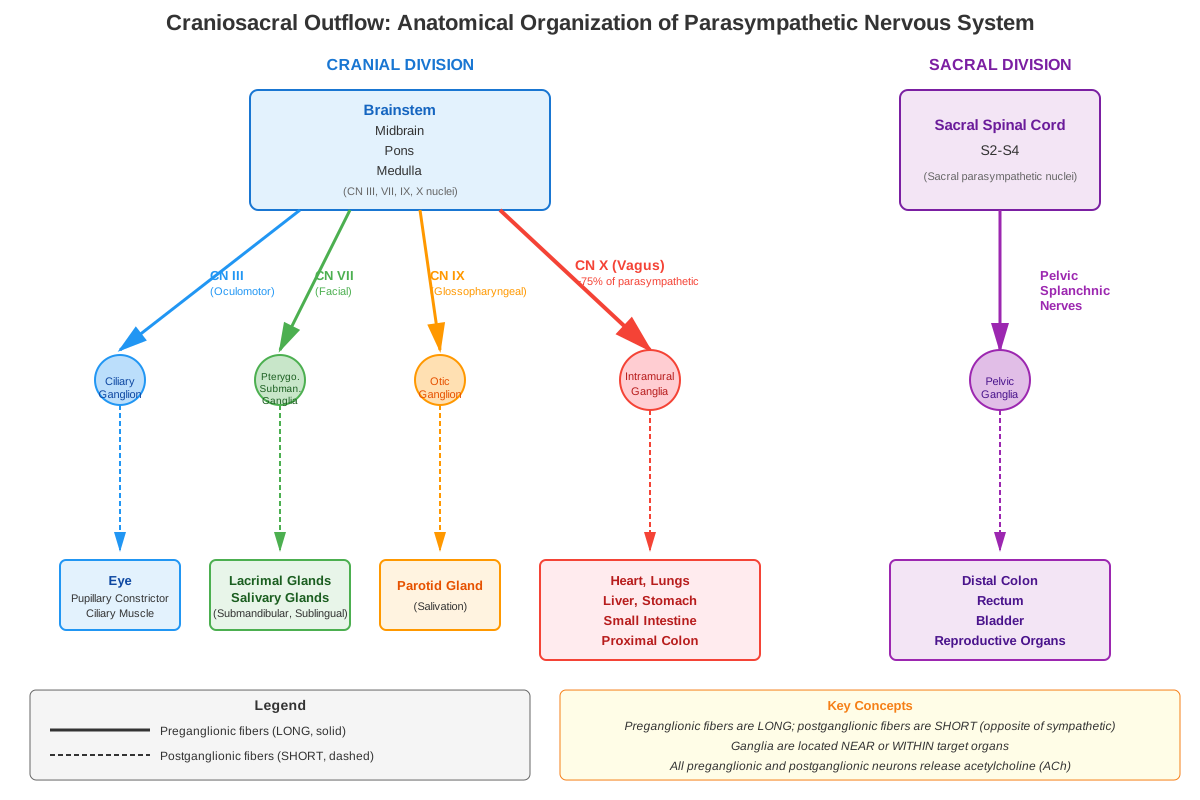
The parasympathetic nervous system originates from specific regions of the central nervous system, exhibiting what anatomists term craniosacral outflow. Unlike the thoracolumbar outflow of the sympathetic system, parasympathetic preganglionic neurons have cell bodies located in brainstem nuclei (associated with cranial nerves III, VII, IX, and X) and in the sacral spinal cord (segments S2-S4). This anatomical distribution reflects the evolutionary specialization of parasympathetic control over head, thoracic, abdominal, and pelvic organs.
The cranial component includes four cranial nerves carrying parasympathetic fibers. The oculomotor nerve (CN III) innervates the pupillary sphincter and ciliary muscle, controlling pupil constriction and lens accommodation. The facial nerve (CN VII) provides parasympathetic innervation to lacrimal glands, submandibular glands, and sublingual glands, regulating tear and saliva production. The glossopharyngeal nerve (CN IX) innervates the parotid gland, stimulating salivary secretion. Most significantly, the vagus nerve (CN X) provides parasympathetic innervation to the heart, lungs, and most abdominal organs including the esophagus, stomach, small intestine, and proximal colon—representing approximately 75% of all parasympathetic outflow.
The sacral component arises from the lateral horn of spinal cord segments S2-S4, sending preganglionic fibers through pelvic splanchnic nerves to innervate the distal colon, rectum, bladder, and reproductive organs. This sacral parasympathetic outflow controls defecation, urination, and sexual arousal responses, demonstrating the system's role in vegetative functions.
Two-Neuron Pathway Architecture
Parasympathetic pathways utilize a characteristic two-neuron chain consisting of preganglionic and postganglionic neurons. Preganglionic neurons have cell bodies in the CNS and extend long axons that synapse in ganglia located near or within target organs. This contrasts sharply with sympathetic organization, where ganglia lie close to the spinal cord. The proximity of parasympathetic ganglia to target tissues means preganglionic fibers are long while postganglionic fibers are short—often just millimeters in length.
Postganglionic neurons have cell bodies in these peripheral ganglia and send short axons to innervate effector cells in target organs. This anatomical arrangement allows for relatively discrete, organ-specific control rather than the widespread activation characteristic of sympathetic responses. The long preganglionic/short postganglionic architecture also has functional implications: because most of the pathway uses myelinated preganglionic fibers, signal transmission is relatively rapid despite the distance from the CNS.
Cholinergic Neurotransmission
The parasympathetic nervous system is entirely cholinergic, meaning acetylcholine (ACh) serves as the neurotransmitter at both preganglionic-to-postganglionic synapses and postganglionic-to-effector synapses. This differs from the sympathetic system, which uses acetylcholine at ganglia but primarily norepinephrine at effector organs. The synthesis of acetylcholine occurs in nerve terminals through the enzyme choline acetyltransferase, which combines choline and acetyl-CoA. Following release into the synaptic cleft, acetylcholine binds to postsynaptic receptors before being rapidly degraded by acetylcholinesterase, terminating the signal.
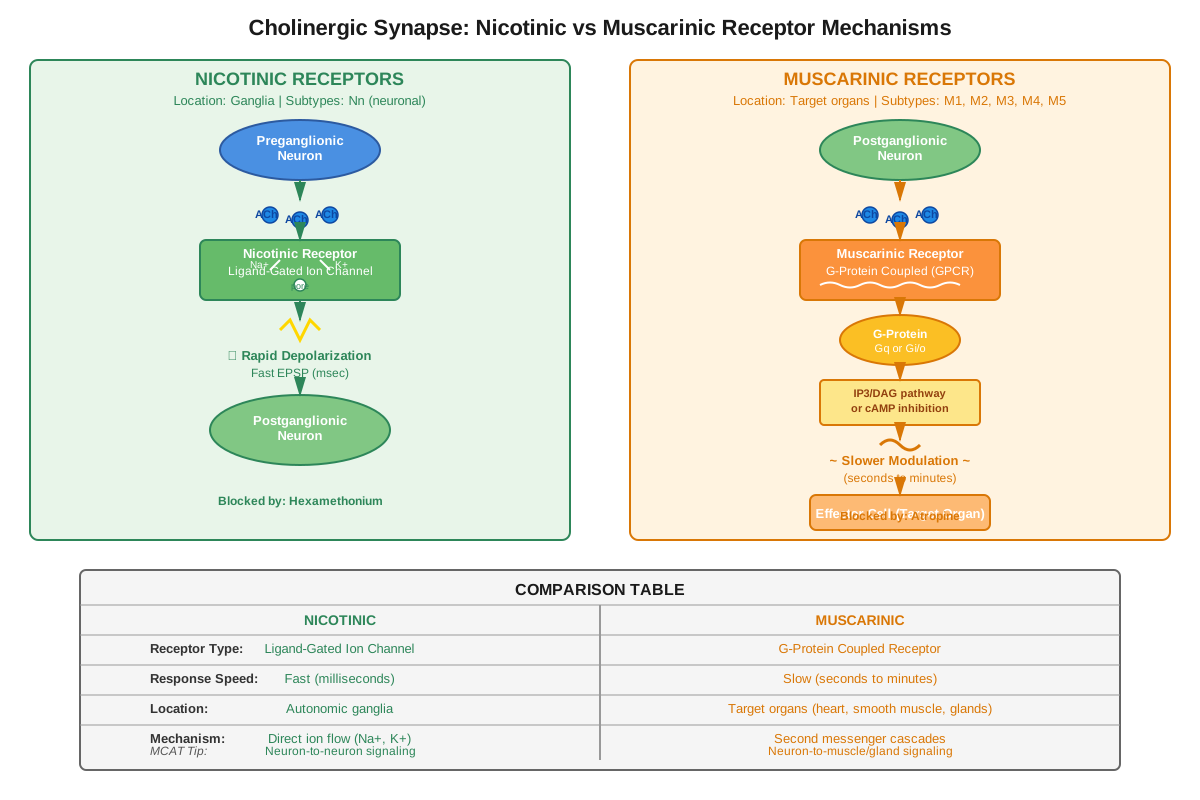
Two distinct classes of cholinergic receptors mediate parasympathetic effects: nicotinic receptors and muscarinic receptors. These receptor types differ fundamentally in structure, mechanism, and location, making their distinction critical for MCAT success.
Nicotinic Receptors at Ganglia
Nicotinic receptors are ligand-gated ion channels that mediate fast synaptic transmission at autonomic ganglia. When acetylcholine binds to nicotinic receptors on postganglionic neurons, the channel opens, allowing sodium influx and potassium efflux. The resulting depolarization generates an action potential in the postganglionic neuron. This mechanism provides rapid signal transmission from preganglionic to postganglionic neurons in both parasympathetic and sympathetic pathways.
Nicotinic receptors at autonomic ganglia are designated neuronal-type (Nn) to distinguish them from muscle-type (Nm) nicotinic receptors at the neuromuscular junction. This distinction matters pharmacologically: certain drugs selectively block ganglionic nicotinic receptors without affecting neuromuscular transmission. The MCAT may test understanding that ganglionic blockers would inhibit both sympathetic and parasympathetic transmission, producing complex physiological effects.
Muscarinic Receptors at Effector Organs
Muscarinic receptors are G-protein coupled receptors that mediate the effects of parasympathetic postganglionic neurons on target organs. Five muscarinic receptor subtypes exist (M1-M5), but three predominate in parasympathetic physiology: M1, M2, and M3. These receptors couple to different G-proteins and produce distinct cellular effects.
M1 receptors are found primarily in the CNS and gastric parietal cells, where they couple to Gq proteins. Activation stimulates phospholipase C, generating IP3 and DAG, ultimately increasing intracellular calcium and promoting gastric acid secretion. M2 receptors predominate in cardiac tissue, coupling to Gi proteins. Their activation inhibits adenylyl cyclase (reducing cAMP) and opens potassium channels, producing the characteristic parasympathetic effects on the heart: decreased heart rate, reduced conduction velocity, and decreased contractility. M3 receptors are widespread in smooth muscle and glands, coupling to Gq proteins like M1 receptors. M3 activation causes smooth muscle contraction in the GI tract and bladder, smooth muscle relaxation in airways (via nitric oxide), and increased secretion from exocrine glands.
| Receptor | Location | G-Protein | Primary Effects |
|---|---|---|---|
| M1 | CNS, gastric parietal cells | Gq | ↑ Gastric acid secretion |
| M2 | Heart | Gi | ↓ Heart rate, ↓ conduction velocity, ↓ contractility |
| M3 | Smooth muscle, glands | Gq | Smooth muscle contraction (GI, bladder), glandular secretion, bronchodilation |
Organ-Specific Parasympathetic Effects
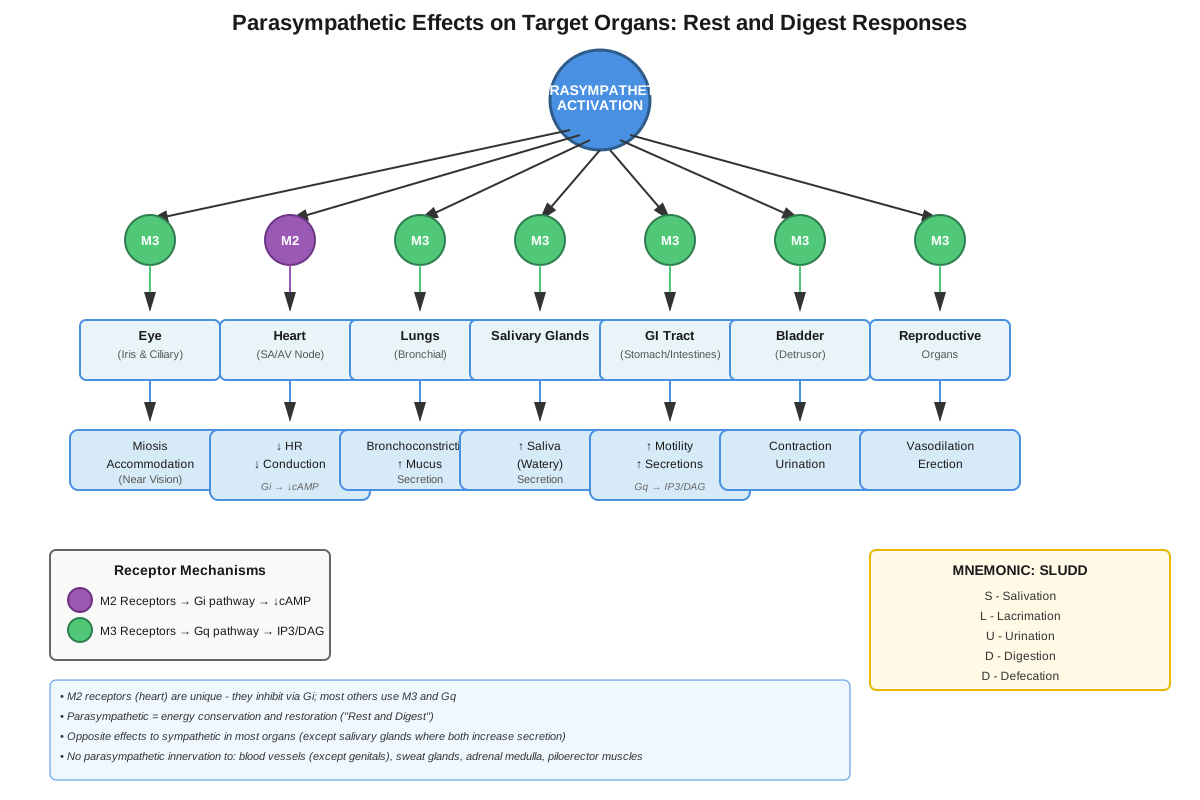
Understanding parasympathetic effects requires organ-by-organ analysis of receptor-mediated responses:
Cardiovascular System: Parasympathetic innervation via the vagus nerve primarily affects the SA node, AV node, and atrial muscle. M2 receptor activation produces negative chronotropic effects (decreased heart rate), negative dromotropic effects (decreased conduction velocity through the AV node), and negative inotropic effects (decreased atrial contractility). Ventricular muscle receives minimal parasympathetic innervation, so parasympathetic effects on ventricular contractility are modest. The mechanism involves increased potassium conductance (hyperpolarization) and decreased cAMP (reduced calcium channel activity).
Respiratory System: Parasympathetic innervation via the vagus nerve causes bronchoconstriction and increased mucus secretion through M3 receptor activation. However, the bronchodilation effect is paradoxical—M3 receptors on airway smooth muscle stimulate nitric oxide production, which causes relaxation. The net effect depends on the specific airway region and receptor distribution.
Gastrointestinal System: Parasympathetic stimulation via the vagus nerve (foregut and midgut) and pelvic splanchnic nerves (hindgut) produces comprehensive activation of digestive functions. M3 receptor activation increases peristalsis through smooth muscle contraction, relaxes sphincters (lower esophageal, pyloric, ileocecal), and stimulates secretion from salivary glands, gastric glands, pancreatic acinar cells, and intestinal glands. M1 receptors specifically enhance gastric acid secretion from parietal cells. This coordinated response optimizes digestion and nutrient absorption during rest.
Urinary System: Sacral parasympathetic outflow via pelvic splanchnic nerves causes detrusor muscle contraction (M3 receptors) and internal urethral sphincter relaxation, promoting urination. This micturition reflex demonstrates parasympathetic control over elimination functions.
Ocular System: Parasympathetic fibers in CN III activate M3 receptors on the pupillary sphincter muscle (causing miosis/pupil constriction) and ciliary muscle (causing accommodation for near vision). These effects optimize vision for close work and reduce light entry in bright conditions.
Reproductive System: Parasympathetic activation via pelvic splanchnic nerves mediates the erectile response through M3 receptor-stimulated nitric oxide release, causing vasodilation and blood engorgement of erectile tissues. This demonstrates parasympathetic involvement in reproductive physiology.
Integration with the Sympathetic System
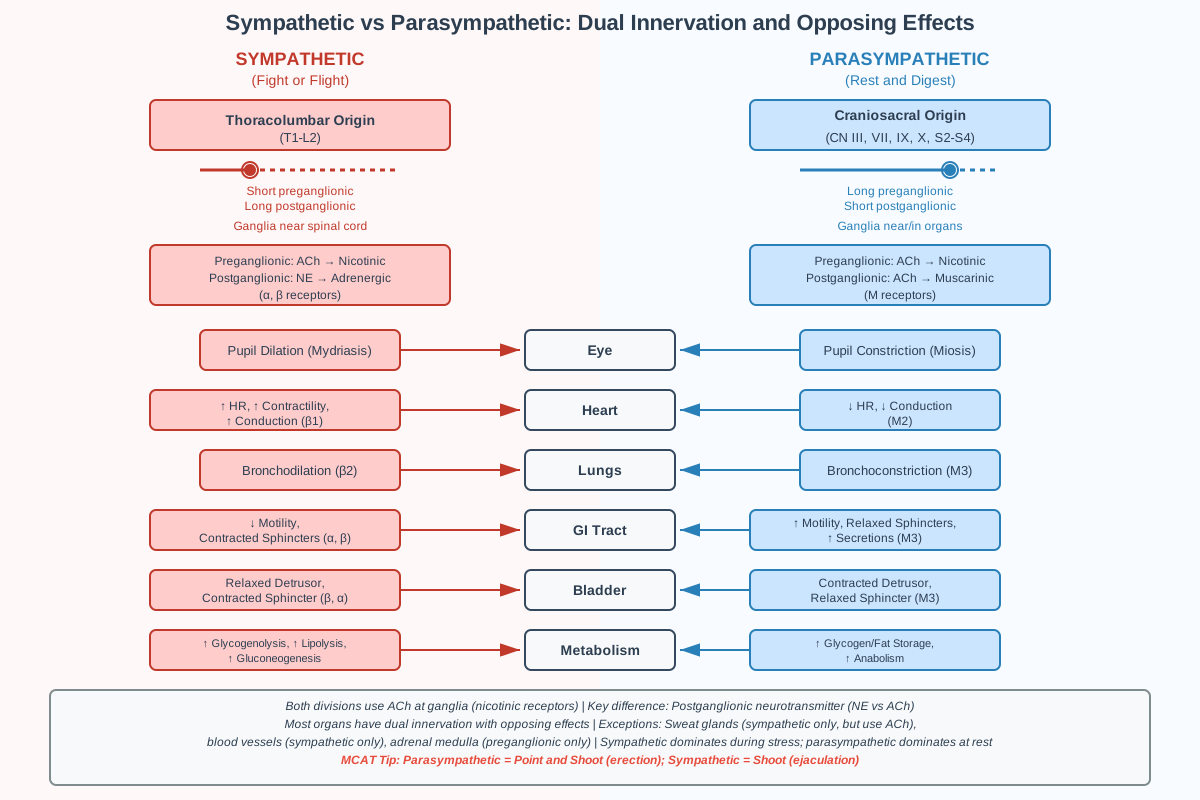
The parasympathetic and sympathetic systems function as physiological antagonists, with most organs receiving dual innervation. This autonomic tone allows fine-tuned control through reciprocal activation and inhibition. For example, heart rate reflects the balance between parasympathetic slowing (via vagal tone) and sympathetic acceleration. At rest, parasympathetic tone predominates, maintaining a resting heart rate of 60-80 bpm—significantly lower than the intrinsic SA node rate of approximately 100 bpm.
The concept of vagal tone specifically refers to the continuous parasympathetic influence on the heart. High vagal tone correlates with cardiovascular health and stress resilience, while reduced vagal tone associates with various pathological conditions. The MCAT may present scenarios requiring students to predict how blocking one autonomic division affects organ function, necessitating understanding of baseline autonomic tone.
Concept Relationships
The parasympathetic nervous system concepts form an integrated hierarchy: anatomical organization (craniosacral outflow) → neural pathway architecture (two-neuron chain) → neurotransmitter system (cholinergic) → receptor types (nicotinic at ganglia, muscarinic at effectors) → organ-specific effects. Each level depends on the previous, creating a logical framework for understanding and predicting parasympathetic function.
Connections to prerequisite knowledge include: neuron structure and action potential generation enable understanding of preganglionic and postganglionic signal transmission; neurotransmitter synthesis and degradation explain acetylcholine's role; receptor pharmacology clarifies how different receptor types produce distinct effects; and basic organ physiology provides context for parasympathetic modulation of function.
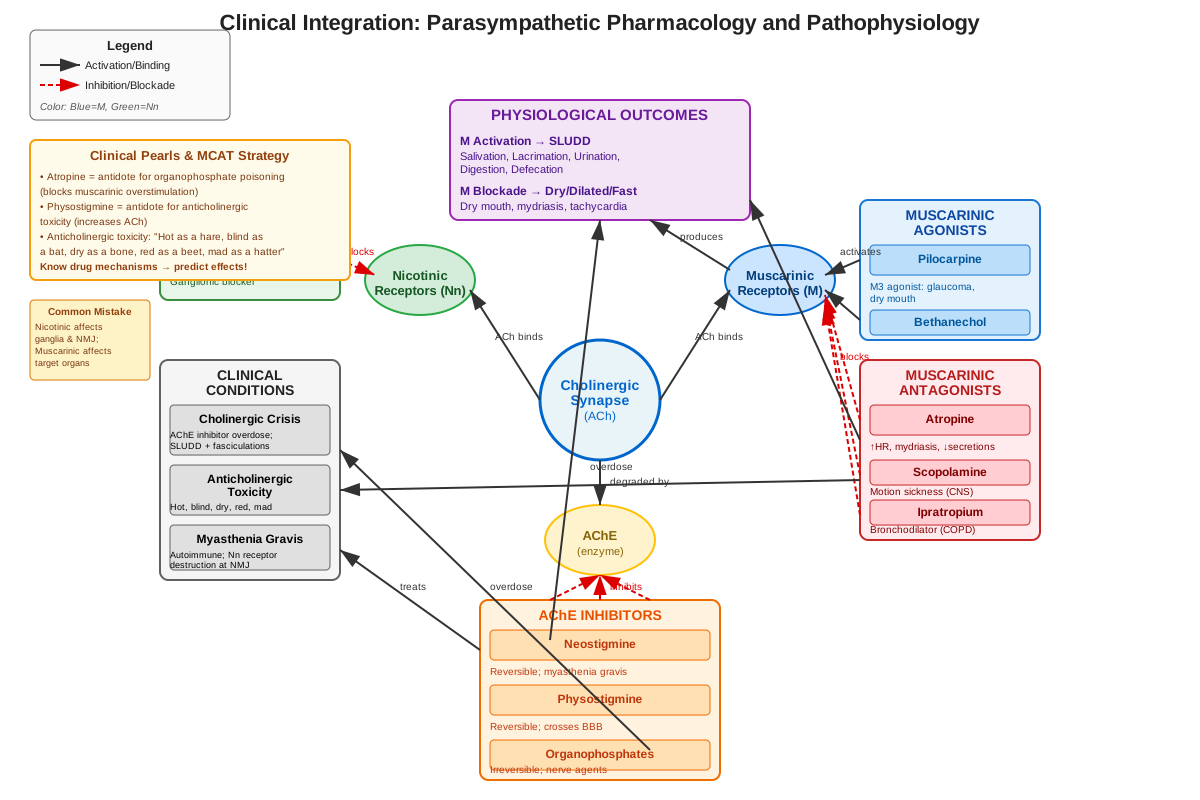
Related topics that build on parasympathetic knowledge include: sympathetic nervous system (anatomical and functional comparison), autonomic pharmacology (cholinergic agonists and antagonists), cardiovascular regulation (baroreceptor reflexes), stress physiology (HPA axis interaction), and enteric nervous system (local GI control). The relationship map flows: Craniosacral outflow → Preganglionic neurons (ACh/nicotinic) → Ganglia near organs → Postganglionic neurons (ACh/muscarinic) → Organ-specific effects → Homeostatic regulation.
Quick check — test yourself on Parasympathetic nervous system so far.
Try Flashcards →High-Yield Facts
⭐ The parasympathetic nervous system exhibits craniosacral outflow, with preganglionic neurons originating from brainstem nuclei (CN III, VII, IX, X) and sacral spinal cord segments S2-S4.
⭐ The vagus nerve (CN X) provides approximately 75% of all parasympathetic innervation, affecting the heart, lungs, and most abdominal organs down to the proximal colon.
⭐ Parasympathetic pathways use acetylcholine as the neurotransmitter at both ganglionic synapses (acting on nicotinic receptors) and effector organs (acting on muscarinic receptors).
⭐ M2 muscarinic receptors in the heart couple to Gi proteins, decreasing heart rate and AV node conduction velocity by increasing potassium conductance and decreasing cAMP.
⭐ M3 muscarinic receptors in smooth muscle and glands couple to Gq proteins, causing GI/bladder smooth muscle contraction, increased glandular secretion, and bronchodilation via nitric oxide.
- Parasympathetic ganglia are located near or within target organs, resulting in long preganglionic fibers and short postganglionic fibers.
- Acetylcholinesterase rapidly degrades acetylcholine in the synaptic cleft, terminating parasympathetic signals and preventing continuous stimulation.
- Parasympathetic activation produces pupil constriction (miosis) and accommodation for near vision through M3 receptors on pupillary sphincter and ciliary muscles.
- The micturition reflex involves parasympathetic stimulation of detrusor muscle contraction (M3) and internal sphincter relaxation, promoting urination.
- Parasympathetic effects on the GI tract include increased peristalsis, sphincter relaxation, and enhanced secretion from salivary, gastric, pancreatic, and intestinal glands.
- Sacral parasympathetic outflow via pelvic splanchnic nerves mediates erectile function through M3 receptor-stimulated nitric oxide release and vasodilation.
- Vagal tone represents continuous parasympathetic influence on the heart, reducing the intrinsic SA node rate from ~100 bpm to the resting rate of 60-80 bpm.
Common Misconceptions
Misconception: The parasympathetic system only uses muscarinic receptors.
Correction: The parasympathetic system uses nicotinic receptors at ganglionic synapses (preganglionic to postganglionic) and muscarinic receptors at effector organs (postganglionic to target cells). Both receptor types respond to acetylcholine but have completely different structures and mechanisms.
Misconception: Parasympathetic activation always causes smooth muscle contraction.
Correction: Parasympathetic effects on smooth muscle are organ-specific. While M3 activation causes contraction in GI tract and bladder smooth muscle, it causes relaxation in airways (via nitric oxide) and blood vessels in erectile tissue. Additionally, parasympathetic stimulation relaxes sphincter smooth muscle (lower esophageal, pyloric, internal urethral).
Misconception: The parasympathetic system innervates all organs that the sympathetic system innervates.
Correction: Many organs receive dual innervation, but important exceptions exist. Most blood vessels, sweat glands, arrector pili muscles, and the adrenal medulla receive only sympathetic innervation. Conversely, the ciliary muscle and pupillary sphincter receive predominantly parasympathetic control.
Misconception: Blocking acetylcholine receptors will only affect parasympathetic function.
Correction: Because both parasympathetic and sympathetic systems use acetylcholine at ganglionic synapses (nicotinic receptors), ganglionic blockers inhibit both divisions. Only muscarinic antagonists selectively block parasympathetic effects at target organs. Additionally, nicotinic antagonists at the neuromuscular junction block skeletal muscle contraction without affecting autonomic function.
Misconception: Parasympathetic stimulation decreases all cardiac parameters equally.
Correction: Parasympathetic effects on the heart are regionally specific. The SA node, AV node, and atria receive substantial vagal innervation, so parasympathetic stimulation significantly decreases heart rate, AV conduction velocity, and atrial contractility. However, ventricular muscle receives minimal parasympathetic innervation, so effects on ventricular contractility are modest compared to atrial effects.
Misconception: The parasympathetic system is always active during rest and inactive during stress.
Correction: While parasympathetic activity generally predominates during rest, both autonomic divisions maintain continuous baseline activity (autonomic tone) that varies dynamically. Many physiological responses involve coordinated changes in both divisions—for example, the baroreceptor reflex adjusts both sympathetic and parasympathetic output to regulate blood pressure.
Worked Examples
Example 1: Cardiovascular Drug Effects
Question: A patient receives an intravenous injection of atropine, a muscarinic receptor antagonist. Predict the cardiovascular effects and explain the mechanism.
Solution:
Step 1: Identify the drug's mechanism. Atropine blocks muscarinic receptors, preventing acetylcholine from binding. Since parasympathetic postganglionic neurons use acetylcholine acting on muscarinic receptors, atropine will block parasympathetic effects on target organs.
Step 2: Determine baseline autonomic tone. At rest, the heart experiences significant vagal tone—continuous parasympathetic activity that slows the heart rate below the intrinsic SA node rate. The SA node's intrinsic rate is approximately 100 bpm, but vagal tone reduces resting heart rate to 60-80 bpm.
Step 3: Predict the effect of blocking parasympathetic influence. Atropine blocks M2 muscarinic receptors in the heart, eliminating vagal tone. Without parasympathetic restraint, the SA node fires at its intrinsic rate.
Step 4: Explain the cellular mechanism. Normally, parasympathetic activation of M2 receptors (Gi-coupled) increases potassium conductance (hyperpolarizing the SA node) and decreases cAMP (reducing calcium channel activity). Blocking these receptors removes this inhibition, allowing faster depolarization and increased heart rate.
Answer: Atropine will cause tachycardia (increased heart rate), potentially raising heart rate to 100-120 bpm or higher. The mechanism involves blocking M2 muscarinic receptors in the SA node, eliminating vagal tone and allowing the intrinsic pacemaker rate to predominate. Additional effects include increased AV node conduction velocity and potentially increased atrial contractility.
Connection to learning objectives: This example demonstrates application of parasympathetic concepts to predict drug effects (learning objective 3), requires understanding of receptor types and mechanisms (prerequisite knowledge), and illustrates the clinical relevance of autonomic pharmacology.
Example 2: Experimental Physiology Passage
Passage: Researchers studying autonomic control of digestion performed vagotomy (surgical cutting of the vagus nerve) in experimental animals. They measured gastric acid secretion, gastric motility, and pancreatic enzyme secretion before and after the procedure.
Question: Predict the experimental results and explain the underlying mechanisms.
Solution:
Step 1: Identify the affected system. The vagus nerve (CN X) carries parasympathetic preganglionic fibers to the thoracic and abdominal organs, including the stomach and pancreas. Vagotomy eliminates parasympathetic input to these organs.
Step 2: Analyze gastric acid secretion. Parasympathetic stimulation increases gastric acid secretion through two mechanisms: (1) direct stimulation of parietal cells via M1 receptors, and (2) stimulation of gastrin release from G cells, which indirectly promotes acid secretion. Vagotomy would eliminate the direct parasympathetic drive.
Step 3: Analyze gastric motility. Parasympathetic activation via M3 receptors increases smooth muscle contraction in the stomach wall, enhancing peristalsis and mixing. Vagotomy would reduce gastric motility.
Step 4: Analyze pancreatic secretion. Parasympathetic stimulation via M3 receptors on pancreatic acinar cells increases enzyme secretion. Vagotomy would decrease pancreatic enzyme output.
Step 5: Consider compensatory mechanisms. While vagotomy eliminates parasympathetic input, other regulatory mechanisms (hormonal, local reflexes via the enteric nervous system) continue to function, so digestive function isn't completely abolished.
Answer: After vagotomy, researchers would observe: (1) decreased gastric acid secretion, though not complete absence due to continued gastrin and histamine effects; (2) reduced gastric motility and delayed gastric emptying; (3) decreased pancreatic enzyme secretion, though some secretion continues via hormonal stimulation (secretin, CCK). These results demonstrate the parasympathetic system's role in the cephalic and gastric phases of digestion.
Connection to learning objectives: This example requires applying parasympathetic concepts to experimental scenarios (learning objective 3), integrating knowledge of multiple organ systems (learning objective 5), and understanding receptor-mediated mechanisms at specific organs.
Exam Strategy
When approaching MCAT questions on the parasympathetic nervous system, begin by identifying the anatomical level being tested: Is the question asking about ganglionic transmission (nicotinic receptors) or effects at target organs (muscarinic receptors)? This distinction immediately narrows answer choices and prevents confusion between receptor types.
Trigger words that signal parasympathetic content include: "vagus nerve," "craniosacral," "rest and digest," "acetylcholine," "muscarinic," "cholinergic," "vagal tone," and specific effects like "miosis," "bradycardia," or "increased peristalsis." When you encounter these terms, activate your mental framework of parasympathetic anatomy, neurotransmission, and organ-specific effects.
For questions comparing sympathetic and parasympathetic effects, create a quick mental table of the organ in question. Most organs show opposite effects between the two divisions, but remember exceptions: both systems stimulate salivary secretion (though producing different saliva compositions), and some organs receive only one type of innervation. If an answer choice claims identical effects from both divisions, it's likely incorrect unless the question specifically addresses ganglionic transmission.
Process-of-elimination strategies: Eliminate answers suggesting norepinephrine as the parasympathetic neurotransmitter (it's always acetylcholine). Eliminate answers claiming parasympathetic effects on organs that lack parasympathetic innervation (most blood vessels, sweat glands). Eliminate answers reversing the long preganglionic/short postganglionic architecture. Eliminate answers confusing nicotinic and muscarinic receptor locations.
For passage-based questions involving autonomic drugs, identify whether the drug is: (1) a cholinergic agonist (mimics parasympathetic effects), (2) a muscarinic antagonist (blocks parasympathetic effects at organs), (3) a nicotinic antagonist at ganglia (blocks both sympathetic and parasympathetic transmission), or (4) an acetylcholinesterase inhibitor (enhances parasympathetic effects by preventing acetylcholine breakdown). This classification immediately predicts the drug's effects.
Time allocation: Discrete questions on parasympathetic function should take 60-90 seconds—quickly identify the organ, recall the receptor type, and predict the effect. Passage-based questions may require 90-120 seconds to integrate experimental data with parasympathetic physiology. Don't spend excessive time trying to recall minor details; focus on major organs (heart, GI tract, eye) and primary receptor types (M2 in heart, M3 in smooth muscle/glands).
Memory Techniques
Mnemonic for cranial nerve parasympathetic outflow: "3, 7, 9, 10—Parasympathetic Heaven" (CN III, VII, IX, X carry parasympathetic fibers)
Mnemonic for vagus nerve effects: "SLUDD" - Salivation, Lacrimation, Urination, Digestion, Defecation (all increased by parasympathetic activation)
Mnemonic for muscarinic receptor locations: "M2 for the heart that beats for you, M3 for smooth muscle and glands that do" (M2 = cardiac, M3 = smooth muscle and glands)
Visualization strategy: Picture a person relaxing after a large meal. Their pupils are constricted (bright light), heart rate is slow (resting), breathing is calm, and digestive processes are active (gurgling stomach). This "rest and digest" image captures the parasympathetic state and helps recall specific organ effects.
Acronym for parasympathetic ganglia location: "NEAR" - Neurons Exist At/Around Receptors (parasympathetic ganglia are near or in target organs, unlike sympathetic ganglia near the spinal cord)
Contrast mnemonic: "Parasympathetic = Long Pre, Short Post" (long preganglionic fibers, short postganglionic fibers—opposite of sympathetic)
Receptor mechanism memory aid: "Nicotinic = Quick, Muscarinic = Modulated" (nicotinic receptors are ion channels producing fast responses at ganglia; muscarinic receptors are GPCRs producing slower, modulated responses at organs)
Summary
The parasympathetic nervous system represents the "rest and digest" division of the autonomic nervous system, originating from craniosacral outflow (brainstem nuclei and sacral spinal cord S2-S4) and utilizing a two-neuron pathway with ganglia located near target organs. This system employs acetylcholine as its neurotransmitter at both ganglionic synapses (acting on nicotinic receptors) and effector organs (acting on muscarinic receptors). The vagus nerve provides the majority of parasympathetic innervation, affecting cardiovascular, respiratory, and gastrointestinal systems. Organ-specific effects include decreased heart rate and conduction velocity (M2 receptors), increased GI motility and secretion (M3 receptors), pupil constriction and accommodation (M3 receptors), and promotion of urination and defecation (M3 receptors). Understanding the anatomical organization, cholinergic neurotransmission, receptor pharmacology, and organ-specific responses enables prediction of physiological effects and pharmacological interventions—essential skills for MCAT success in both biological sciences sections.
Key Takeaways
- The parasympathetic nervous system exhibits craniosacral outflow with long preganglionic and short postganglionic neurons, using acetylcholine at both synapses
- Nicotinic receptors (ligand-gated ion channels) mediate ganglionic transmission, while muscarinic receptors (GPCRs) mediate effects at target organs
- M2 receptors in the heart (Gi-coupled) decrease heart rate and conduction; M3 receptors in smooth muscle and glands (Gq-coupled) increase GI motility and secretion
- The vagus nerve (CN X) provides approximately 75% of parasympathetic innervation, affecting organs from the heart to the proximal colon
- Parasympathetic effects optimize "rest and digest" functions: decreased heart rate, increased digestion, pupil constriction, and promotion of elimination
- Vagal tone represents continuous parasympathetic restraint on heart rate; blocking this tone (e.g., with atropine) causes tachycardia
- Understanding receptor types and locations enables prediction of drug effects and physiological responses—critical for MCAT application questions
Related Topics
Sympathetic Nervous System: The complementary division of the autonomic nervous system with thoracolumbar outflow, short preganglionic/long postganglionic architecture, and primarily adrenergic neurotransmission. Mastering parasympathetic function provides the foundation for understanding sympathetic-parasympathetic interactions and autonomic balance.
Autonomic Pharmacology: Study of drugs affecting cholinergic and adrenergic receptors, including muscarinic agonists/antagonists, nicotinic blockers, and acetylcholinesterase inhibitors. Understanding parasympathetic receptor types enables prediction of drug effects and side effects.
Cardiovascular Regulation: Integration of autonomic, hormonal, and local mechanisms controlling blood pressure and cardiac output, including baroreceptor reflexes and the role of vagal tone in cardiovascular health.
Enteric Nervous System: The "brain of the gut" that coordinates GI function semi-independently while receiving parasympathetic input via the vagus nerve and pelvic splanchnic nerves.
Stress Physiology and HPA Axis: The interaction between autonomic responses (sympathetic activation, parasympathetic withdrawal) and endocrine stress responses, demonstrating integration of nervous and hormonal systems.
Practice CTA
Now that you've mastered the core concepts of the parasympathetic nervous system, reinforce your understanding by attempting practice questions and flashcards. Focus on questions requiring you to predict organ-specific responses, distinguish between receptor types, and apply knowledge to clinical scenarios. The parasympathetic nervous system's integrative nature means it appears across multiple question types—discrete items, passage-based questions, and experimental analysis. Challenge yourself with questions that require synthesis of parasympathetic function with cardiovascular physiology, pharmacology, and homeostatic regulation. Your ability to rapidly recall receptor types, trace neural pathways, and predict physiological effects will directly translate to MCAT points. Keep pushing forward—mastery of autonomic physiology represents a significant competitive advantage on test day!
Sign up free to keep reading
Create a free AnvayaPrep account to finish this MCAT guide on Parasympathetic nervous system — plus flashcards and practice questions.