Overview
Positive feedback is a regulatory mechanism in Biology where the output of a system amplifies or enhances the original stimulus, creating a self-reinforcing cycle that drives a process toward completion. Unlike negative feedback, which maintains homeostasis by counteracting changes, positive feedback accelerates physiological processes until a specific endpoint is reached. This mechanism is critical in Physiology and Organ Systems, where rapid, decisive responses are necessary for survival and reproduction.
Understanding positive feedback Biology concepts is essential for the MCAT because these mechanisms appear in multiple organ systems and represent fundamental principles of physiological regulation. The MCAT frequently tests students' ability to distinguish between positive and negative feedback loops, identify examples in clinical scenarios, and predict the consequences when these systems malfunction. Questions may appear in passage-based formats describing hormonal cascades, or as discrete questions requiring application of feedback principles to novel situations.
Positive feedback MCAT questions often integrate multiple biological concepts, requiring students to understand not just the mechanism itself, but also its relationship to homeostasis, endocrine signaling, nervous system function, and reproductive physiology. Mastery of this topic enables deeper comprehension of childbirth, blood clotting, action potential generation, and other critical physiological processes that appear regularly on the exam. This topic serves as a bridge between molecular signaling mechanisms and whole-organism physiology, making it a high-yield area for integrated, systems-level thinking.
Learning Objectives
- [ ] Define Positive feedback using accurate Biology terminology
- [ ] Explain why Positive feedback matters for the MCAT
- [ ] Apply Positive feedback to exam-style questions
- [ ] Identify common mistakes related to Positive feedback
- [ ] Connect Positive feedback to related Biology concepts
- [ ] Compare and contrast positive feedback with negative feedback mechanisms
- [ ] Predict the physiological consequences of positive feedback loop disruption
- [ ] Analyze multi-step positive feedback cascades in clinical vignettes
Prerequisites
- Homeostasis: Understanding baseline physiological balance is essential because positive feedback temporarily disrupts homeostasis to achieve specific outcomes
- Negative feedback loops: Familiarity with the more common regulatory mechanism provides necessary contrast for understanding positive feedback's unique characteristics
- Hormone signaling: Knowledge of endocrine communication pathways is required since many positive feedback examples involve hormonal cascades
- Cell signaling basics: Understanding receptors, ligands, and signal transduction enables comprehension of how positive feedback amplifies molecular signals
- Basic nervous system function: Neural positive feedback mechanisms require foundational knowledge of action potentials and synaptic transmission
Why This Topic Matters
Positive feedback mechanisms are clinically significant because they govern critical life processes and medical emergencies. Childbirth complications, hemorrhagic shock, and certain cardiac arrhythmias all involve positive feedback loops that can become pathological if not properly regulated. Medical professionals must recognize when positive feedback is functioning normally versus when intervention is necessary to prevent runaway physiological responses.
On the MCAT, positive feedback appears in approximately 3-5% of Biology questions, typically in the context of reproductive physiology, blood clotting, or neural signaling. Questions may appear as:
- Passage-based scenarios describing hormonal changes during labor
- Discrete questions asking students to identify feedback mechanisms
- Graph interpretation questions showing amplifying physiological responses
- Experimental analysis passages where students must predict outcomes of feedback disruption
The MCAT particularly favors questions that require distinguishing positive from negative feedback, identifying the endpoint that terminates positive feedback loops, and understanding why positive feedback is rare compared to negative feedback in biological systems. This topic frequently appears integrated with endocrinology, reproductive biology, and cardiovascular physiology passages, making it essential for achieving competitive scores in the Biological and Biochemical Foundations section.
Core Concepts
Definition and Fundamental Mechanism
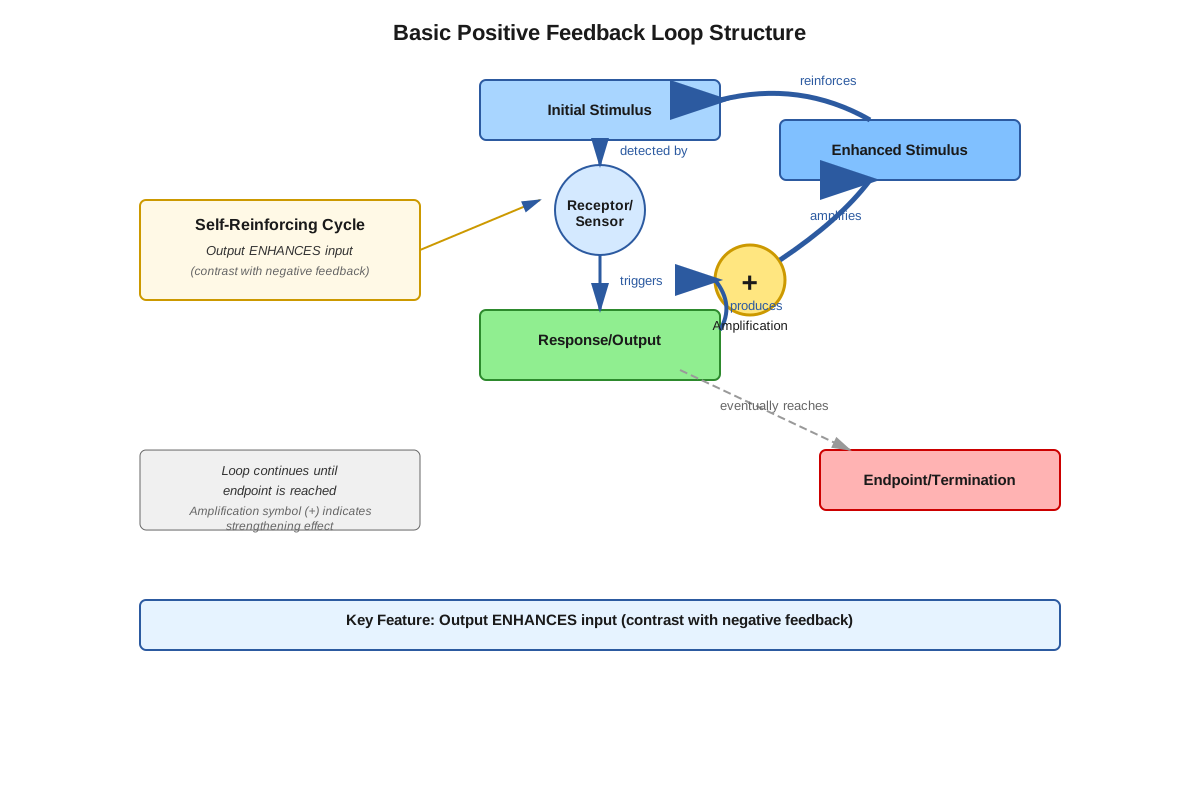
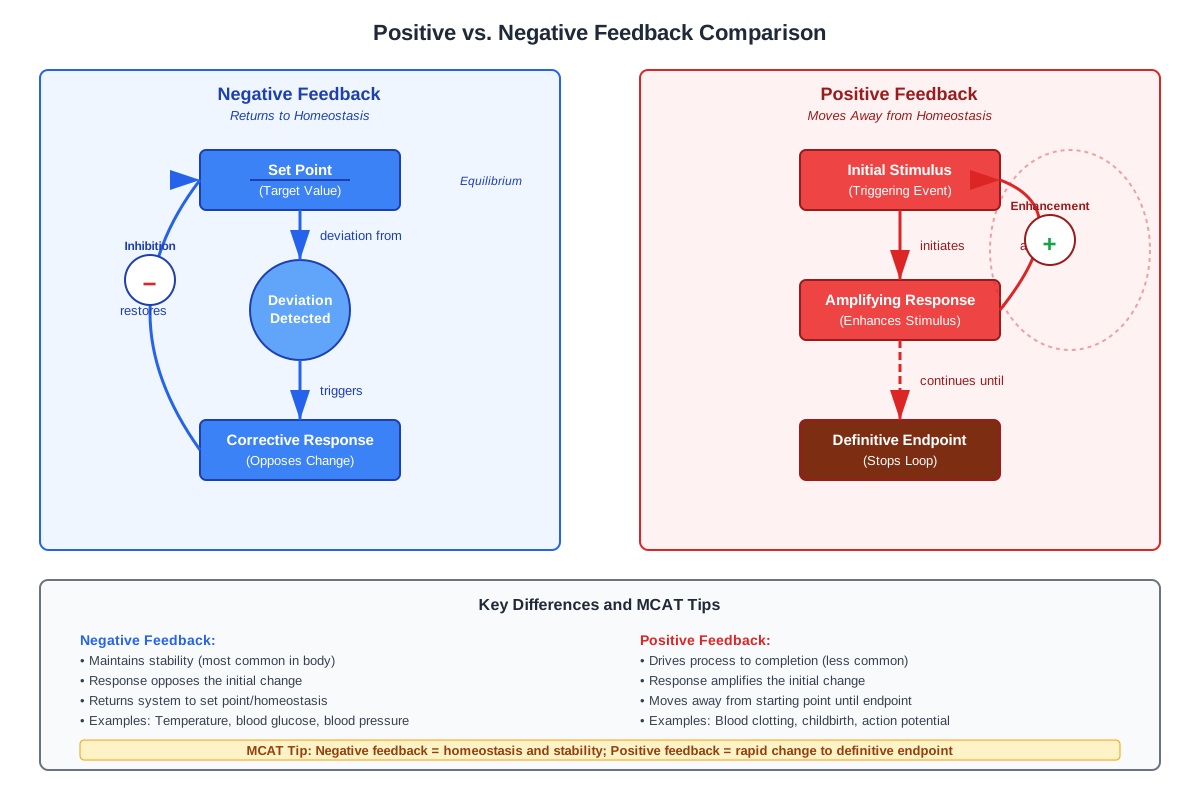
Positive feedback is a regulatory process in which the response to a stimulus amplifies or enhances that initial stimulus, creating a self-perpetuating cycle that continues until an external factor or predetermined endpoint terminates the loop. This mechanism contrasts sharply with negative feedback, where responses counteract the original stimulus to maintain equilibrium. The defining characteristic of positive feedback is that it moves systems away from their starting point rather than returning them to baseline.
The basic structure of a positive feedback loop includes:
- An initial stimulus or triggering event
- A sensor that detects the stimulus
- A control center that processes the information
- An effector that produces a response
- The response amplifies the original stimulus
- The cycle continues with increasing intensity
- A definitive endpoint or external factor terminates the loop
Key Characteristics of Positive Feedback Systems
Positive feedback mechanisms share several distinguishing features that differentiate them from other regulatory systems:
- Self-amplifying: Each cycle increases the magnitude of the response
- Time-limited: Cannot continue indefinitely without causing system damage
- Endpoint-driven: Require a specific termination condition
- Rare in biology: Less common than negative feedback due to potential instability
- Purpose-specific: Used when rapid, complete responses are necessary
- Energy-intensive: Require significant metabolic resources
| Feature | Positive Feedback | Negative Feedback |
|---|---|---|
| Effect on stimulus | Amplifies | Counteracts |
| System stability | Temporarily unstable | Maintains stability |
| Duration | Short-term, episodic | Continuous |
| Endpoint | Specific termination event | Returns to set point |
| Frequency in biology | Rare | Common |
| Purpose | Complete a process | Maintain homeostasis |
Major Physiological Examples
Childbirth and Oxytocin Release
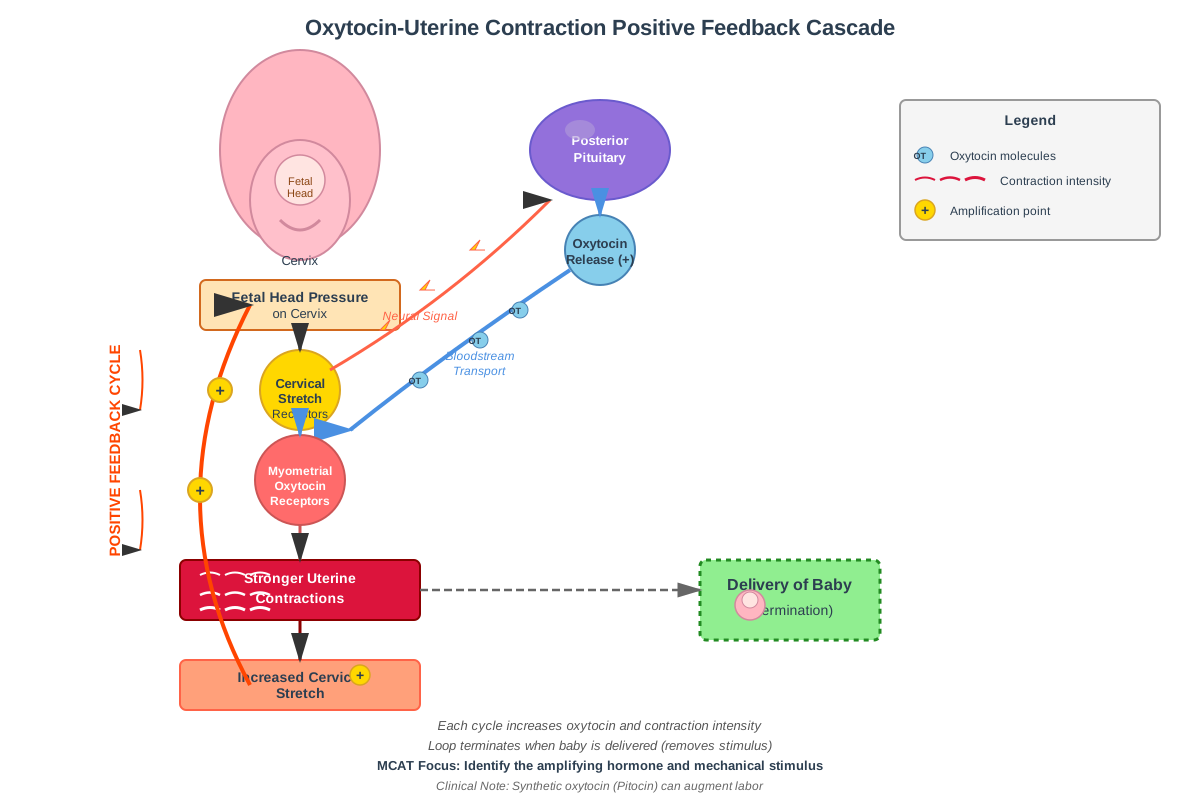
The most frequently cited example of positive feedback in human Physiology and Organ Systems is the oxytocin-uterine contraction cycle during labor:
- Fetal head stretches the cervix (initial stimulus)
- Stretch receptors in cervical tissue detect mechanical deformation
- Sensory neurons transmit signals to the hypothalamus
- Posterior pituitary releases oxytocin into bloodstream
- Oxytocin binds to receptors on uterine smooth muscle
- Uterine contractions increase in strength and frequency
- Stronger contractions push fetal head harder against cervix
- Greater cervical stretch triggers more oxytocin release
- Cycle continues with escalating intensity
- Termination: Delivery of the baby removes the cervical stretch stimulus
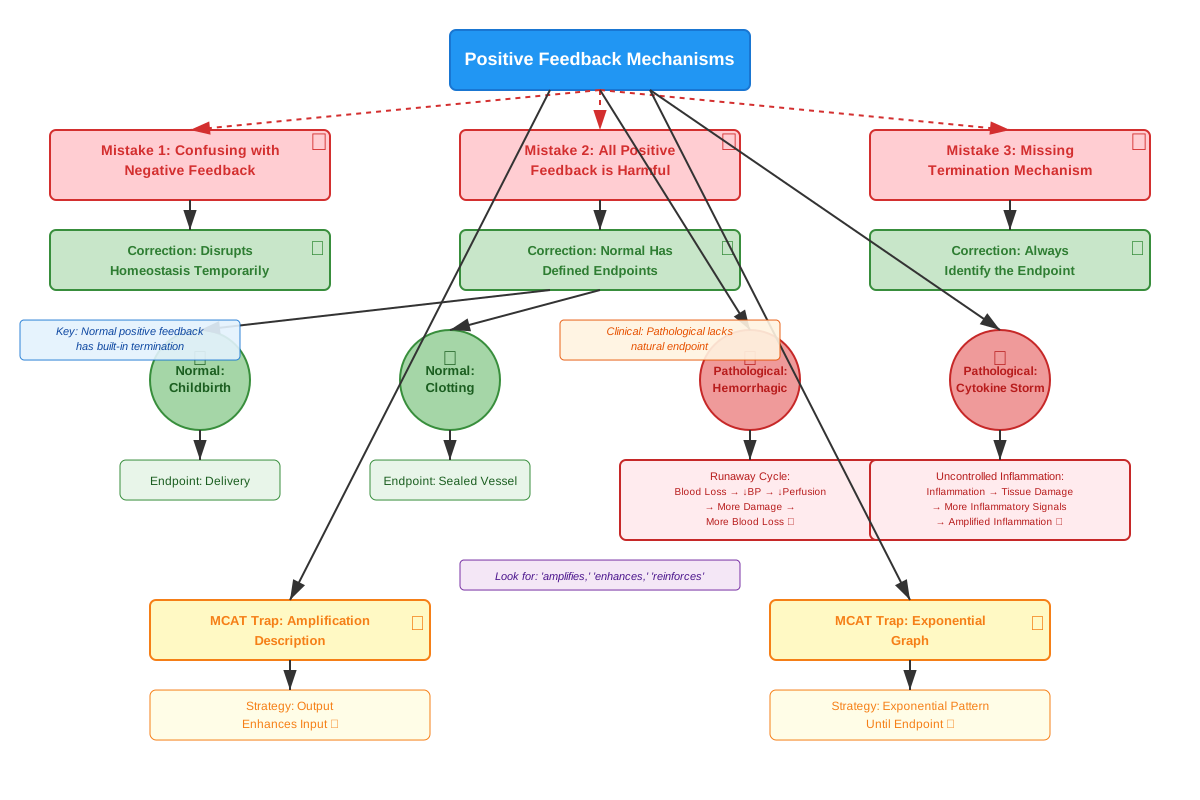
This example demonstrates all essential features of positive feedback: amplification, self-perpetuation, and a clear endpoint. The MCAT frequently tests whether students recognize that delivery itself terminates the loop, not a return to homeostatic baseline.
Blood Clotting Cascade
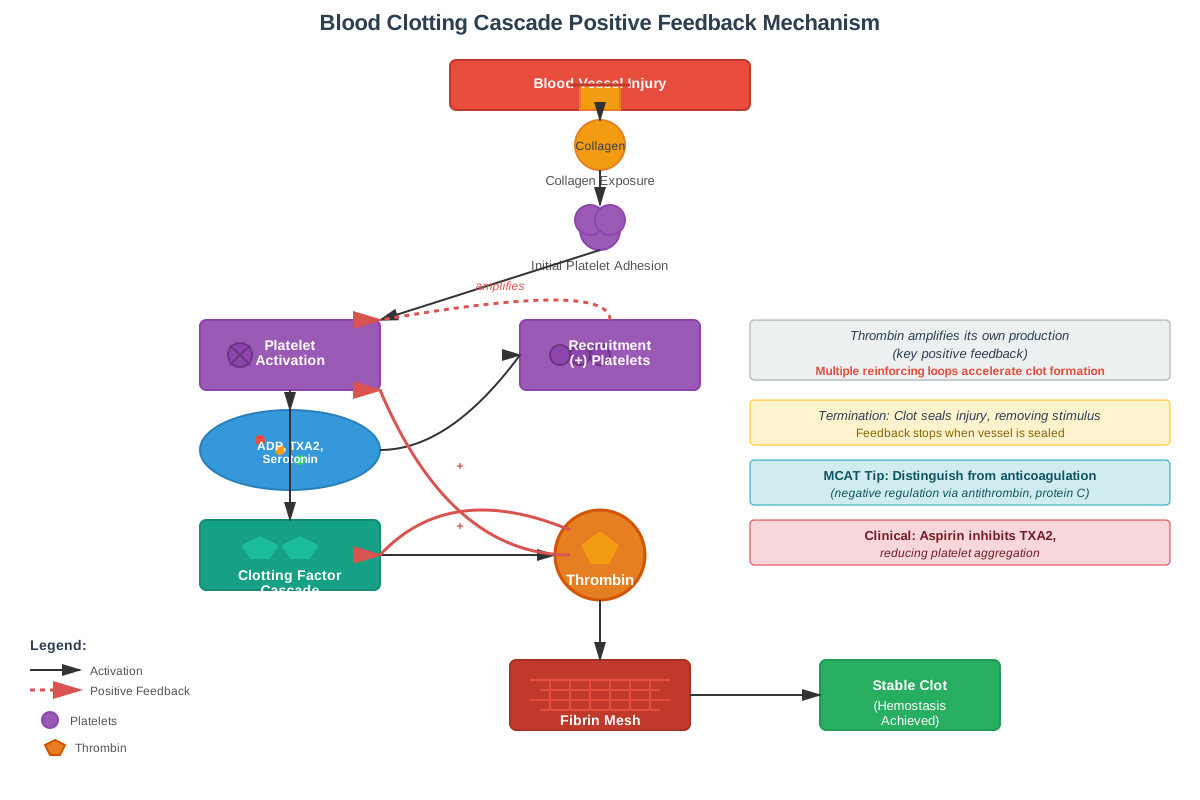
Hemostasis involves multiple positive feedback mechanisms that ensure rapid, complete clot formation:
- Blood vessel injury exposes collagen and tissue factor
- Platelet adhesion to exposed collagen occurs
- Activated platelets release chemical signals (ADP, thromboxane A2)
- These chemicals attract and activate additional platelets
- More activated platelets release more chemical signals
- Platelet plug grows rapidly through positive feedback
- Simultaneously, the coagulation cascade activates
- Thrombin (enzyme) converts fibrinogen to fibrin
- Thrombin also activates more clotting factors upstream
- This amplifies thrombin production (positive feedback within cascade)
- Termination: Clot formation seals the injury; anticoagulant factors limit spread
The clotting cascade actually contains multiple nested positive feedback loops, making it a particularly complex example. The MCAT may test understanding of how thrombin amplifies its own production or how platelet activation recruits more platelets.
Action Potential Depolarization
During the rising phase of a neural action potential, sodium channel opening exhibits positive feedback characteristics:
- Initial depolarization opens voltage-gated Na⁺ channels
- Na⁺ influx causes further membrane depolarization
- Additional voltage-gated Na⁺ channels open in response
- More Na⁺ enters, causing greater depolarization
- Rapid, explosive depolarization occurs (upstroke of action potential)
- Termination: Na⁺ channels inactivate; K⁺ channels open for repolarization
This example demonstrates positive feedback on a millisecond timescale, showing that these mechanisms can operate at vastly different temporal scales depending on the physiological context.
Ovulation and LH Surge
The luteinizing hormone (LH) surge that triggers ovulation involves positive feedback between the ovaries and anterior pituitary:
- Developing ovarian follicle produces increasing estrogen
- Rising estrogen levels reach threshold concentration
- High estrogen switches hypothalamic response from negative to positive feedback
- Hypothalamus increases GnRH (gonadotropin-releasing hormone) secretion
- Anterior pituitary dramatically increases LH release (the "LH surge")
- LH stimulates further estrogen production temporarily
- Positive feedback amplifies LH release
- Termination: LH surge triggers ovulation; corpus luteum forms and produces progesterone, which reinstates negative feedback
This example is particularly important for the MCAT because it demonstrates that the same hormone (estrogen) can participate in both negative and positive feedback depending on concentration and physiological context.
Why Positive Feedback is Rare
Biological systems predominantly use negative feedback because positive feedback creates inherent instability. If positive feedback loops lacked termination mechanisms, they would continue indefinitely, depleting resources and potentially causing death. The rarity of positive feedback in biology reflects evolutionary selection for stable, sustainable regulatory systems.
Positive feedback is reserved for situations requiring:
- Rapid completion of a critical process (blood clotting must be fast)
- All-or-nothing responses (action potentials must reach threshold)
- Irreversible transitions (ovulation occurs once per cycle)
- Explosive amplification (immune complement cascade)
Termination Mechanisms
Every physiological positive feedback loop must have a built-in termination mechanism:
- Physical removal of stimulus: Delivery removes cervical stretch
- Depletion of substrates: Limited clotting factors eventually exhaust
- Activation of opposing systems: Anticoagulants limit clot spread
- Channel inactivation: Na⁺ channels enter refractory period
- Hormonal switching: Progesterone reinstates negative feedback after ovulation
- Completion of process: Wound sealing stops platelet activation
Understanding termination mechanisms is crucial for MCAT questions that ask about system regulation or predict consequences of pathway disruption.
Concept Relationships
Positive feedback mechanisms exist within a broader network of physiological regulation. Homeostasis serves as the overarching principle, with negative feedback maintaining steady-state conditions most of the time. Positive feedback temporarily disrupts homeostasis to accomplish specific tasks, then systems return to negative feedback control.
The relationship flows: Homeostasis ← maintained by → Negative Feedback ← occasionally interrupted by → Positive Feedback → achieves specific outcome → returns to Negative Feedback control.
Within Physiology and Organ Systems, positive feedback connects to:
- Endocrine system: Hormone cascades (oxytocin, LH surge)
- Reproductive system: Childbirth, ovulation
- Cardiovascular system: Blood clotting, certain aspects of cardiac contractility
- Nervous system: Action potential generation, synaptic facilitation
- Immune system: Complement cascade, cytokine storms (pathological)
Positive feedback also relates to cell signaling concepts, as amplification cascades at the molecular level (like second messenger systems) share mathematical properties with positive feedback, though they may not always fit the strict definition.
The concept map: Initial Stimulus → Sensor Detection → Signal Amplification → Enhanced Response → Further Amplification → Exponential Growth → Termination Event → Return to Baseline
Quick check — test yourself on Positive feedback so far.
Try Flashcards →High-Yield Facts
⭐ Positive feedback amplifies the original stimulus, moving systems away from baseline rather than maintaining homeostasis
⭐ All positive feedback loops require a specific termination mechanism to prevent runaway physiological responses
⭐ Oxytocin release during childbirth is the most commonly tested positive feedback example on the MCAT
⭐ Estrogen can participate in both negative feedback (low concentrations) and positive feedback (high concentrations during the LH surge)
⭐ Blood clotting involves multiple nested positive feedback loops, including platelet activation and thrombin amplification
- Positive feedback is rare in biology because it creates temporary instability
- The rising phase of action potentials involves positive feedback through voltage-gated sodium channels
- Positive feedback mechanisms are time-limited and cannot continue indefinitely
- Termination of positive feedback often involves physical removal of the stimulus or depletion of substrates
- Pathological positive feedback (like cytokine storms or hemorrhagic shock) occurs when termination mechanisms fail
- Positive feedback loops typically operate on timescales from milliseconds (action potentials) to hours (childbirth)
- The MCAT frequently asks students to distinguish positive from negative feedback in experimental scenarios
- Positive feedback can be beneficial (normal physiology) or harmful (pathological states) depending on context
- Understanding the endpoint of positive feedback loops is essential for predicting system behavior
- Positive feedback mechanisms often involve hormonal or neural signaling pathways
Common Misconceptions
Misconception: Positive feedback always means something good or beneficial is happening → Correction: "Positive" refers to amplification of the stimulus, not a value judgment. Pathological positive feedback (hemorrhagic shock, septic shock) can be life-threatening. The term describes the mechanism, not the outcome.
Misconception: Positive feedback maintains homeostasis like negative feedback → Correction: Positive feedback temporarily disrupts homeostasis to complete a specific process. It moves systems away from baseline, while negative feedback returns systems to baseline. Only after termination do systems return to homeostatic control.
Misconception: Positive feedback loops continue indefinitely once started → Correction: All physiological positive feedback loops have built-in termination mechanisms. Without these, the organism would die from resource depletion or system failure. The endpoint is a defining characteristic of positive feedback.
Misconception: Estrogen always exhibits negative feedback on the hypothalamus and pituitary → Correction: Estrogen's feedback effect depends on concentration and duration. Low-to-moderate estrogen provides negative feedback, but sustained high estrogen (from mature follicle) switches to positive feedback, triggering the LH surge. This concentration-dependent switching is unique and frequently tested.
Misconception: Positive feedback is more common than negative feedback in biological systems → Correction: Positive feedback is actually rare because it creates instability. Negative feedback dominates biological regulation because it maintains stable, sustainable conditions. Positive feedback is reserved for specific situations requiring rapid, complete responses.
Misconception: The entire blood clotting process is one simple positive feedback loop → Correction: Hemostasis involves multiple interconnected positive feedback loops (platelet activation recruiting more platelets, thrombin activating upstream clotting factors) plus negative feedback mechanisms (anticoagulants) that limit clot spread. It's a complex, multi-layered system.
Misconception: Once positive feedback begins, nothing can stop it except completing the process → Correction: While positive feedback naturally terminates upon process completion, external interventions can interrupt the loop. Medical interventions (medications, surgical procedures) can halt positive feedback when it becomes pathological.
Worked Examples
Example 1: Identifying Feedback Mechanisms in a Clinical Vignette
Question: A 28-year-old woman in active labor experiences increasingly strong and frequent uterine contractions. Her obstetrician notes that each contraction pushes the fetal head more firmly against the cervix, which appears to trigger even stronger subsequent contractions. Blood tests show progressively rising levels of a particular hormone. Which of the following best describes the regulatory mechanism at work?
A) Negative feedback involving progesterone
B) Positive feedback involving oxytocin
C) Negative feedback involving oxytocin
D) Positive feedback involving estrogen
Reasoning Process:
- Identify the pattern: Contractions are increasing in strength and frequency, not returning to baseline. This indicates amplification, not counteraction.
- Eliminate negative feedback options: The stimulus (cervical stretch) is being amplified, not counteracted. Eliminate options A and C.
- Determine the hormone: During labor, oxytocin is released from the posterior pituitary in response to cervical stretch. Oxytocin causes uterine contractions, which increase cervical stretch, triggering more oxytocin release.
- Verify positive feedback characteristics:
- Initial stimulus: cervical stretch
- Response: oxytocin release → uterine contractions
- Effect: amplifies original stimulus (more cervical stretch)
- Pattern: escalating cycle
- Consider estrogen: While estrogen is involved in preparing the uterus for labor, it doesn't directly mediate the contraction-stretch-contraction cycle described.
Answer: B) Positive feedback involving oxytocin
Key Learning Point: This question tests the ability to recognize positive feedback characteristics (amplification, escalation) and connect them to the appropriate hormone. The MCAT frequently presents clinical scenarios requiring students to identify the underlying regulatory mechanism.
Example 2: Predicting Consequences of System Disruption
Question: Researchers develop a drug that blocks oxytocin receptors on uterine smooth muscle. If administered during active labor, what would be the most likely immediate consequence?
A) Uterine contractions would increase in frequency and strength
B) Uterine contractions would decrease or cease
C) Cervical dilation would accelerate
D) The positive feedback loop would continue unchanged
Reasoning Process:
- Map the normal positive feedback loop:
- Cervical stretch → oxytocin release → uterine contraction → more cervical stretch → more oxytocin
- Identify the intervention point: The drug blocks oxytocin receptors on uterine smooth muscle, preventing oxytocin from causing contractions.
- Trace the consequences:
- Oxytocin is still released (cervical stretch still occurs)
- But oxytocin cannot bind to receptors (blocked by drug)
- Therefore, oxytocin cannot trigger uterine contractions
- Without contractions, cervical stretch doesn't increase
- The positive feedback loop is interrupted
- Evaluate each option:
- A: Incorrect - blocking the effector response would decrease, not increase contractions
- B: Correct - without functional oxytocin receptors, contractions cannot be triggered or maintained
- C: Incorrect - without contractions, cervical dilation would slow or stop
- D: Incorrect - the loop is broken at the effector stage
Answer: B) Uterine contractions would decrease or cease
Key Learning Point: Understanding the components of positive feedback loops enables prediction of disruption consequences. Breaking any link in the chain (sensor, signal, or effector) will interrupt the amplification cycle. This type of experimental analysis question is common on the MCAT.
Exam Strategy
When approaching positive feedback MCAT questions, use this systematic strategy:
Step 1: Identify the pattern
- Look for keywords: "amplifies," "increases," "enhances," "accelerates," "escalates"
- Watch for descriptions of responses that enhance the original stimulus
- Note whether the system moves away from or toward baseline
Step 2: Distinguish from negative feedback
- Negative feedback: response opposes stimulus, returns to baseline, maintains homeostasis
- Positive feedback: response enhances stimulus, moves from baseline, temporary disruption
Step 3: Identify the termination mechanism
- Every positive feedback loop must have an endpoint
- Common terminations: physical removal of stimulus, process completion, substrate depletion
- If a question asks "what stops this process," look for the termination event
Step 4: Map the loop components
- Stimulus → Sensor → Control → Effector → Enhanced Stimulus
- Identify where interventions or disruptions occur
- Trace consequences through the cycle
Exam Tip: If a question describes a physiological process that "continues to increase" or "builds upon itself," positive feedback is likely involved. If it "returns to normal" or "counteracts the change," think negative feedback.
Trigger words for positive feedback:
- Amplification, cascade, surge, explosive, escalating, self-reinforcing, runaway, accelerating
Trigger words for negative feedback:
- Counteract, oppose, restore, maintain, stabilize, return to baseline, homeostasis
Process-of-elimination strategy:
- Eliminate options describing negative feedback if the passage shows amplification
- Eliminate options suggesting indefinite continuation (positive feedback must terminate)
- Eliminate options with incorrect hormones or mediators
- Choose the option that correctly identifies both the mechanism type and the molecular mediator
Time allocation: Positive feedback questions typically require 60-90 seconds. Spend time carefully reading the scenario to identify the pattern, then quickly eliminate incorrect options based on mechanism type.
Memory Techniques
Mnemonic for major positive feedback examples: "COAL"
- Childbirth (oxytocin-uterine contraction)
- Ovulation (LH surge)
- Action potential (Na⁺ channel opening)
- Letting blood clot (platelet activation, thrombin cascade)
Visualization for positive feedback: Picture a snowball rolling downhill, gathering more snow and growing larger as it moves. The snowball represents the response, the hill represents the process, and the growing size represents amplification. The bottom of the hill is the termination point.
Acronym for positive feedback characteristics: "ASTER"
- Amplifying (enhances stimulus)
- Short-term (time-limited)
- Termination required (must have endpoint)
- Episodic (not continuous)
- Rare (uncommon in biology)
Memory hook for oxytocin positive feedback: "OXytocin PUSHes the baby out" - the word "push" reminds you that contractions push the baby, which pushes on the cervix, which pushes for more oxytocin (positive feedback).
Distinguishing positive from negative:
- Positive = Plus more of the same (amplification)
- Negative = Negate the change (opposition)
For the LH surge: "Estrogen Elevated Enough Elicits Explosive LH" - five E's to remember that high estrogen triggers the LH surge through positive feedback.
Summary
Positive feedback is a regulatory mechanism where the response to a stimulus amplifies that stimulus, creating a self-reinforcing cycle that drives physiological processes toward completion. Unlike the more common negative feedback that maintains homeostasis, positive feedback temporarily disrupts equilibrium to achieve rapid, decisive outcomes. Key examples include oxytocin-mediated uterine contractions during childbirth, the LH surge triggering ovulation, platelet activation during blood clotting, and sodium channel opening during action potential depolarization. All positive feedback loops share essential characteristics: amplification, time-limited duration, and required termination mechanisms. These systems are rare in biology because they create instability, but they are crucial when explosive, complete responses are necessary. For the MCAT, students must distinguish positive from negative feedback, identify termination mechanisms, recognize concentration-dependent feedback switching (as with estrogen), and predict consequences of system disruption. Understanding positive feedback enables comprehension of critical physiological processes across multiple organ systems.
Key Takeaways
- Positive feedback amplifies the original stimulus, creating self-reinforcing cycles that move systems away from baseline until a specific endpoint is reached
- All physiological positive feedback loops require termination mechanisms to prevent dangerous runaway responses
- The oxytocin-uterine contraction cycle during childbirth is the most frequently tested positive feedback example on the MCAT
- Positive feedback is rare in biology because it creates temporary instability, reserved for situations requiring rapid, complete responses
- Estrogen demonstrates concentration-dependent feedback switching: negative feedback at low levels, positive feedback at high levels during the LH surge
- Blood clotting involves multiple nested positive feedback loops, including platelet recruitment and thrombin amplification
- Distinguishing positive from negative feedback requires identifying whether responses amplify or counteract the original stimulus
Related Topics
Negative Feedback Mechanisms: Understanding the dominant form of biological regulation provides essential contrast to positive feedback and enables recognition of homeostatic maintenance systems.
Endocrine System Regulation: Hormonal cascades frequently involve both positive and negative feedback, particularly in reproductive physiology and stress responses.
Reproductive Physiology: The menstrual cycle, ovulation, and childbirth all incorporate positive feedback mechanisms that are high-yield for MCAT testing.
Hemostasis and Coagulation: The blood clotting cascade demonstrates complex, multi-layered positive feedback with clinical significance for bleeding and thrombotic disorders.
Neural Signaling: Action potential generation involves positive feedback during depolarization, connecting this topic to nervous system function.
Mastering positive feedback enables deeper understanding of how biological systems achieve decisive, time-sensitive outcomes while maintaining overall stability through predominantly negative feedback control.
Practice CTA
Now that you've mastered the core concepts of positive feedback, challenge yourself with practice questions and flashcards to solidify your understanding. Focus on distinguishing positive from negative feedback in clinical vignettes, identifying termination mechanisms, and predicting consequences of system disruptions. The more you practice applying these concepts to MCAT-style questions, the more confident you'll become in recognizing feedback mechanisms across all physiological contexts. Your ability to quickly identify and analyze positive feedback loops will serve you well not only on test day but throughout your medical education. Keep pushing forward—you're building the foundation for clinical reasoning!
Sign up free to keep reading
Create a free AnvayaPrep account to finish this MCAT guide on Positive feedback — plus flashcards and practice questions.