Overview
The sliding filament model is the fundamental mechanism that explains how skeletal muscle contraction occurs at the molecular level. This model describes the process by which actin (thin) and myosin (thick) filaments slide past one another within the sarcomere, the basic contractile unit of muscle tissue, without the filaments themselves shortening. Understanding this model is critical for comprehending not only muscle physiology but also the broader principles of cellular movement, energy utilization, and signal transduction that appear throughout Biology and Physiology and Organ Systems on the MCAT.
The sliding filament model represents a cornerstone concept in muscle physiology that integrates multiple biological principles: protein structure-function relationships, ATP hydrolysis and energy coupling, calcium signaling, and the coordination of molecular events to produce macroscopic force. For the MCAT, this topic frequently appears in passages discussing exercise physiology, neuromuscular disorders, muscle fatigue, or comparative anatomy. Questions may test your understanding of the molecular events during contraction, the role of regulatory proteins, or the energetic requirements of muscle function.
This topic connects intimately with neurophysiology (action potentials and neuromuscular junctions), cellular respiration (ATP production for muscle contraction), and protein biochemistry (the structure of contractile proteins). Mastery of the sliding filament model Biology concepts enables students to tackle complex passages that integrate multiple organ systems and to answer discrete questions about muscle mechanics, making it a medium-importance, medium-difficulty topic that deserves focused attention during MCAT preparation.
Learning Objectives
- [ ] Define the sliding filament model using accurate Biology terminology
- [ ] Explain why the sliding filament model matters for the MCAT
- [ ] Apply the sliding filament model to exam-style questions
- [ ] Identify common mistakes related to the sliding filament model
- [ ] Connect the sliding filament model to related Biology concepts
- [ ] Describe the molecular events of the cross-bridge cycle in sequential order
- [ ] Explain the roles of calcium ions and regulatory proteins (troponin and tropomyosin) in muscle contraction
- [ ] Analyze how changes in sarcomere length affect muscle tension generation
- [ ] Predict the effects of ATP depletion on muscle contraction and relaxation
Prerequisites
- Sarcomere structure: Understanding the organization of thick and thin filaments, Z-lines, M-lines, A-bands, I-bands, and H-zones is essential because the sliding filament model describes changes in these structures during contraction
- Protein structure: Knowledge of primary through quaternary structure helps explain how myosin heads bind to actin and how conformational changes produce force
- ATP hydrolysis: Familiarity with ATP as an energy currency is necessary because each cross-bridge cycle requires ATP for both the power stroke and detachment
- Action potentials: Understanding membrane depolarization and repolarization provides context for how neural signals initiate muscle contraction
- Calcium signaling: Basic knowledge of calcium as a second messenger explains how excitation-contraction coupling works
Why This Topic Matters
The sliding filament model MCAT questions assess your ability to integrate molecular biology, biochemistry, and physiology—a hallmark of the exam's interdisciplinary approach. Clinically, understanding this model is essential for comprehending conditions such as muscular dystrophy (where structural proteins are defective), myasthenia gravis (where neuromuscular transmission fails), rigor mortis (where ATP depletion prevents cross-bridge detachment), and malignant hyperthermia (where calcium regulation is disrupted). These clinical correlations frequently appear in MCAT passages.
Exam statistics indicate that muscle physiology appears in approximately 2-4 questions per MCAT administration, with the sliding filament model being the most commonly tested aspect of muscle biology. Questions typically appear as part of longer passages in the Biological and Biochemical Foundations of Living Systems section, often integrated with topics like metabolism, nervous system function, or experimental design. Discrete questions may test specific details about the cross-bridge cycle or the role of calcium.
Common passage contexts include: exercise physiology experiments measuring muscle performance under various conditions; comparative anatomy passages contrasting skeletal, cardiac, and smooth muscle; biochemical studies examining ATP utilization during contraction; and clinical vignettes describing neuromuscular disorders. The MCAT favors questions that require you to apply the model to novel situations rather than simply recalling memorized facts, making deep conceptual understanding essential.
Core Concepts
The Sliding Filament Model Definition
The sliding filament model is the widely accepted explanation for muscle contraction, proposing that muscle shortening occurs when thin filaments (composed primarily of actin) slide past thick filaments (composed primarily of myosin) toward the center of the sarcomere. Critically, the filaments themselves do not change length during this process—only their degree of overlap changes. This sliding is powered by the cyclical formation and breaking of cross-bridges between myosin heads and actin binding sites, with each cycle consuming one molecule of ATP.
The model was proposed independently by Andrew Huxley and Rolf Niedergerke, and by Hugh Huxley and Jean Hanson in 1954, based on electron microscopy observations showing that during contraction, the I-bands and H-zones narrow while the A-bands remain constant in width. This observation was incompatible with theories suggesting that filaments themselves shortened and provided strong evidence for the sliding mechanism.
Sarcomere Structure and Band Patterns
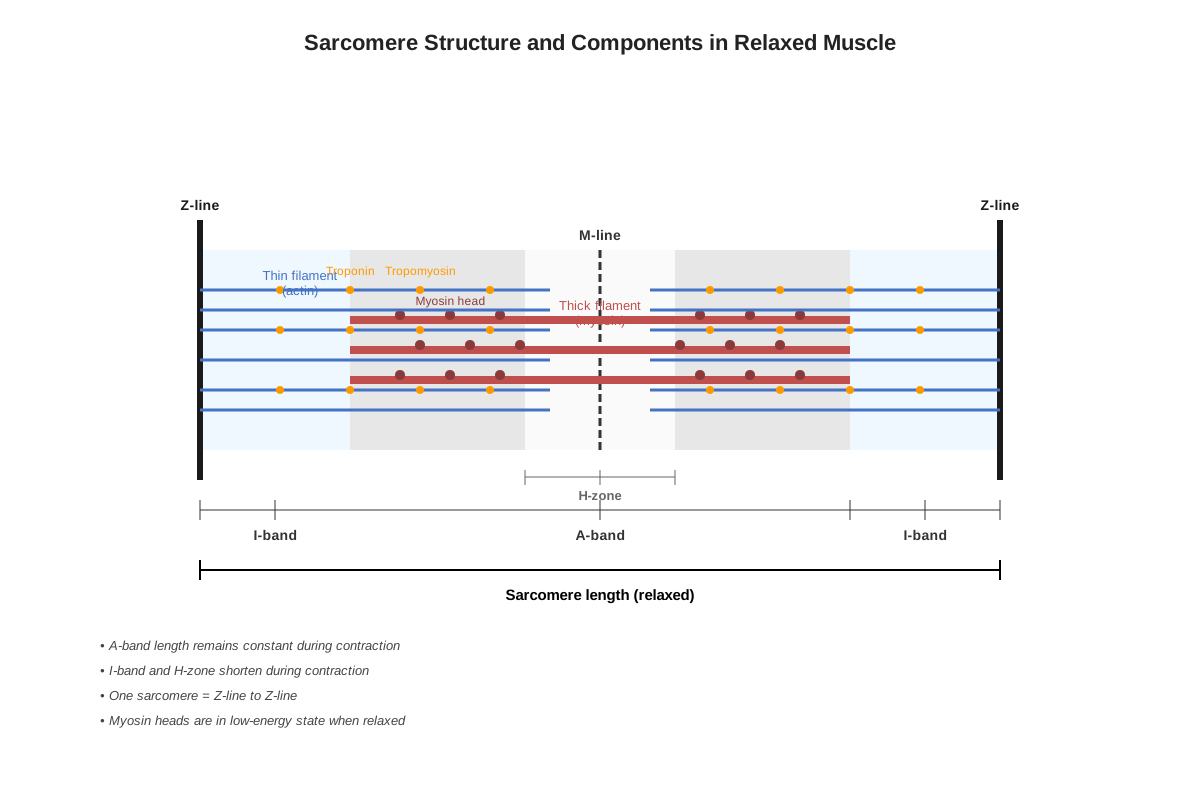
The sarcomere is the functional unit of muscle contraction, defined as the region between two adjacent Z-lines (also called Z-discs). Understanding sarcomere anatomy is essential for applying the sliding filament model:
| Structure | Composition | Appearance During Contraction |
|---|---|---|
| A-band | Entire length of thick filaments (myosin) | Remains constant width |
| I-band | Thin filaments (actin) not overlapping thick filaments | Narrows as overlap increases |
| H-zone | Region of thick filaments with no thin filament overlap | Narrows or disappears |
| M-line | Proteins connecting thick filaments at sarcomere center | Remains in center |
| Z-line | Protein disc anchoring thin filaments | Moves closer together |
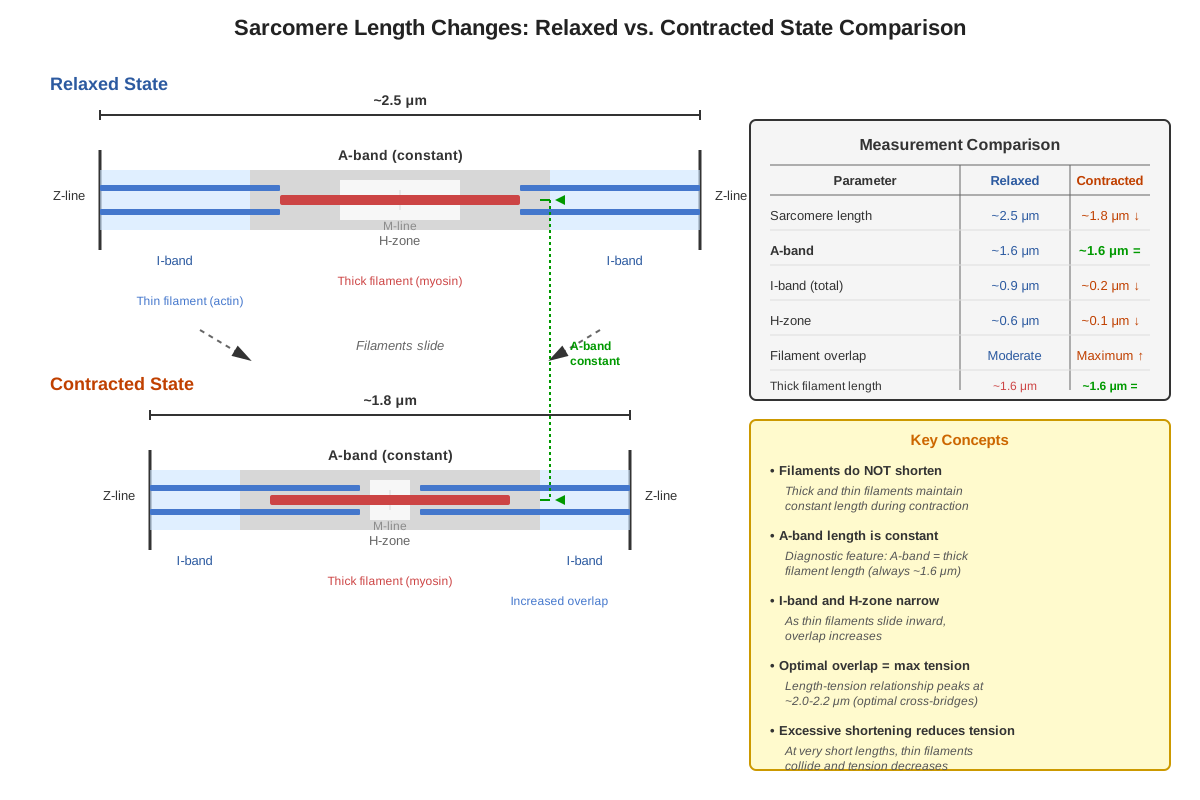
During contraction, the Z-lines move closer together, the I-bands and H-zones narrow, but the A-band width remains unchanged because the thick filaments do not shorten. This pattern of changes is diagnostic of the sliding filament mechanism and is frequently tested on the MCAT.
Molecular Components of the Contractile Apparatus
Thick filaments are composed primarily of myosin molecules, each consisting of two heavy chains wound together with globular heads projecting outward. Each myosin head contains an actin-binding site and an ATPase active site. The heads are arranged in a helical pattern around the thick filament, ensuring that cross-bridges can form at multiple points along the filament length.
Thin filaments consist of three proteins: actin, tropomyosin, and troponin. Actin monomers (G-actin) polymerize to form a double-helical filament (F-actin) with myosin-binding sites. Tropomyosin is a rod-shaped protein that lies in the groove of the actin helix, physically blocking myosin-binding sites in the relaxed state. Troponin is a complex of three subunits: troponin T (binds tropomyosin), troponin I (inhibits actin-myosin interaction), and troponin C (binds calcium ions). This regulatory system ensures that contraction only occurs when calcium is present.
The Cross-Bridge Cycle
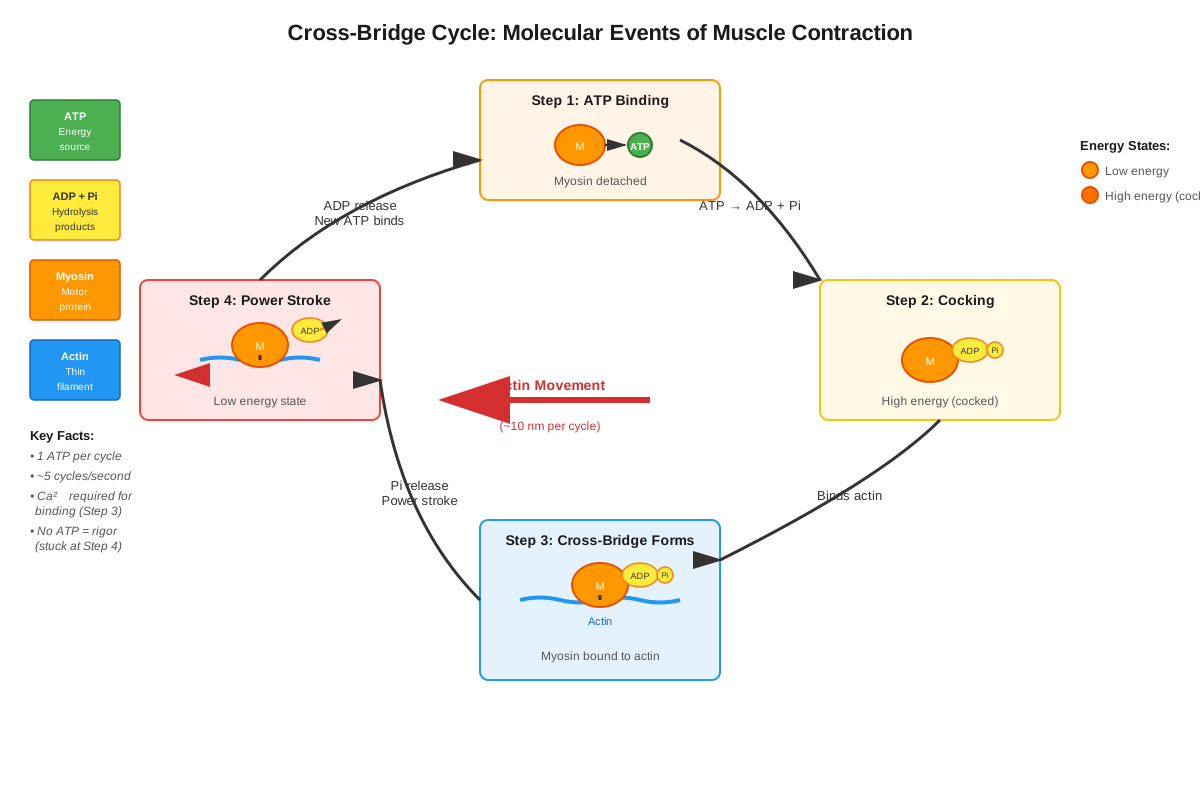
The cross-bridge cycle is the molecular mechanism underlying the sliding filament model, consisting of four distinct steps that repeat as long as ATP and calcium are available:
- Attachment (Cross-bridge formation): The myosin head, energized by ATP hydrolysis from the previous cycle, binds to an exposed actin binding site, forming a cross-bridge. At this point, ADP and inorganic phosphate (Pi) are still bound to the myosin head.
- Power stroke: The release of Pi triggers a conformational change in the myosin head, causing it to pivot and pull the actin filament toward the M-line. This is the force-generating step. ADP is released during or immediately after the power stroke. The myosin head moves approximately 10 nanometers during each power stroke.
- Detachment: A new ATP molecule binds to the myosin head, causing it to release from the actin filament. Without ATP, the myosin remains tightly bound to actin (as occurs in rigor mortis).
- Reactivation (Cocking): The myosin head hydrolyzes ATP to ADP + Pi, and the energy released causes the head to return to its "cocked" or energized position, ready to bind to a new actin site further along the filament. The cycle then repeats.
This cycle occurs asynchronously across hundreds of myosin heads within a single sarcomere, ensuring smooth, continuous force generation rather than jerky movements. Each cycle requires one ATP molecule and produces a small increment of filament sliding.
Excitation-Contraction Coupling
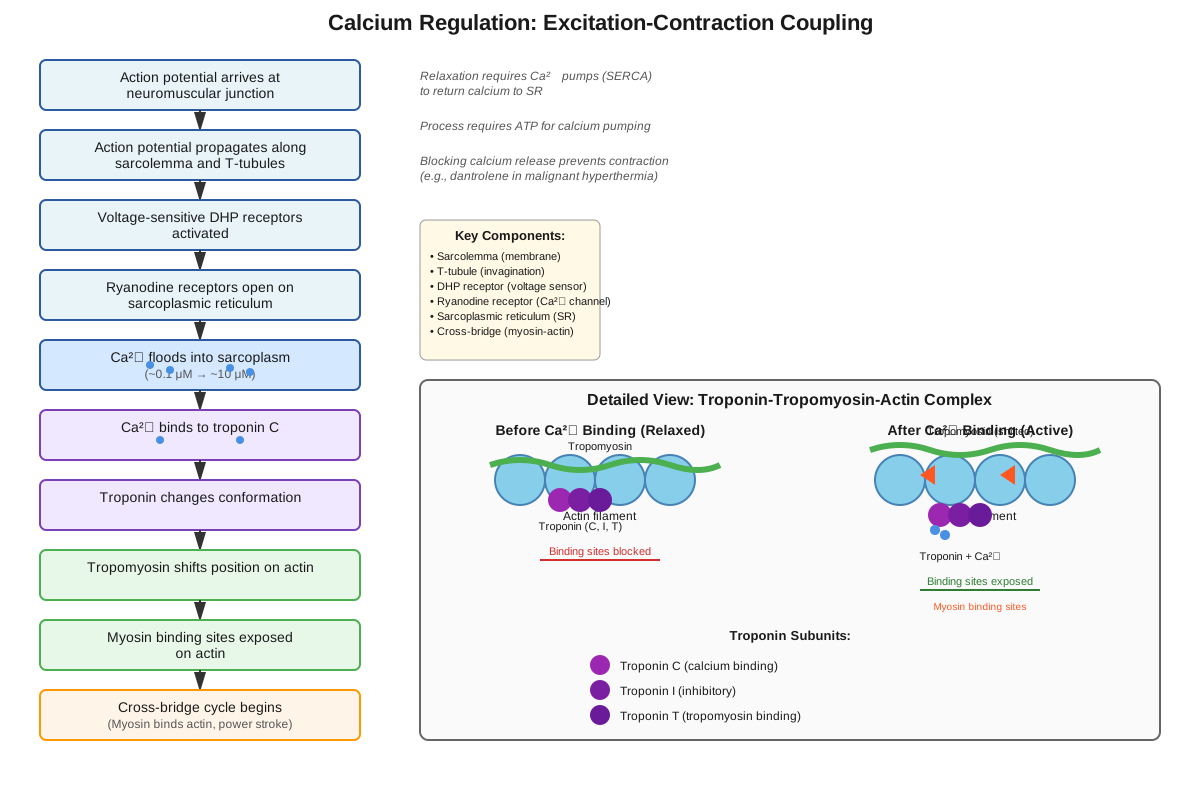
Excitation-contraction coupling is the process linking the electrical excitation of the muscle fiber membrane to the mechanical contraction via the sliding filament mechanism. This process involves several steps:
- An action potential travels along the motor neuron and triggers acetylcholine release at the neuromuscular junction
- Acetylcholine binds to receptors on the muscle fiber membrane (sarcolemma), causing depolarization
- The action potential propagates along the sarcolemma and into the T-tubules (transverse tubules), which are invaginations of the membrane that penetrate deep into the muscle fiber
- Depolarization of T-tubules activates voltage-sensitive dihydropyridine (DHP) receptors, which are mechanically coupled to ryanodine receptors on the sarcoplasmic reticulum
- Ryanodine receptors open, releasing calcium ions from the sarcoplasmic reticulum into the sarcoplasm
- Calcium binds to troponin C, causing a conformational change in the troponin complex
- This conformational change moves tropomyosin away from myosin-binding sites on actin
- With binding sites exposed, the cross-bridge cycle can proceed
Relaxation Mechanism
Muscle relaxation requires the active removal of calcium from the sarcoplasm. SERCA pumps (Sarcoplasmic/Endoplasmic Reticulum Calcium-ATPase) use ATP to pump calcium back into the sarcoplasmic reticulum against its concentration gradient. As calcium concentration decreases, calcium dissociates from troponin C, allowing tropomyosin to return to its blocking position over the myosin-binding sites on actin. Without available binding sites, cross-bridges cannot form, and the muscle relaxes. Note that relaxation is an active, ATP-requiring process, not simply a passive reversal of contraction.
Length-Tension Relationship
The length-tension relationship describes how the force a muscle can generate depends on its length at the time of stimulation. This relationship directly reflects the sliding filament model:
- Optimal length: Maximum tension occurs when there is optimal overlap between thick and thin filaments, allowing the maximum number of cross-bridges to form
- Shortened length: When the sarcomere is too short, thin filaments from opposite sides overlap in the center, and thick filaments may contact Z-lines, interfering with cross-bridge formation and reducing force
- Lengthened length: When the sarcomere is stretched, there is less overlap between thick and thin filaments, fewer cross-bridges can form, and force decreases
This relationship explains why muscles generate maximum force at intermediate lengths and is clinically relevant for understanding optimal joint angles for force production.
Concept Relationships
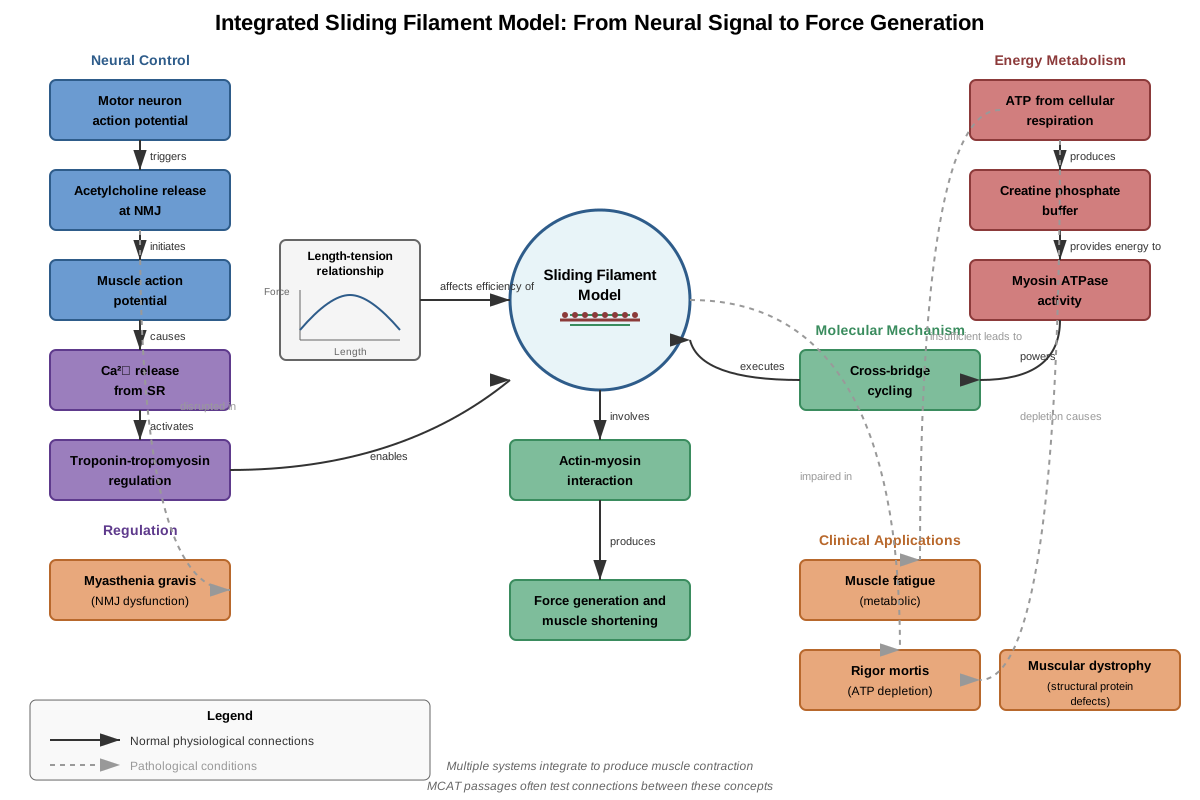
The sliding filament model integrates multiple biological concepts into a unified mechanism. At the molecular level, protein structure determines function: the specific conformations of myosin heads enable them to bind actin and undergo power strokes, while the regulatory proteins troponin and tropomyosin control access to binding sites. This exemplifies the fundamental biological principle that structure determines function.
Energy metabolism connects directly to muscle contraction through ATP. The cross-bridge cycle requires ATP for both detachment and reactivation, linking cellular respiration (glycolysis, citric acid cycle, oxidative phosphorylation) to mechanical work. During intense exercise, when ATP demand exceeds aerobic production capacity, muscles rely on creatine phosphate and anaerobic glycolysis, producing lactate—a topic frequently integrated with sliding filament model questions on the MCAT.
Signal transduction bridges the nervous and muscular systems through excitation-contraction coupling. The pathway flows: action potential → T-tubule depolarization → DHP receptor activation → ryanodine receptor opening → calcium release → troponin binding → tropomyosin movement → cross-bridge cycling. This cascade demonstrates how electrical signals convert to chemical signals (calcium) that ultimately produce mechanical force.
The relationship map can be summarized: Neural signal → Membrane depolarization → Calcium release → Regulatory protein conformational change → Cross-bridge cycling → Filament sliding → Sarcomere shortening → Muscle contraction. Each step depends on the previous one, and disruption at any point prevents normal contraction.
Quick check — test yourself on Sliding filament model so far.
Try Flashcards →High-Yield Facts
⭐ The A-band width remains constant during contraction because thick filaments do not change length; only the I-band and H-zone narrow as thin filaments slide past thick filaments.
⭐ Each cross-bridge cycle requires one ATP molecule: one ATP is needed for myosin detachment from actin, and the hydrolysis of that ATP provides energy for reactivation of the myosin head.
⭐ Calcium binding to troponin C (not tropomyosin directly) initiates contraction by causing tropomyosin to shift and expose myosin-binding sites on actin.
⭐ Rigor mortis occurs because ATP depletion prevents myosin-actin detachment, leaving muscles in a contracted state; this demonstrates that ATP is required for both contraction and relaxation.
⭐ The power stroke occurs when inorganic phosphate (Pi) is released from the myosin head, causing the conformational change that pulls the actin filament.
- The sarcomere is defined as the region between two Z-lines and is the smallest functional unit capable of contraction.
- Tropomyosin blocks myosin-binding sites on actin in the relaxed state, preventing unwanted contraction.
- SERCA pumps actively transport calcium back into the sarcoplasmic reticulum during relaxation, requiring ATP.
- The length-tension relationship shows that maximum force generation occurs at optimal sarcomere length (approximately 2.0-2.2 micrometers in skeletal muscle).
- T-tubules allow action potentials to penetrate deep into muscle fibers, ensuring nearly simultaneous calcium release throughout the fiber.
- Myosin heads are oriented in opposite directions on the two halves of the thick filament, allowing them to pull thin filaments toward the M-line from both sides.
- The neuromuscular junction uses acetylcholine as the neurotransmitter to initiate muscle fiber depolarization.
Common Misconceptions
Misconception: The filaments themselves shorten during muscle contraction.
Correction: The filaments maintain constant length; only their degree of overlap changes as they slide past one another. This is why the A-band width remains constant while the I-band and H-zone narrow.
Misconception: Calcium directly binds to actin or tropomyosin to initiate contraction.
Correction: Calcium binds specifically to troponin C, which then causes a conformational change in the troponin complex that moves tropomyosin away from myosin-binding sites on actin. This is a regulated, indirect mechanism.
Misconception: ATP is only needed for the power stroke (force generation).
Correction: ATP is actually required for myosin detachment from actin and for reactivating (cocking) the myosin head. The power stroke itself is driven by the release of inorganic phosphate from ATP that was hydrolyzed in the previous cycle. This is why ATP depletion causes rigor (inability to relax) rather than inability to contract.
Misconception: Muscle relaxation is a passive process that occurs automatically when stimulation stops.
Correction: Relaxation is an active, energy-requiring process. SERCA pumps must use ATP to transport calcium back into the sarcoplasmic reticulum against its concentration gradient. Without ATP, muscles cannot relax (as in rigor mortis).
Misconception: All sarcomeres in a muscle fiber shorten by the same amount during contraction.
Correction: While sarcomeres do shorten uniformly under ideal conditions, the length-tension relationship means that sarcomeres at different initial lengths will generate different forces. Additionally, in damaged or diseased muscle, sarcomere shortening may be non-uniform.
Misconception: The H-zone contains only myosin heads.
Correction: The H-zone is the region of the A-band where there is no overlap between thick and thin filaments. It contains the central portions of thick filaments (myosin tails) but no myosin heads are actively engaged with actin in this region. The M-line runs through the center of the H-zone.
Worked Examples
Example 1: Experimental Analysis of Sarcomere Changes
Question: Researchers use electron microscopy to measure sarcomere band widths in relaxed and maximally contracted muscle fibers. In the relaxed state, they measure: A-band = 1.6 μm, I-band = 1.0 μm, H-zone = 0.4 μm. In the maximally contracted state, they measure: A-band = 1.6 μm, I-band = 0.2 μm, H-zone = 0 μm. By how much did each sarcomere shorten, and what does this reveal about the mechanism of contraction?
Solution:
Step 1: Calculate initial sarcomere length. The sarcomere extends from one Z-line to the next. The A-band represents the full length of thick filaments (1.6 μm). The I-bands on either side of the A-band represent regions of thin filaments that don't overlap with thick filaments. Since the I-band measurement typically refers to the total I-band on one side, and there are two I-bands per sarcomere (one on each side of the A-band), we need to account for this. However, the standard approach is: Sarcomere length = A-band + 2(I-band/2) = A-band + I-band when I-band is measured as the full width on one side. Using the simpler relationship: Sarcomere length ≈ 2.6 μm in relaxed state (1.6 + 1.0).
Step 2: Calculate contracted sarcomere length: 1.6 + 0.2 = 1.8 μm.
Step 3: Calculate shortening: 2.6 - 1.8 = 0.8 μm per sarcomere.
Step 4: Interpret the findings. The A-band remained constant at 1.6 μm, indicating that thick filaments did not change length. The I-band decreased from 1.0 to 0.2 μm, and the H-zone disappeared completely, indicating that thin filaments slid further into the A-band until they overlapped completely with thick filaments. This pattern is consistent with the sliding filament model, where filaments slide past each other without changing their individual lengths.
Key takeaway: The constant A-band width is the diagnostic feature of the sliding filament model and distinguishes it from alternative theories where filaments might shorten.
Example 2: Clinical Vignette on Rigor Mortis
Question: A medical examiner notes that a deceased individual exhibits rigor mortis, with muscles that are stiff and resistant to movement. The examiner knows that rigor mortis develops several hours after death and eventually resolves after 24-48 hours. Using your knowledge of the sliding filament model, explain: (A) Why do muscles become rigid after death? (B) Why does rigor mortis eventually resolve?
Solution:
Part A: Muscle rigidity mechanism
Step 1: Identify what happens to ATP after death. Cellular respiration ceases, so ATP production stops. Existing ATP is depleted through ongoing cellular processes and ATP hydrolysis.
Step 2: Apply knowledge of the cross-bridge cycle. In the cross-bridge cycle, ATP binding to myosin is required for myosin to detach from actin. Without ATP, myosin heads that are bound to actin cannot detach.
Step 3: Consider calcium regulation. After death, membrane integrity deteriorates, and calcium leaks from the sarcoplasmic reticulum into the sarcoplasm. This calcium binds to troponin, exposing myosin-binding sites on actin.
Step 4: Synthesize the mechanism. With binding sites exposed (due to calcium) and ATP depleted (preventing detachment), myosin heads bind to actin and remain locked in place, unable to complete the cross-bridge cycle. This creates sustained cross-bridge formation throughout the muscle, causing rigidity.
Part B: Resolution of rigor mortis
Step 1: Consider what happens to proteins over time. After death, proteolytic enzymes (from lysosomes and bacteria) begin breaking down cellular structures, including the contractile proteins.
Step 2: Apply this to cross-bridges. As actin and myosin filaments are degraded by proteases, the cross-bridges are physically broken, and the rigid structure of the sarcomere deteriorates.
Step 3: Conclusion. Rigor mortis resolves not because ATP is regenerated (it isn't), but because the proteins maintaining the rigid cross-bridges are enzymatically degraded.
Key takeaway: This example demonstrates that ATP is required for muscle relaxation (detachment), not just contraction, and illustrates how the sliding filament model explains both normal physiology and post-mortem changes.
Exam Strategy
When approaching sliding filament model MCAT questions, first identify whether the question is asking about structure (sarcomere anatomy), mechanism (cross-bridge cycle), regulation (calcium and troponin/tropomyosin), or energetics (ATP requirements). Many questions will integrate multiple aspects, so mapping out the relationships between these components is essential.
Trigger words to watch for include: "sarcomere shortening" (think about which bands change), "ATP depletion" (consider effects on both contraction and relaxation), "calcium concentration" (think about troponin and regulatory proteins), "muscle length" (consider length-tension relationship), and "rigor" (remember that ATP is needed for detachment). When you see these terms, immediately activate your mental model of the relevant aspect of the sliding filament mechanism.
For process-of-elimination strategies, remember these key principles: (1) Filaments don't shorten, so eliminate any answer suggesting that actin or myosin changes length; (2) The A-band never changes width, so eliminate answers suggesting it does; (3) Calcium binds to troponin, not directly to actin or tropomyosin, so eliminate answers suggesting direct calcium-actin interaction; (4) ATP is required for relaxation, so eliminate answers suggesting that ATP depletion prevents contraction but allows relaxation.
Time allocation: For discrete questions on this topic, 60-90 seconds should suffice if you have solid conceptual understanding. For passage-based questions, spend adequate time (2-3 minutes) analyzing any figures showing sarcomere structure or experimental data on muscle contraction, as these often contain the key information needed to answer multiple questions. Don't rush through diagrams of band patterns or graphs of length-tension relationships—these visual representations are high-yield.
When facing questions that integrate the sliding filament model with other topics (metabolism, nervous system, experimental design), use the sliding filament model as your anchor concept and build outward. For example, if a passage discusses muscle fatigue during exercise, connect ATP depletion (metabolism) → impaired cross-bridge cycling (sliding filament model) → reduced force generation (physiology).
Memory Techniques
Mnemonic for cross-bridge cycle steps: "A Pretty Dog Runs"
- Attachment (cross-bridge formation)
- Power stroke (force generation)
- Detachment (ATP binds)
- Reactivation (ATP hydrolysis, cocking)
Mnemonic for troponin subunits: "TIC"
- Troponin T binds Tropomyosin
- Troponin I Inhibits contraction
- Troponin C binds Calcium
Visualization strategy for band changes: Picture a sarcomere as a railroad track with ties (Z-lines) and rails (filaments). During contraction, the ties move closer together, the space between rails narrows (I-band), and the gap in the middle shrinks (H-zone), but the rails themselves (A-band) stay the same length. This mental image helps you remember which structures change and which remain constant.
Acronym for ATP functions: "ATP = Detach, Reactivate" (DR)
Remember that ATP is required for Detachment and Reactivation, not for the power stroke itself. This helps avoid the common misconception that ATP directly powers the power stroke.
Memory aid for calcium's role: "Calcium Clears the way" - Calcium binding to troponin Clears tropomyosin away from binding sites, allowing contraction to proceed.
Summary
The sliding filament model explains muscle contraction as a process where thin actin filaments slide past thick myosin filaments without either filament changing length. This sliding is powered by the cyclical formation and breaking of cross-bridges between myosin heads and actin, with each cycle requiring ATP. The process is regulated by calcium, which binds to troponin C, causing tropomyosin to move and expose myosin-binding sites on actin. During contraction, sarcomeres shorten as Z-lines move closer together, I-bands and H-zones narrow, but A-bands remain constant in width—a diagnostic pattern of the sliding mechanism. The cross-bridge cycle consists of four steps: attachment, power stroke, detachment (requiring ATP), and reactivation (requiring ATP hydrolysis). Both contraction and relaxation are active, energy-requiring processes. Understanding this model is essential for MCAT success because it integrates molecular biology, biochemistry, and physiology, and appears frequently in passages involving muscle function, metabolism, or neuromuscular disorders.
Key Takeaways
- The sliding filament model describes muscle contraction as thin and thick filaments sliding past each other without changing their individual lengths
- The A-band width remains constant during contraction while I-bands and H-zones narrow—this is the diagnostic pattern of sliding filament mechanism
- Each cross-bridge cycle requires one ATP molecule for myosin detachment and reactivation, not for the power stroke itself
- Calcium binds to troponin C (not directly to actin or tropomyosin), triggering tropomyosin movement that exposes myosin-binding sites
- Both contraction and relaxation are active processes requiring ATP; ATP depletion prevents relaxation (causing rigor) rather than preventing contraction
- The length-tension relationship reflects the degree of thick-thin filament overlap and determines maximum force generation at optimal sarcomere length
- Excitation-contraction coupling links electrical signals to mechanical contraction through calcium release from the sarcoplasmic reticulum
Related Topics
Cardiac muscle physiology: While cardiac muscle uses the same sliding filament mechanism, it differs in calcium handling (calcium-induced calcium release), intercalated discs for cell-cell coupling, and intrinsic rhythmicity. Mastering skeletal muscle provides the foundation for understanding these cardiac-specific modifications.
Smooth muscle contraction: Smooth muscle lacks organized sarcomeres but still uses actin-myosin interactions regulated by calcium. However, the regulatory mechanism involves calmodulin and myosin light chain kinase rather than troponin/tropomyosin. Understanding the sliding filament model helps you appreciate both similarities and differences.
Neuromuscular junction and synaptic transmission: The neuromuscular junction is where neural signals initiate muscle contraction. Understanding acetylcholine release, receptor binding, and action potential generation connects directly to excitation-contraction coupling.
Cellular respiration and ATP production: Muscle contraction is one of the most ATP-intensive processes in the body. Understanding glycolysis, the citric acid cycle, and oxidative phosphorylation explains how muscles meet their energy demands and what happens during fatigue.
Protein structure and function: The sliding filament model exemplifies how protein structure determines function. The specific conformations of myosin heads, the regulatory proteins, and their interactions demonstrate fundamental biochemistry principles.
Practice CTA
Now that you've mastered the sliding filament model, reinforce your understanding by attempting practice questions and flashcards on this topic. Focus on questions that require you to apply the model to experimental scenarios, clinical vignettes, and integrated passages combining muscle physiology with other systems. The more you practice connecting the molecular details to physiological outcomes, the more confident you'll be on test day. Remember: the MCAT rewards deep conceptual understanding over rote memorization, so challenge yourself with complex, multi-step problems that mirror the exam's interdisciplinary approach. You've got this!
Sign up free to keep reading
Create a free AnvayaPrep account to finish this MCAT guide on Sliding filament model — plus flashcards and practice questions.