Overview
ATP (adenosine triphosphate) stands as the universal energy currency of all living cells, serving as the primary molecule for energy transfer in biological systems. This nucleotide triphosphate consists of an adenine base, a ribose sugar, and three phosphate groups connected by high-energy phosphate bonds. Understanding ATP is fundamental to mastering Metabolism and Biochemistry for the MCAT, as it connects virtually every metabolic pathway tested on the exam—from glycolysis and the citric acid cycle to oxidative phosphorylation and biosynthetic reactions.
The MCAT extensively tests ATP in multiple contexts: as a product of catabolic pathways, as a substrate for anabolic reactions, as a regulator of metabolic enzymes through allosteric mechanisms, and as a coupling agent that drives thermodynamically unfavorable reactions forward. Questions may appear in discrete format testing direct knowledge of ATP structure and energetics, or embedded within passage-based questions analyzing experimental data about cellular respiration, muscle contraction, or active transport mechanisms. The ability to quickly calculate energy yields from metabolic pathways and predict how ATP availability affects cellular processes distinguishes high-scoring students.
ATP Biochemistry integrates concepts from thermodynamics, enzyme kinetics, cellular respiration, and signal transduction. Mastery of ATP enables understanding of how cells harvest energy from nutrients, how energy-requiring processes are powered, and how metabolic regulation maintains cellular homeostasis. This topic serves as the foundation for understanding virtually all metabolic pathways tested on the MCAT, making it one of the highest-yield subjects in the Biochemistry section.
Learning Objectives
- [ ] Define ATP using accurate Biochemistry terminology, including its molecular structure and components
- [ ] Explain why ATP matters for the MCAT, including its role in energy coupling and metabolic regulation
- [ ] Apply ATP concepts to exam-style questions involving energy calculations and metabolic pathways
- [ ] Identify common mistakes related to ATP, particularly regarding energy values and hydrolysis reactions
- [ ] Connect ATP to related Biochemistry concepts including metabolic pathways, thermodynamics, and enzyme regulation
- [ ] Calculate the standard free energy change (ΔG°') for ATP hydrolysis and coupled reactions
- [ ] Predict how changes in ATP/ADP ratios affect metabolic pathway regulation
- [ ] Analyze experimental scenarios involving ATP synthesis and consumption in cellular processes
Prerequisites
- Basic thermodynamics: Understanding of free energy (ΔG), enthalpy, and entropy is essential for comprehending why ATP hydrolysis releases energy and how it drives unfavorable reactions
- Chemical bonding: Knowledge of covalent bonds, particularly phosphoanhydride bonds, explains the high-energy nature of ATP's phosphate groups
- Nucleotide structure: Familiarity with purines, pentose sugars, and phosphate groups provides the foundation for understanding ATP's molecular architecture
- Enzyme function: Basic enzyme kinetics and mechanisms are necessary to understand how ATP participates in enzymatic reactions
- Cellular respiration overview: General awareness of glycolysis, citric acid cycle, and electron transport chain provides context for ATP production
Why This Topic Matters
ATP represents one of the most clinically and physiologically relevant molecules in medicine. Mitochondrial diseases that impair ATP synthesis cause devastating multi-system disorders affecting high-energy-demand tissues like brain, heart, and skeletal muscle. Conditions such as myocardial ischemia during heart attacks result from inadequate ATP production, leading to cellular dysfunction and death. Cancer cells exhibit altered metabolism (the Warburg effect) with increased glycolytic ATP production even in oxygen-rich environments, a phenomenon exploited in PET scanning and targeted therapies.
On the MCAT, ATP appears in approximately 15-20% of Biochemistry questions and frequently in Biological and Biochemical Foundations passages. Questions typically test ATP in three formats: (1) discrete questions about ATP structure, energetics, or function; (2) passage-based questions analyzing experimental data about metabolic pathways and ATP yield; and (3) integrated questions connecting ATP to cellular processes like muscle contraction, active transport, or biosynthesis. The exam commonly presents scenarios requiring students to calculate net ATP production from glucose metabolism, predict effects of metabolic inhibitors on ATP levels, or explain how ATP couples favorable and unfavorable reactions.
Common passage contexts include: experimental manipulations of cellular respiration measuring oxygen consumption and ATP production; clinical vignettes describing metabolic diseases affecting ATP synthesis; research studies on exercise physiology and muscle energetics; and biochemical analyses of enzyme regulation by ATP/ADP ratios. The ability to rapidly recall ATP yield from major pathways (glycolysis: 2 net ATP; citric acid cycle: 1 GTP/ATP per turn; complete glucose oxidation: approximately 30-32 ATP) and understand energy coupling mechanisms is essential for success on test day.
Core Concepts
ATP Structure and Nomenclature
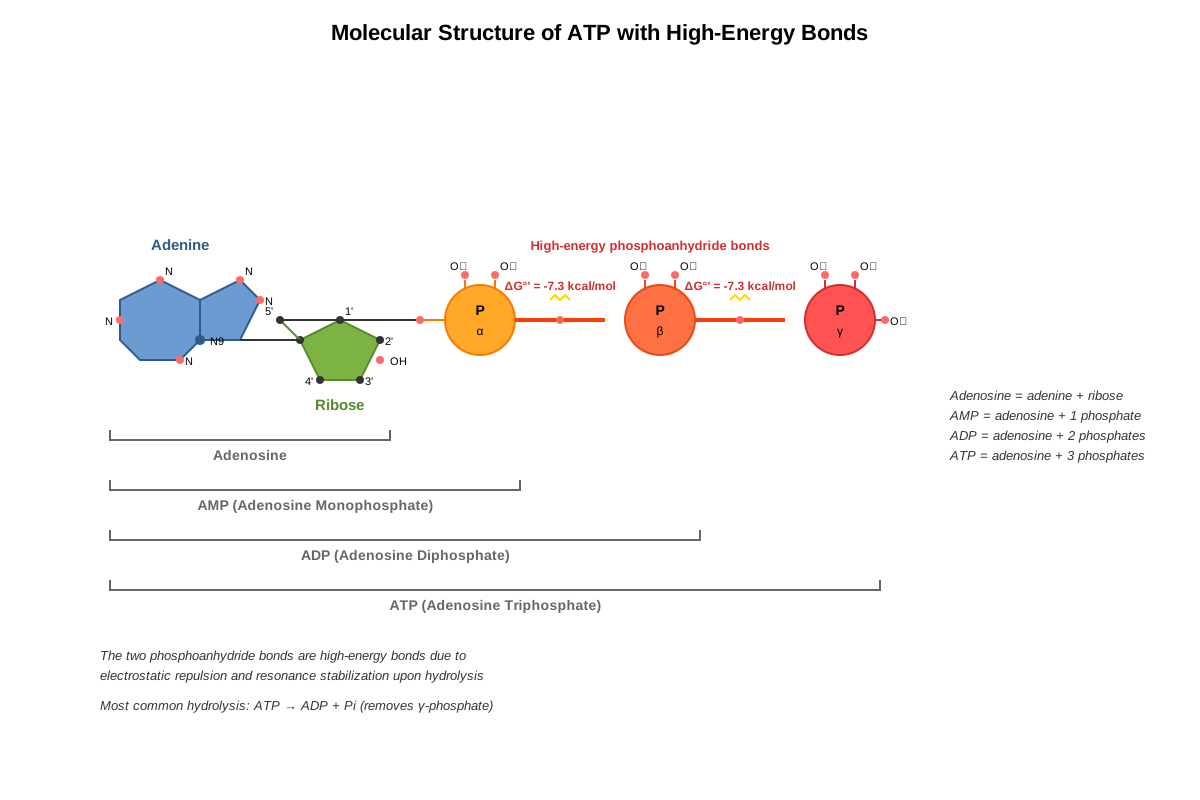
Adenosine triphosphate (ATP) consists of three distinct chemical components: an adenine base (a purine), a ribose sugar (a five-carbon pentose), and three phosphate groups designated as alpha (α), beta (β), and gamma (γ) from closest to farthest from the ribose. The adenine base connects to the 1' carbon of ribose through an N-glycosidic bond, while the phosphate chain attaches to the 5' carbon through a phosphoester bond. The combination of adenine and ribose forms adenosine, a nucleoside; adding one phosphate creates AMP (adenosine monophosphate), two phosphates create ADP (adenosine diphosphate), and three phosphates create ATP.
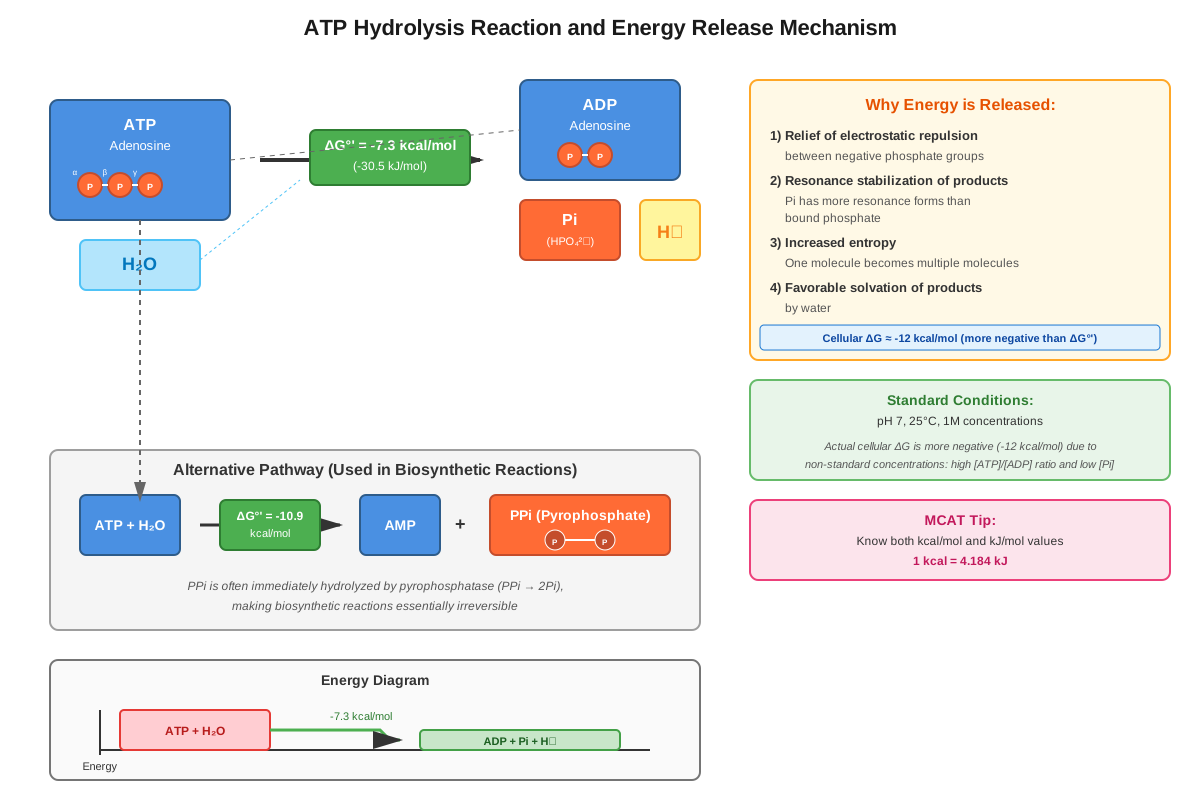
The phosphate groups connect through phosphoanhydride bonds between the α-β and β-γ phosphates. These bonds are often termed "high-energy bonds," though this terminology can be misleading—the bonds themselves are not unusually strong, but their hydrolysis releases substantial free energy due to several factors: relief of electrostatic repulsion between negatively charged phosphate groups, increased resonance stabilization of products, and favorable entropy changes. At physiological pH (7.4), ATP exists predominantly as ATP⁴⁻, with the phosphate groups carrying negative charges that create significant electrostatic repulsion.
Energetics of ATP Hydrolysis
The hydrolysis of ATP to ADP and inorganic phosphate (Pᵢ) represents the fundamental energy-releasing reaction in biochemistry:
ATP⁴⁻ + H₂O → ADP³⁻ + HPO₄²⁻ + H⁺Under standard biochemical conditions (pH 7.0, 25°C, 1 M concentrations), this reaction has a standard free energy change (ΔG°') of approximately -30.5 kJ/mol or -7.3 kcal/mol. However, under actual cellular conditions with physiological concentrations of ATP, ADP, and Pᵢ, the actual free energy change (ΔG) is typically -50 to -65 kJ/mol (-12 to -15 kcal/mol), making ATP hydrolysis even more favorable in vivo than under standard conditions.
The large negative ΔG of ATP hydrolysis arises from multiple factors:
- Electrostatic repulsion relief: The three adjacent negative charges on ATP's phosphate groups create significant repulsion; hydrolysis separates these charges, stabilizing the products
- Resonance stabilization: Inorganic phosphate (Pᵢ) and ADP have more resonance forms than ATP, distributing electrons more effectively and lowering energy
- Ionization: At physiological pH, the released phosphate can ionize, releasing H⁺ and further stabilizing the products
- Hydration: ADP and Pᵢ are more effectively hydrated by water molecules than ATP, providing additional stabilization
ATP can also undergo hydrolysis to AMP and pyrophosphate (PPᵢ):
ATP⁴⁻ + H₂O → AMP²⁻ + PPᵢ²⁻ + H⁺This reaction has a similar ΔG°' of approximately -30.5 kJ/mol. Importantly, pyrophosphate is often subsequently hydrolyzed by pyrophosphatase:
PPᵢ²⁻ + H₂O → 2 HPO₄²⁻This second hydrolysis (ΔG°' ≈ -19 kJ/mol) makes the overall process essentially irreversible, driving biosynthetic reactions forward. This two-step hydrolysis is common in DNA/RNA synthesis and amino acid activation.
ATP as Energy Currency
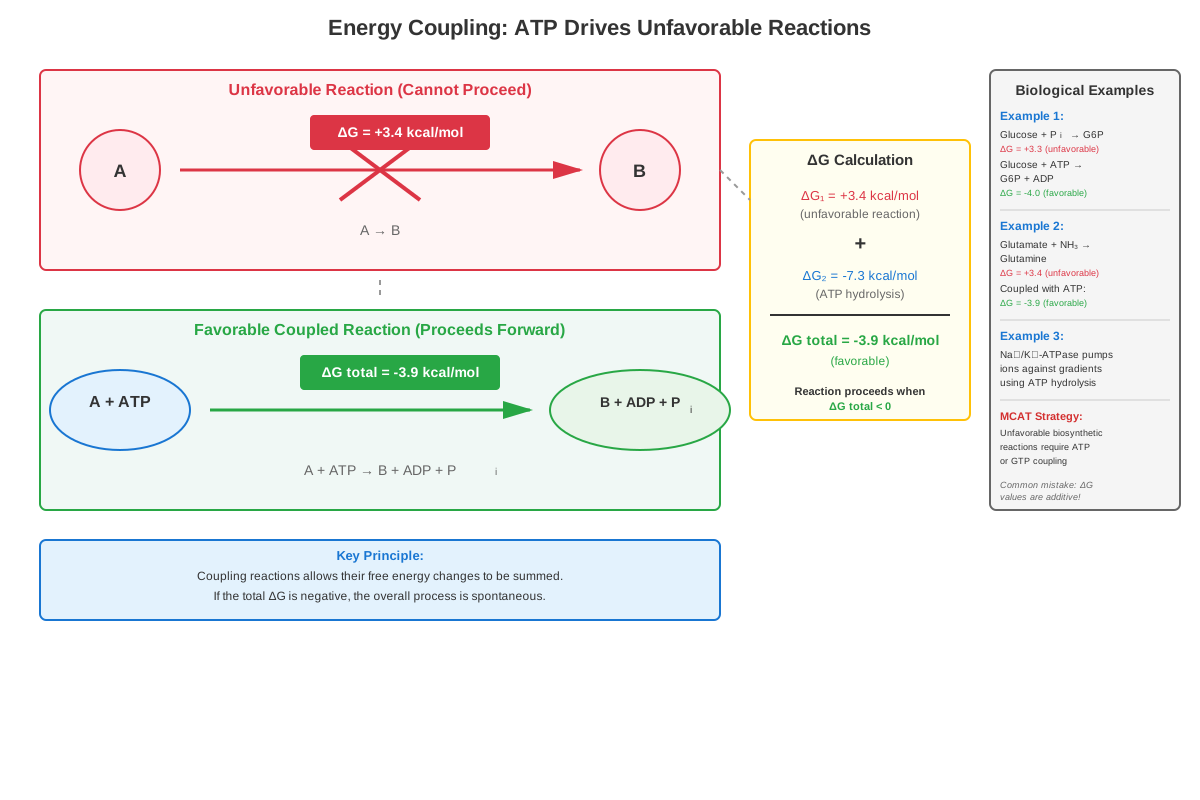
ATP functions as the cell's energy currency by coupling exergonic (energy-releasing) reactions with endergonic (energy-requiring) reactions. This coupling occurs through two primary mechanisms: direct phosphoryl transfer and conformational coupling.
In direct phosphoryl transfer, ATP donates a phosphate group to a substrate, creating a phosphorylated intermediate that is more reactive or higher in energy. For example, in the first step of glycolysis, hexokinase catalyzes:
Glucose + ATP → Glucose-6-phosphate + ADPThe phosphorylation of glucose (ΔG°' = +13.8 kJ/mol, unfavorable) is coupled with ATP hydrolysis (ΔG°' = -30.5 kJ/mol, favorable), yielding a net ΔG°' of -16.7 kJ/mol, making the overall reaction favorable. The phosphorylated glucose is trapped in the cell (cannot cross membranes) and activated for subsequent metabolism.
In conformational coupling, ATP binding or hydrolysis induces protein conformational changes that perform mechanical work. Motor proteins like myosin, kinesin, and dynein use ATP hydrolysis to change shape and generate force for muscle contraction and intracellular transport. Ion pumps like Na⁺/K⁺-ATPase use ATP hydrolysis to drive conformational changes that transport ions against concentration gradients.
ATP Production Pathways
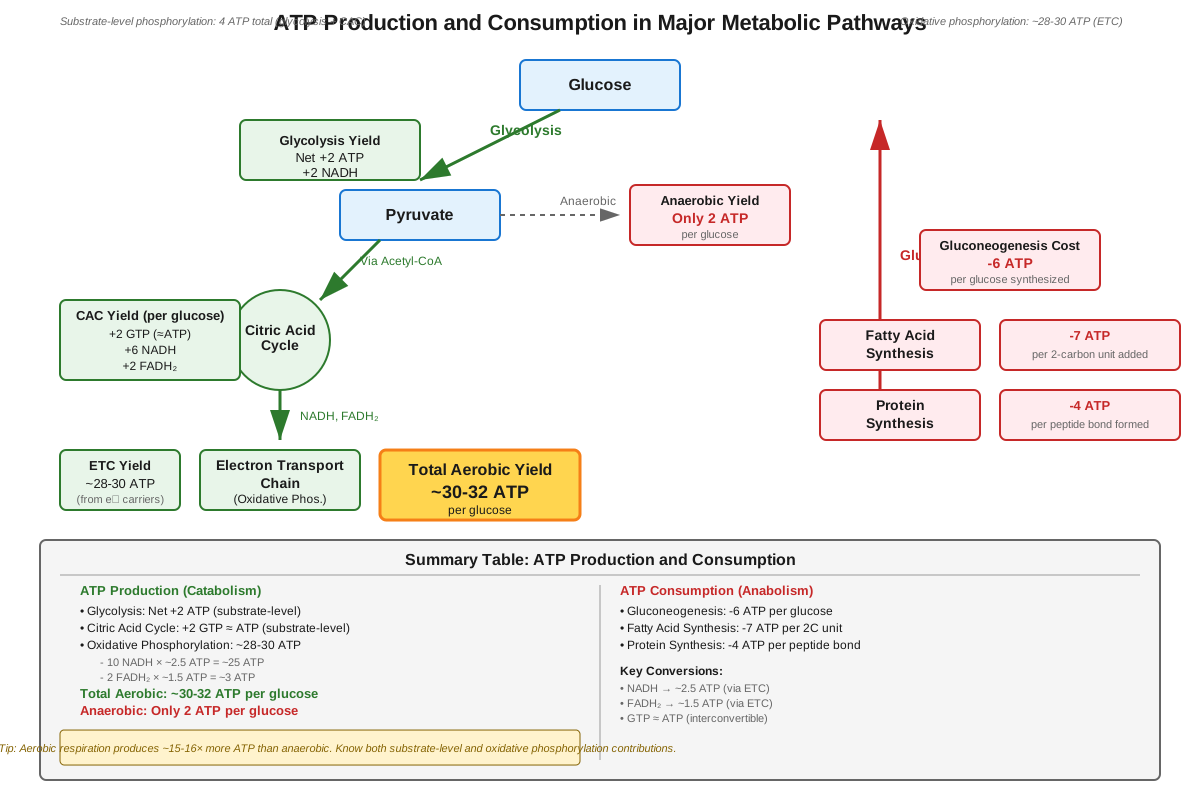
Cells generate ATP through two fundamental mechanisms: substrate-level phosphorylation and oxidative phosphorylation.
Substrate-level phosphorylation directly transfers a phosphate group from a high-energy substrate to ADP, creating ATP without requiring oxygen or an electron transport chain. This occurs at specific steps in glycolysis and the citric acid cycle:
| Pathway | Enzyme | Reaction | ATP Yield per Glucose |
|---|---|---|---|
| Glycolysis | Phosphoglycerate kinase | 1,3-BPG + ADP → 3-PG + ATP | 2 ATP |
| Glycolysis | Pyruvate kinase | PEP + ADP → Pyruvate + ATP | 2 ATP |
| Citric Acid Cycle | Succinyl-CoA synthetase | Succinyl-CoA + GDP/ADP → Succinate + GTP/ATP | 2 GTP/ATP |
Oxidative phosphorylation generates the majority of cellular ATP by coupling electron transport through the electron transport chain (ETC) to ATP synthesis via ATP synthase. As electrons flow from NADH and FADH₂ through Complexes I-IV, protons are pumped from the mitochondrial matrix into the intermembrane space, creating an electrochemical gradient (proton-motive force). ATP synthase harnesses this gradient to phosphorylate ADP to ATP as protons flow back into the matrix.
The theoretical maximum ATP yield from complete glucose oxidation is approximately 38 ATP (using the P/O ratios of 2.5 ATP per NADH and 1.5 ATP per FADH₂), but the actual yield is closer to 30-32 ATP due to:
- Energy costs of transporting ATP out of mitochondria and ADP/Pᵢ in
- Proton leak across the inner mitochondrial membrane
- Use of the proton gradient for other transport processes
ATP in Metabolic Regulation
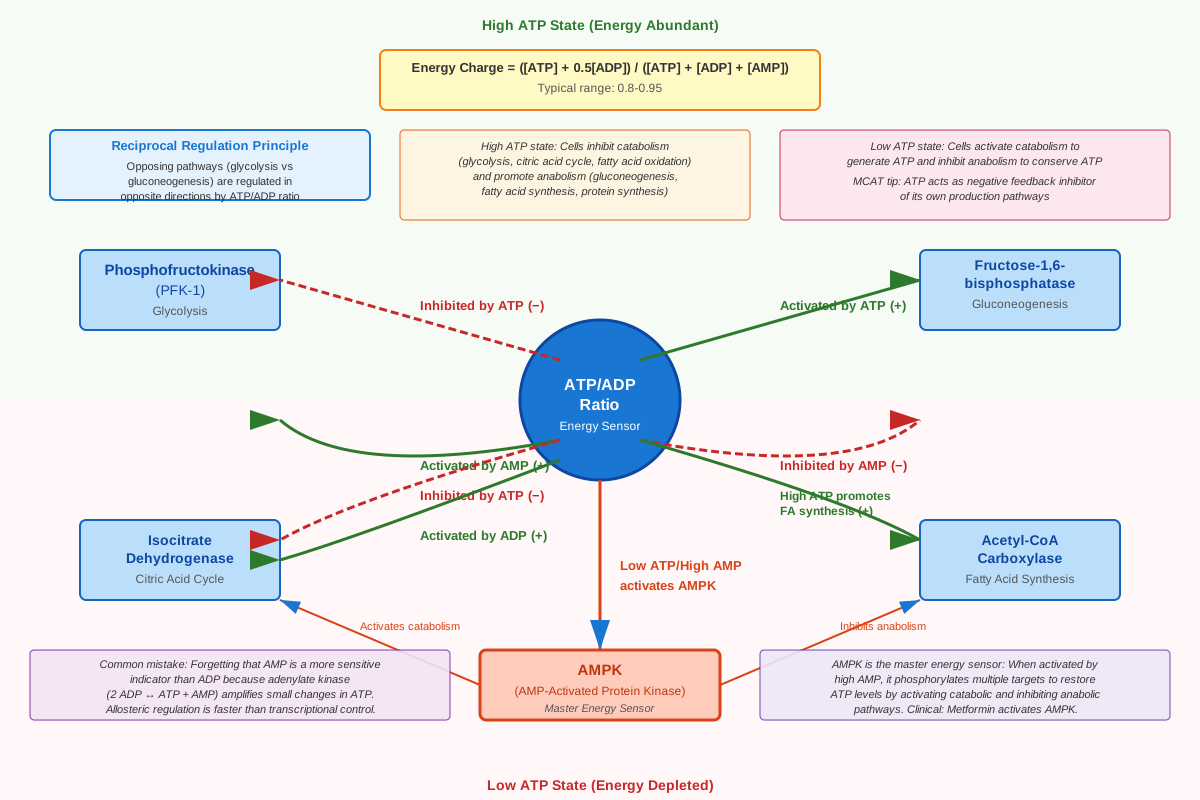
ATP serves as a critical allosteric regulator of metabolic pathways, functioning as a negative feedback signal indicating high cellular energy status. When ATP levels are high, cells slow catabolic (breakdown) pathways and may accelerate anabolic (biosynthetic) pathways. Conversely, high ADP or AMP levels signal low energy status and activate catabolic pathways.
Key regulatory enzymes controlled by ATP/ADP/AMP ratios include:
- Phosphofructokinase-1 (PFK-1): The rate-limiting enzyme of glycolysis is inhibited by ATP (negative feedback) and activated by AMP, ensuring glycolysis slows when energy is abundant
- Pyruvate dehydrogenase: Inhibited by ATP and NADH, preventing unnecessary acetyl-CoA production when energy is sufficient
- Isocitrate dehydrogenase: Inhibited by ATP and NADH in the citric acid cycle
- AMP-activated protein kinase (AMPK): Activated by high AMP/ATP ratios, this master regulator stimulates catabolic pathways (fatty acid oxidation, glycolysis) and inhibits anabolic pathways (fatty acid synthesis, protein synthesis)
The energy charge of a cell is calculated as:
Energy Charge = ([ATP] + 0.5[ADP]) / ([ATP] + [ADP] + [AMP])This value ranges from 0 (all AMP) to 1 (all ATP). Healthy cells typically maintain an energy charge of 0.8-0.95, with metabolic pathways exquisitely sensitive to small changes in this ratio.
ATP in Biosynthetic Reactions
Beyond energy provision, ATP participates directly in biosynthetic reactions as a substrate. In nucleic acid synthesis, ATP serves as both an energy source and a building block. DNA and RNA polymerases incorporate ATP (as a nucleotide triphosphate) into growing nucleic acid chains, with the release of pyrophosphate providing energy for phosphodiester bond formation.
In amino acid activation for protein synthesis, aminoacyl-tRNA synthetases catalyze:
Amino acid + ATP → Aminoacyl-AMP + PPᵢ
Aminoacyl-AMP + tRNA → Aminoacyl-tRNA + AMP
This two-step process consumes ATP to AMP (equivalent to 2 ATP → 2 ADP), ensuring accurate amino acid attachment to tRNAs. In signal transduction, ATP serves as the phosphate donor for protein kinases that phosphorylate target proteins, regulating their activity. Cyclic AMP (cAMP), synthesized from ATP by adenylyl cyclase, functions as a second messenger in numerous signaling pathways.
Concept Relationships
ATP structure directly determines its function: the phosphoanhydride bonds between phosphate groups provide the chemical basis for energy release upon hydrolysis, while the adenosine moiety allows recognition by ATP-binding proteins. This structure-function relationship underlies all ATP-dependent processes.
ATP energetics connects to thermodynamics: the large negative ΔG of ATP hydrolysis enables energy coupling, where unfavorable reactions (positive ΔG) are driven forward by coupling to ATP hydrolysis. This principle explains how cells perform work—mechanical (muscle contraction), transport (ion pumps), and chemical (biosynthesis)—all powered by the same energy currency.
ATP production pathways link to cellular respiration: glycolysis → pyruvate oxidation → citric acid cycle → electron transport chain represents a cascade where each stage generates ATP (substrate-level phosphorylation) or reducing equivalents (NADH, FADH₂) that ultimately produce ATP (oxidative phosphorylation). Understanding this flow is essential for calculating total ATP yield from nutrients.
ATP regulation connects to metabolic control: high ATP/ADP ratios signal energy sufficiency, inhibiting catabolic pathways through negative feedback while potentially activating anabolic pathways. This reciprocal regulation maintains energy homeostasis and prevents futile cycling where opposing pathways run simultaneously.
The relationship map: Nutrient oxidation → NADH/FADH₂ production → Electron transport chain → Proton gradient → ATP synthesis → Energy for cellular work → ADP + Pᵢ → Recycled for ATP synthesis. This cycle continuously regenerates ATP, with the average ATP molecule being recycled approximately 500-750 times per day in human cells.
Quick check — test yourself on ATP so far.
Try Flashcards →High-Yield Facts
⭐ ATP hydrolysis to ADP + Pᵢ has a ΔG°' of approximately -30.5 kJ/mol (-7.3 kcal/mol), but cellular ΔG is typically -50 to -65 kJ/mol due to non-standard concentrations
⭐ Complete oxidation of one glucose molecule yields approximately 30-32 ATP through glycolysis, citric acid cycle, and oxidative phosphorylation combined
⭐ Substrate-level phosphorylation produces 4 ATP directly in glycolysis (2 net after subtracting the 2 ATP invested) and 2 GTP/ATP in the citric acid cycle per glucose
⭐ Each NADH generates approximately 2.5 ATP through oxidative phosphorylation, while each FADH₂ generates approximately 1.5 ATP
⭐ ATP functions as a negative feedback inhibitor of phosphofructokinase-1 (PFK-1), the rate-limiting enzyme of glycolysis
- ATP consists of adenine (purine base), ribose (pentose sugar), and three phosphate groups connected by phosphoanhydride bonds
- The phosphoanhydride bonds between β-γ and α-β phosphates are considered "high-energy" due to electrostatic repulsion relief and product stabilization upon hydrolysis
- ATP hydrolysis to AMP + PPᵢ followed by pyrophosphate hydrolysis (ΔG°' ≈ -50 kJ/mol total) drives biosynthetic reactions essentially irreversibly
- AMP-activated protein kinase (AMPK) is activated by high AMP/ATP ratios and serves as a master regulator stimulating catabolism and inhibiting anabolism
- ATP serves multiple roles: energy currency, phosphate donor, allosteric regulator, substrate for nucleic acid synthesis, and precursor for signaling molecules (cAMP)
- The energy charge equation ([ATP] + 0.5[ADP])/([ATP] + [ADP] + [AMP]) typically ranges from 0.8-0.95 in healthy cells
- Oxidative phosphorylation produces approximately 26-28 ATP per glucose, representing about 90% of total ATP yield from glucose
- ATP binding and hydrolysis drive conformational changes in motor proteins (myosin, kinesin) and transport proteins (Na⁺/K⁺-ATPase)
Common Misconceptions
Misconception: ATP's phosphate bonds are uniquely strong, which is why they store so much energy.
Correction: ATP's phosphoanhydride bonds are actually not unusually strong. The large energy release upon hydrolysis results from the products (ADP and Pᵢ) being much more stable than ATP due to reduced electrostatic repulsion, increased resonance stabilization, and better hydration—not from breaking an exceptionally strong bond.
Misconception: All ATP in cells is produced by oxidative phosphorylation in mitochondria.
Correction: While oxidative phosphorylation produces the majority (~90%) of ATP in aerobic conditions, substrate-level phosphorylation in glycolysis and the citric acid cycle also generates ATP. Additionally, red blood cells lack mitochondria and rely entirely on glycolytic ATP production, and during anaerobic conditions (intense exercise), glycolysis becomes the primary ATP source.
Misconception: The theoretical maximum of 38 ATP per glucose is what cells actually produce.
Correction: The actual ATP yield is approximately 30-32 ATP per glucose due to energy costs of transporting molecules across mitochondrial membranes, proton leak across the inner membrane, and use of the proton gradient for other cellular processes. The theoretical maximum assumes perfect efficiency that doesn't occur in living cells.
Misconception: ATP hydrolysis always releases exactly 7.3 kcal/mol of energy regardless of conditions.
Correction: The value -7.3 kcal/mol (or -30.5 kJ/mol) is the standard free energy change (ΔG°') under standard biochemical conditions (pH 7.0, 25°C, 1 M concentrations). The actual free energy change (ΔG) in cells is typically -12 to -15 kcal/mol due to non-standard concentrations of ATP, ADP, and Pᵢ, making ATP hydrolysis even more favorable in vivo.
Misconception: ADP is simply a depleted form of ATP with no regulatory function.
Correction: ADP is not merely an ATP precursor but an important signaling molecule. High ADP levels indicate low energy status and activate key metabolic enzymes. The ADP/ATP ratio is a critical regulatory parameter, and ADP itself can bind to and regulate enzymes differently than ATP. Additionally, adenylate kinase interconverts ATP, ADP, and AMP (2 ADP ↔ ATP + AMP), making all three adenine nucleotides part of an integrated regulatory system.
Misconception: ATP is only used for energy; it has no other cellular functions.
Correction: Beyond energy provision, ATP serves as: (1) a substrate for nucleic acid synthesis, (2) a phosphate donor in signaling cascades (protein kinases), (3) an allosteric regulator of metabolic enzymes, (4) a precursor for second messengers like cAMP, and (5) a component of enzyme cofactors like coenzyme A and NAD⁺. ATP's roles extend far beyond simple energy currency.
Misconception: Glycolysis produces 4 net ATP per glucose molecule.
Correction: Glycolysis produces 4 ATP through substrate-level phosphorylation but consumes 2 ATP in the energy investment phase (hexokinase and phosphofructokinase-1 reactions), yielding a net production of only 2 ATP per glucose. This is a commonly tested calculation error on the MCAT.
Worked Examples
Example 1: Energy Coupling Calculation
Question: In the first step of glycolysis, glucose is phosphorylated to glucose-6-phosphate. The direct phosphorylation of glucose has a ΔG°' of +13.8 kJ/mol. Given that ATP hydrolysis has a ΔG°' of -30.5 kJ/mol, calculate the ΔG°' for the coupled reaction catalyzed by hexokinase. Is this reaction favorable under standard conditions? What principle does this illustrate?
Solution:
Step 1: Write out the individual reactions.
- Glucose + Pᵢ → Glucose-6-phosphate + H₂O (ΔG°' = +13.8 kJ/mol)
- ATP + H₂O → ADP + Pᵢ (ΔG°' = -30.5 kJ/mol)
Step 2: Add the reactions together (the Pᵢ and H₂O cancel).
- Glucose + ATP → Glucose-6-phosphate + ADP
Step 3: Calculate the overall ΔG°' by adding the individual ΔG°' values.
- ΔG°'(overall) = (+13.8 kJ/mol) + (-30.5 kJ/mol) = -16.7 kJ/mol
Step 4: Interpret the result.
Since ΔG°' is negative (-16.7 kJ/mol), the coupled reaction is thermodynamically favorable under standard conditions and will proceed spontaneously.
Principle illustrated: This demonstrates energy coupling, where an unfavorable reaction (positive ΔG°') is driven forward by coupling it to a favorable reaction (negative ΔG°'). ATP hydrolysis provides sufficient energy to overcome the unfavorable phosphorylation of glucose, with energy to spare. This is the fundamental mechanism by which ATP powers endergonic cellular processes. The MCAT frequently tests this concept by asking students to calculate net ΔG values for coupled reactions or predict whether a reaction will proceed based on ATP coupling.
Example 2: ATP Yield Calculation from Metabolic Pathways
Question: A researcher is studying cellular metabolism and wants to calculate the maximum ATP yield from one molecule of pyruvate that enters the mitochondria and is completely oxidized through the citric acid cycle and oxidative phosphorylation. Assume the malate-aspartate shuttle is used for cytoplasmic NADH, and use the P/O ratios of 2.5 ATP per NADH and 1.5 ATP per FADH₂. Show all steps in your calculation.
Solution:
Step 1: Account for pyruvate oxidation to acetyl-CoA.
- Pyruvate + CoA + NAD⁺ → Acetyl-CoA + CO₂ + NADH
- This produces 1 NADH → 2.5 ATP
Step 2: Account for one turn of the citric acid cycle (one acetyl-CoA).
- Isocitrate → α-ketoglutarate: 1 NADH → 2.5 ATP
- α-ketoglutarate → Succinyl-CoA: 1 NADH → 2.5 ATP
- Succinyl-CoA → Succinate: 1 GTP (equivalent to ATP) → 1 ATP
- Succinate → Fumarate: 1 FADH₂ → 1.5 ATP
- Malate → Oxaloacetate: 1 NADH → 2.5 ATP
Step 3: Sum the ATP from the citric acid cycle.
- Total from citric acid cycle: (3 NADH × 2.5) + (1 FADH₂ × 1.5) + 1 GTP
- = 7.5 + 1.5 + 1 = 10 ATP
Step 4: Add ATP from pyruvate oxidation.
- Total ATP per pyruvate = 2.5 (from pyruvate oxidation) + 10 (from citric acid cycle)
- = 12.5 ATP per pyruvate
Key insights: This calculation demonstrates that the citric acid cycle and oxidative phosphorylation generate the vast majority of ATP from glucose metabolism. Since one glucose produces two pyruvates, the total from these stages would be 25 ATP (2 × 12.5), compared to only 2 net ATP from glycolysis. The MCAT commonly tests ATP yield calculations, expecting students to track NADH and FADH₂ production through pathways and convert them to ATP equivalents. Common errors include forgetting the GTP from succinyl-CoA synthetase, using incorrect P/O ratios, or failing to account for the pyruvate dehydrogenase step.
Exam Strategy
When approaching MCAT questions on ATP, first identify the question type: structural (asking about ATP components), energetic (involving ΔG calculations), metabolic (pathway ATP yields), or regulatory (allosteric effects). Each type requires a different approach.
Trigger words and phrases to watch for:
- "Energy currency" or "universal energy carrier" → ATP
- "High-energy phosphate bond" → phosphoanhydride bonds between ATP's phosphates
- "Substrate-level phosphorylation" → direct ATP synthesis in glycolysis or citric acid cycle
- "Oxidative phosphorylation" → ATP synthesis via ATP synthase using the proton gradient
- "Coupled reaction" → unfavorable reaction driven by ATP hydrolysis
- "Allosteric inhibitor" in glycolysis context → likely ATP inhibiting PFK-1
- "Energy charge" → ratio involving ATP, ADP, and AMP concentrations
Process-of-elimination strategies:
- For ATP yield questions, immediately eliminate answers suggesting glycolysis produces more ATP than oxidative phosphorylation—this is biochemically impossible
- If a question asks about ATP's role and an answer choice suggests it only provides energy, eliminate it—ATP has multiple functions
- For thermodynamics questions, remember that coupling to ATP hydrolysis makes ΔG more negative; eliminate answers suggesting the opposite
- When evaluating metabolic regulation, eliminate choices suggesting ATP activates catabolic pathways—ATP typically inhibits them through negative feedback
Time allocation advice: ATP calculations (especially pathway yields) can be time-consuming. If a passage presents a complex metabolic scenario requiring detailed ATP accounting, consider flagging it and returning after completing quicker questions. However, if you've memorized key values (2 net ATP from glycolysis, 2 GTP from citric acid cycle, ~26-28 from oxidative phosphorylation), you can often estimate answers quickly. For coupled reaction ΔG calculations, the math is straightforward addition—don't overthink it.
Passage analysis tips: When ATP appears in experimental passages, pay attention to: (1) manipulations affecting oxygen availability (impacts oxidative phosphorylation), (2) metabolic inhibitors and their sites of action, (3) measurements of ATP/ADP ratios as indicators of cellular energy status, and (4) tissues with high energy demands (brain, heart, muscle) that are particularly sensitive to ATP depletion. Often, the passage will provide data, and questions will ask you to interpret how changes affect ATP production or consumption.
Memory Techniques
Mnemonic for ATP structure components: "APR" - Adenine, Phosphates (three), Ribose. This reminds you of the three essential components in order from top to bottom of the molecule.
Mnemonic for substrate-level phosphorylation in glycolysis: "Please, Please Give ATP" - Phosphoglycerate kinase, Pyruvate kinase, Give ATP. These are the two enzymes that directly produce ATP in glycolysis (2 ATP each, for 4 total).
Mnemonic for factors making ATP hydrolysis favorable: "ERIH" - Electrostatic repulsion relief, Resonance stabilization, Ionization, Hydration. These four factors explain why ATP hydrolysis releases substantial energy.
Visualization strategy for energy coupling: Picture ATP as a "charged battery" that can power an "uphill" reaction. When ATP is hydrolyzed (battery discharges), it releases energy that pushes an unfavorable reaction forward. The coupled reaction is like using a battery to power a motor that lifts a weight uphill—the battery's energy overcomes gravity. This mental image helps remember that ATP coupling makes thermodynamically unfavorable reactions proceed.
Acronym for ATP's multiple roles: "PARSE" - Phosphate donor, Allosteric regulator, Regulatory signaling (cAMP precursor), Substrate for synthesis (nucleic acids), Energy currency. This reminds you that ATP does much more than just provide energy.
Number memory for ATP yields: Remember "2-2-26" for glucose oxidation: 2 net ATP from glycolysis, 2 GTP/ATP from citric acid cycle (both turns), and approximately 26 ATP from oxidative phosphorylation of all NADH and FADH₂. This sums to approximately 30 ATP total, which is the realistic cellular yield.
Conceptual anchor for ATP regulation: "ATP is the 'stop' signal for catabolism." When ATP is abundant, cells don't need to break down more nutrients, so ATP inhibits rate-limiting enzymes in glycolysis (PFK-1) and the citric acid cycle. Conversely, AMP is the "go" signal that activates catabolism when energy is low.
Summary
ATP (adenosine triphosphate) serves as the universal energy currency in biological systems, consisting of adenine, ribose, and three phosphate groups connected by high-energy phosphoanhydride bonds. The hydrolysis of ATP to ADP and inorganic phosphate releases approximately -30.5 kJ/mol under standard conditions (ΔG°'), but -50 to -65 kJ/mol under cellular conditions (ΔG), providing energy to drive unfavorable reactions through coupling mechanisms. Cells produce ATP through substrate-level phosphorylation (glycolysis and citric acid cycle) and oxidative phosphorylation (electron transport chain and ATP synthase), with complete glucose oxidation yielding approximately 30-32 ATP. ATP functions not only as an energy source but also as an allosteric regulator of metabolic enzymes, a phosphate donor in signaling cascades, a substrate for biosynthesis, and a precursor for second messengers. The ATP/ADP/AMP ratio serves as a critical indicator of cellular energy status, with high ATP levels inhibiting catabolic pathways through negative feedback and low ATP (high AMP) levels activating them. Mastery of ATP structure, energetics, production pathways, and regulatory roles is essential for understanding metabolism and succeeding on MCAT Biochemistry questions.
Key Takeaways
- ATP consists of adenine, ribose, and three phosphate groups; its hydrolysis releases substantial free energy (ΔG°' ≈ -30.5 kJ/mol, cellular ΔG ≈ -50 to -65 kJ/mol) due to electrostatic repulsion relief and product stabilization
- Complete glucose oxidation yields approximately 30-32 ATP: 2 net from glycolysis, 2 from citric acid cycle, and 26-28 from oxidative phosphorylation
- ATP couples unfavorable reactions to favorable ones by direct phosphoryl transfer or conformational changes, enabling cells to perform chemical, mechanical, and transport work
- ATP serves multiple cellular roles beyond energy provision: allosteric regulator, phosphate donor, biosynthetic substrate, and signaling molecule precursor
- High ATP/ADP ratios signal energy sufficiency and inhibit catabolic pathways (negative feedback on PFK-1, pyruvate dehydrogenase, isocitrate dehydrogenase), while high AMP/ATP ratios activate catabolism through AMPK
- Substrate-level phosphorylation produces ATP directly in glycolysis and citric acid cycle, while oxidative phosphorylation generates the majority of ATP using the proton gradient
- The energy charge equation ([ATP] + 0.5[ADP])/([ATP] + [ADP] + [AMP]) typically ranges from 0.8-0.95 in healthy cells, reflecting tight metabolic regulation
Related Topics
Glycolysis: Understanding ATP production and consumption in this pathway (2 ATP invested, 4 produced, 2 net) provides the foundation for calculating total glucose energy yield. Mastering ATP's role here enables progression to more complex metabolic integration.
Citric Acid Cycle (Krebs Cycle): This pathway generates 1 GTP/ATP per turn through substrate-level phosphorylation and produces NADH and FADH₂ that fuel oxidative phosphorylation. ATP concepts learned here connect directly to understanding complete nutrient oxidation.
Electron Transport Chain and Oxidative Phosphorylation: This topic builds on ATP by explaining how the proton gradient drives ATP synthase to produce the majority of cellular ATP. Understanding ATP energetics is prerequisite to comprehending chemiosmotic coupling.
Metabolic Regulation: ATP's role as an allosteric regulator extends to understanding reciprocal regulation of glycolysis/gluconeogenesis, fed/fasted states, and hormonal control of metabolism. Mastering ATP regulation enables prediction of metabolic responses to physiological changes.
Thermodynamics in Biological Systems: ATP hydrolysis exemplifies key thermodynamic principles including free energy, spontaneity, and coupling of reactions. This topic deepens understanding of why ATP is such an effective energy currency.
Enzyme Kinetics and Regulation: ATP participates in allosteric regulation, competitive inhibition, and covalent modification (as phosphate donor). Understanding ATP's regulatory roles requires integration with enzyme regulation mechanisms.
Practice CTA
Now that you've mastered the core concepts of ATP structure, energetics, production, and regulation, it's time to reinforce your understanding through active practice. Complete the associated practice questions to test your ability to calculate ATP yields, predict regulatory effects, and apply energy coupling principles to novel scenarios. Work through the flashcards to solidify high-yield facts and ensure rapid recall of key values like ΔG°' for ATP hydrolysis and ATP production from major pathways. Remember, ATP appears in approximately 15-20% of MCAT Biochemistry questions—your investment in mastering this topic will pay dividends across multiple passages and discrete questions on test day. You've built a strong foundation; now apply it to achieve your target score!
Sign up free to keep reading
Create a free AnvayaPrep account to finish this MCAT guide on ATP — plus flashcards and practice questions.