Overview
Somatosensation refers to the sensory system responsible for processing information about touch, temperature, pain, and body position. This complex system allows organisms to perceive and respond to stimuli from both the external environment and internal bodily states. Within the context of Psychology and the broader framework of Sensation and Perception, somatosensation represents one of the fundamental ways humans gather information about their world and maintain homeostasis. The somatosensory system encompasses multiple receptor types distributed throughout the skin, muscles, joints, and internal organs, each specialized to detect specific stimulus modalities and transmit this information through distinct neural pathways to the brain for processing and interpretation.
For the MCAT, understanding somatosensation is essential because it bridges multiple disciplines tested on the exam, including psychology, biology, and neuroscience. Questions frequently require students to integrate knowledge of receptor physiology, neural pathways, brain anatomy, and perceptual processing. The topic appears in both passage-based and discrete questions, often requiring application of concepts to clinical scenarios involving sensory deficits, pain management, or neurological disorders. Mastery of Somatosensation MCAT content enables students to tackle questions about sensory transduction, neural coding, perceptual adaptation, and the relationship between physical stimuli and subjective experience.
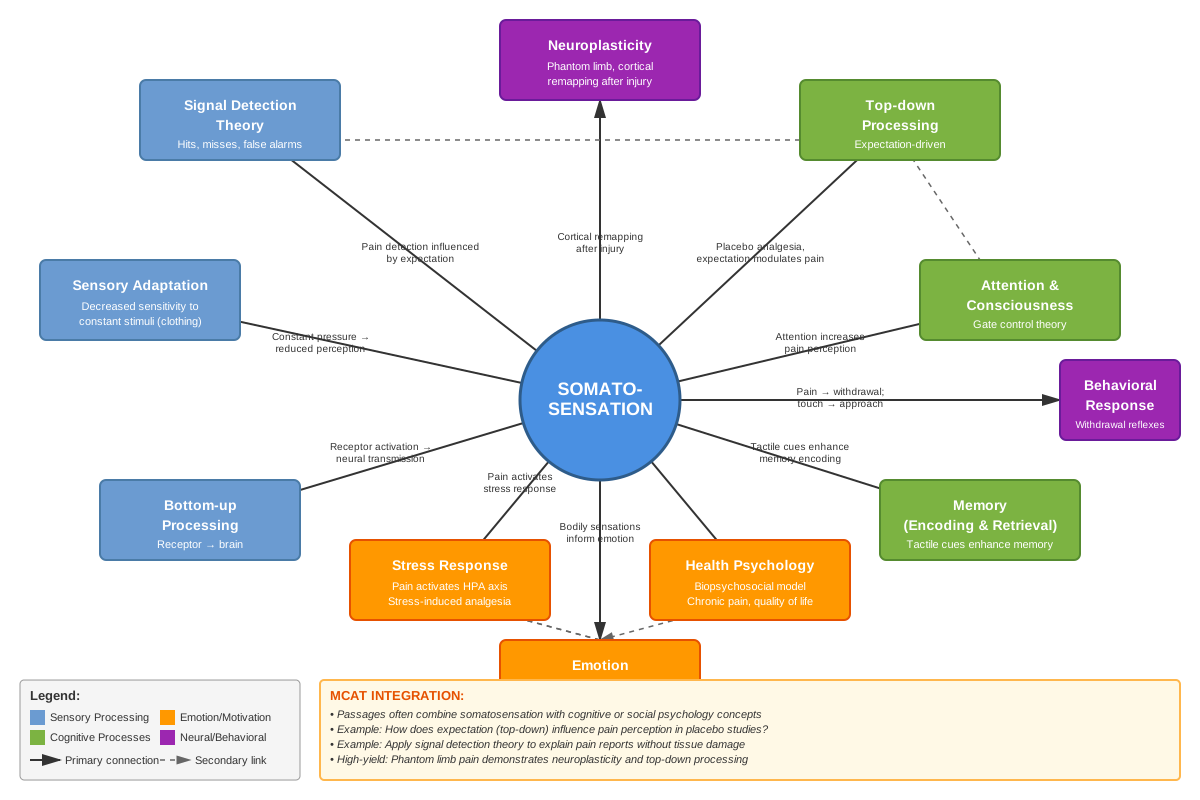
Somatosensation connects intimately with other Psychology concepts including sensory adaptation, signal detection theory, bottom-up and top-down processing, and the broader understanding of how perception shapes behavior and cognition. The system demonstrates key principles of neural organization, including receptive fields, lateral inhibition, and cortical mapping. Understanding somatosensation also provides insight into pain perception, which has significant implications for understanding stress responses, emotion, and health psychology—all high-yield areas for MCAT preparation.
Learning Objectives
- [ ] Define Somatosensation using accurate Psychology terminology
- [ ] Explain why Somatosensation matters for the MCAT
- [ ] Apply Somatosensation to exam-style questions
- [ ] Identify common mistakes related to Somatosensation
- [ ] Connect Somatosensation to related Psychology concepts
- [ ] Distinguish between different types of somatosensory receptors and their specific functions
- [ ] Trace the neural pathways from peripheral receptors to cortical processing areas
- [ ] Analyze how gate control theory explains pain modulation
- [ ] Compare and contrast the dorsal column-medial lemniscal pathway with the spinothalamic tract
Prerequisites
- Basic neuroanatomy: Understanding brain structures (thalamus, cortex, brainstem) is essential for tracing somatosensory pathways
- Action potential physiology: Knowledge of how neurons generate and propagate electrical signals underlies receptor transduction mechanisms
- Sensory transduction principles: General understanding of how physical stimuli convert to neural signals applies across all sensory systems
- Receptor types and classification: Familiarity with mechanoreceptors, thermoreceptors, and nociceptors provides the foundation for somatosensory specificity
- Cortical organization: Basic knowledge of brain mapping and functional localization helps explain somatotopic representation
Why This Topic Matters
Somatosensation has profound clinical significance across multiple medical specialties. Neurologists assess somatosensory function to localize lesions and diagnose conditions ranging from peripheral neuropathy to stroke. Pain management, a critical aspect of patient care, requires understanding nociception and pain modulation mechanisms. Conditions like phantom limb pain, complex regional pain syndrome, and sensory processing disorders all involve somatosensory dysfunction. The ability to assess and interpret sensory deficits represents a fundamental clinical skill that begins with understanding normal somatosensory function.
On the MCAT, somatosensation appears with moderate frequency, typically in 2-4 questions per exam. Questions most commonly test receptor types and their adequate stimuli, the distinction between different sensory pathways, and the application of concepts like two-point discrimination and sensory adaptation. The topic frequently appears in passage-based questions that present experimental data about sensory thresholds, clinical vignettes describing neurological deficits, or research scenarios investigating pain perception. Discrete questions often test straightforward recall of receptor types or pathway anatomy but may also require application to novel scenarios.
Common MCAT passage contexts include studies examining tactile acuity across different body regions, experiments manipulating pain perception through various interventions, neuroimaging studies showing cortical activation patterns during sensory stimulation, and clinical cases describing sensory symptoms following injury or disease. Understanding somatosensation enables students to interpret graphs showing receptor adaptation rates, analyze data about sensory thresholds, and apply knowledge of neural pathways to predict deficits following specific lesions.
Core Concepts
Definition and Scope of Somatosensation
Somatosensation encompasses all sensory information arising from receptors distributed throughout the body, excluding the special senses (vision, hearing, taste, smell, and vestibular function). The term derives from "soma" (body) and includes four primary modalities: tactile sensation (touch and pressure), proprioception (body position and movement), thermoception (temperature), and nociception (pain). These modalities work together to create a comprehensive representation of the body's interaction with its environment and its internal state.
The somatosensory system demonstrates remarkable specificity through the principle of labeled lines, where different receptor types connect to distinct neural pathways that maintain their identity throughout processing. This organization allows the brain to determine not only that stimulation has occurred but also what type of stimulus is present and where it is located. The system exhibits both discriminative touch capabilities, which provide detailed spatial and temporal information, and affective touch processing, which contributes to emotional and social aspects of tactile experience.
Somatosensory Receptors
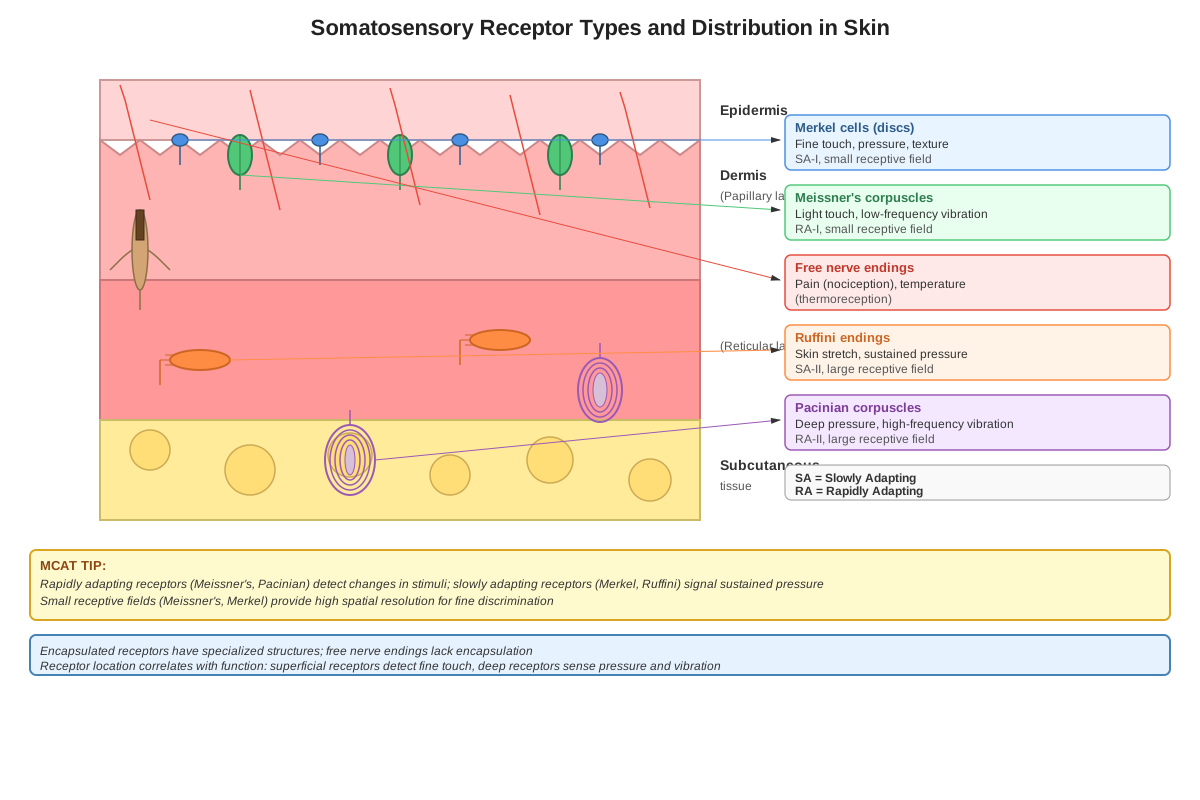
Somatosensory receptors are specialized nerve endings that convert mechanical, thermal, or chemical energy into neural signals through the process of sensory transduction. These receptors are classified by their adequate stimulus (the type of energy they detect) and their adaptation properties (how they respond over time).
Mechanoreceptors detect mechanical deformation and include several subtypes:
| Receptor Type | Location | Receptive Field | Adaptation | Function |
|---|---|---|---|---|
| Meissner's corpuscles | Superficial dermis (glabrous skin) | Small | Rapid | Detect light touch, texture, low-frequency vibration (30-50 Hz) |
| Pacinian corpuscles | Deep dermis, subcutaneous tissue | Large | Rapid | Detect deep pressure, high-frequency vibration (200-300 Hz) |
| Merkel's discs | Epidermis-dermis junction | Small | Slow | Detect fine details, edges, texture; highest spatial resolution |
| Ruffini endings | Deep dermis | Large | Slow | Detect skin stretch, sustained pressure, proprioception |
Rapidly adapting receptors (phasic receptors) respond strongly at stimulus onset and offset but decrease firing during sustained stimulation. This property makes them ideal for detecting changes and movement. Slowly adapting receptors (tonic receptors) maintain firing throughout stimulus duration, providing continuous information about sustained pressure or position.
Thermoreceptors are free nerve endings that respond to temperature changes. Cold receptors are most active between 10-35°C with peak sensitivity around 25°C, while warm receptors respond to temperatures between 30-45°C with peak sensitivity around 40°C. These receptors use transient receptor potential (TRP) channels that open in response to specific temperature ranges, allowing ion influx and depolarization.
Nociceptors are free nerve endings that detect potentially damaging stimuli. They include:
- Mechanical nociceptors: Respond to intense pressure or sharp stimuli
- Thermal nociceptors: Detect extreme temperatures (below 10°C or above 45°C)
- Polymodal nociceptors: Respond to multiple stimulus types including mechanical, thermal, and chemical (inflammatory mediators)
Proprioceptors provide information about body position and movement:
- Muscle spindles: Detect muscle length and rate of length change
- Golgi tendon organs: Detect muscle tension
- Joint receptors: Signal joint position and movement
Somatosensory Pathways
Somatosensory information travels from peripheral receptors to the brain through two major pathways, each carrying different types of information.
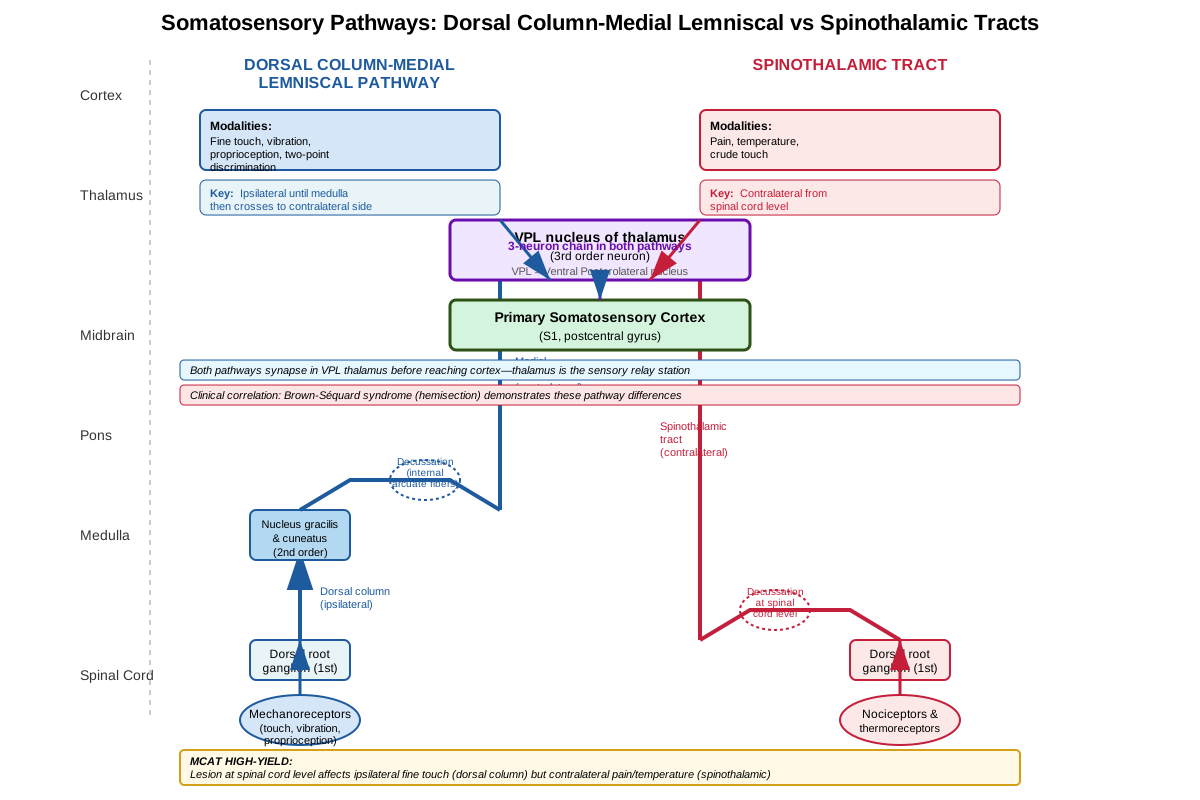
The dorsal column-medial lemniscal pathway carries fine touch, vibration, two-point discrimination, and proprioception:
- First-order neurons: Cell bodies in dorsal root ganglia; axons enter spinal cord and ascend ipsilaterally in dorsal columns (fasciculus gracilis for lower body, fasciculus cuneatus for upper body)
- Second-order neurons: Cell bodies in medulla (nucleus gracilis and nucleus cuneatus); axons decussate (cross midline) and ascend as medial lemniscus
- Third-order neurons: Cell bodies in ventral posterior lateral (VPL) nucleus of thalamus; axons project to primary somatosensory cortex (S1)
The spinothalamic tract (anterolateral system) carries pain, temperature, and crude touch:
- First-order neurons: Cell bodies in dorsal root ganglia; axons enter spinal cord and synapse in dorsal horn
- Second-order neurons: Cell bodies in dorsal horn; axons decussate within 1-2 spinal segments and ascend contralaterally in spinothalamic tract
- Third-order neurons: Cell bodies in VPL nucleus of thalamus; axons project to primary somatosensory cortex
Exam Tip: The key difference is WHERE decussation occurs. Dorsal column pathway crosses in the medulla, so spinal cord lesions affect ipsilateral sensation. Spinothalamic tract crosses immediately, so spinal cord lesions affect contralateral pain/temperature sensation.
Cortical Processing
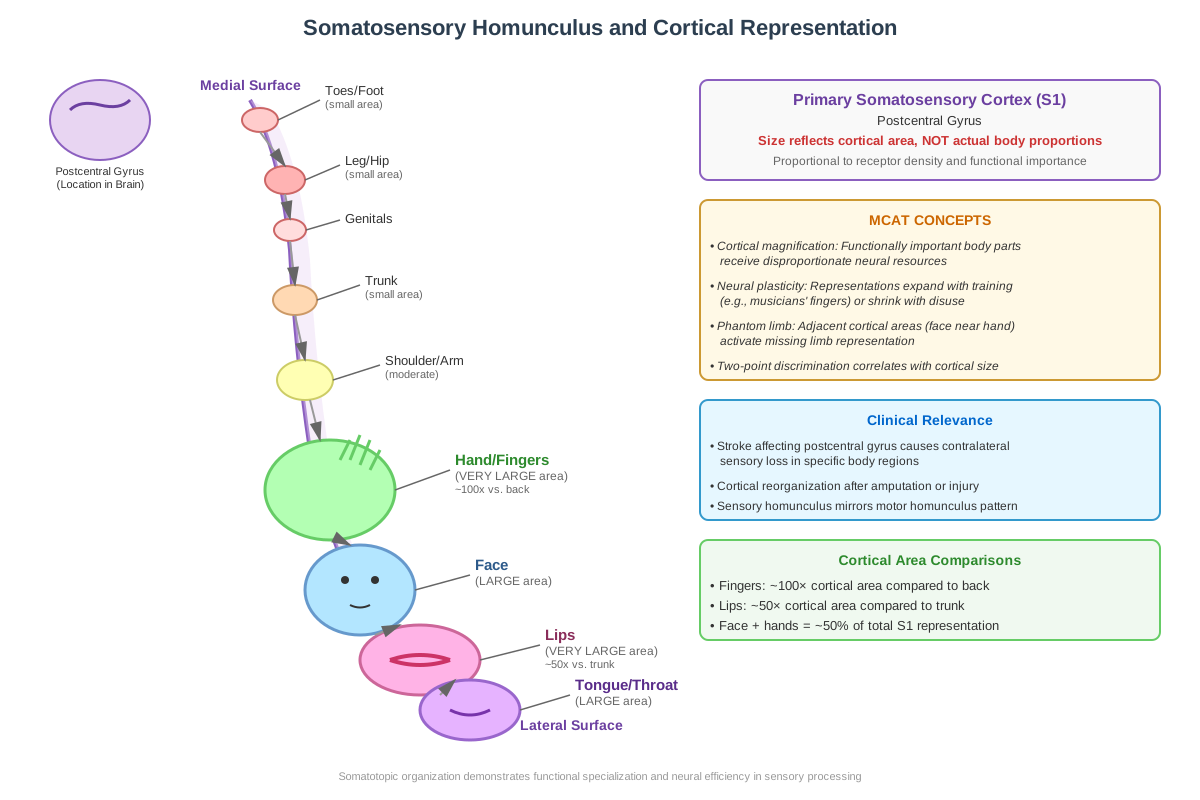
The primary somatosensory cortex (S1) occupies the postcentral gyrus in the parietal lobe (Brodmann areas 3, 1, and 2). S1 exhibits somatotopic organization, meaning body parts are mapped systematically across the cortical surface. This organization is represented by the sensory homunculus, a distorted human figure where body part size reflects the amount of cortical tissue devoted to processing sensation from that region rather than actual body part size.
Body regions with high tactile acuity (lips, tongue, fingertips, face) have disproportionately large cortical representations, while regions with lower acuity (trunk, proximal limbs) have smaller representations. This differential allocation reflects the density of receptors in peripheral tissues and the functional importance of fine sensory discrimination in different body regions.
Secondary somatosensory cortex (S2) and posterior parietal cortex perform higher-order processing, integrating somatosensory information with other sensory modalities and contributing to spatial awareness, object recognition through touch, and sensorimotor integration.
Two-Point Discrimination and Receptive Fields
Two-point discrimination measures the minimum distance between two points of stimulation that can be perceived as distinct. This threshold varies dramatically across body regions, from approximately 2-3 mm on fingertips to 30-40 mm on the back. Two-point discrimination depends on both receptor density and cortical magnification.
Receptive fields define the area of skin that, when stimulated, causes a particular neuron to fire. Smaller receptive fields enable finer spatial resolution. Receptive fields exhibit lateral inhibition, where stimulation of a receptor inhibits neighboring receptors, enhancing contrast and improving spatial localization. This mechanism operates through inhibitory interneurons that suppress activity in adjacent neural pathways.
Pain Perception and Gate Control Theory
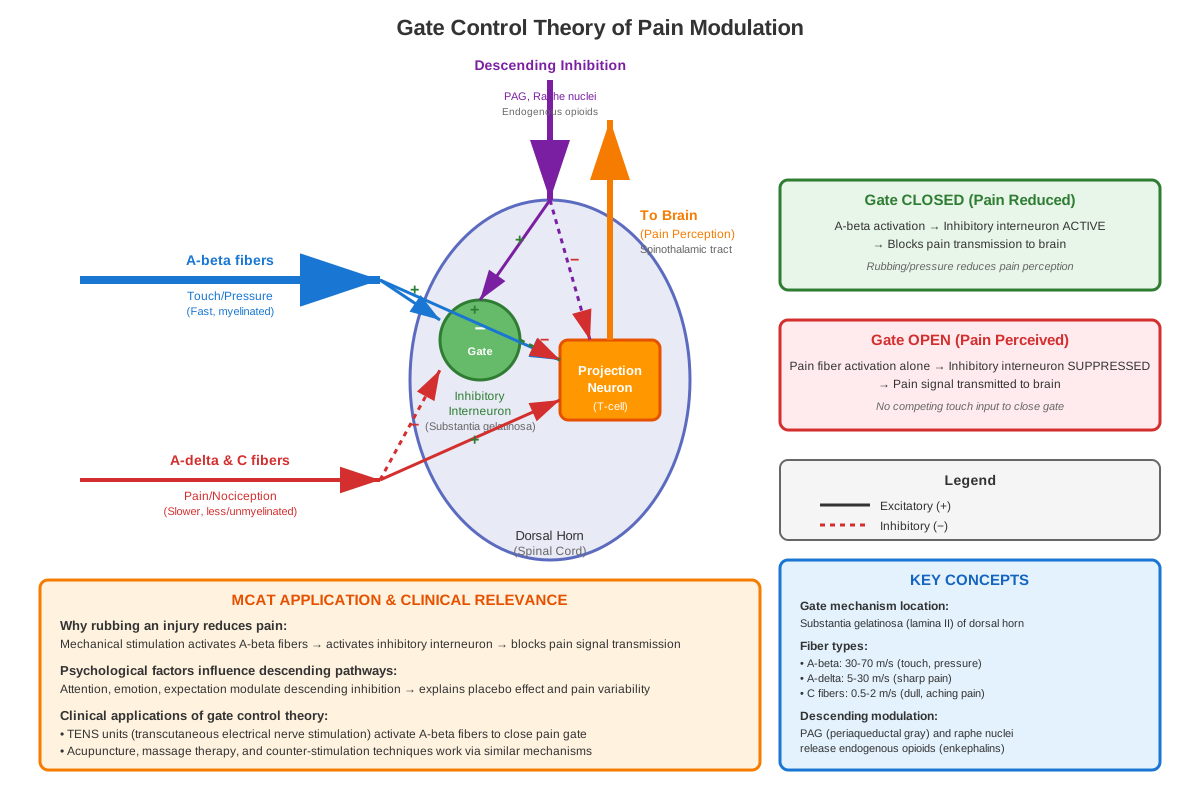
Pain represents a complex perceptual experience involving sensory-discriminative, affective-motivational, and cognitive-evaluative components. Gate control theory, proposed by Melzack and Wall, explains how pain perception can be modulated at the spinal cord level.
According to this theory, transmission cells in the dorsal horn act as a "gate" that can be opened or closed by the relative activity of different nerve fibers:
- Large-diameter A-beta fibers (carrying touch and pressure) activate inhibitory interneurons that close the gate, reducing pain transmission
- Small-diameter A-delta and C fibers (carrying pain signals) open the gate, facilitating pain transmission
- Descending pathways from the brain can also modulate the gate through endogenous opioids and other neurotransmitters
This mechanism explains why rubbing an injured area reduces pain (activating large fibers closes the gate) and why psychological factors like attention, emotion, and expectation influence pain perception.
Sensory Adaptation
Sensory adaptation refers to the decreased responsiveness to constant stimulation over time. This phenomenon allows the sensory system to remain sensitive to changes while filtering out unchanging background information. Rapidly adapting receptors show pronounced adaptation (you stop feeling your clothes after putting them on), while slowly adapting receptors maintain awareness of sustained stimuli (continued awareness of sitting position).
Adaptation occurs through multiple mechanisms including receptor desensitization, changes in ion channel properties, and central nervous system filtering. The rate and extent of adaptation vary by receptor type and serve functional purposes—detecting changes is often more behaviorally relevant than monitoring constant conditions.
Concept Relationships
Somatosensation demonstrates hierarchical organization from peripheral receptors → spinal pathways → thalamic relay → cortical processing. Within this hierarchy, different receptor types (mechanoreceptors, thermoreceptors, nociceptors, proprioceptors) → activate distinct neural pathways (dorsal column-medial lemniscal vs. spinothalamic) → project to specific thalamic nuclei → reach somatotopically organized cortical regions.
The concept of receptive fields connects to lateral inhibition, which enhances two-point discrimination. Smaller receptive fields and greater lateral inhibition → improved spatial resolution → larger cortical representation (sensory homunculus). This relationship explains why fingertips have superior tactile acuity compared to the back.
Gate control theory links different receptor types (mechanoreceptors vs. nociceptors) to pain modulation, connecting peripheral sensation to central processing and demonstrating top-down influences on perception. This connects somatosensation to broader psychological concepts including attention, emotion, and expectation effects on perception.
Sensory adaptation relates to the distinction between rapidly and slowly adapting receptors, connecting receptor physiology to perceptual experience and behavioral relevance. Adaptation also links to concepts of sensory thresholds and signal detection theory—constant stimuli fall below perceptual awareness through adaptation.
Somatosensation connects to motor control through proprioception and sensorimotor integration in posterior parietal cortex. It relates to consciousness and attention through the role of awareness in pain perception. It connects to learning and memory through tactile recognition and the formation of body schema. Understanding these relationships enables comprehensive analysis of MCAT passages that integrate multiple concepts.
Quick check — test yourself on Somatosensation so far.
Try Flashcards →High-Yield Facts
⭐ The dorsal column-medial lemniscal pathway decussates in the medulla, while the spinothalamic tract decussates at the spinal level within 1-2 segments of entry
⭐ Meissner's corpuscles (rapidly adapting, small receptive fields) detect light touch and texture; Merkel's discs (slowly adapting, small receptive fields) provide the highest spatial resolution
⭐ The primary somatosensory cortex (S1) is located in the postcentral gyrus and exhibits somatotopic organization represented by the sensory homunculus
⭐ Two-point discrimination threshold is smallest (finest acuity) on fingertips and lips, largest (poorest acuity) on the back and proximal limbs
⭐ Gate control theory explains that activation of large-diameter mechanoreceptor fibers can inhibit pain transmission by closing the "gate" in the dorsal horn
- Pacinian corpuscles detect high-frequency vibration (200-300 Hz) and have large receptive fields with rapid adaptation
- Nociceptors are free nerve endings that respond to potentially damaging mechanical, thermal, or chemical stimuli
- The ventral posterior lateral (VPL) nucleus of the thalamus serves as the relay station for body somatosensation before cortical projection
- Rapidly adapting receptors respond to stimulus onset and offset, making them ideal for detecting changes and movement
- Proprioceptors include muscle spindles (detect muscle length), Golgi tendon organs (detect tension), and joint receptors (signal position)
- Lateral inhibition enhances spatial contrast and improves localization by suppressing activity in adjacent neural pathways
- Thermoreceptors use TRP channels that open at specific temperature ranges; cold receptors peak around 25°C, warm receptors around 40°C
- The sensory homunculus shows disproportionately large representations for body parts with high receptor density and functional importance
- A-delta fibers transmit fast, sharp pain while C fibers transmit slow, dull, aching pain
- Phantom limb pain demonstrates that pain perception involves central processing, not just peripheral stimulation
Common Misconceptions
Misconception: All touch receptors are the same; they just detect pressure.
Correction: Somatosensory receptors are highly specialized. Meissner's corpuscles detect light touch and low-frequency vibration, Pacinian corpuscles detect deep pressure and high-frequency vibration, Merkel's discs provide fine spatial detail, and Ruffini endings detect skin stretch. Each receptor type has distinct structural features, adaptation properties, and functional roles.
Misconception: The spinothalamic tract and dorsal column pathway carry the same information and are interchangeable.
Correction: These pathways carry different modalities and have different anatomical courses. The dorsal column-medial lemniscal pathway carries fine touch, vibration, and proprioception, ascending ipsilaterally before decussating in the medulla. The spinothalamic tract carries pain, temperature, and crude touch, decussating immediately at the spinal level. This distinction is critical for predicting sensory deficits following lesions.
Misconception: Pain is purely a sensory experience determined by the intensity of nociceptor activation.
Correction: Pain is a complex perceptual experience involving sensory-discriminative, affective-motivational, and cognitive-evaluative components. Gate control theory demonstrates that pain can be modulated by non-nociceptive input and descending pathways. Psychological factors including attention, emotion, expectation, and cultural context significantly influence pain perception, explaining phenomena like placebo analgesia and stress-induced analgesia.
Misconception: Rapidly adapting receptors are less important than slowly adapting receptors because they stop responding.
Correction: Rapid adaptation is a functional advantage, not a limitation. Rapidly adapting receptors remain sensitive to changes and new stimuli by filtering out constant background information. This allows detection of movement, texture during active touch, and vibration while preventing sensory overload from unchanging stimuli like clothing pressure.
Misconception: Two-point discrimination is the same everywhere on the body.
Correction: Two-point discrimination varies dramatically across body regions, reflecting differences in receptor density and cortical representation. Fingertips have thresholds of 2-3 mm, while the back has thresholds of 30-40 mm. This variation reflects functional specialization—regions requiring fine tactile discrimination (hands, lips, face) have higher receptor density and larger cortical representations.
Misconception: The sensory homunculus accurately represents body proportions.
Correction: The sensory homunculus is intentionally distorted, with body part size reflecting cortical representation rather than actual anatomy. Lips, tongue, hands, and face appear disproportionately large because these regions have high receptor density and require fine sensory discrimination. The trunk and proximal limbs appear small because they have lower receptor density and less cortical tissue devoted to their processing.
Worked Examples
Example 1: Predicting Sensory Deficits from Spinal Cord Lesion
Clinical Vignette: A patient suffers a knife wound that severs the right half of the spinal cord at the T10 level (Brown-Séquard syndrome). Predict the sensory deficits this patient will experience.
Analysis:
Step 1: Identify which pathways are affected and where they are located at T10.
- Dorsal column pathway: Ascending ipsilaterally (right side) at T10
- Spinothalamic tract: Already crossed; right-sided tract carries information from left body
Step 2: Determine what happens to each pathway.
- Right dorsal column severed → Loss of fine touch, vibration, proprioception from right side below T10
- Right spinothalamic tract severed → Loss of pain and temperature from left side below T10 (because this tract already crossed)
Step 3: Synthesize the deficit pattern.
- Ipsilateral (right) deficits: Loss of fine touch, vibration, two-point discrimination, and proprioception below T10
- Contralateral (left) deficits: Loss of pain and temperature sensation below T10
- Preserved: Crude touch (carried by both pathways), sensation above T10
Key Principle: This example demonstrates the critical importance of knowing where each pathway decussates. The dorsal column pathway hasn't crossed yet at T10 (crosses in medulla), so ipsilateral deficits occur. The spinothalamic tract crossed immediately upon entering the cord, so the right-sided tract carries left body information.
MCAT Application: Questions may present lesions at different levels or ask you to work backward from deficit patterns to localize lesions. Always consider: (1) What pathways are affected? (2) Have they crossed yet? (3) What modalities does each carry?
Example 2: Analyzing Two-Point Discrimination Experiment
Experimental Scenario: Researchers measure two-point discrimination thresholds across different body regions in 50 participants. Results show: fingertip = 2.5 mm, palm = 10 mm, forearm = 35 mm, back = 40 mm. They also measure receptor density and find: fingertip = 2,500 receptors/cm², palm = 500 receptors/cm², forearm = 100 receptors/cm², back = 50 receptors/cm². What explains this relationship?
Analysis:
Step 1: Identify the pattern in the data.
- Two-point discrimination threshold is inversely related to receptor density
- Higher receptor density → smaller threshold (better discrimination)
- Lower receptor density → larger threshold (poorer discrimination)
Step 2: Explain the mechanism.
- More receptors per unit area → smaller receptive fields for individual neurons
- Smaller receptive fields → better spatial resolution
- When two points stimulate different receptors with non-overlapping receptive fields, they can be distinguished
Step 3: Connect to cortical processing.
- Regions with high receptor density also have larger cortical representations (sensory homunculus)
- More cortical tissue devoted to processing → finer discrimination
- Fingertips have disproportionately large representation in S1
Step 4: Consider functional significance.
- Fingertips require fine tactile discrimination for object manipulation and exploration
- Back requires less fine discrimination; its primary function isn't detailed tactile exploration
- This demonstrates evolutionary adaptation matching sensory capabilities to functional demands
Key Principle: Two-point discrimination depends on both peripheral factors (receptor density, receptive field size) and central factors (cortical magnification). These factors work together to create regional specialization in tactile acuity.
MCAT Application: Passages may present experimental data showing relationships between receptor properties and perceptual capabilities. Analyze data by considering both peripheral receptor characteristics and central processing. Questions may ask you to predict discrimination thresholds for untested body regions or explain why certain manipulations affect discrimination.
Exam Strategy
When approaching MCAT questions on somatosensation, first identify what aspect of the system is being tested: receptor types, neural pathways, cortical processing, or perceptual phenomena. Questions about receptors typically require matching receptor types to their properties (adaptation rate, receptive field size, adequate stimulus). Create a mental table of receptor characteristics to quickly eliminate wrong answers.
Trigger words for somatosensation questions include:
- "Fine touch," "vibration," "proprioception" → dorsal column pathway
- "Pain," "temperature," "crude touch" → spinothalamic tract
- "Ipsilateral deficit" → pathway hasn't crossed yet
- "Contralateral deficit" → pathway has crossed
- "Two-point discrimination," "spatial resolution" → receptor density and receptive field size
- "Adaptation" → distinguish rapidly vs. slowly adapting receptors
For pathway questions, draw a quick diagram showing where decussation occurs. This visual reference prevents confusion when predicting deficit patterns. Remember: dorsal column crosses high (medulla), spinothalamic crosses low (spinal cord level).
Process-of-elimination strategies:
- If a question asks about fine spatial discrimination, eliminate answers involving receptors with large receptive fields (Pacinian corpuscles, Ruffini endings)
- If a question describes a spinal cord lesion with ipsilateral pain/temperature loss, eliminate this option—spinothalamic deficits are always contralateral
- If a question asks about detecting vibration, eliminate slowly adapting receptors—vibration detection requires rapid adaptation
Time allocation: Straightforward receptor identification or pathway questions should take 30-45 seconds. Complex clinical vignettes requiring integration of multiple concepts may take 60-90 seconds. Don't spend excessive time trying to recall obscure details; focus on high-yield distinctions between pathways and receptor types.
For passage-based questions, identify the experimental manipulation or clinical scenario first, then predict what should happen based on your understanding of somatosensory principles. Compare your prediction to the data or answer choices. This approach is faster and more accurate than trying to interpret data without a theoretical framework.
Memory Techniques
Mnemonic for rapidly adapting receptors: "MP players are Rapid"
- Meissner's corpuscles
- Pacinian corpuscles
- Both are Rapidly adapting
Mnemonic for slowly adapting receptors: "MR is Slow"
- Merkel's discs
- Ruffini endings
- Both are Slowly adapting
Mnemonic for dorsal column pathway: "DCML = Dorsal Column Medulla Lateral"
- Pathway ascends in Dorsal Column
- Crosses in Medulla
- Continues as medial Lemniscus
Visualization for pathway decussation: Picture a tall building (spinal cord) with an X at the ground floor (spinothalamic crossing immediately) and another X at the top floor/roof (dorsal column crossing in medulla). This spatial representation helps remember crossing levels.
Mnemonic for two-point discrimination: "FLIP has the finest touch"
- Fingertips
- Lips
- These have the finest (smallest) two-point discrimination thresholds
Acronym for pain fiber types: "AC/DC"
- A-delta fibers = fast, sharp pain (like AC/DC music—fast tempo)
- C fibers = slow, dull pain (like DC current—continuous)
Visualization for gate control theory: Picture a gate with two types of keys. Large keys (large-diameter fibers carrying touch) close and lock the gate. Small keys (small-diameter pain fibers) try to open it. The brain can also send a guard (descending pathways) to help keep the gate closed. This concrete image helps remember the mechanism.
Mnemonic for sensory homunculus proportions: "LIFT your big hands to your big lips"
- Lips
- Index fingers (hands)
- Face
- Tongue
- These have the biggest cortical representations
Summary
Somatosensation encompasses the sensory modalities of touch, temperature, pain, and proprioception, processed through specialized receptors distributed throughout the body. Different receptor types—mechanoreceptors (Meissner's, Pacinian, Merkel's, Ruffini), thermoreceptors, nociceptors, and proprioceptors—detect specific stimulus types and exhibit distinct adaptation properties. Information travels through two major pathways: the dorsal column-medial lemniscal pathway (fine touch, vibration, proprioception, crossing in medulla) and the spinothalamic tract (pain, temperature, crude touch, crossing at spinal level). Both pathways relay through the thalamus before reaching the primary somatosensory cortex in the postcentral gyrus, which exhibits somatotopic organization. Two-point discrimination varies across body regions based on receptor density and cortical representation. Gate control theory explains pain modulation through the interaction of different fiber types and descending pathways. Understanding these principles enables prediction of sensory deficits from lesions, interpretation of experimental data, and analysis of perceptual phenomena—all essential skills for MCAT success.
Key Takeaways
- Somatosensation includes four modalities (touch, temperature, pain, proprioception) processed by specialized receptors with distinct properties and functions
- The dorsal column-medial lemniscal pathway (fine touch, vibration, proprioception) decussates in the medulla, while the spinothalamic tract (pain, temperature) decussates at the spinal level—this distinction is critical for predicting deficit patterns
- Mechanoreceptors differ in receptive field size and adaptation rate: Meissner's and Pacinian are rapidly adapting; Merkel's and Ruffini are slowly adapting
- Two-point discrimination threshold reflects receptor density and cortical representation, with finest acuity on fingertips and lips
- Gate control theory explains that large-diameter mechanoreceptor activation can inhibit pain transmission, demonstrating interaction between different sensory modalities
- The primary somatosensory cortex exhibits somatotopic organization (sensory homunculus) with disproportionately large representations for functionally important body regions
- Pain perception involves sensory, affective, and cognitive components, with modulation occurring at multiple levels from spinal cord to cortex
Related Topics
Motor Control and Proprioception: Understanding how somatosensory feedback guides movement and posture builds on proprioceptor knowledge and connects sensation to action.
Pain Psychology and Management: Explores psychological factors influencing pain perception, chronic pain syndromes, and therapeutic approaches—extends gate control theory concepts.
Neurological Examination: Clinical assessment of somatosensory function applies anatomical pathway knowledge to diagnosis and lesion localization.
Sensory Adaptation and Habituation: Broader examination of how sensory systems filter constant stimulation connects to learning and attention mechanisms.
Brain Lesions and Deficits: Systematic study of how damage to different neural structures produces specific sensory and motor deficits integrates somatosensory pathways with neuroanatomy.
Signal Detection Theory: Quantitative framework for understanding sensory thresholds and decision-making applies across all sensory modalities including somatosensation.
Mastering somatosensation provides the foundation for understanding sensorimotor integration, clinical neurology, and the broader principles of how physical stimuli become perceptual experiences.
Practice CTA
Now that you've mastered the core concepts of somatosensation, test your understanding with practice questions and flashcards. Focus on distinguishing between receptor types, tracing neural pathways, and predicting sensory deficits from lesions. Active retrieval through practice is the most effective way to consolidate this knowledge and prepare for MCAT success. Challenge yourself with clinical vignettes and experimental scenarios that require applying these principles in novel contexts. Your ability to integrate somatosensory concepts with broader psychological and biological principles will set you apart on test day. Keep pushing forward—mastery comes through deliberate practice!
Sign up free to keep reading
Create a free AnvayaPrep account to finish this MCAT guide on Somatosensation — plus flashcards and practice questions.