Overview
Social science passages represent one of the two major passage types students encounter in the Critical Analysis and Reasoning Skills (CARS) section of the MCAT, alongside humanities passages. These passages draw from disciplines including sociology, psychology, anthropology, economics, political science, and education studies. Unlike the science sections of the MCAT that test content recall, CARS Skills require students to analyze arguments, evaluate evidence, and synthesize information from complex texts without relying on prior subject knowledge. Social science passages typically present empirical research findings, theoretical frameworks, or analytical discussions about human behavior, social structures, cultural phenomena, or institutional systems.
The Social science passages MCAT component is essential because it constitutes approximately 50% of the CARS section, which itself represents 25% of the total MCAT score. These passages challenge students to navigate dense academic prose, identify implicit assumptions, distinguish between correlation and causation, and evaluate methodological claims. The reasoning skills developed through mastering social science passages extend beyond test preparation—they form the foundation for evidence-based medical practice, understanding patient populations, and critically evaluating research literature throughout medical training and clinical practice.
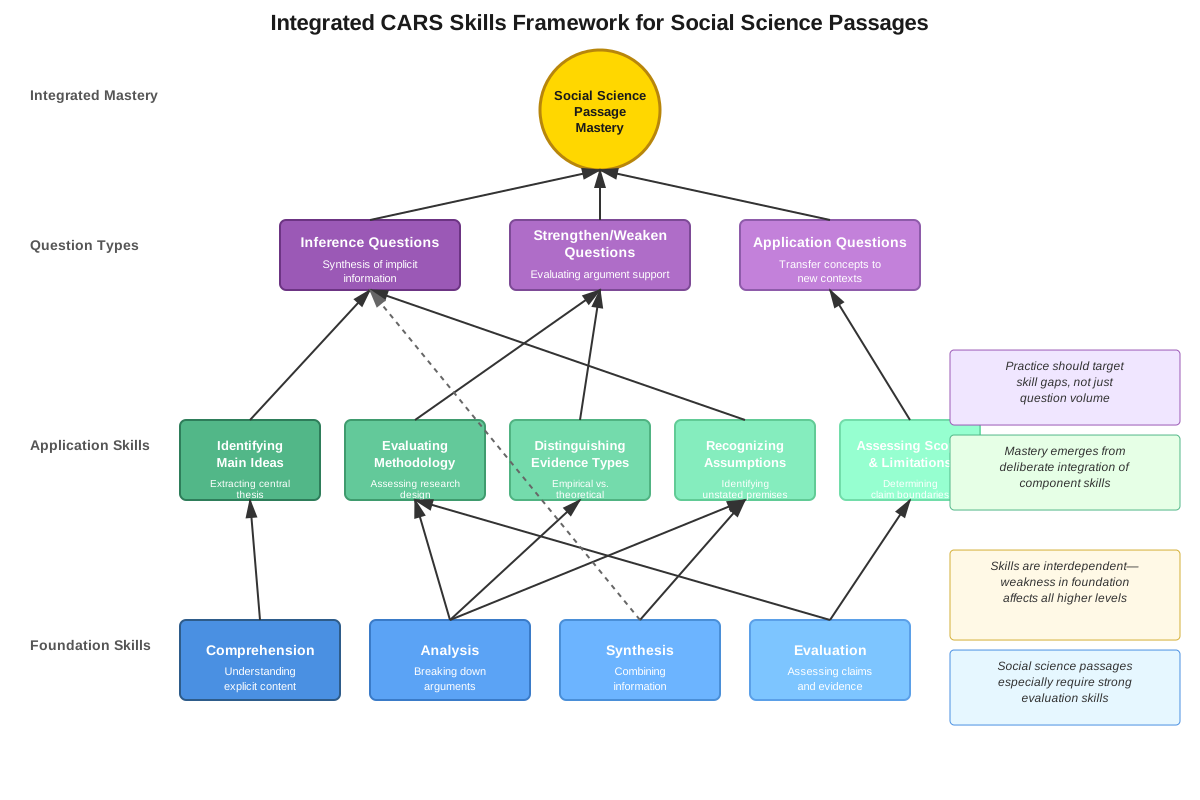
Within the broader framework of Critical Analysis and Reasoning Skills, social science passages serve as vehicles for testing fundamental analytical abilities: comprehension (understanding what the author states), analysis (breaking down arguments into components), synthesis (combining information to form conclusions), and evaluation (assessing the strength of claims and evidence). These passages connect directly to other CARS skills including identifying main ideas, recognizing rhetorical strategies, understanding passage structure, and making valid inferences—all while working within strict time constraints that demand efficient reading and strategic question-answering approaches.
Learning Objectives
- [ ] Define Social science passages using accurate Critical Analysis and Reasoning Skills terminology
- [ ] Explain why Social science passages matters for the MCAT
- [ ] Apply Social science passages to exam-style questions
- [ ] Identify common mistakes related to Social science passages
- [ ] Connect Social science passages to related Critical Analysis and Reasoning Skills concepts
- [ ] Distinguish between different types of social science passage structures and their implications for question types
- [ ] Evaluate the strength of evidence and reasoning within social science arguments
- [ ] Synthesize information across multiple paragraphs to answer complex inference questions
Prerequisites
- Basic reading comprehension: Ability to understand college-level texts is fundamental to extracting meaning from dense academic passages
- Familiarity with argument structure: Understanding premises, conclusions, and supporting evidence enables identification of logical relationships within passages
- General knowledge of passage types: Recognizing that CARS includes both humanities and social sciences helps with mental preparation and approach strategies
- Time management basics: Knowing the CARS section timing (90 minutes for 9 passages) provides context for developing efficient reading strategies
Why This Topic Matters
Social science passages hold particular significance for future physicians because medicine increasingly emphasizes understanding patients within their social, cultural, and economic contexts. The ability to critically evaluate social science research prepares medical students to interpret epidemiological studies, understand health disparities, and assess the validity of population health interventions. Medical schools recognize that physicians must navigate complex literature about healthcare systems, patient behavior, and social determinants of health—skills directly tested through social science passages.
From an exam statistics perspective, social science passages appear in approximately 4-5 of the 9 CARS passages on any given MCAT administration. These passages generate questions across all CARS question types: Foundations of Comprehension (30%), Reasoning Within the Text (30%), and Reasoning Beyond the Text (40%). The passages themselves typically range from 500-600 words and are accompanied by 5-7 questions each. Performance on social science passages often determines overall CARS scores because they require balancing careful reading with efficient time management.
Common manifestations of social science passages include: empirical research discussions presenting study findings and their implications; theoretical frameworks explaining human behavior or social phenomena; comparative analyses of different cultural practices or institutional approaches; critiques of existing research methodologies or theoretical assumptions; and historical analyses of social movements or policy developments. These passages frequently incorporate data interpretation, methodological evaluation, and application of theoretical concepts to novel scenarios—all high-yield question formats that appear consistently across MCAT administrations.
Core Concepts
Defining Social Science Passages
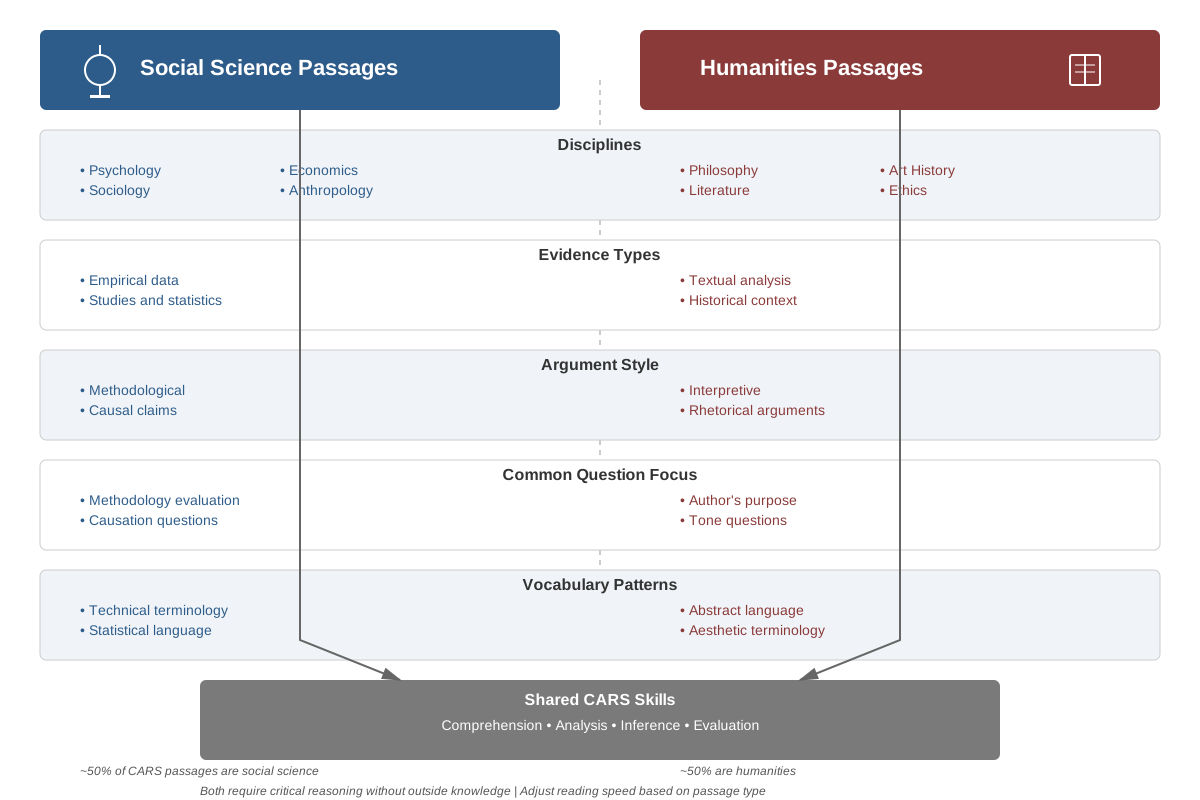
Social science passages are extended prose excerpts (typically 500-600 words) drawn from academic or intellectual sources within disciplines that systematically study human society and social relationships. These passages differ from humanities passages in their emphasis on empirical observation, systematic methodology, and generalizable findings about human behavior and social structures. The Social science passages Critical Analysis and Reasoning Skills framework requires students to engage with these texts not as content to memorize but as arguments to analyze, evaluate, and apply.
The defining characteristics of social science passages include: presentation of research findings or theoretical frameworks; discussion of methodology and evidence; analysis of social phenomena through systematic observation; and argumentation about causes, effects, or relationships within human societies. Unlike natural science passages in other MCAT sections, social science passages in CARS focus on the reasoning process itself rather than testing recall of scientific facts.
Disciplinary Sources and Characteristics
Social science passages draw from distinct academic disciplines, each with characteristic approaches and concerns:
| Discipline | Typical Focus | Common Passage Elements |
|---|---|---|
| Sociology | Social structures, institutions, group behavior | Statistical data, demographic trends, social theory |
| Psychology | Individual cognition, behavior, development | Experimental findings, cognitive processes, behavioral patterns |
| Anthropology | Cultural practices, human diversity | Ethnographic observations, cultural comparisons, evolutionary perspectives |
| Economics | Resource allocation, market behavior, policy | Economic models, incentive structures, policy analysis |
| Political Science | Governance, power, political behavior | Institutional analysis, policy evaluation, political theory |
| Education | Learning processes, educational systems | Pedagogical approaches, educational outcomes, institutional structures |
Understanding these disciplinary perspectives helps students anticipate passage structure and question types. For example, psychology passages often present experimental findings requiring evaluation of research design, while anthropology passages frequently involve cultural comparisons demanding careful attention to relativistic versus universalistic claims.
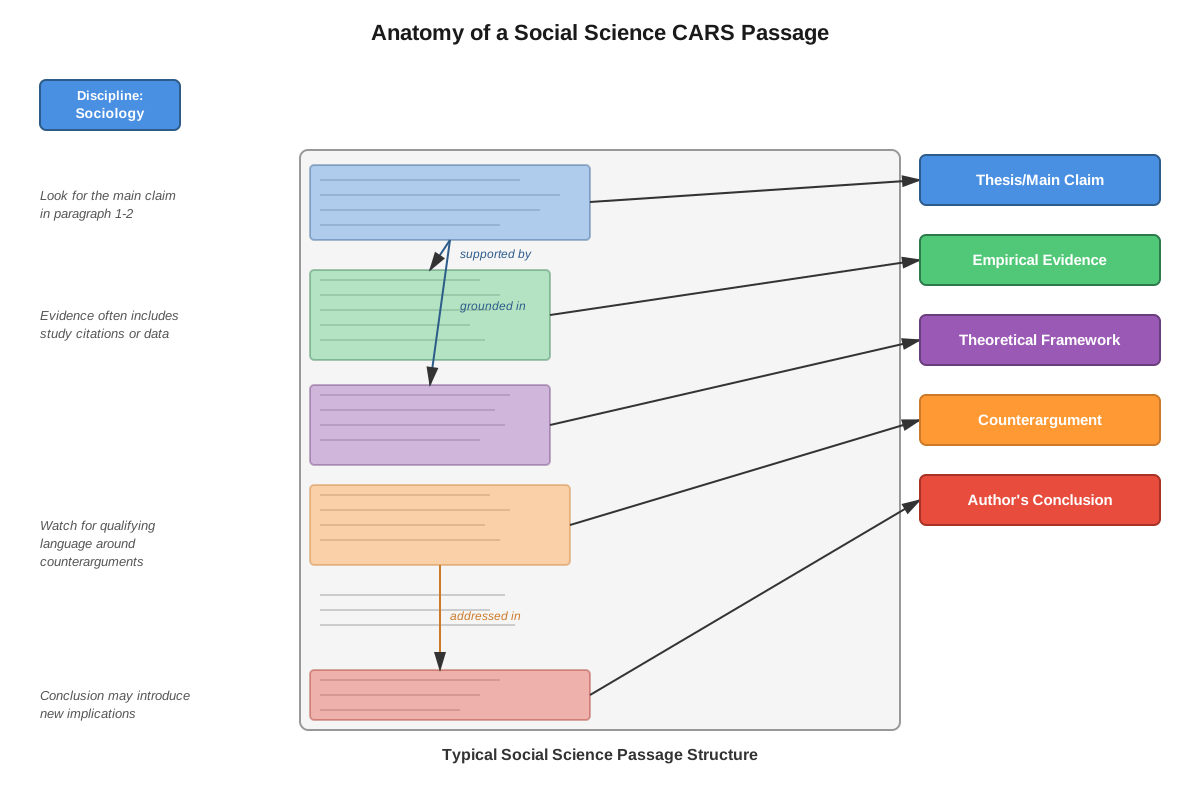
Passage Structure Patterns
Social science passages typically follow recognizable organizational patterns that guide comprehension and question anticipation:
- Empirical Research Structure: Introduction of research question → Methodology description → Findings presentation → Implications discussion → Limitations or future directions
- Theoretical Framework Structure: Problem or phenomenon introduction → Existing explanations critique → New theoretical framework presentation → Evidence supporting framework → Applications or implications
- Comparative Analysis Structure: Introduction of comparison subjects → First subject analysis → Second subject analysis → Similarities and differences synthesis → Broader implications
- Critical Evaluation Structure: Conventional view presentation → Critique development → Alternative perspective introduction → Evidence for alternative → Conclusion or synthesis
Recognizing these patterns enables students to predict where key information appears and anticipate question types. For instance, methodology descriptions often generate Reasoning Within the Text questions about research design, while implications sections frequently spawn Reasoning Beyond the Text questions requiring application to novel scenarios.
Argument Components in Social Science Passages
Social science passages construct arguments through specific components that CARS questions target:
Claims and Assertions: Statements the author presents as true, ranging from empirical observations ("Studies show that...") to theoretical propositions ("Social capital functions as..."). Questions often ask students to identify main claims or distinguish primary from secondary assertions.
Evidence and Support: Data, examples, research findings, or logical reasoning offered to substantiate claims. CARS questions frequently test whether students can identify what evidence supports which claim, evaluate evidence strength, or recognize when claims lack adequate support.
Assumptions and Presuppositions: Unstated beliefs or premises underlying arguments. High-difficulty questions often require identifying implicit assumptions that, if false, would undermine the author's reasoning.
Counterarguments and Limitations: Alternative perspectives or weaknesses the author acknowledges. Questions may ask students to identify these elements or evaluate how effectively the author addresses them.
Implications and Applications: Consequences or extensions of the author's argument. Reasoning Beyond the Text questions commonly require applying passage reasoning to novel scenarios or predicting what the author would conclude about new situations.
Methodological Considerations
Social science passages frequently discuss research methodology, creating opportunities for questions about research design, validity, and interpretation:
Correlation versus Causation: Passages often present correlational findings while discussing (or failing to discuss) causal mechanisms. Questions test whether students recognize this distinction and understand what evidence would strengthen causal claims.
Sampling and Generalizability: Research findings apply to specific populations, and passages may discuss whether results generalize beyond study samples. Questions probe understanding of sampling limitations and appropriate inference scope.
Operationalization: How abstract concepts become measurable variables affects research validity. Passages discussing how researchers measure constructs like "social capital" or "cultural identity" generate questions about measurement validity and alternative operationalizations.
Confounding Variables: Factors that might explain observed relationships without being the actual cause. Critical evaluation questions often require identifying potential confounds or assessing whether researchers adequately controlled for alternative explanations.
Rhetorical Strategies in Social Science Writing
Authors employ specific rhetorical techniques that CARS questions target:
Hedging and Qualification: Social scientists often use cautious language ("suggests," "may indicate," "appears to") reflecting uncertainty inherent in empirical research. Questions test whether students recognize these qualifications and understand their implications for claim strength.
Citation and Authority: References to other researchers or established theories lend credibility. Questions may ask why authors cite particular sources or how citations function within arguments.
Analogy and Metaphor: Complex social phenomena often require analogical explanation. Questions probe whether students understand analogies' explanatory function and recognize their limitations.
Contrast and Comparison: Juxtaposing different theories, findings, or cultural practices clarifies positions. Questions frequently test comprehension of what distinguishes compared elements.
Concept Relationships
Social science passages function as integrated wholes where multiple concepts interact systematically. The passage structure provides the framework within which argument components (claims, evidence, assumptions) are organized. Understanding structure helps locate specific argument elements efficiently. For example, recognizing a passage follows the empirical research structure alerts students that methodology discussion appears early, while implications appear later—knowledge that guides strategic skimming and question answering.
Disciplinary characteristics influence both structure and argument style. Psychology passages emphasizing experimental research typically follow empirical research structure and include detailed methodology discussions, while anthropology passages exploring cultural practices often employ comparative analysis structure with extensive descriptive examples. This connection means recognizing disciplinary source helps predict passage organization and question types.
Methodological considerations directly impact argument strength evaluation. When passages present correlational findings, students must assess whether authors appropriately qualify causal claims—connecting methodology to rhetorical strategy. Similarly, understanding sampling limitations affects evaluation of generalizability claims, linking research design to argument validity.
Rhetorical strategies serve to present and support argument components. Hedging language modifies claim strength, while citation establishes evidence credibility. Recognizing these rhetorical functions enables students to accurately assess what authors actually assert versus what they tentatively suggest—a distinction frequently tested through Foundations of Comprehension questions.
The relationship map flows: Disciplinary Source → influences → Passage Structure → organizes → Argument Components → presented through → Rhetorical Strategies → evaluated via → Methodological Considerations → determines → Argument Strength. This integrated understanding enables students to approach passages systematically rather than as disconnected text blocks.
Connections to broader CARS skills include: social science passages require main idea identification (often the primary claim or theoretical framework), author tone recognition (particularly important for distinguishing author's view from views discussed), inference making (especially applying passage reasoning to novel scenarios), and passage mapping (tracking argument flow through complex discussions). Mastering social science passages thus develops transferable skills applicable across all CARS passage types.
High-Yield Facts
⭐ Social science passages constitute approximately 50% of CARS passages, appearing 4-5 times per exam administration
⭐ Questions about methodology and research design appear more frequently in social science passages than humanities passages
⭐ The most common question types for social science passages are application questions requiring extension of passage reasoning to novel scenarios
⭐ Authors' implicit assumptions are frequently tested through "which of the following must be true" or "the argument depends on which assumption" questions
⭐ Correlation versus causation distinctions generate high-frequency questions, particularly in passages presenting empirical research
- Social science passages average 500-600 words with 5-7 associated questions each
- Approximately 40% of questions are Reasoning Beyond the Text type, requiring application or evaluation beyond passage content
- Passages discussing cultural phenomena frequently include questions about relativism versus universalism
- Methodological limitations, when mentioned, almost always generate at least one question
- Comparative passages typically include questions asking what distinguishes compared elements or what they share
- Questions about evidence strength ("which finding would most strengthen/weaken the argument") appear more frequently in social science than humanities passages
- Passages presenting theoretical frameworks commonly generate questions about framework applications or limitations
- Hedging language ("may," "suggests," "appears to") signals qualified claims that questions often test
- Questions asking "the author would most likely agree with" require synthesis across multiple passage sections
- Time pressure makes social science passages particularly challenging because they require both careful reading and efficient processing
Quick check — test yourself on Social science passages so far.
Try Flashcards →Common Misconceptions
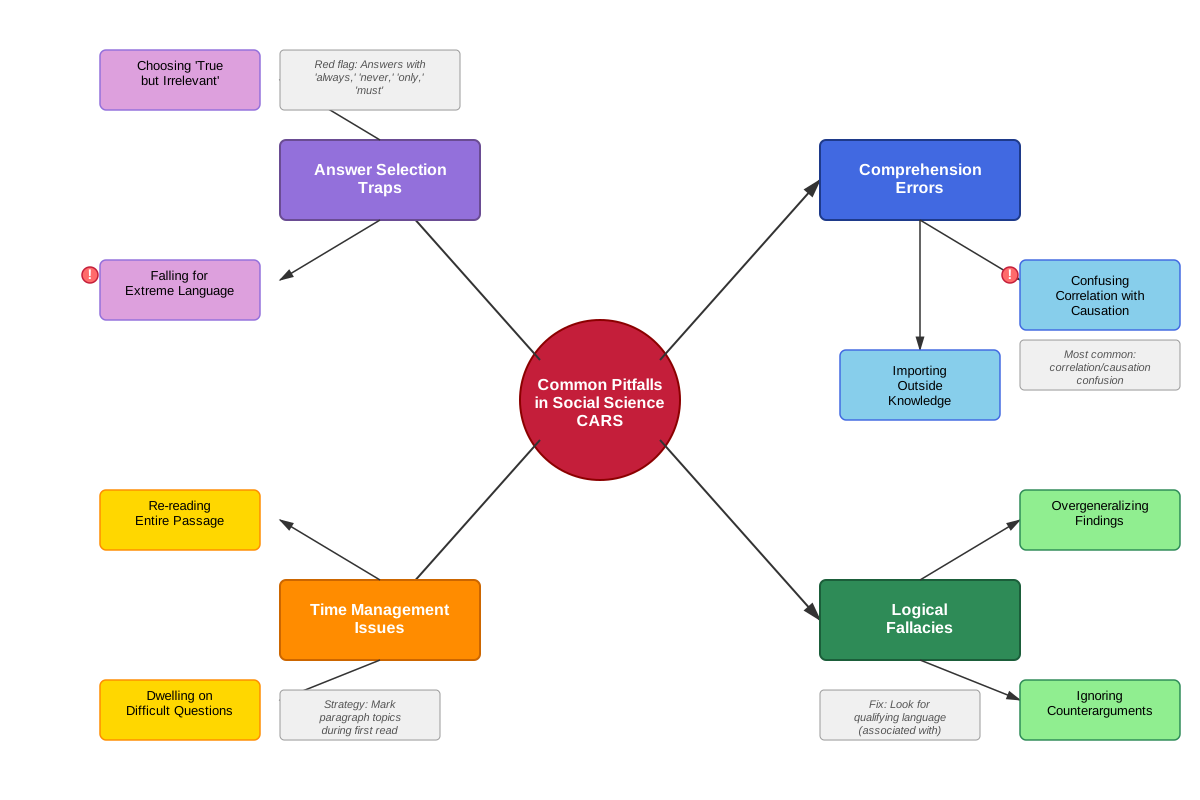
Misconception: Social science passages require prior knowledge of psychology, sociology, or other social science disciplines → Correction: CARS tests reasoning skills, not content knowledge. All information needed to answer questions appears in the passage itself. Prior knowledge can actually mislead students into importing outside information rather than focusing on what the passage actually states.
Misconception: Correlation implies causation if the correlation is strong → Correction: Correlation strength indicates relationship consistency but never establishes causation. Even perfect correlations might reflect confounding variables or reverse causation. Passages testing this distinction require recognizing that causal claims need additional evidence beyond correlational findings.
Misconception: The author's view is whatever the passage discusses most extensively → Correction: Authors often present opposing views or conventional wisdom before introducing their own perspective. The most-discussed view might be what the author critiques. Identifying author's actual position requires attention to rhetorical cues like "however," "in fact," or "contrary to."
Misconception: Hedging language ("may," "suggests") is filler that can be ignored → Correction: Qualifiers fundamentally change claim strength and scope. "X causes Y" differs significantly from "X may contribute to Y." Questions frequently test whether students recognize these distinctions, particularly in answer choices that overstate passage claims.
Misconception: All research findings presented in passages are equally valid → Correction: Passages often discuss methodological limitations, sampling issues, or alternative explanations that affect finding validity. Critical evaluation questions require assessing research quality, not accepting all presented findings as equally credible.
Misconception: Social science passages are easier than humanities passages because they're more concrete → Correction: While social science passages may seem more familiar, they often involve complex methodological reasoning and require distinguishing subtle differences in claim strength. Many students find the abstract theoretical discussions in some social science passages more challenging than narrative-driven humanities passages.
Misconception: The correct answer will use the same language as the passage → Correction: Correct answers frequently paraphrase passage content using different terminology. Students who look for exact word matches often select wrong answers that use passage language but distort meaning.
Worked Examples
Example 1: Empirical Research Passage
Passage Excerpt (condensed for illustration):
"Recent studies examining social media use among adolescents reveal concerning patterns. Researchers surveyed 2,000 teenagers aged 13-17 about their daily social media consumption and self-reported well-being. Results indicated a negative correlation between hours spent on social media and reported life satisfaction (r = -0.42, p < 0.01). However, the researchers acknowledge that the correlational design prevents causal conclusions. Additionally, self-reported data may suffer from recall bias and social desirability effects. The authors suggest that future research should employ longitudinal designs tracking individuals over time to better establish temporal precedence—a necessary condition for causal inference."
Question: Which of the following findings would most strengthen the claim that social media use causes decreased well-being?
A) A larger survey showing the same negative correlation
B) A longitudinal study showing that increased social media use precedes decreased well-being
C) Qualitative interviews revealing that teenagers feel worse after using social media
D) Brain imaging studies showing different neural activation patterns in heavy versus light social media users
Worked Solution:
Step 1 - Identify what the question asks: This is a Reasoning Beyond the Text question asking what evidence would strengthen a causal claim.
Step 2 - Locate relevant passage information: The passage explicitly states the current study is correlational and "prevents causal conclusions." It mentions "temporal precedence" as "necessary for causal inference" and recommends "longitudinal designs."
Step 3 - Evaluate each option:
- Option A: Larger sample size increases statistical power but doesn't address the correlation-versus-causation problem. A bigger correlational study remains correlational.
- Option B: Longitudinal design establishes temporal precedence (social media use comes before well-being decrease), directly addressing the passage's stated limitation. This matches the authors' explicit recommendation.
- Option C: Qualitative data about feelings provides additional correlation but still doesn't establish causation. Feeling worse after use could reflect pre-existing mood affecting social media choice (reverse causation).
- Option D: Neural differences might correlate with social media use but don't establish causation. Heavy users might have pre-existing neural differences that lead them to use social media more.
Step 4 - Select the best answer: B is correct because it directly addresses the passage's identified limitation (lack of temporal precedence) using the passage's recommended methodology (longitudinal design).
Connection to Learning Objectives: This example demonstrates applying social science passage concepts to exam-style questions, specifically evaluating research methodology and distinguishing correlation from causation—high-yield skills for CARS.
Example 2: Theoretical Framework Passage
Passage Excerpt (condensed):
"Traditional economic models assume rational actors maximizing utility through cost-benefit analysis. However, behavioral economists challenge this assumption, demonstrating systematic deviations from rationality. Kahneman and Tversky's prospect theory posits that individuals evaluate outcomes relative to reference points rather than absolute terms, and that losses loom larger than equivalent gains—a phenomenon termed 'loss aversion.' This framework explains otherwise puzzling behaviors: why people refuse bets with positive expected value, why they hold losing stocks too long, and why framing effects influence decisions. Critics argue that prospect theory merely describes behavior without explaining underlying mechanisms, but proponents counter that descriptive accuracy itself represents theoretical progress."
Question: Based on the passage, the author would most likely agree with which statement about prospect theory?
A) It completely replaces traditional economic models
B) It provides valuable insights despite some limitations
C) It fails to improve upon rational actor assumptions
D) It requires experimental validation before acceptance
Worked Solution:
Step 1 - Identify the question type: This is a Foundations of Comprehension question requiring synthesis of the author's overall perspective.
Step 2 - Map the passage structure:
- Traditional view presented (rational actors)
- Challenge introduced (behavioral economics)
- Prospect theory explained with supporting examples
- Criticism acknowledged
- Response to criticism provided
Step 3 - Identify author's tone and position: The author presents prospect theory positively (explains "puzzling behaviors"), acknowledges criticism fairly, and presents the proponents' response without dismissing it. The balanced presentation with ultimate support for the theory's value suggests qualified endorsement.
Step 4 - Evaluate options:
- Option A: Too extreme. The passage presents prospect theory as challenging, not replacing, traditional models. The word "completely" makes this too strong.
- Option B: Matches the passage structure—the theory provides insights (explains behaviors) but has limitations (critics' point about mechanisms). This captures the balanced perspective.
- Option C: Contradicts the passage, which explicitly states prospect theory explains behaviors traditional models cannot.
- Option D: The passage presents prospect theory as already established with supporting evidence, not awaiting validation.
Step 5 - Select the best answer: B correctly captures the author's balanced perspective—acknowledging value while recognizing limitations.
Connection to Learning Objectives: This example demonstrates identifying author's perspective in social science passages, distinguishing author's view from views discussed, and avoiding extreme answer choices—critical skills for CARS success.
Exam Strategy
Strategic Reading Approach
For social science passages, employ a three-phase reading strategy:
- Preview (15 seconds): Scan the first sentence of each paragraph to identify passage structure and main topic
- Active reading (3-4 minutes): Read carefully while mentally noting main claims, evidence, and argument flow
- Question answering (4-5 minutes): Return to passage strategically based on question demands
This approach balances comprehension with time efficiency, crucial for completing 9 passages in 90 minutes.
Trigger Words and Phrases
Watch for methodological language that signals testable content:
- "Studies show," "research indicates" → expect questions about evidence strength or methodology
- "Correlation," "associated with" → anticipate correlation-versus-causation questions
- "May," "suggests," "appears to" → note qualified claims that questions often test
- "However," "in contrast," "contrary to" → mark argument shifts that questions frequently target
Theoretical language also generates predictable questions:
- "Framework," "model," "theory" → expect application or limitation questions
- "Assumes," "presupposes," "depends on" → anticipate assumption identification questions
- "Implies," "suggests," "indicates" → prepare for inference questions
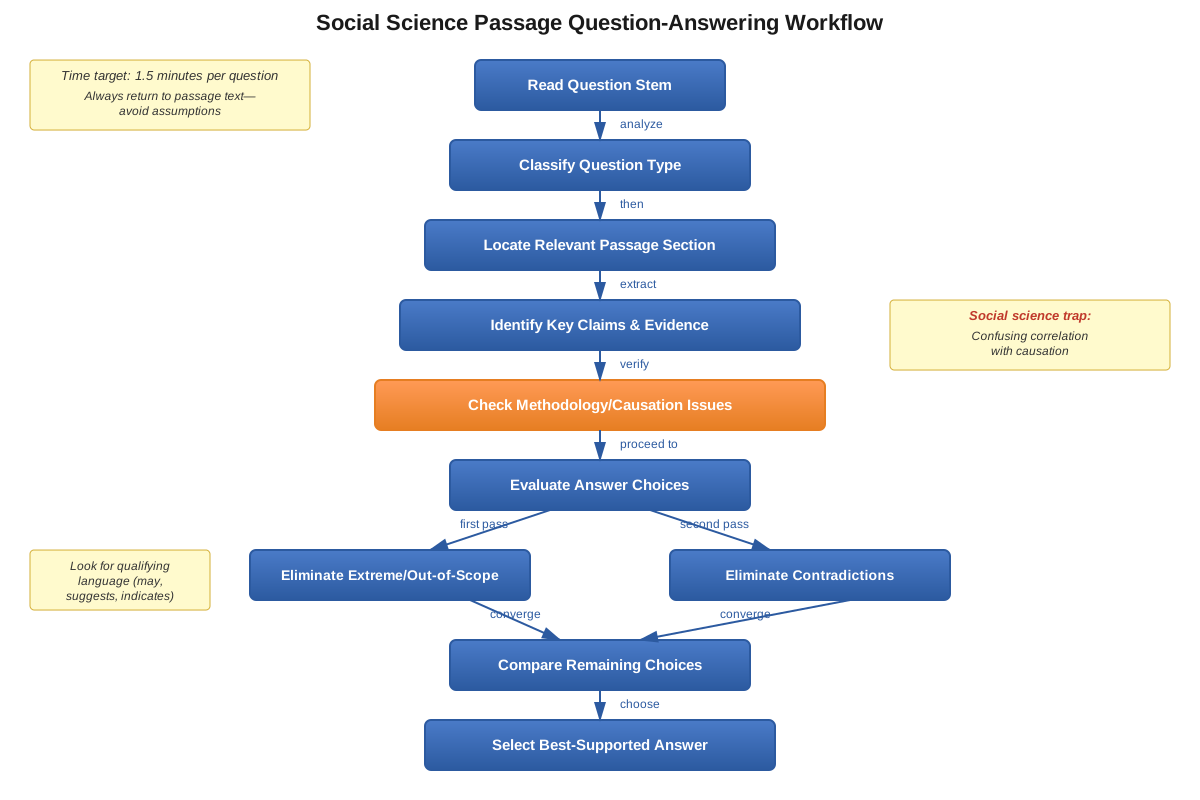
Process of Elimination Strategies
For social science passages specifically:
Eliminate answers that:
- Overstate passage claims (watch for "always," "never," "completely," "only")
- Introduce outside knowledge not supported by passage content
- Confuse correlation with causation when passage presents correlational data
- Attribute views to the author that the passage only describes
- Ignore methodological limitations the passage explicitly mentions
Favor answers that:
- Match passage tone and qualification level
- Paraphrase rather than quote passage language
- Address the specific limitation or gap the question identifies
- Distinguish between what the passage states versus implies
Time Allocation Wisdom
Social science passages often require more processing time than narrative humanities passages due to methodological complexity. Allocate:
- 4 minutes for initial reading (slightly longer than humanities passages)
- 5-6 minutes for questions (7 questions × 45 seconds each)
- 30 seconds buffer for difficult questions
If a passage discusses complex methodology or presents multiple studies, consider spending an extra 30 seconds on initial reading to build solid comprehension—this investment pays off through faster, more accurate question answering.
Exam Tip: For questions asking what would "strengthen" or "weaken" an argument, first identify the argument's current limitation (often stated in the passage), then select the answer addressing that specific limitation.
Memory Techniques
MCAT Social Science Passage Mnemonic: CREAM
- Claims: Identify main assertions
- Research: Note methodology and findings
- Evidence: Track what supports each claim
- Assumptions: Recognize unstated premises
- Methodology: Evaluate research design
This mnemonic guides active reading, ensuring attention to high-yield passage elements.
Correlation vs. Causation Reminder: TEMP
To establish causation, research needs:
- Temporal precedence (cause before effect)
- Elimination of confounds (control alternative explanations)
- Mechanism explanation (how cause produces effect)
- Plausibility (theoretical coherence)
When passages present correlational findings lacking these elements, expect questions testing whether students recognize causal claims are unsupported.
Question Type Recognition: FAR
Social science questions typically fall into three categories:
- Foundations: What does the passage state?
- Analysis: How does the argument work?
- Reasoning: What follows from passage logic?
Quickly categorizing questions helps activate appropriate answering strategies—Foundations questions require careful passage reference, while Reasoning questions demand logical extension.
Visualization Strategy
For comparative passages, create a mental two-column table:
| Element A | Element B |
|---|---|
| Key features | Key features |
| Strengths | Strengths |
| Limitations | Limitations |
This mental organization facilitates answering questions about similarities, differences, or relative advantages—common question types for comparative social science passages.
Summary
Social science passages represent a critical component of MCAT CARS, testing students' ability to analyze empirical research, evaluate theoretical frameworks, and apply social science reasoning to novel scenarios. These passages, drawn from disciplines including psychology, sociology, anthropology, and economics, require students to navigate complex arguments about human behavior and social phenomena while distinguishing correlation from causation, evaluating methodological validity, and recognizing implicit assumptions. Success demands understanding characteristic passage structures (empirical research, theoretical framework, comparative analysis, critical evaluation), identifying argument components (claims, evidence, assumptions, implications), and recognizing rhetorical strategies (hedging, citation, analogy, contrast). The integration of these elements—where disciplinary characteristics influence structure, which organizes argument components, presented through rhetorical strategies, and evaluated via methodological considerations—creates a systematic framework for approaching these passages efficiently. Students must balance careful reading with time management, employing strategic approaches that prioritize high-yield information while maintaining comprehension sufficient to answer questions requiring synthesis, application, and evaluation. Mastering social science passages develops critical thinking skills essential not only for MCAT success but for evidence-based medical practice, research evaluation, and understanding patients within their social contexts.
Key Takeaways
- Social science passages constitute approximately 50% of CARS content and require analyzing arguments about human behavior and social phenomena without relying on prior content knowledge
- Recognizing passage structure patterns (empirical research, theoretical framework, comparative analysis, critical evaluation) enables prediction of question types and efficient information location
- Distinguishing correlation from causation represents the single most frequently tested concept in social science passages, requiring attention to temporal precedence, confounding variables, and methodological limitations
- Questions about methodology, research design, and evidence strength appear more frequently in social science than humanities passages, making methodological literacy essential
- Author's perspective often differs from views discussed in the passage; identifying the author's actual position requires attention to rhetorical cues and argument structure
- Hedging language and qualifiers fundamentally affect claim strength and are frequently tested through answer choices that overstate passage assertions
- Strategic time allocation (4 minutes reading, 5-6 minutes questions) and systematic elimination of extreme or unsupported answers optimize performance under time pressure
Related Topics
Humanities Passages in CARS: The complementary passage type to social sciences, drawing from philosophy, literature, art criticism, and history. Mastering social science passages provides transferable skills for humanities passages, particularly argument analysis and inference-making, though humanities passages emphasize aesthetic and ethical reasoning over empirical methodology.
Reasoning Within the Text Questions: Question type requiring analysis of passage arguments, including identifying assumptions, evaluating evidence, and understanding logical structure. Social science passage mastery directly supports this question type through developed skills in argument component identification.
Reasoning Beyond the Text Questions: Question type requiring application of passage reasoning to novel scenarios or evaluation of hypothetical evidence. Social science passages frequently generate these questions, making passage mastery essential for this high-frequency question category.
Research Design and Methodology: Understanding experimental versus correlational designs, sampling strategies, and validity threats. While CARS doesn't test content knowledge, familiarity with research methodology concepts enhances efficiency in processing social science passages discussing empirical studies.
Logical Reasoning and Argumentation: Formal study of argument structure, logical fallacies, and reasoning patterns. Social science passage skills transfer directly to logical reasoning, as both require identifying premises, conclusions, assumptions, and evaluating argument strength.
Practice CTA
Now that you've mastered the core concepts of social science passages, it's time to apply this knowledge through deliberate practice. Attempt the accompanying practice questions, focusing on implementing the strategic approaches outlined in this guide—identify passage structure, track argument components, and systematically eliminate wrong answers. Use flashcards to reinforce high-yield facts about methodology, question types, and common traps. Remember that CARS skill development requires consistent practice with careful review of both correct and incorrect answers to understand the reasoning patterns the MCAT rewards. Each passage you analyze strengthens your ability to navigate complex arguments efficiently, building toward the confident, strategic performance that distinguishes top CARS scores. Your investment in mastering social science passages pays dividends not only on test day but throughout your medical career as you evaluate research, understand patient populations, and practice evidence-based medicine.
Sign up free to keep reading
Create a free AnvayaPrep account to finish this MCAT guide on Social science passages — plus flashcards and practice questions.