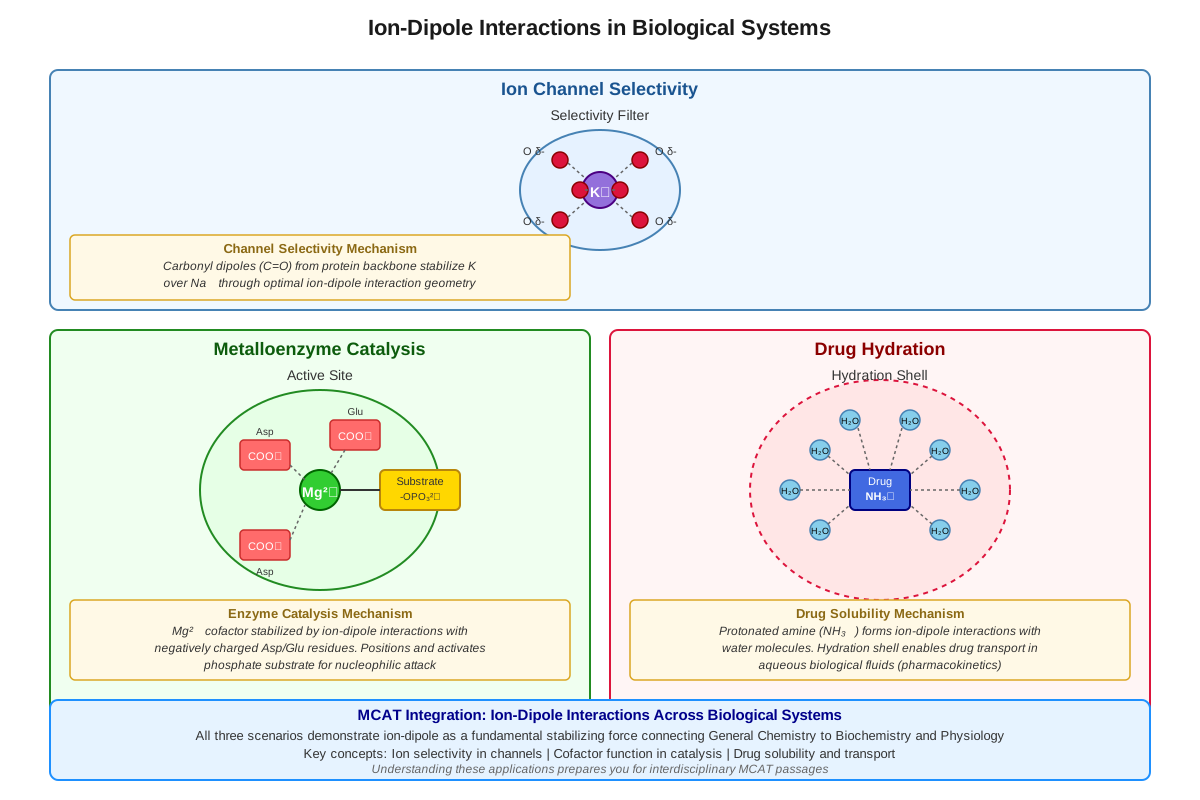
Overview
Ion-dipole interactions represent one of the most important intermolecular forces tested on the MCAT, particularly within the context of General Chemistry and Bonding and Molecular Structure. These electrostatic attractions occur between an ion (a charged species) and a polar molecule (one with a permanent dipole moment), and they are fundamental to understanding solution chemistry, solubility phenomena, and biological processes. Unlike covalent or ionic bonds that hold atoms together within molecules, ion-dipole interactions are intermolecular forces that influence how substances interact with one another, particularly in aqueous environments.
The significance of ion-dipole interactions for the MCAT cannot be overstated. These forces explain why ionic compounds dissolve in polar solvents like water, a phenomenon central to biochemistry and physiology. When sodium chloride dissolves in water, for instance, the process is driven by ion-dipole interactions between the Na⁺ and Cl⁻ ions and the polar water molecules. This concept bridges multiple MCAT topics including acid-base chemistry, electrochemistry, and biological membrane transport. Understanding ion-dipole interactions provides the foundation for predicting solubility patterns, explaining hydration energies, and analyzing the behavior of electrolytes in biological systems.
Within the broader landscape of General Chemistry, ion-dipole interactions occupy a critical position in the hierarchy of intermolecular forces. They are stronger than dipole-dipole interactions, London dispersion forces, and hydrogen bonding (in most cases), but weaker than ionic or covalent bonds. This intermediate strength makes them particularly important in dynamic biological systems where molecules must interact strongly enough to be selective, yet weakly enough to allow for rapid association and dissociation. Mastering this topic enables students to predict molecular behavior, understand solution thermodynamics, and tackle complex passage-based questions that integrate multiple chemistry concepts.
Learning Objectives
- [ ] Define ion-dipole interactions using accurate General Chemistry terminology
- [ ] Explain why ion-dipole interactions matter for the MCAT
- [ ] Apply ion-dipole interactions to exam-style questions
- [ ] Identify common mistakes related to ion-dipole interactions
- [ ] Connect ion-dipole interactions to related General Chemistry concepts
- [ ] Calculate and compare the relative strengths of ion-dipole interactions under different conditions
- [ ] Predict the solubility of ionic compounds in polar and nonpolar solvents based on ion-dipole interaction principles
- [ ] Analyze the role of ion-dipole interactions in biological systems and pharmaceutical applications
Prerequisites
- Electronegativity and polarity: Understanding molecular polarity is essential because ion-dipole interactions require a polar molecule with a permanent dipole moment to interact with an ion
- Ionic bonding and ion formation: Knowledge of how ions form and their charges is necessary to predict the strength and direction of ion-dipole interactions
- Intermolecular forces fundamentals: Familiarity with the general categories of intermolecular forces provides context for where ion-dipole interactions fit in the hierarchy of molecular attractions
- Coulomb's Law: Basic understanding of electrostatic interactions helps explain why ion-dipole forces depend on charge magnitude and distance
- Solution chemistry basics: Knowledge of solvation and dissolution processes provides the practical context where ion-dipole interactions are most relevant
Why This Topic Matters
Ion-dipole interactions are clinically and biologically significant in numerous contexts that appear regularly on the MCAT. In physiology, these interactions govern the transport of ions across cell membranes, the function of ion channels, and the maintenance of osmotic balance. Pharmaceutical drugs often contain ionic or ionizable groups that must dissolve in aqueous biological fluids through ion-dipole interactions before they can reach their targets. Intravenous saline solutions, electrolyte replacement therapies, and the behavior of neurotransmitters all depend fundamentally on ion-dipole interactions.
From an exam perspective, ion-dipole interactions MCAT questions appear with moderate frequency across multiple sections. In the Chemical and Physical Foundations section, students encounter questions about solubility, solution formation, and the energetics of dissolution. Passage-based questions often present experimental data about solubility trends or solution properties that require understanding of ion-dipole interactions to interpret correctly. Discrete questions may ask students to rank intermolecular forces by strength or predict which solvent will best dissolve a given ionic compound. The Biological and Biochemical Foundations section incorporates ion-dipole concepts when discussing membrane transport, protein-ion interactions, and the aqueous environment of cells.
Common MCAT passage types featuring this topic include experiments measuring solubility as a function of temperature, comparisons of dissolution rates in different solvents, and biological scenarios involving ion transport or osmotic pressure. Questions may present data tables showing solubility values, graphs of conductivity versus concentration, or diagrams of hydration shells around ions. The ability to quickly recognize when ion-dipole interactions are the key concept being tested—and to apply this knowledge to novel scenarios—is essential for achieving a competitive score.
Core Concepts
Definition and Fundamental Nature
Ion-dipole interactions are electrostatic attractions between an ion (a species with a full positive or negative charge) and a polar molecule (a species with a permanent dipole moment resulting from unequal electron distribution). These interactions are fundamentally electrostatic in nature, meaning they follow Coulomb's Law principles where the force of attraction is proportional to the product of the charges and inversely proportional to the square of the distance between them.
The strength of an ion-dipole interaction depends on three primary factors: (1) the magnitude of the ion's charge, (2) the magnitude of the dipole moment of the polar molecule, and (3) the distance between the ion and the dipole. Ions with higher charges (such as Mg²⁺ compared to Na⁺) create stronger ion-dipole interactions. Similarly, molecules with larger dipole moments (such as water with μ = 1.85 D compared to methanol with μ = 1.70 D) form stronger interactions with ions.
The Hydration Process
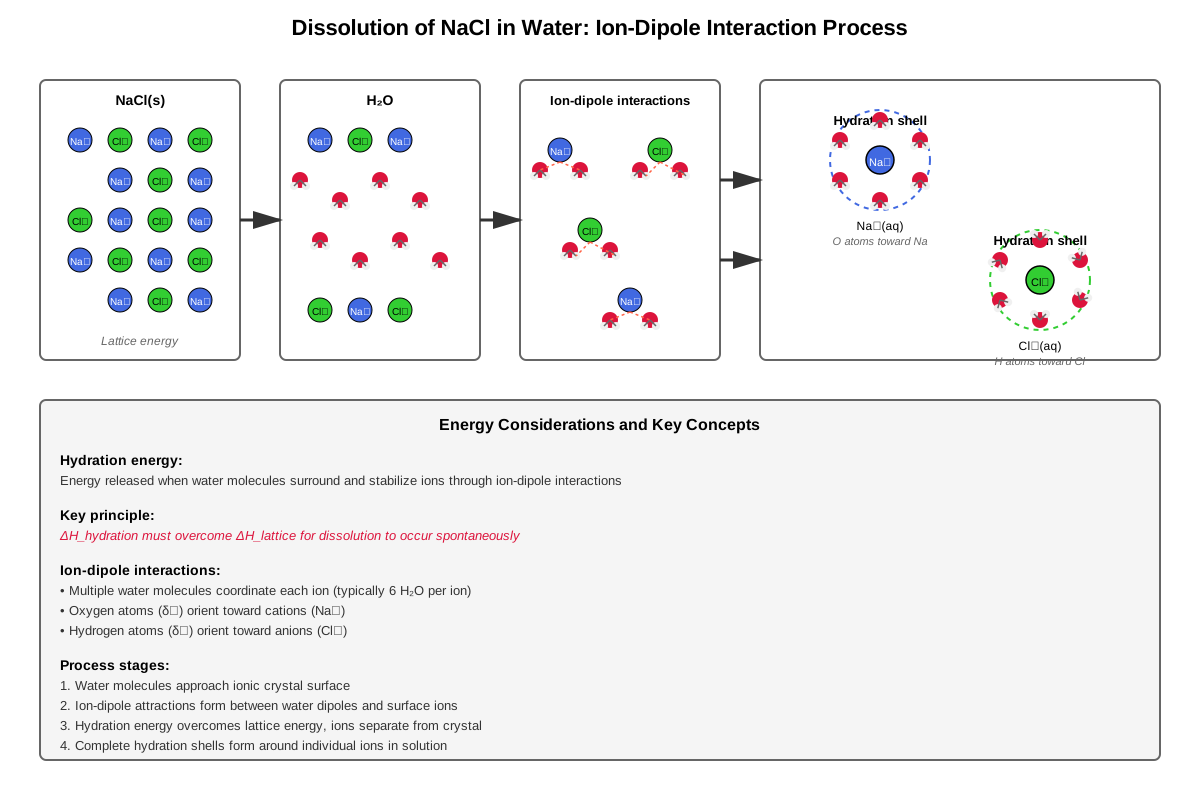
The most important application of ion-dipole interactions is the hydration of ions in aqueous solution. When an ionic compound like sodium chloride dissolves in water, the process occurs in several conceptual steps. First, the ionic lattice must be broken apart, which requires energy input (the lattice energy). Second, water molecules must be organized around each ion, which releases energy through the formation of ion-dipole interactions (the hydration energy).
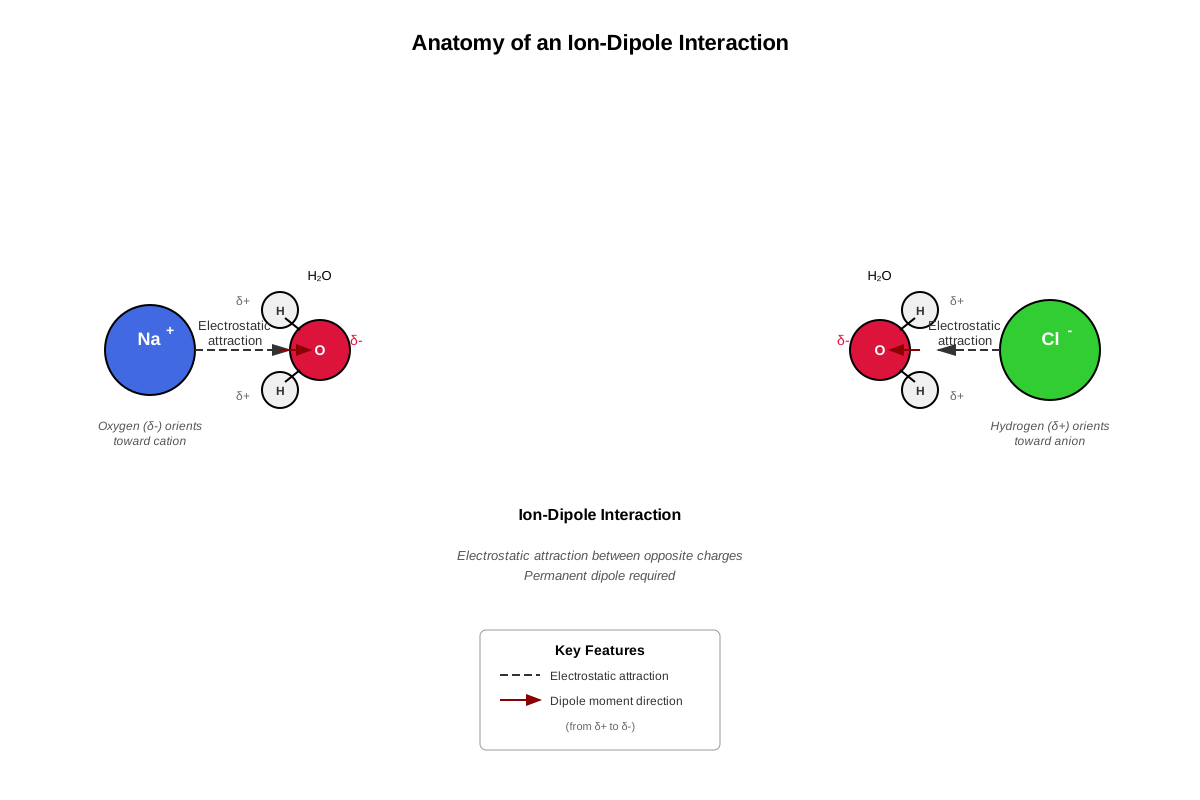
For a cation like Na⁺, the partially negative oxygen atoms of water molecules orient themselves toward the positive charge, forming a hydration shell or solvation shell. The number of water molecules in the first hydration shell depends on the size and charge of the ion—smaller, more highly charged ions attract more water molecules more tightly. For an anion like Cl⁻, the partially positive hydrogen atoms of water molecules orient toward the negative charge. This organized arrangement of water molecules around ions is energetically favorable and drives the dissolution process.
Energetics and Thermodynamics
The dissolution of an ionic compound in water can be analyzed thermodynamically using a Born-Haber cycle approach. The overall enthalpy of solution (ΔH_solution) equals the lattice energy (ΔH_lattice, always positive for dissolution) plus the hydration energy (ΔH_hydration, always negative):
ΔH_solution = ΔH_lattice + ΔH_hydrationFor dissolution to be spontaneous, the Gibbs free energy change must be negative (ΔG < 0). Even when ΔH_solution is positive (endothermic dissolution), the process can still be spontaneous if the entropy increase (ΔS > 0) is large enough to make the TΔS term dominate at the given temperature. The entropy increase comes from the greater disorder of ions dispersed in solution compared to the ordered crystal lattice.
The strength of ion-dipole interactions directly determines the magnitude of the hydration energy. Ions with higher charge density (charge-to-size ratio) have more negative hydration energies because they form stronger ion-dipole interactions with water molecules. This explains why Li⁺ (small radius) has a more negative hydration energy than Cs⁺ (large radius), even though both have the same +1 charge.
Comparative Strength of Intermolecular Forces
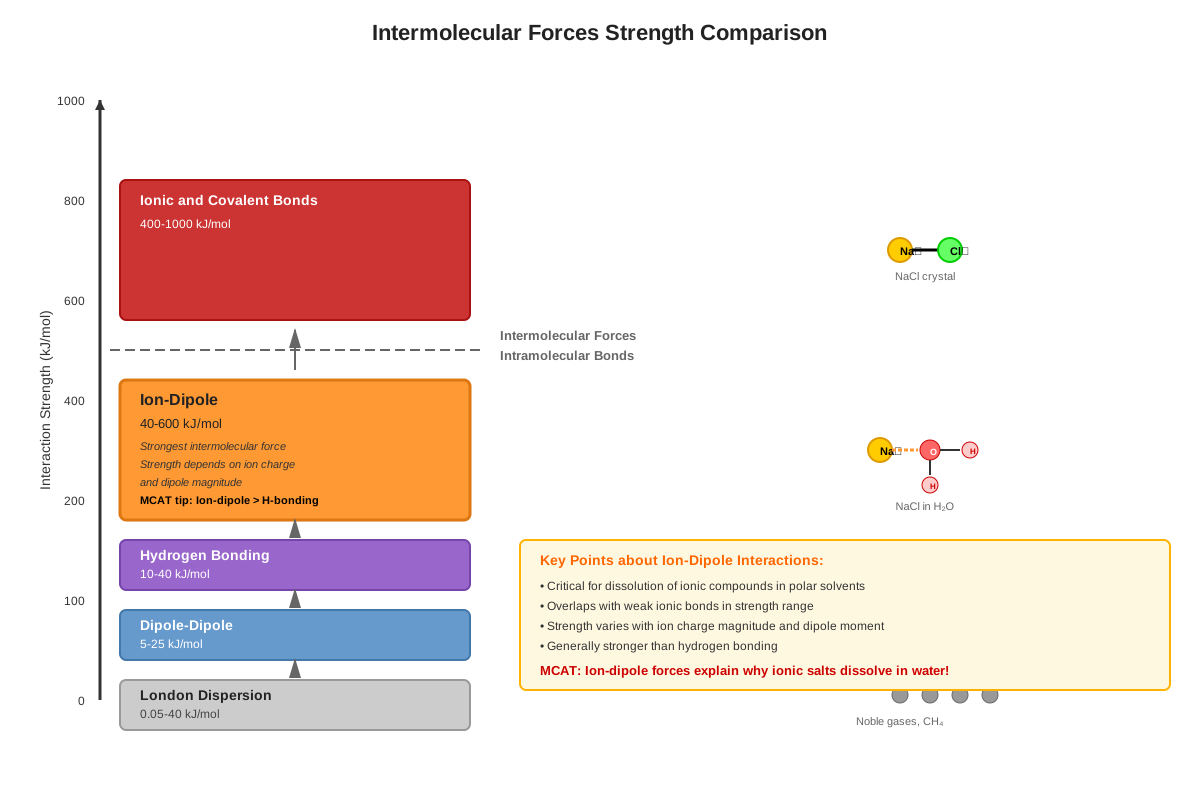
Understanding where ion-dipole interactions fit in the hierarchy of intermolecular forces is crucial for MCAT success. The general ranking from strongest to weakest is:
| Interaction Type | Typical Energy Range (kJ/mol) | Example |
|---|---|---|
| Ion-dipole | 40-600 | Na⁺ and H₂O |
| Hydrogen bonding | 10-40 | H₂O and H₂O |
| Dipole-dipole | 5-25 | HCl and HCl |
| London dispersion | 1-10 | CH₄ and CH₄ |
Ion-dipole interactions are significantly stronger than other intermolecular forces because they involve a full charge (on the ion) rather than a partial charge. However, they are still much weaker than ionic bonds (400-4000 kJ/mol) or covalent bonds (150-1000 kJ/mol). This intermediate strength is biologically important because it allows for reversible binding—strong enough for specificity but weak enough for dynamic processes.
Factors Affecting Strength
Several factors modulate the strength of ion-dipole interactions in practical situations:
- Ion charge magnitude: Divalent ions (Mg²⁺, Ca²⁺, SO₄²⁻) form stronger ion-dipole interactions than monovalent ions (Na⁺, K⁺, Cl⁻) with the same polar molecule
- Ion size: Smaller ions have higher charge density and form stronger interactions (Li⁺ > Na⁺ > K⁺ > Rb⁺ > Cs⁺ for interactions with water)
- Dipole moment of the polar molecule: Molecules with larger dipole moments form stronger ion-dipole interactions
- Temperature: Higher temperatures provide more kinetic energy to overcome ion-dipole attractions, generally increasing solubility for most ionic compounds
- Dielectric constant of the medium: Solvents with higher dielectric constants better stabilize separated ions through ion-dipole interactions
Solubility Predictions
The principle "like dissolves like" can be refined for ionic compounds: ionic compounds dissolve in polar solvents because the ion-dipole interactions between the ions and polar solvent molecules can compensate for the energy required to break apart the ionic lattice. Ionic compounds do not dissolve appreciably in nonpolar solvents because nonpolar molecules cannot form ion-dipole interactions—they lack the permanent dipole necessary for this type of attraction.
Water is the most important polar solvent in biological systems, with a high dielectric constant (ε = 80) and a substantial dipole moment. Other polar solvents like methanol, ethanol, and acetone can also dissolve ionic compounds, though generally less effectively than water. The effectiveness of a polar solvent at dissolving ionic compounds correlates with both its dipole moment and its dielectric constant.
Concept Relationships
Ion-dipole interactions connect to multiple concepts within Bonding and Molecular Structure and broader General Chemistry. The concept builds directly on electronegativity and molecular polarity—without understanding how unequal electron sharing creates permanent dipoles, students cannot grasp why certain molecules can participate in ion-dipole interactions while others cannot.
The relationship flows as follows: Electronegativity differences → Polar covalent bonds → Molecular polarity (dipole moments) → Ion-dipole interactions with ions → Solvation and dissolution → Solution properties and colligative properties.
Ion-dipole interactions also connect horizontally to other intermolecular forces. All intermolecular forces share the common feature of being electrostatic attractions between molecules or between ions and molecules, but they differ in the nature of the charges involved (full charges versus partial charges) and their resulting strengths. Understanding this hierarchy helps students predict physical properties like boiling points, melting points, and solubilities.
The concept extends forward to solution chemistry topics including concentration units, colligative properties, and electrolyte behavior. The strength of ion-dipole interactions influences the extent of ion pairing in solution, which affects conductivity and osmotic pressure. In biochemistry, ion-dipole interactions explain how proteins with charged amino acid residues interact with ions, how ion channels select for specific ions, and how the aqueous cellular environment stabilizes charged metabolites.
The energetics of ion-dipole interactions connect to thermodynamics and kinetics. The enthalpy of hydration appears in Hess's Law calculations and Born-Haber cycles. The activation energy for dissolution processes depends partly on the strength of ion-dipole interactions that must form as the lattice breaks apart. Equilibrium concepts apply when considering the dynamic balance between dissolved ions and precipitated solids in saturated solutions.
High-Yield Facts
⭐ Ion-dipole interactions are the strongest type of intermolecular force, typically ranging from 40-600 kJ/mol, stronger than hydrogen bonding, dipole-dipole, and London dispersion forces
⭐ Ion-dipole interactions explain why ionic compounds dissolve in polar solvents like water but not in nonpolar solvents like hexane
⭐ The strength of ion-dipole interactions increases with increasing ion charge and decreasing ion size (higher charge density creates stronger interactions)
⭐ Hydration energy (released when ions form ion-dipole interactions with water) must overcome lattice energy for dissolution to occur
⭐ Smaller cations have more negative hydration energies than larger cations with the same charge (Li⁺ > Na⁺ > K⁺)
- The orientation of polar molecules around ions is specific: the negative end of the dipole points toward cations, and the positive end points toward anions
- Ion-dipole interactions are electrostatic in nature and follow Coulomb's Law principles (force proportional to charge product, inversely proportional to distance squared)
- Water's high dielectric constant (ε = 80) makes it an excellent solvent for ionic compounds by stabilizing separated ions through ion-dipole interactions
- The first hydration shell around an ion is highly organized, with water molecules oriented to maximize ion-dipole interactions
- Temperature generally increases the solubility of ionic solids in water by providing energy to overcome lattice forces, though the ion-dipole interactions themselves weaken slightly at higher temperatures
- Ion-dipole interactions are crucial for biological processes including nerve impulse transmission, muscle contraction, and enzyme function
- The number of water molecules in the first hydration shell depends on ion size and charge (typically 4-8 for monovalent ions, more for highly charged ions)
Quick check — test yourself on Ion dipole interactions so far.
Try Flashcards →Common Misconceptions
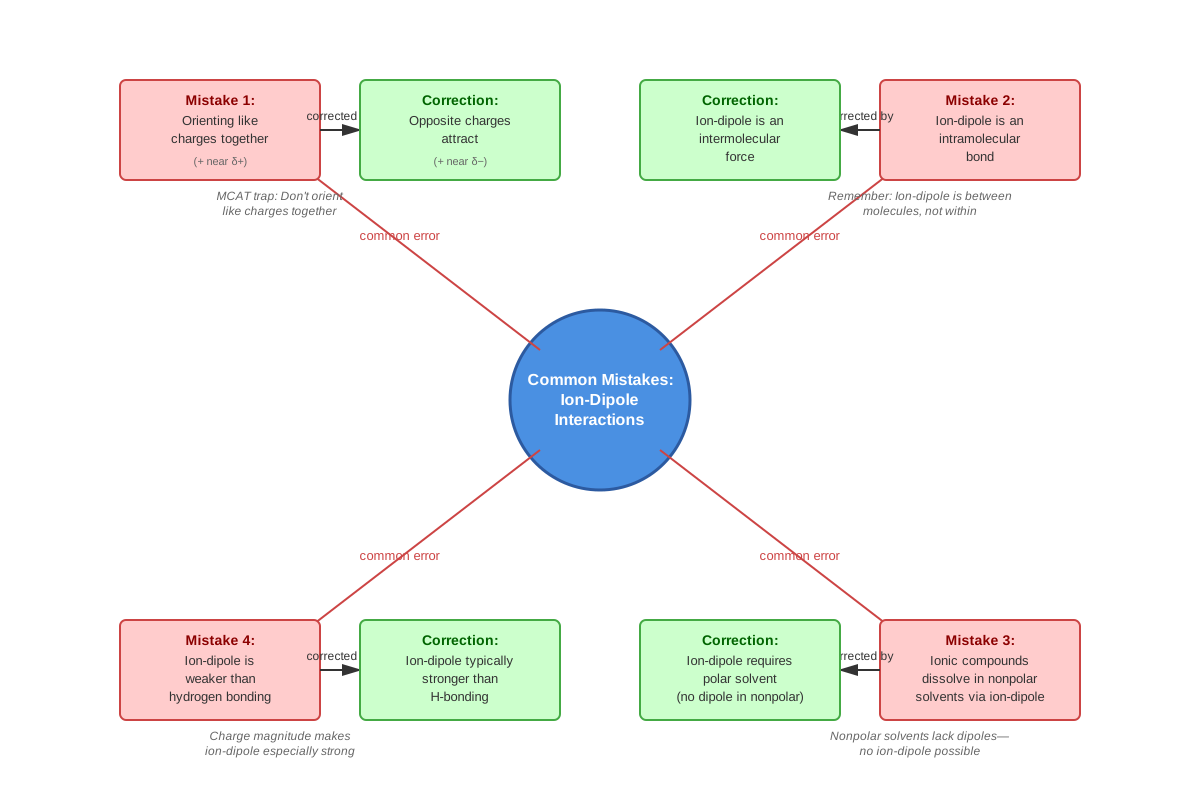
Misconception: Ion-dipole interactions are a type of chemical bond like ionic or covalent bonds.
Correction: Ion-dipole interactions are intermolecular forces, not chemical bonds. They occur between separate species (an ion and a polar molecule) rather than holding atoms together within a molecule. They are significantly weaker than chemical bonds and can be easily disrupted by changes in temperature or solvent.
Misconception: All ions have the same strength of ion-dipole interactions with water.
Correction: The strength of ion-dipole interactions varies dramatically based on ion charge and size. Small, highly charged ions like Mg²⁺ or Al³⁺ form much stronger ion-dipole interactions with water than large, singly charged ions like Cs⁺ or I⁻. This is why hydration energies vary widely among different ions.
Misconception: Ion-dipole interactions only occur in water.
Correction: While water is the most common and biologically relevant polar solvent, ion-dipole interactions occur between ions and any polar molecule with a permanent dipole moment. Methanol, ethanol, acetone, and ammonia can all participate in ion-dipole interactions with dissolved ions.
Misconception: If an ionic compound has a positive enthalpy of solution (ΔH_solution > 0), it cannot dissolve.
Correction: Dissolution depends on Gibbs free energy (ΔG = ΔH - TΔS), not just enthalpy. Many ionic compounds have endothermic dissolution processes but still dissolve spontaneously because the entropy increase (ΔS > 0) makes ΔG negative. Ammonium nitrate dissolving in water is a classic example of an endothermic but spontaneous dissolution.
Misconception: Ion-dipole interactions are the same as dipole-dipole interactions.
Correction: Ion-dipole interactions involve a full charge (on an ion) interacting with a partial charge (on a polar molecule), while dipole-dipole interactions involve two partial charges (on two polar molecules). Ion-dipole interactions are significantly stronger because full charges create stronger electrostatic attractions than partial charges.
Misconception: Larger ions always form stronger ion-dipole interactions because they have more electrons.
Correction: Larger ions actually form weaker ion-dipole interactions because their charge is spread over a larger volume, resulting in lower charge density. The distance between the ion's charge center and the polar molecule's dipole is also greater for larger ions, further weakening the interaction according to Coulomb's Law.
Misconception: The hydration shell around an ion is static and permanent.
Correction: Water molecules in the hydration shell are in dynamic equilibrium, constantly exchanging with bulk water molecules. The residence time of water molecules in the first hydration shell varies from nanoseconds to microseconds depending on the ion's charge density, but the exchange is always occurring.
Worked Examples
Example 1: Predicting Relative Solubility
Question: Rank the following ionic compounds in order of increasing solubility in water: LiF, NaF, KF, RbF. Explain your reasoning in terms of ion-dipole interactions.
Solution:
Step 1: Identify the relevant factors. All four compounds have the same anion (F⁻), so the difference in solubility will depend on the cation's properties. We need to consider how the cation's size affects ion-dipole interactions with water.
Step 2: Analyze the cation trend. Moving down Group 1 from Li⁺ to Rb⁺, the ionic radius increases: Li⁺ (76 pm) < Na⁺ (102 pm) < K⁺ (138 pm) < Rb⁺ (152 pm).
Step 3: Connect to ion-dipole interactions. Smaller cations have higher charge density (charge-to-radius ratio) and form stronger ion-dipole interactions with water molecules. This means Li⁺ has the most negative hydration energy, followed by Na⁺, K⁺, and Rb⁺.
Step 4: Consider the lattice energy. Smaller cations also form stronger ionic bonds with F⁻, resulting in higher lattice energies. For fluoride salts specifically, the lattice energy effect dominates because F⁻ is very small, and the lattice energy decreases more slowly than the hydration energy as the cation size increases.
Step 5: Apply the solubility principle. For dissolution to occur, the hydration energy must compensate for the lattice energy. For these fluoride salts, LiF has such a high lattice energy (due to both small ions) that even its very favorable hydration energy cannot fully compensate, making it the least soluble. As cation size increases, lattice energy decreases more than hydration energy, so solubility increases.
Answer: LiF < NaF < KF < RbF (increasing solubility)
Key takeaway: This example demonstrates that predicting solubility requires considering both the lattice energy (which must be overcome) and the hydration energy (which is released through ion-dipole interactions). The balance between these two factors determines solubility.
Example 2: Analyzing Experimental Data
Question: A student measures the temperature change when 10.0 g of three different ionic compounds dissolve in 100 mL of water. The results are:
- Compound A: Temperature increases by 5.2°C
- Compound B: Temperature decreases by 3.8°C
- Compound C: Temperature remains essentially constant
Explain these observations in terms of lattice energy, hydration energy, and ion-dipole interactions.
Solution:
Step 1: Recall the thermodynamic relationship. The enthalpy of solution equals the lattice energy (always positive for dissolution) plus the hydration energy (always negative): ΔH_solution = ΔH_lattice + ΔH_hydration.
Step 2: Interpret temperature changes. An increase in temperature indicates an exothermic process (ΔH_solution < 0), meaning heat is released to the surroundings. A decrease in temperature indicates an endothermic process (ΔH_solution > 0), meaning heat is absorbed from the surroundings.
Step 3: Analyze Compound A (exothermic dissolution). The temperature increase means ΔH_solution < 0. This occurs when |ΔH_hydration| > ΔH_lattice. The energy released by forming ion-dipole interactions between the ions and water molecules exceeds the energy required to break apart the ionic lattice. Compound A likely contains small, highly charged ions that form very strong ion-dipole interactions with water, resulting in a large negative hydration energy.
Step 4: Analyze Compound B (endothermic dissolution). The temperature decrease means ΔH_solution > 0. This occurs when ΔH_lattice > |ΔH_hydration|. The energy required to break apart the lattice exceeds the energy released by forming ion-dipole interactions. Compound B likely has a very stable lattice (perhaps with small ions creating strong ionic bonds) and/or larger ions that form weaker ion-dipole interactions with water.
Step 5: Analyze Compound C (thermoneutral dissolution). The constant temperature means ΔH_solution ≈ 0. This occurs when ΔH_lattice ≈ |ΔH_hydration|. The energy required to break the lattice is almost exactly balanced by the energy released through ion-dipole interactions. This is relatively uncommon but can occur with specific combinations of ion sizes and charges.
Answer: Compound A has hydration energy that exceeds lattice energy (strong ion-dipole interactions), Compound B has lattice energy that exceeds hydration energy (weaker ion-dipole interactions or very stable lattice), and Compound C has nearly balanced energies.
Key takeaway: This example shows how macroscopic observations (temperature changes) connect directly to molecular-level interactions (ion-dipole forces) and thermodynamic quantities (enthalpy changes). Understanding this connection is essential for interpreting experimental data on the MCAT.
Exam Strategy
When approaching MCAT questions on ion-dipole interactions, begin by identifying whether the question is asking about dissolution, solubility, intermolecular force strength, or energetics. Each of these question types has specific trigger words and requires slightly different approaches.
Trigger words and phrases to watch for include: "dissolves in water," "hydration," "solvation," "polar solvent," "ionic compound in solution," "lattice energy," "hydration energy," "charge density," and "solubility trend." When you see these terms, immediately consider whether ion-dipole interactions are the key concept being tested.
For ranking questions (e.g., "Which ion forms the strongest ion-dipole interactions with water?"), use a systematic approach: (1) identify the charges on all ions, (2) compare ionic radii or use periodic trends, (3) calculate or estimate charge density (charge/radius), and (4) rank based on charge density (higher charge density = stronger ion-dipole interactions). Remember that charge magnitude matters more than size—a divalent ion will generally form stronger interactions than a monovalent ion even if it's slightly larger.
For solubility prediction questions, quickly assess whether the solvent is polar or nonpolar. If nonpolar, ionic compounds will not dissolve (no ion-dipole interactions possible). If polar, consider both lattice energy and hydration energy. When comparing solubilities of compounds with a common ion, focus on how the other ion affects the balance between these energies.
Process-of-elimination strategies are particularly effective for ion-dipole questions. Eliminate answer choices that confuse ion-dipole interactions with other intermolecular forces (especially dipole-dipole). Eliminate choices that suggest ionic compounds dissolve in nonpolar solvents. Eliminate choices that incorrectly state larger ions form stronger ion-dipole interactions than smaller ions with the same charge.
Time allocation: Most discrete questions on ion-dipole interactions should take 45-60 seconds once you've identified the concept being tested. Passage-based questions may take 60-90 seconds, with most of that time spent interpreting data or experimental setup rather than applying the core concept. If you find yourself spending more than 90 seconds on a question, flag it and move on—you may be overcomplicating the problem.
For passage-based questions, quickly scan for data tables or graphs showing solubility trends, conductivity measurements, or temperature changes during dissolution. These are strong indicators that ion-dipole interactions will be relevant to answering the questions. Pay attention to which variables are being manipulated (ion identity, solvent type, temperature) as these will guide your analysis.
Memory Techniques
Mnemonic for intermolecular force strength: "Inside Homes, Dogs Love Dinner" represents the ranking from strongest to weakest: Ion-dipole, Hydrogen bonding, Dipole-Dipole, London Dispersion.
Visualization for hydration shells: Picture an ion as a celebrity surrounded by paparazzi (water molecules). The more famous (highly charged) and accessible (small) the celebrity, the more paparazzi crowd around. The paparazzi with cameras (oxygen atoms for cations, hydrogen atoms for anions) point toward the celebrity to get the best shot.
Acronym for factors affecting ion-dipole strength: "Charlie Sees Distant Trees" = Charge magnitude, Size (inverse relationship), Dipole moment, Temperature (inverse relationship).
Memory aid for hydration energy trend: "Little Ions Love Water" reminds you that smaller ions (like Li⁺) have more negative (more favorable) hydration energies because they form stronger ion-dipole interactions with water.
Conceptual anchor: Always remember that ion-dipole interactions are about full charges meeting partial charges. If you can identify the full charge (the ion) and the partial charges (the dipole), you can predict the interaction. The positive end of the dipole goes to the negative ion, and vice versa—opposites attract.
Summary
Ion-dipole interactions are electrostatic attractions between ions and polar molecules, representing the strongest category of intermolecular forces with energies ranging from 40-600 kJ/mol. These interactions are fundamental to understanding dissolution of ionic compounds in polar solvents, particularly water, where they form the basis of hydration shells around ions. The strength of ion-dipole interactions depends primarily on ion charge density (charge-to-size ratio) and the dipole moment of the polar molecule, with smaller, more highly charged ions forming stronger interactions. The dissolution process involves a balance between lattice energy (energy required to separate ions) and hydration energy (energy released through ion-dipole interactions), with the overall enthalpy of solution determining whether dissolution is exothermic or endothermic. For the MCAT, students must be able to predict solubility trends, rank intermolecular forces by strength, interpret experimental data on dissolution, and connect ion-dipole interactions to biological processes such as ion transport and protein-ion binding. Mastery of this topic requires understanding both the molecular-level electrostatic principles and the macroscopic thermodynamic consequences of these interactions.
Key Takeaways
- Ion-dipole interactions are the strongest intermolecular forces, occurring between ions (full charges) and polar molecules (partial charges), with typical energies of 40-600 kJ/mol
- Ionic compounds dissolve in polar solvents through ion-dipole interactions that form hydration shells, with dissolution occurring when hydration energy compensates for lattice energy
- Smaller ions with higher charge density form stronger ion-dipole interactions with polar molecules, resulting in more negative hydration energies (Li⁺ > Na⁺ > K⁺)
- The strength of ion-dipole interactions increases with ion charge magnitude and dipole moment of the polar molecule, following Coulombic principles
- Water is the most important biological solvent for ion-dipole interactions due to its high dipole moment and dielectric constant
- Ion-dipole interactions explain critical biological processes including ion transport, nerve signaling, and the aqueous environment of cells
- MCAT questions test ion-dipole concepts through solubility predictions, intermolecular force rankings, and thermodynamic analysis of dissolution processes
Related Topics
- Hydrogen Bonding: A special type of dipole-dipole interaction that is sometimes comparable in strength to ion-dipole interactions; understanding both helps distinguish when each is most important
- Colligative Properties: Ion-dipole interactions influence how dissolved ions affect boiling point elevation, freezing point depression, and osmotic pressure
- Acid-Base Chemistry: The dissolution of acids and bases in water involves ion-dipole interactions between H⁺/OH⁻ ions and water molecules
- Electrochemistry: Ion-dipole interactions affect ion mobility in solution, which influences conductivity and electrode processes
- Protein Structure and Function: Charged amino acid residues interact with ions and water through ion-dipole interactions, affecting protein folding and enzyme active sites
- Membrane Transport: Ion channels and transporters rely on specific ion-dipole interactions to achieve selectivity for particular ions
Practice CTA
Now that you've mastered the core concepts of ion-dipole interactions, it's time to solidify your understanding through active practice. Attempt the practice questions and flashcards associated with this topic to test your ability to apply these concepts under exam conditions. Focus particularly on questions that require you to predict solubility trends, rank intermolecular forces, and analyze experimental data—these are the highest-yield question types for this topic on the MCAT. Remember that understanding ion-dipole interactions opens the door to mastering solution chemistry, thermodynamics, and biological applications. Your investment in this foundational topic will pay dividends across multiple sections of the exam. You've got this!
Sign up free to keep reading
Create a free AnvayaPrep account to finish this MCAT guide on Ion dipole interactions — plus flashcards and practice questions.