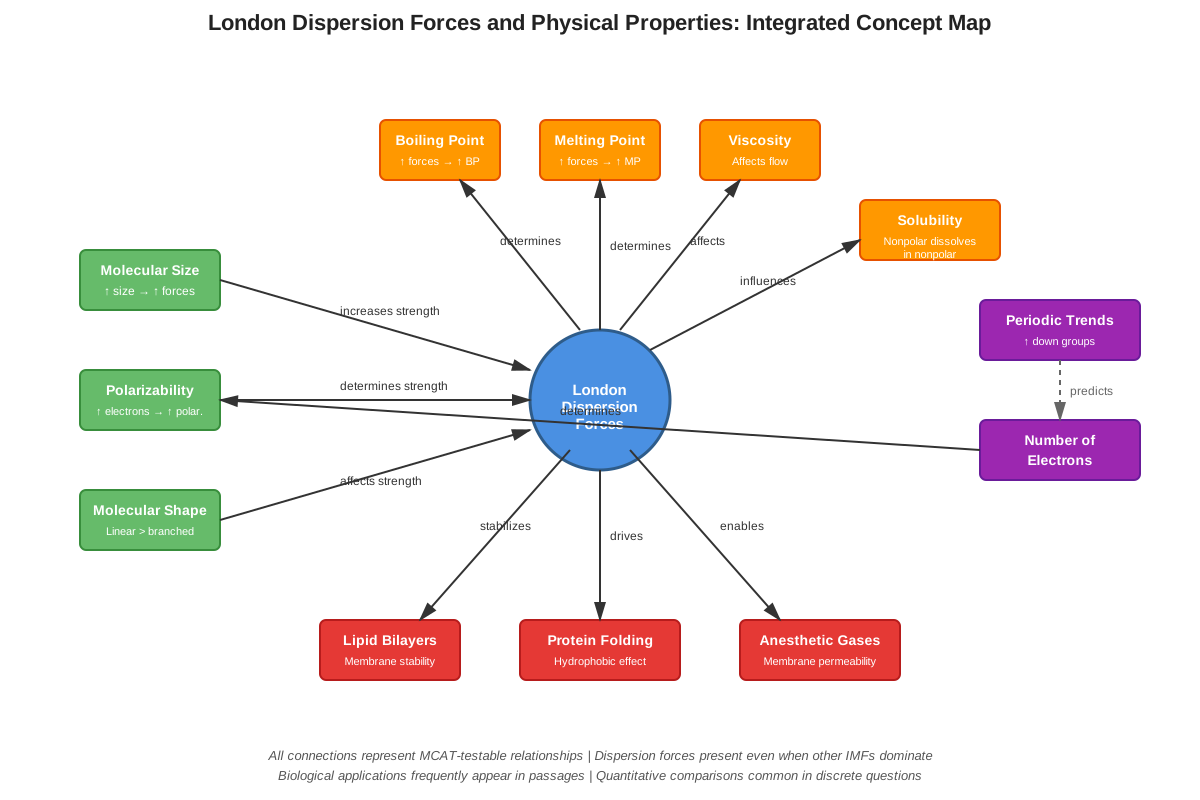
Overview
London dispersion forces represent the weakest yet most universal type of intermolecular force in chemistry, arising from temporary fluctuations in electron distribution that create instantaneous dipoles in atoms and molecules. Despite their relative weakness compared to other intermolecular forces, London dispersion forces are fundamental to understanding molecular behavior, physical properties, and biological systems. These forces exist in all molecules—polar and nonpolar alike—and become the dominant intermolecular interaction in nonpolar substances such as hydrocarbons, noble gases, and lipid bilayers.
For the MCAT, mastery of London dispersion forces is essential because they appear across multiple contexts within General Chemistry, organic chemistry, and biochemistry sections. Questions frequently test the relationship between molecular size, shape, surface area, and the strength of dispersion forces, as well as how these forces influence boiling points, melting points, solubility, and membrane structure. Understanding London dispersion forces provides the foundation for predicting and explaining physical properties of substances, a skill tested repeatedly on the exam through both discrete questions and passage-based items.
Within the broader framework of Bonding and Molecular Structure, London dispersion forces represent one component of van der Waals forces and connect directly to concepts including molecular polarity, electronegativity, dipole-dipole interactions, hydrogen bonding, and the physical properties of compounds. This topic bridges the gap between molecular structure (determined by covalent bonding) and bulk properties (determined by intermolecular forces), making it a high-yield area that integrates multiple domains of chemistry tested on the MCAT.
Learning Objectives
- [ ] Define London dispersion forces using accurate General Chemistry terminology
- [ ] Explain why London dispersion forces matters for the MCAT
- [ ] Apply London dispersion forces to exam-style questions
- [ ] Identify common mistakes related to London dispersion forces
- [ ] Connect London dispersion forces to related General Chemistry concepts
- [ ] Predict the relative strength of London dispersion forces based on molecular size, shape, and polarizability
- [ ] Compare and contrast London dispersion forces with other types of intermolecular forces
- [ ] Explain the relationship between London dispersion forces and physical properties such as boiling point, melting point, and viscosity
Prerequisites
- Electronegativity and polarity: Understanding electron distribution in bonds is necessary to recognize when molecules lack permanent dipoles and rely solely on dispersion forces
- Molecular geometry: VSEPR theory and three-dimensional molecular shapes determine surface area contact between molecules, directly affecting dispersion force strength
- Intermolecular vs. intramolecular forces: Distinguishing between forces within molecules (covalent bonds) and between molecules (intermolecular forces) prevents conceptual confusion
- Electron cloud behavior: Basic understanding of electron probability distributions helps explain how temporary dipoles form
- Physical properties of matter: Familiarity with phase transitions and states of matter provides context for how intermolecular forces manifest in observable properties
Why This Topic Matters
London dispersion forces have profound clinical and real-world significance. In biological systems, these forces stabilize protein tertiary and quaternary structures through hydrophobic interactions, maintain the integrity of lipid bilayers in cell membranes, and enable the function of anesthetic gases that dissolve in neuronal membranes. The pharmaceutical industry relies on understanding dispersion forces to design drugs with appropriate lipophilicity for membrane permeability and bioavailability. Environmental chemistry applications include understanding how nonpolar pollutants bioaccumulate in fatty tissues and how greenhouse gases interact with atmospheric components.
On the MCAT, London dispersion forces appear with high frequency across multiple sections. Exam statistics indicate that intermolecular forces questions appear in approximately 8-12% of Chemical and Physical Foundations passages, with London dispersion forces specifically tested in 3-5 questions per exam. Questions typically appear as:
- Discrete questions asking students to rank compounds by boiling point or explain physical property trends
- Passage-based questions involving biochemical structures, membrane dynamics, or organic compound properties
- Data interpretation requiring analysis of experimental results related to solubility, chromatography, or phase behavior
- Integrated questions connecting molecular structure to biological function or chemical reactivity
Common passage contexts include lipid biochemistry, protein folding, drug design, chromatographic separation techniques, and polymer chemistry. The MCAT frequently presents scenarios requiring students to distinguish between different types of intermolecular forces and predict which dominates in a given molecular system.
Core Concepts
Definition and Mechanism of London Dispersion Forces
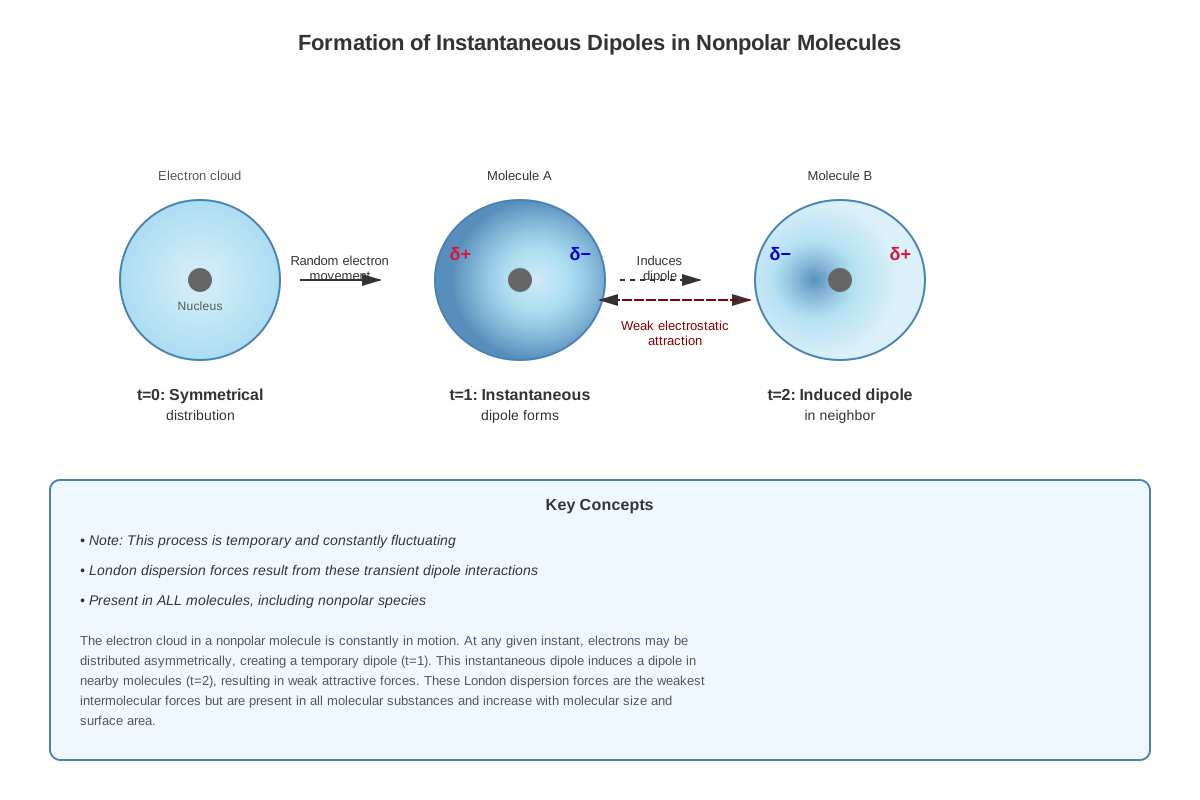
London dispersion forces (also called dispersion forces or induced dipole-induced dipole forces) are weak, temporary attractive forces that arise from instantaneous fluctuations in the electron distribution of atoms and molecules. Named after physicist Fritz London who first described them mathematically in 1930, these forces represent the quantum mechanical phenomenon of correlated electron motion between neighboring particles.
The mechanism operates through the following process:
- At any given instant, the electron cloud of an atom or molecule may be asymmetrically distributed due to random electron movement
- This creates a temporary (instantaneous) dipole with a partial positive region and partial negative region
- The instantaneous dipole induces a complementary dipole in neighboring atoms or molecules through electrostatic interaction
- The temporary dipoles attract each other through electrostatic forces
- Although each instantaneous dipole exists for only a fraction of a second, the continuous formation and reformation of these dipoles creates a net attractive force
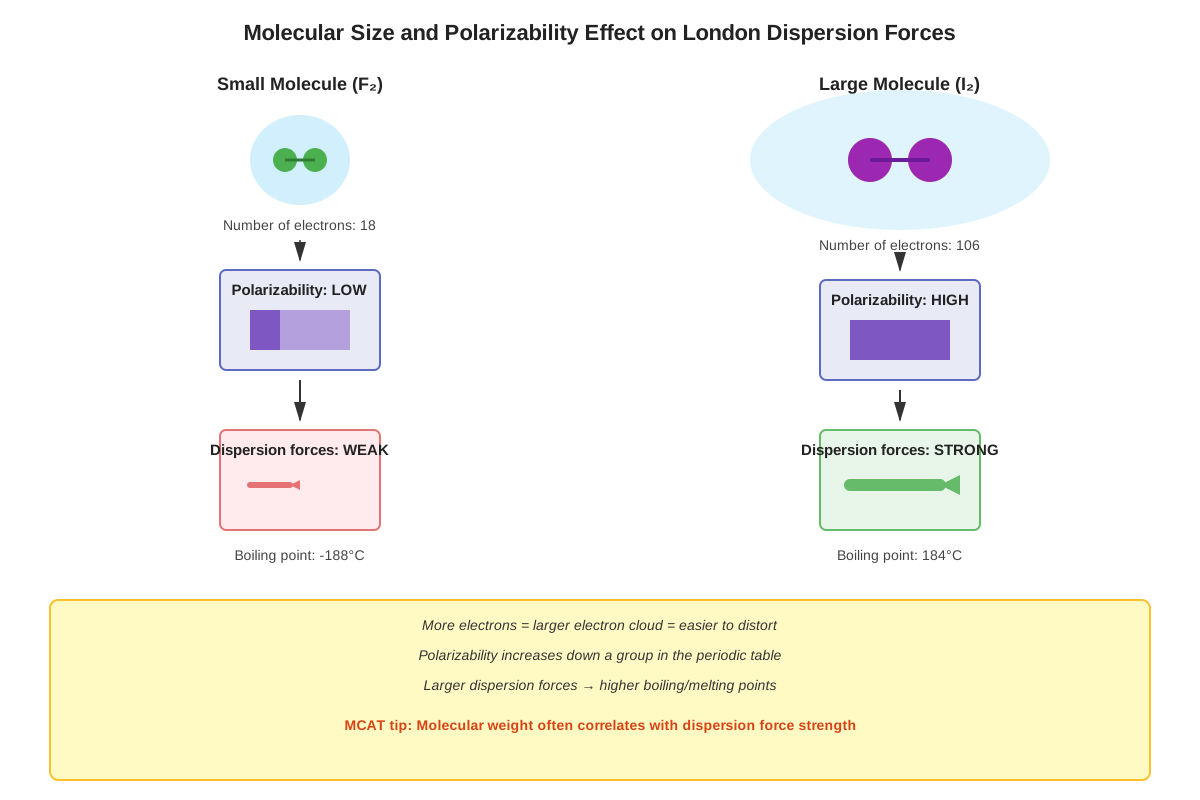
The strength of London dispersion forces depends on the polarizability of the electron cloud—the ease with which the electron distribution can be distorted. Larger electron clouds are more polarizable because outer electrons are farther from the nucleus and experience weaker attractive forces, making them easier to distort.
Factors Affecting London Dispersion Force Strength
Several structural features determine the magnitude of dispersion forces between molecules:
Molecular Size and Molar Mass: Larger molecules with more electrons have greater polarizability and stronger London dispersion forces. As molar mass increases within a homologous series (compounds with similar structure but different chain length), dispersion forces strengthen, leading to higher boiling points and melting points. For example, in the alkane series (methane, ethane, propane, butane), each additional CH₂ unit increases the total electron count and molecular surface area, progressively strengthening dispersion forces.
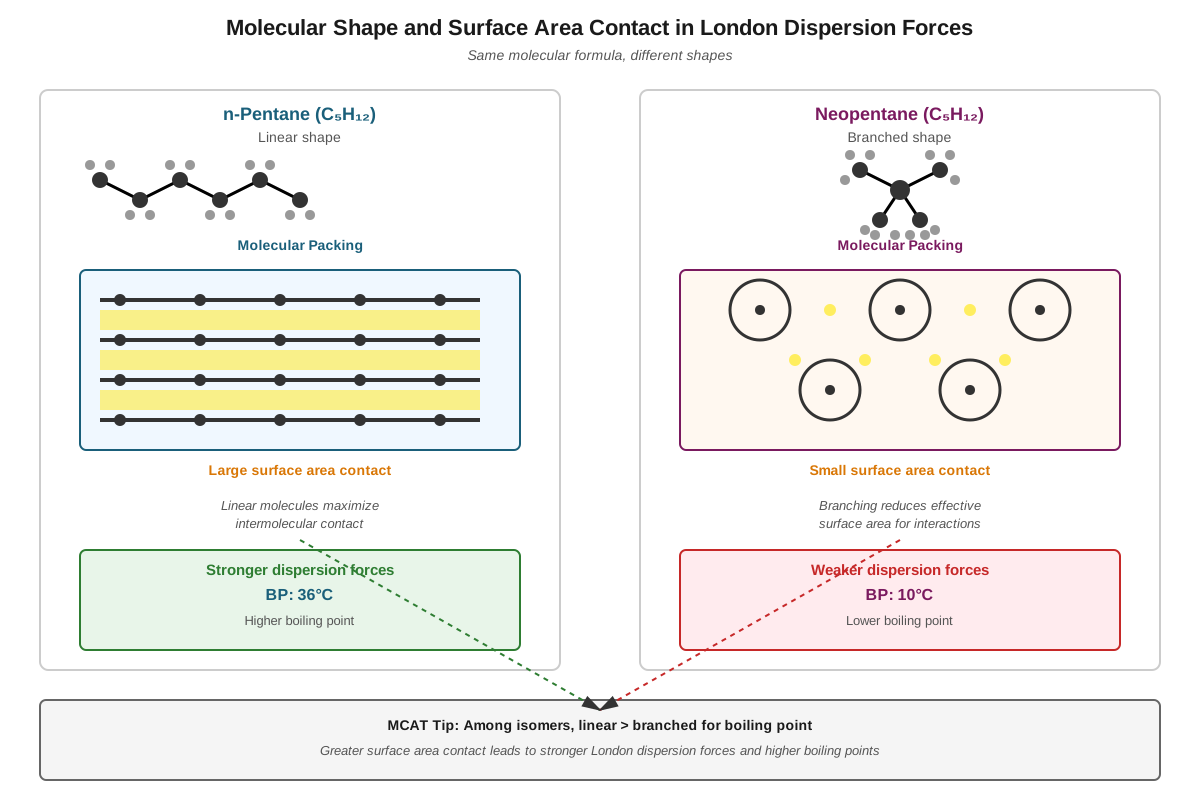
Surface Area and Molecular Shape: The extent of contact between molecules dramatically affects dispersion force strength. Linear molecules have greater surface area available for intermolecular contact compared to branched or spherical molecules of similar molar mass. This explains why n-pentane (linear) has a higher boiling point (36°C) than neopentane (spherical, 9.5°C) despite identical molecular formulas (C₅H₁₂). The linear structure allows more extensive electron cloud overlap and stronger cumulative dispersion forces.
Electron Cloud Polarizability: Atoms and molecules with loosely held electrons exhibit greater polarizability. Polarizability increases:
- Down a group in the periodic table (I₂ > Br₂ > Cl₂ > F₂)
- With increasing atomic/molecular size
- With decreasing electronegativity of constituent atoms
- In molecules with π-electron systems that can be easily distorted
Comparison with Other Intermolecular Forces
Understanding London dispersion forces requires distinguishing them from other intermolecular interactions:
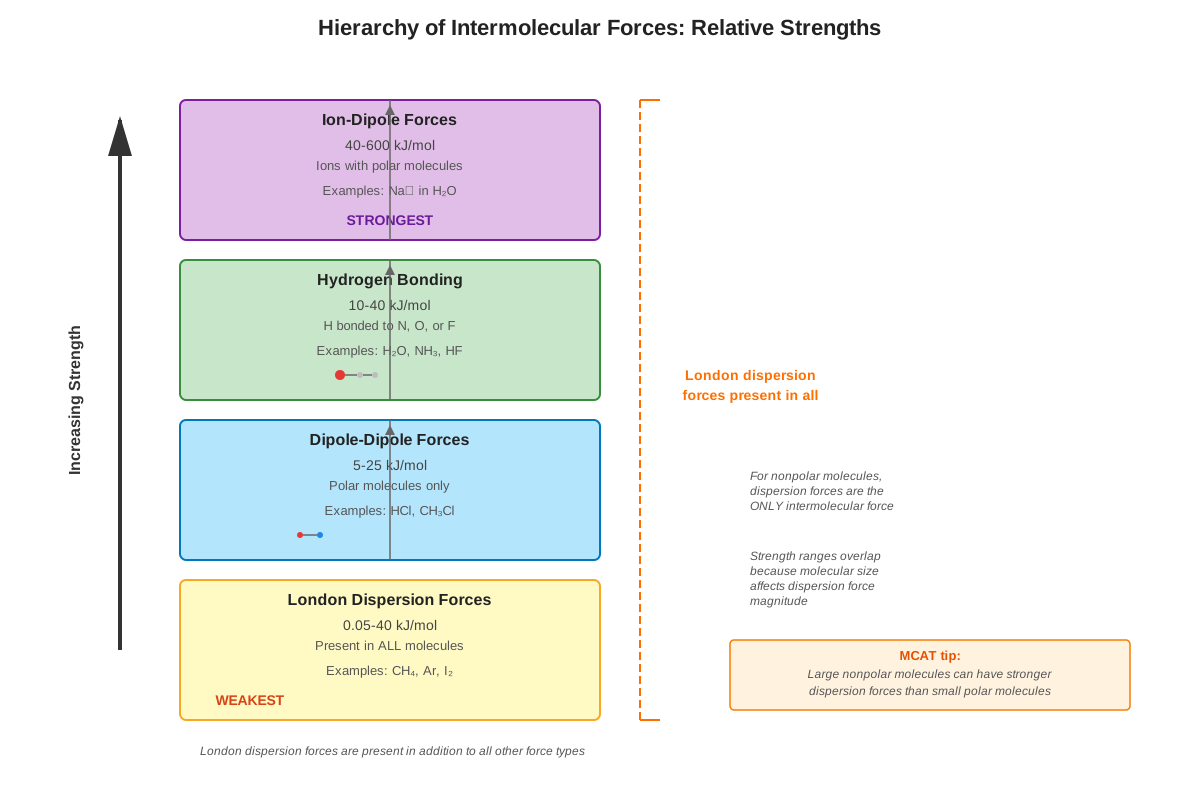
| Force Type | Strength (kJ/mol) | Requirements | Examples |
|---|---|---|---|
| London Dispersion | 0.05-40 | All molecules | CH₄, C₆H₁₄, noble gases |
| Dipole-Dipole | 5-25 | Permanent molecular dipole | HCl, CH₃Cl |
| Hydrogen Bonding | 10-40 | H bonded to N, O, or F | H₂O, NH₃, HF |
| Ion-Dipole | 50-200 | Ion and polar molecule | Na⁺ in water |
| Ionic Bonding | 400-4000 | Cation and anion | NaCl (intramolecular) |
Critical distinction: London dispersion forces are the only intermolecular force present in nonpolar molecules, but they exist in all molecules regardless of polarity. In polar molecules, dispersion forces contribute to the total intermolecular attraction alongside dipole-dipole interactions or hydrogen bonding. For large molecules, dispersion forces can exceed the contribution from polarity-based interactions.
Physical Property Implications
London dispersion forces directly determine or significantly influence numerous physical properties:
Boiling Point and Melting Point: Stronger dispersion forces require more thermal energy to overcome, resulting in higher phase transition temperatures. The boiling point trend in noble gases (He < Ne < Ar < Kr < Xe) directly reflects increasing dispersion force strength with atomic size. Similarly, long-chain hydrocarbons are solids or high-boiling liquids, while small hydrocarbons are gases at room temperature.
Viscosity: Liquids with stronger intermolecular forces flow more slowly. Long-chain alkanes exhibit higher viscosity than short-chain alkanes due to enhanced dispersion forces along extended molecular surfaces.
Solubility: The principle "like dissolves like" reflects the importance of matching intermolecular forces. Nonpolar solutes dissolve in nonpolar solvents because dispersion forces between solute and solvent molecules are comparable to those in the pure substances. Hydrocarbons dissolve readily in hexane but not in water because water's hydrogen bonding network is too strong to be disrupted by the weak dispersion forces offered by hydrocarbon molecules.
Vapor Pressure: Substances with weaker dispersion forces have higher vapor pressures at a given temperature because molecules escape the liquid phase more easily. This inverse relationship between intermolecular force strength and vapor pressure is frequently tested on the MCAT.
Biological and Biochemical Relevance
In biological systems, London dispersion forces play crucial roles despite their individual weakness:
Hydrophobic Effect: The aggregation of nonpolar molecules in aqueous environments (hydrophobic effect) is driven partly by dispersion forces between nonpolar groups. While entropy changes in water structure provide the primary driving force, dispersion forces stabilize the nonpolar core of proteins and lipid bilayers.
Membrane Structure: Lipid bilayers depend on dispersion forces between hydrocarbon tails to maintain membrane integrity. The fluid mosaic model of membranes incorporates the dynamic nature of dispersion forces, allowing lateral movement while maintaining overall structure.
Protein Folding: Dispersion forces between nonpolar amino acid side chains (valine, leucine, isoleucine, phenylalanine) contribute to protein tertiary structure stability. Although hydrogen bonding receives more attention, the cumulative effect of numerous dispersion interactions throughout a protein structure is substantial.
Drug-Receptor Interactions: Many pharmaceutical compounds contain nonpolar regions that interact with receptor binding sites through dispersion forces, contributing to binding affinity and specificity.
Concept Relationships
London dispersion forces connect to multiple concepts within General Chemistry and Bonding and Molecular Structure:
Electronegativity → Molecular Polarity → Intermolecular Forces: Electronegativity differences determine bond polarity, which aggregates to molecular polarity. Nonpolar molecules rely exclusively on London dispersion forces, while polar molecules experience dispersion forces plus additional interactions.
Molecular Geometry → Surface Area → Dispersion Force Strength: VSEPR theory predicts three-dimensional shape, which determines surface area available for intermolecular contact. Greater contact area leads to stronger cumulative dispersion forces.
Electron Configuration → Polarizability → Dispersion Forces: The number and distribution of electrons (especially valence electrons) determine how easily the electron cloud distorts, directly affecting dispersion force magnitude.
Dispersion Forces → Physical Properties → Phase Behavior: The strength of intermolecular forces determines the energy required for phase transitions, creating predictable trends in boiling points, melting points, and vapor pressures.
Intermolecular Forces → Solubility → Biological Function: The principle of matching intermolecular forces explains solubility patterns, which in turn determine drug distribution, membrane permeability, and biochemical compartmentalization.
Within the topic itself: Molecular size → Increased electrons → Greater polarizability → Stronger dispersion forces → Higher boiling/melting points. This causal chain represents the most frequently tested relationship on the MCAT.
Quick check — test yourself on London dispersion forces so far.
Try Flashcards →High-Yield Facts
⭐ London dispersion forces are present in ALL molecules, regardless of polarity, but are the only intermolecular force in nonpolar molecules
⭐ Dispersion force strength increases with molecular size and molar mass due to increased polarizability of larger electron clouds
⭐ Linear molecules have stronger dispersion forces than branched isomers of the same molecular formula due to greater surface area contact
⭐ Polarizability increases down a group in the periodic table, explaining why I₂ is a solid while F₂ is a gas at room temperature
⭐ Boiling point trends in nonpolar compounds directly reflect dispersion force strength, making them predictable from molecular structure
- London dispersion forces are quantum mechanical in origin, arising from correlated electron motion between molecules
- The strength of dispersion forces ranges from 0.05 to 40 kJ/mol, making them the weakest intermolecular force
- In large molecules, the cumulative effect of dispersion forces can exceed the strength of hydrogen bonds in smaller molecules
- Gecko feet adhesion and the ability of insects to walk on water involve dispersion forces acting over large surface areas
- Temporary dipoles exist for approximately 10⁻¹⁶ seconds but continuously reform, creating persistent attractive forces
- Noble gases exist as discrete atoms yet can be liquefied, demonstrating that dispersion forces operate even between individual atoms
- The term "van der Waals forces" encompasses both dispersion forces and dipole-dipole interactions
- Dispersion forces contribute to the stability of DNA double helix through base stacking interactions
- Anesthetic gases function partly through dispersion force interactions with neuronal membrane lipids
- Chromatographic separation techniques exploit differences in dispersion forces between analytes and stationary phases
Common Misconceptions
Misconception: London dispersion forces only exist in nonpolar molecules.
Correction: London dispersion forces exist in ALL molecules, atoms, and ions. They are simply the only intermolecular force in nonpolar molecules, but they contribute to total intermolecular attraction in polar molecules as well. For example, water molecules experience both hydrogen bonding and dispersion forces.
Misconception: Larger molecules always have higher boiling points than smaller molecules.
Correction: While larger molecules generally have stronger dispersion forces, molecular shape and the presence of other intermolecular forces must be considered. A small polar molecule with hydrogen bonding (like water) can have a higher boiling point than a larger nonpolar molecule (like butane). The comparison is most reliable within a homologous series of similar structure.
Misconception: London dispersion forces are permanent attractions between molecules.
Correction: The instantaneous dipoles that create dispersion forces are temporary and constantly changing. However, the statistical average of these continuously forming and breaking attractions creates a persistent net attractive force. The forces themselves are real and measurable, but the specific dipole configurations are transient.
Misconception: Branched molecules have stronger dispersion forces than linear isomers because they are more compact.
Correction: The opposite is true. Linear molecules have greater surface area available for intermolecular contact, leading to stronger cumulative dispersion forces. Branched molecules are more spherical with reduced surface area contact, resulting in weaker dispersion forces and lower boiling points.
Misconception: Polarizability and polarity are the same property.
Correction: Polarizability refers to how easily an electron cloud can be distorted to create a temporary dipole, while polarity refers to a permanent, uneven distribution of electron density in a molecule. Nonpolar molecules can be highly polarizable (like I₂), and small polar molecules can have low polarizability (like HF).
Misconception: London dispersion forces are negligible compared to other intermolecular forces.
Correction: While individually weak, dispersion forces become substantial in large molecules due to their cumulative effect over extensive surface areas. In macromolecules like proteins and polymers, the total contribution of dispersion forces can be the dominant factor in structural stability.
Misconception: Only the outermost electrons contribute to dispersion forces.
Correction: While valence electrons are most easily polarized, all electrons in an atom or molecule contribute to the electron cloud that can be distorted. The total electron count, not just valence electrons, determines overall polarizability.
Worked Examples
Example 1: Predicting Boiling Point Trends
Question: Rank the following compounds in order of increasing boiling point: n-hexane (C₆H₁₄), 2-methylpentane (C₆H₁₄), 2,2-dimethylbutane (C₆H₁₄), and n-octane (C₈H₁₈). Explain your reasoning.
Solution:
Step 1: Identify the types of intermolecular forces present. All four compounds are nonpolar hydrocarbons, so London dispersion forces are the only intermolecular forces present.
Step 2: Compare molecular sizes. Three compounds have identical molecular formulas (C₆H₁₄) but different structures (structural isomers), while n-octane is larger (C₈H₁₈).
Step 3: For the C₆H₁₄ isomers, consider molecular shape and surface area:
- n-hexane: linear structure, maximum surface area contact
- 2-methylpentane: one branch, intermediate surface area
- 2,2-dimethylbutane: two branches on the same carbon, most compact/spherical, minimum surface area
Step 4: Apply the principle that greater surface area leads to stronger dispersion forces and higher boiling points.
Step 5: Compare n-octane to the C₆ compounds. Despite having the most branched structure among the C₆ isomers, n-octane has more total electrons and greater overall surface area than any C₆ compound.
Answer: 2,2-dimethylbutane < 2-methylpentane < n-hexane < n-octane
Reasoning: Among structural isomers, linear molecules have the highest boiling points due to maximum surface area contact. Branching reduces surface area and weakens dispersion forces. However, increasing molecular size (more carbons) increases total electrons and polarizability, overriding the effect of branching when comparing molecules of different sizes.
Connection to Learning Objectives: This example demonstrates applying London dispersion force concepts to predict physical properties, a common MCAT question type. It also illustrates the importance of considering both molecular size and shape.
Example 2: Analyzing Intermolecular Forces in a Biological Context
Question: A researcher is studying the solubility of vitamin A (a large, mostly nonpolar molecule with one polar hydroxyl group) and vitamin C (a small, highly polar molecule with multiple hydroxyl groups) in different solvents. Explain why vitamin A is fat-soluble while vitamin C is water-soluble, referencing the relevant intermolecular forces.
Solution:
Step 1: Identify the intermolecular forces in each vitamin:
- Vitamin A: Predominantly London dispersion forces due to its large hydrocarbon structure, with minimal hydrogen bonding capability from one -OH group
- Vitamin C: Strong hydrogen bonding capability from multiple -OH groups, plus dispersion forces
Step 2: Identify the intermolecular forces in potential solvents:
- Fats/lipids: Nonpolar or weakly polar, primarily London dispersion forces
- Water: Strong hydrogen bonding network
Step 3: Apply the "like dissolves like" principle based on matching intermolecular forces:
- For vitamin A to dissolve, the solvent must be able to form favorable interactions with the large nonpolar region
- For vitamin C to dissolve, the solvent must accommodate multiple hydrogen bonding sites
Step 4: Analyze vitamin A solubility:
- In fats: The extensive nonpolar region of vitamin A can form strong dispersion forces with lipid hydrocarbon chains. The single -OH group is insufficient to make the molecule prefer aqueous environments.
- In water: Dissolving vitamin A would require disrupting water's hydrogen bonding network, which is energetically unfavorable. The dispersion forces between vitamin A and water are too weak to compensate.
Step 5: Analyze vitamin C solubility:
- In water: Multiple -OH groups form extensive hydrogen bonds with water molecules, providing favorable interactions that overcome the energy cost of creating a cavity in water's structure
- In fats: Vitamin C cannot form hydrogen bonds with nonpolar lipids, and the dispersion forces are insufficient to stabilize the molecule in a lipid environment
Answer: Vitamin A is fat-soluble because its large nonpolar structure forms strong London dispersion forces with lipid molecules, while its single polar group is insufficient to favor aqueous environments. Vitamin C is water-soluble because its multiple hydroxyl groups form extensive hydrogen bonds with water, outweighing the weak dispersion forces it could form with nonpolar solvents.
Connection to Learning Objectives: This example connects London dispersion forces to biological function and demonstrates how the balance between different intermolecular forces determines solubility and distribution in biological systems—a high-yield MCAT concept.
Exam Strategy
When approaching MCAT questions on London dispersion forces, employ these strategic approaches:
Trigger Words and Phrases:
- "Nonpolar molecule" → immediately think dispersion forces as the only intermolecular force
- "Boiling point trend" → consider molecular size, shape, and surface area
- "Structural isomers" → focus on branching and surface area differences
- "Polarizability" → think about electron cloud size and ease of distortion
- "Hydrophobic interactions" → recognize dispersion forces in biological contexts
- "Like dissolves like" → match intermolecular force types between solute and solvent
Question Analysis Process:
- Identify all intermolecular forces present: Don't assume dispersion forces are the only consideration unless the molecule is truly nonpolar
- Compare molecular sizes systematically: Count carbons, total atoms, or estimate molar mass
- Assess molecular shape: Look for linear vs. branched structures in structural isomers
- Consider the cumulative effect: In large molecules, many weak dispersion forces can sum to significant total attraction
- Eliminate answers that ignore shape: If comparing isomers, answers that don't account for branching are likely incorrect
Process of Elimination Tips:
- Eliminate answers that claim dispersion forces only exist in nonpolar molecules
- Eliminate answers that ignore molecular shape when comparing structural isomers
- Eliminate answers that suggest smaller molecules always have lower boiling points (consider hydrogen bonding)
- Eliminate answers that confuse polarizability with polarity
- Eliminate answers that claim dispersion forces are stronger than hydrogen bonds in small molecules
Time Allocation:
For discrete questions on dispersion forces, spend 30-45 seconds identifying the key comparison (size vs. shape) and selecting the answer. For passage-based questions, allocate 60-90 seconds to extract relevant molecular structures from the passage and apply dispersion force principles. If a question requires ranking more than three compounds, quickly eliminate extreme answers (smallest/largest) first, then focus on middle values.
Exam Tip: When ranking boiling points, start by grouping compounds by molecular size, then within each size group, rank by degree of branching. This systematic approach prevents errors and saves time.
Memory Techniques
Mnemonic for Dispersion Force Strength Factors: "SLAP"
- Size (larger molecules = stronger forces)
- Linear shape (more surface area = stronger forces)
- Atom count (more electrons = greater polarizability)
- Polarizability (easier distortion = stronger forces)
Visualization Strategy: Picture molecules as "fuzzy clouds" rather than rigid structures. Imagine the electron cloud momentarily bulging to one side (creating a temporary dipole), then influencing neighboring clouds to bulge in complementary ways. Larger clouds have more "fuzz" that can interact, while linear molecules can align their clouds for maximum overlap.
Acronym for Intermolecular Force Strength: "I Don't Have Large Debts"
- Ionic (strongest, but intramolecular)
- Dipole-dipole
- Hydrogen bonding
- London dispersion
- Dispersion (weakest, but universal)
Branching Memory Aid: "Branches Break Boiling points" - branched molecules have lower boiling points than linear isomers because branching reduces surface area contact.
Polarizability Trend: "Big Lazy Electrons" - larger atoms have electrons farther from the nucleus that are "lazier" (less tightly held) and easier to polarize, creating stronger dispersion forces.
Summary
London dispersion forces represent the universal, quantum mechanical intermolecular attraction arising from temporary dipoles created by instantaneous fluctuations in electron distribution. Present in all molecules but serving as the sole intermolecular force in nonpolar substances, these forces increase in strength with molecular size (due to greater polarizability of larger electron clouds) and surface area (with linear molecules exhibiting stronger forces than branched isomers). Despite being the weakest intermolecular force individually, dispersion forces become substantial in large molecules through cumulative effects and directly determine physical properties including boiling point, melting point, viscosity, and solubility. For the MCAT, mastery requires the ability to predict relative dispersion force strength from molecular structure, distinguish dispersion forces from other intermolecular interactions, and apply these concepts to explain physical property trends and biological phenomena such as membrane structure and hydrophobic interactions.
Key Takeaways
- London dispersion forces exist in ALL molecules and are the only intermolecular force in nonpolar molecules
- Dispersion force strength increases with molecular size/molar mass due to increased electron count and polarizability
- Linear molecules have stronger dispersion forces than branched isomers because of greater surface area contact
- Boiling point, melting point, and vapor pressure trends in nonpolar compounds directly reflect dispersion force magnitude
- Polarizability (ease of electron cloud distortion) increases down periodic table groups and with molecular size
- In biological systems, dispersion forces stabilize membranes, contribute to protein folding, and enable hydrophobic interactions
- The cumulative effect of many dispersion forces in large molecules can exceed the strength of hydrogen bonds in smaller molecules
Related Topics
Dipole-Dipole Interactions: Understanding how permanent molecular dipoles create stronger intermolecular forces than dispersion forces alone, and how to distinguish between molecules that rely primarily on dipole interactions versus dispersion forces.
Hydrogen Bonding: Mastering the strongest type of dipole-dipole interaction and recognizing when hydrogen bonding dominates over dispersion forces in determining physical properties.
Molecular Polarity and Geometry: Deepening understanding of how three-dimensional molecular shape determines both polarity and surface area, both critical for predicting intermolecular force strength.
Colligative Properties: Applying intermolecular force concepts to understand how solute particles affect solvent properties such as boiling point elevation and freezing point depression.
Lipid Biochemistry: Exploring how dispersion forces between hydrocarbon tails create and maintain biological membrane structure and function.
Mastering London dispersion forces provides the foundation for understanding all intermolecular interactions and predicting physical properties from molecular structure—essential skills for MCAT success.
Practice CTA
Now that you've mastered the core concepts of London dispersion forces, reinforce your understanding by attempting practice questions and flashcards. Focus on questions that require ranking compounds by boiling point, explaining solubility patterns, and analyzing biological scenarios involving nonpolar interactions. The more you practice applying these principles to varied contexts, the more automatic your recognition of dispersion force patterns will become on test day. Remember: understanding the "why" behind dispersion forces transforms memorization into mastery. You've built a strong foundation—now apply it with confidence!
Sign up free to keep reading
Create a free AnvayaPrep account to finish this MCAT guide on London dispersion forces — plus flashcards and practice questions.