Overview
Oxidation numbers (also called oxidation states) represent one of the most fundamental concepts in General Chemistry and serve as the foundation for understanding redox reactions, a cornerstone of Electrochemistry. An oxidation number is a hypothetical charge that an atom would have if all bonds were completely ionic, providing a systematic method to track electron transfer during chemical reactions. This bookkeeping system allows chemists to identify which species are oxidized (lose electrons) and which are reduced (gain electrons) in any chemical transformation.
For the MCAT, mastery of oxidation numbers is absolutely essential. This topic appears not only in standalone General Chemistry questions but also integrates into biological contexts such as cellular respiration, photosynthesis, and metabolic pathways tested in the Biological and Biochemical Foundations section. The ability to quickly and accurately assign oxidation numbers enables students to balance redox equations, predict reaction spontaneity, and understand electron transport chains—all high-yield topics that appear frequently on exam day.
Oxidation numbers General Chemistry connects directly to multiple other concepts including electrochemical cells, reduction potentials, balancing equations, and thermodynamics. Understanding this topic creates a framework for approaching complex passages involving batteries, corrosion, metabolism, and analytical chemistry. Students who master oxidation number assignment can rapidly analyze reaction mechanisms and predict products, giving them a significant advantage in time-pressured exam conditions.
Learning Objectives
- [ ] Define oxidation numbers using accurate General Chemistry terminology
- [ ] Explain why oxidation numbers matter for the MCAT
- [ ] Apply oxidation numbers to exam-style questions
- [ ] Identify common mistakes related to oxidation numbers
- [ ] Connect oxidation numbers to related General Chemistry concepts
- [ ] Assign oxidation numbers to atoms in complex molecules and polyatomic ions within 30 seconds
- [ ] Determine which species undergoes oxidation and reduction in a redox reaction using oxidation number changes
- [ ] Apply oxidation number rules to organic molecules and biochemical compounds
Prerequisites
- Basic atomic structure: Understanding protons, electrons, and ionic charges is essential because oxidation numbers represent hypothetical charge distributions
- Chemical bonding fundamentals: Knowledge of ionic versus covalent bonding helps explain why oxidation numbers are assigned differently in various compounds
- Electronegativity trends: The relative electronegativity of elements determines how electrons are "assigned" when calculating oxidation numbers
- Polyatomic ions: Familiarity with common polyatomic ions (sulfate, nitrate, phosphate) enables rapid oxidation number assignment in complex species
- Balancing chemical equations: Basic equation balancing skills provide context for why tracking electron transfer matters
Why This Topic Matters
Oxidation numbers MCAT questions appear with remarkable frequency across multiple exam sections. In the Chemical and Physical Foundations section, oxidation numbers are tested directly through electrochemistry passages involving galvanic cells, electrolytic cells, and reduction potentials. In the Biological and Biochemical Foundations section, oxidation numbers underpin understanding of metabolic pathways, particularly the electron transport chain, glycolysis, and the citric acid cycle where NAD+ and FAD serve as electron carriers.
Clinical relevance extends to understanding drug metabolism (cytochrome P450 oxidation reactions), antioxidant mechanisms (vitamin C and E reducing free radicals), and diagnostic tests (glucose oxidase reactions in blood sugar monitoring). Real-world applications include corrosion prevention, battery technology, and industrial chemical synthesis—all topics that may appear in MCAT passages.
Statistically, oxidation-reduction concepts appear in approximately 15-20% of General Chemistry questions on the MCAT. Questions typically present as: (1) direct assignment of oxidation numbers in complex molecules, (2) identification of oxidizing and reducing agents, (3) balancing redox equations in acidic or basic solution, (4) predicting reaction spontaneity using reduction potentials, and (5) passage-based questions integrating redox chemistry with biological systems. The ability to rapidly assign oxidation numbers often determines whether a student can efficiently work through multi-step electrochemistry problems within time constraints.
Core Concepts
Definition and Fundamental Principles
Oxidation numbers represent the hypothetical charge an atom would possess if all bonding electrons were assigned to the more electronegative atom in each bond. This system provides a consistent method for tracking electron distribution and transfer in chemical reactions. Unlike actual ionic charges (which represent real electron loss or gain), oxidation numbers are a formalism—a useful fiction that helps chemists analyze electron flow.
The concept emerged from the need to extend the ionic model of electron transfer to covalent compounds. In purely ionic compounds like NaCl, the oxidation numbers match actual charges (Na = +1, Cl = -1). However, in covalent compounds like H₂O, the oxidation numbers (H = +1, O = -2) represent a hypothetical scenario where oxygen "owns" all bonding electrons due to its higher electronegativity.
Rules for Assigning Oxidation Numbers
The systematic assignment of oxidation numbers follows a hierarchical set of rules that must be applied in order:
- Elements in their standard state have an oxidation number of zero. This includes diatomic elements (O₂, N₂, H₂, F₂, Cl₂, Br₂, I₂), monoatomic elements (He, Ne, Ar), and polyatomic elements (P₄, S₈). Example: Each oxygen atom in O₂ has an oxidation number of 0.
- Monoatomic ions have oxidation numbers equal to their charge. Na⁺ has an oxidation number of +1, Cl⁻ has -1, Ca²⁺ has +2, and O²⁻ has -2.
- Fluorine always has an oxidation number of -1 in compounds because it is the most electronegative element.
- Oxygen typically has an oxidation number of -2 in most compounds, with two important exceptions:
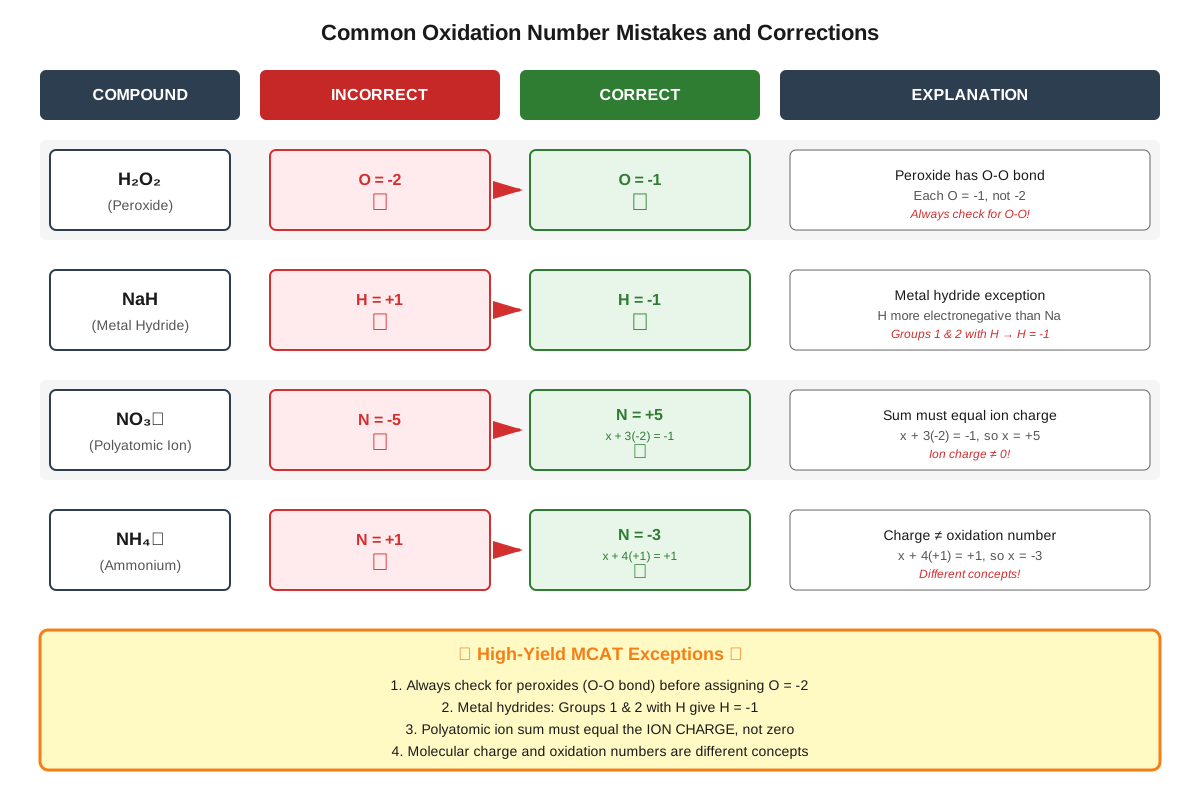
- In peroxides (compounds containing O-O bonds like H₂O₂), oxygen has an oxidation number of -1
- In superoxides (like KO₂), oxygen has an oxidation number of -1/2
- When bonded to fluorine (OF₂), oxygen has a positive oxidation number of +2
- Hydrogen typically has an oxidation number of +1 when bonded to nonmetals, but -1 when bonded to metals (metal hydrides like NaH, CaH₂).
- Group 1 metals (alkali metals) always have an oxidation number of +1 in compounds.
- Group 2 metals (alkaline earth metals) always have an oxidation number of +2 in compounds.
- The sum of oxidation numbers in a neutral molecule equals zero; in a polyatomic ion, the sum equals the ion's charge.
Application to Complex Molecules
For complex molecules and polyatomic ions, apply the rules systematically:
Example 1: Sulfuric acid (H₂SO₄)
- H: +1 (rule 5)
- O: -2 (rule 4)
- S: unknown
- Equation: 2(+1) + S + 4(-2) = 0
- S = +6
Example 2: Dichromate ion (Cr₂O₇²⁻)
- O: -2 (rule 4)
- Cr: unknown
- Equation: 2(Cr) + 7(-2) = -2
- 2Cr = +12
- Cr = +6
Example 3: Permanganate ion (MnO₄⁻)
- O: -2 (rule 4)
- Mn: unknown
- Equation: Mn + 4(-2) = -1
- Mn = +7
Oxidation Numbers in Organic Molecules
Assigning oxidation numbers to carbon in organic molecules requires careful attention to bonding partners. Each C-H bond contributes -1 to carbon's oxidation state, while each C-O bond contributes +1. C-C bonds contribute 0 (electrons shared equally).
| Functional Group | Carbon Oxidation State | Example |
|---|---|---|
| Alkane (CH₃-) | -3 | Methane CH₄ |
| Alcohol (CH₂OH-) | -1 | Methanol CH₃OH |
| Aldehyde (CHO-) | +1 | Formaldehyde HCHO |
| Carboxylic acid (COOH-) | +3 | Formic acid HCOOH |
| Carbon dioxide | +4 | CO₂ |
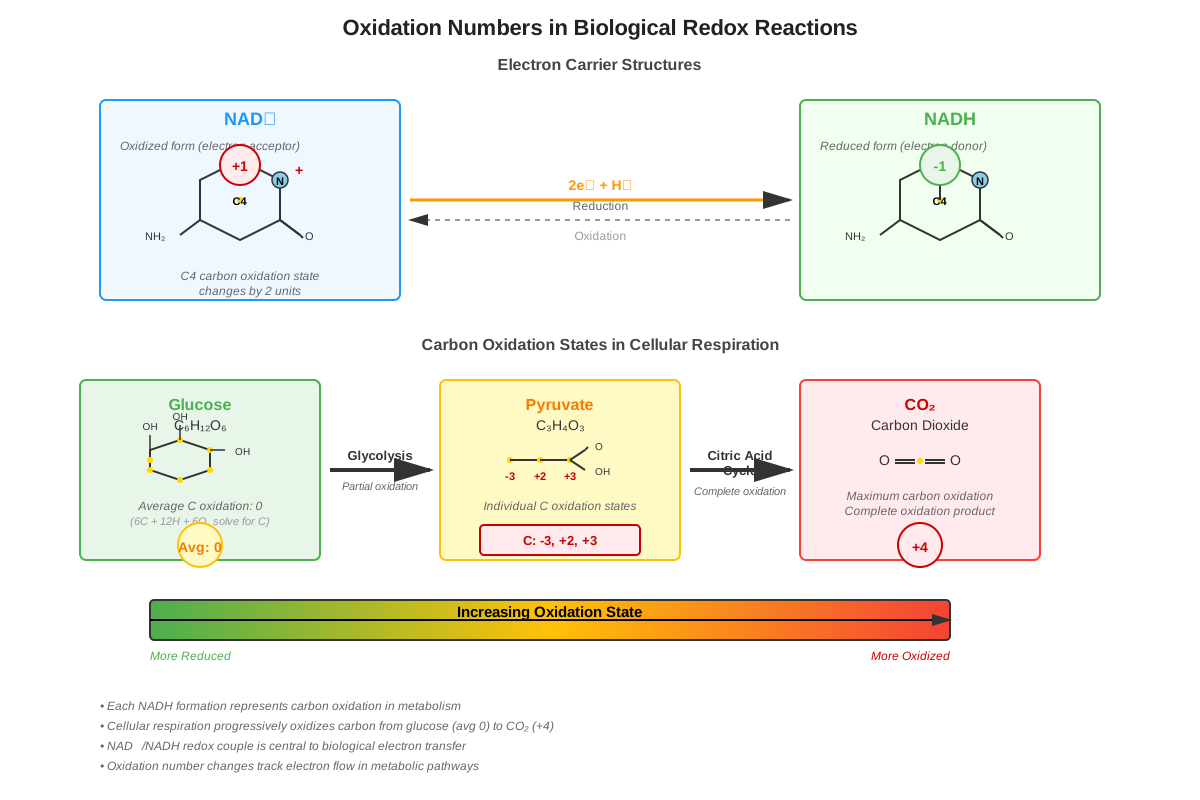
This progression from -3 to +4 represents increasing oxidation of carbon, which is precisely what occurs during cellular respiration as glucose (carbons averaging 0) is oxidized to CO₂ (carbon at +4).
Identifying Oxidation and Reduction
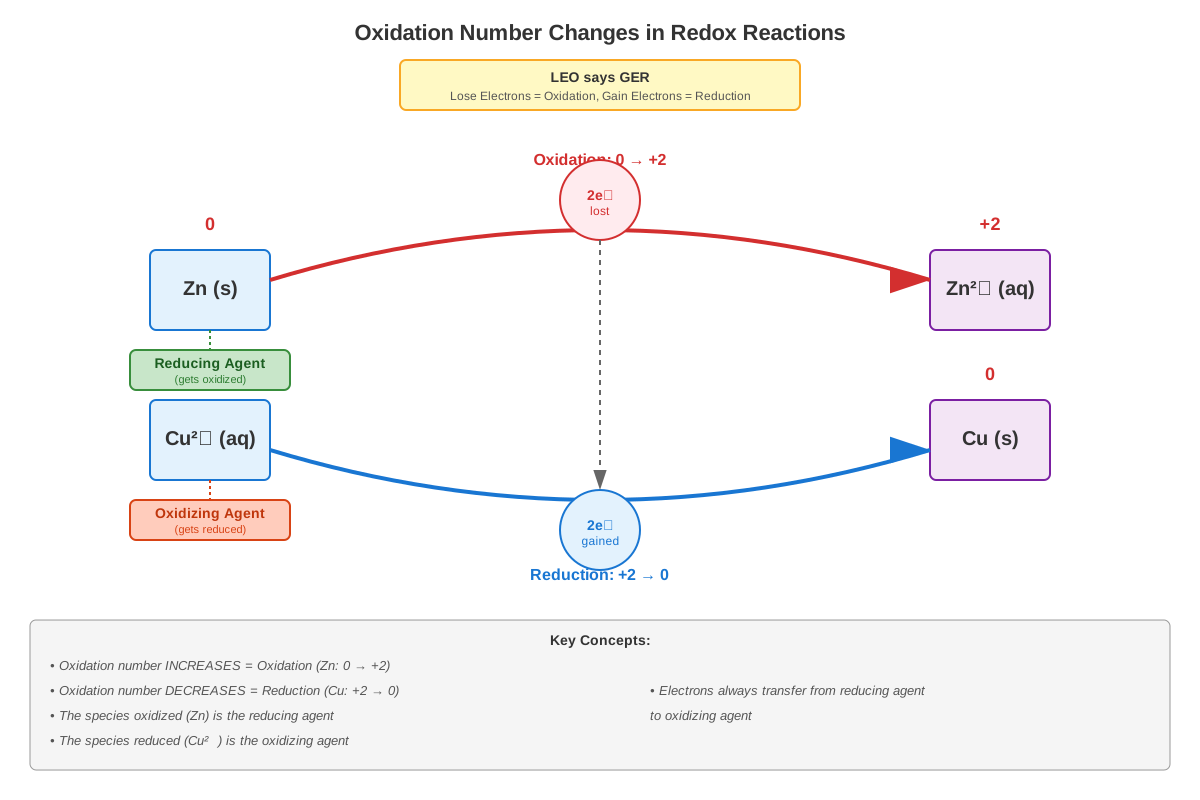
Oxidation is defined as an increase in oxidation number (loss of electrons), while reduction is a decrease in oxidation number (gain of electrons). The mnemonic "OIL RIG" (Oxidation Is Loss, Reduction Is Gain) helps remember electron movement.
In any redox reaction:
- The species that is oxidized is the reducing agent (it causes reduction in another species by donating electrons)
- The species that is reduced is the oxidizing agent (it causes oxidation in another species by accepting electrons)
Example: Zn + Cu²⁺ → Zn²⁺ + Cu
- Zn: 0 → +2 (increase = oxidation; Zn is the reducing agent)
- Cu: +2 → 0 (decrease = reduction; Cu²⁺ is the oxidizing agent)
Fractional Oxidation Numbers
Some compounds contain atoms with fractional oxidation numbers, typically when multiple atoms of the same element exist in different environments or when resonance structures distribute charge.
Example: Fe₃O₄ (magnetite)
This compound contains both Fe²⁺ and Fe³⁺ ions. The average oxidation state is:
- 3(Fe) + 4(-2) = 0
- 3Fe = +8
- Fe = +8/3
While individual iron atoms have oxidation states of +2 or +3, the average is +8/3.
Disproportionation Reactions
Disproportionation occurs when a single element simultaneously undergoes both oxidation and reduction. This happens when an element in an intermediate oxidation state converts to both higher and lower states.
Example: 2H₂O₂ → 2H₂O + O₂
- In H₂O₂: O = -1
- In H₂O: O = -2 (reduction)
- In O₂: O = 0 (oxidation)
Oxygen at -1 is simultaneously reduced to -2 and oxidized to 0.
Concept Relationships
Oxidation numbers serve as the central organizing principle connecting multiple electrochemistry concepts. The assignment of oxidation numbers → enables identification of redox reactions → which determines electron flow in electrochemical cells → which connects to reduction potentials and cell voltage → ultimately predicting reaction spontaneity through Gibbs free energy.
Within the topic itself, the hierarchical rules for assigning oxidation numbers → allow calculation of oxidation state changes → which identifies oxidizing and reducing agents → enabling balanced half-reactions → which combine to form complete redox equations.
Oxidation numbers connect backward to prerequisite concepts: electronegativity trends determine which atoms "claim" electrons in oxidation number assignment, while understanding of ionic versus covalent bonding explains why oxidation numbers represent hypothetical rather than actual charges.
Forward connections include: oxidation numbers → half-reaction method for balancing equations → standard reduction potentials → Nernst equation → electrochemical cell potentials → thermodynamic favorability. In biochemistry, oxidation numbers → electron carriers (NAD⁺/NADH, FAD/FADH₂) → electron transport chain → ATP synthesis.
The relationship map: Electronegativity → Oxidation Number Assignment → Redox Reaction Identification → Half-Reactions → Cell Potentials → Thermodynamics → Biological Energy Production
High-Yield Facts
⭐ The sum of oxidation numbers in a neutral compound always equals zero; in a polyatomic ion, the sum equals the ion's charge
⭐ Oxygen is -2 in most compounds, but -1 in peroxides (H₂O₂) and +2 when bonded to fluorine (OF₂)
⭐ An increase in oxidation number indicates oxidation (electron loss); a decrease indicates reduction (electron gain)
⭐ The species oxidized is the reducing agent; the species reduced is the oxidizing agent
⭐ Elements in their standard state (O₂, N₂, H₂, Na, Fe) always have oxidation numbers of zero
- Hydrogen is +1 when bonded to nonmetals but -1 when bonded to metals (metal hydrides)
- Group 1 metals are always +1 and Group 2 metals are always +2 in compounds
- Fluorine is always -1 in compounds because it is the most electronegative element
- Halogens (Cl, Br, I) are typically -1 except when bonded to oxygen or more electronegative halogens
- In organic molecules, carbon oxidation states range from -4 (CH₄) to +4 (CO₂)
- Transition metals can have multiple oxidation states (Fe: +2, +3; Mn: +2, +4, +7; Cr: +3, +6)
- Disproportionation reactions involve the same element being simultaneously oxidized and reduced
- The oxidation number of nitrogen in NO₃⁻ is +5, in NO₂⁻ is +3, and in NH₃ is -3
- Sulfur can have oxidation states ranging from -2 (H₂S) to +6 (H₂SO₄)
Quick check — test yourself on Oxidation numbers so far.
Try Flashcards →Common Misconceptions
Misconception: Oxidation numbers represent actual charges on atoms in molecules.
Correction: Oxidation numbers are a formalism—a bookkeeping tool. In H₂O, oxygen doesn't actually have a -2 charge; this represents the hypothetical charge if all bonding electrons were assigned to the more electronegative atom. Actual partial charges are much smaller.
Misconception: Oxidation always involves oxygen, and reduction always involves hydrogen.
Correction: While the terms originated from reactions with oxygen and hydrogen, oxidation is any increase in oxidation number (electron loss), and reduction is any decrease in oxidation number (electron gain), regardless of which elements are involved. Zn → Zn²⁺ is oxidation despite no oxygen present.
Misconception: The oxidizing agent gets oxidized, and the reducing agent gets reduced.
Correction: This is backward. The oxidizing agent causes oxidation in another species by accepting electrons, so it itself gets reduced. The reducing agent causes reduction in another species by donating electrons, so it itself gets oxidized. Think: the agent does the action to something else.
Misconception: All oxygen-containing compounds have oxygen at -2.
Correction: Peroxides (H₂O₂, Na₂O₂) have oxygen at -1 due to the O-O bond. Superoxides (KO₂) have oxygen at -1/2. When bonded to fluorine (OF₂), oxygen is +2 because fluorine is more electronegative.
Misconception: Fractional oxidation numbers are impossible or indicate an error.
Correction: Fractional oxidation numbers are valid and represent average oxidation states when multiple atoms of the same element exist in different environments (Fe₃O₄) or when resonance structures distribute charge. Individual atoms have whole number oxidation states, but the average can be fractional.
Misconception: In organic molecules, all carbons have the same oxidation number.
Correction: Different carbons in the same molecule can have different oxidation numbers depending on their bonding environment. In acetic acid (CH₃COOH), the methyl carbon is -3 while the carboxyl carbon is +3.
Misconception: Hydrogen is always +1 in compounds.
Correction: Hydrogen is +1 when bonded to nonmetals (H₂O, HCl, CH₄) but -1 when bonded to metals in metal hydrides (NaH, CaH₂, LiAlH₄). This reflects the relative electronegativity: nonmetals are more electronegative than hydrogen, but metals are less electronegative.
Worked Examples
Example 1: Identifying Redox Changes in a Complex Reaction
Question: In the reaction between permanganate and oxalate in acidic solution:
2MnO₄⁻ + 5C₂O₄²⁻ + 16H⁺ → 2Mn²⁺ + 10CO₂ + 8H₂O
Identify: (a) the oxidation number of Mn in MnO₄⁻, (b) the oxidation number of C in C₂O₄²⁻, (c) which species is oxidized, (d) which species is reduced, (e) the oxidizing agent, and (f) the reducing agent.
Solution:
(a) Oxidation number of Mn in MnO₄⁻:
- Oxygen is -2 (rule 4)
- Let Mn = x
- x + 4(-2) = -1 (sum equals ion charge)
- x - 8 = -1
- x = +7
(b) Oxidation number of C in C₂O₄²⁻ (oxalate):
- Oxygen is -2
- Let C = x
- 2x + 4(-2) = -2
- 2x - 8 = -2
- 2x = +6
- x = +3
(c) Which species is oxidized:
- C in C₂O₄²⁻: +3 → +4 (in CO₂)
- Oxidation number increases from +3 to +4
- Carbon (in oxalate) is oxidized
(d) Which species is reduced:
- Mn in MnO₄⁻: +7 → +2 (in Mn²⁺)
- Oxidation number decreases from +7 to +2
- Manganese (in permanganate) is reduced
(e) Oxidizing agent:
- The species that gets reduced is the oxidizing agent
- MnO₄⁻ is the oxidizing agent
(f) Reducing agent:
- The species that gets oxidized is the reducing agent
- C₂O₄²⁻ is the reducing agent
Key Learning Point: This example demonstrates the complete analysis of a redox reaction, connecting oxidation number assignment to identification of electron transfer. Notice that Mn undergoes a 5-electron reduction (+7 to +2) while each C undergoes a 1-electron oxidation (+3 to +4), which is why the stoichiometry requires 5 oxalate ions for every 2 permanganate ions.
Example 2: Oxidation Numbers in Biochemical Compounds
Question: Determine the average oxidation state of carbon in: (a) glucose (C₆H₁₂O₆), (b) pyruvate (C₃H₃O₃⁻), and (c) explain the significance for cellular respiration.
Solution:
(a) Glucose (C₆H₁₂O₆):
- H is +1, O is -2
- Let average C oxidation state = x
- 6x + 12(+1) + 6(-2) = 0 (neutral molecule)
- 6x + 12 - 12 = 0
- 6x = 0
- x = 0 (average carbon oxidation state)
(b) Pyruvate (C₃H₃O₃⁻):
- H is +1, O is -2
- Let average C oxidation state = x
- 3x + 3(+1) + 3(-2) = -1 (ion charge)
- 3x + 3 - 6 = -1
- 3x - 3 = -1
- 3x = +2
- x = +2/3 (average carbon oxidation state)
However, examining the structure of pyruvate (CH₃-CO-COO⁻) more carefully:
- Methyl carbon (CH₃-): approximately -3
- Carbonyl carbon (C=O): approximately +2
- Carboxyl carbon (COO⁻): approximately +3
- Average: (-3 + 2 + 3)/3 = +2/3 ✓
(c) Significance for cellular respiration:
During glycolysis, glucose (average C oxidation state = 0) is converted to pyruvate (average C oxidation state = +2/3). This represents partial oxidation of glucose. The oxidation continues in the citric acid cycle, where pyruvate is further oxidized to CO₂ (C oxidation state = +4). The electrons removed during these oxidations are captured by NAD⁺ and FAD, which are then oxidized in the electron transport chain to generate ATP. The progression from 0 → +2/3 → +4 represents the complete oxidation of glucose carbons, releasing energy for biological work.
Key Learning Point: This example connects oxidation numbers to biochemistry, demonstrating that metabolic pathways involve systematic oxidation of carbon. Understanding oxidation states helps explain why glucose is a good fuel (carbons at intermediate oxidation states can be further oxidized) and why cellular respiration requires oxygen as the final electron acceptor.
Exam Strategy
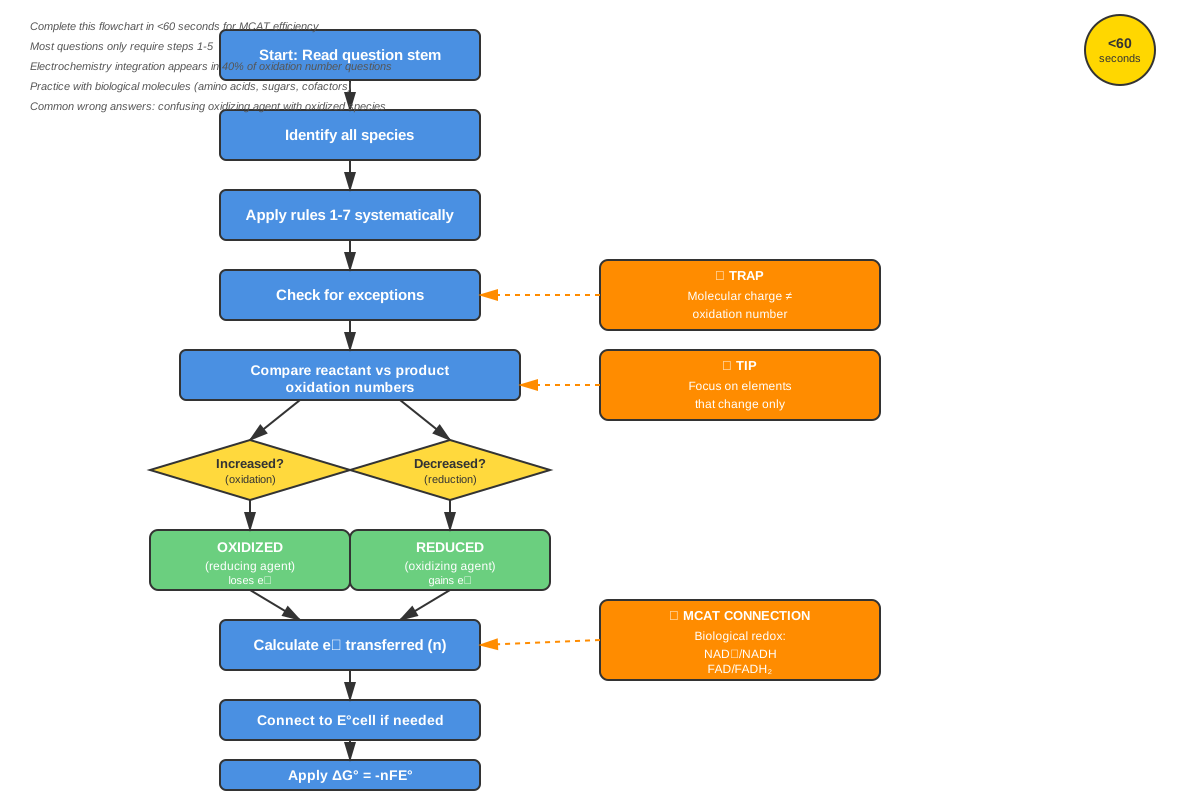
When approaching oxidation numbers MCAT questions, implement this systematic strategy:
Step 1: Identify the question type
- Direct assignment: "What is the oxidation state of sulfur in H₂SO₃?"
- Redox identification: "Which species is the reducing agent?"
- Balancing: "Balance the following redox equation..."
- Passage-based: Integration with electrochemistry or biochemistry
Step 2: Apply rules hierarchically
Start with the most restrictive rules (fluorine always -1, Group 1 always +1) and work toward the unknown. Write out the equation: sum of oxidation numbers = charge. This systematic approach prevents errors.
Step 3: Watch for trigger words
- "Oxidizing agent" → look for the species being reduced (oxidation number decreases)
- "Reducing agent" → look for the species being oxidized (oxidation number increases)
- "Disproportionation" → same element both increases and decreases oxidation number
- "Peroxide" → oxygen is -1, not -2
- "Metal hydride" → hydrogen is -1, not +1
Step 4: Use process of elimination
If asked which species is oxidized, eliminate any species whose oxidation number decreases or stays the same. If asked for an oxidation number and you get a non-integer, check for peroxides, superoxides, or compounds with multiple atoms of the same element.
Step 5: Time management
Allocate approximately 30-45 seconds for straightforward oxidation number assignment, 60-90 seconds for identifying oxidizing/reducing agents in complex reactions, and 2-3 minutes for passage-based questions requiring integration with other concepts. If a calculation becomes complex, check whether the answer choices allow estimation or elimination.
Common trap answers:
- Confusing oxidizing agent with the species oxidized (they're opposite)
- Forgetting peroxide exception for oxygen
- Assuming all carbons in an organic molecule have the same oxidation state
- Mixing up the sign when calculating oxidation numbers
Exam Tip: If a passage discusses biological electron carriers (NAD⁺, FAD, cytochromes), immediately think about oxidation numbers and electron transfer. These passages almost always include questions about which species is oxidized or reduced.
Memory Techniques
Mnemonic for oxidation vs. reduction:
- OIL RIG: Oxidation Is Loss (of electrons), Reduction Is Gain (of electrons)
- LEO says GER: Loss of Electrons is Oxidation, Gain of Electrons is Reduction
Mnemonic for agent identification:
- "The agent does the opposite": The oxidizing agent gets reduced; the reducing agent gets oxidized
Mnemonic for oxidation number rules priority:
- "FOHAG": Fluorine (-1), Oxygen (-2), Hydrogen (+1 usually), Alkali metals (+1), Group 2 (+2)
Visualization for organic oxidation states:
Picture a ladder from -4 to +4:
- Bottom rung (-4): CH₄ (most reduced)
- Middle rungs: alcohols, aldehydes, ketones
- Top rung (+4): CO₂ (most oxidized)
- Going up the ladder = oxidation = losing electrons
Memory aid for peroxides:
"Peroxide has an O-O bond, so each oxygen shares electrons with another oxygen instead of taking them all—that's why it's -1 instead of -2"
Acronym for common oxidation states:
"SNAP" for sulfur:
- S in H₂S: -2
- S in SO₂: +4
- S in SO₃: +6
- S in H₂SO₄: +6
Pattern recognition for nitrogen:
- NH₃ (ammonia): -3
- N₂: 0
- NO: +2
- NO₂: +4
- HNO₃: +5
- Notice the pattern: as nitrogen bonds to more oxygen, oxidation state increases
Summary
Oxidation numbers provide a systematic method for tracking electron distribution and transfer in chemical reactions, serving as the foundation for understanding all redox chemistry on the MCAT. By applying a hierarchical set of rules—starting with elements in standard state (0), proceeding through fluorine (-1), oxygen (-2 with exceptions), hydrogen (+1 or -1), and Group 1 and 2 metals—students can rapidly assign oxidation states to any atom in any compound. The key principle is that oxidation numbers sum to zero in neutral molecules and to the charge in polyatomic ions. Oxidation (increase in oxidation number) represents electron loss, while reduction (decrease in oxidation number) represents electron gain. The species oxidized serves as the reducing agent, while the species reduced serves as the oxidizing agent. This framework enables analysis of electrochemical cells, balancing of redox equations, and understanding of biological electron transport. Mastery requires recognizing exceptions (peroxides, metal hydrides), applying rules systematically, and connecting oxidation states to broader concepts in electrochemistry and biochemistry.
Key Takeaways
- Oxidation numbers are a formalism for tracking electron distribution; they represent hypothetical charges if all bonds were ionic
- Apply rules hierarchically: standard state = 0, F = -1, O = -2 (except peroxides), H = +1 (except metal hydrides), Group 1 = +1, Group 2 = +2
- Sum of oxidation numbers equals zero for neutral molecules and equals the charge for polyatomic ions
- Oxidation = increase in oxidation number = electron loss; reduction = decrease in oxidation number = electron gain
- The oxidizing agent gets reduced; the reducing agent gets oxidized (agents do the opposite of their name)
- Watch for exceptions: oxygen in peroxides (-1), hydrogen in metal hydrides (-1), and fractional oxidation numbers in compounds like Fe₃O₄
- Oxidation numbers connect directly to electrochemical cells, reduction potentials, and biological electron transport chains—all high-yield MCAT topics
Related Topics
Balancing Redox Equations: Mastery of oxidation numbers enables the half-reaction method for balancing complex redox equations in acidic and basic solutions, a frequent MCAT question type.
Standard Reduction Potentials: Understanding which species is oxidized and reduced allows interpretation of reduction potential tables and prediction of spontaneous reactions.
Electrochemical Cells: Oxidation numbers identify the anode (oxidation) and cathode (reduction) in galvanic and electrolytic cells, connecting to cell potential calculations.
Biological Electron Transport: NAD⁺/NADH and FAD/FADH₂ function as electron carriers in metabolism; tracking oxidation states explains energy extraction from nutrients.
Coordination Chemistry: Transition metal complexes involve various oxidation states; understanding oxidation numbers helps predict complex stability and reactivity.
Thermodynamics of Redox Reactions: Oxidation number changes connect to Gibbs free energy and equilibrium constants through the relationship between cell potential and thermodynamic favorability.
Practice CTA
Now that you've mastered the core concepts of oxidation numbers, it's time to solidify your understanding through active practice. Challenge yourself with the practice questions and flashcards designed specifically for this topic. Focus on rapid oxidation number assignment, identifying oxidizing and reducing agents, and applying these concepts to passage-based scenarios. Remember: the difference between knowing the rules and achieving a top MCAT score lies in repeated, deliberate practice. Each problem you solve strengthens the neural pathways that will serve you on exam day. You've built the foundation—now construct mastery through application!
Sign up free to keep reading
Create a free AnvayaPrep account to finish this MCAT guide on Oxidation numbers — plus flashcards and practice questions.