Overview
Alkene addition reactions represent one of the most fundamental and high-yield topics in Organic Chemistry for the MCAT. These reactions involve the transformation of carbon-carbon double bonds (alkenes) into saturated or functionalized products through the addition of various reagents across the π bond. Understanding alkene addition is essential because these reactions form the mechanistic foundation for numerous biological processes, pharmaceutical syntheses, and industrial applications. The MCAT frequently tests students' ability to predict products, identify reaction mechanisms, and apply stereochemical principles to alkene transformations.
The importance of alkene addition extends beyond isolated reaction memorization. These reactions exemplify core principles of reactivity, including electrophilicity, nucleophilicity, carbocation stability, and stereochemical outcomes. Addition Reactions involving alkenes demonstrate how electron-rich π bonds interact with electron-deficient species, a pattern that repeats throughout organic chemistry and biochemistry. Students who master alkene addition develop a mechanistic framework applicable to understanding enzyme-catalyzed reactions, drug metabolism, and the synthesis of biologically relevant molecules.
For MCAT success, alkene addition serves as a bridge connecting multiple organic chemistry concepts. These reactions link fundamental topics like molecular orbital theory and resonance to more advanced subjects including stereochemistry, reaction mechanisms, and synthetic strategy. The MCAT tests Alkene addition Organic Chemistry concepts through discrete questions, passage-based problems involving synthesis pathways, and integrated scenarios requiring students to predict biological transformations. Mastery of this topic provides the foundation for understanding elimination reactions, aromatic chemistry, and carbonyl chemistry—all critical areas for achieving a competitive MCAT score.
Learning Objectives
- [ ] Define Alkene addition using accurate Organic Chemistry terminology
- [ ] Explain why Alkene addition matters for the MCAT
- [ ] Apply Alkene addition to exam-style questions
- [ ] Identify common mistakes related to Alkene addition
- [ ] Connect Alkene addition to related Organic Chemistry concepts
- [ ] Predict the major and minor products of alkene addition reactions using Markovnikov's rule
- [ ] Distinguish between syn and anti addition mechanisms and their stereochemical consequences
- [ ] Evaluate the role of carbocation intermediates in determining reaction pathways and rearrangements
Prerequisites
- Structure and bonding of alkenes: Understanding sp² hybridization and π bond formation is essential for recognizing why alkenes are reactive sites
- Carbocation stability: Knowledge of hyperconjugation and inductive effects explains regioselectivity in addition reactions
- Acid-base chemistry: Protonation steps initiate many addition mechanisms, requiring facility with Brønsted-Lowry concepts
- Stereochemistry fundamentals: Familiarity with R/S nomenclature and stereoisomer relationships is necessary for predicting three-dimensional outcomes
- Nucleophiles and electrophiles: Recognizing electron-rich and electron-poor species drives mechanistic understanding of addition reactions
Why This Topic Matters
Alkene addition MCAT questions appear with consistent frequency across multiple test administrations, making this a reliable source of points for well-prepared students. Statistical analysis of released MCAT exams reveals that addition reactions comprise approximately 15-20% of organic chemistry questions, with alkene additions representing the largest subcategory. These questions test not only product prediction but also mechanistic reasoning, stereochemical analysis, and the ability to integrate multiple concepts simultaneously.
From a clinical and real-world perspective, alkene addition reactions underpin numerous pharmaceutical transformations and metabolic processes. The cytochrome P450 enzyme system, responsible for drug metabolism in the liver, catalyzes epoxidation reactions—a specific type of alkene addition. Understanding these mechanisms helps explain drug interactions, toxicity profiles, and the design of prodrugs. Industrial applications include polymer synthesis, where controlled addition reactions create materials ranging from plastics to synthetic rubbers. The hydrogenation of unsaturated fats to produce margarine represents a commercially significant alkene addition process with nutritional implications.
On the MCAT, alkene addition appears in several characteristic formats. Discrete questions may present a starting alkene and reagents, asking students to identify the major product or explain regioselectivity. Passage-based questions often embed alkene additions within multi-step synthesis schemes, requiring students to track functional group transformations across several reactions. Biochemistry passages may describe enzyme mechanisms that parallel chemical alkene additions, testing the ability to transfer organic chemistry principles to biological contexts. Research-based passages occasionally present novel catalysts or conditions, assessing whether students can apply fundamental mechanistic principles to unfamiliar scenarios.
Core Concepts
Definition and Mechanism of Alkene Addition
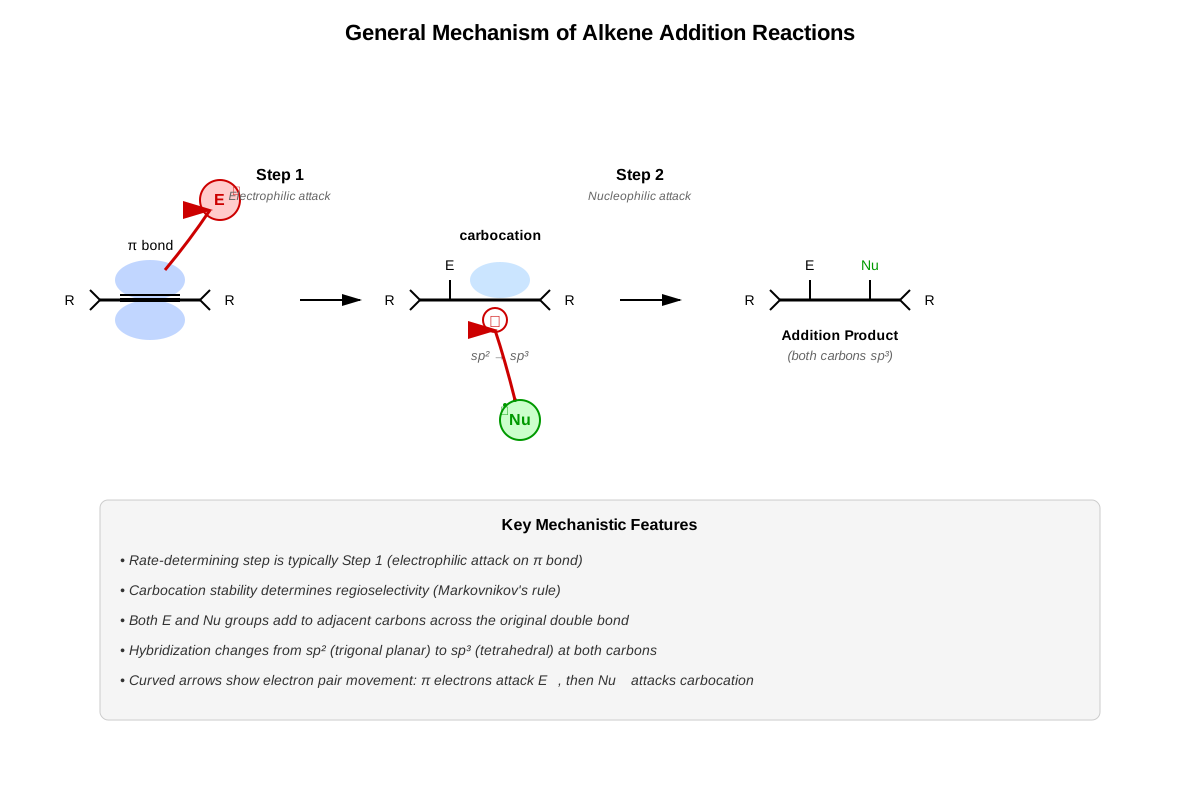
Alkene addition reactions involve the conversion of a carbon-carbon double bond (C=C) into a single bond (C-C) with the simultaneous addition of two new substituents to the carbon atoms that previously formed the π bond. The general transformation can be represented as R₂C=CR₂ + X-Y → R₂C(X)-C(Y)R₂, where X and Y represent the atoms or groups being added. These reactions are thermodynamically favorable because they replace a weaker π bond (approximately 65 kcal/mol) with two stronger σ bonds (approximately 85 kcal/mol each), resulting in a net energy release.
The mechanism of alkene addition typically proceeds through one of two pathways: electrophilic addition or concerted addition. Electrophilic addition, the most common pathway, begins with the attack of the electron-rich π bond on an electrophile, generating a carbocation intermediate. This intermediate then captures a nucleophile to complete the addition. Concerted additions occur in a single step without intermediates, with both new bonds forming simultaneously. The mechanistic pathway determines the stereochemical outcome and regioselectivity of the reaction.
Markovnikov Addition
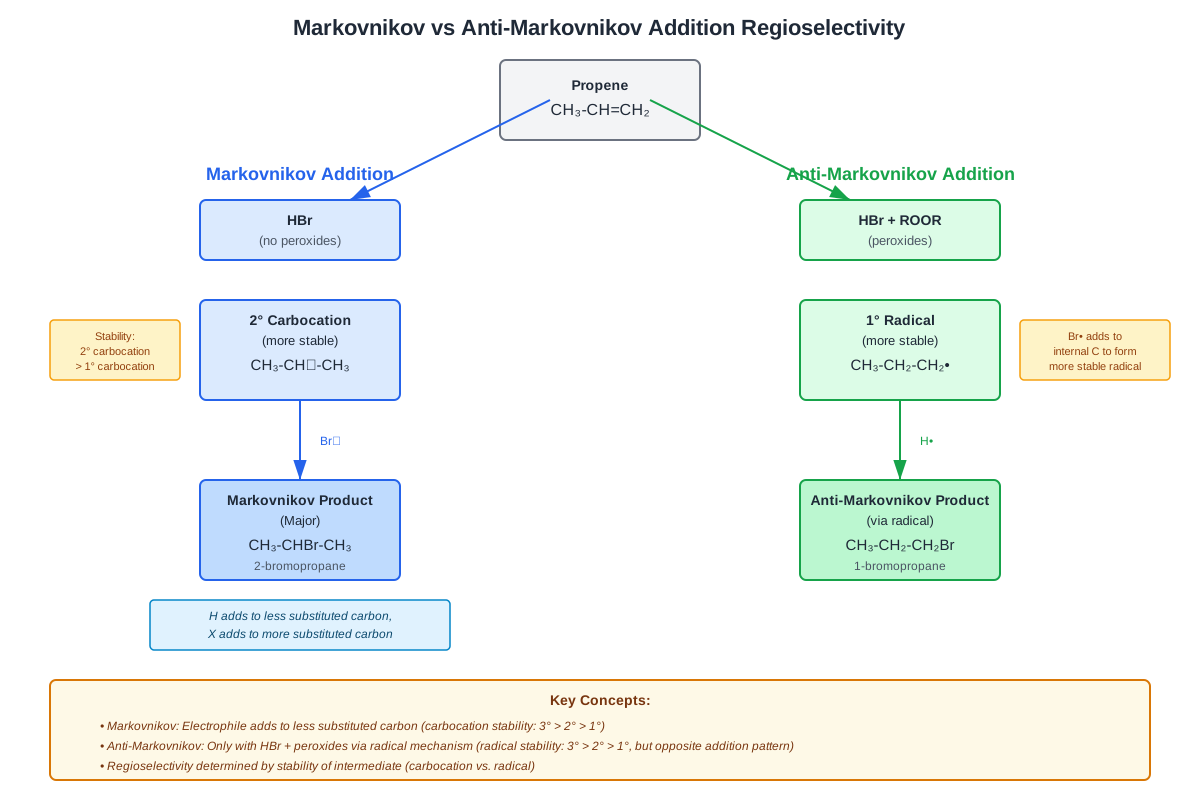
Markovnikov's rule predicts the regioselectivity of addition reactions to unsymmetrical alkenes: when a protic acid (H-X) adds to an alkene, the hydrogen atom bonds to the carbon with more hydrogen substituents, while the heteroatom (X) bonds to the more substituted carbon. This rule reflects the stability of carbocation intermediates formed during the reaction mechanism. The more substituted carbon generates a more stable carbocation due to hyperconjugation and inductive effects from adjacent alkyl groups.
The mechanistic basis for Markovnikov addition involves initial protonation of the alkene to form the more stable carbocation intermediate. For example, when HBr adds to propene (CH₃-CH=CH₂), protonation occurs at the terminal carbon to generate a secondary carbocation (CH₃-CH⁺-CH₃) rather than a primary carbocation. The bromide ion then attacks this carbocation, yielding 2-bromopropane as the major product. This regioselectivity applies to additions of HX (X = Cl, Br, I), H₂O (acid-catalyzed hydration), and ROH (acid-catalyzed alkoxylation).
Anti-Markovnikov Addition
Anti-Markovnikov addition produces the opposite regioselectivity, with the hydrogen attaching to the more substituted carbon. This outcome occurs through radical mechanisms or specific reagent combinations. The most important anti-Markovnikov addition for the MCAT is hydroboration-oxidation, which converts alkenes to alcohols with anti-Markovnikov regioselectivity and syn stereochemistry.
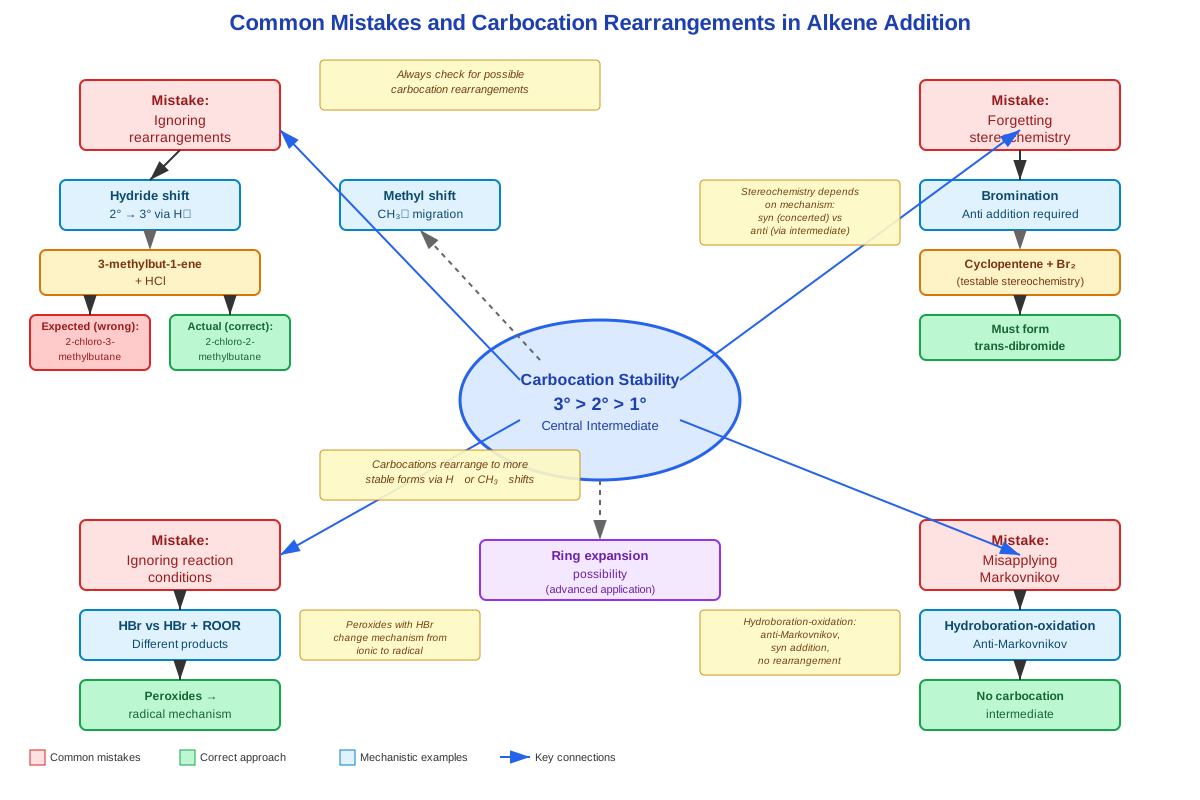
Hydroboration-oxidation proceeds in two distinct stages. First, borane (BH₃ or a borane complex like BH₃·THF) adds to the alkene in a concerted, four-membered transition state. The boron atom, being electrophilic, adds to the less substituted carbon while hydrogen adds to the more substituted carbon. This occurs because the transition state places partial positive charge on the more substituted carbon, which can better stabilize it. The second stage involves oxidation with hydrogen peroxide (H₂O₂) in basic conditions, replacing the boron with a hydroxyl group while retaining the stereochemistry. The overall result is anti-Markovnikov, syn addition of water across the double bond.
Stereochemistry of Addition Reactions
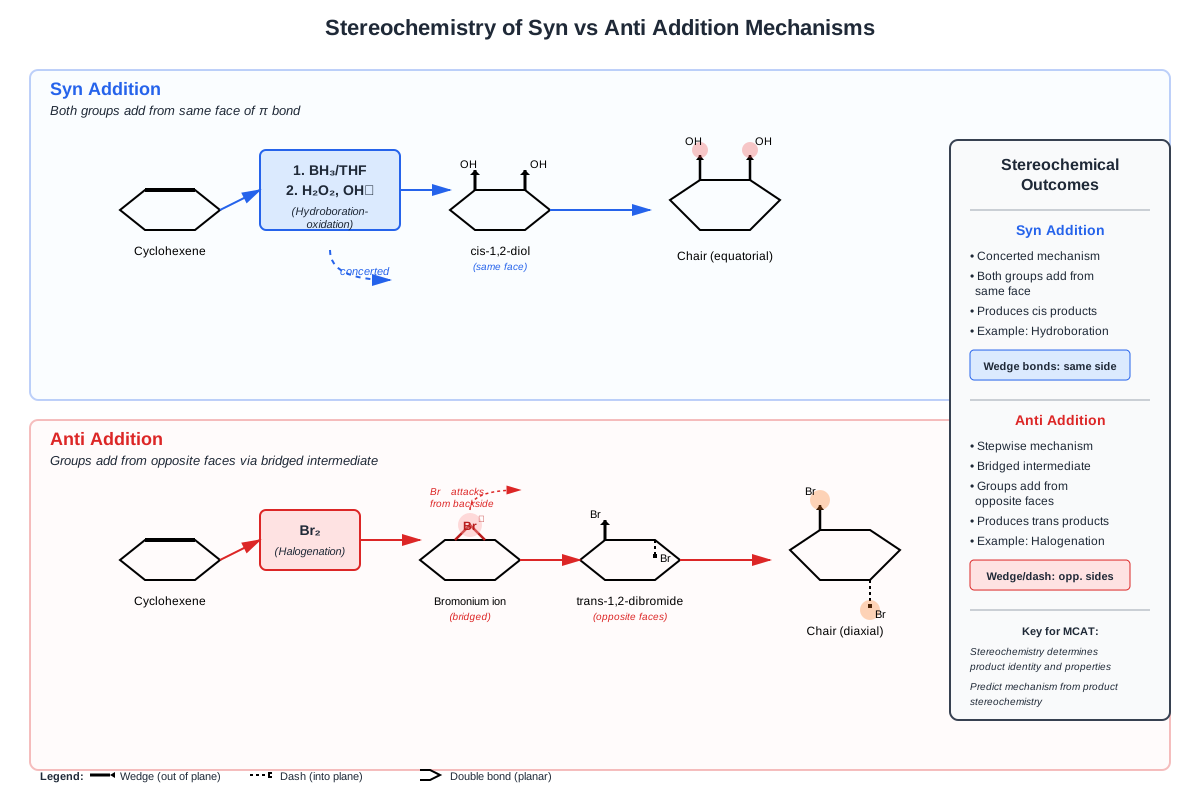
The stereochemical outcome of alkene addition depends on whether the mechanism involves syn addition (both groups add to the same face of the double bond) or anti addition (groups add to opposite faces). This distinction becomes critical when the addition creates new stereocenters, as different stereochemical pathways produce different stereoisomers.
Syn addition occurs in concerted mechanisms where both new bonds form simultaneously from the same face of the π system. Catalytic hydrogenation (H₂ with Pt, Pd, or Ni catalyst) exemplifies syn addition. The alkene adsorbs onto the metal surface, and both hydrogen atoms transfer from the same face, producing a syn product. Hydroboration-oxidation also proceeds through syn addition due to the concerted nature of the borane addition step. When syn addition creates two new stereocenters, the product is either a meso compound (if the molecule has internal symmetry) or a pair of enantiomers (if no symmetry exists).
Anti addition characterizes reactions proceeding through cyclic intermediates that force the two groups to approach from opposite faces. Halogenation (addition of Br₂ or Cl₂) occurs through anti addition via a cyclic halonium ion intermediate. When bromine approaches an alkene, the π electrons attack one bromine atom, displacing the other as bromide. The resulting bromonium ion is a three-membered ring with positive charge on bromine. The bromide ion then attacks from the opposite face, opening the ring and producing anti stereochemistry. Halohydrin formation (addition of X₂ in water) follows a similar anti addition pathway.
Major Addition Reactions for the MCAT
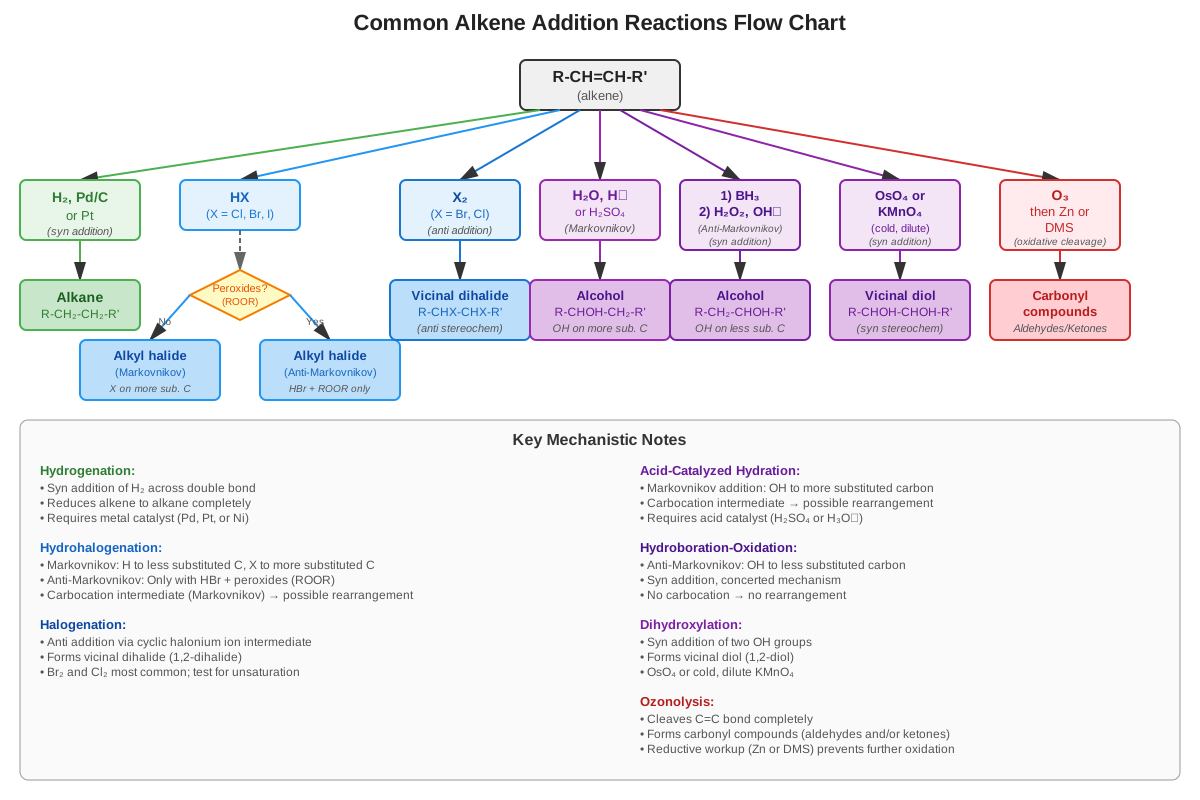
| Reaction Type | Reagents | Mechanism | Stereochemistry | Regioselectivity | Product |
|---|---|---|---|---|---|
| Hydrohalogenation | HX (X = Cl, Br, I) | Electrophilic, carbocation | None (achiral intermediate) | Markovnikov | Alkyl halide |
| Acid-catalyzed hydration | H₂O, H₂SO₄ or H₃O⁺ | Electrophilic, carbocation | None | Markovnikov | Alcohol |
| Halogenation | X₂ (X = Br, Cl) | Electrophilic, halonium ion | Anti | N/A (symmetrical) | Vicinal dihalide |
| Halohydrin formation | X₂, H₂O | Electrophilic, halonium ion | Anti | Markovnikov (OH) | Halohydrin |
| Hydroboration-oxidation | 1) BH₃ 2) H₂O₂, OH⁻ | Concerted, then oxidation | Syn | Anti-Markovnikov | Alcohol |
| Catalytic hydrogenation | H₂, Pt/Pd/Ni | Concerted, surface adsorption | Syn | N/A | Alkane |
| Epoxidation | mCPBA or RCO₃H | Concerted | Syn | N/A | Epoxide |
Carbocation Rearrangements
When alkene addition proceeds through carbocation intermediates, rearrangements may occur if a more stable carbocation can form through hydride shift or alkyl shift. These rearrangements complicate product prediction and represent a common source of MCAT questions testing deeper mechanistic understanding.
A hydride shift involves the migration of a hydrogen atom with its bonding electrons from an adjacent carbon to the carbocation center. This occurs when the shift produces a more stable carbocation (e.g., secondary to tertiary, or primary to secondary). For example, when HCl adds to 3-methyl-1-butene, initial protonation creates a secondary carbocation at C-2. A hydride shift from C-3 to C-2 generates a more stable tertiary carbocation at C-3, which then captures chloride to produce 2-chloro-2-methylbutane rather than the expected 2-chloro-3-methylbutane.
Alkyl shifts follow similar principles but involve migration of an entire alkyl group (typically methyl) with its bonding electrons. Ring expansion represents a special case where alkyl shift converts a strained ring system to a more stable, larger ring. Recognition of potential rearrangements requires evaluating whether adjacent carbons bear hydrogen or alkyl groups that could migrate to form more stable carbocations.
Oxidative Addition Reactions
Epoxidation converts alkenes to epoxides (three-membered cyclic ethers) through addition of an oxygen atom across the double bond. The most common reagent for the MCAT is meta-chloroperoxybenzoic acid (mCPBA), a peroxyacid that delivers oxygen in a concerted, syn addition mechanism. The reaction proceeds through a five-membered transition state where oxygen transfers from the peroxyacid to the alkene while the O-O bond breaks.
Epoxides are important synthetic intermediates because they undergo ring-opening reactions with various nucleophiles, providing access to diverse functional groups. In biological systems, epoxide formation represents a key step in drug metabolism and toxicity. Cytochrome P450 enzymes catalyze epoxidation of alkenes in drug molecules, and the resulting epoxides can react with cellular nucleophiles (DNA, proteins) to cause toxicity. This connection between chemical reactivity and biological consequences frequently appears in MCAT passages.
Catalytic Hydrogenation
Catalytic hydrogenation reduces alkenes to alkanes through syn addition of hydrogen gas (H₂) in the presence of a metal catalyst (Pt, Pd, or Ni). The mechanism involves adsorption of both the alkene and hydrogen molecules onto the metal surface, followed by stepwise or concerted transfer of hydrogen atoms to the alkene from the same face. This syn stereochemistry becomes evident when hydrogenating cyclic alkenes, where both hydrogens add from the less hindered face.
The thermodynamics of hydrogenation provide information about alkene stability. More substituted alkenes release less heat upon hydrogenation because they are more stable starting materials. This relationship allows determination of relative alkene stabilities: tetrasubstituted > trisubstituted > disubstituted > monosubstituted. The MCAT may present hydrogenation data to test understanding of thermodynamic stability or to provide information about unknown alkene structures.
Quick check — test yourself on Alkene addition so far.
Try Flashcards →Concept Relationships
The concepts within alkene addition form an interconnected network centered on the reactivity of the π bond. Electrophilicity and nucleophilicity drive all addition mechanisms, with the electron-rich π bond acting as a nucleophile toward electrophilic reagents. This fundamental interaction → leads to → carbocation formation in electrophilic additions, which → determines → regioselectivity through Markovnikov's rule. The stability of carbocation intermediates → influences → both regioselectivity and the potential for rearrangements.
Stereochemistry connects to mechanism through the distinction between concerted and stepwise pathways. Concerted mechanisms (hydroboration, hydrogenation, epoxidation) → produce → syn addition, while cyclic intermediates (halonium ions) → enforce → anti addition. The presence or absence of intermediates → determines → whether stereochemical information from the starting alkene is preserved or scrambled in the product.
Alkene addition connects backward to prerequisite topics and forward to advanced concepts. Carbocation stability (prerequisite) → explains → regioselectivity in Markovnikov additions and → predicts → rearrangement pathways. Acid-base chemistry (prerequisite) → initiates → protonation steps in electrophilic additions. Looking forward, alkene addition → provides mechanistic foundation for → elimination reactions (the reverse process), → parallels → carbonyl addition mechanisms, and → exemplifies → principles used in aromatic substitution. The stereochemical principles learned here → transfer directly to → understanding enzyme mechanisms and drug-receptor interactions in biochemistry passages.
High-Yield Facts
⭐ Markovnikov's rule: In addition of HX to alkenes, hydrogen adds to the carbon with more hydrogens; the heteroatom adds to the more substituted carbon
⭐ Hydroboration-oxidation produces anti-Markovnikov, syn addition of water to alkenes, yielding alcohols
⭐ Halogenation (Br₂ or Cl₂) proceeds through anti addition via a cyclic halonium ion intermediate
⭐ Carbocation stability order: tertiary > secondary > primary > methyl, explaining Markovnikov regioselectivity
⭐ Syn addition occurs in hydrogenation (H₂/catalyst), hydroboration, and epoxidation; anti addition occurs in halogenation and halohydrin formation
- Acid-catalyzed hydration (H₂O/H₂SO₄) adds water across alkenes with Markovnikov regioselectivity through a carbocation intermediate
- Carbocation rearrangements (hydride or alkyl shifts) occur when a more stable carbocation can form, complicating product prediction
- Epoxidation with mCPBA adds oxygen across the double bond in a syn fashion, creating a three-membered cyclic ether
- More substituted alkenes are more stable and release less heat upon hydrogenation than less substituted alkenes
- Halohydrin formation (X₂ in H₂O) produces anti addition with the halogen on the more substituted carbon (Markovnikov)
Common Misconceptions
Misconception: Markovnikov's rule applies to all alkene addition reactions. → Correction: Markovnikov's rule specifically applies to additions proceeding through carbocation intermediates (HX, H₂O/acid). Hydroboration-oxidation follows anti-Markovnikov regioselectivity, and symmetrical additions (H₂, X₂) have no regioselectivity issue.
Misconception: Syn and anti addition refer to the same concept as syn and anti elimination. → Correction: While both use the same stereochemical terminology, they describe different processes. Syn/anti addition describes which face of the alkene receives the two new groups, while syn/anti elimination describes the spatial relationship of the leaving group and hydrogen in the starting material.
Misconception: All electrophilic additions produce racemic mixtures at newly formed stereocenters. → Correction: Only additions through planar carbocation intermediates (which can be attacked from either face equally) produce racemic mixtures. Concerted additions (hydroboration, hydrogenation) produce specific stereoisomers, and anti additions through cyclic intermediates produce predictable stereochemical outcomes.
Misconception: The more stable product always forms in alkene additions. → Correction: The major product is determined by the more stable intermediate (usually a carbocation), not necessarily the more stable product. Kinetic control dominates these reactions, so the pathway through the lower-energy transition state (leading to the more stable intermediate) determines the outcome.
Misconception: Hydroboration-oxidation is a single-step reaction. → Correction: Hydroboration-oxidation is a two-stage process. The first stage (hydroboration with BH₃) adds boron and hydrogen across the double bond. The second stage (oxidation with H₂O₂/OH⁻) replaces boron with hydroxyl. Each stage has its own mechanism and stereochemical consequences.
Misconception: Carbocation rearrangements always occur when possible. → Correction: Rearrangements occur only when they produce significantly more stable carbocations and when the geometric arrangement allows the shift. Not all carbocations rearrange, and predicting rearrangements requires evaluating both stability differences and structural feasibility.
Worked Examples
Example 1: Predicting Products with Regioselectivity
Question: What is the major product when 2-methylbut-2-ene reacts with HBr?
Solution:
Step 1: Draw the starting alkene structure. 2-Methylbut-2-ene has the structure (CH₃)₂C=CH-CH₃, with the double bond between C-2 and C-3.
Step 2: Identify the reaction type. HBr addition is an electrophilic addition that proceeds through a carbocation intermediate, so Markovnikov's rule applies.
Step 3: Determine which carbon gets protonated. The H⁺ from HBr will add to the carbon that produces the more stable carbocation. Protonation at C-2 would create a secondary carbocation at C-3: (CH₃)₂C-CH⁺-CH₃. Protonation at C-3 would create a tertiary carbocation at C-2: (CH₃)₂C⁺-CH₂-CH₃. The tertiary carbocation is more stable.
Step 4: Add the bromide to the carbocation. The Br⁻ attacks the tertiary carbocation at C-2, producing (CH₃)₂C(Br)-CH₂-CH₃.
Step 5: Check for possible rearrangements. The tertiary carbocation is already maximally stable, so no rearrangement occurs.
Answer: The major product is 2-bromo-2-methylbutane, formed through Markovnikov addition with the bromine on the more substituted carbon.
Connection to learning objectives: This example demonstrates application of Markovnikov's rule (LO: Apply Alkene addition to exam-style questions) and requires understanding of carbocation stability (LO: Connect to related concepts).
Example 2: Stereochemistry in Addition Reactions
Question: When (E)-but-2-ene reacts with Br₂, what stereoisomeric product(s) form?
Solution:
Step 1: Draw the starting alkene. (E)-but-2-ene has the structure CH₃-CH=CH-CH₃ with the methyl groups on opposite sides of the double bond.
Step 2: Identify the mechanism. Br₂ addition proceeds through a cyclic bromonium ion intermediate, which enforces anti addition.
Step 3: Analyze the bromonium ion formation. When Br₂ approaches the alkene, one bromine forms a three-membered ring with both carbons of the double bond, creating a bromonium ion. This intermediate has a plane of symmetry.
Step 4: Consider bromide attack. The Br⁻ can attack either carbon of the bromonium ion from the opposite face. Due to the symmetry of the starting alkene and intermediate, attack at C-2 or C-3 produces the same compound.
Step 5: Determine stereochemistry. The anti addition creates two new stereocenters. Starting from (E)-but-2-ene, anti addition produces 2,3-dibromobutane with the bromines on opposite faces. This creates a meso compound with an internal plane of symmetry: one bromine is wedged and the other is dashed (or vice versa) when drawn in the proper conformation.
Step 6: Consider all possible products. Although the bromonium ion can be attacked from either face, the symmetry of the molecule means both pathways produce the same meso compound.
Answer: The product is meso-2,3-dibromobutane, a single achiral compound despite having two stereocenters, formed through anti addition.
Connection to learning objectives: This example illustrates stereochemical analysis (LO: Distinguish between syn and anti addition) and demonstrates how mechanism determines three-dimensional structure (LO: Apply to exam-style questions).
Exam Strategy
When approaching Alkene addition MCAT questions, begin by identifying the reagents and classifying the reaction type. The reagents immediately reveal whether the reaction follows Markovnikov or anti-Markovnikov regioselectivity and whether the stereochemistry will be syn, anti, or non-stereospecific. Create a mental flowchart: HX or H₂O/acid → Markovnikov through carbocation; BH₃ then H₂O₂ → anti-Markovnikov, syn; X₂ → anti addition; H₂/catalyst → syn addition.
Trigger words that signal alkene addition questions include "major product," "regioselectivity," "stereoisomer," and "mechanism." When a question asks for the "major product," immediately consider whether carbocation rearrangements might occur—this is a favorite MCAT trap. The phrase "stereochemical outcome" or "configuration of the product" signals that you need to determine whether the addition is syn or anti and track the three-dimensional consequences.
For process-of-elimination strategies, use mechanistic reasoning to eliminate impossible answers. If the reaction proceeds through a carbocation intermediate, eliminate any answer showing anti-Markovnikov regioselectivity (unless rearrangement occurred). If the mechanism involves a cyclic intermediate (bromonium ion), eliminate answers showing syn stereochemistry. When evaluating potential rearrangement products, eliminate any structure that would require an unfavorable shift (e.g., tertiary to secondary carbocation).
Time allocation for alkene addition questions should follow this pattern: spend 10-15 seconds identifying the reaction type and mechanism, 20-30 seconds working through the mechanism mentally or on scratch paper, and 10-15 seconds evaluating answer choices. For stereochemistry questions, invest the extra time to draw three-dimensional structures on your scratch paper—this prevents careless errors and is faster than trying to visualize mentally. If a question involves multiple steps, track functional group changes systematically rather than trying to jump directly to the final product.
Exam Tip: When you see an unsymmetrical alkene with HX or H₂O/acid, immediately ask: "Which carbocation is more stable?" This single question determines regioselectivity and alerts you to potential rearrangements.
Memory Techniques
Markovnikov Mnemonic: "More Methyls Make More" - The More substituted carbon (with More methyls/alkyl groups) Makes the More stable carbocation, which determines where the heteroatom ends up in Markovnikov addition.
Syn vs. Anti Mnemonic: "Same Side = Syn; Across = Anti" - Syn addition puts both groups on the Same Side, while Anti addition puts them Across from each other.
Hydroboration Memory Device: "Boron Behaves Backwards" - Hydroboration gives the opposite (anti-Markovnikov) regioselectivity compared to normal HX additions, and the Boron ends up where you wouldn't expect (on the less substituted carbon).
Carbocation Stability Visualization: Picture carbocations as "electron-hungry" species that are "fed" by neighboring alkyl groups through hyperconjugation. More alkyl groups = more feeding = more stable = more likely to form. Visualize tertiary carbocations as well-fed and happy, primary carbocations as starving and unstable.
Reaction Type Acronym - "HASH":
- Hydrohalogenation (HX) - Markovnikov, carbocation
- Acid-catalyzed hydration (H₂O/H⁺) - Markovnikov, carbocation
- Syn additions (H₂/catalyst, BH₃, mCPBA) - concerted, no carbocation
- Halonium additions (X₂, X₂/H₂O) - anti, cyclic intermediate
Rearrangement Recognition: Use the phrase "Happy Carbocations Stay Put" - Highly stable Carbocations (tertiary) Stay Put and don't rearrange, while less stable ones look for opportunities to shift to more stable forms.
Summary
Alkene addition reactions represent a cornerstone of MCAT organic chemistry, testing mechanistic reasoning, stereochemical analysis, and product prediction. These reactions convert the π bond of alkenes into saturated or functionalized products through either electrophilic addition (proceeding through carbocation intermediates) or concerted addition (occurring in a single step). Markovnikov's rule governs regioselectivity in electrophilic additions, directing the heteroatom to the more substituted carbon via the more stable carbocation intermediate. Anti-Markovnikov additions, particularly hydroboration-oxidation, provide complementary regioselectivity through concerted mechanisms. Stereochemical outcomes depend on mechanism: syn addition characterizes concerted reactions (hydrogenation, hydroboration, epoxidation), while anti addition results from cyclic intermediates (halonium ions in halogenation). Carbocation rearrangements complicate product prediction when hydride or alkyl shifts can generate more stable intermediates. Success on MCAT alkene addition questions requires systematic analysis of reagents, mechanism classification, evaluation of carbocation stability, and careful tracking of stereochemistry. Mastery of these reactions provides the foundation for understanding elimination reactions, carbonyl chemistry, and biological transformations involving unsaturated systems.
Key Takeaways
- Alkene addition converts C=C double bonds to single bonds through addition of two groups, driven by the replacement of a weak π bond with two strong σ bonds
- Markovnikov's rule predicts that in HX additions, the heteroatom adds to the more substituted carbon via the more stable carbocation intermediate
- Hydroboration-oxidation provides anti-Markovnikov, syn addition of water, complementing acid-catalyzed hydration
- Stereochemistry depends on mechanism: syn addition (concerted reactions), anti addition (cyclic intermediates), or racemic (planar carbocation intermediates)
- Carbocation rearrangements occur through hydride or alkyl shifts when a more stable carbocation can form, representing a critical complication in product prediction
- Halogenation proceeds through anti addition via bromonium or chloronium ion intermediates, creating predictable stereochemical outcomes
- Systematic analysis of reagents, mechanism type, and intermediate stability enables accurate prediction of products, regioselectivity, and stereochemistry on MCAT questions
Related Topics
Elimination Reactions (E1 and E2): The reverse of addition reactions, eliminations convert alkyl halides and alcohols back to alkenes. Understanding addition mechanisms provides insight into elimination pathways, and the two topics frequently appear together in synthesis problems requiring forward and reverse transformations.
Alkyne Addition Reactions: Alkynes undergo similar addition reactions but can add reagents twice due to the presence of two π bonds. Mastery of alkene additions enables prediction of alkyne reactivity, including partial reduction to alkenes and full reduction to alkanes.
Carbocation Rearrangements in Substitution and Elimination: The carbocation rearrangements learned in alkene addition apply equally to SN1 and E1 reactions. This connection reinforces the importance of carbocation stability across multiple reaction types.
Stereochemistry and Chirality: The stereochemical principles applied in alkene additions—syn/anti addition, meso compounds, enantiomers—represent fundamental concepts that extend throughout organic chemistry and biochemistry, including enzyme mechanisms and drug-receptor interactions.
Carbonyl Addition Reactions: Aldehydes and ketones undergo nucleophilic addition reactions that parallel alkene electrophilic additions mechanistically. The electron-rich/electron-poor relationships learned here transfer directly to understanding carbonyl reactivity.
Practice CTA
Now that you've mastered the core concepts of alkene addition, it's time to solidify your understanding through active practice. Work through the practice questions to test your ability to predict products, analyze mechanisms, and apply stereochemical principles under timed conditions. Use the flashcards to reinforce high-yield facts and reaction patterns until they become automatic. Remember: understanding the "why" behind each reaction—the mechanistic logic—is far more powerful than memorizing individual transformations. Each practice problem you solve strengthens the neural pathways that will serve you on test day. You've built the foundation; now construct mastery through deliberate practice!
Sign up free to keep reading
Create a free AnvayaPrep account to finish this MCAT guide on Alkene addition — plus flashcards and practice questions.