Overview
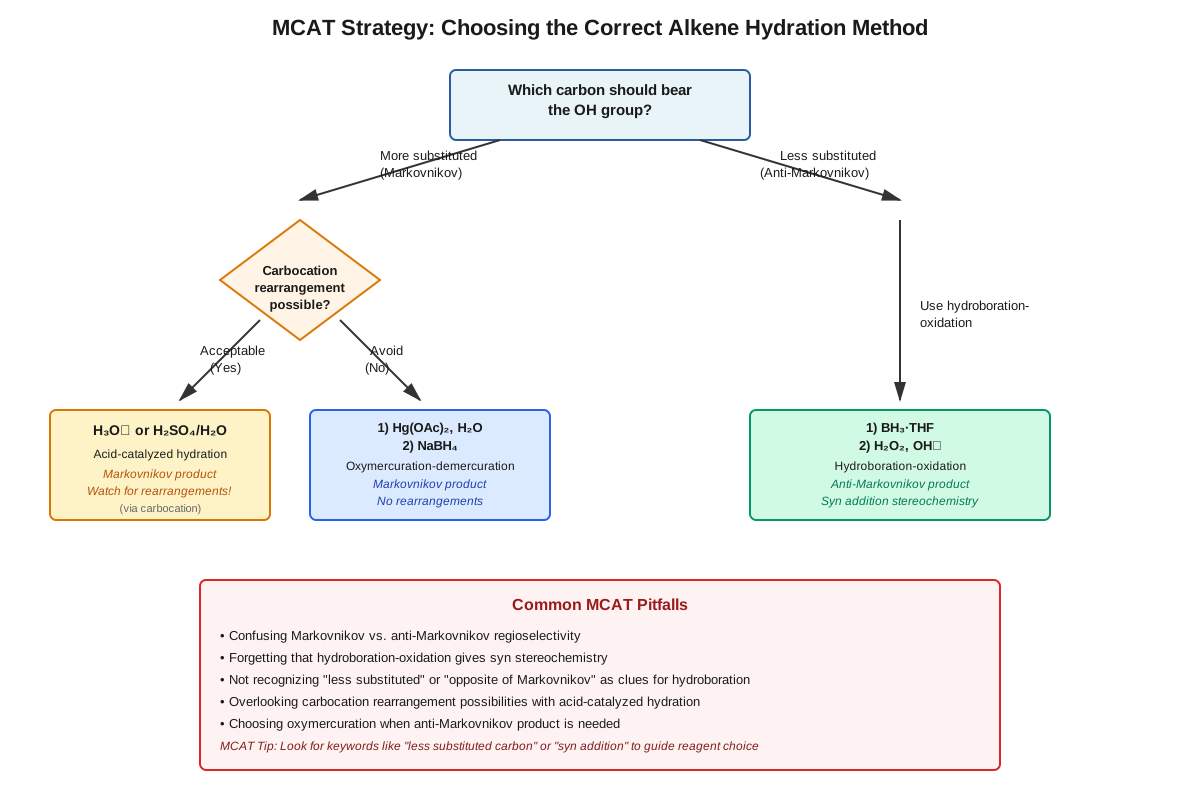
Hydroboration oxidation is a two-step synthetic transformation that converts alkenes into alcohols with anti-Markovnikov regioselectivity and syn stereochemistry. This reaction sequence is fundamental to Organic Chemistry and represents one of the most important Addition Reactions tested on the MCAT. The process involves first treating an alkene with borane (BH₃) or a borane complex, followed by oxidation with hydrogen peroxide (H₂O₂) in basic conditions. Unlike acid-catalyzed hydration or oxymercuration-demercuration, hydroboration oxidation places the hydroxyl group on the less substituted carbon of the original double bond, making it an invaluable tool for synthetic planning and retrosynthetic analysis.
Understanding Hydroboration oxidation is essential for MCAT success because it tests multiple competencies simultaneously: mechanism understanding, stereochemical reasoning, regioselectivity prediction, and the ability to distinguish between competing reaction pathways. The MCAT frequently presents passages requiring students to predict products, explain selectivity patterns, or identify appropriate reagents for specific transformations. This reaction also serves as an excellent example of how reaction conditions determine product outcomes—a recurring theme throughout organic chemistry that appears in both discrete questions and passage-based items.
The broader significance of hydroboration oxidation within Organic Chemistry lies in its relationship to other alkene addition reactions. While electrophilic additions follow Markovnikov's rule due to carbocation stability, hydroboration oxidation proceeds through a concerted mechanism that avoids carbocation intermediates entirely. This mechanistic distinction connects to fundamental concepts including molecular orbital theory, transition state stability, and the relationship between mechanism and product distribution. Mastering this topic strengthens understanding of reaction selectivity, stereochemistry, and the strategic use of protecting groups and functional group interconversions in multi-step synthesis.
Learning Objectives
- [ ] Define Hydroboration oxidation using accurate Organic Chemistry terminology
- [ ] Explain why Hydroboration oxidation matters for the MCAT
- [ ] Apply Hydroboration oxidation to exam-style questions
- [ ] Identify common mistakes related to Hydroboration oxidation
- [ ] Connect Hydroboration oxidation to related Organic Chemistry concepts
- [ ] Predict the regiochemical and stereochemical outcomes of hydroboration oxidation reactions
- [ ] Distinguish between hydroboration oxidation and other alkene hydration methods based on mechanism and product distribution
- [ ] Analyze multi-step synthesis problems requiring hydroboration oxidation as a key transformation
Prerequisites
- Alkene structure and nomenclature: Understanding double bond geometry and E/Z designation is essential for predicting stereochemical outcomes
- Markovnikov's rule and carbocation stability: Provides the conceptual contrast necessary to understand anti-Markovnikov selectivity
- Basic stereochemistry concepts: Including syn/anti addition, chirality, and enantiomers, which are critical for analyzing three-dimensional product structures
- Oxidation-reduction reactions: Recognizing oxidation states helps understand the role of H₂O₂ in the second step
- Electrophilic addition mechanisms: Serves as the mechanistic framework against which hydroboration's concerted mechanism is contrasted
Why This Topic Matters
Hydroboration oxidation appears regularly on the MCAT in multiple contexts. Statistical analysis of recent exams suggests that alkene addition reactions, including hydroboration oxidation, appear in approximately 15-20% of organic chemistry passages and discrete questions. The reaction is particularly favored for passage-based questions because it allows test writers to assess multiple competencies: mechanism analysis, stereochemical reasoning, and synthetic strategy. Questions may present novel borane reagents and ask students to predict outcomes, or provide product structures and require identification of appropriate starting materials and conditions.
From a practical standpoint, hydroboration oxidation has significant applications in pharmaceutical synthesis and biochemistry. Many biologically active molecules contain hydroxyl groups at specific positions that cannot be accessed through Markovnikov addition. For example, prostaglandin synthesis and steroid modifications often employ hydroboration oxidation or related transformations. While the MCAT does not require detailed knowledge of industrial applications, understanding that this reaction solves real synthetic problems helps contextualize why it remains a high-yield topic.
The reaction commonly appears in MCAT passages involving: (1) multi-step synthesis problems where students must select appropriate reagents to achieve specific transformations; (2) mechanism-based questions asking students to explain regioselectivity or stereoselectivity; (3) comparison questions contrasting hydroboration oxidation with acid-catalyzed hydration, oxymercuration-demercuration, or other addition reactions; and (4) structure determination problems where students must work backward from products to identify starting materials and conditions. Recognizing these question patterns enables strategic preparation and efficient test-day performance.
Core Concepts
Definition and Overall Transformation
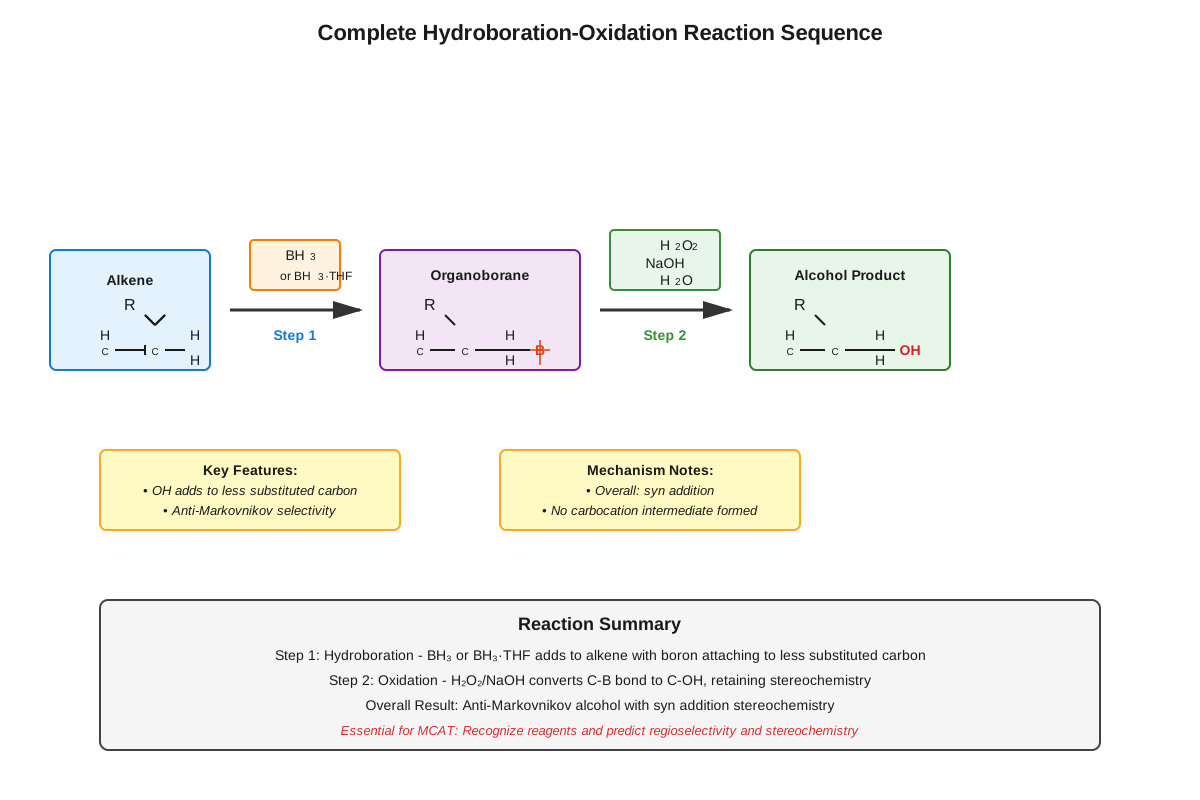
Hydroboration oxidation is a two-stage reaction sequence that converts alkenes to alcohols through initial addition of borane followed by oxidative workup. The complete transformation adds water (H₂O) across the carbon-carbon double bond, but unlike acid-catalyzed hydration, the hydroxyl group attaches to the less substituted carbon (anti-Markovnikov orientation) and the hydrogen adds to the more substituted carbon. The general reaction scheme proceeds as follows:
- Hydroboration step: R-CH=CH₂ + BH₃ → R-CH₂-CH₂-BH₂
- Oxidation step: R-CH₂-CH₂-BH₂ + H₂O₂/NaOH → R-CH₂-CH₂-OH + B(OH)₃
The net result is syn addition of H and OH across the double bond with anti-Markovnikov regioselectivity.
Mechanism of Hydroboration
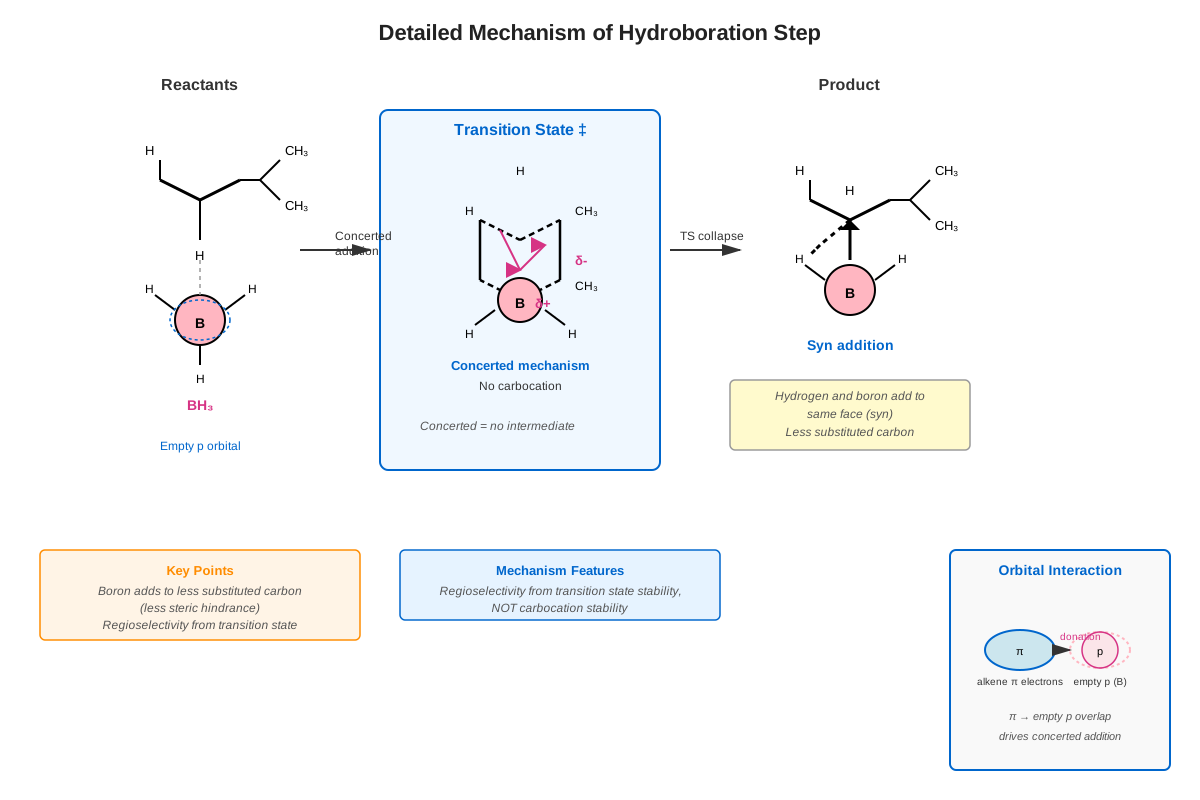
The hydroboration step involves a concerted, four-centered transition state where boron and hydrogen add simultaneously to the alkene. Borane (BH₃) exists primarily as the dimer B₂H₆ or as complexes with Lewis bases such as tetrahydrofuran (THF), written as BH₃·THF. The mechanism proceeds as follows:
- Complex formation: The alkene π electrons interact with the empty p orbital on boron
- Concerted addition: In a single step, boron attaches to one carbon while hydrogen transfers from boron to the other carbon through a four-membered cyclic transition state
- Repeat additions: Each B-H bond can add to an alkene, so one BH₃ molecule can react with up to three alkene molecules, forming R₃B (trialkylborane)
The concerted nature of this mechanism is crucial—there is no carbocation intermediate, which explains why the reaction does not follow Markovnikov's rule. The transition state has partial positive charge development on the carbon forming the bond to hydrogen, and this charge is better stabilized when it develops on the more substituted carbon. However, steric factors dominate: boron, being larger than hydrogen, preferentially attaches to the less hindered, less substituted carbon.
Regioselectivity: Anti-Markovnikov Addition
The anti-Markovnikov regioselectivity of hydroboration oxidation distinguishes it from most electrophilic additions. In the transition state, boron approaches the less substituted carbon for two primary reasons:
- Steric factors: Boron is significantly larger than hydrogen and experiences less steric repulsion when approaching the less crowded carbon
- Electronic factors: While partial positive charge develops on the carbon receiving hydrogen, this electronic effect is secondary to sterics in determining regioselectivity
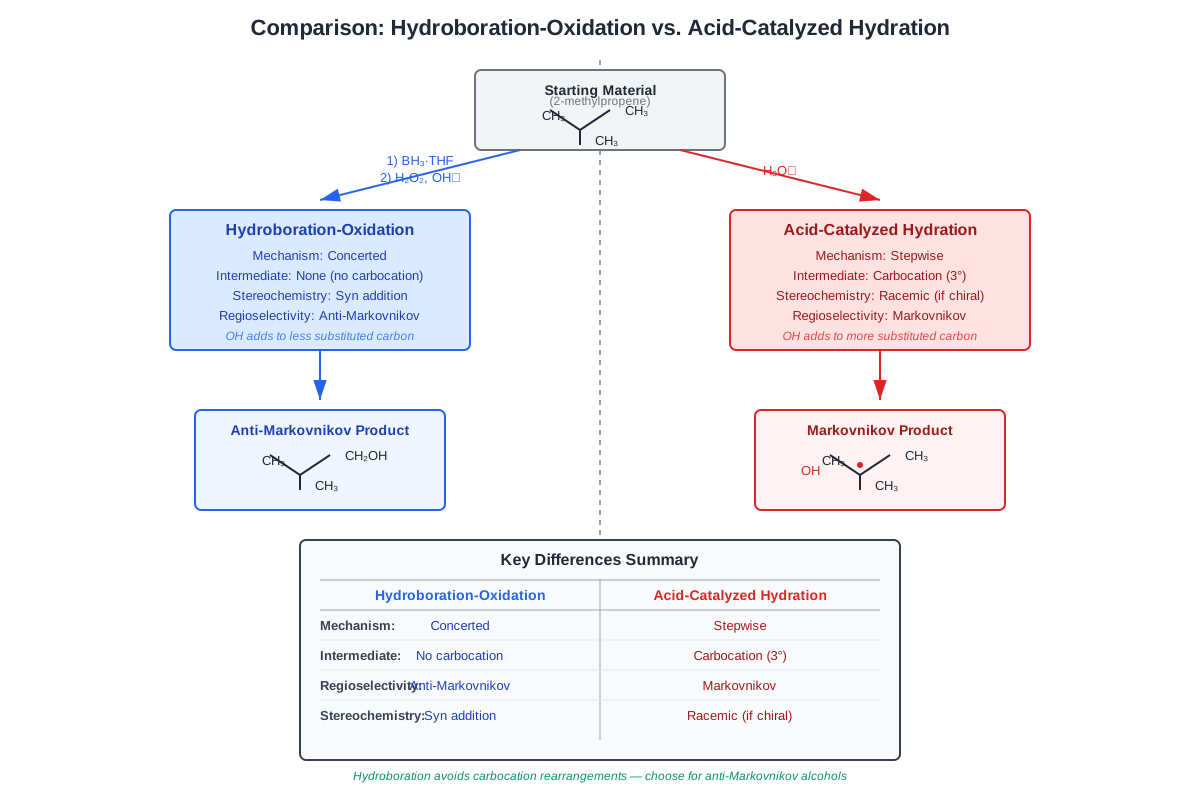
This selectivity pattern is opposite to acid-catalyzed hydration, where the proton adds first to generate the more stable carbocation, placing the hydroxyl group on the more substituted carbon (Markovnikov product).
Stereochemistry: Syn Addition
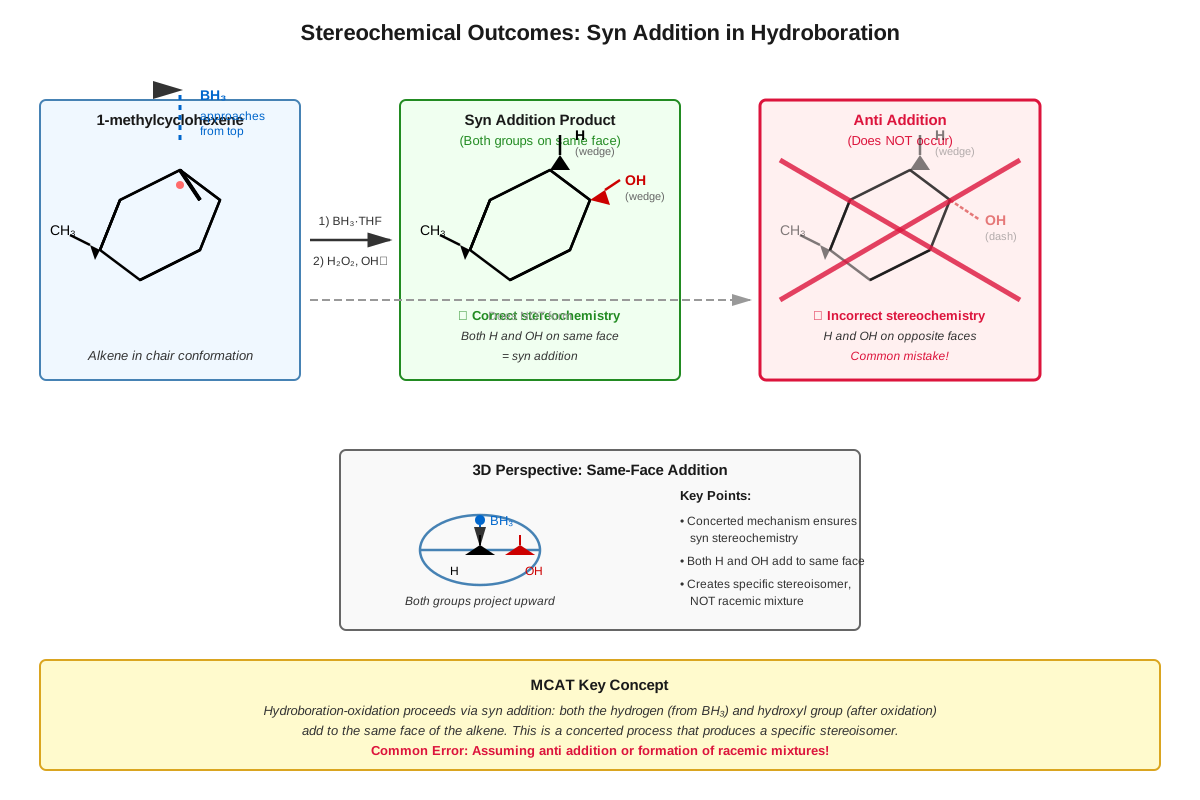
Hydroboration oxidation proceeds with syn stereochemistry—both the boron and hydrogen add to the same face of the alkene. This occurs because the addition is concerted through a four-centered transition state. When the alkene is part of a ring system or has substituents that create a stereochemical environment, both new groups will be cis to each other.
For example, when 1-methylcyclohexene undergoes hydroboration oxidation, the hydrogen and hydroxyl groups end up on the same face of the ring (cis relationship). This stereochemical outcome is predictable and consistent, making hydroboration oxidation valuable for stereoselective synthesis.
Mechanism of Oxidation
The second step converts the carbon-boron bond to a carbon-oxygen bond while maintaining the stereochemical configuration. The mechanism involves:
- Nucleophilic attack: Hydroperoxide ion (HOO⁻, generated from H₂O₂ in basic solution) attacks the electron-deficient boron
- Migration: An alkyl group migrates from boron to oxygen with retention of configuration at carbon
- Repeat: This process occurs for each B-C bond in the trialkylborane
- Hydrolysis: The resulting borate ester hydrolyzes under basic conditions to yield the alcohol and borate ion
The migration step is crucial for stereochemistry—the carbon-boron bond breaks and a carbon-oxygen bond forms without inversion at the carbon center, preserving the syn relationship established during hydroboration.
Comparison with Other Hydration Methods
Understanding how hydroboration oxidation differs from alternative alkene hydration methods is essential for MCAT success:
| Method | Regioselectivity | Stereochemistry | Mechanism Type | Rearrangements? |
|---|---|---|---|---|
| Hydroboration-oxidation | Anti-Markovnikov | Syn addition | Concerted | No |
| Acid-catalyzed hydration | Markovnikov | Racemic (if chiral center formed) | Carbocation intermediate | Yes |
| Oxymercuration-demercuration | Markovnikov | Anti addition | Mercurinium ion | No |
The absence of carbocation intermediates in hydroboration oxidation means no rearrangements occur, unlike acid-catalyzed hydration where hydride and alkyl shifts are common.
Reagent Variations
While BH₃·THF is the standard reagent, several borane derivatives offer enhanced selectivity:
- 9-BBN (9-borabicyclo[3.3.1]nonane): Bulky borane that provides excellent regioselectivity for less hindered positions
- Disiamylborane: Sterically hindered borane useful for selective monohydroboration
- Catecholborane: Alternative borane source with different reactivity profile
For MCAT purposes, recognizing that these are borane variants that undergo similar mechanisms is sufficient; detailed knowledge of each reagent is not required.
Concept Relationships
The concepts within hydroboration oxidation form an interconnected network. The concerted mechanism directly determines both regioselectivity (anti-Markovnikov) and stereochemistry (syn addition). Because no carbocation forms, the reaction avoids rearrangements that plague acid-catalyzed hydration. The oxidation step preserves the stereochemical information established during hydroboration through a retention-of-configuration migration.
Connecting to prerequisite knowledge: Understanding Markovnikov's rule provides the conceptual contrast that makes anti-Markovnikov selectivity meaningful. Knowledge of carbocation stability explains why acid-catalyzed hydration gives different products. Stereochemistry fundamentals enable prediction of three-dimensional product structures, particularly important when the starting alkene has defined geometry or when products contain chiral centers.
Relationship map:
- Alkene structure → determines possible regioisomers → Concerted mechanism → Anti-Markovnikov selectivity → Less substituted alcohol product
- Four-centered transition state → Syn addition → Stereochemical outcome → Retention during oxidation → Final alcohol stereochemistry
- Absence of carbocation → No rearrangements → Predictable products → Contrast with acid-catalyzed methods
These connections extend to related topics: Hydroboration oxidation is one of several Addition Reactions that transform alkenes. It contrasts with electrophilic additions (bromination, hydrohalogenation) and complements oxidative cleavage reactions (ozonolysis, dihydroxylation). In synthesis planning, it serves as a key method for introducing hydroxyl groups at specific positions, connecting to retrosynthetic analysis and functional group interconversions.
Quick check — test yourself on Hydroboration oxidation so far.
Try Flashcards →High-Yield Facts
⭐ Hydroboration oxidation produces alcohols with anti-Markovnikov regioselectivity (OH on less substituted carbon)
⭐ The reaction proceeds with syn stereochemistry—both H and OH add to the same face of the alkene
⭐ The mechanism involves a concerted four-centered transition state with no carbocation intermediate
⭐ No rearrangements occur during hydroboration oxidation, unlike acid-catalyzed hydration
⭐ The overall transformation is addition of H₂O across the double bond, but the mechanism and selectivity differ from acid-catalyzed hydration
- Borane exists as BH₃·THF or similar complexes; pure BH₃ is unstable
- Each BH₃ molecule can add to three alkene molecules, forming trialkylboranes (R₃B)
- The oxidation step uses H₂O₂ in basic solution (NaOH or KOH)
- Steric factors dominate regioselectivity—bulky boron attaches to less hindered carbon
- The oxidation step proceeds with retention of configuration at carbon
- Terminal alkenes (R-CH=CH₂) give primary alcohols (R-CH₂-CH₂-OH)
- Internal alkenes give secondary alcohols with OH on the less substituted carbon
- The reaction is compatible with many functional groups, making it useful in complex molecule synthesis
Common Misconceptions
Misconception: Hydroboration oxidation follows Markovnikov's rule like other addition reactions
Correction: Hydroboration oxidation specifically gives anti-Markovnikov products due to steric factors in the concerted transition state. The hydroxyl group ends up on the less substituted carbon, opposite to acid-catalyzed hydration.
Misconception: The stereochemistry is anti addition because there are two separate steps
Correction: Despite being a two-step sequence overall, the hydroboration step itself is a concerted syn addition through a four-centered transition state. The oxidation step preserves this stereochemistry through retention of configuration, so the final product reflects syn addition of H and OH.
Misconception: Carbocation rearrangements can occur during hydroboration
Correction: Because the mechanism is concerted with no carbocation intermediate, rearrangements (hydride shifts, alkyl shifts) do not occur. This is a major advantage over acid-catalyzed hydration and is a key distinguishing feature on MCAT questions.
Misconception: The boron-containing product from step one is the final product
Correction: The organoborane intermediate must be oxidized with H₂O₂/NaOH to convert the C-B bond to a C-O bond. Without this oxidation step, no alcohol forms. Both steps are essential to the complete transformation.
Misconception: Any base can be used in the oxidation step
Correction: While NaOH or KOH are standard, the base must be compatible with H₂O₂ and strong enough to generate hydroperoxide ion (HOO⁻). The basic conditions are essential for the oxidation mechanism—neutral or acidic conditions will not work.
Misconception: Hydroboration oxidation and oxymercuration-demercuration give the same products
Correction: Oxymercuration-demercuration gives Markovnikov products (OH on more substituted carbon), while hydroboration oxidation gives anti-Markovnikov products. Additionally, oxymercuration proceeds through anti addition via a mercurinium ion, whereas hydroboration is syn addition.
Worked Examples
Example 1: Predicting the Product of Hydroboration Oxidation
Question: What is the major product when 2-methylbut-1-ene undergoes hydroboration oxidation (1. BH₃·THF; 2. H₂O₂, NaOH)?
Solution:
Step 1: Draw the starting alkene structure
- 2-methylbut-1-ene: (CH₃)₂CH-CH=CH₂
- The double bond is between C1 and C2
- C1 is less substituted (terminal carbon)
- C2 is more substituted (attached to isopropyl group)
Step 2: Apply regioselectivity rules
- Hydroboration oxidation gives anti-Markovnikov addition
- Boron (and ultimately OH) attaches to the less substituted carbon (C1)
- Hydrogen attaches to the more substituted carbon (C2)
Step 3: Determine stereochemistry
- For this acyclic example, stereochemistry is not a major concern since no chiral centers form
- If the molecule were cyclic or had defined geometry, syn addition would be critical
Step 4: Draw the product
- (CH₃)₂CH-CH₂-CH₂-OH
- This is 2-methylbutan-1-ol, a primary alcohol
Key reasoning: The anti-Markovnikov selectivity places the hydroxyl group on the terminal carbon, producing a primary alcohol. This contrasts with acid-catalyzed hydration, which would give 2-methylbutan-2-ol (tertiary alcohol) through Markovnikov addition.
Example 2: Stereochemistry in Cyclic Systems
Question: When 1-methylcyclopentene undergoes hydroboration oxidation, what is the stereochemical relationship between the methyl group and the newly formed hydroxyl group?
Solution:
Step 1: Analyze the starting material
- 1-methylcyclopentene has a methyl substituent on C1 of the ring
- The double bond is between C1 and C2
- C1 is more substituted (has the methyl group)
- C2 is less substituted
Step 2: Apply regioselectivity
- Anti-Markovnikov addition places OH on C2 (less substituted)
- Hydrogen adds to C1 (more substituted)
Step 3: Determine stereochemistry
- Hydroboration is syn addition—both H and B add to the same face
- The oxidation preserves this stereochemistry
- The borane can approach from either face of the planar alkene
Step 4: Analyze the stereochemical outcome
- If borane approaches from the same face as the methyl group, H and OH will be cis to the methyl
- If borane approaches from the opposite face, H and OH will be trans to the methyl
- Both stereoisomers form, but the less hindered approach (opposite face from methyl) is favored
- The major product has the OH trans to the methyl group
Key reasoning: Syn addition means H and OH are cis to each other, but their relationship to existing substituents depends on which face of the alkene the borane approaches. Steric factors favor approach from the less hindered face, making the trans isomer predominant. This type of stereochemical analysis is common in MCAT passages.
Exam Strategy
When approaching Hydroboration oxidation MCAT questions, use this systematic strategy:
Step 1: Identify the reaction type
- Trigger words: "BH₃," "borane," "hydroboration," followed by "H₂O₂" or "oxidation"
- Recognize that this is a two-step sequence—both steps must occur for alcohol formation
Step 2: Determine regioselectivity
- Remember: anti-Markovnikov (opposite to most additions)
- OH goes on the less substituted carbon
- If you forget, recall that steric factors dominate—bulky boron prefers less crowded positions
Step 3: Assess stereochemistry
- Syn addition: H and OH add to the same face
- In cyclic systems, determine cis/trans relationships
- Consider which face of the alkene is more accessible
Step 4: Check for rearrangements
- No carbocation = no rearrangements
- If a question suggests rearrangement, hydroboration oxidation is likely not the correct answer
Process of elimination tips:
- If answer choices include Markovnikov products, eliminate them for hydroboration oxidation
- If answer choices show rearranged products, eliminate them
- If stereochemistry is specified, eliminate anti addition products
- For synthesis questions, if the target is a primary alcohol from a terminal alkene, hydroboration oxidation is likely correct
Time allocation:
- Discrete questions: 60-90 seconds for straightforward product prediction
- Passage-based questions: 90-120 seconds, as they often require mechanism analysis or comparison with other methods
- Don't spend excessive time drawing detailed mechanisms unless specifically asked—focus on predicting outcomes
Common question stems to recognize:
- "Which reagents would convert alkene X to alcohol Y?"
- "What is the major product of the following reaction sequence?"
- "Which statement correctly describes the stereochemistry of this transformation?"
- "Why does hydroboration oxidation give a different product than acid-catalyzed hydration?"
Memory Techniques
Mnemonic for regioselectivity: "Boron is Bulky, goes to Bare carbon" (less substituted = less crowded = "bare")
Mnemonic for stereochemistry: "SYNchronized swimmers move together" (syn addition = both groups add to same face simultaneously)
Mnemonic for the two-step sequence: "Hydroboration Happens first, Oxidation Occurs second" (H-H-O-O)
Visualization strategy: Picture the alkene as a door that can be approached from either side. Borane is a large person carrying a small hydrogen. The large person (boron) naturally goes to the side of the door with more room (less substituted carbon), while the small hydrogen goes to the crowded side (more substituted carbon). Both enter from the same side of the door (syn addition).
Acronym for distinguishing hydration methods: HAM
- Hydroboration = Anti-Markovnikov
- Acid-catalyzed = Markovnikov
- Mercury (oxymercuration) = Markovnikov
Memory aid for no rearrangements: "Concerted mechanism = Can't rearrange" (no carbocation intermediate means no rearrangement)
Stereochemistry visualization: Draw a simple cyclohexene ring. Mark one face "top" and one "bottom." When borane adds from the top, both B and H are on top (syn). After oxidation, OH replaces B but stays on top. This concrete visualization helps with more complex stereochemistry problems.
Summary
Hydroboration oxidation is a two-step reaction sequence that converts alkenes to alcohols with anti-Markovnikov regioselectivity and syn stereochemistry. The first step involves concerted addition of borane (BH₃) through a four-centered transition state, placing boron on the less substituted carbon due to steric factors. The second step oxidizes the carbon-boron bond to a carbon-oxygen bond using hydrogen peroxide in basic solution, with retention of configuration. This mechanism avoids carbocation intermediates, preventing rearrangements that occur in acid-catalyzed hydration. The reaction is distinguished from other alkene hydration methods by its unique selectivity pattern: while acid-catalyzed hydration and oxymercuration-demercuration follow Markovnikov's rule, hydroboration oxidation reliably produces anti-Markovnikov products. For MCAT success, students must predict products based on regioselectivity and stereochemistry, distinguish hydroboration oxidation from competing reactions, and apply this knowledge to synthesis planning and mechanism-based questions. The reaction's predictability and synthetic utility make it a high-yield topic that appears frequently in both discrete questions and passage-based items.
Key Takeaways
- Hydroboration oxidation converts alkenes to alcohols with anti-Markovnikov regioselectivity (OH on less substituted carbon)
- The reaction proceeds through a concerted mechanism with syn stereochemistry—no carbocation intermediate forms, so no rearrangements occur
- The two-step sequence requires both BH₃ (or equivalent) and H₂O₂/NaOH; the organoborane intermediate is not the final product
- Steric factors dominate regioselectivity: bulky boron attaches to the less hindered carbon, while small hydrogen goes to the more substituted carbon
- Hydroboration oxidation contrasts with acid-catalyzed hydration (Markovnikov, carbocation mechanism, rearrangements possible) and oxymercuration-demercuration (Markovnikov, anti addition, no rearrangements)
- For MCAT questions, focus on predicting regioselectivity, stereochemistry, and distinguishing this reaction from other alkene addition methods
- The reaction is synthetically valuable for producing primary alcohols from terminal alkenes and for stereoselective transformations in complex molecules
Related Topics
Oxymercuration-Demercuration: Another two-step alkene hydration method that gives Markovnikov products without rearrangements; understanding the mechanistic differences (mercurinium ion vs. concerted addition) helps distinguish these reactions on exams.
Acid-Catalyzed Hydration: Direct addition of water to alkenes under acidic conditions; mastering this reaction provides the conceptual contrast necessary to understand why hydroboration oxidation is mechanistically and synthetically distinct.
Electrophilic Addition Reactions: The broader category of alkene reactions including halogenation and hydrohalogenation; hydroboration oxidation is often tested alongside these reactions to assess understanding of mechanism-selectivity relationships.
Stereochemistry and Chirality: Advanced stereochemical analysis builds on the syn addition concept; mastering hydroboration oxidation stereochemistry prepares students for more complex transformations involving multiple stereocenters.
Retrosynthetic Analysis: Using hydroboration oxidation in synthesis planning requires working backward from target molecules; this skill is essential for passage-based questions involving multi-step synthesis.
Practice CTA
Now that you've mastered the core concepts of hydroboration oxidation, it's time to reinforce your understanding through active practice. Attempt the practice questions and flashcards associated with this topic to test your ability to predict products, analyze mechanisms, and distinguish this reaction from related transformations. Focus particularly on questions involving stereochemistry and regioselectivity, as these are the most commonly tested aspects on the MCAT. Remember: understanding the "why" behind anti-Markovnikov selectivity and syn addition will serve you far better than memorization alone. You've built a strong foundation—now apply it with confidence!
Sign up free to keep reading
Create a free AnvayaPrep account to finish this MCAT guide on Hydroboration oxidation — plus flashcards and practice questions.