Overview
Alcohol acidity is a fundamental concept in Organic Chemistry that examines the ability of alcohols to donate a proton (H⁺) and form alkoxide ions. While alcohols are generally considered weak acids compared to carboxylic acids or mineral acids, understanding their acidic properties is crucial for predicting reaction mechanisms, understanding biological processes, and solving complex MCAT problems. The acidity of alcohols depends on structural factors including hybridization, inductive effects, resonance stabilization, and the stability of the resulting conjugate base (alkoxide ion). On the MCAT, questions about alcohol acidity frequently appear in passages involving reaction mechanisms, biochemical pathways, and comparative acidity problems that require students to rank compounds by their pKa values.
The study of alcohol acidity MCAT content bridges multiple areas of organic chemistry, including acid-base chemistry, electronic effects, and reaction mechanisms. Alcohols occupy a middle ground in the acidity spectrum—more acidic than alkanes but less acidic than carboxylic acids—making them versatile functional groups in both synthetic and biological contexts. Understanding why certain structural modifications increase or decrease alcohol acidity enables students to predict reactivity patterns, identify favorable reaction conditions, and understand enzyme mechanisms where serine, threonine, or tyrosine residues act as nucleophiles after deprotonation.
Within the broader context of Alcohols and Ethers in Organic Chemistry, alcohol acidity serves as a gateway to understanding substitution and elimination reactions, protecting group strategies, and the behavior of hydroxyl-containing biomolecules. The MCAT frequently tests this topic through comparative ranking questions, mechanism-based problems, and passages describing pharmaceutical synthesis or metabolic pathways where alcohol deprotonation is a key step.
Learning Objectives
- [ ] Define Alcohol acidity using accurate Organic Chemistry terminology
- [ ] Explain why Alcohol acidity matters for the MCAT
- [ ] Apply Alcohol acidity to exam-style questions
- [ ] Identify common mistakes related to Alcohol acidity
- [ ] Connect Alcohol acidity to related Organic Chemistry concepts
- [ ] Predict relative acidity of alcohols based on structural features and electronic effects
- [ ] Calculate or estimate pKa values for various alcohol structures
- [ ] Explain the relationship between alkoxide ion stability and alcohol acidity
- [ ] Apply alcohol acidity principles to predict reaction outcomes and mechanisms
Prerequisites
- Acid-base chemistry fundamentals: Understanding pKa, pH, and the Brønsted-Lowry definition of acids and bases is essential for quantifying alcohol acidity
- Electronegativity and inductive effects: Knowledge of how electron-withdrawing and electron-donating groups affect charge distribution enables prediction of acidity trends
- Resonance structures: Ability to draw and evaluate resonance contributors is necessary for understanding stabilization of alkoxide conjugate bases
- Hybridization and orbital theory: Understanding sp, sp², and sp³ hybridization explains why different carbon environments affect acidity
- Functional group identification: Recognizing alcohols, phenols, and related structures is fundamental to applying acidity principles
- Thermodynamic stability concepts: Understanding that more stable conjugate bases correspond to stronger acids is central to all acidity comparisons
Why This Topic Matters
Alcohol acidity appears in approximately 3-5% of MCAT Organic Chemistry questions, making it a high-yield topic that frequently determines score differentiation among competitive test-takers. The MCAT tests this concept through discrete questions asking students to rank compounds by acidity, passage-based questions involving reaction mechanisms where alcohol deprotonation is rate-limiting, and biochemistry passages where amino acid side chains (serine, threonine, tyrosine) act as nucleophiles after losing a proton.
Clinically, alcohol acidity principles underlie drug metabolism, particularly Phase II conjugation reactions where glucuronidation or sulfation of hydroxyl groups occurs. Understanding the acidity of phenolic groups in drugs like acetaminophen or morphine helps explain their metabolic fate and bioavailability. In biochemistry, the relatively low acidity of serine's hydroxyl group (pKa ~13) compared to cysteine's thiol group (pKa ~8) explains their different roles in enzyme catalysis—cysteine residues commonly act as nucleophiles at physiological pH, while serine requires specific active site environments to be deprotonated.
On the MCAT, alcohol acidity Organic Chemistry questions commonly appear as:
- Comparative ranking problems (arrange compounds from most to least acidic)
- Mechanism questions where alcohol deprotonation is the first step
- Passages about pharmaceutical synthesis requiring protection/deprotection strategies
- Biochemistry passages involving enzyme mechanisms with nucleophilic amino acid residues
- Questions linking structure to reactivity in substitution or elimination reactions
Core Concepts
Definition and Fundamental Principles
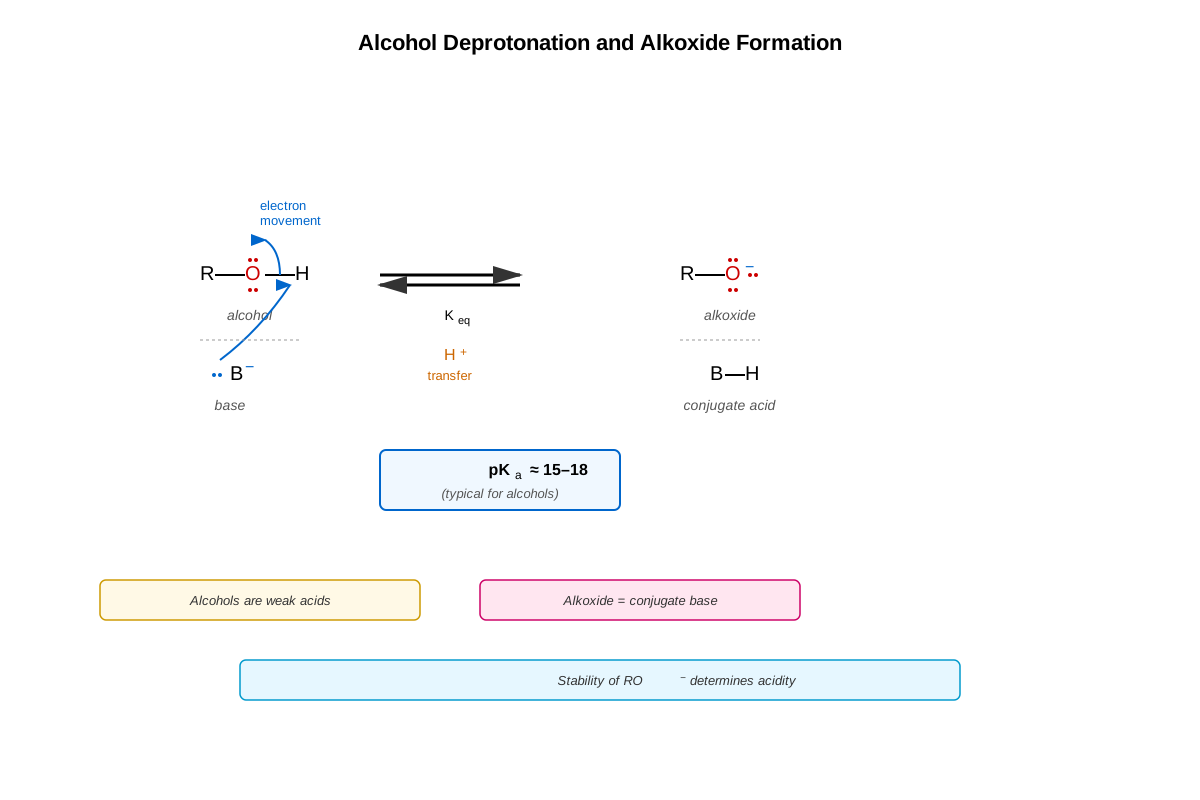
Alcohol acidity refers to the tendency of an alcohol (R-OH) to donate its hydroxyl proton, forming an alkoxide ion (R-O⁻) and a proton (H⁺). This process is quantified by the pKa value, which for simple aliphatic alcohols typically ranges from 15-18. The equilibrium can be represented as:
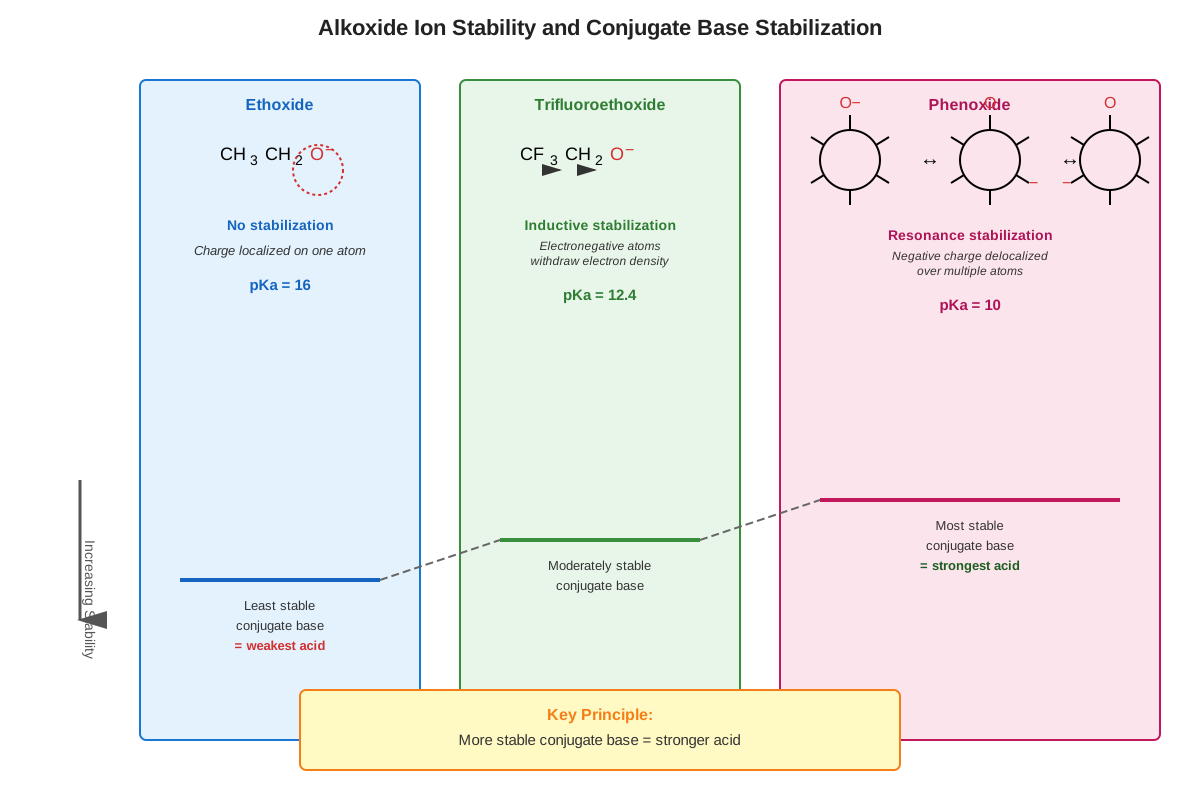
R-OH ⇌ R-O⁻ + H⁺The strength of an alcohol as an acid is directly related to the stability of its conjugate base, the alkoxide ion. More stable alkoxide ions correspond to more acidic alcohols (lower pKa values). This fundamental principle—that acidity correlates with conjugate base stability—governs all structural effects on alcohol acidity.
Compared to other functional groups, alcohols are weak acids. Water has a pKa of approximately 15.7, simple aliphatic alcohols range from 15-18, phenols (aromatic alcohols) have pKa values around 10, and carboxylic acids are much more acidic with pKa values around 4-5. This positioning makes alcohols important intermediates in reactivity—acidic enough to be deprotonated by strong bases like sodium hydride (NaH) or alkyllithium reagents, but not acidic enough to donate protons to weak bases.
Structural Factors Affecting Alcohol Acidity
Hybridization Effects
The hybridization of the carbon bearing the hydroxyl group significantly impacts acidity. sp-hybridized carbons (as in terminal alkynes with C≡C-OH tautomers, though these typically exist as carbonyl compounds) would theoretically produce the most acidic alcohols because sp orbitals hold electrons closer to the nucleus (higher s-character = more electronegative). sp²-hybridized carbons (as in vinyl alcohols or phenols) produce more acidic alcohols than sp³-hybridized carbons (aliphatic alcohols).
This trend explains why phenol (pKa ~10) is approximately 10⁶ times more acidic than cyclohexanol (pKa ~16). The phenoxide ion benefits from resonance delocalization of the negative charge into the aromatic ring, but the sp² hybridization of the carbon also contributes to increased acidity.
Inductive Effects
Electron-withdrawing groups (EWGs) increase alcohol acidity by stabilizing the negative charge on the alkoxide ion through the inductive effect. Electronegative atoms like fluorine, chlorine, oxygen, or nitrogen withdraw electron density through sigma bonds, making the oxygen atom better able to accommodate the negative charge.
For example:
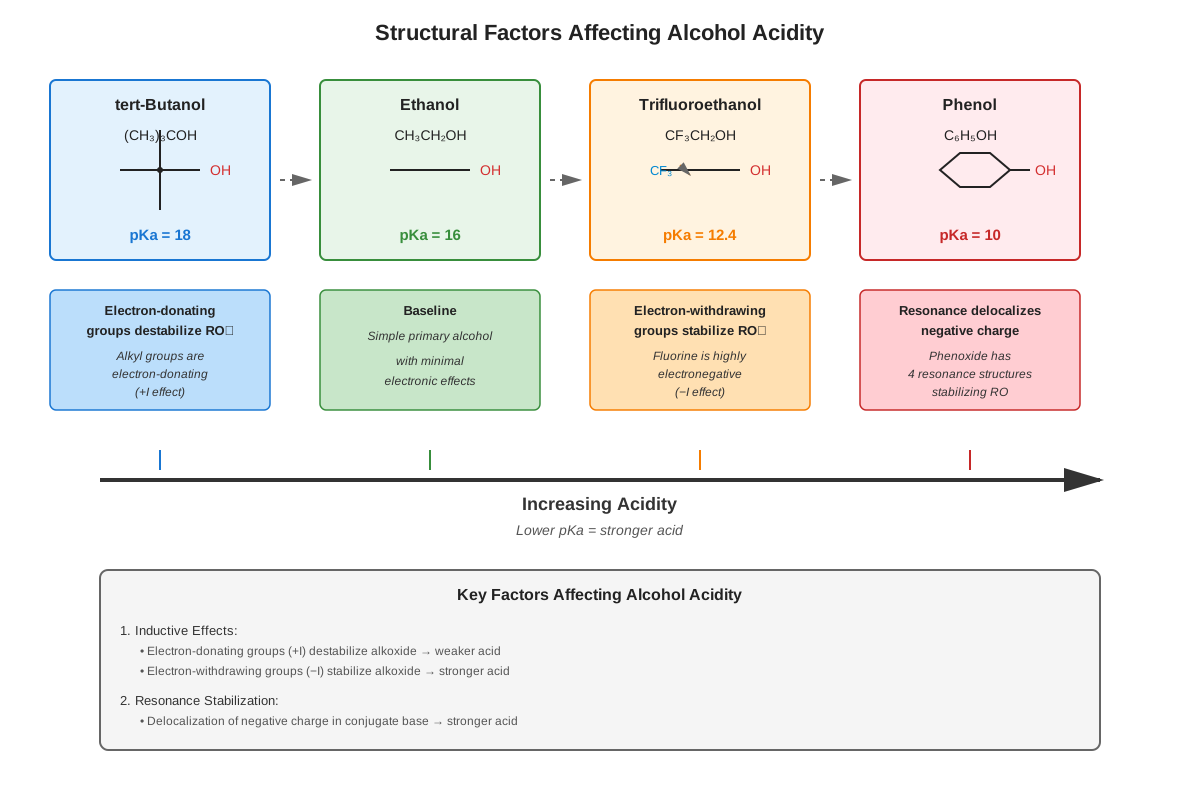
- Ethanol (CH₃CH₂OH): pKa ≈ 16
- 2-Chloroethanol (ClCH₂CH₂OH): pKa ≈ 14.3
- 2,2,2-Trifluoroethanol (CF₃CH₂OH): pKa ≈ 12.4
The effect diminishes with distance—electron-withdrawing groups on carbons further from the hydroxyl group have progressively smaller effects on acidity. This distance dependence follows an exponential decay pattern, with effects becoming negligible beyond three carbon atoms.
Electron-donating groups (EDGs) like alkyl groups decrease alcohol acidity by destabilizing the alkoxide ion. This explains the trend: methanol (pKa 15.5) > primary alcohols (pKa ~16) > secondary alcohols (pKa ~17) > tertiary alcohols (pKa ~18). More alkyl substitution means more electron density pushed toward the negatively charged oxygen, creating unfavorable charge-charge repulsion.
Resonance Stabilization
Resonance stabilization of the conjugate base dramatically increases alcohol acidity. Phenols exemplify this effect—the phenoxide ion can delocalize the negative charge through resonance into the aromatic ring:
O⁻ ↔ ortho C⁻ ↔ para C⁻ ↔ ortho C⁻ ↔ O⁻This delocalization distributes the negative charge over multiple atoms, significantly stabilizing the conjugate base and making phenol approximately one million times more acidic than cyclohexanol. Substituents on the aromatic ring further modulate this effect:
| Substituent Position | Effect on Phenol Acidity | Explanation |
|---|---|---|
| para-Nitro | Large increase (pKa ~7) | EWG + resonance withdrawal |
| meta-Nitro | Moderate increase (pKa ~8) | EWG inductive effect only |
| para-Methoxy | Decrease (pKa ~10.2) | EDG destabilizes anion |
| ortho-Nitro | Very large increase (pKa ~7.2) | EWG + proximity + H-bonding |
Hydrogen Bonding and Solvation Effects
The stability of alkoxide ions in solution depends significantly on solvation—the interaction between the charged species and solvent molecules. In protic solvents like water or alcohols, alkoxide ions are stabilized by hydrogen bonding, which helps disperse the negative charge. Smaller alkoxide ions (like methoxide) are better solvated than larger ones because solvent molecules can approach the charge center more closely.
This solvation effect partially explains why methanol is more acidic than tertiary alcohols—the methoxide ion is better stabilized by solvent interactions. In aprotic solvents like DMSO or acetone, this trend can reverse because solvation effects are minimized and intrinsic electronic factors dominate.
Quantitative Relationships and pKa Values
Understanding the quantitative relationship between structure and pKa enables prediction of reaction outcomes. Key reference values for the MCAT include:
- Aliphatic alcohols (R-OH): pKa 15-18
- Water (H-OH): pKa 15.7
- Phenol (Ph-OH): pKa ~10
- Carboxylic acids (R-COOH): pKa 4-5
- Protonated alcohols (R-OH₂⁺): pKa -2 to -3
The Henderson-Hasselbalch equation relates pH, pKa, and the ratio of conjugate base to acid:
pH = pKa + log([RO⁻]/[ROH])At pH values significantly below the pKa (pH < pKa - 2), the alcohol exists predominantly in its protonated form. At pH values significantly above the pKa (pH > pKa + 2), the alkoxide form predominates. This relationship is crucial for predicting reaction conditions—to deprotonate an alcohol with pKa 16, a base with conjugate acid pKa > 18 is typically required.
Comparison with Other Functional Groups
Understanding alcohol acidity requires context within the broader acidity spectrum:
More acidic than alcohols:
- Carboxylic acids (pKa ~4-5): Resonance stabilization of carboxylate ion
- Phenols (pKa ~10): Resonance into aromatic ring
- Thiols (pKa ~8-10): Larger sulfur atom better accommodates negative charge
Less acidic than alcohols:
- Amines (pKa ~35-40): Nitrogen less electronegative than oxygen
- Alkanes (pKa ~50): Carbon much less electronegative than oxygen
- Alkenes (pKa ~44): sp² carbon still not electronegative enough
This hierarchy enables prediction of acid-base reactions—stronger acids will protonate the conjugate bases of weaker acids.
Concept Relationships
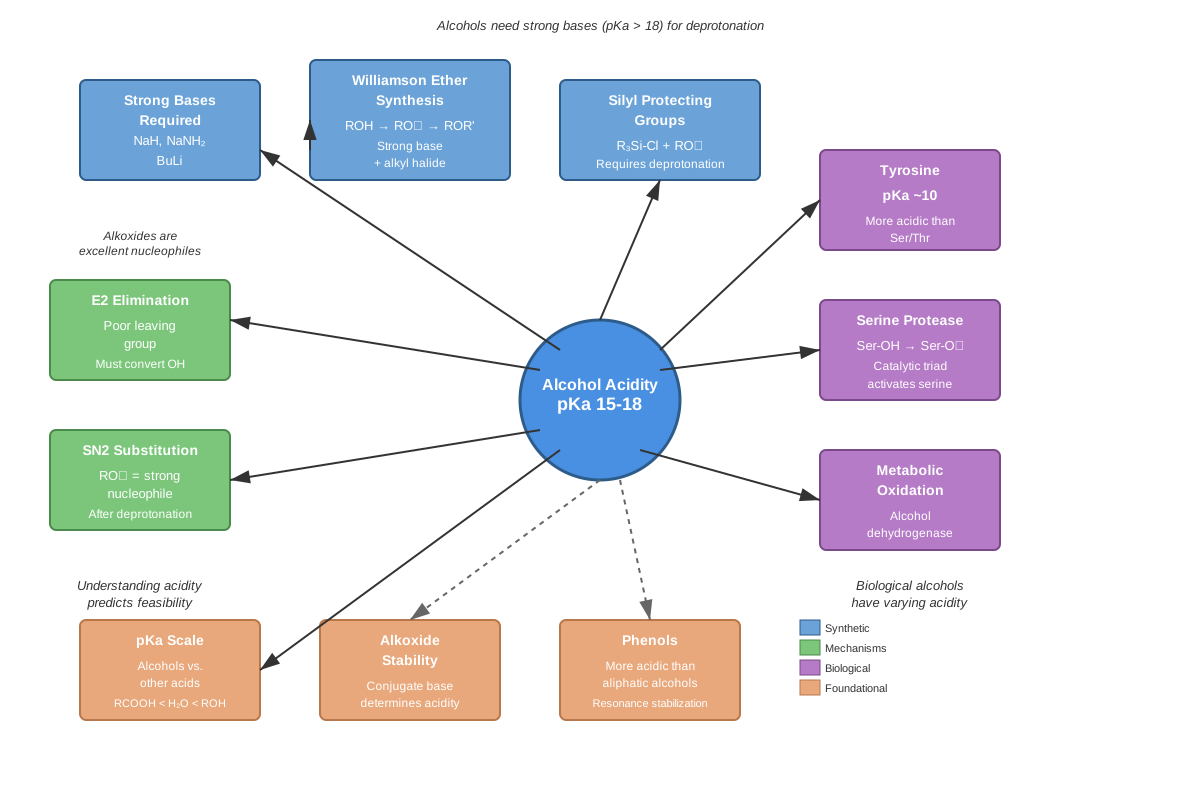
The concepts within alcohol acidity form an interconnected network where structural features collectively determine the overall acidity. Hybridization provides the baseline electronic environment → Inductive effects from substituents modulate electron density → Resonance stabilization (when available) dramatically enhances conjugate base stability → Solvation effects provide the final environmental context. These factors operate simultaneously and additively (or sometimes synergistically).
Alcohol acidity connects to prerequisite knowledge of acid-base chemistry by applying Brønsted-Lowry definitions and pKa concepts to a specific functional group. The electronegativity and inductive effects learned in general chemistry directly explain why electron-withdrawing groups increase acidity. Resonance structures, a fundamental skill in organic chemistry, become quantitatively important when evaluating phenol acidity.
Looking forward, alcohol acidity enables understanding of:
- Substitution and elimination reactions (E2 mechanisms require deprotonation)
- Protecting group strategies (alcohols must be deprotonated before silyl protection)
- Grignard and organolithium chemistry (these reagents deprotonate alcohols, destroying the reagent)
- Biochemical mechanisms (serine proteases, kinase phosphorylation sites)
- Drug metabolism (Phase II conjugation reactions)
The relationship map: Conjugate base stability ← determines ← Alcohol acidity → predicts → Reaction conditions needed → enables → Mechanism prediction → connects to → Synthetic strategy
Quick check — test yourself on Alcohol acidity so far.
Try Flashcards →High-Yield Facts
⭐ Phenols are approximately 10⁶ times more acidic than aliphatic alcohols due to resonance stabilization of the phenoxide ion (phenol pKa ~10 vs. cyclohexanol pKa ~16)
⭐ Electron-withdrawing groups increase alcohol acidity by stabilizing the negative charge on the alkoxide ion through inductive effects; the effect decreases with distance from the hydroxyl group
⭐ Alcohol acidity order: methanol > 1° > 2° > 3° because alkyl groups are electron-donating and destabilize the alkoxide ion
⭐ Alcohols require strong bases for deprotonation (NaH, NaNH₂, alkyllithium, Grignard reagents) because their pKa values (15-18) are higher than weak bases like hydroxide or alkoxide
⭐ The pKa of simple aliphatic alcohols ranges from 15-18, making them similar in acidity to water (pKa 15.7) but much less acidic than carboxylic acids (pKa 4-5)
- Protonated alcohols (R-OH₂⁺) are strong acids with pKa values around -2 to -3, making them excellent leaving groups in substitution reactions
- Hydrogen bonding stabilizes alkoxide ions in protic solvents, affecting the observed acidity and explaining why smaller alkoxides are more stable
- Para-nitrophenol (pKa ~7) is more acidic than phenol (pKa ~10) because the nitro group withdraws electrons through both resonance and inductive effects
- Thiols (R-SH) are more acidic than alcohols (pKa ~8-10 vs. 15-18) because sulfur's larger size better accommodates negative charge through polarizability
- Vinyl alcohols (enols) are unstable and tautomerize to carbonyls, but when forced to exist, they are more acidic than aliphatic alcohols due to sp² hybridization
- Intramolecular hydrogen bonding can affect acidity by stabilizing either the alcohol or alkoxide form, depending on geometry
- Fluorinated alcohols are significantly more acidic than their non-fluorinated counterparts (CF₃CH₂OH pKa ~12.4 vs. CH₃CH₂OH pKa ~16)
Common Misconceptions
Misconception: All alcohols have similar acidity, so they can all be deprotonated by the same bases.
Correction: Alcohol acidity varies significantly based on structure. Phenols (pKa ~10) can be deprotonated by sodium hydroxide, while aliphatic alcohols (pKa 15-18) require much stronger bases like sodium hydride or alkyllithium reagents. Matching base strength to substrate acidity is essential for successful reactions.
Misconception: Tertiary alcohols are more acidic than primary alcohols because they are more substituted and "more stable."
Correction: Tertiary alcohols are LESS acidic than primary alcohols. While tertiary carbocations are more stable than primary carbocations, tertiary alkoxide ions are LESS stable than primary alkoxide ions because electron-donating alkyl groups destabilize the negative charge. The acidity order is methanol > 1° > 2° > 3°.
Misconception: Resonance effects only matter for aromatic compounds, so inductive effects determine all alcohol acidity trends.
Correction: While resonance is most dramatic in phenols, it can also stabilize alkoxide ions in other systems (e.g., allylic alcohols show slightly enhanced acidity). Additionally, both resonance AND inductive effects operate in substituted phenols, often synergistically. For example, para-nitrophenol benefits from both resonance delocalization into the nitro group and inductive electron withdrawal.
Misconception: If an alcohol has a lower pKa, it exists primarily in the deprotonated (alkoxide) form at physiological pH.
Correction: Even phenol (pKa ~10) exists predominantly in the protonated form at physiological pH (~7.4) because pH < pKa means the protonated form predominates. Only when pH > pKa does the deprotonated form become the major species. At pH 7.4, phenol is about 0.25% deprotonated, while aliphatic alcohols are essentially 100% protonated.
Misconception: Electron-withdrawing groups always increase acidity regardless of their position on the molecule.
Correction: The inductive effect decreases exponentially with distance. An electron-withdrawing group on a carbon three or more bonds away from the hydroxyl group has minimal effect on acidity. Additionally, the effect is strongest when the EWG is on the same carbon (α-position) or one carbon away (β-position) from the hydroxyl group.
Misconception: Alcohols and carboxylic acids have similar acidity because both contain O-H bonds.
Correction: Carboxylic acids (pKa ~4-5) are approximately 10¹⁰ times more acidic than alcohols (pKa 15-18). The carboxylate ion benefits from resonance stabilization where the negative charge is equally distributed between two oxygen atoms, dramatically stabilizing the conjugate base. Alcohols lack this resonance stabilization, making them much weaker acids.
Worked Examples
Example 1: Ranking Alcohols by Acidity
Question: Rank the following compounds from most acidic to least acidic: (A) ethanol, (B) 2,2,2-trifluoroethanol, (C) tert-butanol, (D) phenol.
Solution:
Step 1: Identify the structural features of each compound.
- (A) Ethanol: CH₃CH₂OH - simple primary alcohol
- (B) 2,2,2-Trifluoroethanol: CF₃CH₂OH - primary alcohol with three electron-withdrawing fluorine atoms
- (C) tert-Butanol: (CH₃)₃COH - tertiary alcohol with three electron-donating methyl groups
- (D) Phenol: C₆H₅OH - aromatic alcohol with resonance stabilization
Step 2: Apply principles of conjugate base stability.
- Phenol: The phenoxide ion is stabilized by resonance delocalization into the aromatic ring. This is the strongest stabilizing effect present. Expected pKa ~10.
- 2,2,2-Trifluoroethanol: Three fluorine atoms strongly withdraw electrons through the inductive effect, stabilizing the alkoxide ion. Expected pKa ~12.4.
- Ethanol: Simple primary alcohol with minimal electronic effects. Expected pKa ~16.
- tert-Butanol: Three methyl groups donate electrons, destabilizing the alkoxide ion. Expected pKa ~18.
Step 3: Rank from most acidic (lowest pKa) to least acidic (highest pKa).
Answer: D (phenol) > B (2,2,2-trifluoroethanol) > A (ethanol) > C (tert-butanol)
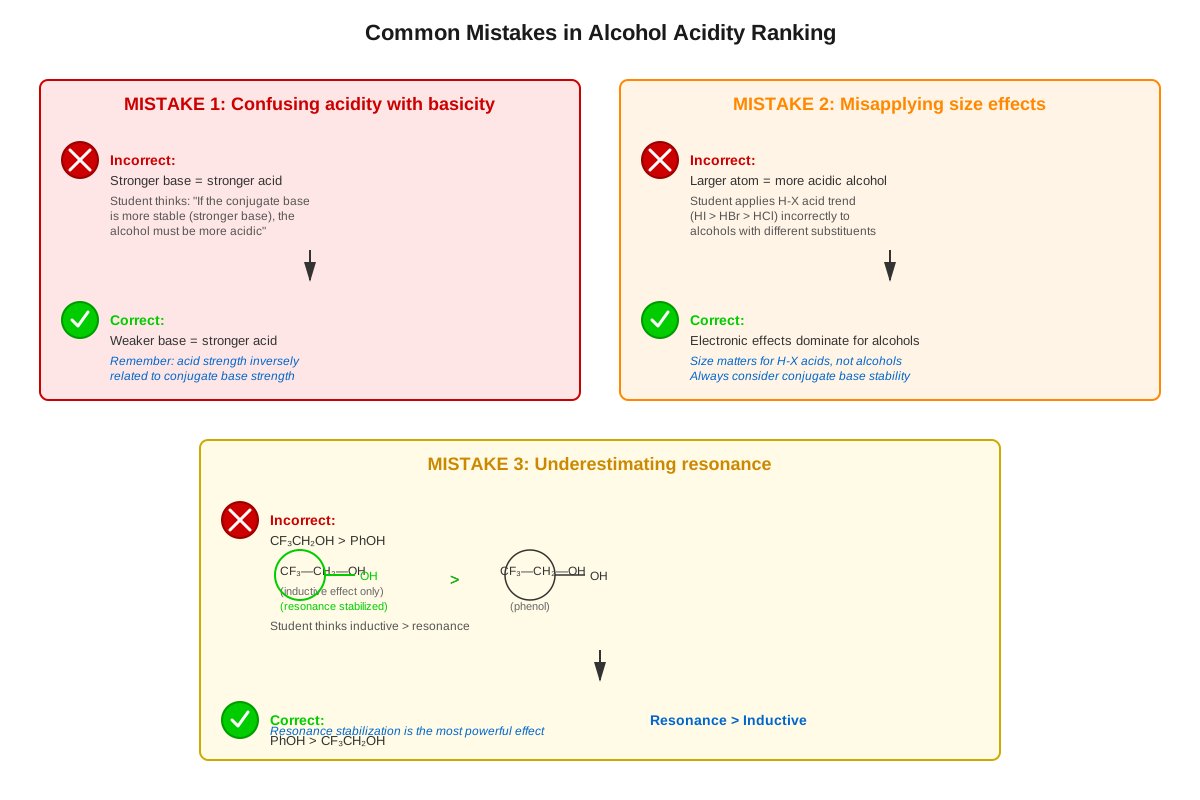
Key Takeaway: Resonance effects > strong inductive effects > baseline structure > electron-donating effects. This hierarchy helps predict acidity trends systematically.
Example 2: Predicting Reaction Outcomes
Question: A student attempts to prepare a Grignard reagent by adding magnesium metal to 4-bromobutan-1-ol in dry ether. Will this reaction succeed? Explain your reasoning.
Solution:
Step 1: Identify the functional groups present.
The substrate contains both a bromoalkane (C-Br) and an alcohol (OH) functional group.
Step 2: Recall Grignard reagent formation and reactivity.
Grignard reagents (RMgBr) are formed by reacting alkyl halides with magnesium metal. However, Grignard reagents are extremely strong bases (the conjugate acid R-H has pKa ~50) and powerful nucleophiles.
Step 3: Consider the acidity of the alcohol.
The alcohol has a pKa of approximately 16. Grignard reagents, being conjugate bases of alkanes (pKa ~50), will readily deprotonate any functional group with pKa < 50, including alcohols.
Step 4: Predict the reaction outcome.
If any Grignard reagent forms from the alkyl bromide, it will immediately react with the alcohol functional group:
RMgBr + R'-OH → R-H + R'-OMgBrThis acid-base reaction destroys the Grignard reagent, converting it to an alkane and a magnesium alkoxide. The reaction cannot succeed as intended.
Answer: No, this reaction will not succeed. The alcohol functional group will react with any Grignard reagent that forms, destroying it through an acid-base reaction. To prepare a Grignard reagent from this substrate, the alcohol must first be protected (e.g., as a silyl ether or converted to another functional group) or the alcohol must be absent.
Key Takeaway: Understanding alcohol acidity is essential for predicting incompatibilities in synthetic sequences. Alcohols are incompatible with strong bases like Grignard reagents, organolithium compounds, and sodium hydride unless deprotonation is the intended outcome.
Exam Strategy
When approaching alcohol acidity MCAT questions, begin by identifying the type of question: comparative ranking, mechanism prediction, or reaction condition selection. For ranking questions, systematically evaluate each structural feature (hybridization, resonance, inductive effects, substitution pattern) and assign relative importance. Resonance effects typically dominate, followed by strong inductive effects from nearby electronegative atoms, then substitution patterns.
Trigger words and phrases to recognize:
- "Rank by acidity" or "most acidic" → systematic structural analysis required
- "Deprotonate" or "remove a proton" → need base with conjugate acid pKa higher than substrate
- "Alkoxide formation" → alcohol acidity is relevant to mechanism
- "Phenol" or "aromatic alcohol" → expect enhanced acidity due to resonance
- "Electron-withdrawing" or "electron-donating" → inductive effects on acidity
- "pKa" → quantitative comparison needed
Process-of-elimination strategies:
- Eliminate options that violate the fundamental rule: more stable conjugate base = more acidic
- For ranking questions, identify the most obvious outlier (e.g., phenol among aliphatic alcohols) and place it first
- When comparing similar structures, focus on the single structural difference and apply the appropriate principle
- Eliminate answers that place tertiary alcohols as more acidic than primary alcohols (common trap)
- Watch for answers that ignore resonance effects—these are usually incorrect
Time allocation advice:
Discrete alcohol acidity questions should take 45-60 seconds. Spend 15-20 seconds identifying structural features, 20-30 seconds applying principles, and 10-15 seconds confirming your answer. For passage-based questions, alcohol acidity is often a supporting detail rather than the main focus—allocate 30-45 seconds to extract the relevant information and apply it to the specific question. Don't get bogged down calculating exact pKa values; the MCAT tests relative acidity and qualitative trends.
Exam Tip: When stuck between two answer choices in a ranking question, consider the magnitude of effects. Resonance effects change pKa by 5-10 units, strong inductive effects by 2-4 units, and substitution patterns by 1-2 units. This hierarchy helps break ties.
Memory Techniques
Mnemonic for acidity order of alcohols: "My Primary School Teacher" = Methanol > Primary > Secondary > Tertiary (in order of decreasing acidity)
Mnemonic for factors affecting acidity: "HIRES" = Hybridization, Inductive effects, Resonance, Electron-donating groups (decrease acidity), Solvation. This acronym reminds you to check all major factors systematically.
Visualization strategy for resonance in phenoxide: Picture the negative charge as a "cloud" that spreads from the oxygen into the ortho and para positions of the benzene ring. The more spread out the cloud, the more stable the ion. This mental image helps remember that electron-withdrawing groups at ortho/para positions further stabilize the anion.
Acronym for strong bases that deprotonate alcohols: "NANG" = NaH (sodium hydride), Alkyllithium, NaNH₂ (sodium amide), Grignard reagents. These are the bases strong enough to deprotonate typical alcohols.
Number anchor for pKa values: Remember "10-15-20" as anchor points: phenol ~10, water/simple alcohols ~15-16, very hindered alcohols ~18-20. This provides a mental framework for estimating where any alcohol falls on the acidity scale.
Conceptual visualization: Imagine the alkoxide oxygen as a "hot potato" (negative charge). Anything that helps cool it down (spread out the charge) makes the alcohol more acidic. Resonance is like having multiple hands to pass the potato between. Electron-withdrawing groups are like fans cooling the potato. Electron-donating groups are like heating the potato further, making it harder to hold.
Summary
Alcohol acidity is a fundamental concept in organic chemistry that quantifies the ability of alcohols to donate protons and form alkoxide ions. The acidity of an alcohol, measured by its pKa value (typically 15-18 for aliphatic alcohols), depends primarily on the stability of the conjugate base. Structural factors that stabilize the alkoxide ion—including resonance (most important in phenols), inductive effects from electron-withdrawing groups, sp² or sp hybridization, and favorable solvation—increase alcohol acidity by lowering the pKa. Conversely, electron-donating groups like alkyl substituents destabilize the negative charge and decrease acidity, explaining why tertiary alcohols are less acidic than primary alcohols. Understanding these principles enables prediction of reaction conditions, mechanism pathways, and relative reactivity. For the MCAT, students must be able to rank alcohols by acidity, predict which bases can deprotonate specific alcohols, and recognize how alcohol acidity influences synthetic strategies and biochemical mechanisms. The key to mastering this topic is systematically evaluating all structural features and understanding that conjugate base stability is the ultimate determinant of acidity.
Key Takeaways
- Alcohol acidity is determined by the stability of the alkoxide conjugate base; more stable alkoxide = more acidic alcohol (lower pKa)
- Phenols (pKa ~10) are approximately one million times more acidic than aliphatic alcohols (pKa 15-18) due to resonance stabilization of the phenoxide ion
- Electron-withdrawing groups increase alcohol acidity through inductive effects; electron-donating groups (like alkyl groups) decrease acidity
- The acidity order for alcohols is: methanol > primary > secondary > tertiary, opposite to carbocation stability trends
- Strong bases (NaH, alkyllithium, Grignard reagents) are required to deprotonate typical alcohols; these reagents are incompatible with unprotected alcohols in synthetic sequences
- Alcohol acidity principles connect to reaction mechanisms (E2, SN2), protecting group strategies, and biochemical processes involving serine, threonine, and tyrosine residues
- Systematic evaluation of hybridization, resonance, inductive effects, and substitution patterns enables accurate prediction of relative acidity for MCAT questions
Related Topics
Phenol Chemistry: Building on alcohol acidity, phenol chemistry explores the unique reactivity of aromatic alcohols, including electrophilic aromatic substitution patterns influenced by the activating hydroxyl group and oxidation to quinones. Mastering alcohol acidity provides the foundation for understanding why phenols undergo reactions that aliphatic alcohols cannot.
Alcohol Reactions and Mechanisms: Understanding alcohol acidity is prerequisite to studying substitution (SN1, SN2) and elimination (E1, E2) reactions where protonation converts the poor hydroxyl leaving group into a good water leaving group, and deprotonation of β-hydrogens drives elimination pathways.
Protecting Groups in Organic Synthesis: Alcohol acidity determines which protecting groups can be installed and removed under specific conditions. Silyl ethers, acetals, and other protecting strategies require understanding when alcohols will be deprotonated or protonated.
Amino Acid Chemistry and Enzyme Mechanisms: The hydroxyl groups in serine, threonine, and tyrosine have different acidities that determine their roles in enzyme active sites. Tyrosine (phenolic, pKa ~10) can be deprotonated at physiological pH in specific environments, while serine (aliphatic, pKa ~13) typically requires activation.
Carboxylic Acid Acidity: Comparing alcohol acidity to carboxylic acid acidity (pKa ~4-5) reinforces the importance of resonance stabilization and provides context for understanding relative reactivity in biological systems.
Practice CTA
Now that you've mastered the core concepts of alcohol acidity, it's time to solidify your understanding through active practice. Challenge yourself with MCAT-style questions that require you to rank alcohols by acidity, predict reaction outcomes, and apply these principles to complex passage-based scenarios. Use flashcards to memorize key pKa values and the factors that influence alcohol acidity. Remember, the difference between a good MCAT score and a great one often comes down to mastery of high-yield topics like this one. Each practice question you complete strengthens your ability to recognize patterns and apply principles under time pressure. You've built a strong foundation—now put it to work and watch your confidence soar!
Sign up free to keep reading
Create a free AnvayaPrep account to finish this MCAT guide on Alcohol acidity — plus flashcards and practice questions.