Overview
Ether structure is a foundational concept in Organic Chemistry that appears regularly on the MCAT, particularly within the Alcohols and Ethers unit. Ethers are organic compounds characterized by an oxygen atom bonded to two carbon-containing groups, represented by the general formula R–O–R', where R and R' can be alkyl or aryl groups. Understanding ether structure is essential not only for identifying these compounds in complex molecules but also for predicting their physical properties, reactivity patterns, and biological roles. The MCAT frequently tests ether structure through nomenclature questions, property comparisons with alcohols, and their appearance in biochemical contexts such as lipid structures and anesthetic agents.
The structural features of ethers—particularly the bent geometry around the oxygen atom, the presence of lone pairs, and the lack of hydrogen bonding donors—directly influence their chemical behavior and distinguish them from their closely related functional group cousins, the alcohols. While both ethers and alcohols contain oxygen, the absence of an O–H bond in ethers dramatically alters their reactivity, acidity, and intermolecular forces. This structural difference has profound implications for solubility, boiling points, and the types of reactions these compounds undergo, making ether structure a high-yield topic for comparative questions on the MCAT.
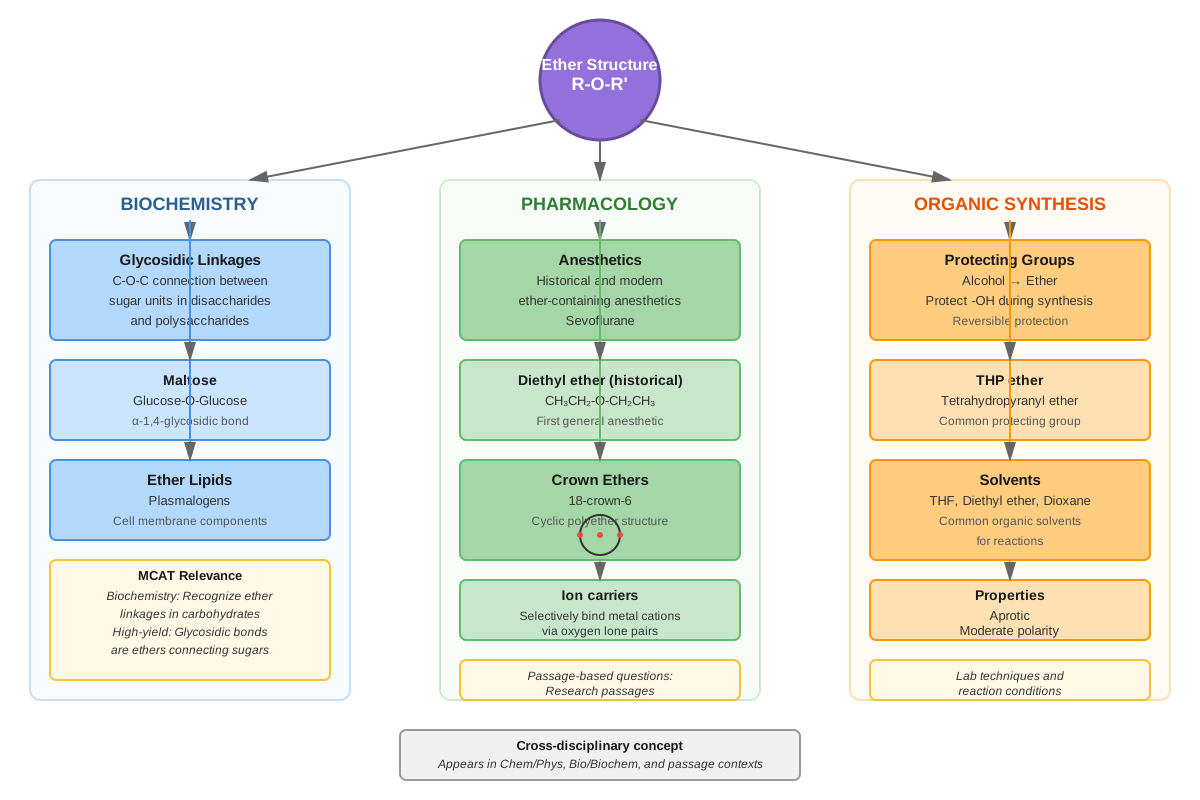
Mastering ether structure provides the foundation for understanding more complex topics in Organic Chemistry, including nucleophilic substitution reactions, protecting group strategies in synthesis, and the behavior of cyclic ethers like epoxides and crown ethers. Additionally, ether structure connects to biochemistry through glycosidic linkages in carbohydrates and ether lipids in cell membranes, making this seemingly simple functional group relevant across multiple MCAT sections.
Learning Objectives
- [ ] Define Ether structure using accurate Organic Chemistry terminology
- [ ] Explain why Ether structure matters for the MCAT
- [ ] Apply Ether structure to exam-style questions
- [ ] Identify common mistakes related to Ether structure
- [ ] Connect Ether structure to related Organic Chemistry concepts
- [ ] Distinguish between different classes of ethers (simple, mixed, cyclic) based on structural features
- [ ] Predict physical properties of ethers based on molecular structure and compare them to isomeric alcohols
- [ ] Recognize ethers in complex biological molecules and pharmaceutical compounds
Prerequisites
- Basic bonding theory and Lewis structures: Essential for understanding how oxygen forms two covalent bonds and maintains two lone pairs in ether structures
- Functional group recognition: Necessary to distinguish ethers from other oxygen-containing functional groups like alcohols, ketones, and esters
- Intermolecular forces: Required to predict and explain the physical properties of ethers, particularly their relatively low boiling points
- Basic nomenclature principles: Foundational for learning both common and IUPAC naming systems for ethers
- Electronegativity and polarity: Critical for understanding the polar nature of the C–O–C bond and its implications for solubility
Why This Topic Matters
Ether structure appears on the MCAT with moderate frequency, typically in 2-4 questions per exam either directly or as part of passage-based questions. The topic is particularly important because ethers serve as a bridge between multiple chemistry concepts: they share structural similarities with alcohols but exhibit distinctly different properties, making them ideal for comparative analysis questions that test deeper understanding rather than mere memorization.
Clinically, ethers have significant real-world relevance. Diethyl ether was one of the first general anesthetics used in surgery, and while less common today, understanding ether structure helps explain the mechanism of anesthetic action through lipid solubility. Modern pharmaceutical compounds frequently contain ether linkages, including many antihistamines, antiarrhythmics, and anticancer drugs. The ether functional group provides metabolic stability while maintaining appropriate polarity for drug distribution.
On the MCAT, ether structure commonly appears in several contexts: nomenclature questions requiring identification or naming of ethers; property comparison passages contrasting ethers with isomeric alcohols; synthesis problems where ethers serve as protecting groups or target molecules; and biochemistry passages featuring glycosidic bonds (which are acetals but structurally related to ethers) or ether lipids. The Chemical and Physical Foundations section frequently includes discrete questions on ether properties, while the Biological and Biochemical Foundations section may present ethers in the context of drug structures or membrane components.
Core Concepts
General Structure and Bonding
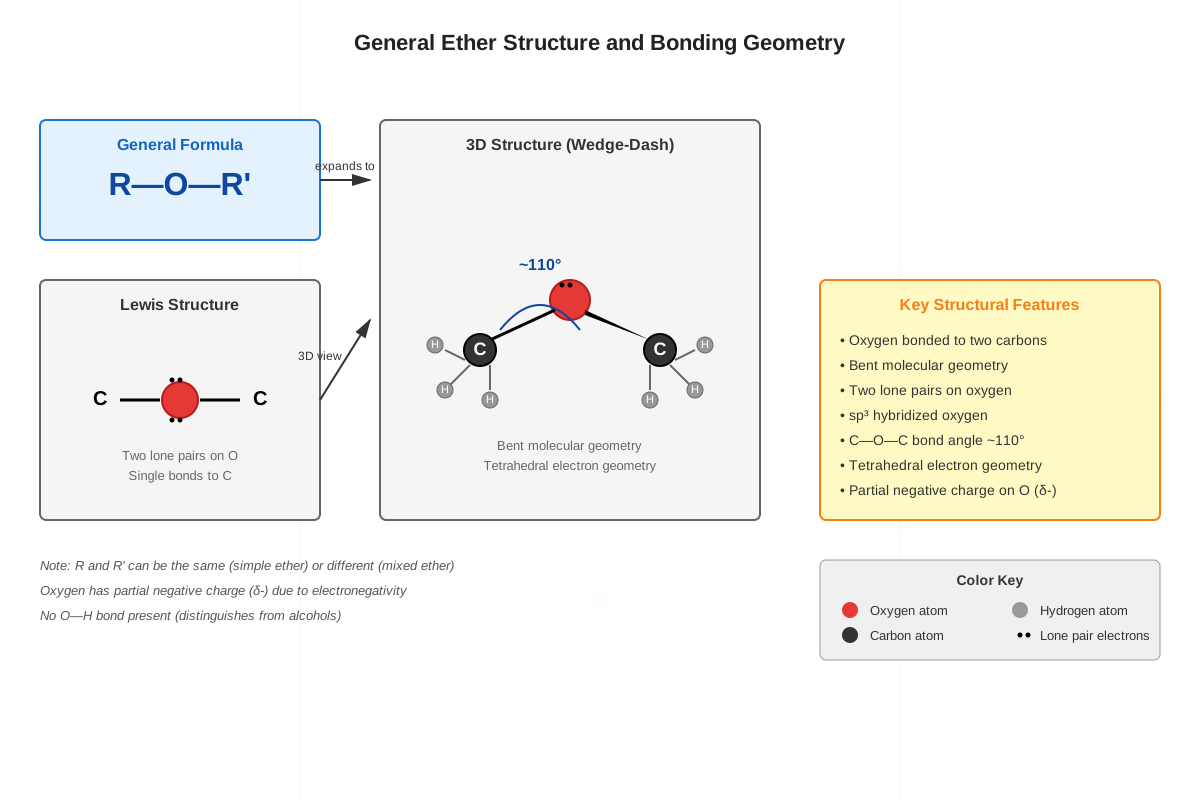
Ether structure refers to organic compounds containing an oxygen atom bonded to two carbon atoms through single bonds, with the general formula R–O–R'. The oxygen atom in ethers is sp³ hybridized, creating a bent molecular geometry similar to water, with a bond angle of approximately 110-112° (slightly larger than water's 104.5° due to reduced lone pair-lone pair repulsion). The oxygen atom possesses two lone pairs of electrons that occupy two of the four sp³ hybrid orbitals, while the remaining two orbitals form σ bonds with carbon atoms.
The C–O bonds in ethers are polar due to oxygen's higher electronegativity (3.5) compared to carbon (2.5), creating partial negative charge (δ-) on oxygen and partial positive charges (δ+) on the adjacent carbons. This polarity makes ethers capable of acting as hydrogen bond acceptors (through the oxygen lone pairs) but not as hydrogen bond donors, since there is no O–H bond present. This fundamental structural feature distinguishes ethers from alcohols and profoundly affects their physical and chemical properties.
Classification of Ethers
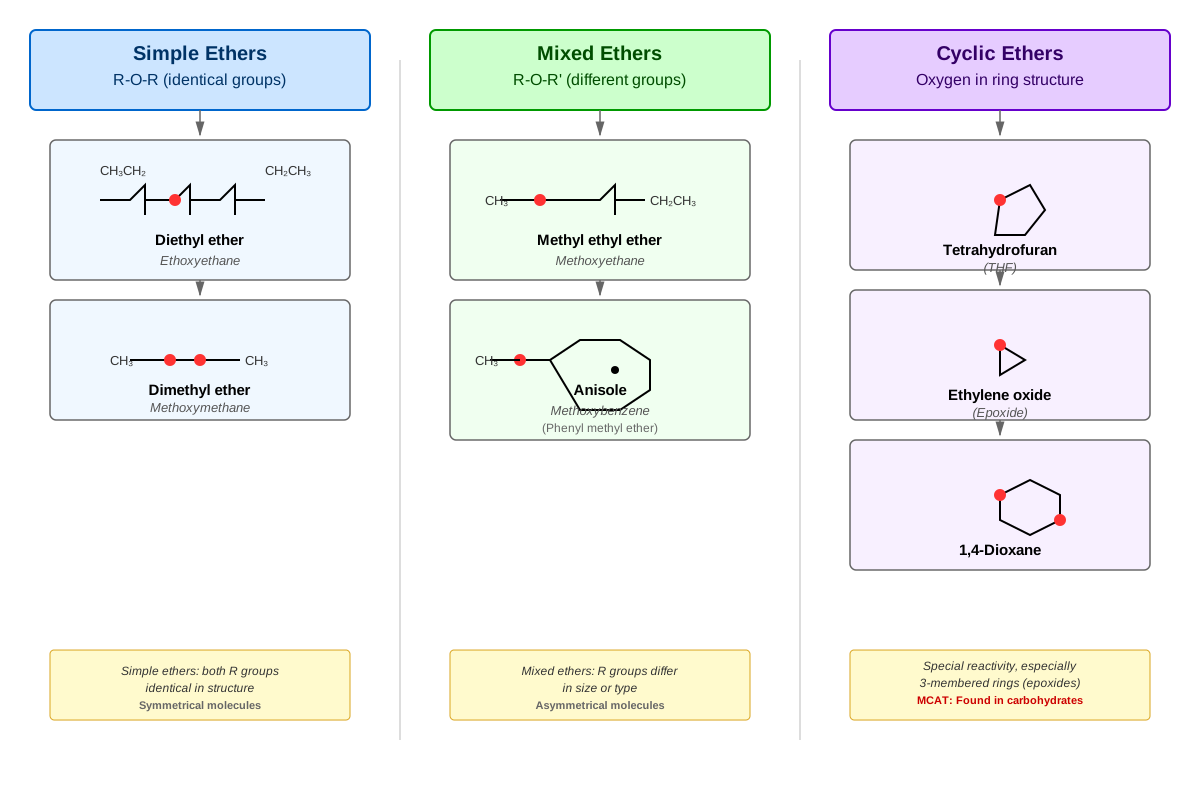
Ethers are classified into several categories based on the nature of the R groups attached to oxygen:
| Ether Type | Structure | Example | Description |
|---|---|---|---|
| Simple (Symmetrical) | R–O–R | CH₃–O–CH₃ | Both R groups are identical |
| Mixed (Unsymmetrical) | R–O–R' | CH₃–O–CH₂CH₃ | R groups are different |
| Acyclic | Linear chain | CH₃CH₂–O–CH₂CH₃ | Oxygen is part of an open chain |
| Cyclic | Ring structure | Tetrahydrofuran (THF) | Oxygen is incorporated into a ring |
| Aromatic | Ar–O–R or Ar–O–Ar | C₆H₅–O–CH₃ | At least one aromatic group attached |
Cyclic ethers deserve special attention as they exhibit unique properties. Three-membered cyclic ethers are called epoxides or oxiranes and are highly reactive due to ring strain. Five-membered cyclic ethers like tetrahydrofuran and six-membered cyclic ethers like tetrahydropyran are common in biological systems and serve as important solvents in organic chemistry.
Nomenclature Systems
The MCAT tests both common and IUPAC nomenclature for ethers, requiring familiarity with both systems:
Common Nomenclature: Name both alkyl groups attached to oxygen alphabetically, followed by the word "ether." For example:
- CH₃–O–CH₃: dimethyl ether
- CH₃–O–CH₂CH₃: ethyl methyl ether
- C₆H₅–O–CH₃: methyl phenyl ether (also called anisole)
IUPAC Nomenclature: Treat the ether as an alkoxy substituent on the parent hydrocarbon chain. The smaller alkyl group plus oxygen becomes the alkoxy group (–OR), and the larger carbon chain serves as the parent:
- CH₃–O–CH₂CH₃: methoxyethane
- CH₃CH₂–O–CH₂CH₂CH₃: ethoxypropane
- CH₃–O–C₆H₅: methoxybenzene
For cyclic ethers, specific names exist: oxirane (3-membered), oxetane (4-membered), tetrahydrofuran or oxolane (5-membered), and tetrahydropyran or oxane (6-membered).
Physical Properties
The physical properties of ethers directly result from their molecular structure and are frequently tested on the MCAT through comparison with isomeric alcohols:
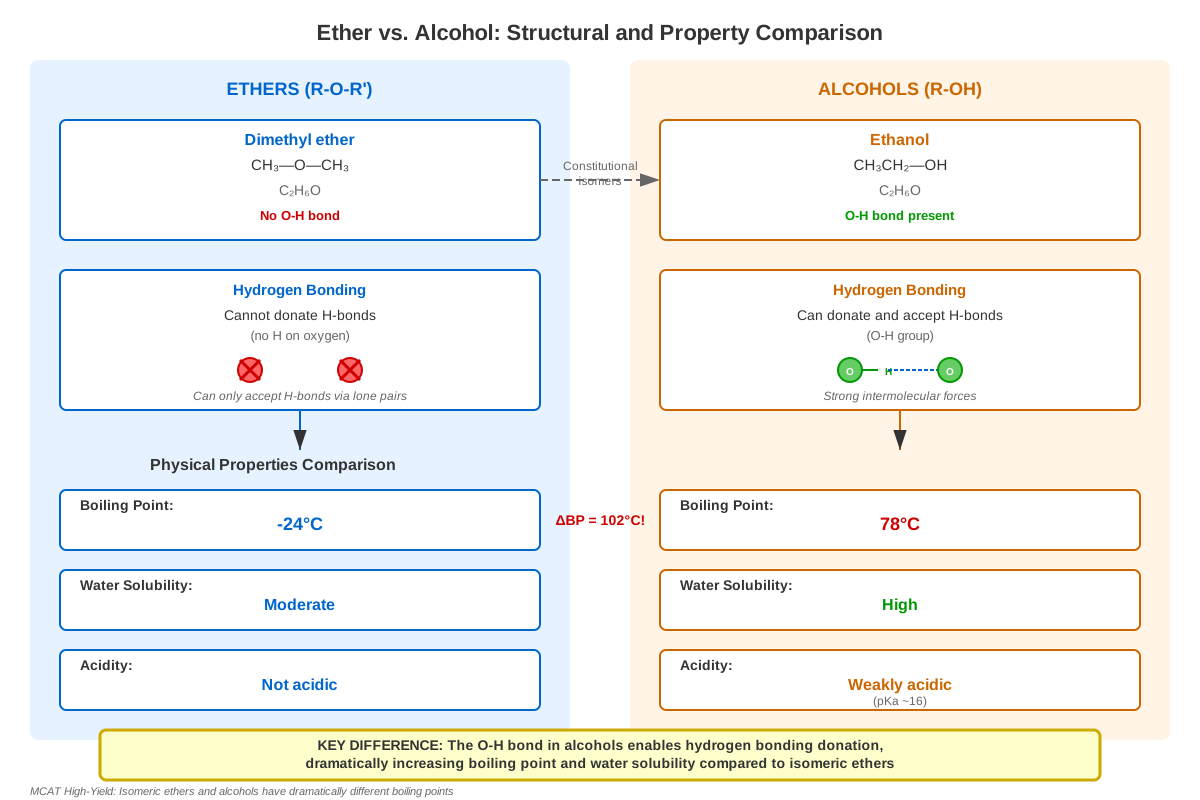
Boiling Points: Ethers have significantly lower boiling points than alcohols of comparable molecular weight because ethers cannot form hydrogen bonds with each other (no O–H bond). However, ether boiling points are higher than those of comparable alkanes due to the dipole-dipole interactions resulting from the polar C–O bonds. For example:
- Ethanol (CH₃CH₂OH): 78°C
- Dimethyl ether (CH₃OCH₃): -24°C
- Propane (CH₃CH₂CH₃): -42°C
Solubility: Ethers are moderately soluble in water, especially smaller ethers, because they can accept hydrogen bonds from water through their oxygen lone pairs. However, they are less soluble than comparable alcohols, which can both donate and accept hydrogen bonds. As the hydrocarbon portion increases, water solubility decreases due to the increasing hydrophobic character. Ethers are excellent solvents for organic compounds due to their ability to dissolve both polar and nonpolar substances.
Polarity: The C–O–C bond angle and oxygen's lone pairs create a net dipole moment in ethers, making them polar molecules. However, they are less polar than alcohols because the dipole is distributed across two C–O bonds rather than concentrated in one highly polar O–H bond.
Reactivity and Stability
Ethers are generally unreactive under most conditions, which makes them valuable as solvents in organic reactions. The key structural features contributing to ether stability include:
- Strong C–O bonds: The C–O single bond is relatively strong (approximately 85 kcal/mol), making ethers resistant to cleavage under neutral or basic conditions
- Lack of acidic protons: Without an O–H bond, ethers cannot act as acids and are stable to strong bases
- Electron-rich oxygen: The lone pairs on oxygen make ethers weakly basic (can be protonated by strong acids) and nucleophilic
The primary reactions ethers undergo involve cleavage of the C–O bond under strongly acidic conditions (typically HI or HBr at elevated temperatures) through an SN2 or SN1 mechanism, depending on the structure. Ethers can also undergo autooxidation in the presence of oxygen to form explosive peroxides, a safety concern in laboratory settings.
Structural Comparison with Alcohols
Understanding the structural differences between ethers and alcohols is crucial for MCAT Organic Chemistry questions:
| Property | Ethers (R–O–R') | Alcohols (R–OH) |
|---|---|---|
| Hydrogen bonding | Accept only | Accept and donate |
| Boiling point | Lower | Higher |
| Acidity | Non-acidic | Weakly acidic (pKa ~15-18) |
| Reactivity | Generally inert | More reactive |
| Basicity | Weakly basic | Weakly basic |
| Water solubility | Moderate | Higher (for small molecules) |
This comparison is high-yield because the MCAT frequently presents isomeric pairs (same molecular formula, different structure) and asks students to predict which has higher boiling point, greater water solubility, or different reactivity.
Concept Relationships
The concepts within ether structure are interconnected in a logical hierarchy. The general structure and bonding of ethers (sp³ oxygen with two lone pairs and bent geometry) → determines the classification possibilities (simple, mixed, cyclic, aromatic) → which influences nomenclature approaches (common vs. IUPAC) → and directly affects physical properties (boiling point, solubility, polarity) → which in turn relate to reactivity and stability patterns.
Ether structure connects to prerequisite topics through multiple pathways. Understanding Lewis structures and bonding theory enables visualization of the sp³ hybridization and lone pairs on oxygen. Knowledge of intermolecular forces explains why ethers have intermediate boiling points between alkanes and alcohols. Familiarity with functional group recognition allows rapid identification of ethers in complex molecules.
Looking forward, ether structure serves as foundation for advanced topics. The Williamson ether synthesis (SN2 reaction between alkoxide and alkyl halide) builds on ether structure to explain formation mechanisms. Epoxide chemistry extends ether concepts to strained three-membered rings with unique reactivity. Protecting group strategies in multi-step synthesis utilize ethers to temporarily mask reactive alcohols. In biochemistry, glycosidic bonds in carbohydrates are acetals structurally related to ethers, and ether lipids in cell membranes demonstrate biological applications of ether structure.
The relationship map: Bonding Theory → Ether Structure → Physical Properties → Reactivity Patterns → Synthesis Methods → Biological Applications
High-Yield Facts
⭐ Ethers have the general structure R–O–R' with sp³ hybridized oxygen and bent geometry (~110° bond angle)
⭐ Ethers can accept hydrogen bonds but cannot donate them, resulting in lower boiling points than comparable alcohols
⭐ Ethers are generally unreactive and stable to bases, making them excellent solvents for organic reactions
⭐ In common nomenclature, ethers are named by listing both alkyl groups alphabetically followed by "ether"
⭐ In IUPAC nomenclature, the smaller group becomes an alkoxy substituent on the larger parent chain
- Ethers are weakly basic and can be protonated by strong acids, making the oxygen a better leaving group
- Cyclic ethers include epoxides (3-membered, highly reactive), tetrahydrofuran (5-membered), and tetrahydropyran (6-membered)
- Ethers and alcohols with the same molecular formula are constitutional isomers with dramatically different properties
- Diethyl ether (CH₃CH₂–O–CH₂CH₃) was historically used as a general anesthetic due to its lipid solubility
- Ethers can form dangerous peroxides upon prolonged exposure to air and light
- The C–O bond in ethers is polar (oxygen δ-, carbon δ+) due to electronegativity differences
- Aromatic ethers like anisole (methoxybenzene) show resonance donation of oxygen lone pairs into the aromatic ring
- Crown ethers are large cyclic polyethers that can complex metal cations through ion-dipole interactions
Quick check — test yourself on Ether structure so far.
Try Flashcards →Common Misconceptions
Misconception: Ethers can form hydrogen bonds with each other like alcohols do.
Correction: Ethers can only accept hydrogen bonds (through oxygen lone pairs) but cannot donate them because they lack an O–H bond. This is why ether boiling points are much lower than those of comparable alcohols. Ethers can accept hydrogen bonds from water or alcohols, but ether-ether interactions are limited to dipole-dipole forces.
Misconception: Ethers and alcohols with the same molecular formula have similar physical properties.
Correction: Ethers and alcohols with the same molecular formula are constitutional isomers with vastly different properties. For example, ethanol (C₂H₆O) boils at 78°C and is highly water-soluble, while dimethyl ether (also C₂H₆O) boils at -24°C and is less water-soluble. The presence or absence of the O–H bond is the critical structural difference.
Misconception: The oxygen in ethers is sp² hybridized like in carbonyl compounds.
Correction: The oxygen in ethers is sp³ hybridized, not sp². The oxygen forms two σ bonds with carbon atoms and has two lone pairs, requiring four hybrid orbitals (sp³). This creates bent geometry similar to water, not the planar geometry seen in carbonyl compounds where oxygen is sp² hybridized.
Misconception: Ethers are highly reactive and undergo many chemical reactions.
Correction: Ethers are generally unreactive and chemically stable under most conditions, which is precisely why they are used as solvents. They are stable to strong bases, oxidizing agents (under normal conditions), and nucleophiles. The primary reaction ethers undergo is cleavage by strong acids (HI or HBr) at elevated temperatures.
Misconception: In IUPAC nomenclature, the word "ether" always appears in the name.
Correction: In IUPAC nomenclature, the word "ether" does not appear in the name. Instead, the smaller alkyl group plus oxygen is named as an alkoxy substituent (methoxy-, ethoxy-, etc.) on the parent hydrocarbon chain. The word "ether" only appears in common nomenclature (e.g., "diethyl ether").
Misconception: All cyclic ethers are highly reactive like epoxides.
Correction: Only three-membered cyclic ethers (epoxides) are highly reactive due to significant ring strain (approximately 27 kcal/mol). Larger cyclic ethers like tetrahydrofuran (5-membered) and tetrahydropyran (6-membered) have minimal ring strain and exhibit typical ether stability and low reactivity.
Worked Examples
Example 1: Structure and Property Comparison
Question: Two compounds have the molecular formula C₄H₁₀O. Compound A is 1-butanol, and Compound B is diethyl ether. Explain which compound has the higher boiling point and greater water solubility, and justify your answer based on structural features.
Solution:
Step 1: Draw the structures to visualize the functional groups.
- Compound A (1-butanol): CH₃CH₂CH₂CH₂–OH
- Compound B (diethyl ether): CH₃CH₂–O–CH₂CH₃
Step 2: Identify the key structural difference.
The critical difference is that 1-butanol contains an O–H bond (alcohol functional group), while diethyl ether contains a C–O–C linkage (ether functional group) with no O–H bond.
Step 3: Analyze intermolecular forces for boiling point.
1-butanol can form hydrogen bonds with other 1-butanol molecules because it has both a hydrogen bond donor (O–H) and acceptor (oxygen lone pairs). Diethyl ether can only accept hydrogen bonds (through oxygen lone pairs) but cannot donate them. Hydrogen bonding is stronger than dipole-dipole interactions, so 1-butanol will have stronger intermolecular forces.
Conclusion for boiling point: 1-butanol has the higher boiling point (117°C) compared to diethyl ether (35°C) due to hydrogen bonding between alcohol molecules.
Step 4: Analyze water solubility.
Both compounds can accept hydrogen bonds from water through their oxygen atoms. However, 1-butanol can also donate hydrogen bonds to water molecules through its O–H group, creating more favorable interactions with water. This bidirectional hydrogen bonding capability makes alcohols more water-soluble than comparable ethers.
Conclusion for solubility: 1-butanol has greater water solubility than diethyl ether because it can both donate and accept hydrogen bonds with water, while diethyl ether can only accept them.
Connection to learning objectives: This example demonstrates how ether structure (specifically the absence of O–H bonds) determines physical properties and allows comparison with isomeric alcohols, a common MCAT question type.
Example 2: Nomenclature and Structure Identification
Question: A student is given the following names and asked to draw structures and provide alternative nomenclature:
a) Ethyl propyl ether (common name)
b) 2-methoxybutane (IUPAC name)
For each, draw the structure and provide the name in the other nomenclature system.
Solution:
Part a: Ethyl propyl ether
Step 1: Interpret the common name.
"Ethyl propyl ether" indicates an ether with an ethyl group (CH₃CH₂–) and a propyl group (CH₃CH₂CH₂–) attached to oxygen.
Step 2: Draw the structure.
CH₃CH₂–O–CH₂CH₂CH₃
Step 3: Convert to IUPAC nomenclature.
- Identify the longer carbon chain: propyl (3 carbons)
- The shorter group becomes the alkoxy substituent: ethoxy (CH₃CH₂O–)
- Number the parent chain to give the substituent the lowest number
- The ethoxy group is on carbon 1 of propane
IUPAC name: 1-ethoxypropane (or simply ethoxypropane, since the 1-position is implied)
Part b: 2-methoxybutane
Step 1: Interpret the IUPAC name.
"2-methoxybutane" indicates a 4-carbon parent chain (butane) with a methoxy group (CH₃O–) attached to carbon 2.
Step 2: Draw the structure.
    CH₃
    |
CH₃-CH-CH₂-CH₃
    |
    O-CH₃
Or written linearly: CH₃CH(OCH₃)CH₂CH₃
Step 3: Convert to common nomenclature.
- Identify both alkyl groups attached to oxygen: methyl (CH₃–) and sec-butyl (CH₃CH(CH₃)CH₂CH₃ minus one H)
- Actually, looking at the structure more carefully: one group is methyl (CH₃–) and the other is sec-butyl
- List alphabetically
Common name: sec-butyl methyl ether (or methyl sec-butyl ether)
Connection to learning objectives: This example reinforces both nomenclature systems and demonstrates how to interconvert between them, a skill frequently tested on the MCAT. It also emphasizes careful structure drawing to avoid errors.
Exam Strategy
When approaching ether structure MCAT questions, employ these strategic approaches:
Recognition triggers: Watch for these key words and phrases that signal ether-related questions:
- "Oxygen bonded to two carbon atoms"
- Comparison between "isomers with molecular formula..."
- "Which compound has the lower boiling point?"
- "Solvent that is unreactive toward..."
- Names ending in "ether" or containing "oxy" (methoxy, ethoxy)
- "Protecting group strategy"
Systematic approach for structure questions:
- First, identify the functional group by looking for the C–O–C pattern
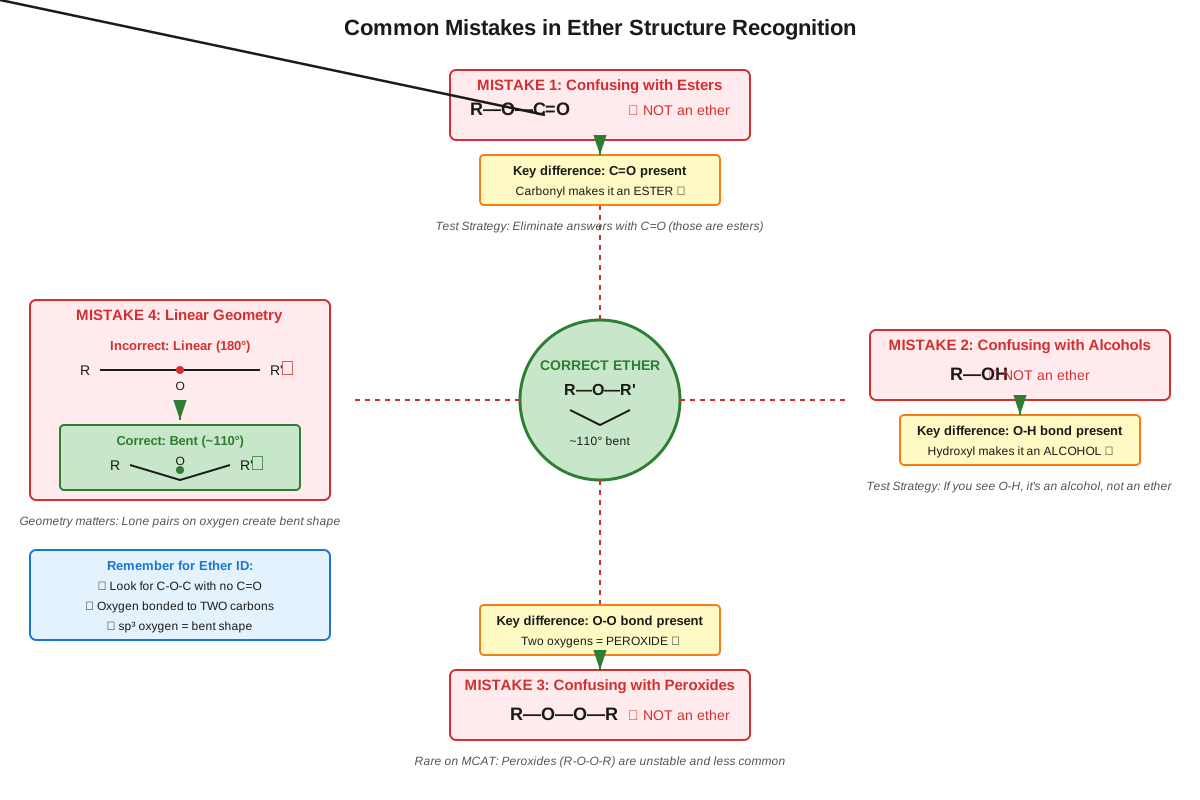
- Check for the absence of O–H (distinguishes from alcohols) and C=O (distinguishes from carbonyl compounds)
- Count carbons carefully for nomenclature questions
- Draw the structure if not provided—visualization prevents errors
Property comparison strategy:
When comparing ethers to other compounds, use this hierarchy:
- Identify functional groups in all compounds
- Determine hydrogen bonding capability (donor and/or acceptor)
- Rank intermolecular forces: hydrogen bonding > dipole-dipole > London dispersion
- Apply the ranking to the property in question (boiling point, solubility, etc.)
Process of elimination tips:
- If a question asks about high boiling point and one option is an ether while others are alcohols of similar size, eliminate the ether
- If asked about chemical inertness or solvent properties, favor ethers over alcohols or carbonyl compounds
- For nomenclature questions, eliminate options that use "ether" in IUPAC names or omit "ether" in common names
- When identifying structures, eliminate any option showing O–H bonds if the question specifies an ether
Time allocation: Ether structure questions are typically straightforward and should take 45-60 seconds for discrete questions. For passage-based questions involving ethers, allocate 1-1.5 minutes, as they often require property comparisons or structure identification within a larger context. Don't overthink these questions—ether structure concepts are relatively simple compared to other organic chemistry topics.
Exam Tip: If you see a comparison between compounds with the same molecular formula but different boiling points or solubility, immediately check for ether vs. alcohol functional groups. This is one of the highest-yield ether structure question types on the MCAT.
Memory Techniques
Mnemonic for ether properties - "ETHER":
- Electron-rich oxygen (weakly basic, nucleophilic)
- Two lone pairs on oxygen
- Hydrogen bond acceptors (not donors)
- Excellent solvents (unreactive)
- Relatively low boiling points (compared to alcohols)
Visualization strategy for nomenclature:
Picture a bridge: The oxygen is the bridge connecting two land masses (alkyl groups). In common nomenclature, you name both land masses then say "bridge" (ether). In IUPAC nomenclature, you pick the bigger land mass as your main territory and describe the smaller land mass plus bridge as a feature (alkoxy group).
Acronym for ether vs. alcohol comparison - "HABS":
- Hydrogen bonding: Alcohols donate AND accept; ethers only accept
- Acidity: Alcohols are weakly acidic; ethers are not acidic
- Boiling point: Alcohols higher; ethers lower
- Solubility: Alcohols more soluble in water; ethers less soluble
Memory aid for cyclic ethers:
"3-4-5-6, Cyclic ethers in the mix"
- 3 = Epoxide (oxirane) - highly reactive
- 4 = Oxetane - less common
- 5 = Tetrahydrofuran (THF) - common solvent
- 6 = Tetrahydropyran (THP) - protecting group
Rhyme for ether stability:
"Ethers are stable, that's no fable,
Strong bases and nukes? They're quite unable.
Only strong acids with heat applied,
Can make the C–O bonds divide."
Summary
Ether structure represents a fundamental concept in Organic Chemistry characterized by an oxygen atom bonded to two carbon-containing groups (R–O–R'). The sp³ hybridized oxygen with its two lone pairs and bent geometry creates a polar but non-hydrogen-bonding-donor functional group that exhibits distinctive physical and chemical properties. Ethers are classified as simple or mixed (based on R group identity), acyclic or cyclic (based on structure), and can be named using either common nomenclature (alkyl alkyl ether) or IUPAC nomenclature (alkoxyalkane). The absence of O–H bonds distinguishes ethers from isomeric alcohols, resulting in significantly lower boiling points, reduced water solubility, and greater chemical stability. Ethers serve as excellent solvents due to their unreactivity toward most reagents, though they can be cleaved by strong acids and can form dangerous peroxides. For the MCAT, mastering ether structure enables rapid property prediction, accurate nomenclature, and successful comparison with related functional groups, particularly alcohols. Understanding the structural basis for ether properties—especially the hydrogen bonding limitations and chemical inertness—provides the foundation for answering both discrete questions and passage-based items involving these important organic compounds.
Key Takeaways
- Ethers have the general structure R–O–R' with sp³ oxygen, bent geometry, and two lone pairs, making them polar but unable to donate hydrogen bonds
- The absence of O–H bonds causes ethers to have much lower boiling points than isomeric alcohols while maintaining moderate water solubility as hydrogen bond acceptors
- Ethers are chemically stable and unreactive under most conditions, making them valuable solvents, but can be cleaved by strong acids (HI, HBr) with heat
- Common nomenclature lists both alkyl groups alphabetically followed by "ether," while IUPAC nomenclature treats the smaller group as an alkoxy substituent
- Cyclic ethers range from highly reactive epoxides (3-membered rings with significant strain) to stable tetrahydrofuran and tetrahydropyran (5- and 6-membered rings)
- Ether structure appears on the MCAT primarily in property comparison questions, nomenclature items, and as components of biological molecules and pharmaceutical compounds
- Recognizing the C–O–C pattern and absence of O–H bonds allows rapid identification of ethers and prediction of their physical and chemical behavior
Related Topics
Alcohol Structure and Properties: Understanding alcohols (R–OH) provides essential context for ether comparisons, as these functional groups are constitutional isomers with dramatically different properties due to the presence or absence of the O–H bond.
Williamson Ether Synthesis: This SN2 reaction between alkoxides and alkyl halides represents the primary method for ether formation and builds directly on understanding ether structure and bonding.
Epoxide Chemistry: Three-membered cyclic ethers exhibit unique reactivity due to ring strain, undergoing ring-opening reactions with nucleophiles—an important extension of basic ether structure concepts.
Protecting Groups in Organic Synthesis: Ethers serve as protecting groups for alcohols in multi-step synthesis, requiring understanding of ether formation and cleavage conditions.
Carbohydrate Structure: Glycosidic bonds connecting monosaccharides are acetals structurally related to ethers, making ether structure foundational for understanding disaccharides and polysaccharides.
Nucleophilic Substitution Reactions: Both ether synthesis (Williamson) and ether cleavage involve SN1 or SN2 mechanisms, connecting ether structure to broader reaction mechanisms in organic chemistry.
Practice CTA
Now that you've mastered the core concepts of ether structure, it's time to reinforce your understanding through active practice. Challenge yourself with the practice questions and flashcards designed specifically for this topic. Focus on nomenclature conversions, property comparisons with alcohols, and structure identification in complex molecules. Remember, the MCAT rewards not just knowledge but the ability to apply concepts quickly and accurately under time pressure. Each practice question you complete strengthens your pattern recognition and builds the confidence you need for test day. You've built a solid foundation—now prove your mastery through deliberate practice!
Sign up free to keep reading
Create a free AnvayaPrep account to finish this MCAT guide on Ether structure — plus flashcards and practice questions.