Overview
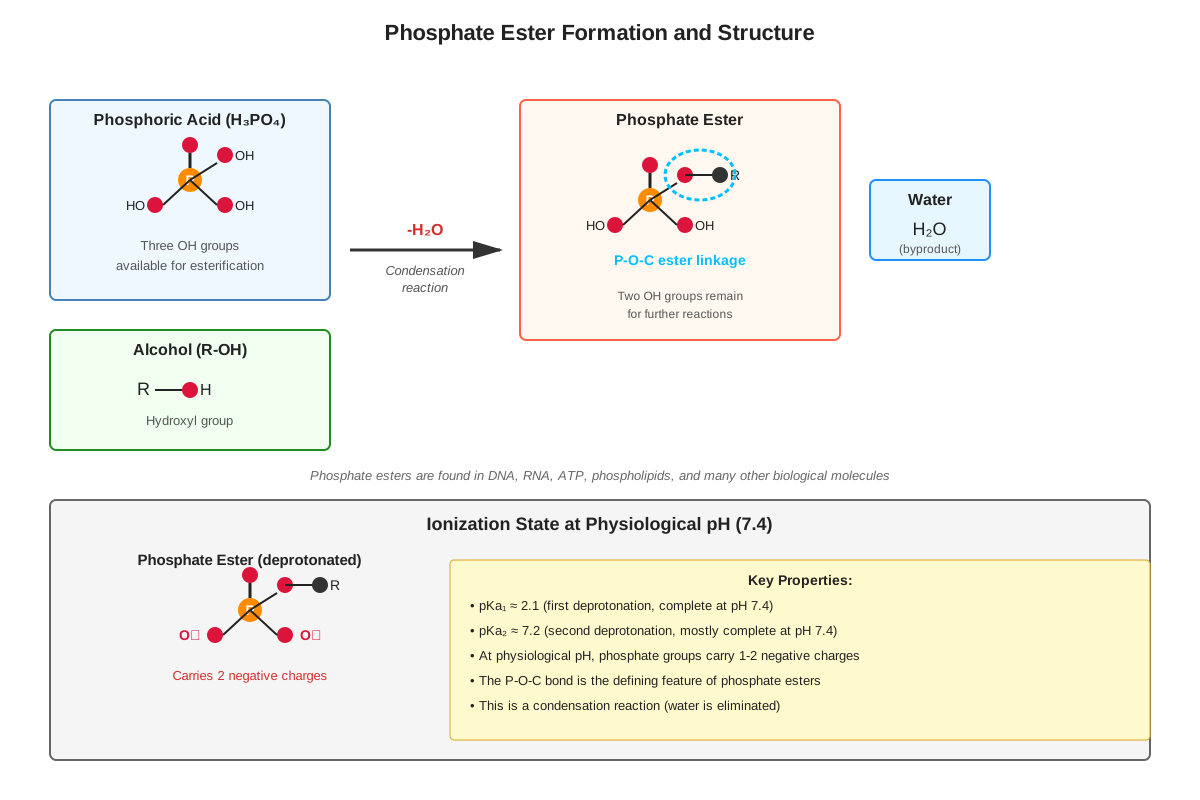
Phosphate ester chemistry represents a critical intersection between Organic Chemistry and biochemistry that appears frequently on the MCAT. Phosphate esters are organic compounds formed when phosphoric acid (H₃PO₄) reacts with alcohols, creating a phosphorus-oxygen-carbon (P-O-C) linkage. These molecules serve as the structural backbone of nucleic acids (DNA and RNA), energy currency molecules (ATP, GTP), membrane phospholipids, and numerous metabolic intermediates. Understanding phosphate ester formation, hydrolysis, and reactivity patterns is essential for interpreting biochemical pathways, cellular energetics, and molecular biology passages that routinely appear on the MCAT.
The significance of phosphate ester chemistry for the MCAT extends beyond simple structure recognition. Test-makers frequently embed questions about phosphate chemistry within passages discussing metabolism, signal transduction, nucleotide structure, or membrane dynamics. Students must recognize phosphate esters in various contexts, predict their reactivity under physiological conditions, understand their role in energy transfer, and explain why these bonds are kinetically stable yet thermodynamically unstable—a paradox central to biological regulation. This topic bridges Biologically Relevant Organic Chemistry with biochemistry, making it a high-yield area where organic chemistry principles directly explain biological phenomena.
Within the broader landscape of Organic Chemistry, phosphate esters exemplify how heteroatom-containing functional groups behave differently from simple carbon-based compounds. They connect to esterification reactions, acid-base chemistry (phosphate groups are polyprotic acids), nucleophilic substitution mechanisms, and hydrolysis reactions. Mastering phosphate ester chemistry provides the foundation for understanding more complex topics like enzyme mechanisms, metabolic regulation, and the molecular basis of genetic information storage—all frequent MCAT themes that integrate multiple disciplines.
Learning Objectives
- [ ] Define phosphate ester chemistry using accurate Organic Chemistry terminology
- [ ] Explain why phosphate ester chemistry matters for the MCAT
- [ ] Apply phosphate ester chemistry to exam-style questions
- [ ] Identify common mistakes related to phosphate ester chemistry
- [ ] Connect phosphate ester chemistry to related Organic Chemistry concepts
- [ ] Distinguish between monophosphate, diphosphate, and triphosphate esters and predict their relative hydrolysis energies
- [ ] Explain the kinetic stability versus thermodynamic instability of phosphate esters in biological systems
- [ ] Analyze the role of phosphate esters in energy coupling reactions and metabolic pathways
Prerequisites
- Carboxylic acid derivatives and esterification: Phosphate esters follow similar formation principles to carboxylate esters, involving nucleophilic attack by alcohols on electrophilic centers
- Acid-base chemistry and pKa values: Phosphoric acid is polyprotic with multiple ionization states; understanding protonation states at physiological pH is essential
- Nucleophilic substitution mechanisms: Phosphate ester hydrolysis proceeds through nucleophilic attack mechanisms similar to SN2 reactions
- Thermodynamics and free energy: Distinguishing between kinetic stability and thermodynamic favorability explains why ATP is stable in cells yet releases energy upon hydrolysis
- Alcohol functional groups: Alcohols serve as nucleophiles in phosphate ester formation, and their structure affects reactivity
Why This Topic Matters
Clinical and Real-World Significance
Phosphate esters constitute the molecular foundation of life's most fundamental processes. ATP (adenosine triphosphate) powers virtually every energy-requiring cellular process, from muscle contraction to neurotransmitter synthesis. Phosphorylation—the addition of phosphate groups to proteins—regulates enzyme activity, signal transduction cascades, and cell cycle progression. Defects in phosphate metabolism contribute to diseases ranging from mitochondrial disorders to cancer. DNA and RNA, the carriers of genetic information, are polymers of nucleotide phosphate esters. Pharmaceutical development frequently targets enzymes that form or break phosphate ester bonds, including kinases (cancer therapy) and phosphodiesterases (erectile dysfunction, heart failure).
MCAT Exam Statistics and Question Types
Phosphate ester chemistry appears in approximately 15-20% of Biological and Biochemical Foundations passages and 8-12% of Chemical and Physical Foundations passages. Questions typically fall into three categories: (1) structure identification questions asking students to recognize phosphate esters in complex molecules, (2) mechanism and reactivity questions testing understanding of hydrolysis reactions and energy release, and (3) application questions requiring students to predict how phosphate chemistry affects metabolic pathways or cellular processes. Discrete questions often test the energetics of phosphate bond hydrolysis or the structural differences between nucleotides.
Common Exam Passage Contexts
Phosphate ester chemistry appears in passages discussing: glycolysis and ATP production, DNA replication and repair mechanisms, signal transduction pathways involving protein phosphorylation, membrane structure and phospholipid composition, nucleotide analogs as antiviral drugs, enzyme kinetics of kinases and phosphatases, and metabolic regulation through covalent modification. Recognizing phosphate esters quickly in these diverse contexts is a critical MCAT skill.
Core Concepts
Structure and Nomenclature of Phosphate Esters
A phosphate ester forms when one or more hydroxyl groups of phosphoric acid (H₃PO₄) condense with alcohol groups, releasing water. The general structure features a phosphorus atom bonded to four oxygen atoms in a tetrahedral geometry: one oxygen typically carries a negative charge (at physiological pH), one or more oxygens form ester linkages to carbon atoms (P-O-C bonds), and remaining oxygens may be protonated or deprotonated depending on pH.
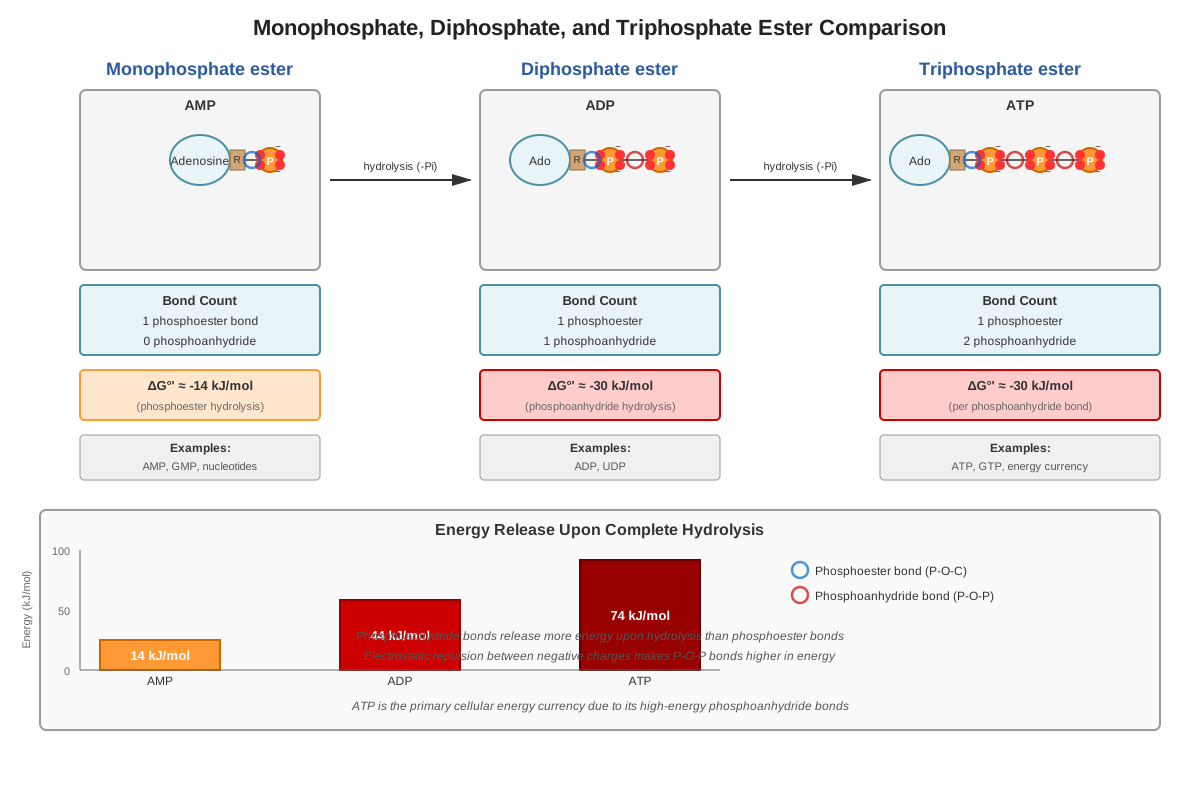
Monophosphate esters contain one P-O-C linkage (e.g., glucose-6-phosphate, glycerol-3-phosphate). Diphosphate esters can refer to either a single phosphate group esterified to two different alcohols (creating a phosphodiester bridge, as in DNA backbone) or two phosphate groups in sequence (pyrophosphate linkage). Triphosphate esters contain three phosphate groups connected by phosphoanhydride bonds (e.g., ATP, GTP).
The nomenclature follows the pattern: [organic molecule]-[number]-phosphate. For example, glucose-6-phosphate indicates phosphorylation at carbon 6 of glucose. When multiple phosphates are present, prefixes indicate the number: adenosine monophosphate (AMP), adenosine diphosphate (ADP), adenosine triphosphate (ATP).
Formation of Phosphate Esters
Phosphate ester formation requires activation of either the phosphate group or the alcohol. In biological systems, this typically occurs through ATP-dependent phosphorylation. The mechanism involves nucleophilic attack by an alcohol oxygen on the γ-phosphorus of ATP, with departure of ADP as a leaving group. This reaction is catalyzed by enzymes called kinases.
The general reaction can be represented as:
R-OH + ATP → R-O-PO₃²⁻ + ADP + H⁺The reaction is thermodynamically favorable (ΔG° ≈ -30.5 kJ/mol for ATP hydrolysis) but kinetically slow without enzymatic catalysis. The high activation energy barrier prevents spontaneous phosphorylation, ensuring biological control.
In laboratory synthesis, phosphate esters form through reaction of alcohols with phosphorus oxychloride (POCl₃) or phosphoric acid derivatives under dehydrating conditions. These methods are not biologically relevant but help students understand the fundamental chemistry.
Phosphate Ester Bonds: Kinetic Stability vs. Thermodynamic Instability
This concept is critical for MCAT success and frequently tested. Phosphate ester bonds, particularly the phosphoanhydride bonds in ATP, are thermodynamically unstable (their hydrolysis releases significant free energy) but kinetically stable (they hydrolyze very slowly without catalysis).
Thermodynamic instability arises from several factors:
- Electrostatic repulsion: Multiple negative charges on adjacent phosphate groups create repulsion that is relieved upon hydrolysis
- Resonance stabilization: Hydrolysis products (inorganic phosphate, ADP) have more resonance structures than the intact molecule
- Solvation: Smaller hydrolysis products are better solvated by water, increasing entropy
- Ionization: At physiological pH, hydrolysis products ionize to more stable forms
Kinetic stability results from:
- High activation energy: The phosphorus atom is shielded by oxygen atoms, making nucleophilic attack difficult
- Negative charge repulsion: The negatively charged phosphate groups repel nucleophiles (which are often negatively charged, like OH⁻)
- Strong P-O bonds: Despite being "high-energy," these bonds are covalent and strong
This paradox allows cells to store energy in ATP without spontaneous hydrolysis, releasing it only when enzymes lower the activation energy.
Types of Phosphate Linkages
| Linkage Type | Structure | Example | ΔG° Hydrolysis | Biological Role |
|---|---|---|---|---|
| Phosphoester | R-O-PO₃²⁻ | Glucose-6-phosphate | -13 kJ/mol | Metabolic intermediates |
| Phosphoanhydride | R-O-PO₂⁻-O-PO₃²⁻ | ATP (β-γ bond) | -30.5 kJ/mol | Energy currency |
| Phosphodiester | R-O-PO₂⁻-O-R' | DNA backbone | -25 kJ/mol | Information storage |
| Acyl phosphate | R-CO-O-PO₃²⁻ | 1,3-bisphosphoglycerate | -49 kJ/mol | High-energy intermediate |
The phosphoanhydride bonds (connecting two phosphate groups) release more energy upon hydrolysis than simple phosphoester bonds (connecting phosphate to carbon). This difference explains why ATP → ADP + Pi releases more energy than glucose-6-phosphate hydrolysis.
Hydrolysis Mechanisms
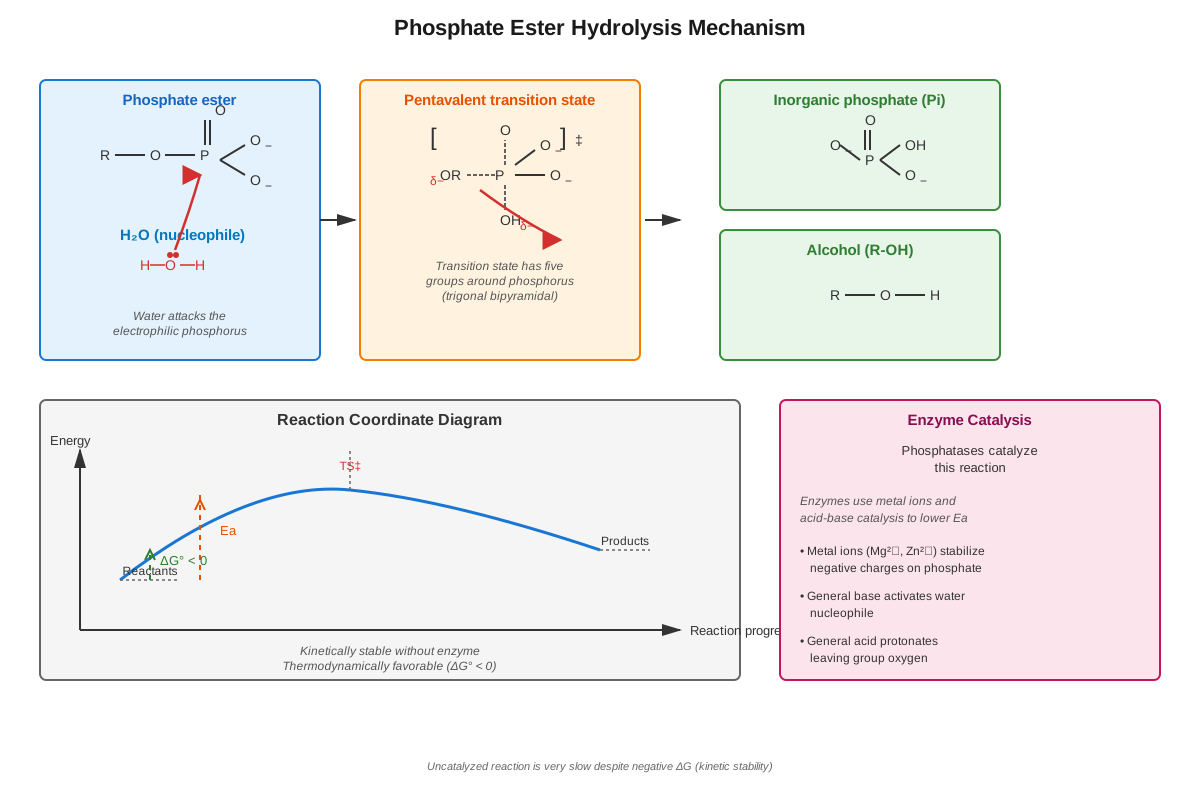
Phosphate ester hydrolysis proceeds through nucleophilic attack by water (or hydroxide ion) on the phosphorus atom. The mechanism can follow two pathways:
Associative mechanism (more common for phosphate esters): The nucleophile attacks phosphorus, forming a pentacoordinate transition state (trigonal bipyramidal geometry), followed by departure of the leaving group. This resembles an SN2 mechanism but occurs at a tetrahedral phosphorus center.
Dissociative mechanism: The leaving group departs first, creating a metaphosphate intermediate (PO₃⁻), which then reacts with water. This is less common for simple phosphate esters.
Enzymatic hydrolysis by phosphatases dramatically accelerates these reactions through:
- Proper orientation of substrates
- Stabilization of transition states
- Acid-base catalysis (protonating the leaving group)
- Metal ion cofactors (Mg²⁺, Zn²⁺) that stabilize negative charges
Biological Roles of Phosphate Esters
Energy currency: ATP, GTP, and other nucleoside triphosphates store and transfer energy. The terminal phosphate group (γ-phosphate) is transferred to substrates in coupled reactions, making thermodynamically unfavorable reactions proceed.
Metabolic intermediates: Glycolysis, gluconeogenesis, and other pathways use phosphorylated sugars (glucose-6-phosphate, fructose-1,6-bisphosphate). Phosphorylation traps molecules inside cells (charged molecules cannot cross membranes) and provides binding sites for enzyme recognition.
Regulatory modification: Protein phosphorylation by kinases and dephosphorylation by phosphatases controls enzyme activity, protein localization, and protein-protein interactions. This reversible modification is central to signal transduction.
Information storage: DNA and RNA backbones consist of phosphodiester linkages connecting nucleotide monomers. The 3'-5' phosphodiester bond creates directionality essential for replication and transcription.
Membrane structure: Phospholipids contain phosphate ester linkages connecting glycerol to phosphate head groups, creating amphipathic molecules that form bilayers.
Phosphorylation Potential and Energy Coupling
The phosphorylation potential refers to the tendency of a phosphate group to be transferred. Compounds with high phosphorylation potential (large negative ΔG° for hydrolysis) can phosphorylate compounds with lower potential. This creates a hierarchy:
Phosphoenolpyruvate (-61.9 kJ/mol)
↓
1,3-bisphosphoglycerate (-49.4 kJ/mol)
↓
Creatine phosphate (-43.1 kJ/mol)
↓
ATP (-30.5 kJ/mol)
↓
Glucose-6-phosphate (-13.8 kJ/mol)
↓
Glycerol-3-phosphate (-9.2 kJ/mol)
Energy coupling occurs when ATP hydrolysis is linked to an unfavorable reaction, making the overall process favorable. For example, glutamate synthesis from glutamine is unfavorable (ΔG° = +14 kJ/mol), but coupling with ATP hydrolysis makes the net reaction favorable (ΔG° = -16 kJ/mol).
Concept Relationships
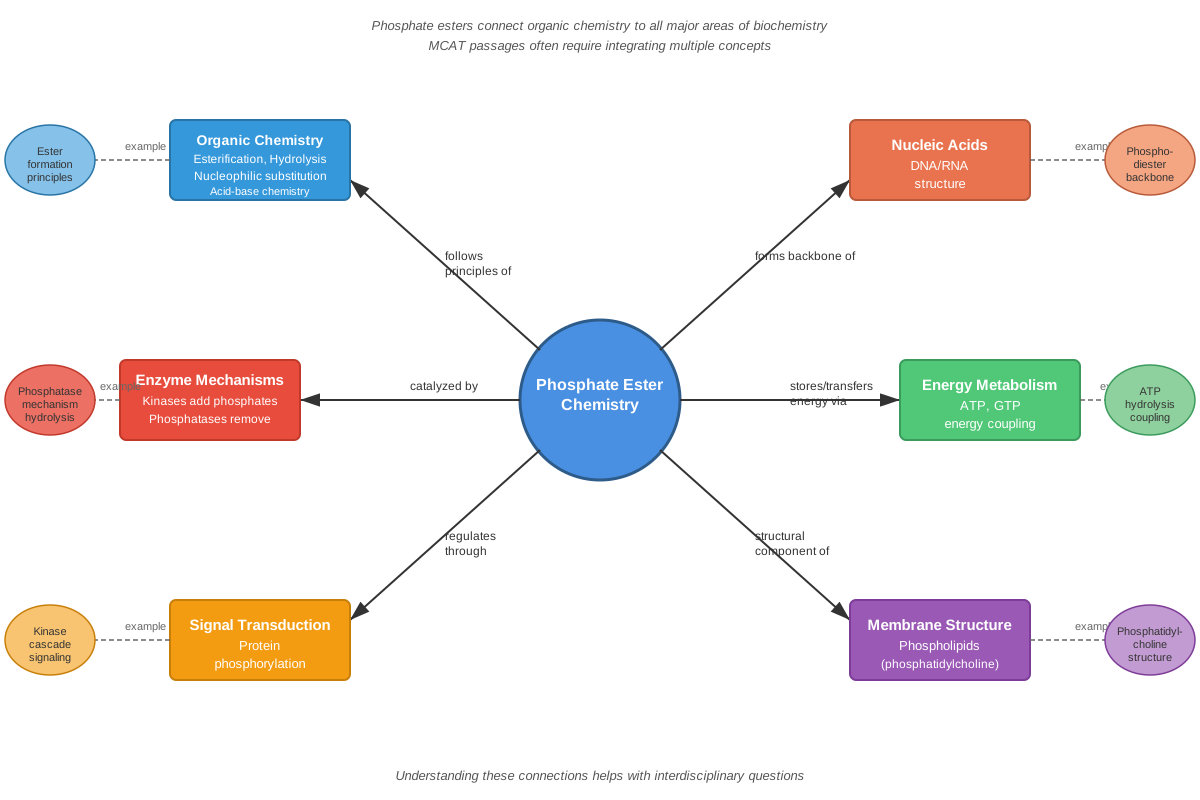
The concepts within phosphate ester chemistry form an interconnected network. Structure and nomenclature provides the foundation for recognizing these molecules in biological contexts. Understanding formation mechanisms explains how cells create phosphorylated compounds, which connects directly to ATP-dependent phosphorylation and the role of kinases. The kinetic stability versus thermodynamic instability paradox explains why phosphate esters can serve as energy storage molecules—they're stable enough to exist but release energy when hydrolyzed. This concept links to hydrolysis mechanisms, which detail how enzymes overcome kinetic barriers. The types of phosphate linkages and their relative hydrolysis energies create the phosphorylation potential hierarchy, which explains energy coupling in metabolism.
These internal connections extend to prerequisite topics: esterification chemistry from carboxylic acid derivatives provides the mechanistic framework for phosphate ester formation; acid-base chemistry explains ionization states at physiological pH; nucleophilic substitution mechanisms underlie both formation and hydrolysis reactions; thermodynamics distinguishes between kinetic and thermodynamic stability.
Phosphate ester chemistry also connects forward to advanced topics: understanding ATP structure and energetics is essential for cellular respiration and photosynthesis; phosphodiester bonds are fundamental to nucleic acid structure; protein phosphorylation is central to signal transduction and enzyme regulation; phospholipid structure explains membrane biology.
The relationship map: Structure → Formation mechanisms → Kinetic/thermodynamic properties → Hydrolysis mechanisms → Energy release → Biological functions → Metabolic integration.
Quick check — test yourself on Phosphate ester chemistry so far.
Try Flashcards →High-Yield Facts
⭐ Phosphate esters contain P-O-C bonds formed by condensation of phosphoric acid with alcohols, releasing water
⭐ ATP hydrolysis releases approximately -30.5 kJ/mol under standard conditions, but actual cellular ΔG is approximately -50 kJ/mol due to concentration effects
⭐ Phosphate esters are kinetically stable (slow hydrolysis without enzymes) but thermodynamically unstable (hydrolysis is energetically favorable)
⭐ Phosphoanhydride bonds (P-O-P) release more energy upon hydrolysis than simple phosphoester bonds (P-O-C)
⭐ At physiological pH (7.4), phosphate groups are predominantly deprotonated and negatively charged, affecting reactivity and molecular interactions
- Kinases catalyze phosphorylation reactions (adding phosphate groups), while phosphatases catalyze dephosphorylation (removing phosphate groups)
- DNA and RNA backbones consist of 3'-5' phosphodiester linkages that provide structural stability and directional information
- Phosphorylation traps metabolites inside cells because charged molecules cannot cross lipid membranes
- The γ-phosphate of ATP is the most commonly transferred phosphate group in biological phosphorylation reactions
- Acyl phosphates (like 1,3-bisphosphoglycerate) have higher phosphorylation potential than ATP, allowing substrate-level phosphorylation
- Mg²⁺ ions complex with ATP in cells, reducing electrostatic repulsion and affecting the actual free energy of hydrolysis
- Phosphate ester hydrolysis proceeds through a pentacoordinate transition state with trigonal bipyramidal geometry
- Cyclic phosphate esters (like cAMP) form when a single phosphate group esterifies two hydroxyl groups on the same molecule
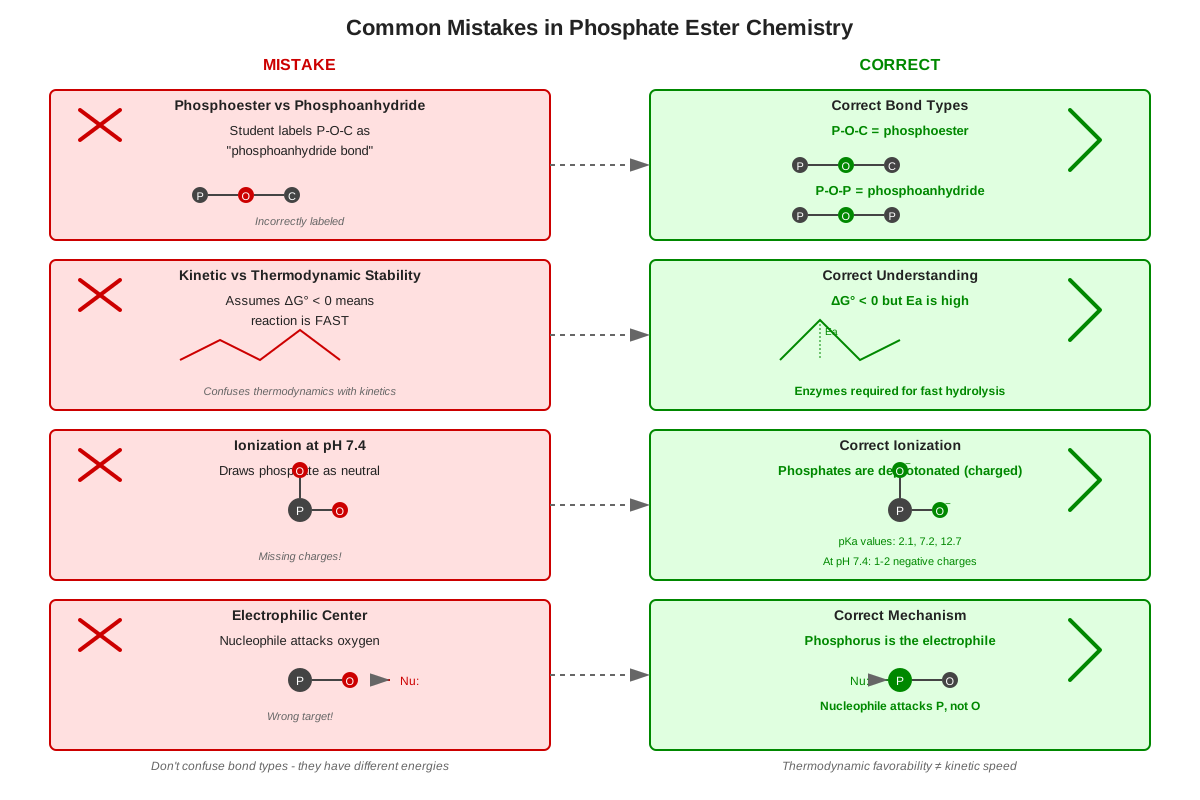
Common Misconceptions
Misconception: All phosphate bonds are "high-energy bonds" that release the same amount of energy upon hydrolysis.
Correction: Only certain phosphate bonds (phosphoanhydrides, acyl phosphates, enol phosphates) are considered high-energy. Simple phosphoester bonds release less energy. The term "high-energy" refers to large negative ΔG° of hydrolysis, not bond strength—these bonds are actually quite stable kinetically.
Misconception: ATP is unstable and spontaneously breaks down in cells.
Correction: ATP is kinetically stable due to high activation energy for hydrolysis. Without enzymatic catalysis, ATP persists for days in solution. This kinetic stability allows controlled energy release only when needed.
Misconception: The "squiggle" symbol (~P) in ATP~P notation indicates a weak or unstable bond.
Correction: The squiggle indicates a bond whose hydrolysis releases significant free energy (thermodynamically favorable), not a weak bond. The P-O bonds in ATP are strong covalent bonds requiring enzymatic catalysis to break.
Misconception: Phosphate groups are always negatively charged.
Correction: Phosphate ionization state depends on pH. Phosphoric acid has three pKa values (2.1, 7.2, 12.7). At physiological pH 7.4, phosphate groups typically carry 1-2 negative charges, but protonation states vary with local environment and can affect reactivity.
Misconception: Energy is stored "in" the phosphate bond itself.
Correction: Energy is released during hydrolysis due to the difference in free energy between reactants and products. Factors include relief of electrostatic repulsion, increased resonance stabilization of products, and favorable entropy changes—not simply breaking a bond.
Misconception: Phosphorylation always activates enzymes.
Correction: Phosphorylation can either activate or inhibit enzymes depending on the specific protein and phosphorylation site. For example, glycogen synthase is inhibited by phosphorylation, while glycogen phosphorylase is activated.
Misconception: All phosphate transfers require ATP.
Correction: While ATP is the most common phosphate donor, other molecules like phosphoenolpyruvate, 1,3-bisphosphoglycerate, and creatine phosphate can donate phosphate groups. Substrate-level phosphorylation uses these alternative donors.
Worked Examples
Example 1: Predicting Energy Release in Coupled Reactions
Question: Glucose phosphorylation to glucose-6-phosphate has ΔG° = +13.8 kJ/mol. ATP hydrolysis has ΔG° = -30.5 kJ/mol. Explain why hexokinase can catalyze glucose phosphorylation in cells, and calculate the overall ΔG° for the coupled reaction.
Solution:
Step 1: Identify the individual reactions
- Glucose + Pi → Glucose-6-phosphate + H₂O (ΔG° = +13.8 kJ/mol)
- ATP + H₂O → ADP + Pi (ΔG° = -30.5 kJ/mol)
Step 2: Recognize that hexokinase couples these reactions
The enzyme catalyzes: Glucose + ATP → Glucose-6-phosphate + ADP
Step 3: Calculate overall ΔG°
ΔG°(overall) = ΔG°(glucose phosphorylation) + ΔG°(ATP hydrolysis)
ΔG°(overall) = (+13.8 kJ/mol) + (-30.5 kJ/mol) = -16.7 kJ/mol
Step 4: Interpret the result
The negative overall ΔG° indicates the coupled reaction is thermodynamically favorable. ATP hydrolysis provides sufficient energy to drive the unfavorable glucose phosphorylation. This demonstrates energy coupling—linking a favorable reaction to an unfavorable one to make the overall process proceed.
Connection to learning objectives: This example applies phosphate ester chemistry to predict reaction favorability, demonstrates energy coupling through phosphate transfer, and shows how ATP's high phosphorylation potential drives metabolic reactions.
Example 2: Analyzing Phosphate Ester Structure in a Passage
Passage excerpt: "Researchers synthesized a novel nucleotide analog where the oxygen connecting the β and γ phosphates was replaced with a methylene group (CH₂), creating a non-hydrolyzable ATP analog. This compound bound to the enzyme active site but could not support the phosphorylation reaction."
Question: Explain why replacing the oxygen in the phosphoanhydride bond with CH₂ prevents hydrolysis and phosphate transfer.
Solution:
Step 1: Identify the structural change
Normal ATP: Adenosine-O-PO₂⁻-O-PO₂⁻-O-PO₃²⁻ (β-γ bond is P-O-P)
Modified analog: Adenosine-O-PO₂⁻-O-PO₂⁻-CH₂-PO₃²⁻ (β-γ bond is P-C-P)
Step 2: Analyze the chemical difference
The P-O-P phosphoanhydride bond is susceptible to nucleophilic attack by water at the phosphorus atom. The oxygen serves as a leaving group during hydrolysis. The P-C-P bond (phosphonate) has carbon instead of oxygen connecting the phosphates.
Step 3: Explain why hydrolysis cannot occur
- Carbon is a much poorer leaving group than oxygen (C⁻ is extremely unstable compared to phosphate anion)
- The mechanism for phosphoanhydride hydrolysis requires oxygen departure
- Without a viable leaving group, nucleophilic attack cannot proceed to products
- The P-C bond is also stronger and less polarized than P-O, making it less susceptible to nucleophilic attack
Step 4: Connect to biological function
The analog binds to enzymes (maintaining the overall shape and charge distribution) but cannot undergo the chemical transformation required for phosphate transfer. This makes it useful as a research tool to study ATP binding sites without catalytic turnover.
Connection to learning objectives: This example requires understanding phosphate ester structure, predicting reactivity based on leaving group ability, applying hydrolysis mechanisms, and connecting structure to biological function—all key MCAT skills.
Exam Strategy
Approaching MCAT Questions on Phosphate Ester Chemistry
Step 1: Identify the phosphate ester type
Quickly determine whether the question involves a simple phosphoester (metabolic intermediate), phosphoanhydride (ATP, energy transfer), or phosphodiester (nucleic acid backbone). This classification immediately suggests the relevant chemistry and biological role.
Step 2: Consider the pH and ionization state
At physiological pH, phosphate groups are negatively charged. This affects reactivity (electrostatic repulsion), enzyme binding (charge-charge interactions), and membrane permeability (charged molecules are trapped).
Step 3: Apply kinetic vs. thermodynamic reasoning
Many questions test whether students confuse stability with energy content. Remember: kinetically stable but thermodynamically unstable means the molecule persists without enzymes but releases energy when hydrolyzed.
Step 4: Look for energy coupling scenarios
If a question describes an unfavorable reaction occurring in cells, look for ATP hydrolysis or another high-energy phosphate compound driving the process. Calculate net ΔG° by adding individual values.
Trigger Words and Phrases
- "High-energy bond" → Think phosphoanhydride or acyl phosphate, large negative ΔG° of hydrolysis
- "Phosphorylation" → Addition of phosphate group, usually from ATP, catalyzed by kinase
- "Substrate-level phosphorylation" → Direct phosphate transfer from metabolic intermediate (not ATP) to ADP
- "Kinetically stable" → Slow reaction without catalyst, high activation energy
- "Thermodynamically favorable" → Negative ΔG°, spontaneous under standard conditions
- "Phosphate transfer potential" → Ability to donate phosphate group, related to ΔG° of hydrolysis
- "Coupled reaction" → Two reactions linked so favorable one drives unfavorable one
Process-of-Elimination Tips
When evaluating answer choices:
- Eliminate options confusing kinetic and thermodynamic stability (e.g., "ATP is unstable and breaks down spontaneously")
- Eliminate options suggesting all phosphate bonds are equivalent (phosphoanhydrides ≠ phosphoesters in energy release)
- Eliminate options ignoring charge (phosphate groups are charged at physiological pH, affecting membrane permeability and protein interactions)
- Eliminate options with incorrect mechanism details (phosphate hydrolysis goes through pentacoordinate transition state, not carbocation)
Time Allocation
For discrete questions on phosphate chemistry: 60-90 seconds. These typically test definitions, energy values, or simple predictions.
For passage-based questions: 90-120 seconds per question. You'll need to integrate passage information with phosphate chemistry principles, often requiring calculations or mechanism analysis.
If a question requires calculating net ΔG° for coupled reactions, budget extra time for arithmetic but recognize this is a straightforward application—don't overthink.
Memory Techniques
Mnemonic for Phosphorylation Potential Hierarchy
"People Bring Crackers And Glucose Generously"
- Phosphoenolpyruvate (highest, -61.9 kJ/mol)
- Bisphosphoglycerate (1,3-BPG, -49.4 kJ/mol)
- Creatine phosphate (-43.1 kJ/mol)
- ATP (-30.5 kJ/mol)
- Glucose-6-phosphate (-13.8 kJ/mol)
- Glycerol-3-phosphate (lowest, -9.2 kJ/mol)
Visualization for Kinetic vs. Thermodynamic Stability
Picture ATP as a boulder at the top of a hill surrounded by a wall (activation energy barrier). The boulder has high potential energy (thermodynamically unstable—wants to roll down) but won't move without someone pushing it over the wall (enzyme providing activation energy). Once over the wall, it releases energy rolling downhill (exergonic hydrolysis). This image captures both the stability (won't happen spontaneously) and energy content (releases energy when it does happen).
Acronym for Phosphate Ester Functions
"MERIS"
- Metabolic intermediates (glucose-6-phosphate)
- Energy currency (ATP)
- Regulatory modification (protein phosphorylation)
- Information storage (DNA/RNA backbone)
- Structural components (phospholipids)
Memory Aid for Hydrolysis Mechanism
"PENTA-gone": Phosphate hydrolysis goes through a PENTAcoordinate transition state, then the leaving group is gone. This reminds you of the trigonal bipyramidal (five-coordinate) geometry during nucleophilic attack.
Summary
Phosphate ester chemistry represents the molecular foundation of biological energy transfer, metabolic regulation, and information storage. These compounds form when phosphoric acid condenses with alcohols, creating P-O-C linkages that appear in ATP, nucleic acids, metabolic intermediates, and membrane phospholipids. The defining paradox of phosphate esters—kinetic stability combined with thermodynamic instability—allows cells to store energy in molecules like ATP without spontaneous breakdown, releasing energy only when enzymes catalyze hydrolysis. Different phosphate linkages (phosphoesters, phosphoanhydrides, phosphodiesters) release varying amounts of energy upon hydrolysis, creating a phosphorylation potential hierarchy that drives energy coupling in metabolism. Understanding formation mechanisms (ATP-dependent phosphorylation by kinases), hydrolysis mechanisms (nucleophilic attack through pentacoordinate transition states), and the factors affecting energy release (electrostatic repulsion, resonance stabilization, solvation) enables students to predict reactivity, interpret metabolic pathways, and analyze experimental scenarios. For MCAT success, students must recognize phosphate esters in diverse biological contexts, distinguish between kinetic and thermodynamic properties, calculate net ΔG° for coupled reactions, and connect phosphate chemistry to broader themes in biochemistry and cellular biology.
Key Takeaways
- Phosphate esters contain P-O-C bonds formed by condensation of phosphoric acid with alcohols; they are central to energy metabolism, genetic information storage, and cellular regulation
- Phosphate esters are kinetically stable (high activation energy prevents spontaneous hydrolysis) but thermodynamically unstable (hydrolysis releases significant free energy), allowing controlled energy release
- Phosphoanhydride bonds (P-O-P, as in ATP) release more energy upon hydrolysis (~30.5 kJ/mol) than simple phosphoester bonds (P-O-C, ~13 kJ/mol), creating a phosphorylation potential hierarchy
- Energy coupling links ATP hydrolysis to unfavorable reactions, making the net process thermodynamically favorable—calculate overall ΔG° by adding individual reaction values
- At physiological pH, phosphate groups are predominantly negatively charged, affecting membrane permeability, protein interactions, and reactivity with nucleophiles
- Phosphate ester chemistry connects to multiple MCAT topics: ATP in metabolism, phosphodiester bonds in nucleic acids, protein phosphorylation in signaling, and phospholipids in membranes
- Recognize trigger words like "high-energy bond" (phosphoanhydride), "kinetically stable" (slow without enzyme), and "coupled reaction" (favorable drives unfavorable) to quickly identify question types
Related Topics
ATP and Cellular Energetics: Mastering phosphate ester chemistry provides the foundation for understanding how ATP functions as the universal energy currency, including oxidative phosphorylation, substrate-level phosphorylation, and the actual cellular ΔG of ATP hydrolysis under non-standard conditions.
Nucleic Acid Structure: The phosphodiester backbone of DNA and RNA represents a specific application of phosphate ester chemistry. Understanding 3'-5' linkages, backbone stability, and hydrolysis susceptibility builds directly on phosphate ester principles.
Enzyme Mechanisms and Regulation: Kinases and phosphatases catalyze phosphorylation and dephosphorylation reactions central to metabolic regulation and signal transduction. The mechanisms of these enzymes apply phosphate ester formation and hydrolysis chemistry.
Glycolysis and Metabolic Pathways: Multiple glycolytic intermediates are phosphate esters (glucose-6-phosphate, fructose-1,6-bisphosphate, phosphoenolpyruvate). Understanding their chemistry explains pathway regulation, energy investment/payoff phases, and substrate-level phosphorylation.
Membrane Structure and Function: Phospholipids contain phosphate ester linkages that create amphipathic molecules essential for bilayer formation. This connects phosphate chemistry to membrane biology and cellular compartmentalization.
Practice CTA
Now that you've mastered the core concepts of phosphate ester chemistry, it's time to solidify your understanding through active practice. Work through the practice questions to test your ability to apply these principles to MCAT-style scenarios, and use the flashcards to reinforce high-yield facts and definitions. Remember: understanding phosphate ester chemistry isn't just about memorizing structures—it's about recognizing these molecules in diverse biological contexts and predicting their behavior. Each practice question you complete strengthens the neural pathways that will help you quickly and accurately answer similar questions on test day. You've built a strong foundation; now make it automatic through deliberate practice!
Sign up free to keep reading
Create a free AnvayaPrep account to finish this MCAT guide on Phosphate ester chemistry — plus flashcards and practice questions.