Overview
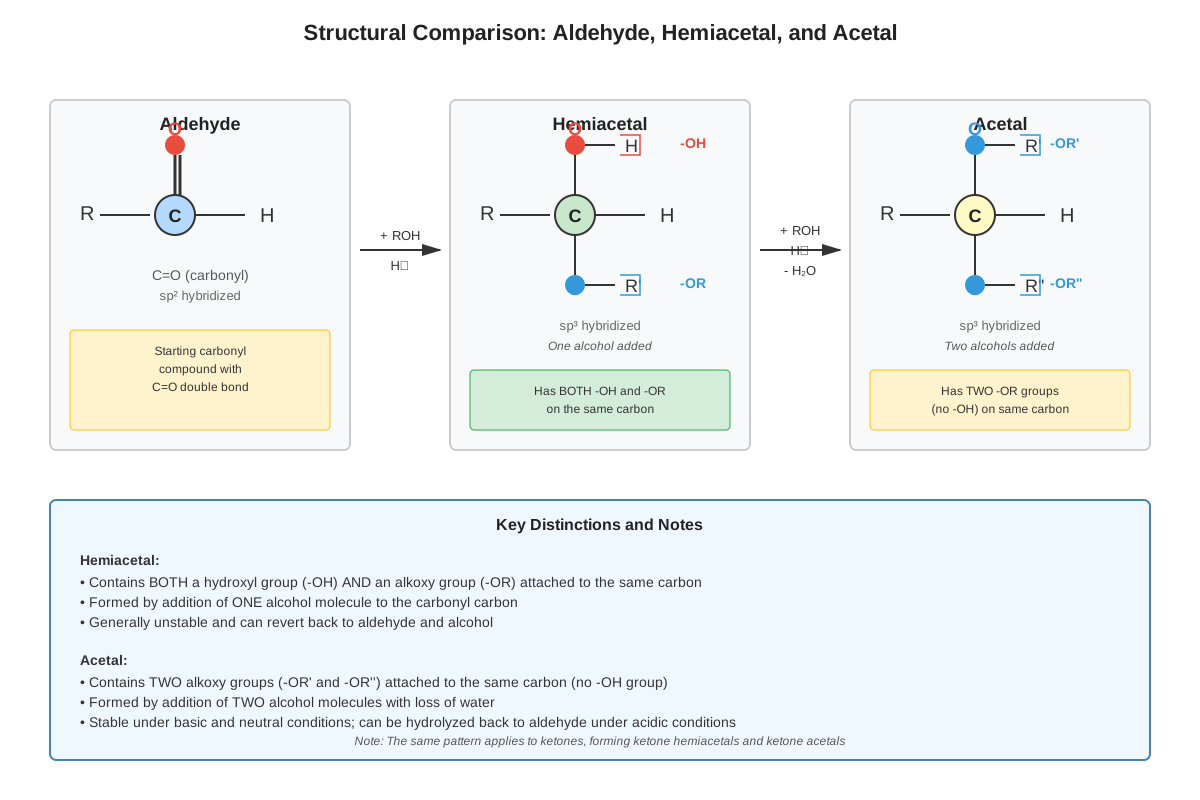
Acetals and hemiacetals represent a critical class of functional groups in Organic Chemistry that arise from the nucleophilic addition of alcohols to carbonyl compounds. These structures form when aldehydes or ketones react with one or two equivalents of alcohol under acidic conditions, creating intermediates and products that are fundamental to understanding Carbonyl Chemistry. Hemiacetals contain one alkoxy group (-OR) and one hydroxyl group (-OH) attached to the same carbon, while acetals feature two alkoxy groups (-OR and -OR') bonded to a single carbon atom. The formation and hydrolysis of these functional groups represent reversible equilibrium processes that are pH-dependent and mechanistically rich.
For the MCAT, understanding acetals and hemiacetals is essential because these functional groups appear extensively in biochemistry, particularly in carbohydrate chemistry where they form the basis of glycosidic bonds connecting monosaccharides. The cyclic forms of sugars like glucose and fructose are themselves hemiacetals, making this topic a bridge between pure organic chemistry and biological systems. Additionally, the mechanisms involved in acetal formation and hydrolysis exemplify fundamental principles of nucleophilic addition-elimination reactions, acid-base catalysis, and carbocation stability—all high-yield concepts for the Chemical and Physical Foundations section.
The study of acetals and hemiacetals connects directly to broader themes in Organic Chemistry MCAT preparation, including carbonyl reactivity patterns, protecting group strategies in synthesis, and the behavior of functional groups under varying pH conditions. Mastery of this topic enables students to predict reaction outcomes, understand carbohydrate structure and function, and analyze complex biochemical processes that appear in both discrete questions and passage-based items on the exam.
Learning Objectives
- [ ] Define acetals and hemiacetals using accurate Organic Chemistry terminology
- [ ] Explain why acetals and hemiacetals matter for the MCAT
- [ ] Apply acetals and hemiacetals concepts to exam-style questions
- [ ] Identify common mistakes related to acetals and hemiacetals
- [ ] Connect acetals and hemiacetals to related Organic Chemistry concepts
- [ ] Draw complete mechanisms for hemiacetal and acetal formation from aldehydes and ketones
- [ ] Predict the products of acetal hydrolysis under acidic and basic conditions
- [ ] Recognize cyclic hemiacetals and acetals in carbohydrate structures
- [ ] Explain the role of acetals as protecting groups in multi-step organic synthesis
Prerequisites
- Carbonyl group structure and reactivity: Understanding the electrophilic nature of the carbonyl carbon is essential for predicting nucleophilic addition reactions
- Acid-base catalysis: Acetal formation requires protonation steps that activate the carbonyl and stabilize leaving groups
- Nucleophilic addition mechanisms: The formation of hemiacetals and acetals follows nucleophilic addition patterns to carbonyl compounds
- Alcohol functional groups: Alcohols serve as the nucleophiles in these reactions, and their structure affects reactivity
- Carbocation stability: Intermediate carbocations form during acetal formation and hydrolysis, making stability principles crucial
- Equilibrium concepts: Acetal and hemiacetal formation are reversible processes governed by Le Chatelier's principle
Why This Topic Matters
Acetals and hemiacetals appear with moderate frequency on the MCAT, typically in 2-4 questions per exam, but their importance extends beyond direct testing. These functional groups serve as the molecular foundation for understanding carbohydrate chemistry, which is heavily tested in both the Chemical and Physical Foundations and Biological and Biochemical Foundations sections. The cyclic forms of monosaccharides (pyranoses and furanoses) are hemiacetals, and the glycosidic bonds that link sugars in disaccharides, oligosaccharides, and polysaccharides are acetals. Without understanding acetal chemistry, students cannot fully comprehend how sucrose, lactose, starch, or glycogen are structured and metabolized.
Clinically, acetal and hemiacetal chemistry relates to glucose monitoring in diabetic patients, the metabolism of carbohydrates in cellular respiration, and the structure of nucleic acids where ribose and deoxyribose exist as cyclic hemiacetals. The reversibility of acetal formation under acidic conditions but stability under basic conditions has practical implications in drug design and metabolic pathways.
On the MCAT, this topic commonly appears in several formats: discrete questions testing mechanism knowledge, passage-based questions involving carbohydrate structure determination, experimental passages describing protecting group strategies in synthesis, and biochemistry passages requiring students to identify functional groups in complex biomolecules. Questions may ask students to predict products, identify intermediates, explain pH-dependent stability, or recognize structural features in sugar molecules. The integration of organic chemistry principles with biochemistry makes this a high-yield topic for demonstrating interdisciplinary understanding.
Core Concepts
Definition and Structure of Hemiacetals
A hemiacetal is a functional group containing a carbon atom bonded to one hydroxyl group (-OH), one alkoxy group (-OR), one hydrogen or alkyl group, and one additional alkyl or hydrogen substituent. The general structure can be represented as R₂C(OH)(OR'), where R can be hydrogen (from an aldehyde) or an alkyl group (from a ketone). Hemiacetals form through the nucleophilic addition of one equivalent of alcohol to the carbonyl carbon of an aldehyde or ketone. This carbon atom, which was originally the carbonyl carbon, becomes a new stereocenter in most cases, potentially creating chiral products from achiral starting materials.
Hemiacetals are generally unstable and exist in equilibrium with their parent carbonyl compound and alcohol, except when they form five- or six-membered rings (cyclic hemiacetals), which are significantly more stable due to favorable ring strain energetics. The most biologically relevant examples are the cyclic forms of monosaccharides like glucose, which exists predominantly as a six-membered ring hemiacetal (glucopyranose) rather than in its open-chain aldehyde form.
Definition and Structure of Acetals
An acetal is a functional group in which a carbon atom is bonded to two alkoxy groups (-OR and -OR'), which may be the same or different, along with two additional hydrogen or alkyl substituents. The general structure is R₂C(OR')(OR''), where R groups derive from the original carbonyl compound. Acetals form when hemiacetals react with a second equivalent of alcohol under acidic conditions, involving the loss of water and formation of a new C-O bond.
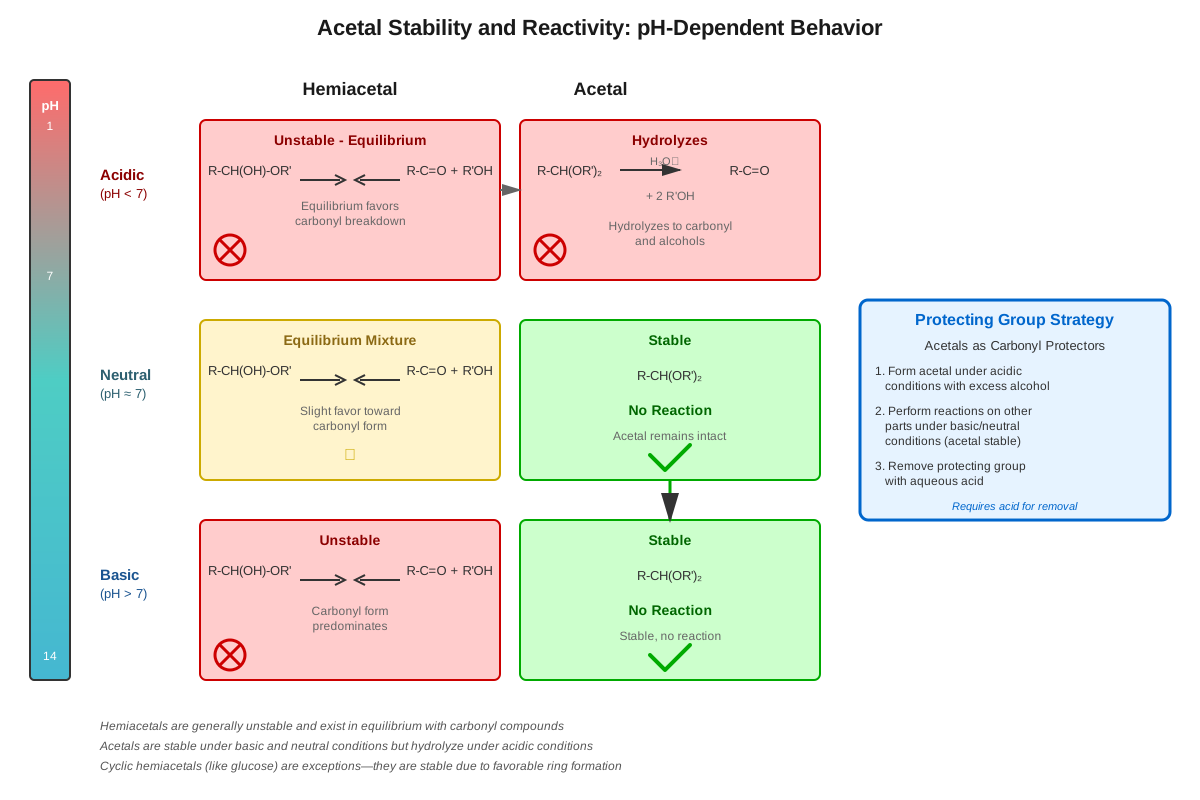
Unlike hemiacetals, acetals are stable under neutral and basic conditions but readily hydrolyze back to the carbonyl compound and two equivalents of alcohol under acidic conditions. This pH-dependent stability makes acetals valuable as protecting groups in organic synthesis, allowing chemists to temporarily mask carbonyl functionality during reactions that would otherwise affect it, then remove the protection by acid treatment when desired.
Mechanism of Hemiacetal Formation
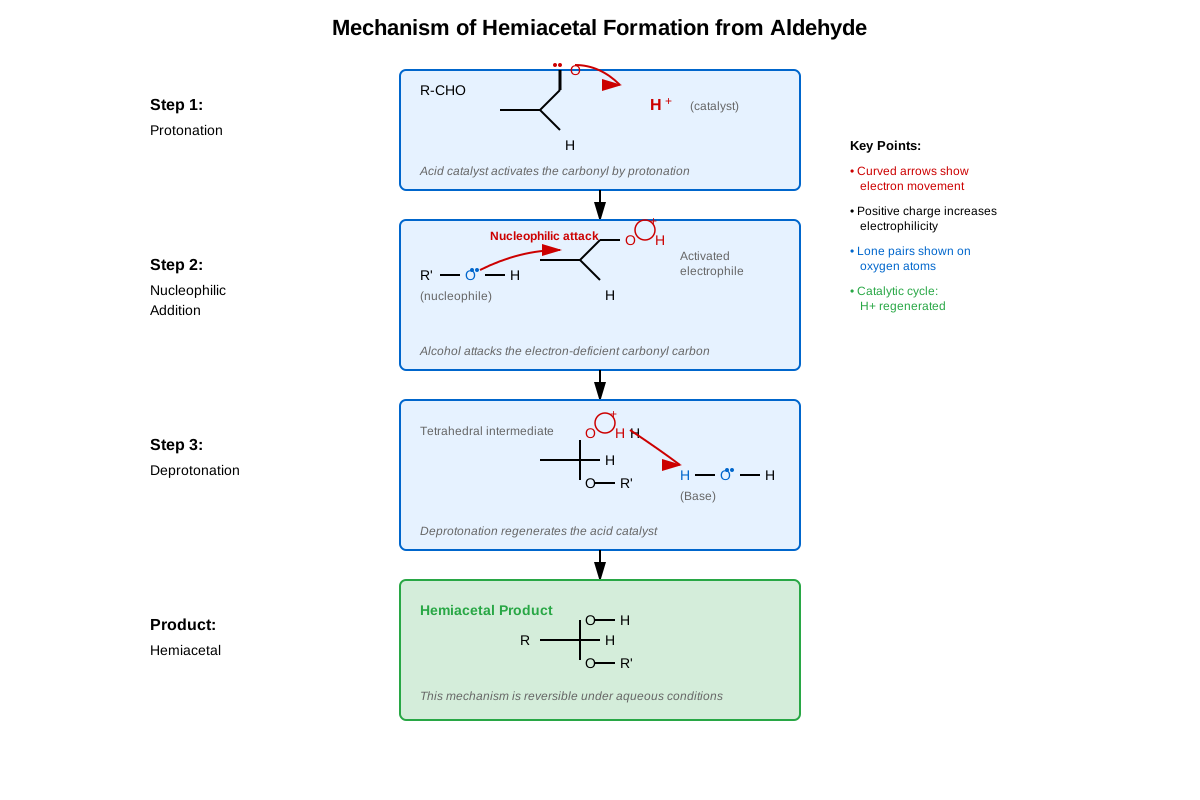
The formation of a hemiacetal from an aldehyde or ketone and an alcohol proceeds through an acid-catalyzed nucleophilic addition mechanism:
- Protonation of the carbonyl oxygen: The carbonyl oxygen acts as a Lewis base and accepts a proton from an acid catalyst (H₃O⁺ or H₂SO₄), creating a resonance-stabilized oxonium ion that increases the electrophilicity of the carbonyl carbon
- Nucleophilic attack by alcohol: The alcohol oxygen, acting as a nucleophile, attacks the electrophilic carbonyl carbon, forming a new C-O bond and generating a positively charged intermediate
- Deprotonation: A base (often another alcohol molecule or water) removes a proton from the oxygen of the attacking alcohol, yielding the neutral hemiacetal product
This mechanism can also proceed under basic conditions, though acid catalysis is more common and efficient. The equilibrium typically favors the carbonyl compound and alcohol for simple aldehydes and ketones, but cyclic hemiacetal formation is thermodynamically favorable when five- or six-membered rings can form.
Mechanism of Acetal Formation
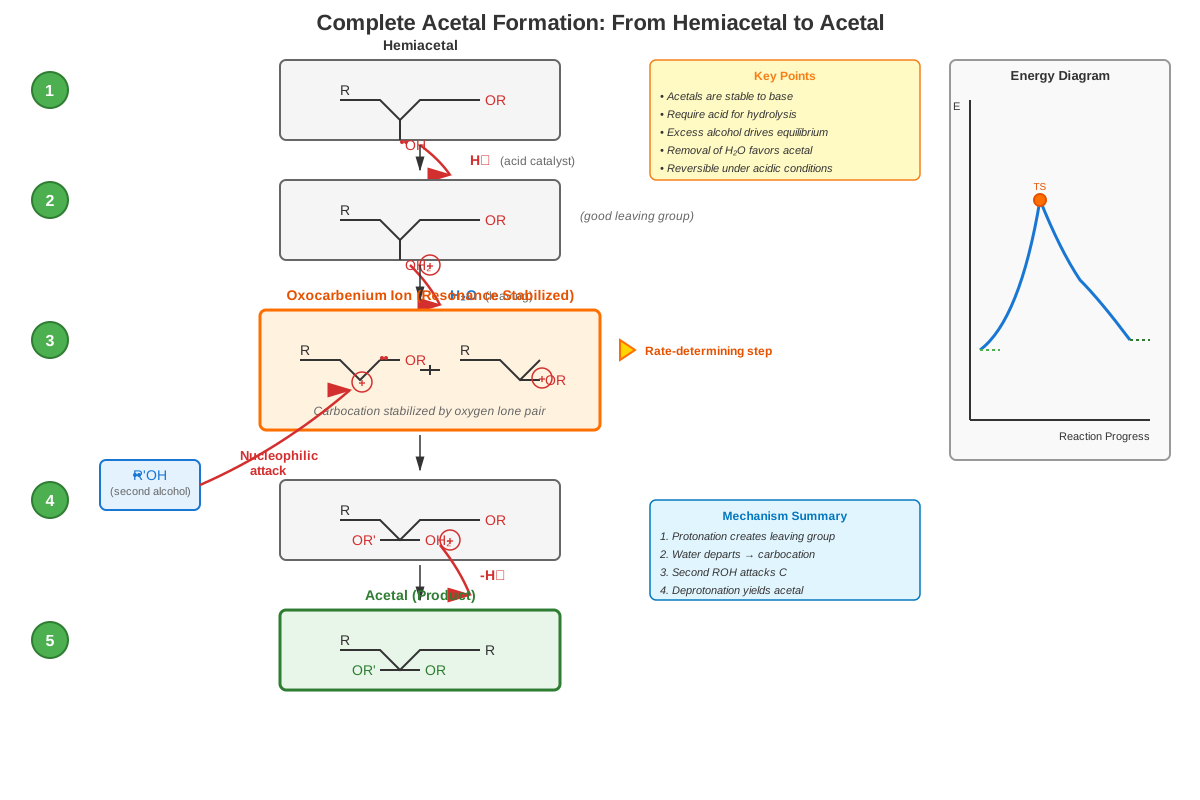
Acetal formation requires acidic conditions and proceeds through a two-stage mechanism that converts a hemiacetal to an acetal:
- Protonation of the hemiacetal hydroxyl group: The -OH group of the hemiacetal is protonated by acid, converting it into a good leaving group (H₂O)
- Loss of water: Water departs, generating a resonance-stabilized carbocation (an oxonium ion) at the former carbonyl carbon
- Nucleophilic attack by a second alcohol molecule: Another alcohol molecule attacks the carbocation, forming a second C-O bond
- Deprotonation: Loss of a proton from the attacking alcohol yields the neutral acetal product
The carbocation intermediate is stabilized by resonance with the adjacent oxygen atom's lone pairs, which is crucial for the reaction's feasibility. This resonance stabilization creates what is effectively an oxonium ion, significantly more stable than a typical carbocation.
Acetal Hydrolysis
Acetal hydrolysis is simply the reverse of acetal formation and requires acidic conditions. The mechanism proceeds through:
- Protonation of one alkoxy group: An acid protonates one of the acetal oxygen atoms
- Loss of alcohol: The protonated alkoxy group leaves as an alcohol molecule, generating a carbocation intermediate
- Nucleophilic attack by water: Water attacks the carbocation, forming a hemiacetal
- Further hydrolysis: The hemiacetal can undergo additional acid-catalyzed hydrolysis to regenerate the original carbonyl compound
Importantly, acetals are stable under basic conditions because bases cannot protonate the alkoxy groups to create good leaving groups, and the direct displacement of an alkoxide ion (RO⁻) is unfavorable. This differential stability is the basis for using acetals as protecting groups.
Cyclic Hemiacetals and Acetals in Carbohydrates
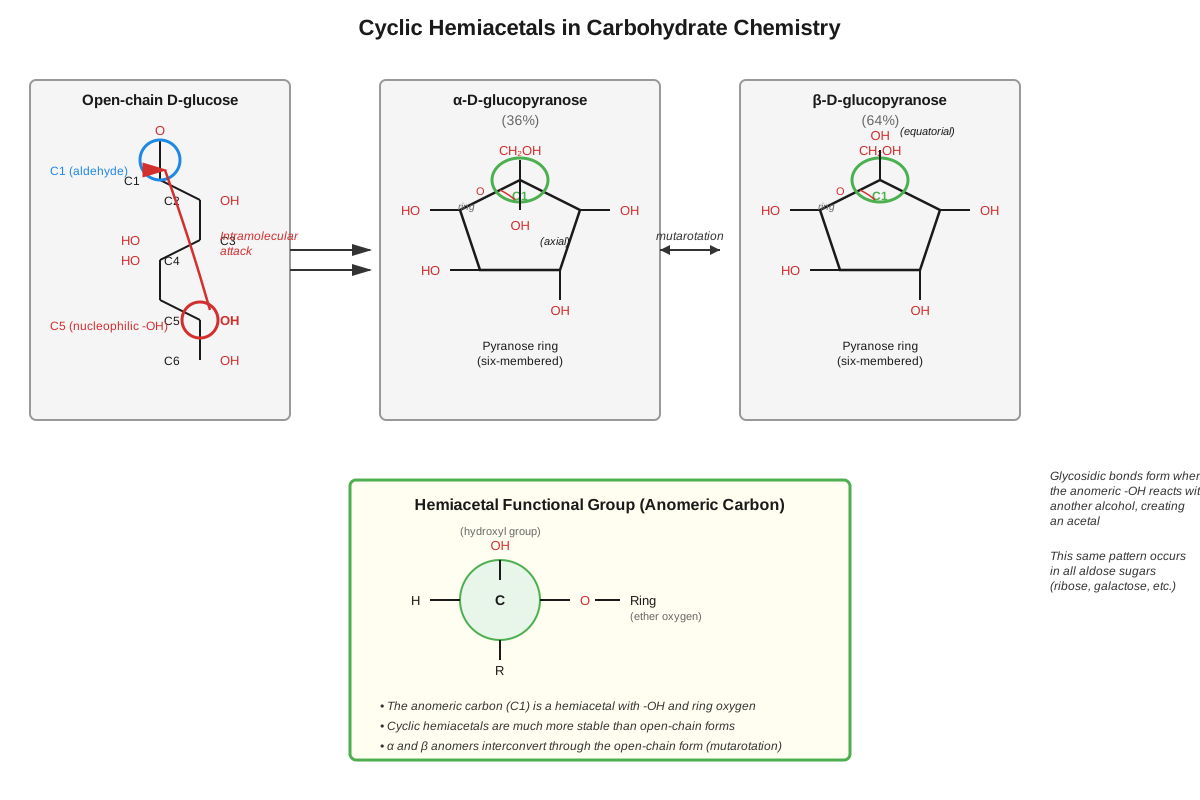
Monosaccharides with five or more carbons exist predominantly as cyclic hemiacetals in solution. For example, glucose (an aldohexose) undergoes intramolecular hemiacetal formation when its C-5 hydroxyl group attacks the C-1 aldehyde carbon, creating a six-membered ring called glucopyranose. This cyclization creates a new stereocenter at C-1 (the anomeric carbon), resulting in two diastereomers called anomers: α-glucose (hydroxyl group on C-1 is axial/down) and β-glucose (hydroxyl group on C-1 is equatorial/up).
When two monosaccharides link together through a glycosidic bond, the connection is an acetal linkage. For instance, in sucrose, the anomeric carbon of glucose forms an acetal bond with the anomeric carbon of fructose. In maltose, the anomeric carbon of one glucose forms an acetal with the C-4 hydroxyl of another glucose. These glycosidic bonds are stable under physiological pH but can be hydrolyzed by acids or specific enzymes (glycosidases).
Comparison Table: Hemiacetals vs. Acetals
| Feature | Hemiacetal | Acetal |
|---|---|---|
| Functional groups on central carbon | One -OH, one -OR | Two -OR groups |
| Formation | One equivalent of alcohol + carbonyl | Two equivalents of alcohol + carbonyl |
| Conditions required | Acid or base catalysis | Acid catalysis only |
| Stability | Generally unstable (except cyclic) | Stable under neutral/basic conditions |
| Hydrolysis | Readily reversible | Requires acidic conditions |
| Biological examples | Cyclic monosaccharides (glucose, fructose) | Glycosidic bonds (sucrose, starch) |
| Use as protecting group | No (too unstable) | Yes (stable to bases and nucleophiles) |
Protecting Group Strategy
In multi-step organic synthesis, chemists often need to perform reactions on one functional group while leaving others untouched. Acetals serve as excellent protecting groups for carbonyl compounds because:
- They form readily under acidic conditions with simple alcohols or diols
- They are completely stable to strong bases, organometallic reagents (Grignard, organolithium), and oxidizing agents
- They can be selectively removed by mild acid treatment when protection is no longer needed
- Cyclic acetals (formed with diols like ethylene glycol) are particularly stable and easy to form
For example, if a molecule contains both a ketone and an ester, and a chemist wants to reduce only the ester with LiAlH₄ (which would also reduce the ketone), the ketone can first be protected as an acetal, the reduction performed, and then the acetal removed by acid hydrolysis to regenerate the ketone.
Concept Relationships
The chemistry of acetals and hemiacetals sits at the intersection of several fundamental organic chemistry principles. The formation of these functional groups directly applies nucleophilic addition to carbonyl compounds, one of the most important reaction patterns in organic chemistry. The carbonyl carbon's electrophilicity, enhanced by acid catalysis, drives the initial attack by alcohol nucleophiles, demonstrating how acid-base chemistry modulates reactivity.
The progression from carbonyl → hemiacetal → acetal represents a sequential addition process where each step builds on the previous one. Hemiacetal formation is a simple nucleophilic addition, while acetal formation involves addition followed by elimination (loss of water), making it an addition-elimination mechanism. This connects to broader patterns in carbonyl chemistry, including the formation of imines, enamines, and other carbonyl derivatives.
The stability differences between hemiacetals and acetals relate directly to carbocation stability and leaving group ability. The resonance-stabilized oxonium ion intermediate in acetal formation is analogous to carbocations in other reactions, reinforcing principles of intermediate stability. The requirement for acidic conditions to protonate hydroxyl or alkoxy groups before they can leave connects to general principles of leaving group activation.
In biochemistry, the cyclic hemiacetal structure of monosaccharides connects to stereochemistry (anomers, mutarotation), conformational analysis (chair conformations of pyranoses), and glycosidic bond formation (acetal chemistry). Understanding acetal hydrolysis is essential for comprehending how enzymes like amylase and maltase break down polysaccharides, linking organic mechanisms to enzyme catalysis and metabolism.
The protecting group application of acetals connects to synthetic strategy and chemoselectivity, demonstrating how understanding reactivity patterns enables complex molecule construction. This relationship map can be summarized: Carbonyl reactivity → Nucleophilic addition → Hemiacetal formation → Addition-elimination → Acetal formation → Carbohydrate structure → Glycosidic bonds → Polysaccharide chemistry → Metabolic pathways.
Quick check — test yourself on Acetals and hemiacetals so far.
Try Flashcards →High-Yield Facts
⭐ Hemiacetals contain one -OH and one -OR group on the same carbon; acetals contain two -OR groups on the same carbon
⭐ Acetal formation requires acidic conditions; acetals are stable under basic conditions but hydrolyze under acidic conditions
⭐ Cyclic hemiacetals (5- and 6-membered rings) are much more stable than acyclic hemiacetals
⭐ The cyclic forms of monosaccharides (glucose, fructose) are hemiacetals; glycosidic bonds are acetals
⭐ The anomeric carbon is the carbon bearing two oxygen atoms in a cyclic hemiacetal or acetal (the former carbonyl carbon)
- Hemiacetal formation is reversible and typically unfavorable for simple aldehydes and ketones in solution
- The mechanism of acetal formation involves a resonance-stabilized carbocation (oxonium ion) intermediate
- Acetals function as protecting groups for carbonyl compounds because they resist bases, nucleophiles, and oxidizing agents
- Mutarotation of sugars involves the interconversion of α and β anomers through the open-chain aldehyde form (hemiacetal equilibrium)
- Thioacetals (formed with thiols instead of alcohols) can be reduced to alkanes, providing a method for complete carbonyl deoxygenation
- Acetal hydrolysis is the mechanism by which glycosidic bonds are cleaved during carbohydrate digestion
- The formation of cyclic acetals with diols (like ethylene glycol) is particularly favorable and creates more stable protecting groups
Common Misconceptions
Misconception: Hemiacetals and acetals can form under any conditions, including neutral pH.
Correction: While hemiacetal formation can occur under neutral conditions (though slowly), acetal formation specifically requires acidic conditions to protonate the hemiacetal hydroxyl group and create a good leaving group. Under neutral or basic conditions, the hydroxyl group cannot leave, preventing acetal formation.
Misconception: Acetals are unstable and readily break down in aqueous solution.
Correction: Acetals are remarkably stable under neutral and basic conditions, even in water. They only hydrolyze under acidic conditions where the alkoxy group can be protonated to create a good leaving group. This stability is precisely what makes them useful as protecting groups.
Misconception: The anomeric carbon in glucose is the same as any other carbon bearing a hydroxyl group.
Correction: The anomeric carbon (C-1 in glucose) is unique because it bears two oxygen atoms—it is the hemiacetal carbon formed from the original aldehyde. This carbon is more reactive than other carbons and is the site of glycosidic bond formation. It also undergoes mutarotation, interconverting between α and β forms.
Misconception: Hemiacetals and acetals always have the same stability patterns.
Correction: Hemiacetals are generally unstable and exist in equilibrium with the carbonyl compound and alcohol, except when they form favorable 5- or 6-membered rings. Acetals, in contrast, are stable under neutral and basic conditions regardless of whether they are cyclic or acyclic, though cyclic acetals are somewhat more stable.
Misconception: Any alcohol can react with any carbonyl compound to form stable acetals.
Correction: While most alcohols can react with aldehydes and ketones, the equilibrium position varies significantly. Aldehydes form acetals more readily than ketones due to less steric hindrance and greater electrophilicity. Additionally, some ketones (especially those with bulky substituents) form acetals very slowly or not at all. Cyclic acetal formation with diols is generally more favorable than acyclic acetal formation.
Misconception: Glycosidic bonds can be broken by bases or nucleophiles.
Correction: Glycosidic bonds are acetal linkages and are therefore stable to bases and nucleophiles. They require either acidic conditions or specific enzymes (glycosidases) for hydrolysis. This stability is essential for the structural integrity of polysaccharides like cellulose and starch under physiological conditions.
Worked Examples
Example 1: Predicting Products of Acetal Formation
Problem: Benzaldehyde is treated with excess ethanol in the presence of catalytic HCl. Draw the product and explain the mechanism.
Solution:
Step 1 - Identify the reactants and conditions: Benzaldehyde (C₆H₅CHO) is an aldehyde, ethanol (CH₃CH₂OH) is the alcohol, and HCl provides acidic conditions. Excess alcohol and acid catalyst indicate complete conversion to the acetal.
Step 2 - Hemiacetal formation: First, the carbonyl oxygen of benzaldehyde is protonated by HCl, increasing the electrophilicity of the carbonyl carbon. Ethanol attacks this electrophilic carbon, forming a C-O bond. After deprotonation, this yields the hemiacetal: C₆H₅CH(OH)(OCH₂CH₃).
Step 3 - Acetal formation: The hemiacetal hydroxyl group is protonated by HCl, converting it to a good leaving group (H₂O). Water leaves, generating a resonance-stabilized carbocation. A second ethanol molecule attacks this carbocation, and after deprotonation, the final acetal product forms: C₆H₅CH(OCH₂CH₃)₂.
Final Answer: The product is benzaldehyde diethyl acetal, with structure C₆H₅CH(OCH₂CH₃)₂. This compound has two ethoxy groups attached to the carbon that was originally the aldehyde carbon.
Key Concept Connection: This example demonstrates the complete mechanism of acetal formation, showing how acid catalysis is essential for both activating the carbonyl and creating a good leaving group from the hemiacetal. The resonance stabilization of the carbocation intermediate by the adjacent oxygen is crucial for the reaction's success.
Example 2: Analyzing Carbohydrate Structure
Problem: A student is examining the structure of α-D-glucopyranose and needs to identify: (a) whether it is a hemiacetal or acetal, (b) the anomeric carbon, and (c) what would happen if this compound were treated with dilute HCl.
Solution:
(a) Hemiacetal or acetal identification: Examining the cyclic structure of α-D-glucopyranose, we look for the carbon bearing two oxygen atoms. C-1 (the anomeric carbon) is bonded to one oxygen within the ring (the ring oxygen) and one oxygen as a hydroxyl group projecting downward (axial position in the α-anomer). This carbon has one C-O bond within the ring and one -OH group, making it a hemiacetal, not an acetal. If C-1 had two -OR groups (no free -OH), it would be an acetal.
(b) Anomeric carbon identification: The anomeric carbon is C-1, the carbon that was originally the aldehyde carbon in the open-chain form of glucose. This carbon is identifiable as the only carbon in the ring bonded to two oxygen atoms (the ring oxygen and the hydroxyl group). In the α-anomer, this hydroxyl is axial (pointing down); in the β-anomer, it would be equatorial (pointing up).
(c) Treatment with dilute HCl: Under acidic conditions, the hemiacetal would be in equilibrium with the open-chain aldehyde form of glucose. The acid would catalyze the ring-opening by protonating the ring oxygen, making it a better leaving group. The C-O bond would break, regenerating the aldehyde functional group. In solution, an equilibrium would be established between the open-chain form and both α and β cyclic forms, a process called mutarotation. However, the cyclic forms would predominate because they are thermodynamically more stable.
Key Concept Connection: This example illustrates how understanding hemiacetal chemistry is essential for carbohydrate structure analysis. Recognizing that monosaccharides are cyclic hemiacetals explains their reactivity patterns, including mutarotation and glycosidic bond formation. The anomeric carbon's special reactivity stems from its hemiacetal nature.
Exam Strategy
When approaching MCAT questions on acetals and hemiacetals, begin by identifying the functional groups present in any given structure. Look for carbons bearing two oxygen atoms—these are potential hemiacetal or acetal carbons. Count the oxygen-containing groups: one -OH and one -OR indicates a hemiacetal; two -OR groups indicate an acetal.
Trigger words and phrases to watch for include: "cyclic sugar," "glycosidic bond," "anomeric carbon," "mutarotation," "protecting group," "acid-catalyzed," "stable under basic conditions," and "hydrolysis." When you see "glycosidic bond," immediately think "acetal linkage." When you see "cyclic form of glucose," think "cyclic hemiacetal." If a question mentions treating a compound with acid, consider whether acetal or hemiacetal hydrolysis might occur.
For mechanism questions, remember the key steps: protonation → nucleophilic attack → deprotonation for hemiacetal formation; then protonation → loss of water → nucleophilic attack → deprotonation for acetal formation. If you forget the details, remember that acid catalysis is essential for acetal formation and that a carbocation intermediate (stabilized by oxygen) forms during the hemiacetal-to-acetal conversion.
For process-of-elimination strategies, remember these rules:
- If a question asks what happens to an acetal under basic conditions, eliminate any answer suggesting hydrolysis or breakdown
- If asked about the stability of a hemiacetal, eliminate answers suggesting high stability unless the structure is a 5- or 6-membered ring
- If a question involves carbohydrate chemistry and mentions the anomeric carbon, eliminate answers that don't recognize its special reactivity
- If asked about protecting groups for carbonyls, eliminate options that suggest using hemiacetals (too unstable) or that suggest acetals are unstable to bases
Time allocation: Most questions on this topic can be answered in 60-90 seconds. If a question requires drawing a complete mechanism, allocate up to 2 minutes. For passage-based questions involving carbohydrate structures, spend 30-45 seconds identifying key functional groups before attempting to answer.
Memory Techniques
Mnemonic for Hemiacetal vs. Acetal: "HEMiacetal has Half the Ethers, More hydroxyl" (one -OR, one -OH). "ACetal is All Covered" (two -OR groups, no free -OH).
Mnemonic for Acetal Stability: "Acetals Are Acid-sensitive" (stable to bases, hydrolyze in acid). Think of three A's to remember that acetals break down in acid.
Visualization Strategy for Cyclic Hemiacetals: Picture glucose as a hexagon with an oxygen in the ring. The anomeric carbon (C-1) is the one next to the ring oxygen with a hydroxyl group sticking out. Visualize this carbon as having "one foot in the ring (ring oxygen) and one hand waving (hydroxyl group)"—this represents the two oxygen connections that define a hemiacetal.
Acronym for Acetal Formation Conditions: "HEAP" - Hemiacetal + Excess Alcohol + Proton source (acid) = Acetal.
Memory Aid for Glycosidic Bonds: "Glycosidic bonds are Acetals" (G-A). When you see any disaccharide or polysaccharide, immediately recall that the linkages are acetal bonds, which means they're stable to bases but can be hydrolyzed by acids or enzymes.
Mechanism Memory Device: For the acetal formation mechanism, remember the sequence "PLAN": Protonate carbonyl, Let alcohol attack, Add another alcohol (after losing water), Neutralize by deprotonation.
Summary
Acetals and hemiacetals are functional groups formed when alcohols add to carbonyl compounds under acidic conditions. Hemiacetals contain one hydroxyl and one alkoxy group on the same carbon and are generally unstable except when forming five- or six-membered rings, as seen in cyclic monosaccharides like glucose. Acetals contain two alkoxy groups on the same carbon and form when hemiacetals react with a second equivalent of alcohol under acidic conditions, proceeding through a resonance-stabilized carbocation intermediate. The key distinction for MCAT purposes is that acetals are stable under neutral and basic conditions but hydrolyze under acidic conditions, making them valuable as protecting groups in organic synthesis. In biochemistry, the cyclic forms of sugars are hemiacetals, and glycosidic bonds connecting monosaccharides are acetal linkages. Understanding the mechanisms of formation and hydrolysis, recognizing these functional groups in complex molecules, and predicting their behavior under different pH conditions are essential skills for success on MCAT questions involving carbonyl chemistry and carbohydrate biochemistry.
Key Takeaways
- Hemiacetals have one -OH and one -OR group on the same carbon; acetals have two -OR groups with no free hydroxyl
- Acetal formation requires acidic conditions and proceeds through a carbocation intermediate stabilized by resonance with the adjacent oxygen
- Acetals are stable to bases, nucleophiles, and oxidizing agents but hydrolyze readily under acidic conditions
- Cyclic hemiacetals (5- and 6-membered rings) are much more stable than acyclic hemiacetals, explaining why glucose exists predominantly in cyclic form
- The cyclic forms of monosaccharides are hemiacetals; glycosidic bonds in di- and polysaccharides are acetal linkages
- The anomeric carbon (former carbonyl carbon) in cyclic sugars is the hemiacetal or acetal carbon and exhibits unique reactivity
- Acetals serve as excellent protecting groups for carbonyl compounds in multi-step synthesis because of their selective stability
Related Topics
Carbohydrate Chemistry: Mastering acetals and hemiacetals provides the foundation for understanding monosaccharide structure, mutarotation, glycosidic bond formation, and polysaccharide architecture. This knowledge is essential for biochemistry passages on the MCAT.
Nucleophilic Addition to Carbonyls: Acetal and hemiacetal formation exemplifies the broader pattern of nucleophilic addition reactions, which also includes cyanohydrin formation, imine synthesis, and enamine formation.
Protecting Group Strategies: Understanding how acetals function as protecting groups introduces the concept of chemoselectivity in organic synthesis, relevant for laboratory technique passages.
Enzyme Mechanisms: Glycosidases that hydrolyze glycosidic bonds use mechanisms closely related to acid-catalyzed acetal hydrolysis, connecting organic chemistry to biochemistry and metabolism.
Stereochemistry of Carbohydrates: The formation of cyclic hemiacetals creates anomeric centers, leading to α and β anomers and connecting to broader stereochemistry concepts including chirality, diastereomers, and conformational analysis.
Practice CTA
Now that you've mastered the core concepts of acetals and hemiacetals, it's time to reinforce your understanding through active practice. Attempt the practice questions to test your ability to identify these functional groups, predict reaction outcomes, and apply mechanistic reasoning to exam-style problems. Use the flashcards to drill high-yield facts and ensure rapid recall of key distinctions between hemiacetals and acetals. Remember, the MCAT rewards not just knowledge but the ability to apply concepts quickly and accurately under time pressure—practice is what builds that skill. You've built a strong foundation; now strengthen it through repetition and application!
Sign up free to keep reading
Create a free AnvayaPrep account to finish this MCAT guide on Acetals and hemiacetals — plus flashcards and practice questions.