Overview
Amides represent one of the most important functional groups in Organic Chemistry, serving as the fundamental linkage in proteins and peptides through the peptide bond. In the context of Carbonyl Chemistry, amides occupy a unique position as carboxylic acid derivatives with distinctive reactivity patterns that differ significantly from other carbonyl-containing compounds. Understanding amide structure, properties, and reactivity is essential for mastering biochemical processes and answering MCAT questions that bridge organic chemistry with biological systems.
For the MCAT, amides appear frequently in both the Chemical and Physical Foundations of Biological Systems section and the Biological and Biochemical Foundations of Living Systems section. Questions may test amide nomenclature, physical properties, synthesis pathways, hydrolysis mechanisms, or their role in biological macromolecules. The resonance stabilization that characterizes amides explains their reduced reactivity compared to other acyl compounds and accounts for the planar, rigid structure of peptide bonds—a concept that connects organic chemistry principles directly to protein structure and function.
Amides MCAT questions often appear embedded within biochemistry passages discussing protein degradation, enzyme mechanisms, or pharmaceutical compounds. The ability to recognize amide functional groups, predict their behavior under various conditions, and understand their stability relative to esters, acid chlorides, and anhydrides provides a competitive advantage on test day. This topic integrates seamlessly with amino acid chemistry, protein structure, and reaction mechanisms, making it a high-yield area for comprehensive MCAT preparation.
Learning Objectives
- [ ] Define Amides using accurate Organic Chemistry terminology
- [ ] Explain why Amides matters for the MCAT
- [ ] Apply Amides to exam-style questions
- [ ] Identify common mistakes related to Amides
- [ ] Connect Amides to related Organic Chemistry concepts
- [ ] Compare and contrast the reactivity of amides with other carboxylic acid derivatives
- [ ] Predict the products of amide formation and hydrolysis reactions under acidic and basic conditions
- [ ] Explain the structural consequences of resonance stabilization in amides, including restricted rotation and planarity
Prerequisites
- Carboxylic acids and their derivatives: Amides are carboxylic acid derivatives, requiring understanding of the carbonyl group and nucleophilic acyl substitution mechanisms
- Resonance structures: The unique properties of amides arise from resonance delocalization between nitrogen lone pairs and the carbonyl group
- Acid-base chemistry: Amide synthesis and hydrolysis involve proton transfer steps and pH-dependent mechanisms
- Nucleophilic substitution reactions: Amide formation proceeds through nucleophilic attack on carbonyl carbons
- Amino acids and peptides: Peptide bonds are amide linkages, making this prerequisite essential for biochemistry integration
Why This Topic Matters
Clinical and Real-World Significance
Amide bonds constitute the backbone of all proteins in living organisms, making them arguably the most biologically significant functional group in organic chemistry. Every peptide bond connecting amino acids in proteins, enzymes, antibodies, and structural proteins is an amide linkage. Pharmaceutical chemistry relies heavily on amide-containing compounds—approximately 25% of all FDA-approved drugs contain at least one amide functional group. Examples include acetaminophen (Tylenol), lidocaine (local anesthetic), and penicillin antibiotics. The stability of amide bonds under physiological conditions allows proteins to maintain their structure, while controlled hydrolysis by proteolytic enzymes enables protein turnover and digestion.
MCAT Exam Statistics and Question Types
Amides appear in approximately 3-5% of MCAT questions directly and indirectly in an additional 10-15% of biochemistry questions involving proteins and peptides. Questions typically fall into several categories: (1) identification and nomenclature of amide functional groups in complex molecules, (2) comparison of reactivity among carboxylic acid derivatives, (3) mechanism-based questions about amide formation or hydrolysis, (4) passage-based questions connecting amide chemistry to protein structure or drug metabolism, and (5) experimental analysis questions involving amide synthesis or characterization.
Common Exam Passage Contexts
MCAT passages featuring amides often discuss: protein digestion and the role of pepsin or trypsin in hydrolyzing peptide bonds; pharmaceutical development and structure-activity relationships of amide-containing drugs; polymer chemistry and the synthesis of nylon or other polyamides; analytical chemistry techniques like IR spectroscopy showing characteristic amide carbonyl stretches; and biochemical pathways involving amide bond formation, such as glutamine synthesis or asparagine metabolism. Recognition of these contexts helps students activate relevant knowledge quickly during the exam.
Core Concepts
Structure and Bonding of Amides
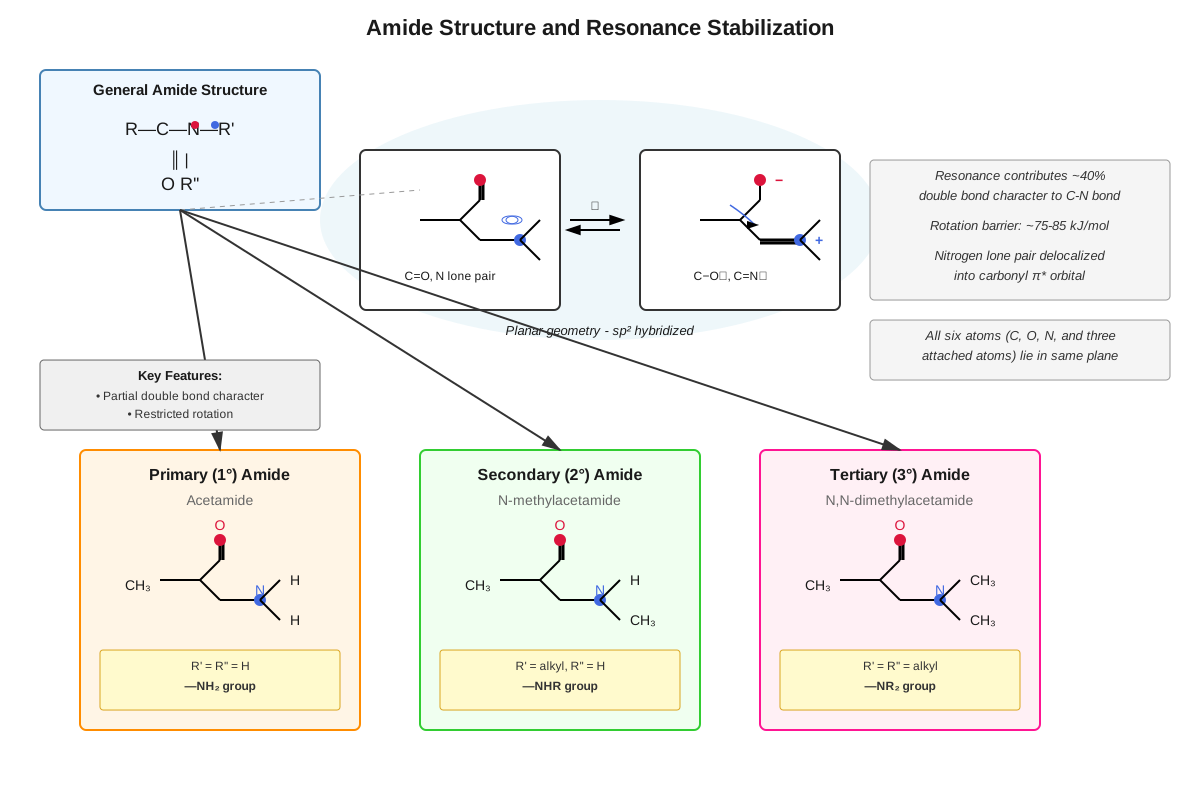
Amides are organic compounds containing a carbonyl group (C=O) directly bonded to a nitrogen atom. The general structure can be represented as R-CO-NR'R'', where R, R', and R'' can be hydrogen atoms, alkyl groups, or aryl groups. Amides are classified as primary (one carbon attached to nitrogen, two hydrogens: RCONH₂), secondary (two carbons attached to nitrogen, one hydrogen: RCONHR'), or tertiary (three carbons attached to nitrogen, no hydrogens: RCONR'R'') based on the substitution pattern at the nitrogen atom.
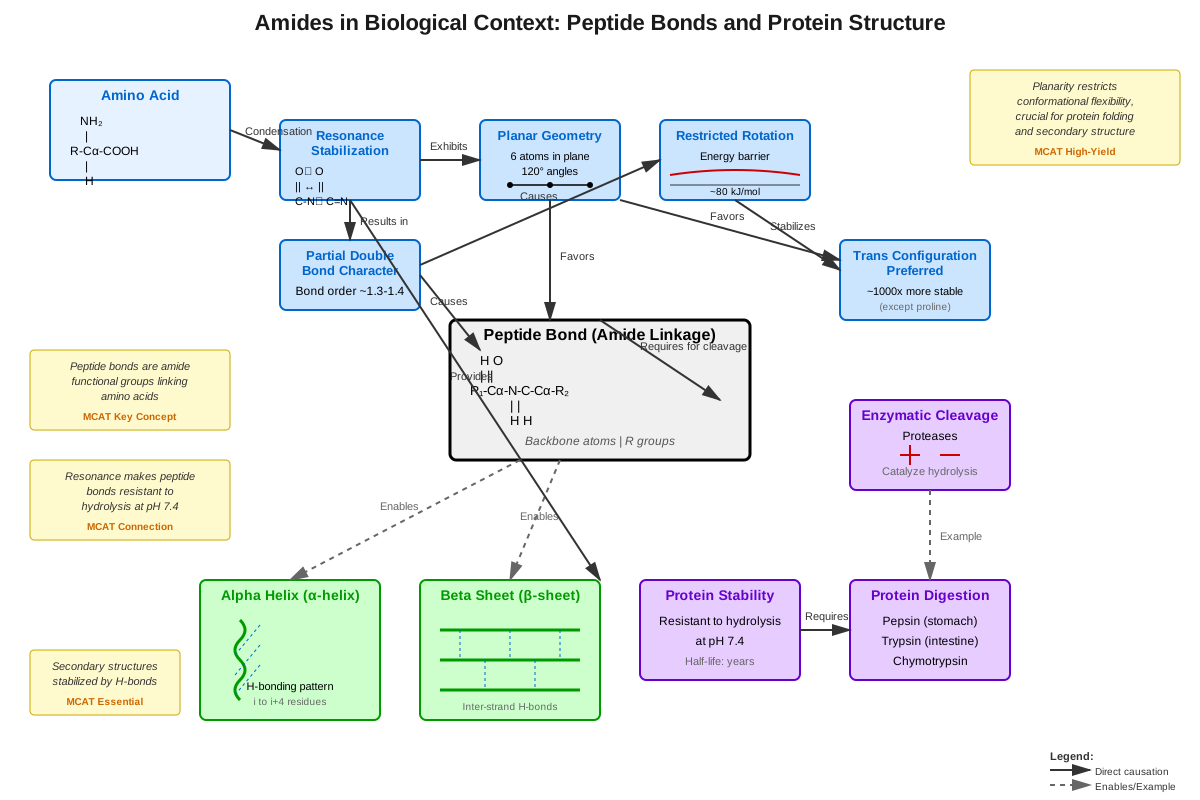
The defining characteristic of amides is resonance stabilization involving the nitrogen lone pair and the carbonyl π system. The nitrogen lone pair can delocalize into the carbonyl group, creating a resonance structure where the C-N bond has partial double-bond character and the carbonyl oxygen bears increased negative charge. This resonance contribution has profound consequences:
- The C-N bond is shorter than typical single bonds (approximately 1.32 Å versus 1.47 Å)
- Restricted rotation around the C-N bond creates a significant energy barrier (15-20 kcal/mol)
- The carbonyl carbon becomes less electrophilic than in other acyl compounds
- The molecule adopts a planar geometry around the amide linkage
- The nitrogen becomes less basic than typical amines
Nomenclature of Amides
Systematic IUPAC nomenclature for amides follows specific rules. For simple amides derived from carboxylic acids, replace the "-oic acid" or "-ic acid" suffix with "-amide." For example, acetic acid becomes acetamide, and butanoic acid becomes butanamide. When the nitrogen bears substituents (secondary or tertiary amides), prefix these substituents with "N-" to indicate their attachment to nitrogen. For instance, N-methylacetamide has a methyl group on the nitrogen of acetamide, and N,N-dimethylformamide (DMF) has two methyl groups on the nitrogen of formamide.
Common names persist for many simple amides, particularly formamide (HCONH₂), acetamide (CH₃CONH₂), and benzamide (C₆H₅CONH₂). For cyclic amides, the term lactam is used, analogous to lactones for cyclic esters. The ring size determines the Greek letter prefix: β-lactam (four-membered ring), γ-lactam (five-membered ring), and δ-lactam (six-membered ring). β-lactams are particularly important in antibiotic chemistry, forming the core structure of penicillins and cephalosporins.
Physical Properties of Amides
Amides exhibit distinctive physical properties resulting from their structure and hydrogen bonding capabilities. Primary and secondary amides can act as both hydrogen bond donors (through N-H bonds) and acceptors (through the carbonyl oxygen), leading to extensive intermolecular hydrogen bonding networks. Consequently, amides have:
- High boiling points relative to molecular weight (formamide boils at 210°C, comparable to water despite being much larger)
- High melting points due to strong crystal lattice interactions
- Significant water solubility for small amides (formamide, acetamide, and propionamide are completely miscible with water)
- High dielectric constants making them excellent polar aprotic solvents (DMF, DMA)
Tertiary amides lack N-H bonds and cannot donate hydrogen bonds, resulting in somewhat lower boiling points than their primary and secondary counterparts, though they remain high due to dipole-dipole interactions and the ability to accept hydrogen bonds.
Basicity and Acidity of Amides
The basicity of amides differs dramatically from typical amines due to resonance delocalization. While aliphatic amines have pKₐ values of their conjugate acids around 10-11, amide nitrogen is essentially non-basic with conjugate acid pKₐ values around -0.5 to 1. Protonation occurs preferentially on the carbonyl oxygen rather than nitrogen because protonating oxygen preserves resonance stabilization, whereas protonating nitrogen disrupts it.
The N-H protons in primary and secondary amides show weak acidity (pKₐ ≈ 15-17), significantly more acidic than typical amines (pKₐ ≈ 35-40) but less acidic than alcohols (pKₐ ≈ 15-16) or water (pKₐ = 15.7). Strong bases like lithium diisopropylamide (LDA) or sodium hydride can deprotonate amides to form amide anions, which serve as nucleophiles in synthesis.
Reactivity of Amides: The Least Reactive Acyl Derivative
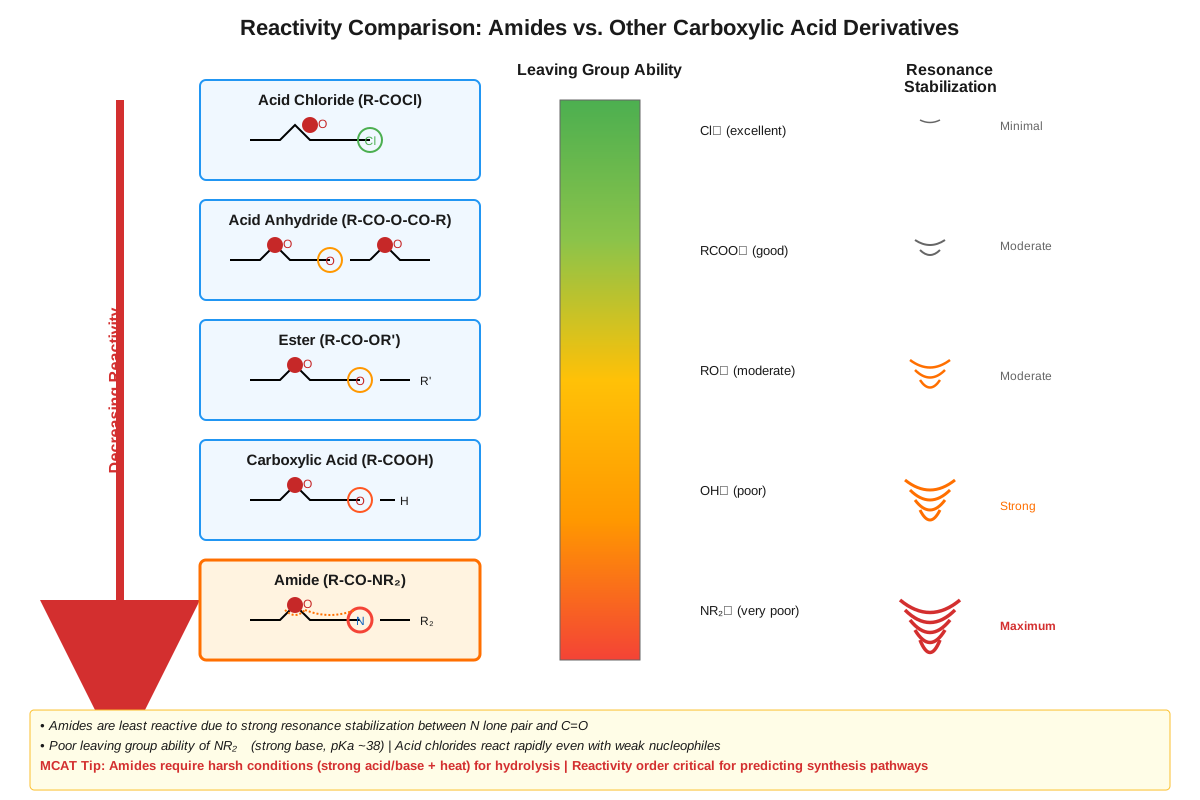
Among carboxylic acid derivatives, amides are the least reactive toward nucleophilic acyl substitution. The reactivity order is:
Acid chlorides > Anhydrides > Esters > Amides
This trend reflects the stability of the leaving group and the electrophilicity of the carbonyl carbon. Amides have poor leaving groups (NH₂⁻, NHR⁻, NR₂⁻ are very strong bases and therefore poor leaving groups) and reduced carbonyl electrophilicity due to resonance donation from nitrogen. The resonance stabilization energy of amides (approximately 20 kcal/mol) must be overcome for reactions to proceed, creating a substantial activation barrier.
| Derivative | Relative Reactivity | Leaving Group | Resonance Stabilization |
|---|---|---|---|
| Acid Chloride | Highest (10⁶) | Cl⁻ (weak base) | Minimal |
| Anhydride | High (10⁴) | RCO₂⁻ (weak base) | Moderate |
| Ester | Moderate (10²) | RO⁻ (moderate base) | Moderate |
| Amide | Lowest (1) | R₂N⁻ (strong base) | Strong |
Synthesis of Amides
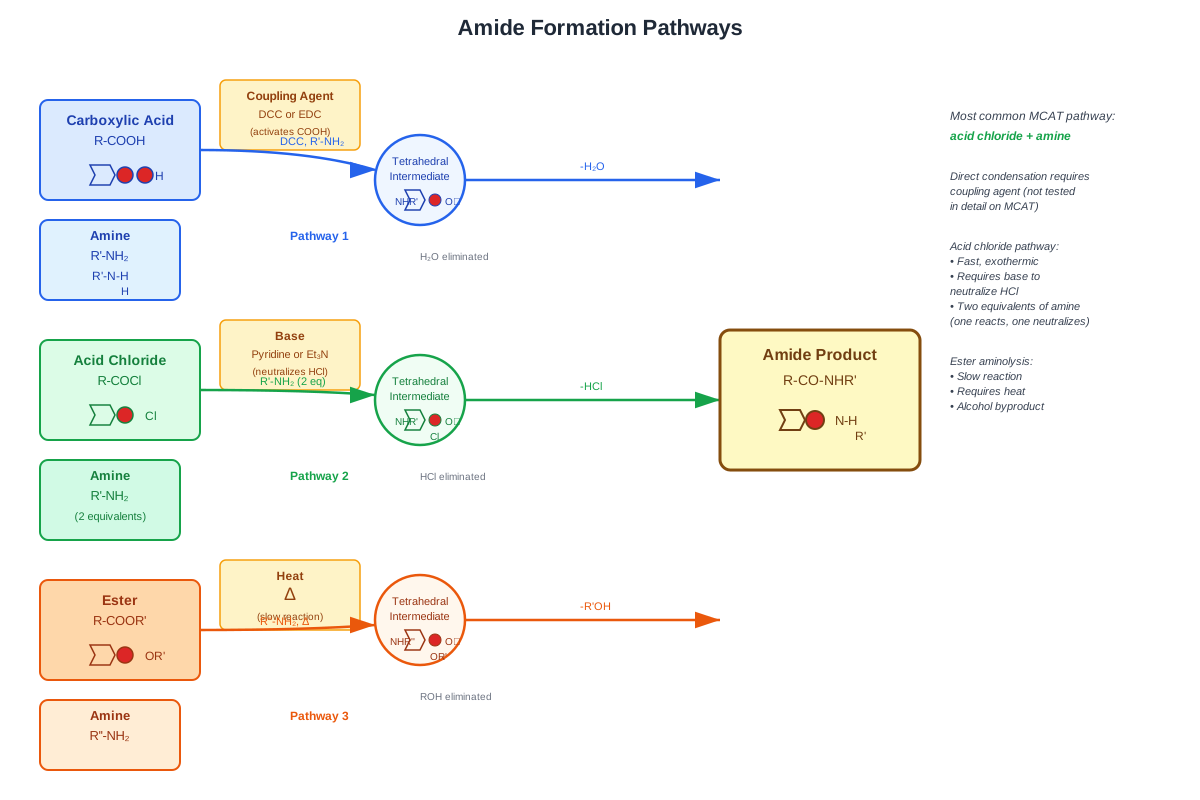
Several methods produce amides, with the most common involving nucleophilic acyl substitution reactions:
- From acid chlorides and amines: The most practical laboratory method involves treating an acid chloride with an amine (primary, secondary, or ammonia). This reaction is highly exothermic and typically requires two equivalents of amine—one to form the amide and one to neutralize the HCl byproduct:
RCOCl + 2 R'NH₂ → RCONHR' + R'NH₃⁺Cl⁻
- From anhydrides and amines: Similar to acid chlorides but less reactive, anhydrides react with amines to form amides and carboxylate salts:
(RCO)₂O + R'NH₂ → RCONHR' + RCO₂⁻
- From esters and amines (aminolysis): Heating esters with amines can produce amides, though this reaction is slower and requires elevated temperatures:
RCOOR' + R''NH₂ → RCONHR'' + R'OH
- From carboxylic acids and amines with coupling reagents: Direct condensation of carboxylic acids with amines is thermodynamically unfavorable due to acid-base neutralization forming carboxylate salts. Coupling reagents like dicyclohexylcarbodiimide (DCC), 1-ethyl-3-(3-dimethylaminopropyl)carbodiimide (EDC), or carbonyldiimidazole (CDI) activate the carboxylic acid, enabling amide bond formation. This method is crucial in peptide synthesis.
- From nitriles (hydrolysis): Partial hydrolysis of nitriles under acidic or basic conditions yields primary amides:
RC≡N + H₂O → RCONH₂
Hydrolysis of Amides
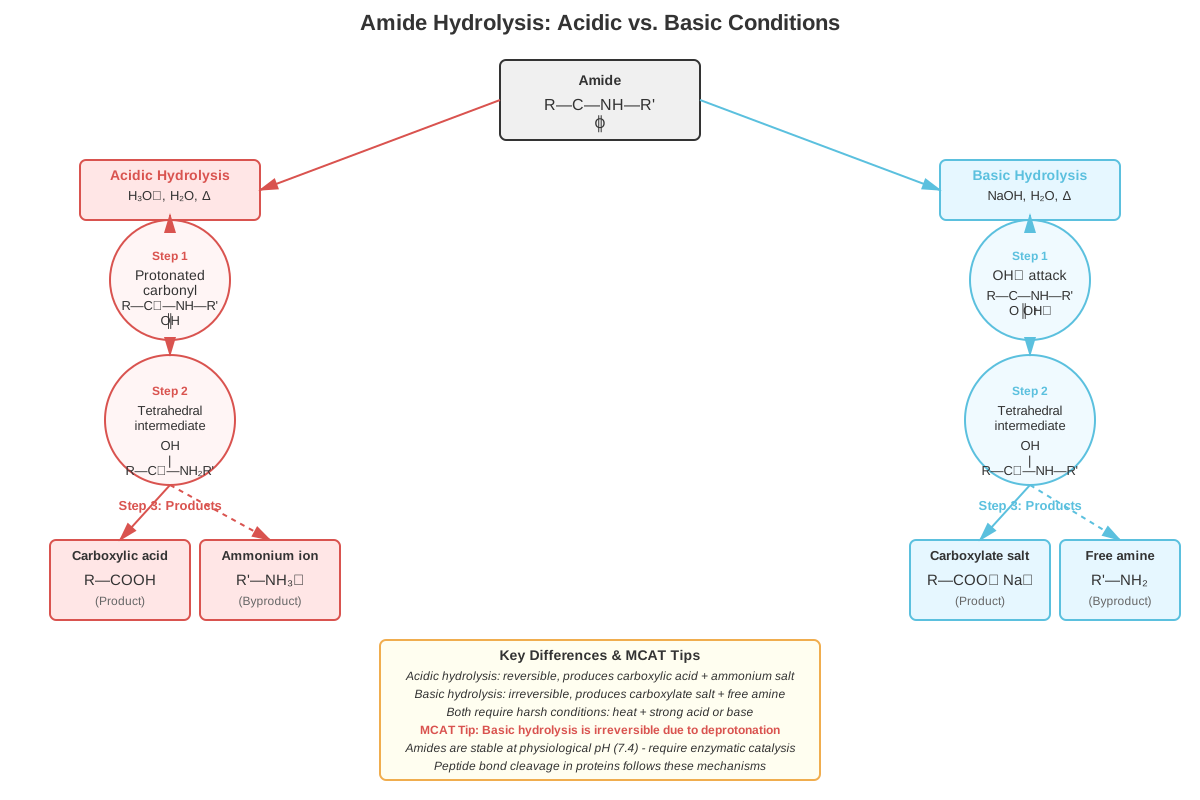
Amide hydrolysis cleaves the C-N bond to regenerate carboxylic acids (or carboxylate salts) and amines (or ammonium salts). Due to amide stability, hydrolysis requires vigorous conditions—either strong acid with heat or strong base with heat. The mechanism differs depending on conditions:
Acidic hydrolysis mechanism:
- Protonation of the carbonyl oxygen increases electrophilicity
- Water attacks the carbonyl carbon (nucleophilic addition)
- Proton transfer forms a tetrahedral intermediate
- Nitrogen protonation converts it into a better leaving group
- C-N bond cleavage expels the amine (as ammonium ion)
- Deprotonation yields the carboxylic acid
Basic hydrolysis mechanism:
- Hydroxide ion attacks the carbonyl carbon directly
- Tetrahedral intermediate forms
- C-N bond breaks, expelling the amide anion (poor leaving group)
- Rapid proton transfer from water generates the amine and carboxylate salt
- The reaction is driven to completion because the carboxylate salt is stable and doesn't react further
MCAT Exam Tip: Basic hydrolysis of amides is irreversible because the carboxylate product cannot undergo nucleophilic acyl substitution. Acidic hydrolysis is reversible in principle but driven forward by excess water.
Reduction of Amides
Amides can be reduced to amines using strong reducing agents like lithium aluminum hydride (LiAlH₄). This reduction is particularly useful because it converts the carbonyl carbon to a methylene group (CH₂) while preserving the C-N bond:
RCONH₂ + LiAlH₄ → RCH₂NH₂
Secondary and tertiary amides yield secondary and tertiary amines, respectively. This reaction does not occur with milder reducing agents like sodium borohydride (NaBH₄), which cannot reduce amides. The mechanism involves nucleophilic attack by hydride on the carbonyl carbon, followed by elimination and further reduction.
Spectroscopic Properties of Amides
Identification of amides using spectroscopic techniques relies on characteristic signals:
Infrared (IR) Spectroscopy:
- Carbonyl C=O stretch: 1650-1680 cm⁻¹ (lower than typical ketones at 1715 cm⁻¹ due to resonance)
- N-H stretch: 3200-3400 cm⁻¹ (primary amides show two peaks; secondary amides show one peak; tertiary amides show none)
- N-H bend: 1550-1650 cm⁻¹ (often appears as a shoulder on the carbonyl peak)
Nuclear Magnetic Resonance (NMR) Spectroscopy:
- ¹H NMR: N-H protons appear as broad signals at δ 5-8 ppm (exchangeable with D₂O); α-protons appear at δ 2-2.5 ppm
- ¹³C NMR: Carbonyl carbon appears at δ 170-180 ppm (slightly upfield from carboxylic acids and esters)
Mass Spectrometry:
- Molecular ion peaks are often weak
- Loss of 44 mass units (CO + NH₂) is characteristic of primary amides
- McLafferty rearrangement can occur in amides with γ-hydrogens
Concept Relationships
The chemistry of amides connects intimately with multiple areas of organic chemistry and biochemistry. Resonance stabilization serves as the foundational concept explaining amide properties → this leads to reduced reactivity compared to other carbonyl compounds → which explains why peptide bonds are stable under physiological conditions → enabling protein structure to persist in biological systems.
The synthesis of amides from more reactive acyl derivatives (acid chlorides, anhydrides) demonstrates the reactivity hierarchy of carboxylic acid derivatives → this same hierarchy explains why amides resist nucleophilic attack → requiring harsh conditions for hydrolysis reactions → which connects to protein digestion where proteolytic enzymes use sophisticated mechanisms to cleave peptide bonds under mild conditions.
Understanding amide formation through nucleophilic acyl substitution → builds on general carbonyl chemistry principles → and extends to peptide bond formation in biochemistry → which requires coupling reagents to overcome thermodynamic barriers → illustrating how biological systems use ATP and enzyme catalysis to accomplish similar transformations.
The planar geometry imposed by resonance → restricts rotation around the C-N bond → creating cis and trans isomers in secondary amides → which directly impacts protein secondary structure where peptide bond geometry constrains backbone conformations → enabling formation of α-helices and β-sheets.
Quick check — test yourself on Amides so far.
Try Flashcards →High-Yield Facts
⭐ Amides are the least reactive carboxylic acid derivatives due to resonance stabilization involving nitrogen lone pair delocalization into the carbonyl group.
⭐ The C-N bond in amides has partial double-bond character (approximately 40%), resulting in restricted rotation and planar geometry around the amide linkage.
⭐ Amide nitrogen is essentially non-basic (conjugate acid pKₐ ≈ 0) compared to typical amines (conjugate acid pKₐ ≈ 10), and protonation occurs preferentially on oxygen.
⭐ Amide hydrolysis requires harsh conditions: strong acid or strong base with heat, unlike esters which hydrolyze under milder conditions.
⭐ Peptide bonds are amide linkages connecting amino acids in proteins, making amide chemistry directly relevant to biochemistry and protein structure.
- Primary amides have the formula RCONH₂, secondary amides RCONHR', and tertiary amides RCONR'R''.
- The carbonyl stretch in amides appears at 1650-1680 cm⁻¹ in IR spectroscopy, lower than ketones (1715 cm⁻¹) due to resonance.
- Amides can be synthesized from acid chlorides and amines, requiring two equivalents of amine to neutralize HCl byproduct.
- Lithium aluminum hydride (LiAlH₄) reduces amides to amines, converting the carbonyl to a methylene group while preserving the C-N bond.
- Cyclic amides are called lactams, with β-lactams (four-membered rings) forming the core structure of penicillin antibiotics.
- N,N-dimethylformamide (DMF) and N,N-dimethylacetamide (DMA) are common polar aprotic solvents due to their high dielectric constants and inability to donate hydrogen bonds.
- Basic hydrolysis of amides is irreversible because the carboxylate product cannot undergo further nucleophilic acyl substitution.
- The resonance stabilization energy of amides is approximately 20 kcal/mol, creating a substantial barrier to reactions.
- Coupling reagents like DCC or EDC enable peptide bond formation by activating carboxylic acids and overcoming the thermodynamic barrier to amide formation from acids and amines.
- Primary and secondary amides can form extensive hydrogen bonding networks, resulting in high boiling and melting points relative to molecular weight.
Common Misconceptions
Misconception: Amides are basic like amines and will readily accept protons on nitrogen.
Correction: Amide nitrogen is essentially non-basic due to resonance delocalization of the lone pair into the carbonyl group. Protonation occurs preferentially on the carbonyl oxygen (pKₐ ≈ 0) rather than nitrogen. The nitrogen lone pair is not available for protonation because it participates in resonance stabilization.
Misconception: Amides can be easily hydrolyzed under mild aqueous conditions like esters.
Correction: Amides are the least reactive carboxylic acid derivatives and require harsh conditions (strong acid or base with heat) for hydrolysis. The high resonance stabilization energy (≈20 kcal/mol) and poor leaving group ability of nitrogen create substantial barriers to hydrolysis. Biological systems overcome this through sophisticated enzyme mechanisms.
Misconception: The C-N bond in amides freely rotates like typical single bonds.
Correction: The C-N bond in amides has approximately 40% double-bond character due to resonance, creating a rotational barrier of 15-20 kcal/mol. This restricted rotation results in planar geometry around the amide linkage and can create cis/trans isomers in secondary amides. This property is crucial for understanding peptide bond geometry in proteins.
Misconception: Sodium borohydride (NaBH₄) can reduce amides to amines.
Correction: NaBH₄ is too mild to reduce amides. Only strong reducing agents like lithium aluminum hydride (LiAlH₄) can reduce amides to amines. This selectivity allows chemists to reduce aldehydes, ketones, and esters in the presence of amides using NaBH₄.
Misconception: All amides can act as hydrogen bond donors.
Correction: Only primary (RCONH₂) and secondary (RCONHR') amides possess N-H bonds capable of donating hydrogen bonds. Tertiary amides (RCONR'R'') lack N-H bonds and can only accept hydrogen bonds through the carbonyl oxygen. This distinction affects physical properties, with tertiary amides having lower boiling points than comparable primary or secondary amides.
Misconception: Amide formation from carboxylic acids and amines occurs readily upon mixing.
Correction: Direct condensation of carboxylic acids with amines is thermodynamically unfavorable because acid-base neutralization forms stable carboxylate salts (RCO₂⁻ + R'NH₃⁺) rather than amides. Amide formation requires either using more reactive acyl derivatives (acid chlorides, anhydrides) or employing coupling reagents (DCC, EDC) to activate the carboxylic acid.
Worked Examples
Example 1: Predicting Amide Hydrolysis Products
Question: A biochemistry researcher is studying protein degradation. When a tripeptide Ala-Gly-Val is subjected to complete hydrolysis in 6 M HCl at 110°C for 24 hours, what products form? Explain the mechanism and why these conditions are necessary.
Solution:
Step 1 - Identify the functional groups: The tripeptide contains two peptide bonds (amide linkages) connecting three amino acids: alanine, glycine, and valine.
Step 2 - Recognize the reaction type: Complete hydrolysis under acidic conditions will cleave all amide bonds, converting the tripeptide into its constituent amino acids.
Step 3 - Predict the products: Under acidic conditions (6 M HCl), the products will be the amino acids in their protonated forms (as ammonium salts):
- Alanine (protonated): CH₃CH(NH₃⁺)CO₂H
- Glycine (protonated): H₂NCH₂CO₂H → ⁺H₃NCH₂CO₂H
- Valine (protonated): (CH₃)₂CHCH(NH₃⁺)CO₂H
Step 4 - Explain the mechanism: Acidic hydrolysis proceeds through:
- Protonation of the carbonyl oxygen increases electrophilicity
- Water attacks the carbonyl carbon
- Tetrahedral intermediate forms
- Nitrogen protonation converts NH into NH₂⁺ (better leaving group)
- C-N bond cleavage releases the amine as ammonium ion
- Deprotonation yields the carboxylic acid
Step 5 - Justify harsh conditions: The harsh conditions (concentrated acid, high temperature, extended time) are necessary because:
- Amides are the least reactive carboxylic acid derivatives
- Resonance stabilization (≈20 kcal/mol) must be overcome
- The C-N bond has partial double-bond character, making it stronger than typical single bonds
- Biological systems use proteolytic enzymes to accomplish this under physiological conditions, but chemical hydrolysis requires forcing conditions
Connection to learning objectives: This example demonstrates application of amide chemistry to biochemistry, illustrates why harsh conditions are needed for hydrolysis, and connects to the biological significance of peptide bond stability.
Example 2: Comparing Reactivity of Carboxylic Acid Derivatives
Question: A student has four compounds: acetyl chloride, acetic anhydride, ethyl acetate, and acetamide. When each is treated with methylamine (CH₃NH₂) at room temperature, which will react fastest and slowest? Rank them in order of reactivity and explain the structural basis for this order.
Solution:
Step 1 - Identify the reaction: Each compound will undergo nucleophilic acyl substitution with methylamine to potentially form N-methylacetamide (CH₃CONHCH₃).
Step 2 - Apply the reactivity hierarchy: The reactivity order for carboxylic acid derivatives toward nucleophilic acyl substitution is:
Acid chlorides > Anhydrides > Esters > Amides
Step 3 - Rank the specific compounds:
- Fastest: Acetyl chloride (CH₃COCl)
- Acetic anhydride [(CH₃CO)₂O]
- Ethyl acetate (CH₃CO₂CH₂CH₃)
- Slowest: Acetamide (CH₃CONH₂)
Step 4 - Explain the structural basis:
Acetyl chloride (fastest):
- Chlorine is electronegative, making the carbonyl carbon highly electrophilic
- Cl⁻ is a weak base and excellent leaving group
- Minimal resonance donation from chlorine (poor orbital overlap)
- Reacts vigorously, even violently, with amines
Acetic anhydride:
- Carbonyl carbon is electrophilic
- Leaving group is acetate (CH₃CO₂⁻), a weak base
- Moderate resonance stabilization
- Reacts readily with amines at room temperature
Ethyl acetate:
- Oxygen provides moderate resonance donation
- Leaving group is ethoxide (CH₃CH₂O⁻), a moderate base
- Requires heating or prolonged reaction time with amines
- Less reactive than anhydrides but more than amides
Acetamide (slowest):
- Strong resonance donation from nitrogen lone pair (good orbital overlap)
- Leaving group would be NH₂⁻, a very strong base (poor leaving group)
- Resonance stabilization ≈20 kcal/mol must be overcome
- Essentially unreactive toward amines under normal conditions
Step 5 - Quantitative perspective: The relative rates approximately follow:
- Acid chloride: 10⁶
- Anhydride: 10⁴
- Ester: 10²
- Amide: 1
Connection to learning objectives: This example demonstrates comparison of amide reactivity with related compounds, applies understanding of leaving group ability and resonance stabilization, and illustrates how structure determines reactivity—all key concepts for MCAT success.
Exam Strategy
Approaching MCAT Questions on Amides
When encountering amide-related questions on the MCAT, follow this systematic approach:
- Identify the functional group: Look for the carbonyl directly bonded to nitrogen (C=O-N). Don't confuse amides with amines (which lack the carbonyl) or imines (which have C=N without the carbonyl oxygen).
- Assess the question type: Determine whether the question asks about structure/nomenclature, physical properties, reactivity/mechanism, or biological context (peptide bonds).
- Consider resonance: If the question involves reactivity, basicity, or geometry, immediately think about resonance stabilization and its consequences.
- Compare with other derivatives: Many questions test relative reactivity. Remember the hierarchy: acid chlorides > anhydrides > esters > amides.
Trigger Words and Phrases
Watch for these key phrases that signal amide-related content:
- "Peptide bond" or "peptide linkage": These are amide bonds; apply amide chemistry principles
- "Protein hydrolysis" or "proteolysis": Involves breaking amide bonds
- "Planar geometry" or "restricted rotation": Indicates resonance in amides
- "Coupling reagent" or "peptide synthesis": Refers to amide bond formation
- "Least reactive" or "most stable" derivative: Likely referring to amides
- "Harsh conditions" for hydrolysis: Suggests amides rather than esters
- "Non-basic nitrogen": Characteristic of amides, not amines
- "Lactam": Cyclic amide, often in antibiotic context (β-lactams)
Process-of-Elimination Tips
When uncertain about an answer:
- Eliminate options suggesting high reactivity: If a choice claims amides react readily under mild conditions, it's likely wrong.
- Eliminate options confusing amides with amines: Amides are not basic; amines are. If an option treats amide nitrogen as a strong base, eliminate it.
- Check for resonance consideration: Correct answers about amide properties usually reference or imply resonance stabilization. Options ignoring this are suspect.
- Verify leaving group logic: For mechanism questions, remember that NH₂⁻, NHR⁻, and NR₂⁻ are poor leaving groups. Options showing easy departure of these groups are incorrect.
- Consider biological relevance: For passage-based questions, the correct answer often connects to protein structure, enzyme function, or drug metabolism.
Time Allocation Advice
- Discrete questions on amide structure or nomenclature: 30-45 seconds
- Mechanism or reactivity comparison questions: 60-90 seconds
- Passage-based questions integrating amides with biochemistry: 90-120 seconds
- Complex synthesis or multi-step mechanism questions: 120-150 seconds
Exam Tip: If a passage discusses protein structure or enzyme mechanisms, quickly scan for amide/peptide bond references. This context often provides clues for multiple questions within the passage.
Memory Techniques
Mnemonics for Key Concepts
"AAAE" for Reactivity Order:
- Acid chlorides (most reactive)
- Anhydrides
- Anhydrides... wait, that's wrong! Alkyl esters
- Except amides (least reactive)
Better version: "Can Andy Eat Apples?"
- Chlorides (acid chlorides)
- Anhydrides
- Esters
- Amides
Visualization Strategy for Resonance
Visualize the amide resonance as a "tug-of-war" between the nitrogen lone pair and the carbonyl:
- The nitrogen "pulls" electron density toward the carbonyl
- This creates partial double-bond character in the C-N bond
- The carbonyl becomes less electrophilic (less positive carbon)
- The nitrogen becomes less basic (lone pair is "busy")
Picture the resonance structure with the positive charge on nitrogen and negative charge on oxygen as the "extreme" form, with the actual structure being a hybrid that's "stuck" between the two forms—hence restricted rotation.
Acronym for Amide Properties
"PRUNES" describes key amide characteristics:
- Planar geometry around the amide bond
- Resonance stabilization (≈20 kcal/mol)
- Unreactive (least reactive derivative)
- Non-basic nitrogen
- Elevated boiling points (hydrogen bonding)
- Stable peptide bonds in proteins
Memory Aid for Hydrolysis Conditions
"Harsh Harry Hydrolyzes Amides":
- Heat required
- High concentration of acid or base
- Hours of reaction time needed
Contrast with "Easy Eddie Eats Esters" (esters hydrolyze under milder conditions)
Spectroscopy Memory Device
For IR spectroscopy, remember "1650 is Low":
- Amide C=O stretch at 1650-1680 cm⁻¹ is lower than typical ketones (1715 cm⁻¹)
- The "low" frequency reflects resonance weakening of the C=O bond
- Primary amides show two N-H peaks (think "two hydrogens, two peaks")
- Secondary amides show one N-H peak (think "one hydrogen, one peak")
- Tertiary amides show zero N-H peaks (think "zero hydrogens, zero peaks")
Summary
Amides represent a cornerstone functional group in organic chemistry, characterized by a carbonyl group directly bonded to nitrogen. Their defining feature—resonance stabilization involving nitrogen lone pair delocalization into the carbonyl π system—explains their unique properties: restricted rotation around the C-N bond, planar geometry, reduced carbonyl electrophilicity, non-basic nitrogen, and status as the least reactive carboxylic acid derivative. These properties make amides extraordinarily stable under physiological conditions, enabling their role as peptide bonds in proteins. Synthesis typically proceeds from more reactive acyl derivatives (acid chlorides, anhydrides) or requires coupling reagents to activate carboxylic acids. Hydrolysis demands harsh conditions (strong acid or base with heat) due to poor leaving group ability and high resonance stabilization energy. For the MCAT, understanding amides bridges organic chemistry with biochemistry, appearing in questions about protein structure, enzyme mechanisms, pharmaceutical chemistry, and comparative reactivity of carbonyl compounds. Mastery requires recognizing the consequences of resonance, predicting reactivity based on the derivative hierarchy, and connecting molecular properties to biological function.
Key Takeaways
- Amides are the least reactive carboxylic acid derivatives due to approximately 20 kcal/mol of resonance stabilization involving nitrogen lone pair delocalization into the carbonyl group
- The C-N bond in amides has partial double-bond character (≈40%), resulting in restricted rotation, planar geometry, and the possibility of cis/trans isomers in secondary amides
- Amide nitrogen is essentially non-basic (conjugate acid pKₐ ≈ 0) compared to typical amines (pKₐ ≈ 10), with protonation occurring preferentially on the carbonyl oxygen
- Peptide bonds connecting amino acids in proteins are amide linkages, making amide chemistry directly relevant to protein structure, stability, and degradation
- Amide hydrolysis requires harsh conditions (strong acid or base with heat) due to poor leaving group ability and high resonance stabilization, contrasting with the milder conditions sufficient for ester hydrolysis
- Synthesis of amides most commonly proceeds from acid chlorides or anhydrides with amines, or from carboxylic acids using coupling reagents (DCC, EDC) to overcome thermodynamic barriers
- Spectroscopic identification relies on characteristic IR carbonyl stretch at 1650-1680 cm⁻¹ (lower than ketones due to resonance) and N-H stretches at 3200-3400 cm⁻¹ for primary and secondary amides
Related Topics
Carboxylic Acids: Understanding carboxylic acid structure and reactivity provides the foundation for all acid derivatives, including amides. Mastery of acid-base properties and nucleophilic acyl substitution mechanisms is essential.
Other Carboxylic Acid Derivatives (acid chlorides, anhydrides, esters): Comparing reactivity across the derivative series reinforces understanding of leaving group ability, resonance effects, and synthetic strategies. These compounds serve as precursors for amide synthesis.
Amino Acids and Peptides: Peptide bonds are amide linkages, making this topic a direct extension of amide chemistry into biochemistry. Understanding amide properties explains peptide bond stability and geometry.
Protein Structure: The planar, rigid geometry of peptide bonds (amides) constrains protein backbone conformations, enabling formation of secondary structures (α-helices, β-sheets). This topic integrates organic chemistry with structural biology.
Enzyme Mechanisms: Proteolytic enzymes (proteases) catalyze amide bond hydrolysis under physiological conditions, demonstrating how biological systems overcome the inherent stability of amides through sophisticated catalytic mechanisms.
Nitrogen-Containing Compounds (amines, imines, nitriles): Comparing basicity, reactivity, and synthesis across nitrogen functional groups reinforces understanding of how structure determines properties.
Practice CTA
Now that you've mastered the core concepts of amide chemistry, it's time to reinforce your understanding through active practice. Work through the practice questions to test your ability to apply these concepts to MCAT-style scenarios. Use the flashcards to drill high-yield facts and ensure rapid recall on test day. Remember, amides appear frequently on the MCAT both as discrete questions and embedded within biochemistry passages—your investment in mastering this topic will pay dividends across multiple sections of the exam. Focus particularly on comparing amide reactivity with other derivatives, predicting products of synthesis and hydrolysis reactions, and connecting amide properties to peptide bond behavior in proteins. You've got this!
Sign up free to keep reading
Create a free AnvayaPrep account to finish this MCAT guide on Amides — plus flashcards and practice questions.